

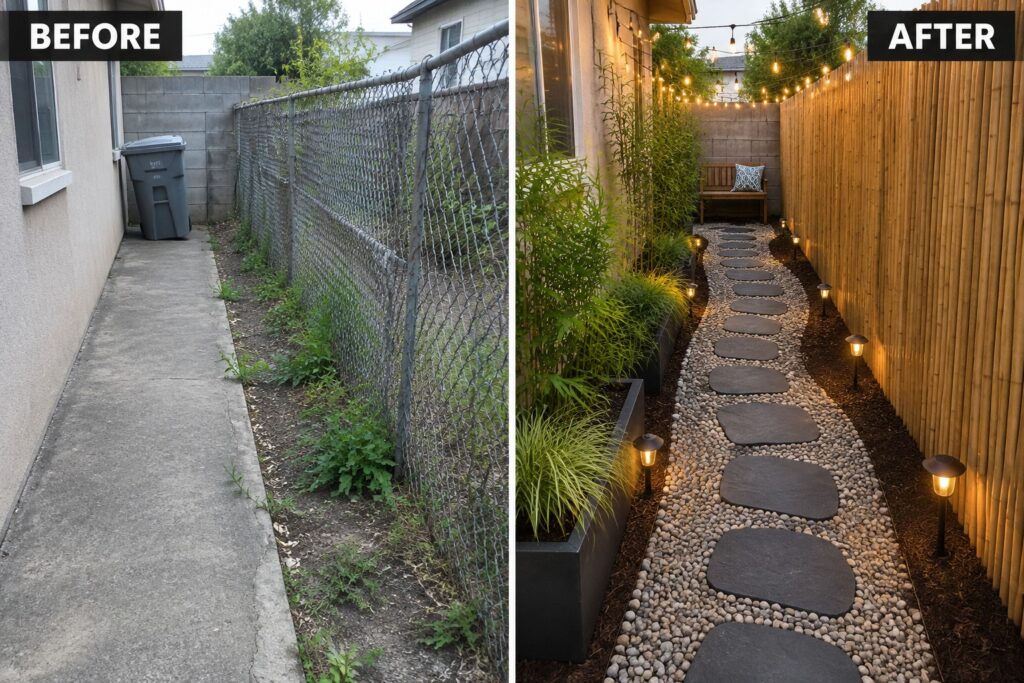
Narrow gardens tend to look unfinished when the boundaries stay exposed and the space runs in a straight line from one end to the other.
I have noticed that privacy screening works best when it combines different plant heights rather than relying on a single row of tall shrubs.
Layout matters more than people expect.
Adding edging and a few strategic trees can soften the sides and create pockets that feel more private over the seasons.
These ideas give practical ways to adapt the same approach to whatever size or sun exposure a garden actually has.
Add Bamboo Fencing For Privacy In A Narrow Side Yard
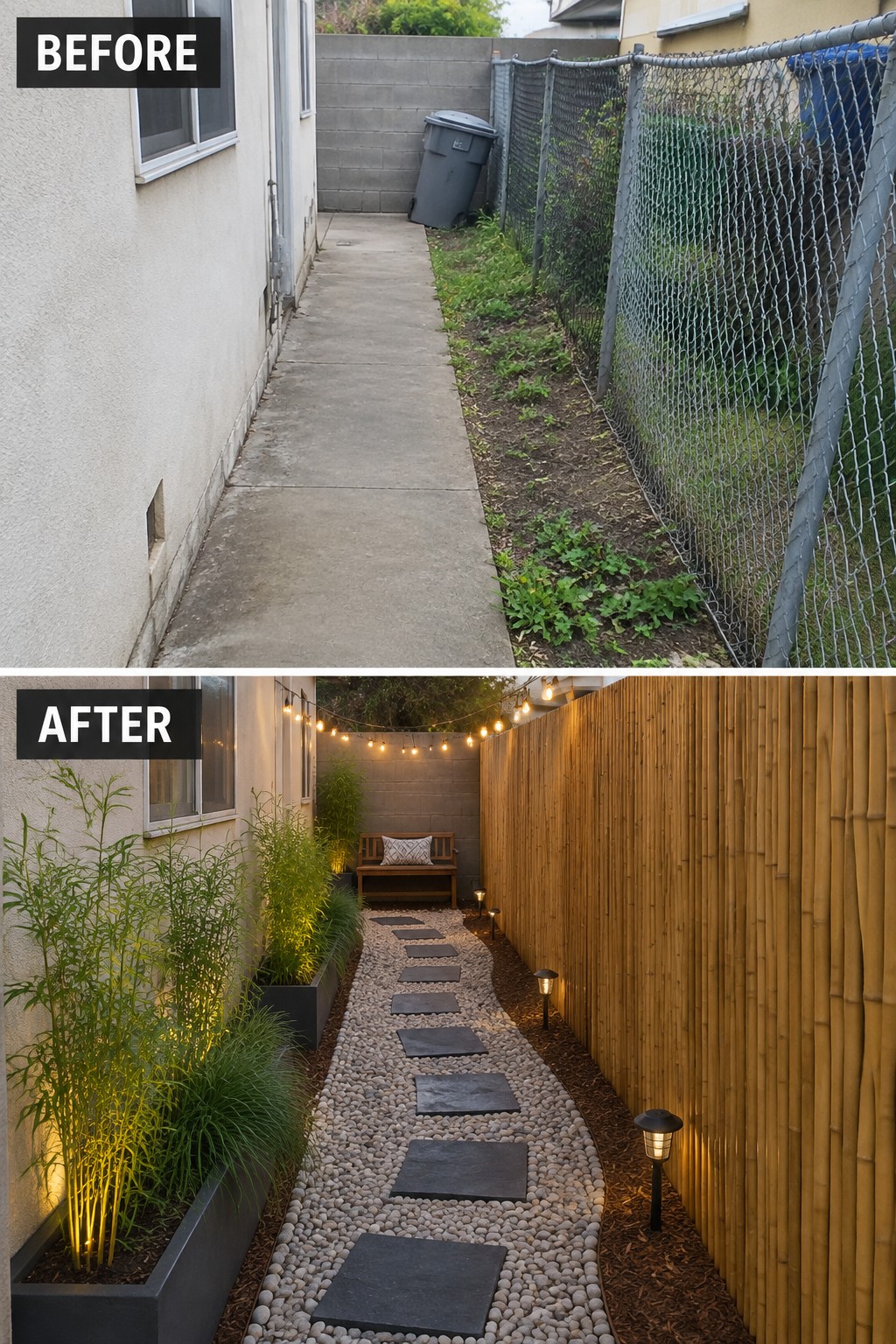
The main change here is replacing the open chain link fence with solid bamboo screening. That single swap, paired with raised planters along the house, turns an exposed walkway into a private garden path that feels much more intentional and enclosed.
This approach suits homes where the side yard is just a narrow strip of concrete. Put the fencing up first to set the boundary, then add a few tall planters with upright grasses. The bamboo blocks the view without eating into the width, and the planters keep the planting contained so the path stays usable.
Add Climbing Plants On A Trellis For Privacy

In narrow gardens the back fence often leaves the space feeling open and exposed. A simple trellis covered with climbing plants changes that quickly by creating a living screen that softens the boundaries and gives the patio a more enclosed feel. The before photo shows a plain fence with pots pushed against it, while the after shows the same fence hidden behind flowering vines that make the seating area feel private.
This idea suits small urban yards where you need screening without losing floor space. Fix a lattice or trellis to the fence first, plant climbers that grow quickly in your climate, and keep any border planting narrow so the patio stays usable. Once the plants fill in, add lights and seating to turn the area into a place you actually want to sit.
Turn A Narrow Side Yard Into A Private Seating Area
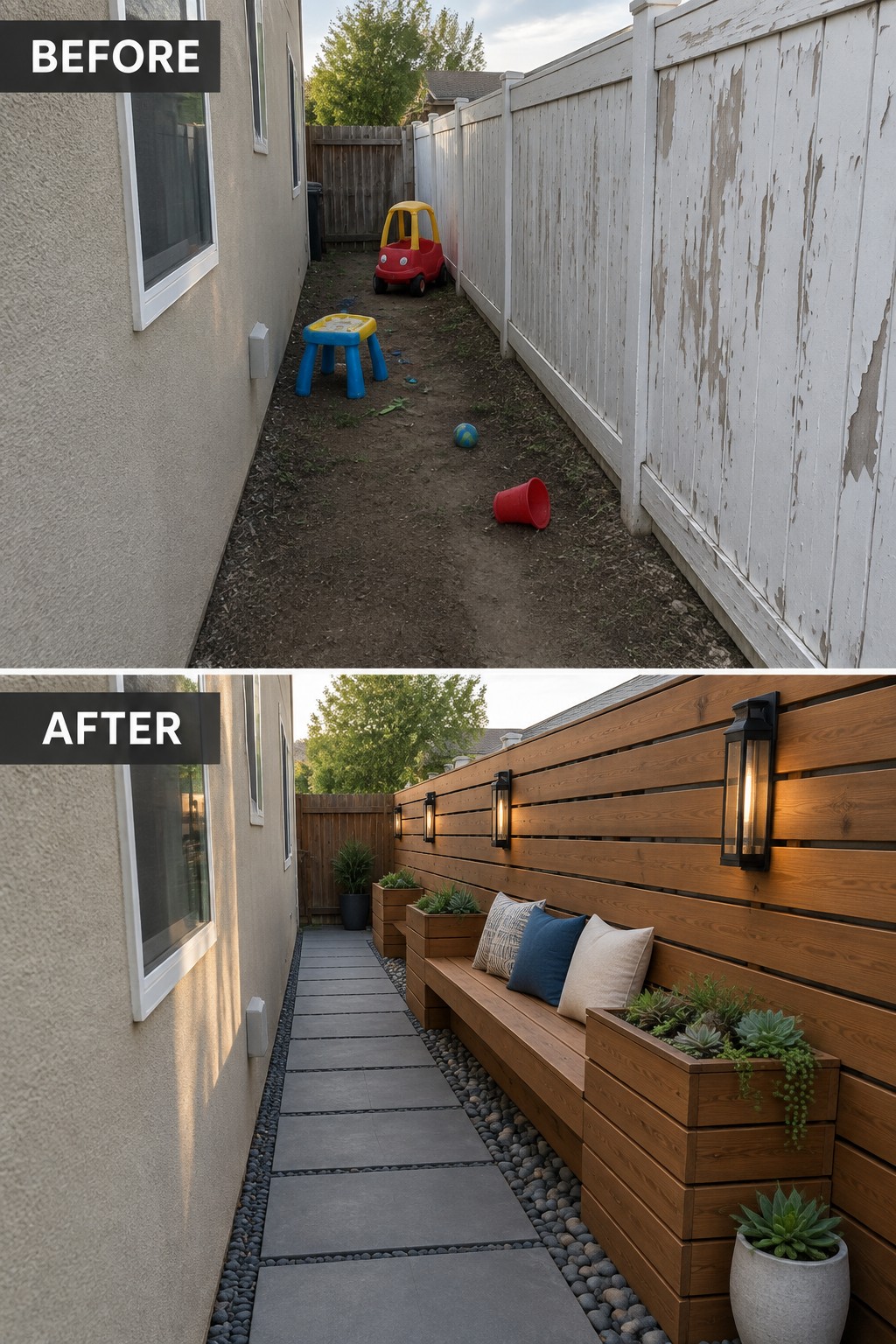
A narrow dirt strip between the house and fence often gets ignored because it feels too tight and exposed. Adding a horizontal wood screen along one side creates instant privacy while the built-in bench with integrated planters gives the space a clear purpose. The paved path and gravel edge keep the area clean and walkable instead of muddy.
This approach works best on long, skinny lots where you need screening without losing light or width. Start with the screen and bench as the main structure, then keep planting simple so the path stays open. Use weather-rated wood and make sure the bench depth stays under 18 inches so people can still pass by comfortably.
Add Privacy Screening With A Gabion Wall In A Narrow Garden

A gabion wall paired with a raised planter turns a narrow side yard from an open, messy strip into a screened garden path. The solid stone wall creates a clear boundary that blocks views from the neighbor side while the raised bed gives room for flowers and lighting right along the house.
This setup works best in tight passages where you need both privacy and a usable walkway. Clear the area first, then build the wall and bed before adding stepping stones. It suits homes with long side yards between the house and fence line, and the materials hold up well without constant maintenance.
Use A Living Wall To Add Privacy To A Narrow Patio
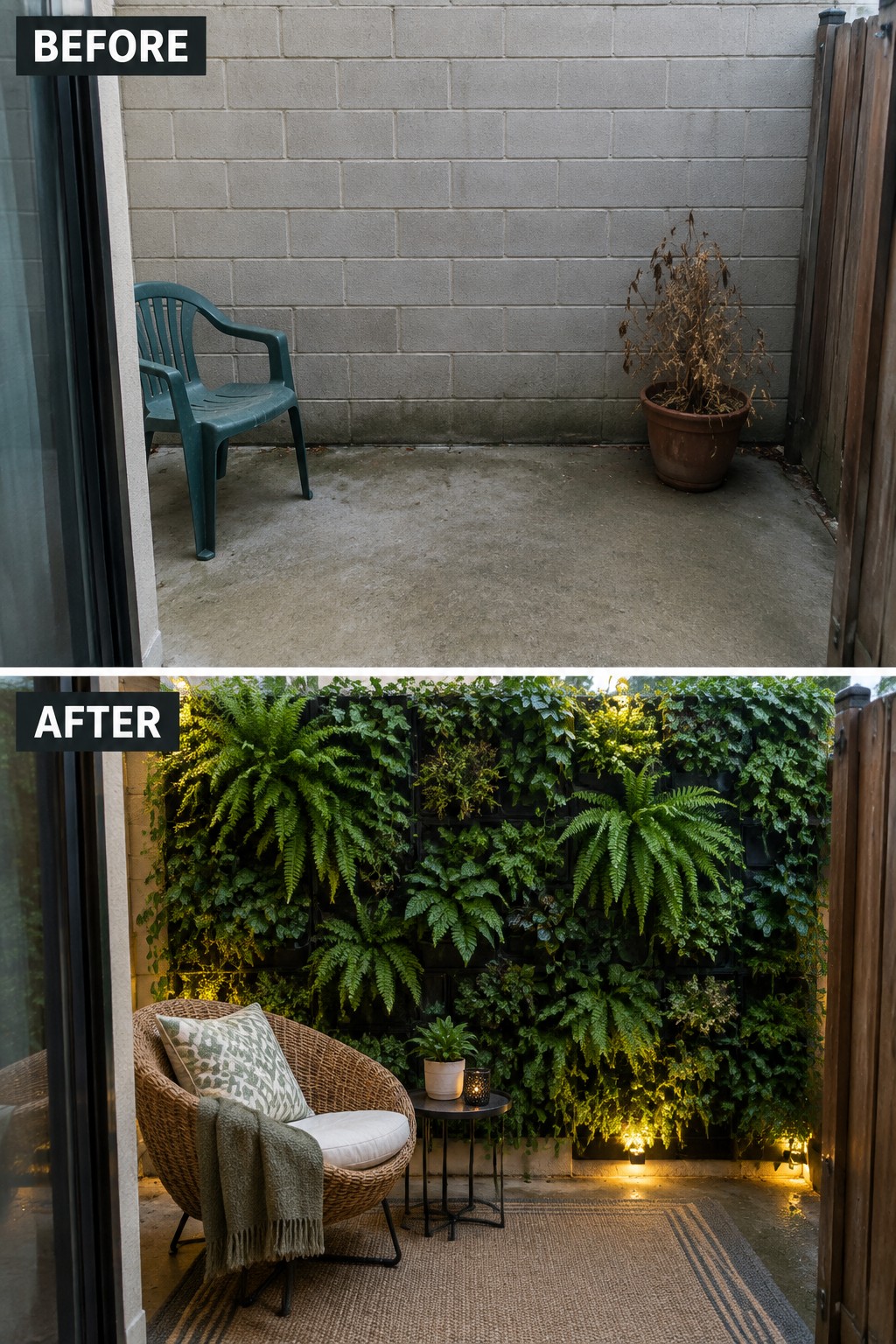
A bare concrete patio with nothing but a plastic chair and one dead plant feels exposed and unused. Adding a full living wall across the back turns the same narrow space into a private seating area that actually invites you to sit down.
This approach works best in tight side yards or small courtyards where regular hedges would take up too much room. Choose a modular panel system, pick plants that handle the light in your space, and keep the rest of the setup simple with one or two weatherproof seats and a rug to mark the zone.
Screen Narrow Side Yards With Tall Planters And Grasses
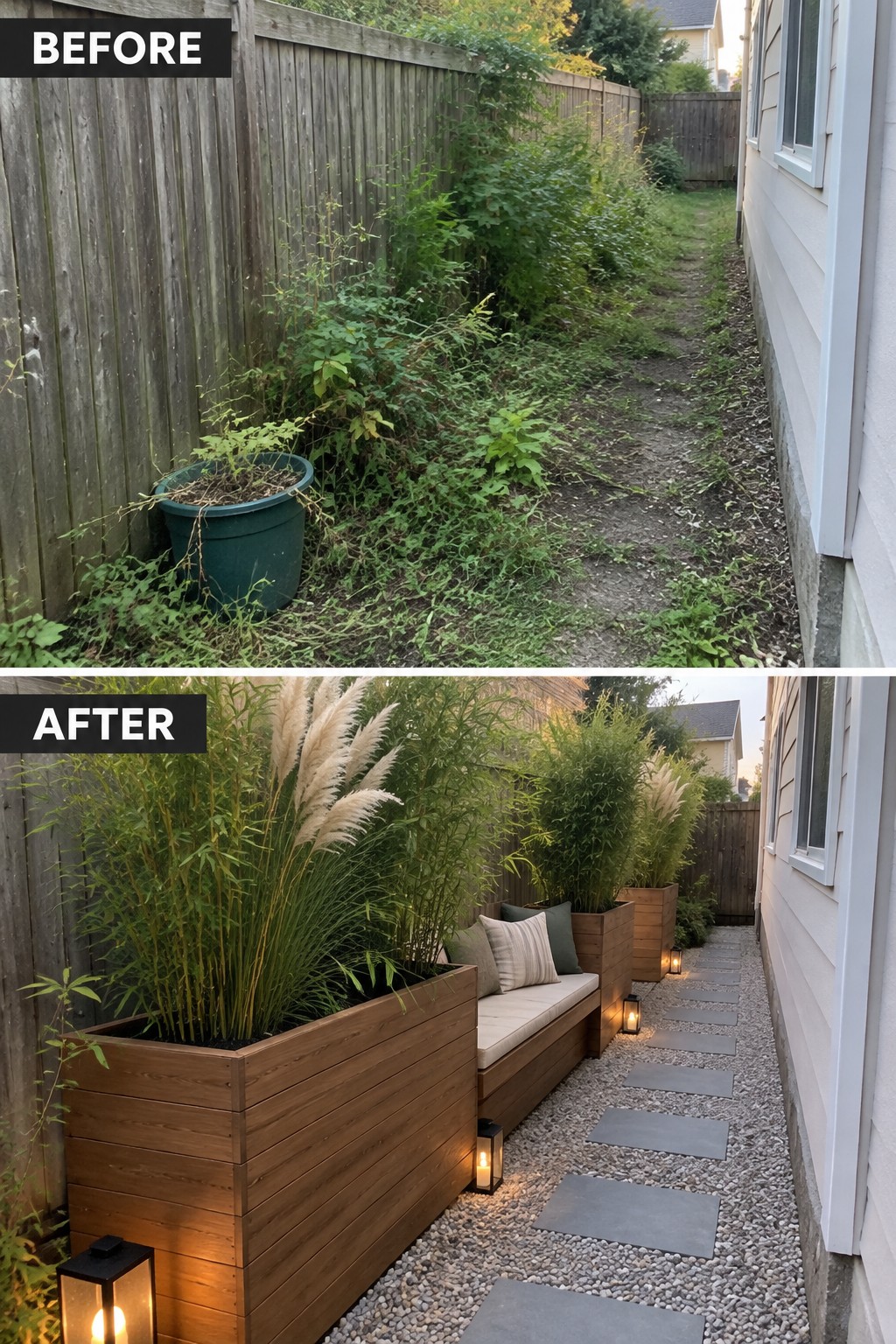
A narrow side yard often ends up as wasted space because it feels too tight and exposed. In this case the before photo shows an overgrown strip of weeds and dirt next to the house. The after shows how a few large raised planters filled with tall ornamental grasses and bamboo can turn the same spot into a private walkway that also includes a simple bench.
This approach works well when you need both screening and a usable path. Keep the planters at a comfortable height so you can add seating along one side, then choose grasses that grow tall enough to block views from neighboring yards. Use gravel and stepping stones for the ground so the space stays easy to walk and maintain even in a tight area.
Add Patterned Privacy Screens To A Narrow Side Yard

A plain fence along a tight walkway often leaves the space feeling exposed and unfinished. Replacing sections with decorative metal panels that have open patterns gives the area privacy while still letting light and air through. Vines planted at the base climb the screens over time and soften the hard lines.
This idea suits narrow passages between houses where a solid wall would feel too heavy. Keep the ground simple with clean gravel and add a few planters along the house wall to balance the look. The panels do most of the work, so you can avoid crowding the space with extra features.
Use Espalier Trees For Privacy In A Narrow Side Yard
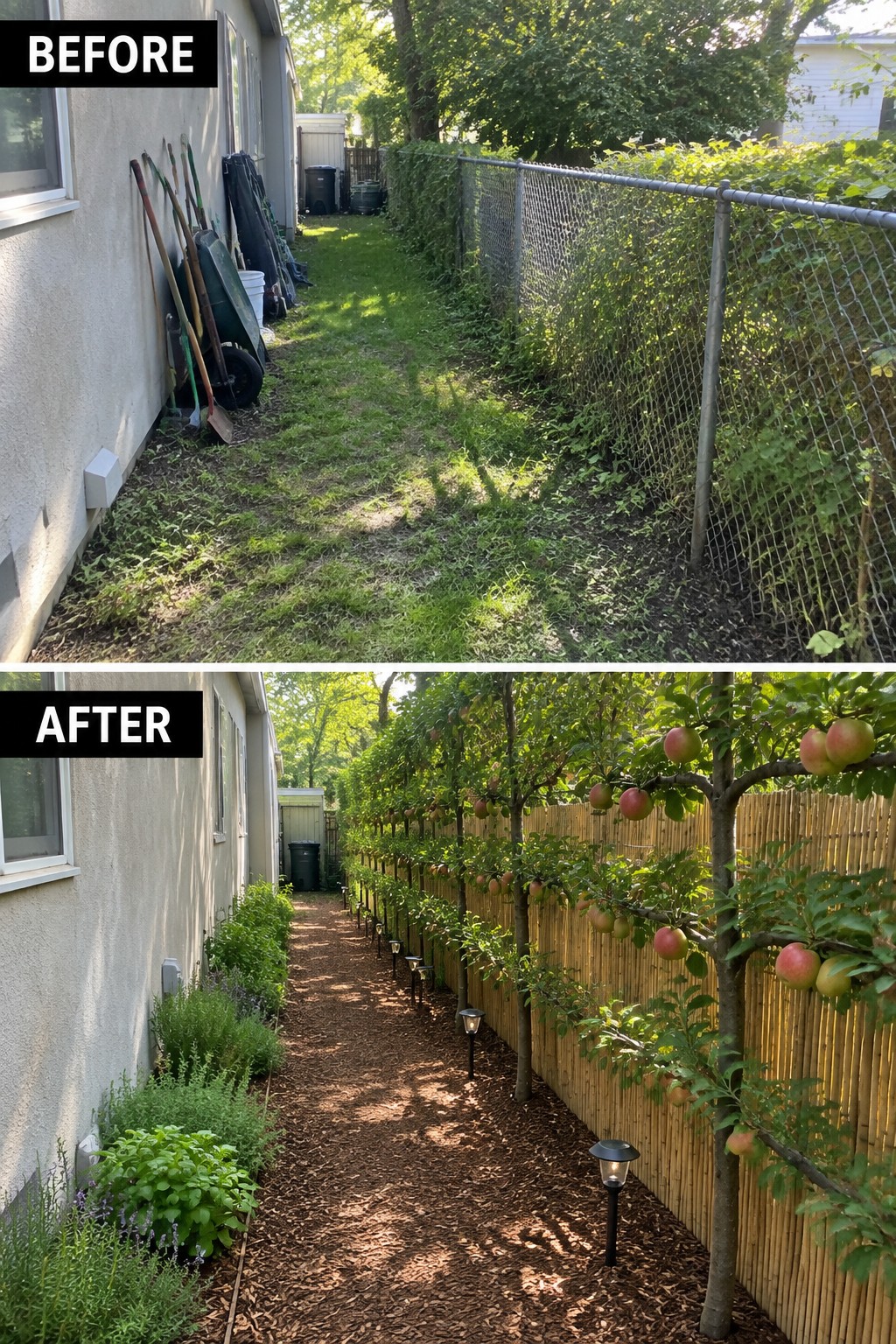
A narrow side yard often gets ignored because it feels too exposed and hard to use. Here the chain link fence was swapped for a solid screen and a straight row of espaliered apple trees was planted to create privacy without eating into the limited width.
This idea works best along property lines where you need height but still want the space to feel open and usable. Train the trees flat against a fence or wall, keep spacing even, and use a simple mulch path so the area stays easy to walk through. It suits homes with long, tight side yards that connect the front and back of the property.
Add Privacy Screening To A Narrow Balcony

A narrow balcony next to other buildings often feels too exposed to use. Frosted privacy panels along the sides change that by blocking direct views while still letting light through. The shift from bare concrete and open fencing to a decked surface with raised planters makes the space feel enclosed and intentional instead of leftover.
This idea suits balconies, slim side yards, or any tight outdoor spot where neighbors sit close. Keep the screening material light in color so the area does not go dark, and pair it with simple planters rather than trying to add too many pieces of furniture. The goal is to gain privacy without crowding the floor space.
Create Privacy Screening With Tall Bamboo In A Narrow Side Yard

A narrow side yard often gets ignored because there is not much room to work with. Here the concrete path was replaced with gravel and a line of tall bamboo planted in long metal boxes along the fence. The bamboo blocks the view, softens the tall fence, and turns the space into something that feels more like a garden than a walkway.
This idea works well when you need privacy fast without eating into the width of the path. Keep the planters narrow, choose a clumping bamboo that will not spread too far, and add a few low lights so the area feels safer at night. The gravel also helps with drainage and keeps the ground from looking muddy after rain.
Add Curtains For Privacy On A Narrow Patio

A bare concrete slab next to the house does not feel like a place to sit. Adding a simple pergola overhead and hanging white curtains along the open sides turns the space into a defined room. The curtains block the view from neighbors while still letting in light and air.
This approach works well in narrow side yards or tight back patios where fencing alone feels too closed in. Hang the curtains on a rod or wire so they can be pulled back on nice days. Choose outdoor fabric that can handle weather, and keep the rest of the furniture light so the space does not feel crowded.
Use Tall Hedges For Privacy In A Narrow Strip

The chain link fence left the side of the house open and exposed, with weeds taking over the narrow strip between the sidewalk and the foundation. Replacing it with a continuous row of dense evergreen shrubs created a solid screen that blocks the view while keeping the planting close to the house.
This idea works best along tight borders where you need height without width. Plant the shrubs in a straight line in amended soil, add a low edging with gravel to keep the bed clean, and space a few low lights along the front so the area feels finished at night. It suits older homes with similar side strips and helps turn a neglected edge into something useful.
Add Privacy Screening To A Narrow Balcony
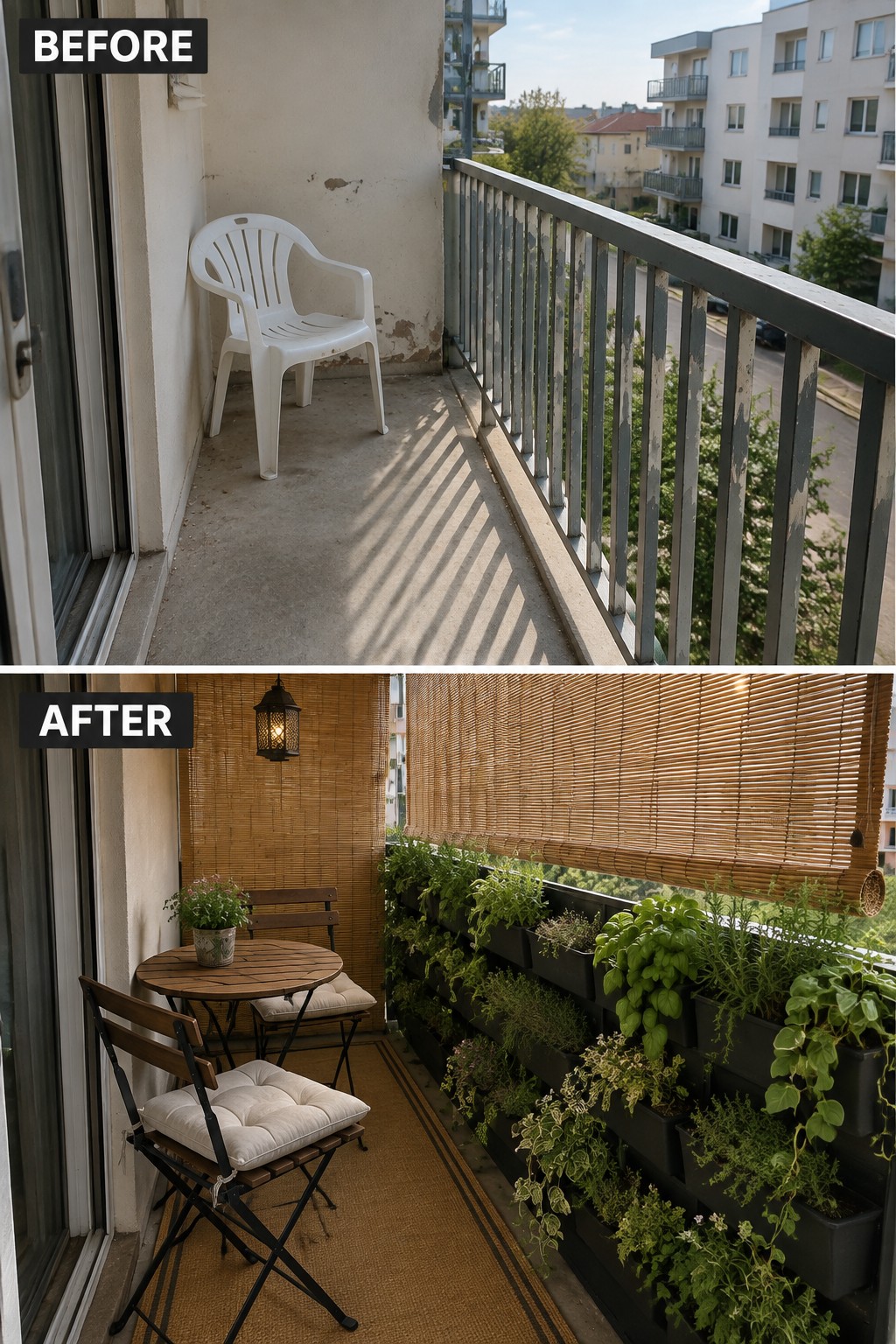
A bare balcony next to other buildings often feels too open. Simple bamboo screens along the railing and a row of vertical planters create a living wall that blocks the view while still letting in light. The change from an empty concrete slab to a defined seating area shows how screening turns the space into something you actually want to use.
This idea suits narrow apartment balconies where floor space is limited. Roll-down screens are easy to install and adjust, and the planters add privacy without crowding the walkway. Keep the furniture light so the area still feels open inside the screened zone.
Use Layered Planting For Privacy In A Narrow Garden
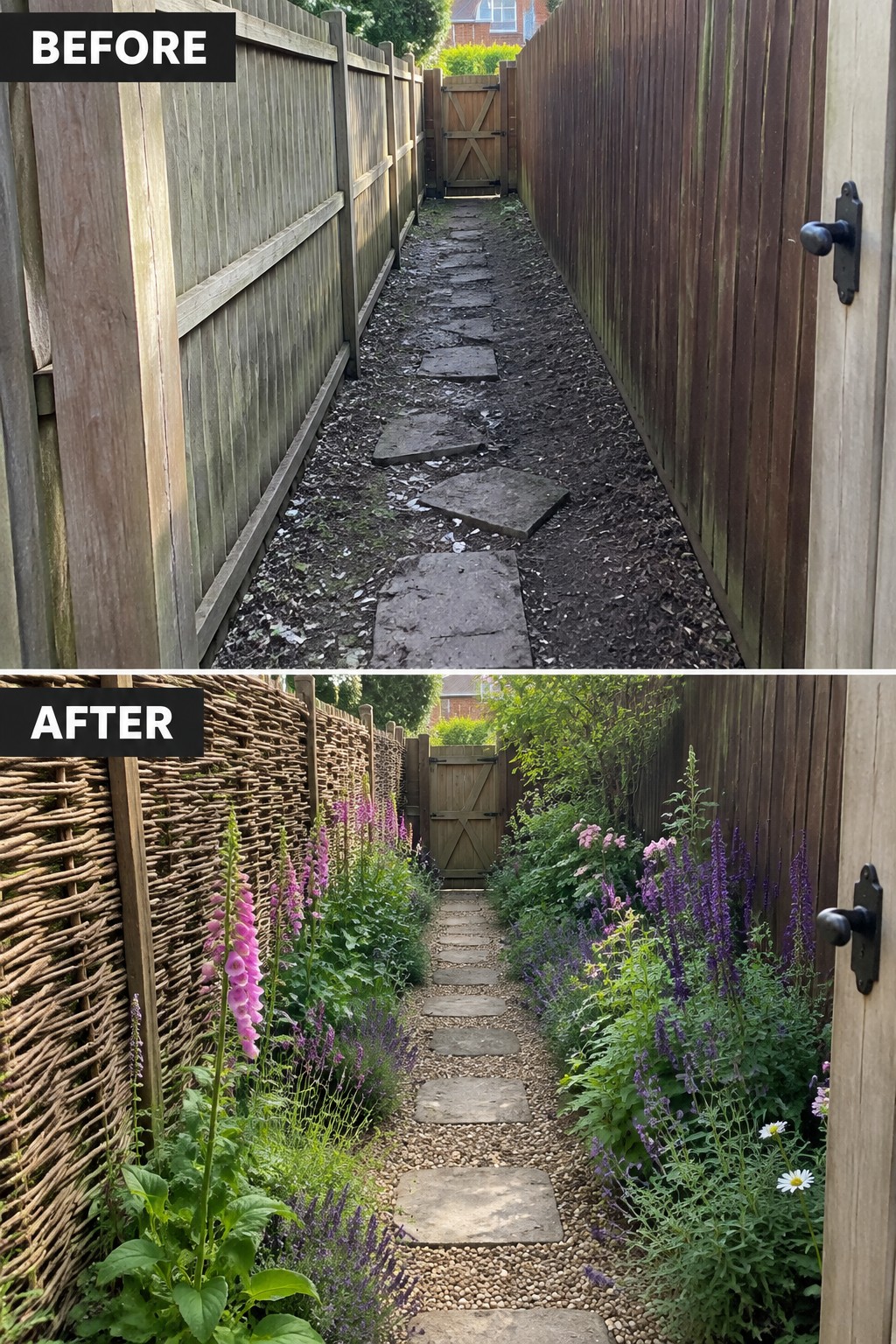
A narrow side passage often feels exposed when it is just dirt and a few loose stepping stones. Adding dense planting along both sides creates a green screen that makes the space feel private and much more pleasant to walk through.
This approach works especially well in tight areas between fences or neighboring houses. Choose a mix of tall perennials and shrubs suited to the light, then add gravel along the path so it stays usable and easy to maintain without crowding the walkway.
Screen A Narrow Backyard With Fencing And Planting

A long, narrow backyard often feels like wasted space when it is just open grass and weeds. Adding a solid fence along the sides and back, then layering in tall plants in front of it, turns the area into a defined outdoor room. The gravel base and simple seating make the space feel finished and usable instead of empty.
This approach works well on tight lots where you need privacy from neighbors without losing too much width. Keep the planting simple, repeat the same few shrubs or trees, and leave enough open ground in the middle for chairs and a small table. The fence does the heavy work, while the plants soften the edges and make the space feel more settled.
Add Privacy Screening With Trellis Panels And Vines

A bare dirt path next to the house offered no privacy and felt like wasted space. Fitting simple wooden trellis panels to the fence and planting climbing vines created a living screen that blocks the view while keeping the narrow strip usable.
This approach suits side yards or slim garden edges where full fencing would feel too heavy. Space the trellis sections evenly, pick vigorous climbers suited to your area, and keep the ground cover simple so the path stays clear for walking.
Add Privacy With Vertical Planting In A Narrow Patio

A bare concrete patio with nothing but a fence and a grill feels exposed and unused. Adding raised beds along the sides with tall trellises and climbing plants creates a living screen that blocks the view from neighbors while still letting in light. The plants soften the hard edges and turn the space into something that feels more like a room than an open slab.
This approach works well on narrow lots where there is not much width to work with. Keep the beds narrow so the walkway stays usable, and choose vines or tall leafy plants that grow quickly. String lights overhead help make the area feel cozy in the evening without needing a full roof or heavy structure.
Add Layered Privacy Screening To A Narrow Side Yard

A plain fence next to the house often leaves a narrow strip feeling exposed and unfinished. Adding a low stone wall at the base creates height and a clean planting area, while horizontal slats above block views without making the space feel closed in. The shrubs and simple lights then soften the line and make the whole edge usable at night.
This approach works well in tight side yards where full fencing would feel too heavy. Keep the wall low enough for planting pockets, choose slats with small gaps so air still moves through, and repeat the same shrub shape to keep the look calm. Start with the structure before adding lights or more plants.
Screen A Narrow Side Yard With Vertical Planting

A narrow side yard often ends up as wasted space because it feels exposed and hard to use. The main change here was adding a clear path and covering the fence with lattice and hanging planters. That simple step turned an open strip into a private walkway where plants now do the screening work instead of leaving everything visible from the neighbor’s side.
This approach works well on any long, tight space next to a house. Start with a basic path so the area feels intentional, then focus on the fence line. Vertical planters and lattice let you add greenery without eating into the limited width, and they create the privacy most people want in these spots. Keep the planting simple and repeat a few plant types so it stays easy to maintain.
Add Privacy Screening With Tall Grasses And A Reed Panel

A narrow backyard often feels exposed when the fence is low or worn. In this case the owners cleared the weeds and patchy grass first, then planted a row of tall ornamental grasses along one side and added a simple reed screen at the back. The grasses give height and movement while the screen blocks the view from neighboring houses, turning the space into a more private garden without crowding the lawn.
This idea suits long, tight yards where you need vertical screening but do not want to lose walking room. Choose grasses that stay fairly narrow at the base and a lightweight panel you can attach to posts or an existing fence. Keep the center open for the lawn and add a small seating spot against the screen so the area feels usable rather than just planted.
Add Privacy Screening To Make A Narrow Patio Feel Private

A bare concrete balcony with nothing but an umbrella feels wide open and rarely used. Adding a simple fabric privacy screen along the back fence changes the whole feel by blocking views and creating a defined boundary. Once that screen is up, a small sofa, rug, and a few potted plants are enough to turn the space into an actual room you can sit in.
This idea works best on narrow side patios or upper balconies where you need separation from neighbors or the street. Choose a screen that blends with your fence so it does not look like an afterthought, and keep the planting in large pots rather than trying to add permanent beds in a tight space.
Add Raised Beds To Give A Narrow Yard Clear Structure

A narrow side yard often stays as just a strip of grass because there is no clear way to use it. Raising the planting area into simple wooden beds turns the space into a defined garden instead of an afterthought, while the stone path keeps the center open and easy to walk through.
This idea suits homes where the side yard runs between the house and a fence. Keep the beds at a comfortable width so they do not crowd the walkway, and choose a path material that stays level with the surrounding ground. The dark fence panels at the back show how adding height at the end can give privacy without closing in the whole space.
Add A Privacy Screen To A Narrow Deck

An open deck with just a basic railing often feels too exposed for comfortable seating. Adding a horizontal slat screen along the side gives the space a clear boundary while still letting light and air through. The change turns the deck from a pass-through area into one that actually works for sitting.
This idea suits long, narrow decks that run along the house where full walls would feel heavy. Keep the screen material simple and match the tone to the deck so it blends in, then add a rug and seating to mark the spot. Leave enough open floor space for walking through.
Turn A Narrow Side Yard Into A Private Seating Area

A narrow side passage often gets ignored because it feels too tight and exposed. Adding tall planters with perforated screens creates privacy without making the space feel closed in, while gravel replaces the old concrete and gives the area a finished look. A simple bistro table and wall lantern then turn the leftover strip into a spot people actually use.
This idea suits homes where the side yard runs between a fence and a wall. Keep the furniture small, repeat the same lighting along the length if the space is longer, and make sure the screening panels still allow some airflow and light.
Frequently Asked Questions
Q: How tall should my privacy plants be to actually block views from neighbors?
A: Aim for plants that reach at least six feet once mature. Mix in some evergreen varieties so the screen stays full all year. This keeps things private without needing constant replacements.
Q: What if the soil in my narrow garden stays wet most of the time?
A: Choose plants that like moisture such as ferns or certain grasses. Raise the bed slightly with extra soil to improve drainage. You will avoid root rot and keep the screen healthy.
Q: Can I add lights to my narrow garden without making it look cluttered?
A: String small solar lights along the top of the screen. They highlight the plants at night and add a cozy feel. Stick to a few strands so the space stays open.
