

Many small gardens start out as flat open areas where everything blends together and nothing quite feels settled.
Adding simple dividers like low hedges or different ground materials helps mark off places for sitting and places for growing plants.
In my own yard I noticed that once I defined a seating zone the rest of the space started to make more sense.
Pathways that lead from one area to another make the garden feel larger and easier to move through on a regular basis.
Layout matters more than I expected.
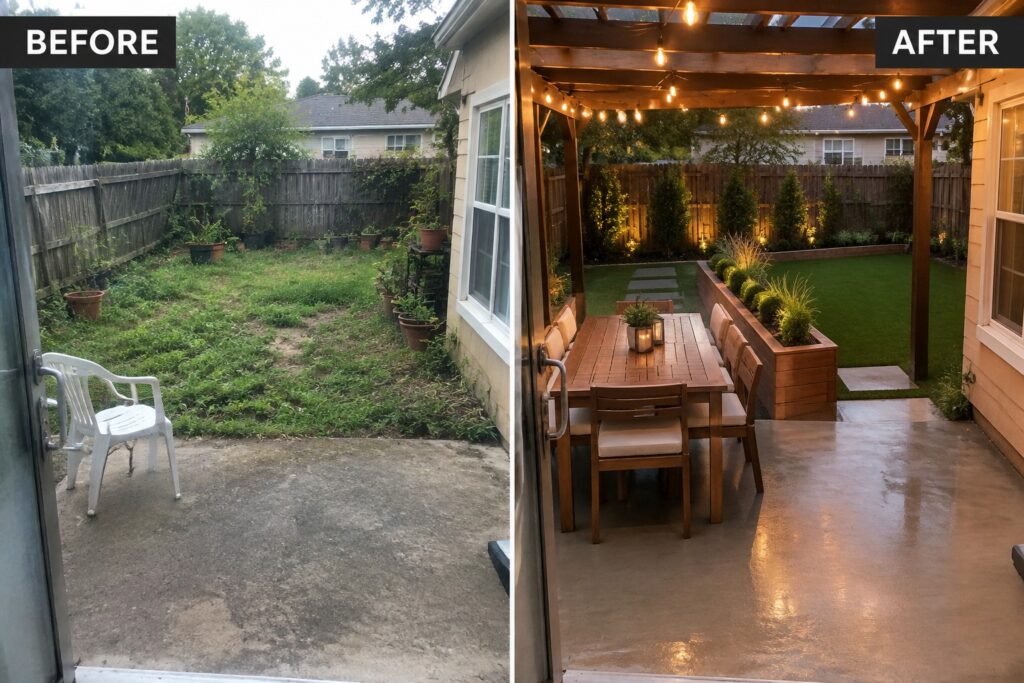
Use A Pergola To Define An Outdoor Dining Area

A bare concrete slab next to an overgrown yard rarely feels like a place to spend time. Adding a simple pergola with string lights and a long table underneath turns that same slab into a clear dining spot. The raised planters along the edge help separate the seating area from the lawn without needing a big fence or wall.
This approach works well in small backyards where you want more than one use for the space. Start with the pergola to mark the main zone, then add seating that fits the scale of the area. Keep the surrounding planting low and structured so the dining area stays usable instead of getting swallowed up by greenery.
Zone A Small Patio With Furniture And Planting

A bare concrete patio often feels like wasted space because nothing defines where to sit or where the plants belong. Adding a small table and chairs on one side, plus a narrow gravel path that runs down the middle, instantly splits the area into a seating zone and a planted border without needing major construction.
This approach works especially well in narrow side yards or small courtyards where every foot matters. Keep the furniture scale modest, use a simple path material to guide movement, and hang a few planters on the wall to add greenery without taking up floor space.
Use Raised Beds To Shape A Narrow Side Yard

Raised beds give a narrow, overgrown side yard a clear purpose instead of letting it stay a weedy walkway. The before photo shows how easily the space gets lost to weeds and random clutter. Once the beds go in, the gravel stays clean, the planting stays contained, and a bench fits naturally along one side without blocking the path.
This idea suits homes with tight side yards that still need both plants and a place to sit. Keep the beds low enough to match the fence height, leave at least three feet of walking space, and stick to a simple plant mix that can handle partial shade. The structure does most of the work, so you can add lights or cushions later without the area feeling crowded.
Turn A Plain Patio Into Separate Functional Zones

A bare concrete patio often feels like wasted space until you give it clear purpose. String lights along the fence and a large rug under the seating instantly mark one zone for relaxing, while the tall planter and grill station create a simple cooking area on the other side. The result feels like two small rooms instead of one empty slab.
This idea works best on small patios or balconies where every foot matters. Start by placing the rug and main seating first, then use a tall planter or low cabinet to separate the cooking spot. Keep pathways clear and choose weatherproof pieces so the zones stay practical through the seasons.
Turn Bare Ground Into A Defined Fire Pit Patio
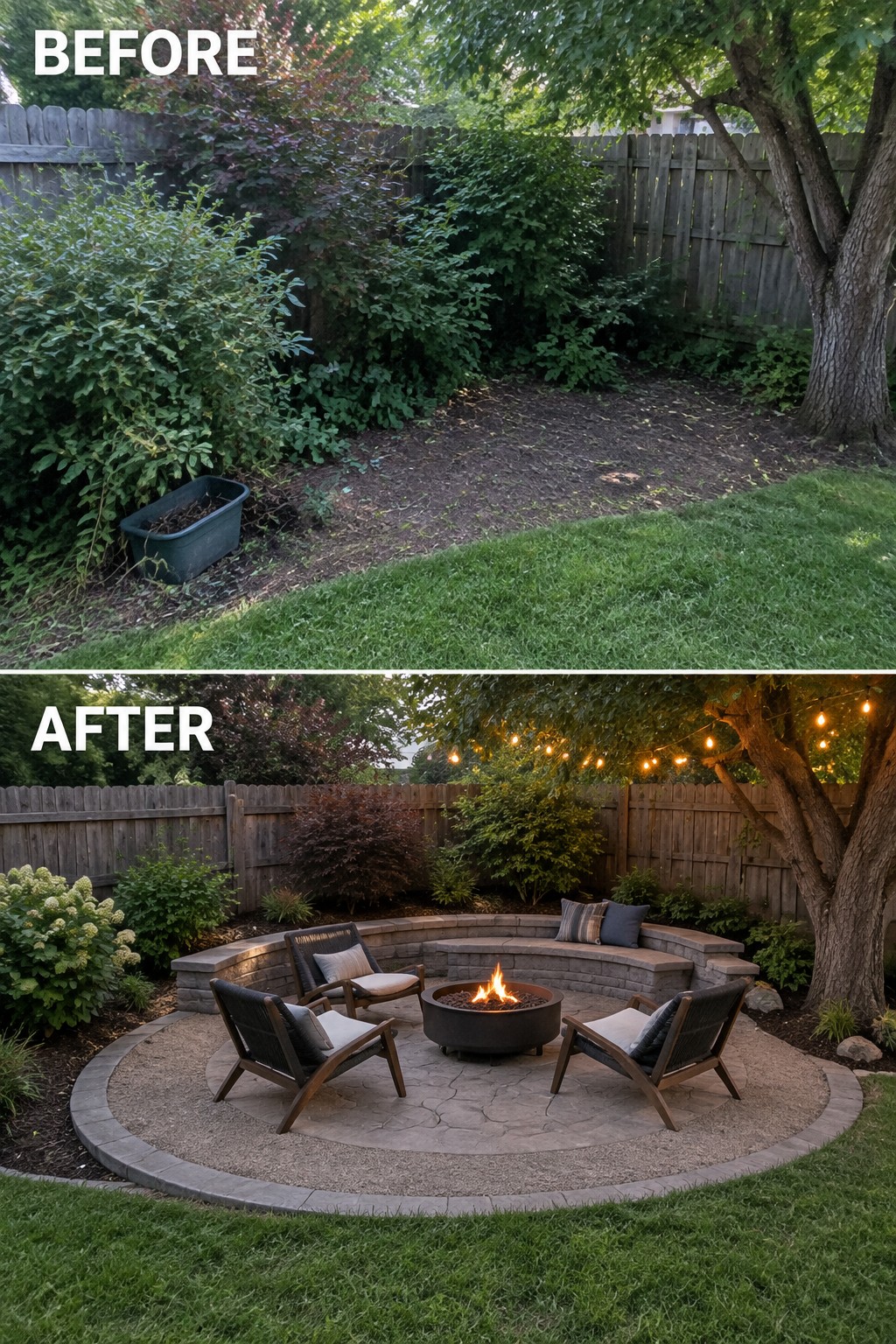
An empty patch of dirt and overgrown shrubs does not invite anyone to sit outside. Adding a simple circular patio with a fire pit in the center and chairs around it turns that same space into a place where people actually spend time. The stone edging and gravel base give the area clear boundaries so it feels like a separate room instead of leftover yard.
This approach works well in smaller gardens because the round layout keeps everything compact while still leaving room to walk around. Start with the hard surface and fire pit first, then add just enough seating for the number of people who will use it. String lights overhead help extend the hours the space feels usable without needing a full lighting plan.
Add Raised Beds To Give A Small Garden Clear Structure

A patchy lawn with no real planting zones can make a backyard feel more like extra grass than a usable space. Raised beds solve this by creating defined areas for growing, which instantly organizes the layout and makes the whole yard feel more intentional. In the after photo the beds sit neatly on gravel, separating vegetables from herbs and keeping everything easy to reach.
This approach works well in smaller yards where lawn care takes more effort than it is worth. Start with a few beds in the sunniest spots, fill them with good soil, and keep the paths wide enough to walk through comfortably. It turns neglected ground into something productive without needing a full redesign.
Create Separate Zones On A Small Patio
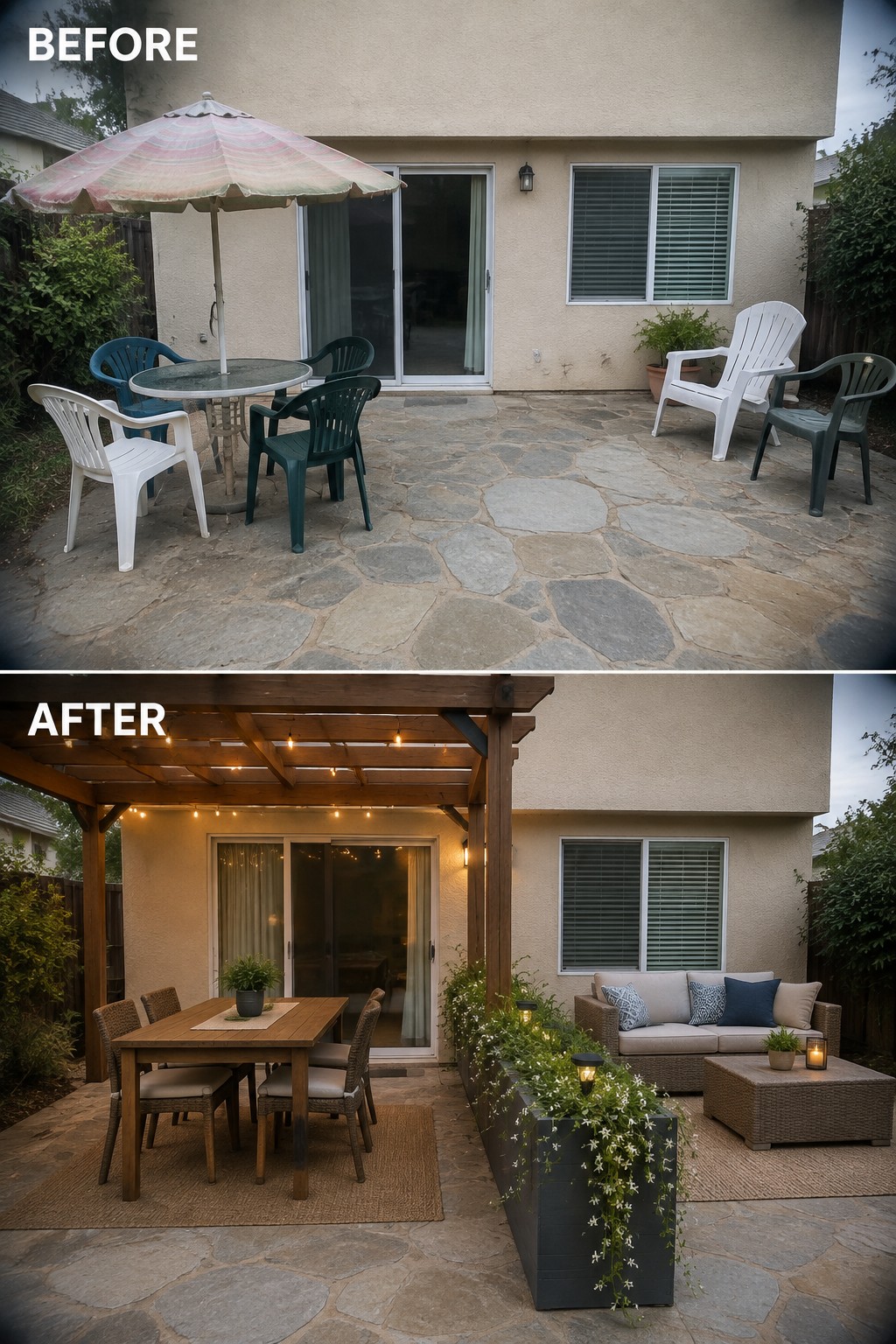
A plain concrete patio often feels like wasted space when it has no clear purpose. Adding a pergola overhead and splitting the area into a dining spot and a separate seating area gives the space two usable functions instead of one empty slab. The change from scattered plastic chairs to defined zones with a table on one side and a sofa on the other makes the patio feel much more intentional.
This approach works well on small yards where you need to fit more than one activity. Keep the zones modest in size, use a rug under each one to mark the boundary, and choose furniture that can stay outside. The key is leaving enough open space between the zones so people can move through without crowding.
Create Separate Zones With A Path And Garden Borders

A plain lawn often feels like wasted space because nothing tells you where to walk or what each area is for. Adding a central path with low stone edging splits the yard into clear sections. One side becomes a planted flower bed while the other turns into a small seating spot with mulch and a bench. The path keeps everything connected without letting the space feel scattered.
This idea works best in small front yards that need both planting room and a place to pause. Lay the path first so it leads naturally from the sidewalk to the door, then build the beds along the edges. Keep the plantings simple on one side and the seating area open on the other so the zones stay distinct but still easy to maintain.
Create Separate Functional Zones On A Small Balcony
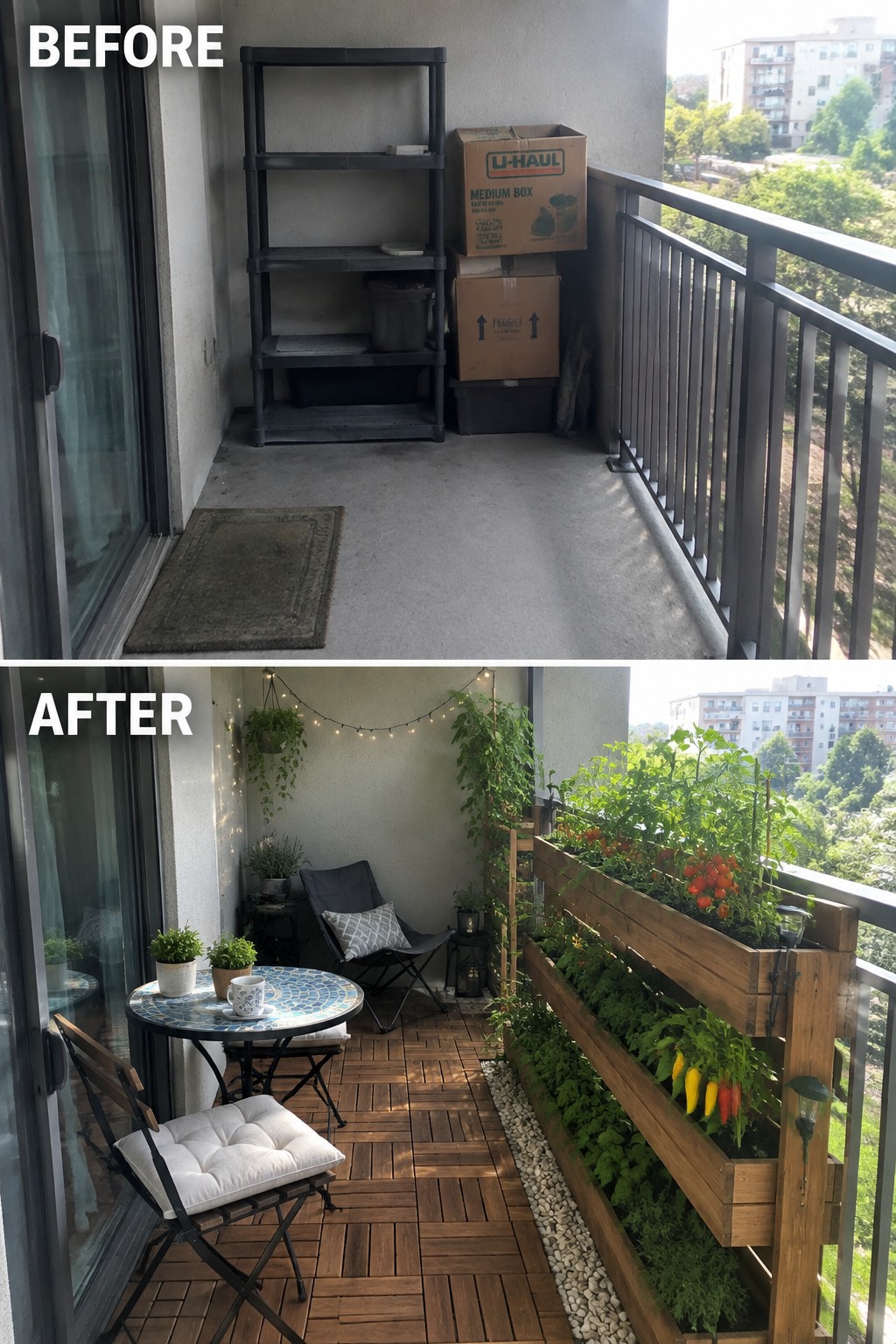
A cluttered balcony often stays empty because there is no clear sense of what goes where. In this case, the space went from storage shelves and moving boxes to two simple zones. One side holds a small table and chairs for sitting, while the other uses a tiered wooden planter to keep vegetables growing without taking up floor space.
This approach works well on narrow balconies or small patios where everything has to share one surface. Start by laying down deck tiles to mark the seating area, then place the main planter along the railing to keep the growing zone separate. The key is keeping both areas small enough that you can still walk through comfortably.
Divide A Small Backyard Into Functional Zones With A Path
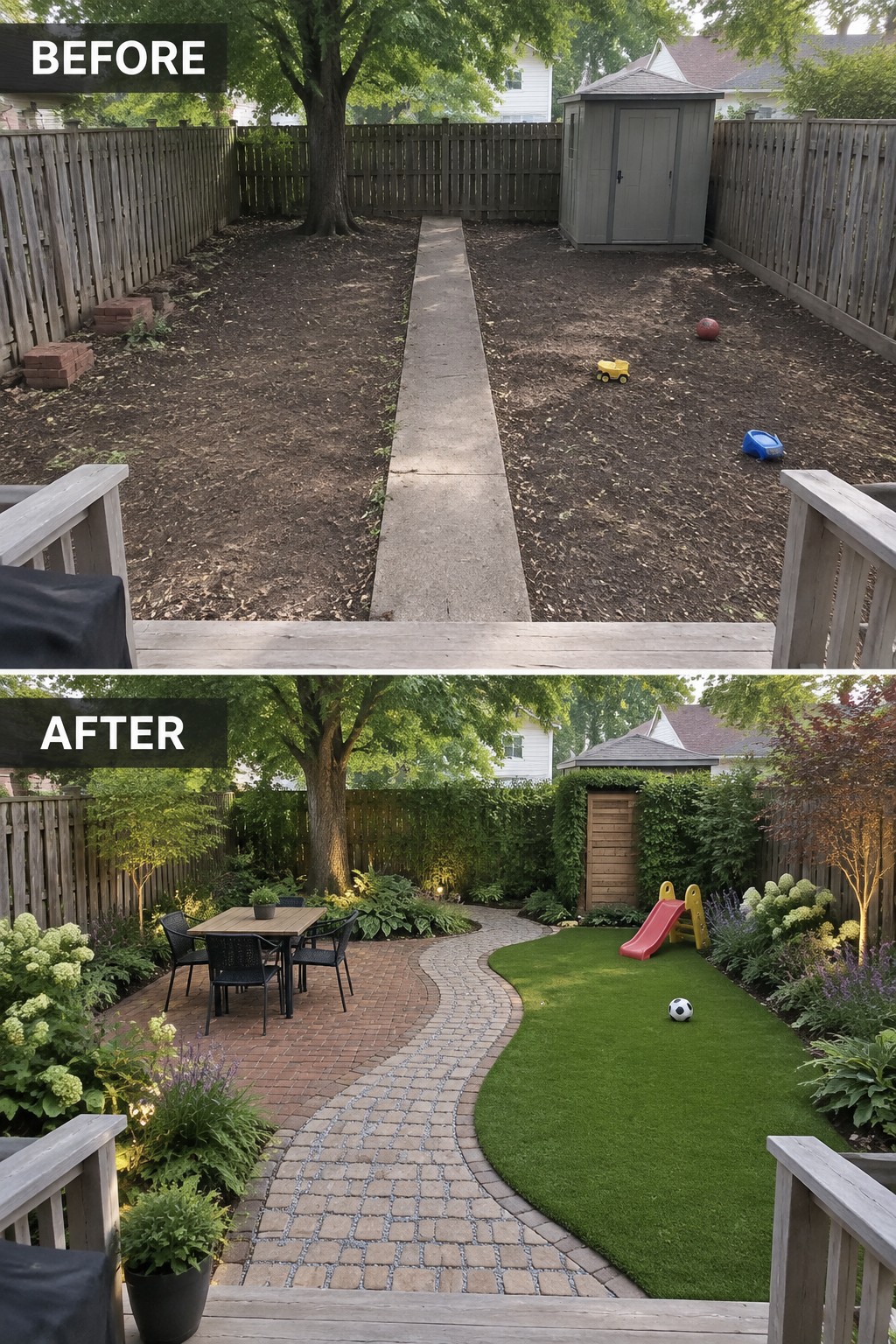
A straight concrete path across bare dirt leaves a backyard feeling like one empty room. The after version uses a curving brick path to split the space into a dining patio on the left and a small lawn on the right, with planting along the edges. That single change turns an open lot into two clear areas that can be used at the same time.
This layout works best in narrow or modest backyards where you need room for both seating and play without crowding everything together. Lay the path first to set the flow, then keep the materials simple so the zones stay connected. Avoid adding too many different surfaces or the space can start to feel chopped up.
Clear Overgrowth First To Create Garden Zones

An overgrown backyard often hides its real shape until you clear the dense growth and mud. Once that layer is removed, it becomes much easier to see where paths should run and where separate zones can sit without feeling cramped.
This approach works well in small gardens because it keeps the layout practical. Start with cleanup, then add one main path and a couple of simple features like a greenhouse or a small seating spot. Leave enough open space so each zone stays easy to reach and use.
Add A Divider To Create Separate Zones On A Small Balcony

A bare balcony often feels like one big empty slab until you add a simple vertical screen. In this case, the drying rack and single chair gave way to a wooden divider that splits the space into a small dining spot on one side and a plant-filled area on the other. The rugs help mark each zone clearly without any construction.
This approach works well on narrow balconies or terraces where you want more than one use out of the same square footage. Place the divider to block the least appealing view, then keep each side lightly furnished so there is still room to walk through. The same idea can turn a plain deck into a reading corner plus a meal area, as long as you match the scale of the furniture to the size of the space.
Divide A Small Garden Into Separate Functional Zones

One of the simplest ways to make a small garden feel more usable is to split it into clear zones instead of leaving it as one open space. The before photo shows a typical problem where everything sits on the same lawn with no real order. In the after, different ground materials separate the areas, so one part works for exercise and play while the other creates a quiet seating spot.
This idea works best when you decide on the main activities first, then mark them with simple changes like turf, gravel, or a low hedge. It stops the garden from looking cluttered and gives each section its own purpose without needing a lot of extra space or expensive features.
Create An Outdoor Dining Zone With Built-In Seating

In a small garden, the quickest way to make the space usable is to give it one clear job instead of leaving it as leftover ground. The before photo shows a patchy paved area taken over by weeds and a couple of old plastic chairs with nowhere comfortable to actually sit. Adding a built-in bench along the back wall and placing a simple table in front of it turns the same spot into a working dining area.
This idea suits narrow yards or side returns where you need to keep the middle open for movement. Build the bench to match the length of the wall, then choose a table that leaves room to pull chairs out. The raised planters on the side help mark where the dining zone ends without adding walls or screens. Keep the furniture scale modest so the space still feels open rather than crowded.
Define Small Front Spaces With Raised Garden Beds

A bare dirt patch right in front of the house makes the whole entry feel unfinished. Adding raised metal beds on both sides of a new paved path turns that empty space into two clear zones, one for planting and one for a small gravel seating area with a bench. The beds keep the soil contained, give the plants room to grow, and make the front look intentional instead of neglected.
This approach works well on narrow city lots where you need structure without taking up too much room. Start with the beds and path first so the layout stays simple, then fill the beds with a mix of taller and lower plants. Keep the gravel zone small enough that it still leaves walking space to the steps.
Add Structure To An Overgrown Backyard
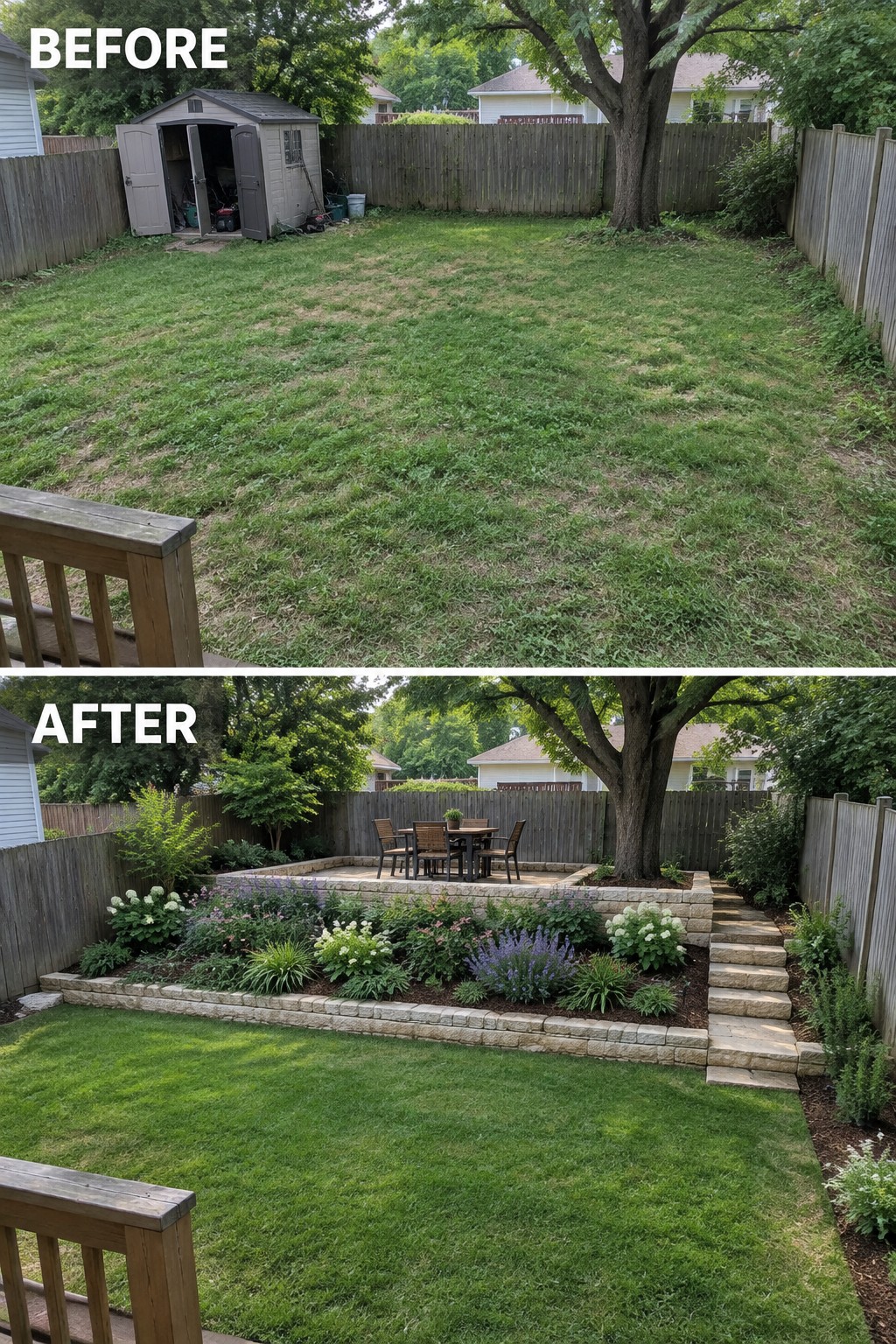
A blank, weedy yard often feels bigger than it is because nothing defines where one area ends and another begins. Adding stone-edged raised beds and a small patio instantly created separate zones for planting and seating while leaving the main lawn open and easy to mow.
This works best in small backyards where you want both garden space and room to relax without crowding everything together. Begin with the edging and beds first, then add furniture once the layout feels settled. Keep paths wide enough for walking and choose materials that handle weather without much upkeep.
Add A Pond To Define Zones In A Small Garden

A bare gravel yard with scattered pots feels aimless because there is no clear center or reason to linger. Adding a pond gives the space one strong focal point, and the stone path then leads the eye and foot traffic through the rest of the garden. The result is two simple zones instead of one empty rectangle.
This approach works best in narrow or small backyards where you need structure without crowding the space. Start with the pond and path first, then add planting around the edges. Keep the surrounding gravel or ground cover simple so the water stays the main feature and movement through the garden stays easy.
Create Separate Zones In A Small Backyard
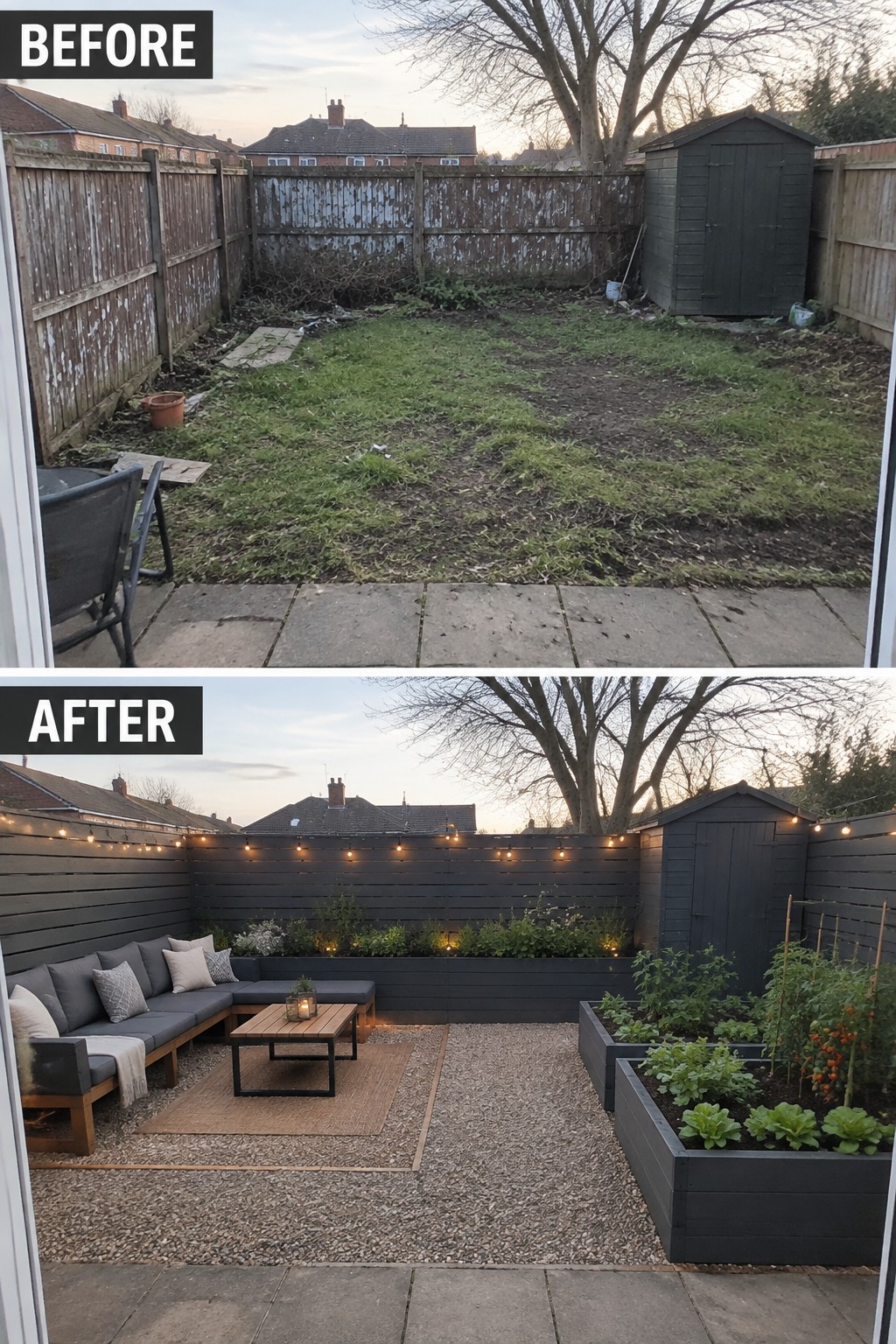
A messy yard often feels unusable because there is no clear sense of where one area ends and another begins. In this case, the space was split into a gravel seating zone with a rug and sofa, plus a separate area for raised beds. The different ground materials and the low walls of the planters make each part read as its own small room.
This idea works well in small gardens because it keeps everything in scale and prevents the space from feeling crowded. Decide first where you want to sit and where you want to grow, then mark those spots with gravel, pavers, or raised beds before adding furniture or plants.
Create Separate Zones In A Small Backyard
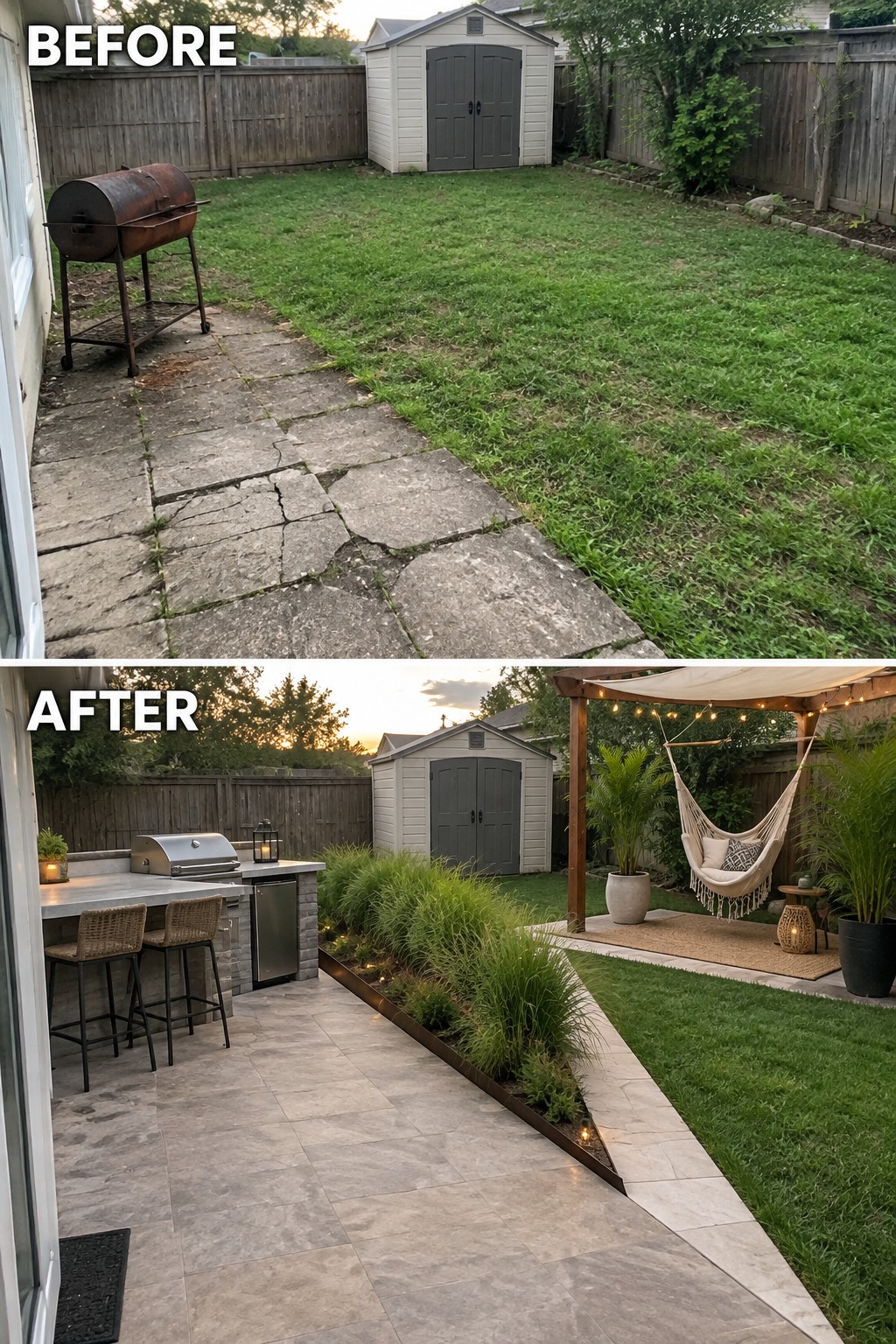
One practical way to improve a small backyard is to divide it into clear zones instead of leaving the whole space open. The cracked concrete path and empty lawn became a paved patio with an outdoor kitchen on one side and a separate hammock area on the other, which makes each part feel intentional.
This approach works best when you pick one main activity per zone and keep the rest simple. Lay paving for the busiest spot first, then use a rug or low plants to mark a second area so people know where to sit or walk without everything blending together.
Add Structure To An Overgrown Backyard
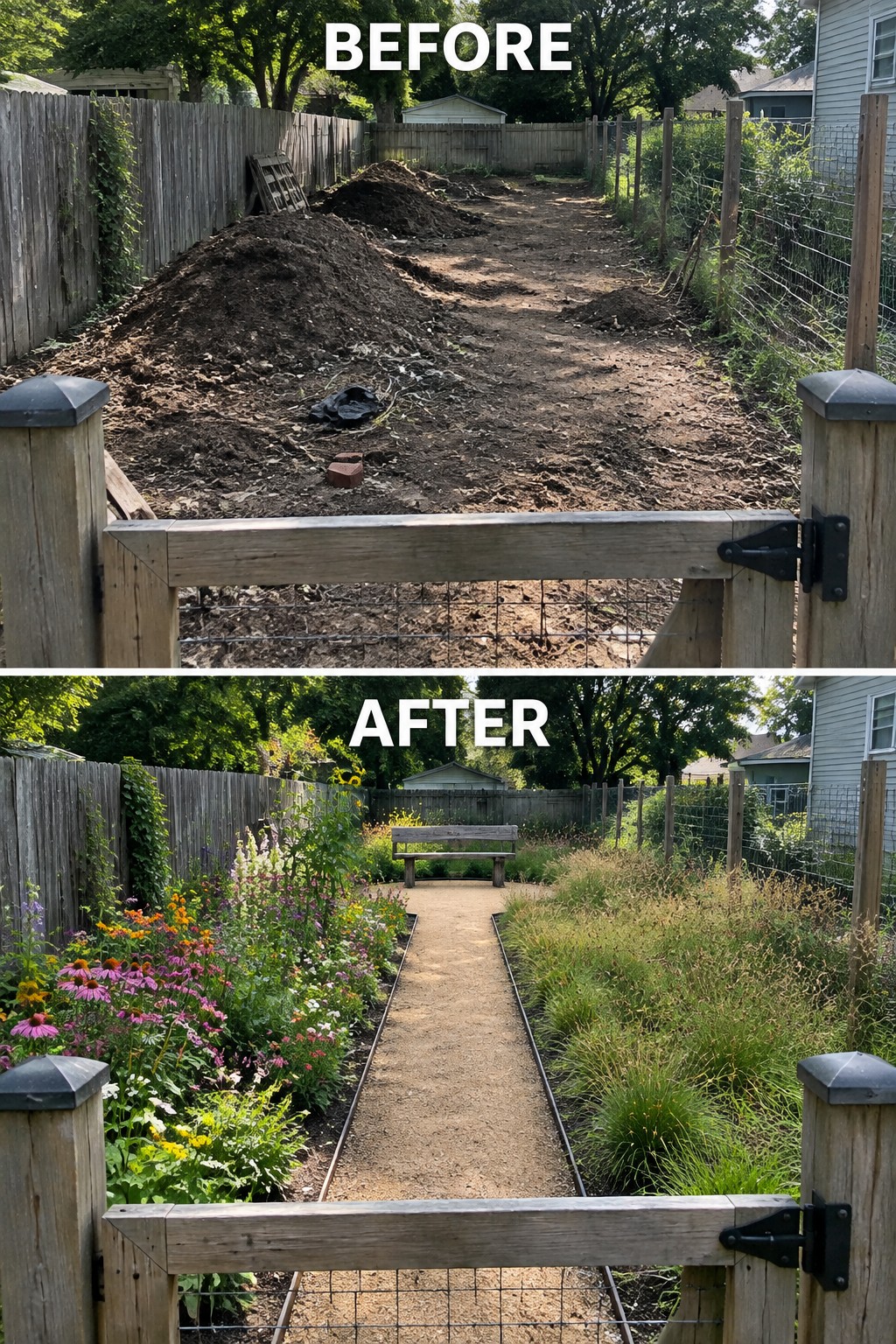
Clearing the mess first made the biggest difference here. The bare dirt path and leftover soil pile gave way to a simple gravel walkway that runs straight through the space, with planted borders on both sides that keep everything looking intentional instead of scattered.
This approach works especially well in long, narrow yards that feel aimless. Lay out the path first to create movement, then fill the beds on either side with whatever suits your light and soil. The bench at the far end shows how the path also helps mark a destination without crowding the space.
Turn A Narrow Side Passage Into An Outdoor Room

A cracked concrete path lined with overgrown plants rarely feels like a place to spend time. Laying a wooden deck down the center and adding a small table with chairs turns the same narrow space into a spot where you can sit and eat without feeling squeezed.
This idea works best in tight side yards or back passages where space is limited but you still want a usable outdoor area. Keep the deck narrow enough to leave walking room on one side, use raised planters to hold the planting in check, and choose furniture that can stay outside year round.
Define Separate Zones In A Small Backyard
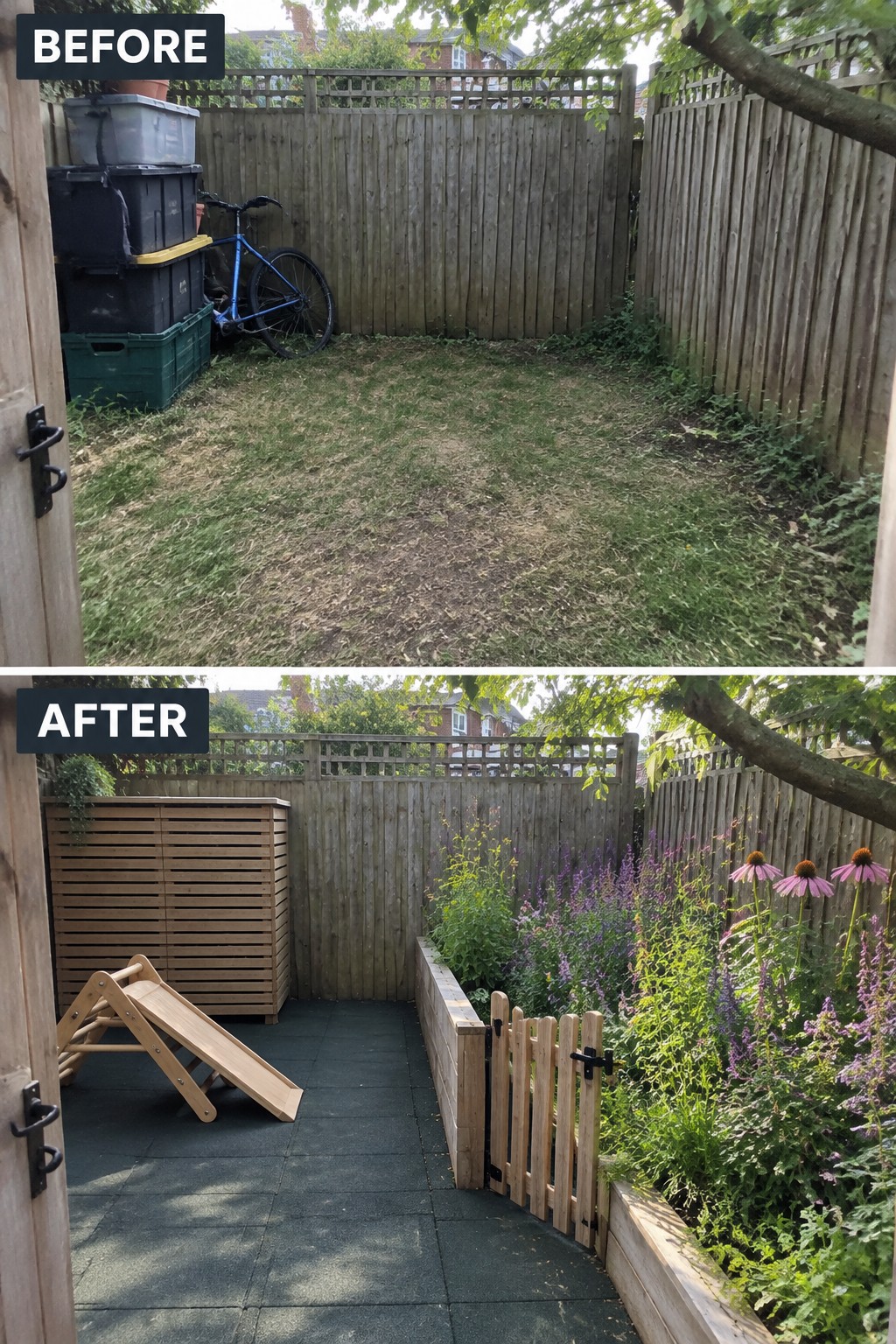
A patchy lawn and scattered storage made this yard feel like leftover space. The makeover added dark paving on one side for play equipment and a low wooden divider to mark off a raised planting bed on the other. The simple fence and change in ground surface instantly created two clear areas without crowding the yard.
This approach works well in narrow or small gardens where you need room for both kids and plants. Start with the divider and paving first, then add planting. Keep the zones modest in size so there is still open ground to move through and the space does not feel chopped up.
Add Raised Beds To Create Zones In A Small Garden

A flat lawn often leaves a yard feeling unfinished because there is no clear way to use different parts of the space. Adding raised beds with solid walls and a path through the middle turns the open area into separate spots for growing vegetables, herbs, and shrubs while still leaving room to walk.
This idea suits small gardens where you need more than one function in the same yard. Keep the beds simple and the path wide enough for easy movement, then plant each section with different heights and types so the zones feel distinct without looking crowded.
Create Separate Functional Zones With Hardscaping
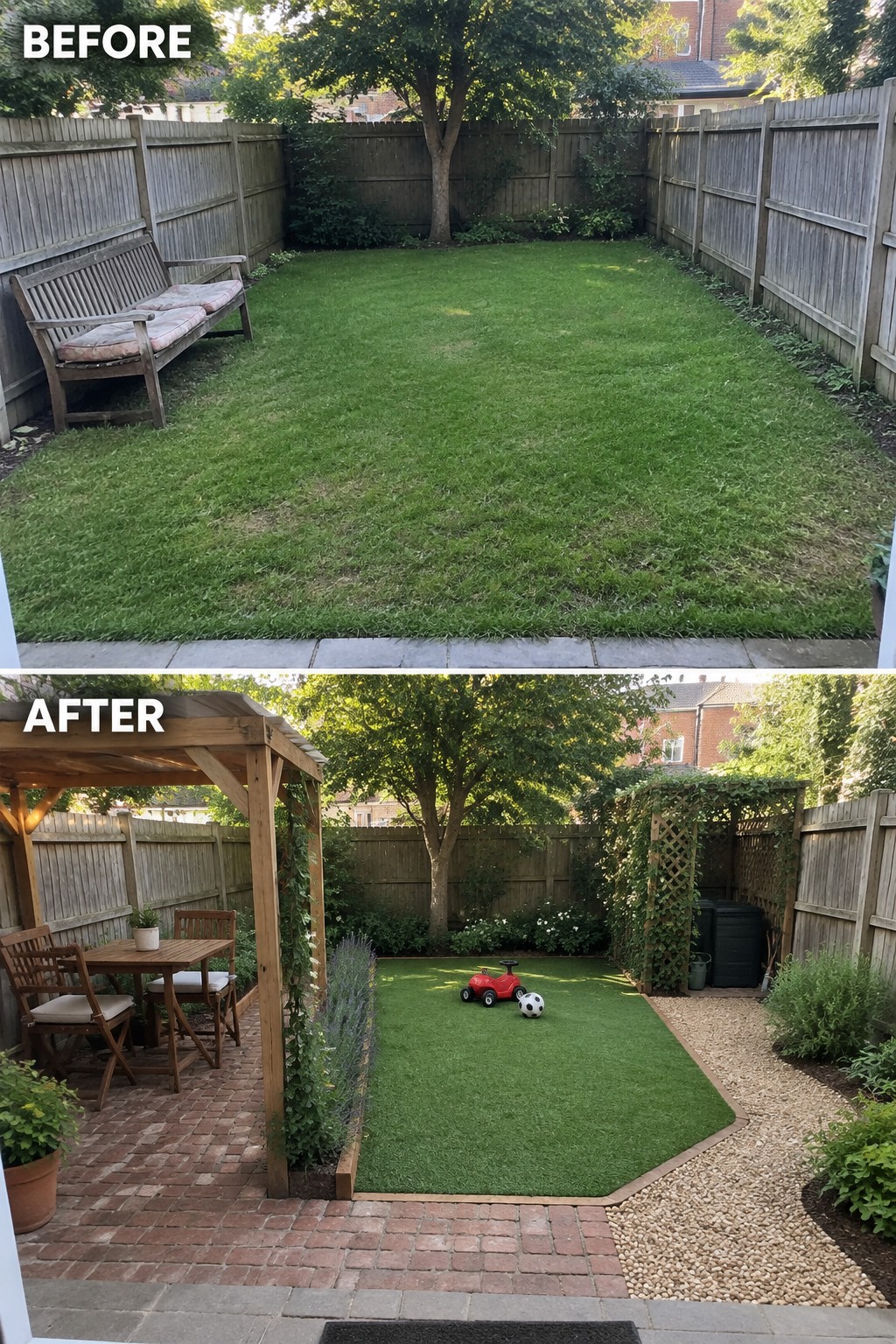
A plain lawn often feels like wasted space because nothing tells you where to sit, walk, or play. Adding a brick patio under a pergola, a gravel path, and a neatly edged turf area instantly splits the yard into a dining spot, a walkway, and a small play zone. The change works because the hard surfaces give clear boundaries without needing walls or fences.
This approach suits small backyards where you want more than one use from the same patch of ground. Start with the largest zone you need most, such as seating or a path, then add the others around it. Keep the planted edges simple so the zones stay easy to mow and maintain over time.
Define Separate Zones In A Small Garden
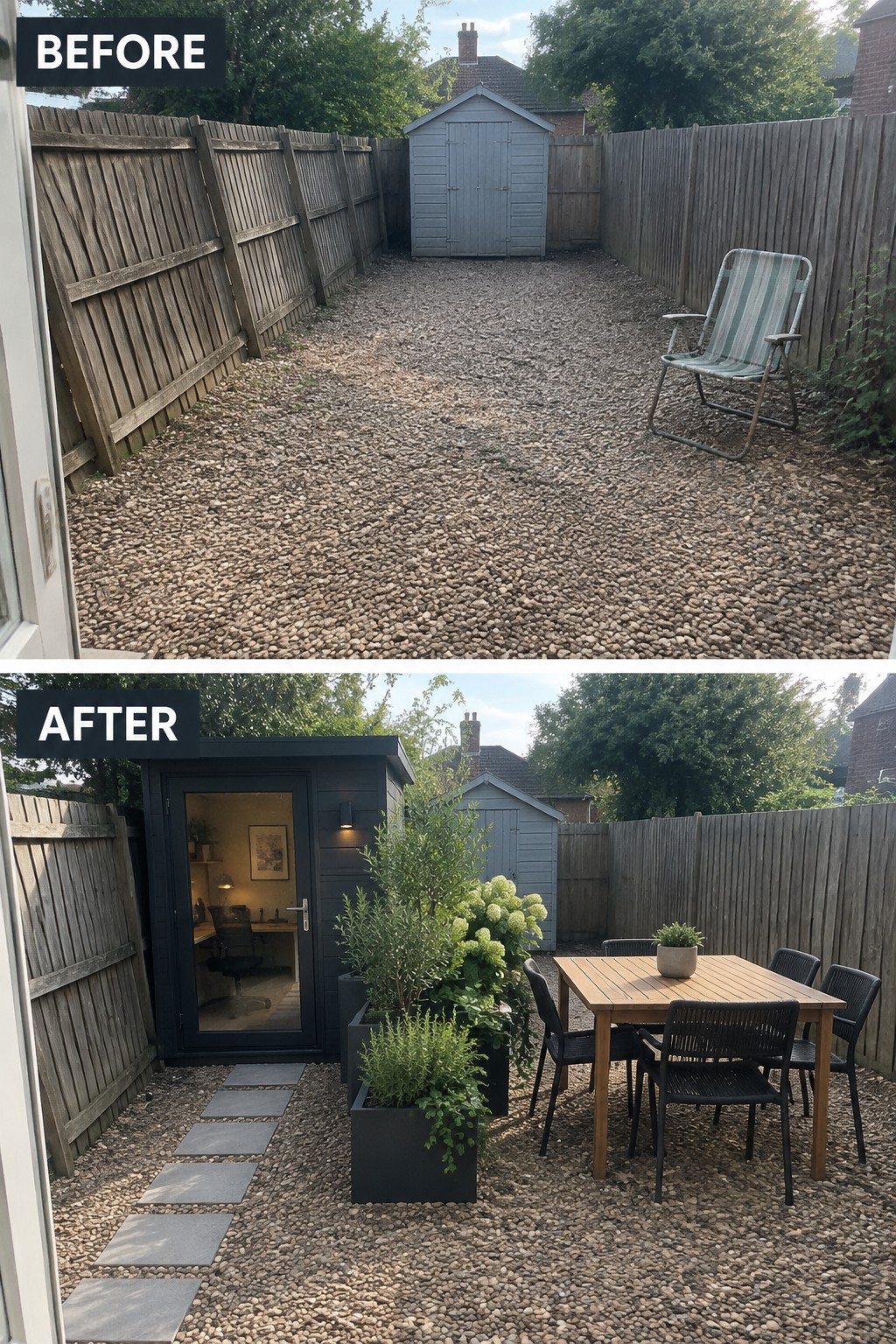
A gravel yard with one shed and a single chair feels like leftover space rather than a place to spend time. Adding a short path of stepping stones, a few large planters, and a dining table immediately splits the area into an office zone around the shed and a separate seating zone a few steps away. The gravel stays in place, but the new layout shows where each activity belongs.
This works best in small or narrow gardens where you need more than one use without crowding the space. Start by placing the biggest item first, then use a simple path or a cluster of pots to mark the edge of the next zone. Keep the rest of the surface open so movement stays easy and the zones stay clear.
Frequently Asked Questions
Q: How do I mark off a dining area without making the whole garden feel smaller? A: Lay down a simple rug or gravel patch under the table and chairs. This pulls the eye to that spot while the rest of the garden stays open. Add one or two potted herbs nearby so the zone feels useful right away.
Q: What if I want a quiet corner for reading but still need space for pots? A: Tuck a single chair against a fence or shed wall and set two large planters on either side. The plants act like soft walls and give you privacy without extra structures. Keep the chair facing inward so the area feels tucked away.
Q: Can I add a small play spot for kids in the same tiny yard? A: Choose a corner with soft grass or mulch and place a low storage bench along one edge. Kids can use the bench for toys while the rest of the garden stays for grown-up zones. But start with just one feature so the space does not get overcrowded.
