


I have always noticed that flower beds start to lose their shape once the edges soften and the surrounding grass begins to wander in.
Over time that lack of definition makes the whole bed feel less like a deliberate planting and more like an afterthought.
A few clean cuts change that fast.
I usually test a simple border first in my own yard to see how the plants settle before I add anything new.
The beds end up looking more contained and the rest of the garden feels easier to keep neat.
Add Metal Edging To Give Flower Beds Clean Lines

A weedy dirt strip along the house can look neglected fast. Adding a simple metal border and filling the bed with gravel turns the same space into something that feels planned and stays that way with less work.
This approach works well on narrow foundation beds where you want a tidy look without constant weeding. Set the edging first to hold the shape, then use gravel to cover the soil and repeat a few sturdy plants so the bed stays structured through the seasons.
Add Defined Edges To Shape Up Front Beds

The main change here is the addition of a low stone border that turns a messy, overgrown strip into a clear, contained flower bed. Once the wild growth was cleared, the new rounded shrubs and simple plantings sit neatly inside the edge, which makes the whole front of the house look more intentional without needing a big redesign.
This approach works well on older homes where the foundation planting has gotten away from you. Start by deciding on the shape you want, then add a simple edging material like stone or pavers before you plant. Keep the bed a consistent depth so it does not fight the lawn line, and stick to a few repeated plant shapes rather than scattering too many varieties.
Add Structure To Narrow Side Yards

A narrow side yard often ends up as the most neglected part of the yard, filling with weeds because it feels too tight to work with. The simple fix shown here is to clear the overgrowth first, then plant in repeated clumps of one low grass. The clean edge along the gravel path and the small lights keep everything looking intentional instead of messy.
This approach works well along fences, between houses, or anywhere the space is long and skinny. Keep the planting simple, use one or two repeating plants, and add a few lights so the bed looks finished at night. Skip extra flowers or objects that would crowd the narrow strip.
Define Flower Beds With Raised Planter Boxes

The front bed here went from a loose mix of plants that spilled onto the lawn to a much tidier setup. Three simple wooden boxes now sit on a gravel strip, each holding a small group of plants with clear space between them. The change gives the entry a neater look without needing a full garden redesign.
This approach works well along a walkway or right next to steps where you want the beds to feel intentional. Keep the boxes low so they do not block the door or window, and repeat the same plants across each one to avoid a scattered look. Gravel or mulch between the boxes helps keep the edges sharp and cuts down on weeding.
Add Edging To Create Structured Flower Beds
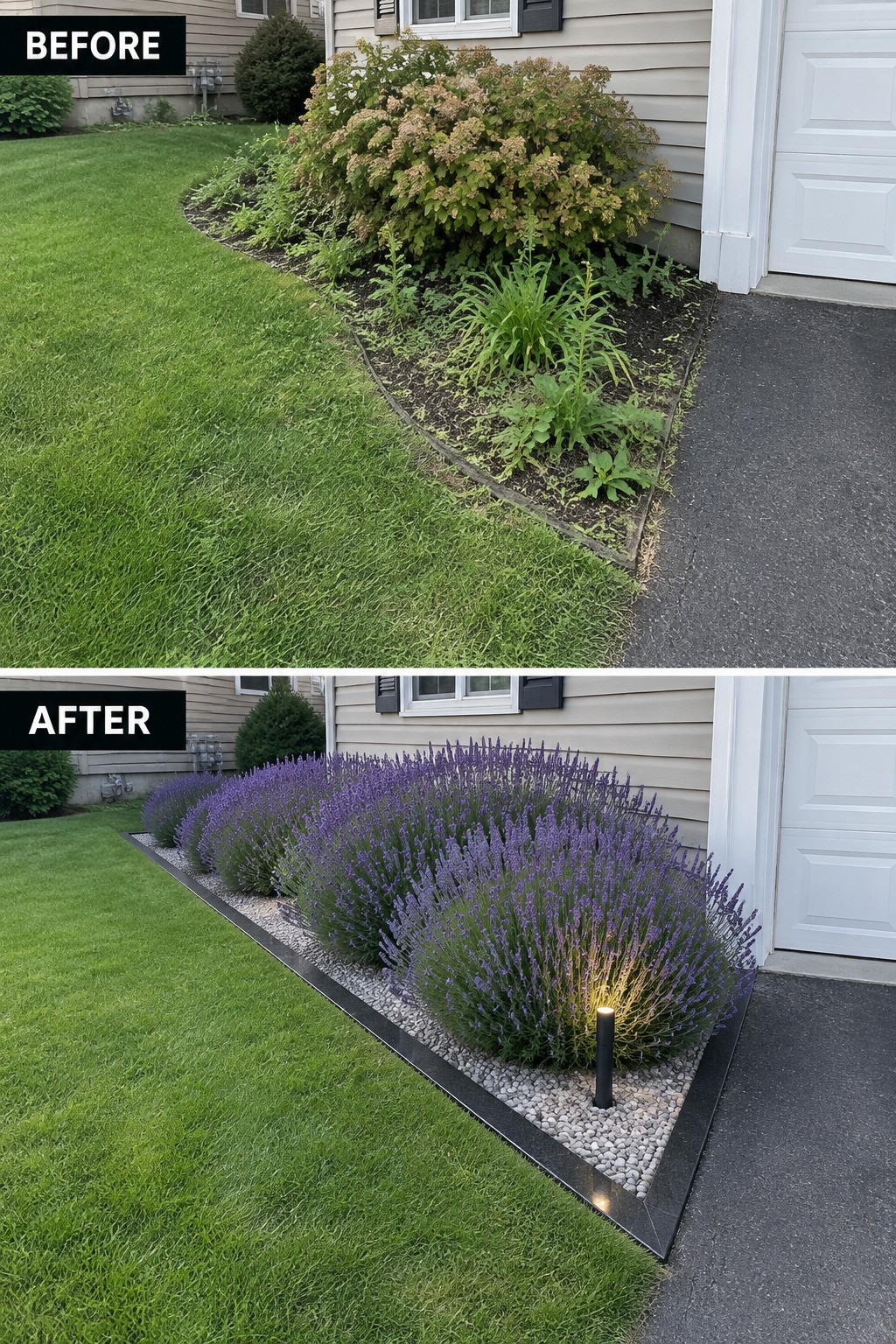
The main change here is how the bed went from a loose, weedy strip along the house to a clearly bordered space. Black edging holds everything in place, white gravel replaces bare soil and weeds, and the planting is now a single row of lavender that stays neat instead of mixing with random growth.
This approach works well along a foundation or walkway where you want the bed to look intentional rather than just leftover lawn space. Start by laying a simple metal or plastic edge to set the shape, then add a few inches of gravel before planting. It keeps the bed looking tidy with very little ongoing work and makes even a basic plant choice feel more finished.
Add Structure To A Messy Fence Line With Raised Planters

An overgrown strip along a fence or driveway often looks worse the longer it sits. The fix here was simple. Instead of trying to tame every plant, the whole area got cleared and replaced with a straight row of matching raised planters. That one change turned a wild border into something that feels intentional and easy to maintain.
This approach works well on long fence runs next to gravel paths or driveways where you need a clear edge without constant trimming. Start by removing the worst of the overgrowth, then set the planters on a simple mulch bed. Choose a few repeating plant shapes so the row stays calm instead of busy. The metal boxes here give the right amount of weight and keep everything looking neat year after year.
Add Structured Beds To Frame The Entry
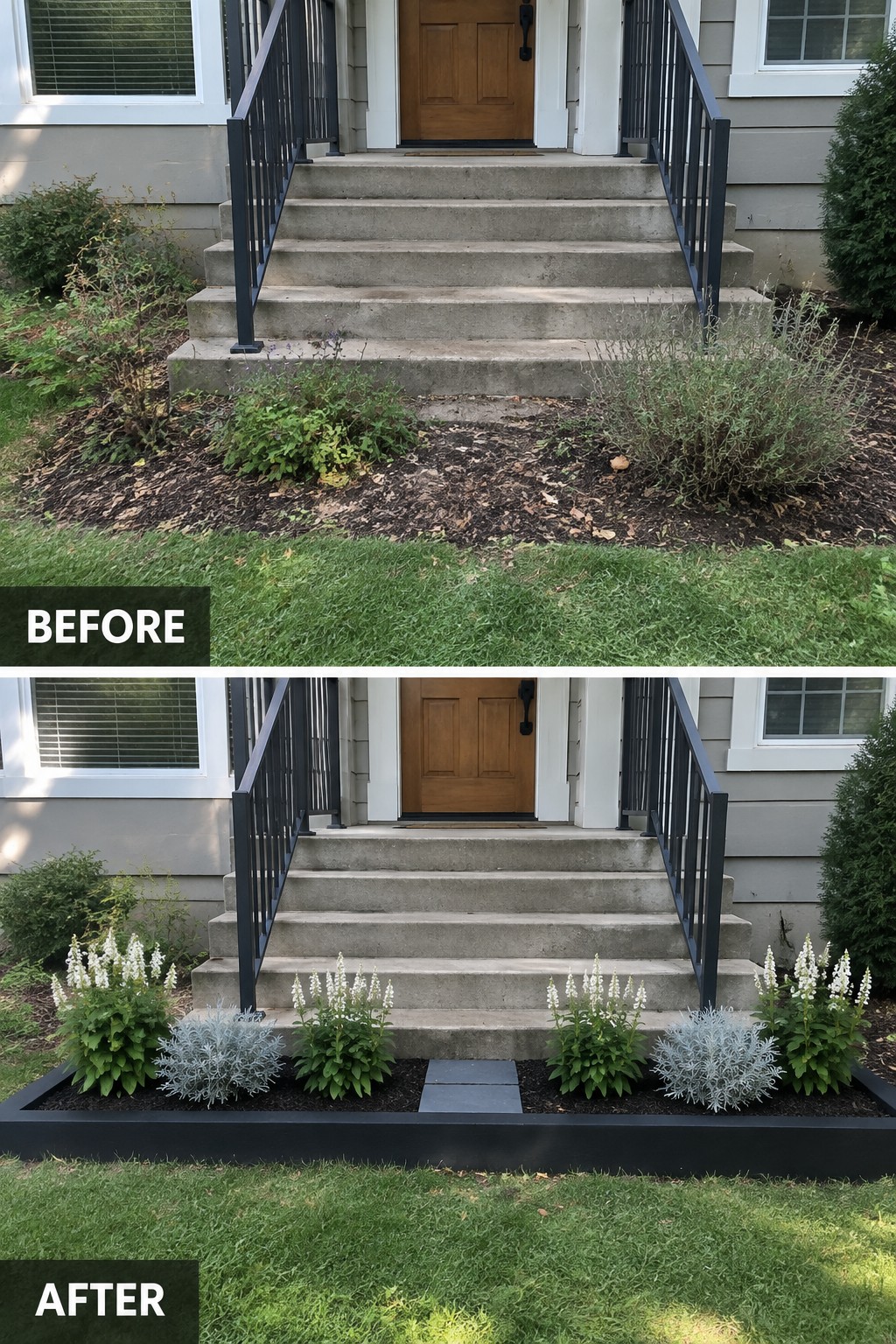
The main change here is replacing scattered plants and uneven ground cover with one long, black-edged bed that runs along the base of the steps. The clean border pulls the whole front together and makes the entrance feel like it was planned instead of left to grow wild.
This approach works best on homes where the steps sit close to the lawn and the space feels a bit messy. Install a simple metal or composite border first, then plant in groups rather than scattering single plants. It keeps maintenance lower and gives even a small front area a finished look without major construction.
Add Retaining Walls To Create Tiered Flower Beds On A Slope

A sloped side yard tends to wash out and look unkempt because nothing stays in place. Low retaining walls solve this by turning the hill into flat, usable beds that keep soil where it belongs and give the planting clear edges. Here the change is simple. The loose, weedy slope became three stacked beds with straight lines and room for actual planting.
This idea works best on yards where the grade is too steep for regular garden beds but not so steep that you need major engineering. Build the walls first, then plant in layers so taller grasses sit at the back and lower plants stay visible from the seating area. Use the same wall material along the whole length so the beds feel like one planned feature instead of separate patches.
Create A Structured Gravel Garden In An Overgrown Front Bed

Clearing out the old overgrown shrub and replacing the bare dirt with gravel made the biggest difference here. The new bed uses simple concrete blocks and a low metal edge to give the space clear shape instead of letting plants sprawl wherever they want.
This idea works best along the front of a house where the bed sits right next to the walkway or steps. Start by removing whatever is there, lay down gravel for a clean base, and keep the planting simple with a few larger succulents or small shrubs. It keeps the area looking neat without much ongoing work.
Add Clean Lines To Front Beds With Repeated Shrubs

The before photo shows a messy mix of different shrubs and bushes that had grown together without any clear shape. In the after photo, the same area has been replaced with rows of matching shrubs set into gravel beds with simple stone edging. The change makes the front of the house look much more orderly and pulled together.
This idea works best on homes where the foundation planting has become overgrown. Clear out the old mix first, then plant one or two shrub varieties in even rows and add a low border to hold the gravel. It gives the beds a finished look without requiring a big budget or complicated layout.
Give Flower Beds Clean Lines With Simple Edging
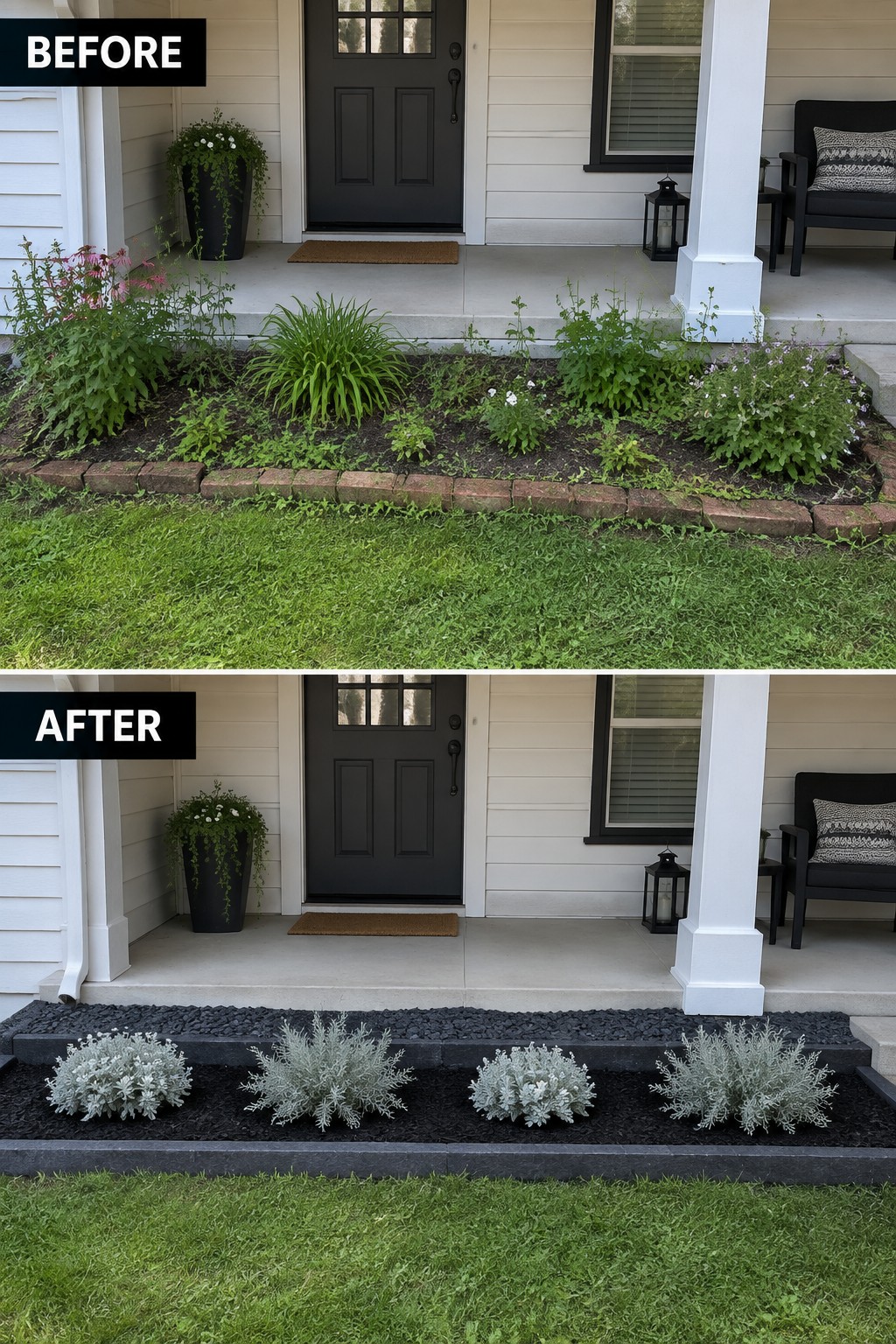
The front bed here went from a messy mix of tall grasses, pink flowers, and scattered plants to a low, even row of silvery shrubs set in dark mulch. The new edging creates a sharp border that keeps everything looking intentional instead of overgrown. That single change makes the whole front of the house feel more pulled together.
This approach works well on small front beds or along a walkway where you want order without a lot of upkeep. Start by clearing out the old plants, add a solid edge that matches your house, then fill with just one or two types of low shrubs and a dark mulch. It keeps the bed looking neat even when the plants are still filling in.
Define Flower Beds With Raised Concrete Edging

One simple way to fix a messy border is to add raised beds with solid edges. The before photo shows plants spilling out with no clear shape. After, the same spot has an L-shaped concrete planter that keeps everything contained and looking deliberate.
This works best along a house wall where you want low upkeep and a tidy appearance. Use simple shrubs and flowers inside the beds so the clean lines stay the main feature. It also makes future weeding and mulching much easier.
Use Metal Edging To Define Walkway Flower Beds

The path used to disappear under spilling plants because the beds had no clear boundaries. Metal edging and a gravel strip now hold everything in place, giving the walkway room to breathe and making the planting look intentional instead of messy.
This works best along front walks or house foundations where you want low upkeep and a tidy edge. Clean out the worst overgrowth first, install edging that follows the path, then choose plants that stay compact within the lines rather than trying to fill every inch at once.
Add Structure To An Overgrown Border

An overgrown strip along a fence often looks worse the longer it sits. Clearing the weeds first and adding a simple wooden edge with gravel inside gives the space a clear shape. The repeating round shrubs and silvery plants then keep the planting easy to read instead of chaotic.
This idea suits narrow side yards or fence lines where you want low maintenance and a finished look without crowding the area. Keep the plant choices limited to two or three shapes, and make sure the edging sits level so the gravel stays in place over time.
Define An Overgrown Border With Clean Edging

The main change here is simple. The before photo shows a messy mix of tall weeds and sprawling plants spilling onto the patio. In the after photo the same strip has been cleared and replanted with low boxy shrubs and neat clumps of grass, then finished with a narrow gravel edge. That single line of gravel keeps everything in place and gives the whole side of the yard a tidy, finished look.
This idea works best along patios or fences where space is tight. Start by cutting everything back hard so you can see the actual shape of the bed. Then add one clear edging material, like gravel or steel, and choose plants that stay compact. The result feels planned without needing a big budget or lots of new features.
Define Garden Beds With A Gravel Edge
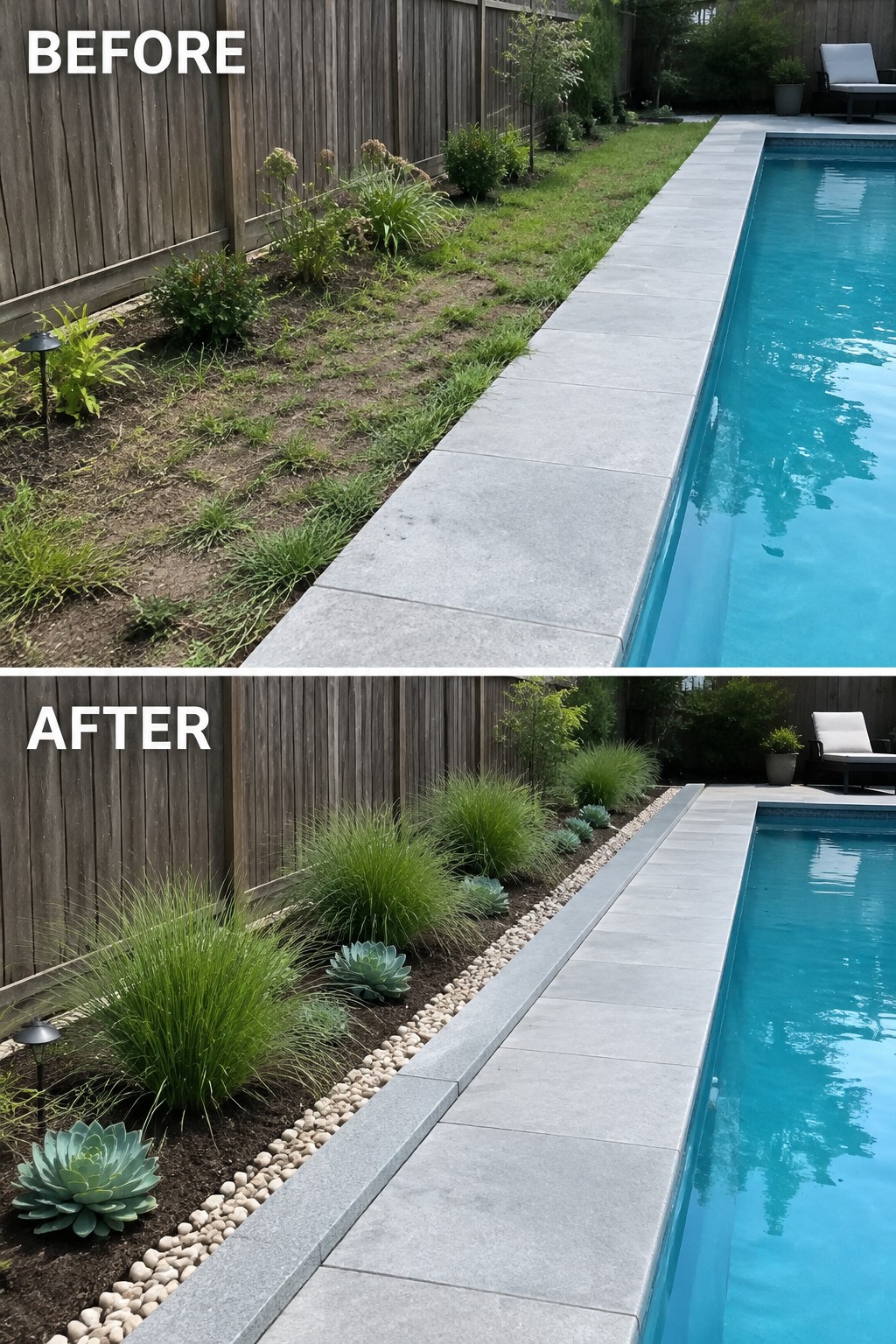
The strip along the fence next to the pool was mostly weeds and patchy grass that ran straight into the concrete deck. Adding a narrow gravel border and a row of simple plants gave the space a clear boundary and made the whole side of the yard look intentional instead of forgotten.
This idea works best where planting meets hard surfaces like pool decks or patios. Clear the overgrowth first, then use gravel or pebbles to hold the soil in place and keep the edge sharp. Ornamental grasses and succulents stay neat with little upkeep and suit most backyard settings without crowding the walkway.
Add Clean Lines To Your Flower Beds

A common problem with older planting strips is that they end up looking scattered after a few seasons. The mulch spreads, plants grow at different rates, and the whole bed starts to feel unplanned. Adding a clear grass edge and a simple rock border pulls the area together and makes the plants look more intentional.
This idea works especially well along sidewalks where the bed meets the lawn. Keep the planting simple, use one border material to create a straight line, and let the grass do the rest of the edging work. It is an easy update that makes the whole front yard feel more cared for without needing a full redesign.
Add Structure To An Overgrown Garden Bed

One simple way to fix a messy planting area is to give it a clear border first. The wild shrub that had taken over the corner was replaced with a low concrete edge that holds everything in place and creates a tidy shape against the driveway and house wall.
This idea works best in small side areas or foundation beds where plants tend to sprawl. Keep the inside simple with gravel or pebbles and a few compact shrubs so the bed stays neat without much upkeep.
Add Clean Edges To An Overgrown Flower Bed

The before photo shows a messy mix of tall plants and weeds spilling out of a loose circle. In the after, a low stone border and a ring of boxwood shrubs create a clear shape, with gravel keeping the inside tidy. That simple change turns the bed from something that looked neglected into something that looks intentional.
This idea works best on front yard beds that have grown wild over time. Clear out the overgrowth first, then put in a border that follows the shape you want. Use one or two repeating plants along the edge so the bed feels organized without needing lots of different flowers.
Add Defined Edges To Flower Beds

The main change here is moving from loose, overgrown plantings to beds with clear borders. Gravel strips and low boxwood hedges create straight lines that keep everything in place and make the walkway feel more intentional. Once the beds have shape, even simple plants look more finished.
This approach works well on smaller front yards where you want order without adding too much. Start by clearing out whatever is there, then mark straight or gently curved edges before you plant. Gravel or mulch along the border helps maintain the lines over time and keeps grass from creeping in.
Add A Low Border To Give Foundation Beds Clean Lines
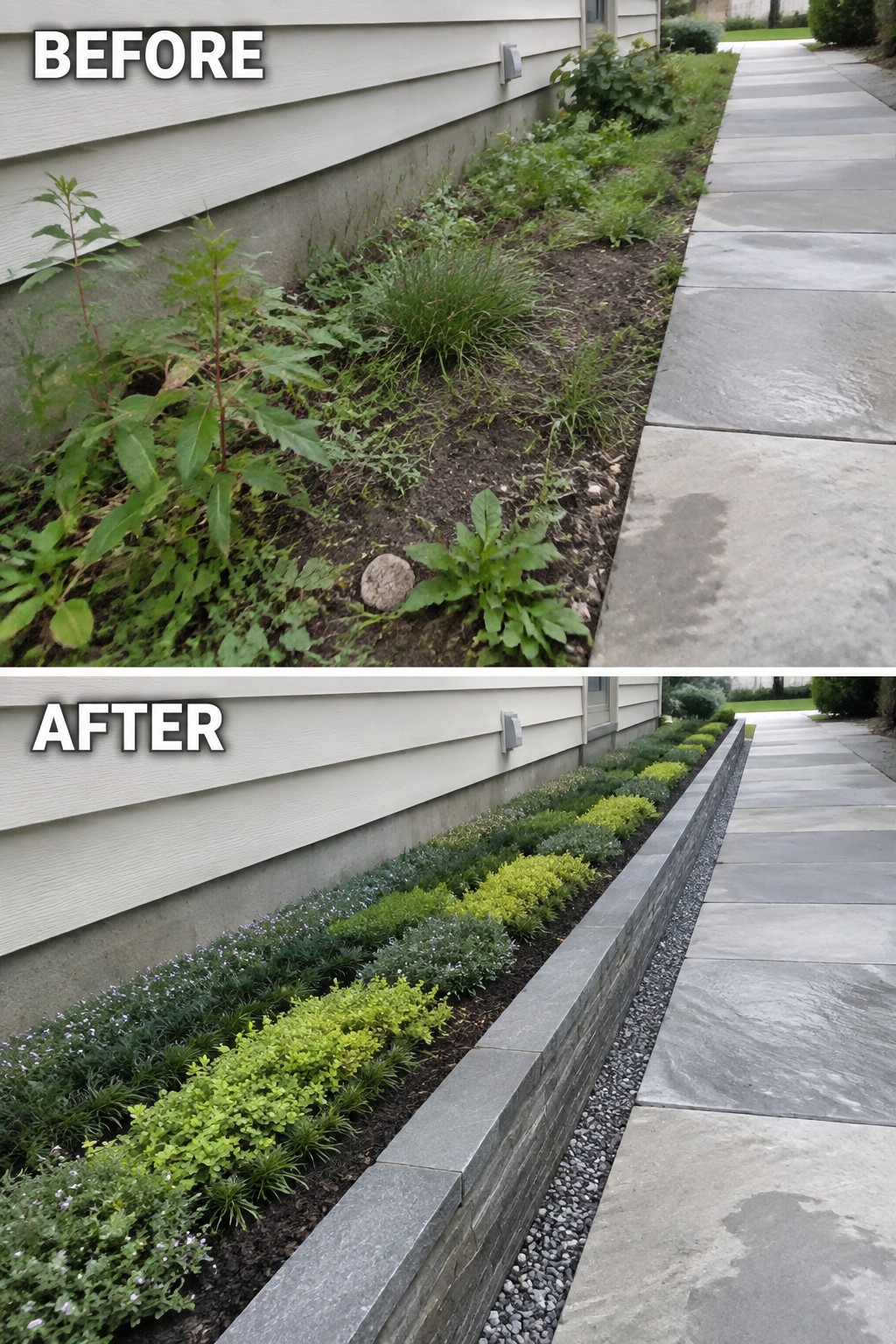
The before photo shows a typical problem with narrow beds along the house. Weeds and volunteer plants creep right up to the walkway, making the whole side of the house look neglected. Adding a low stone border changes that completely. It holds the soil in place, stops the spread, and gives the planting area a clear shape that feels intentional rather than accidental.
This approach works especially well on long, thin beds where the house meets the path. Start with the edging before you worry about the plants. Once the border is in, you can fill it with a mix of heights and textures and the bed will still read as tidy. It is a simple step that makes regular maintenance easier too.
Create A Grid Layout For An Overgrown Front Bed

An overgrown planting area right in front of the house can look messy even when the plants are healthy. The simplest fix is to divide the space into a clear grid using low borders. This turns a loose mix of shrubs into separate planting squares that feel planned and stay easier to manage.
This idea works best along the front of a house where the bed sits against the foundation. Lay out the grid first with pavers or edging before you choose plants, then repeat a few varieties across the sections. It keeps the look modern without requiring a complete yard overhaul.
Frequently Asked Questions
Q: How do I keep grass from sneaking into my flower beds? A: Lay down a solid barrier right at the edge when you build the bed. Check it every few months and pull any runners that try to cross over.
Q: What edging material looks modern but does not cost a fortune? A: Wood or metal strips work well for straight lines. They blend into the design without standing out too much. Install them level with the soil so mowers can go right over.
Q: Can I still get clean lines if my yard slopes a bit? A: You can step the edges down the slope in short sections. This keeps the structure without forcing everything flat. Start at the top and work your way down to match the natural grade.
