

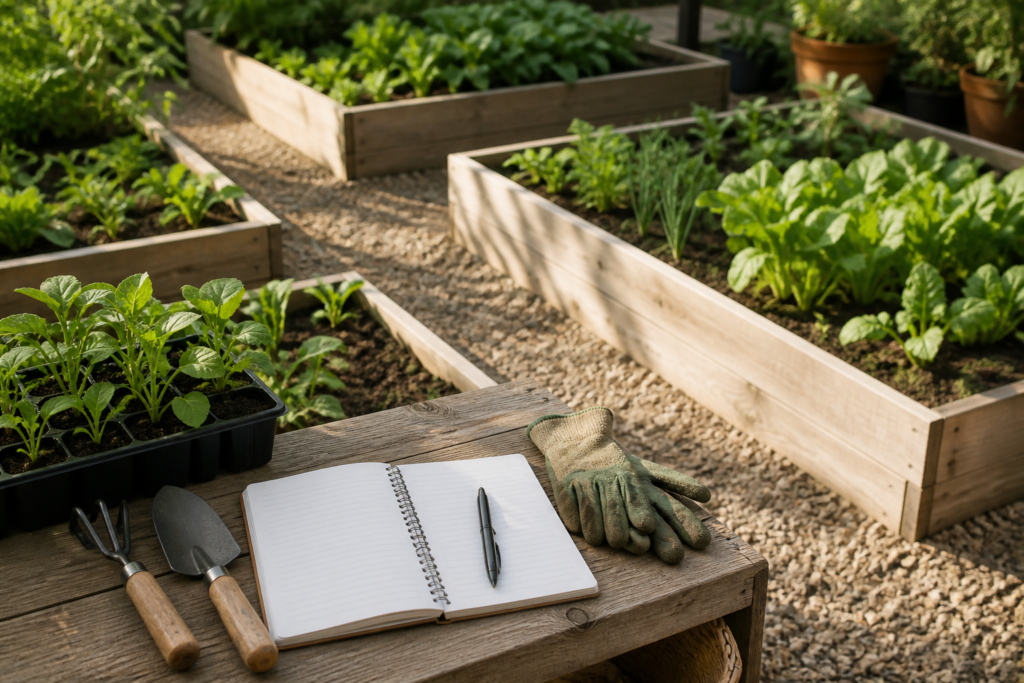
A first vegetable garden does not need to be large or perfect. It needs a sunny place, workable soil, a short crop list, and a routine you can repeat. Start with a plan that fits the time you have, then add complexity after you understand how your site behaves.
Choose the simplest workable site
Look for at least six hours of direct light, convenient access to water, and a place where you can visit often. Avoid low spots that stay wet and areas shaded by buildings or mature trees. Measure the space before buying seed so the design reflects reality.
Decide on beds and crops
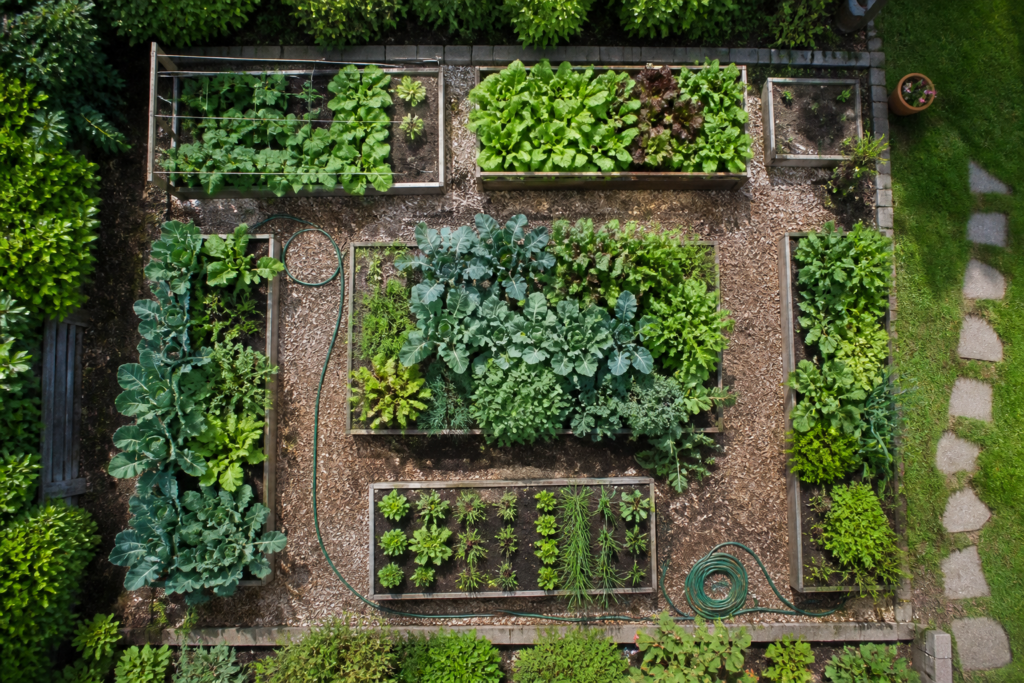
Raised beds can improve access and make soil preparation easier, while in-ground rows cost less and suit larger spaces. Containers work for herbs and compact crops if they drain well. For a first season, choose four to six crops that your household will eat, such as lettuce, beans, carrots, radishes, or herbs. Check each packet for mature size and days to harvest.
Prepare soil without overworking it
Remove perennial weeds, loosen compacted ground when it is workable, and add finished compost if structure is poor. A soil test is useful when pH or nutrients are uncertain. Do not add fresh manure to food beds. Level the surface and make a shallow, clearly marked row before sowing.
Plant, water, and observe
Sow at the packet depth and keep the seed zone evenly damp until seedlings appear. Once established, water deeply enough to wet the root zone, then check soil before watering again. Mulch around plants, not over tiny seedlings. Walk the garden twice a week and note pests, yellow leaves, and growth changes before they become large problems.
Set realistic harvest goals
Harvest leafy crops a little at a time, pick beans and cucumbers frequently, and sample roots to judge size. Keep a short garden notebook with sowing dates, weather, and what worked. That record is more useful than copying a calendar from another climate.
Start a vegetable garden by matching the project to the time, sunlight, and watering access you actually have. A small well-observed bed is more useful than an ambitious layout that cannot be watered or harvested on schedule. Most fruiting vegetables need substantial direct sun; leafy crops can tolerate somewhat less, but no crop performs well in a dark, crowded corner.
Start with a manageable first season
- Observe sun for a full day before locating the bed; six or more hours is a practical starting point for tomatoes, beans, peppers, and squash.
- Use one or two beds or several large containers rather than converting the whole yard at once.
- Choose crops your household will use and that fit the season: lettuce, radishes, beans, peas, herbs, and zucchini are often easier starting points than a long wish list.
- Prepare soil when it is moist enough to crumble, not muddy; avoid walking repeatedly on the planting area.
- Sow or transplant at the spacing on the packet, then label each row with crop, variety, and date.
- Water new seeds gently so the seed zone stays moist; shift to slower, deeper watering once roots establish.
- Mulch after seedlings are established to reduce weeds and moisture swings.
- Inspect plants twice a week for new growth, chewing, discoloration, and dry soil below the surface.
- Harvest young vegetables regularly; leaving pods or fruit overmature can slow continued production.
- Keep a short record of planting, first harvest, and problems so the next season is easier to plan.
| Checkpoint | What to assess |
|---|---|
| Before planting | Sun, drainage, access to water, and a crop list that fits the available space. |
| At sowing | Soil warmth, correct depth, labels, and enough room for the mature plant. |
| Each week | Moisture below the surface, weeds while small, pest signs, and harvest readiness. |
| After harvest | Remove unhealthy residue, note successes, and plan the next suitable crop. |
Choose beds, containers, and crops deliberately
Garden beds hold moisture and support larger crops, while containers are useful where soil is poor, space is rented, or sunlight occurs on a patio. Containers need drainage holes and more frequent moisture checks because their root zone dries quickly. Start with crops that fit the container depth; deep-rooted or large vining plants need more volume and support than a small pot provides.
Do not chase a perfect first season. Weather, variety, and local pest pressure affect results. Change one important practice at a time, such as the planting date or spacing, so observations remain useful.
Practical Beginner vegetable gardening checklist
Use this checklist as a sequence rather than a shopping list. Local weather, soil, variety, and growing method change the details, but observing conditions before acting prevents many avoidable problems.
- Site. Make one observation, decide on the most likely limiting condition, and adjust only the relevant practice before judging the result over the following days.
- Soil. Make one observation, decide on the most likely limiting condition, and adjust only the relevant practice before judging the result over the following days.
- Crop choice. Make one observation, decide on the most likely limiting condition, and adjust only the relevant practice before judging the result over the following days.
- Planting depth. Make one observation, decide on the most likely limiting condition, and adjust only the relevant practice before judging the result over the following days.
- Labels. Make one observation, decide on the most likely limiting condition, and adjust only the relevant practice before judging the result over the following days.
- Watering. Make one observation, decide on the most likely limiting condition, and adjust only the relevant practice before judging the result over the following days.
- Mulch. Make one observation, decide on the most likely limiting condition, and adjust only the relevant practice before judging the result over the following days.
- Support. Make one observation, decide on the most likely limiting condition, and adjust only the relevant practice before judging the result over the following days.
- Pest checks. Make one observation, decide on the most likely limiting condition, and adjust only the relevant practice before judging the result over the following days.
- Harvest. Make one observation, decide on the most likely limiting condition, and adjust only the relevant practice before judging the result over the following days.
- Records. Make one observation, decide on the most likely limiting condition, and adjust only the relevant practice before judging the result over the following days.
When to change the plan
A calendar is a starting point, not a command. Delay work when soil is saturated, give warm-season crops the temperature they need, and protect cool-season crops from unusually severe weather when practical. Beds and containers behave differently: containers usually need more frequent checks, while beds need careful access and protection from compaction.
Common mistakes are usually combinations of small choices: crowding plants, watering by habit, adding amendments without a test, or waiting too long to harvest. A clear label and a short garden note make it easier to identify which choice should change next season.
Use observation before intervention
Before buying a product or changing several practices, check the site in a consistent order: light, soil moisture below the surface, drainage, plant spacing, recent weather, and plant stage. Compare a struggling plant with a healthy one nearby. This reduces the chance of treating a symptom while missing the condition that caused it.
Make the smallest useful correction first. Water slowly if the root zone is dry, pause irrigation if it is saturated, remove a weed before it competes for a seedling, or improve access before a bed becomes impossible to harvest. Then wait long enough to see the response. Plants do not always recover immediately, especially after heat, cold, root disturbance, or transplanting.
Keep the garden adaptable. A bed that is too shaded for tomatoes can still be useful for leafy crops; a container that dries rapidly may need a larger volume, mulch, or a different crop. Practical gardening is matching the crop and method to the conditions actually available.
End-of-season review
After each crop, record the sowing or transplant date, first harvest, major weather event, and one change worth making. These notes turn broad advice into a local plan and help avoid repeating the same overcrowding, timing, soil, or watering mistake next year.
Make the next decision from the evidence in front of you
When a garden result is disappointing, start with conditions that can be observed: hours of direct light, moisture below the surface, drainage after rain, plant spacing, recent temperature extremes, and the crop’s stage of growth. Correct the clearest limiting condition first, then allow time to see the response. This approach is more reliable than changing water, fertilizer, and pest control all at once.
Use a small seasonal record to turn broad guidance into local knowledge. Note the date, weather, crop, and practical response; those details help distinguish a one-off weather event from a planning change worth repeating next season.
Frequently Asked Questions
How big should a first garden be?
A 4 by 8 foot bed or a few containers is enough to learn the basics without creating an overwhelming maintenance list.
What if the garden gets less sun than expected?
Choose leafy crops and herbs, move containers, or prune nearby growth if that is safe. Fruiting crops usually need more light.
Use the Vegetable Gardening Advice hub for soil, watering, planning, and troubleshooting resources.
