

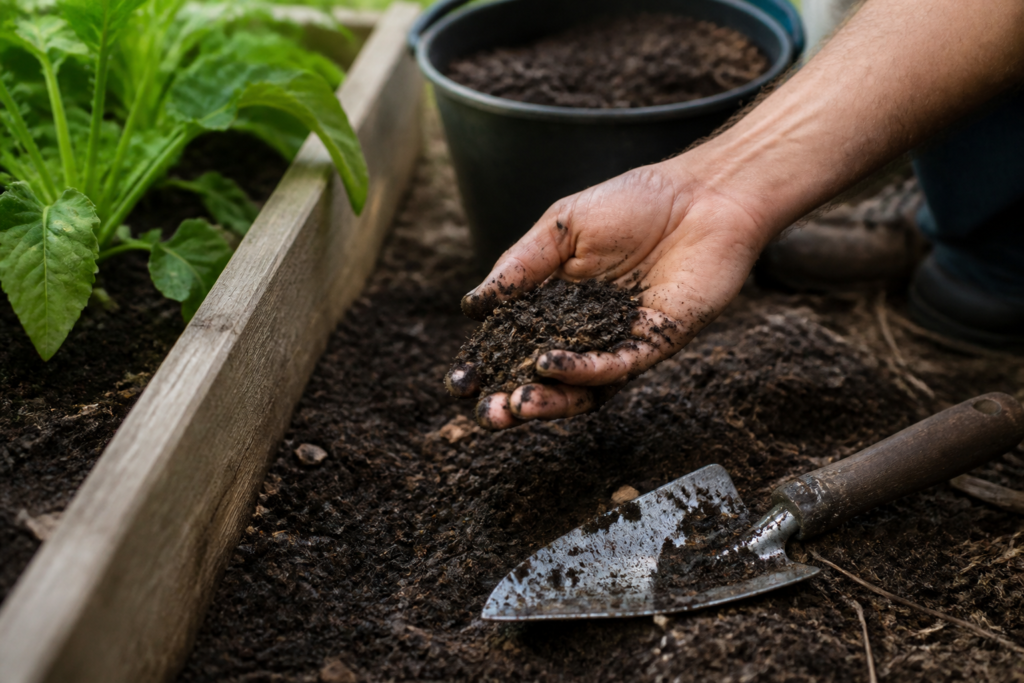
Healthy garden soil supports roots, air, water, and soil life at the same time. The goal is not a fluffy surface that dries quickly, but a stable root zone that drains after rain and holds moisture between waterings.
Assess before adding products
Dig a small hole and look for roots, stones, hard layers, and standing water. Squeeze a handful when the soil is moist. It should form a loose ball that crumbles with gentle pressure. If it smears, wait before digging. A laboratory soil test can measure pH and nutrients more reliably than guessing from leaf color.
Improve structure gradually
Finished compost, leaf mold, and well-decomposed organic matter can improve many soils. Spread a moderate layer and mix it into the surface without turning the profile upside down. In heavy clay, repeated additions over seasons are safer than one large amendment. In sandy soil, organic matter helps water and nutrients stay available longer.
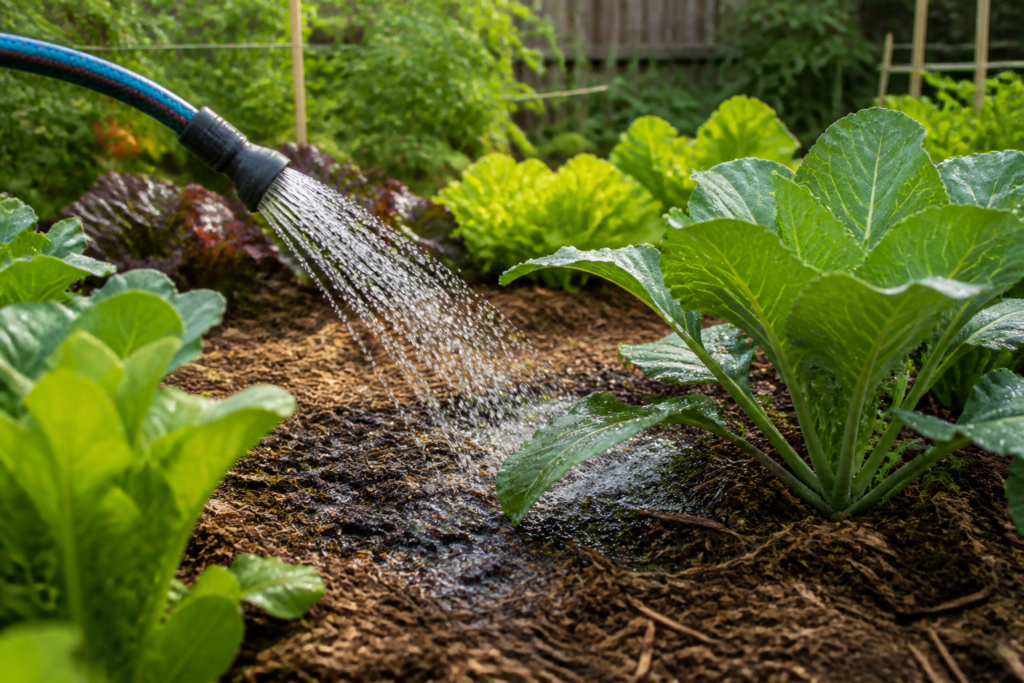
Manage drainage and moisture
Raised beds, broad beds, and designated paths can prevent compaction. Never walk on wet growing soil. Water deeply and less frequently than a daily sprinkle, checking below the surface with a finger or trowel. Mulch after plants establish, leaving a small gap around stems.
Handle pH and fertility carefully
Most vegetables tolerate a moderately acidic to near-neutral range, but each crop has preferences. Apply lime or sulfur only from a soil-test recommendation. Compost is not a complete substitute for every nutrient, and repeated high-nitrogen feeding can create large leaves with poor fruit or roots.
Vegetable-garden soil is a living growing medium, not a product recipe. The aim is soil that holds enough moisture and nutrients for roots while allowing air and excess water to move through it. Start with observation and a soil test rather than adding every amendment marketed for gardens.
Read the soil before changing it
- Squeeze a moist handful: soil that forms a hard sticky ribbon may contain much clay, while soil that falls apart immediately may be sandy or low in organic matter.
- Watch where water stands after rain and where beds dry unusually fast; drainage and irrigation need to be considered together.
- Use a soil test for pH and nutrient questions, particularly before adding lime, sulfur, or concentrated fertilizers.
- Add finished compost primarily to improve organic matter and structure; mix it into the upper root zone without repeatedly turning soil deeply.
- Avoid working wet soil, which compresses pores and creates long-lasting clods.
- Keep paths separate from growing areas to reduce compaction.
- Use mulch on the surface to protect soil from crusting, temperature swings, and splash.
- Correct drainage by improving the site or using a raised bed where appropriate, not by endlessly adding sand to clay.
- Choose fertilizer according to a test and crop needs; more fertilizer is not a substitute for drainage or sunlight.
- Recheck conditions after a season because compost, weather, and plant roots change the soil gradually.
| Checkpoint | What to assess |
|---|---|
| Soil condition | First practical response |
| Water stands after rain | Check slope, compaction, and drainage before adding nutrients. |
| Bed dries rapidly | Add organic matter over time, mulch, and water more slowly. |
| Dense clods | Avoid tilling wet soil and protect bed from foot traffic. |
| pH uncertainty | Test before using lime or sulfur. |
Use amendments with a purpose
Finished compost is broadly useful when soil is low in organic matter, but it does not solve every nutrient or pH issue. Raised beds should be filled with a stable soil-and-compost blend rather than pure compost, which can settle and may hold nutrients unevenly. Do not compact the bed by standing in it while filling or planting.
Healthy soil improves gradually. Focus on roots, water movement, and annual additions of organic matter, then use test results to make specific corrections.
Practical Vegetable garden soil checklist
Use this checklist as a sequence rather than a shopping list. Local weather, soil, variety, and growing method change the details, but observing conditions before acting prevents many avoidable problems.
- Texture. Make one observation, decide on the most likely limiting condition, and adjust only the relevant practice before judging the result over the following days.
- Drainage. Make one observation, decide on the most likely limiting condition, and adjust only the relevant practice before judging the result over the following days.
- Organic matter. Make one observation, decide on the most likely limiting condition, and adjust only the relevant practice before judging the result over the following days.
- Soil tests. Make one observation, decide on the most likely limiting condition, and adjust only the relevant practice before judging the result over the following days.
- PH. Make one observation, decide on the most likely limiting condition, and adjust only the relevant practice before judging the result over the following days.
- Compaction. Make one observation, decide on the most likely limiting condition, and adjust only the relevant practice before judging the result over the following days.
- Compost. Make one observation, decide on the most likely limiting condition, and adjust only the relevant practice before judging the result over the following days.
- Mulch. Make one observation, decide on the most likely limiting condition, and adjust only the relevant practice before judging the result over the following days.
- Raised-bed mix. Make one observation, decide on the most likely limiting condition, and adjust only the relevant practice before judging the result over the following days.
- Nutrients. Make one observation, decide on the most likely limiting condition, and adjust only the relevant practice before judging the result over the following days.
- Reassessment. Make one observation, decide on the most likely limiting condition, and adjust only the relevant practice before judging the result over the following days.
When to change the plan
A calendar is a starting point, not a command. Delay work when soil is saturated, give warm-season crops the temperature they need, and protect cool-season crops from unusually severe weather when practical. Beds and containers behave differently: containers usually need more frequent checks, while beds need careful access and protection from compaction.
Common mistakes are usually combinations of small choices: crowding plants, watering by habit, adding amendments without a test, or waiting too long to harvest. A clear label and a short garden note make it easier to identify which choice should change next season.
Use observation before intervention
Before buying a product or changing several practices, check the site in a consistent order: light, soil moisture below the surface, drainage, plant spacing, recent weather, and plant stage. Compare a struggling plant with a healthy one nearby. This reduces the chance of treating a symptom while missing the condition that caused it.
Make the smallest useful correction first. Water slowly if the root zone is dry, pause irrigation if it is saturated, remove a weed before it competes for a seedling, or improve access before a bed becomes impossible to harvest. Then wait long enough to see the response. Plants do not always recover immediately, especially after heat, cold, root disturbance, or transplanting.
Keep the garden adaptable. A bed that is too shaded for tomatoes can still be useful for leafy crops; a container that dries rapidly may need a larger volume, mulch, or a different crop. Practical gardening is matching the crop and method to the conditions actually available.
End-of-season review
After each crop, record the sowing or transplant date, first harvest, major weather event, and one change worth making. These notes turn broad advice into a local plan and help avoid repeating the same overcrowding, timing, soil, or watering mistake next year.
Make the next decision from the evidence in front of you
When a garden result is disappointing, start with conditions that can be observed: hours of direct light, moisture below the surface, drainage after rain, plant spacing, recent temperature extremes, and the crop’s stage of growth. Correct the clearest limiting condition first, then allow time to see the response. This approach is more reliable than changing water, fertilizer, and pest control all at once.
Use a small seasonal record to turn broad guidance into local knowledge. Note the date, weather, crop, and practical response; those details help distinguish a one-off weather event from a planning change worth repeating next season.
Use a simple reference routine
Set aside a few minutes each week to compare what you see with the plan: check the soil below the surface, confirm that plants still have room and light, remove small weeds, and harvest at the intended stage. If conditions have changed, adjust the one practice most directly connected to that change. This is especially important after heat, heavy rain, wind, or a missed watering interval.
For containers, make the same check more often because their root zone changes rapidly. For beds, protect access and avoid compressing wet soil. Practical consistency is more valuable than a complicated routine that cannot be kept during a busy week.
Use the Raised Bed Soil Calculator when planning the volume of a soil-and-compost mix for a new bed.
Frequently Asked Questions
Can I garden without a soil test?
Yes, but a test is valuable when growth is consistently poor or you plan major amendments.
Is potting soil suitable for beds?
Potting mixes are designed for containers and can be expensive in beds. Use appropriate topsoil and compost blends instead.
Pair this guide with the Vegetable Gardening Advice hub for watering and raised-bed planning.
