

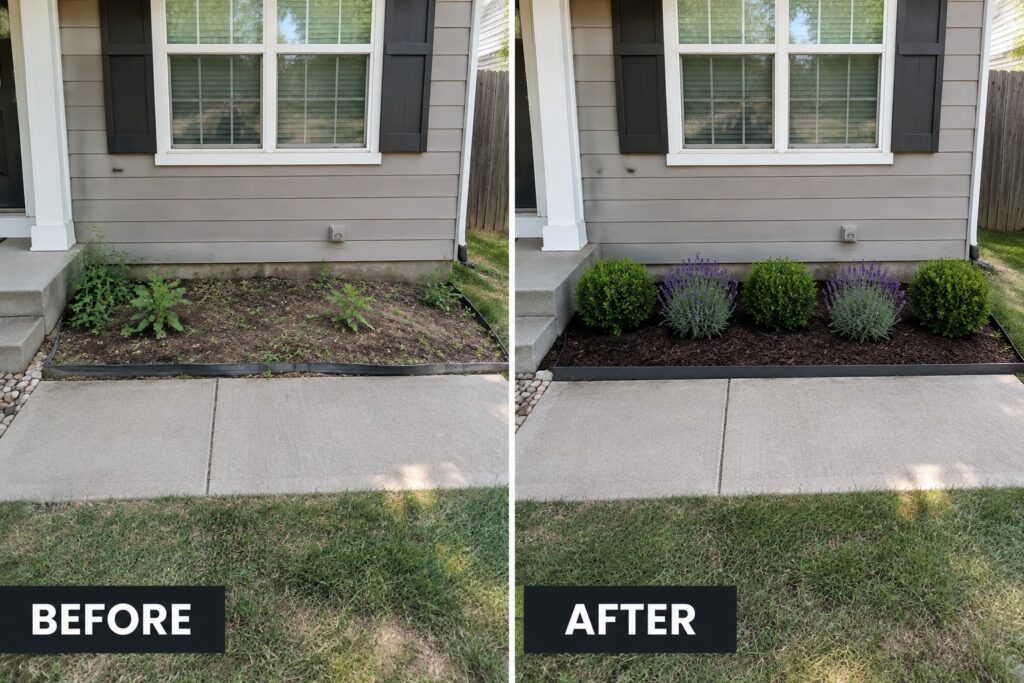
Flower beds tend to demand more time than expected when weeds spread quickly and watering schedules start to feel constant.
Paying attention to layout and plant choices early on can cut down on both of those tasks without needing a complete overhaul of the yard.
In my own garden I learned that setting clear edges and matching plants to the local soil made the beds hold up better through dry spells.
Those adjustments often leave the space looking settled rather than neglected even when I cannot tend to it every day.
The right setup simply frees up more time to enjoy the yard.
Clean Up Overgrown Beds Before Planting

A messy bed full of weeds makes any yard look neglected and turns weeding into constant work. Clearing everything out first, then adding a clean edge and fresh mulch, gives the space a simple structure that stays neat with far less effort.
This idea suits homes with narrow beds along the foundation where you want low maintenance. Install metal or plastic edging to hold the shape, spread mulch to block new weeds, and choose compact shrubs and lavender that need little watering once they settle in.
Define Flower Beds With Gravel For Less Weeding

Clearing out the weeds and covering the soil with gravel makes a big difference in how much work a narrow bed needs. The before photo shows a messy mix of tall weeds and random flowers right up against the house, while the after shows a clean gravel surface with a few larger plants and rocks holding everything in place. This setup cuts down on new weeds and helps water stay where the plants can use it instead of running off bare dirt.
This approach works well along side yards or foundation beds where you want something tidy without constant upkeep. Start by removing the worst of the growth, then lay down gravel over a weed barrier and add a simple drip line if you can. It suits homes with long, narrow planting strips that get neglected because they are hard to reach with a mower or hose.
Define Garden Beds For Simpler Upkeep
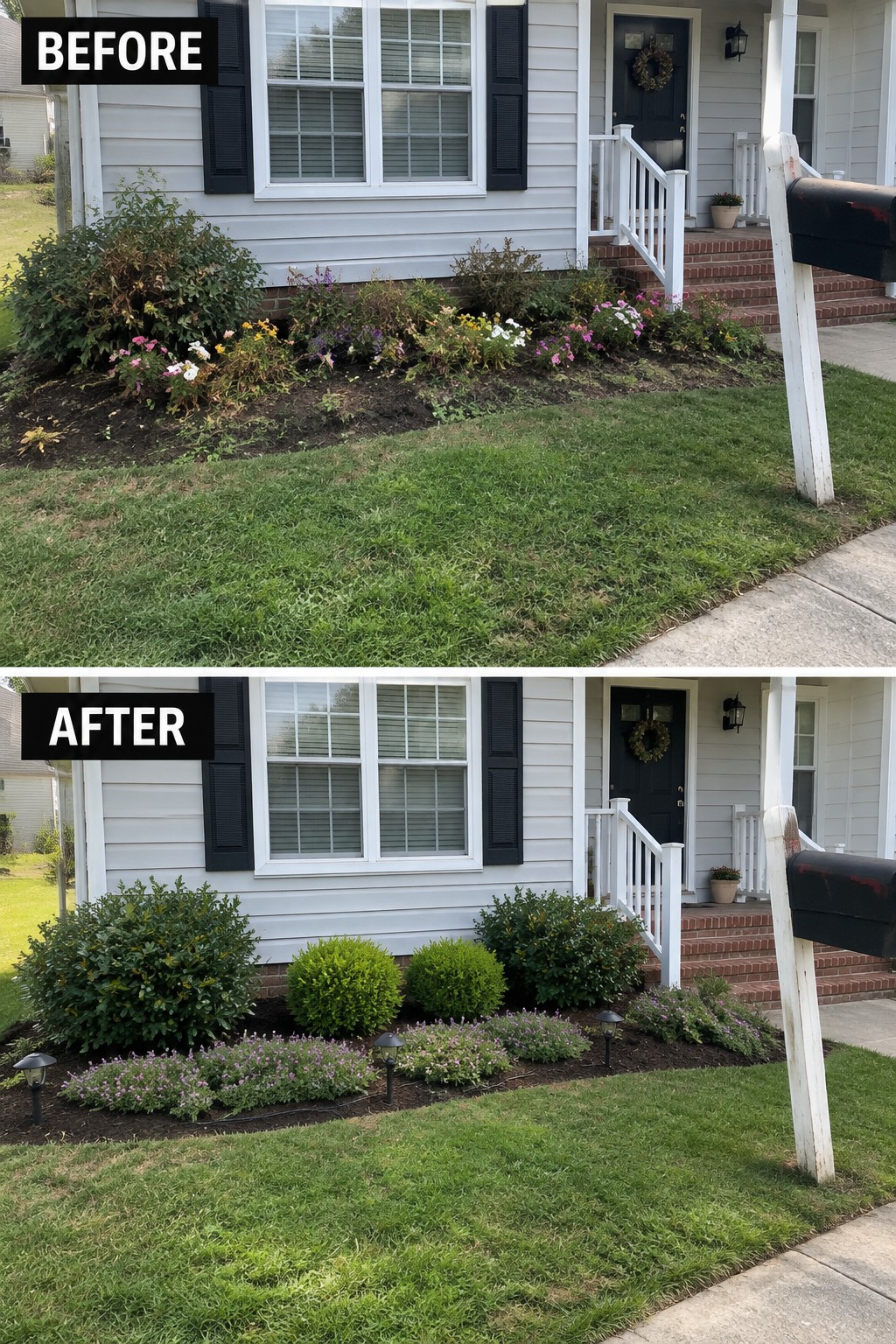
The front bed here went from a messy mix of tall and weedy plants to a row of rounded shrubs and low ground cover set in mulch. That change alone makes the whole front look cared for and cuts down on random growth that needs constant pulling.
This approach works well along a house foundation where you want something neat without daily fuss. Start by clearing the old plants, then set a simple edge and choose compact shrubs and spreading perennials that fill in without spreading everywhere. Add a few low lights if you want evening interest, but keep the planting simple so weeding stays quick.
Add Edging To Keep Flower Beds Neat

One simple way to reduce weeding is to give flower beds clear borders. The old bed had broken wood edging that let plants spread and weeds move in freely. New raised wood borders and a layer of mulch keep the soil contained and make the bed look intentional instead of messy.
This idea works best along paths or fences where you want low upkeep. Replace worn edging first, then spread mulch to block weeds and hold moisture so you water less often. It suits smaller yards that need structure without constant trimming.
Define Flower Beds With Gravel And Stepping Stones

A messy strip of bare soil and scattered plants turns into a tidy bed once you cover the ground with gravel and set a few stepping stones. The change cuts down on weeds and gives the area a finished look without extra work.
This approach works well along the front of a house where you want something neat but easy to care for. Start by clearing the old growth, lay down landscape fabric if needed, then add gravel and a few flat stones for access. Succulents and similar low-water plants keep the bed looking full while staying simple to maintain.
Add Raised Beds To Cut Back On Weeding

One simple way to handle a weedy slope is to add raised beds. The before photo shows tall grass and weeds taking over the hill. Once wooden frames go in and mulch covers the soil, weeds have far less room to grow and the beds stay much easier to manage.
This idea works best on slopes or any area where weeds spread fast. Clear the overgrowth first, build the frames, and lay down mulch before planting. Drip lines along the beds keep watering focused without much effort. It suits homes with uneven ground where regular beds would be difficult to keep under control.
Use Pavers To Shape Low-Maintenance Flower Beds

The before photo shows a weedy strip of ground that was hard to keep tidy around the front steps. The after shows how laying down a simple paver pattern with ground cover planted between them turns the same spot into something much easier to handle. The pavers give the area clear edges and reduce the amount of bare soil that needs constant weeding.
This approach works well along walkways, near entries, or in any narrow strip where regular mowing and weeding feel like a chore. Start with a solid edge and choose low-growing plants that can handle foot traffic and dry spells. It keeps the bed looking intentional without requiring daily attention.
Define Flower Beds With Mulch For Less Weeding
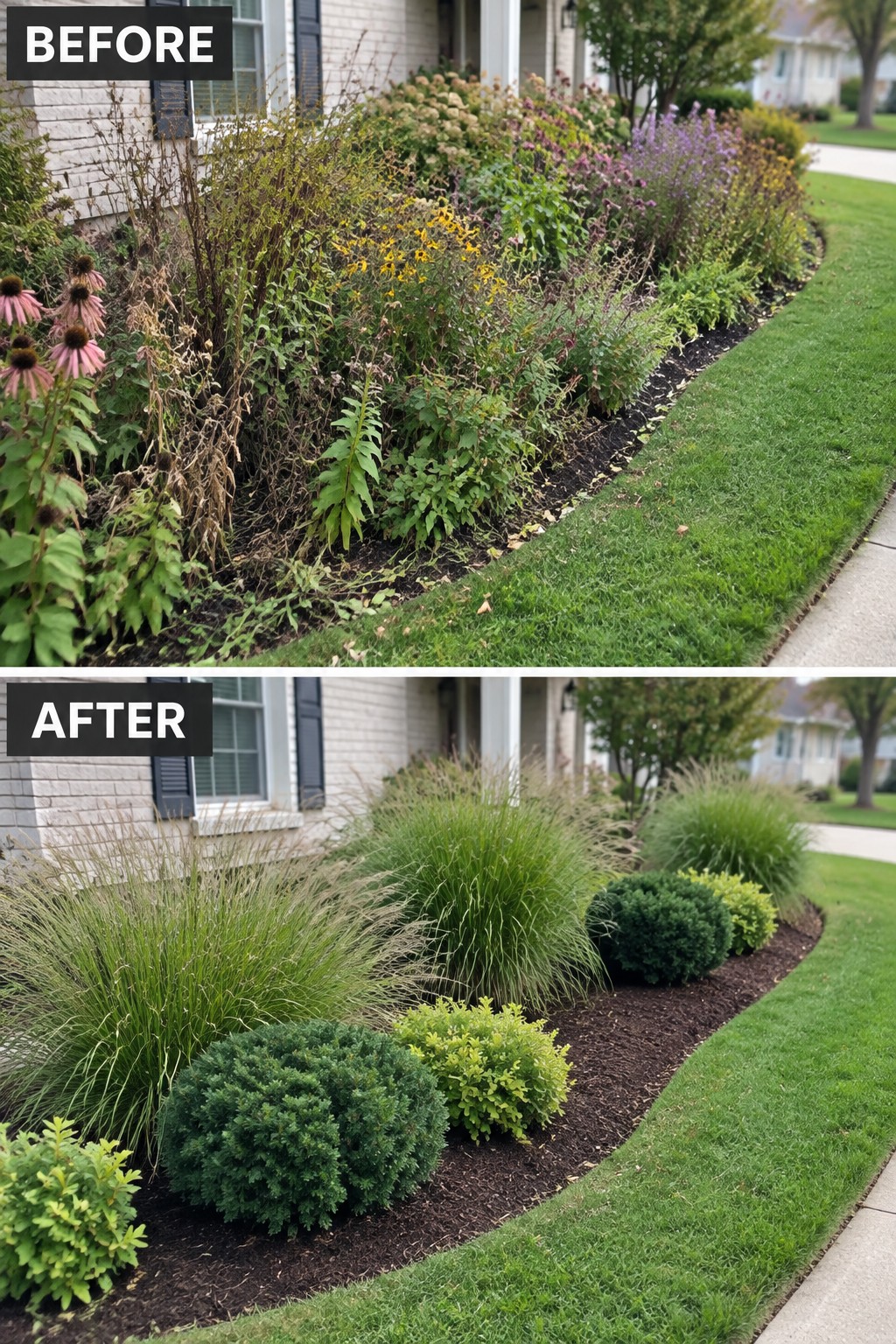
Clearing out the tangled growth and adding a thick layer of mulch instantly makes a flower bed look intentional. The after photo shows how replacing the messy mix with neat mounds of shrubs and grasses keeps the space looking tidy without constant work.
This approach works well along the front of a house where you want a clean edge against the lawn. Start by removing the old plants, then lay down a solid border of mulch and choose a few repeat shrubs that stay compact. It cuts down on weeds and watering while still giving the yard a finished look.
Use Gravel To Simplify Foundation Beds

The change from a weedy, overgrown strip to a clean gravel bed makes the whole front look tidier and cuts down on daily weeding. A few larger plants like agave and grasses replace the scattered flowers, so the area stays neat without constant work.
This idea suits any house with a narrow bed right against the foundation where weeds tend to take over. Clear everything out first, add a layer of gravel for drainage and weed control, then keep the planting simple with just a few tough varieties that need little water.
Add Structure To An Overgrown Border
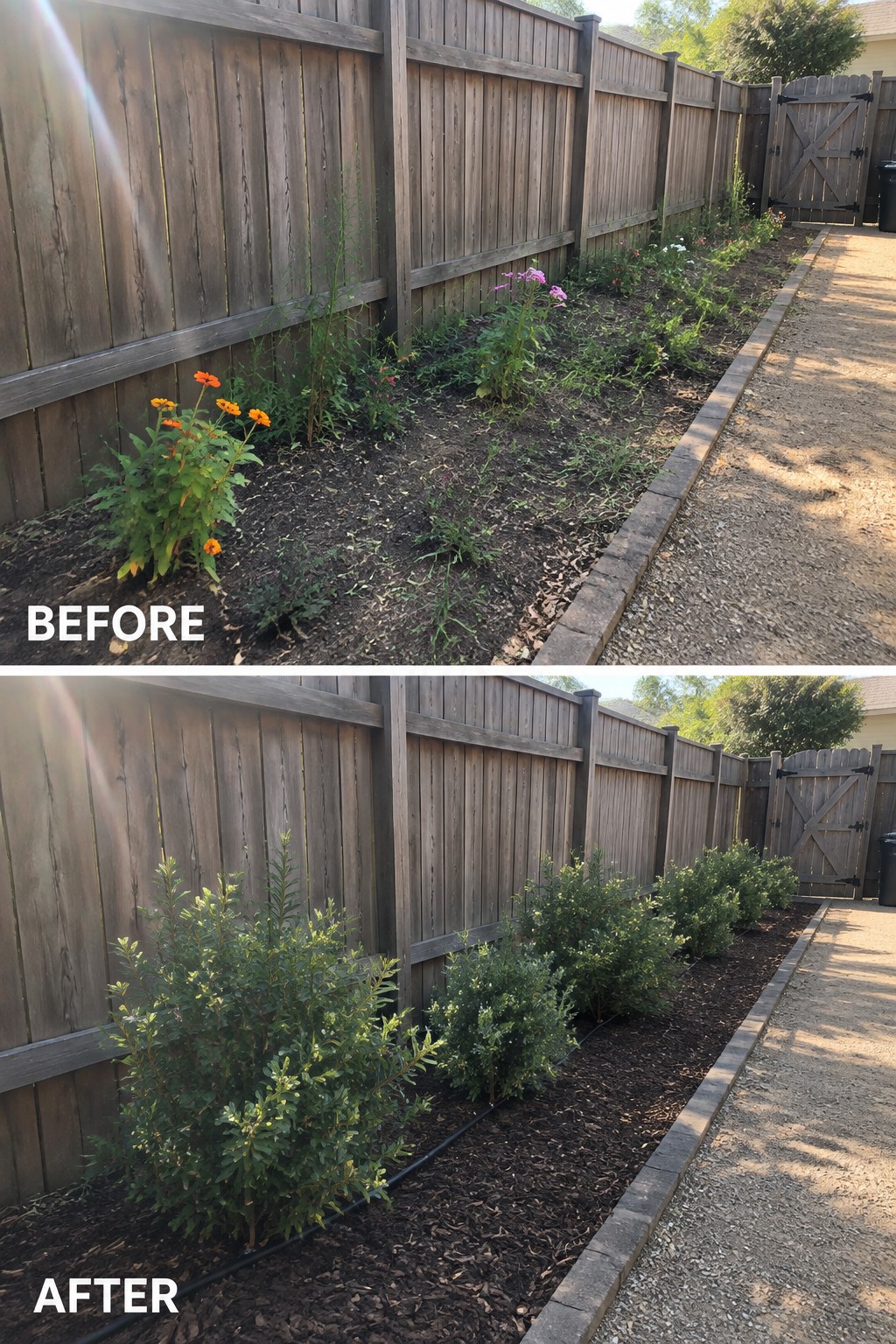
Clearing out the weeds and scattered plants first made the biggest difference here. Once the bed was cleaned up, a layer of mulch and a row of shrubs gave the space clean lines and cut down on future weeding.
This idea works best along fences or property edges where growth has gotten out of hand. Remove the worst of the mess, add mulch to hold moisture, and keep the planting simple so the bed stays easy to maintain without constant work.
Create Defined Beds With Mulch For Lower Maintenance
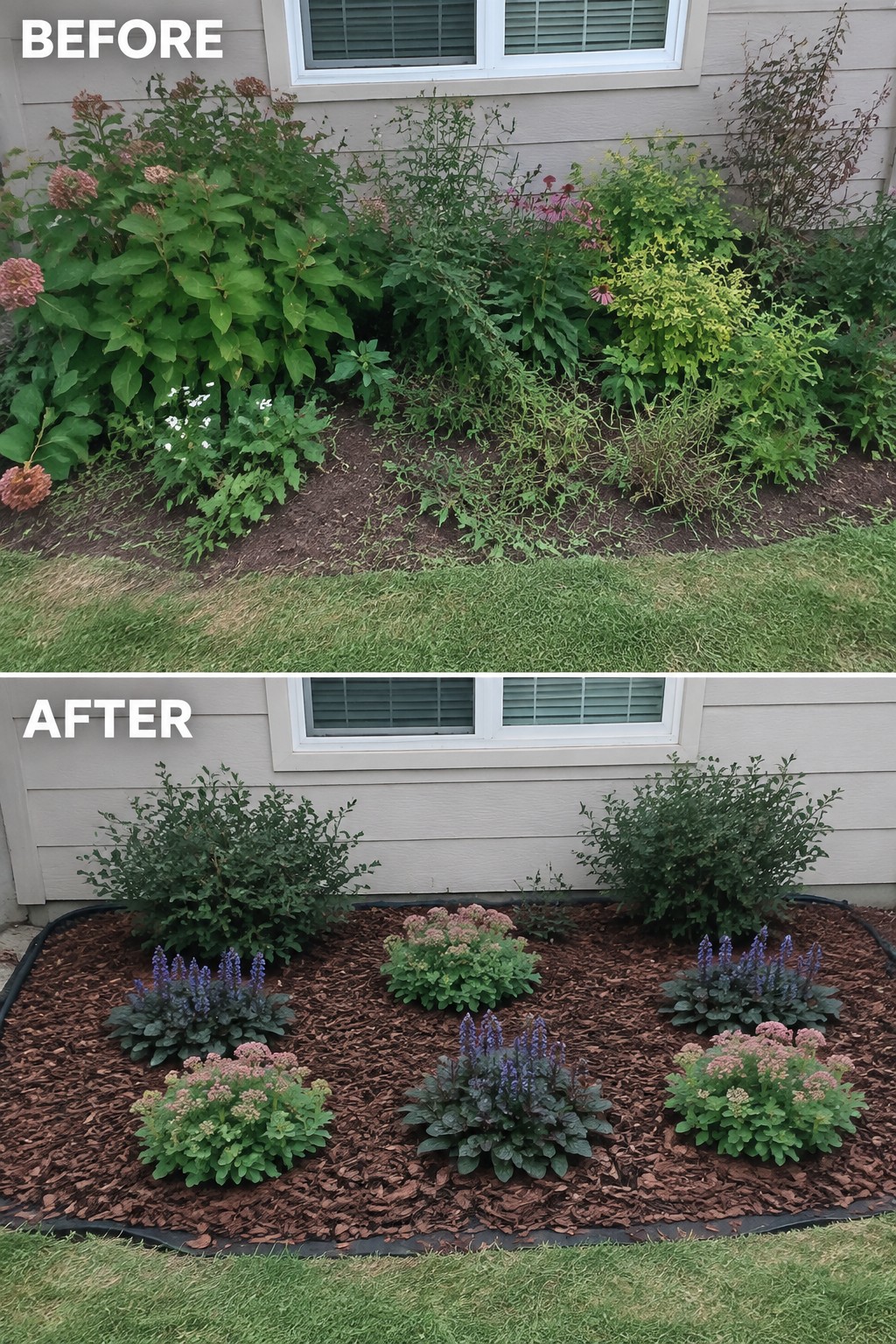
An overgrown foundation bed can quickly turn into a weeding headache. The simplest fix is to clear the excess growth first, then lay down a clean edge and a thick layer of mulch. This one change turns a messy strip into neat, contained planting zones that are much easier to keep under control.
Mulch works best when the beds stay simple. Space plants evenly, repeat a few reliable varieties, and keep the soil line straight along the house. The result is a front bed that needs less watering, fewer weeds, and almost no guesswork about where the garden stops and the lawn begins.
Define Tree Bases With Simple Edging

A weedy patch around a tree often ends up ignored because it is awkward to mow and hard to keep tidy. Replacing thin plastic edging with a low stone border and adding a layer of mulch turns the same spot into a contained bed that needs far less pulling and watering. The mulch also keeps the soil from drying out quickly, so the plants stay healthier with normal rainfall.
This approach works well in narrow strips between sidewalk and street or in any yard where trees sit close to pavement. Choose compact perennials that fill in without much fuss, and keep the bed only as wide as you can reach from the edges. That way weeding stays quick and you avoid crowding the trunk.
Define Flower Beds With Mulch For Easier Care

The before photo shows a flower bed that had become a mix of weeds and random plants with no clear shape. After cleanup, the same space has mulch covering the soil, plants grouped in simple clusters, and the brick edging left in place to hold the shape.
This works best along walkways or in small front beds where you want less daily upkeep. Clear the old growth first, then add a few inches of mulch to block weeds and hold moisture so watering takes less time. It suits older homes with existing brick or stone borders and keeps the bed looking neat without constant fuss.
Use Planters To Create Defined Flower Beds
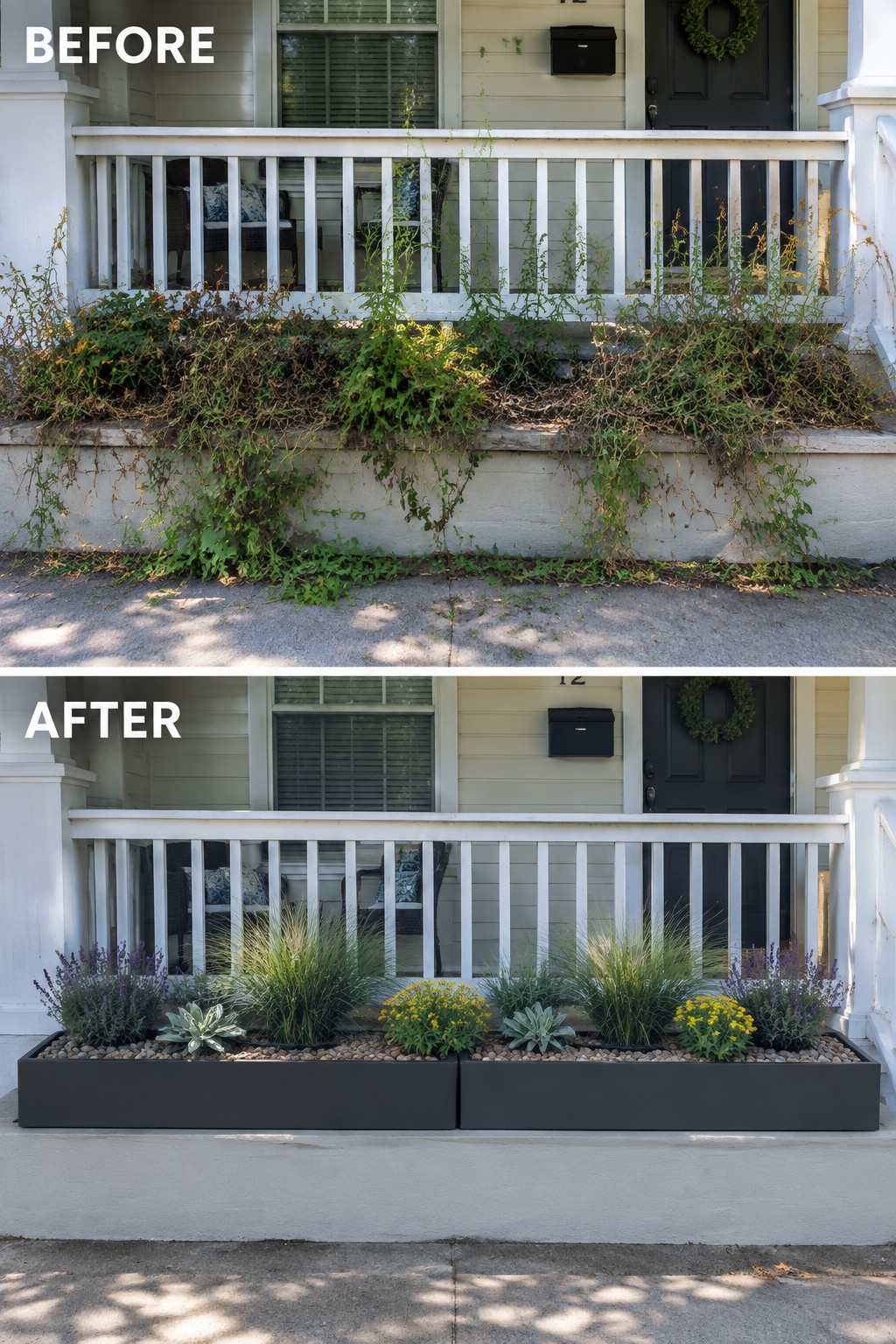
The front of this porch was buried under a tangle of weeds and vines that spilled everywhere. Switching to two long, dark planters filled with grasses and a few flowering perennials gave the space clean edges and kept the planting in one place.
This approach works well along a porch or walkway where you want some color without constant weeding. The contained beds also make watering simpler because the soil stays in one spot instead of spreading across the ground.
Define Flower Beds With Simple Edging And Mulch
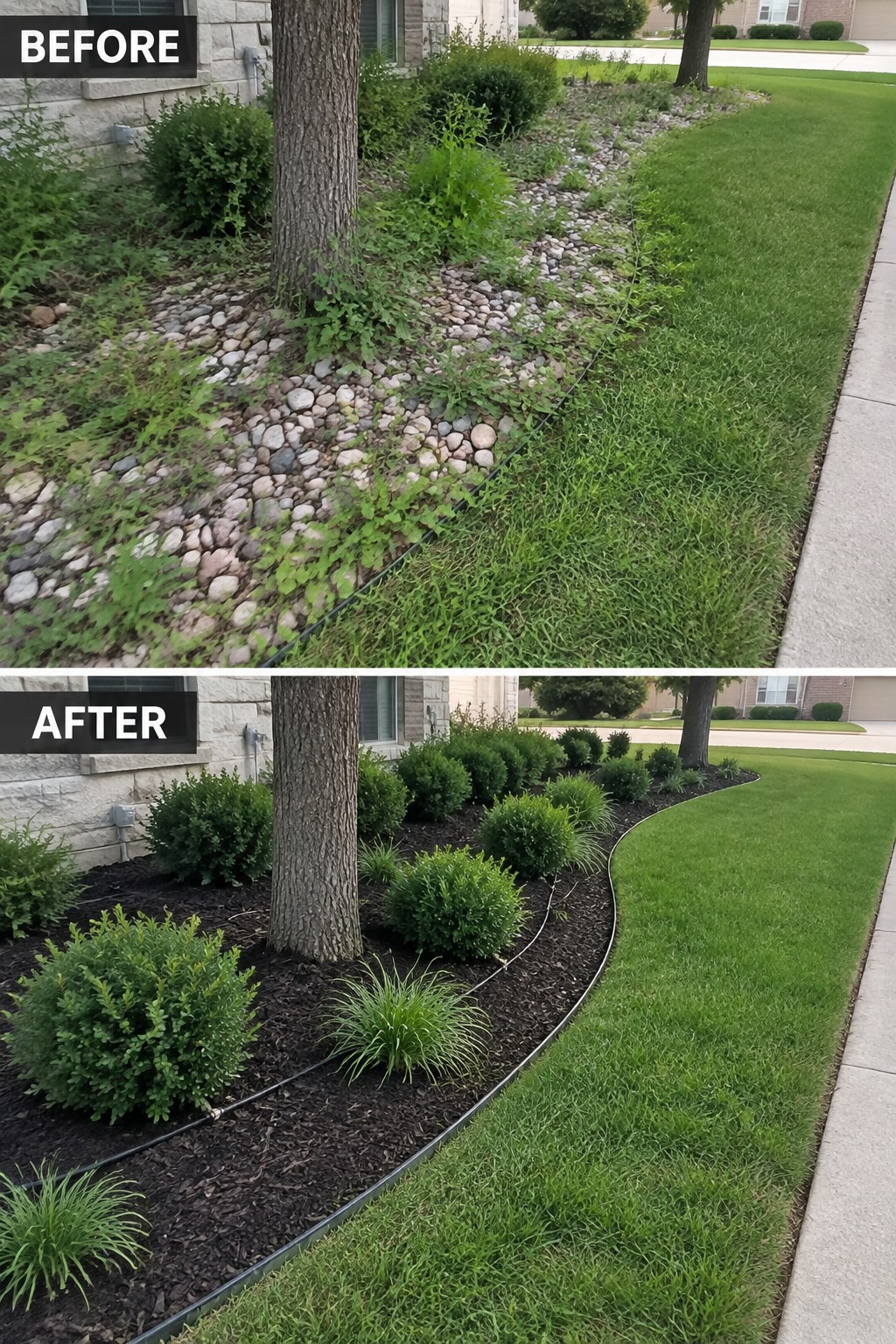
One of the easiest ways to reduce weeding is to give a flower bed a clear edge and cover the soil. The before image shows weeds taking over loose pebbles along the lawn. After the change, the beds have a clean border, dark mulch, and a few shrubs that stay contained.
This works best along a front or side yard where grass tends to creep in. Pull the weeds first, then add a simple edge and a few inches of mulch. The border keeps everything in place and cuts down on how often you need to water or tidy up.
Define Front Beds With Mulch For Easier Upkeep
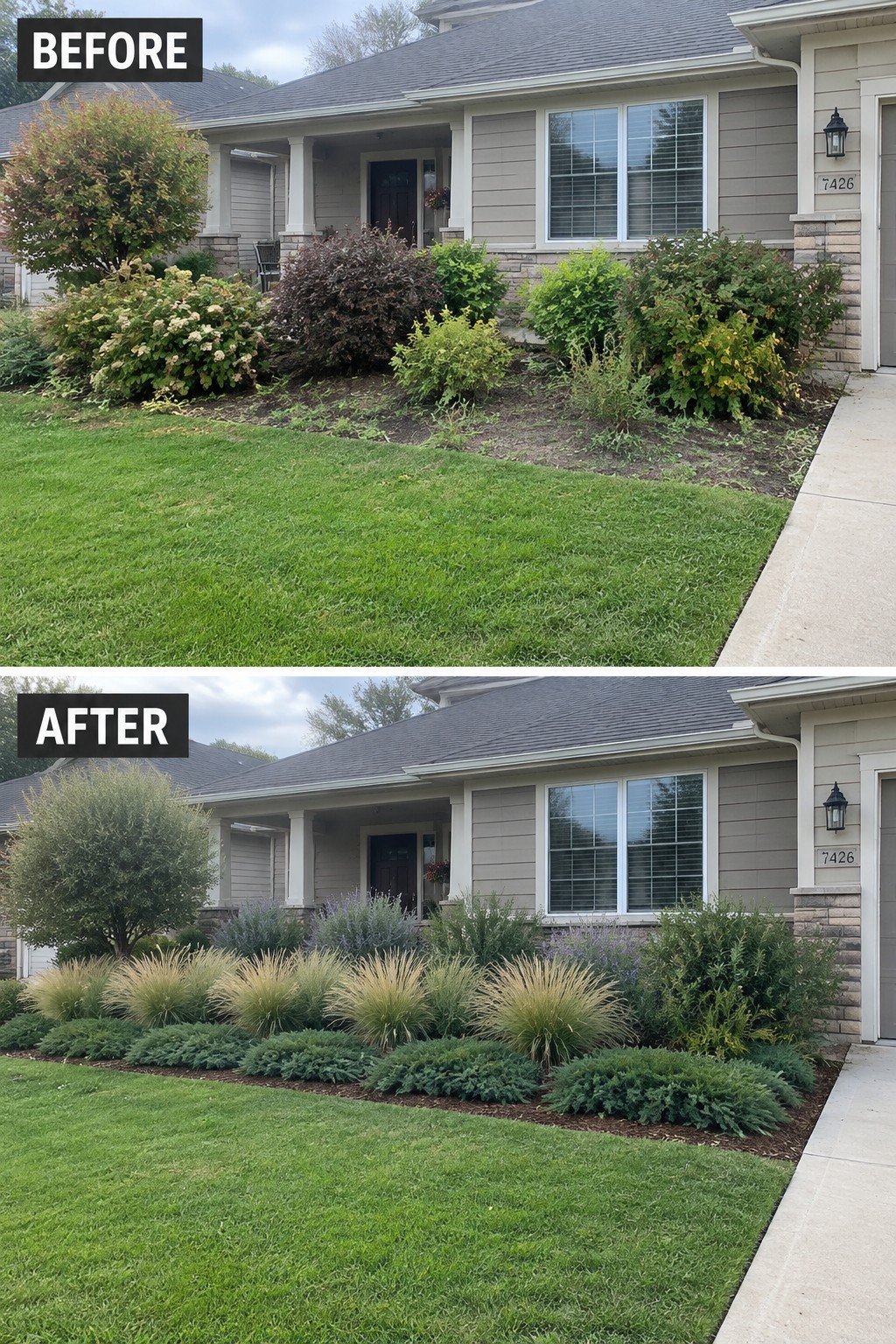
Clearing out the old overgrown shrubs made room for a much simpler layout. The new beds use a clear edge, mulch, and a mix of low shrubs and grasses that stay contained instead of spreading everywhere. This setup cuts down on weeding and helps the soil hold moisture longer.
The same approach works well along a front foundation where you want a tidy look without daily fuss. Start by removing whatever is out of control, then lay down a solid border and mulch before planting. Choose a few plant types that fill in together rather than many single specimens.
Use Pavers To Give Narrow Strips A Clear Shape

A weedy dirt strip next to a driveway or fence is one of those spots that always looks messy and takes constant pulling. Laying pavers in a simple grid and filling the gaps with low-growing plants turns the same narrow space into something neat that stays under control with far less work.
This approach works well along driveways, side yards, or any tight area where regular mowing or weeding is awkward. Start with a solid base under the pavers so they stay level, then pick tough ground covers that spread on their own. The result is a border that looks intentional without needing frequent attention.
Add Structure To Overgrown Borders
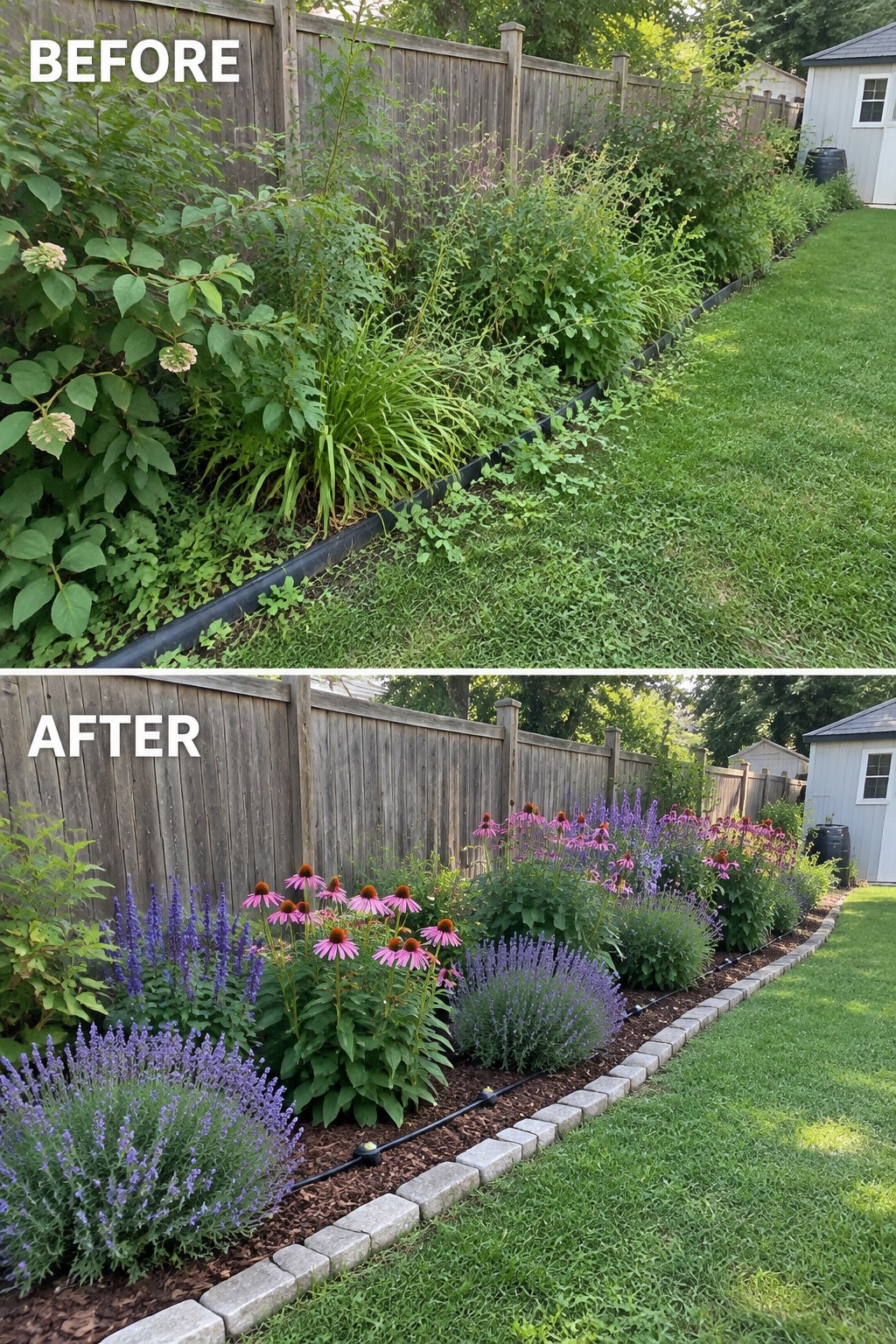
One of the easiest ways to reduce weeding and make watering simpler is to give a messy border some clear edges and a layer of mulch. The before photo shows plants spilling out in all directions with no real shape, while the after shows neat beds held in place by edging and mulch so everything stays contained.
This idea works especially well along fences or long side yards where growth gets out of hand fast. Start by clearing the worst of the overgrowth, add a simple border material, and cover the soil with mulch. The beds stay easier to manage and you spend less time chasing weeds.
Frequently Asked Questions
Q: How much time will these beds really save me on weekends? A: You might spend an hour or less pulling stray weeds each month. Watering drops to once a week or less with good mulch in place. The setup pays off fast once plants fill in.
Q: What happens if a few weeds still pop up? A: Grab them early while the ground stays soft from rain. Mulch layers stop most others from taking hold. Spot treat only the ones that break through.
Q: Should I group plants by water needs in each bed? A: Keep thirsty ones together so you water just that spot. This avoids wasting time on the whole bed. Drought tolerant picks go in their own area for even less work.
