

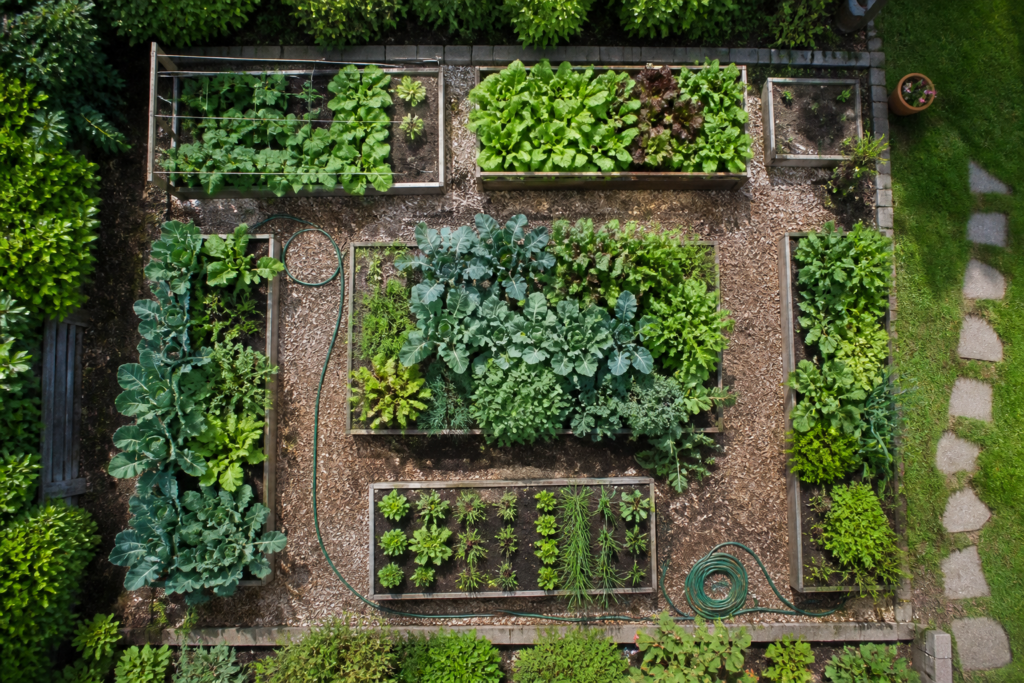
Good garden planning is a sequence of small decisions: where the sun falls, how you will reach each bed, what you will eat, and when each crop fits. A clear plan prevents crowded rows, wasted seed, and a garden that requires more time than you have.
Map the site
Sketch boundaries, paths, water taps, fences, and shade at morning, midday, and afternoon. Mark the sunniest areas for fruiting crops and reserve partial shade for greens. Leave enough path width to carry compost and kneel beside beds without stepping on soil.
Choose a realistic crop list
List vegetables by household use and growing season. Separate cool-season crops such as peas and leafy greens from warm-season crops such as beans and cucumbers. Read seed packets for mature size, support needs, and days to harvest. Select a few reliable crops before experimenting with unfamiliar varieties.
Draw beds and spacing
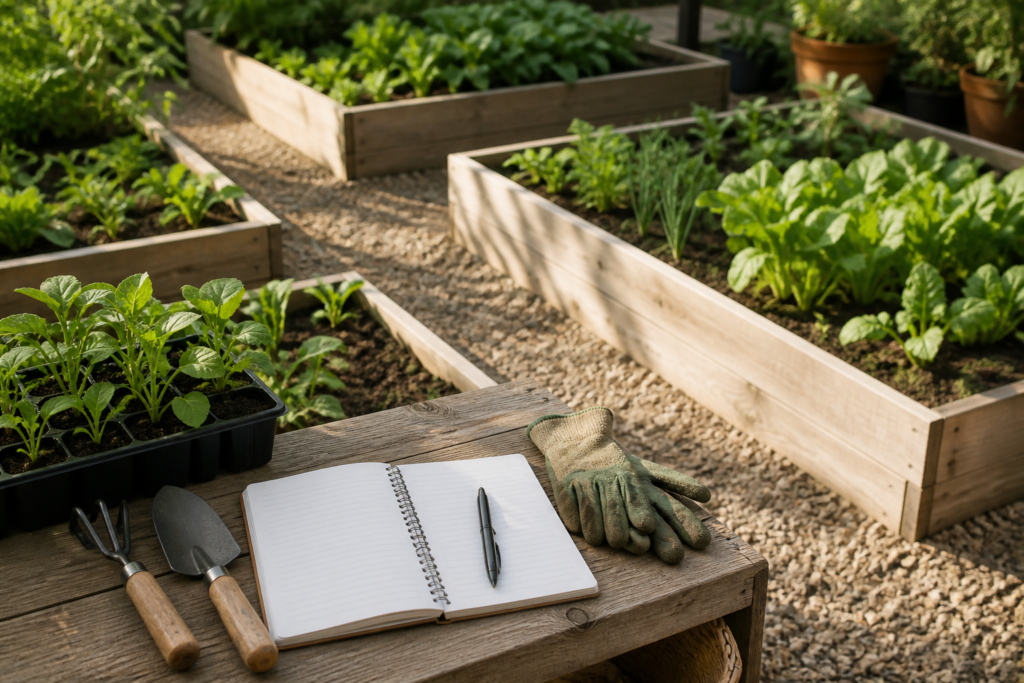
Use the mature plant spacing, not the size of the seedling, when drawing rows. Leave access around trellises and place tall crops where they will not shade shorter plants. Group crops with similar water needs. If you use succession sowing, mark a second date in a notebook rather than trying to fit every crop into the first planting.
Build a seasonal sequence
| Planning question | Useful decision |
|---|---|
| What can be planted first? | Cool-season crops that tolerate light frost |
| What follows early crops? | Warm-season crops after soil warms |
| What fills late space? | Fall greens or a cover crop where suitable |
Plan the weekly routine
Reserve time for watering, weeding, checking undersides of leaves, tying vines, and harvesting. Put crops needing daily picking close to the path. A smaller garden kept consistently healthy will usually outperform a larger garden visited only occasionally.
A useful garden plan puts access and crop timing ahead of squeezing in the maximum number of plants. Begin with the space you can reach comfortably, then let the sun path, water source, and mature plant size shape the layout.
Turn the site into a workable plan
- Map direct sun in spring or summer and mark shade from trees, fences, and buildings.
- Keep beds narrow enough to reach the center without stepping on the soil; paths should allow a hose, basket, or wheelbarrow where needed.
- Place tall crops and trellises where they will not shade lower crops during the main growing season.
- Group crops with similar timing rather than placing every crop by color or seed-catalog order.
- Reserve accessible areas for frequent-pick crops such as beans, herbs, salad greens, and tomatoes.
- Use packet spacing as the starting point; crowding reduces airflow and makes pest checks and harvest harder.
- Draw the mature footprint of sprawling crops, not only the seedling footprint.
- Install supports before sowing beans, peas, cucumbers, or other climbers.
- Plan a short row or block for a succession sowing after early crops are harvested.
- Leave a little open space for a replacement crop, weather delay, or a plant that fails.
| Checkpoint | What to assess |
|---|---|
| Layout choice | Why it helps |
| Narrow reachable bed | Protects soil structure by avoiding repeated stepping. |
| North-side trellis where appropriate | Reduces shade on shorter crops in many northern-hemisphere gardens. |
| Short successions | Spreads harvest instead of creating one overwhelming flush. |
| Clear paths | Makes watering, scouting, and harvest realistic. |
Build a seasonal sequence
Plan from local frost dates and soil conditions, not from one national calendar. Cool-season crops can occupy early beds; warm-season crops wait for warmer soil and frost-free conditions. When a fast crop finishes, use that cleared space for a later sowing rather than assuming every bed must hold one crop all season.
Plan quantities modestly. A few plants that are picked and cared for consistently are more productive than an overcrowded garden. Record which crops were worth their space, which needed more support, and when the first useful harvest occurred.
Practical Vegetable garden planning checklist
Use this checklist as a sequence rather than a shopping list. Local weather, soil, variety, and growing method change the details, but observing conditions before acting prevents many avoidable problems.
- Sun map. Make one observation, decide on the most likely limiting condition, and adjust only the relevant practice before judging the result over the following days.
- Paths. Make one observation, decide on the most likely limiting condition, and adjust only the relevant practice before judging the result over the following days.
- Bed width. Make one observation, decide on the most likely limiting condition, and adjust only the relevant practice before judging the result over the following days.
- Crop height. Make one observation, decide on the most likely limiting condition, and adjust only the relevant practice before judging the result over the following days.
- Trellises. Make one observation, decide on the most likely limiting condition, and adjust only the relevant practice before judging the result over the following days.
- Spacing. Make one observation, decide on the most likely limiting condition, and adjust only the relevant practice before judging the result over the following days.
- Crop quantities. Make one observation, decide on the most likely limiting condition, and adjust only the relevant practice before judging the result over the following days.
- Succession timing. Make one observation, decide on the most likely limiting condition, and adjust only the relevant practice before judging the result over the following days.
- Access. Make one observation, decide on the most likely limiting condition, and adjust only the relevant practice before judging the result over the following days.
- Replacement space. Make one observation, decide on the most likely limiting condition, and adjust only the relevant practice before judging the result over the following days.
- Seasonal notes. Make one observation, decide on the most likely limiting condition, and adjust only the relevant practice before judging the result over the following days.
When to change the plan
A calendar is a starting point, not a command. Delay work when soil is saturated, give warm-season crops the temperature they need, and protect cool-season crops from unusually severe weather when practical. Beds and containers behave differently: containers usually need more frequent checks, while beds need careful access and protection from compaction.
Common mistakes are usually combinations of small choices: crowding plants, watering by habit, adding amendments without a test, or waiting too long to harvest. A clear label and a short garden note make it easier to identify which choice should change next season.
Use observation before intervention
Before buying a product or changing several practices, check the site in a consistent order: light, soil moisture below the surface, drainage, plant spacing, recent weather, and plant stage. Compare a struggling plant with a healthy one nearby. This reduces the chance of treating a symptom while missing the condition that caused it.
Make the smallest useful correction first. Water slowly if the root zone is dry, pause irrigation if it is saturated, remove a weed before it competes for a seedling, or improve access before a bed becomes impossible to harvest. Then wait long enough to see the response. Plants do not always recover immediately, especially after heat, cold, root disturbance, or transplanting.
Keep the garden adaptable. A bed that is too shaded for tomatoes can still be useful for leafy crops; a container that dries rapidly may need a larger volume, mulch, or a different crop. Practical gardening is matching the crop and method to the conditions actually available.
End-of-season review
After each crop, record the sowing or transplant date, first harvest, major weather event, and one change worth making. These notes turn broad advice into a local plan and help avoid repeating the same overcrowding, timing, soil, or watering mistake next year.
Make the next decision from the evidence in front of you
When a garden result is disappointing, start with conditions that can be observed: hours of direct light, moisture below the surface, drainage after rain, plant spacing, recent temperature extremes, and the crop’s stage of growth. Correct the clearest limiting condition first, then allow time to see the response. This approach is more reliable than changing water, fertilizer, and pest control all at once.
Use a small seasonal record to turn broad guidance into local knowledge. Note the date, weather, crop, and practical response; those details help distinguish a one-off weather event from a planning change worth repeating next season.
Use a simple reference routine
Set aside a few minutes each week to compare what you see with the plan: check the soil below the surface, confirm that plants still have room and light, remove small weeds, and harvest at the intended stage. If conditions have changed, adjust the one practice most directly connected to that change. This is especially important after heat, heavy rain, wind, or a missed watering interval.
For containers, make the same check more often because their root zone changes rapidly. For beds, protect access and avoid compressing wet soil. Practical consistency is more valuable than a complicated routine that cannot be kept during a busy week.
Use the Vegetable Plant Spacing Calculator to turn a bed sketch into a practical capacity estimate.
Use the Raised Bed Soil Calculator to estimate soil volume before finalizing a raised-bed plan.
Frequently Asked Questions
Should rows run north to south?
Often, north-south rows distribute light well, but site shape and access matter more than a rigid rule.
How many plants should I grow?
Start with an amount you can eat and maintain. Record actual use and yield, then adjust next season.
Continue through the Vegetable Gardening Advice hub and its crop-specific links.
