

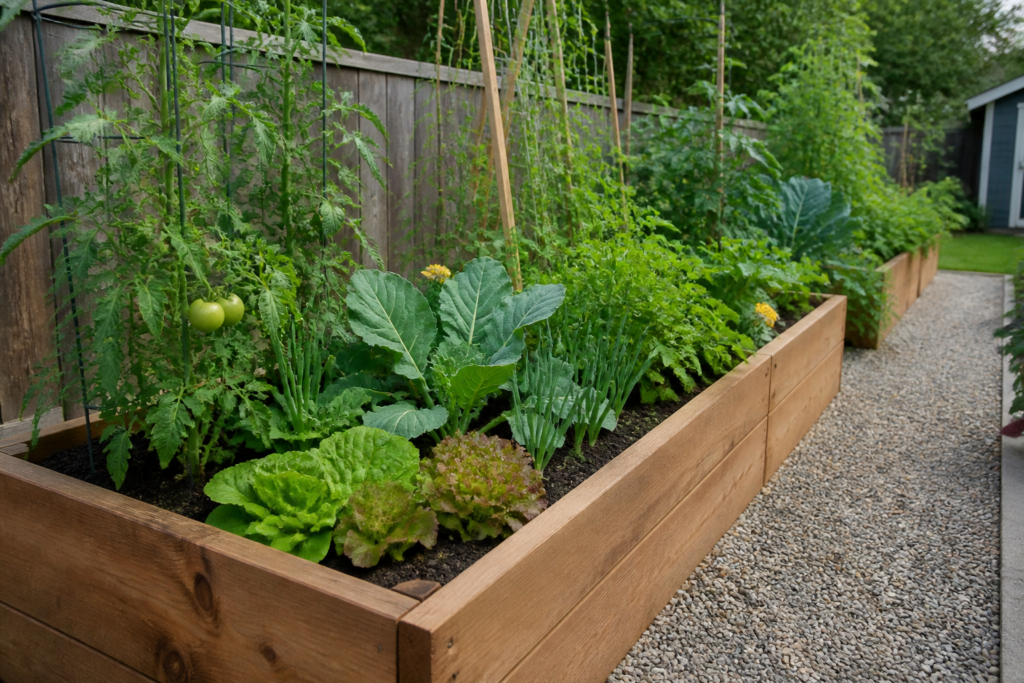
Raised beds are a layout and access choice, not a guarantee of better crops. They can warm earlier, improve drainage, and make a defined soil mix easier to manage. They also dry faster and require a plan for paths, irrigation, and replenishing organic matter.
Choose useful dimensions
Keep beds narrow enough to reach the center without stepping inside. A width around 3 to 4 feet suits many gardeners, while a one-sided bed should be narrower. Height depends on the existing ground, mobility needs, and soil depth required by the crops. Leave stable paths wide enough for a wheelbarrow.
Fill with suitable soil
Use a reputable topsoil and compost blend, not pure compost. The mix should drain while retaining moisture and should settle before planting. If the bed sits over poor ground, ensure water can leave freely. Avoid lining the base with plastic, which can trap water, unless a specific site problem requires a carefully designed barrier.
Organize crops and irrigation
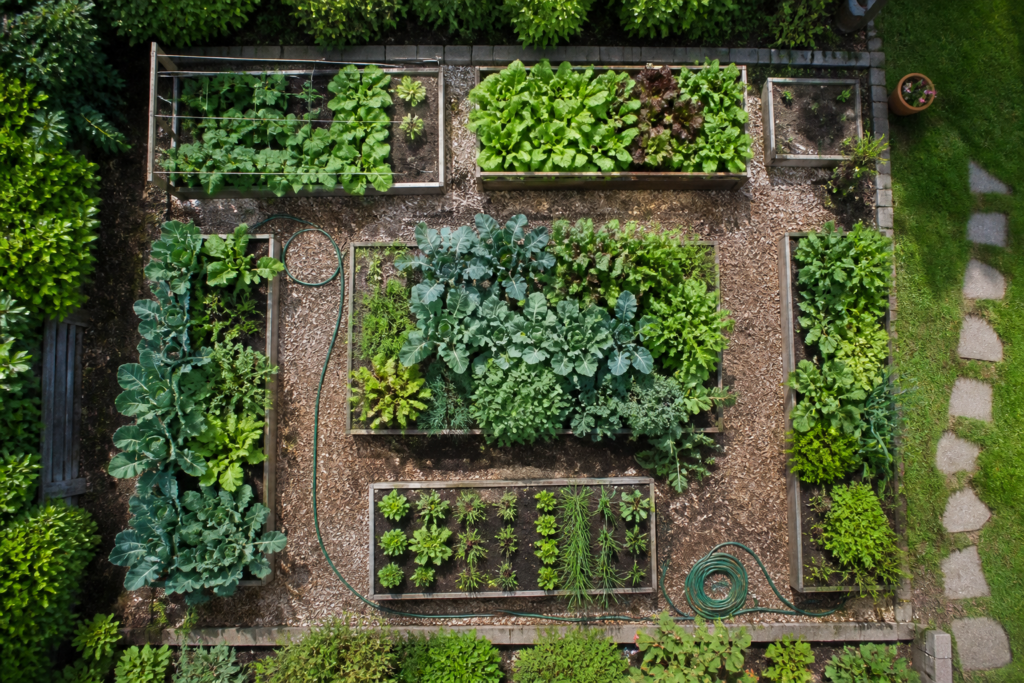
Place tall trellises on the north side where practical. Group crops with similar water needs and keep hoses or drip lines accessible. Mulch the surface after planting. Because raised beds can dry quickly, check moisture during hot, windy weather rather than relying on a ground-level schedule.
Maintain the bed each season
Top up settled soil with compost, rotate plant families when space allows, and remove diseased debris. Inspect boards, corners, and supports. A simple crop map helps avoid planting the same family in the same small area repeatedly.
Raised beds are most useful when they solve a site problem: poor native soil, drainage, accessibility, or the need for a clearly defined growing area. They do not remove the need for good soil, sunlight, watering, or realistic spacing.
Design the bed for reach and roots
- Choose a sunny, level location with access to water and room to work around the bed.
- Keep the width reachable from both sides; roughly 3 to 4 feet suits many gardeners, while a bed against a wall should be narrower.
- Use a depth that suits the site and crop. About 8 to 12 inches of good growing medium works for many vegetables; deeper rooting crops or poor ground may benefit from more.
- Make paths wide enough for safe access, a hose, and a harvest basket.
- Use durable untreated or food-safe materials suited to local conditions; avoid materials that deteriorate quickly or are of unknown treatment.
- Fill with a stable soil-and-compost blend, not pure compost or a layer-cake of unrotted materials.
- Install irrigation before crops fill the bed, especially where a hose cannot reach easily.
- Place tall supports where they will not shade smaller crops.
- Keep the bed surface loose by never stepping in it.
- Top-dress with compost as needed and mulch after planting rather than emptying and refilling annually.
| Checkpoint | What to assess |
|---|---|
| Design question | Practical starting point |
| Width | Reach the center without stepping into the bed. |
| Depth | Match root depth and site constraints; avoid false precision. |
| Location | Full sun for fruiting crops, water access, and good drainage. |
| Fill | Mineral soil plus finished compost, not compost alone. |
Manage a raised bed through the year
Raised beds warm and dry faster than in-ground soil, so moisture checks are important in heat and wind. Rotate crop families where practical, remove diseased residue, and avoid overfertilizing simply because the bed is contained. Soil tests still matter in raised beds.
Do not try to calculate every bag of soil by hand here; a future calculator can handle volume estimates. Focus first on dimensions, access, drainage, and a mix that supports healthy roots.
Practical decisions for Raised bed gardening
This guide works best when it supports a sequence of observations rather than a one-size-fits-all rule. Conditions vary by climate, soil, variety, container size, and season. Use the following prompts to narrow the next useful action.
- Site sunlight. Check this alongside the plant stage and recent weather before acting. A useful response should address the condition you observe, preserve access to the bed, and avoid creating a second problem through crowding, saturation, or unnecessary inputs.
- Bed width and access. Check this alongside the plant stage and recent weather before acting. A useful response should address the condition you observe, preserve access to the bed, and avoid creating a second problem through crowding, saturation, or unnecessary inputs.
- Bed depth. Check this alongside the plant stage and recent weather before acting. A useful response should address the condition you observe, preserve access to the bed, and avoid creating a second problem through crowding, saturation, or unnecessary inputs.
- Safe durable materials. Check this alongside the plant stage and recent weather before acting. A useful response should address the condition you observe, preserve access to the bed, and avoid creating a second problem through crowding, saturation, or unnecessary inputs.
- Soil and compost mix. Check this alongside the plant stage and recent weather before acting. A useful response should address the condition you observe, preserve access to the bed, and avoid creating a second problem through crowding, saturation, or unnecessary inputs.
- Drainage. Check this alongside the plant stage and recent weather before acting. A useful response should address the condition you observe, preserve access to the bed, and avoid creating a second problem through crowding, saturation, or unnecessary inputs.
- Irrigation layout. Check this alongside the plant stage and recent weather before acting. A useful response should address the condition you observe, preserve access to the bed, and avoid creating a second problem through crowding, saturation, or unnecessary inputs.
- Plant spacing. Check this alongside the plant stage and recent weather before acting. A useful response should address the condition you observe, preserve access to the bed, and avoid creating a second problem through crowding, saturation, or unnecessary inputs.
- Paths. Check this alongside the plant stage and recent weather before acting. A useful response should address the condition you observe, preserve access to the bed, and avoid creating a second problem through crowding, saturation, or unnecessary inputs.
- Trellises. Check this alongside the plant stage and recent weather before acting. A useful response should address the condition you observe, preserve access to the bed, and avoid creating a second problem through crowding, saturation, or unnecessary inputs.
- Mulch. Check this alongside the plant stage and recent weather before acting. A useful response should address the condition you observe, preserve access to the bed, and avoid creating a second problem through crowding, saturation, or unnecessary inputs.
- Seasonal topdressing. Check this alongside the plant stage and recent weather before acting. A useful response should address the condition you observe, preserve access to the bed, and avoid creating a second problem through crowding, saturation, or unnecessary inputs.
- Crop rotation. Check this alongside the plant stage and recent weather before acting. A useful response should address the condition you observe, preserve access to the bed, and avoid creating a second problem through crowding, saturation, or unnecessary inputs.
- Winter protection. Check this alongside the plant stage and recent weather before acting. A useful response should address the condition you observe, preserve access to the bed, and avoid creating a second problem through crowding, saturation, or unnecessary inputs.
- Settling soil. Check this alongside the plant stage and recent weather before acting. A useful response should address the condition you observe, preserve access to the bed, and avoid creating a second problem through crowding, saturation, or unnecessary inputs.
- Weeds. Check this alongside the plant stage and recent weather before acting. A useful response should address the condition you observe, preserve access to the bed, and avoid creating a second problem through crowding, saturation, or unnecessary inputs.
- Heat and drying. Check this alongside the plant stage and recent weather before acting. A useful response should address the condition you observe, preserve access to the bed, and avoid creating a second problem through crowding, saturation, or unnecessary inputs.
- Maintenance. Check this alongside the plant stage and recent weather before acting. A useful response should address the condition you observe, preserve access to the bed, and avoid creating a second problem through crowding, saturation, or unnecessary inputs.
- Common construction mistakes. Check this alongside the plant stage and recent weather before acting. A useful response should address the condition you observe, preserve access to the bed, and avoid creating a second problem through crowding, saturation, or unnecessary inputs.
- Recording results. Check this alongside the plant stage and recent weather before acting. A useful response should address the condition you observe, preserve access to the bed, and avoid creating a second problem through crowding, saturation, or unnecessary inputs.
Common mistakes and safer alternatives
Do not make a major correction from one visible symptom or one difficult week of weather. Compare several plants, inspect the root zone, and review what changed recently. When a product is considered, identify the problem first and follow its crop-specific label. Physical access, adequate spacing, steady water, and an appropriate planting window solve more garden problems than a routine of reactive products.
Seasonal review checklist
| Time | Useful check | Decision |
|---|---|---|
| Before planting | Light, soil condition, access, and forecast | Match the crop and method to the site. |
| Early growth | Emergence, spacing, moisture, and pest signs | Correct small problems before they spread. |
| Production | Water demand, harvest stage, and plant health | Maintain steady care rather than forcing growth. |
| After harvest | Residue, soil condition, and notes | Clear only what is needed and plan the next suitable crop. |
Use the Raised Bed Soil Calculator to estimate the soil volume for your bed before buying a mix.
Frequently Asked Questions
Do raised beds need a bottom?
Usually no. Open-bottom beds drain and allow roots to explore. A bottom is a special solution for contaminated or paved sites.
Can I use a raised bed on a balcony?
Only after confirming load limits, drainage, and permission. Containers may be safer for elevated spaces.
Find soil and planning links in the Vegetable Gardening Advice hub.
