

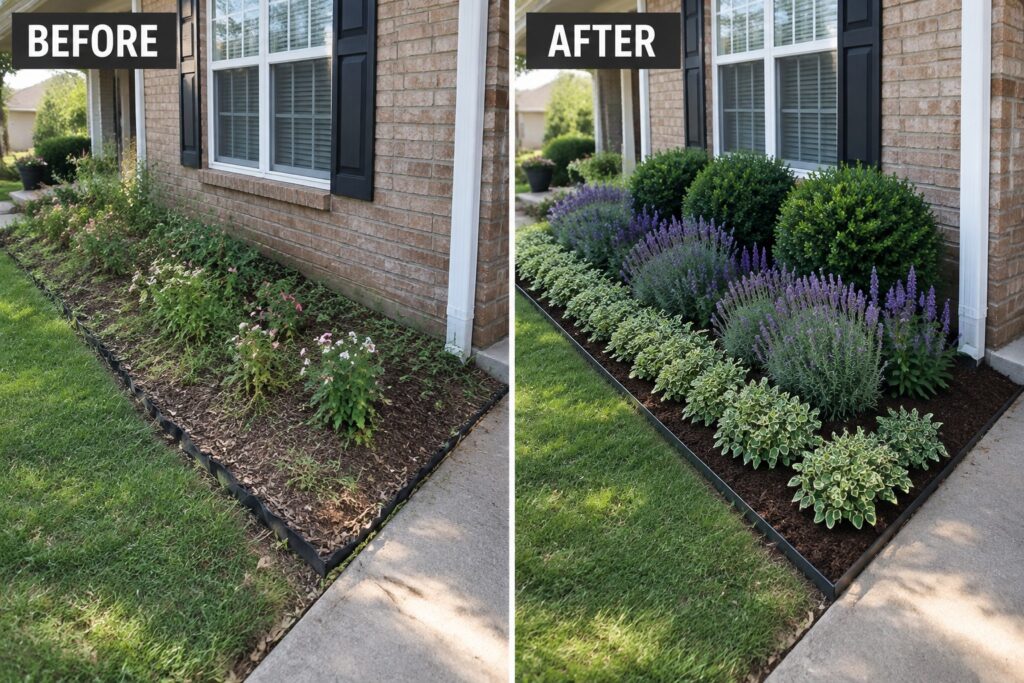
Many flower beds lose their definition when weeds creep in and older plantings start to spill over the edges without regular attention.
I have found that working within the same boundaries often means focusing first on soil health and thoughtful spacing so the plants can fill out properly over time.
Cleanup and structure come before anything else.
A few simple shifts in how the beds meet the lawn or path can make the whole area feel more settled without adding square footage.
Some of the ideas here seem practical enough that I want to test them in sections of my own yard rather than all at once.
Define Flower Beds With Layered Planting
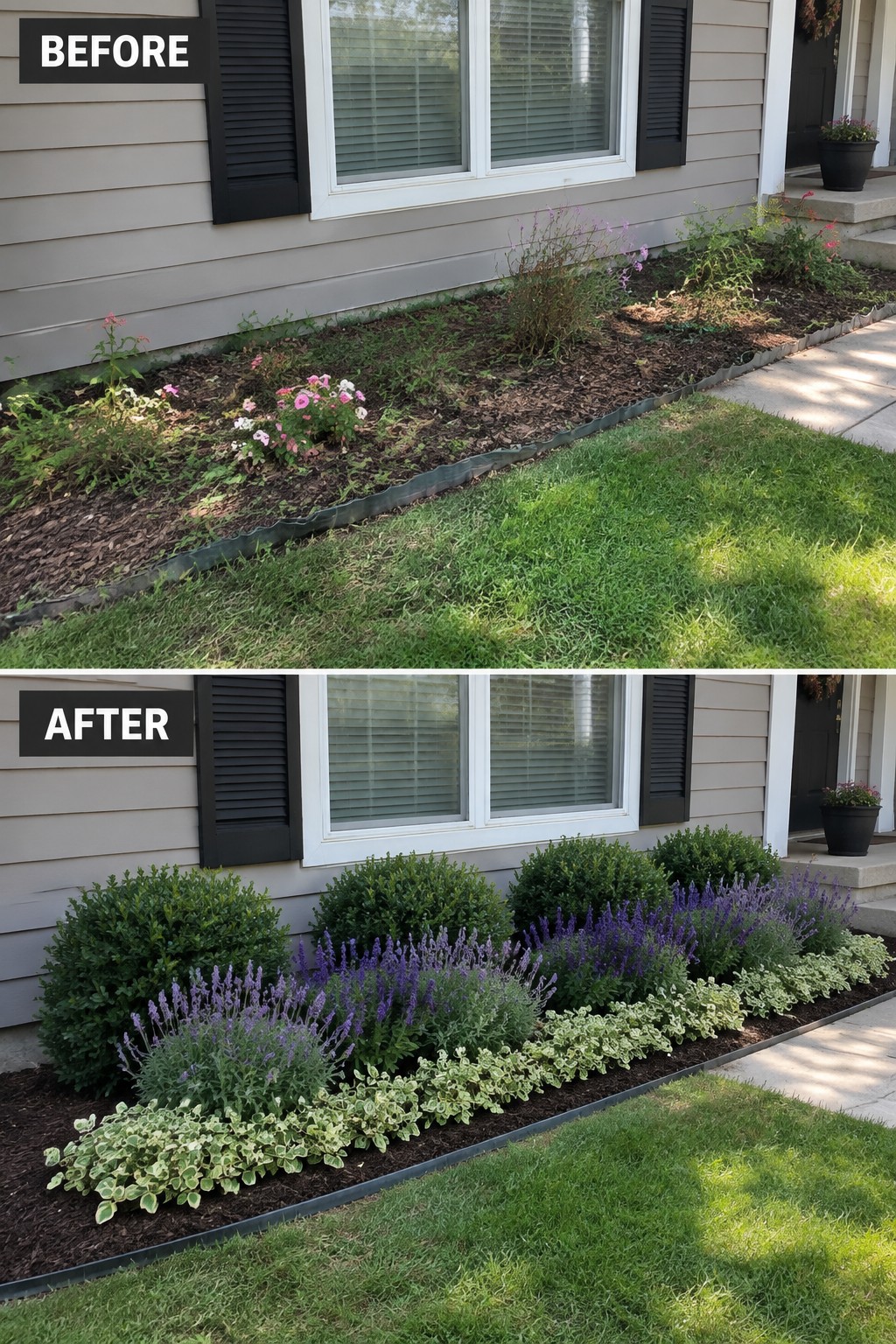
The main change here is moving from scattered plants and uneven mulch to a clear planting plan. Rounded shrubs sit at the back, lavender fills the middle, and low variegated ground cover runs along the front edge. This creates height and order instead of a random mix that never quite fills in.
The idea works best along the front of a house where the bed stays visible year-round. Clean out the old growth first, add a firm edge, then repeat a few plant types rather than mixing too many singles. It keeps the bed looking full with less weeding and watering over time.
Give An Overgrown Border A Defined Planting Structure
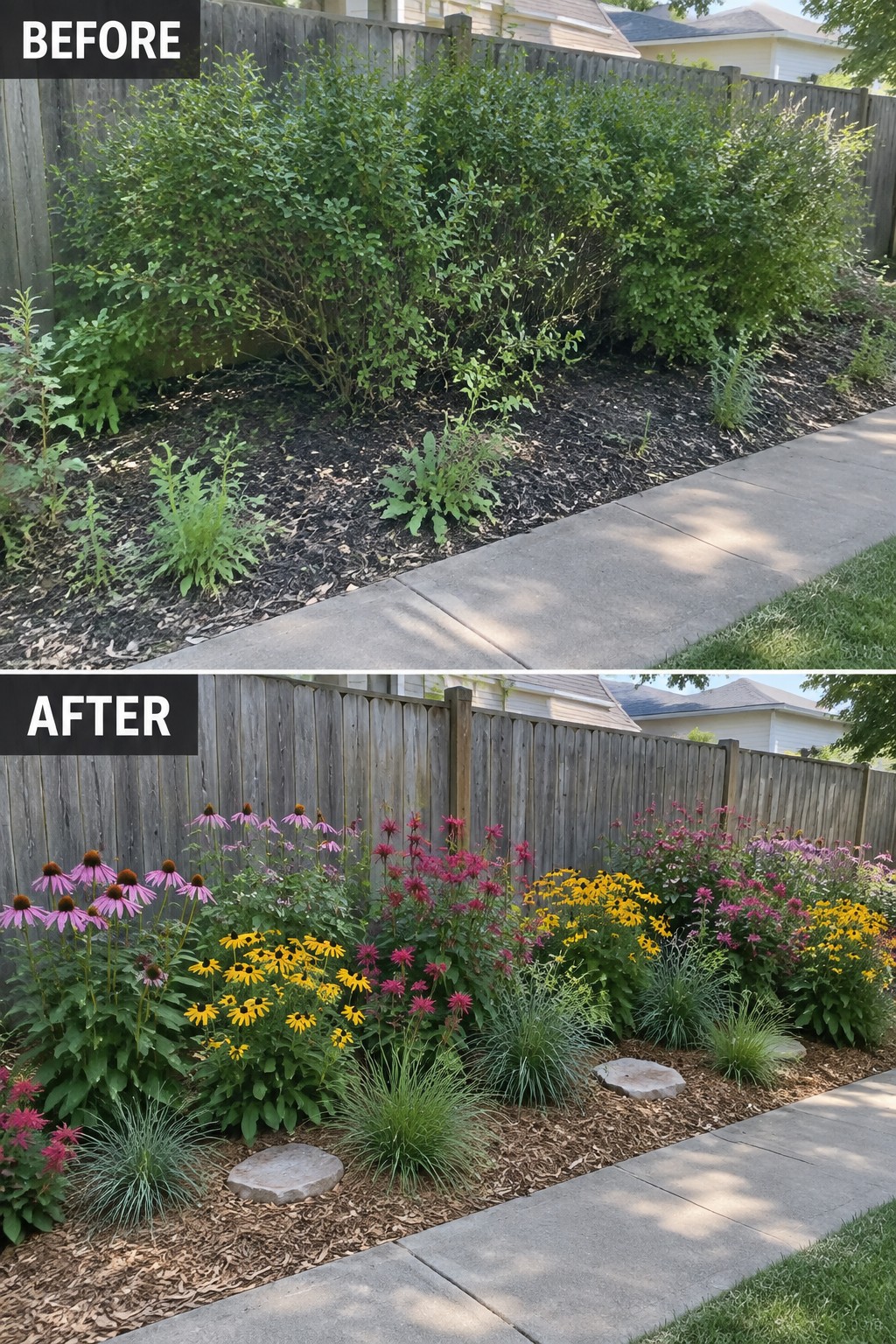
The main change here is moving from scattered growth and bare patches to a bed that feels planned. Clearing the weeds first made room for grouped plantings, with taller flowers toward the back and lower grasses along the front edge, all held together by a fresh layer of mulch.
This idea works especially well along fences or sidewalks where the footprint cannot change. Focus on repeating a few plant types rather than filling every inch, and add a couple of stepping stones if you need to reach the middle for upkeep. The result stays simple but looks much more intentional.
Give A Narrow Flower Bed Structure With Gravel And Layered Plants

A long strip along the house often ends up looking patchy and weedy because the soil stays exposed and plants never quite fill in. Laying down gravel creates a clean base that stops weeds from taking over while giving the bed a finished edge that matches the sidewalk and house. Layering low shrubs in the back with mid-height perennials in front fills the space without crowding it.
This works on any narrow border that already has a set width. Clear the old growth first, then add landscape fabric and a few inches of gravel so the bed stays neat through the seasons. Pick plants that stay roughly the same height as the window sill so the view from inside stays open and the bed never feels overgrown.
Refresh An Existing Flower Bed With Layered Planting

The main change here is how the same curved bed shape looks once the old edging is fixed, the soil is cleaned up, and new plants are added around the existing hostas. Fresh mulch pulls everything together and makes the bed look intentional instead of scattered. The added ferns and spring bulbs fill in the gaps without pushing the border outward.
This approach works well on small front beds where you want more interest but cannot or do not want to enlarge the space. Start by removing weeds and old debris, then add a few different plant heights that bloom at different times. Dark mulch at the end keeps the look neat and helps the plants stand out.
Define Flower Beds With Low Hedges

The before shot shows the usual problem with foundation beds. Plants sit in random pots, the edges wander, and nothing feels connected. The after version keeps the same footprint but adds a low boxwood hedge that runs along the front and sides. White hydrangeas fill the beds behind it, and a narrow gravel strip keeps the mulch in place.
This works best on older homes where the beds already exist but lack shape. Plant the hedge first so it sets the line, then fill behind it with a few repeated flowers rather than lots of different ones. The result looks neat from the sidewalk without requiring new construction or extra space.
Add Structure To A Flower Bed With Grasses And Rocks

Overgrown beds often look messy because too many different plants compete for attention without any clear pattern. Replacing the jumble with repeated clusters of tall grasses and a few succulents immediately made the bed feel intentional. The small rock groupings around some plants added simple definition that keeps everything looking tidy.
This idea works best along the front of a house or beside a walkway where the bed stays in view all year. Pick just two or three plants and repeat them in loose groups rather than scattering singles everywhere. The grasses give height and soft movement while the rocks help mark each section without adding clutter.
Add Edging To Give An Existing Flower Bed Clear Shape

The main change here is the addition of a simple metal border along the front of the bed. That one step, paired with fuller planting in the same space, turns a scattered and weedy strip into something that looks intentional. The plants stay within the original footprint, but the edge makes the whole area read as a finished garden rather than leftover ground.
This approach works well on any home where the bed already sits against the foundation. Start by cleaning out the weeds and old mulch, then install edging that follows the existing line. Once the border is in place, fill with a mix of heights and bloom times so the bed looks full without needing extra width.
Clear An Overgrown Flower Bed Before Adding Structure

The transformation starts with a full cleanup. The old moss, scattered plants, and random rocks gave way to fresh black mulch, a few large dark boulders, and plants with strong shapes that feel placed on purpose rather than left to spread.
This idea works best in narrow foundation beds or side yards where you want order without expanding the space. Remove the existing growth first so the new layout can stay clean, then use one or two bigger rocks as anchors and repeat a simple plant shape a few times to keep the bed from looking busy.
Add Stepping Stones To Give A Flower Bed Structure

A long narrow bed along a walkway often ends up looking messy because there is no clear way to move through it or tend the plants. Adding a simple stepping stone path gives the bed a defined shape without changing its overall footprint. The stones create a route that breaks up the space and makes the planting areas on either side feel more deliberate.
This idea works best in front yards where the bed runs parallel to a sidewalk or driveway. Keep the path narrow so the planting beds on each side stay wide enough for real plants. Low edging along the stones and a few lights help the path read as part of the design rather than an afterthought.
Replace One Overgrown Shrub With Layered Planting
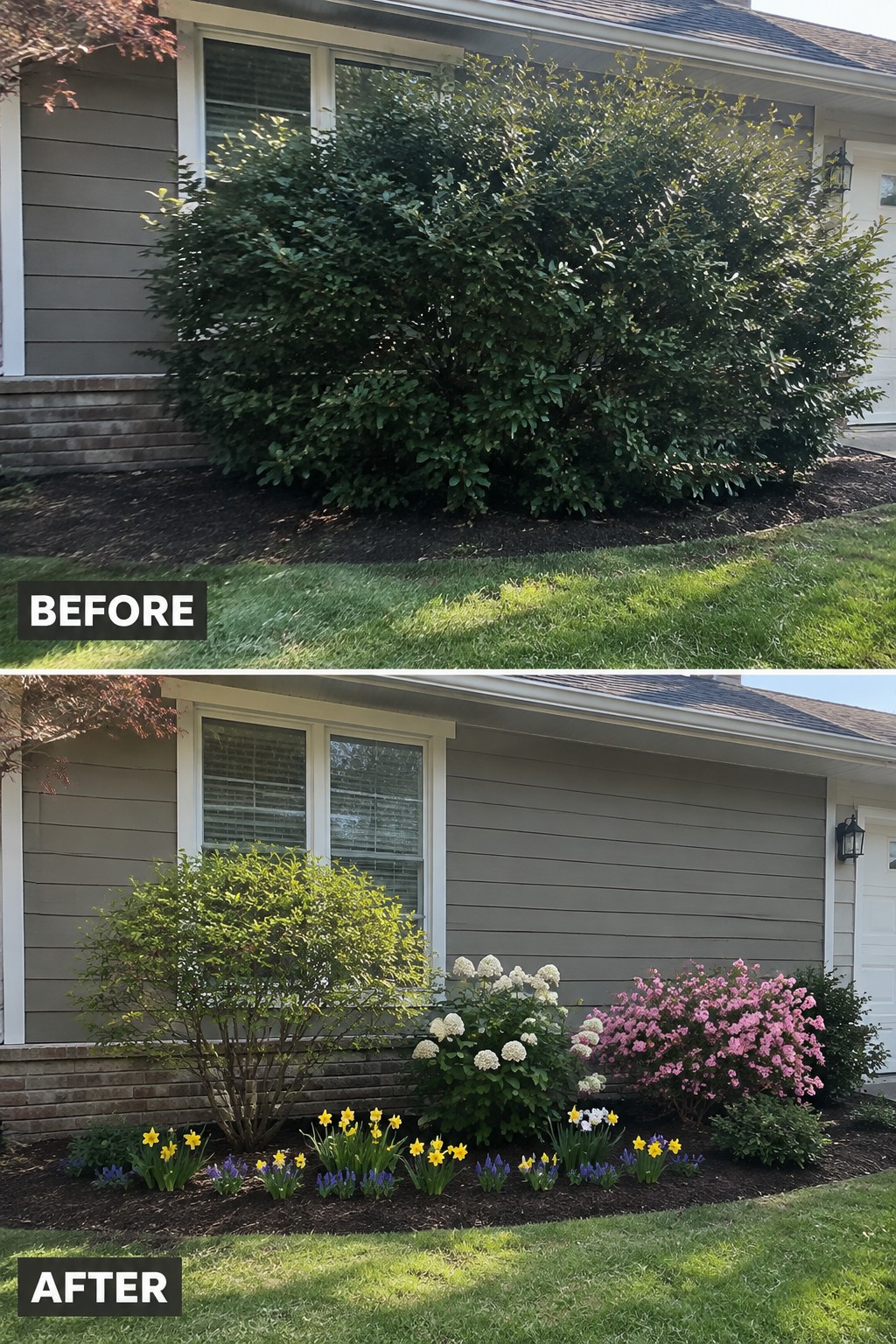
A single large shrub can quickly take over a foundation bed and leave the whole front looking heavy. In this case, removing that one dominant plant opened up space for a mix of smaller shrubs, flowering varieties, and low bulbs that give the bed shape and color without blocking the windows.
This approach works well on any house where the existing planting has grown too large for the spot. Start by clearing the old growth completely, then build the bed in layers with taller shrubs toward the back and smaller plants in front. The result feels planned rather than neglected, and it stays manageable over time.
Add Structure To An Overgrown Flower Bed

The before photo shows rose bushes that had grown wild and uneven along the fence line, with bare mulch showing in spots. The after version replaces that look with clear rows of roses in different colors and a low lavender border in front, which keeps everything in scale and gives the bed a finished line.
This approach works best on narrow strips next to sidewalks or fences where plants can easily take over. Pick two or three main varieties, plant them in repeating groups rather than scattering singles, and keep the shortest plants along the front edge so the bed stays easy to maintain.
Add Structure To An Overgrown Curb Bed
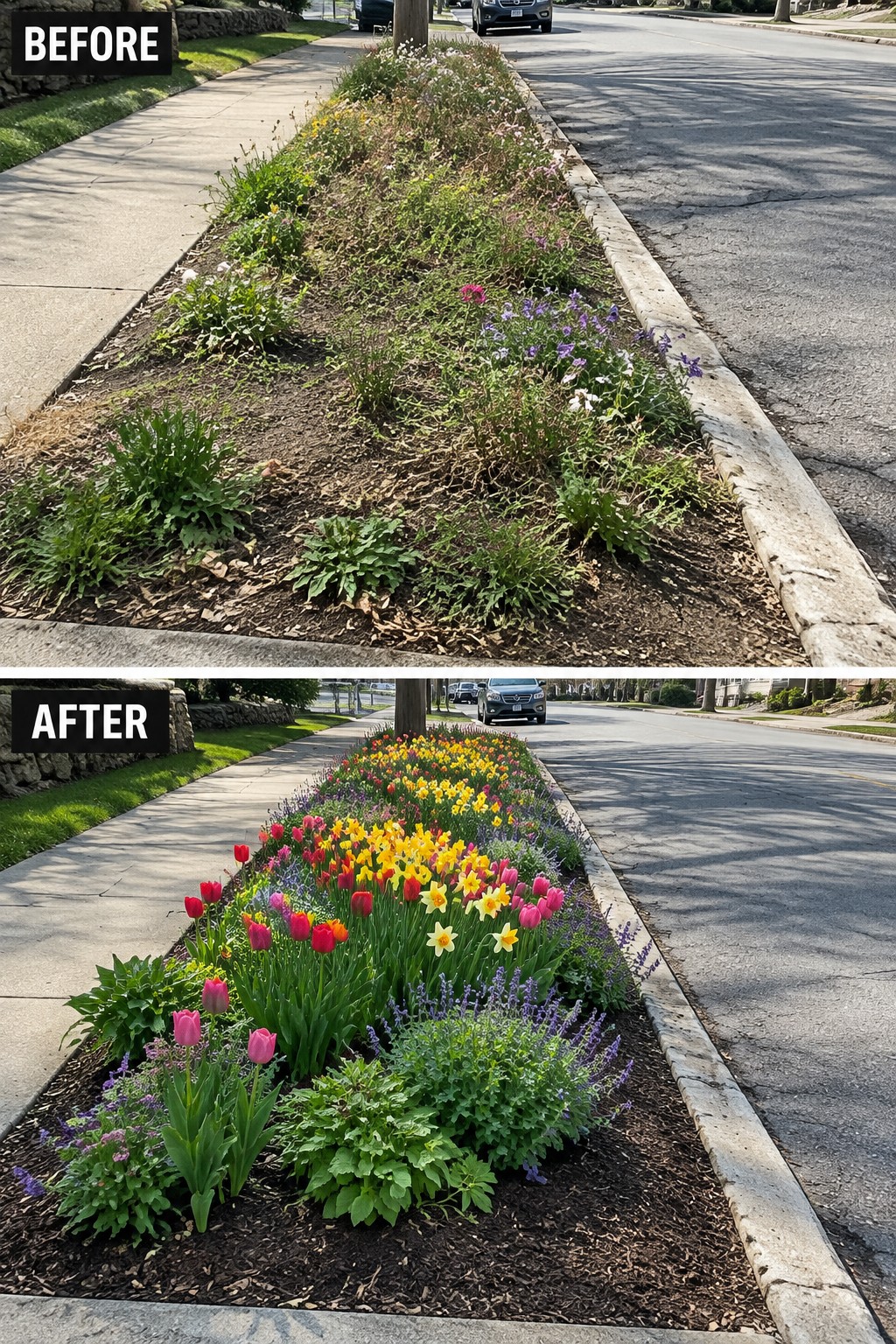
The strip along the sidewalk had turned into a weedy mess with no clear shape. A heavy layer of mulch plus grouped plantings of tulips and daffodils gave the bed clean edges and made it look intentional instead of neglected.
This approach suits narrow curb beds where you want to keep the same footprint. Clear out the worst weeds first, then mulch and plant in clusters so the bed feels organized rather than scattered.
Add Structure To An Overgrown Front Flower Bed

Many small front beds look messy once plants start spilling out of mismatched pots. A few larger matching containers can bring order without expanding the bed or adding new hardscaping.
This works best on narrow beds where you want a clean look from the street. Choose containers in one color and material, group them toward the center, and keep the surrounding planting low and simple so the bed feels planned rather than crowded.
Add Structure To A Narrow Side Bed

The main change here is clearing away the scattered roots, weeds, and loose dirt, then laying down mulch and grouping plants in layers. That single step turns a messy, undefined strip into a border that looks intentional instead of forgotten. The mulch keeps everything looking tidy while the mix of larger hostas and smaller flowering plants adds height without crowding the narrow space.
This approach works best along foundations or between a fence and the house where you have limited width. Start by removing debris and leveling the soil, then plant in drifts rather than single rows so the bed feels full even in a tight spot. It keeps the existing footprint exactly the same while making the area easier to maintain year after year.
Group Plants By Color To Refresh A Flower Bed

One of the easiest ways to improve an overgrown flower bed is to stop letting plants scatter and instead group them by color. The before version shows a mix of flowers spread out with no clear pattern, while the after shows how clustering the same colors together makes the bed look planned and full. A fresh layer of mulch finishes the job by covering bare soil and giving the whole area a cleaner edge.
This idea works well in any small front bed where you want better curb appeal without moving the borders. Pull the weakest plants first, then arrange what remains or add new ones in blocks of the same color. A few low landscape lights can also help show off the new layout once the sun goes down.
Add Stone Edging And Layered Plants Along A Driveway Bed
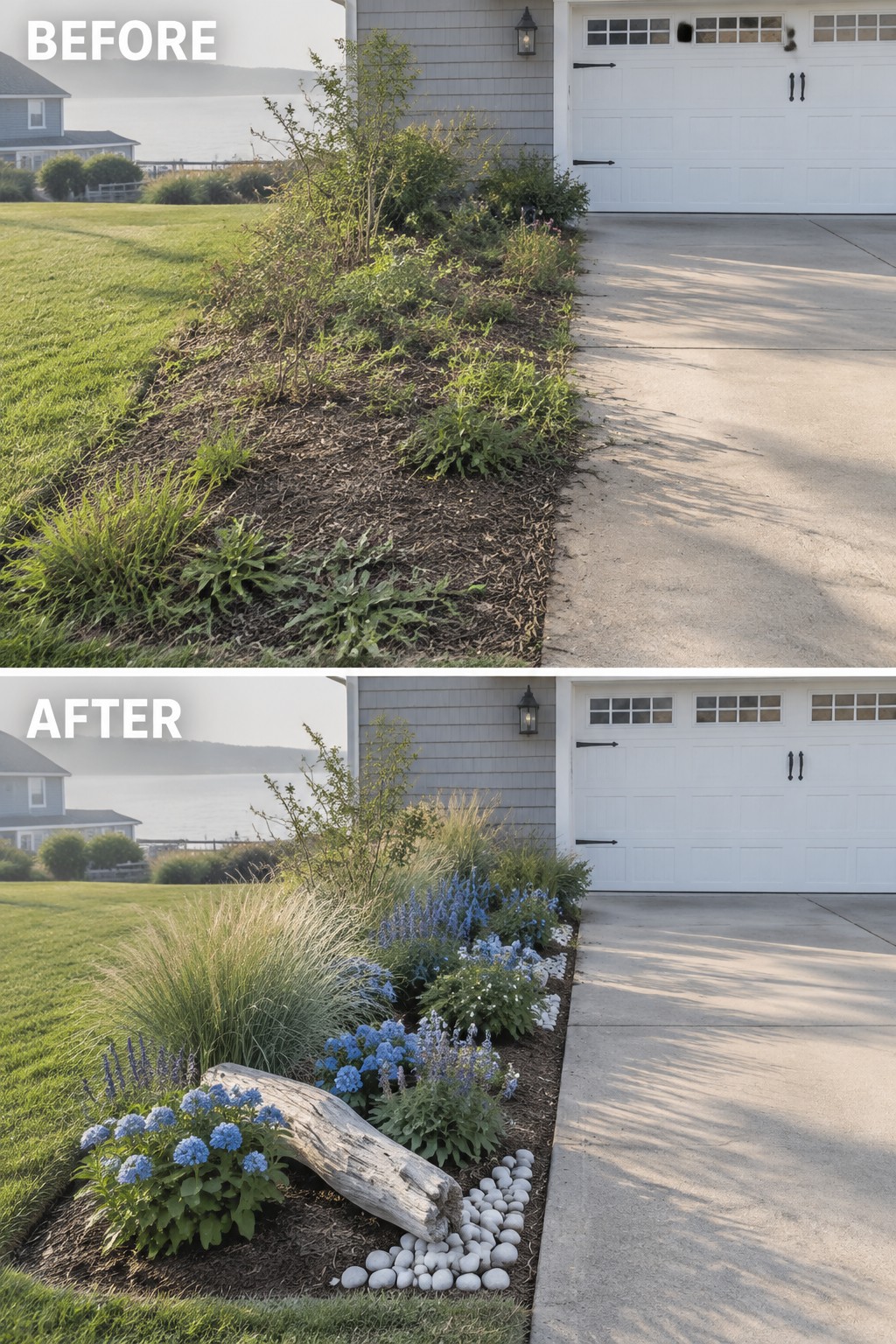
The before photo shows a weedy strip of mulch that had no real shape or plan. The after version keeps the same narrow space but gives it order through grouped plants, a few taller grasses for height, and a low border of stones that stops the bed from spilling onto the concrete.
This idea works best along driveways or house foundations where the footprint cannot change. Clean out the worst growth first, then plant in clusters instead of scattering single plants. One simple focal piece, like a weathered log, can make the whole bed feel finished without adding new hardscaping or expanding the area.
Create Rounded Shrub Layers In A Curved Front Bed
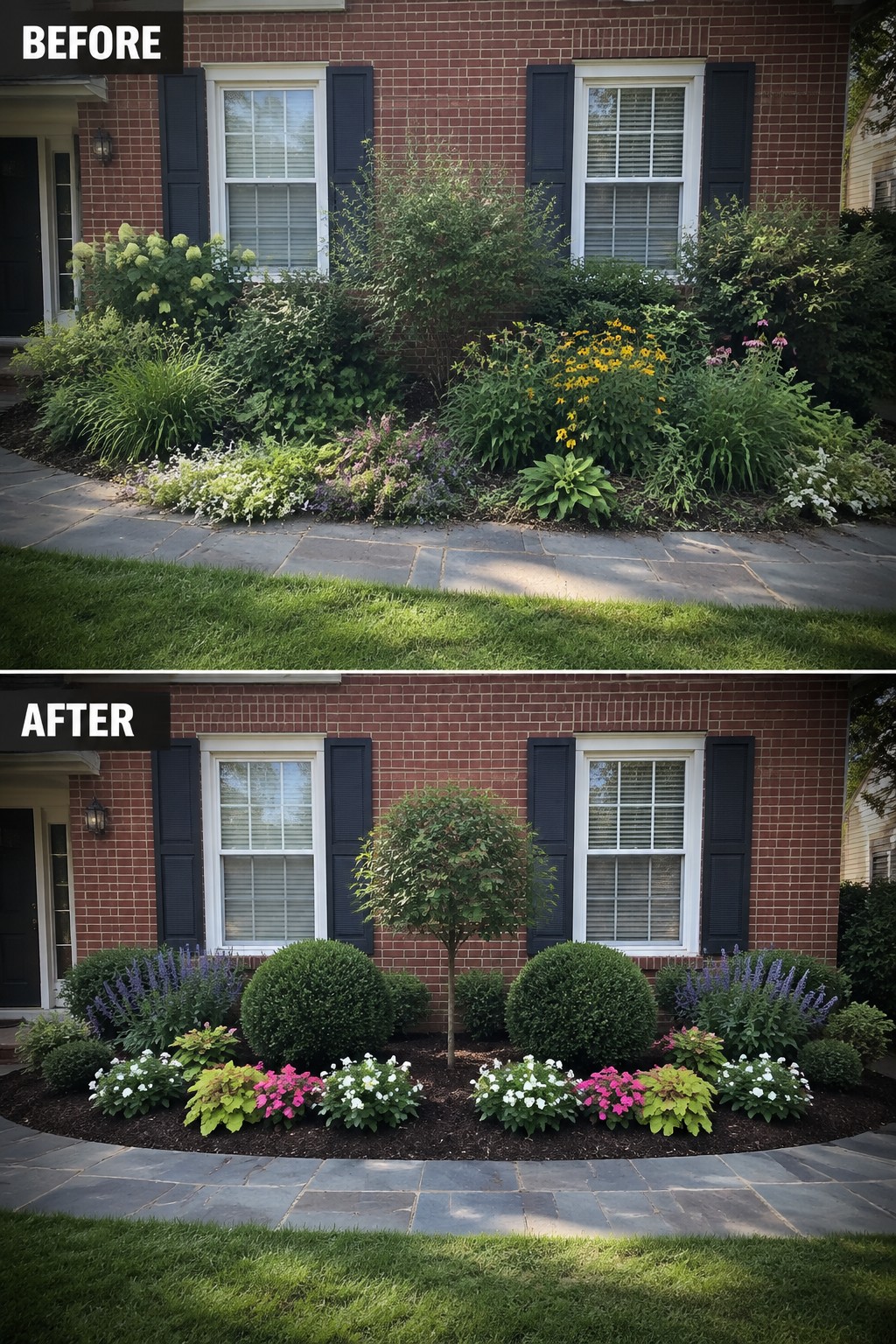
The main change here is replacing a jumble of tall and sprawling plants with a few rounded shrubs and a small tree that give the bed clear layers. The curved footprint stayed the same, but the planting now has a sense of order instead of spilling in every direction.
This idea works best on front beds where the shape is already decent but the plants have grown out of control. Remove the most chaotic growth first, then place a couple of evergreen shrubs as anchors and keep lower flowers along the front edge. Mulch finishes the look and makes weeding easier later.
Use Containers To Give A Flower Bed More Structure
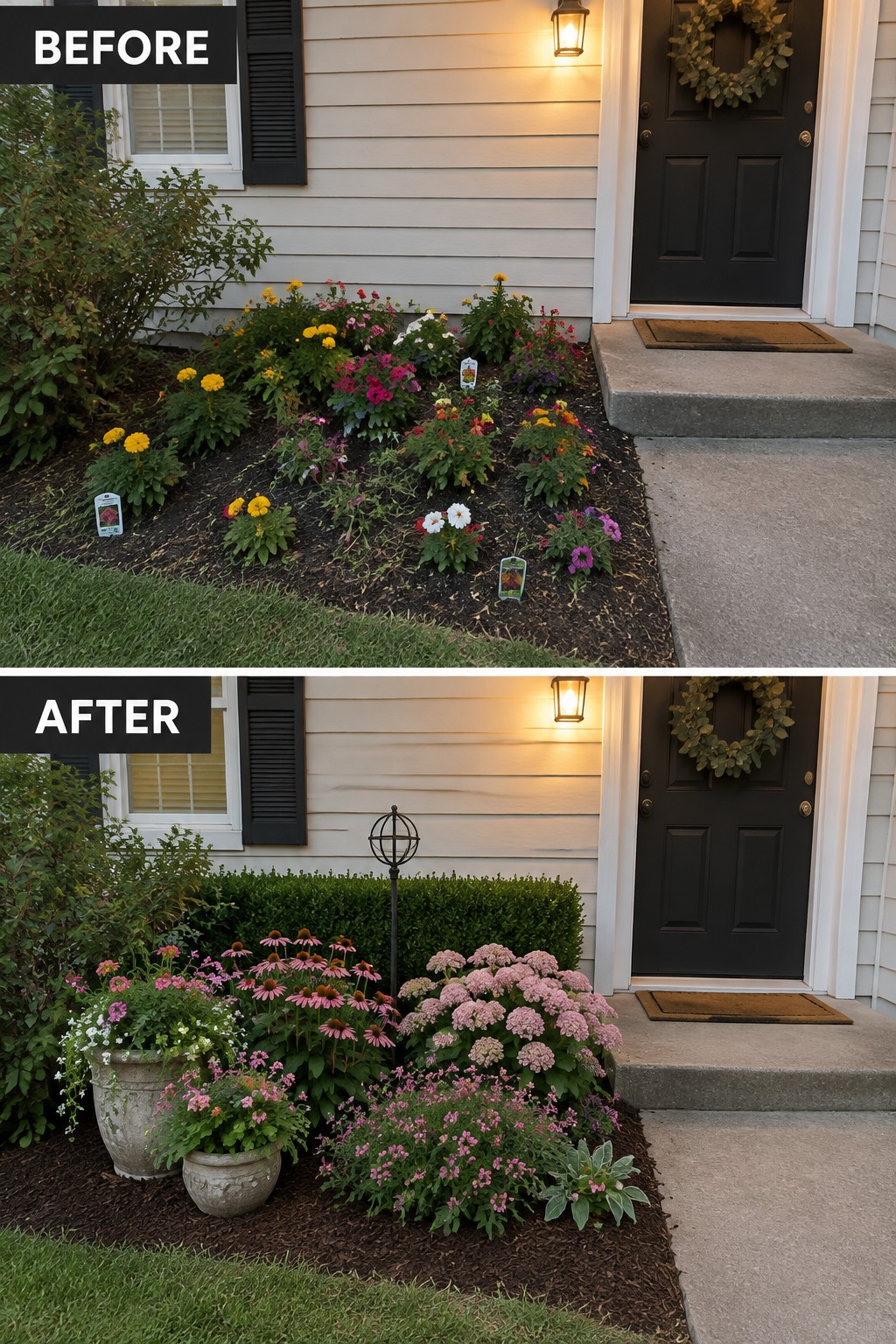
The before photo shows a flower bed filled with individual plants set into the mulch with little sense of order. The after version keeps the same narrow strip of ground but adds a few large stone containers, groups the plants into fuller clusters, and places a low hedge along the house wall. The result feels much more planned and substantial.
Containers are useful here because they let you create height and repeat color without digging up more lawn. Place one or two larger pots near the front edge, then fill around them with lower plants that spill slightly over the sides. A simple backdrop like a trimmed hedge or row of shrubs helps the whole bed read as one tidy unit rather than a collection of separate plants.
Add Structure To An Overgrown Border

The main change here was clearing out the tall weeds and messy growth along the fence, then replacing it with a clean mulched bed that has clear layers of shrubs, flowers, and low ground cover. The addition of a few low lights helped tie the whole strip together without making it feel crowded. Once the shape was defined, the same space suddenly looked intentional instead of neglected.
This approach works well along fence lines or side yards where space is long and narrow. Start by cutting everything back and laying down a solid edge and mulch before you plant. Repeating just a few plant types keeps the bed from looking scattered, and the same idea can be scaled to fit almost any straight border that has gotten out of hand.
Frequently Asked Questions
Q: How do I keep mulch from washing away in heavy rain without altering the bed shape? A: Rake a fresh layer around the plants each spring and press it down lightly at the edges. This holds everything in place while the roots stay put. Check the borders after storms and add just a handful where needed.
Q: What works best if weeds keep popping up in the same footprint year after year? A: Pull them by hand right after rain when the soil is soft. Lay cardboard under the mulch next time you refresh it to block light. One quick pass each month keeps the bed tidy without extra space.
Q: Can I swap in new flowers later if the old ones fade? A: Dig out the spent plants and drop in fresh ones that match the height of the rest. Water them in well for the first week so they settle fast. This keeps the whole bed looking full without shifting the outline.
Q: How do I stop the soil from getting compacted over time? A: Loosen the top few inches with a hand fork before each season starts. Mix in a bit of compost as you go to keep it loose. Do this around the existing plants only.
