

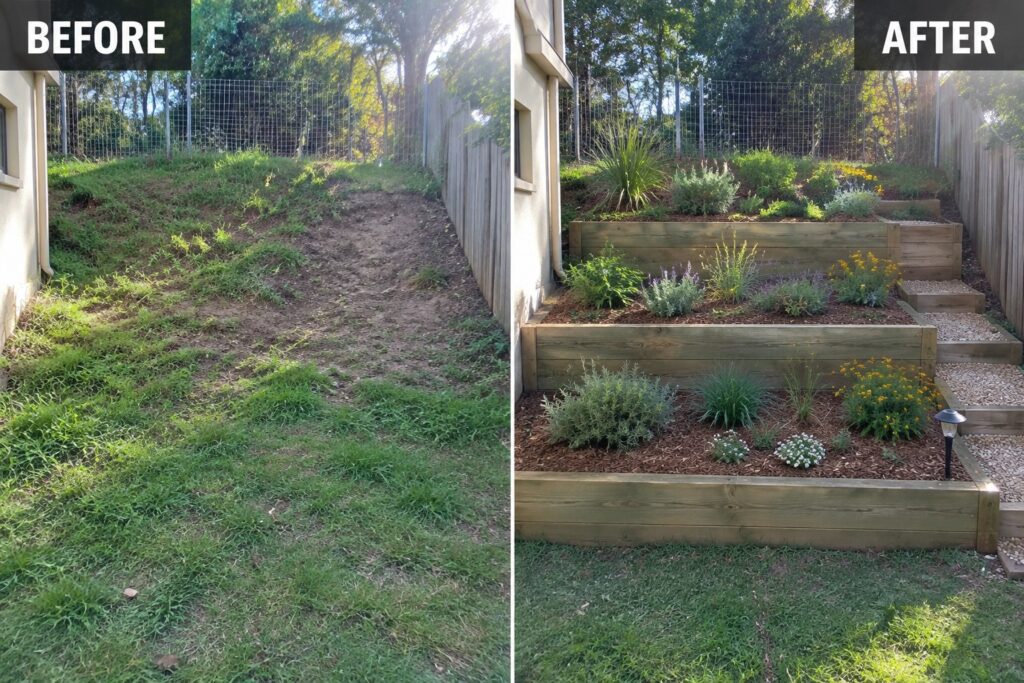
Uneven ground in a small garden often leaves the space feeling hard to walk across or plant without constant slipping and erosion.
Working with the natural slope through careful leveling and drainage steps tends to create a more stable base for everything else.
I usually test basic edging and path ideas first because they show quickly whether the layout will hold up in daily use.
Raised beds and layered plantings then help define the area without requiring heavy equipment or a complete overhaul.
Small adjustments like these add up faster than expected.
Use Terraced Beds To Manage A Sloping Yard

A sloping backyard often ends up as patchy grass and bare dirt because it is hard to mow and awkward to plant. Adding low wooden retaining walls creates flat terraces that turn the slope into usable garden space while slowing water runoff.
This idea works best on small or narrow lots where every level surface counts. Start with the lowest wall first, then build upward, and keep paths and steps wide enough to walk through comfortably once the beds are planted.
Use Raised Beds To Handle Uneven Ground

Raised beds solve the main problem with sloped or uneven yards by giving you flat, contained planting areas without needing to regrade the whole space. The before photo shows a weedy slope with no real structure, while the after shows how a few simple wooden beds turned that same area into something you can actually plant and maintain.
This approach works well in small backyards where the ground drops away from the house or fence. Start with the cleanup, then set the beds at different heights to follow the slope. Gravel between them keeps things tidy and gives you a clear path to walk without tracking mud.
Add Steps And Gravel To Handle A Sloped Path

A muddy slope with no clear route is hard to use and easy to slip on. The simple fix here was to lay in a series of concrete steps that follow the drop of the hill, then fill the spaces between them with gravel and finish the edges with low stone borders. The result is a path that stays firm in wet weather and looks intentional instead of neglected.
This approach suits any small garden where the ground falls away and you still need regular access. Clear the overgrowth first, set the steps at a comfortable height, and keep the side planting low so the path stays open. Gravel is cheaper than full paving and still gives decent drainage, which helps on uneven sites.
Build A Retaining Wall Bench To Make A Slope Usable
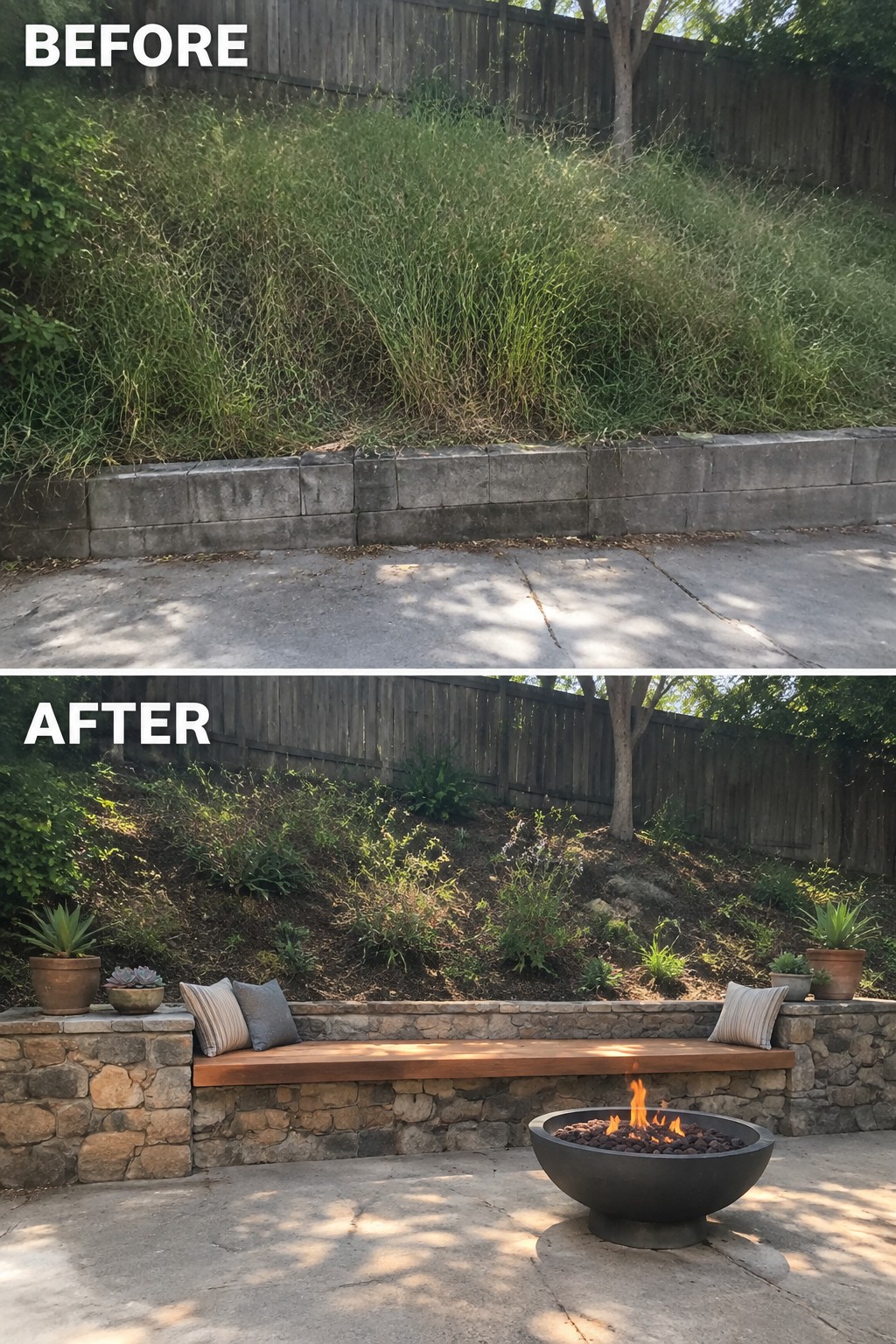
A sloped backyard often stays unused because there is no flat spot for seating. Adding a low stone retaining wall creates a level edge along the patio and turns that same wall into the base for a simple wooden bench. The bench stays in place without extra furniture that could crowd the space, and the fire pit sits right in front of it.
This setup suits small yards with a noticeable drop from the lawn to the patio. Keep the slope above the wall planted lightly so it does not compete with the seating area. Focus on one main spot for gathering rather than trying to level the entire hill.
Turn A Narrow Balcony Into A Small Seating Area
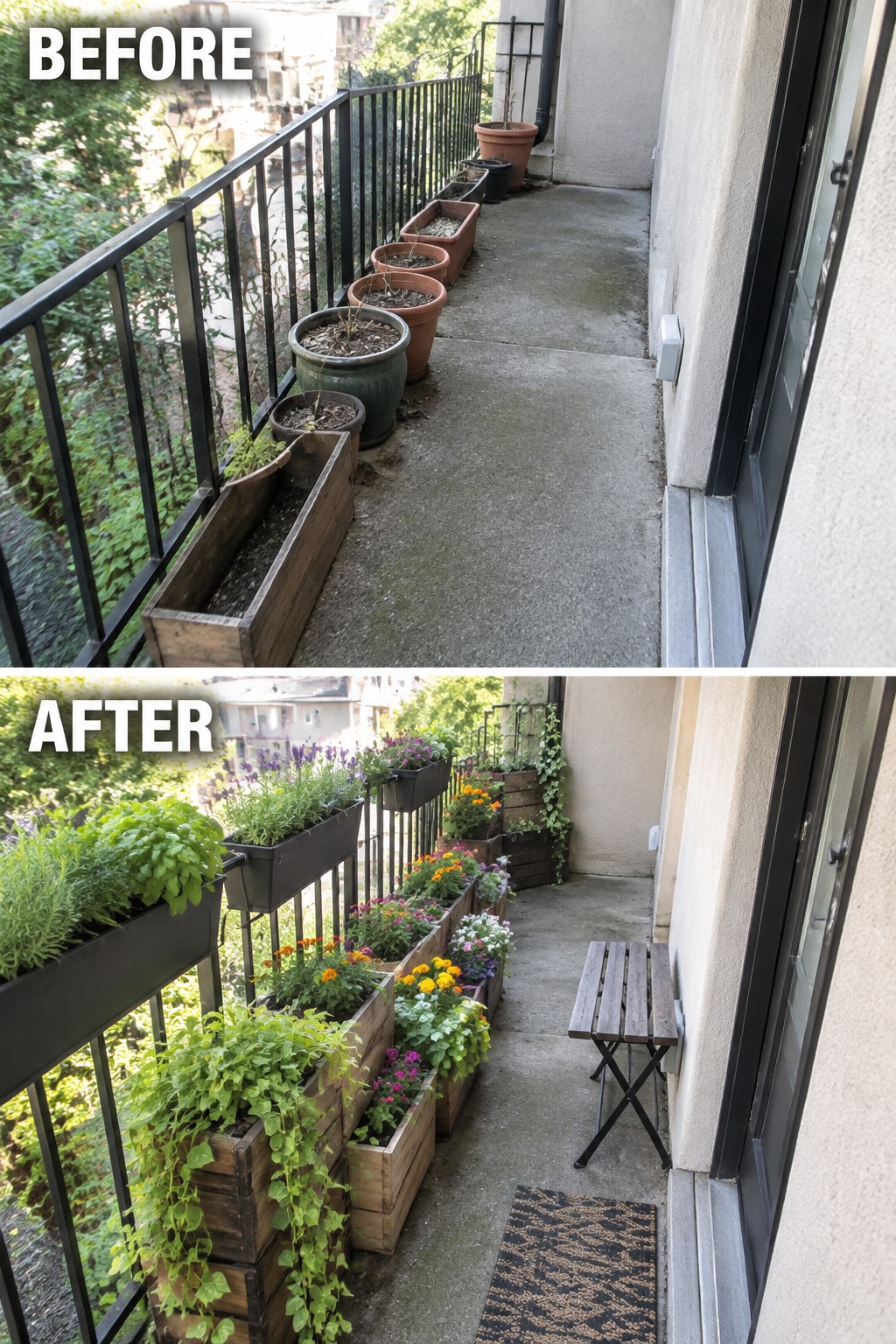
A long strip of concrete with pots scattered along the rail rarely feels like a place to spend time. Adding a compact bench, a simple rug, and a row of matching planters gave the space a clear purpose and made it feel much more usable.
This approach works best on balconies that are too narrow for big furniture. Keep the bench small, choose weatherproof pieces, and let the planters do most of the organizing so the floor stays open for walking through.
Shape A Steep Slope With Rocks And Planting
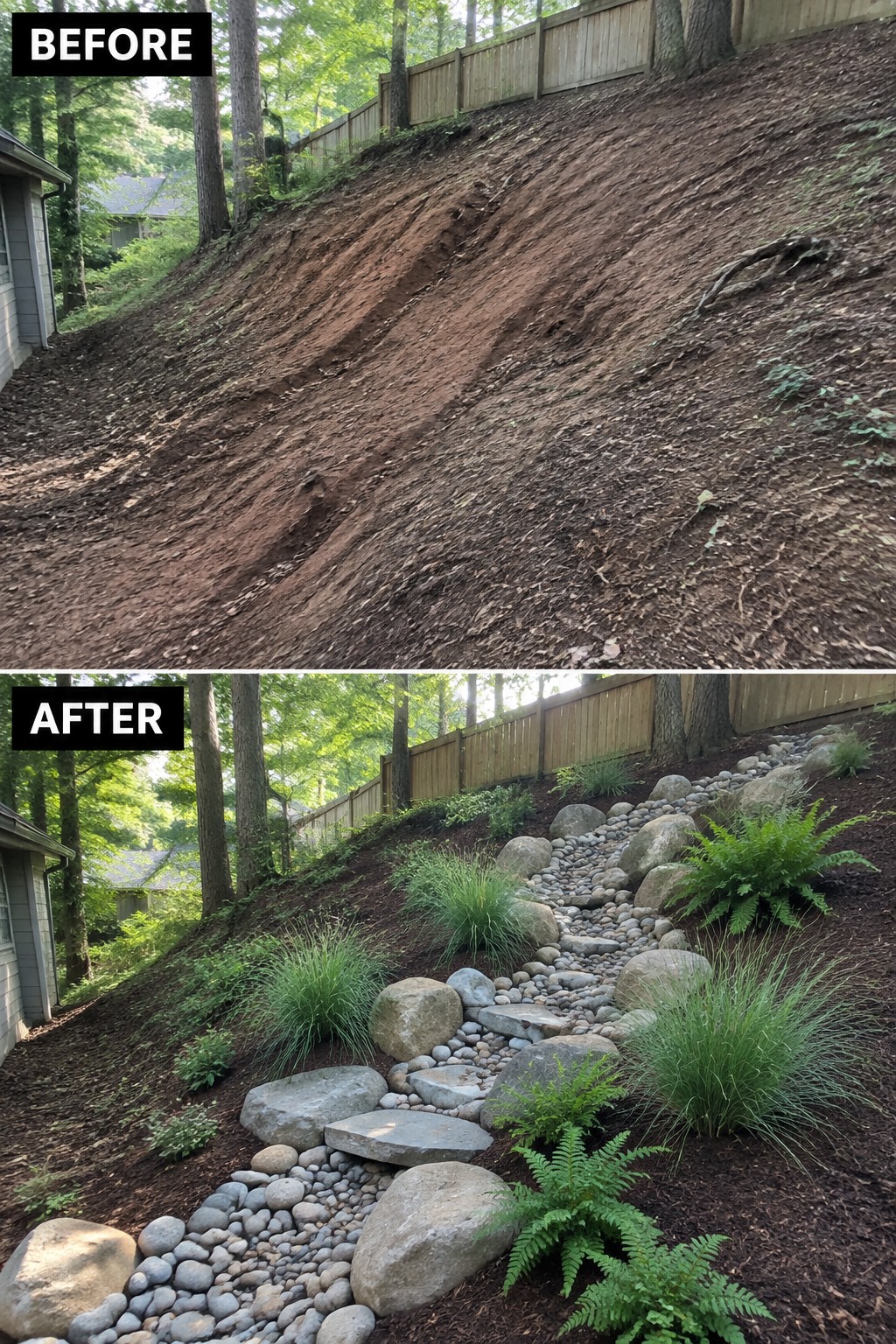
A bare slope often looks unfinished and can be hard to maintain. Here the yard moved from loose dirt to a clear path of stones and river rock running down the hill, with mulch and plants added on both sides. The rocks give the slope a purpose and help keep the soil from washing away.
This idea works best on smaller slopes where you want a natural look without building walls. Lay out the path first with larger stones, then add mulch and plants that can handle the angle. It keeps the space simple and gives the yard a more finished feel without major construction.
Terrace A Sloped Yard With Retaining Walls

A steep, eroded slope can leave a backyard feeling unusable and hard to maintain. The simplest fix is often to add terracing that breaks the grade into flat, stable sections. Gabion walls filled with local stone do the job without needing heavy equipment or perfect drainage planning, and they create planting pockets that hold soil in place.
This approach works best on smaller lots where a full regrade would be too costly. Focus on two or three low walls rather than one tall structure, and keep the top level wide enough for a mower or a couple of chairs. Plants that drape over the edges soften the look and help the new levels blend with the lawn below.
Add Structure To A Steep Garden Slope

A steep slope covered in weeds and loose stones is hard to use and harder to maintain. Building a set of wooden steps with planters built into the sides gives the slope clear levels and turns the path into a usable route instead of an obstacle.
This idea suits small gardens where the ground drops sharply and regular beds would slide or wash out. Clear the overgrowth first, then use simple timber to form both the steps and the planting boxes. The wood holds the soil in place, the planters add color along the walk, and the whole setup stays practical without needing heavy retaining walls.
Add Raised Beds And Gravel To Manage Uneven Ground

A raised concrete planter paired with a gravel path turns a muddy, waterlogged slope into a clean, usable strip beside the house. The change works because it lifts the planting area above the wet ground and gives the path a stable surface that handles runoff instead of turning into a mess after rain.
This idea suits homes with narrow side yards or gentle slopes where full regrading is not practical. Focus on drainage and edging first, then choose plants that tolerate the conditions. Keep the path width clear enough for walking so the space stays functional rather than just decorative.
Use Rocks To Shape A Sloped Garden
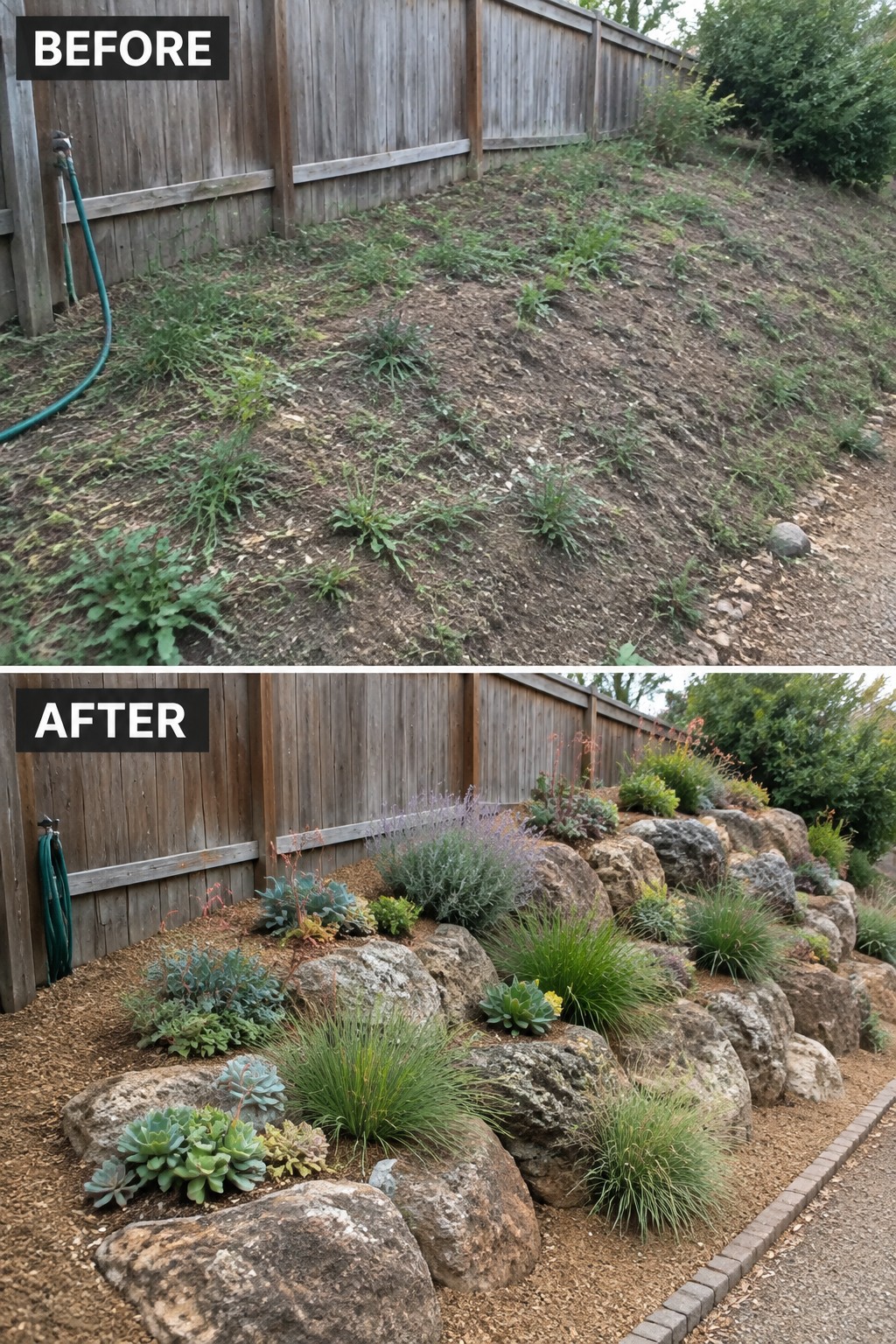
A bare, weedy slope is hard to maintain and looks unfinished. Adding large rocks creates natural terraces that hold the soil in place and give the area clear structure. The plants then have defined spots to grow instead of spreading out across loose dirt.
This approach works well on small slopes where a full retaining wall would feel too heavy. Start by placing the biggest rocks to form the main levels, then fill in with mulch and plants that can handle the angle. It keeps the yard looking neat without needing constant mowing or weeding on the incline.
Terrace Uneven Ground To Create Flat Garden Areas

The before photo shows a backyard that slopes away with patchy grass and no clear way to use the space. Adding low stone retaining walls turned the slope into two flat levels that feel much more usable.
This idea works best in small yards where the ground drops off and mowing becomes difficult. Build the walls first to hold the soil in place, then add simple planting beds along the edges. The shrubs in the after photo show how low-maintenance plants can fill the beds without much extra work.
Build A Deck To Make Sloped Ground Usable
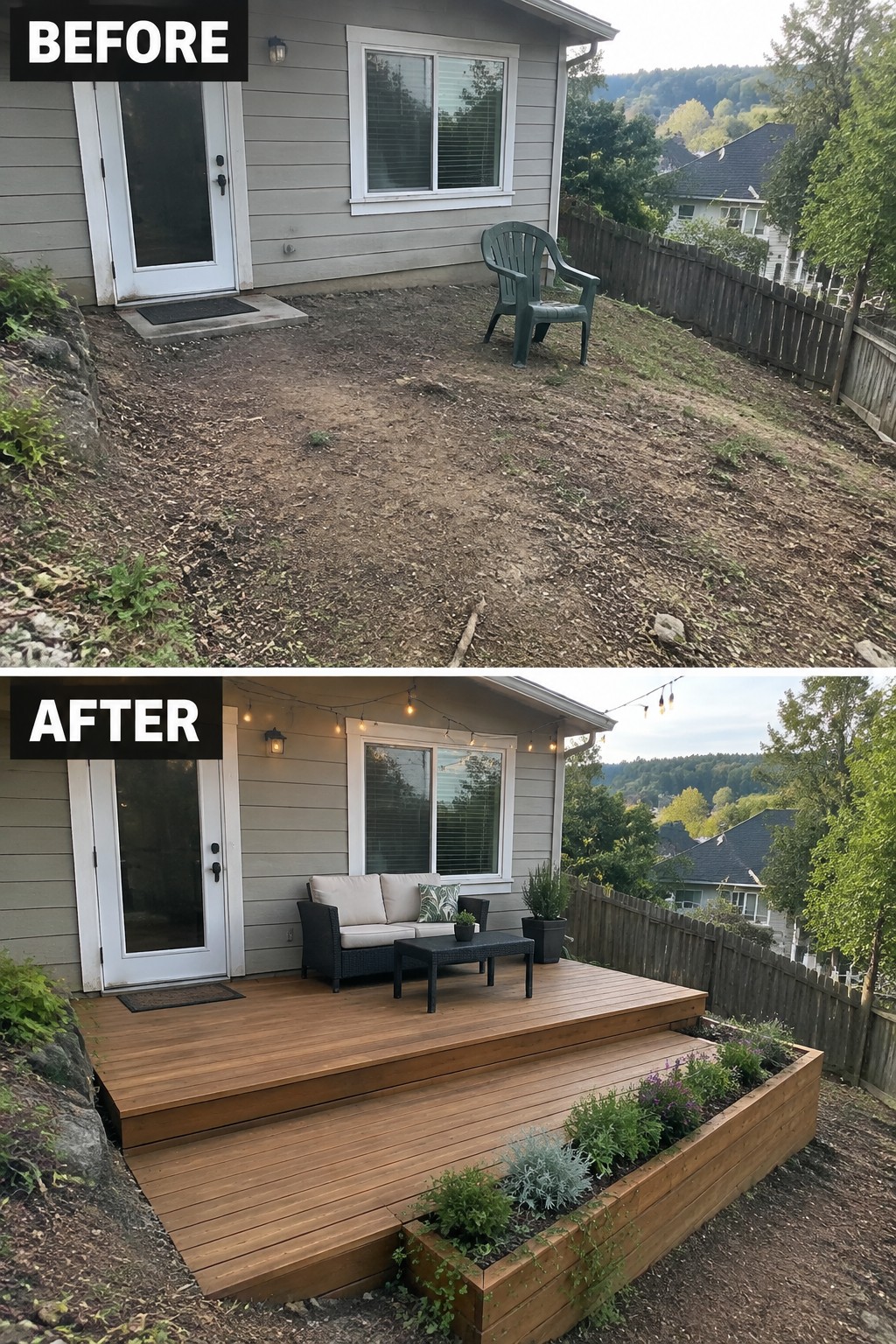
A bare dirt slope next to the house gives you almost no place to sit or relax. Adding a wooden deck with wide steps and a built-in planter box turns that awkward slope into flat, usable space without needing to regrade the whole yard.
This idea works best on small properties where the drop is too steep for simple terracing. Keep the deck low to the ground in sections, use pressure-treated lumber, and let the planter double as both seating edge and planting area so the whole thing feels tied to the house.
Terracing Creates Level Seating On A Slope
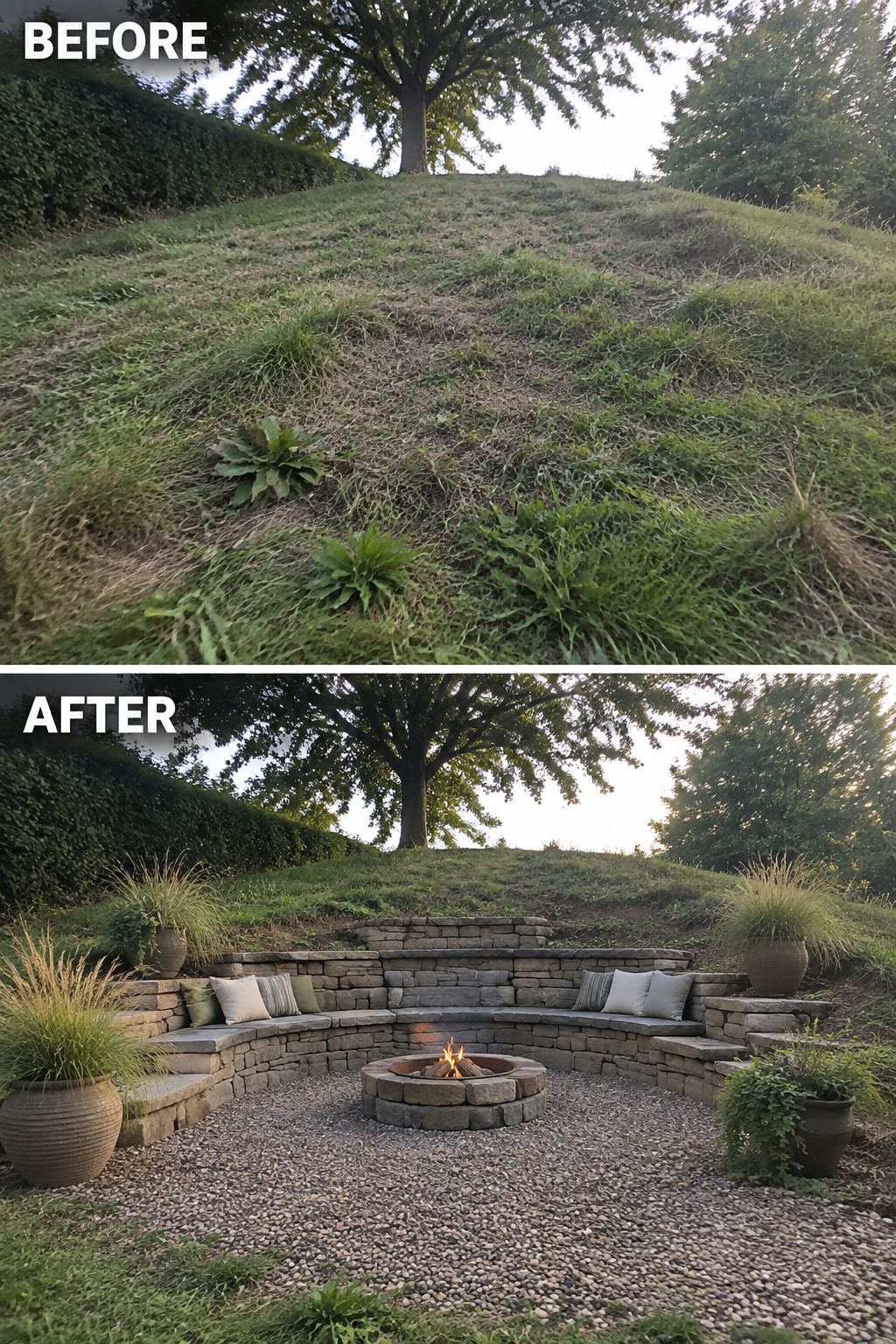
A steep grassy slope rarely gets used because there is nowhere comfortable to sit or gather. Adding low stone retaining walls turns the same hill into a series of flat terraces that can hold seating and a fire pit without fighting the grade.
This idea works best on modest inclines where full excavation is not practical. Keep each wall under about two feet so the structure stays simple, choose stone or concrete blocks that match your local soil color, and leave enough gravel or paving at the base for drainage and walking room.
Turn A Sloped Yard Into A Level Patio Area

A steep dirt slope often leaves the ground unusable and hard to maintain. Adding a low retaining wall and laying pavers creates a flat, stable surface that turns the same space into a place where you can actually sit and spend time.
This approach works best on small properties where the drop is too steep for simple grading. Keep the wall height modest so it does not dominate the view, and make sure the pavers sit on a solid base with room to drain. The result is a practical seating spot that feels like part of the garden rather than a separate addition.
Turn A Patchy Slope Into A Wildflower Meadow
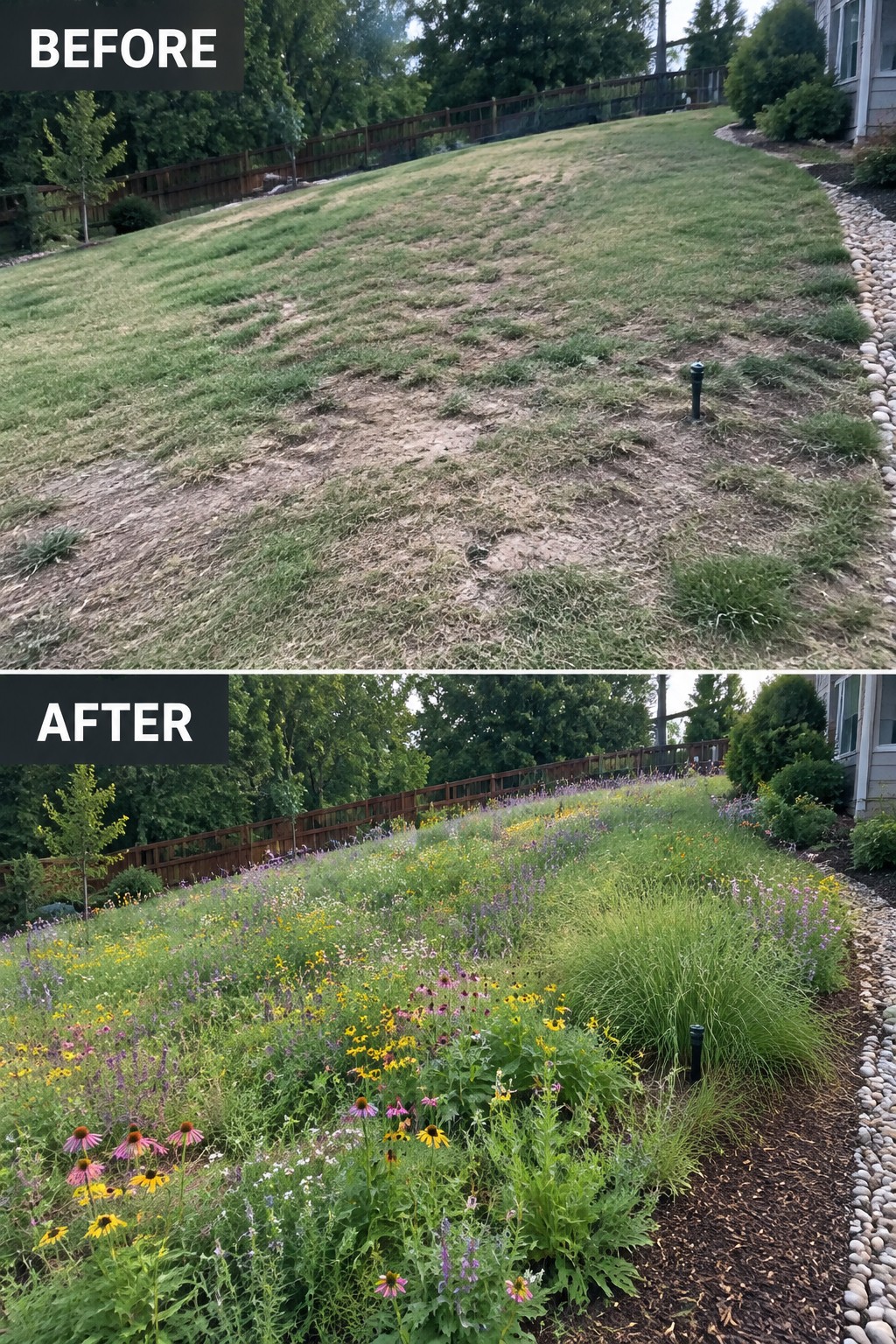
A failing lawn on a slope is hard to mow and often looks worse every year. The fix shown here is to stop fighting the grass and cover the ground instead with a dense mix of flowers and perennials that can handle the incline.
This idea suits small yards where leveling is not practical. Start with a few larger plants near the edges for quick impact, then let a suitable seed mix fill the rest over the first two seasons. Mulch any bare spots at the bottom so the planting looks finished while it grows in.
Add Stepping Stones To Shape An Uneven Side Yard

A narrow side yard with uneven ground often ends up as wasted space because it is hard to walk through and even harder to maintain. Laying down stepping stones creates a clear path that handles the slope and gives the eye something solid to follow. The rest of the area can then be mulched and planted without turning into a mud pit every time it rains.
This approach works well in tight spaces between a house and a fence where full paving would feel cramped. Start by clearing the clutter and leveling the worst spots, then set the stones on a simple gravel base so they stay put. Low shrubs and ground cover along the edges keep the look tidy without blocking movement.
Use Raised Beds To Manage A Slope
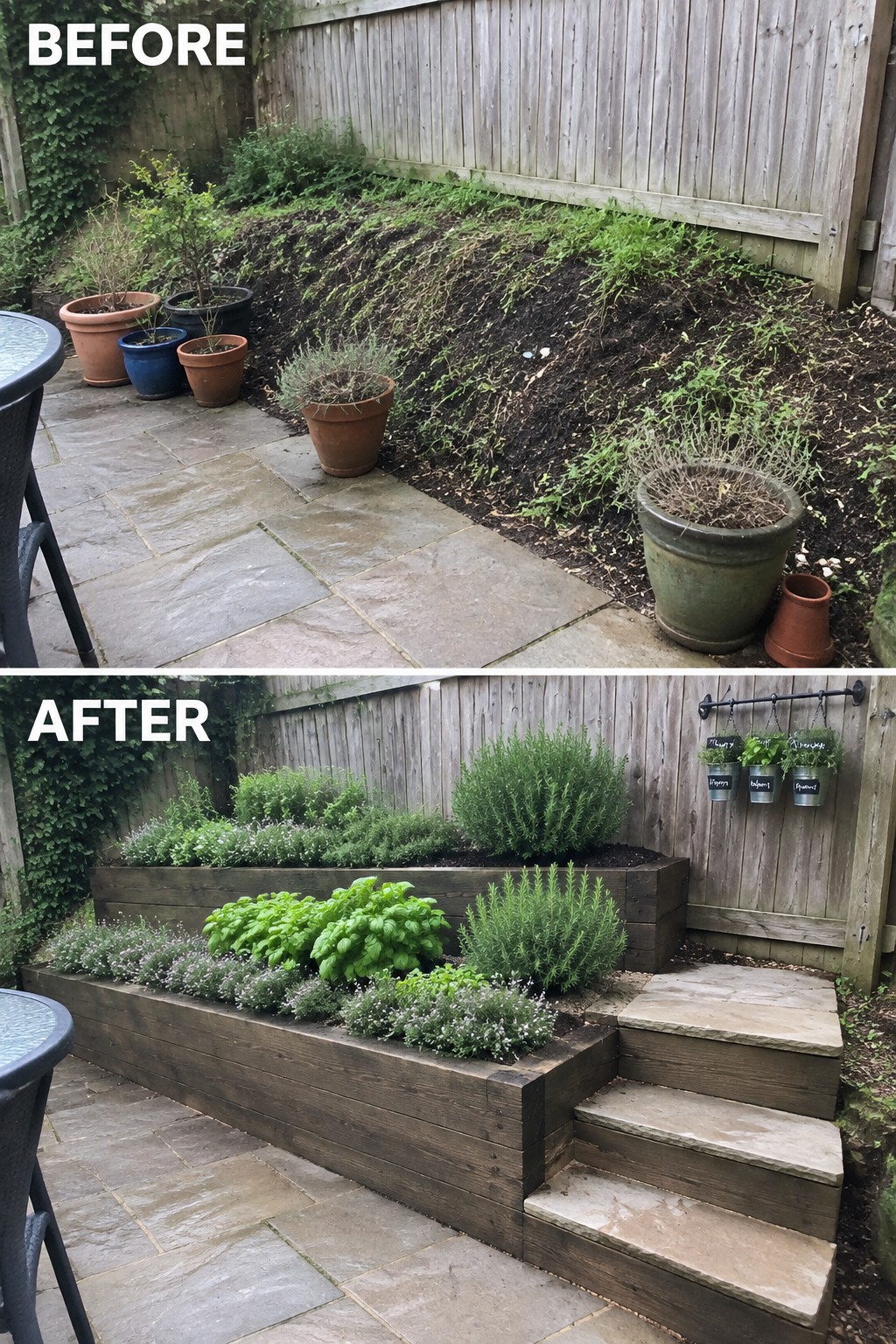
A sloped garden often ends up as wasted space because the soil shifts and water runs off. Building simple timber raised beds creates flat planting areas that stay put and make the whole garden feel more organised. The before photo shows scattered pots and loose soil on a steep bank, while the after shows how the beds turn that same slope into usable growing space with clear edges and easy access.
This approach works well in small gardens where the ground drops away from the house or patio. Start with two or three beds stepped down the slope rather than trying to level the whole area at once. Adding a short set of steps between levels keeps the space practical for watering and harvesting without needing major earthworks.
Add Steps To Handle Uneven Ground At The Entry
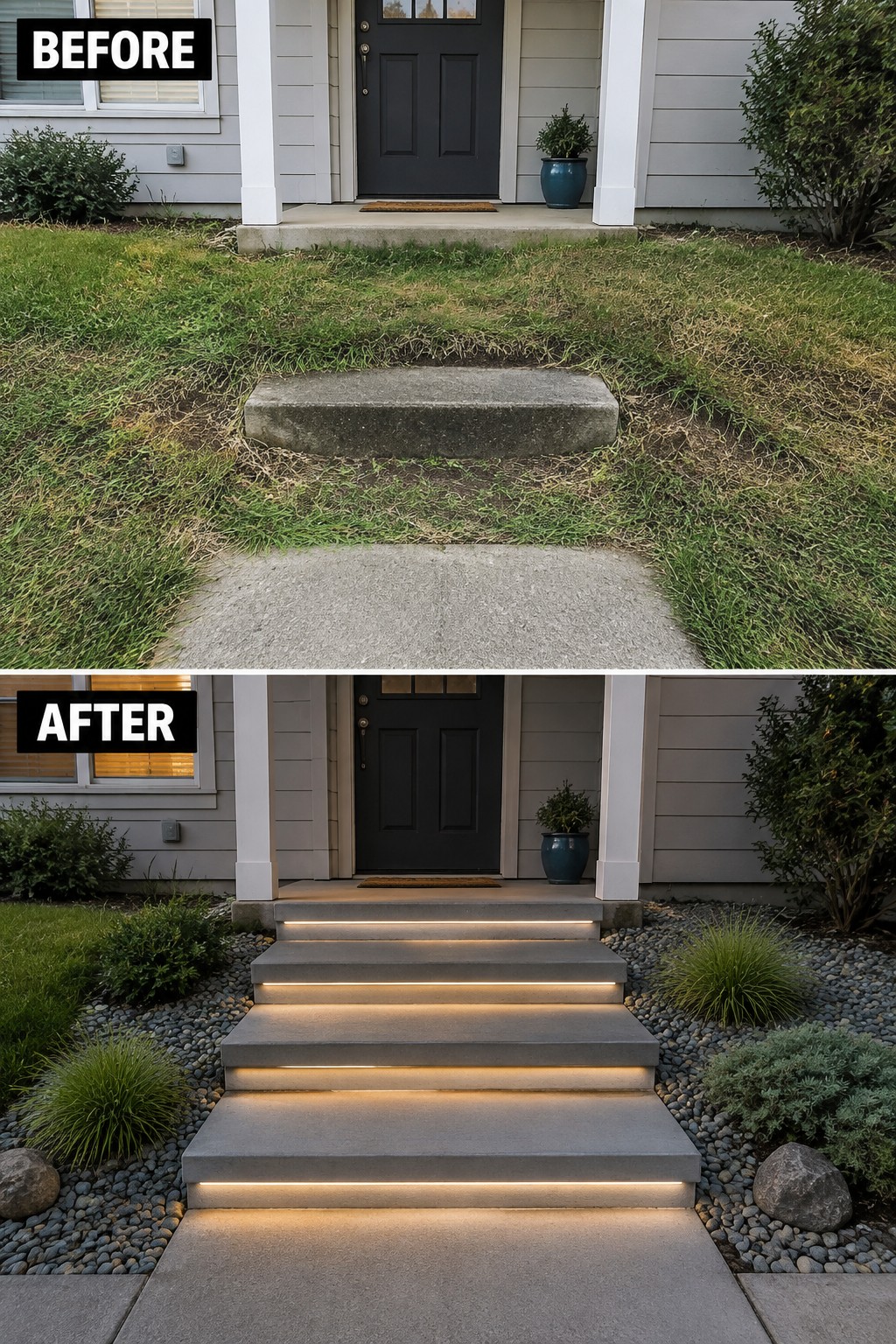
A single awkward concrete block and patchy grass made the slope feel steep and hard to manage. Adding a set of proper steps with built-in lighting turned the drop into a clear, easy path while the gravel beds on either side kept the ground from washing out.
This approach works well on small front yards where the lawn runs straight into the house. Start with the steps and edging first, then fill the new beds with low plants that can handle the slope. The lighting also makes the entry safer at night without needing extra fixtures.
Add Planting Structure To A Sloped Yard
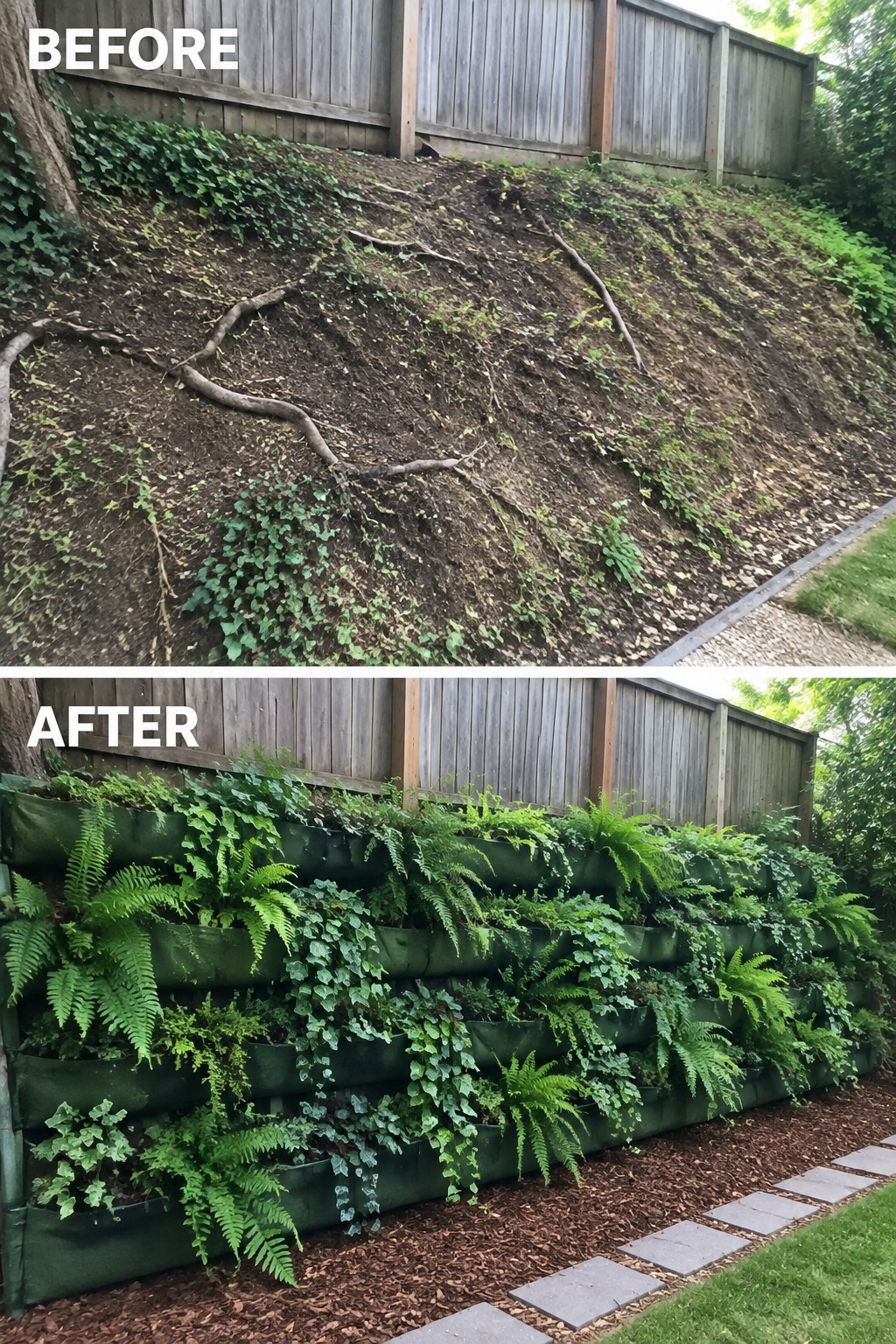
A steep, messy slope is hard to plant and even harder to maintain. The simple fix here was installing rows of tiered fabric planters along the base of the fence. This turned bare, root-covered ground into a series of flat planting beds that hold soil and keep plants from sliding down the hill.
This approach works well in small gardens where the ground drops away sharply. Start by clearing the worst of the overgrowth first, then build level rows with sturdy planters or retaining bags. It keeps the planting easy to reach and stops the whole area from looking neglected after a few seasons.
Turn An Eroded Slope Into A Dry Creek Bed
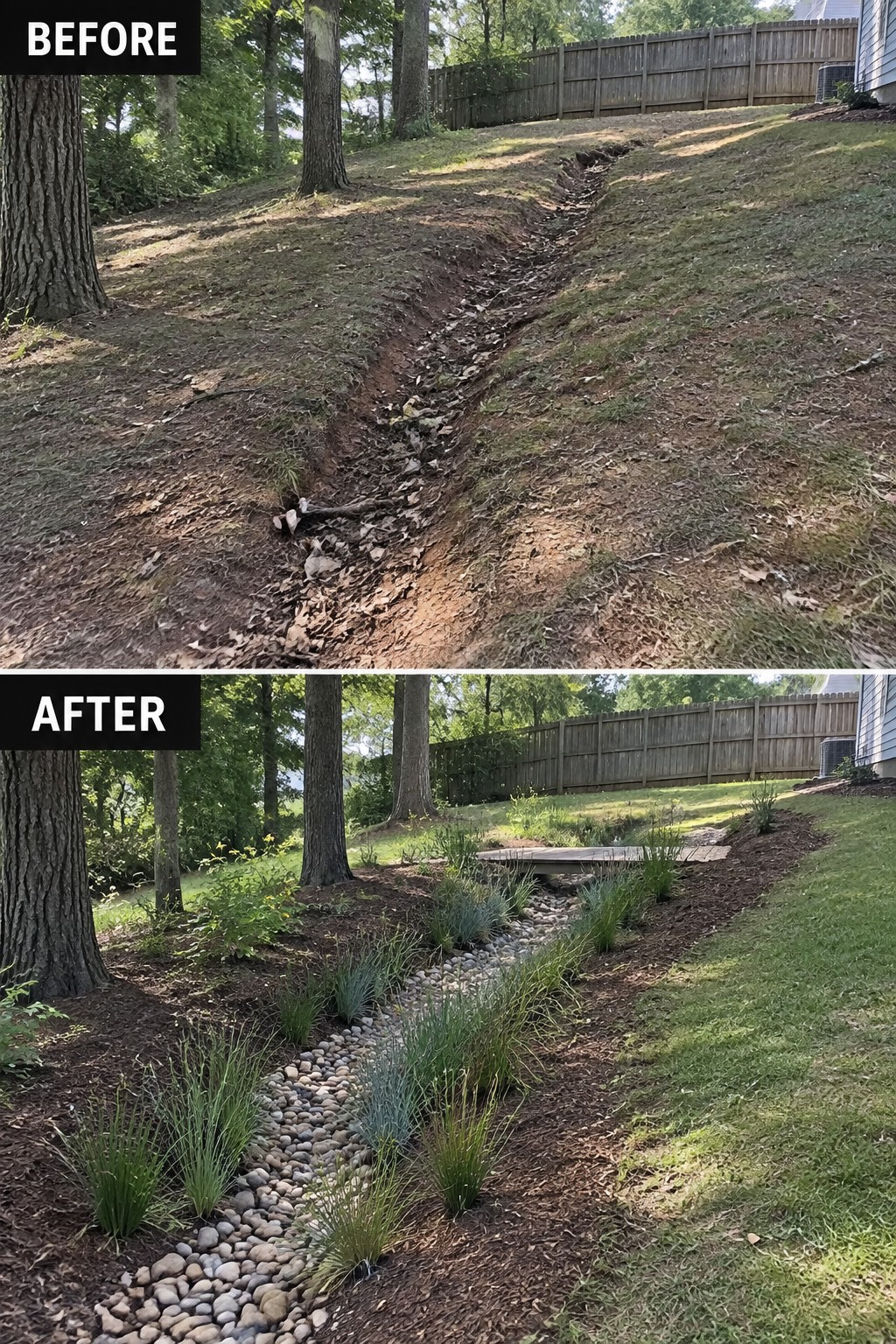
A bare, washed-out channel on a slope is hard to mow and looks neglected. Lining it with river rock turns the same dip into a clear feature that moves water visually while keeping the surrounding grass neat. The mulch edges and simple grass clumps on both sides finish the look without crowding the space.
This approach works well on small yards with gentle slopes or seasonal drainage lines. Start by clearing leaves and loose soil, then lay landscape fabric before adding rock so the bed stays in place. Choose grasses that tolerate both wet and dry periods, and keep the rock width narrow enough to leave room for lawn on either side.
Frequently Asked Questions
Q: Will I need to level everything out first? A: You can work around the uneven spots instead. Try building raised beds on the higher areas to even things up naturally. That saves a lot of digging.
Q: How do I handle drainage when water pools in low spots? A: Dig a small trench at the lowest point and fill it with gravel. This lets water drain away without flooding your plants. Check the flow after a rain to see if it works.
Q: What about adding seating areas on a slope? A: Use retaining walls made from old bricks or logs to create flat spots. Place benches right on those leveled sections. It turns the slope into a feature.
Q: Are there plants that thrive without much soil moving? A: Go for ground covers like ivy. They hold the soil and spread fast.
