

A small garden can easily look scattered when planting has no clear structure to hold it together.
I have noticed that working on layout and edging first often makes the rest of the space feel more settled over time.
Adding cottage style borders and paths tends to give the area a sense of purpose without much extra effort.
One change I would test early is shaping the lawn edges since that alone can make the garden read as intentional.
It is satisfying to see how these adjustments encourage actually spending time outside once the space stops feeling forgotten.
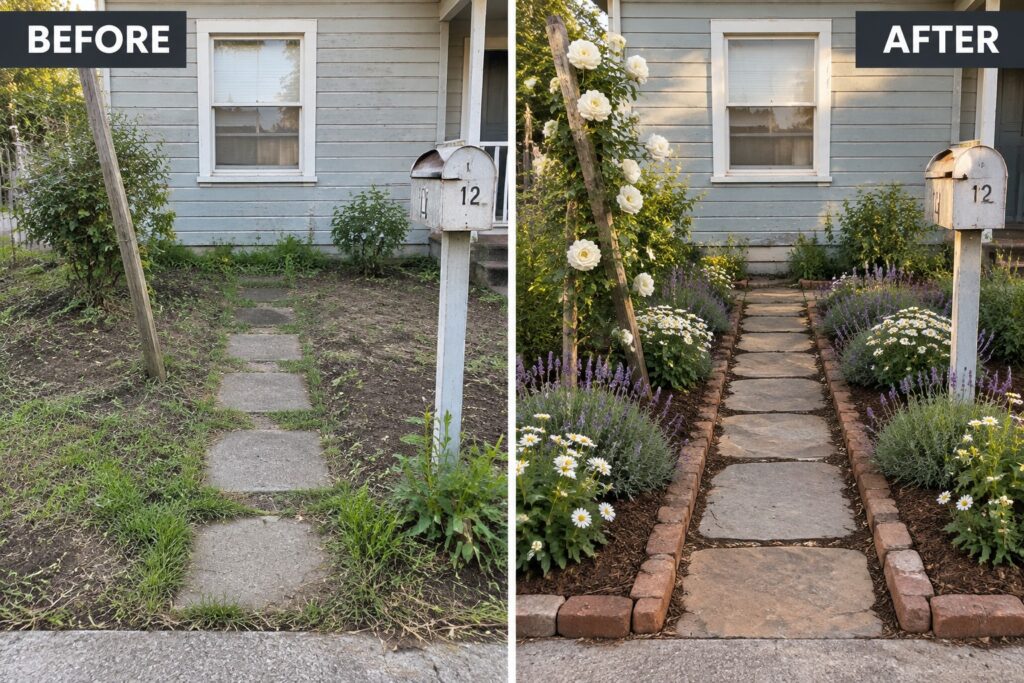
Create Defined Garden Beds Along A Front Path
A front path looks much better once you give the ground on either side a clear edge. In the before photo the grass simply ran into bare dirt with no shape, so the whole area felt unfinished. Adding brick edging and filling the beds with a mix of flowers and low shrubs turns the same narrow strip into something that feels planned and welcoming.
This idea works well on small lots where you want structure without crowding the walkway. Start with the edging so the beds stay neat even when plants grow, then choose a few repeating plant types rather than too many different ones. It keeps the look cottage style without turning the front yard into extra work.
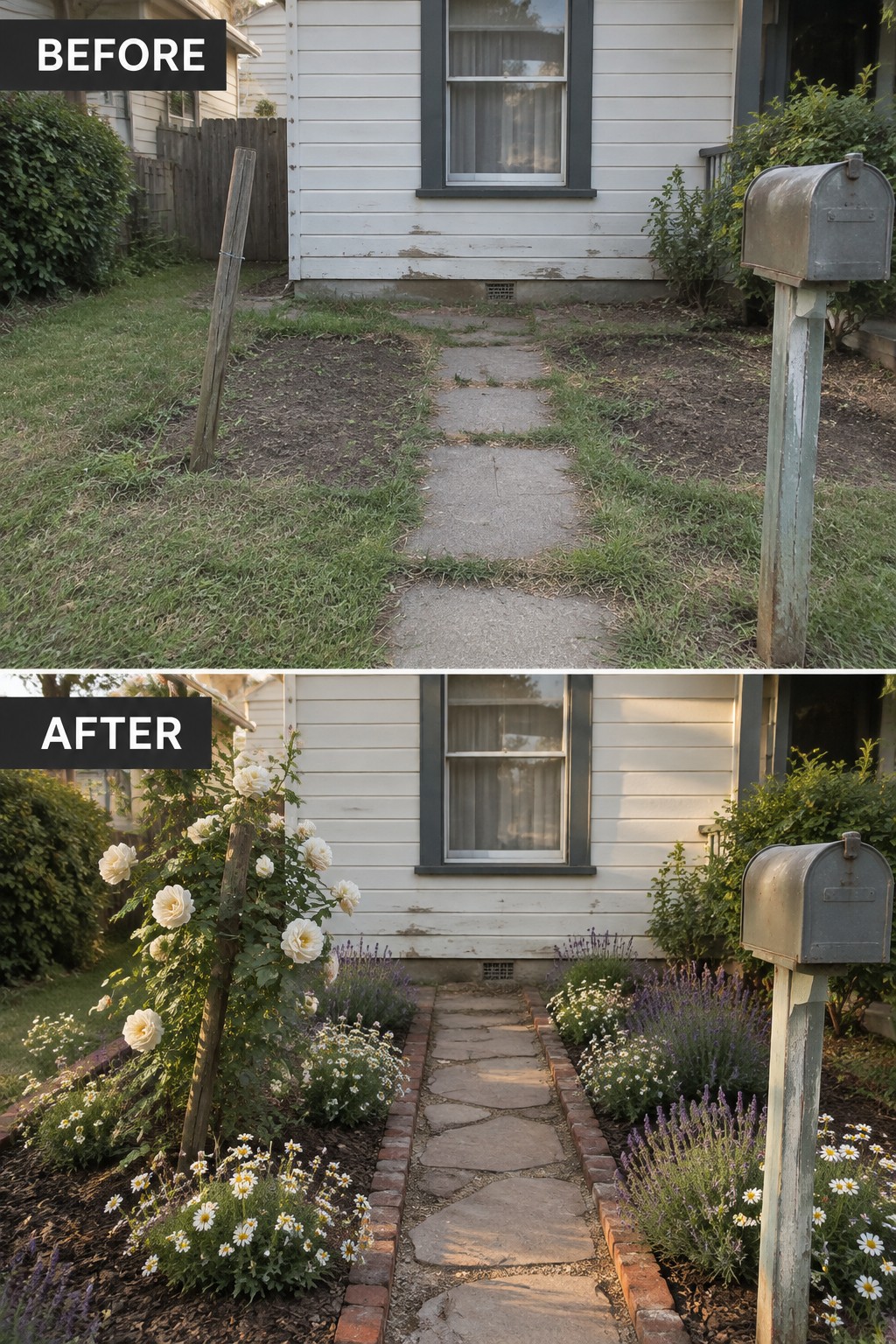
Add Structure To An Overgrown Side Yard

A narrow side path often gets ignored until the weeds take over and the concrete cracks. The change here comes from laying irregular stepping stones with gravel borders and adding simple wooden trellises along the fence. Those two moves give the space a clear shape instead of leaving it as a weedy strip.
This idea suits tight areas between a house wall and a fence where you cannot widen the beds. Start by clearing everything back to the edges, then keep the path narrow enough for walking while letting the planting spill in gently. Trellises add height and privacy without crowding the ground.
Turn An Empty Patio Into A Seating Area
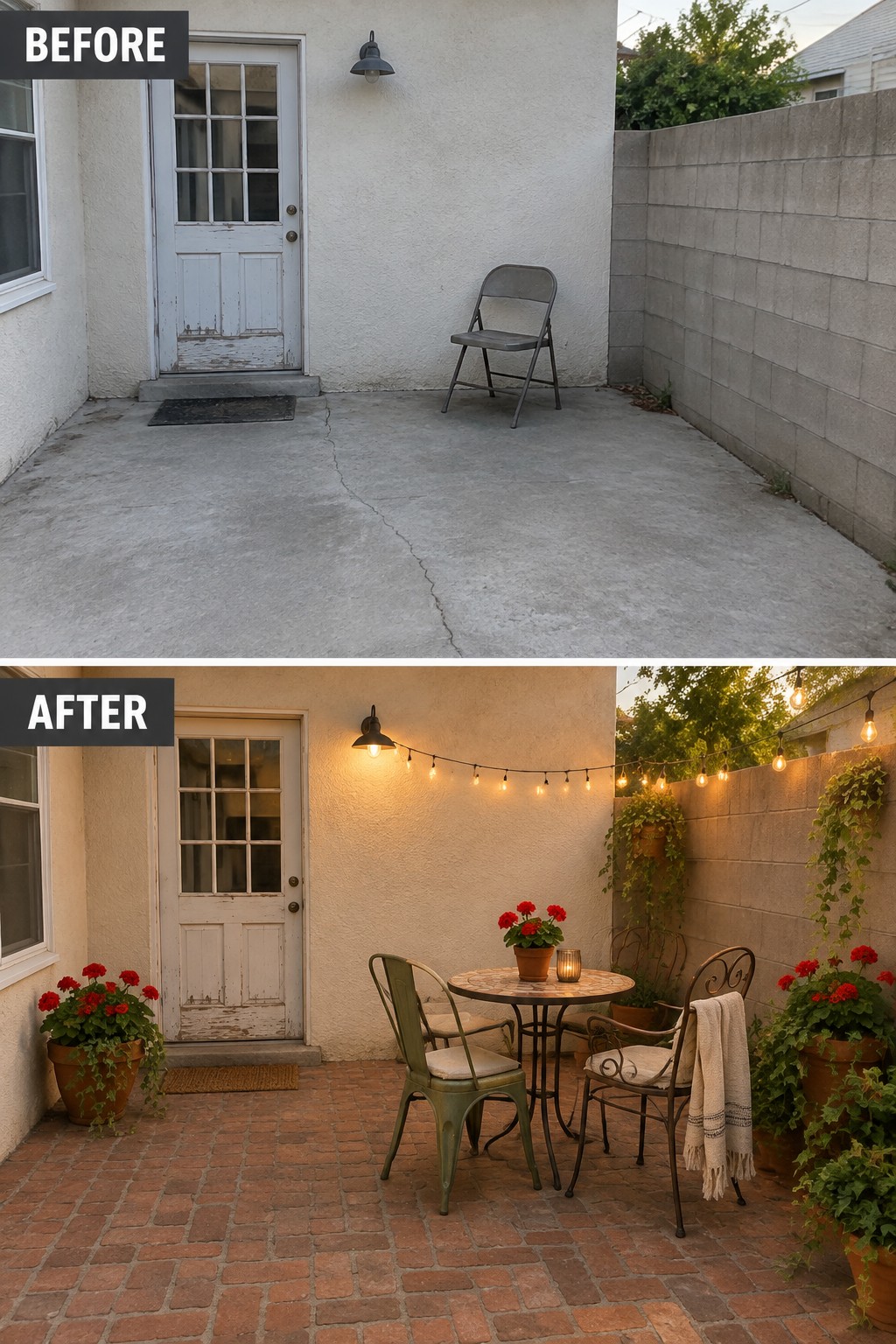
A bare concrete slab often sits unused because it feels like nothing more than a leftover space. Adding a small table and chairs, string lights, and a change to brick pavers gives the area a clear purpose and makes it comfortable to sit outside.
This idea works well on small side yards or back patios where the goal is simple daily use rather than large entertaining. Keep the furniture scale modest, choose pieces that can stay outdoors, and make sure there is still room to walk around the table.
Clean Up An Overgrown Raised Bed First
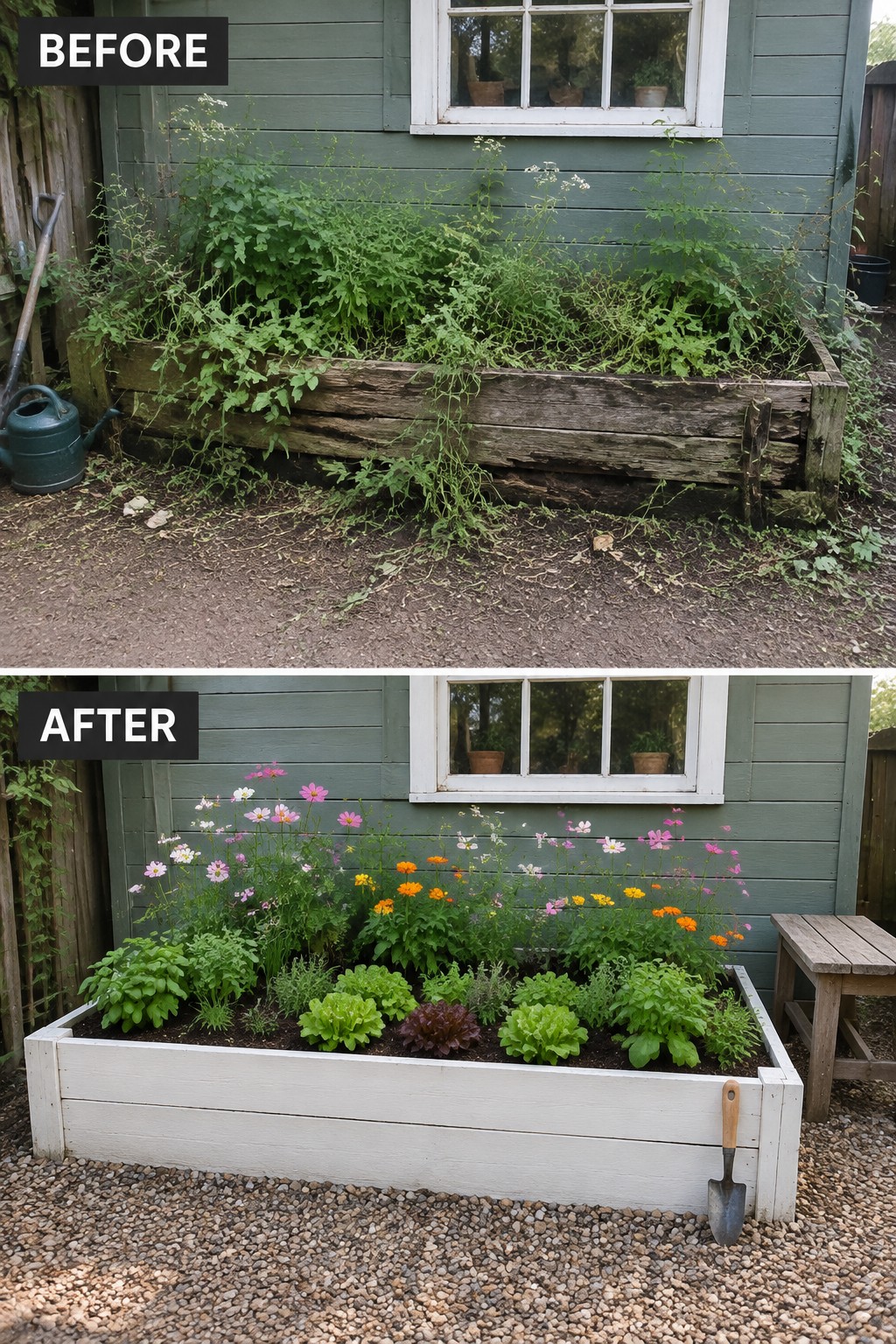
An old raised bed can quickly turn into a tangle of weeds and leggy plants when it gets neglected. In this case the wooden box had started to rot and spill its contents onto the ground. By replacing the crumbling sides, giving the new boards a coat of white paint, and replanting in clear rows, the same small space now looks intentional and easy to care for.
This approach works well in any small yard where you want a cottage feel without a lot of fuss. Start with the structure, keep the palette simple, and mix a few flowers among the vegetables or herbs. The result stays neat even as the plants fill in, and you avoid the scattered look that comes from letting everything self-seed at random.
Create A Layered Cottage Border Along The House

The main shift here is replacing a few thin shrubs with a clear, layered border right against the foundation. Low boxwood gives the edge a tidy shape, while taller flowers and midsize perennials fill in behind it to create depth without crowding the windows.
This idea works best on small yards or any home where the lawn meets the siding in a straight line. Start with the low hedge to set the boundary, then add one or two heights behind it. It suits older houses and keeps the planting simple enough to maintain year after year.
Update An Old Fence With Paint And Climbing Roses

A weathered fence and patchy lawn can make a small garden feel neglected. Painting the fence white and letting roses climb over it brightens the whole space and gives it that cottage look without needing a full redesign.
This idea works best when the fence is the main feature in the yard. Clean up the grass and edges first, then choose a light paint color and a few vigorous climbers. It suits older homes or any small garden where you want charm without crowding the space.
Turn An Empty Balcony Into A Seating Area
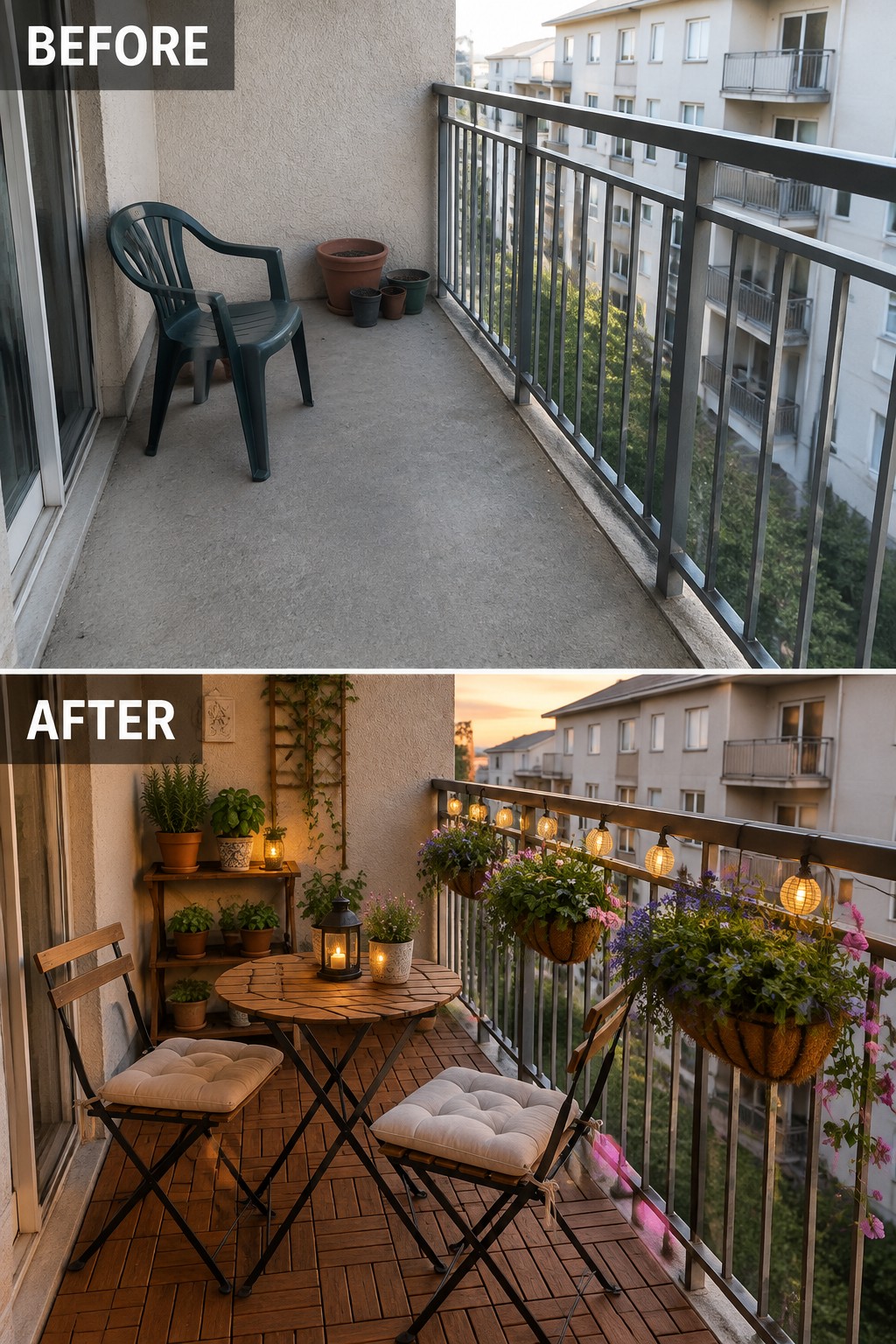
A bare concrete balcony tends to stay empty because it feels like it has no purpose. Adding a small table with two chairs and a simple floor covering gives the space a reason to be used so people actually sit outside instead of walking past it.
This idea works best on small balconies where you need to keep things compact. Use lightweight, foldable furniture that can handle weather and add string lights if you want to use the space after dark. Stick to one or two main pieces rather than filling every corner.
Update The Front Door And Steps For Better Curb Appeal

A tired concrete stoop and a dark, worn door can make even a small house feel unwelcoming. In this case, painting the door a soft blue and rebuilding the steps with white brick risers and stone treads gave the entry a cleaner, lighter look that fits right into a cottage style. The change is simple but noticeable from the street.
This approach works well on modest homes where you want to improve the first impression without a full renovation. Start with the door color, then focus on the steps if the budget allows. Keep the planters in scale with the space and choose plants that stay neat year-round so the entry does not need constant upkeep.
Turn A Gravel Area Into A Fire Pit Seating Spot

A plain gravel backyard often feels like wasted space when it only has a bench and nothing to gather around. Adding a fire pit in the center gives the area a clear purpose and makes it usable after dark, especially once string lights are hung along the fence. The bench gets a fresh coat of paint and some cushions so it feels like part of the setup instead of just sitting there.
This idea works well in small gardens where you want one main spot to sit without crowding the whole yard. Start with the fire pit on a simple stone base, then add a few large pots around the edge to soften the gravel. Keep the furniture light so the space still feels open and easy to move through.
Create A Cottage Garden In A Small Circular Bed

A small round bed can look empty or messy when it only has a few plants scattered over gravel and rocks. Adding a simple focal point like a birdbath in the center and filling the space with layered flowers in different heights turns the same circle into a full, welcoming cottage garden. The change comes from choosing plants that bloom together and keeping the edging simple with the existing stones.
This idea works well in small front yards or side gardens where space is limited. Start with one main piece in the middle, then add low edging plants, midsize flowers, and a few taller ones behind. Stick to a few colors that repeat so the bed feels planned instead of crowded. It suits homes that already have a casual lawn edge and just need one spot to feel more intentional.
Add Simple Edging To Frame A Mailbox Area
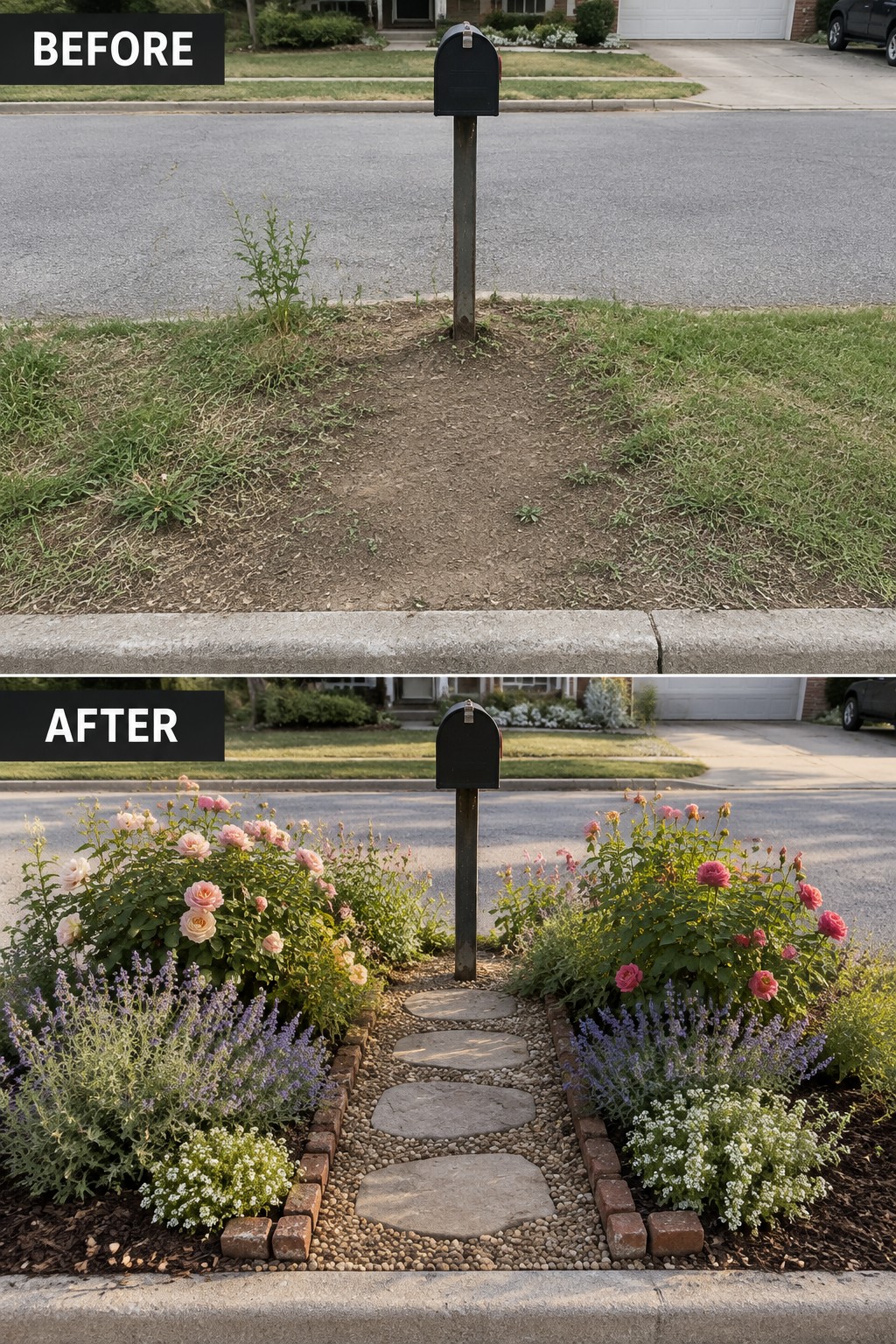
A bare strip of dirt and weeds around a mailbox post looks unfinished and gets messy fast. Adding brick edging on both sides with a gravel path and stepping stones gives the spot clear shape and turns it into a small garden instead of leftover ground. The change makes the whole front edge of the yard look intentional without needing a big overhaul.
This idea works well along a street where the ground meets the curb. Keep the beds narrow so they do not block the mailbox or walkway, and use low plants that can handle some road salt and wind. Start with the edging and path first, then fill in with a few shrubs and flowers.
Turn An Overgrown Border Into A Defined Garden Bed

An overgrown strip along a fence often looks worse the longer it sits. Clearing the weeds first, then adding a clean edge and a layer of mulch, instantly changes the whole look. The after photo shows how a simple border with roses, foxgloves, and hostas now feels intentional instead of neglected.
This approach works well in small yards where space is tight. Start with the cleanup and edging before you worry about specific plants. Once the bed has a clear shape, you can add a few taller flowers at the back and lower ones in front without it feeling crowded.
Add Defined Edges To An Overgrown Pond
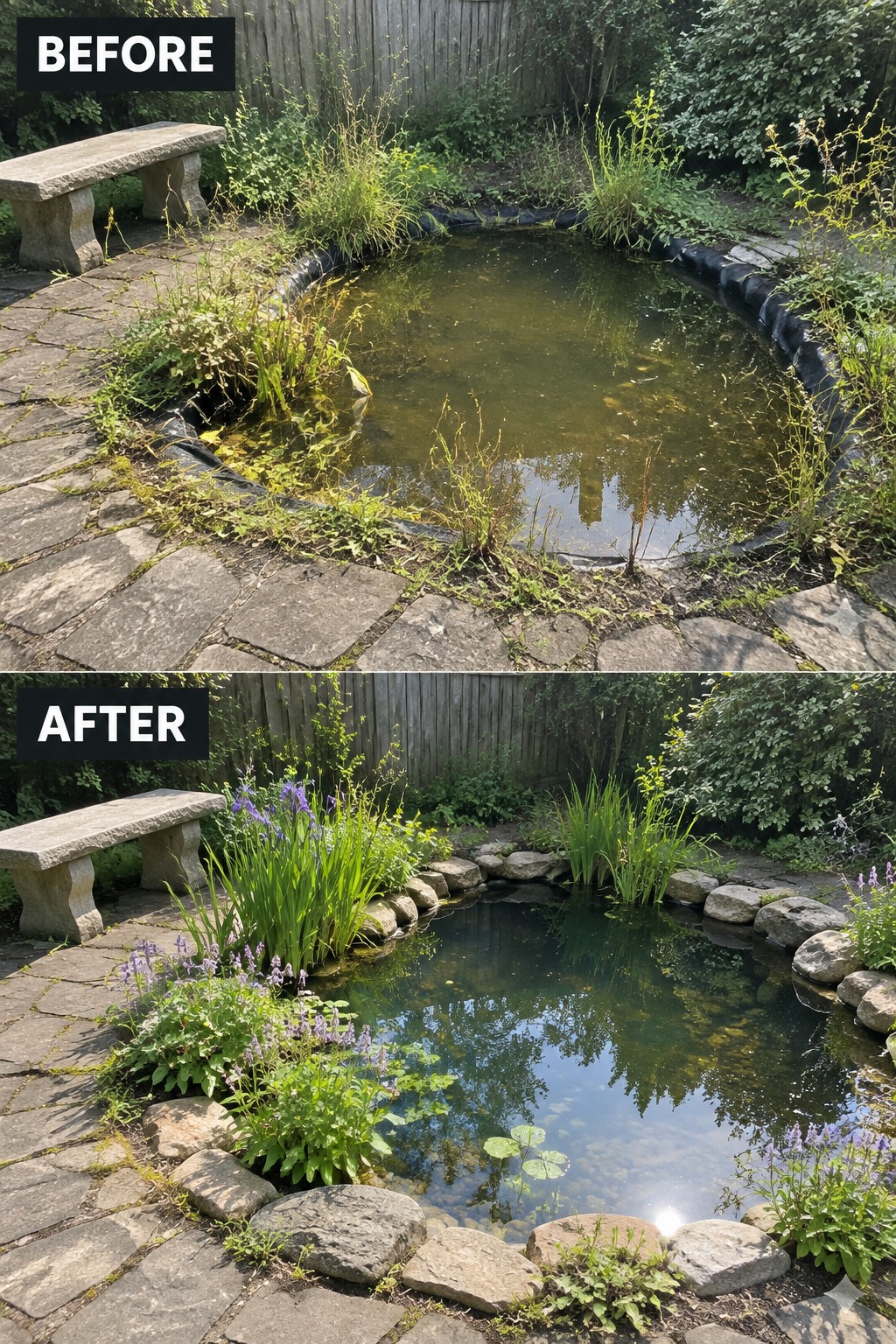
The pond had lost its shape because plants had crept in from every side and the liner showed in places. Laying a simple rock border pulled everything into a clear outline, and grouping the new plants kept the edges tidy while still letting the water stay visible.
This approach suits small gardens where the pond is meant to be a quiet focal point rather than a big water feature. Clear the heaviest overgrowth first, then choose rocks that sit low and follow the natural curve. Keep most of the new planting on the outer side of the rocks so the water itself stays open and easy to look at.
Give Your Front Porch A Clear Purpose

A front entry often collects random pots over time until the space feels more cluttered than welcoming. The change here came from adding one simple chair and grouping plants into matching terracotta pots instead of scattering different containers around the door. That shift gives the porch a reason to exist beyond just getting you inside.
This idea suits small entries where a full seating area would feel cramped. Place the chair where it does not block the door, then repeat one pot color or material so the arrangement looks planned rather than collected. Keep the rest of the floor clear so people can still move through easily.
Create A Simple Potting Bench For Garden Tools

A cluttered side yard often ends up as a dumping ground for pots, tools, and bags of soil. Adding a basic wooden bench with a couple of shelves above it gives everything a proper place, which instantly makes the area feel intentional instead of neglected. The bench creates a work surface while the shelves and hooks keep smaller items off the ground and easy to reach.
This setup works well in small gardens or narrow side yards where space is tight. Start with a sturdy bench that can handle outdoor conditions, then add simple brackets and a board for the top shelf. Keep the lower area open for larger pots or soil bags so you can still move around the space without tripping over things.
Frame A Stone Path With Low-Growing Plants
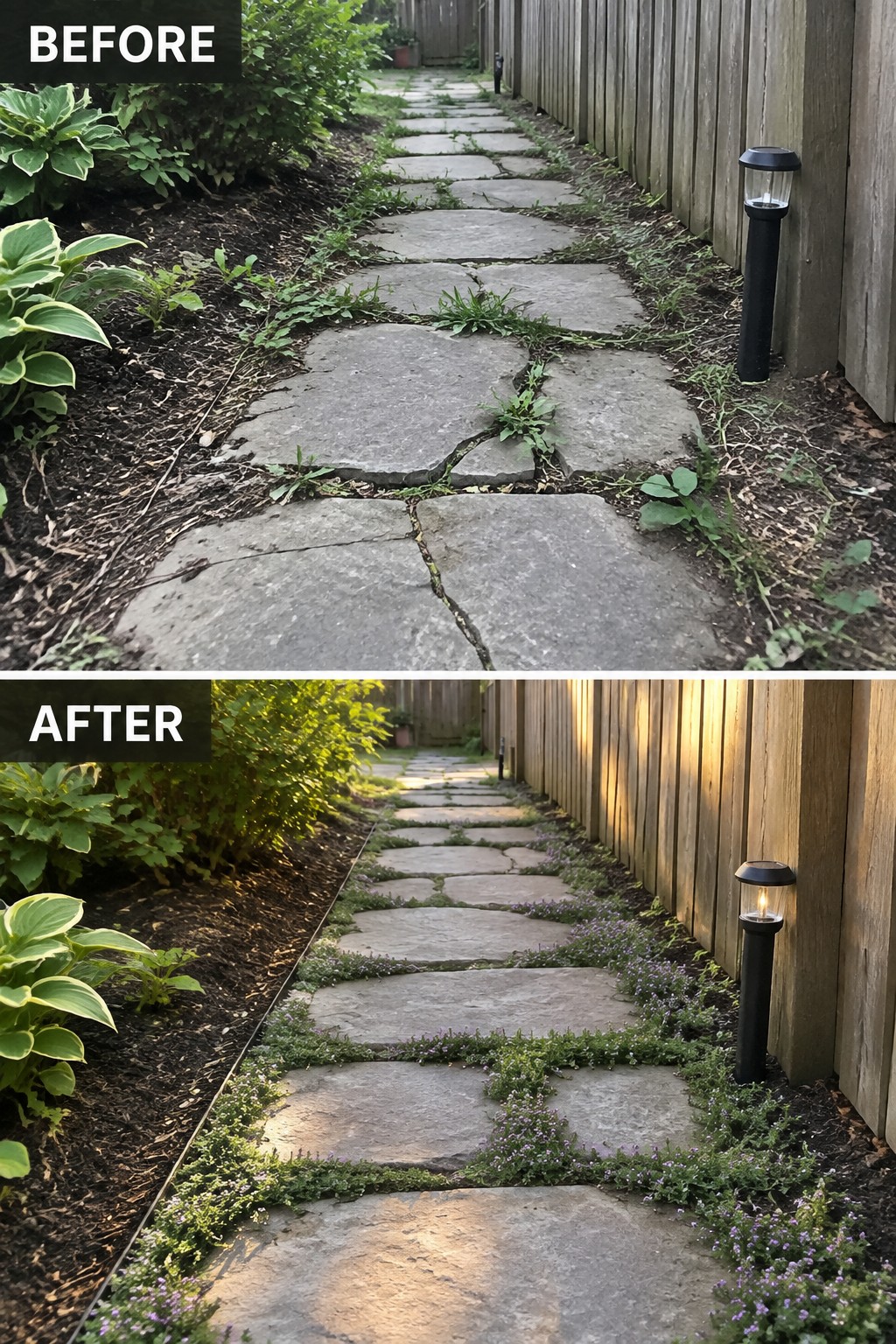
A simple stone path can look neglected when weeds and grass creep in from the sides. In this case, the fix was to clear the overgrowth and plant low ground cover and small flowering plants right along the edges. This creates a clean line that makes the path feel intentional instead of forgotten.
This approach works well in small gardens or narrow side yards where you want cottage charm without adding big beds or structures. Start by weeding thoroughly, then choose plants that stay low and spread gently so they soften the stones without taking over the walkway. It keeps the space looking cared for while still feeling natural.
Add Structure To An Overgrown Backyard
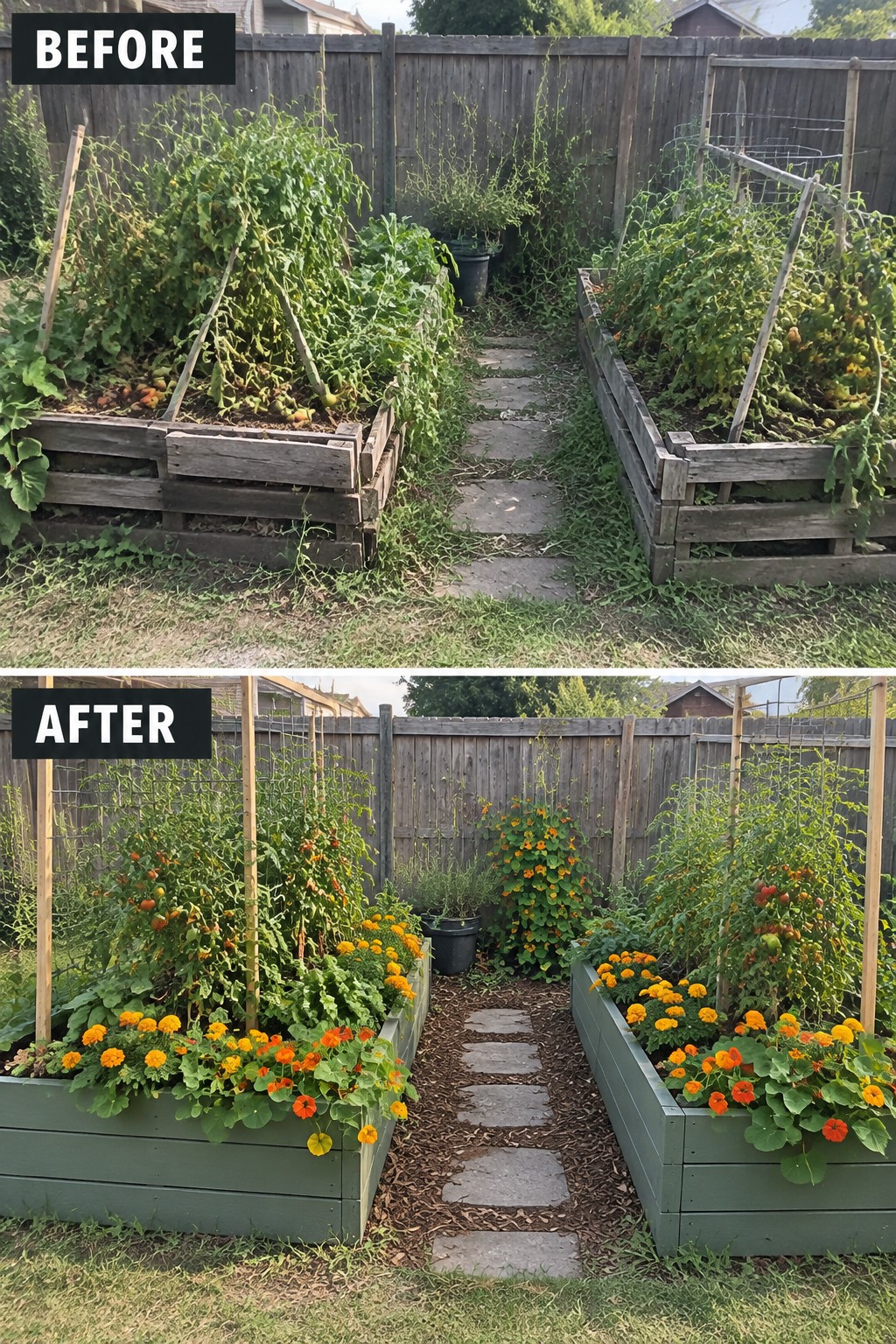
The main shift came from clearing the overgrowth first. Once the beds were trimmed back and painted, and the ground was covered with mulch instead of weeds, the space stopped feeling neglected and started to look planned.
This works especially well in small yards that already have raised beds or borders. Start with cleanup and simple structure like fresh paint and mulch before adding more plants. It keeps the project realistic and helps the existing layout feel intentional rather than messy.
Add Structure To A Bare Garden Corner
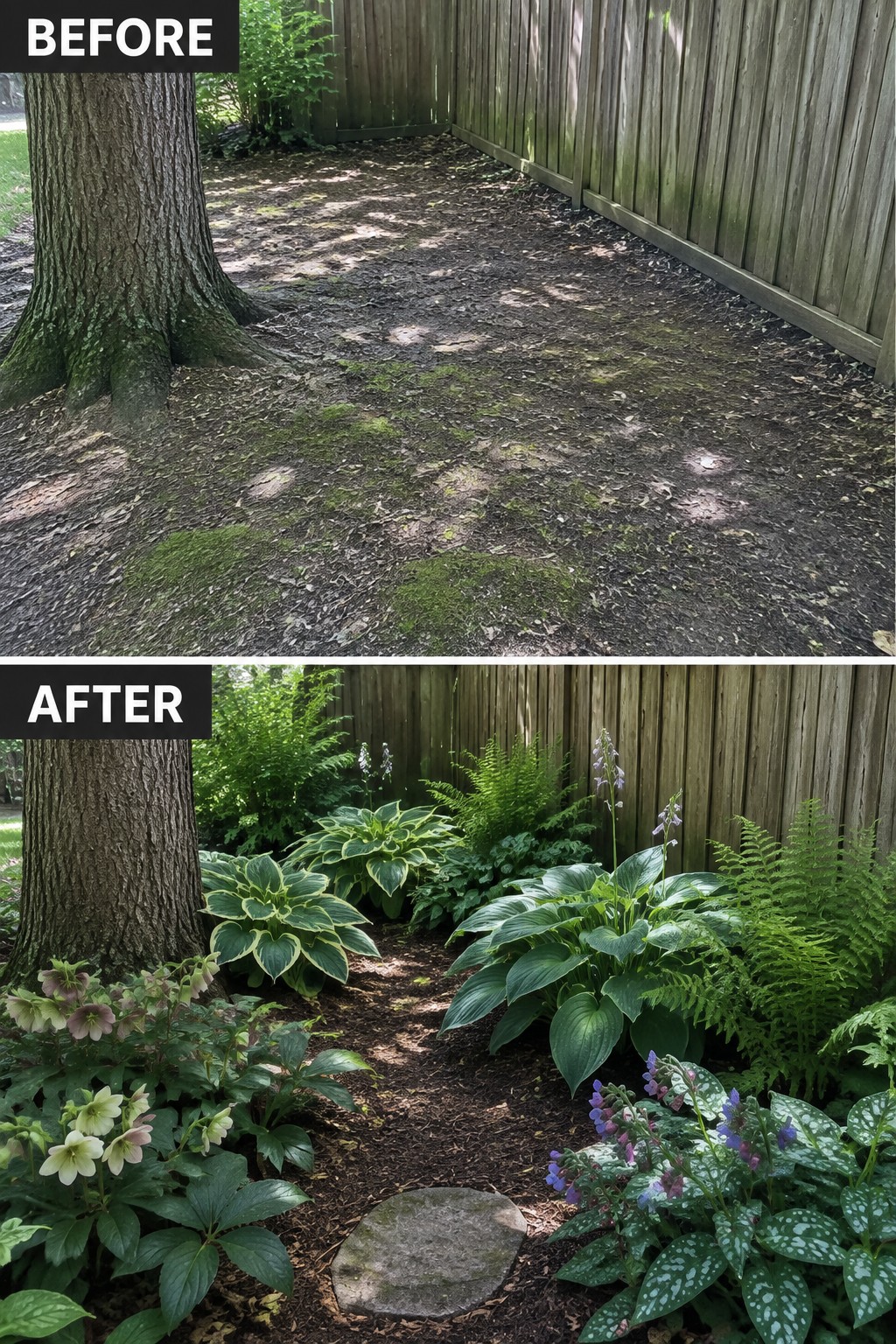
A shady spot next to a fence often ends up as bare dirt and moss when nothing is planted there on purpose. Clearing the ground and adding a few groups of hostas, ferns, and flowering plants with mulch in between gives the area clear shape and makes it feel like part of the garden instead of leftover space.
This approach works best in small yards or under trees where grass struggles. Focus on plants that handle shade, keep the beds simple with just two or three types of foliage, and use mulch to hold everything in place and reduce weeds. The same idea can turn other neglected edges into spots that feel planned rather than forgotten.
Refresh A Garden Shed With Paint And Window Boxes
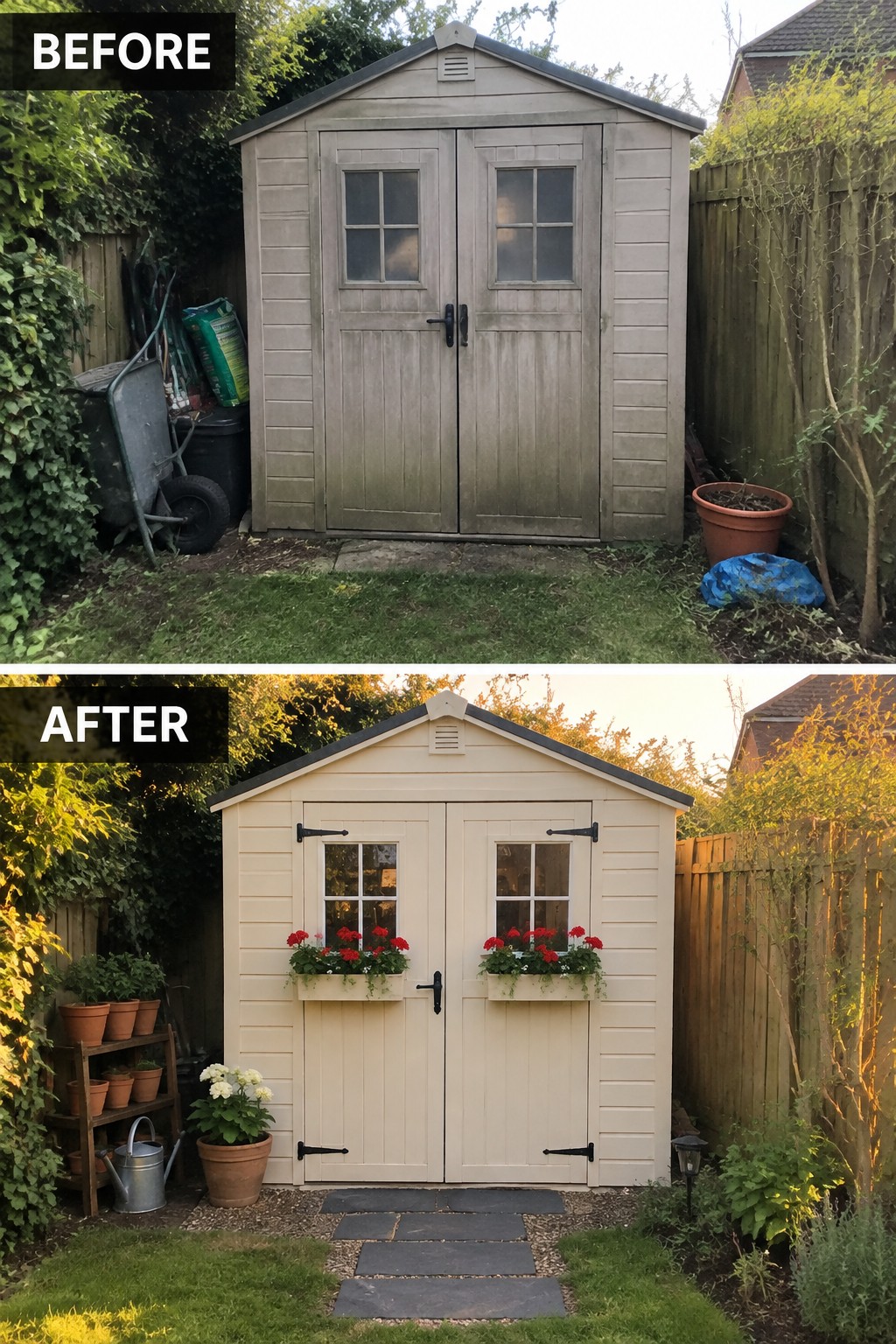
A tired shed can drag down the whole garden, especially when the wood has faded and the area around it feels cluttered. A fresh coat of paint plus a pair of simple window boxes instantly lifts the structure and gives the surrounding space a clearer purpose.
This approach works well on small plots where the shed is a main feature rather than something tucked away. Start with a thorough clean and a coat of exterior paint in a light color that suits cottage style, then add boxes planted with seasonal flowers. Keep the planting modest so the shed stays the focal point instead of competing with too many pots or ornaments.
Add Defined Beds And A Path To Organize A Small Yard

A patchy lawn often looks unfinished because it has no clear edges or direction. Adding low garden beds along the house and a simple stone path through the middle turns the same space into something that feels planned and welcoming. The path keeps foot traffic off the plants while the beds give the yard height and color without crowding it.
This idea suits small front areas where you want the garden to look intentional but still leave room to walk. Start by clearing the grass and marking a gentle curve for the path, then plant a mix of flowers and greenery that stay low enough to see the house. The beds do most of the work once they fill in.
Soften A Bare Fence With A Trellis And Climbing Plants

A plain chain link fence next to the house often feels like the one spot you cannot fix. Adding a simple wooden trellis in front of it and letting vines climb gives the eye something to land on instead of the fence itself. A few long planters hung along the top rail fill in the rest of the view with trailing greens and herbs.
This approach works well in narrow side yards or back corners where you need height without losing space. Start with one sturdy trellis panel, choose fast-growing climbers that suit your climate, and keep the planters light so they can hang from the fence. The bench and extra pots can come later once the vines start to fill in.
Frequently Asked Questions
Q: My garden is tiny so what plants fit without taking over?
A: Choose compact varieties like miniature roses or creeping thyme for ground cover. They add color and texture while staying manageable. Plant them in clusters to mimic that overgrown cottage charm.
Q: How can I create a path in such limited space?
A: Lay down narrow stepping stones that curve gently around flower beds. This draws the eye and makes the area feel larger. Keep the stones simple so they don’t compete with the plants.
Q: Do I need to prune a lot to maintain the look?
A: Trim back only what’s necessary to encourage more blooms. Let some areas grow a bit wild for that authentic feel.
