

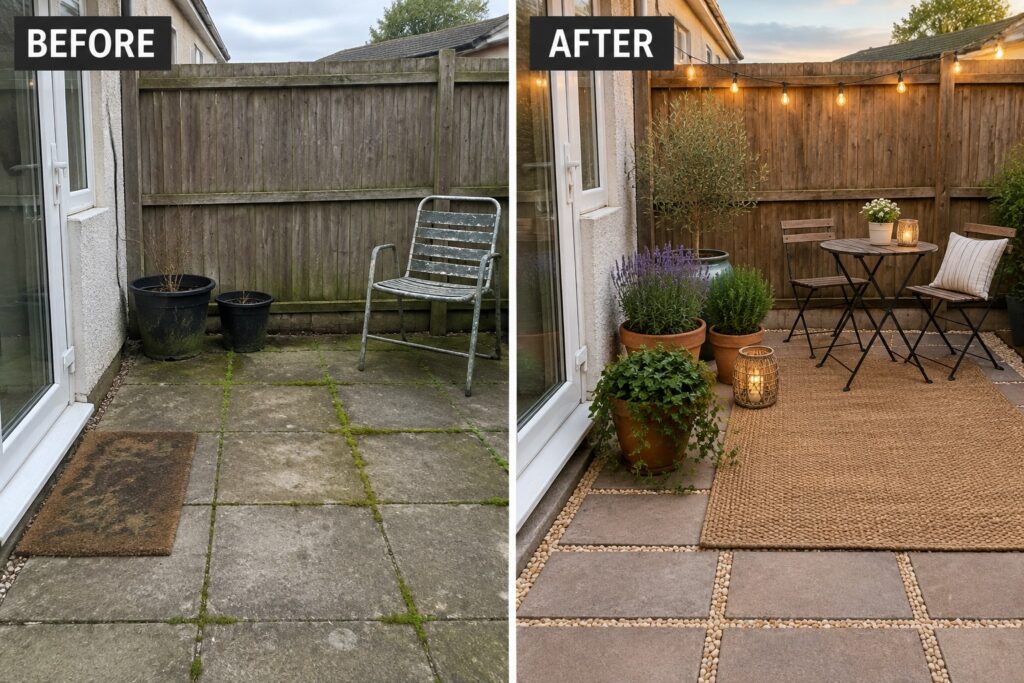
Small gardens often end up looking scattered when there is no clear planting structure to hold them together.
I have found that containers let me build that structure gradually and move things around as the plants fill in.
The space gains more presence once the pots are arranged to create simple groupings and paths through the area.
Watching how everything settles after a few months shows which spots need a bit more height or color.
A single well chosen container can sometimes anchor the whole view better than spreading plants everywhere.
Turn An Empty Patio Into A Seating Area
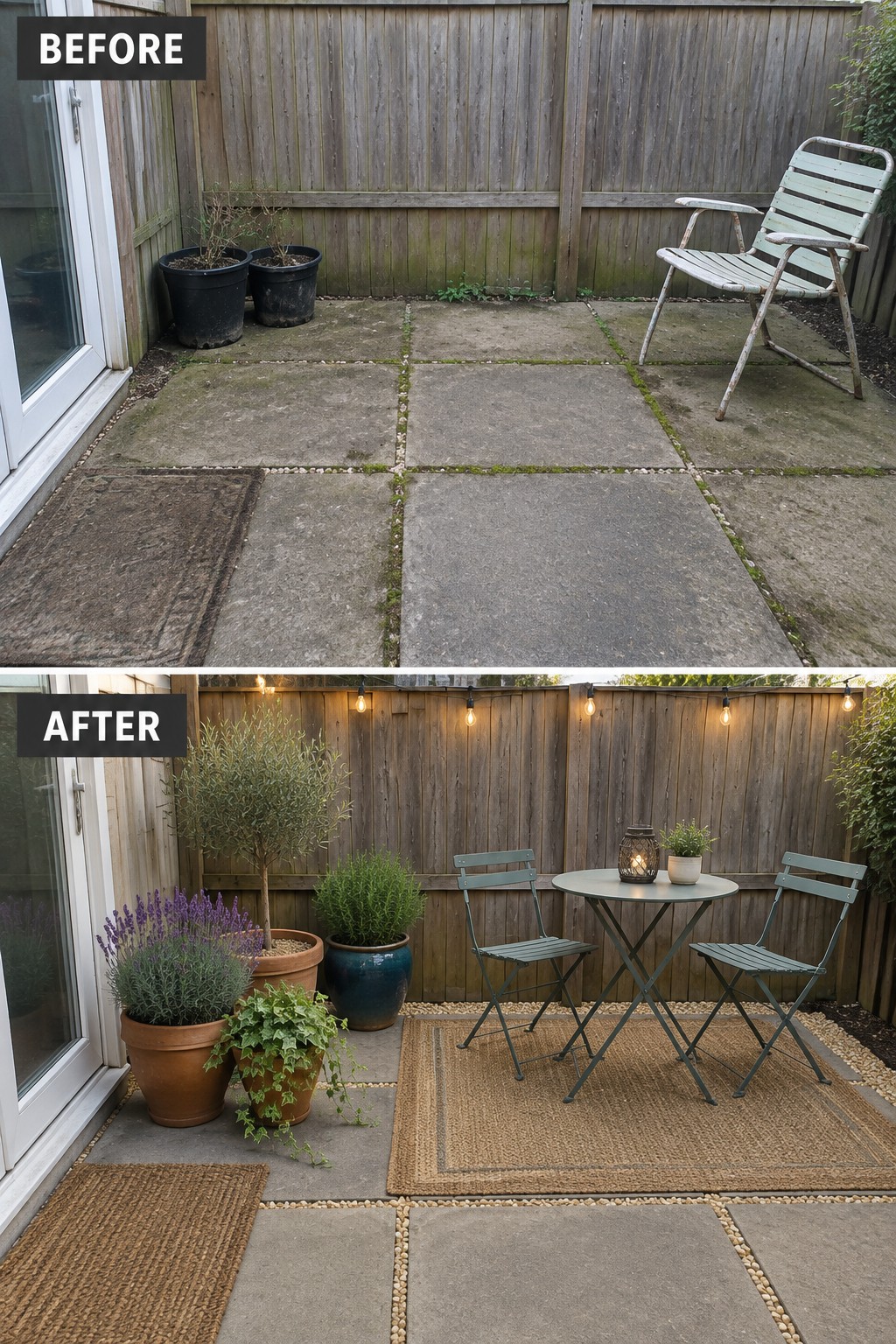
A plain concrete slab often feels like wasted space until you give it a clear purpose. In this case the before photo shows a few scattered pots and one tired chair, while the after shows a simple bistro table, two chairs, a couple of rugs, and several large containers placed to frame the seating. The containers do most of the work, turning the hard surface into a defined outdoor room without any major construction.
This approach suits small yards or side returns where built-in beds are not possible. Start with two or three bigger pots to anchor the corners, add a rug to mark the sitting zone, and keep the furniture scale modest so there is still room to walk around. String lights along the fence help in the evenings, but the real gain comes from the plants themselves, which soften the concrete and make the space feel intentional rather than leftover.
Turn A Bare Balcony Into A Vertical Herb Garden Seating Area
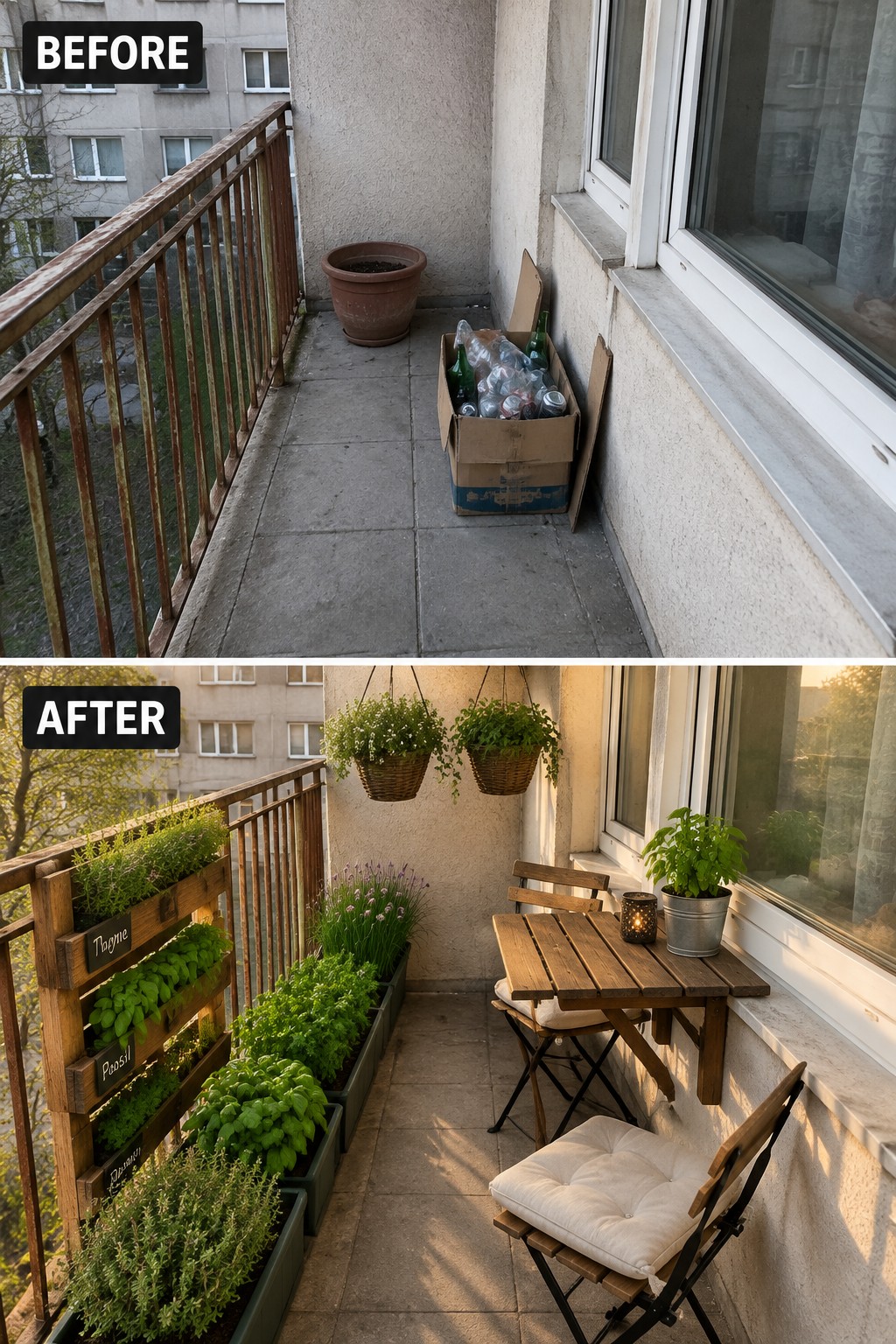
A small balcony often sits empty because it feels too narrow or exposed to bother with. The simple fix is to treat it like an outdoor room from the start. Clean the floor, then bring in a few long planters along the edge and a vertical herb garden on the railing. Add one small table and a couple of foldable chairs. That single change turns the space into somewhere you can actually sit.
This idea works best on balconies that get at least a few hours of sun. Keep the furniture light so it can be moved around, and choose containers that are deep enough for herbs and small vegetables. Once the plants fill in, the space feels much larger than the bare concrete ever did.
Frame A Plain Entry With Matching Planters

A bare concrete step next to a faded door often looks unfinished even when the rest of the house is tidy. Two large matching planters set on either side of the door give the entry clear shape and bring color right up to the threshold without taking up much space.
This works best on small stoops or simple brick entries where you want impact without crowding the walkway. Pick sturdy pots in one color or material, fill them with plants that stay neat through the season, and add a simple mat to finish the look. Keep everything in scale so people can still walk through easily.
Use Container Planting To Fill A Bare Corner

A narrow side yard with nothing but dirt, a cracked stepping stone, and a stray plastic tray can feel like wasted space. Adding a mix of potted ferns, hostas, and colorful foliage plants in metal buckets and wooden barrels turns the same spot into a small planted area that actually feels intentional. The containers bring height, greenery, and structure without needing to dig beds or amend poor soil.
This approach works especially well in tight side yards, rental homes, or spots where permanent planting is not practical. Start with a few larger pots grouped together, add a simple bench or stool for scale, and use a couple of lanterns if you want the space to feel welcoming after dark. Keep the plant choices varied in leaf shape and color but limit the total number so the area stays easy to move through.
Turn Patchy Grass Into A Container Garden Bed

A patchy lawn can be hard to fix without a lot of work. Instead of trying to reseed the whole area, this makeover added a simple brick edge, filled the space with gravel, and placed everything in pots. The result is a clean, contained planting area that looks intentional and stays manageable even in a small yard.
This approach works well if you want color and variety without digging up the whole lawn. Choose pots that can handle weather, group plants with similar water needs, and keep the gravel layer thick enough to block weeds. It also makes it easy to change things later if you want to try different plants or move pots around.
Use Container Planting To Define A Deck Seating Area

A deck often feels unfinished when there is just a bench and open floor space. The change here comes from adding several containers with different plants around the edges. The tall grasses and low succulents create a loose border that makes the seating feel like a real spot instead of just furniture sitting on wood.
This approach works on small decks or porches where built-in beds are not possible. Group the pots at the corners and one side so they frame the area without blocking movement. A simple rug underneath the bench helps tie everything together and keeps the look practical for everyday use.
Turn A Blank Wall Into A Container Garden With Shelves

A bare brick wall and empty concrete floor can feel like wasted space in a small courtyard. Adding a simple set of wall-mounted wooden shelves gives you a place to arrange pots at different heights, and the plants soften the hard surfaces right away. The string lights add a bit of warmth once the sun goes down, but the real change comes from the containers themselves.
This idea works well on any small patio or side yard where you cannot dig beds. Start with two or three sturdy shelves, then fill them with a mix of trailing vines, small shrubs, and a few taller plants in larger pots on the ground. Keep the number of pots modest so the space stays easy to move through.
Turn A Bare Balcony Into A Tiered Edible Container Garden
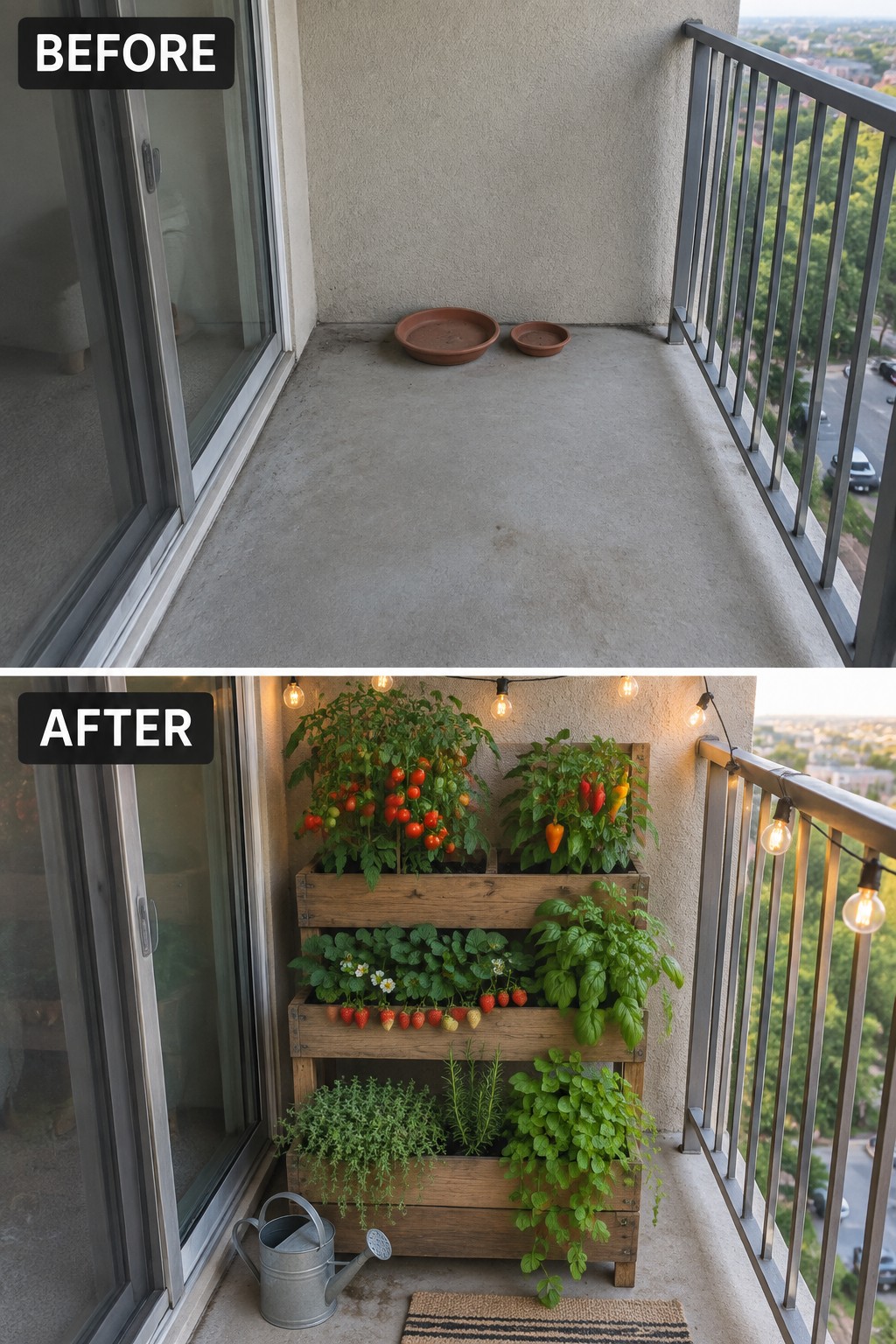
An empty balcony often feels like dead space, especially when it is just concrete and a couple of stray pots. Stacking wooden planters against the wall changes that fast. You can fit tomatoes, peppers, strawberries, and herbs in the same footprint without crowding the floor, and the plants still get enough sun and air.
This idea works well on any small balcony or patio that gets decent light. Use sturdy crates or boxes that can handle weather, keep the bottom level low for easy watering, and add a simple rug or watering can only after the plants are in place. Start small so the space stays usable instead of packed.
Define A Front Path With Container Plantings

A bare front walkway often looks unfinished because there is no clear edge between the lawn and the path. Adding mulch beds on both sides and filling them with containers gives the space shape without any major construction. The large blue pots and smaller colorful ones placed along the walk turn an open stretch of grass into something that feels planned.
This idea suits small front yards where you want color and structure but still need to keep the lawn usable. Place the biggest pots near the house and step down to smaller ones as you move toward the street. The containers stay easy to swap out with the seasons, and the mulch keeps the beds looking tidy between plantings.
Use Shelving To Turn A Bare Patio Corner Into A Container Display

A plain shelf on an empty concrete patio does not do much on its own. Once the same shelf is filled with rows of potted succulents and a small wooden stool is added beside it, the corner suddenly feels like a garden. The vertical layout makes room for many more plants without taking up floor space.
This approach works well on small patios, balconies, or side yards where planting beds are not an option. Choose a sturdy outdoor shelf, match the pot sizes to the shelf depth, and group plants that need similar sun and water. It keeps the area tidy and makes it easy to move things around when the seasons change.
Use Container Planting To Green A Narrow Side Path
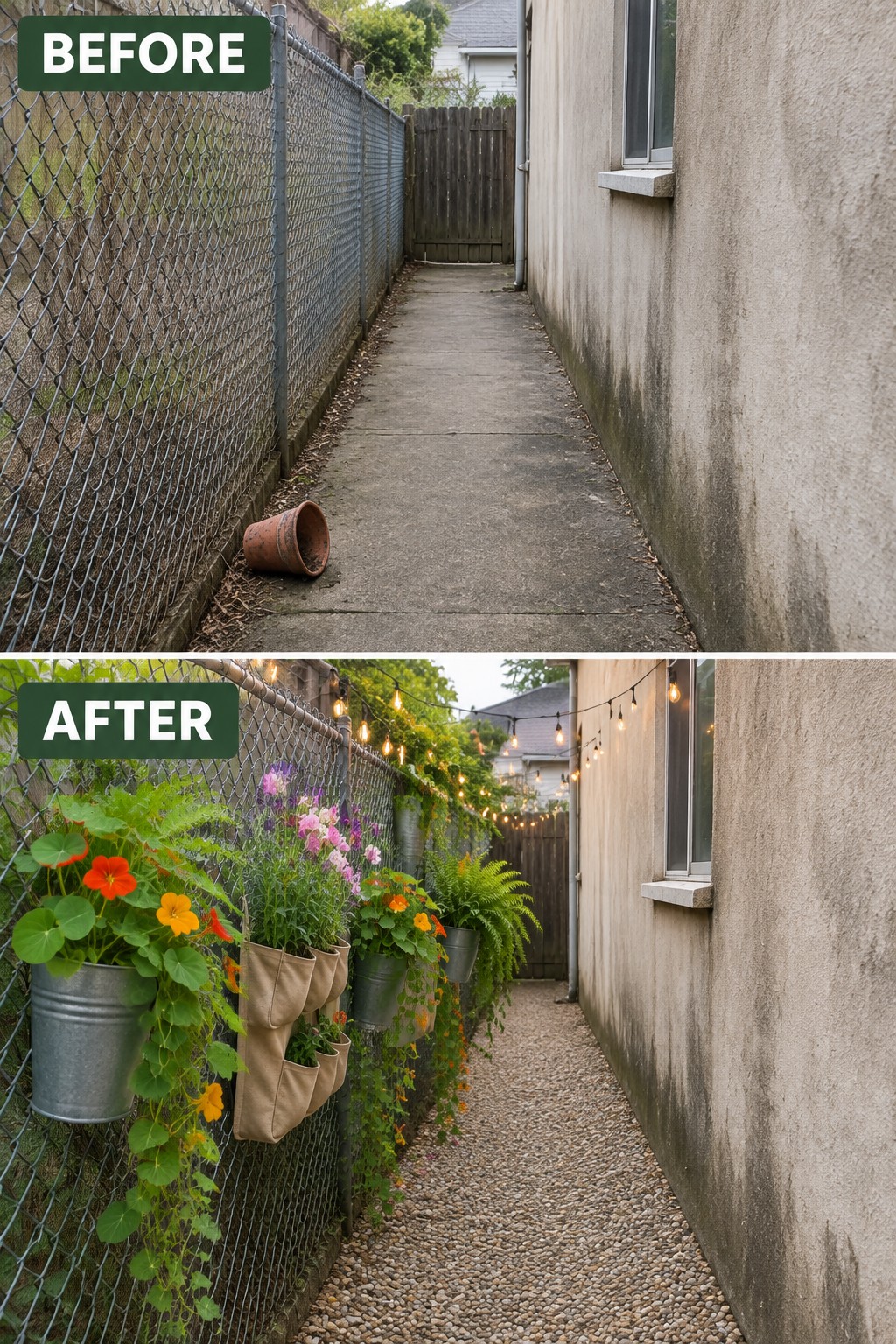
A narrow concrete walkway between a house and fence often gets ignored because there is little room for beds or big planting. Mounting pots, buckets, and fabric pockets directly on the fence adds layers of greenery without taking up floor space. The change from bare concrete to a gravel path also improves drainage and gives the eye a softer surface to follow.
This approach works well on any tight side yard or alley where soil is limited or access is restricted. Start with sturdy, weatherproof containers, repeat a few plant colors for cohesion, and keep the path clear enough for walking. String lights can be added later once the planting is in place.
Turn A Bare Rooftop Into A Seating Area With Containers
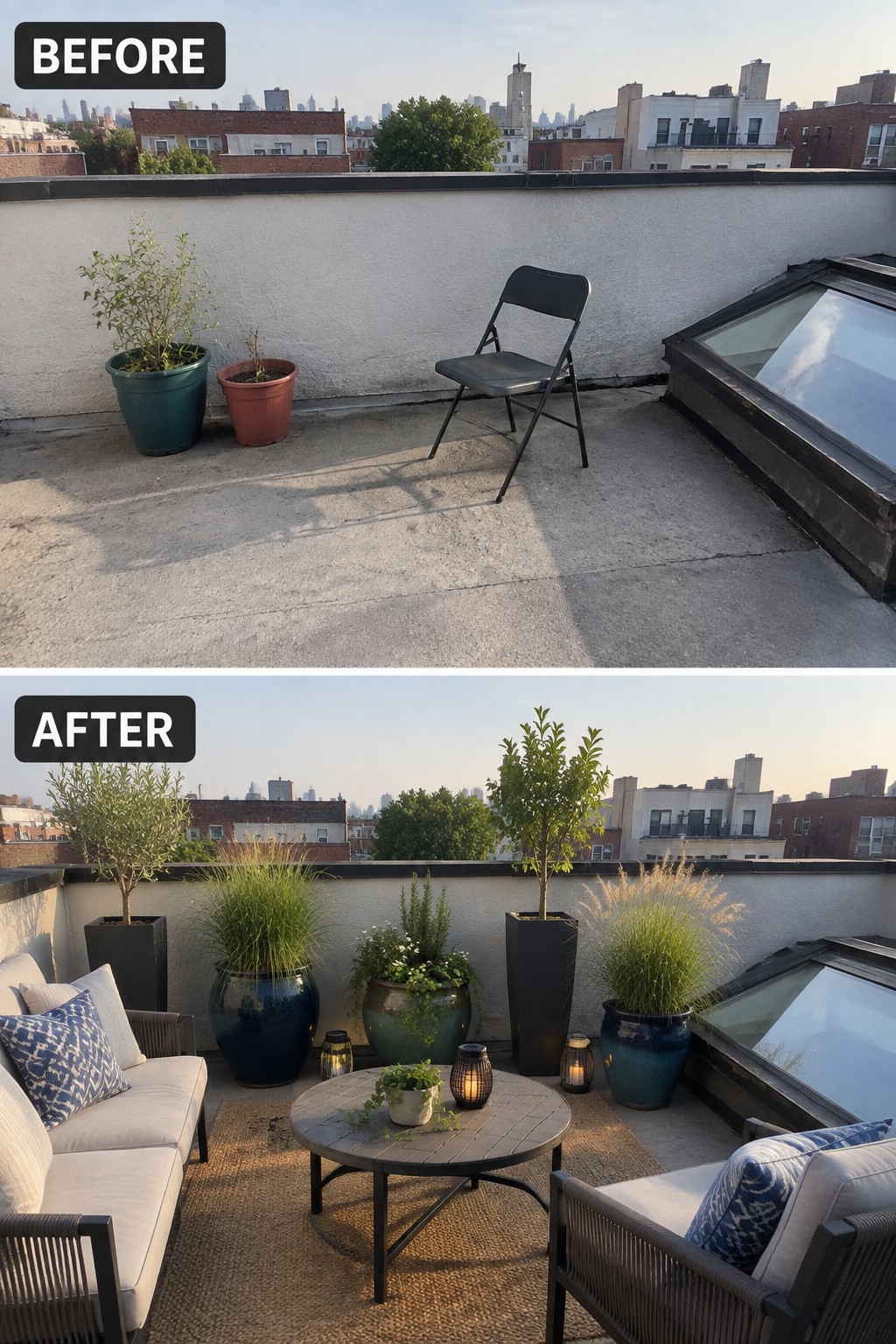
A flat concrete roof with almost nothing on it feels like wasted space. Adding a group of containers in different sizes and shapes turns the same area into a place where you can actually sit and spend time. The plants create soft edges and a bit of privacy while the furniture and rug pull everything together into one usable zone.
This approach works well on rooftops, balconies, or any hard surface where digging is not possible. Start with two or three larger pots to mark the corners of your seating area, then fill in with smaller ones around them. Choose weatherproof furniture and leave enough open floor so people can move around easily.
Use Layered Container Planting To Define A Small Corner

A bare paved corner with just one lonely pot can feel like wasted space. Layering containers of different sizes turns the same spot into a real garden feature. The large central bowl anchors everything, while smaller pots around the edges add height and texture without crowding the area.
This approach works well on patios or side yards where digging is not an option. Start with one oversized focal pot, then build outward with mid-size and small containers. Keep a few inches between pots so the space still feels open and easy to walk around.
Add A Low Bench To Group Herb Pots At The Entry
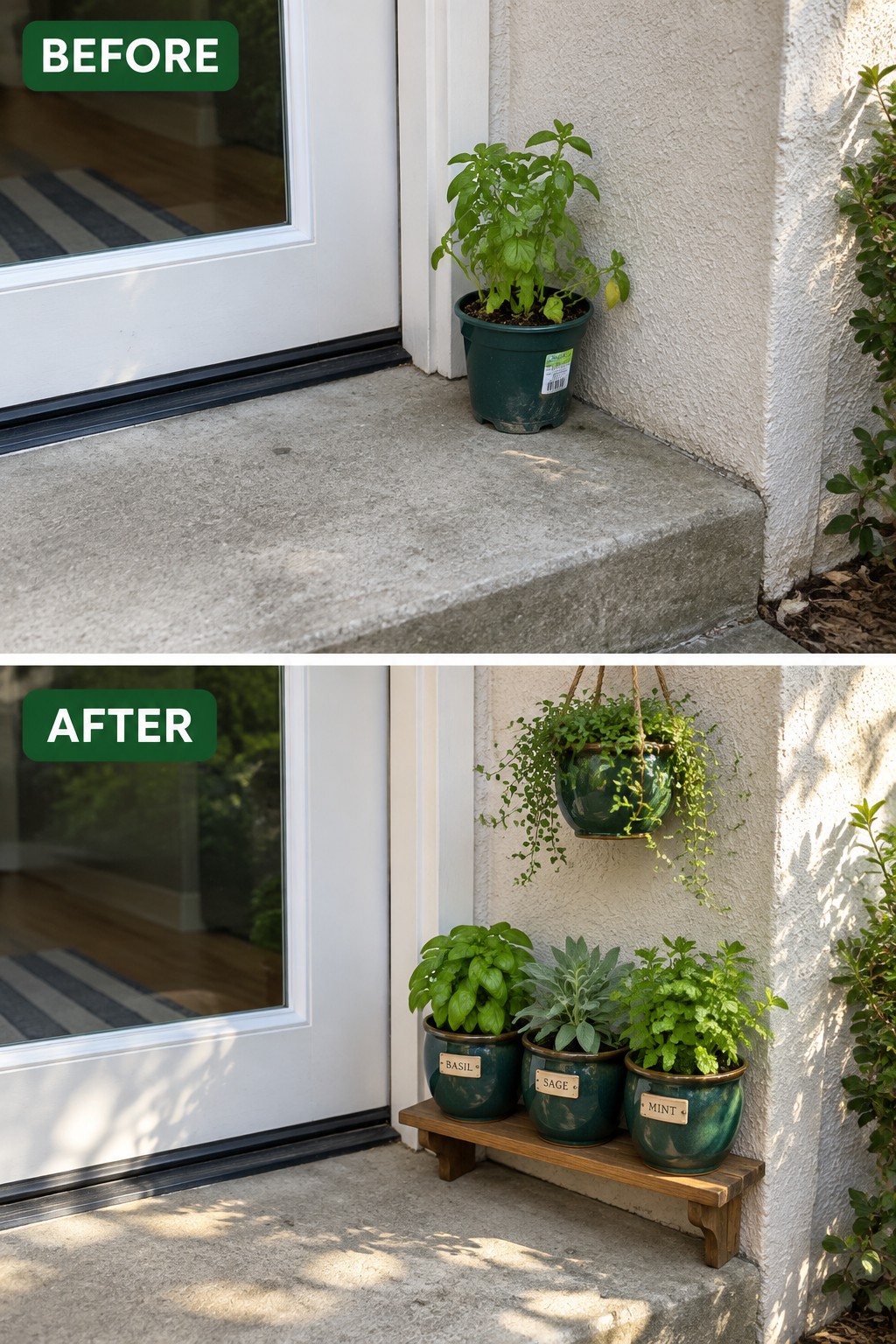
A lone pot on the step often looks like an afterthought. Placing a simple wooden bench against the wall lets you set three or four pots side by side so the plants read as a small garden instead of random clutter. The hanging pot above keeps the display from feeling flat while leaving the walking space clear.
This idea suits any front door that opens onto a narrow step or small landing. Keep the bench low, match the pot color, and stick to herbs or compact greens that can handle the light you actually get. It turns a plain threshold into a useful spot without any major construction.
Define A Pond Edge With Container Planting

A strip of bare mud next to a pond often looks unfinished and hard to manage. Placing a row of containers along the edge with a mix of tall grasses, flowering plants, and a few stones to hold the line turns the same spot into a clear garden feature without major digging or construction.
This idea suits small yards or damp areas where permanent beds are difficult. Choose pots that can sit in or near water, group them by height for a natural look, and keep the number of containers modest so the space stays easy to walk around. The result feels planned even when the rest of the yard stays simple.
Refresh Front Steps With Paint And Container Plantings
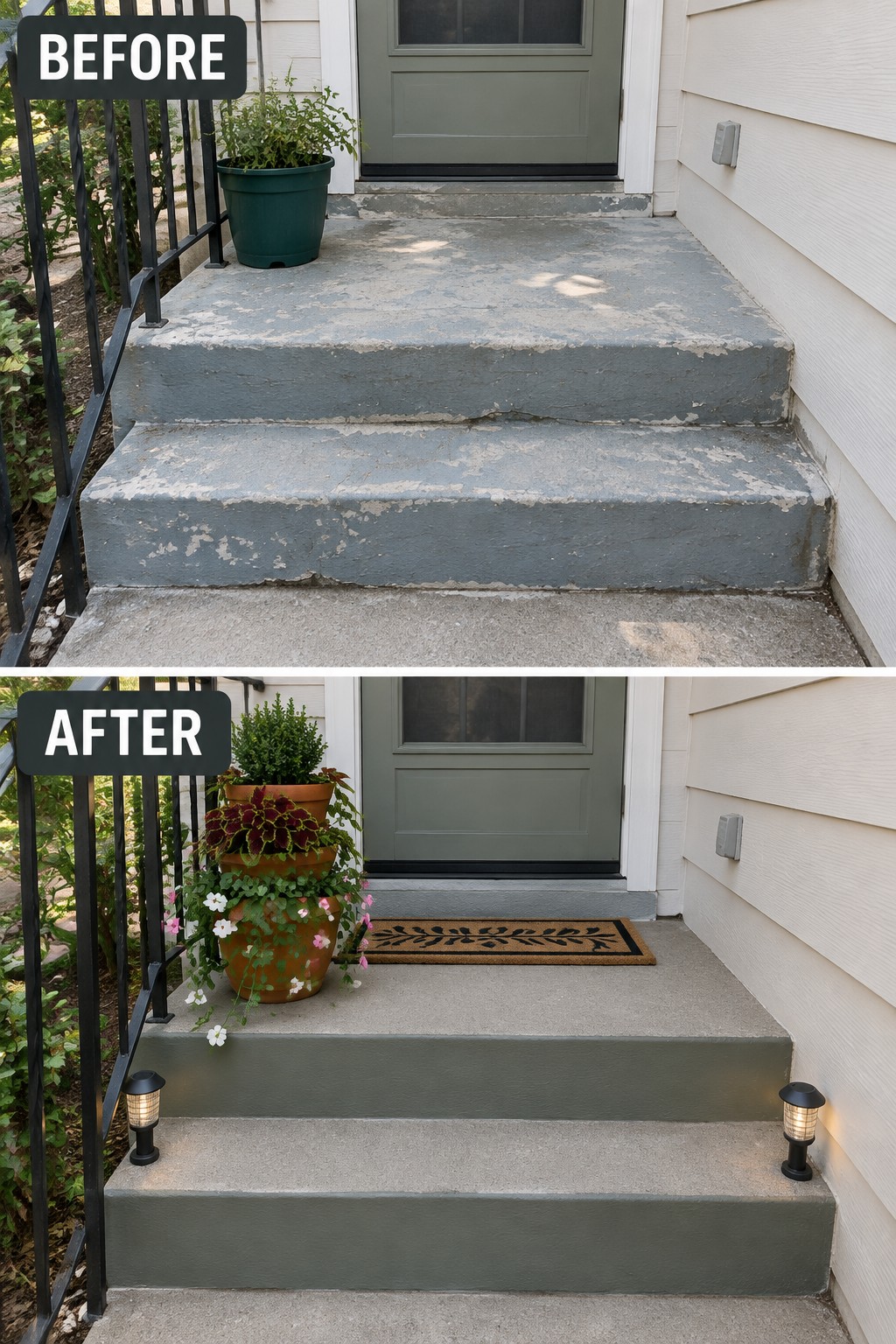
Concrete steps often take a beating from weather and foot traffic. A solid coat of paint brings them back to life, while a few layered containers add height and color right where people walk in.
This idea suits small entries or narrow porches that cannot hold much furniture. Start with cleanup and paint, then bring in pots of different sizes. Mix in trailing plants and one or two that add bold foliage so the grouping feels full without crowding the steps.
Use Container Planting To Bring Order To A Small Overgrown Yard

Clearing the worst of the weeds first made room for a simple path and mulch, which instantly changed how the space felt. From there, lining up pots along the fence gave the area a clear shape without any permanent beds or heavy digging.
This works best in narrow backyards or rental spots where you cannot build raised beds. Start with a few larger containers to anchor the look, then fill in with smaller ones in the same colors. Leave enough space between them so you can walk through and water easily.
Create A Private Patio Retreat With Tall Container Plants
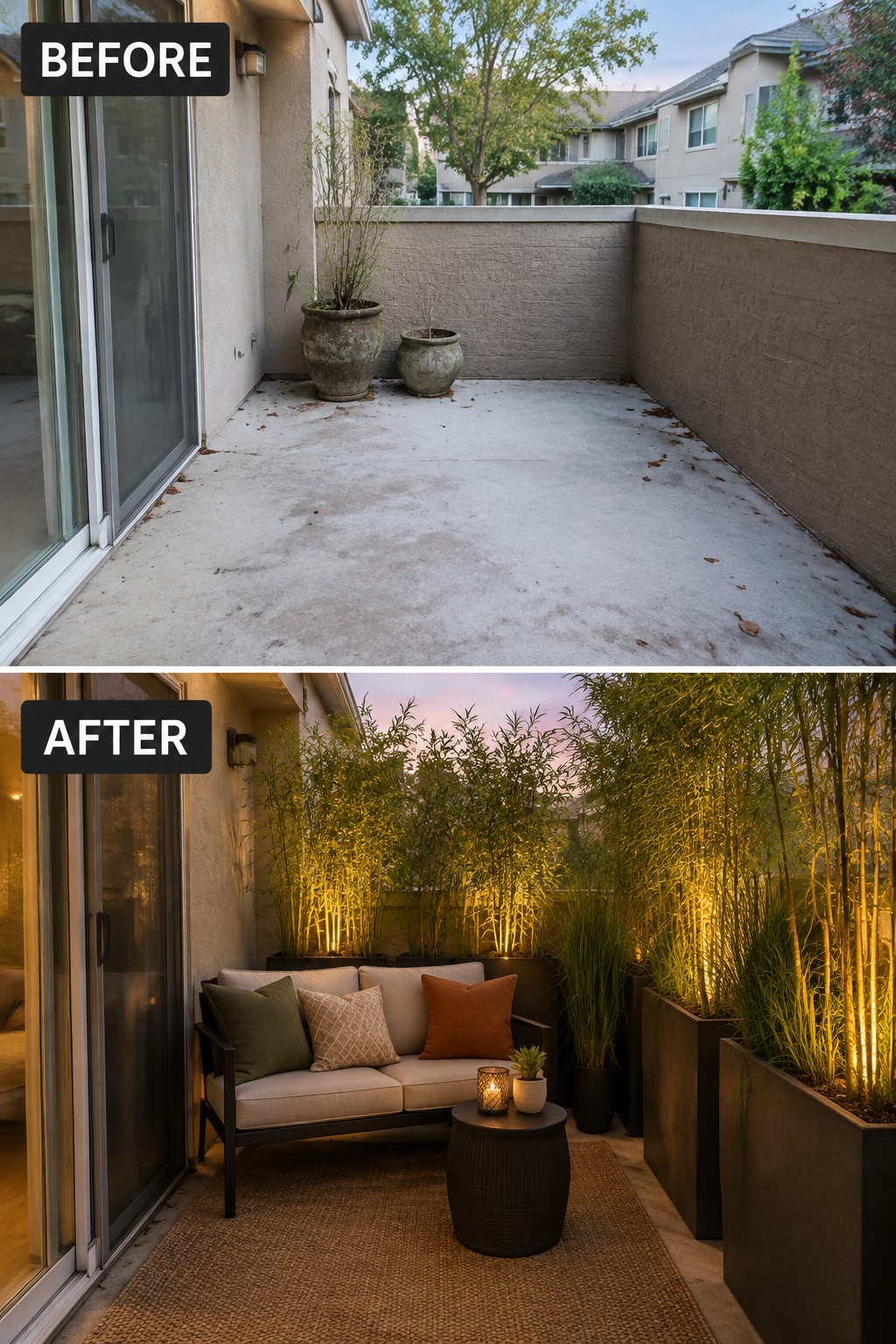
The before photo shows a plain concrete slab with almost nothing on it. The after version adds a simple sofa, a small table, and a rug, but the real change comes from the tall container plants placed around the edges. Those planters create a living screen that softens the walls and gives the space a sense of enclosure without any construction.
This approach works well on balconies, side patios, or any small outdoor area that feels exposed. Start with a few large containers filled with tall grasses or bamboo-like plants to block views and add height. Keep the furniture scale modest so the space still feels open enough to move around.
Use Colorful Containers To Refresh A Small Balcony
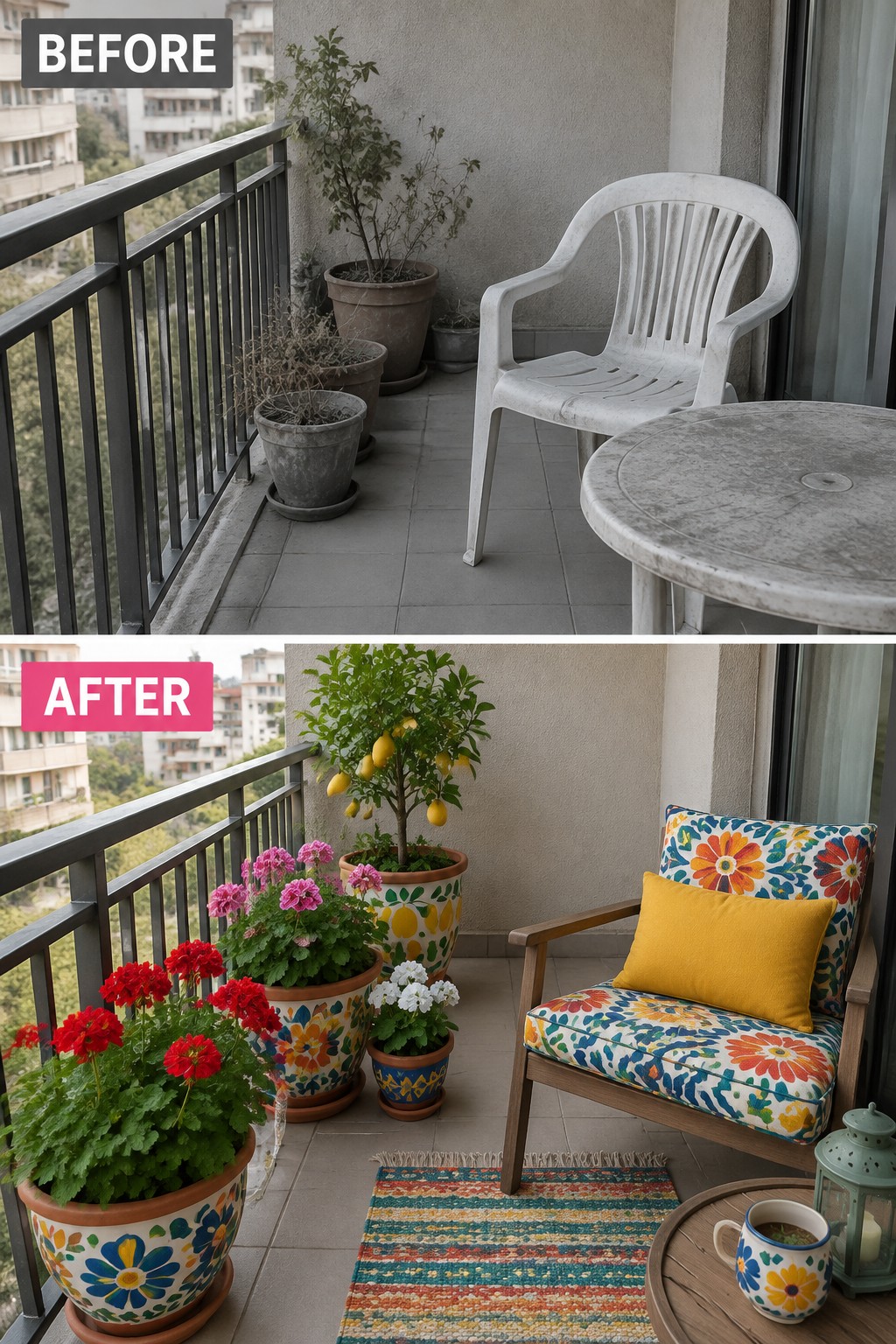
A plain balcony with just a plastic chair and a few tired plants often feels bare and unused. Switching to bright patterned pots filled with flowers and a small lemon tree changes the whole feel and makes the space actually pleasant to sit in.
This idea works especially well on apartment balconies or small paved areas where digging into the ground is not possible. Choose a few large pots in similar colors or patterns, mix flowering plants with one taller tree or shrub, and keep the seating simple so the containers stay the main feature.
Create A Gravel Patio Nook With Oversized Container Plants

A neglected concrete corner with weeds and broken pots can become a simple seating spot once you clear the ground and bring in a few large containers. The after photo shows how gravel underfoot and oversized terracotta pots planted with lavender and shrubs give the space a finished look while still leaving room for a small table and two chairs.
This approach works well in tight side yards or apartment patios where digging beds is not an option. Start with a solid cleanup, lay gravel or pavers for a clean base, then choose two or three big pots as the main planting. Keep the furniture scale modest so the area stays open and easy to walk through.
Fill A Small Patio With Layered Container Plantings

A plain concrete patio can feel like wasted space until you fill it with pots. In this case the empty slab became a usable outdoor area once the plants were brought in, along with a few simple additions like string lights and a rug to mark the seating spot.
This approach works well for small yards, side returns, or rented spaces where you cannot dig beds. Choose a mix of large and small containers, keep the middle clear for movement, and repeat a couple of colors or materials so the collection feels pulled together rather than scattered.
Use Container Planting To Structure A Small Yard

A bare dirt patch becomes much more usable once you add planters, mulch, and a few stepping stones. The containers let you bring in vegetables and flowers without digging permanent beds, while the path keeps the space easy to walk through and maintain.
This idea works especially well in rentals or small backyards where you cannot change the ground itself. Start with a few large planters placed along a fence or wall, fill them with a mix of tomatoes, herbs, and bright annuals, then add mulch across the rest of the area. The result feels like a real garden without major construction.
Frequently Asked Questions
Q: Do I need to water my containers every day during summer? A: Stick your finger into the soil each morning. Water thoroughly when the top inch feels dry. This keeps the roots from drying out without turning the mix into mud.
Q: What size pots work best for a small patio garden? A: Grab a mix of 10 to 14 inch pots. They hold enough soil to stay moist yet still leave room to move around on a tight space.
Q: How can I protect my container plants from frost in winter? A: Move the pots against a sheltered wall on cold nights. Wrap the sides with an old blanket if temperatures dip below freezing. Unwrap them again once the sun comes up.
Q: Should I group all my containers together or spread them out? A: Cluster most of them in one corner near a water source. Leave a couple of single pots in other spots to draw the eye across the area.
