


I often find that my own garden starts to look a bit overlooked after a busy season.
The key is usually to focus on basic cleanup and a few simple plantings rather than buying lots of new features.
I have learned that adding a clear path or some edging can make the whole area feel more intentional without much expense.
Small fixes add up.
Changes like these tend to build up nicely over a few weekends.
Add Structure To An Overgrown Backyard

A patchy, weedy lawn often looks worse than it is because it has no clear shape. Adding a simple brick border and a strip of mulch along the edges turns the same small space into something that feels intentional. The lawn stays, but now it has a clean line that separates it from the path and the house.
This approach works especially well in narrow side or rear gardens where there is little room for big features. Start with the edging first, then fill the beds with low plants rather than trying to plant everything at once. Keep the materials modest so the border does not overpower the space.
Turn An Empty Patio Into A Seating Area

A bare concrete slab often ends up as wasted space because it feels too open and plain to use. Adding a simple seating spot with a pallet sofa, string lights, and a small table makes the area feel like an actual room you can spend time in. The change works because it gives the patio a clear purpose without needing major construction.
This idea works best in small backyards where you want an outdoor spot but do not have room for a full deck. Start with one main seating piece and basic lighting so the space stays easy to move around in. Keep the furniture scale modest and choose pieces that can stay outside in most weather.
Add Structure To An Overgrown Garden Border
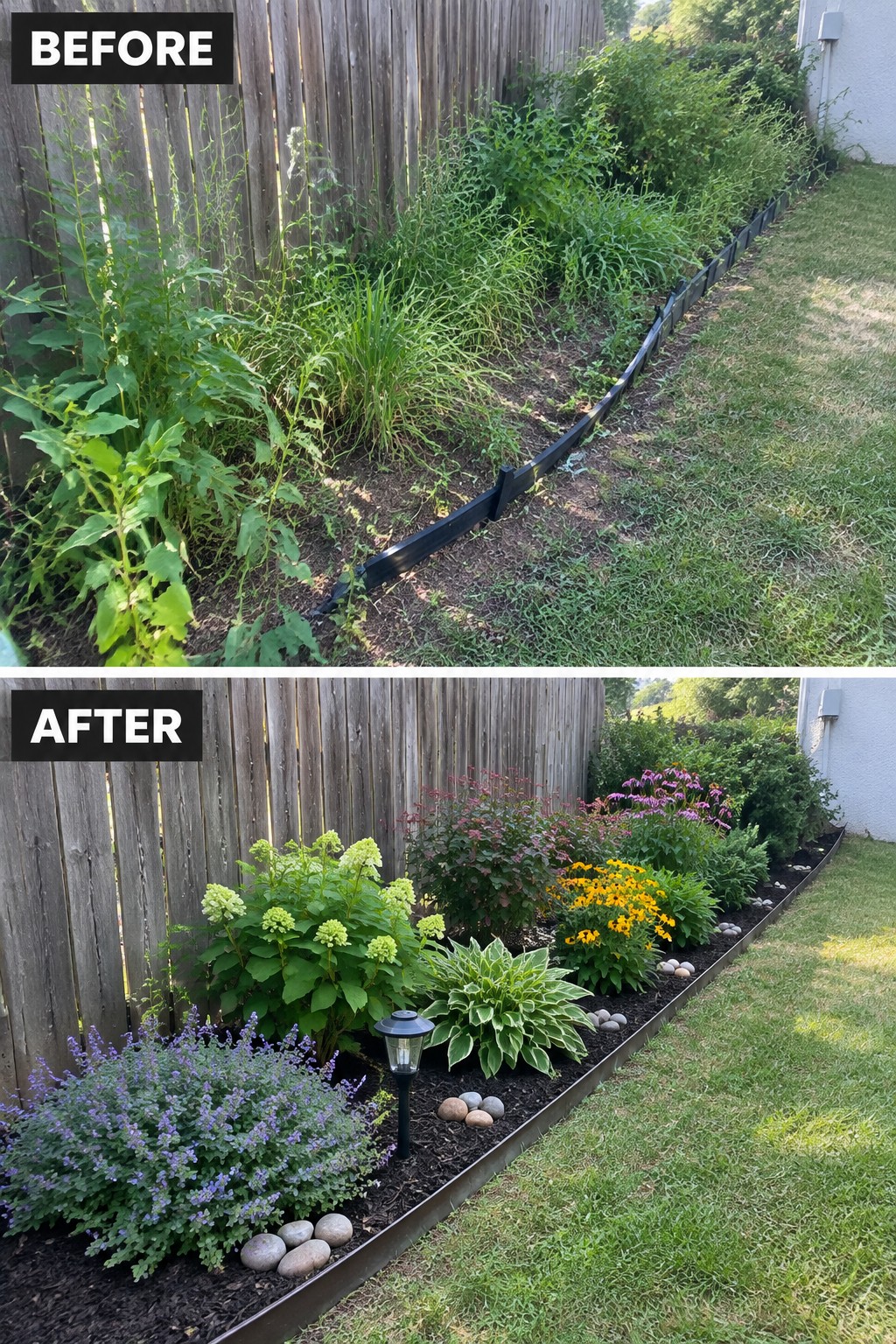
Clearing the mess first makes the biggest difference in a narrow border like this one. The before photo shows a strip of weeds and tall grass running along the fence with little shape. After the cleanup, the same space has a clean edge, dark mulch, and a simple mix of shrubs and flowers that give it order without looking crowded.
This approach works well on small lots or along side yards where you want the space to look intentional but not high maintenance. Focus on removing the overgrowth, laying down a basic border, and planting in layers so taller shrubs sit toward the back and lower plants fill the front. The result stays neat even when you only have time for occasional weeding.
Turn A Plain Fence Into A Vertical Herb Garden

A blank fence with nothing but dirt and weeds at the base is a common sight in small yards. Mounting a simple wooden pallet on the fence and planting it with herbs turns that unused strip into something productive. The fresh paint on the fence helps the whole area feel more intentional instead of just leftover space.
This idea works best along a fence you already have and want to make more useful. Secure the pallet well, line the back, and fill it with herbs you cook with so the garden earns its keep. Keep the surrounding ground simple with gravel or low plants so the vertical garden stays the main feature.
Define A Narrow Side Yard With A Simple Path
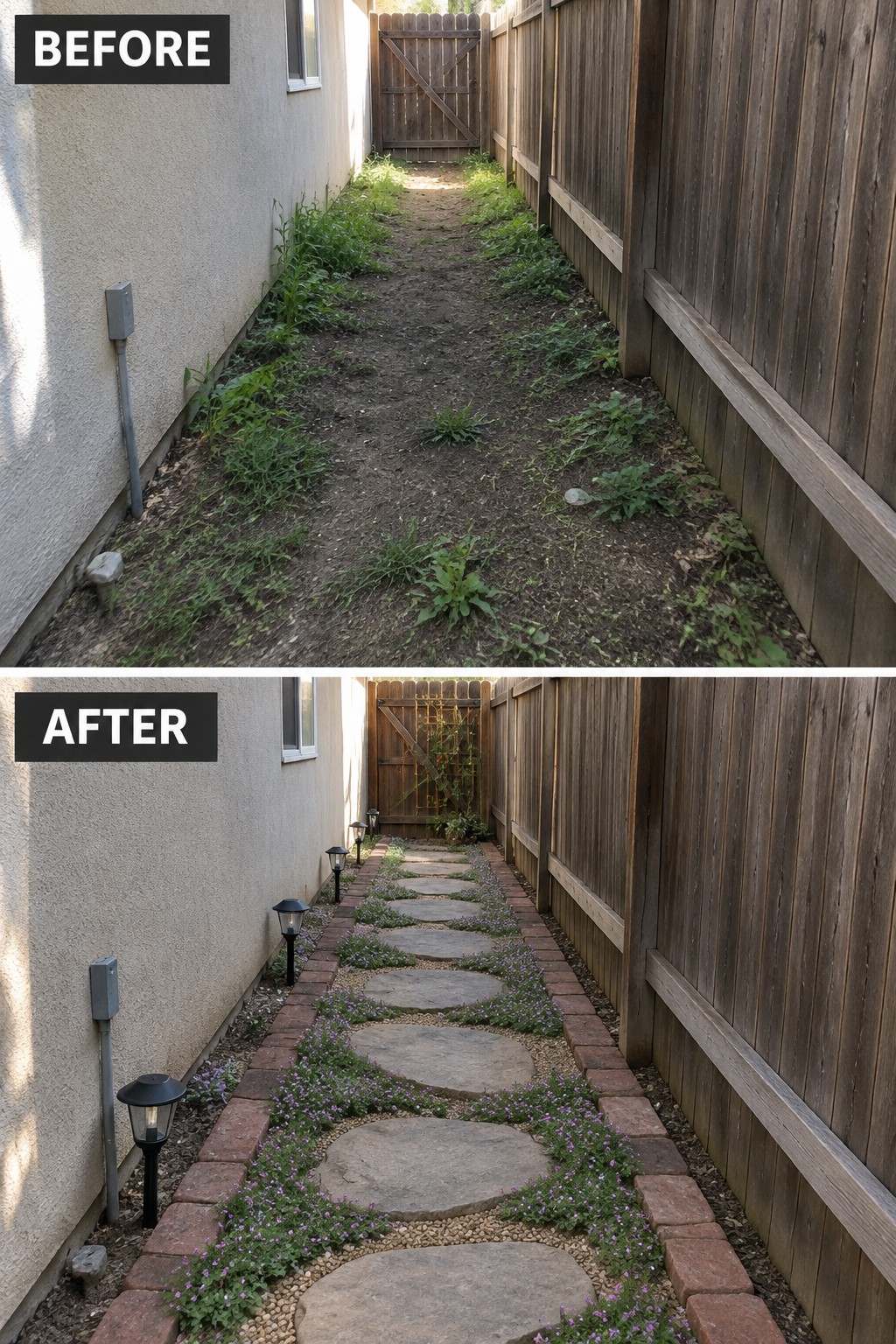
A narrow strip between the house and fence often turns into an overgrown mess of weeds and dirt. Adding a row of stepping stones with brick borders and low ground cover plants gives the space a clear purpose and makes it feel intentional instead of neglected.
This approach works best in tight side yards where there is not much room for big plantings or seating. Focus on a single path that leads through the space, keep the edging low, and choose plants that stay small. The result is a walkway that stays usable without making the area feel crowded.
Turn A Bare Balcony Into A Container Garden

A bare balcony often stays empty because it feels like there is no room for anything useful. Adding pots of different sizes along the edges and hanging planters on the railing turns the space into a place where plants can actually grow.
This works well for apartments or rentals where digging is not an option. Start with affordable buckets and troughs, group taller plants toward the back, and keep a small table nearby for watering and harvesting.
Refresh Overgrown Planters With Matching Containers

Old pots often end up with plants that have grown too tall or too sparse, and the mix of colors and sizes starts to look messy. Switching to a smaller number of matching containers with fresh plants and a gravel topping pulls the whole area together and makes it feel looked after instead of neglected.
This idea works best on small porches or side entries where space is tight. Keep the pots in the same color and material, choose plants that stay roughly the same height, and add one simple light so the spot feels usable after dark.
Create A Vertical Garden With A Reused Pallet
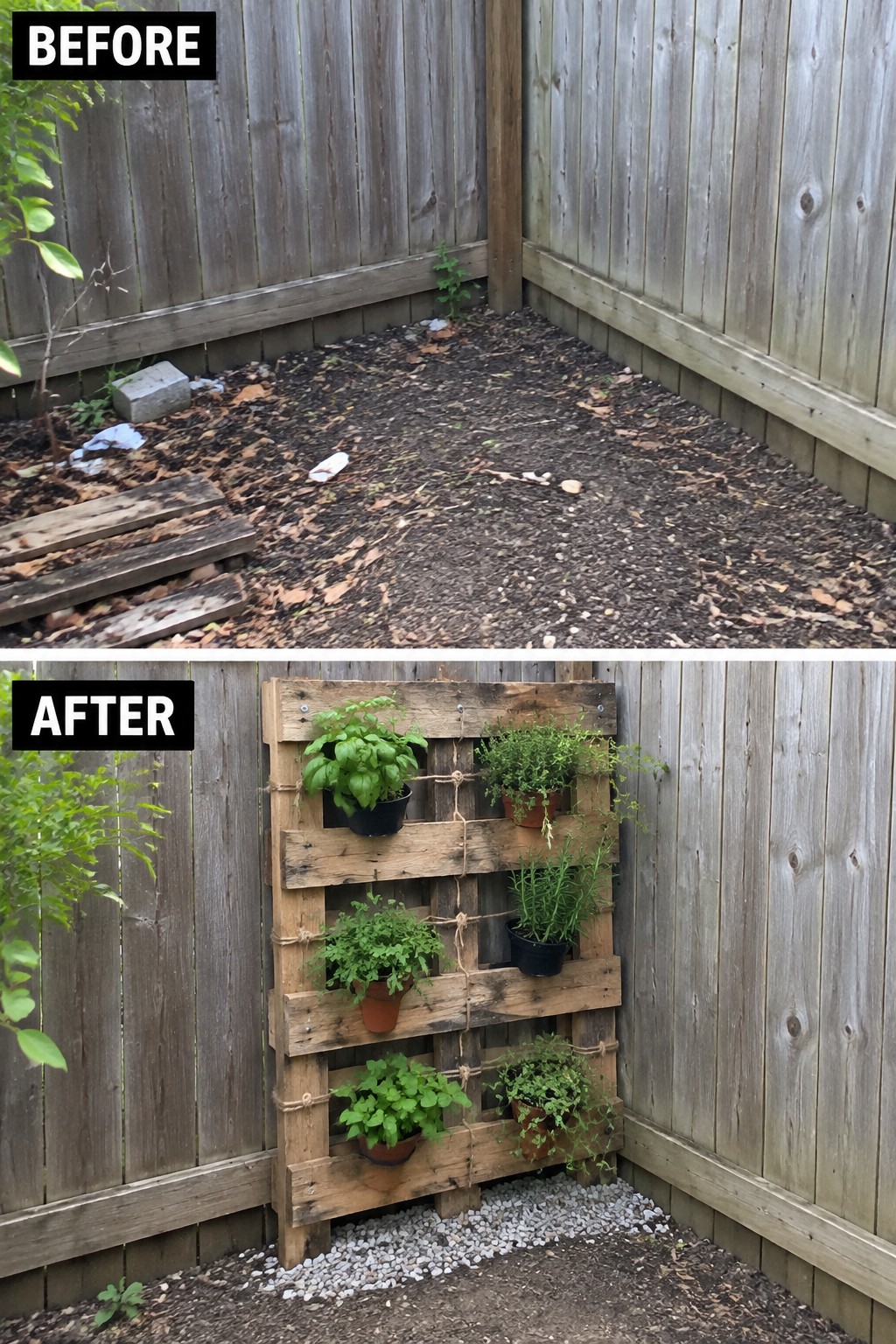
A bare corner with bare dirt and scattered debris can feel like wasted space, especially in a small yard. Mounting a simple wooden pallet on the fence and tucking potted herbs into the openings turns that same spot into a productive growing area without eating into the ground. The change keeps everything off the soil, adds height, and makes the plants easier to reach and water.
This approach works well in tight backyards or side yards where floor space is limited. Start with a clean, sturdy pallet, secure it firmly to the fence, and choose pots that fit the gaps without forcing them. Gravel at the base helps with drainage and keeps the area from turning muddy again. It is a low-cost way to grow herbs or small plants while making the corner look intentional.
Turn A Bare Backyard Into A Defined Seating Area

A simple way to make an empty backyard usable is to mark out one clear zone instead of trying to fill the whole space. Adding a gravel circle with a fire pit in the middle gives the area a purpose, and the hay bale seats around it keep the setup low cost and easy to rearrange.
This idea works best in smaller yards where you want a spot for evenings outside without building anything permanent. Start with the fire pit and seating first, then add a few potted plants so the area feels finished but still has room to walk around.
Add Raised Beds To Organize A Small Yard

Raised beds turn a patch of bare dirt into a space that feels planned instead of neglected. The wood frames create clear edges, hold the soil in place, and make it much easier to plant without worrying about weeds spreading everywhere.
This works especially well in narrow yards or side areas where you need structure without taking up too much room. Start with simple lumber, keep the beds at a comfortable height for weeding, and add a few steps if the ground slopes so the whole area stays easy to walk through.
Add Planter Boxes Along A Fence
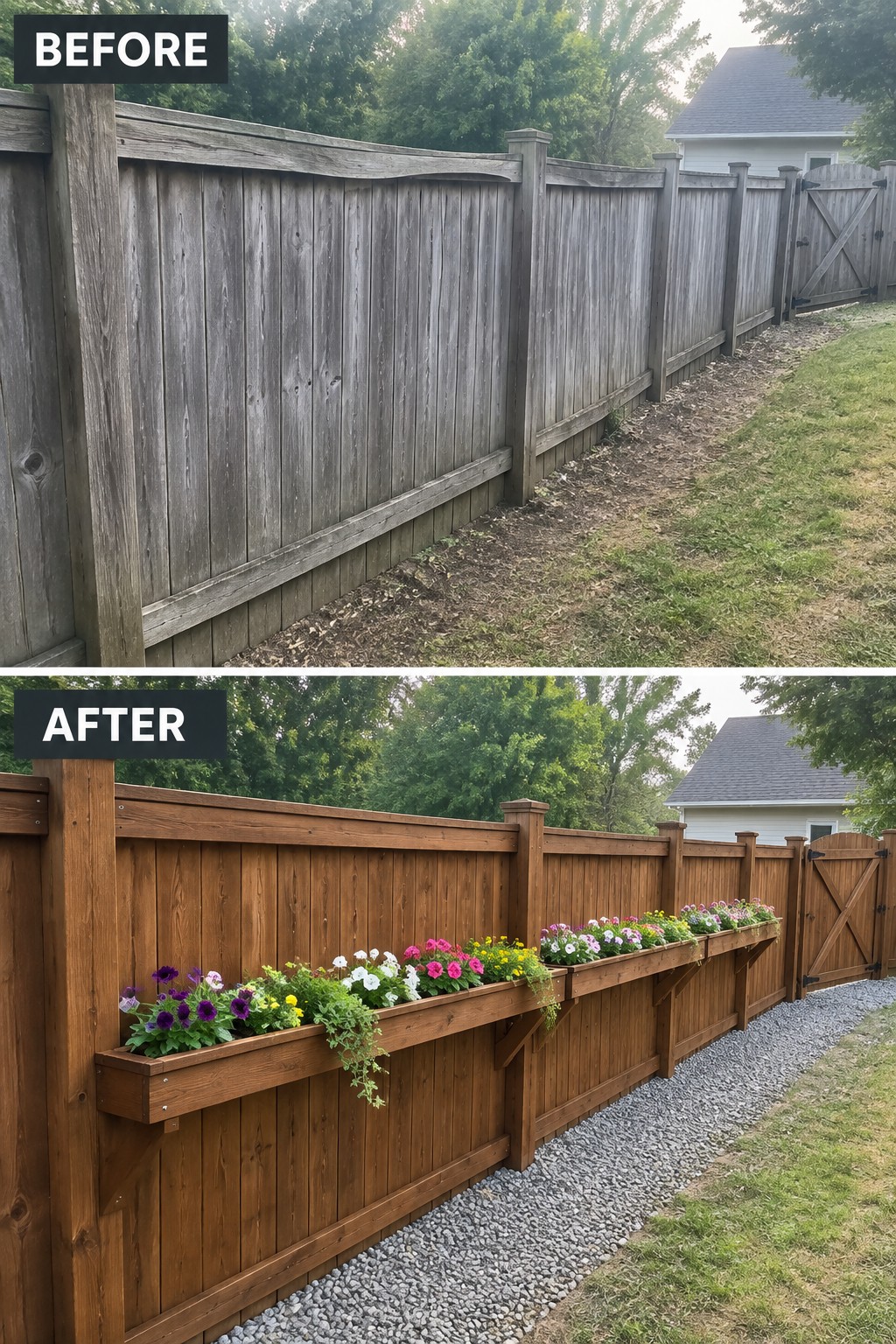
Attaching planter boxes to a fence gives a plain stretch of yard some color and definition without needing a full garden bed. The fence here went from standing next to bare dirt to holding a long row of wooden boxes filled with flowers, while the ground was covered in gravel for a cleaner edge.
This idea works best along side yards or property lines where space is tight. Build or buy boxes that can handle weather, mount them at a comfortable height, and pick plants suited to your sun and climate so they stay looking good through the season.
Add A Brick Path To Define A Narrow Garden

A muddy side passage next to the house is hard to use and looks neglected fast. Laying a simple brick path with metal edging on both sides turns the space into a clean walkway while keeping the planting beds separate and manageable. The bricks create a firm surface that stays usable in wet weather and gives the whole strip a more finished shape.
This idea works well in tight areas between a house wall and a fence where there is not much room for big features. Start by clearing the mud and leveling the ground, then choose bricks or pavers that suit your budget. Keep the beds on either side narrow so plants do not crowd the path, and use the edging to stop soil from washing onto the bricks.
Add Colorful Planters To Frame A Plain Entry
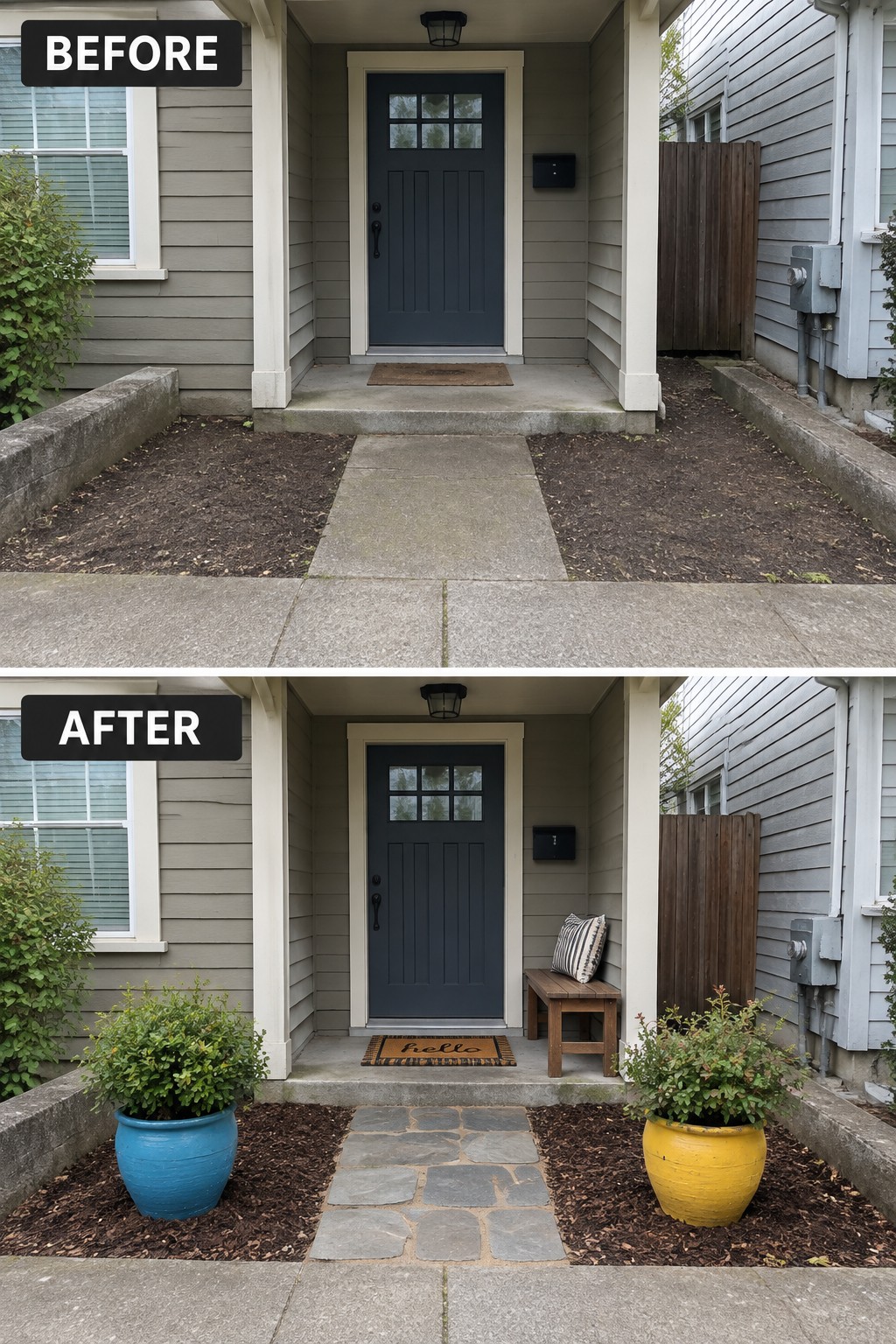
A bare front path with empty dirt on both sides can feel unfinished. Two large pots in bright colors placed on either side of the walkway bring instant life and structure without any permanent construction. The small bench near the door adds a place to pause and makes the entry feel used rather than just passed through.
This approach works best on small lots or townhomes where digging big beds is not practical. Choose pots that can handle weather, keep the plants simple, and repeat the same color on both sides so the look stays balanced rather than busy.
Clean Up Overgrowth Before Adding Plants

A messy gravel strip full of weeds and random growth is hard to work with. Clearing everything out first makes it much easier to lay out a simple planting plan and get the spacing right. The after photo shows how a once-scruffy edge now looks intentional with a few clusters of succulents and some repositioned rocks.
This approach works well along fences, paths, or narrow side yards where you want low-maintenance color without constant weeding. Start by removing every weed and root you can reach, then choose plants that match your sun and soil conditions. Keep the layout loose so the bed still feels natural rather than crowded.
Turn A Bare Backyard Into An Outdoor Seating Area
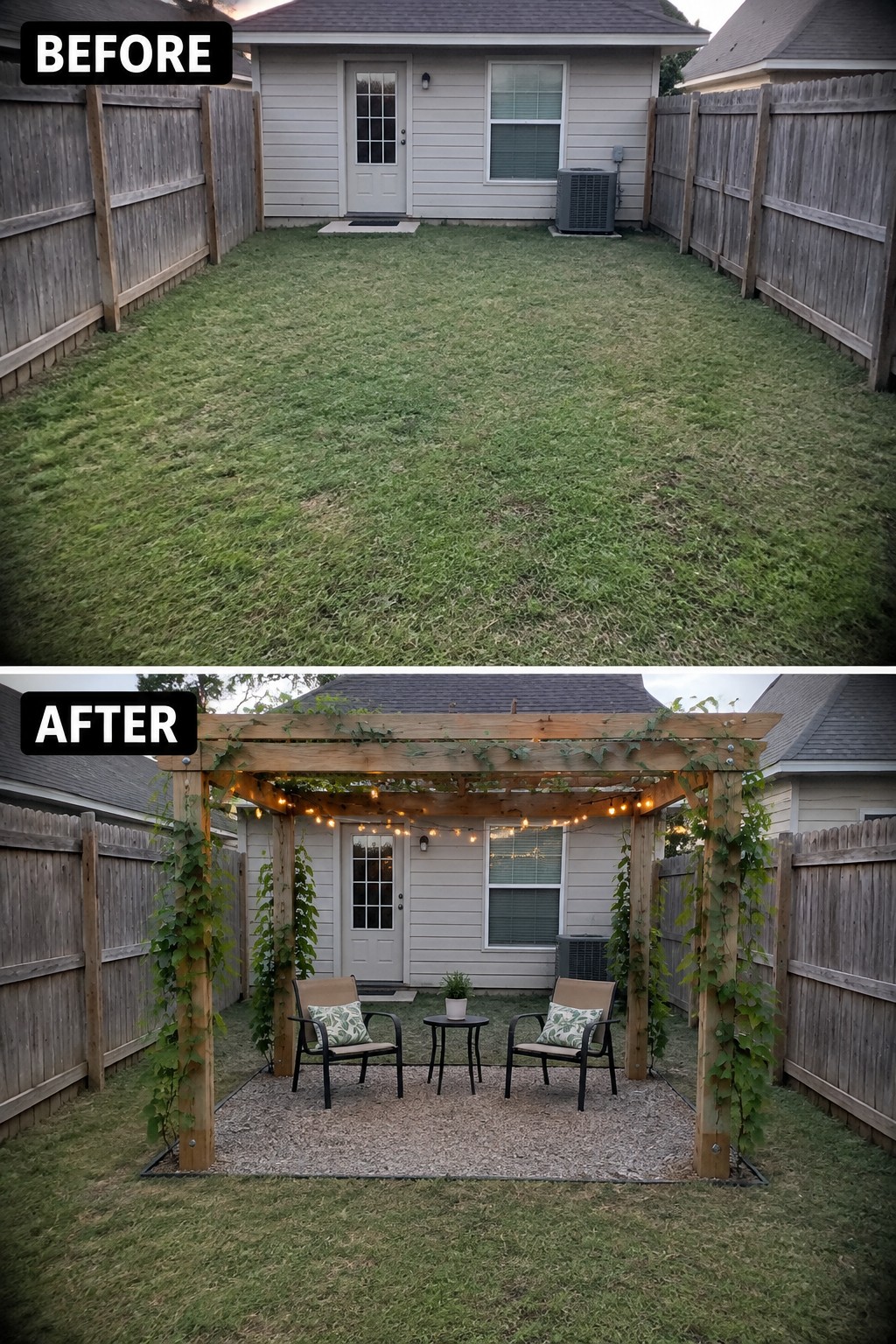
A flat lawn with no clear purpose is common in many small yards. Adding a pergola over a gravel base gives the space one defined spot for sitting, which makes the whole backyard feel more planned and usable. The simple structure and overhead lights turn an open area into something that actually invites people to stay outside.
This idea works best in modest backyards where you want one main gathering place rather than spreading furniture everywhere. Keep the pergola size realistic for your space, use weatherproof seating, and leave open lawn around the edges so the yard still feels open. Start with the frame and base before adding vines or lights.
Use Storage To Organize A Small Garden Corner
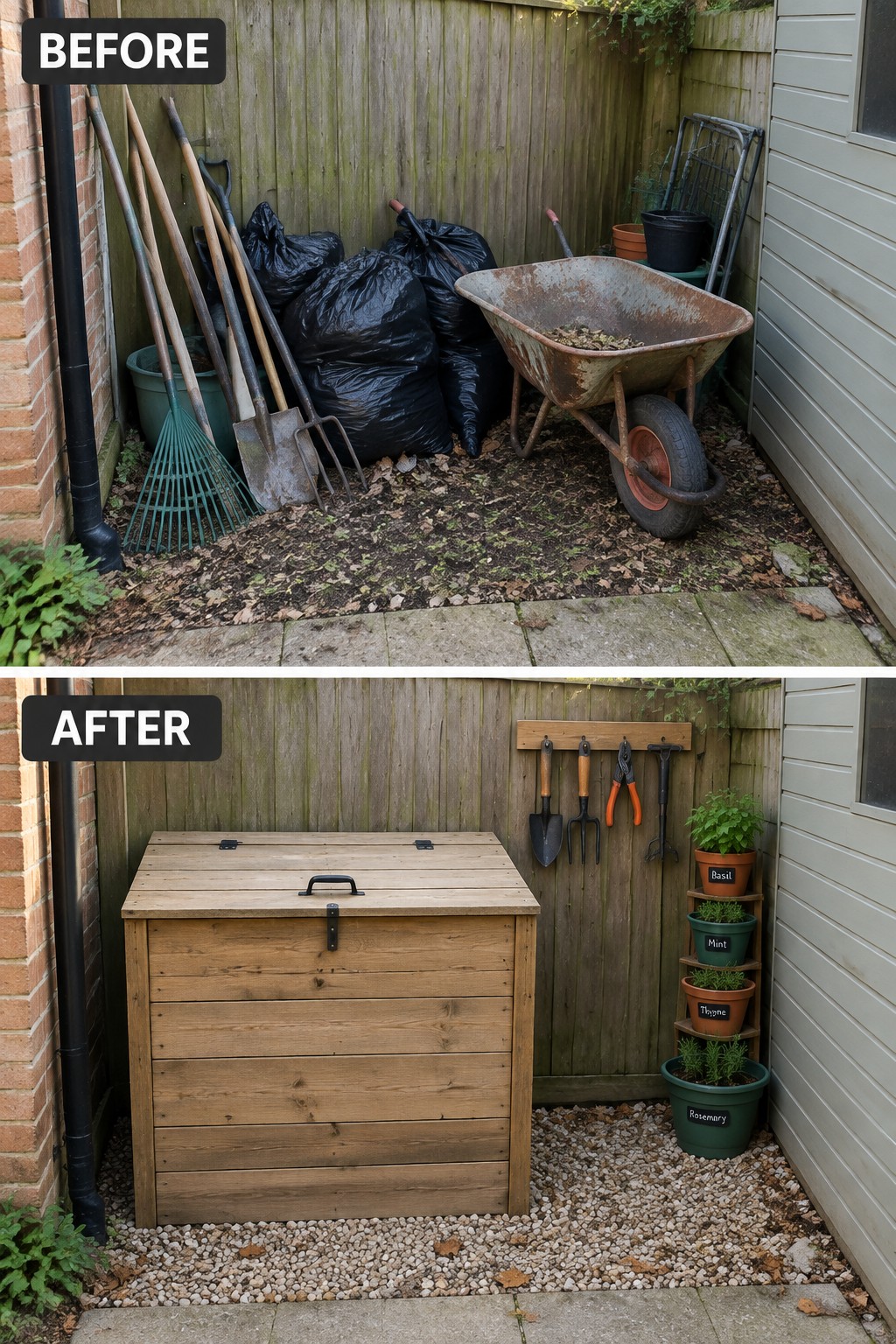
A cluttered corner full of tools and bags quickly makes a small garden feel neglected. Adding one large storage chest gives the space a clear purpose and hides the mess while still keeping everything within reach.
Gravel on the ground and a simple wall rack for tools finish the job without crowding the area. This works especially well in narrow side yards or back corners where you need function but have little room to spare. Start with a thorough clear-out, then choose one solid storage piece that can handle weather.
Clean Up An Overgrown Pond With Rocks And Gravel

A small pond can quickly turn into a problem when it fills with algae and the edges grow wild. In this case the fix was straightforward. The water was cleared, a simple stack of flat stones was added to create a gentle fountain, and the messy border was replaced with a clean ring of pebbles and larger rocks. The result feels intentional instead of neglected.
This approach works well in small yards where a pond already exists but has been ignored. Start by removing debris and improving water flow before adding any hardscaping. Local stone and basic gravel keep costs low, and the same idea can be scaled down if the pond is very tiny. Just make sure the pump is quiet enough for the space.
Paint A Retaining Wall To Make It Part Of The Garden

A plain concrete retaining wall often ends up looking like a big blank barrier in a small yard. Painting it a light color and adding a stencil pattern softens that heavy look right away. Attaching a few simple planters along the front adds color and breaks up the long surface without needing much space or money.
This idea suits gardens where the wall sits right next to the lawn or planting beds. Start by cleaning the concrete well, then use exterior paint that can handle weather. Keep the pattern simple so it does not compete with the plants, and choose small planters that stay in scale with the wall height.
Organize Garden Tools On Shed Walls
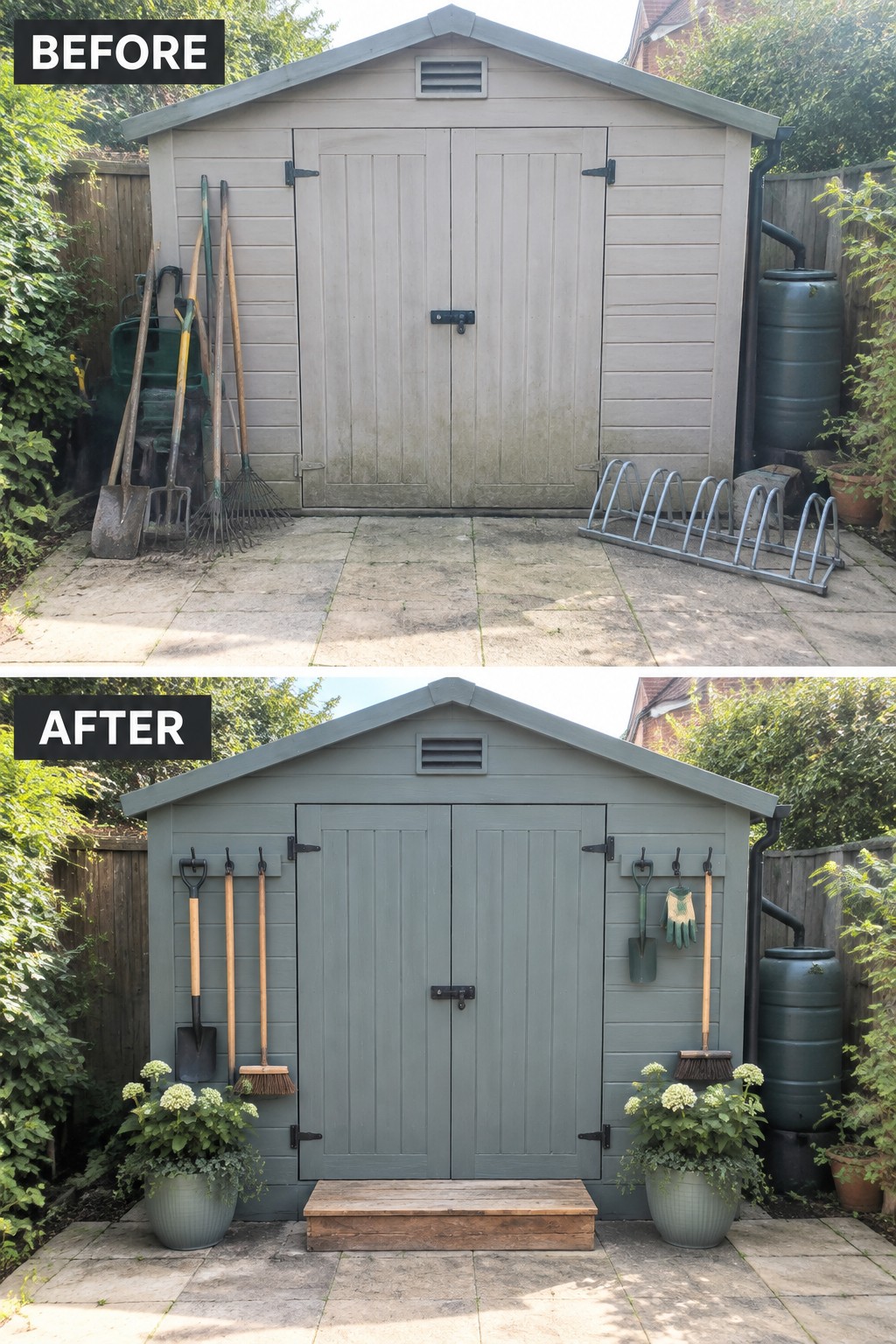
Many sheds collect tools that end up leaning against the walls or lying on the ground, which quickly makes the area feel cramped. Moving them onto simple wall hooks clears the floor space and keeps everything easy to grab without bending down each time.
This idea suits small gardens where storage is limited. Use hooks strong enough for outdoor weight, place the most used tools at eye level, and add a pair of large pots on either side of the doors to soften the look without taking up much room.
Add Outdoor Lighting To Make A Patio Feel Cozy

String lights and a few low path lights can turn a dark patio into a space you actually want to use after sunset. In the before photo the area felt flat and closed off once the sun went down. The after photo shows how simple overhead lights and a couple of lanterns open it up and make the table and chairs feel like the center of the yard.
This approach works best on small patios where you already have seating but need it to feel finished. Start with one string of lights across the main sitting area and add two or three solar path lights along the edge so people can see where they are walking. Keep the fixtures simple and weatherproof so the look stays practical instead of becoming another thing to maintain.
Frequently Asked Questions
Q: What if I have zero tools to start these projects? A: Borrow a basic hammer and saw from a neighbor to begin. Many makeovers rely more on rearranging what you already own than on fancy equipment.
Q: How do I stop weeds from taking over after I add new mulch or stones? A: Lay down a thick layer of cardboard first as a barrier. Then cover it with your cheap mulch or gravel so nothing pokes through right away.
Q: Can I really finish one of these makeovers in a single weekend? A: Yes, pick a simple idea like building a pallet planter or hanging string lights. Focus on one small corner and you will see results fast without dragging the work out.
Q: What happens if my cheap plants start looking sad after a week? A: Water them deeply in the evening and move them to a spot with the right light. Most budget picks bounce back once they adjust to their new spot.
