

I have noticed that small gardens often stay bare in spots because there is limited room to spread plants around the edges.
Trying vertical planting let me use the walls and fences that were already there instead of fighting for ground space.
The change feels steady rather than sudden once the new layers start to fill in.
I would probably start with one or two simple setups to see how they fit with the rest of the yard before adding more.
It ends up giving the space a clearer shape that makes daily use more enjoyable.
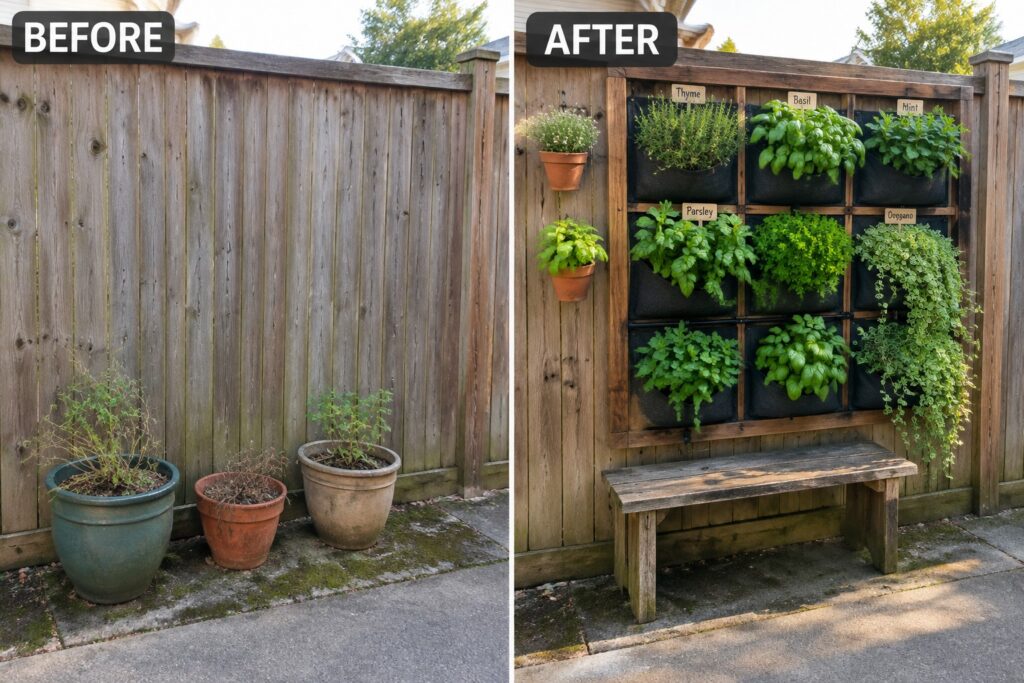
Turn A Fence Into A Vertical Garden

A fence line with a few pots on the ground does not give you much growing room. Mounting a vertical system with fabric pockets turns that same strip into rows of herbs and greens while keeping the ground clear for walking or seating.
This works best on a sunny fence that already has a solid structure. Build or buy a simple frame that holds the pockets, water regularly since the soil dries faster off the ground, and choose plants that stay compact. It keeps the yard feeling open even when you add a lot of planting.
Add Vertical Planters To A Plain Patio Wall

A blank wall next to a patio often goes unused, especially in small outdoor spaces. Mounting a vertical planter system turns that empty surface into growing space without taking up floor area. The change here shows how a few stacked units can hold herbs, tomatoes, and flowers in one tidy column.
This idea works best on patios, balconies, or side yards where ground beds are not an option. Secure the frame well so it can handle the weight once the planters are filled and watered. Place plants you reach for often, like basil or cherry tomatoes, at a comfortable height and keep the setup simple so it stays easy to maintain.
Hang Planters From The Railing To Add Vertical Garden Space

A small balcony often feels empty when the floor is the only place for plants. In this case the railing was put to work instead. Hanging recycled bottles filled with flowers and herbs turned a plain metal bar into a living screen that added color and softness without taking up any walking room.
This approach works well on balconies, narrow decks, or any outdoor spot where floor space is tight. Start with a few sturdy hooks or rope, choose lightweight containers that can handle weather, and keep the plants simple so the railing does not get overloaded. The wall behind can hold a simple trellis if you want even more growing room later.
Train Fruit Trees Vertically Along A Fence
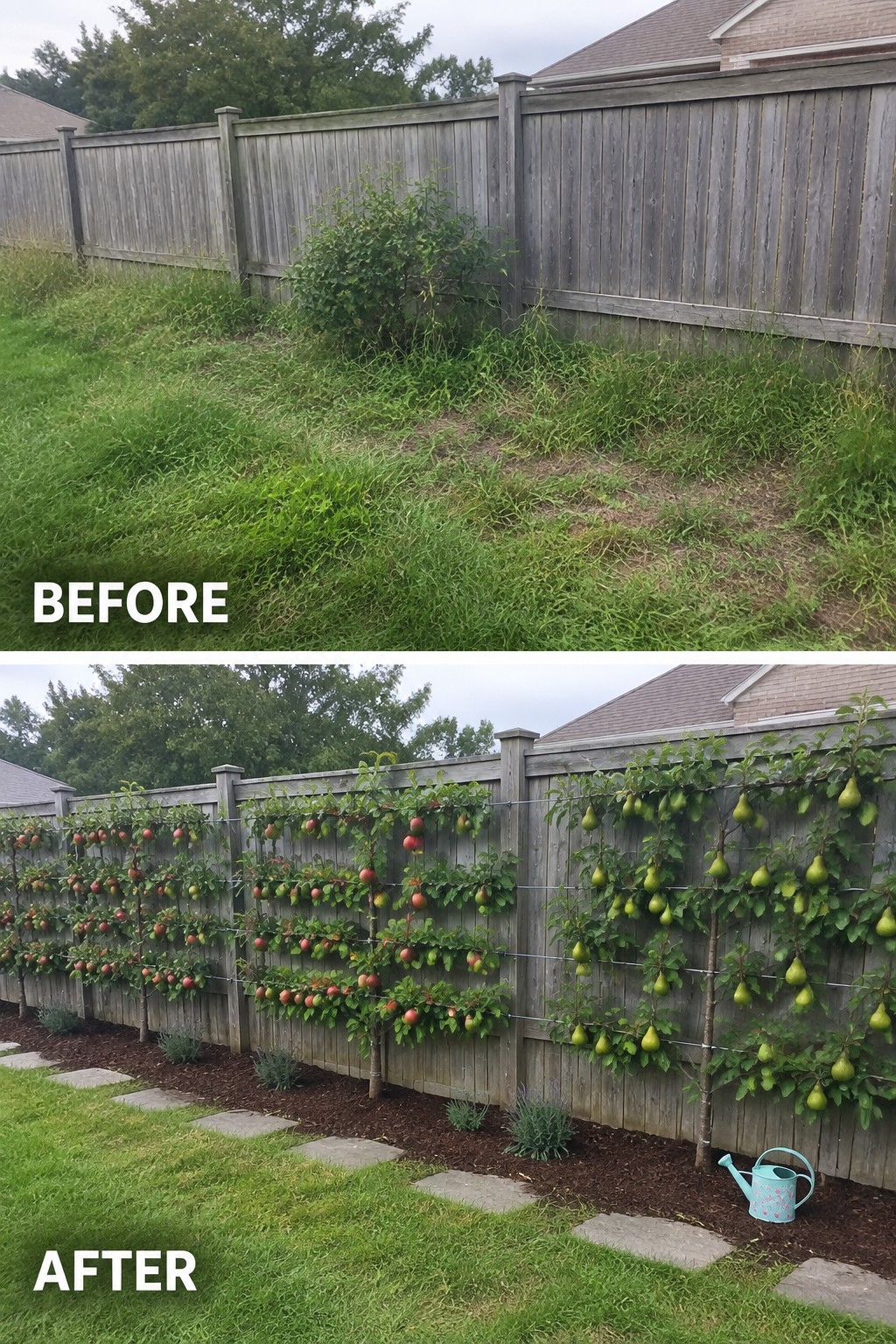
One practical way to improve a narrow strip along a fence is to train fruit trees flat against it. Instead of letting grass and weeds take over, horizontal wires support the branches so the trees grow in a single plane. This keeps the ground open while turning the fence into a productive growing area.
The method suits small yards that need more structure without losing lawn space. Start by clearing the base, then install wires and choose young trees that can be shaped over a few seasons. Mulch helps keep the bed clean and makes maintenance easier in the long run.
Use Vertical Planting To Green Up A Small Corner

A bare gravel patch against a brick wall often ends up as storage for soil bags and little else. Adding a vertical wooden planter changes the space by shifting the focus upward and turning the wall into the main planting area.
This idea suits small paved yards or narrow side returns where floor space stays tight. Mount a simple pallet-style frame on the wall, fill it with succulents that need little water, and keep one larger pot at ground level if you want extra height without crowding the path.
Add A Trellis To Grow Vines Up A Blank Wall

A narrow side yard often ends up as an afterthought, with weeds taking over along a tall wall. Adding a simple wire trellis gives climbing plants a place to grow, turning that empty vertical surface into a living screen while the ground gets cleaned up with gravel and a few low plants.
This idea works best in tight spaces where ground planting room is limited. Secure the trellis to the wall first, then choose vines that match your climate and sun exposure. The result keeps the path clear and adds greenery without crowding the walkway.
Mount A Vertical Herb Garden On Your Patio Wall

A blank wall next to a concrete patio often goes unused, but mounting a few wooden boxes turns it into a productive herb garden. The change frees up floor space while giving you fresh rosemary, thyme, chives, and sage right where you sit.
This works best on small patios or balconies that get decent sun. Keep the planters simple, stagger them so plants have room to grow, and choose herbs you actually cook with. Add one larger potted plant nearby if you want more height without blocking movement.
Turn A Fence Into Vertical Growing Space

A narrow strip along a fence often ends up as wasted dirt and a couple of tired pots. Mounting simple vertical pipe planters turns that same fence into a productive growing wall for herbs, lettuce, and greens without taking up any floor space.
This works especially well in side yards or along driveways where the ground is tight. Start with sturdy brackets and pipes cut to size, then add a gravel border at the base to keep the area clean. The result stays practical as long as you choose plants that match the light and water access you actually have.
Frame A Plain Entry With Vertical Trellises
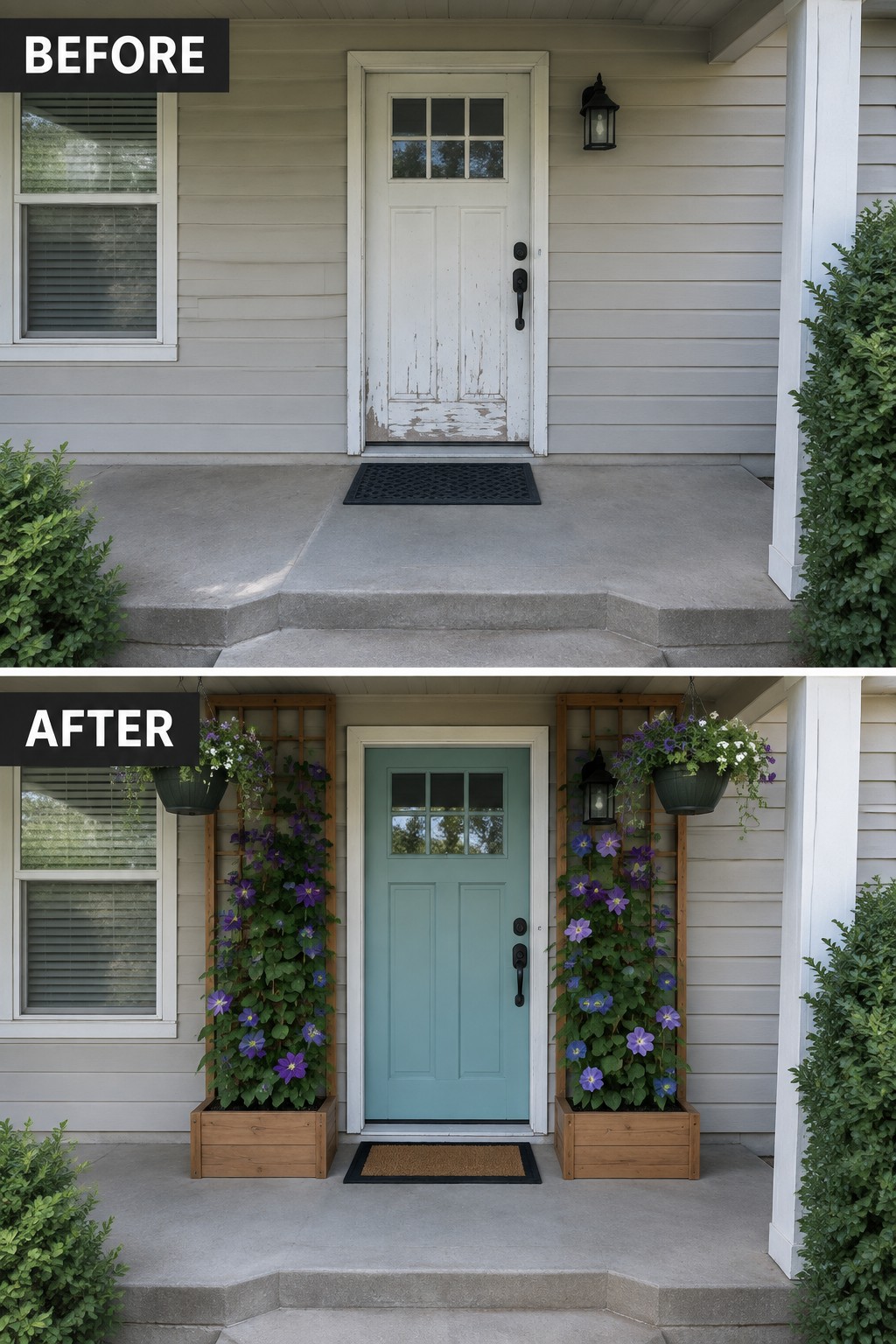
A bare front door and empty concrete steps can look unfinished even when the house itself is in good shape. Adding a pair of simple wooden trellises with planter boxes at the base gives the entry height and structure without crowding the walkway. The climbing vines and hanging baskets bring color and softness right where people walk in.
This approach works well on small lots or narrow porches where a full garden bed is not practical. Keep the trellises the same width as the door frame so the look stays balanced. Choose weatherproof wood and a couple of reliable climbing plants that can handle your sun exposure. Once the vines fill in the structure does most of the work.
Hang Vertical Planters Along A Deck Railing
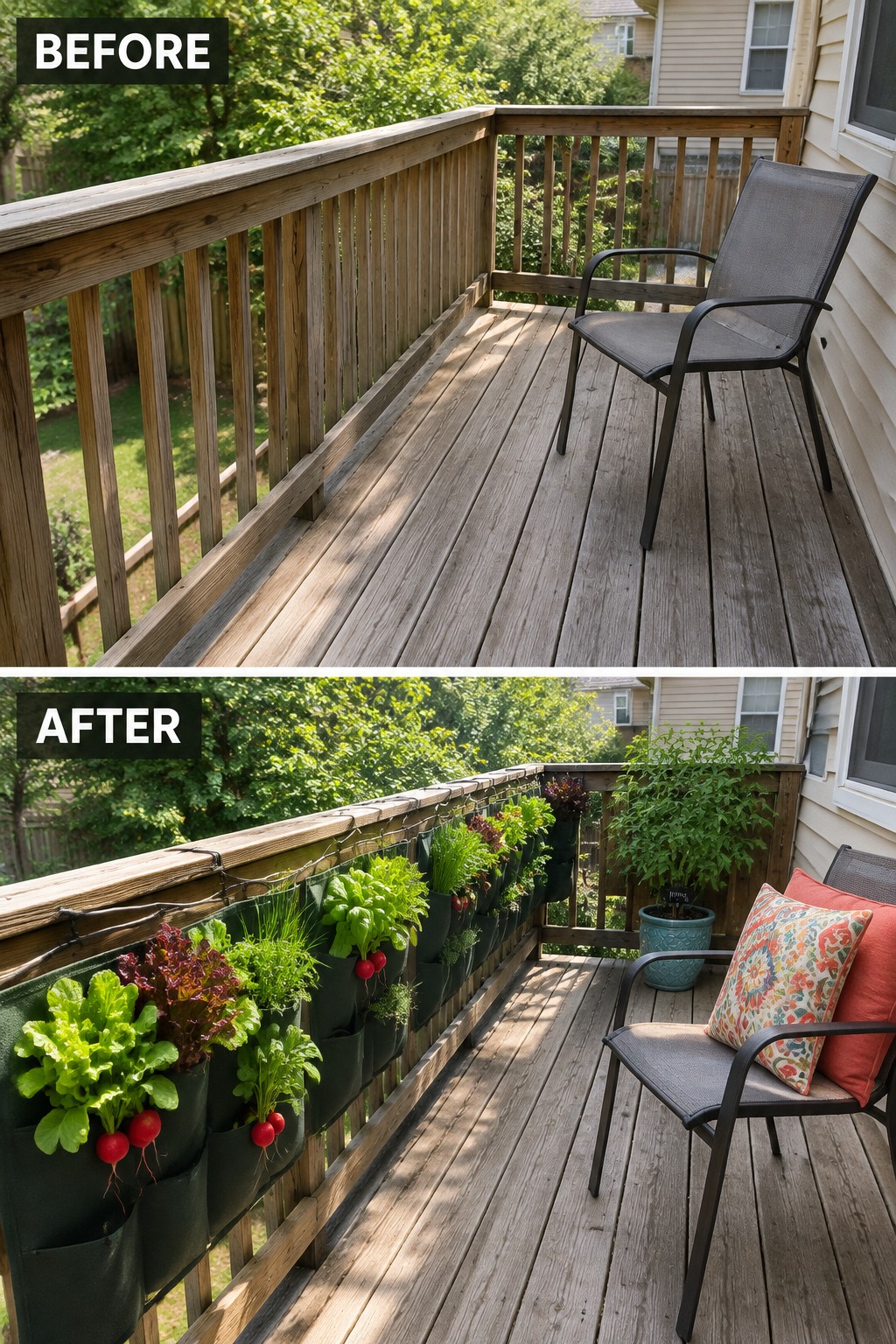
A plain deck with just one chair feels much more alive once you add a row of fabric planters right along the railing. The vertical setup brings in herbs, lettuce, and even radishes without using up any floor space, and it turns the railing itself into the garden.
This idea works best on small decks, balconies, or porches where you want greenery but need to keep walking room clear. Use planters made for outdoor use, water them often, and pick fast-growing plants so the railing starts looking full within a few weeks.
Stack Planters To Add Vertical Layers In A Narrow Bed
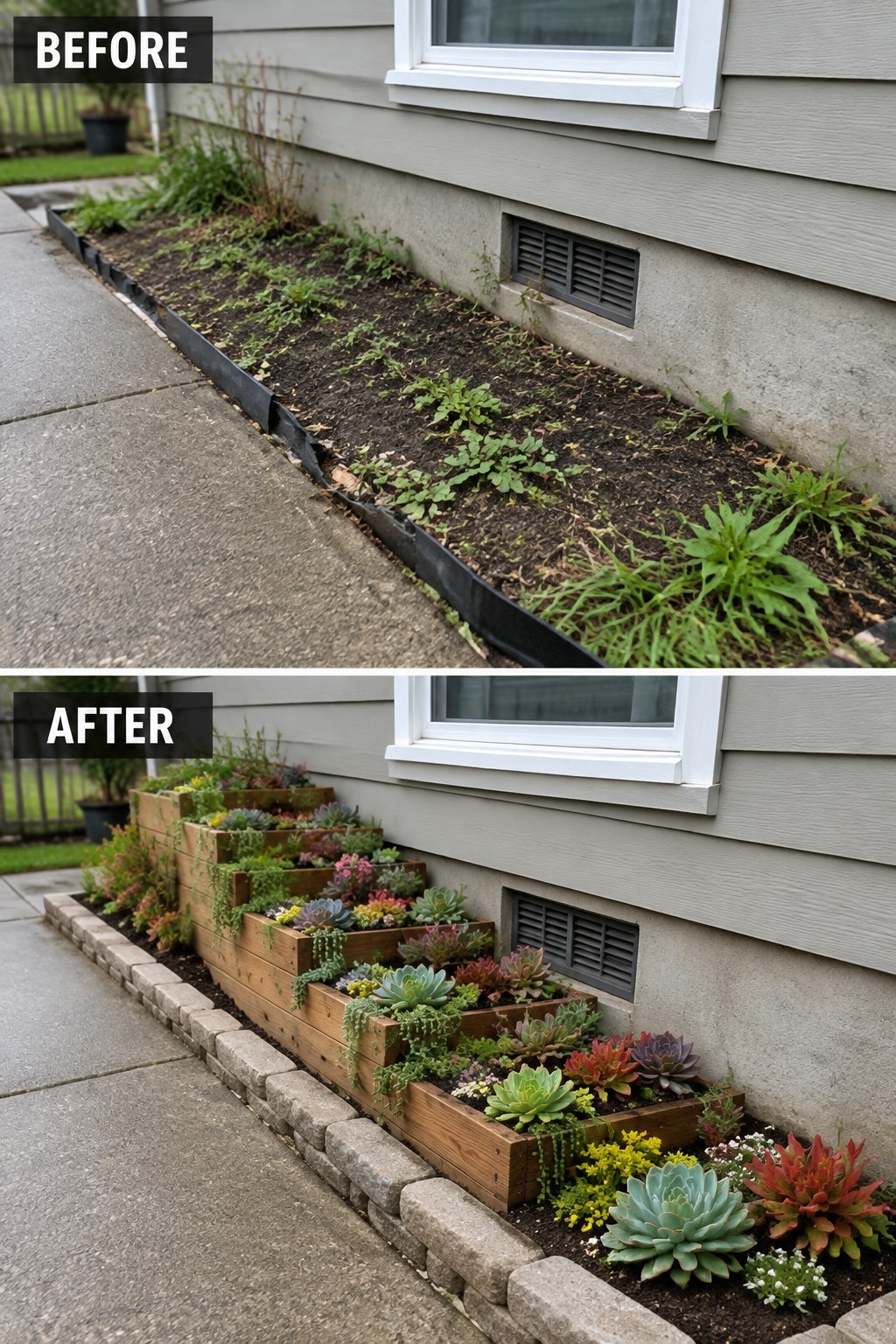
A flat strip of soil along the house often ends up looking messy because there is no height to give it shape. Stacking wooden boxes creates instant levels so the planting feels fuller without needing a wider space. The before photo shows how weeds and low growth made the bed look flat and neglected, while the after shows how the tiers lift the plants up and give the whole edge a clean, finished line.
This approach works well along foundations, side yards, or any tight spot where you want more plants but cannot expand outward. Start with simple untreated lumber boxes that step back as they rise, then fill them with trailing and upright varieties so the layers stay interesting from the sidewalk. Keep the bottom level a bit wider for stability and make sure the top boxes still get good sun.
Use Vertical Planters On A Blank Wall
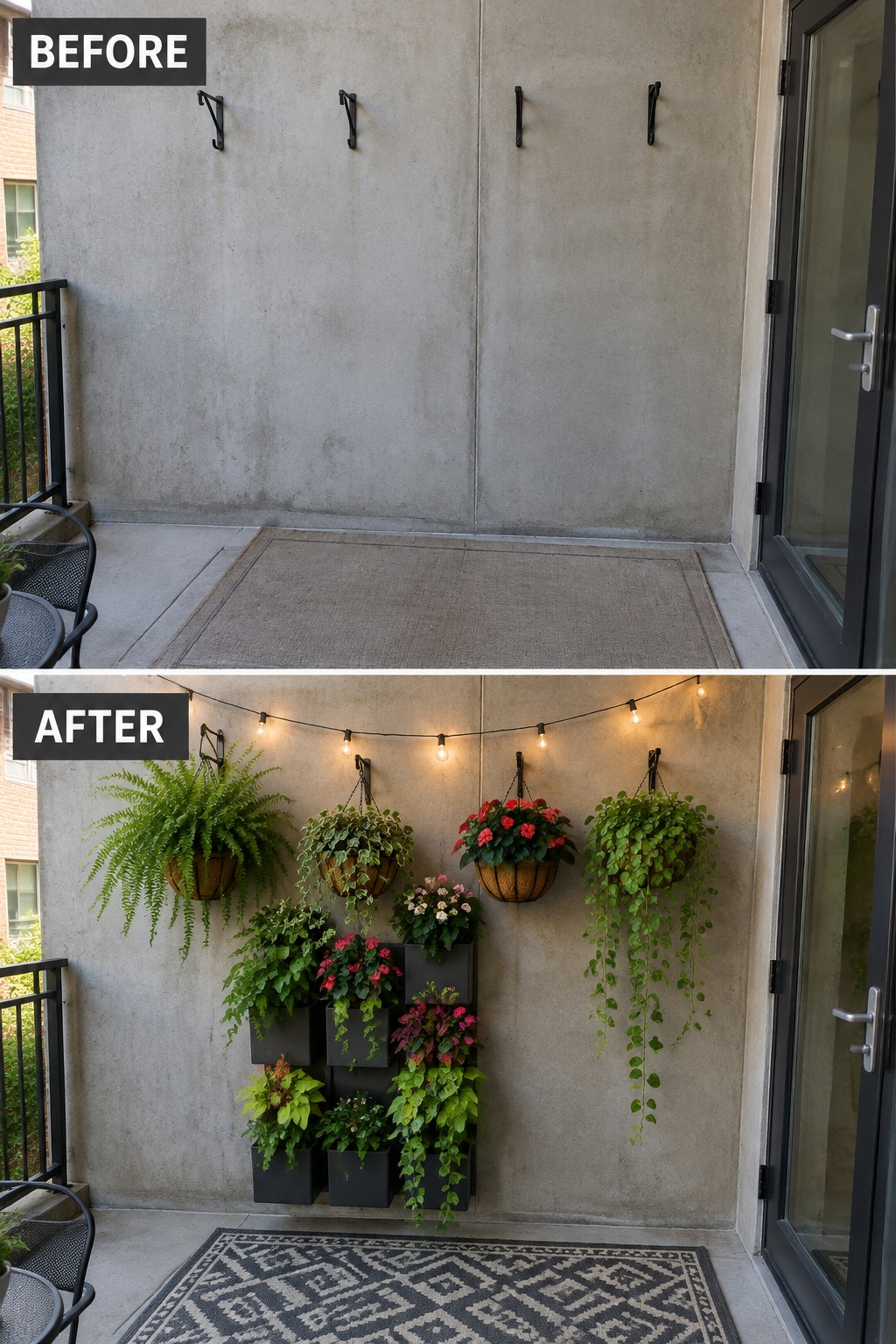
A plain balcony wall often ends up ignored because there is no room for big pots on the floor. Here the change is simple. The empty concrete surface with just a few hooks became a full planting wall once modular boxes and hanging baskets were added.
This idea suits small balconies or patios where floor space must stay open. Mount a few sturdy brackets or stackable planters first, then choose trailing and compact plants that can handle your light conditions. Keep the rest of the area clear so the vertical garden stays the main feature.
Add Vertical Planters To A Retaining Wall

A plain retaining wall often sits there doing nothing for the garden. Vertical planters change that by turning the wall into a planted surface that adds color and softness right where the eye lands.
This idea suits small yards or sloped lots where ground space is tight. Secure the panels well, use a simple mix of flowers and greenery, and keep the base clean with mulch so the focus stays on the plants.
Use Vertical Planting To Green Up A Small Patio

A bare concrete patio often feels flat and unused until you add height. In this case, a single wall was turned into the main feature by mounting a vertical frame with staggered wooden shelves. The old metal unit and ground-stacked pots disappeared, replaced by rows of plants that climb and spill downward while leaving the floor open for seating.
This approach suits small paved courtyards or side yards where floor space is tight. Fix a sturdy panel or set of brackets to a solid wall, work with lightweight pots, and repeat a few plant shapes so the display stays simple. A bench placed in front gives the area a clear purpose without adding clutter.
Add Vertical Supports To Maximize Space In A Small Garden

One practical way to improve a small backyard is to add vertical supports so climbing plants can grow upward instead of spreading across the ground. The before photo shows an open, weedy area with no clear planting zones. The after shows how simple bamboo stakes and horizontal strings create rows that keep vines organized and productive.
This idea works especially well in narrow yards or spots where ground space is limited. Clear the area first, then set up tall stakes at each end of the beds and run strings between them at different heights. Tomatoes, beans, and cucumbers all benefit from the extra support and better airflow.
Add Vertical Planters To A Plain Fence

A plain fence often leaves a small garden feeling flat and empty. Mounting vertical planters directly onto the fence adds greenery at eye level without using up floor space. The before shows a bare wall with just one pot on the ground, while the after fills the same surface with layers of plants that soften the view and make the area feel fuller.
This idea suits narrow yards or patios where ground room is tight. Use outdoor-grade planters that can handle weather, keep the layout simple so plants have room to grow, and check the fence can support the weight once the soil is wet. It works best when you repeat a few plant types rather than trying to fit too many different ones.
Use Vertical Planting To Green Up A Small Porch
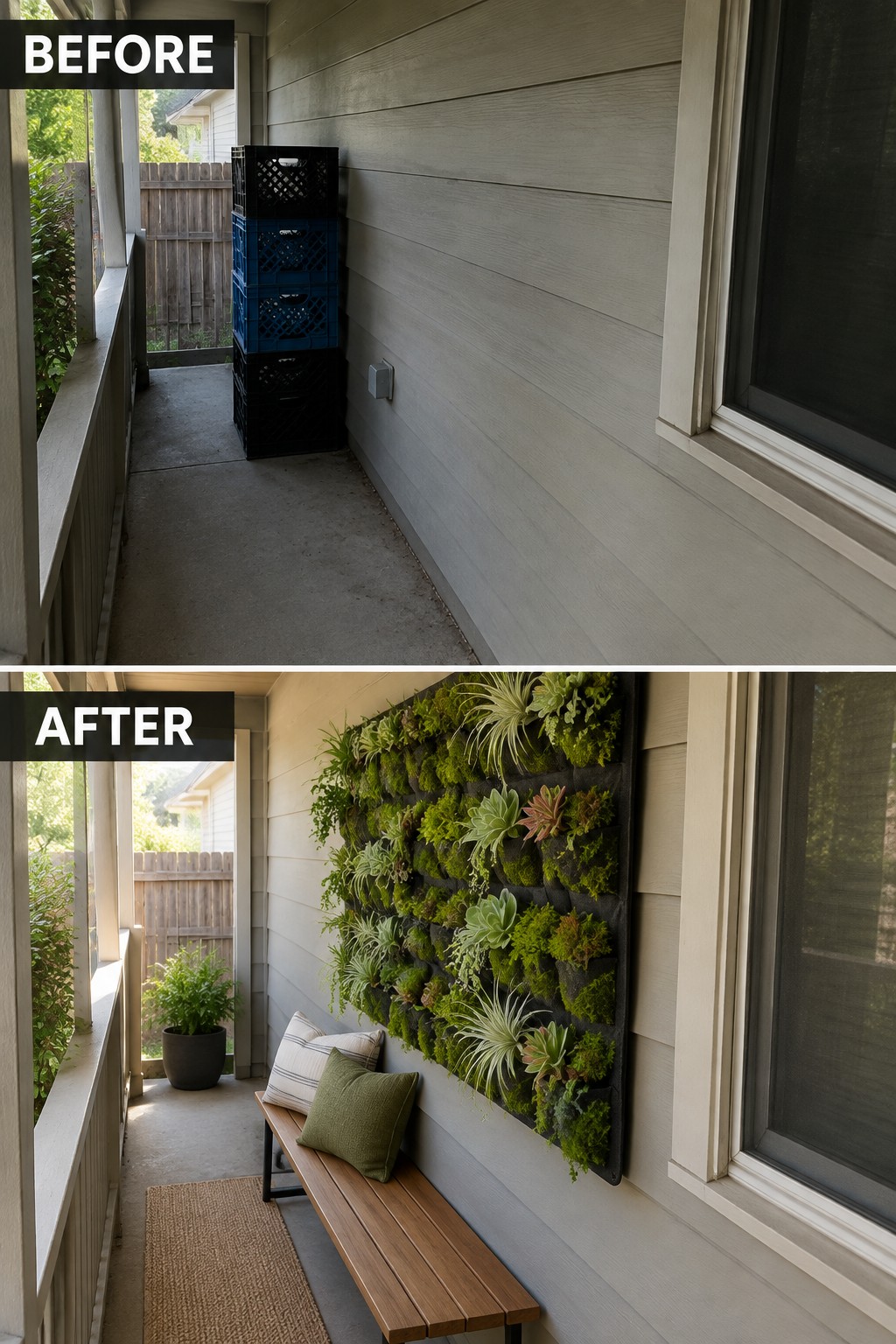
A blank wall along a narrow porch often gets ignored, but mounting a vertical garden there turns the space into something useful. The crates stacked against the siding disappear, and the wall becomes the main feature with rows of plants that add color and texture without taking up floor space.
This approach works best on porches or balconies where room is tight. Choose a fabric pocket planter that hangs flat against the house, fill it with succulents and grasses that handle varying sun, and keep the rest of the area simple with just a bench and a rug. Start with the plants before adding seating so the wall stays the focus.
Add Vertical Planting To A Blank Wall

A plain brick wall often takes up valuable space in a small garden without adding much in return. Mounting a trellis and training climbing plants across it gives the wall purpose and brings height into the planting scheme. The empty grid in the before photo becomes a full display of roses and clematis once the vines fill in.
This idea suits narrow side yards or patios where ground space is tight. Fix the trellis securely first, then choose climbers that match your light and soil conditions. Keep the base planting simple so the vertical layer stays the main feature.
Use Vertical Planters To Add Greenery On A Small Balcony

A bare concrete balcony often feels like dead space until you add plants that grow upward instead of outward. Stacking planters along the railing brings in herbs and vegetables without crowding the floor, and pairing them with one small table and chair turns the area into a spot where you can sit and enjoy it.
This approach suits apartments or homes with narrow balconies where every inch counts. Choose planters that fasten securely to the railing, pick hardy varieties that tolerate wind and sun, and leave enough open floor area for a chair or two so the space stays practical rather than crowded.
Turn A Shed Wall Into Vertical Growing Space

A blank shed wall next to the garden often ends up as a spot for leaning tools and little else. Here the wall was cleared, a simple hook rack was added for the shovel and rake, and a vertical planter with eight pockets was hung in the middle to hold basil, parsley, cilantro, thyme, rosemary, mint, oregano, and chives.
This idea suits small gardens where every flat surface counts. Pick a sturdy fabric planter with good drainage, mount it where it gets decent sun, and keep the lower section open for tool storage so the area stays practical rather than crowded.
Mount A Vertical Planter On A Fence For Extra Planting Space
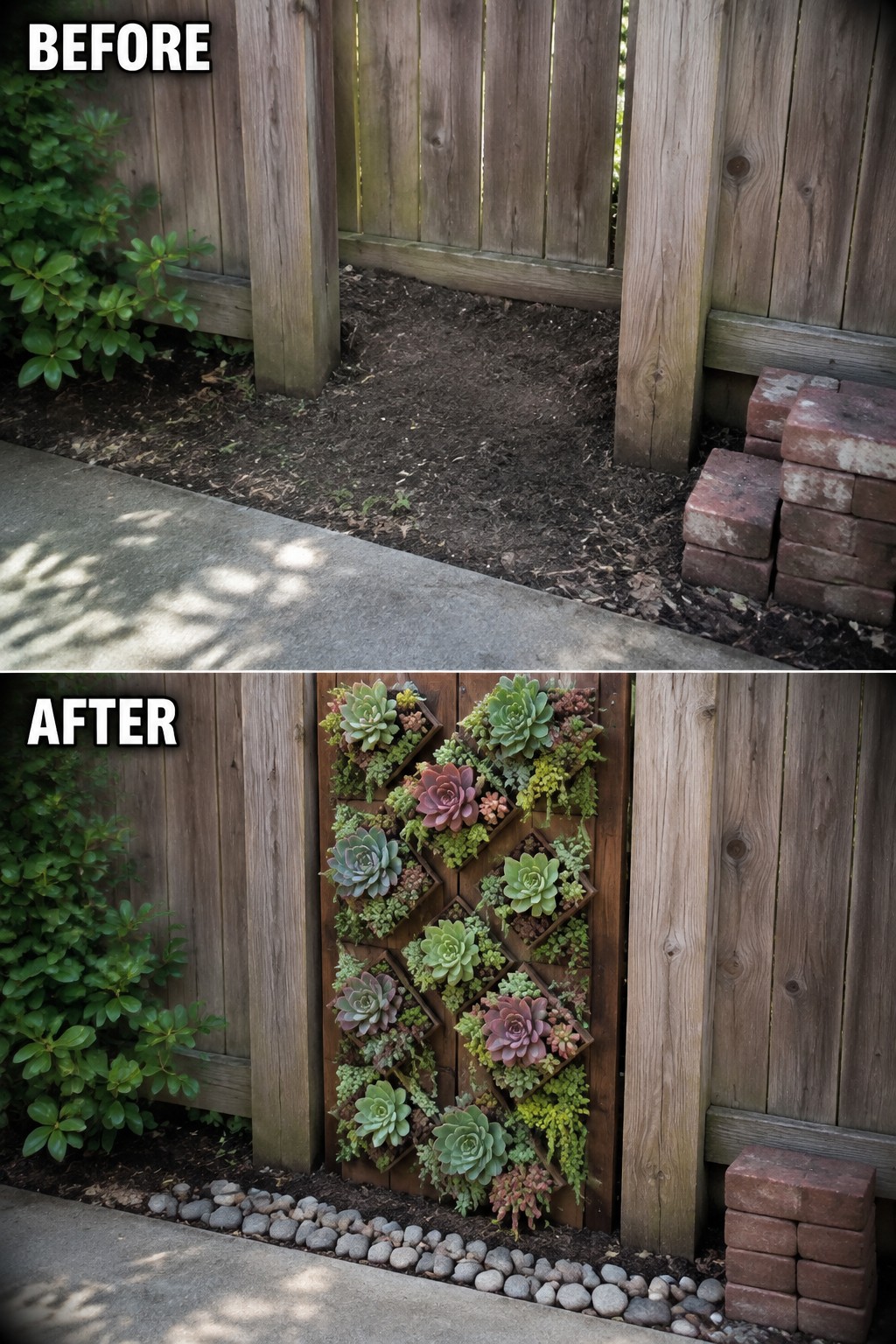
A blank fence next to bare soil often leaves a small garden feeling unfinished. Mounting a vertical planter filled with succulents turns that same fence into the main feature and adds layers of greenery without using up ground space. The change is simple but effective because the plants now sit at eye level and the area below stays neat with just a line of pebbles.
This idea works well in narrow side yards or any spot where floor space is limited. Start with a ready-made frame that can be screwed directly into the fence, then choose hardy plants that need little water. Keep the rest of the bed low so the vertical element stays the focus and movement along the path stays easy.
Add Vertical Planting To A Small Porch

A small porch or balcony often ends up with just one or two pots because there is no room for much else. Mounting a vertical garden wall turns that empty corner into the main feature. The before photo shows a plain space with only a single tall planter. The after adds a full wall of ferns and leafy plants that brings in far more greenery without taking up floor space.
This idea works best on porches or balconies that get some shade and already have a solid wall to work with. Start with a simple pocket planter or panel system, pick plants that match the light conditions, and keep the layout simple so the space still feels open. A small rug and one light source can help tie it together if you want to use the area in the evening.
Frequently Asked Questions
Q: How do I keep the wall behind my vertical garden from getting damp?
A: Add a waterproof backing like plastic sheeting before you hang anything. Water the plants carefully so excess drains away from the wall. This simple step saves you from moisture damage later.
Q: Which plants work best for beginners trying vertical planting?
A: Go with easy growers like pothos or succulents that handle different conditions. They root well in small pockets and need less attention at first. Start small and add more as you gain confidence.
Q: What happens if the top plants grow faster than the ones below?
A: Trim the faster ones regularly to give lower plants room and light. Rotate the whole setup if possible to balance growth.
Q: Do I need special soil for these setups?
A: Regular potting mix works fine in most cases. Just make sure it drains well to avoid root rot in the confined spaces.
