


Narrow side yards often end up as narrow strips of weeds or bare dirt because their shape makes them hard to picture as usable space.
I find that focusing first on layout and a few key plants usually does more to improve them than trying to fill every inch.
Some approaches work better than others in tight spots.
A simple edging detail is one change I would try early because it stops the area from looking like an afterthought.
Those steady layers of planting and access points add up over a season or two and make the whole side of the house feel more complete.
Define A Narrow Side Yard With A Simple Path And Borders

A narrow side yard often ends up as a forgotten strip of gravel and weeds. The change here comes from laying down a straight paved path and adding low planting beds along both sides. That single move turns an awkward leftover space into something that actually feels intentional and easy to walk through.
This approach works well on any tight side yard where you need clear access but still want it to look cared for. Start with a simple path material that fits your budget, then plant a repeating row of shrubs or boxwood on each side. Keep the beds narrow so they do not crowd the walkway, and use a few pots near the house for a bit of height without overfilling the space.
Use Wall Planters To Green Up A Narrow Side Yard
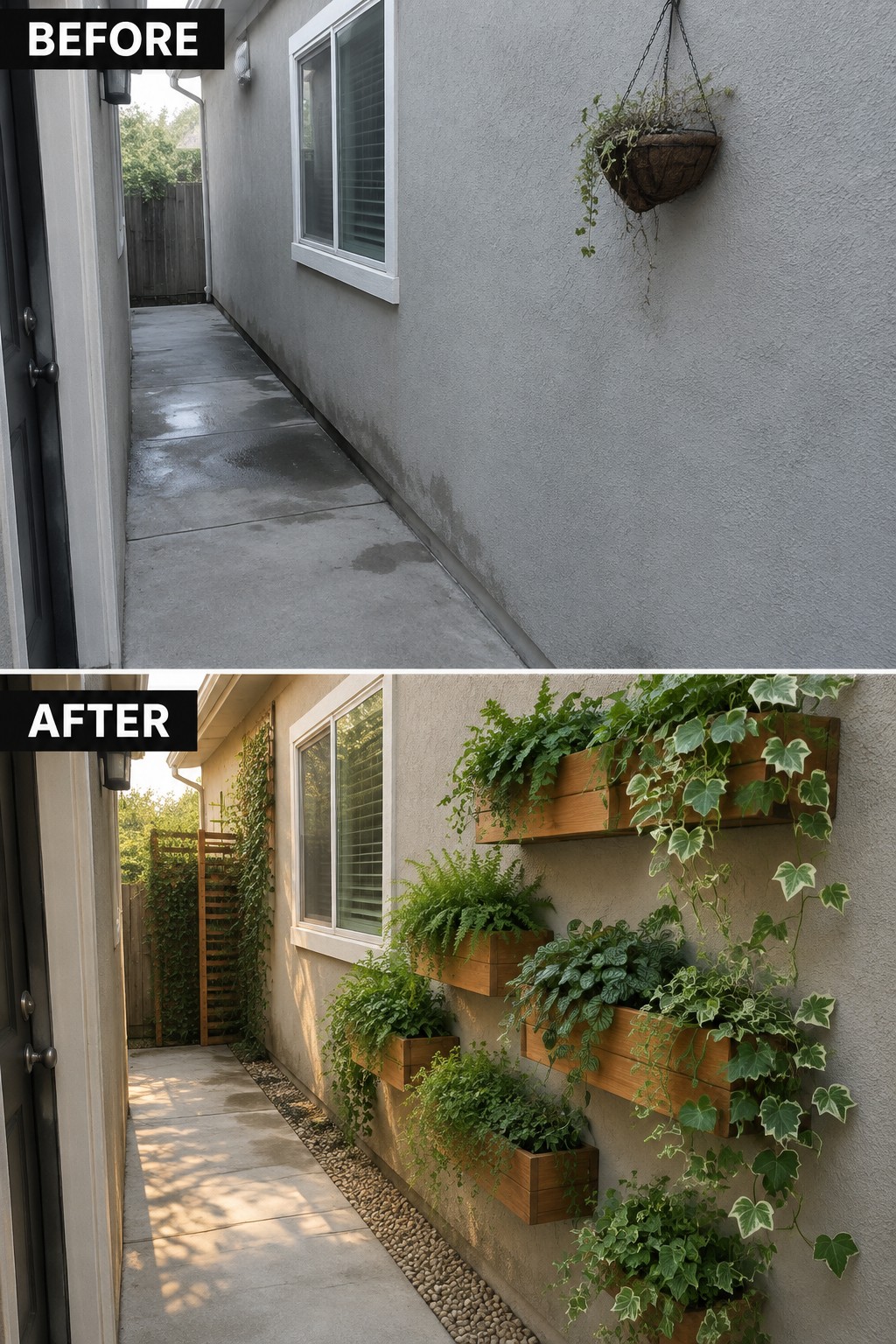
A narrow side yard often ends up as just a concrete path with nothing much on the walls. Adding a few wooden planters at staggered heights gives you planting space without taking up room on the ground. The change from a mostly bare wall to one covered in trailing and upright plants makes the whole walkway feel more finished and less like a leftover space.
This idea works best when you need to keep the path clear for walking. Secure the planters well, especially if they will be heavy once filled, and choose plants that match the light in your yard. A simple gravel edge along the base helps with drainage and keeps the planting from looking scattered.
Add Raised Beds To A Narrow Side Yard

A narrow side yard often becomes a neglected strip of dirt because it is awkward to mow and hard to plant. Raised garden beds solve this by giving the space clear edges, better soil, and room for herbs and vegetables without the constant battle against weeds.
The stepping stone path keeps the walkway practical and prevents soil from getting tracked into the house. This idea works best in tight areas between a house and fence where you need to keep planting contained and still leave room to walk through.
Define A Narrow Side Yard With Gravel And Trellises

A narrow side yard often ends up as wasted space because it feels cramped and hard to maintain. Laying down gravel creates a firm, easy-to-walk path that stays clean in all weather, while a simple fence with trellises gives climbing roses a place to grow upward instead of outward. That single change turns the strip between houses into something you can actually use.
This idea works best on long, tight lots where you need access to the backyard without losing every inch to planting beds. Start by clearing the ground and adding edging so the gravel stays put, then add the fence and a few trellises if you want height and privacy. Keep the plants to one or two varieties that climb well, and the space will feel planned instead of leftover.
Add Structure To A Narrow Side Yard

A narrow side yard often turns into an awkward strip of patchy grass that never looks quite right. Here the space shifted from that messy look to a clean central path with gravel edges and a row of succulents planted along both sides. The simple borders give the whole area a purpose instead of leaving it as leftover space.
This works best in tight passages between a house and fence where you want low maintenance. Keep the planting narrow so the path stays open, and choose succulents or similar tough plants that handle the shade and dry conditions common in these spots. The result feels finished without crowding the walkway.
Create A Compact Outdoor Seating Nook In A Narrow Side Yard

A cluttered side yard with random pots and an old chair does not invite anyone to stay. Clearing the space and adding a small table with two chairs turns the same narrow strip into a spot where someone can actually sit and enjoy the outdoors.
This works best in tight side yards where floor space stays limited. Use folding or slim furniture that can be moved when needed, hang a few planters on the wall to free up the ground, and keep the number of pieces low so the walkway stays open.
Use Outdoor Lighting To Make A Narrow Side Yard Usable

The main change in this side yard comes from adding layers of lighting. String lights overhead and uplights along the fence turn a plain concrete walkway into a space that feels intentional and easy to use at night.
This idea works especially well in narrow passages where you cannot add much furniture or width. Focus on simple lighting first, then add planting beds along one side. Keep the fixtures low key so the path stays clear and the space does not feel cluttered.
Add A Bench And Rug To A Narrow Side Yard

A narrow side yard often gets used for storage because it feels too tight for anything else. Here the space went from bins and a ladder scattered along the fence to a simple bench with cushions and a rug that gives the area a clear purpose.
This idea works best when you keep the path open on one side so the space stays usable. A bench with storage underneath helps in small yards where you need seating but do not want to block movement. Stick with weatherproof cushions and a few large pots so the area feels finished without crowding the walkway.
Define A Narrow Side Yard Path With Gravel And Stepping Stones

A plain concrete walkway along the side of the house often feels like wasted space. Switching to gravel with stepping stones gives the path a softer, more garden-like feel while keeping it easy to walk on.
This idea suits narrow side yards where planting beds would crowd the walkway. Clear the edges first, add a weed barrier, then spread gravel and set the stones at a comfortable spacing. A few low plants or moss along the sides help it blend with the fence and house without needing much width.
Improve Drainage In A Narrow Side Yard With Gravel And Stepping Stones

A muddy, waterlogged side yard rarely gets used. Once a simple path and border were added, the space became a clean route instead of a place to avoid. The gravel base and stepping stones let water drain while the metal edging keeps everything in place and gives the planting a clear edge.
This approach works well on narrow lots where the side yard is mostly a gap between the house and fence. Focus on the path first, keep the planting strip on one side only, and choose tough grasses or perennials that can handle the conditions.
Add Structure To An Overgrown Side Yard

A narrow side yard often ends up as nothing more than a strip of weeds because there is no clear way to walk through it or use the space. Adding a simple stone path gives the area purpose, while planting beds along the fence keep everything contained and easy to maintain.
This approach works best in tight passages where you still need access to gates or utility areas. Keep the path narrow but consistent, use a few trellises to bring height without crowding the ground, and stick to plants that can handle the shade or sun conditions of the spot.
Clear And Organize An Overgrown Narrow Side Yard

Narrow side yards often turn into a mess because they are awkward to mow and easy to ignore. Clearing the weeds and giving the space a clear path with a planted border makes the whole area feel intentional and much simpler to keep up.
This idea works best in tight spaces between a house and a fence. Start with a full cleanup, then use gravel to create a flat walking surface and a low hedge or repeated shrubs to hold the edge. The result is a yard that feels planned instead of forgotten.
Add Vertical Planting To A Narrow Side Yard

A plain fence along a narrow side yard can feel bare and a bit forgotten. Adding lattice panels gives the fence structure and creates space for vines and hanging planters to climb and spill over. The result turns a basic walkway into something much greener without taking up floor space.
This approach works well in tight side yards where ground planting room is limited. Start with a few lattice sections, choose plants that handle your light conditions, and add a bench only after the planting fills in. Keep the path clear so the space stays usable.
Create A Defined Path In A Narrow Side Yard

Narrow side yards often become neglected strips because the ground feels uneven and hard to maintain. Switching from scattered stepping stones covered in moss to a straight line of pavers set in dark gravel gives the space a clear route and stops weeds from taking over.
This layout works best when the path stays simple and the planting stays minimal. One tall planter near the house is enough to add interest without crowding the walkway. The gravel also helps with drainage and keeps the whole area looking tidy year-round.
Define A Narrow Side Yard With Gravel And Pots

A narrow side yard often stays bare because nothing seems to fit without crowding the walkway. Adding gravel creates a firm, clean path that drains well and makes the space feel intentional, while a line of large pots brings in greenery and color right against the house wall.
This works best on long, tight passages where in-ground beds would feel cramped or hard to maintain. Stick to one pot style and repeat a few plant varieties so the row looks planned instead of cluttered.
Use Raised Beds To Give A Narrow Side Yard Structure

A narrow side yard often stays empty because the space feels too tight for regular planting. Raised beds solve this by creating clear boundaries and lifting the soil into usable growing areas. The simple wooden boxes turn a bare dirt strip into a series of planted sections that stay neat and easy to maintain.
This approach works best on long, skinny lots where the ground stays compacted or weedy. Keep the beds a consistent height and width so they do not crowd the walkway. Use the same wood tone and repeat a few plant types rather than mixing too many varieties. The stepping stones along the house help keep the path dry and functional once the beds are in place.
Use Vertical Planters To Organize A Narrow Side Yard

A narrow side yard often ends up as a catch-all for tools, hoses, and extra pots because there is no clear place for anything. Adding a vertical garden against the house wall changes that by moving plants upward and freeing the ground for movement. The result feels more like a working garden than a storage zone.
This approach works best along the side of a house or garage where space is tight but there is a solid wall to build against. Start with a simple pallet or frame, keep the planting practical, and add a pegboard or hooks nearby so tools stay off the ground and within reach.
Turn A Narrow Side Yard Into A Cozy Seating Area

A long empty walkway between the house and fence rarely gets used until it has a clear purpose. Adding string lights overhead and a few large potted plants instantly makes the space feel defined and welcoming. The simple addition of low stools and a heater turns the concrete path into a spot where someone can sit without blocking the walkway.
This idea works best in side yards that stay narrow but still get some evening use. Keep furniture low and pieces that can handle weather so the path remains open. Start with the lights and a few substantial pots rather than filling every inch with decor.
Frequently Asked Questions
Q: My side yard is only three feet wide. Which ideas from the article will actually fit without crowding? A: Stick to vertical options like slim trellises or hanging baskets along one fence. These add interest and plants without taking floor space. A single row of narrow pavers keeps a clear path open too.
Q: How do I water everything without dragging hoses through the house every time? A: Run a basic drip line along the base of the fence before adding soil or mulch. It connects to an outdoor spigot and waters on its own schedule. Check the line once a month to catch any clogs early.
Q: What about privacy from the neighbor’s window right next door? A: Place a few tall evergreens in long narrow pots spaced a couple feet apart. They block the view as they grow and stay contained. A simple bamboo screen behind them adds quick coverage while the plants fill in.
