

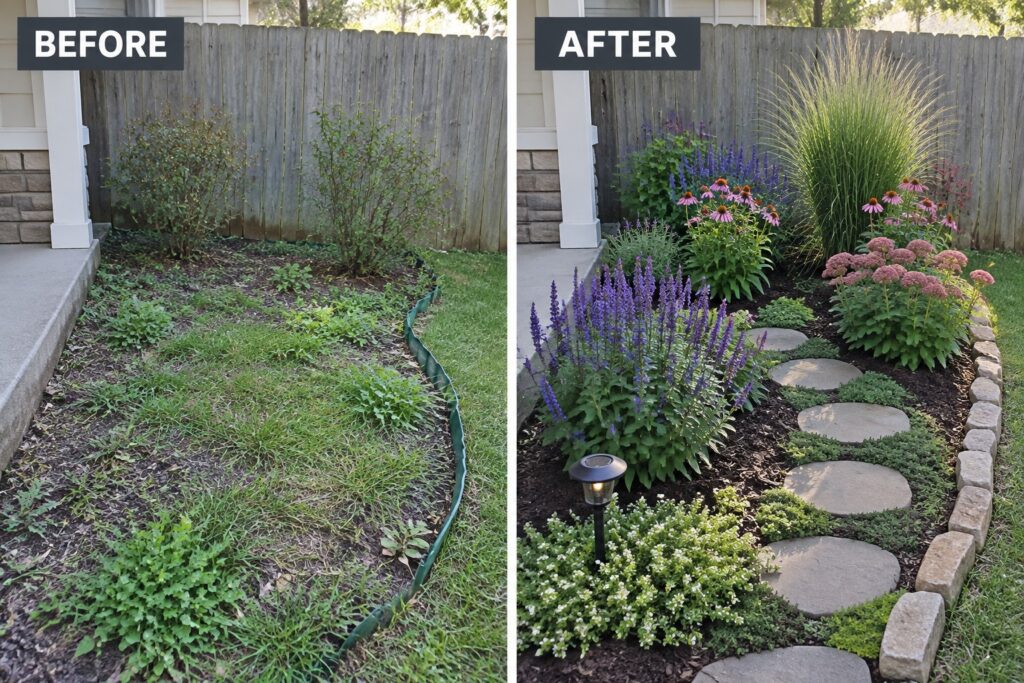
I often find that small gardens improve most when the focus stays on basic structure rather than adding more plants at random.
A good cleanup paired with clear pathways tends to open up the space without any extra room.
I would probably try reshaping the lawn edges first if I were working on one myself.
Planting in layers then helps the area feel settled instead of scattered.
Seeing those adjustments in real yards shows how much difference the details can make over time.
Add Structure To An Overgrown Backyard
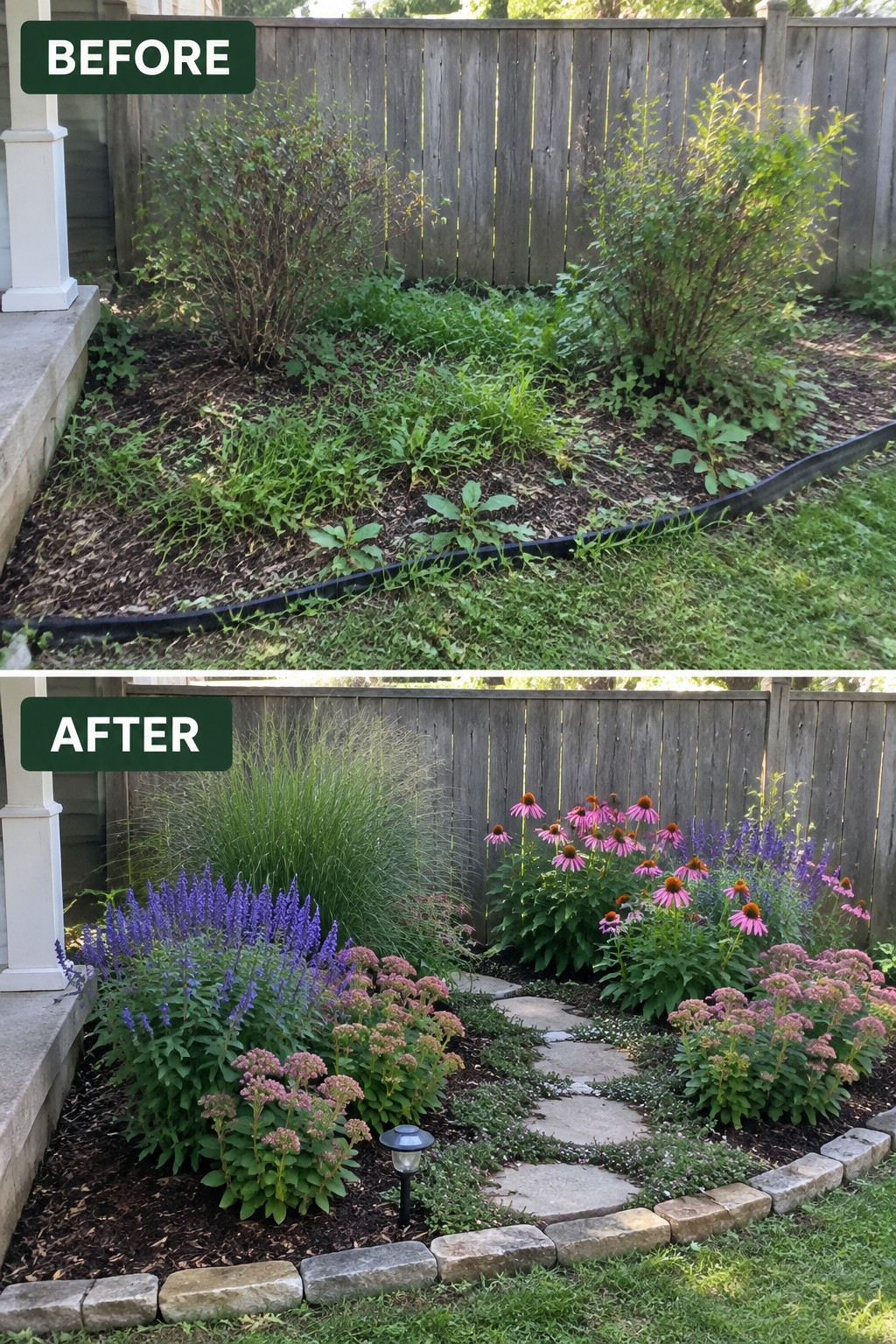
The main change here is clearing the weeds and messy growth first, then laying down mulch and stone edging to create clean, separate beds. That simple step turns a jumbled patch into something that feels intentional and much larger than it is.
This idea works well in small yards where you cannot expand outward. Start with the cleanup, add a basic path if space allows, and keep the beds modest so the plants have room to fill in without crowding the walkway.
Turn An Empty Patio Into A Seating Area
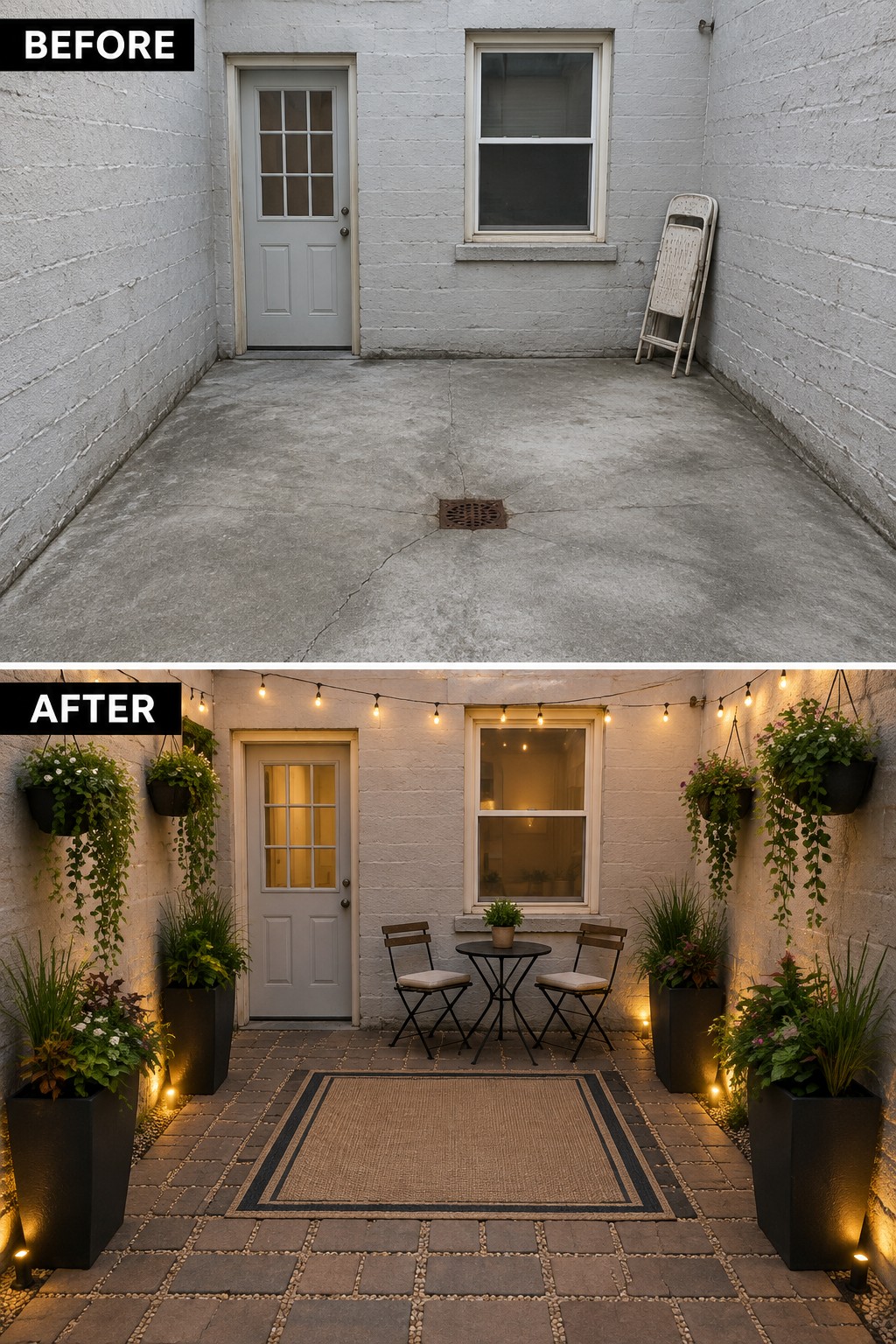
The main shift here is giving the space a purpose instead of leaving it as bare concrete. Adding a small table and chairs, a rug to mark the zone, and string lights overhead makes the area feel like an actual room you can use rather than just a walkway between the door and the wall.
This idea suits small side yards or back courtyards where you cannot expand outward. Keep the furniture compact so there is still room to move around the table. Use string lights or low path lights to make the space feel safe and inviting in the evening, and rely on pots rather than in-ground beds if you want to keep the floor clear.
Add Raised Beds To Give A Small Yard Clear Structure

A patchy lawn often makes a small backyard feel messy and unfinished. Adding a pair of raised wooden beds along the fence line instantly creates planting zones, keeps the middle open for grass or ground cover, and gives the whole space a tidy frame without crowding it.
This approach works especially well in narrow or rectangular yards where you need order but still want room to walk and mow. Keep the beds simple, line them with the same material if possible, and plant them with a mix of herbs and shrubs so they stay useful and low-maintenance. Start with the beds and path before adding anything else.
Add Structure To An Overgrown Side Path
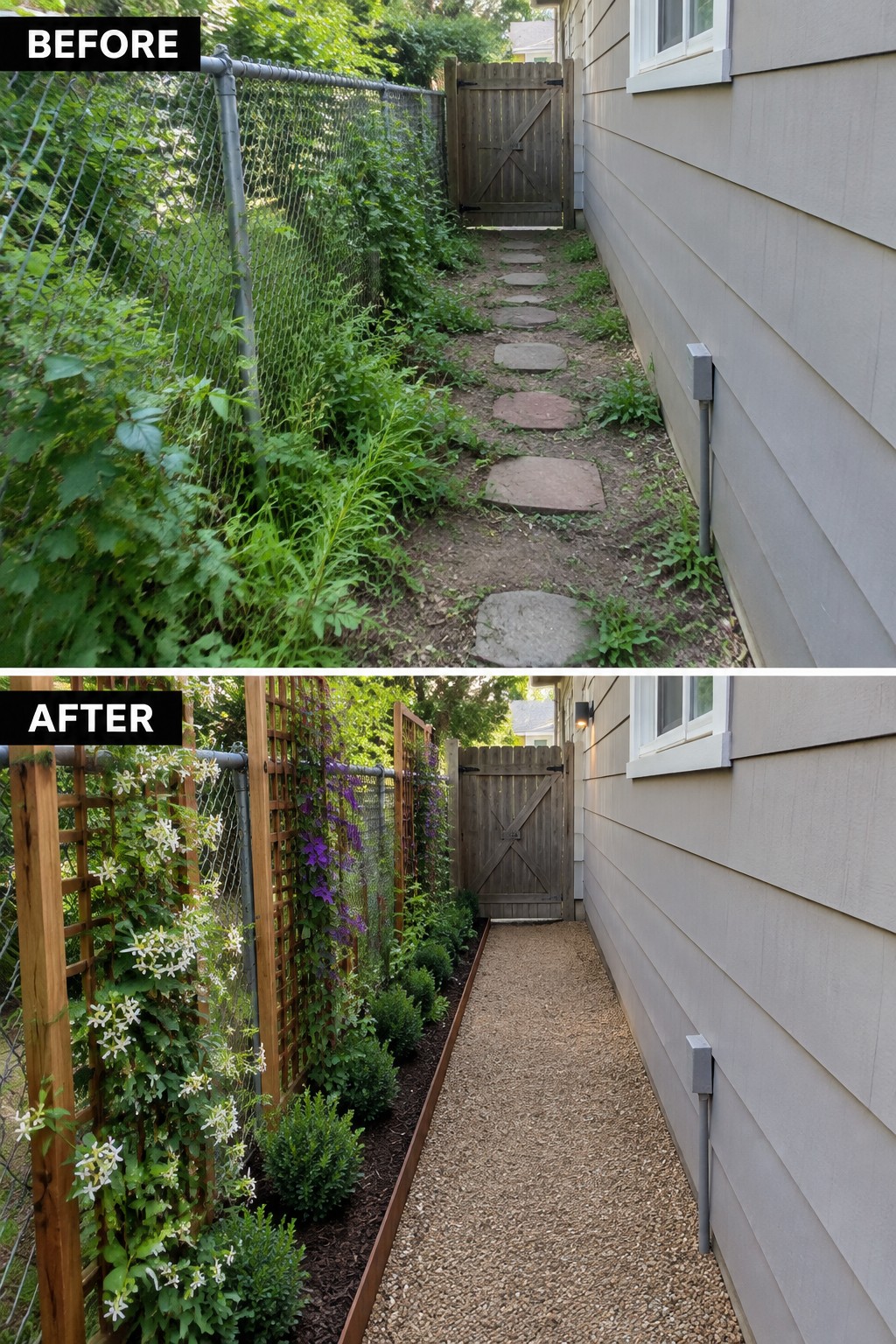
The main change here is turning a weedy dirt strip into a defined walkway. Simple metal edging keeps the gravel in place and gives the beds a clean border, while the wooden trellises add height and support for climbing plants without eating into the narrow space.
This approach suits any tight side yard where the ground feels messy and unused. Start with edging and a gravel base before adding plants, and keep the beds narrow so the path stays comfortable to walk through.
Turn An Empty Patio Into A Seating Area
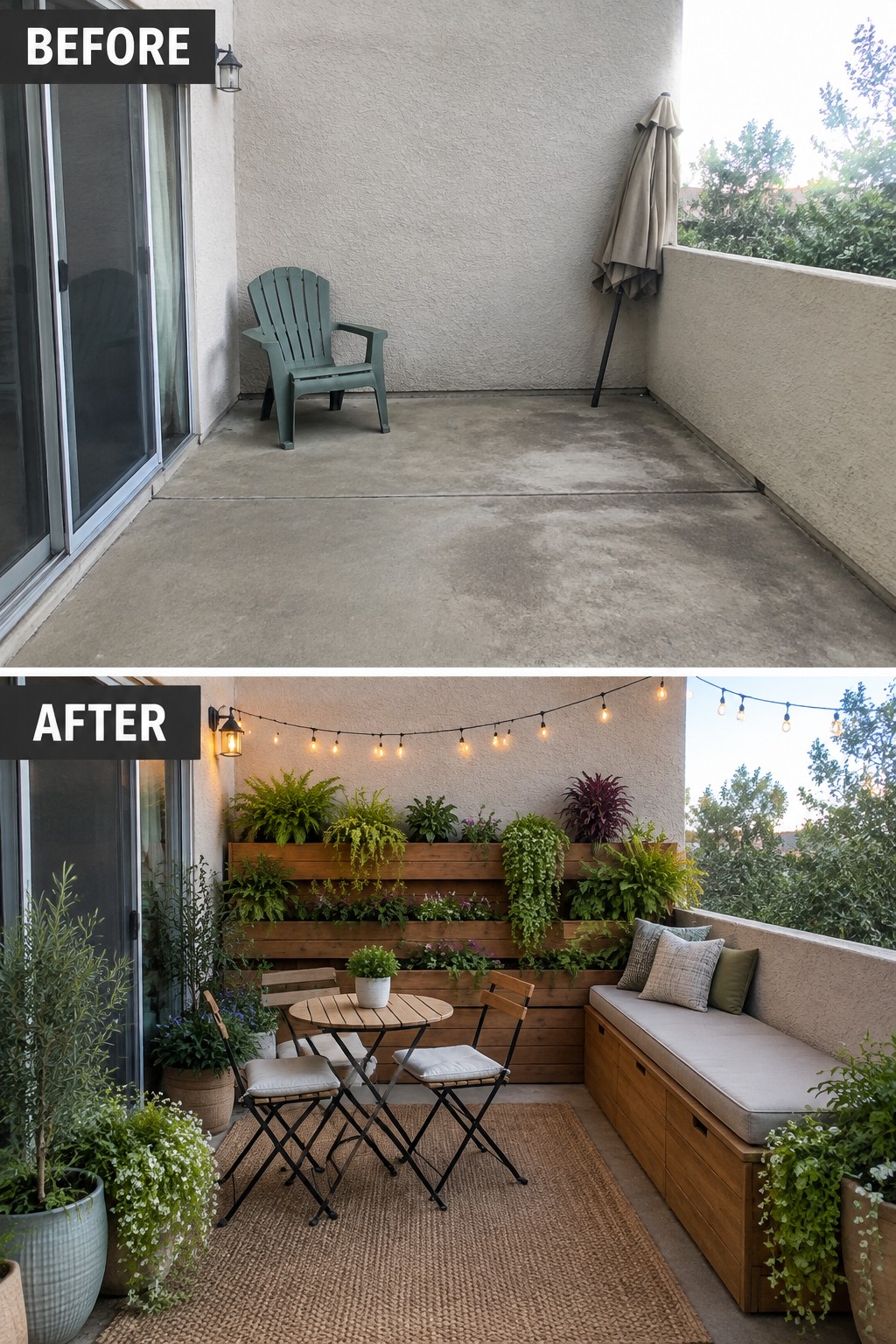
A bare concrete patio usually sits unused because it lacks any sense of purpose. Adding a rug to mark the seating zone, a compact table and chairs, and string lights overhead gives the space a clear reason to spend time there, especially once the sun goes down.
This idea suits small balconies and patios where you want to create a usable spot without major construction. Start with the rug to anchor the furniture, keep the scale realistic so movement stays easy, and choose lights that actually get used in the evening rather than just for looks.
Use Wall Planters To Green Up A Plain Fence

A bare fence next to bare dirt often leaves a small yard feeling flat and unfinished. Mounting rows of planters right on the fence adds plants without using any ground space. The mix of succulents and trailing vines softens the wood and turns the fence into the main feature.
This idea works best along side yards or against the house where you cannot dig beds. Mount the planters first, then choose plants that handle your light and water conditions. Keep the ground simple with mulch and a few pavers so the area stays easy to walk through.
Add Structure To An Overgrown Backyard

A bare dirt slope covered in weeds offers little usable space. Building a few raised wooden beds with stone accents turns the same area into something that can actually be planted and maintained without constant weeding or erosion issues.
This idea works best on small or sloped yards where open soil quickly becomes a problem. Keep the beds simple, use gravel or pavers to finish the edges, and leave enough room to walk around them. The result feels intentional even when the rest of the yard stays basic.
Add Structure To A Small Gravel Backyard
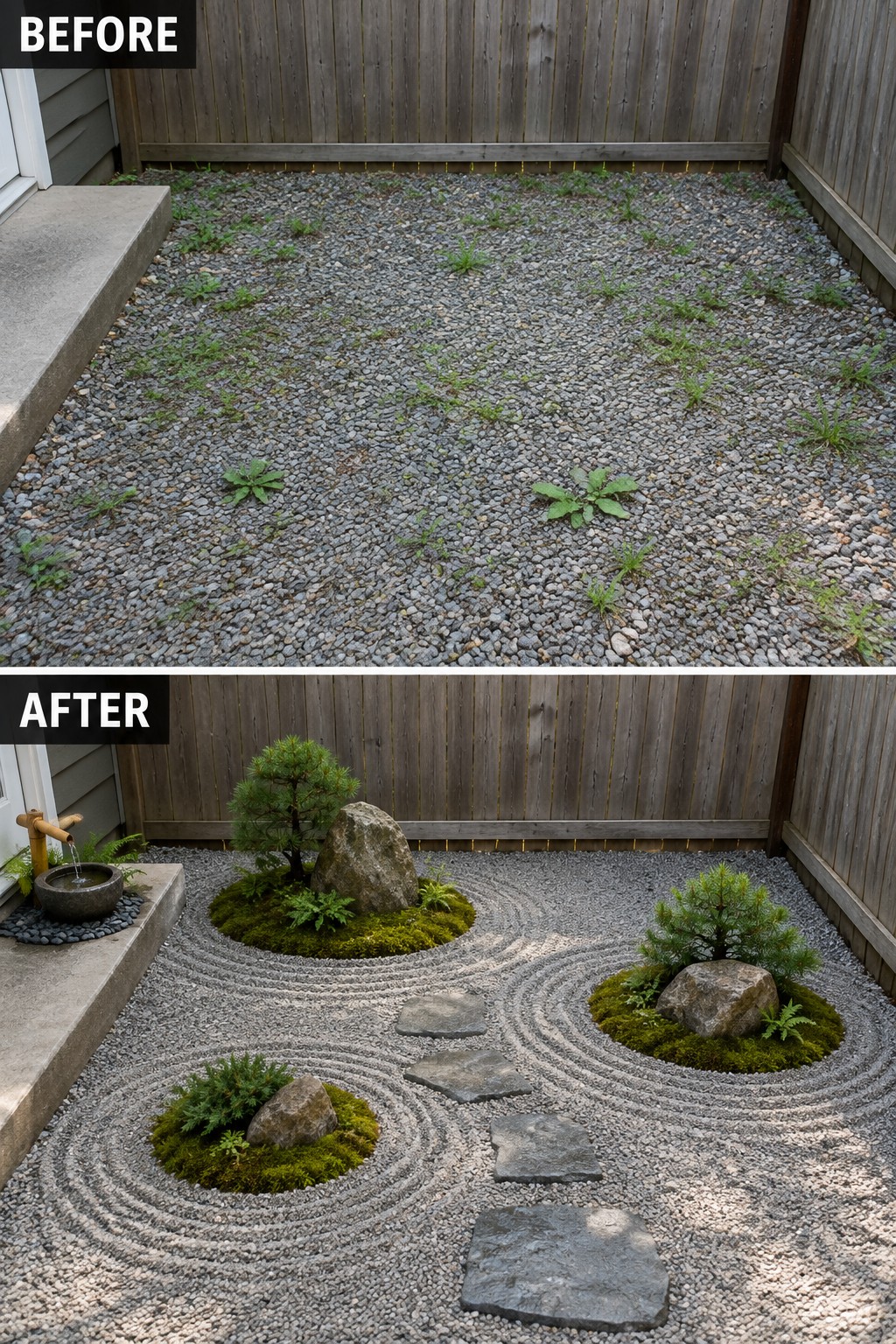
A bare gravel yard often feels unfinished because there is nothing to break up the flat surface or guide the eye. In this case the owners created a few planted islands with moss, small trees, and rocks, then raked the surrounding gravel into gentle curves and laid down a simple line of stepping stones. Those two changes alone turned an empty lot into a garden that feels planned rather than leftover.
The same approach works in any small yard where you want calm without crowding the space. Clear the weeds first, group plants into two or three mounds rather than scattering them, and let the gravel act as the main surface. Keep paths narrow and practical so the garden still feels open. This method suits townhouses or narrow lots where you need order but do not have room for large beds or heavy furniture.
Add Structure To An Overgrown Front Yard
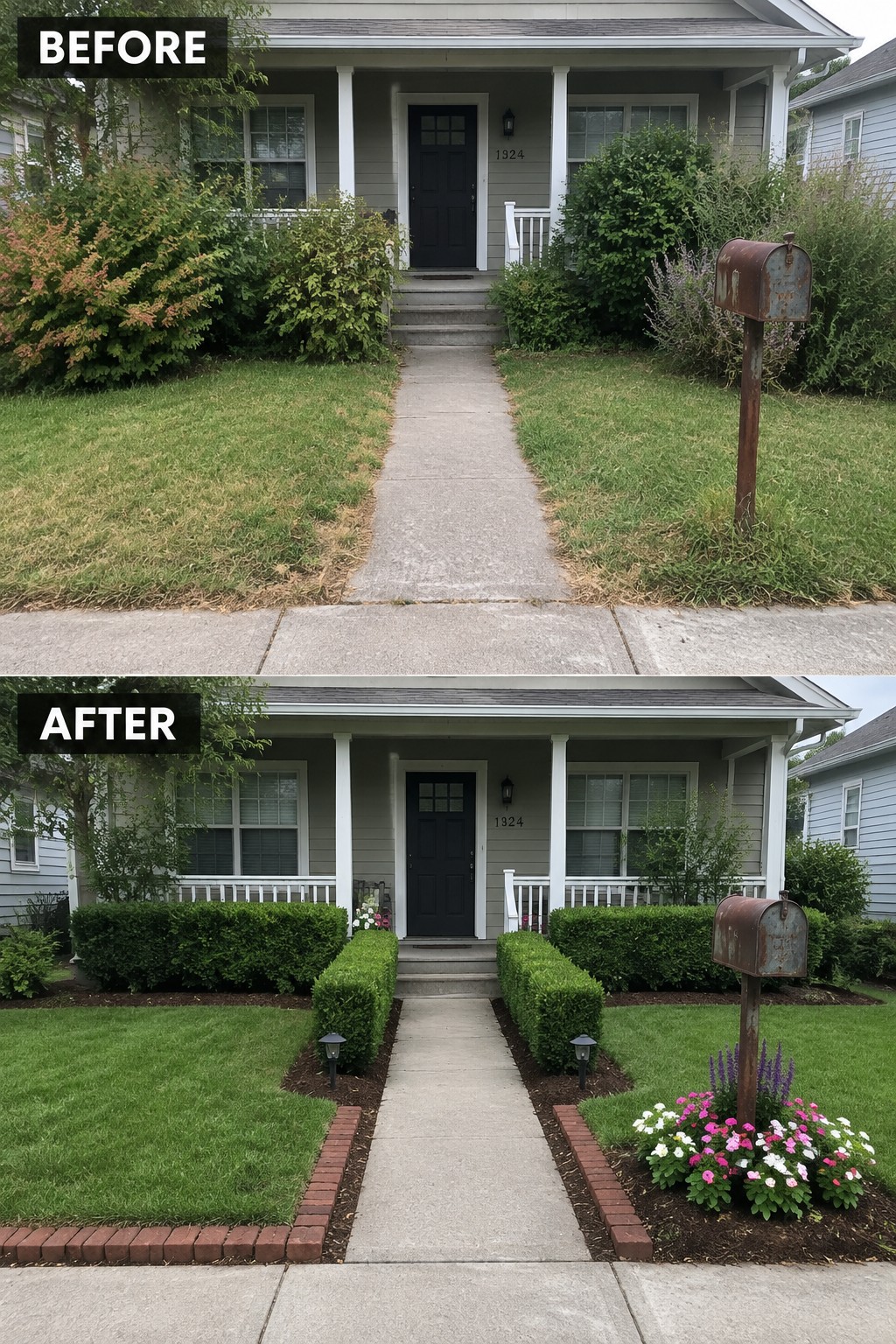
The front yard had grown wild with uneven bushes crowding the path and no clear shape to the beds. Adding brick edging along the walkway and planting neat rows of low hedges gave the space clean lines and made the entry feel more intentional.
This approach works well on small front yards where the goal is to improve curb appeal without expanding anything. Focus first on trimming back the largest plants, then use simple edging to mark the beds. Keep the planting low and repeat the same materials so the yard stays easy to maintain.
Turn A Weathered Deck Into A Simple Seating Area
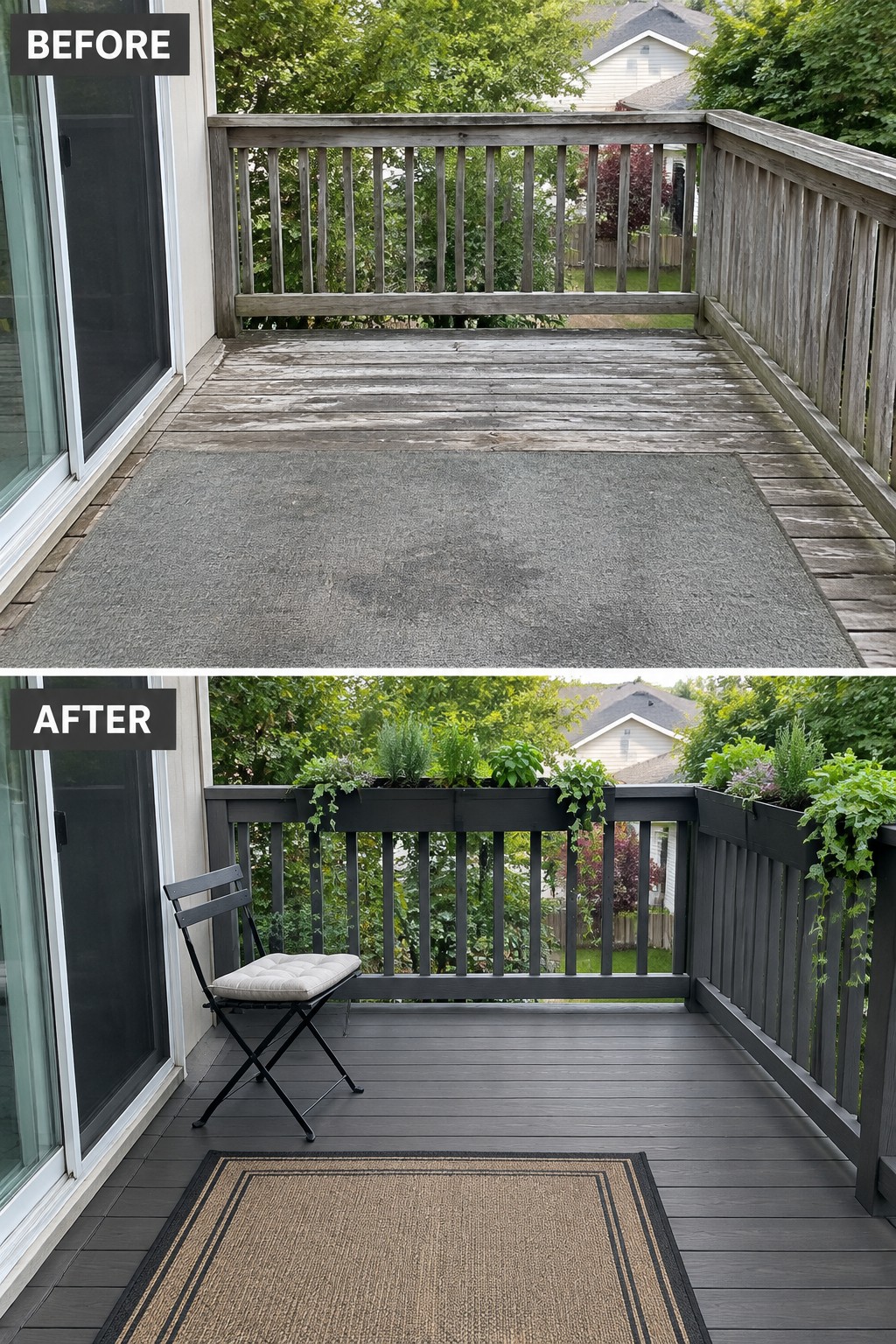
A tired wooden deck often sits unused because it feels unfinished and exposed. Painting the boards a dark color and adding planter boxes along the railing gives the space a clear purpose. The new surface feels intentional, while the planters bring greenery at eye level without taking up floor space.
This approach works well on small decks or balconies where you want seating without crowding the floor. Start with a good cleaning and solid stain or paint that can handle weather, then add one or two weatherproof chairs. Keep the rest of the area open so people can move around easily.
Turn A Bare Balcony Into A Usable Outdoor Room
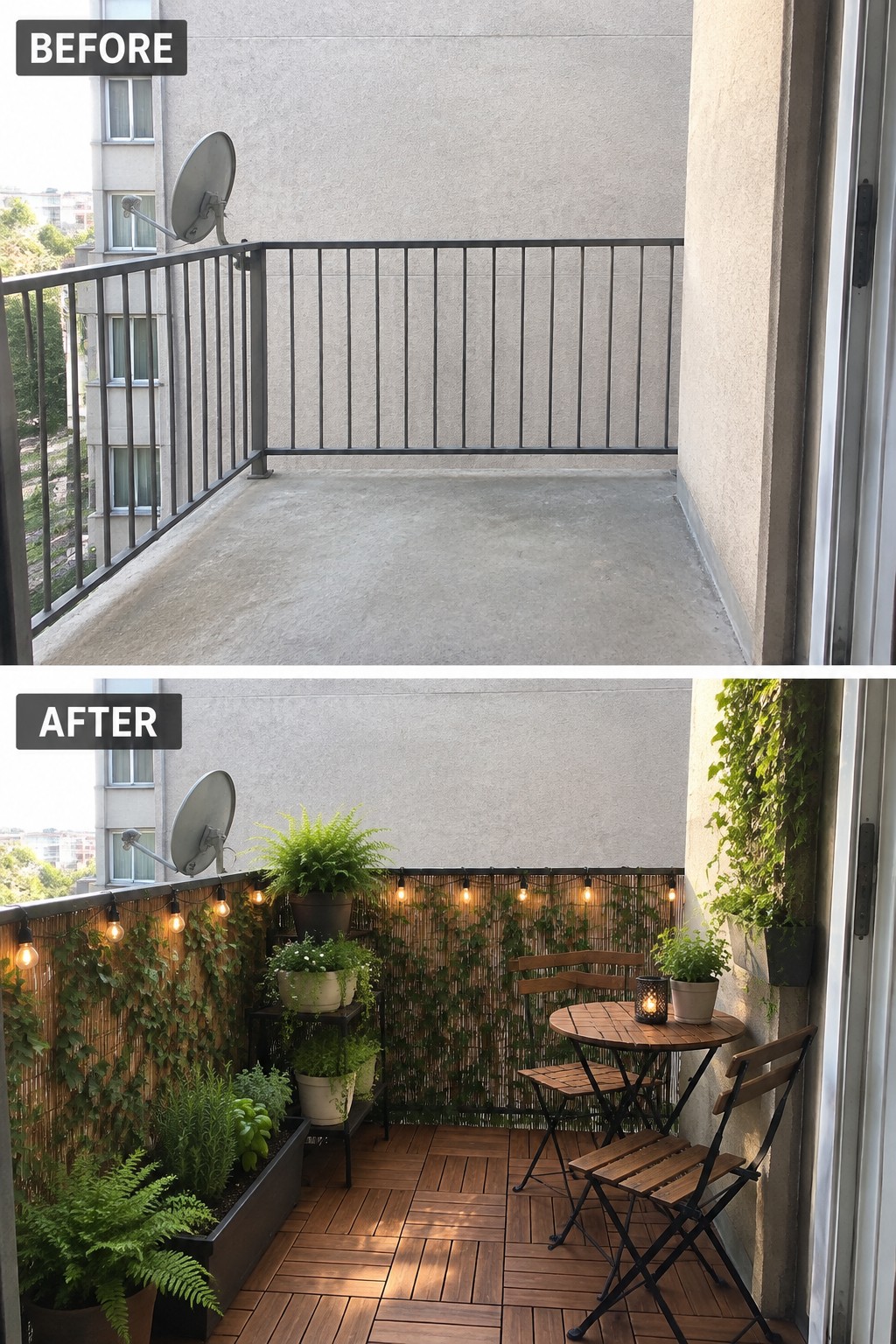
A balcony with nothing but concrete usually stays empty because it feels unfinished. Laying down deck tiles creates an actual floor, which immediately makes the space feel like a room instead of a leftover ledge. Adding string lights and a few larger plants then softens the edges and gives the area a purpose.
This idea works best on small urban balconies where every square foot counts. Start with the flooring to define the sitting zone, then bring in simple weatherproof furniture and lights so the space can be used after dark. Keep the layout open enough to walk through and choose plants that can handle the conditions without constant fuss.
Give A Small Front Bed Clear Structure
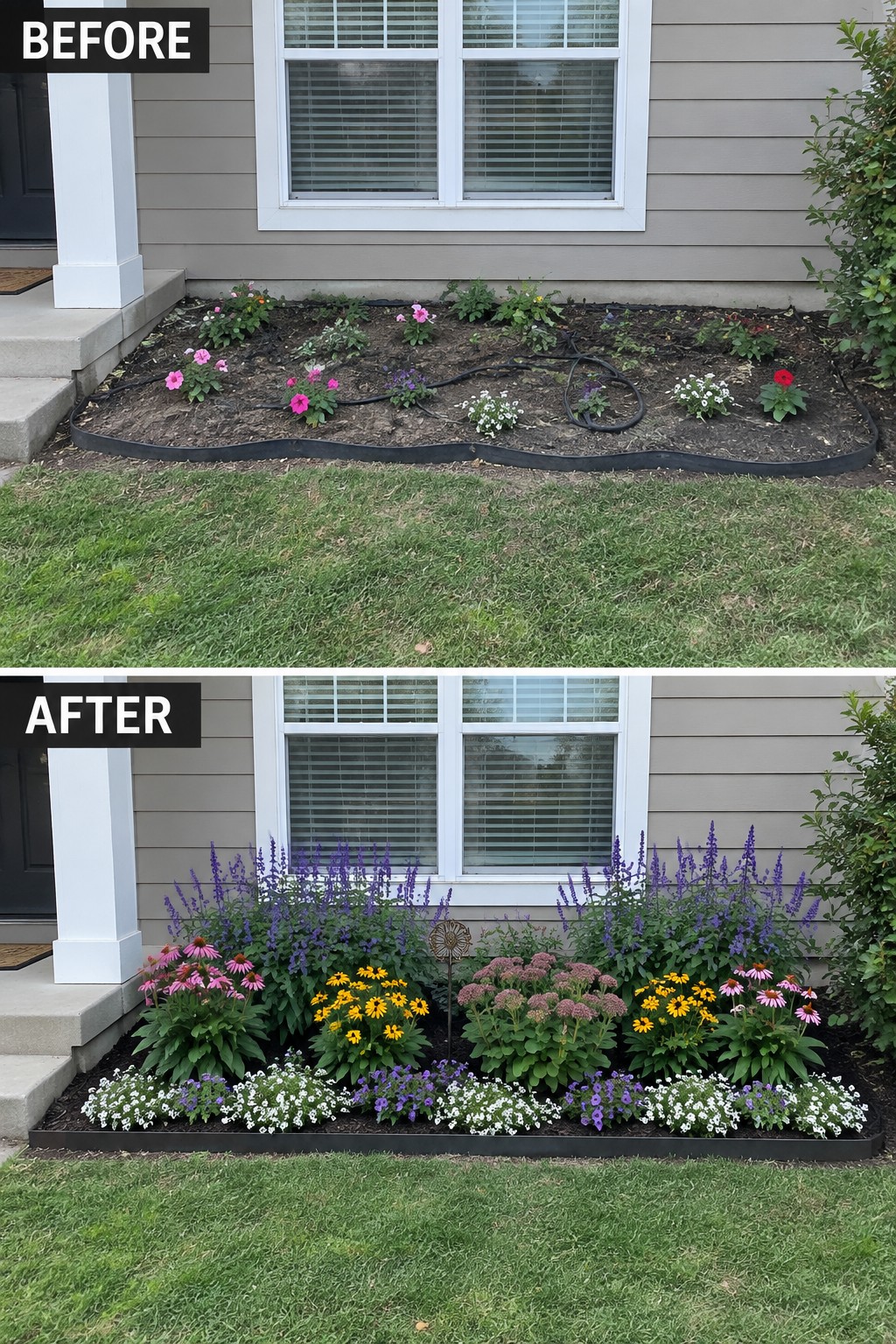
The main improvement comes from adding a clean metal edge and filling the bed with plants arranged in layers. The before version looked scattered with visible hoses and uneven growth, while the after version shows a neat border that reads as intentional. The edging keeps the lawn from creeping in and the layered planting adds height and color without making the narrow space feel crowded.
This approach works well along house foundations where beds are often thin. Install a simple metal or stone edge first, then place taller plants at the back, medium height ones in the middle, and low growers along the front. It turns a neglected strip into something that feels planned and makes weeding and watering easier over time.
Turn Gravel Into A Usable Outdoor Seating Area

A small gravel backyard often stays unused because nothing defines where to sit or gather. Laying a circular paver patio and adding a curved bench around a fire pit gives the space a clear purpose and makes it feel like an actual room instead of leftover ground.
This approach works well in narrow side yards or corner lots where space is tight. Start with the hardscaping to set the boundary, then add seating and lighting that matches the scale of the area. Keep the rest of the gravel simple so the patio stays the main feature and movement around it stays easy.
Define A Narrow Border With Simple Planting
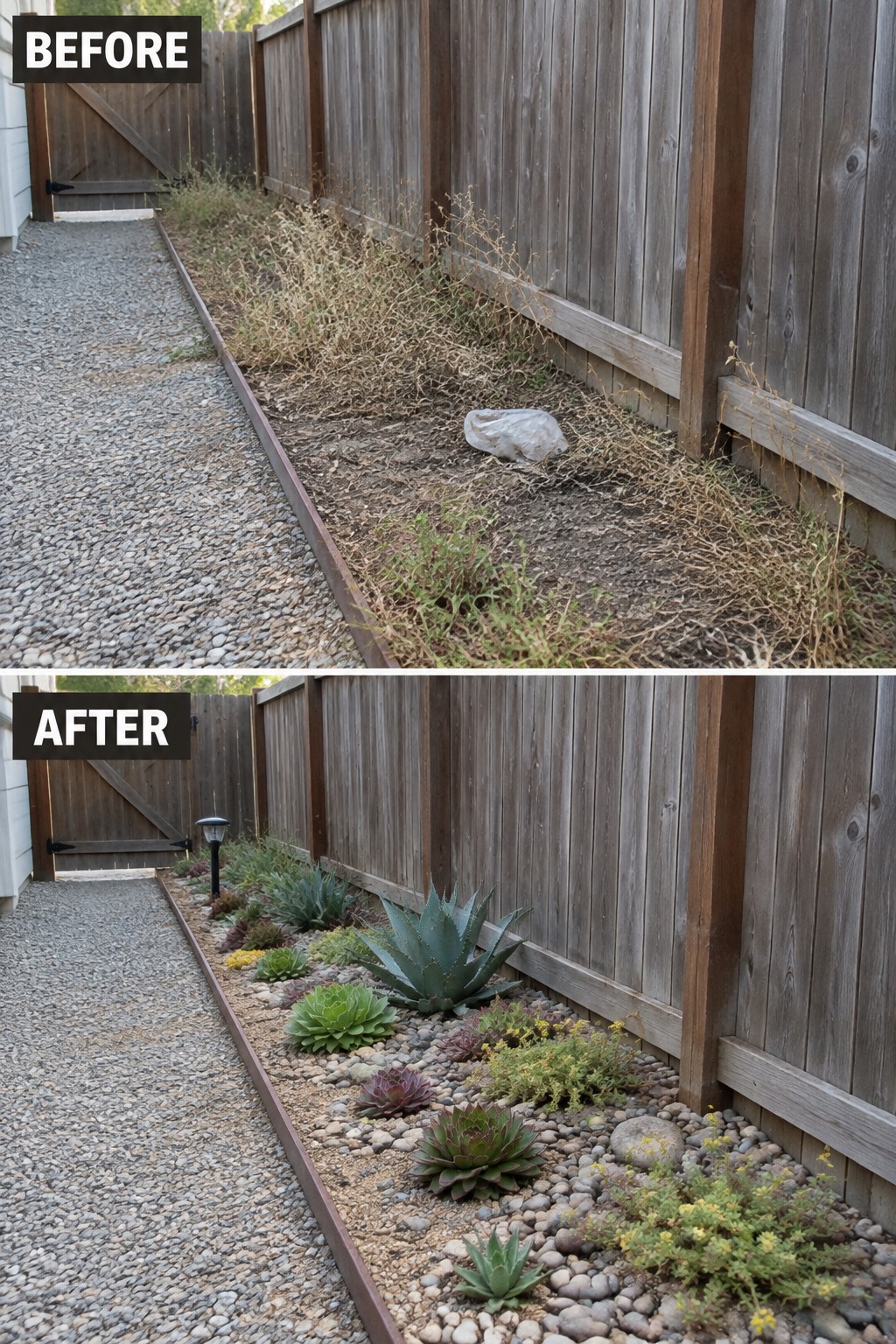
Clearing the weeds first makes the biggest difference here. Once the overgrowth is gone, a low edge of river rock and a handful of succulents turn the same narrow strip into something that looks planned instead of forgotten.
This works best along paths or fence lines where space is tight. Keep the plant list short, use the same rock or mulch throughout, and leave enough room for the path to stay usable. The result feels tidy without crowding the walkway.
Add Structure To An Overgrown Backyard
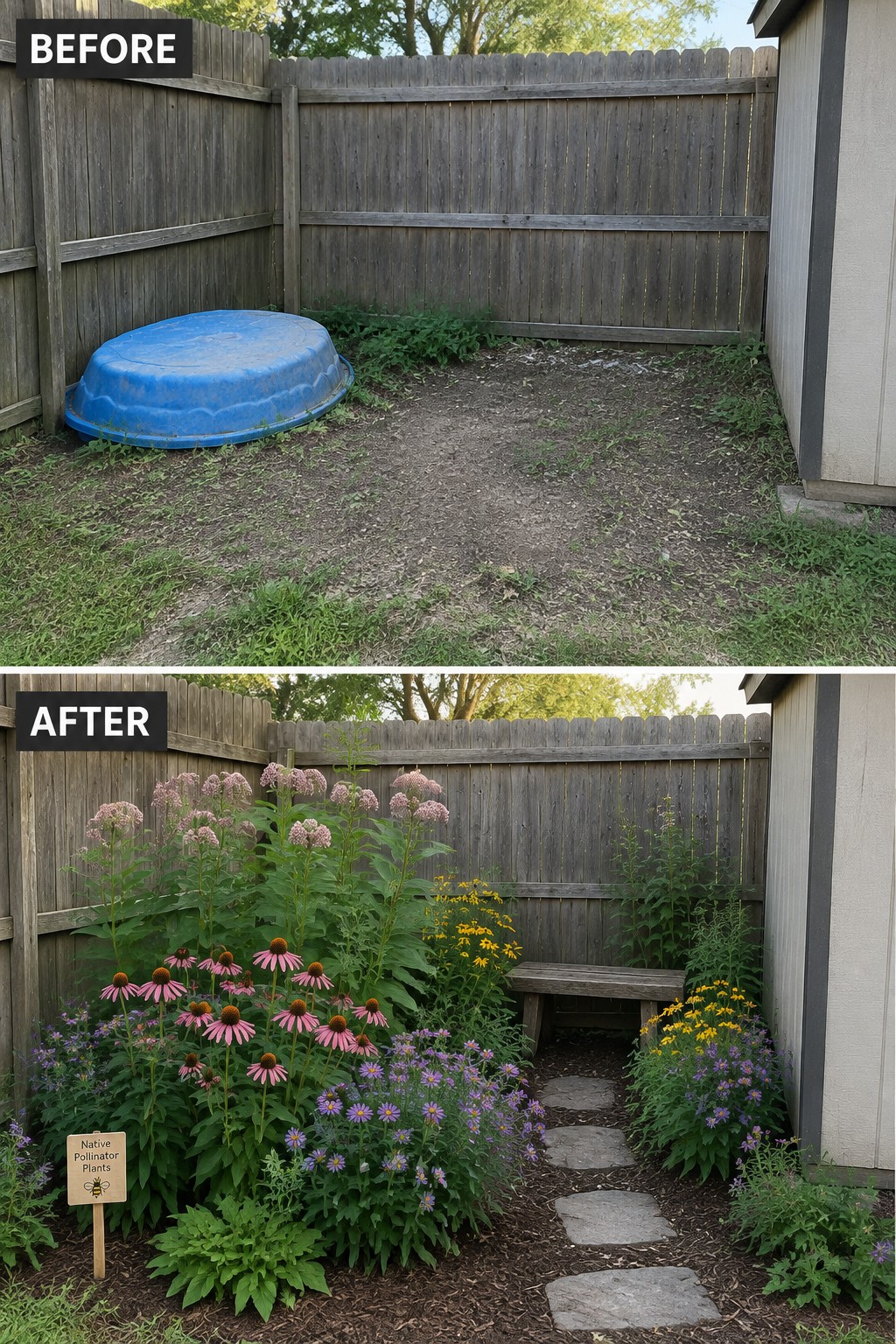
A neglected backyard corner often stays unused because it lacks any clear layout. Adding defined beds, a simple path, and mulch turns the same space into something that feels planned and easy to walk through. The bare dirt and scattered weeds gave way to bordered planting areas and a stone path that leads visitors in and gives the eye something to follow.
This idea works best in small yards where every square foot counts. Clear the overgrowth first, then set the beds and path before adding plants. Native pollinators do well here since they need less care once established, and the path keeps foot traffic off the soil. Keep the layout simple so the space still feels open rather than crowded.
Add Edging To Define A Narrow Bed

A narrow strip along the house often ends up as a messy mix of rocks and weeds because nothing holds the space together. Adding a low stone edge gives the bed a clear shape, which makes it easier to plant and keep clean. The after shows how a simple border turns that same strip into an actual garden instead of leftover ground.
This idea works best on small or awkward areas where you do not have much width to work with. Start with the edging first, then fill in with a few layers of plants at different heights. It keeps the bed from spilling onto the walkway and makes the whole side of the house look more finished without needing extra space.
Give A Bare Entry A Clear Purpose

A plain concrete stoop with one tired pot can make the whole front of a house feel unfinished. In this case the fix was straightforward. A fresh teal door, two matching planters filled with bright flowers, a simple welcome mat, and new stone steps turned the entry into a spot that actually looks intentional.
This approach works well on small front entries where there is no room for big furniture. Pick one main color for the door and planters so the changes feel connected, then keep the planting simple and seasonal. The goal is to define the space without crowding the walkway or blocking light into the house.
Fix A Soggy Corner With Gravel And Drainage
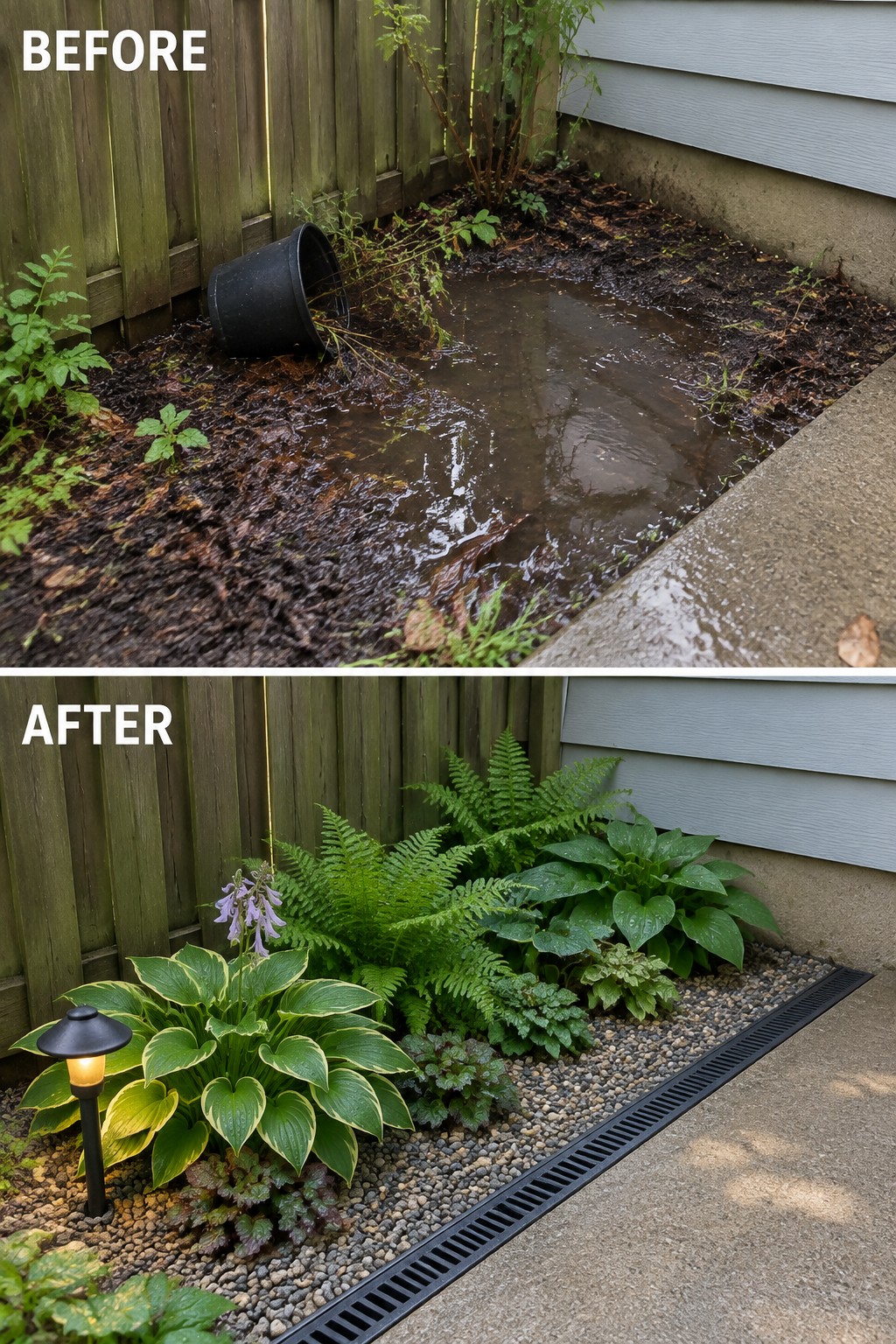
A muddy, waterlogged strip next to the house can stay a constant problem until you deal with the water first. Adding a drainage channel and laying gravel over the soil gave the area a firm base so plants could settle in without drowning or turning the ground into a mess every time it rained.
This works best in narrow spaces along foundations where runoff collects. Sort the drainage before you plant, then keep the bed simple with gravel and a few reliable varieties that handle the conditions. It keeps the area looking tidy without needing constant weeding or fighting wet soil.
Add Defined Garden Beds To A Plain Front Yard

A plain strip of grass can look unfinished when it runs right up to the house and sidewalk. Laying out a simple rectangle of pavers with gravel between them creates clear edges and turns the same small space into a planted garden that feels intentional. The change keeps the front yard open while giving it shape and a place for low shrubs and flowers.
This idea works best on narrow front lawns where you want more structure without crowding the walkway. Mark a straight rectangle first, add edging, then fill with gravel before planting. It keeps grass from creeping in and makes the bed easier to maintain over time.
Refresh A Tired Planting Bed With Seasonal Blooms

A dead shrub in a concrete bed next to the steps made the entry look neglected. Clearing it out and filling the same space with layered spring flowers and foliage plants gave the area color and shape without changing the footprint or adding new hardscaping.
This approach works best in small front beds or narrow spots beside stairs where you want quick impact. Choose a mix of heights and bloom times, keep the edging clean, and let the plants do the work rather than adding extra decor.
Turn Bare Ground Into A Defined Seating Area
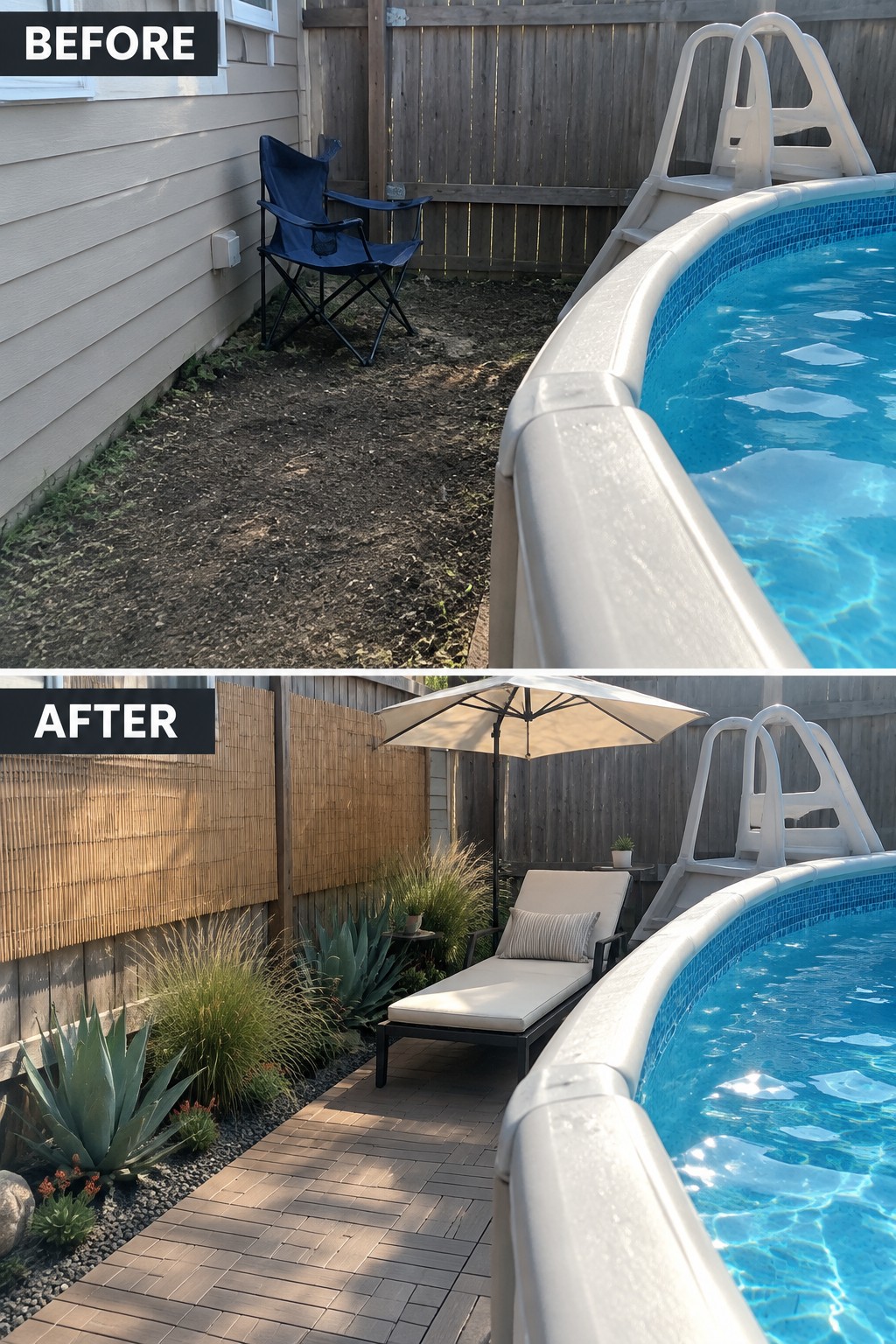
The before photo shows a strip of dirt right beside the pool with nothing but one folding chair. Adding pavers created a flat, usable surface, and a single lounge chair plus umbrella gave the spot a clear purpose. The bamboo screen and a few plants finished the edges without crowding the space.
This approach works well in any narrow side yard or pool edge that feels like leftover land. Start with the hard surface so furniture can sit level, then keep the rest simple. One solid chair and shade source is often enough when the area is small.
Define A Narrow Path With Gravel And Stepping Stones

An overgrown path quickly starts to feel like wasted space, especially in a narrow side yard. Clearing the weeds and adding gravel with stepping stones gives the walkway a clear shape and makes the whole area look intentional instead of neglected. The gravel keeps the edges tidy and stops plants from creeping back onto the path too quickly.
This approach works well in tight spaces between fences or along the side of a house where you still need access. Start with a thorough cleanup, then lay down a simple gravel base before placing the stepping stones. It keeps the path usable in all seasons and leaves room for low plants along the sides without crowding the walkway.
Add Structure To A Small Backyard
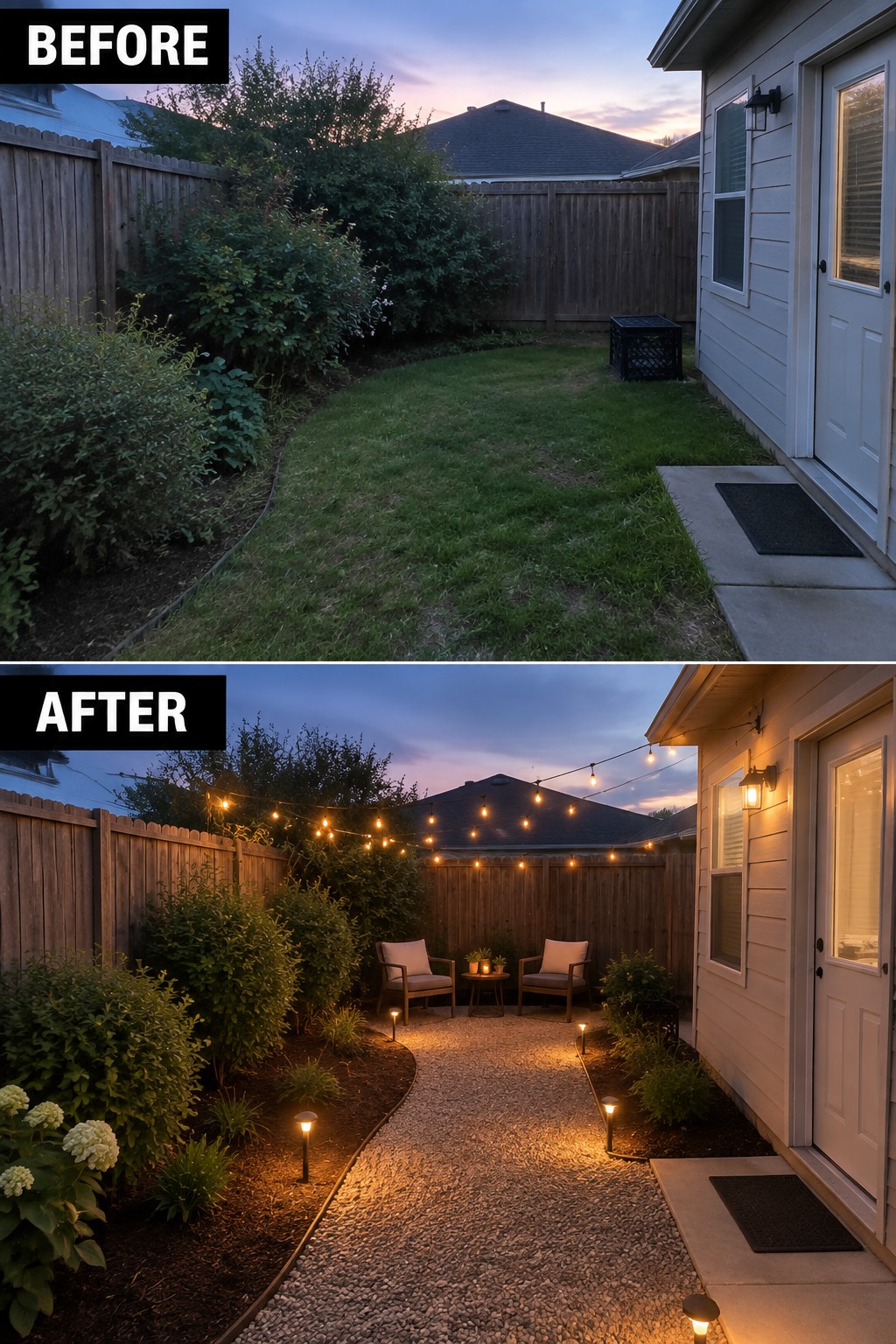
A plain lawn often feels like wasted space because there is no clear way to use it. Adding a gravel path and bordered beds gives the yard shape right away. The before photo shows mostly open grass with a few shrubs along the edges. In the after photo, a curving gravel path leads through the space while mulched beds hold the planting on both sides. That simple change turns the yard into something you can actually walk through and enjoy.
This approach works best in small yards where you need to fit seating without crowding the area. Start by laying out the path and beds before you add chairs or lights. Keep the beds a consistent width so the gravel stays the main walkway. Once the structure is in place, you can add seating and lighting without the space feeling scattered.
Frequently Asked Questions
Q: How do I pick plants that stay in scale for a tiny yard? A: Measure your beds first and note sun patterns throughout the day. Pick compact varieties that match those conditions instead of anything that spreads fast. This prevents overcrowding later and keeps the whole space feeling open.
Q: What works best for adding a seat without losing floor room? A: Build a narrow bench against one wall or tuck a single stool into a corner. It gives you a spot to rest while the surrounding plants draw attention outward. Keep the seat low so it blends with the greenery.
Q: How do I handle poor drainage after a makeover like these? A: Mix in plenty of compost when you refresh the beds. Raise the planting areas slightly with simple edging to let water flow away from roots. Check the spots after a rain and adjust soil levels as needed.
Q: How do I hide an ugly fence without building anything new? A: Train climbing vines along it using simple ties. The greenery softens the view and makes the garden feel enclosed yet larger.
