


I have noticed that courtyard gardens often stay underused when the layout stays flat and there is little planting structure to guide the eye.
Working out a basic shape with a path or two tends to make the rest of the space feel more settled over time.
I usually test simple edging and a few repeated plants before adding anything else because those steps seem to matter more than filling every corner at once.
Small adjustments build from there.
Several of the ideas here strike me as worth trying in stages rather than all at once.
Turn Bare Concrete Into A Defined Outdoor Seating Area

An empty concrete courtyard often feels like leftover space until you add a paved surface and a clear spot for sitting. Switching to brick pavers gives the area structure right away and makes it feel like an actual room instead of just a slab.
Choose one corner or side for seating, keep the table and chairs to scale, and line the back wall with a few raised planters. This layout works well in small side yards or townhouse courtyards where you need the space to stay open but still usable.
Add Structure To A Narrow Side Yard

A narrow strip beside the house often fills with weeds because it is awkward to mow and easy to overlook. Replacing the patchy grass with gravel and a line of stepping stones gives the space a clear path while the long concrete planters keep the plants tidy and contained.
This idea suits small side passages or courtyard edges where you still need to walk through. Use low-water plants in the planters and keep the gravel layer thick enough to block weeds. The result feels planned without crowding the walkway.
Turn A Blank Wall Into A Vertical Garden

A bare courtyard wall often leaves the space feeling flat, especially when the floor is already taken up by doors and paving. Adding a vertical garden fills that wall with plants in a simple grid, bringing in greenery without crowding the ground.
This idea works best in small enclosed spaces where horizontal room is limited. Use a modular pocket system or panels that attach directly to the wall, mix ferns with broader leaves for texture, and water regularly since the plants sit in individual pockets. Keep the layout even so the wall does not look patchy once the plants fill in.
Turn A Narrow Courtyard Into A Seating Area
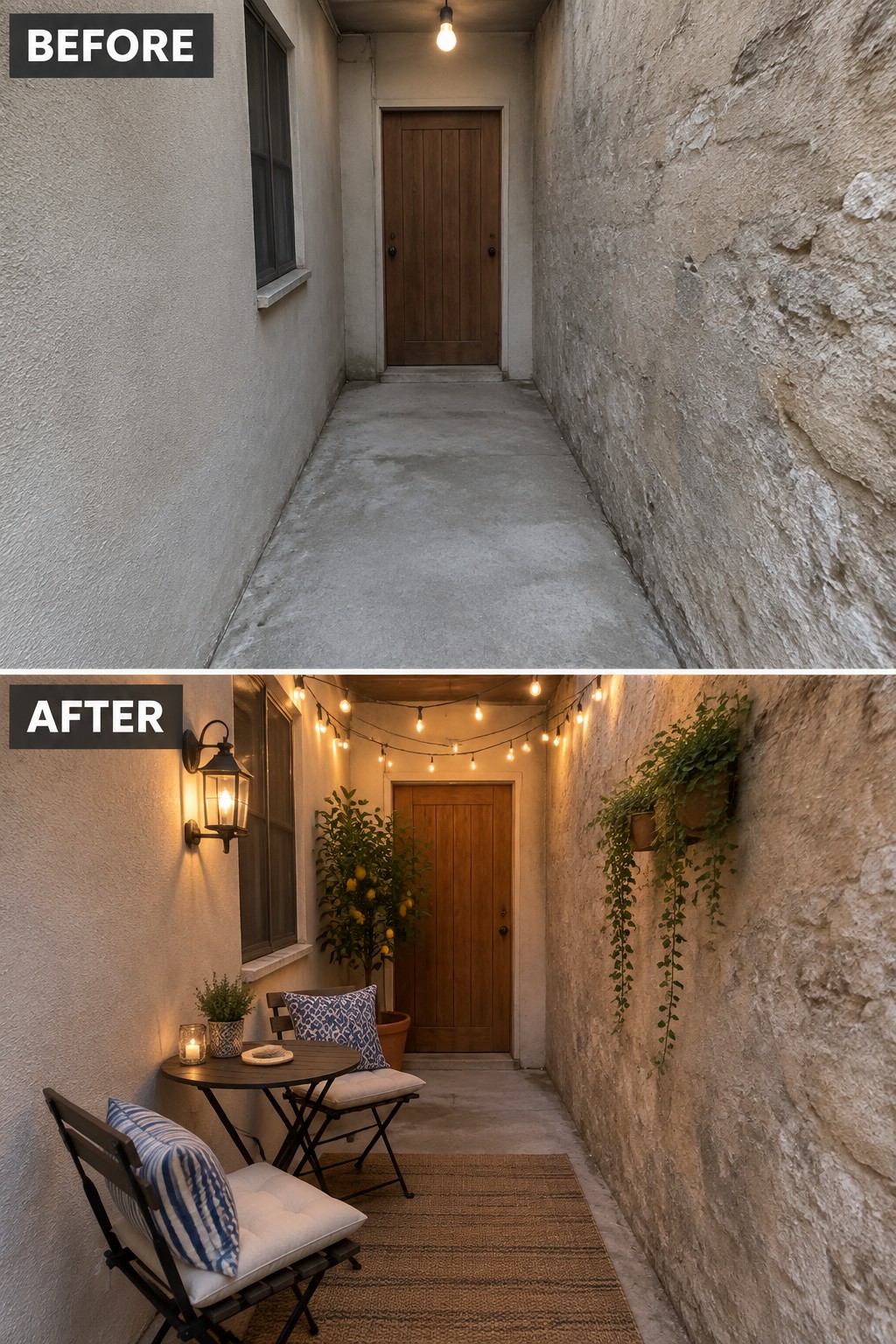
A bare concrete walkway between walls rarely gets used because it feels like just a path. Adding a small table, a couple of chairs, a rug, and string lights changes the feel so the space becomes somewhere you can sit instead of just pass through.
This idea works best in tight side yards or passages where you want a spot to relax without major construction. Keep the furniture compact and leave enough room to walk by. Focus on one or two seating pieces and simple overhead lights rather than trying to fill every wall.
Define A Small Courtyard With A Bench And Rug
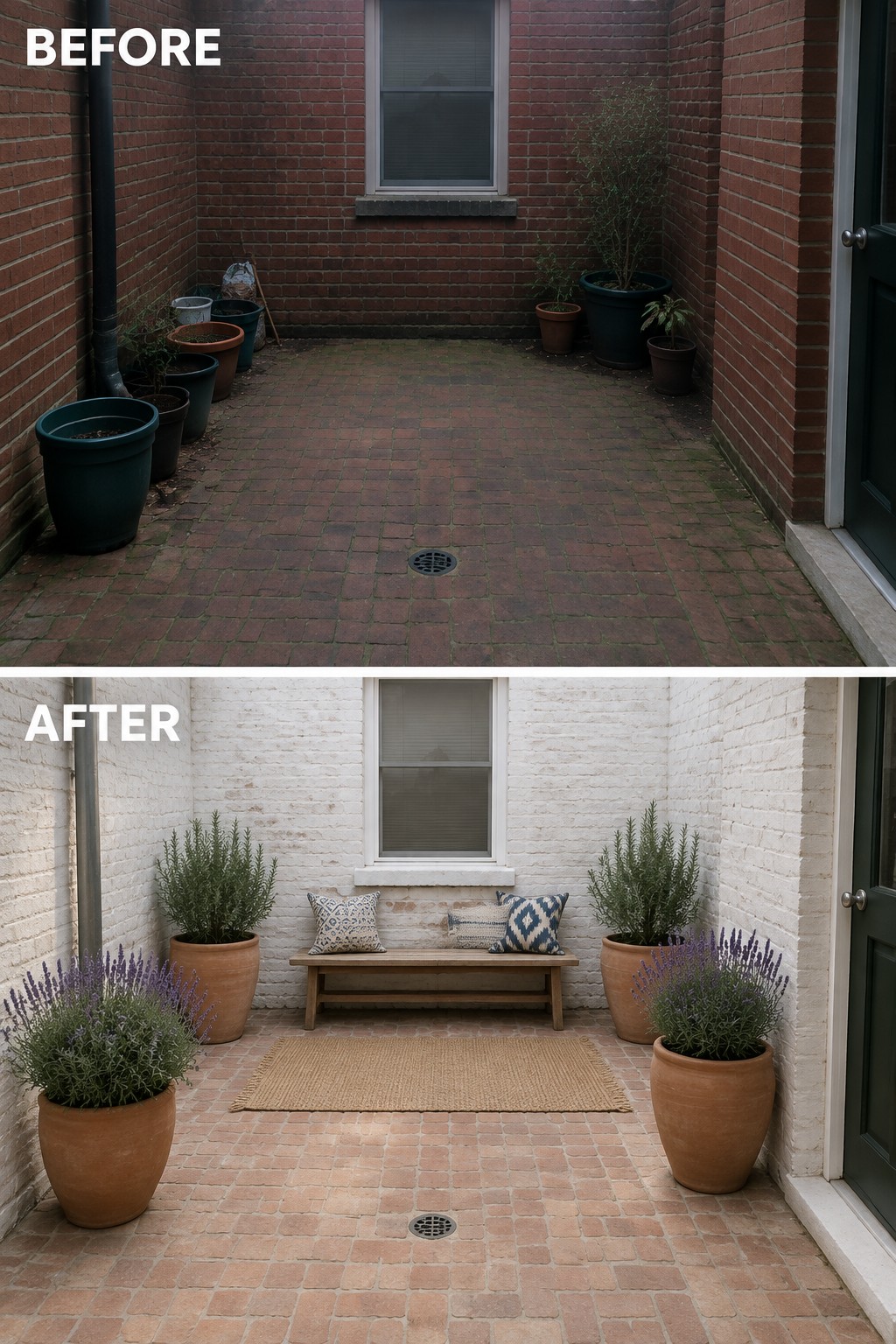
A bare courtyard often feels like wasted space until you give it one clear purpose. In this case, clearing the scattered pots and adding a simple bench with a rug underneath turned the area into a place people would actually sit. The bench creates a focal point against the back wall while the rug softens the brick and marks the seating zone without crowding the small floor.
This approach works well in narrow or shaded courtyards where big furniture would feel cramped. Keep the bench modest in scale, choose weatherproof cushions, and repeat the same pot style on both sides so the space feels balanced. Start with the seating and rug first, then add just enough plants to frame the area rather than fill every corner.
Add Raised Planters To Give A Small Courtyard Structure
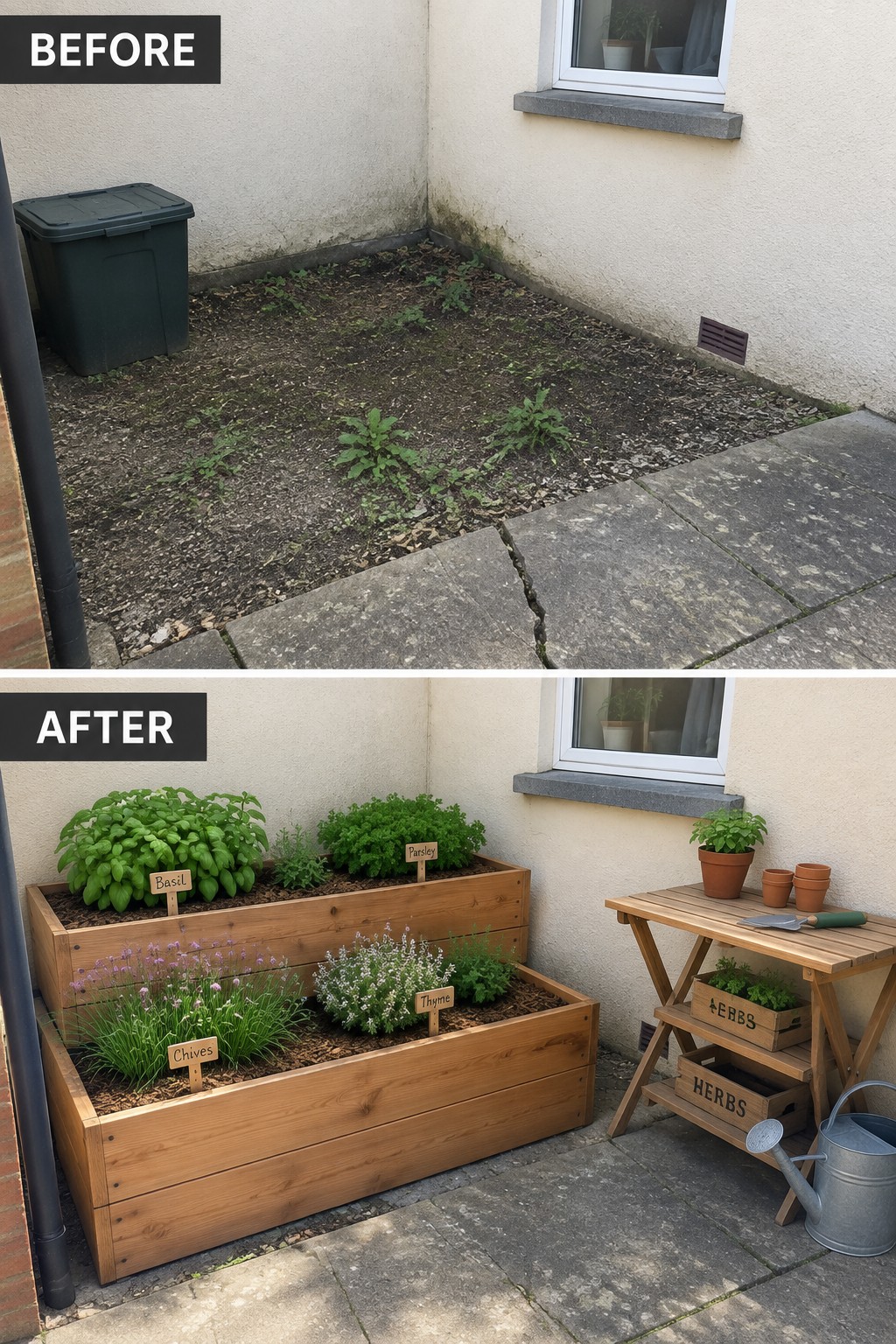
A bare dirt corner often feels like wasted space until you add raised planters that create clear growing areas. The change here turns scattered weeds and uneven ground into neat beds that keep soil contained and plants easy to manage.
This idea suits small paved courtyards where digging is limited. Build or buy simple timber boxes, set them against a wall or fence, and fill them with herbs or compact plants you will use often. Leave enough paved space around them so the area stays easy to walk through.
Turn An Empty Courtyard Into A Seating Area

A small courtyard often feels like wasted space when it only holds a table and a couple of chairs. Adding a built-in bench along the walls gives the area a clear purpose and makes it much easier to sit and spend time outside. The change here shows how a simple bench with storage underneath turns the same stone floor into something actually usable.
This idea works best in tight courtyard spaces where freestanding furniture can crowd the middle. Keep the bench low and run it along two walls so the center stays open. Use outdoor cushions that can handle weather and add a single overhead light if you want to use the spot in the evening.
Add Planters Along A Fence For A Small Courtyard

A plain vertical fence often leaves a patio feeling exposed and unfinished. In this case the fence was swapped for a horizontal slat design with deep raised planters placed right against it. Climbing roses and low shrubs fill the planters, while a simple string of lights runs along the top. The result turns the same small space into a more enclosed and usable seating area without needing a bigger yard.
This approach works well in tight courtyard settings where you want privacy but still need to keep the space open enough for a table and chairs. Start with sturdy planters that match the fence color, choose one or two climbing plants that suit your light, and add the lights only after the planting is in place. Keep the rest of the patio simple so the planted fence stays the main feature.
Use Lighting To Make A Patio Feel Cozy
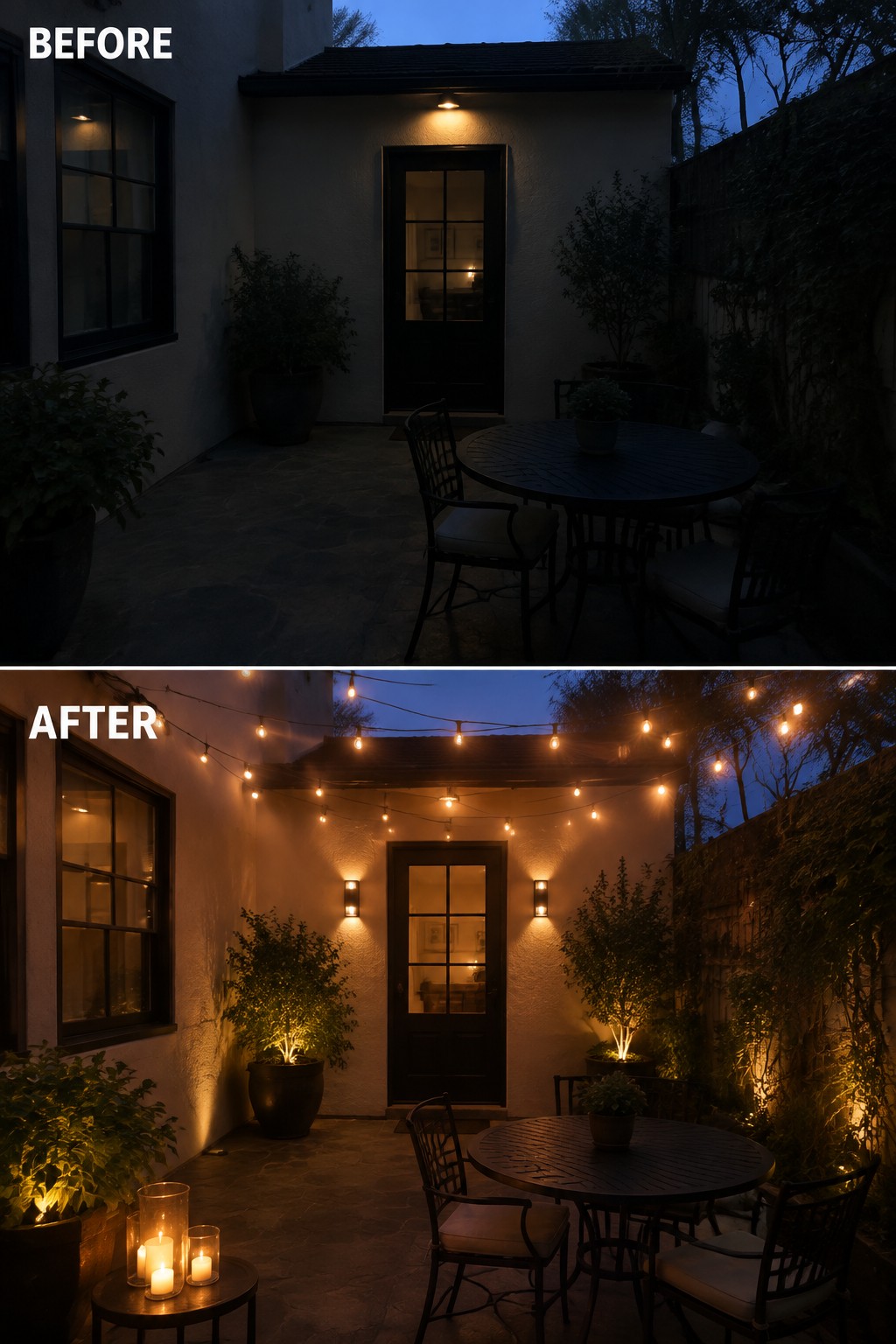
Many patios sit unused after dark because they lack enough light to feel comfortable. String lights overhead combined with a couple of wall sconces can fix that fast. Here the space went from flat and dim to warm and usable with just those additions and a few uplights on the plants.
This idea suits small courtyard spaces where people want to sit outside in the evening without a big remodel. Start with one run of string lights for overall glow, then add a few focused lights near seating or plants. Keep the fixtures modest so the furniture and greenery stay the main focus.
Add A Water Feature To Anchor A Small Courtyard
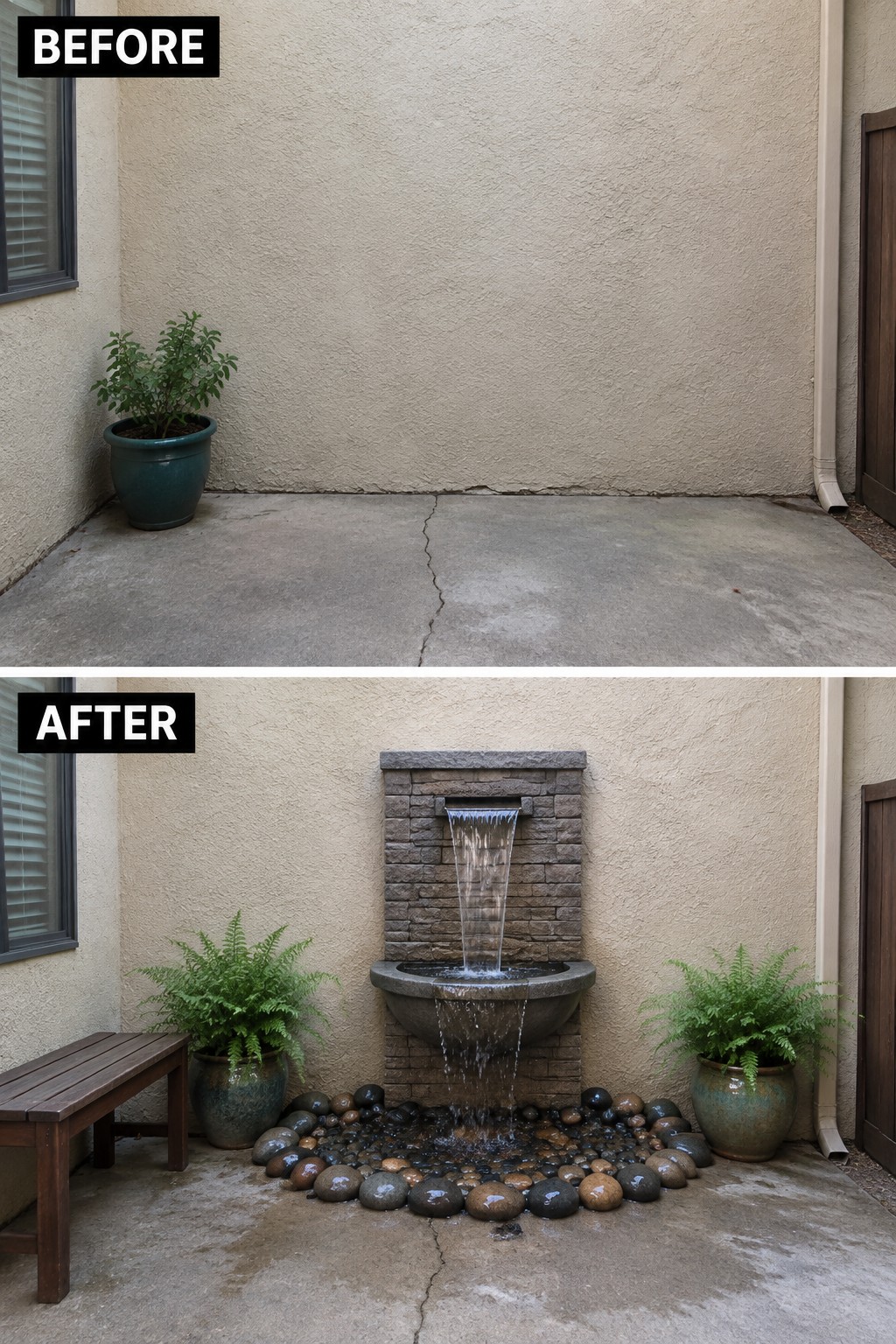
A plain concrete courtyard with nothing on the walls often feels empty and unfinished. Adding a wall fountain gives the space a clear center point. The water draws attention upward and creates gentle sound, while the pebble bed at the base helps tie the feature to the ground without needing a big planting area.
This idea suits small courtyard spaces that need one strong element instead of many small ones. Choose a fountain that fits the wall height, then use a simple rock border to contain the splash. Potted plants on either side keep the layout flexible and let you move things around as the seasons change.
Use Pavers And Gravel To Structure A Small Courtyard

A solid concrete slab can feel flat and uninviting in a small courtyard. Laying large pavers in a loose grid with dark gravel between them breaks up the surface, adds texture, and creates a cleaner, more intentional layout. Adding one larger plant in the center gives the space a focal point without crowding it.
This approach works well in compact yards where you want to keep movement easy while making the area feel more like a garden. Start with the paver layout first, then add simple planting and low lighting around the edges. Keep the gravel consistent so the whole space reads as one planned area rather than separate patches.
Use A Mirror To Make A Small Courtyard Feel Bigger

A narrow courtyard often feels closed in when the walls are bare and there’s little structure. In this case, the space went from a plain stretch of paving with one lone planter to a balanced setup with two tall planters and a large mirror centered on the back wall. The mirror reflects the sky and surrounding greenery, which immediately opens up the view and makes the area feel less cramped.
This approach works well in tight side passages or small enclosed gardens where adding real windows or extra depth isn’t possible. Place the mirror where it catches the most light during the day, and use matching planters on either side to create a simple frame. Keep the planting tall but narrow so the walkway stays clear and the focus stays on the reflection rather than crowding the floor.
Create Tiered Beds On A Slope

An overgrown slope next to stairs often ends up ignored because it is hard to plant and harder to maintain. Tiered wooden beds solve this by giving the slope clear levels that hold soil and plants in place.
This idea suits small courtyard gardens that lack flat ground. Use pressure-treated timber to build the tiers, keep the planting simple with a mix of taller grasses and lower flowers, and finish the base with gravel so the area stays easy to walk around.
Screen Off Storage To Keep A Courtyard Neat
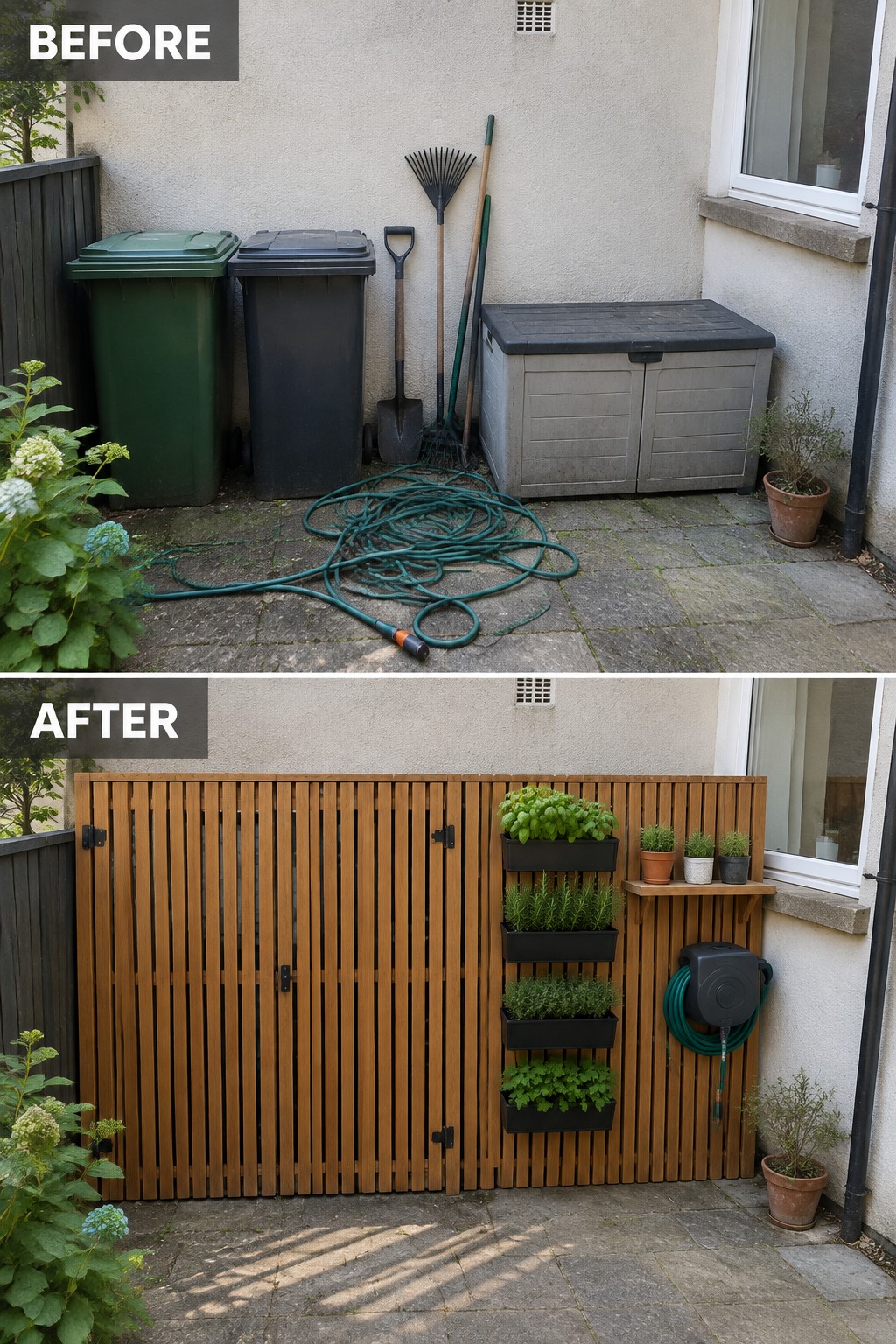
Many small courtyards end up as dumping grounds for bins, hoses, and tools because there is nowhere else to put them. Adding a simple wooden screen creates a clean backdrop that hides the clutter while still letting you reach what you need. The vertical planters mounted on the screen add greenery without taking up floor space, which keeps the area feeling open.
This approach works well in paved courtyards where you want order but still need practical storage. Start with a screen tall enough to cover the tallest items, then add planters at different heights so the planting feels balanced rather than crowded. Leave enough room in front of the screen for easy access and to keep the space from feeling closed in.
Create A Low-Maintenance Courtyard Seating Area With Potted Plants

A bare concrete courtyard often feels like wasted space until you add a few key pieces. Large pots with small trees and shrubs placed along one wall, plus a simple chair with a cushion, give the area a clear purpose without needing major construction.
This approach suits small courtyard spaces where you want something usable but low maintenance. Choose outdoor furniture that can stay out year round and keep the number of pots modest so movement around the space stays easy.
Add A Pergola For A Shaded Outdoor Room

A bare courtyard with just a table and chairs often goes unused because there is no shade or sense of enclosure. Adding a simple pergola with a fabric cover instantly makes the space feel like an outdoor room where people want to spend time.
This approach works best in small paved courtyards where you need to create comfort without building walls. Keep the furniture scale modest, use one rug to define the seating area, and leave room to walk around the edges so the space still feels open.
Use Planters To Create A Garden Along A Fence Line

A plain chain link fence next to a wall can feel like wasted space in a small courtyard. Adding a row of wooden planter boxes at the base gives the area clear structure and turns the fence into a place for plants instead of just a barrier. Painting simple flower shapes on the fence behind the boxes adds color without needing extra room.
This approach works well in narrow side yards or along property edges where ground space is limited. Choose boxes that sit low enough to water easily and pick plants that trail or stay compact so they do not crowd the walkway. Start with the planters first, then add any fence detail once the layout feels settled.
Add Structure To An Overgrown Courtyard
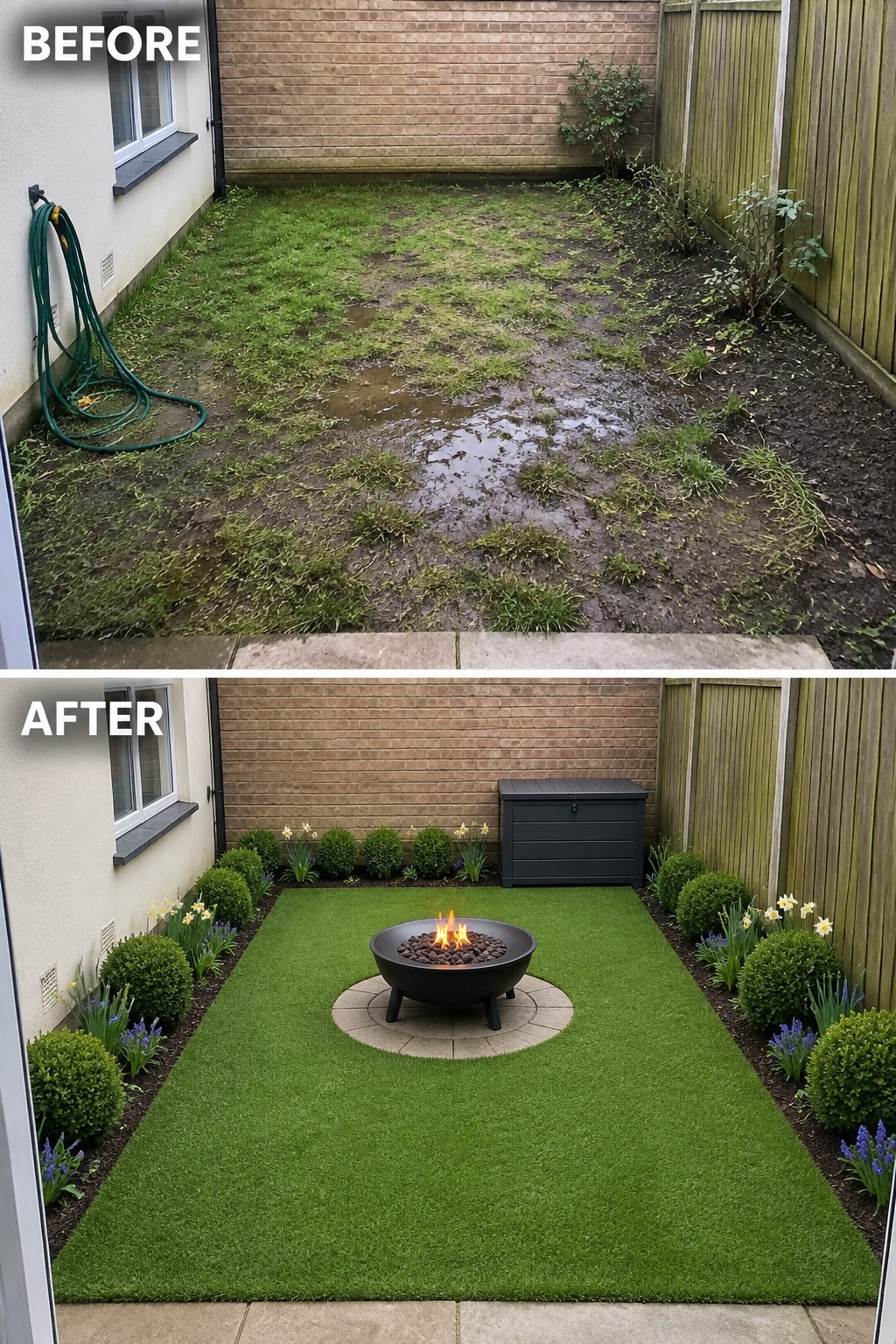
Clearing the patchy, muddy grass first made the biggest difference here. Once the space had clean edges and low planting beds along the walls, the whole courtyard felt intentional instead of neglected. Adding a simple fire pit in the middle gave the area a clear purpose without filling it up.
This idea works especially well in small enclosed gardens. Keep the center open and use the borders for shrubs and flowers so the space still feels roomy. Focus on low-maintenance planting that can handle the conditions, and you can enjoy the garden without constant upkeep.
Frequently Asked Questions
Q: How do I fit seating into a really tight courtyard space?
A: Place a narrow bench along one wall and add a couple of folding chairs you can store away. This keeps the middle open for movement. Try layering cushions that match your plants for comfort.
Q: My courtyard gets shade most of the day. What should I plant?
A: Go for ferns and hostas that thrive without much light. Mix in some ivy to climb the walls and add green without taking floor space. Water them regularly at first until they settle in.
Q: Can these ideas work if I rent the place?
A: Focus on potted plants and movable screens instead of built structures. You can take everything with you when you leave.
Q: How often do I need to maintain a small courtyard garden?
A: Check on the plants once a week to water and trim. Sweep the area clean every few days to keep it inviting.
