

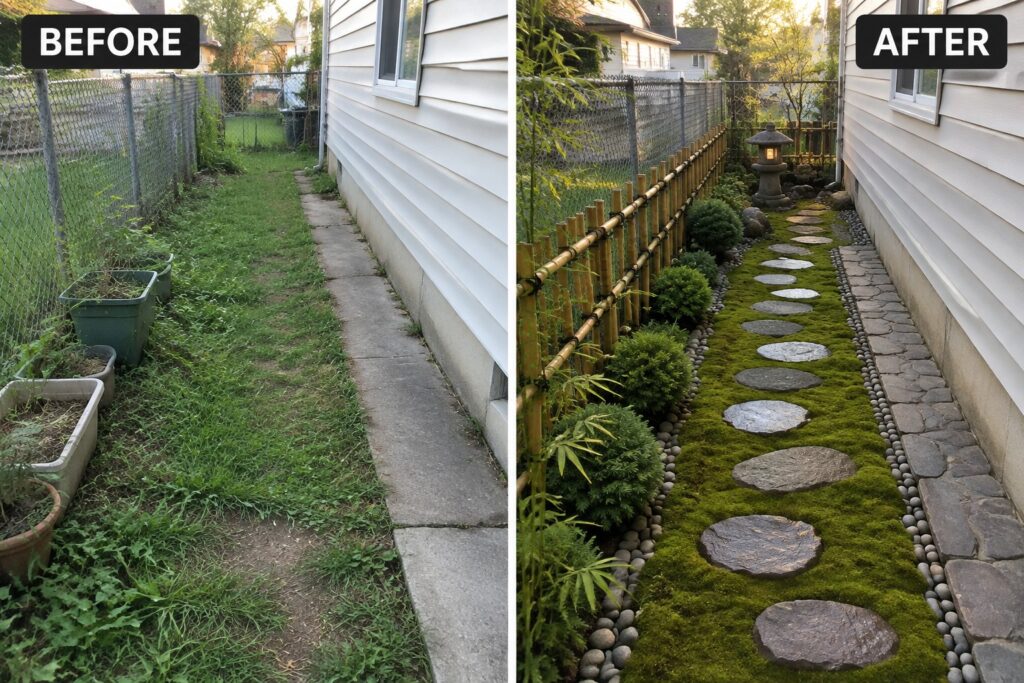
Gardens in small yards often end up with uneven patches and no real layout once the main lawn work is done.
Simple planting choices and a few defined edges can turn that same spot into something that feels settled instead of leftover.
I would probably start with the pathway layout in my own yard because it tends to pull everything else into place.
These kinds of adjustments build gradually and the space ends up looking more cared for without a complete overhaul.
The ideas here are worth trying one at a time.
Add Structure To An Overgrown Side Yard
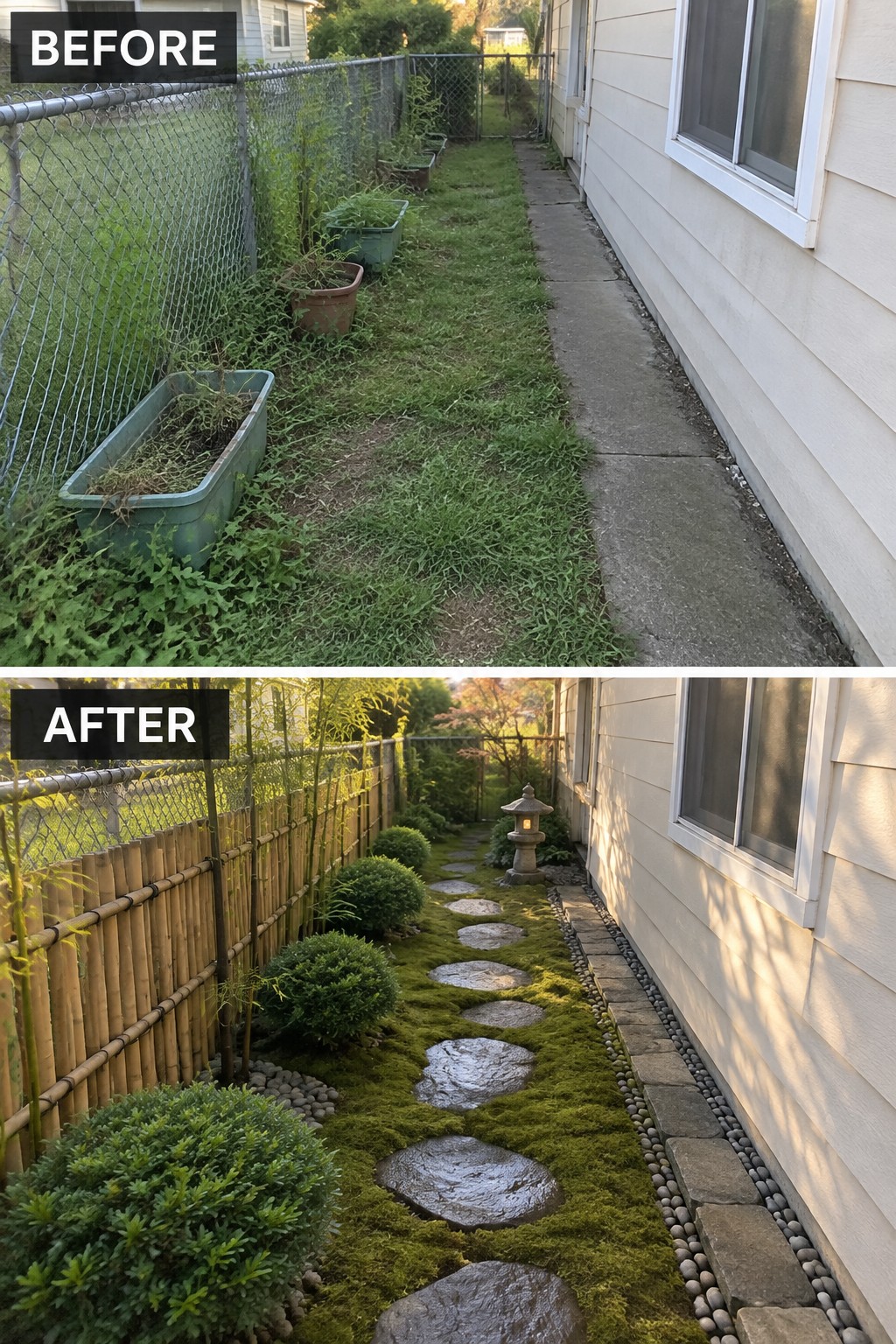
A narrow side yard tends to become a neglected strip because it feels awkward to use and hard to mow. Clearing the weeds and laying down stepping stones with moss between them turns the space into a clear walkway that feels intentional instead of leftover.
This idea works best in tight areas between a house and a fence where you need to keep movement easy. Start with the path and ground cover, then add a few low shrubs and one small accent like a lantern so the space stays calm and open rather than busy.
Turn A Bare Patio Into A Gravel Garden Seating Area

A plain concrete slab can feel cold and unused, but covering it with gravel creates a softer base that invites seating and planting. In this case the change came from replacing the hard surface with pea gravel, adding a simple wooden bench against the back wall, and placing a stone basin fountain as the main focal point. The dark fence and string lights then make the small space feel enclosed and calm instead of open and empty.
This approach works well in townhomes or small yards where you want a low-maintenance outdoor room without building a full deck. Start with the gravel to define the zone, keep the furniture scale modest, and add one water feature or cluster of pots rather than filling every corner. It suits anyone who likes a quiet spot for morning coffee or evening reading without needing a large garden budget.
Clear Overgrowth Before Adding Structure To A Small Garden
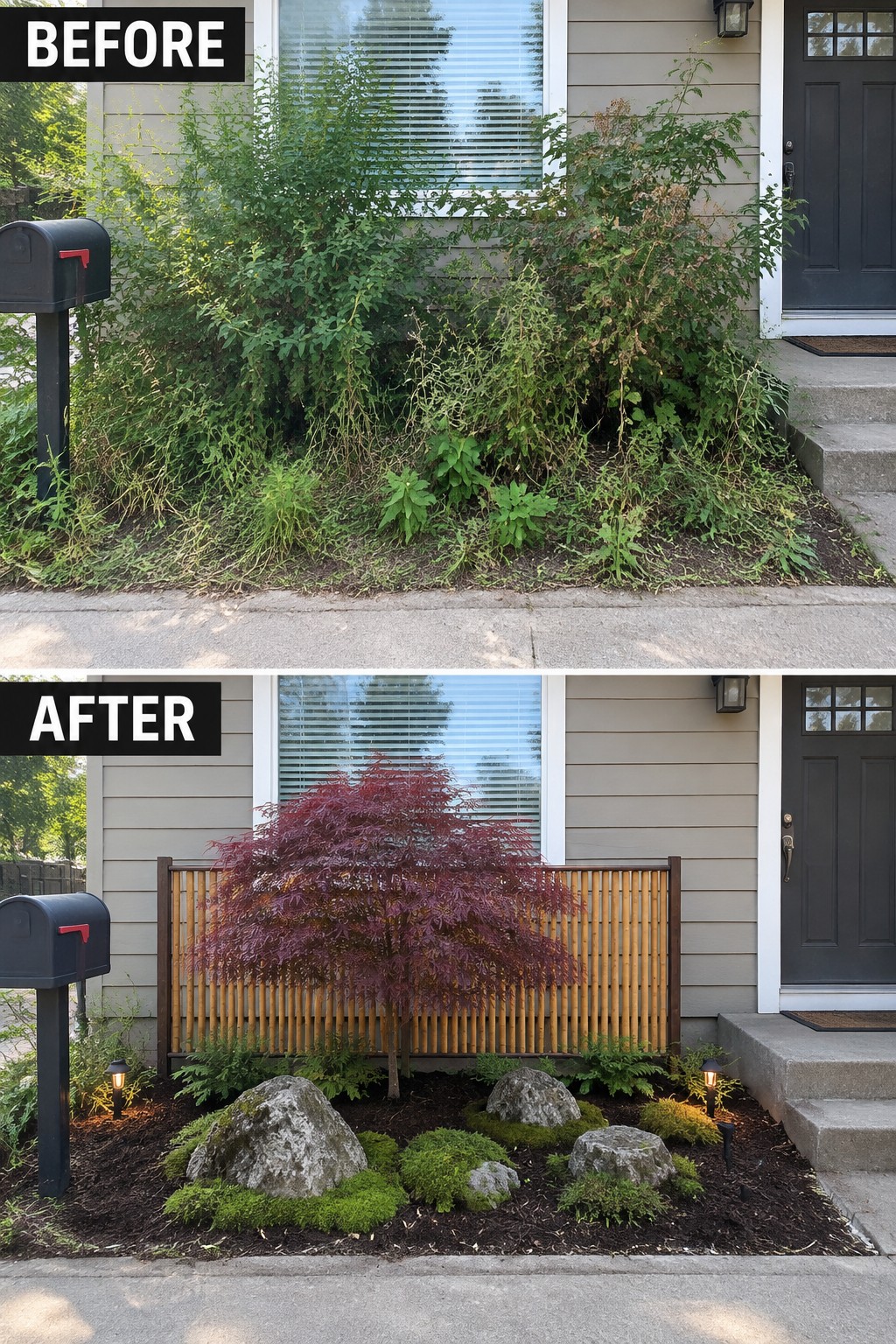
The main change here is removing the tall, messy shrubs that crowded the front of the house and replacing them with a single Japanese maple as the focal point. A simple bamboo screen behind the tree, a few large rocks, and low ground cover keep the bed calm instead of chaotic. Starting with a full cleanup makes the new layout feel intentional rather than just another layer of planting.
This approach works well for narrow beds right next to the house where space is limited. Pick one tree with good color or shape, add a low screen if you need privacy from the street, and use rocks and mulch to hold the design together. Keep the rest of the planting low so the tree stays the main feature.
Turn A Bare Balcony Into A Simple Seating Area

A small balcony often ends up as storage or a place to stack old chairs and pots. In this case the concrete stayed empty and the space felt unused until wood decking was added across the floor and two low cushions were placed in the center. That single change turned the area into a spot where someone could actually sit and stay awhile.
The same approach works on most small balconies if you keep the middle open. Lay decking or tiles first so the surface feels finished, then add seating that stays low and weatherproof. Tall planters along the sides give privacy and frame the view without taking up walking room.
Add Structure To An Overgrown Backyard

Clearing the clutter first made the biggest difference. Once the random pots, bins, and weeds were gone, adding bamboo screening along the fence line and laying a gravel path with stepping stones gave the space clear shape and turned it into a calm, enclosed garden area instead of just an unused patch of grass.
This idea works best in small side yards or back corners where the space feels undefined. Start with the screening to create privacy and walls, then add a simple path to make the area feel intentional. Keep the planting low and repeat a few materials so the space stays easy to maintain.
Add Structure To An Overgrown Backyard

A narrow side yard full of patchy grass and weeds can feel like wasted space, but laying gravel and adding a few stepping stones changes the whole feel. The clean edges and raked patterns give the area a sense of order, while the central tree becomes a simple focal point that draws the eye down the length of the yard.
This idea works best in tight spaces where a full lawn never thrived anyway. Clear the old growth first, then use gravel to cover everything and place stones to create a walking path. Keep extra planting minimal so the gravel and lines do the main work of making the yard feel planned instead of neglected.
Turn A Plain Corner Into A Small Pond Garden

A bare patch of concrete next to the house does not offer much once the toys get put away. Adding a low rock border and a simple pond turns the same spot into a quiet focal point. The bamboo spout and a few ferns give it height without crowding the space, while the gravel edge keeps the whole thing looking intentional instead of scattered.
This approach works well in small side yards or back corners where a full patio would feel cramped. Keep the pond modest in size, use the same stone for the border and the spillway, and let the plants spill over the rocks a little so the edge softens. The result feels calm rather than busy, and the water sound carries without needing extra features.
Define A Narrow Path With Simple Edging
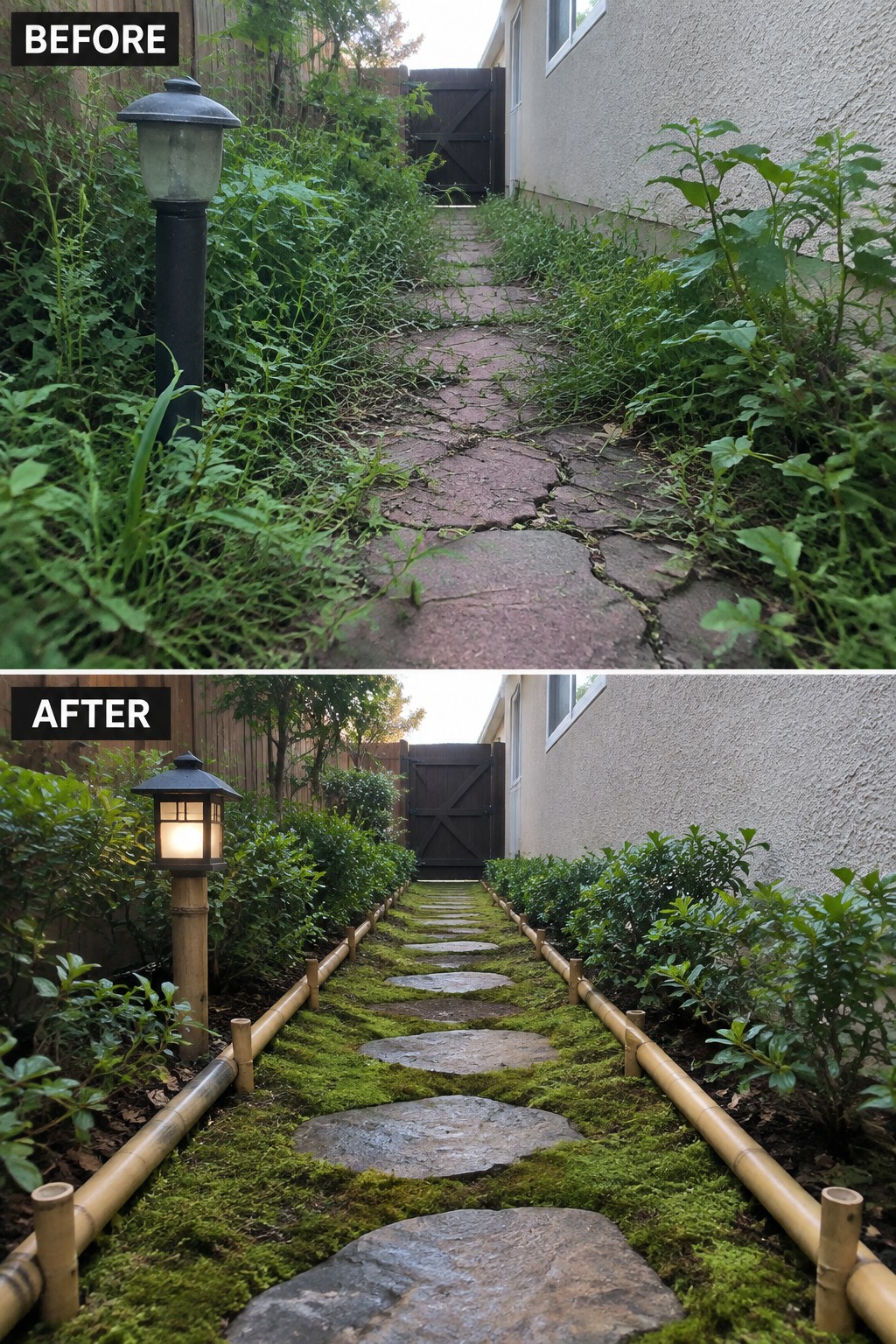
The main improvement here is the bamboo edging that runs along both sides of the path. It stops the plants from creeping onto the stones and gives the walkway a clear, finished shape instead of letting it fade into the surrounding growth.
This idea works especially well in tight side yards or between a house and fence. Clear the worst of the overgrowth first, then add edging that suits the look you want. Moss between the stones keeps the surface soft and low-maintenance while still letting the path feel intentional.
Define A Small Yard With Gravel And Rocks

A bare patch of dirt against plain block walls does not give you much to work with. Adding a gravel base, grouped rocks, and moss creates clear shape and turns the same small space into something you can walk through and enjoy. The wooden stands for the bonsai add height without crowding the area.
This approach works well in enclosed side yards or small back corners where you need structure more than lots of plants. Keep the gravel path wide enough to move around the rocks, and limit the number of larger stones so the space still feels open. Start with the hardscaping before adding any extra pots or features.
Use Bamboo For Privacy Screening Along A Fence

Clearing out the old overgrown shrubs made room for something more useful. Tall bamboo now creates height and privacy, while lower shrubs and stone edging keep the border looking neat and contained instead of wild.
This works best in narrow side yards or back lines where you need screening without crowding the space. Define the bed first with simple edging, add gravel to keep weeds down, and stick to plants that stay manageable. It gives the garden a calmer feel without needing a lot of width.
Define A Small Front Yard With One Clear Focal Point

A plain strip of grass next to the street often feels unfinished because nothing gives the eye a place to rest. In this case the fix was straightforward. Mulch replaced the weedy edge along the curb, and a single circular bed made of gravel and river rock became the center of the space. The round shape and the low stone border create a quiet focal point without crowding the small area.
This approach works well on narrow front strips or corner lots where a full garden would feel too busy. Start by clearing the grass and laying down a simple border, then add the circle before choosing plants. Keep the planting low and repeat a few varieties so the shape stays visible. The result is a front yard that looks intentional even when the rest of the lawn stays simple.
Create A Calm Seating Area On A Small Deck
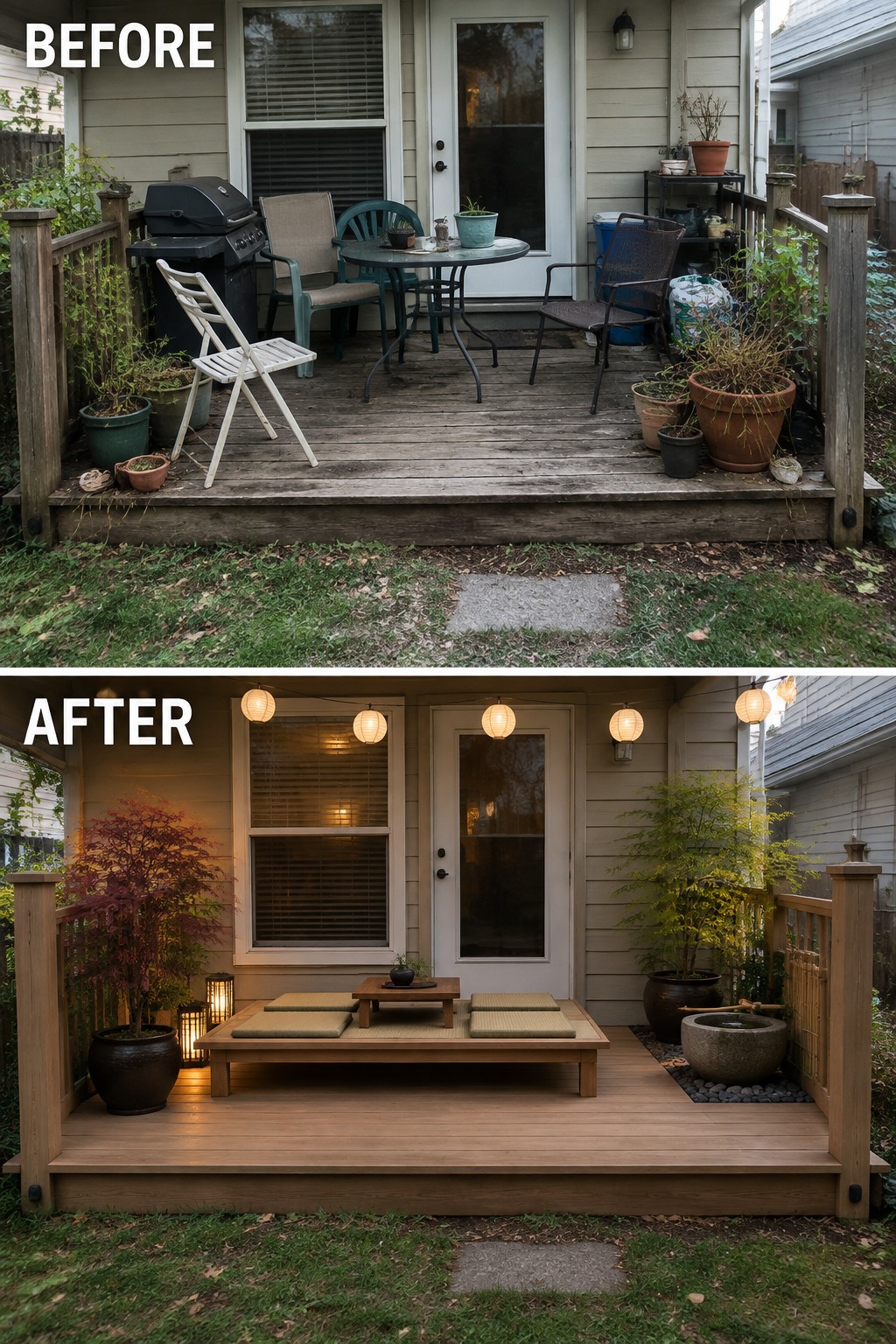
A cluttered deck often feels smaller and less welcoming than it actually is. Removing the random chairs, grill, and scattered items, then adding one low wooden platform with simple cushions, gives the space a clear purpose and a much quieter feel.
This idea works well on small decks or porches where too many separate pieces make the area feel busy. Keep the seating low, choose weatherproof materials, and add just a few lanterns so the space stays easy to use without crowding the floor.
Add Structure To An Overgrown Backyard
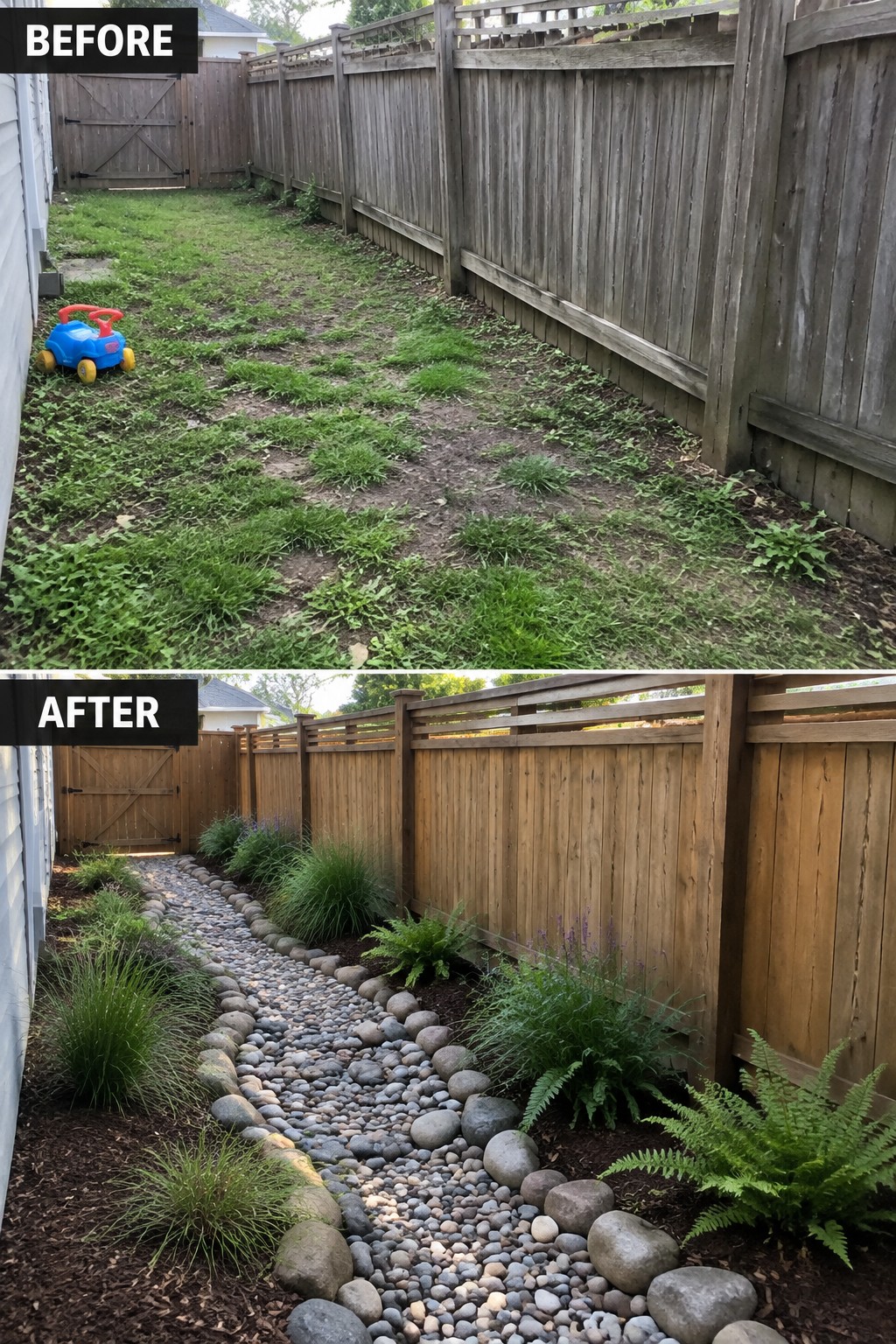
A narrow backyard that was mostly patchy grass and weeds can feel much more usable once you add a clear path and defined edges. The change here comes from laying a pebble path that guides movement and creates separate planting zones along the fence instead of leaving everything open and messy.
This idea works well in small or long side yards where space is tight. Clear the overgrowth first, then use gravel or pebbles for the path so water drains easily, and keep new plantings simple and low along the borders so the layout stays open and easy to maintain.
Add Raised Beds To Turn A Concrete Patio Into A Garden

A bare concrete patio often feels like wasted space until you add raised beds. The beds create clear planting zones, let you control the soil, and turn the area into something you can actually use and enjoy. A simple gravel path between the beds keeps the layout open and easy to walk through.
This approach works especially well in small urban yards or enclosed courtyards where digging into the ground is not possible. Keep the beds modest in size, choose plants that suit your climate, and leave enough room to move around them. The result feels planned without needing a large budget or a full redesign.
Add A Rain Chain To Create A Focal Point

A plain concrete corner with just a downspout can feel unfinished. Adding a copper rain chain that drops into a stone basin gives the space a clear purpose and brings gentle movement and sound. The surrounding pebbles and layered plants keep the area from looking empty while still leaving room to walk.
This idea works well in narrow side yards or small back corners where you want something simple but noticeable. Start with the water feature as the main element, then add shade-loving plants like ferns and hostas around the base. Keep the planting loose so the basin stays visible and the whole spot feels calm rather than crowded.
Define The Front Entry With A Clean Path And Potted Plants
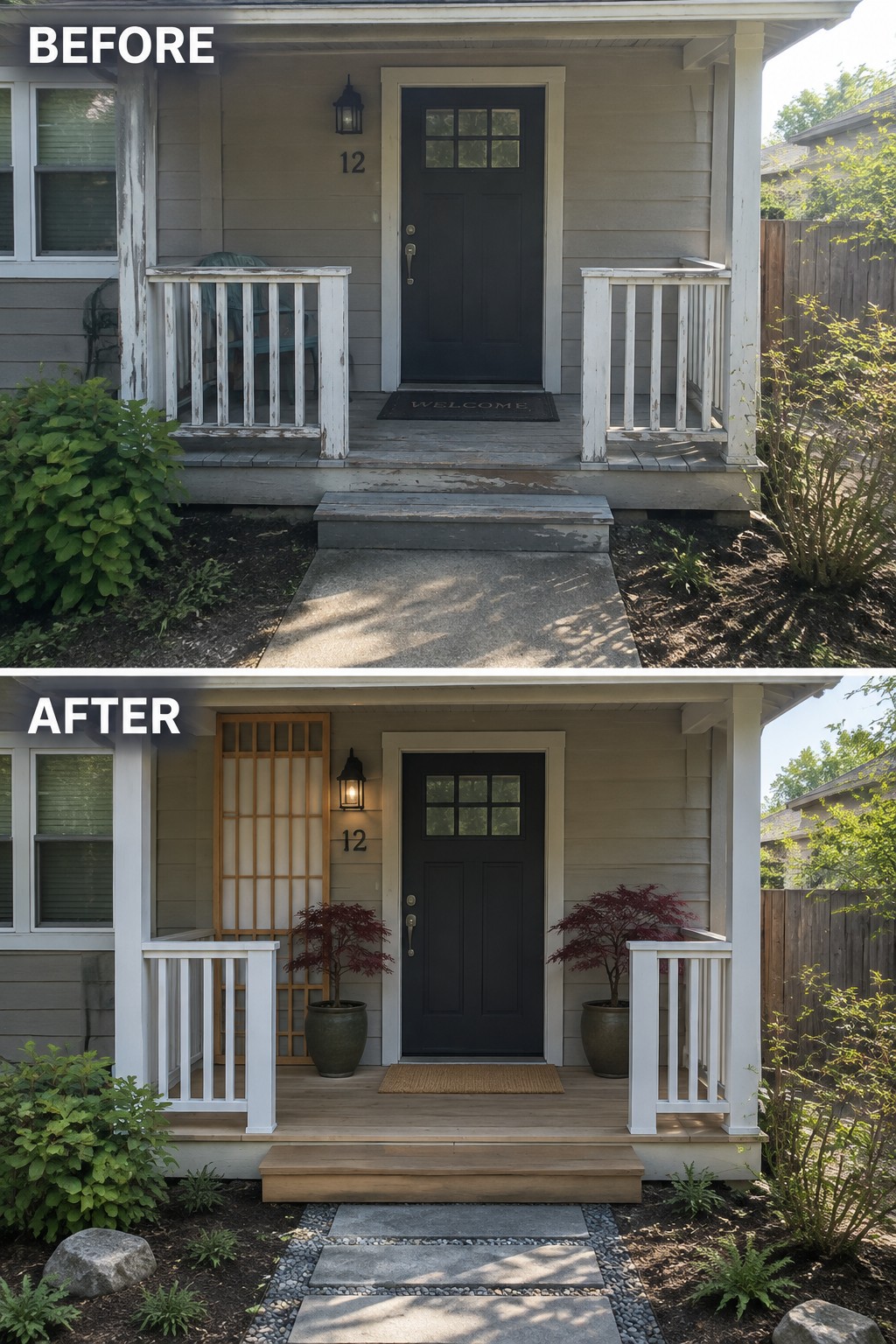
A plain concrete walkway and scattered side plantings can make a small front garden feel unfinished. The change here comes from adding a simple stone path set in gravel, which gives the space clear lines and a sense of order without needing a full redesign.
This approach works well on modest lots where you want a calm, low-maintenance look. Start with the path to set the shape, then add a few large potted trees near the porch so the planting stays balanced and easy to adjust over time.
Turn A Narrow Unused Space Into A Japanese Garden

A bare dirt strip along the side of a house can feel like wasted space, but adding rocks, moss, and one small tree turns it into something calm and intentional. The gravel base keeps things tidy while the rocks and moss create layers that make the area feel settled instead of empty.
This works best in tight spots where full planting beds would feel cramped. Keep the number of elements low, let the rocks do most of the visual work, and add a simple light if the space gets used after dark. The same approach suits any narrow side yard or under-eave corner that needs a clear purpose without taking up much room.
Use Retaining Walls To Create Terraces On A Slope

A steep, uneven backyard often stays unused because the ground feels hard to work with. Adding low stone retaining walls turns that slope into a series of flat beds that are much easier to plant and maintain. The change from scattered concrete blocks to solid stacked walls makes the whole area feel settled and intentional instead of neglected.
This approach works well on small properties where every level counts. Start with the walls to set the shape, then fill each terrace with mulch and a simple mix of shrubs and ground cover. Keep the beds narrow enough to reach across without stepping inside them.
Frequently Asked Questions
Q: How do I fit a small water feature into a cramped patio without losing floor space? A: Tuck a shallow stone basin against one wall and let a gentle drip keep the sound going. The basin catches any overflow so you avoid wet floors. Check the pump once a month and top up the water as needed.
Q: What plants actually stay low and still give that soft layered look? A: Go for dwarf ferns and creeping thyme along the edges. Trim them back once or twice a year so they do not spill onto paths. These choices fill gaps quickly and need little extra feeding.
Q: How do I stop gravel from scattering into the house? A: Lay a low wooden lip or flat stone border where the gravel meets the door. Sweep the edge every few weeks and the mess stays outside.
Q: Can I add a bench if the whole garden is barely ten feet wide? A: Build a narrow wooden ledge that folds flat against the fence when not in use. Sit there in the evening and the space still feels open during the day.
