


Gardens often leave you feeling watched when the boundaries stay wide open and nothing softens the edges.
Adding plants in stages lets privacy build without rushing into tall fences or heavy screens.
It works better than I expected most times.
I like mixing heights so lower beds fill in the gaps while taller varieties handle the main screening.
Over time those choices settle into a yard that feels enclosed and calm rather than bare.
Add A Hedge For Privacy Along The Fence

A plain fence often leaves the whole yard feeling exposed. Planting a dense hedge right in front of it fills that gap quickly and turns the boundary into something softer and more private. The thick row of shrubs covers most of the wood and creates a living screen that blocks the view from neighboring houses.
This idea works well in suburban backyards where you already have a fence but want more coverage without building it higher. Pick evergreen shrubs that grow full and dense, and keep the base clear with simple edging so the lawn stays easy to mow. It gives privacy without making the space feel closed in.
Add Privacy With Plant-Covered Trellis Screens

An open patio often feels too exposed when it sits right next to a yard or neighboring homes. Placing tall trellis panels covered in dense greenery creates a living wall that blocks the view while still letting light and air through. The before photo shows a flat concrete space with nothing to define the edges, and the after adds three connected screens that turn the same area into a more private spot.
This idea works best on patios or decks where you want separation without a heavy fence. Use lightweight panels that attach to existing railings or posts, then choose fast-growing vines or pre-planted screens that match your climate. Keep a couple of large pots at the base to soften the bottom and make the whole setup feel like part of the garden rather than just a barrier.
Add Privacy With A Raised Planter Along The Fence

A narrow side yard next to a chain link fence often feels exposed and bare. Adding a raised wooden planter filled with tall screening plants turns that open strip into a green wall that blocks the view from the neighbor’s side. The gravel stays in place for drainage, but the planter gives the plants room to grow tall without crowding the path.
This idea works best in tight spaces between houses where digging a deep bed is not practical. Keep the planter narrow enough to leave walking room, choose plants that grow quickly in your climate, and use simple stepping stones to keep the path usable. The result feels private without closing in the whole yard.
Plant Layered Shrubs Along The Foundation

Filling an empty foundation bed with a mix of evergreens and flowering shrubs is one of the easiest ways to gain privacy without building anything. The before photo shows a long open stretch of mulch that left the house feeling exposed. After planting, the same area now has height and density that blocks the view from the sidewalk while still letting light reach the windows.
This idea works well on any side of the house where you want a softer screen between your yard and the street. Use a few taller evergreens for the back row, mid-height flowering shrubs in front of them, and lower spreading plants along the edge. A simple stone border keeps the bed defined and makes it easier to maintain over time.
Add Tall Grasses Along A Fence For Privacy

A basic fence often leaves a yard feeling open and exposed. Planting a row of tall ornamental grasses right in front of it gives quick height and softens the hard line without building anything new. The change turns a flat lawn edge into a living screen that blocks views while still letting in light and air.
This idea works best along property lines where you need privacy but do not want a dense hedge. Clear a narrow bed, lay down mulch to keep weeds down, and space the grasses so they grow together over a season or two. The result feels natural and moves with the wind, which keeps the yard from looking too formal.
Add Lattice And Climbing Plants For Privacy

One simple way to gain privacy without a tall solid fence is to add lattice panels and let climbing plants do the screening. The before photo shows an open chain link edge next to the shed that left the area exposed. In the after photo the same spot has wood lattice covered with roses and other vines that create a living screen while still letting in light and air.
This idea works well along side yards, shed walls, or property lines where you need coverage but do not want to block everything. Put up sturdy lattice first, then plant climbers that grow quickly in your area and train them across the panels. Once the plants fill in you get privacy plus flowers and greenery that change with the seasons.
Use Tall Potted Plants To Create Privacy

One of the easiest ways to make a small balcony feel private is to add a ring of tall plants in pots around the edge. The before photo shows an open space with just two chairs and nothing to block the view from neighboring buildings. After adding several large containers with trees and shrubs the area became much more enclosed and shielded.
This idea works well on balconies or patios where you cannot plant directly in the ground. Place the tallest pots along the railing first to block the main sight lines, then fill in with smaller ones so the space still feels open enough to move around. It turns a plain outdoor spot into a place where you can sit without feeling exposed.
Train Plants Up A Wall For Privacy

A blank brick wall leaves a garden feeling open and exposed. Adding espaliered fruit trees and climbers turns the same wall into a living screen that blocks the view while still letting light through. The base planting along the bottom edge softens the line where the wall meets the ground and adds another layer of cover.
This approach suits narrow side yards or back boundaries where floor space is limited. Choose trees or climbers that can be pruned flat against the wall, and give them a simple support system so they stay tidy as they grow. Start with just the vertical planting before adding anything else.
Grow Vines Over A Pergola For Privacy

An open pergola can leave the whole seating area feeling exposed to neighbors and the rest of the yard. Adding climbing vines that cover the roof and drape down the sides changes that quickly, turning the space into a more enclosed and private spot without adding walls.
This idea works best on existing structures where you already have a roof frame. Choose vigorous growers that can handle your climate, let them fill in for a season or two, and keep the furniture simple so the planting stays the main feature. It suits most suburban backyards that need a softer screen rather than a fence.
Line A Deck With Tall Potted Trees For Privacy

An open deck often feels exposed when the view extends straight into neighboring yards. Placing a row of tall evergreen trees in large pots along the railing creates a living screen that blocks sightlines while still letting light through.
This works best on decks where you cannot plant directly into the ground. Space the pots evenly, keep the trees narrow enough that they do not crowd the walking area, and choose varieties that stay green year-round. The pots also make it easy to rearrange the layout if your needs change.
Plant Along The Fence To Create Privacy

A bare fence often leaves a yard feeling exposed. Adding a layered planting border right at the base turns that hard line into a living screen. In this case the change is clear. The empty strip of grass became a mix of shrubs and taller plants that soften the view and block sightlines from the other side.
This approach works well in any yard where the fence feels too plain. Start with a few different heights of shrubs and evergreens, then fill in with smaller plants in front. Mulch helps keep the bed looking tidy while the plants fill out. It gives privacy without needing a tall structure or waiting years for trees to grow.
Create Privacy With A Vertical Garden On Your Patio

A blank wall facing an open patio often leaves the space feeling exposed. Adding a living wall of plants turns that same surface into a natural screen. The before photo shows a plain stucco wall with nothing to block the view. In the after photo, pocket planters filled with trailing and bushy greens cover the wall completely, giving the seating area a sense of enclosure.
This idea works well on patios or balconies that sit close to neighbors or a street. Use a simple vertical planter system and pick plants suited to the light in your space. Mix different greens so the wall fills in faster and looks full without needing a lot of extra screening.
Create Privacy With A Row Of Tall Trees

Planting a straight line of tall, narrow trees is one of the simplest ways to add privacy without putting up a fence. The open grass edge along this side path was turned into a solid green screen that blocks the view while still letting light through.
This approach works well on narrow side yards or property lines where you need screening but want to keep the lawn usable. Space the trees evenly, use mulch to keep the bed tidy, and choose a variety that stays columnar so it does not outgrow the space or crowd the walkway.
Create Privacy With Vertical Trellises Along A Side Path

Adding tall trellises covered in climbing vines turns an exposed side path into a screened walkway that feels much more private. The before photo shows an open concrete strip with nothing but a black metal gate and fence. In the after version, bamboo trellises line both sides, carrying morning glory vines that quickly fill in with green leaves and purple flowers, plus ferns in pots at the base.
This approach suits narrow side yards or passages between houses where there is little room for wide planting beds. Use lightweight bamboo or wood panels that can be secured to existing fencing, pick fast-growing annual or perennial vines suited to your area, and keep the plants in large pots so you can adjust them as needed. It adds screening without blocking light or requiring permanent construction.
Add A Planting Border To Create Privacy

An open backyard with nothing but lawn can feel exposed, especially when neighbors or utility structures sit right along the fence line. Adding a planted border changes that quickly. The after photo shows how a simple strip of shrubs and tall grasses creates a living screen that softens the view while leaving the rest of the lawn open and usable.
This approach works best along a back fence or side property line where you want privacy without building a structure. Clear a bed about three to four feet deep, mix a few evergreen shrubs with some taller ornamental grasses, and keep the planting simple so it fills in without looking crowded. The key is letting the plants do the screening work rather than trying to hide everything at once.
Add Privacy With A Retaining Wall And Hedge

A sloped backyard next to a chain link fence often feels wide open. Building a low retaining wall first gives you a flat planting bed, then filling it with a dense evergreen hedge blocks the view and softens the whole edge of the yard.
This idea works best on hills where drainage and privacy are both concerns. Keep the hedge narrow and plant it close to the wall so it fills in fast without eating into usable lawn space.
Create Privacy With Tall Plants In Containers

A small patio with high brick walls can feel exposed even when it is fully enclosed. Adding tall bamboo in large planters along both sides and training vines up simple trellises gives the space an immediate sense of enclosure without any construction. The plants block the view from neighboring windows and soften the hard surfaces at the same time.
This approach works well in urban courtyards or side yards where digging is limited. Use deep, weatherproof containers so the roots have room to grow, and choose evergreens that stay full year-round. Keep the center of the patio clear so the space still feels open and usable rather than crowded.
Plant Tall Evergreens Behind The Fence For Privacy

Adding a row of tall evergreens right behind the fence is one of the simplest ways to gain real privacy in a backyard. The open fence line left the pool area exposed to neighboring houses, but the dense planting creates a solid green screen that blocks the view while still letting in light.
This approach works best in yards where the fence already exists but feels too low. Choose evergreens that grow tall and stay relatively narrow so they do not crowd the pool deck or seating areas. Plant them in a straight line with enough space between each tree for air circulation, and they will fill in over a few seasons without any extra structures.
Grow A Hedge Along The Fence For More Privacy

One simple way to gain privacy is to plant a dense row of tall shrubs right along an existing fence. The wire mesh that once sat open and exposed now disappears behind a thick screen of greenery, with lower flowers softening the base. The change turns a boundary that felt bare into one that feels enclosed without needing a solid wall.
This approach suits long, narrow strips where space is tight but height is needed. Pick varieties that grow quickly in your area, space them evenly at planting time, and mulch the bed to keep weeds down while the plants fill in. It works best on properties where you want a natural look that improves year after year rather than an instant but expensive structure.
Add Privacy With Tall Grasses In Large Pots

Placing a row of tall ornamental grasses in oversized pots along a fence turns an open patio into a more private space. The before photo shows a mostly bare area with just one lonely pot, while the after shows three matching containers filled with fluffy grasses that form a soft screen without blocking light or air.
This approach works well on patios where digging or permanent fencing is not an option. Choose grasses that grow tall enough to reach eye level, use sturdy pots that match your outdoor style, and space them evenly so the screen feels full but not crowded. It is a simple fix that suits small yards or rental homes where you need quick privacy without major construction.
Plant Shrubs To Form A Natural Privacy Barrier

The weedy strip along the fence was mostly bare dirt and random growth that offered no real screening. After clearing it out, a row of dense shrubs was planted in a straight line, with lower flowers added in front to fill the space and add color through the seasons.
This approach works best along property lines or sidewalks where you need height without building a wall. Clear the area first, add a simple edge and mulch, then choose shrubs that grow thick enough to block the view once they fill in. It keeps the space looking like a garden instead of just a barrier.
Add A Rose Arch Over Your Gate For More Privacy

Adding a simple arch and letting roses climb across it can turn an open gate into a much more private entrance. The before photo shows a basic chain-link gate with open sides that left the path feeling exposed. After the change the arch and the tall shrubs on both sides create a softer barrier that blocks views without making the space feel closed in.
This idea works best along the side of a house or at the edge of a small yard where you want to separate the garden from the street or a neighbor. Choose a sturdy arch that matches your fence posts and pick a repeat-blooming climber that grows well in your area. Plant dense evergreen shrubs at the base so the lower part fills in quickly and gives you privacy even before the roses reach the top.
Add Layered Planting For Privacy Along The House
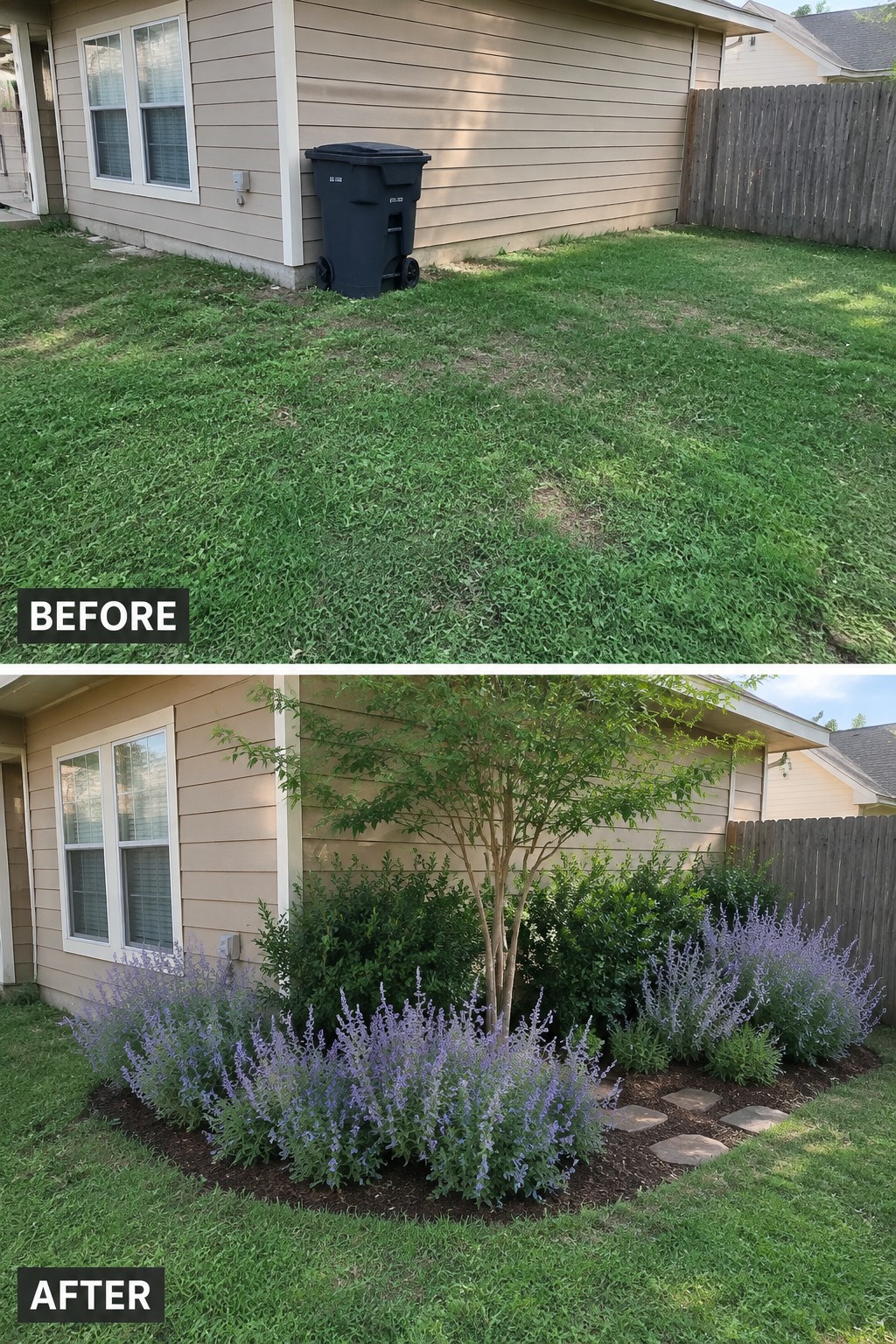
A bare stretch of lawn next to the house leaves everything open and exposed. Adding a small tree with a mix of shrubs and flowering plants in front of it creates a living screen that blocks the view while still letting light through. The change turns an empty side area into something that feels more private without building a fence.
This works well on narrow lots or along the side of a house where you want separation from neighbors or the street. Start with one tree for height, then fill in with mid-size shrubs and lower perennials so the planting feels full at different levels. Mulch the bed and keep the shapes simple so it stays easy to maintain over time.
Frequently Asked Questions
Q: How long before the plants actually hide my yard from view?
A: Fast growers like certain bamboos or tall grasses reach useful height in a single season (start with bigger ones if you can) when you plant them young but healthy. Keep the soil moist that first year and they settle in fast.
Q: Can these privacy ideas work in a small yard without taking over?
A: Pick narrow trees or use vertical planters along one wall. They block sightlines while leaving room for a table and chairs.
Q: Will I spend every weekend trimming and watering?
A: Go for low care evergreens and group them so one soaker hose reaches the whole row. That cuts the work to a quick check now and then.
Q: Should I still plant if I have a fence already?
A: Add climbers or tall pots in front to soften the look and add height where the fence falls short.
