

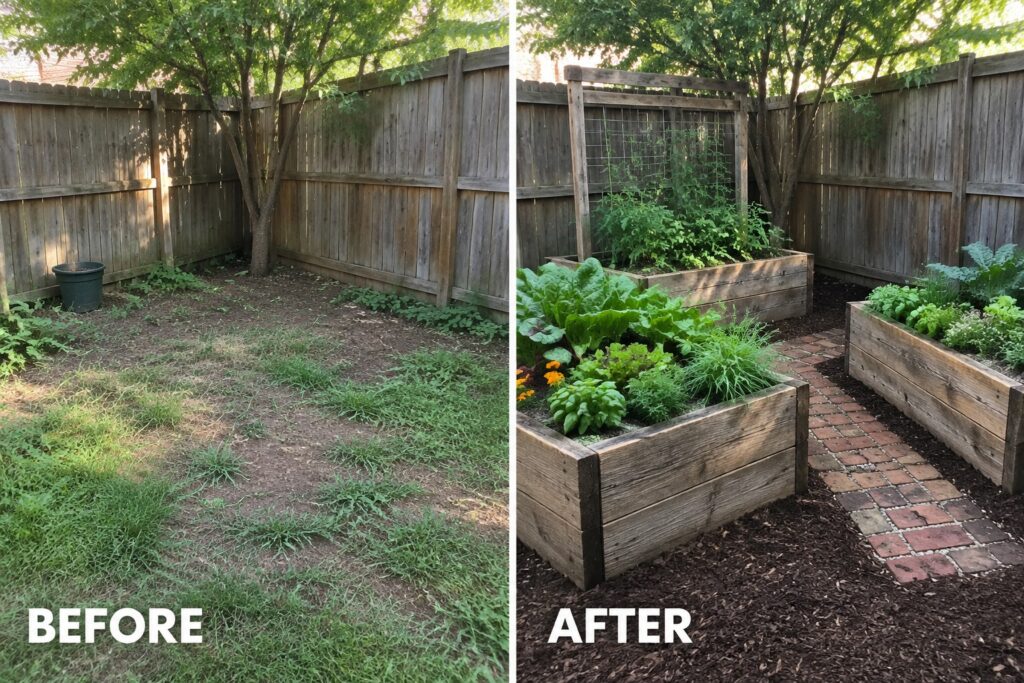
Gardens often end up looking a bit neglected when beds and paths lack any real structure to tie them together.
I usually start by testing simple edging or low dividers made from leftover boards because those changes give the space a clearer shape right away.
Salvaged wood works especially well for building raised frames or trellis supports that keep plants from sprawling and make the area easier to maintain over time.
Small additions like these tend to improve the feel of the yard in stages as the materials weather and the plantings fill in around them.
The sturdier ideas are the ones worth trying first.
Use Reclaimed Wood For Raised Garden Beds
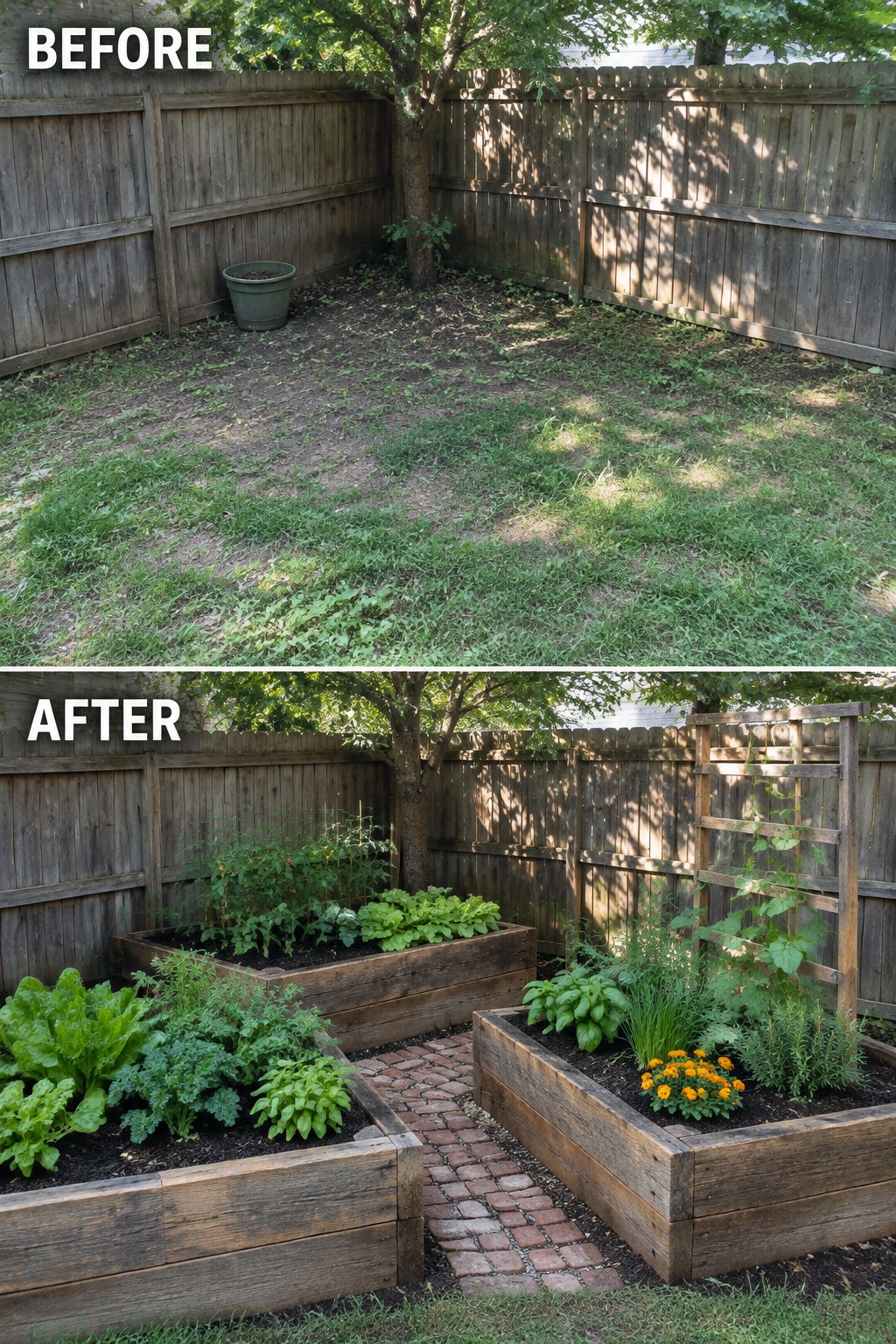
A bare backyard with nothing but weeds and dirt can feel overwhelming to fix. Building a few raised beds from salvaged wood gives the space clear shape and turns it into a place where plants can actually grow without constant battle.
This idea suits small yards that need structure more than decoration. Keep the beds simple and rectangular, space them so you can reach every side, and add a basic path between them. That single change does most of the work.
Build A Vertical Garden With Reclaimed Wood
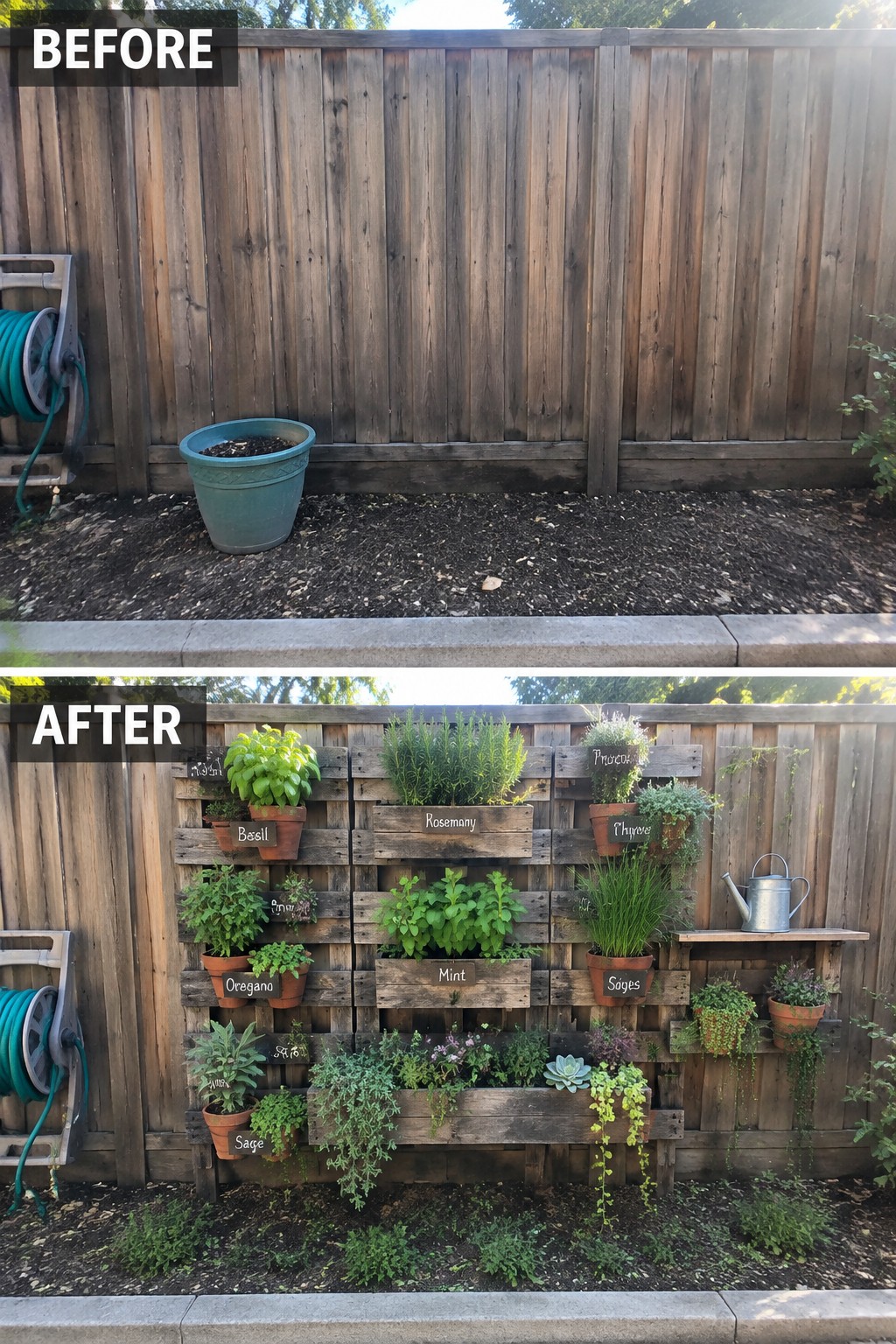
A blank fence with nothing but bare soil underneath can feel like wasted space. Mounting reclaimed crates and boxes directly onto the fence turns that same area into a working garden wall filled with herbs and smaller plants.
This idea suits narrow side yards or back fences where ground beds are limited. Secure the wood first so it can hold soil and water, then plant what you actually use in the kitchen. It adds growing space without taking up more room on the ground.
Turn A Bare Patio Into A Seating Area

A plain concrete slab with a couple of plastic chairs does not invite much use. Adding a simple wooden pergola overhead along with a bench and low table turns the same space into a spot where people actually want to sit.
Reclaimed wood works well for this because it stands up to weather and keeps costs down. Start with the overhead frame if you want shade and definition, then layer in seating and a rug to mark the area. This approach fits homes that already have a basic slab but need one clear purpose before adding more features.
Add Structure To An Overgrown Backyard

A straight, cracked concrete path with weeds growing through it makes a backyard feel neglected and hard to use. Replacing it with a gently curving brick walkway and adding wood edging on both sides instantly gives the space shape. The weedy grass turns into planted borders with gravel, which keeps everything looking intentional instead of messy.
This approach works well in older yards where the lawn has gotten away from you. Start by fixing the main path first, then use simple wood borders to mark where the beds will go. It keeps the project realistic and makes mowing or weeding much easier later on.
Create An Organized Potting Area With Reclaimed Wood
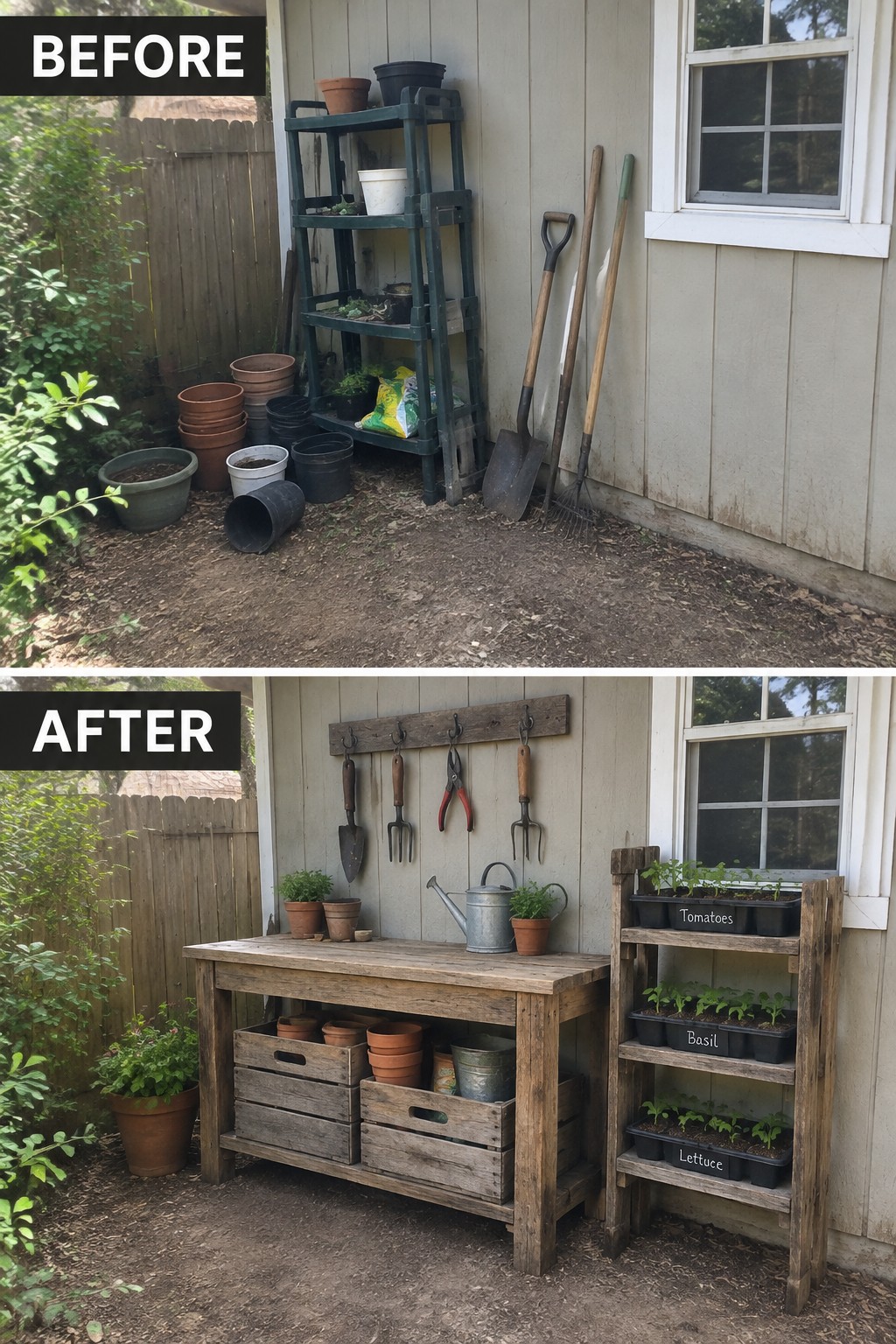
A cluttered side yard with tools and pots scattered on the ground can quickly become frustrating to work in. Adding a simple reclaimed wood bench gives everything a proper home, with crates underneath for storage and a rack above for hanging tools. The result feels much more usable and keeps the space from turning into a constant mess.
This setup works best in smaller yards or along the side of a house where you need a dedicated spot for seedlings and daily tasks. Use sturdy salvaged lumber for the frame, add old crates or bins below, and keep the top clear enough to actually work on. It stays practical as long as you leave room to move around the bench.
Build A Bench Around A Tree For Extra Seating
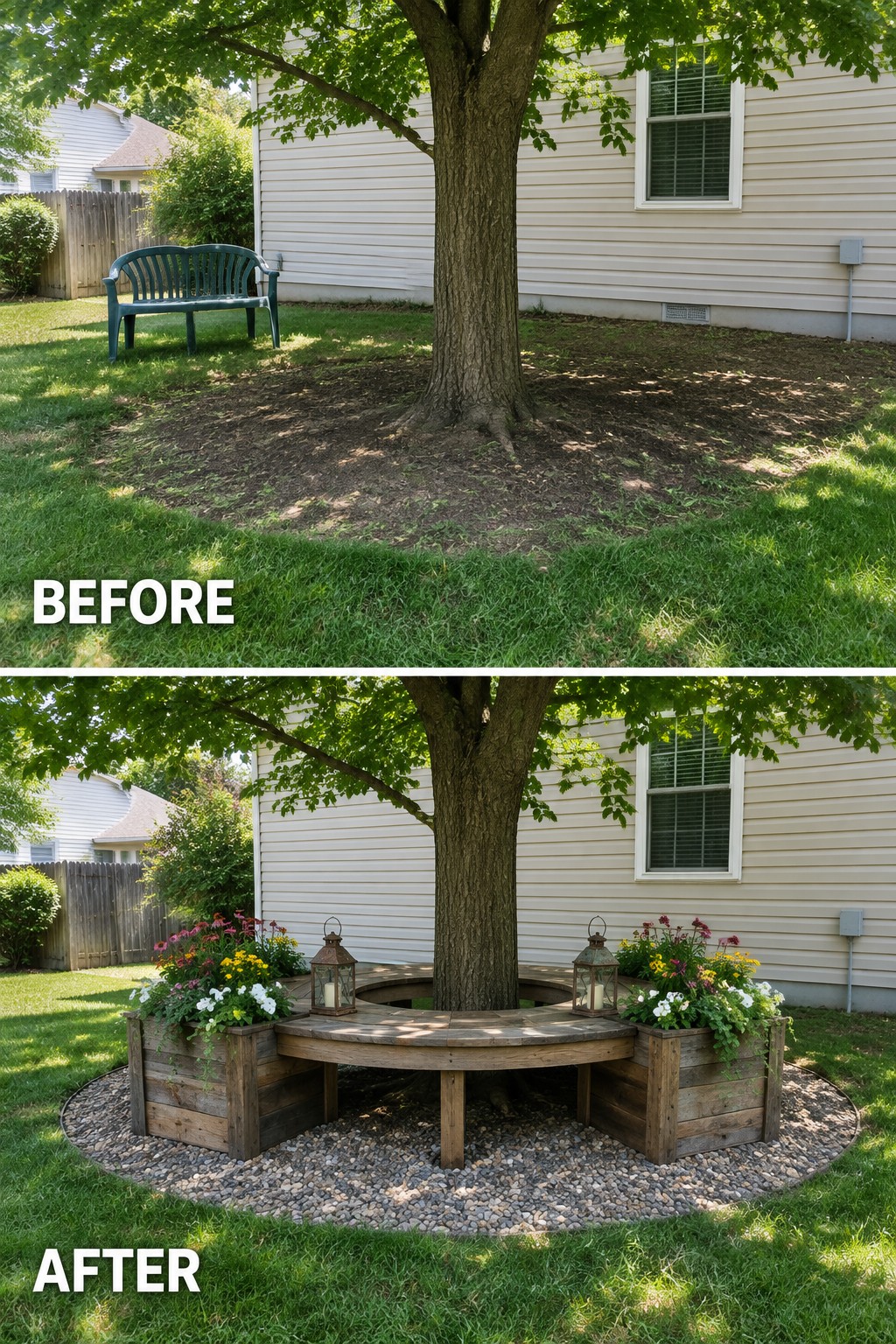
A bare patch of dirt around a mature tree often gets ignored because it feels awkward to use. Adding a simple circular bench made from reclaimed wood changes that by turning the spot into a defined place to sit while also protecting the tree roots. The gravel base keeps the area clean and stops mud from spreading onto the lawn.
This idea works well in smaller yards where every usable seat counts. Start by measuring the space around the trunk so the bench sits far enough out to let the tree grow. Use sturdy, weather-treated wood for the frame and planters, and keep the planting simple with a mix of flowers that can handle partial shade.
Build A Greenhouse From Reclaimed Wood
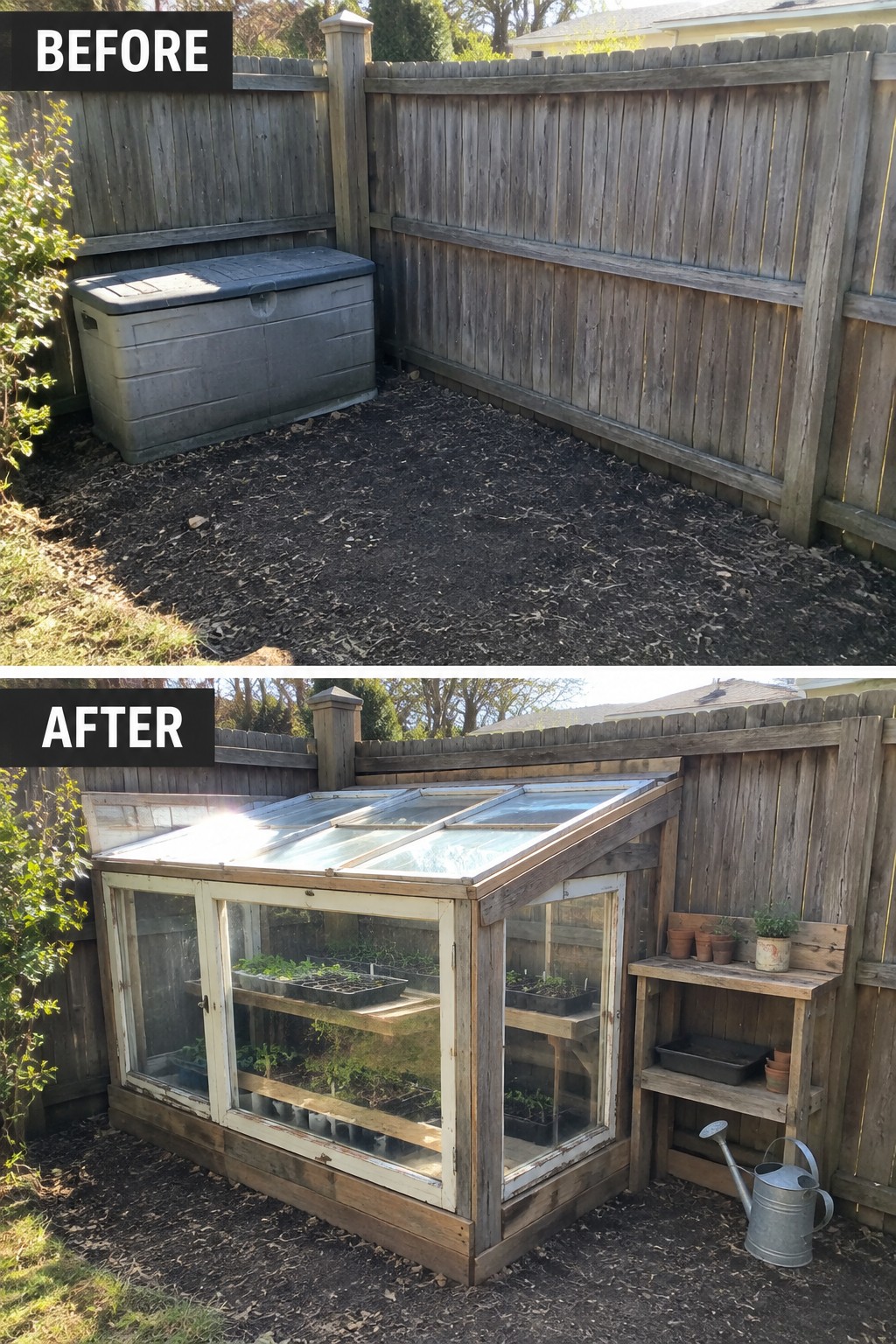
An empty dirt corner next to the fence held nothing but a plastic storage bin. Reclaimed wood and old windows turned that same spot into a working greenhouse with room for trays of seedlings on multiple shelves.
This idea suits small yards where you want to start plants early without buying a new structure. Use whatever lumber and glass you can find, keep the frame simple, and add a basic bench beside it for pots and tools. The main thing is making the space functional first before worrying about how it looks.
Mount Salvaged Planters On A Fence For Vertical Interest
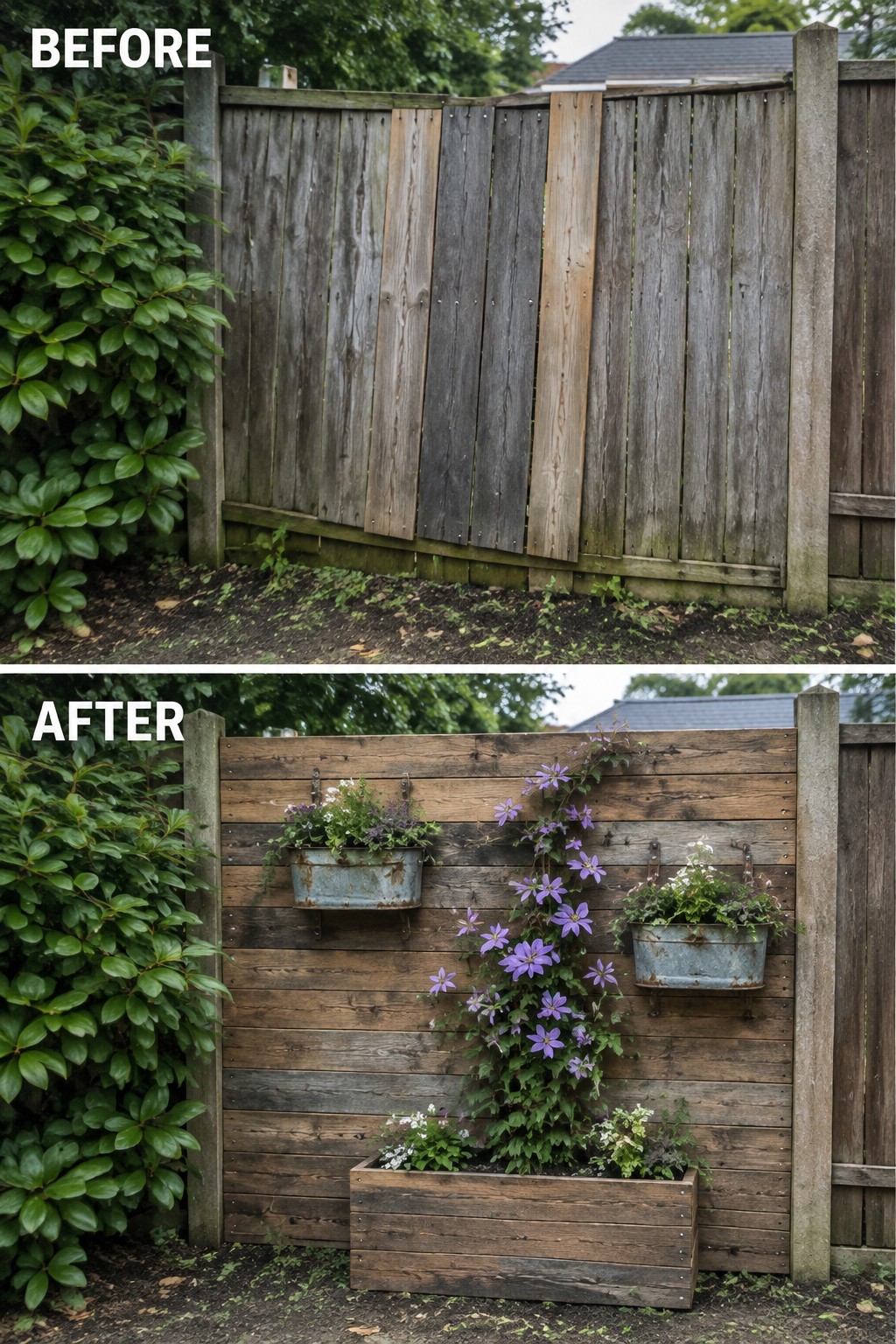
A plain fence can feel like wasted space until you add planting directly to it. Here the fence was covered with horizontal reclaimed boards to create a solid backdrop, then old metal tubs were fixed at different heights and planted with flowers and climbing vines. The base got a simple wooden planter box to finish the look.
This idea suits small gardens or narrow beds where there is no room for deep planting beds. Use containers that already have drainage holes or can be drilled, attach them securely, and choose plants that match the sun exposure. Start with the fence surface itself before adding too many extras.
Refresh An Old Shed With Reclaimed Wood

An old shed with peeling paint often looks worse than the rest of the yard. Here the faded boards were covered on the lower section and around the door with salvaged wood, and a corrugated metal roof replaced the worn shingles. The window box adds a single planted detail that ties the shed to the garden beds nearby.
This idea works best on small outbuildings where a full repaint feels like too much work. Use the wood on the lower half to hide damage, keep the upper walls lighter, and add only one or two practical touches like the box or new hardware. It suits yards that already have wood fences or natural plantings and keeps the shed from standing out as the one neglected spot.
Terrace A Sloped Backyard With Reclaimed Wood
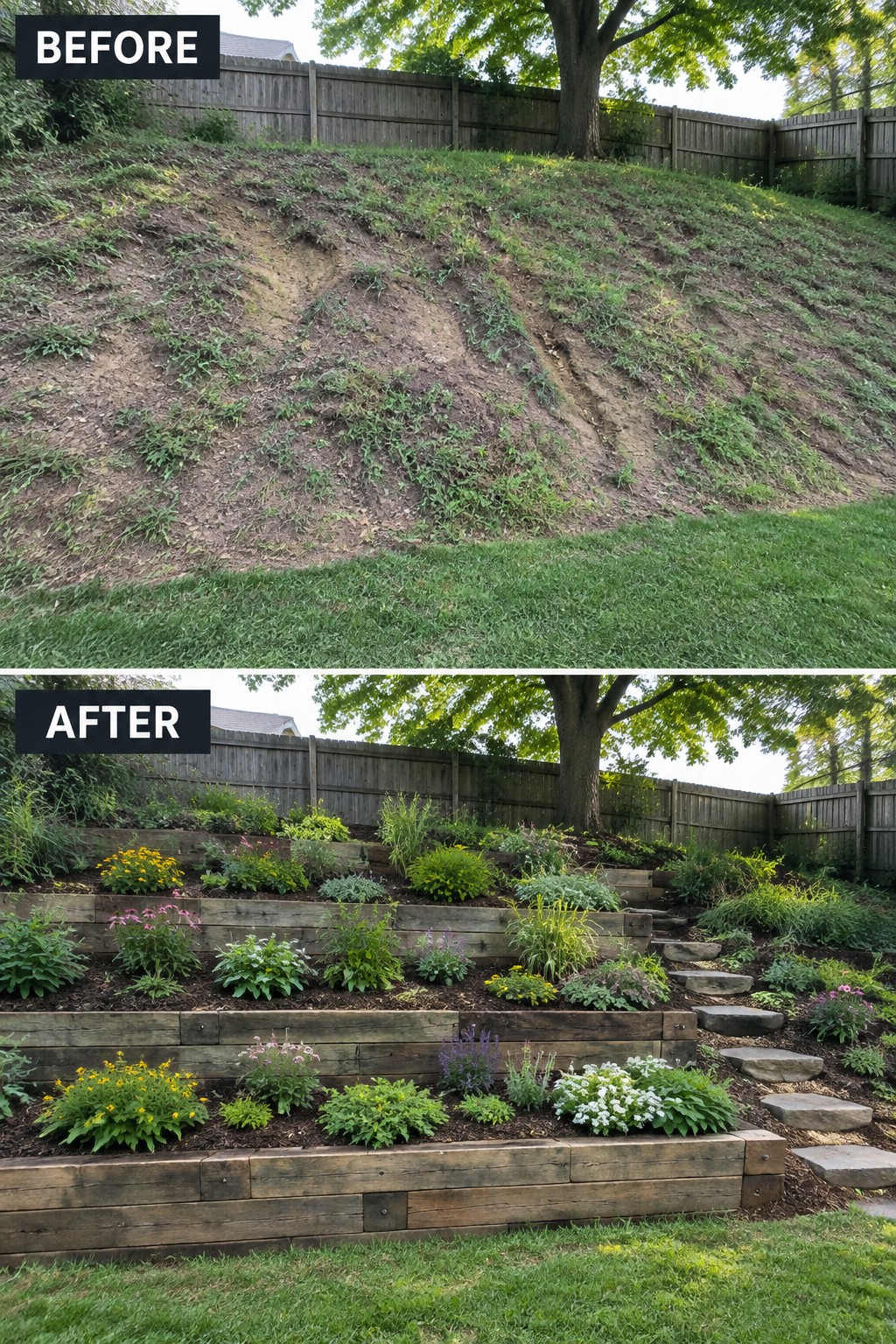
A steep, eroded slope is tough to mow and easy to ignore until it starts washing out. Building simple terraces with old boards turns the same hill into a series of flat beds that hold soil and let plants take hold. The wood keeps everything in place without needing a full retaining wall system.
This approach works best on yards that already have a noticeable grade but still get decent sun. Start by setting the lowest course level, then stack boards upward as the slope rises. Fill each tier with soil and choose plants that match the light and your watering habits. The wood will weather, so pick pieces that are already gray or brown if you want the finished look right away.
Turn A Bare Fire Pit Into A Seating Area
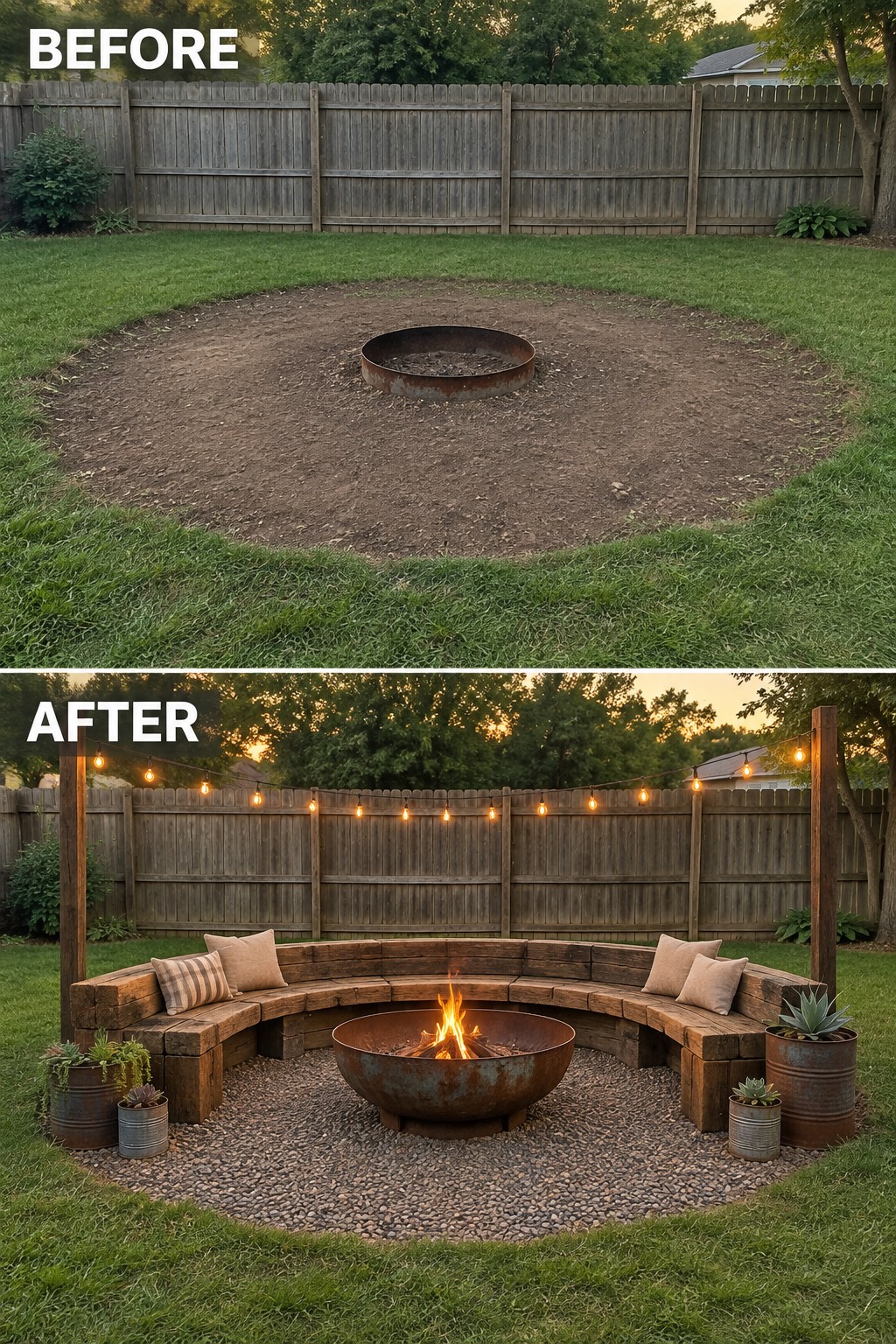
A fire pit sitting alone in open grass rarely gets used. Adding a simple curved bench made from reclaimed wood gives people a reason to gather and stay, while the gravel base keeps the area from turning muddy.
This works well in most backyards that already have a fire pit or a flat spot for one. Keep the seating low and the layout open so there is still room to move around the fire. String lights help the space feel finished without much extra cost.
Use Reclaimed Wood To Frame A Garden Gate

A plain chain link gate often feels like the quickest fix for a fence opening, but it rarely adds much charm. Switching to a wooden gate with a simple pergola above it changes the whole feel of the entry. The wood brings warmth and the climbing roses soften the lines without hiding the structure.
This approach works best along a side yard or at the start of a backyard garden path. Use salvaged posts and lumber for the frame, keep the gate itself straightforward, and let one or two strong vines do the rest. Brick or stone edging along the path helps hold the look together over time.
Use Reclaimed Wood To Edge A Garden Pond
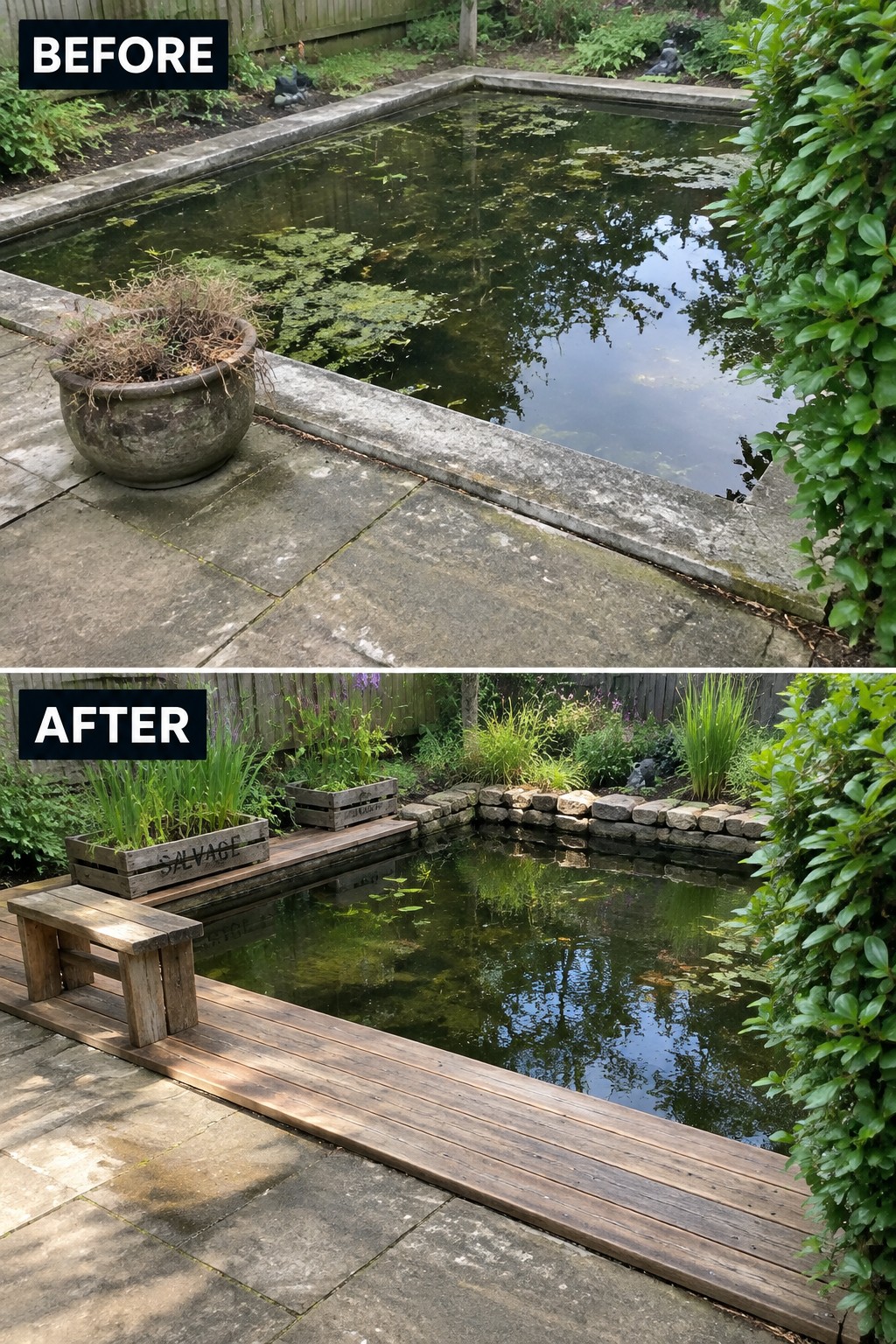
A concrete rim around a pond often leaves the space feeling unfinished and hard to enjoy up close. Adding a simple reclaimed wood deck changes that by giving you a clean walking surface and a place to sit right at the water’s edge. The wood also softens the look and ties the pond into the rest of the garden without needing a full rebuild.
This approach works well in smaller yards where you want the pond to feel like part of the living space rather than a separate feature. Start with the decking to define the area, then bring in a couple of salvaged crates or benches for planting and seating. Keep the wood untreated or lightly sealed so it weathers naturally with the rest of the garden.
Turn A Sloped Dirt Path Into Sturdy Garden Steps

A steep backyard slope often turns into a worn dirt track that gets muddy and hard to climb. Building steps with reclaimed wood treads and stone risers gives the slope real structure so people can walk it safely in any weather. The wood adds a warm, natural look while the stone holds everything in place and cuts down on erosion.
This approach works well on yards with noticeable grade changes where a simple path never stays put. Start by clearing loose soil and roots, then set the risers and treads on a solid base. A simple handrail makes the stairs even more usable, especially if the slope is long or the steps will see regular traffic.
Build Organized Garden Bins From Reclaimed Wood
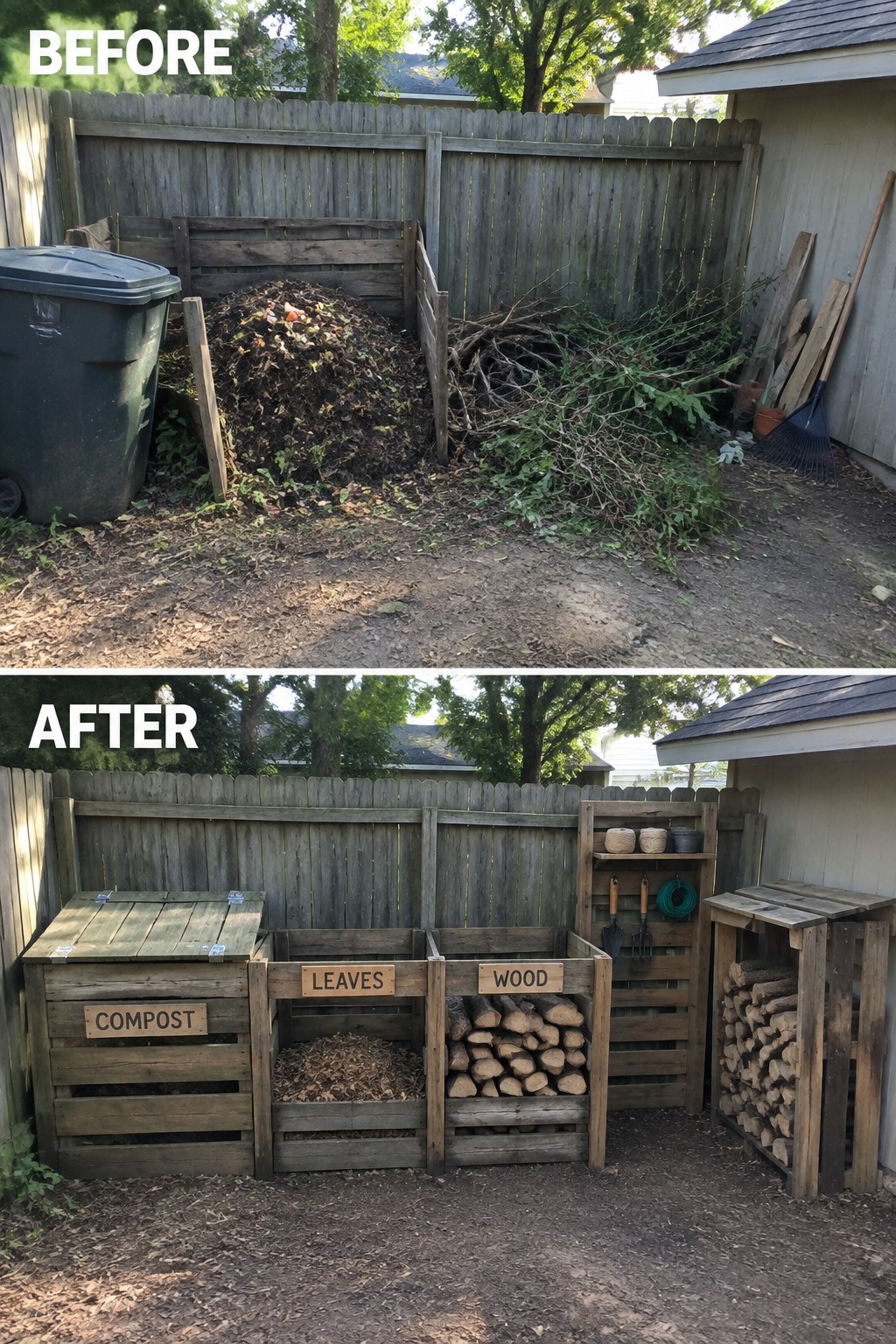
A cluttered corner full of loose leaves and branches is hard to work with. Turning that same spot into three labeled bins made from salvaged wood keeps the material contained, makes it easier to turn the compost, and gives you a ready supply of dry leaves and firewood when you need them.
This approach suits any yard that generates regular garden waste. Use whatever lumber you already have, keep the bins simple and open for airflow, and set them close to where you do most of your raking and pruning so the system actually gets used.
Turn A Bare Backyard Into A Play Area With Reclaimed Wood
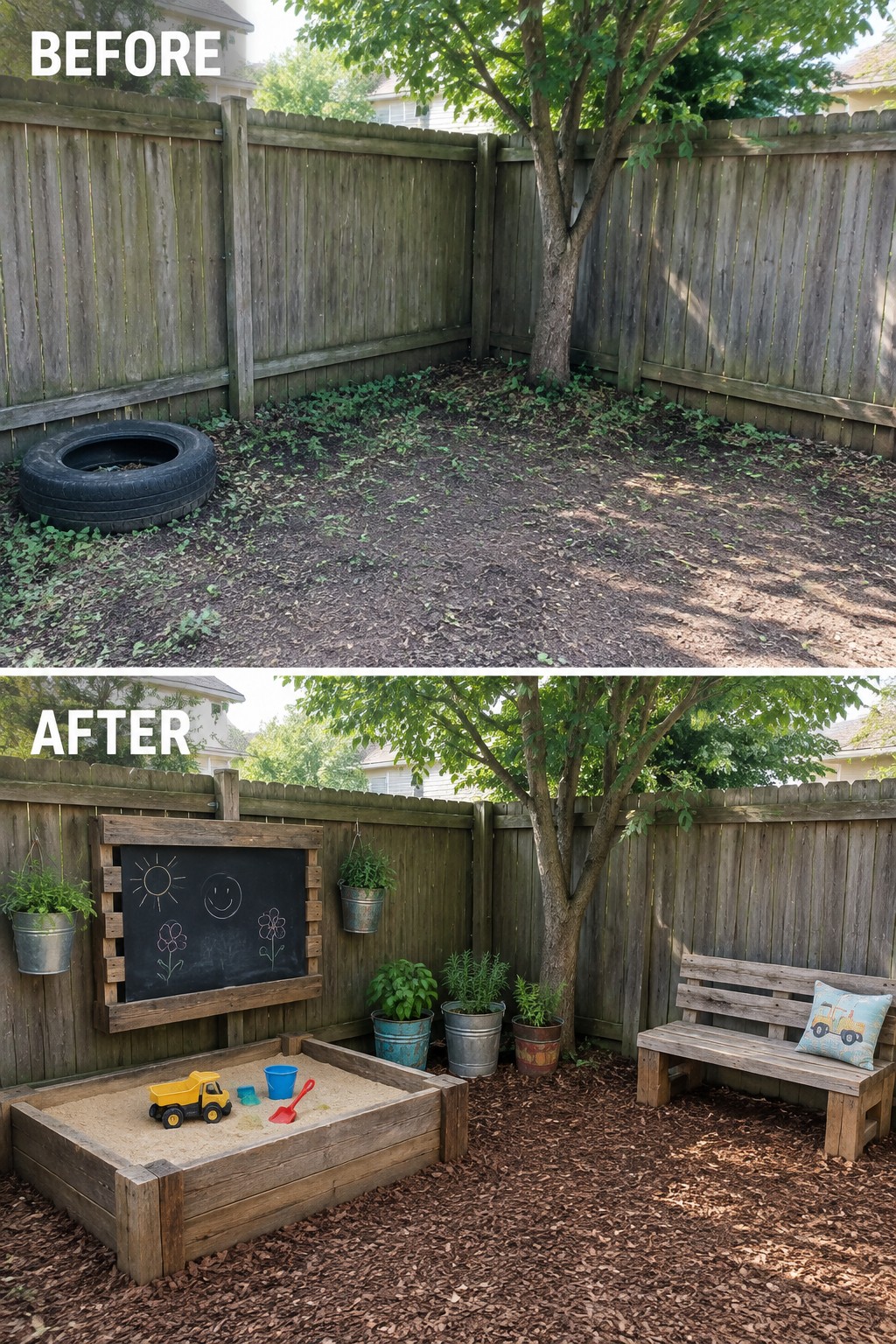
An empty patch of dirt behind a fence does not give kids much to work with. Framing a simple sandbox with reclaimed wood and setting a bench nearby turns the same corner into a place where children can actually play while adults have a spot to sit.
This approach works best in smaller yards where you want one clear activity zone rather than scattered pieces. Use whatever solid lumber you already have, keep the box low so sand stays contained, and lay mulch around the edges to cut down on mud. The bench does not need to match the sandbox exactly, just sit close enough that supervision feels easy.
Build A Patio Dining Table From Reclaimed Wood

A plain concrete patio with mismatched plastic chairs often feels temporary. Swapping that setup for a long reclaimed wood table and matching benches gives the space a clear purpose as an outdoor dining area. The wood brings weight and structure that plastic furniture lacks, and it holds up better outside.
This works well on any open patio or deck where you want a simple eating spot without building anything permanent. Start with solid wood pieces that can handle weather, keep the layout straightforward so people can move around the table, and add just a few potted plants or a lantern so the focus stays on the furniture itself.
Use Reclaimed Wood For Window Boxes
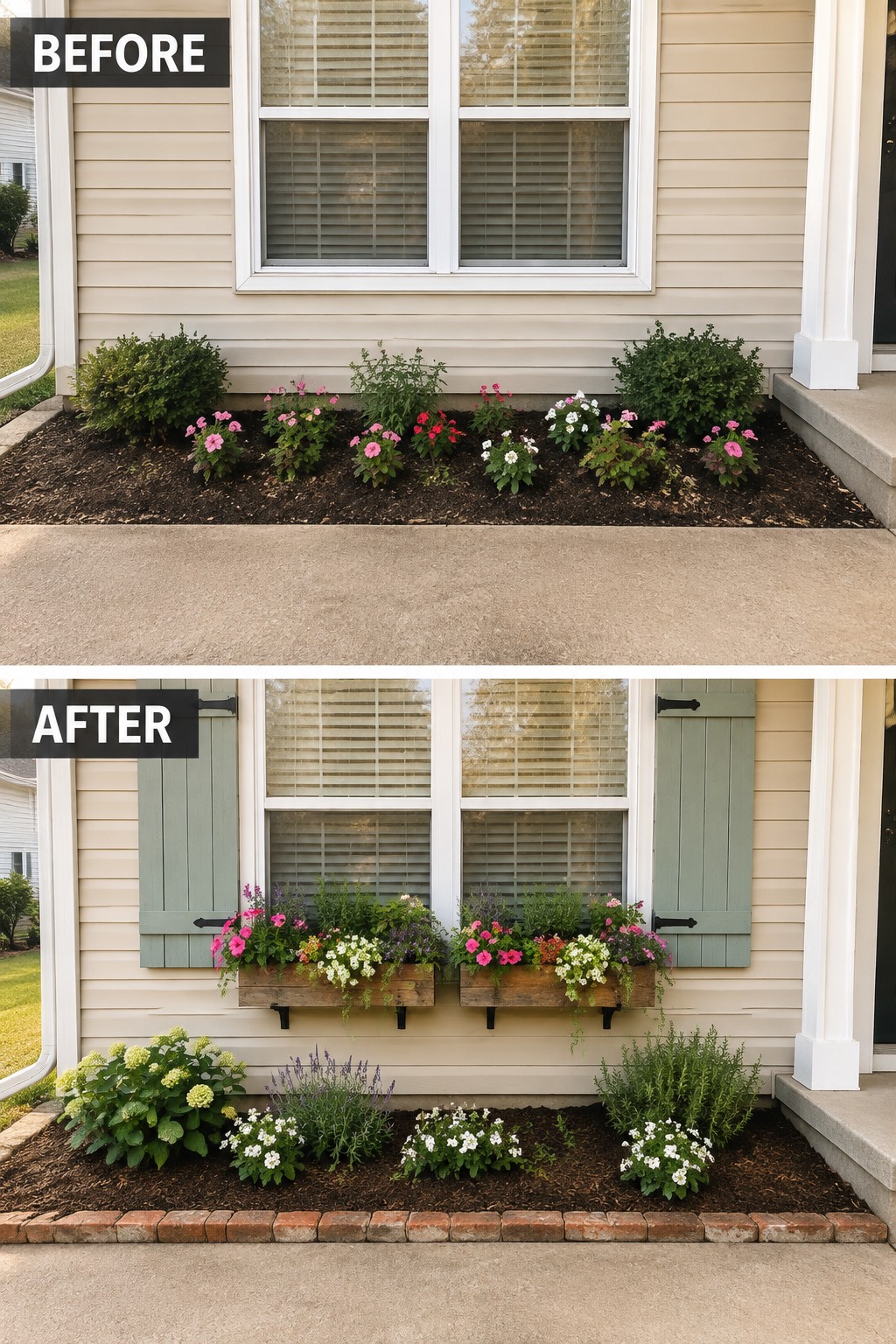
Mounting a pair of simple boxes made from salvaged wood under the windows gives the whole front a clearer purpose. The before photo shows a flat strip of mulch with plants scattered along the foundation. After the change, the wood boxes sit at eye level, the garden bed below looks organized, and the house feels more connected to the planting.
This approach suits homes with a long, low front and a narrow bed right against the siding. Build the boxes to match the width of each window, use weather-treated reclaimed boards, and keep the planting underneath low so the wood remains the main detail. It is an easy way to add structure without a full renovation.
Create A Patio Border With Reclaimed Wood

A rough lawn edge next to a concrete slab can feel unfinished and hard to use. Adding a simple reclaimed wood border and filling it with pavers turns that messy strip into a small, defined patio. The wood gives the new surface a clear shape while the pavers keep it low to the ground and easy to maintain.
This idea works best along the side or back of a house where you want a seating spot without a large build. Keep the wood frame low and straight so it blends with the lawn. Use planters at the ends to soften the corners and give the area a finished look without crowding the space.
Frequently Asked Questions
Q: Where can I grab reclaimed wood without it costing much? A: Hit up local demolition sites or ask builders directly. They often let you take scraps for free if you show up with a truck. Salvage yards work too for smaller cuts that match what you need.
Q: How do I stop bugs from hitching a ride on salvaged boards into the garden? A: Give everything a quick inspection and brush off loose debris first. A light spray of diluted vinegar helps deter insects without adding toxins near plants. Store the wood off the ground until you use it.
Q: Can old fence boards turn into a decent raised bed? A: Cut them to length and screw the sides together tight. Line the inside with a cheap plastic sheet to slow moisture damage. Drill a few holes in the base so water drains out.
