


Gardens in dry areas often look patchy because the plants were picked without enough thought for how little water they would get.
Switching to tougher varieties that handle drought lets the beds fill out on their own once the soil and spacing are set right.
I usually start by mapping out a few simple paths and plant groups in my own yard before buying anything so the layout feels settled instead of scattered.
Grouping plants with similar needs and adding a layer of mulch cuts down on weeding and watering while the space gains structure over a season or two.
Those steps make the biggest difference.
Replace A Lawn With Gravel And Low-Water Plants

The front yard went from a patchy, thirsty lawn to a simple layout of gravel beds edged with steel and filled with drought-tolerant plants. This change cuts down on watering and mowing while giving the space a cleaner, more intentional look.
The idea works well on any home where the lawn struggles in summer heat. Start by removing the grass, lay down a weed barrier, and add gravel or decomposed granite to create the base. Then plant a few tough varieties like agave, lavender, and grasses in groups so the beds feel full without needing constant care.
Clean Up Overgrown Borders Before Adding New Plants

The before photo shows a messy strip of weeds and wild growth along the fence that made the whole side of the yard feel neglected. Once that was cleared, the space could be shaped into clean beds with gravel, rocks, and edging that keep everything looking intentional instead of scattered.
This approach works well along fences or property lines where things have gotten out of hand. Start by removing the old growth completely, then lay out simple borders and choose plants that handle dry conditions without much water. The result stays low maintenance and looks planned rather than accidental.
Line A Narrow Side Path With Pots And Vines

A plain concrete walkway next to the house often stays empty because the space feels too narrow for much planting. Placing a low wooden bench along one wall and filling it with pots creates a clear line of plants without blocking the path. Adding a simple trellis or wire on the fence lets vines climb and softens the tall vertical surface.
This approach works well on long, tight side yards where digging beds is not practical. Use lightweight pots and a basic wood platform so the setup stays movable if needed. Drought-tolerant plants in matching containers keep the look consistent while cutting down on watering.
Add Defined Garden Beds With Drought-Tolerant Plants
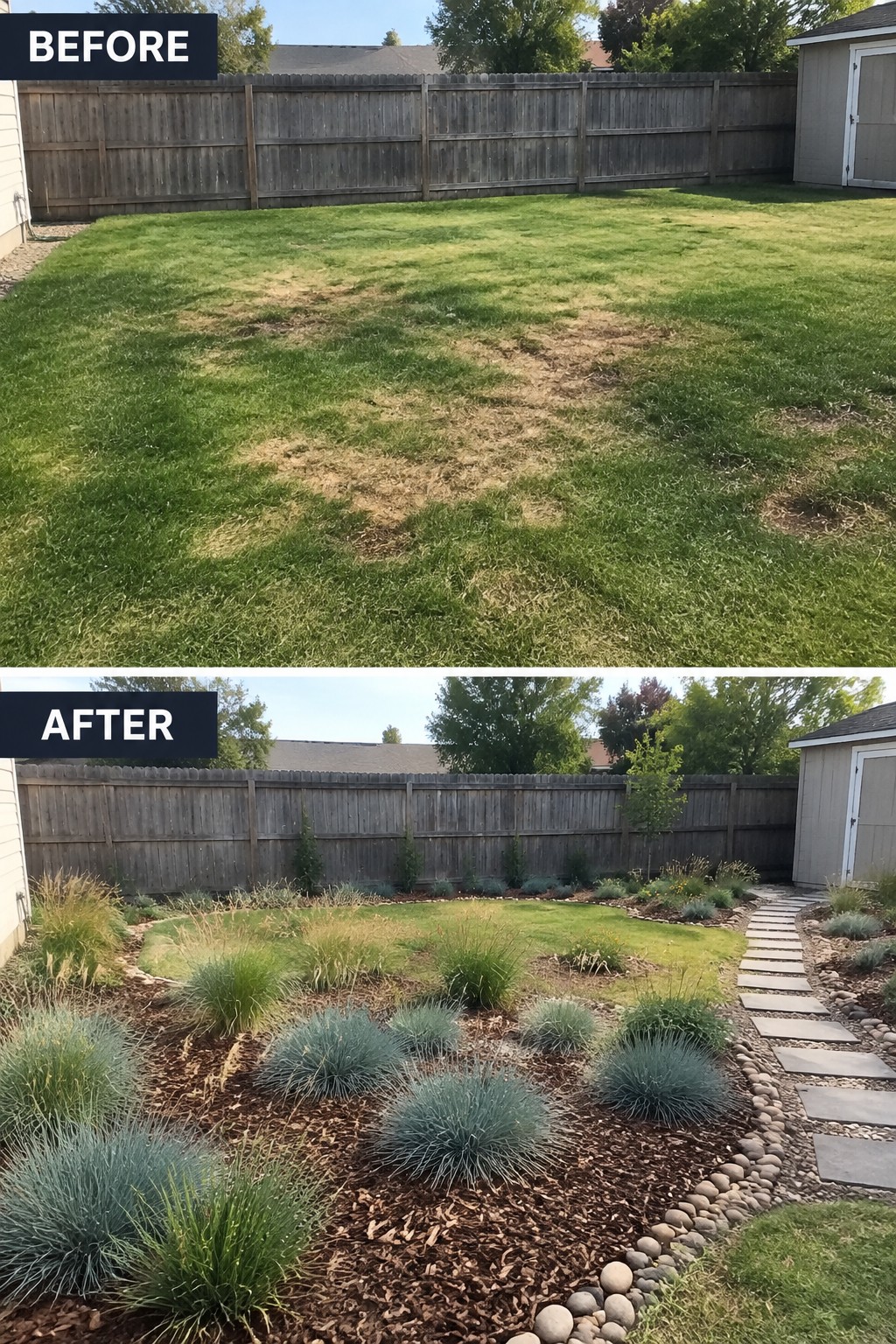
A large open lawn often ends up looking patchy and hard to manage over time. Replacing sections of it with planted beds gives the yard clear shape while cutting down on the amount of grass that needs regular care.
This idea suits backyards that still need some open lawn but would benefit from lower water use. Mark out simple borders along the fence line, fill them with grasses and shrubs that handle dry conditions, and finish the beds with mulch to keep the soil covered and the edges tidy.
Clear Overgrown Beds Before Planting Drought-Tolerant Flowers

Many people try to fix a messy garden by adding new plants on top of the old mess. In this case the before photo shows a thick tangle of weeds and dead stems right against the house. The after photo shows the same spot cleaned out completely, then replanted with simple rows of lavender, yarrow, penstemon, and salvia set in gravel. Starting with a full cleanup made the new plants look intentional instead of just another layer of confusion.
This approach works best along foundations or narrow beds where plants can quickly get out of hand. Remove everything first, add a clean edge and gravel or mulch, then choose a few tough perennials that match your climate. The result stays low maintenance and still gives color without constant watering.
Define The Lawn Edge With A Simple Border Garden

The before photo shows a ragged line of weeds growing right up against the driveway. In the after version that strip has been turned into a narrow bed with a few shrubs and gravel, which gives the whole front a much cleaner outline. The change is small but it makes the lawn look finished instead of neglected.
This works best along driveways or sidewalks where the grass meets hard surfaces. Pull the weeds first, add a simple metal or plastic edge, then plant a short row of drought-tolerant shrubs and fill in with gravel. It keeps the lawn from creeping into the concrete and gives you a low-water planting area that stays neat with very little upkeep.
Define A Patio With Raised Garden Beds

A flat concrete slab often feels unfinished next to a house, especially when grass creeps right up to the edges. Adding raised wooden beds around the perimeter gives the space clear boundaries and creates room for planting without having to dig into the existing surface. The beds also keep soil contained and make it easier to choose drought-tolerant plants that stay low and need little water.
This approach works well on small backyards or side yards where you want a usable seating area without losing all the growing space. Keep the beds at a comfortable height for maintenance, fill them with gravel or mulch around the edges, and add a simple path of pavers if the area gets heavy foot traffic. Focus on one or two plant types that handle dry conditions rather than trying to fill every inch.
Terrace A Steep Slope To Create Planting Beds

A bare, eroded slope usually stays that way because nothing holds the soil in place. Simple wooden terraces break the hill into flat sections that keep the ground stable and give plants room to root. Once the levels are in, adding mulch and drought-tolerant plants turns the whole area into something that needs little watering and stays looking neat.
This idea suits any yard with a noticeable drop where grass refuses to grow. Use basic landscape timbers or boards to build the tiers first, then fill each bed with plants that handle dry spells. The terraces do most of the work by controlling runoff and giving you clear spots to add greenery without constant maintenance.
Define A Neglected Strip With A Simple Garden Bed

A weedy patch of grass between the sidewalk and street often gets ignored because it feels too narrow or awkward to manage. The change here shows what happens when that strip gets cleared and turned into one clean planting area instead. A low stone edge and gravel base give the bed clear shape, while the plants fill it without needing constant mowing or watering.
This works well on any home where the front strip gets baked by sun and road traffic. Start by removing the old growth completely, then add simple edging to keep the bed from spreading into the lawn or sidewalk. Drought-tolerant flowers and grasses keep the look full with less upkeep once the roots settle.
Refresh Container Gardens With Drought-Tolerant Plants

Many people start with colorful annuals in big pots, but those plants often get leggy and need constant watering. Switching to succulents, sedums, and tough grasses keeps the same containers but cuts down on maintenance while still giving the space a neat look.
This approach works well on patios or side yards where you already have large pots. Clean out the old soil, add a gravel top layer for drainage, and group plants by similar water needs. The result stays green longer in dry weather and still looks intentional next to seating.
Add Structure To An Overgrown Border

The side yard looked messy and unplanned before, with weeds mixed in among scattered plants and bare dirt showing through. Adding a clear edge, dark mulch, and a simple lineup of shrubs turned the same strip into something that feels intentional and easy to maintain.
This works especially well in narrow spaces next to fences or paths. Clear the old growth first, then mulch the bed and repeat a few tough plants rather than trying to fill every inch. The result stays low cost and drought friendly while keeping the area from looking neglected.
Swap Busy Flower Beds For Drought-Tolerant Pots

The front garden went from a crowded mix of flowers and ferns to a much simpler layout with gravel, a few large pots, and tough succulents. This change cuts down on watering and weeding while still giving the entry a neat, finished look. The steps also got a fresh coat of paint, which helps tie the whole area together without much extra work.
This approach works well for homes that want lower maintenance without losing curb appeal. Start by clearing out plants that need constant care, then add a layer of gravel to keep the ground clean and define the space. Choose a few larger pots in the same material or color so the entry feels pulled together rather than scattered.
Add Structure To A Neglected Backyard

A patchy dirt yard with a playset sitting in the middle feels unfinished and hard to maintain. Adding a clean mulch border with simple edging around the equipment and filling the outer edges with low ground cover plants gives the whole space a clear shape. The stepping stone path then ties it together so the area feels intentional instead of just open dirt.
This approach works well in dry climates because mulch helps hold moisture and the ground covers can be chosen for low water use. Start by laying out the border and path before planting so you know exactly where everything will sit. It keeps the play area usable while turning the rest of the yard into something that looks cared for without a lot of ongoing work.
Add Structure To An Overgrown Garden Bed

The biggest shift here came from clearing away the scattered pots and dead growth first, then grouping plants into clear clusters instead of leaving everything loose across the gravel. The new layout uses a few larger shrubs and perennials to create shape and rhythm, which makes the whole area look intentional rather than neglected.
This approach works well in dry climates where you want low water use without losing interest. Start by removing anything that looks messy or half-dead, then plant in simple drifts or blocks rather than spreading single pots around. It keeps the space easy to maintain and stops the gravel from looking like random filler.
Replace A Lawn With Gravel And Drought-Tolerant Plants

A standard lawn often needs regular watering and mowing, especially in drier climates. In this case the grass was removed and replaced with gravel, a few large rocks, and low-water shrubs and grasses. The result feels more structured and uses far less water once the plants settle in.
This approach works well in small side yards or back corners where you want a clean look without constant upkeep. Start by clearing the grass completely, lay down a weed barrier, then add gravel and choose plants suited to your area. Keep the plant count low at first so the space stays open and easy to maintain.
Define Garden Borders With Simple Edging

An overgrown strip along a fence often looks worse than it needs to because there is no clear edge. Adding a simple stone border and fresh mulch turns the same space into a series of neat beds that keep plants in place and weeds under control. The change is mostly about structure rather than new plants.
This approach works well in narrow side yards or along property lines where you want low-maintenance planting. Start by clearing the weeds, lay the edging first, then mulch thickly so the beds stay looking tidy even when the plants are still filling in. It suits homes that already have a fence and lawn but need one small step to make the planting look intentional.
Clear Out Overgrown Beds Before Planting Drought-Tolerant Options

A raised bed full of dying tomato vines and weeds is hard to manage and wastes water. Removing everything first and starting over with rosemary, oregano, thyme, and succulents creates a much simpler layout that needs less care.
This idea suits small yards or side beds where water use matters. Pull the old plants, add a layer of mulch, and group plants that share the same low-water needs. The bed stays tidy without constant work.
Turn A Bare Balcony Into A Usable Outdoor Spot

A small balcony often ends up as just a place to store a chair and a few pots. In this case the space gained purpose once a simple vertical planter was added along the railing and the floor was covered with gravel. The wooden structure holds plenty of succulents without taking up walking room, and the table and chair now have a clear place to sit.
This approach works well on any narrow balcony or patio where floor space is limited. Start with a basic frame that fits your railing, choose drought-tolerant plants that need little water, and keep the rest of the area open. Gravel helps with drainage and keeps the space looking tidy even when the plants are still filling in.
Clear Overgrown Beds Before Adding Gravel And Succulents

The biggest change here came from removing the tall messy plants and weeds that had taken over the narrow strip beside the house. Once the bed was cleaned out, a layer of gravel and a few larger rocks gave the space clear edges and kept the new plants looking organized instead of scattered.
This approach works well along sidewalks or house foundations where water is limited. Pull everything out first so the new layout stays visible, then choose succulents and similar low-water plants that can handle the sun and dry soil. Gravel helps control weeds and gives the bed a finished look without needing constant upkeep.
Add Structure To An Overgrown Backyard

The main change here is turning a patchy dirt circle surrounded by tall weeds into a clean, contained space. A simple metal edge, gravel fill, and a few large rocks create a clear boundary while the surrounding plants stay low and neat.
This approach works well in dry climates because it replaces thirsty grass with gravel and drought-tolerant plants like lavender and ornamental grasses. Start by defining the shape you want around your fire pit, then add the edging and gravel before planting. Keep the beds narrow enough that you can reach everything without stepping on the plants.
Use Matching Pots To Update Your Front Entry

The before photo shows a jumble of mismatched containers with overgrown ferns and struggling plants that made the entry feel cluttered. In the after version, a few coordinated pots in terracotta and rope-wrapped styles hold neat lavender, succulents, and silvery foliage, giving the space a much cleaner and more intentional look.
This approach works well on any front step or porch where you want low-water plants without constant upkeep. Start by clearing out tired pots, then choose two or three container styles that match your house and repeat them with tough plants suited to your climate. Keep the groupings balanced on each side of the door so the walkway stays open.
Frequently Asked Questions
Q: How often do I water after putting in new drought tolerant plants? A: Water deeply right after planting to settle the roots. Cut back to once a week or less once you see new growth starting. The plants will adjust faster if you let the top inch of soil dry out between soakings.
Q: Can I reuse what I already have in the yard instead of buying new stuff? A: Yes, move rocks or old pavers into place as edging and break up any existing compost pile to mix into the beds. This keeps the whole project under a few bags of mulch and a handful of starter plants.
Q: What happens if a few plants still struggle in the first summer? A: Pull the weak ones and fill the gap with more of whatever is thriving nearby. Tougher varieties often spread on their own once they settle in.
