

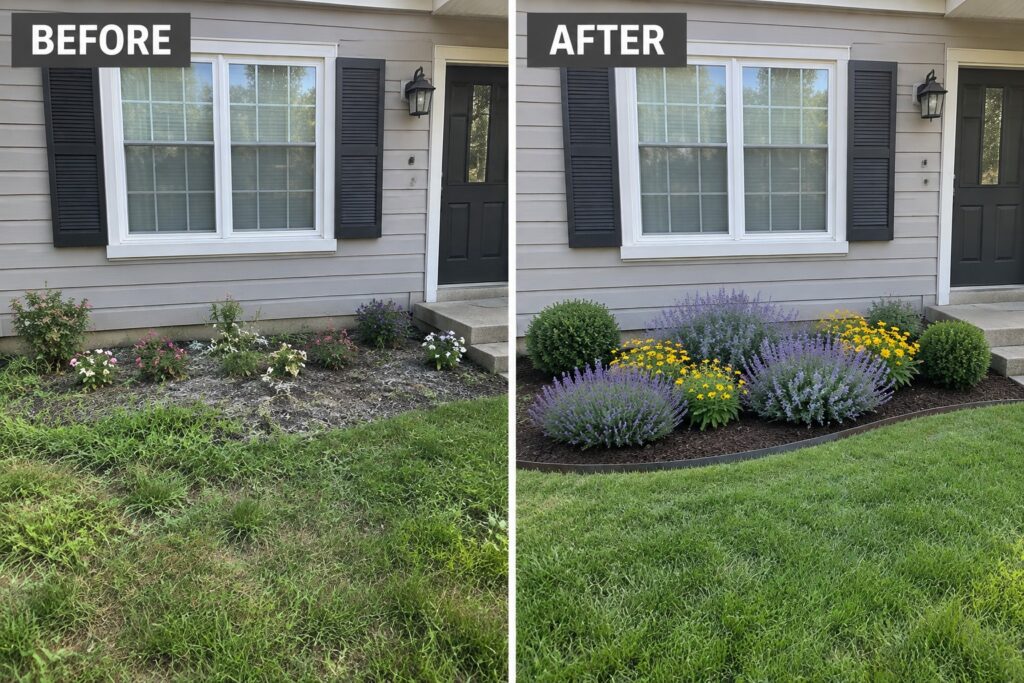
I remember walking out to my side yard one spring and noticing how the flower beds had lost their shape under layers of weeds and old mulch.
Clearing the edges first made the whole space feel more intentional, even before I added a single new plant.
Low-maintenance options like spreading ground covers and grouping similar perennials cut down on the time I spent weeding later on.
It is satisfying to see the beds hold their look through summer without constant attention.
A few of these layout tweaks are ones I would try again in other parts of the garden.
Define Flower Beds With Simple Edging
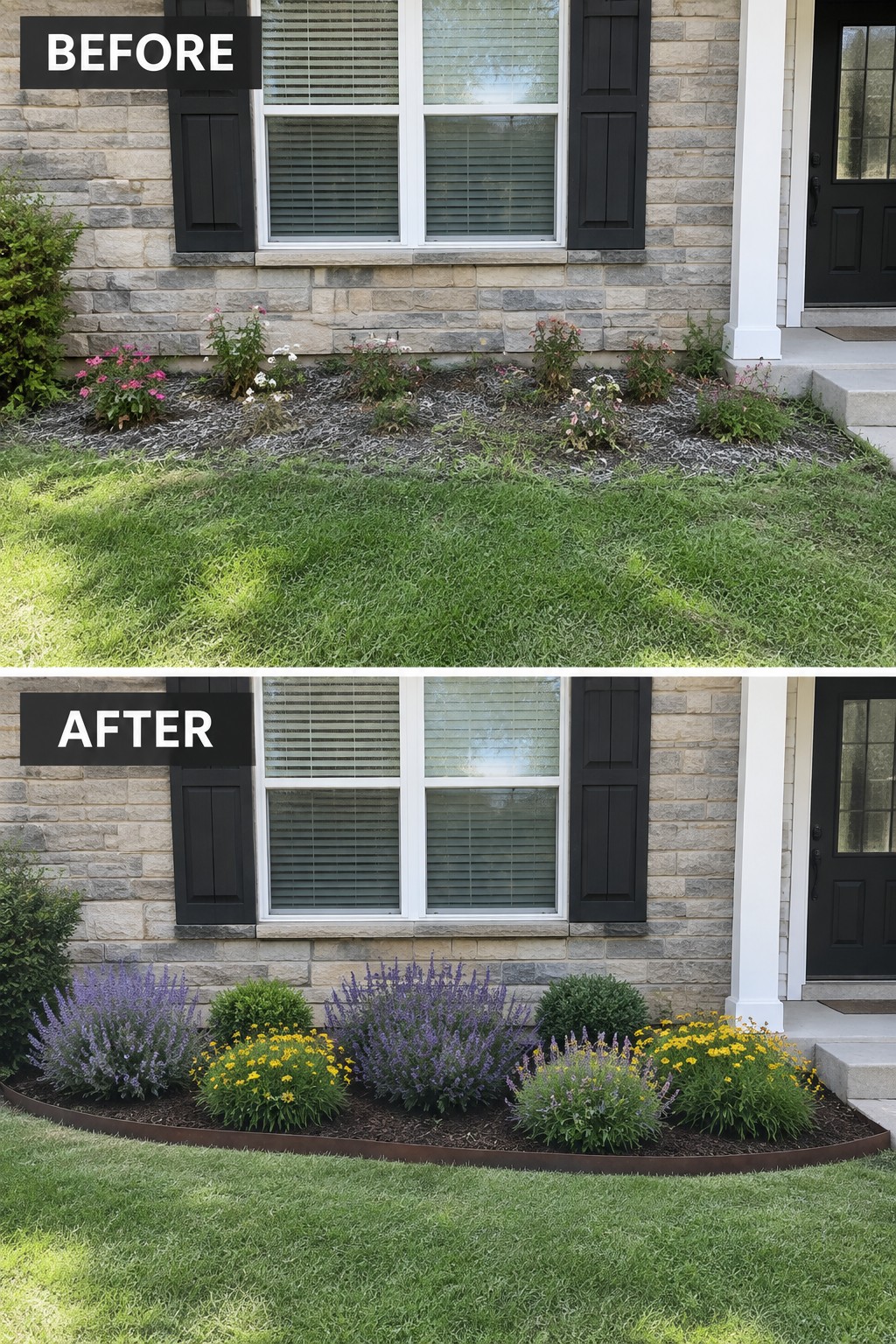
The biggest shift in this front yard comes from adding a clear border around the planting area. A simple curved metal edge turns scattered plants and loose mulch into one tidy bed that follows the house line and keeps everything contained.
This works best along the foundation of a house where you want low effort upkeep. Lay the edging first to set the shape, then fill in with a few repeating plants rather than a mix of random ones. The result stays neat with less weeding and makes the whole front look more intentional without needing constant work.
Add Structure To An Overgrown Flower Bed
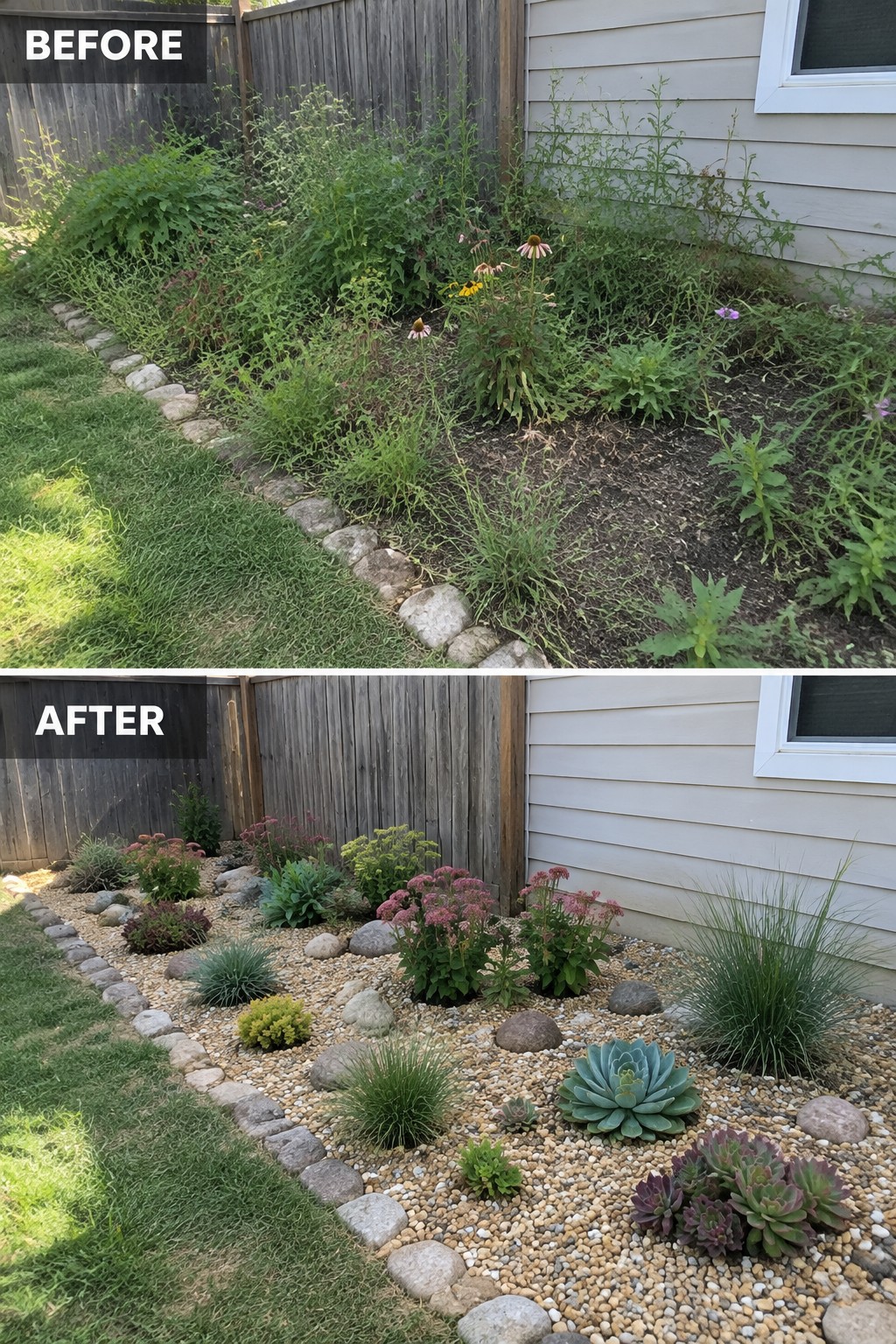
The biggest shift here comes from clearing out the tall weeds and messy growth, then covering the soil with gravel and adding a simple rock border. That single change turns a chaotic strip along the house into a bed that looks intentional and stays much easier to manage over time.
This approach works well along foundations or narrow side yards where you want low upkeep. Start by removing the worst of the overgrowth, lay down landscape fabric if weeds are heavy, then add gravel and a few larger rocks to hold the shape. Stick to a small number of tough plants like the succulents shown so the bed stays neat without constant work.
Create A Defined Border Garden Along Your Fence

A bare strip of dirt or mulch next to a fence often looks unfinished and collects leaves and weeds. Adding a planted border turns that empty space into a clean, structured part of the yard. In this case, the change came from clearing the area and putting in a mix of low shrubs, tall grasses, and flowering perennials with a few rocks for weight.
This idea works well along long fence lines or property edges where you want something simple to maintain. Start with good soil and mulch, then choose plants that stay in their space without constant trimming. It gives the yard a finished look without needing a big redesign or high upkeep.
Add Low Retaining Walls To Shape A Sloped Garden
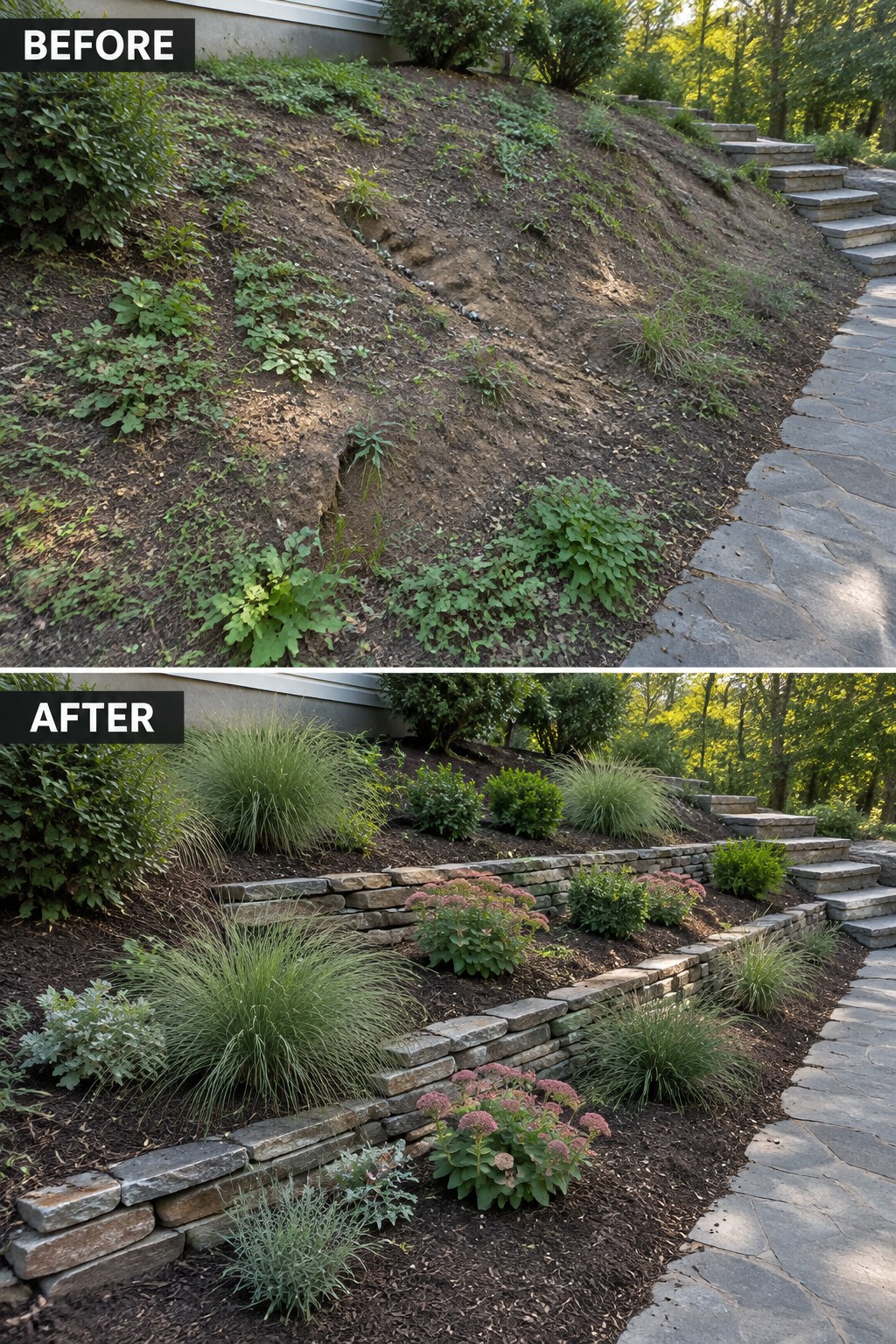
A bare, weedy hillside is hard to plant and harder to keep neat. Low stone walls break the slope into flat beds that hold soil in place and give you clear planting zones instead of one big messy area.
This idea suits homes with gentle hills where full regrading feels like too much work. Keep the walls under two feet so you can often skip permits, and match the stone to any existing paths or steps on the property. Mulch the beds right after planting to cut down on weeds while everything settles in.
Define Flower Beds With Mulch And Grouping
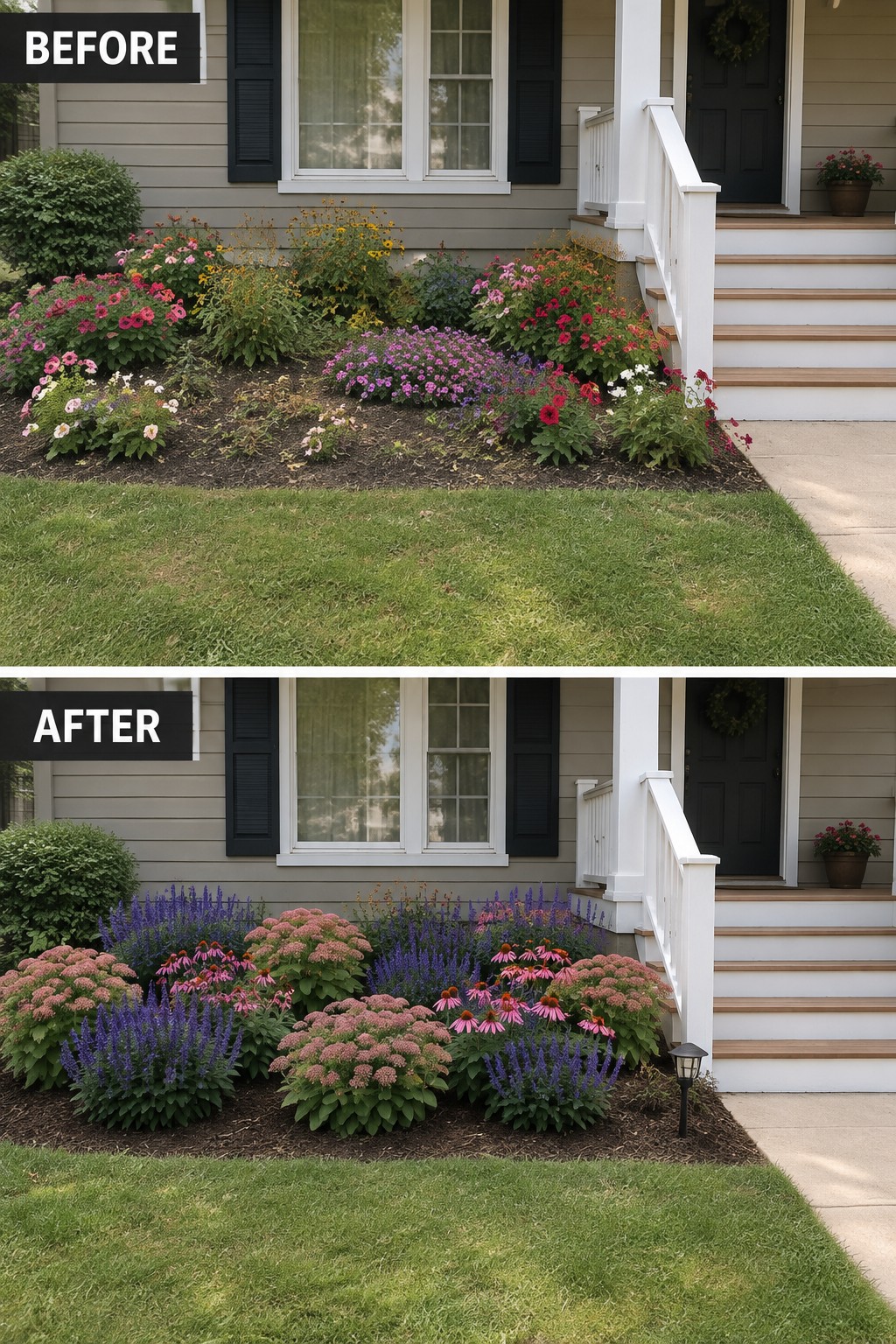
The front beds here went from a scattered mix of plants and weeds to neat rows of grouped perennials set in dark mulch. That single change makes the whole area look intentional instead of neglected. The mulch also helps keep weeds down and moisture in, which matters if you want beds that stay looking good without constant work.
This approach works well along the front of a house or any narrow border where you want structure without a lot of fuss. Clear the old growth first, then plant in clusters of the same variety and finish with a few inches of mulch. Stick to two or three plant types so the bed stays easy to maintain and does not fill in too quickly.
Replace Overgrown Plants With Easy Grasses And Perennials

The before photo shows a crowded mix of hostas and leggy perennials that had taken over the bed and started to look unkempt. The after version clears that out and uses repeating clumps of ornamental grass with just a few coneflowers tucked in between. The result feels much calmer and stays neat with far less work.
This approach works well along a house foundation or sidewalk where you want height without constant trimming. Start by removing the old plants completely, then space the grasses evenly and add a fresh layer of mulch. It suits small beds best when you repeat the same two or three plants rather than mixing too many varieties.
Add Stepping Stones To Shape A Narrow Border

A narrow strip of dirt next to the house often ends up looking messy because there is no clear structure. Adding stepping stones gives the bed a purpose and makes it easier to walk through for weeding or watering. The change from loose soil to a mulched bed with stones running through it turns the area into something that feels planned instead of leftover.
This idea works best along sidewalks or foundation lines where you want low-maintenance color without blocking access. Use flat stones that sit level with the ground, then fill around them with mulch and a few spreading plants like lavender or thyme. The stones keep the bed looking tidy even when the plants are still filling in.
Simplify Overgrown Flower Beds With Fewer Plants

Crowded beds full of mixed flowers often end up looking messy and require constant work. Replacing that dense planting with a few rounded shrubs, hostas, and simple seasonal flowers creates clear structure and cuts down on weeding and replanting.
This idea suits front yard beds where you want a neat look without daily upkeep. Focus on keeping the shrubs as the backbone, add mulch to hold down weeds, and leave enough space between plants so they can fill in on their own.
Refresh Flower Beds With Mulch And Simple Planting

One of the simplest ways to fix a tired foundation bed is to clear the weeds and add fresh mulch. The before image shows patchy ground with dead leaves and scattered plants. After the update the same area has clean dark mulch, grouped plants, and a few solar lights that give it shape without much work.
This idea works best along the front of a house where you want low upkeep and a tidy look. Clear the old growth first, then use mulch to hold down weeds and keep the soil moist. Choose a few easy plants in repeating colors and add lights only where they highlight the beds at night. It fits most homes with existing stone or siding and keeps the focus on simple structure rather than constant care.
Add Structure To An Overgrown Border
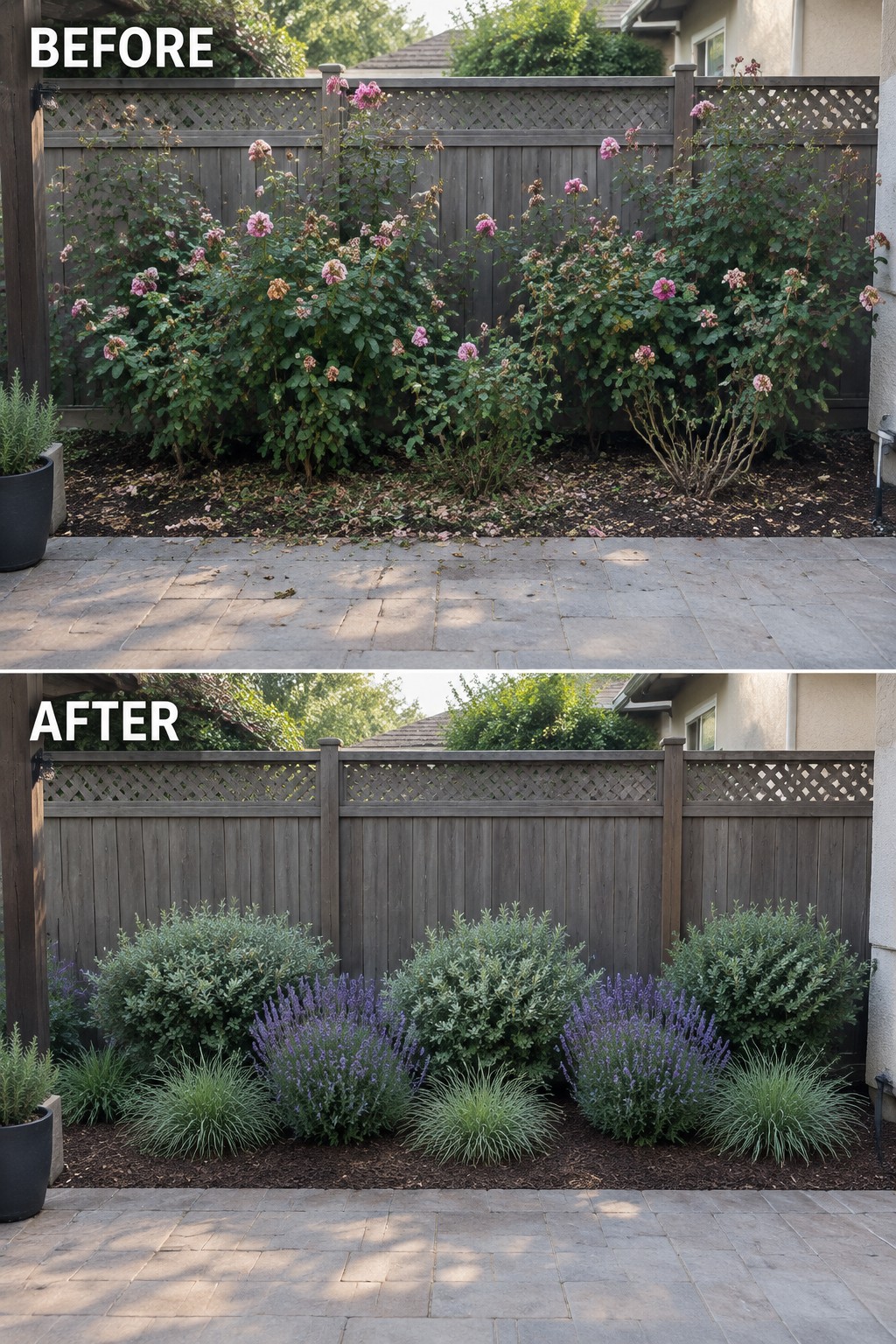
One of the easiest ways to improve a messy garden edge is to clear out overgrown shrubs and replant with lower, more structured plants. The before photo shows tall, sprawling bushes that had filled the space unevenly along the fence. After the change, repeated mounds of compact shrubs and lavender sit neatly in a row, giving the bed a much tidier shape without losing interest.
This idea works well along fences, property lines, or house walls where plants tend to get out of hand. Remove the largest overgrown plants first, then repeat a few varieties that stay roughly the same size. Mulch between the plants keeps the bed looking finished and helps control weeds through the season.
Build A Simple Raised Bed To Clean Up The Fence Line
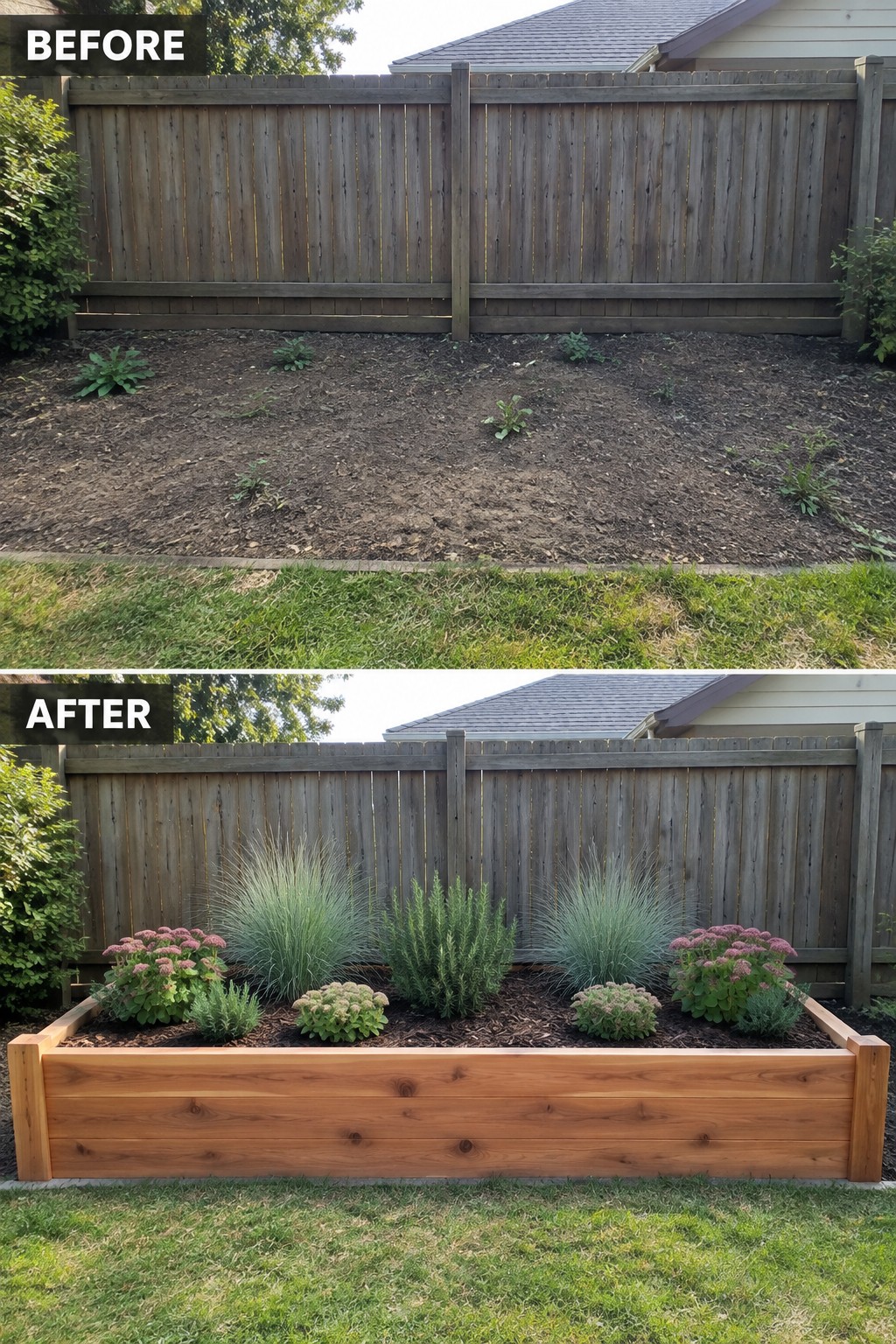
A bare strip of dirt along a fence often looks unfinished and collects weeds fast. Adding a raised wooden bed turns that same spot into a contained planting area that stays neat with far less effort. The wood creates a clear edge, the mulch helps hold moisture, and the plants have room to grow without spreading into the lawn.
This idea works especially well on narrow side yards or back fence lines where you want some greenery but do not want to fight the soil. Use rot-resistant lumber, keep the bed a comfortable width for weeding, and choose a handful of low-maintenance shrubs and grasses that match your climate. Once the bed is in place, the whole border feels intentional instead of forgotten.
Use Gravel To Simplify A Small Flower Bed
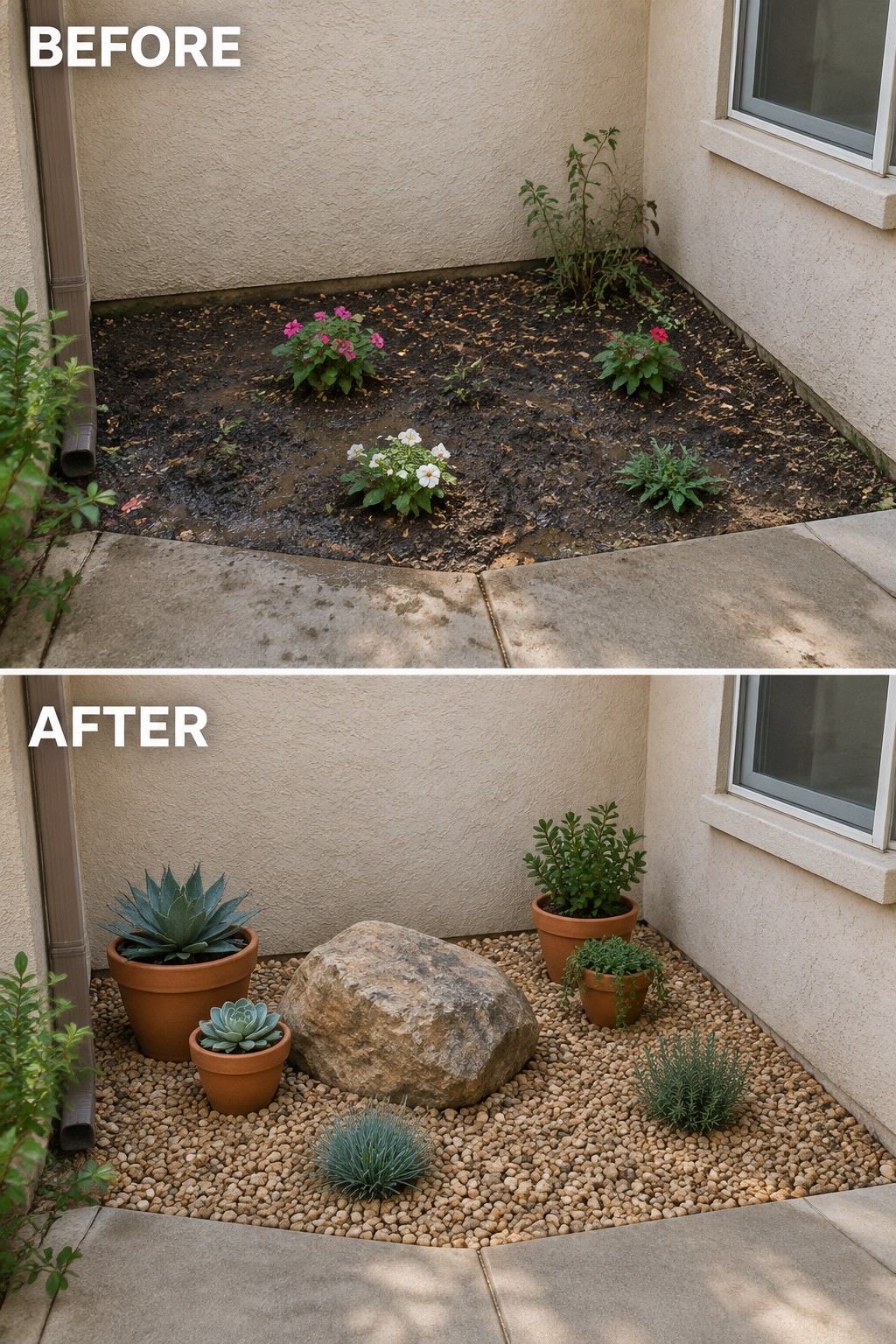
A bare dirt patch with scattered plants often ends up looking messy and hard to keep tidy. Covering the soil with gravel creates a clean surface that reduces weeds, prevents mud, and gives the whole area a more finished appearance without much ongoing work.
This idea suits tight corners or side yards where you want low maintenance. Start by clearing the bed, lay down landscape fabric if needed, then add gravel and arrange a few larger pots with hardy plants. Keep the layout simple so the space stays easy to walk around and care for.
Define Your Flower Beds With Simple Edging

Adding edging is one of the quickest ways to turn a weedy, shapeless strip into a garden bed that actually looks intentional. The before shows the usual problem of landscape fabric poking through, weeds taking over, and no clear boundary between the bed and the walkway. After, the metal edging creates a clean line that holds everything in place and makes the planting look much more deliberate.
This idea works especially well along sidewalks or house foundations where you want low maintenance without constant trimming. Remove the old fabric and weeds first, then install edging that can handle your climate. From there, fill the bed with spreading perennials that stay low and flower reliably. The result is a border that stays tidy with far less weeding and watering over time.
Replace An Overgrown Shrub With A Layered Garden Bed

One big shrub can quickly take over a front bed and block light from the house. Clearing it out and planting a mix of ornamental grass, small shrubs, and a few flowering perennials opens up the space and gives the window a much cleaner frame. The mulch and defined edges also make the whole area look intentional instead of neglected.
This approach works well along the front of a house where you want some height and color without constant trimming. Keep the tallest plants toward the back, add one or two mid-size shrubs on the sides, and fill the front with lower flowers or ground cover so nothing grows into the siding or windows later.
Define An Overgrown Bed With Gravel And Rocks
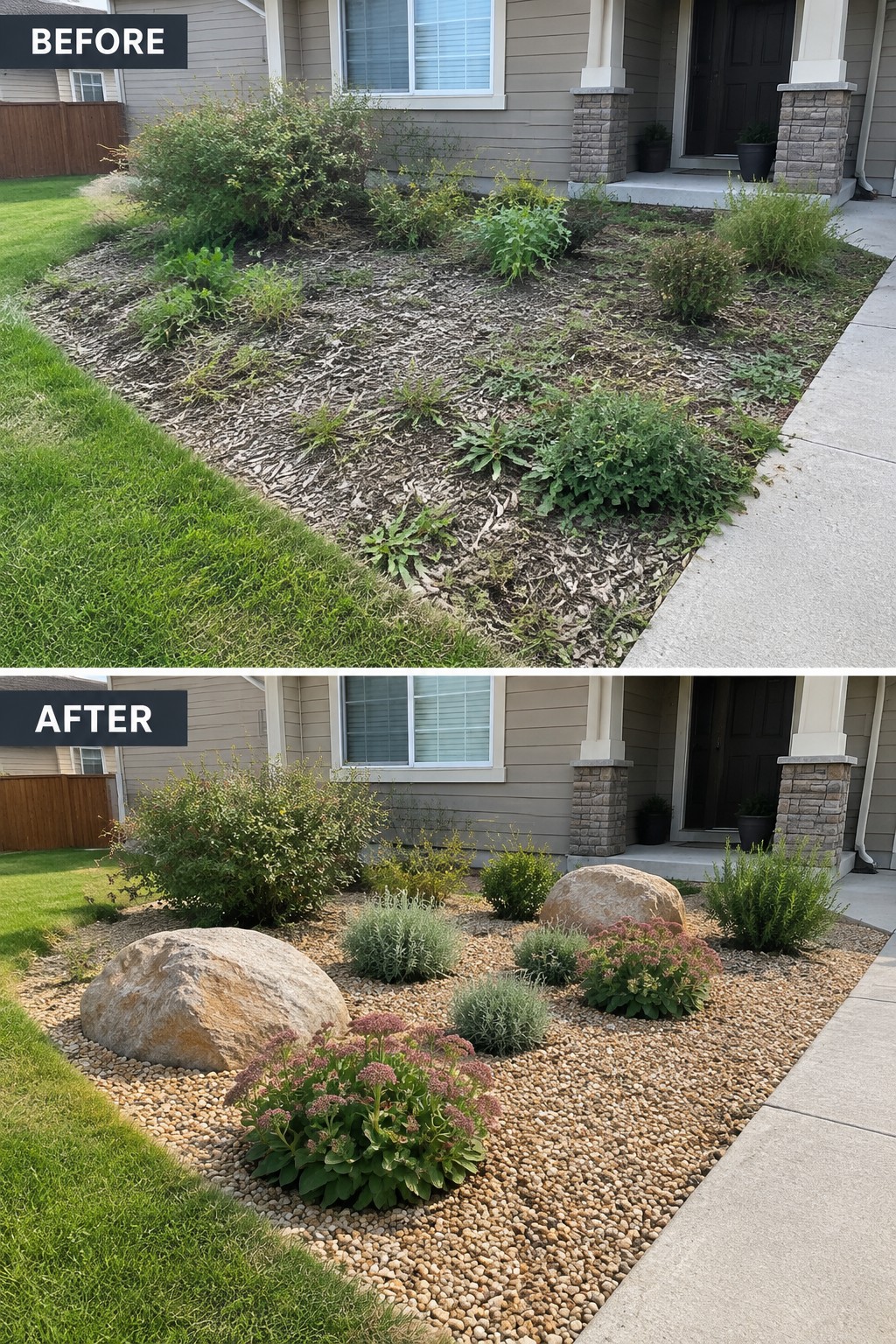
A weedy garden bed along the front of the house often looks worse the longer you ignore it. Clearing the old growth and laying gravel gives the area a clean base right away. The large rocks then break up the space so the planting feels planned instead of scattered.
This approach suits narrow beds next to the house where you want low upkeep. Focus on a few big rocks first, then fill in with simple shrubs and ground cover in small groups. The gravel keeps weeds down and makes future changes easier without starting over.
Define A Messy Border With Simple Edging
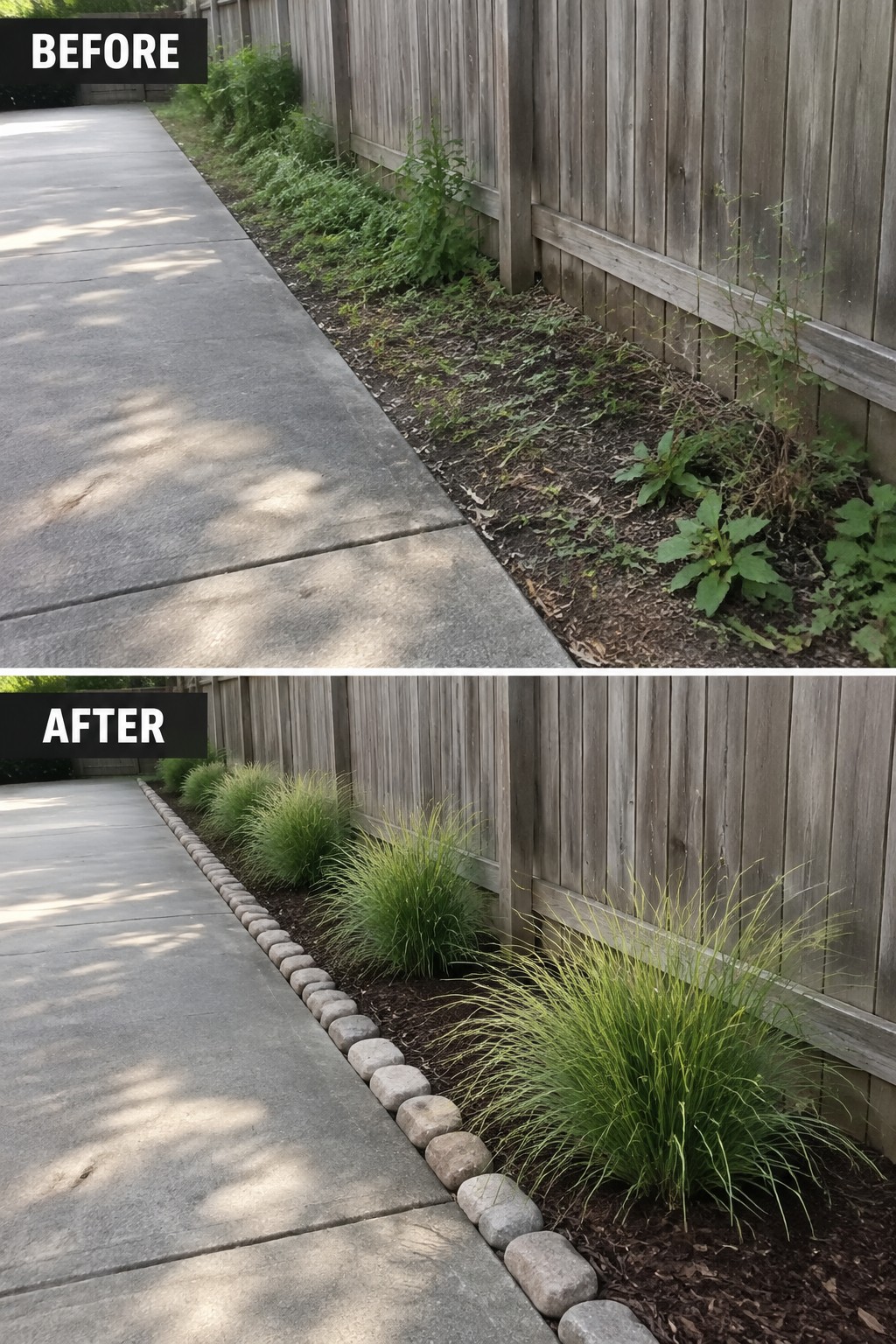
Adding a clear edge turns a weedy strip into something that looks planned instead of forgotten. The before photo shows plants spilling out with no real shape and bare soil showing through. After, a row of stones holds the bed in place while mulch and a few repeated grasses keep the whole thing looking tidy.
This idea works best along paths or fences where you want low effort. Start by clearing the worst of the growth, then set the edging before you plant. Mulch helps hold everything down and cuts back on new weeds. Stick to one or two easy plants in groups so the bed stays simple to maintain over time.
Replace Formal Hedges With Loose Perennial Planting
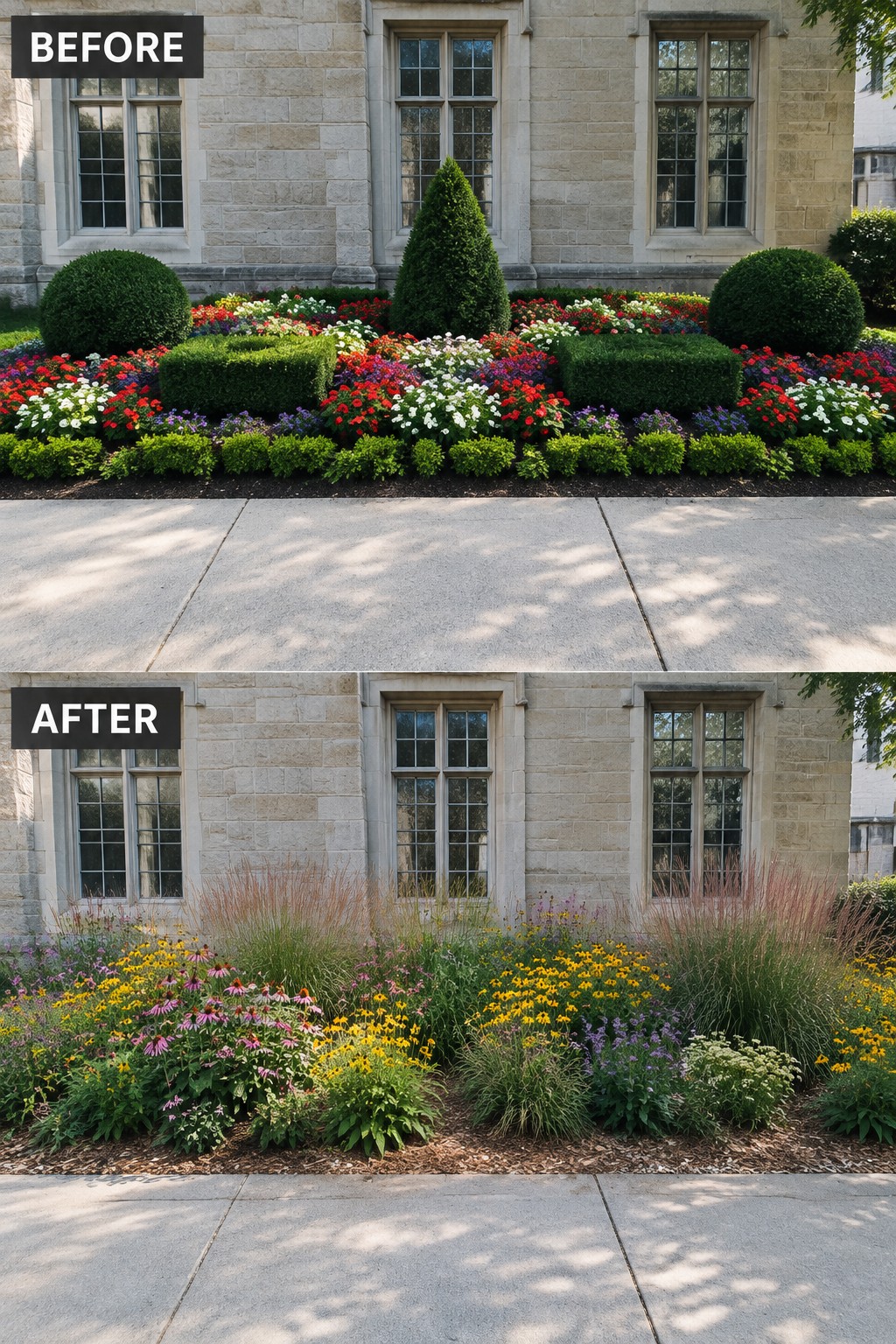
Many older garden beds rely on clipped boxwoods and tight shapes that need constant trimming. The after version shows what happens when those rigid forms are removed and replaced with taller grasses and easy perennials that fill the space on their own. The result feels softer and requires far less work once the plants are established.
This approach works well along the front of a house or any bed that sits right next to a walkway. Start by clearing out the old shrubs, then choose a few varieties that bloom at different times and add height without needing staking. Mulch the bed well and give the new plants room to spread. The look stays full with much less upkeep than trying to keep everything perfectly shaped.
Use Evergreens To Give Flower Beds Year-Round Structure

Many front beds lose their shape once summer plants die back, leaving a messy stretch of brown stems and bare mulch. Swapping those dead plants for a simple mix of dwarf evergreens and low shrubs creates a clean border that stays full and green through winter with almost no extra work.
This approach works well on small beds along the front of the house where you want steady curb appeal without constant replanting. Keep the layout simple by using a few taller evergreens as anchors and filling in with lower spreading plants, then mulch well to cut down on weeds.
Add Structure To Overgrown Garden Beds
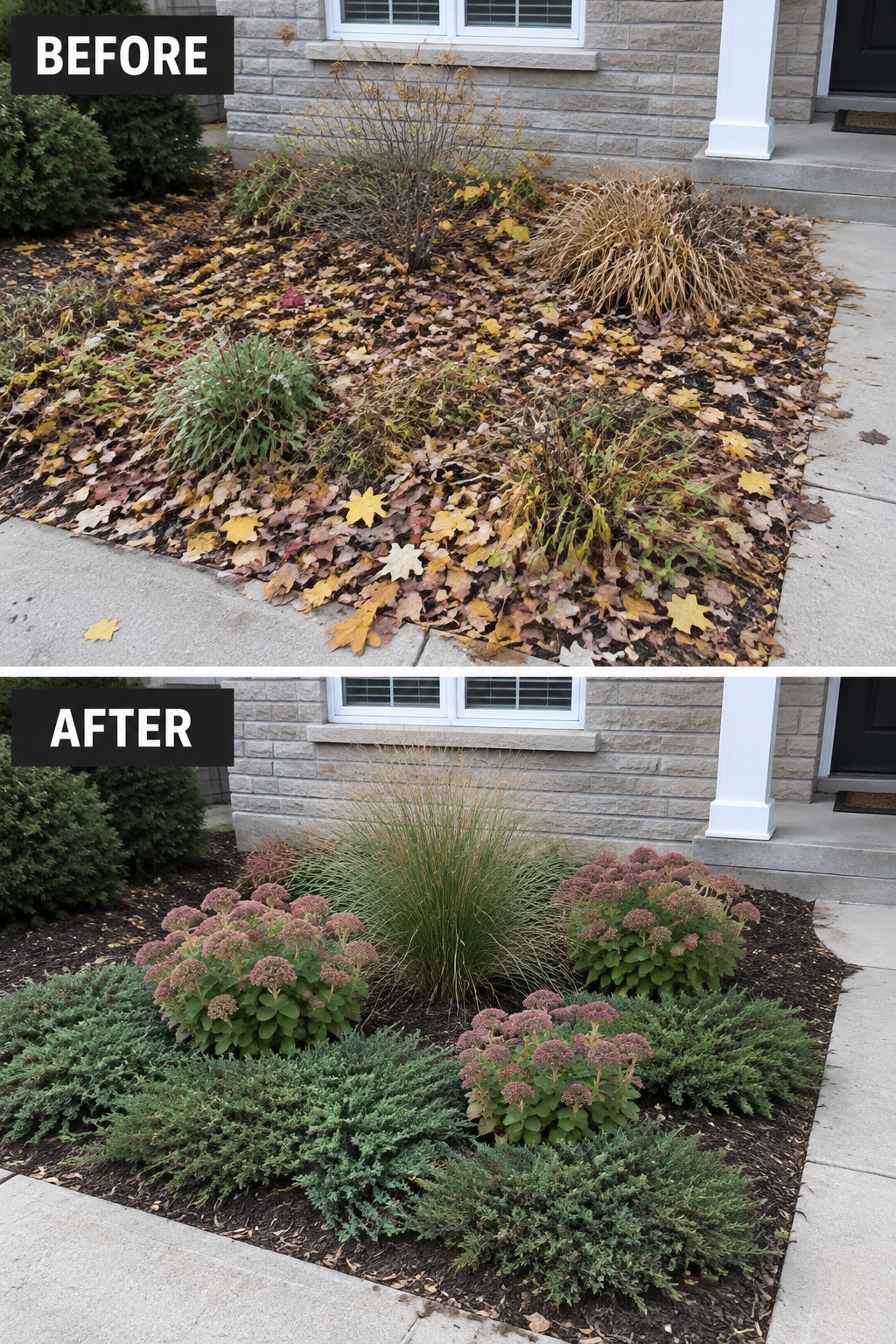
The before photo shows a border buried under a thick layer of leaves with scattered plants that had lost their shape. The after version uses a few repeated shrubs, one tall grass in the center, and fresh mulch to create a clear pattern that stays neat with little work. This change works because it replaces random overgrowth with a simple layout that is easy to keep looking good.
To use the same idea, clear out debris and tired plants first, then pick two or three varieties that repeat across the bed. Finish with mulch to hold down weeds and keep the soil tidy. This approach works well along a front walk or side yard where you want low maintenance without giving up all the planting.
Clear Overgrown Beds Before Planting In Groups
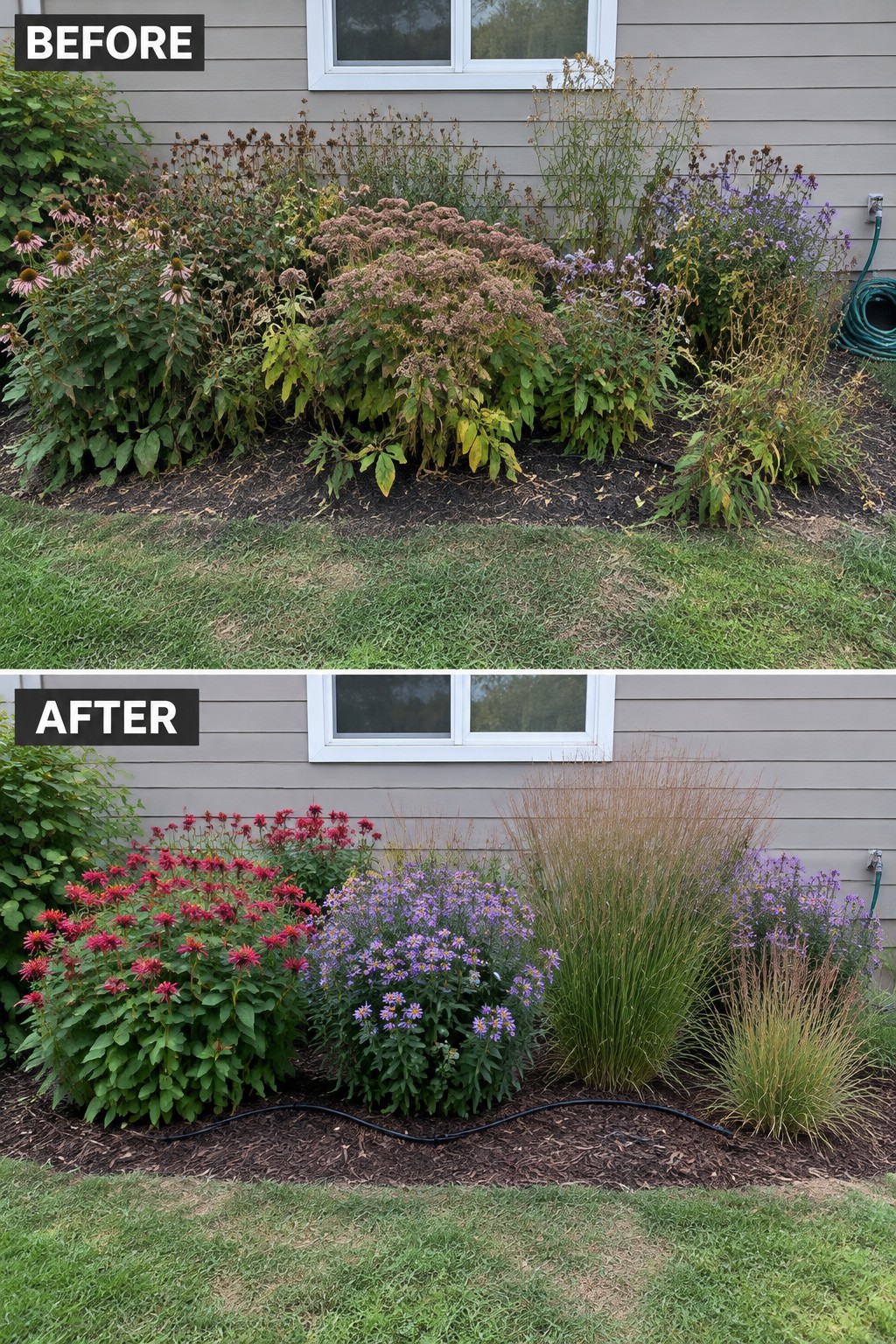
One of the easiest ways to fix a messy garden bed is to remove everything that has gone wild first. The before photo shows plants that had spread and died back in uneven patches, making the whole strip along the house look neglected. After clearing the old growth, the same space was replanted in simple blocks of color and texture that give the bed a clear shape.
This idea works best in front beds where you want something neat without constant work. Pick two or three plant types that bloom at different times, then plant them in drifts instead of mixing singles. It keeps the area looking planned through the year and makes watering and weeding much simpler later.
Add A Focal Point To A Simple Garden Bed
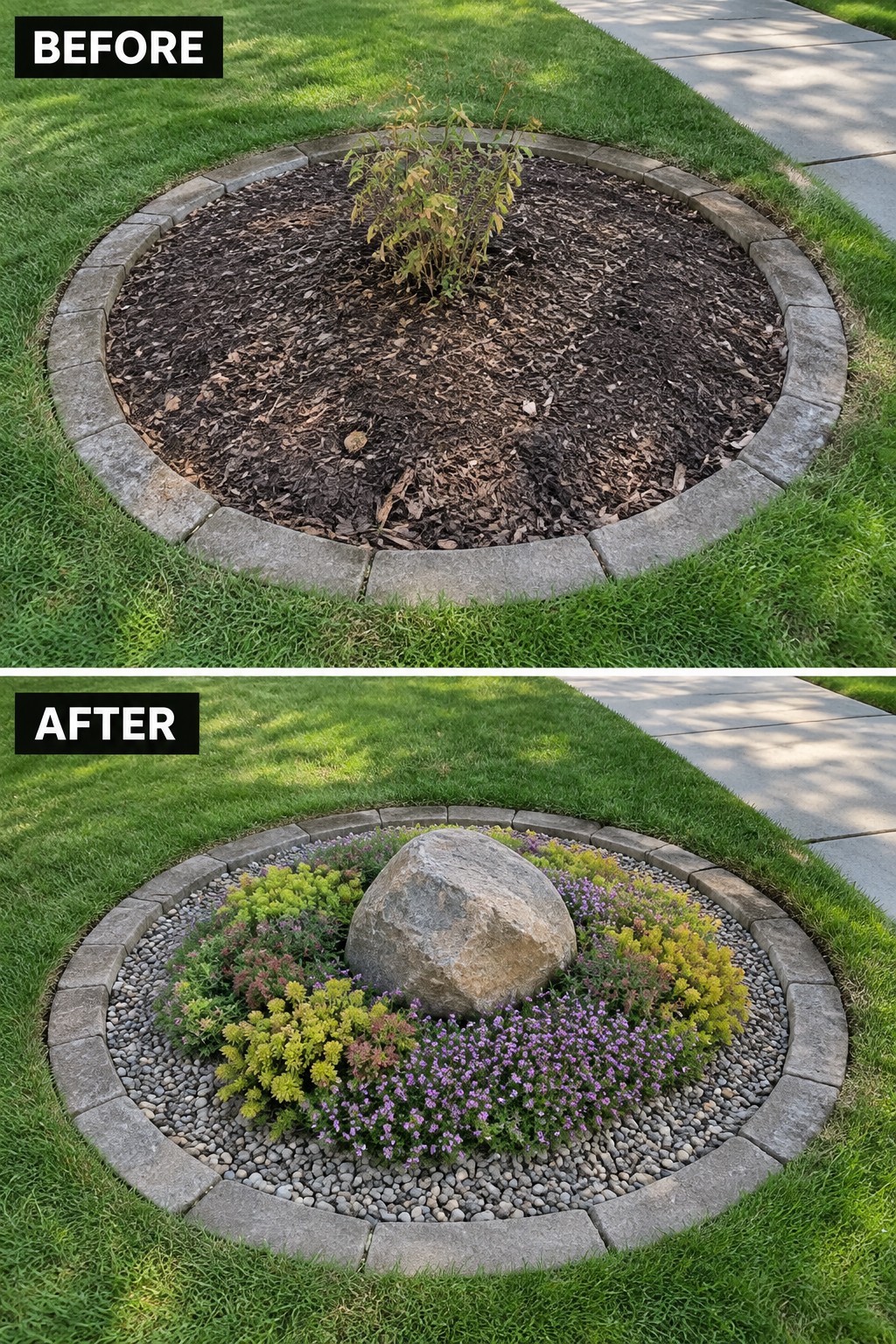
A plain mulch bed with just one small shrub can look unfinished, especially in a front yard. Adding one large rock in the center gives the eye something to rest on, while filling the rest of the circle with low plants and gravel makes the whole bed feel full and intentional.
This idea works best in small, defined beds where you want color and shape without constant work. Pick one main object for the middle, then use plants that grow at similar heights around it so nothing crowds or disappears.
Add Edging To Define Your Flower Beds

A messy strip of ground next to the house can drag down the whole look of a yard. Adding a simple border of pavers or stone gives the bed a clear shape, keeps mulch in place, and stops grass from creeping in. The before photo shows how loose fabric and scattered plants made the area feel unfinished, while the after shows how the same space looks pulled together once the edge is set and the plants fill in.
This idea works best along sidewalks or foundation walls where you want low care but still need the bed to look intentional. Start by cleaning out weeds and old mulch, then lay the edging before you plant. Dense groups of easy perennials like salvia and sedum will fill the space without constant work once the border is in place.
Terrace A Steep Slope With Simple Garden Beds
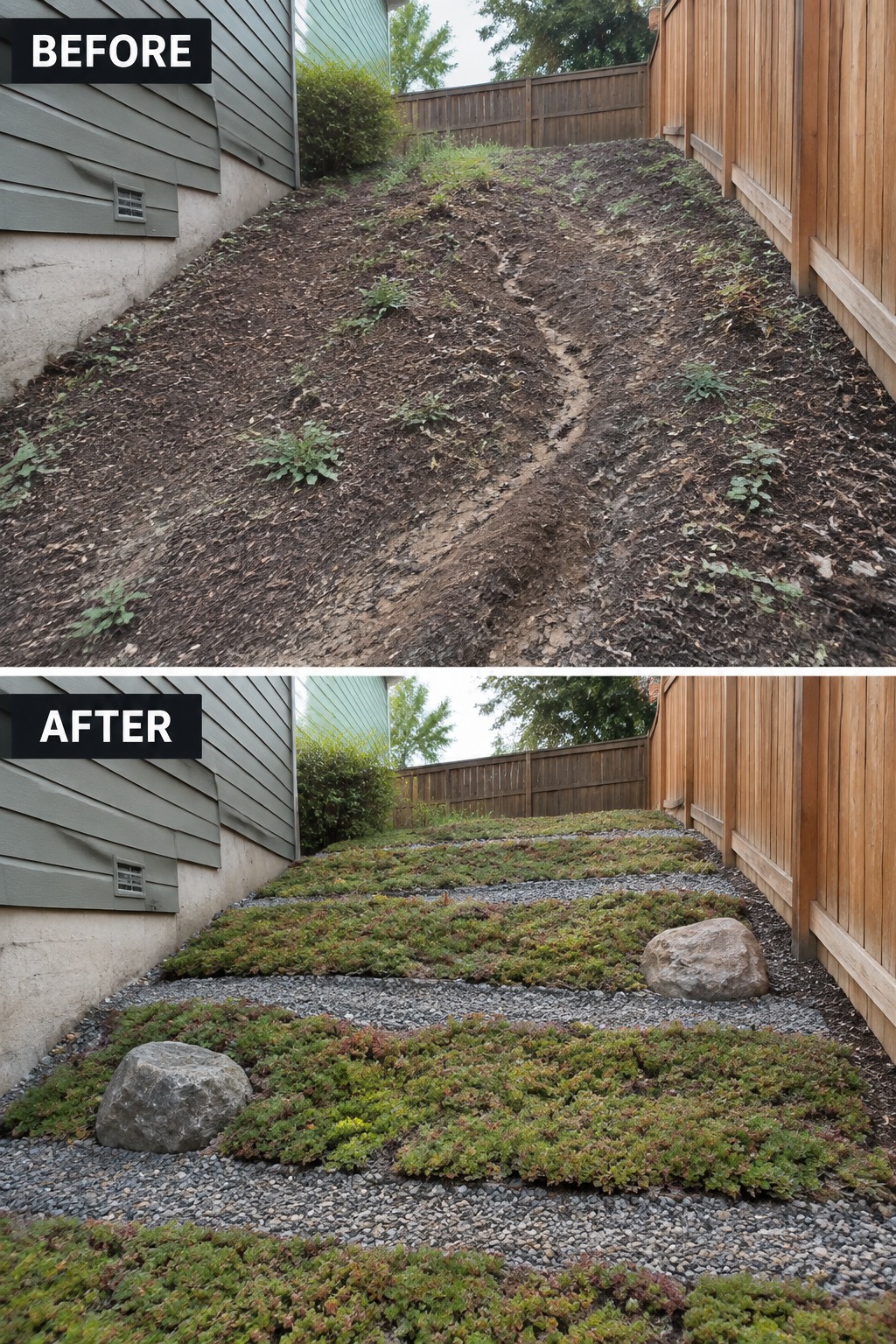
A bare, eroded slope like the one in the before photo is hard to mow and easy to ignore. Adding horizontal planted strips separated by gravel gives the area clear structure, stops runoff, and turns the slope into something that can actually be maintained without constant weeding or slipping.
This approach works best on yards where grass refuses to hold and access is awkward. Start by clearing the worst of the weeds, then lay down gravel bands to create level planting zones. Low ground covers fill in quickly and keep the beds looking neat with very little ongoing work.
Define Overgrown Flower Beds With Mulch

The main change here is clearing out the thick, messy growth that had taken over the bed and replacing it with a layer of mulch plus plants set in clear groups. That simple step turns a neglected strip along the house into something that looks intentional and stays easier to manage over time.
This approach works well on narrow beds next to foundations where plants can quickly get out of hand. Start by cutting everything back hard, then add a few inches of mulch to smother weeds and keep soil from drying out too fast. Choose plants that stay roughly the same size so the bed does not need constant editing later.
Frequently Asked Questions
Q: How deep should I spread the mulch in these beds? A: Aim for a layer about three inches thick around the plants. This blocks most weeds and helps the soil stay moist so you skip extra watering sessions.
Q: What if some of my existing plants look healthy but do not match the low maintenance theme? A: Keep the ones that already grow well in your spot. Swap out only the high upkeep ones for tougher options that need less fuss later on.
Q: Do I need to water new flower beds every day at first? A: Water deeply a couple times a week for the first month or two. After roots settle in most of these plants handle dry weeks without much help from you.
