

I have noticed that small garden spots often look unfinished when there is no clear planting layer to tie them together.
Container planting gives me a way to add that structure without committing to permanent beds right away.
Grouping different sizes of pots in one area tends to draw the eye and make the space feel more intentional over time.
Some ideas are easy to adapt.
I usually try a new arrangement in one corner first before expanding it further.
Maximize A Small Balcony With Vertical Planting
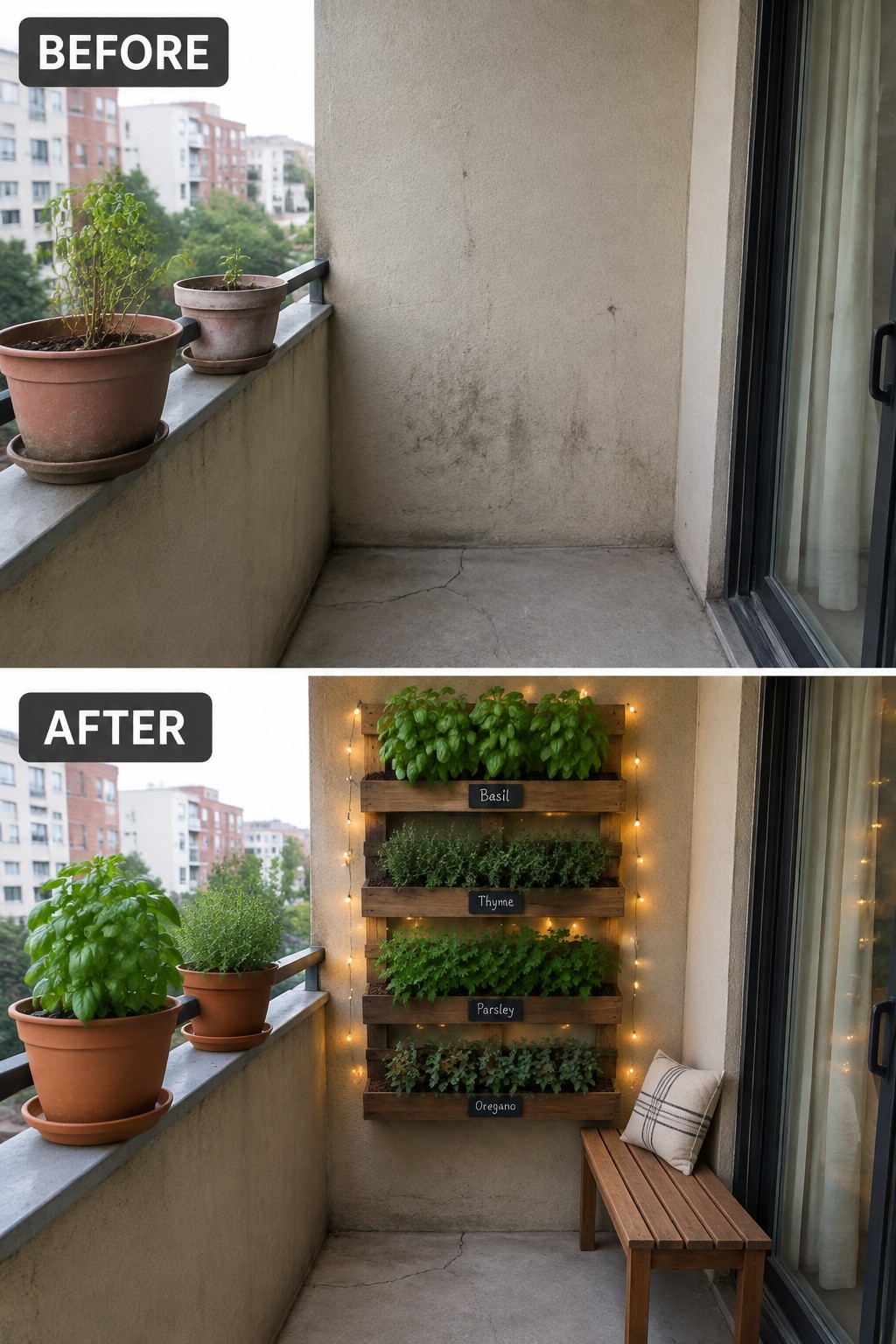
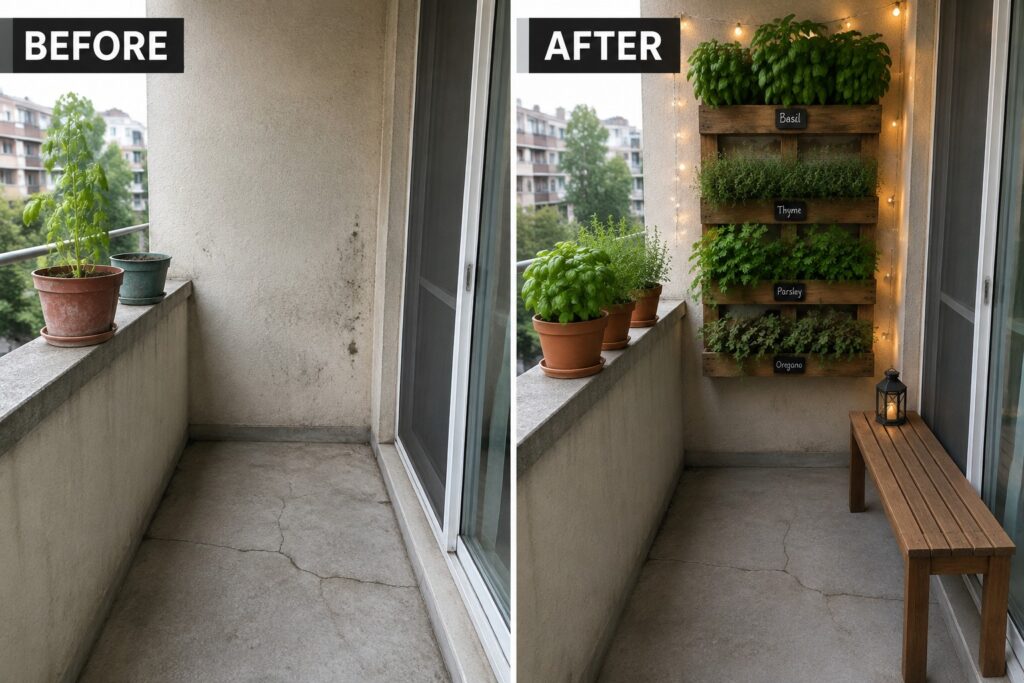
A small balcony often ends up as just a couple of pots on the floor or ledge. Adding a simple vertical pallet planter turns the same space into something much more useful by stacking four rows of herbs without eating up walking room. The string lights and bench make the area feel finished rather than leftover.
This approach works best on balconies or patios where floor space is limited but a wall is available. Start with a sturdy pallet or similar frame, line it properly for soil, and keep the plants to herbs or compact vegetables so watering stays easy. One bench and a few lights are usually enough to make the spot usable in the evenings.
Group Containers To Make A Small Patio Feel Lush

A few scattered pots with thin plants can leave a patio looking empty. Switching to several matching containers placed close together and filled with a mix of flowers creates a much fuller look without needing a lot of space.
This approach works best on concrete or paved areas where you cannot plant directly in the ground. Stick to two or three pot sizes in the same color, and combine taller plants with trailing ones so the group feels balanced. Keep the number of containers modest so there is still room to walk around them.
Use Tiered Containers To Organize A Narrow Strip
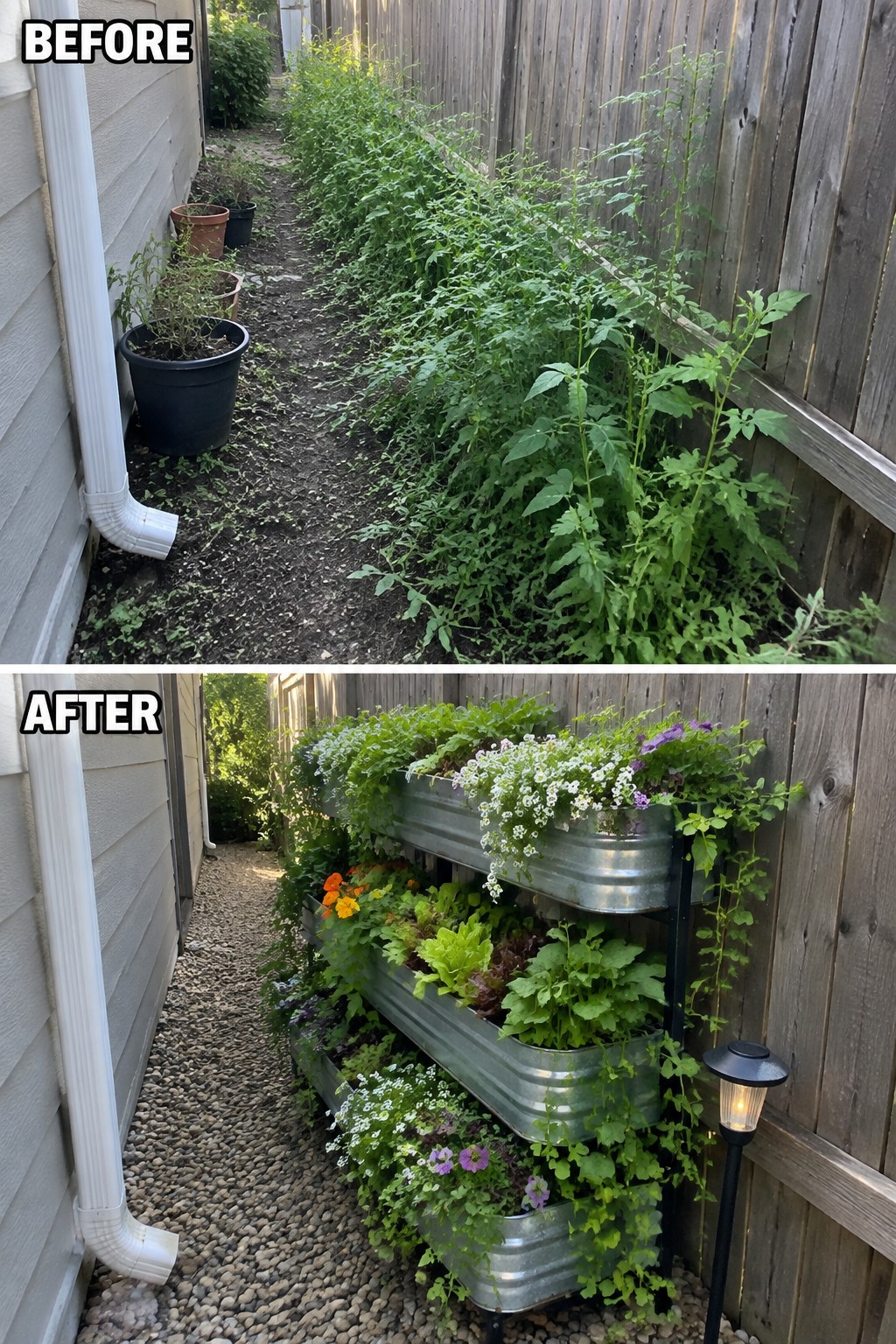
A narrow side yard often ends up as a weedy strip because there is no easy way to plant without everything spilling into the path. Stacking metal troughs on a simple stand turns that same space into a productive garden without widening the area or adding raised beds on the ground. The change from loose sprawl to three clear levels makes the plants easier to reach and keeps the walkway clear.
This approach works well along fences or house walls where soil is poor or space is tight. Start with a sturdy frame that can hold the weight of soil and water, then fill each trough with a mix suited to what you want to grow. It suits small yards best when you repeat the same container style rather than mixing many different ones.
Frame Concrete Steps With Matching Containers
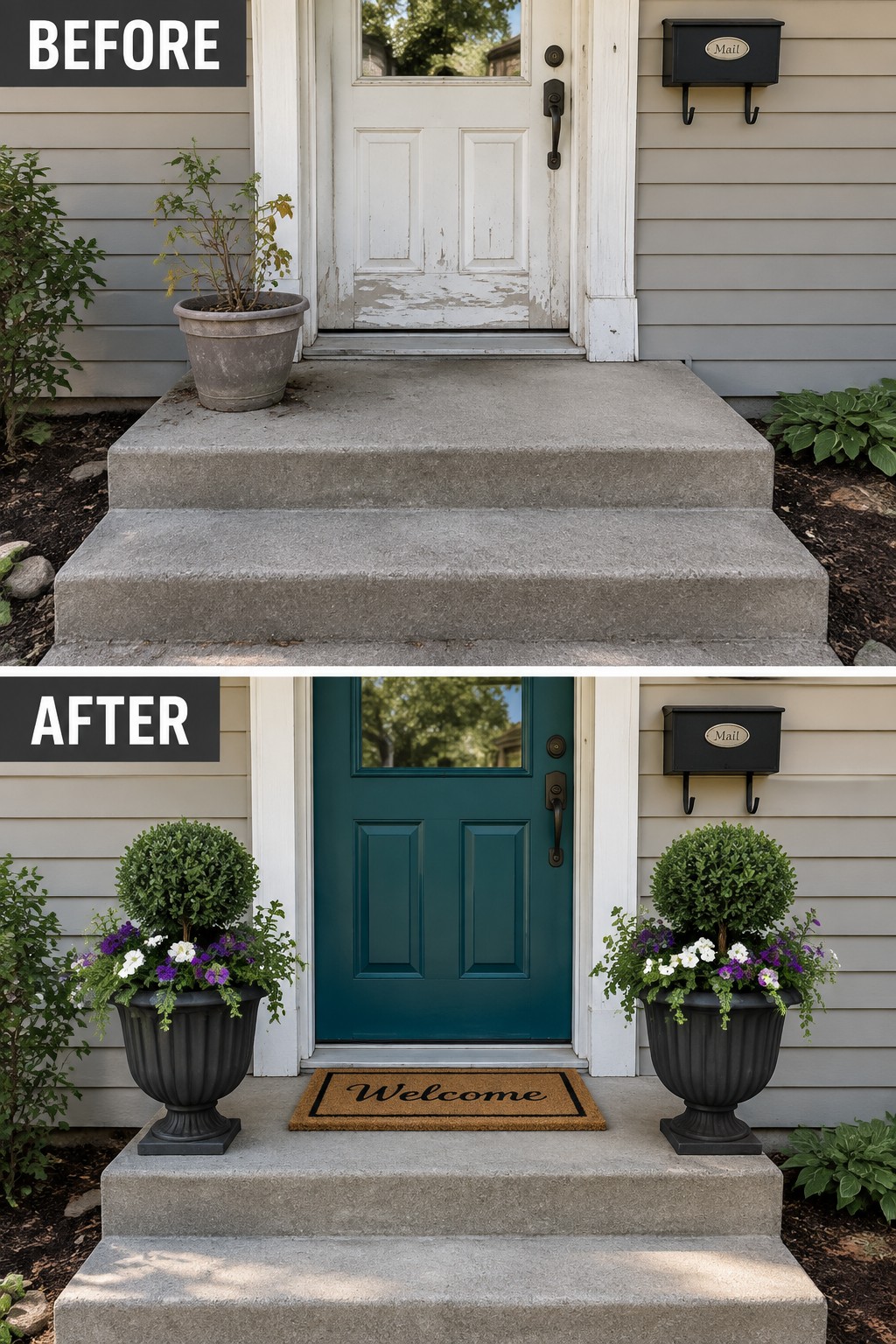
Two matching planters placed on either side of the steps can make a plain entry feel much more finished. The before photo shows how one small pot left the space looking lopsided, while the after uses a pair of large urns to create balance and soften the concrete.
This idea works especially well on small front landings because the containers do not take up much room yet still add height and color. Choose pots in a similar tone to your siding or door, fill them with evergreens for structure, and add seasonal flowers for extra interest without needing a full garden bed.
Use Container Planting To Create A Balcony Seating Area

A bare balcony with just turf and a couple of loose pots feels like wasted space. Adding a few large wooden containers with small trees and shrubs, plus a simple table and chairs, turns the same area into a place where you can actually sit and spend time. The containers define the seating zone without needing built-in planters or major construction.
This approach works well on small rooftops or upper-level terraces where soil and weight are limited. Start with two or three substantial containers placed around the edges to frame the space, then add a compact table set and a rug to mark the seating area. Keep the plant choices practical so they can handle wind and sun exposure.
Refresh A Blank Wall With Container Planting
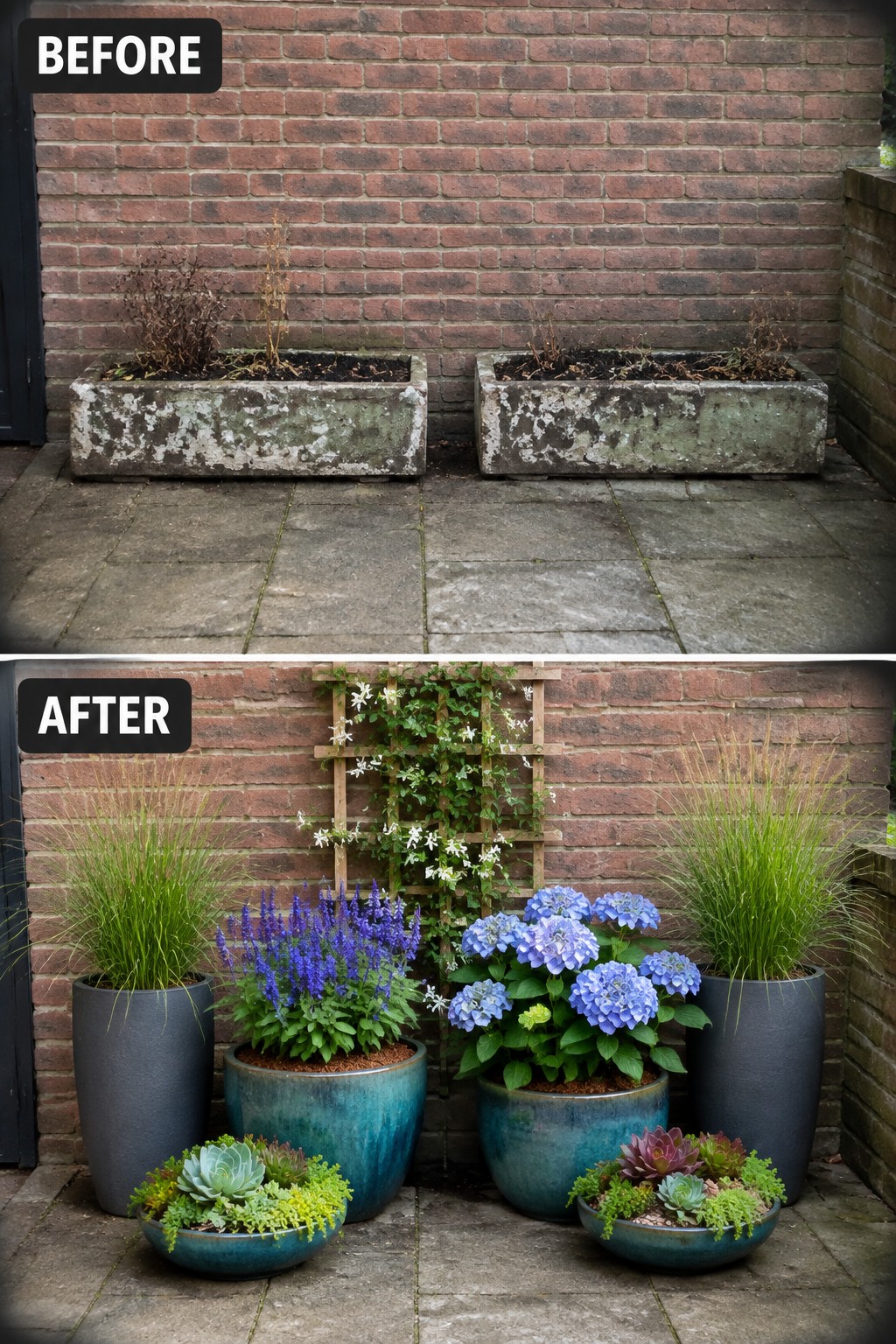
Old rectangular troughs filled with dead stems made the whole wall area look neglected. Switching to a mix of taller and shorter pots with fresh planting gives the space structure and color without any permanent changes.
This works well on paved side yards or patios where you cannot add garden beds. Choose a few different pot sizes, place the tallest ones at the back, and fill in with mid-height flowers and low succulents so the arrangement feels full but still leaves room to walk past.
Refresh Container Plantings On A Small Balcony

Many balcony planters lose their shape after a season or two. The plants either stop growing well or start to look patchy, which makes the whole setup feel neglected. Swapping the weakest ones for fresh, healthy herbs brings the containers back to life without changing the pots or the railing setup.
This approach works best when you pick plants that match the light and space you actually have. Basil, chives, and cilantro all do well in the same size containers shown here, and they stay compact enough for a narrow balcony. Start by pulling out anything that is clearly struggling, then fill in with new starts in good soil so the planters look full again right away.
Group Large Pots To Define A Small Deck
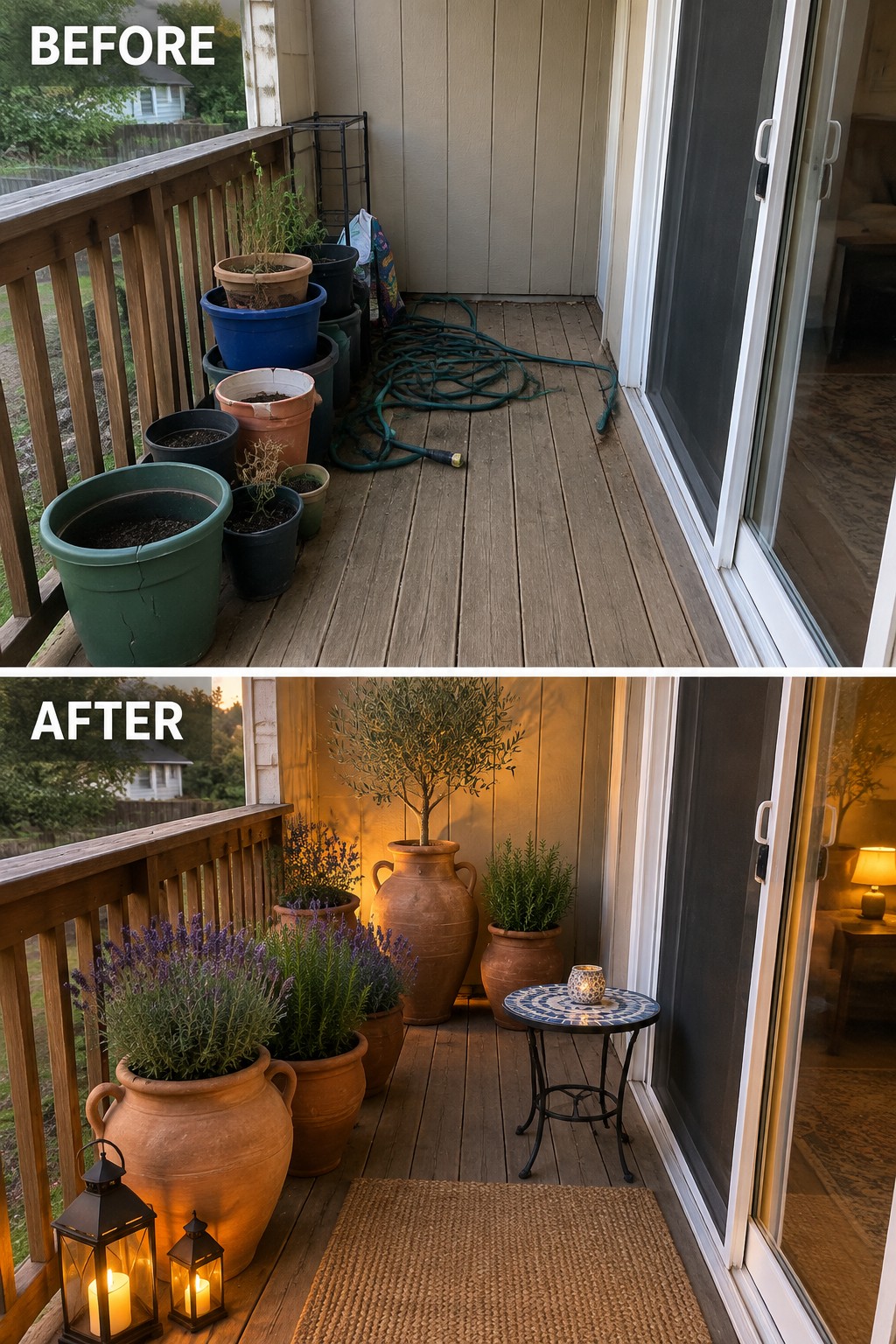
A cluttered balcony full of random pots and hoses feels messy and hard to use. Switching to a few oversized containers grouped together makes the same space look intentional and much more welcoming. The large terracotta pots in the after photo pull everything into one clear arrangement instead of leaving plants scattered along the rail.
This approach works well on narrow decks or balconies where space is tight. Start by clearing away anything that does not belong, then place two or three bigger pots in a loose cluster near the wall or corner. Add a simple rug underneath to mark the area and keep the rest of the floor open for walking.
Add A Small Shelf To Get More Plants On Your Porch
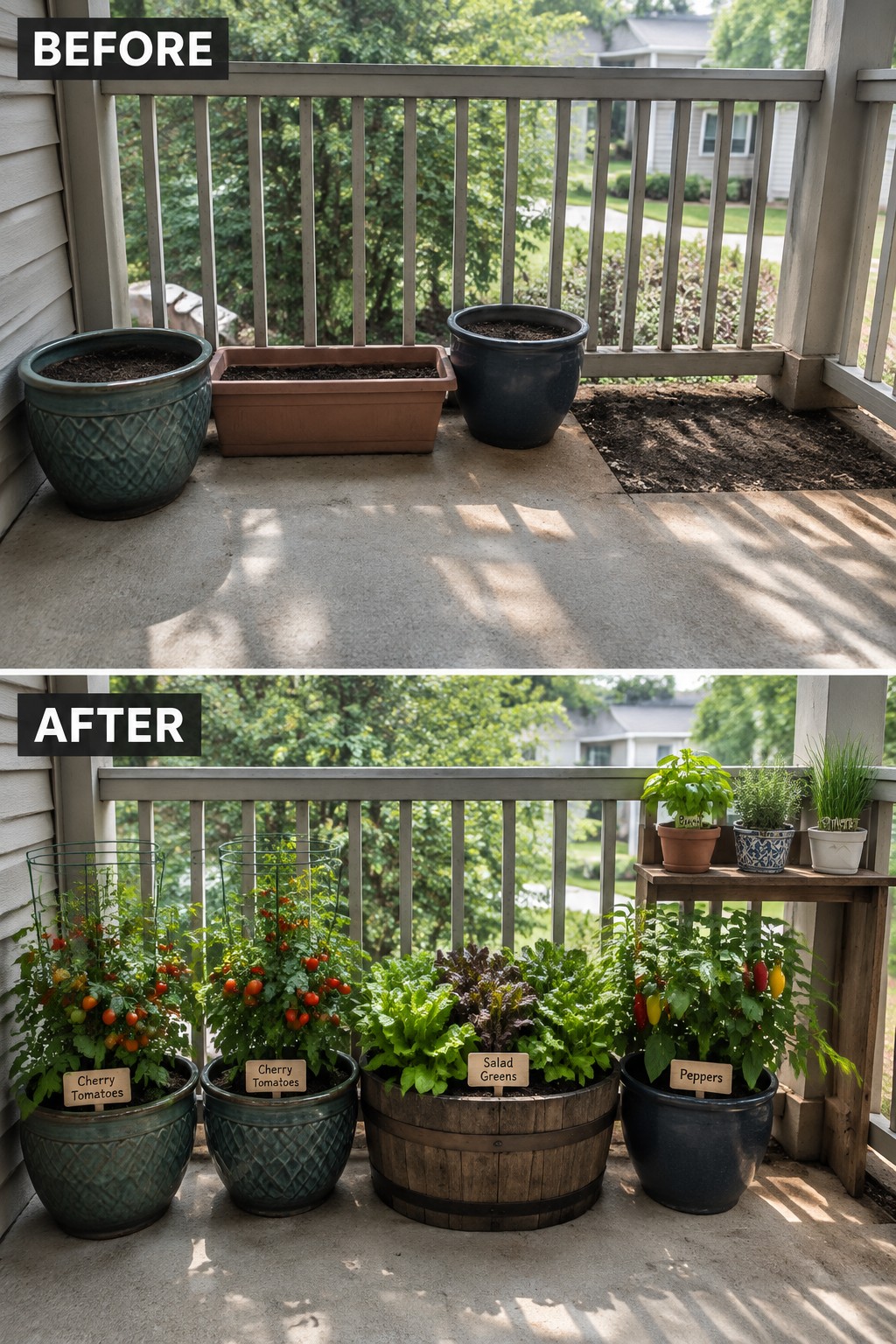
A bare porch with just a few pots can feel empty fast. Adding a simple wooden shelf gives you room for extra containers without taking up floor space, and it turns the area into a working garden instead of a few scattered plants.
This works best on small concrete porches or balconies where floor room is limited. Place the shelf against the railing or a wall, use it for smaller pots like herbs, and keep larger containers on the floor. It keeps things organized and makes watering and harvesting easier.
Layer Containers at Different Heights
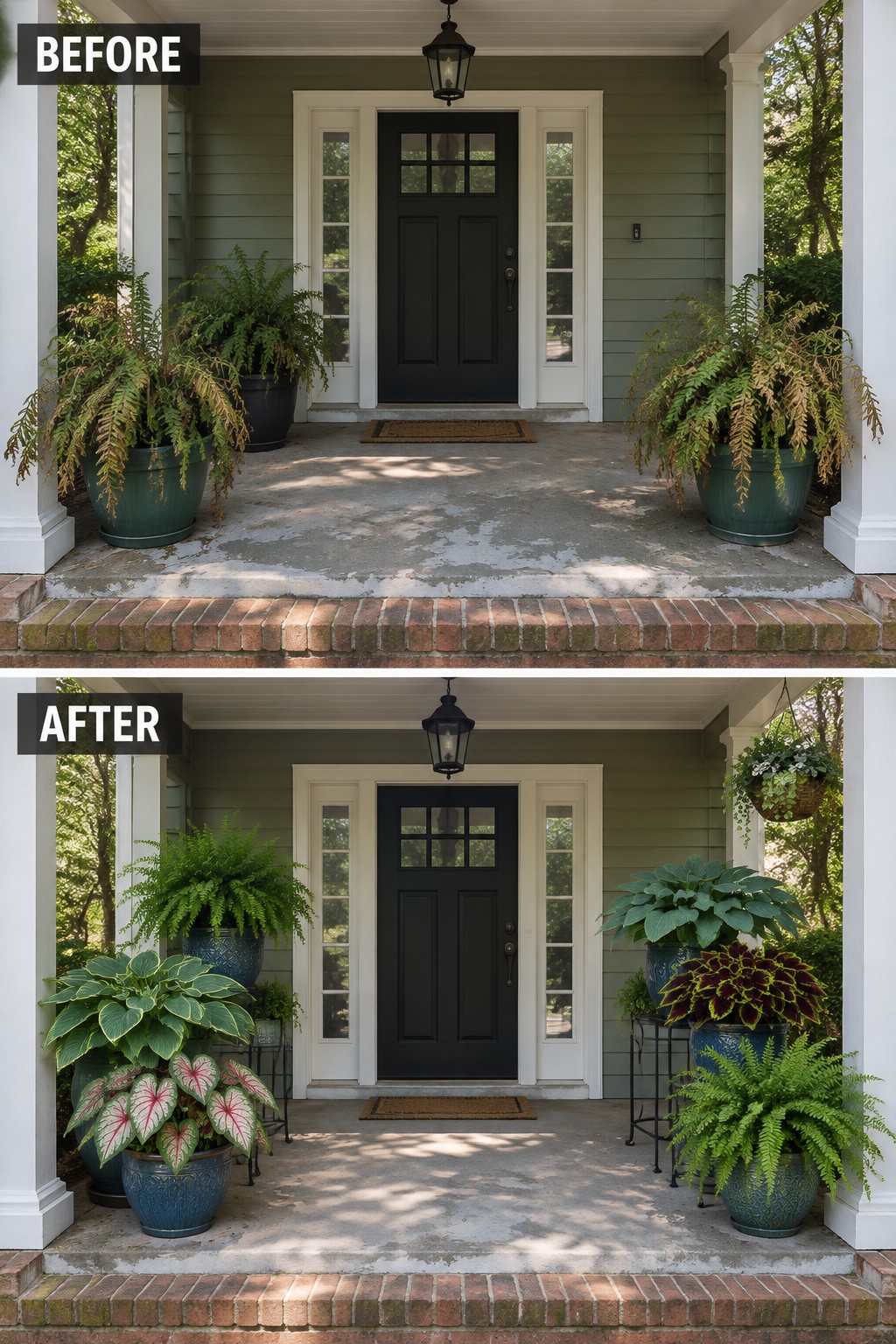
Many small porches start with a pair of matching pots sitting right on the ground. Raising a few containers on stands or choosing pots of different sizes creates layers that show off more plants without crowding the space.
This works well on narrow entries where you want variety in leaf shapes and colors. Group plants that need the same light and water, and keep at least one clear path so the area stays easy to use every day.
Organize A Small Corner With Container Planting

A neglected side area often looks worse because the plants have no real structure. Switching to labeled containers and a simple ladder display turns the same tight spot into a working garden without needing new beds or big digging.
This idea suits narrow spaces next to a house or fence where soil is poor or space is limited. Choose weatherproof containers, group them by height, and repeat a few colors so the area feels planned rather than scattered.
Use Tall Containers To Green Up A Bare Balcony
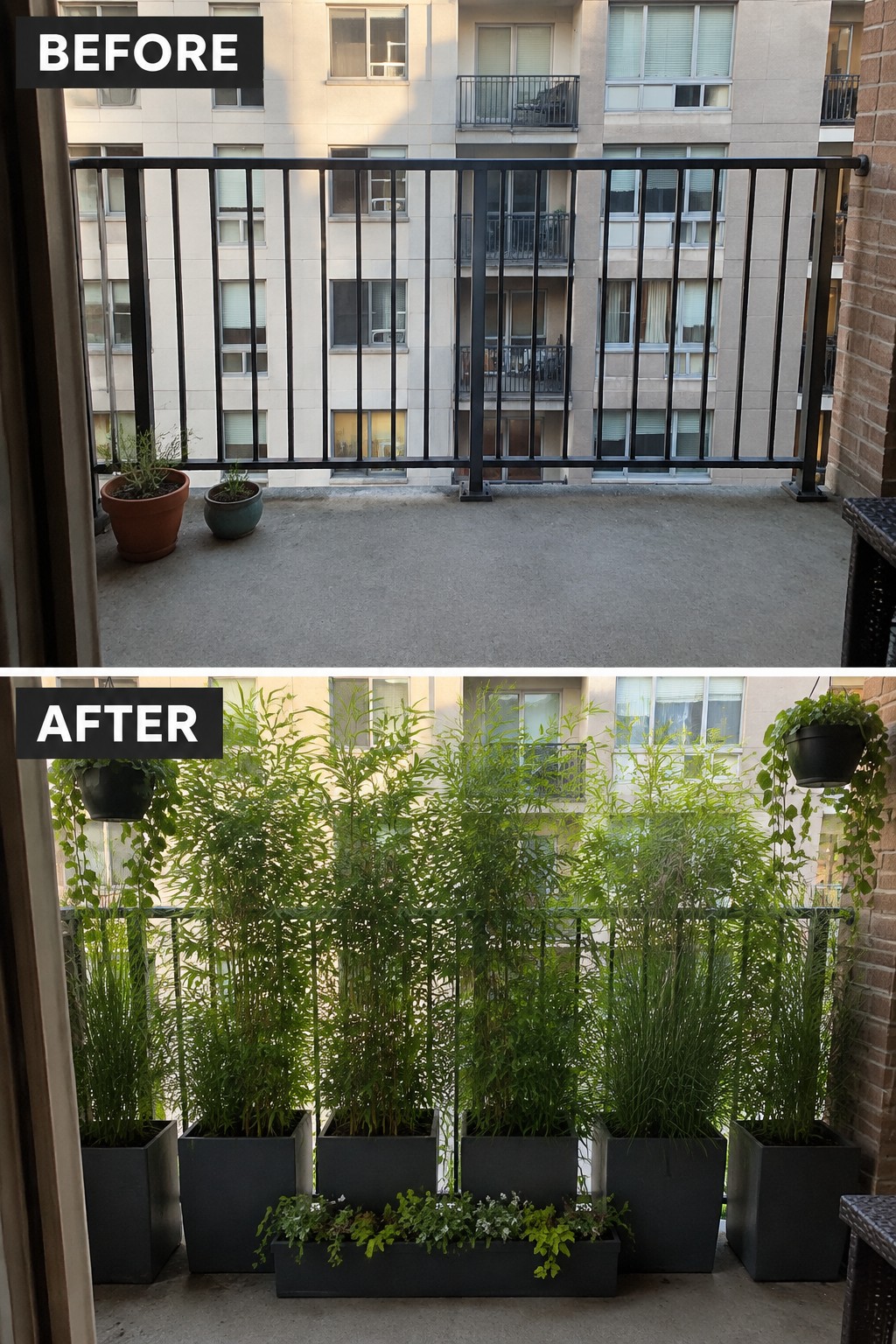
A bare balcony with just a couple of small pots can feel empty and exposed. Filling the space with several large containers planted with tall greenery turns the same concrete area into a private green zone that softens the view and makes the balcony feel more like a garden.
This idea suits small balconies or patios where in-ground planting is not possible. Stick to matching containers in a simple color so the focus stays on the plants, and mix heights to create a living screen without blocking light or movement.
Use Raised Planters To Organize A Narrow Garden Border
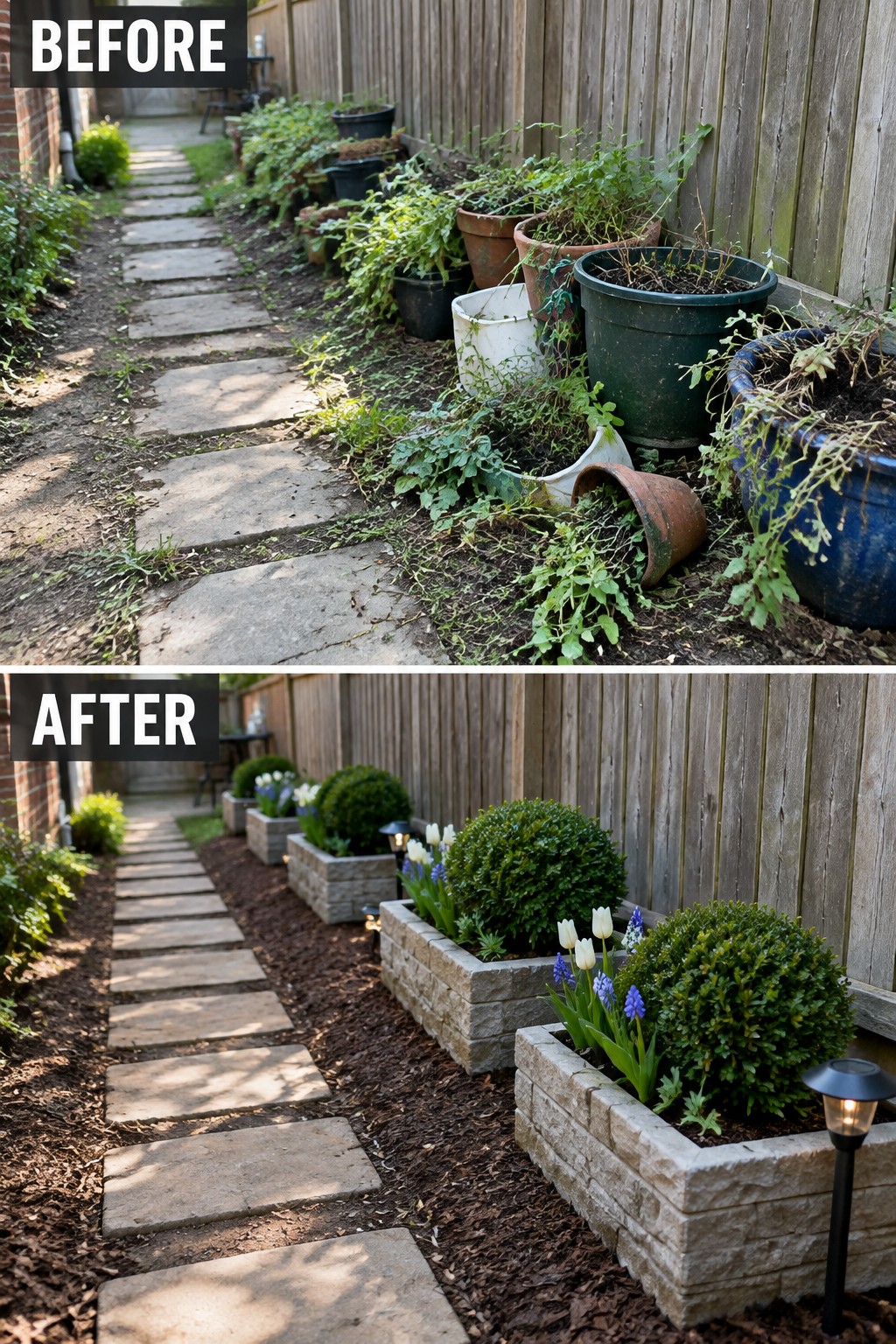
A narrow side path often ends up as a dumping ground for random pots that spill over and look messy. Switching to a few raised stone planters lines everything up along the edge and gives the planting a clear structure instead of scattered containers.
This works well in tight spaces because the beds keep soil contained and make watering and weeding easier. Start with the path and mulch first, then add a handful of planters in matching material so the whole strip feels intentional instead of crowded.
Use Plant Stands To Organize Container Plants
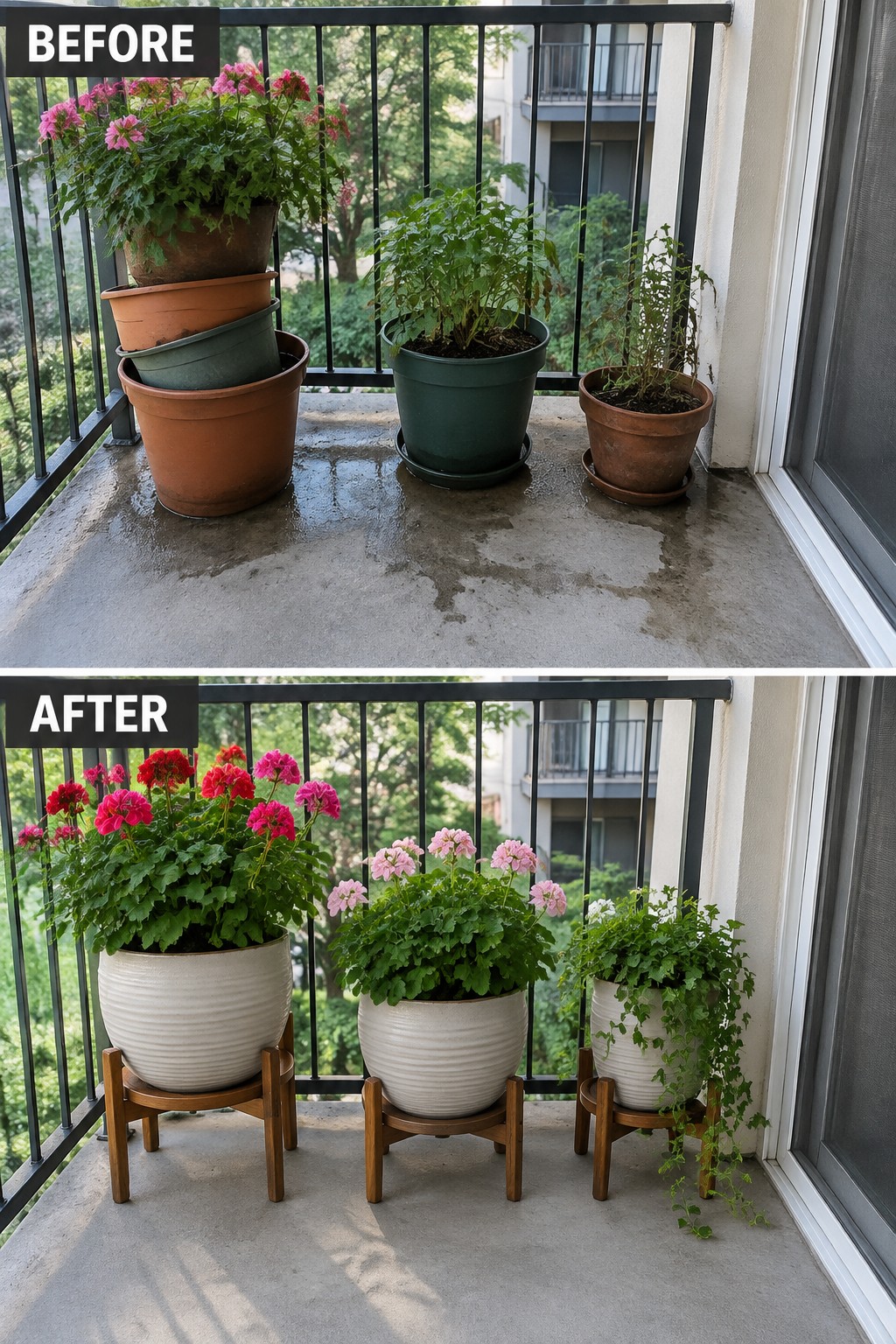
Many small balconies end up with pots stacked or shoved together because there is not much floor space. Raising the containers on simple wooden stands creates clear levels, keeps the floor open, and stops the plants from looking like a random pile.
This idea works best on concrete balconies or patios where you want the garden to feel planned rather than crowded. Choose stands that match the pot color and leave a little room between each one so air can move and watering stays easy.
Mount Wall Planters To Green Up A Blank Garden Wall
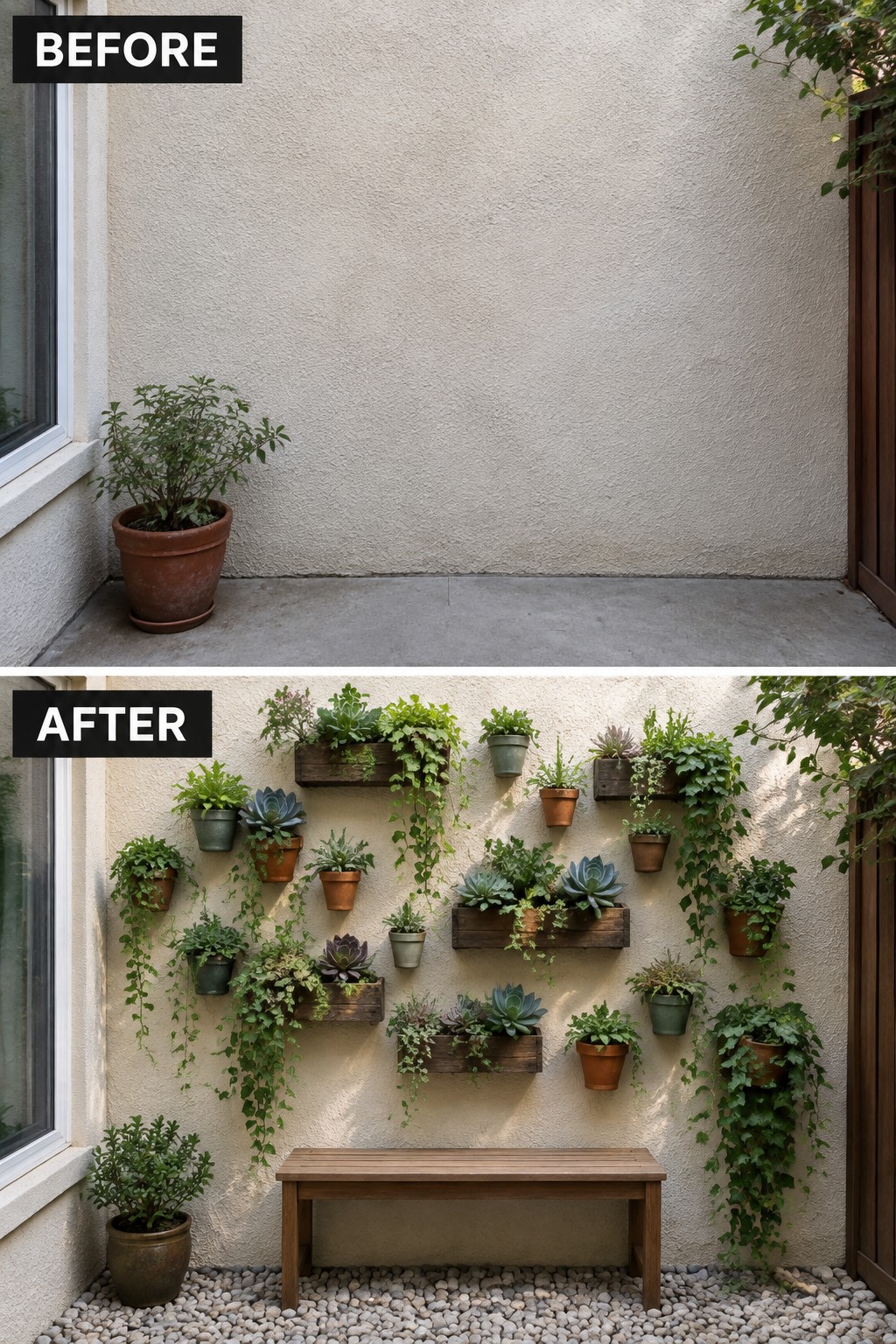
A blank stucco wall next to a concrete patio can feel like wasted space in a small garden. Adding a mix of mounted wooden boxes and simple pots turns that empty surface into the main feature without taking up floor room. The shift from one lone pot on the ground to a full wall of trailing vines and succulents makes the whole area look finished and much larger.
This idea works best on a sheltered side wall where you can reach the plants easily for watering. Start with a few sturdy brackets and lightweight containers, then fill in with a mix of upright and trailing plants so the wall feels layered rather than flat. Gravel on the ground helps keep the focus on the planting instead of bare concrete.
Frame Your Front Entry With Matching Planters
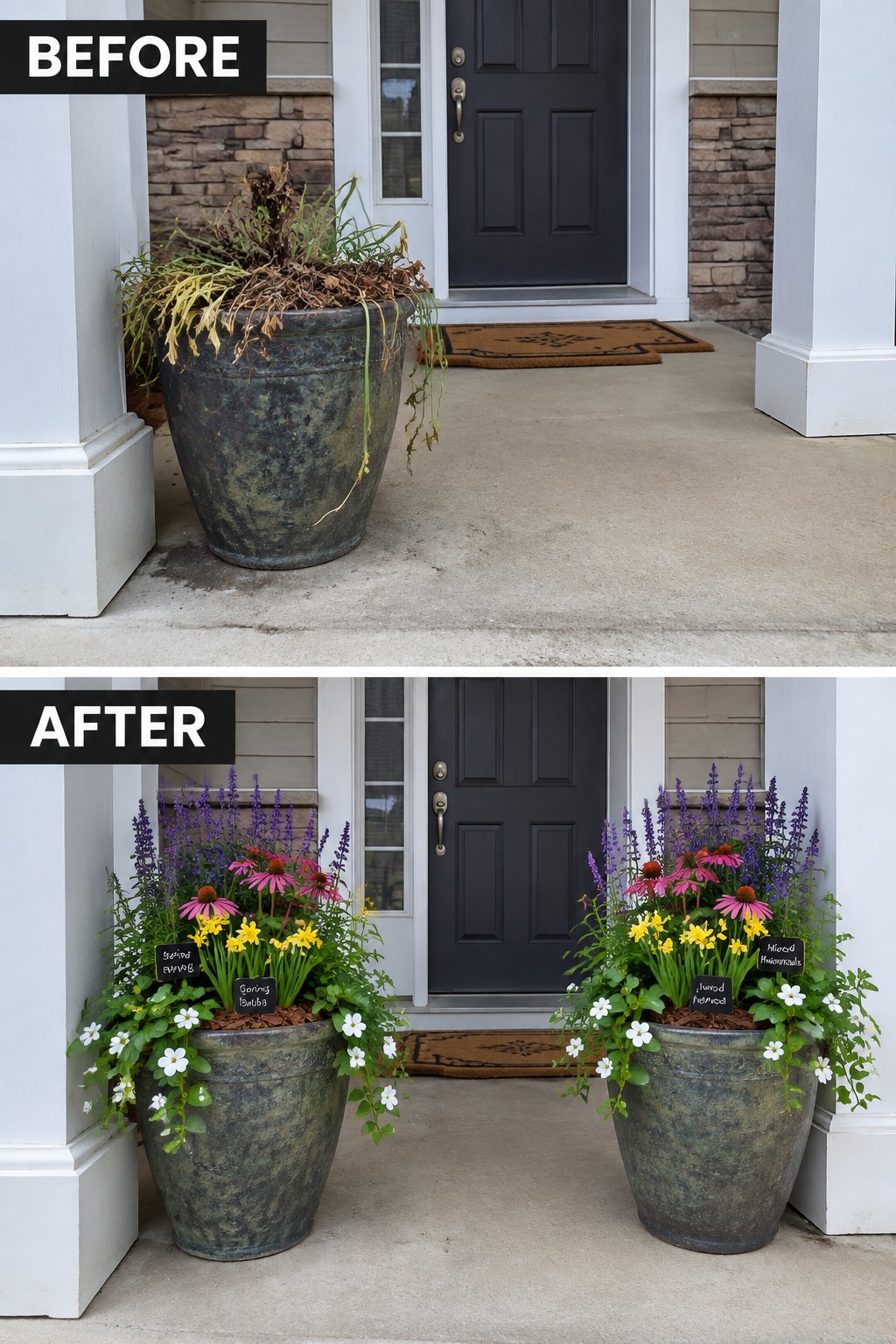
A single tired pot on one side of the door makes the whole entry feel off balance. Switching to two matching containers placed evenly on either side fills the space and gives the doorway a clear, finished look without any construction.
This idea works best on small porches where you want quick impact. Use the same pot style and size, then mix a few taller plants with lower flowers and trailers so each container feels full. Keep the colors simple and repeat them across both pots so the arrangement stays neat rather than busy.
Use Pots To Create A Garden On A Small Balcony

A bare balcony can feel like wasted space until you add plants in containers. The before photo shows just two empty pots on plain concrete, while the after shows the same spot filled with blooming flowers and greenery in different sizes and colors. The change makes the area look used and cared for without any construction.
This idea works best on balconies, patios, or decks where soil is not an option. Start with three or four larger pots to set the main shape, then tuck in smaller ones for variety. Leave enough open floor space so the area stays easy to walk through.
Turn A Narrow Side Yard Into A Seating Area

A long empty concrete path often gets ignored because it feels too tight for anything useful. Adding a few large containers along one wall and stringing simple lights overhead turns the space into a place where you can actually sit. The plants soften the hard surfaces while the lights make the area feel intentional instead of leftover.
This works best on side yards or narrow passages between fences and the house. Start with two or three oversized pots so the scale feels right, then add a small table and a couple of chairs that fold away when not needed. Keep the middle of the path clear so you can still walk through easily.
Turn A Bare Balcony Into A Container Garden
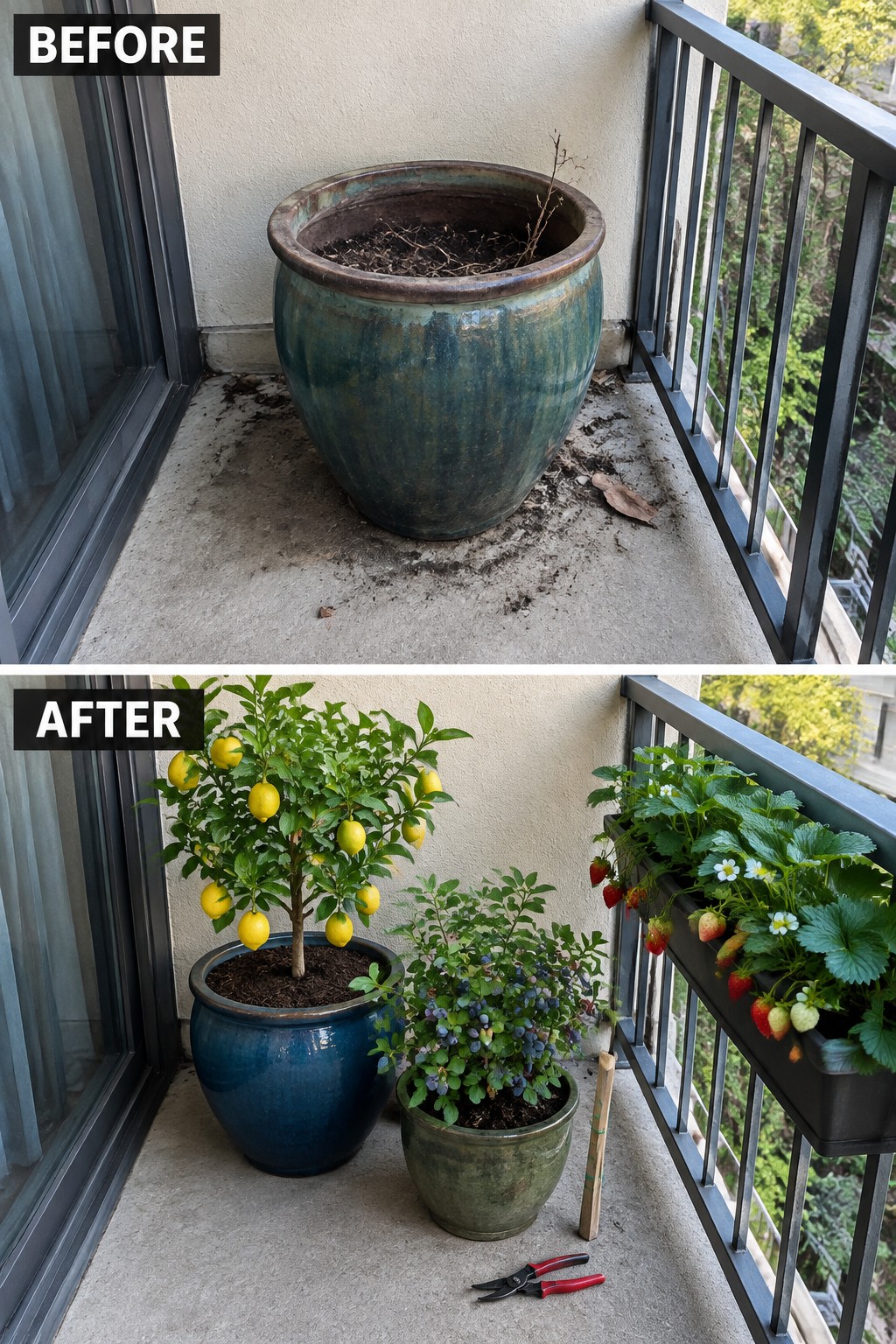
A single empty pot on a concrete balcony does not do much. Once you add a few well-chosen containers with actual plants, the same small space starts to feel useful and productive. The large pot now holds a lemon tree, a second pot holds a blueberry bush, and a rail planter carries strawberries. That shift turns unused floor space into a working garden.
This approach works best on balconies or patios that get decent sun and where you cannot dig into the ground. Start with one or two large pots for bigger plants and add a rail box for smaller crops. Keep the number of containers modest so there is still room to walk and water.
Add Height With A Trellis And Plant Stands

Many small balconies end up with pots scattered along the floor and walls, which makes the space feel busy but not very full. Adding a tall trellis for climbing plants and a few simple stands lets you layer plants at different heights. This turns the same collection of containers into something that feels more planned and takes up less floor space.
This approach works well on any small outdoor area where you want more plants without crowding the walking area. Start with one vertical piece like a trellis against a wall, then use stands to lift a few larger pots. Keep the rest of the containers at ground level so the whole setup stays balanced and easy to water.
Use Containers To Give A Small Entry Clear Purpose
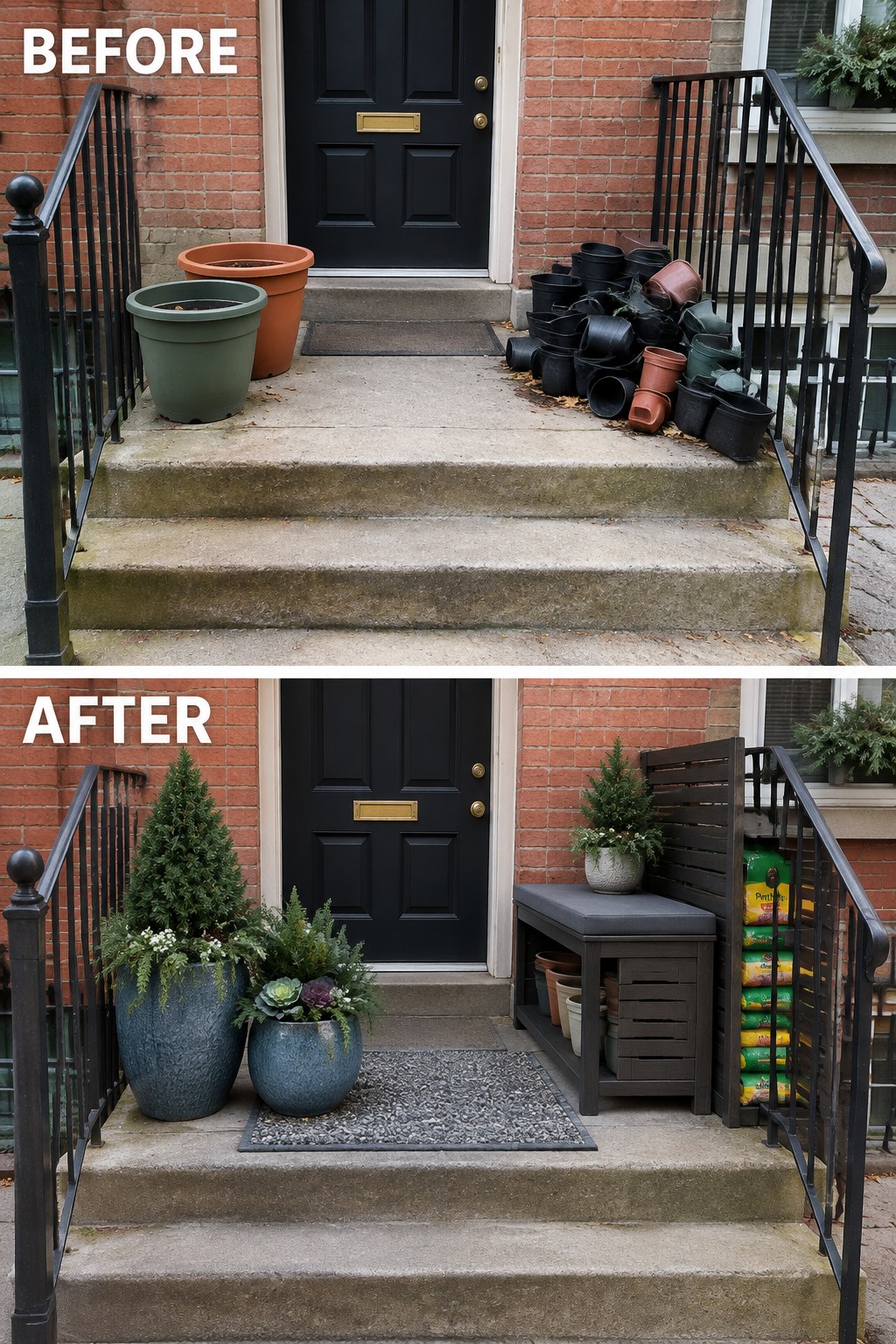
A cluttered set of steps often happens when pots get added one at a time without a plan. Grouping a few larger containers on either side of the door and keeping the middle clear turns the same small space into something that feels intentional rather than messy.
This idea works best on narrow porches or stoops where every item needs a reason to be there. Choose two or three matching planters in a similar color or material, place them to frame the door, and tuck extra pots or soil bags into a simple bench or shelf so the steps stay open for walking.
Frequently Asked Questions
Q: How often do I really need to water containers in a small garden setup? A: Check the soil with your finger each morning. Most plants in pots dry out faster than those in the ground so give them a thorough soak when the top inch feels dry. Skip the daily sprinkle and focus on deep watering instead.
Q: What works best for drainage if I use decorative pots without holes? A: Layer pebbles at the bottom before adding soil. This keeps roots from sitting in water and rotting. You can also set the pot inside a larger one with a gap for airflow.
Q: Can I mix flowers and veggies in the same container? A: Pair compact herbs like basil with trailing petunias for a full look. Make sure they share similar water and sun needs so everything thrives together. Rotate the pot now and then for even growth.
Q: How do I keep soil from washing out during heavy rain? A: Top the mix with a light layer of mulch or small stones. This holds everything in place while still letting water reach the roots.
