


Gardens tend to lose their shape after a few seasons when paths wear down and weeds start filling the gaps.
Adding gravel and stone gives you a way to redraw the layout without spending much.
I often find that laying a simple stone edge first changes how the whole space feels to walk through.
It keeps things drier underfoot and cuts down on the constant weeding that eats up weekends.
Over time these materials settle in and make the garden feel more like a place you actually use instead of one you just look at.
Define An Entry Path With Gravel And Stone Borders

A dirt path through patchy grass makes any front yard feel unfinished. Switching to a gravel walkway edged with stones gives the space a clear shape and stops the lawn from creeping in. The simple border also makes room for low plantings on either side without looking messy.
This approach works well on small front yards or side entries where you want structure without a big budget. Start with a weed barrier under the gravel so it stays neat, and keep the stone edging low so it does not trip anyone. The result feels planned even if you only add a few plants later.
Turn Bare Concrete Into An Outdoor Seating Area
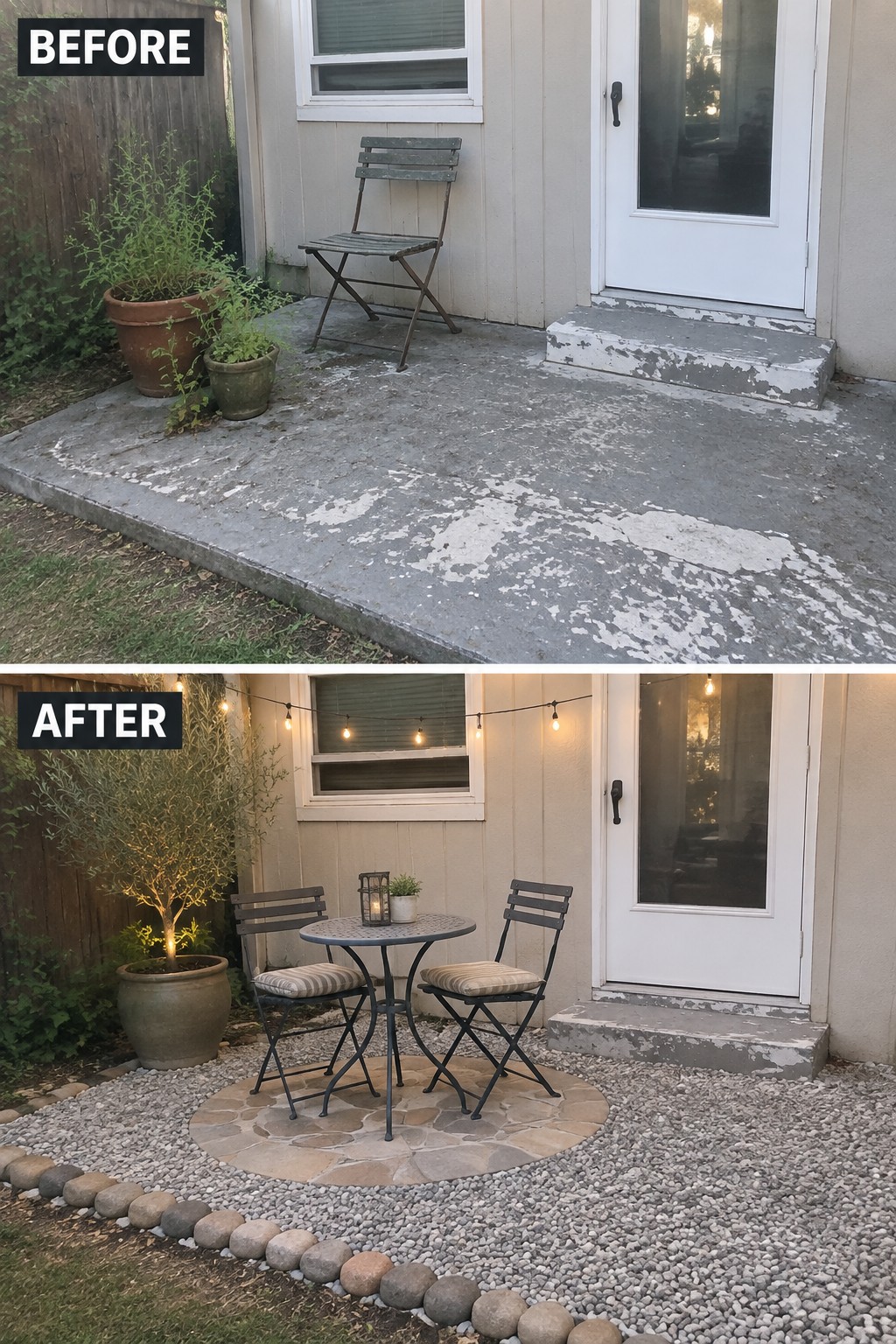
A plain concrete slab can feel like wasted space until you give it a clear purpose. Adding a ring of stone pavers for the table and chairs and covering the rest with gravel turns the same spot into a usable seating area without replacing the whole surface.
This approach works best on small patios or side yards where full paving would cost too much. Clean the concrete first, set the pavers in a simple circle or square, then spread gravel around the edges to keep the zone defined and easy to maintain.
Define Garden Borders With Gravel And Stone

Clearing the overgrowth first makes the biggest difference. Once the weeds are gone, gravel and larger stones create a clean edge that separates the lawn from the fence line without needing constant upkeep.
This idea works best along property fences or narrow side yards where you want a tidy look but low maintenance. Remove the old plants, lay down fabric, spread the gravel, and add a few bigger rocks and simple succulents to hold the shape. It suits homes that already have grass and fencing but need the border to feel more deliberate.
Define A Front Path With Gravel And Stepping Stones

A solid concrete walk often looks flat and lets grass creep in from both sides. Replacing it with stepping stones set in gravel creates a clear route that stays neat and gives the front yard a more organized shape without spending much.
This idea suits homes with a straight front walk and a basic lawn. Start by removing the old concrete if needed, lay fabric to block weeds, spread gravel for drainage, then set the stones with comfortable spacing so the path feels natural to use.
Fix A Soggy Side Yard With Gravel And River Rock
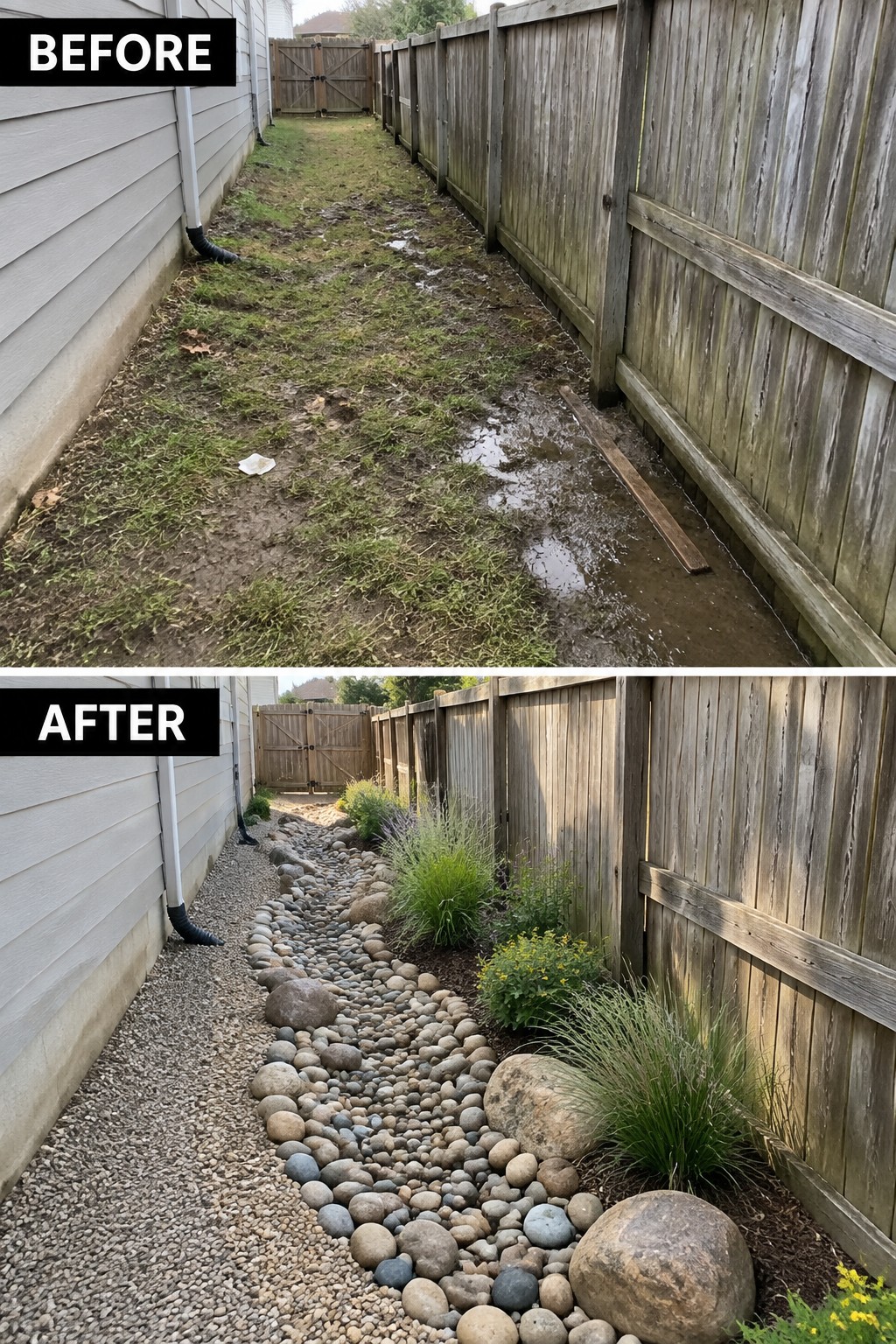
A narrow space between the house and fence often stays wet and hard to keep clean. Laying gravel along one edge and building a rock channel through the middle gave the water somewhere to flow while turning the mud into a low-maintenance surface.
This approach suits homes with tight side yards or poor drainage. Start by clearing the area and adding landscape fabric, then use a mix of small gravel and larger river rocks to create a dry stream that moves water away from the foundation. Keep the planting simple with a few grasses and perennials along the edges so the rocks remain the main feature.
Create An Outdoor Seating Area Using Gravel And Stone

A bare patch of dirt next to a fence can feel like wasted space until you give it a clear edge. Laying gravel across the ground and adding a ring of stone instantly turns the area into a defined spot for sitting. The fire pit sits right in the middle, and the low stone benches curve around it without crowding the yard.
This idea works best in smaller backyards where you want a usable zone without pouring concrete or building big structures. Start with a simple gravel base to keep the area dry and low maintenance, then build the seating low so it stays comfortable and weatherproof. Keep the planting light around the edges so the gravel and stone remain the main focus.
Define Garden Beds With Gravel And Stone Borders

One of the easiest ways to improve a tired front yard is to give the planting areas a clear shape. The before view shows scattered shrubs and uneven ground with no real edge between the lawn and the beds. Adding gravel inside low stone borders created a tidy frame that makes the whole area look more intentional.
This idea works especially well along the front of a house where you want structure without spending much. Clean out the old growth first, then add landscape fabric, gravel, and a simple stone edge to keep everything in place. It keeps the beds looking neat even when the plants are still filling in and it works on both small and larger yards.
Use Stone Terraces To Shape A Sloped Yard
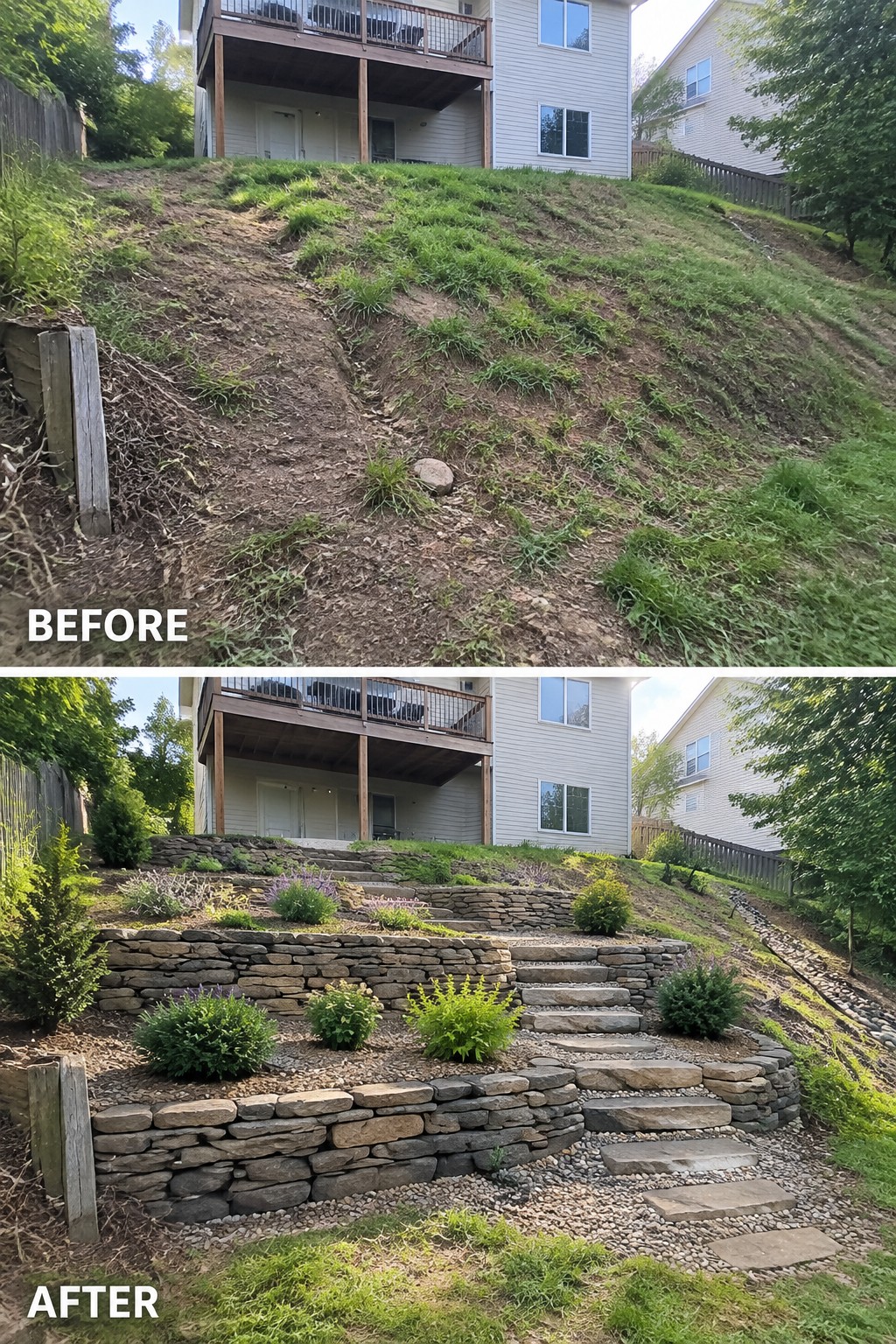
A bare, sliding slope is hard to mow and even harder to plant. Adding low stone retaining walls turns the hill into a series of flat beds that hold soil and give plants a place to grow. The gravel paths between the walls keep feet dry and stop erosion from washing everything downhill.
This approach works best on yards that drop more than a few feet. Start with the lowest wall first so each level can rest on solid ground. Keep the beds narrow enough to reach across for weeding, and use the same stone or gravel throughout so the whole slope reads as one planned area instead of scattered patches.
Add Stone Edging To Define A Garden Path
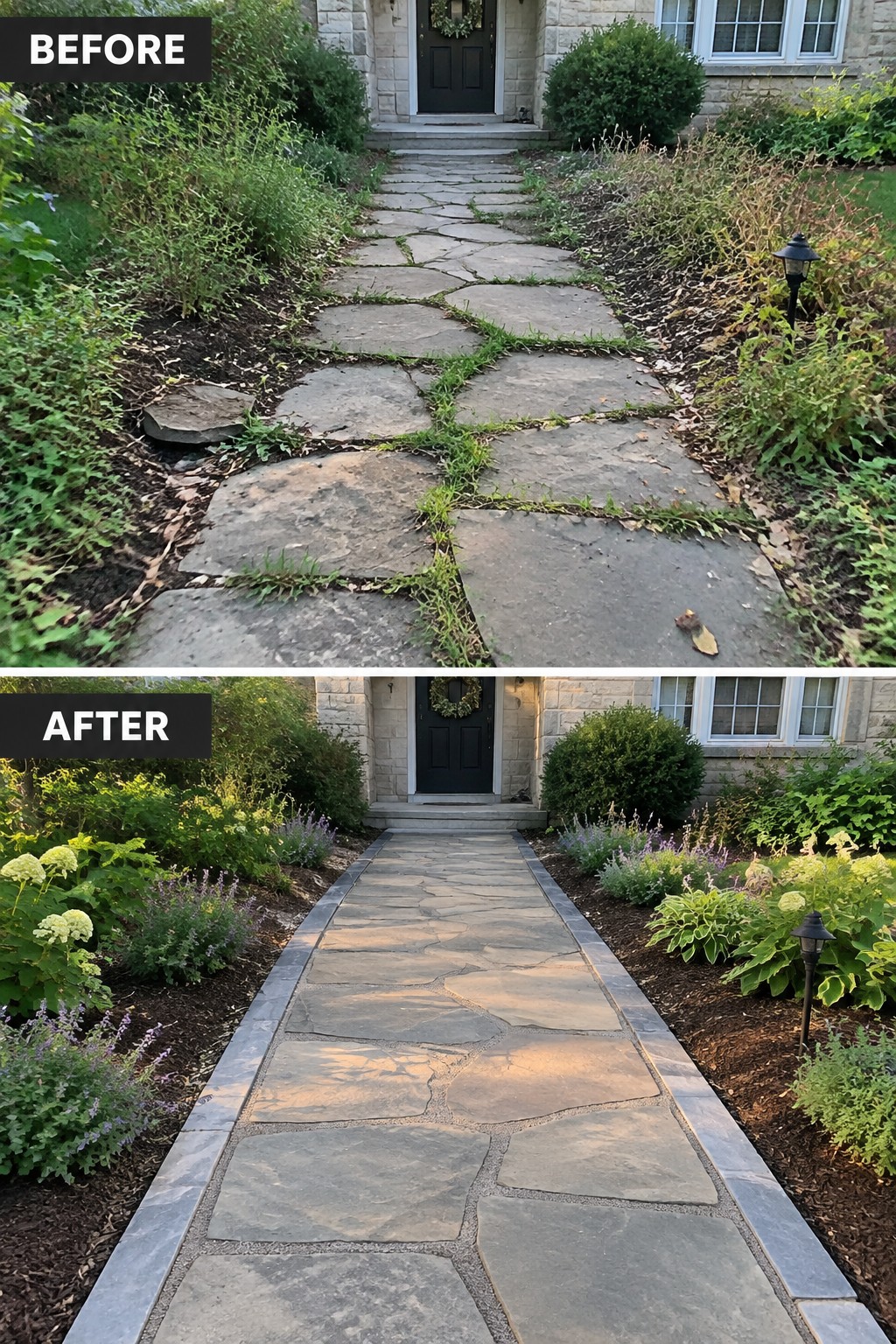
An overgrown path quickly starts to look neglected once weeds and grass creep between the stones. Adding a simple stone border on both sides gives the walkway a clear shape, keeps the surrounding beds in place, and makes the whole area feel more intentional without replacing the existing pavers.
This approach works well on older homes where the path is still solid but the edges have blurred over time. Start by clearing the worst of the growth, then lay a low stone or concrete border to separate the walkway from the beds. Once the lines are set, mulch the borders and add a few low plants so the path stays easy to maintain.
Use Gravel And Stepping Stones To Define A Small Patio
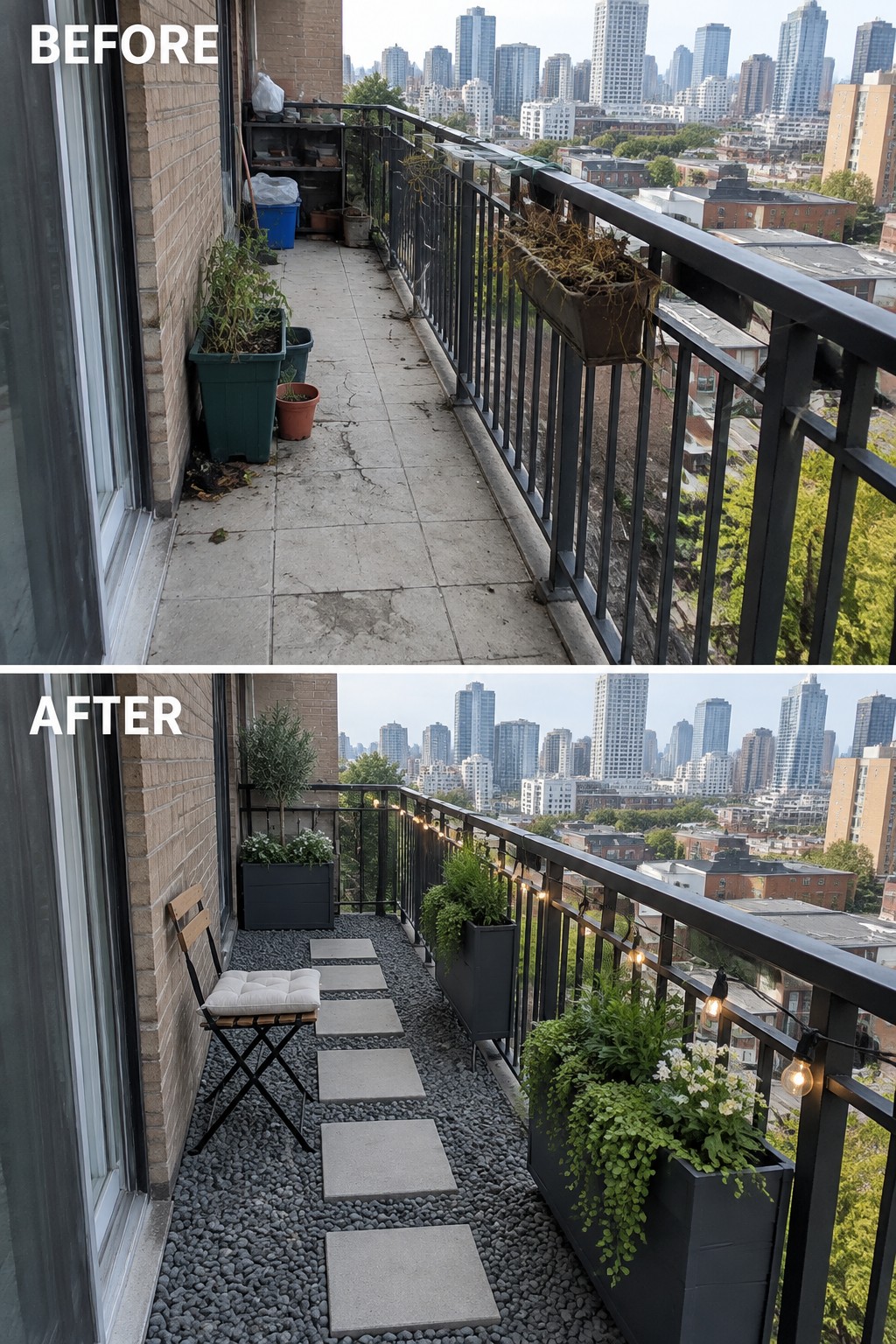
Covering a bare concrete surface with gravel and adding a few stepping stones is one of the easiest ways to make a small outdoor space feel finished. The gravel creates a softer base that hides cracks and stains while the stones form a simple path that keeps the area usable instead of just empty. This change turns a neglected balcony into something that actually invites you to step outside.
The idea works best on balconies or patios where you want structure without adding raised beds or heavy furniture. Keep the path clear and wide enough for walking, and choose gravel that stays in place over time. It also helps with drainage and makes the space easier to sweep and maintain through the seasons.
Create Defined Beds Around Trees With Gravel
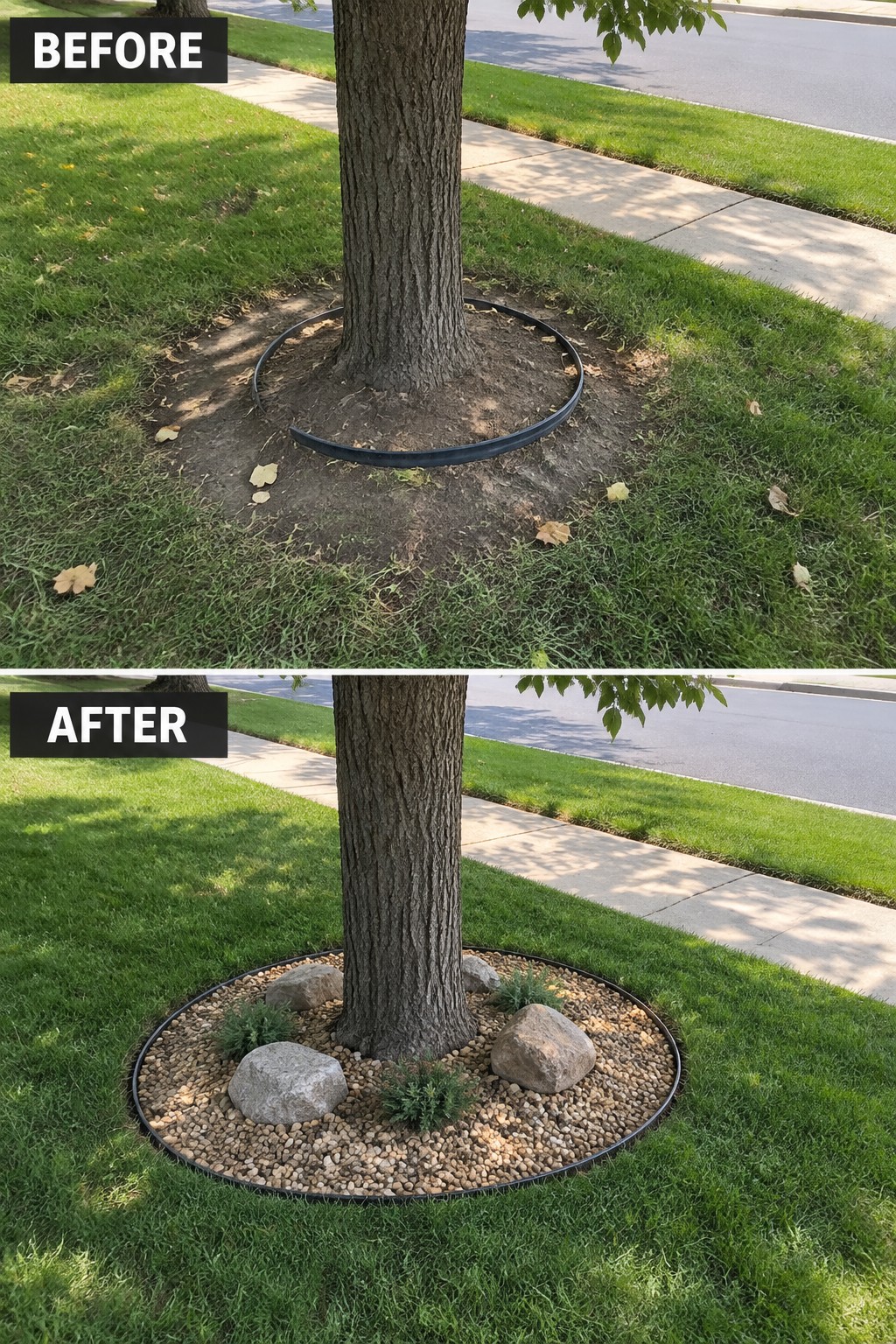
The bare patch around a tree trunk often looks unfinished, especially when a thin plastic ring is the only border. Replacing that with gravel, a few larger stones, and a couple of small shrubs turns the same spot into something that looks planned and stays neat.
This approach works best in front yards or side lawns where trees sit in open grass. Clear the area first, add a simple metal or plastic edge, then fill with gravel. The stones help hold everything in place and keep mower lines clean without extra trimming.
Define A Plain Concrete Porch With Gravel And Stone Pavers
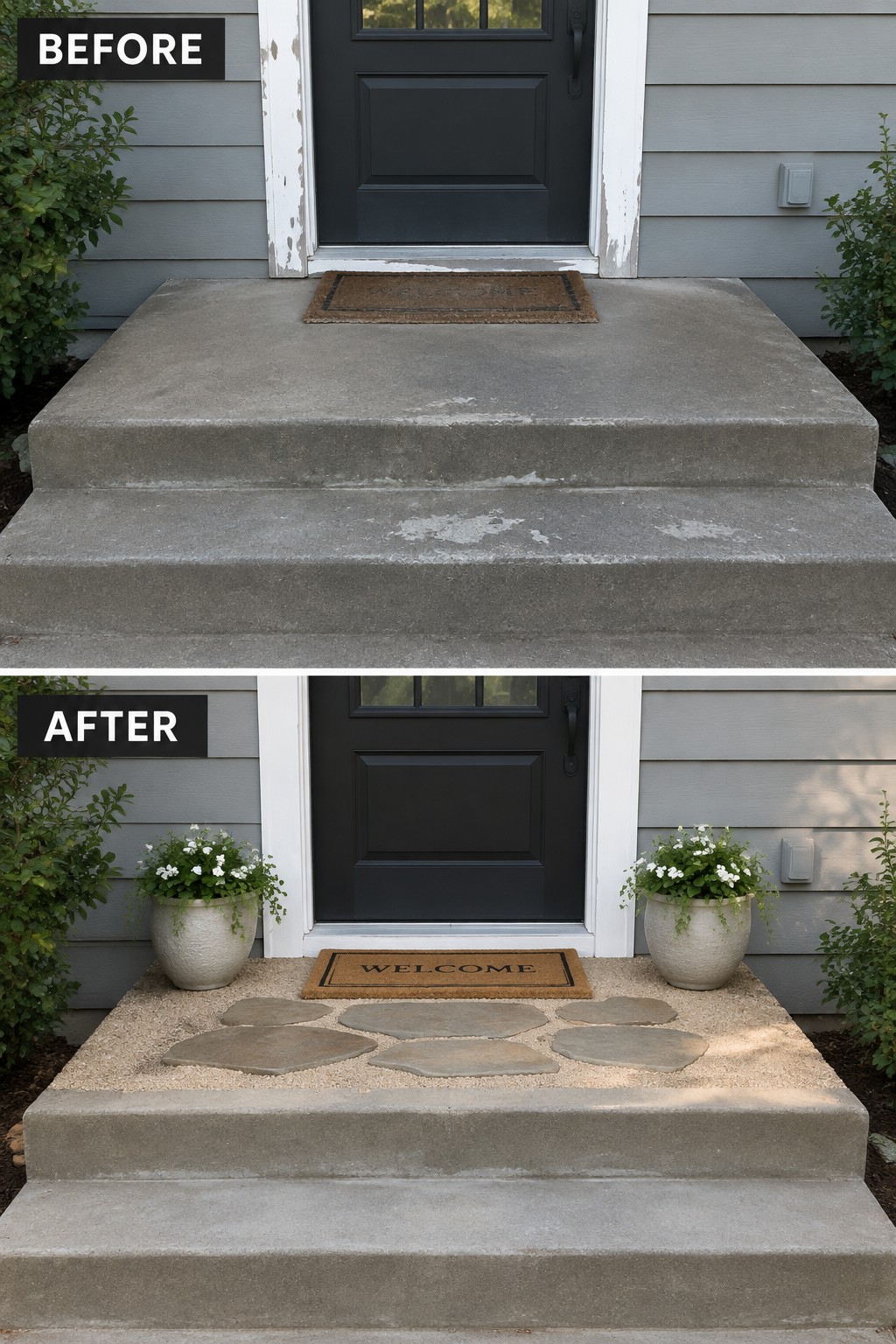
A bare concrete porch can feel cold and unfinished even when the rest of the house looks fine. Laying gravel across the surface and adding a simple path of flat stepping stones gives the entry a clear shape and makes it feel more welcoming. The two pots placed on either side of the door add just enough softness without taking up walking space.
This idea suits homes with basic concrete steps or small front landings that need structure more than decoration. Use landscape fabric under the gravel to keep weeds down, and pick stones that sit flat and steady underfoot. Keep the planting minimal so the gravel and stone remain the main feature.
Define Foundation Beds With Stone And Gravel

Adding a low stone border and filling the bed with gravel turns a messy foundation area into something much more orderly. The plants stay contained instead of spilling out, and the whole strip looks intentional rather than neglected.
This idea works best along the base of a house where you want low upkeep and a clean line. Set the stones first so the edge feels solid, then keep the planting simple with just a few shrubs or perennials. Gravel helps suppress weeds and makes the bed look finished even when nothing is blooming.
Add Structure With A Gravel And Stone Path
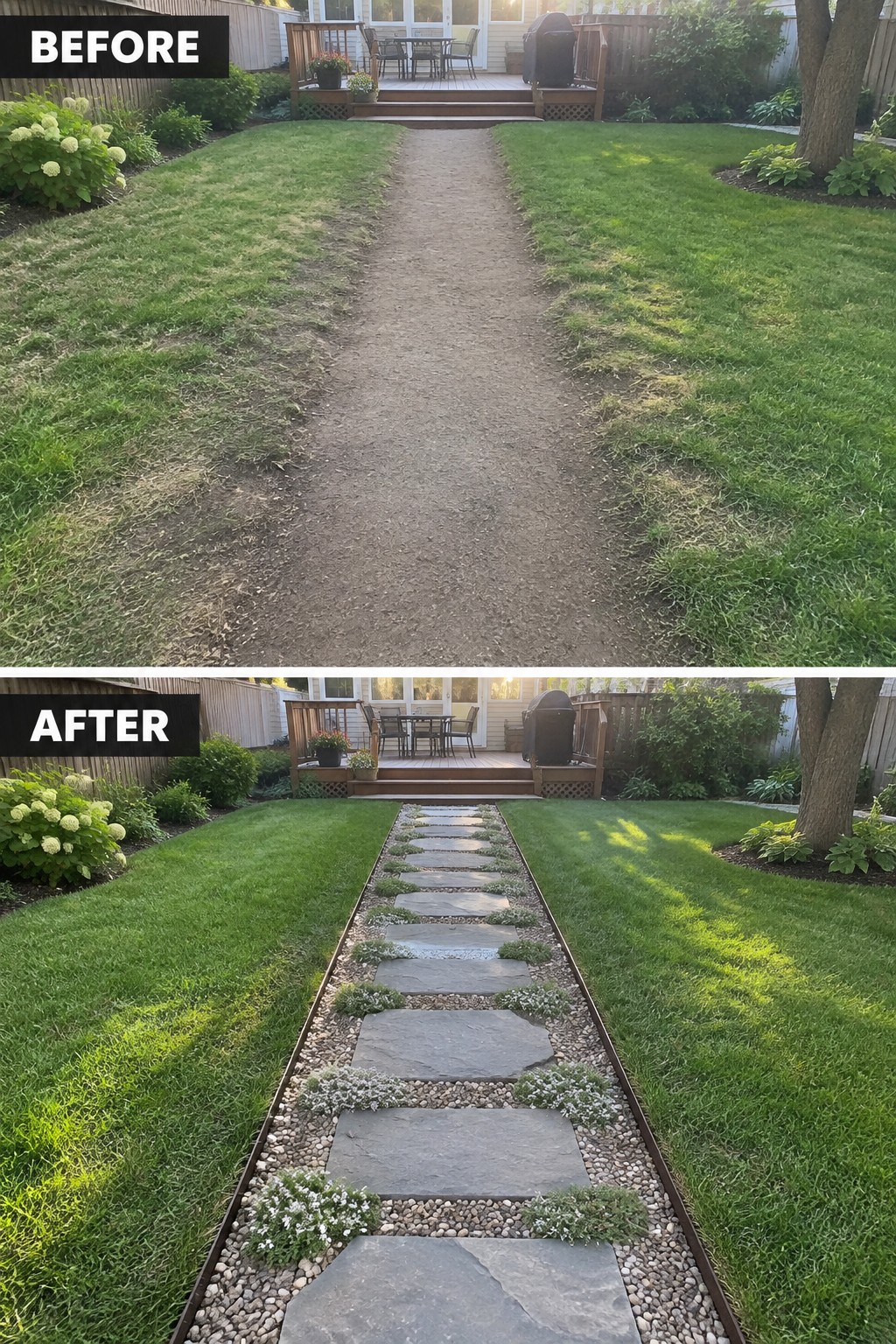
A bare dirt path through the lawn often feels unfinished and hard to keep tidy. Switching to flat stones set in gravel gives the walkway a clear shape while keeping the surrounding grass looking neat and open.
This works best in medium or larger yards where you need to link the house to the back of the garden. Lay simple metal edging first to hold the gravel in place, then space the stones evenly so walking feels natural. The materials stay affordable and hold up well without much upkeep.
Use Gravel And Stones To Shape A Garden Border
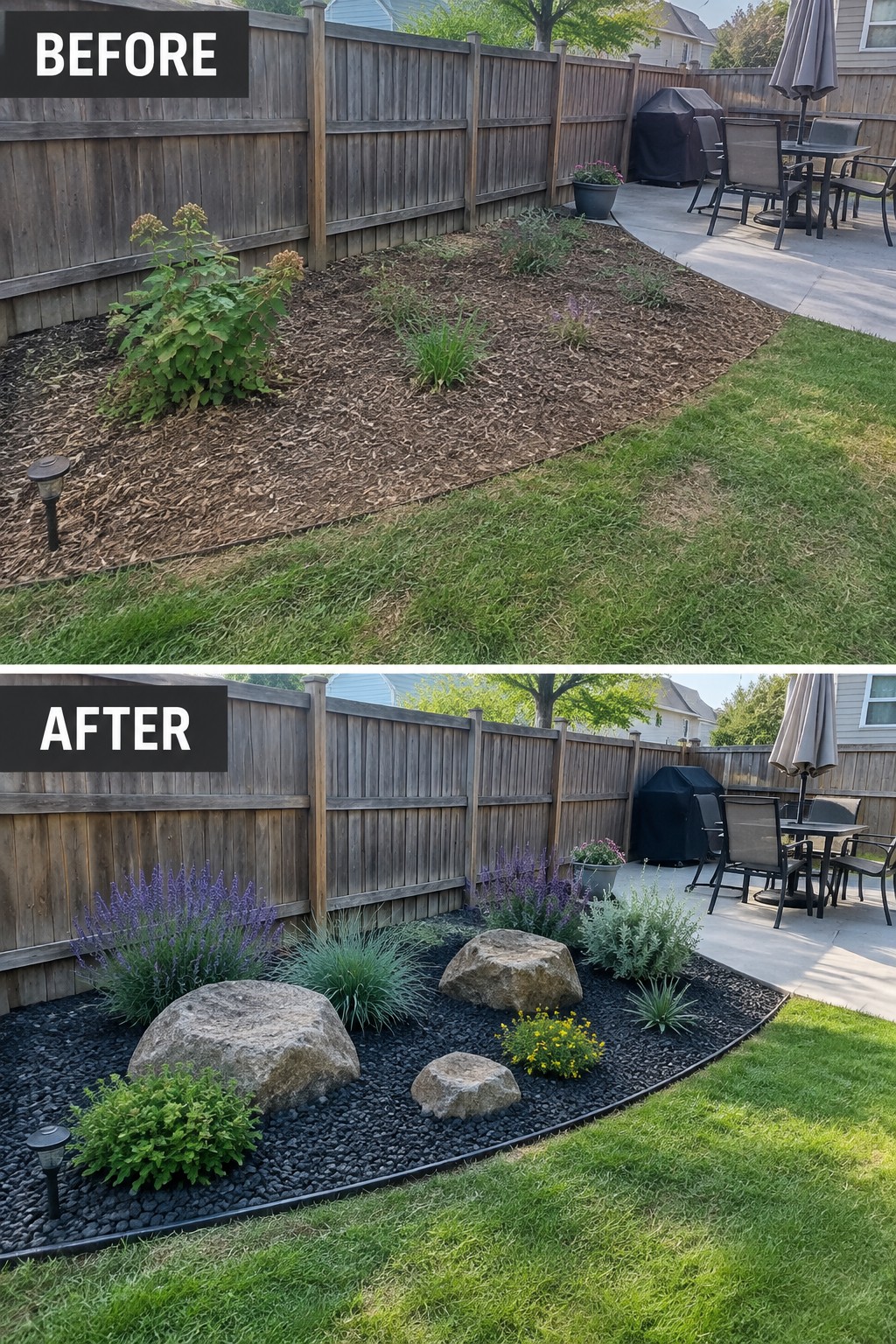
Switching from loose mulch to gravel gives a garden border a clean edge and cuts down on weeds. The addition of a few large rocks helps break up the space and keeps the planting from looking scattered along the fence.
This idea works best next to a patio or along a straight fence line where you want low maintenance. Clear the area first, add simple edging, then lay gravel so the stones stay put and the plants have room to fill in without constant weeding.
Use Gravel And Stepping Stones To Shape A Pond Edge
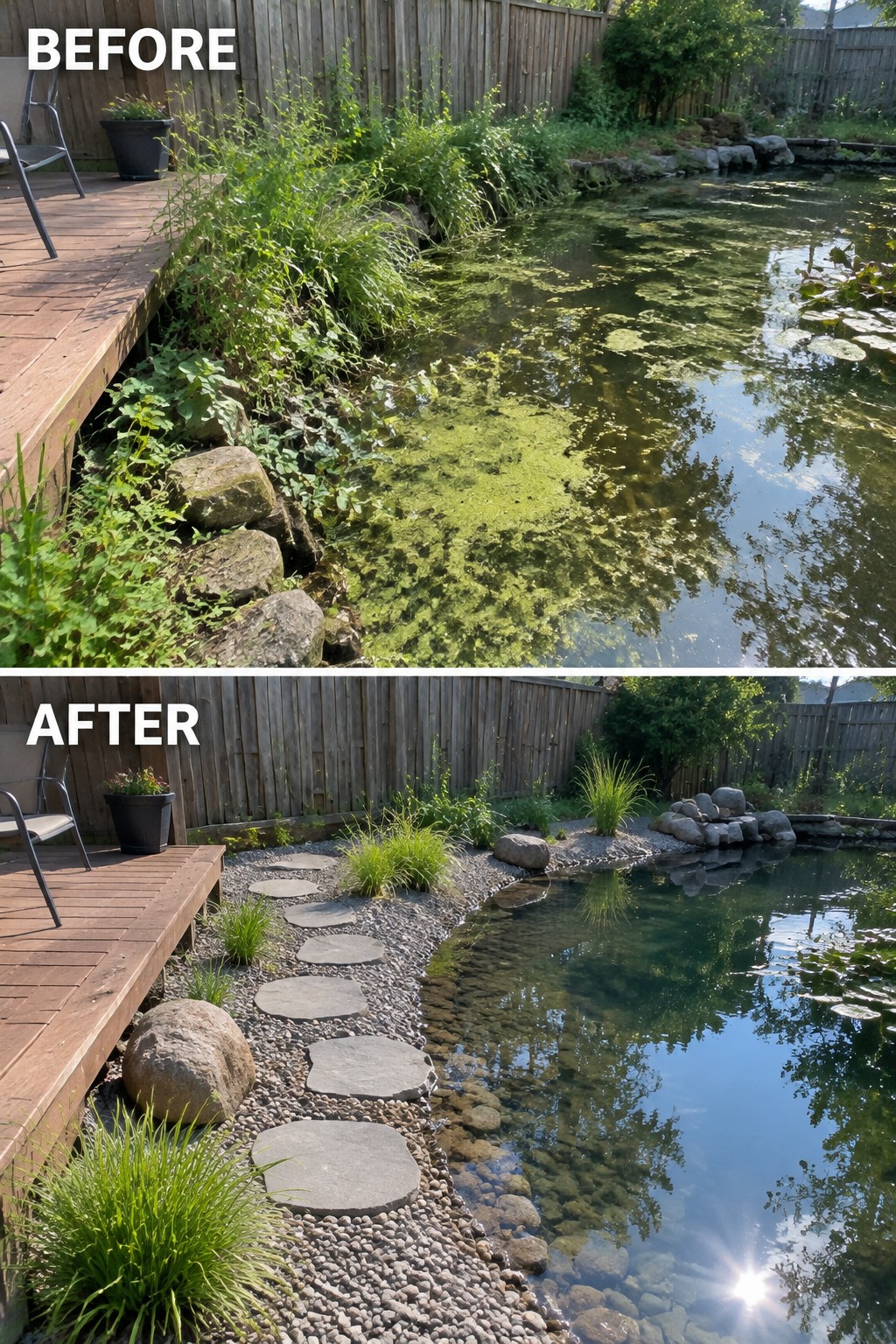
A simple gravel path with stepping stones can turn a messy pond border into something that feels intentional. In the before photo the plants had taken over and there was no easy way to walk along the water. The after shows how gravel and flat stones create a firm edge that keeps the area looking tidy and gives you a place to stand without sinking into mud.
This idea works best around small ponds or water features where the ground stays damp. Start by clearing the overgrowth, then lay gravel to define the shape and add stepping stones for a path. It keeps maintenance easier and stops the edge from looking neglected, especially in yards where you want access without adding a full patio.
Define A Narrow Side Path With Gravel And Stone

A narrow side yard often becomes a neglected strip of dirt and weeds that no one wants to walk through. Laying down gravel with a simple stone border turns that same space into a clear, usable path that feels planned instead of forgotten.
This idea works especially well in tight areas between houses and fences. Clear the overgrowth first, set the edging in place, then fill with gravel. The materials stay affordable and the path remains low maintenance through different seasons.
Define A Bare Patio With Gravel And Stone
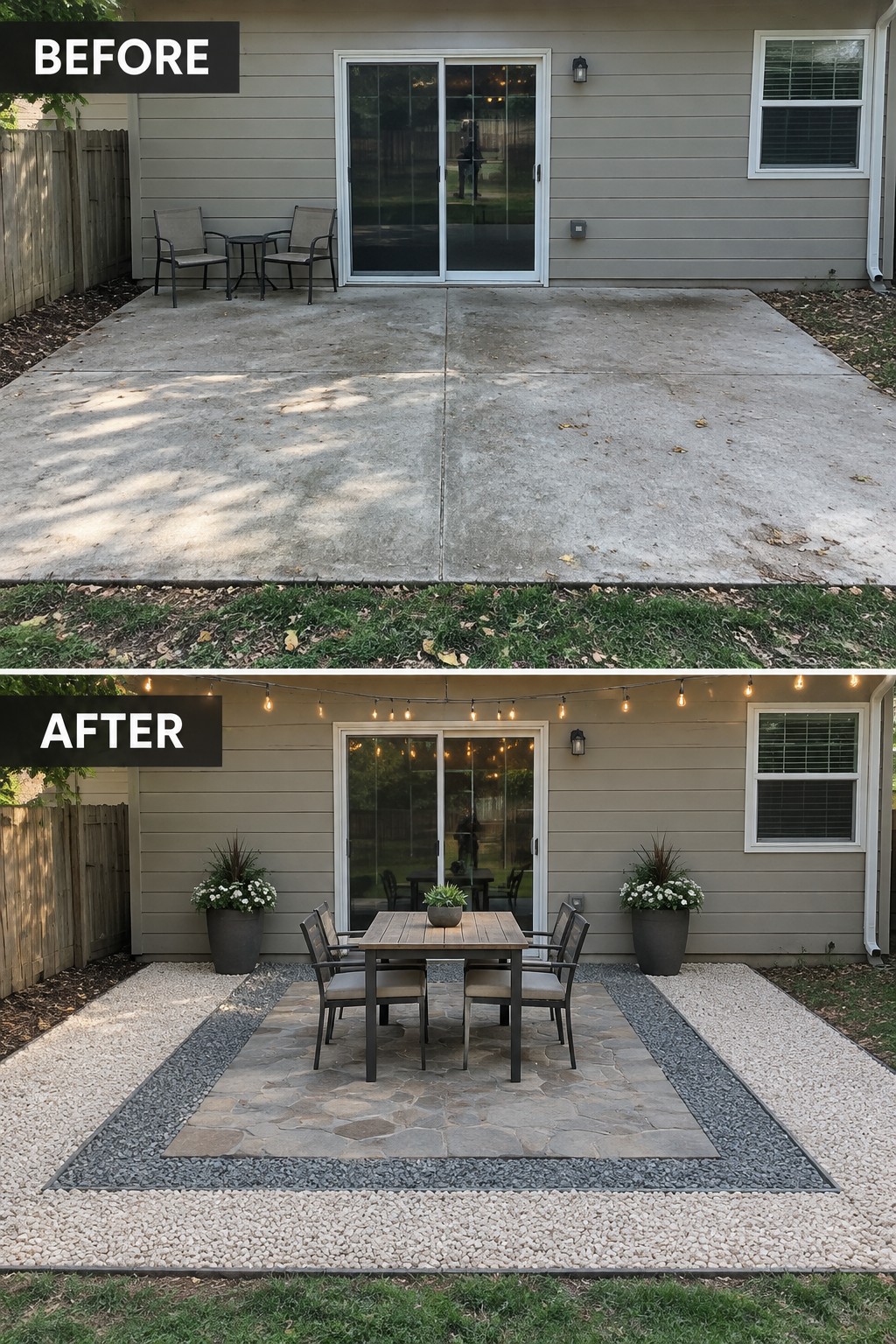
A plain concrete slab often feels unfinished and hard to use. Adding a border of gravel with a central stone paver section gives the space clear edges and turns it into a proper outdoor room. The before photo shows just a couple of chairs sitting on open concrete, while the after adds a full dining set, two large planters, and string lights that make the area feel intentional and ready for meals.
This approach works well on any flat concrete patio or backyard slab where you want structure without a big budget. Keep the gravel band wide enough to separate the seating zone from the surrounding grass, and choose weatherproof furniture that fits the scale of the space. Start with the border layout before adding plants or lights so the shape stays simple and balanced.
Frequently Asked Questions
Q: How do I stop weeds from coming up through the gravel later on?
A: Spread landscape fabric right on the cleared ground before you pour the gravel. It blocks most weeds while water still drains away. Rake everything level once you add the stones.
Q: Can I put gravel paths around my current plants without issues?
A: Keep the gravel a few inches away from stems and roots so air reaches the soil. Water those plants by hand or with soaker hoses to avoid shifting the stones. The setup stays simple and the plants keep growing fine.
Q: What happens if heavy rain moves the gravel around?
A: Slope the area slightly when you lay it so water runs off instead of pooling. Add a low stone border on the downhill side to hold everything in place. Check the edges once after the first storm and nudge any loose bits back.
