

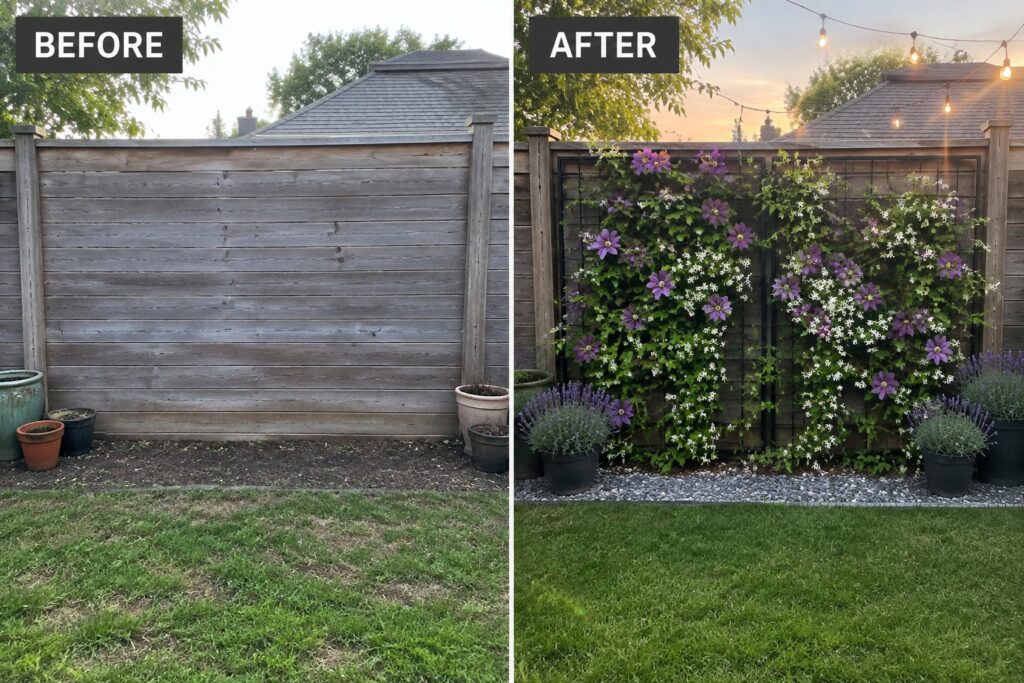
Many gardens feel unfinished when all the growth stays low and there are no vertical lines to break up the view.
Trellises give climbing plants a place to attach so the space gains depth and a bit of privacy as the season goes on.
I usually test one small section first before committing to a larger area.
Watching the vines reach the top of the frame brings a quiet sense of progress.
The setups that use sturdy materials and suitable plant choices tend to hold up better over time.
Add A Trellis To Turn A Plain Fence Into A Garden Feature
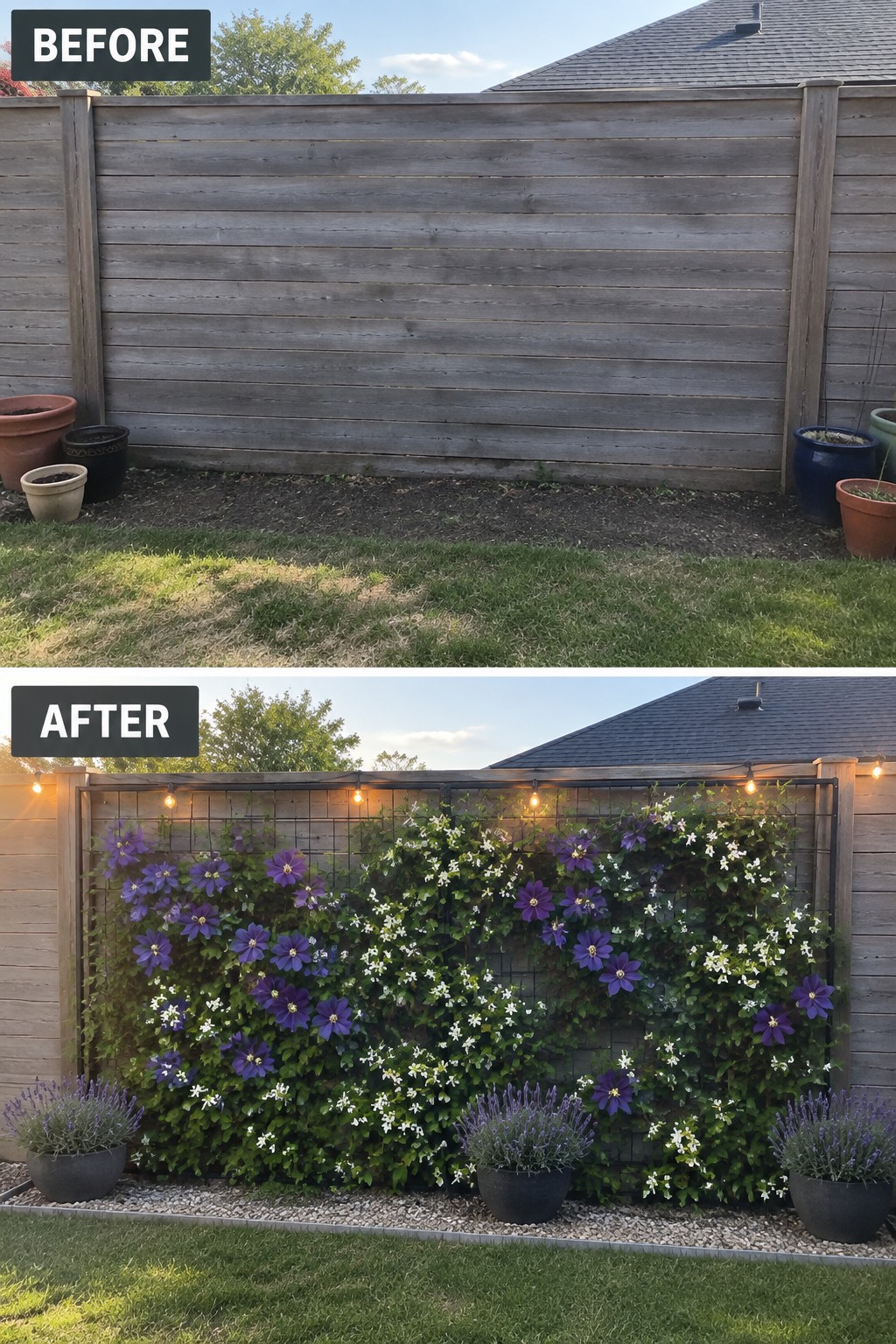
A bare fence often leaves the back of a yard feeling flat. Running a grid trellis across it and letting vines climb up gives the space height and softness without taking up ground room. The flowers fill in quickly and the lights make the area usable after dark.
This idea works best on a fence that already has decent sun and a simple planting strip at the base. Secure the trellis first, then plant two or three types of climbers so something is always blooming. Keep the ground cover low and repeat the same pot style a few times so the whole look stays calm instead of busy.
Use A Trellis To Bring Structure To A Narrow Side Yard

A narrow side path often ends up as the most neglected part of the yard. This makeover shows how adding a vertical trellis and letting climbing roses cover it can turn that forgotten strip into a real garden feature instead of an afterthought.
The change works because the trellis gives the space height and a clean edge while the roses soften the old fence without taking up ground room. In a tight passage like this, focus on one strong vertical element, keep the path clear with gravel or stepping stones, and use a few pots at the base so the area stays easy to walk through.
Add Vertical Trellises To A Plain Patio Wall

A bare stucco wall and empty floor make a patio feel unfinished and flat. Adding three simple wood trellises planted with bougainvillea gives the wall height, color, and a clear sense of purpose. The small table and chairs now have something to sit in front of instead of just open space.
This approach works well on any sunny patio or courtyard wall that needs structure without taking up floor room. Start with sturdy trellises that match the scale of the wall, then choose one vigorous climber that can handle your climate. Keep the rest of the area simple so the plants stay the main feature.
Use Vertical Trellises To Structure A Narrow Wall Border
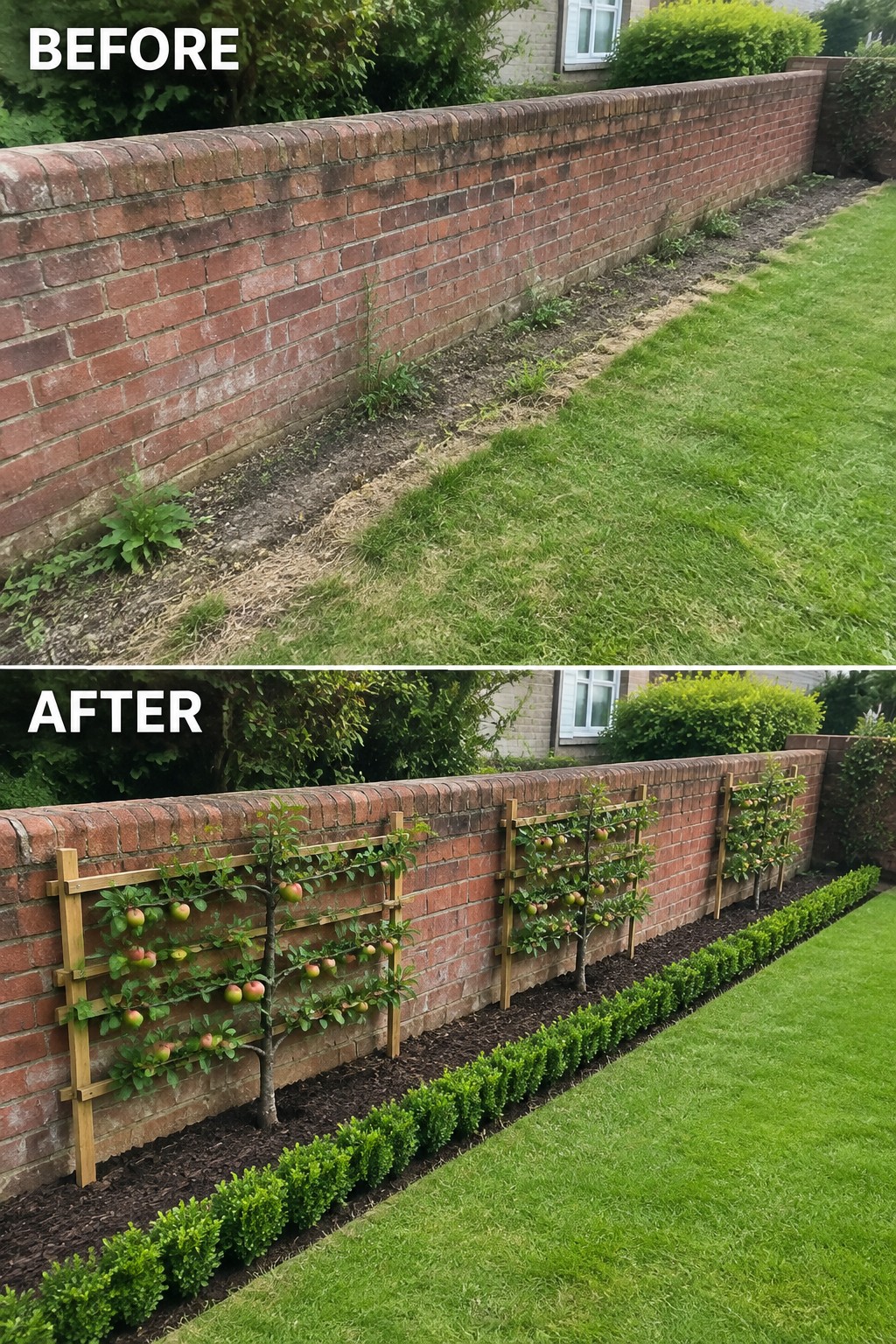
A narrow strip of ground along a brick wall often ends up as wasted space or a weedy mess. Simple wooden trellises placed against the wall let you train small fruit trees upward instead of letting them spread out. This turns the area into a clean, productive line that looks intentional rather than leftover.
The same approach works well in any yard where the lawn meets a long wall or fence and space is tight. Choose dwarf or semi-dwarf trees suited to your climate, keep the horizontal wires or slats evenly spaced, and add a low hedge in front to soften the base. Mulch the bed and you have a finished edge that needs little extra room to look complete.
Turn A Blank Wall Into A Vertical Garden

A plain garage wall with nothing but concrete can feel like wasted space. Adding a row of wooden trellis planters gives the area purpose and brings in greenery without taking up floor room. The plants climb the grids while the boxes hold herbs and vegetables at a reachable height.
This idea works best on side walls or garage exteriors where you want productivity without crowding the ground. Use weather-treated wood for the frames, space the trellises evenly, and choose a mix of trailing herbs and compact climbers. A couple of extra pots at the base can fill any gaps while the vines fill in.
Train Climbing Plants Along A Fence

An overgrown fence covered in vines often ends up looking wild and neglected rather than green and inviting. Here the vines were cut back and guided to grow only on the fence itself, while a raised bed was added at the base to hold smaller shrubs and a few flowers. The result is a much tidier border that still feels full.
This idea works best along side or back property lines where you already have a fence but want more greenery without constant trimming. Keep the climbers thinned each season so they stay on the vertical surface, and use a simple planter or edging at the bottom to separate the lawn from the planting. It suits yards that need a quick refresh without replacing the whole fence.
Add Vertical Trellises To Frame A Patio Corner
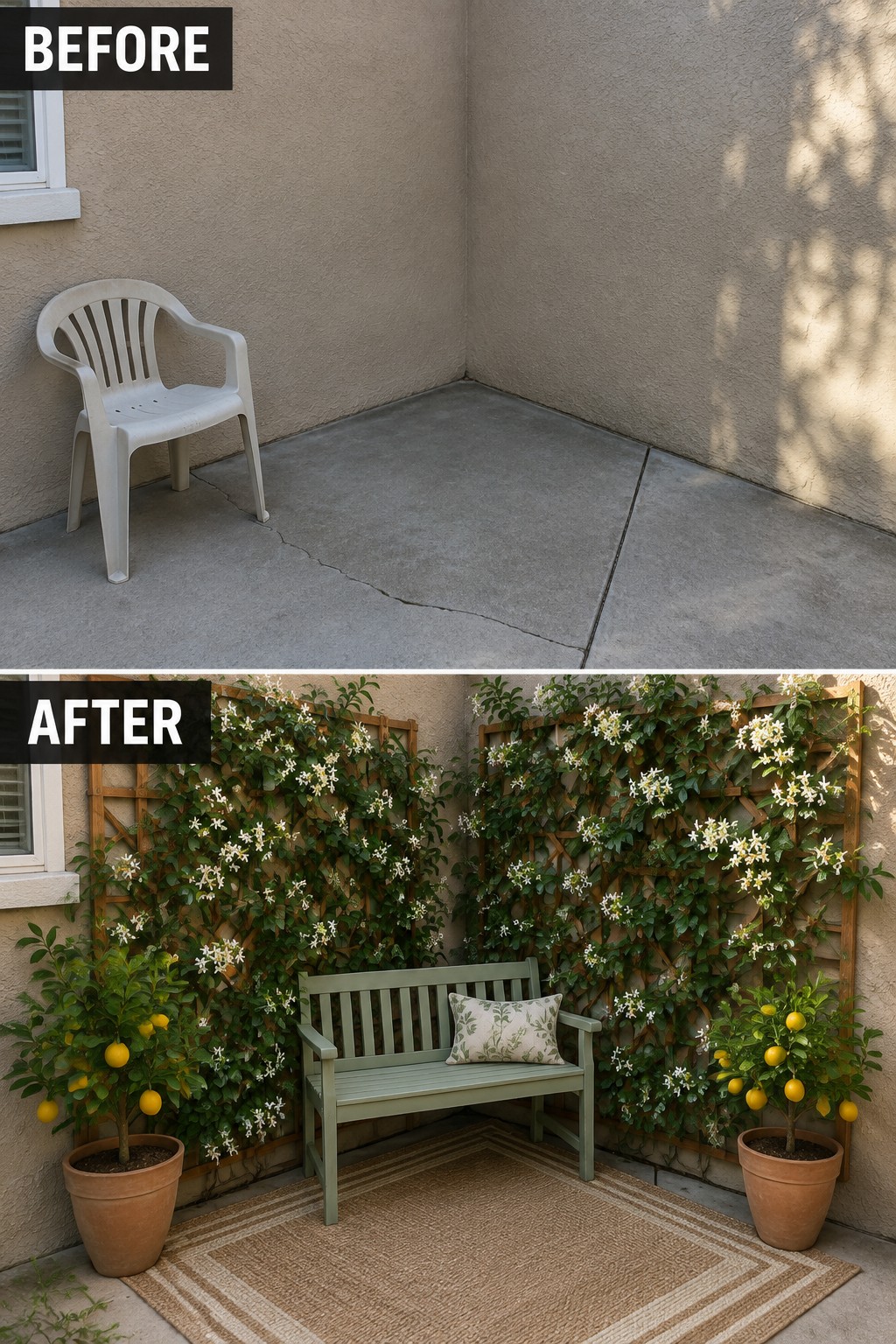
A bare concrete corner with nothing but a lone plastic chair feels empty and unfinished. Vertical trellises mounted on the walls change that by creating green vertical planes that give the space structure and a sense of enclosure. The climbing vines soften the hard surfaces and turn the same small area into a place where a bench and a couple of pots can actually feel settled.
This idea suits narrow side yards or small paved patios where floor space is tight. Secure the trellises first, then choose climbers that grow densely enough to cover the grid without constant pruning. Keep the rest of the furnishings minimal so the planted walls stay the main feature rather than competing with too many objects on the ground.
Add Trellis And Climbing Plants To A Plain Fence
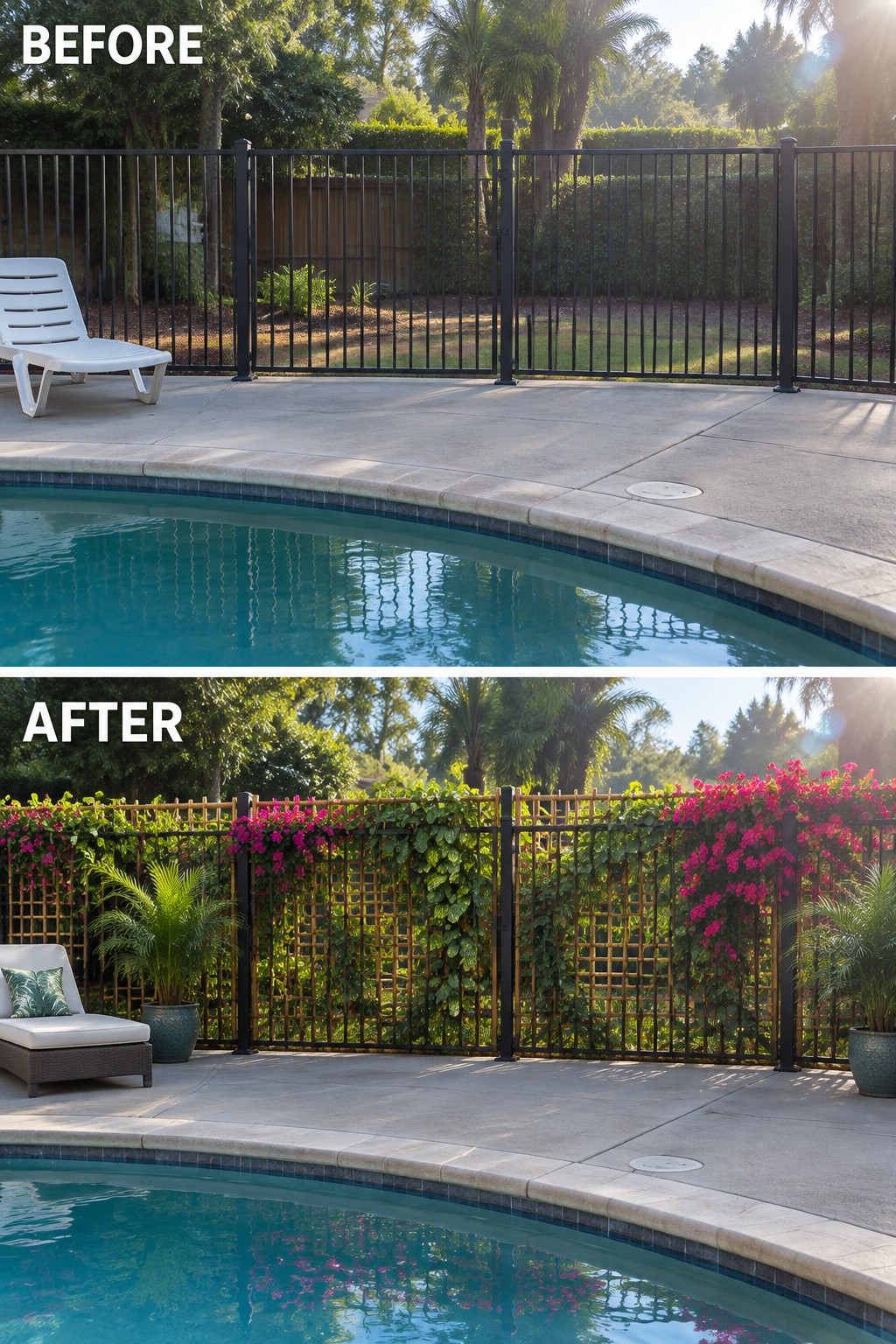
A plain fence around a pool often looks flat and exposed. Adding a wooden trellis and letting climbing vines grow across it softens the hard lines and brings in color without taking up floor space on the patio.
This idea works well along pool edges or property lines where you want privacy and greenery at eye level. Attach the trellis directly to the fence, plant vigorous climbers at the base, and let them fill in over a season or two. It keeps the area feeling open while making the boundary feel finished.
Use A Vertical Trellis To Green Up A Small Balcony

A bare balcony wall often leaves the space feeling flat and unused. Adding a simple trellis and training climbing plants across it gives the wall purpose and turns the whole area into something more inviting. The plants soften the concrete and railing while taking up almost no floor space.
This idea suits balconies that lack privacy or greenery. Start with a sturdy trellis attached to the wall, then choose climbers that grow well in your conditions. Once the plants fill in, the space feels more enclosed and pleasant without crowding the limited room you have to move around.
Add Vertical Trellises To Frame The Entry

The before photo shows a fairly plain front porch with open space on either side of the door. Adding a pair of simple wooden trellises and letting climbing roses grow up them gave the entrance height and a clear structure that was missing before.
This idea suits homes with a centered door and flat wall areas beside it. Place one trellis on each side, choose a climber that suits your climate, and keep the base planting low so the vertical lines stay the main feature.
Turn A Fence Into A Vertical Garden With Mounted Planters

The before photo shows a narrow path squeezed between overgrown shrubs and a plain fence, with no real structure or color. In the after, simple wooden boxes attached directly to the fence hold bright flowers and trailing plants, while the path gets a clean gravel surface and low borders. The vertical planters pull everything together without taking up ground space.
This approach works well along side paths or narrow beds where you want color at eye level. Start by clearing the worst of the overgrowth first, then fix the fence if needed before screwing in the boxes. Use plants that handle your local weather and repeat a few flower colors so the look stays simple rather than busy.
Cover A Plain Wall With Vertical Trellises
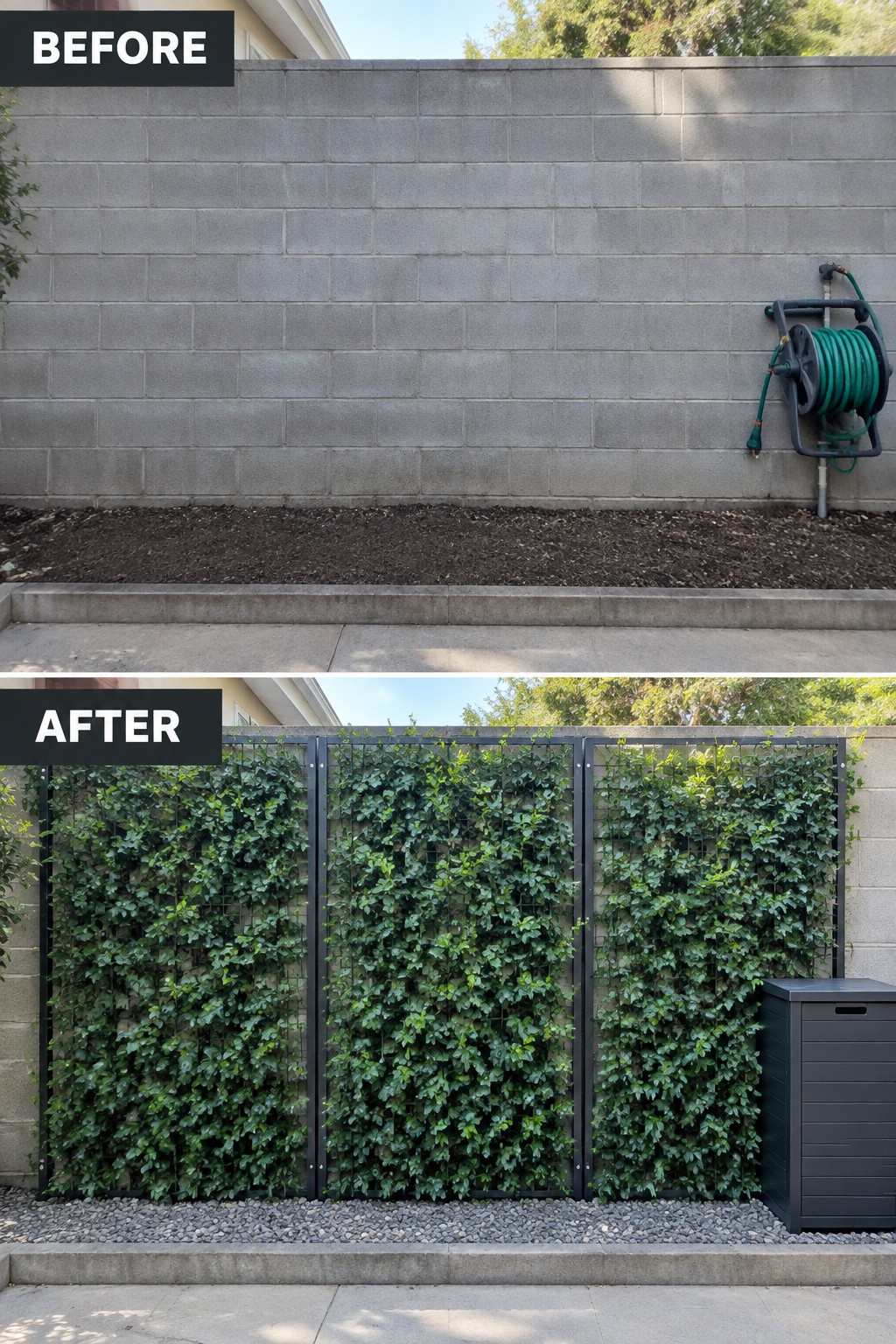
A blank concrete wall can make a garden feel closed off and flat. Adding black metal trellises and letting climbing plants grow across them softens the surface and turns it into a green backdrop without losing any usable ground space.
This approach works best along side yards or rear boundaries where you need height and privacy. Choose sturdy panels that can handle the weight of mature vines, plant climbers that suit your climate, and let them fill in over a season or two rather than trying to force instant coverage.
Add Trellises And Climbing Vines To Frame A Small Patio
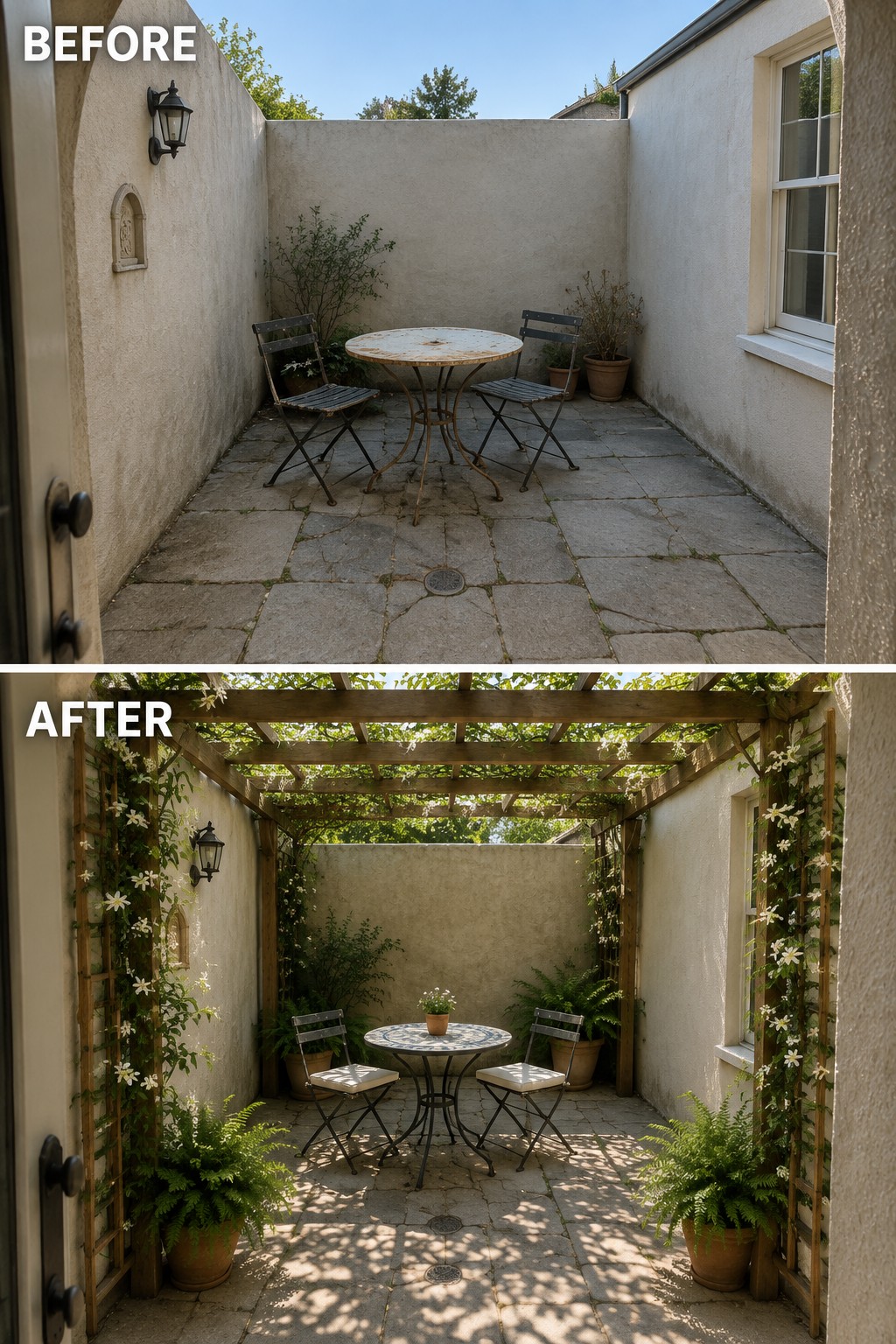
A bare stone courtyard often feels open and unfinished because the walls give no sense of enclosure. Adding trellises along the sides and training climbing plants up and over an overhead frame changes that quickly. The vertical lines and greenery pull the eye upward and create the feeling of a defined outdoor room without any major construction.
This idea suits small side yards or urban patios where you want privacy and light shade but still need to keep the floor space open. Mount simple wooden trellises on the existing walls, plant fast climbers in large pots at the base, and let them fill in over one or two seasons. The result feels established without crowding the seating area.
Turn A Bare Fence Line Into A Vertical Garden
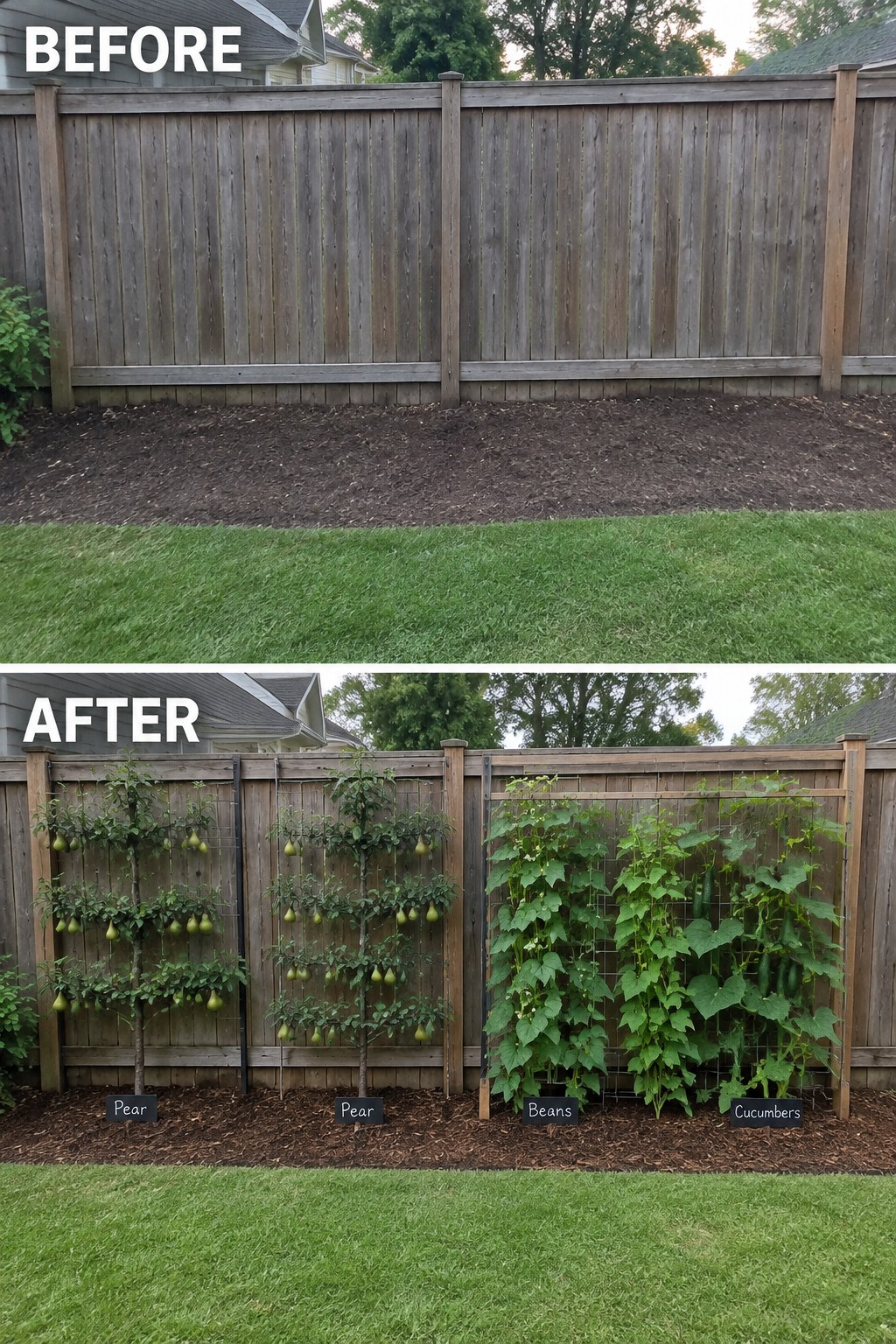
A plain fence with nothing but dirt at the base often feels like wasted space. Adding trellises right against the fence gives the plants something to climb, keeps everything off the ground, and creates a clean, productive border without eating into the lawn. The change here is simple but effective. Bare soil becomes rows of pear trees and vining crops that grow upward instead of outward.
This approach works especially well along property lines or in narrow side yards where horizontal beds are not practical. Secure the trellises firmly to the fence, leave enough room between plants for airflow, and choose varieties that match your growing season. Once the structure is in place, the garden stays tidy and productive with minimal extra work.
Hide Utility Areas With Vertical Trellises
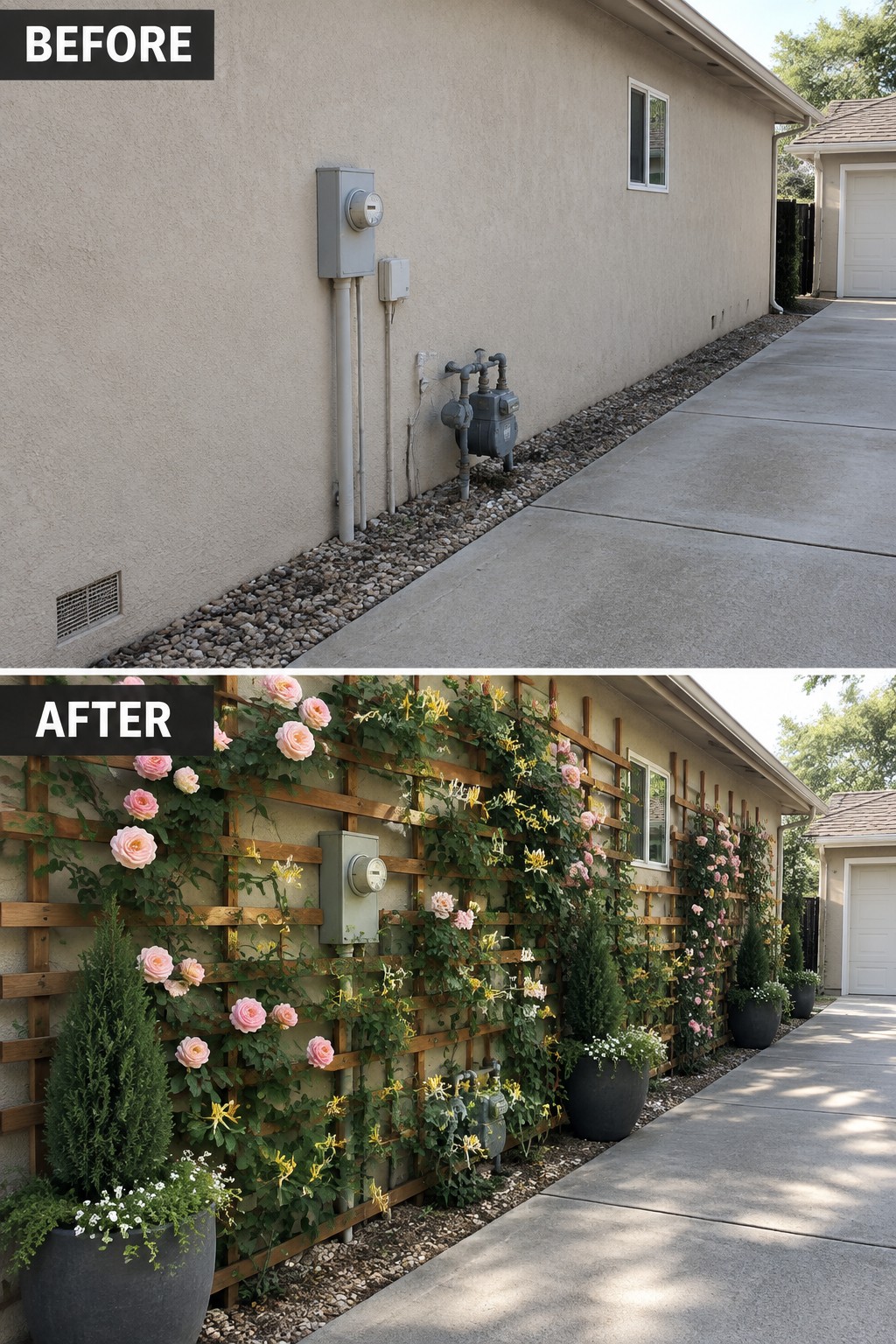
A plain side wall with visible meters and pipes can drag down the whole look of a house. Adding a grid of wooden trellises gives the vines something to climb and turns that same stretch into a living screen. The plants soften the hard lines and pull attention away from the equipment without blocking access.
This approach works well along driveways or narrow side yards where you need coverage but still want airflow. Start with a simple wood grid sized to cover the main problem spots, then choose fast-growing climbers that suit your climate. Keep a few pots at the base if the ground is mostly gravel, and check that the trellis sits far enough from the wall for maintenance.
Add Vertical Trellises And Climbing Vines To A Pergola

A plain pergola can feel unfinished when it is just posts and a roof. Adding side trellis panels and letting climbing vines cover the top turns the structure into a shaded garden room. The open frame becomes enclosed enough for privacy while still letting light and air through, and the plants soften the look far more than any furniture alone could.
This idea works best in backyards that already have a pergola or arbor. Start with sturdy side panels so the vines have something to climb, then choose a vigorous grower that matches your climate. Once the plants fill in, the space stays cooler during the day and gains a natural ceiling that makes string lights feel more intentional at night.
Green Up A Narrow Alley With Vertical Trellises
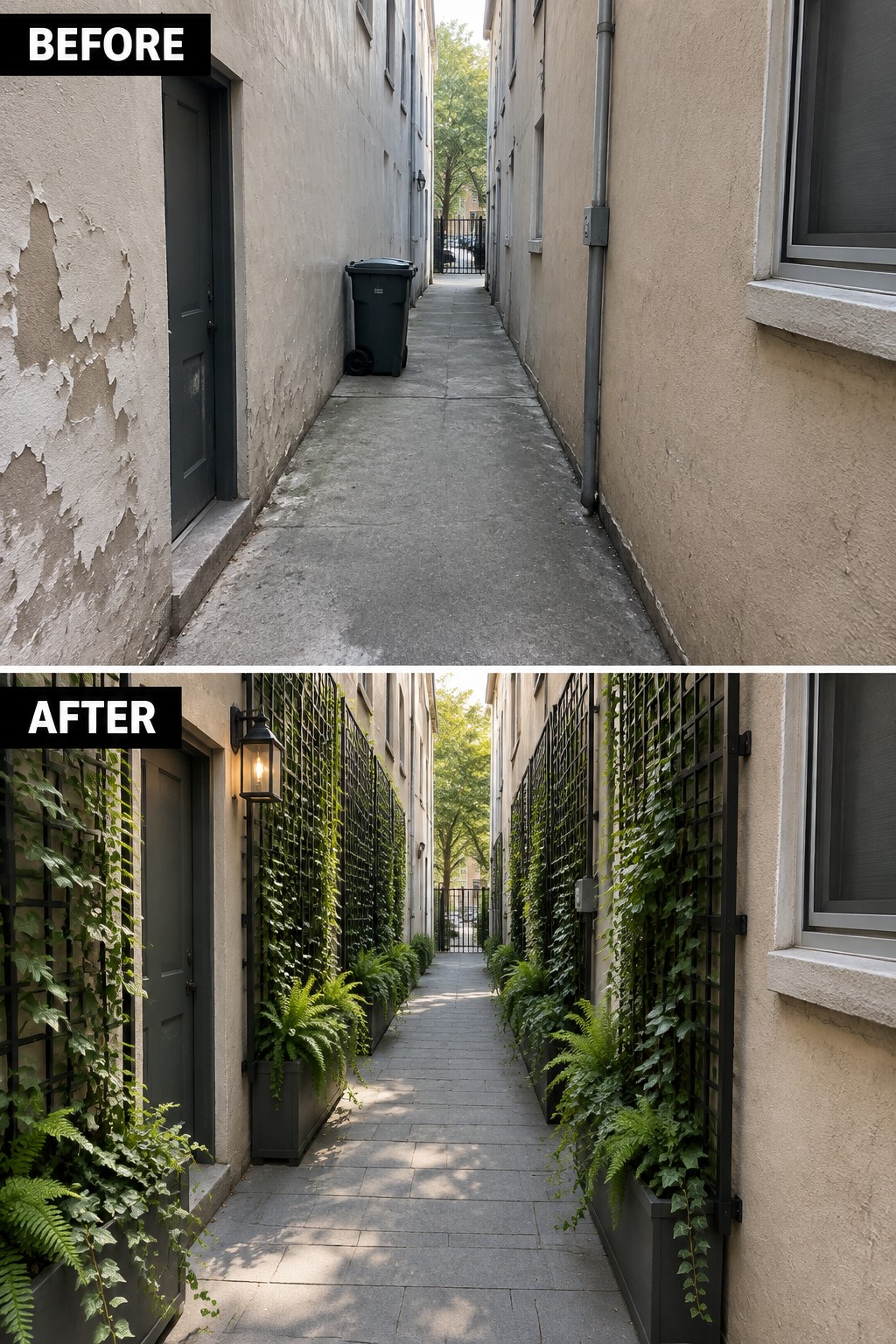
A narrow side passage often feels like leftover space when the walls are bare and plain. Vertical trellises change that by letting climbing plants cover the walls without crowding the walkway, and the addition of low planters keeps the greenery from looking sparse.
This idea works best on tight side yards or between buildings where you need height more than width. Mount sturdy trellises first, pick vines that grow well in your area, and keep the path clear so the space stays usable. A few fern-filled planters at the base add softness without blocking movement.
Use Vertical Trellises To Green Up A Plain Patio Wall
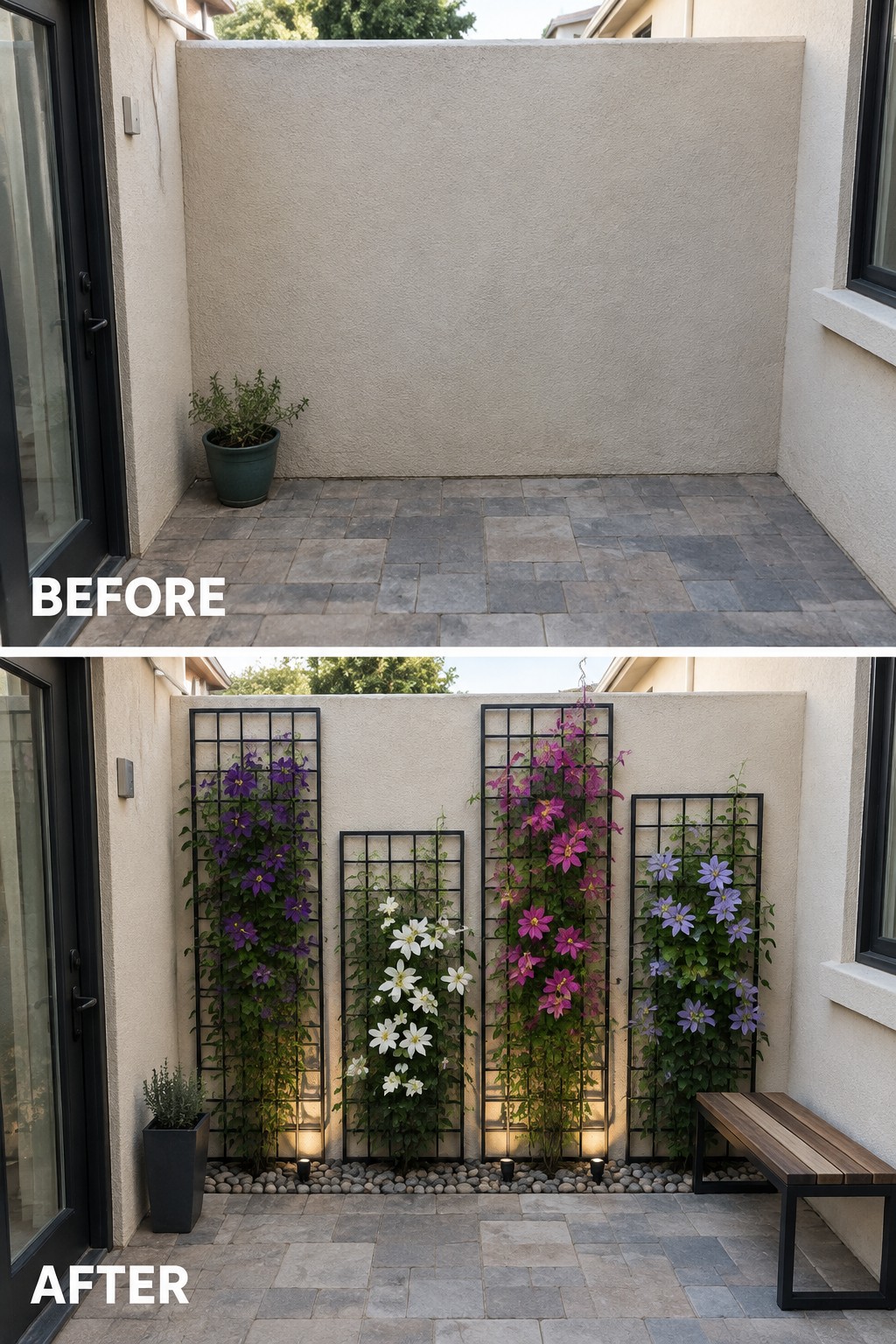
A blank wall next to a patio often ends up ignored because there is no good way to add plants without losing floor space. Vertical trellises solve that by turning the wall itself into the garden. In this case, three simple grids covered in flowering climbers replaced an empty stucco surface and gave the whole area a finished look.
This idea works best on small patios, side yards, or narrow courtyards where you want greenery and a bit of privacy. Use metal or wood trellises that match your space, choose climbers that suit your climate, and leave a little room at the base for the plants to spread. Keep the rest of the patio simple so the planted wall stays the main feature.
Add A Trellis To Your Fence For Climbing Color
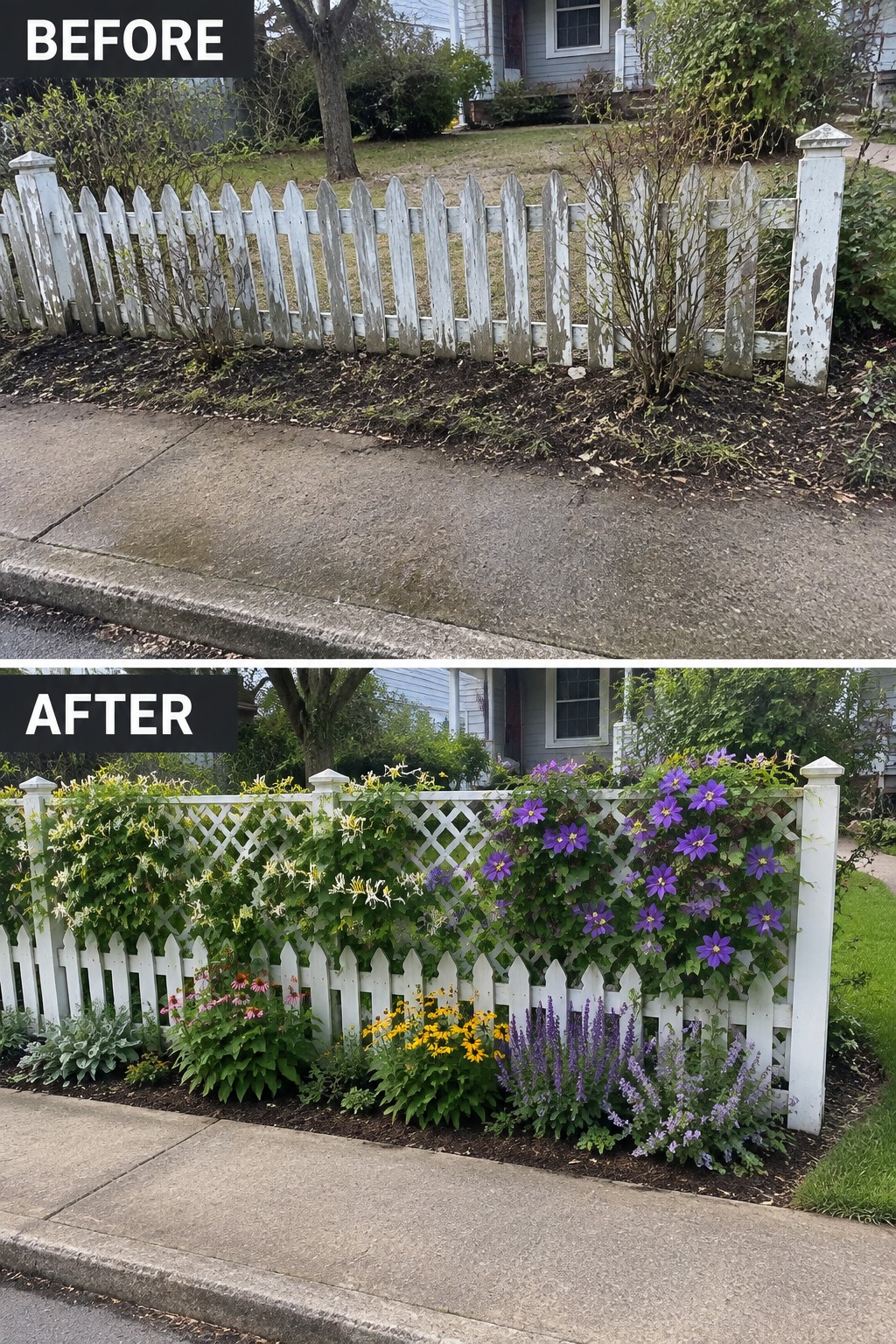
A plain fence with just a strip of mulch can look unfinished. Adding a simple lattice panel across the top gives climbing plants a place to grow and turns the whole length into a living screen. The before shows the fence standing bare. The after shows vines with purple and white blooms filling the new trellis and softening the line between the yard and the street.
This idea works best along a front walk or side boundary where you want height without blocking light. Match the trellis to your fence style, set a few vigorous climbers in the bed below, and let them reach upward. It adds color and privacy in one step and keeps the ground space open for lower flowers.
Grow Climbing Plants On A Fence For Privacy

A plain fence often leaves a patio feeling open and unfinished. Adding climbing plants turns that fence into a living screen that softens the space and gives a bit of privacy while still letting air and light through. Here the bare lattice filled in with vines and flowers, which changed how the whole seating area felt without needing major construction.
This approach works best on patios or decks that sit right against a fence or trellis. Choose a climber that grows well in your area, keep the planting simple at first, and let the vines do most of the work. It is an easy way to make a small outdoor space feel more sheltered without crowding it with extra structures or decor.
Add A Vertical Trellis To Anchor A Backyard Corner
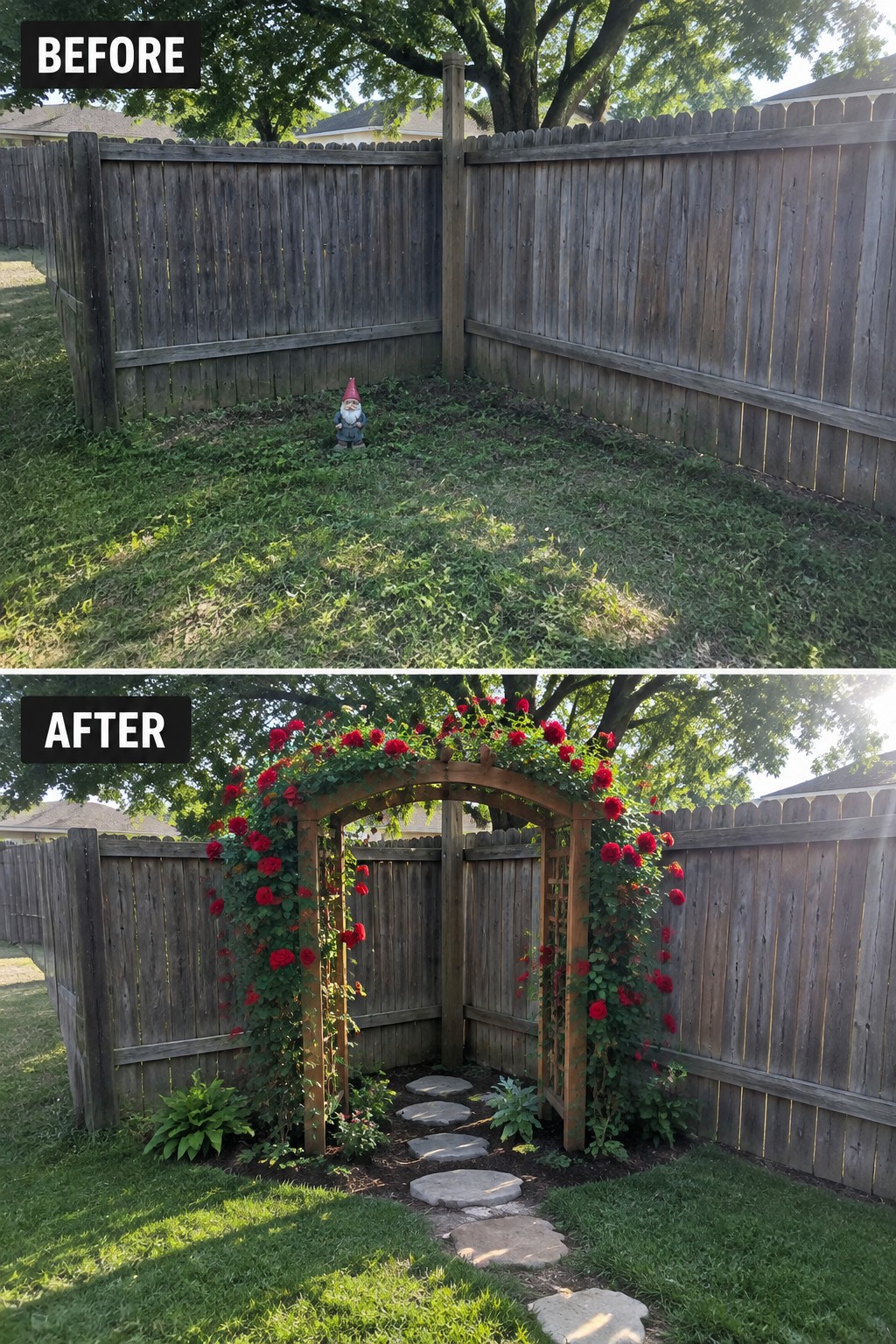
A plain stretch of fence and grass often feels unfinished until something draws the eye upward. Adding a simple arch trellis planted with climbing roses turns that empty space into a clear destination. The structure gives the corner height and shape while the vines soften the fence line over time.
This approach works well in smaller yards where you want impact without crowding the ground. Start with a sturdy wooden or metal frame that matches your fence, then choose a vigorous climber suited to your climate. Keep the path leading to it simple so the trellis stays the main feature.
Frequently Asked Questions
Q: How do I choose climbing plants that won’t overwhelm a small patio? A: Start with slower growers like clematis or jasmine. They add height without crowding the space. Give each vine its own section of trellis to spread out evenly.
Q: What happens if the trellis wood starts to rot after a couple years? A: Replace the damaged panels before the plants get too heavy. Treat new wood with a sealant to prevent the same issue. Your climbers will thank you by staying put.
Q: Should I water the vines differently once they climb high? A: Check the soil at the base more often. The upper leaves can hide dry roots below.
