


Gardens that sit untouched for a while often end up with plants spilling over paths and weeds filling every gap until the original layout disappears.
I usually begin by cutting back the excess growth first because that step alone shows what still works and what needs to be removed.
Clearing space also lets me see where a simple border or path would help hold the rest together over time.
A few strong shapes make the difference.
Once the beds have edges and the main areas feel open again the garden stops fighting daily use and starts to fit the rest of the yard.
Add Raised Beds To Organize An Overgrown Backyard

An overgrown backyard often feels like more work than it is worth. Putting in raised beds with gravel paths between them gives the space clear boundaries and turns weedy ground into something you can actually use for growing food or flowers.
This idea works best in smaller yards where you want to keep maintenance low. Mark out the beds first, use wood or similar edging that holds up outdoors, and keep the paths wide enough to walk through without stepping on plants.
Clear Overgrowth First Before Adding Garden Structure

An overgrown fence buried in vines and weeds makes the whole side yard feel smaller and harder to use. Once the mess is cleared, the fence can be cleaned and painted, and the ground can be shaped into beds with mulch and a path that actually guides people through the space.
This works best in narrow side yards or along back fences where plants have taken over. Start by removing the heaviest growth so you can see the real layout, then add beds and a simple walkway before filling in with plants. It keeps the area from looking crowded and makes future care much easier.
Turn An Overgrown Backyard Corner Into A Cozy Patio

Adding a pergola with string lights and a paved surface turns a neglected, weed-filled area into a space that actually gets used. The before photo shows how quickly a corner can become unusable when left alone, while the after shows the same spot with a clear floor, overhead structure, and seating that gives it purpose.
This approach works best in smaller yards where you need to carve out one defined area rather than trying to fix the whole garden at once. Clear the overgrowth first, then focus on a simple base and basic shelter before adding furniture. String lights help the space feel finished and usable in the evenings without requiring a big budget.
Define An Overgrown Path With Stone And Planting

A muddy trail through weeds does not invite walking. Laying stone pavers with gravel on either side gives the path a firm surface and clear edges, so people actually use it instead of skirting around the mess. The lavender planted along the sides adds color and keeps the gravel in place without needing constant trimming.
This idea suits sloped or wooded yards where drainage matters. Clear the overgrowth first, then set the pavers level and add a simple plant border that can handle shade and foot traffic. Keep the path width practical so it still leaves room for plants to grow on both sides.
Define The Edges Of An Overgrown Pond

One of the simplest ways to rescue a neglected pond is to give it a firm border. The before image shows how quickly things slip when the edge disappears under weeds and the liner stays visible. Once a low stone edging was laid and the immediate planting was pulled back, the water became the clear focal point instead of an afterthought.
This idea suits any small or medium backyard where the pond already exists but looks messy. Clear out the worst of the overgrowth first, then choose edging that follows the existing curve rather than fighting it. A few clumps of marginal plants and some lilies are usually enough to soften the new line without crowding the water.
Create Terraced Beds On A Steep Slope

A steep backyard slope covered in weeds and ivy can feel impossible to manage. Building simple wooden retaining walls turns the hill into a series of level planting beds that hold soil in place and make gardening much easier.
This idea works best on properties where the grade drops sharply and flat ground is limited. Start with cleanup and basic wall construction before adding plants. Keep the beds modest in height so they stay stable and easy to maintain over time.
Add Structure To An Overgrown Yard

The patchy lawn was replaced with gravel and a few large rocks that create clear planting zones. This simple change turns a weedy, uneven space into something that looks intentional and much easier to care for.
This idea works best on small front yards where grass is struggling. Clear the old turf first, then use gravel to hold the shape of the beds and limit how many plants you add so the layout stays open and low maintenance.
Add Structure To An Overgrown Fence Line
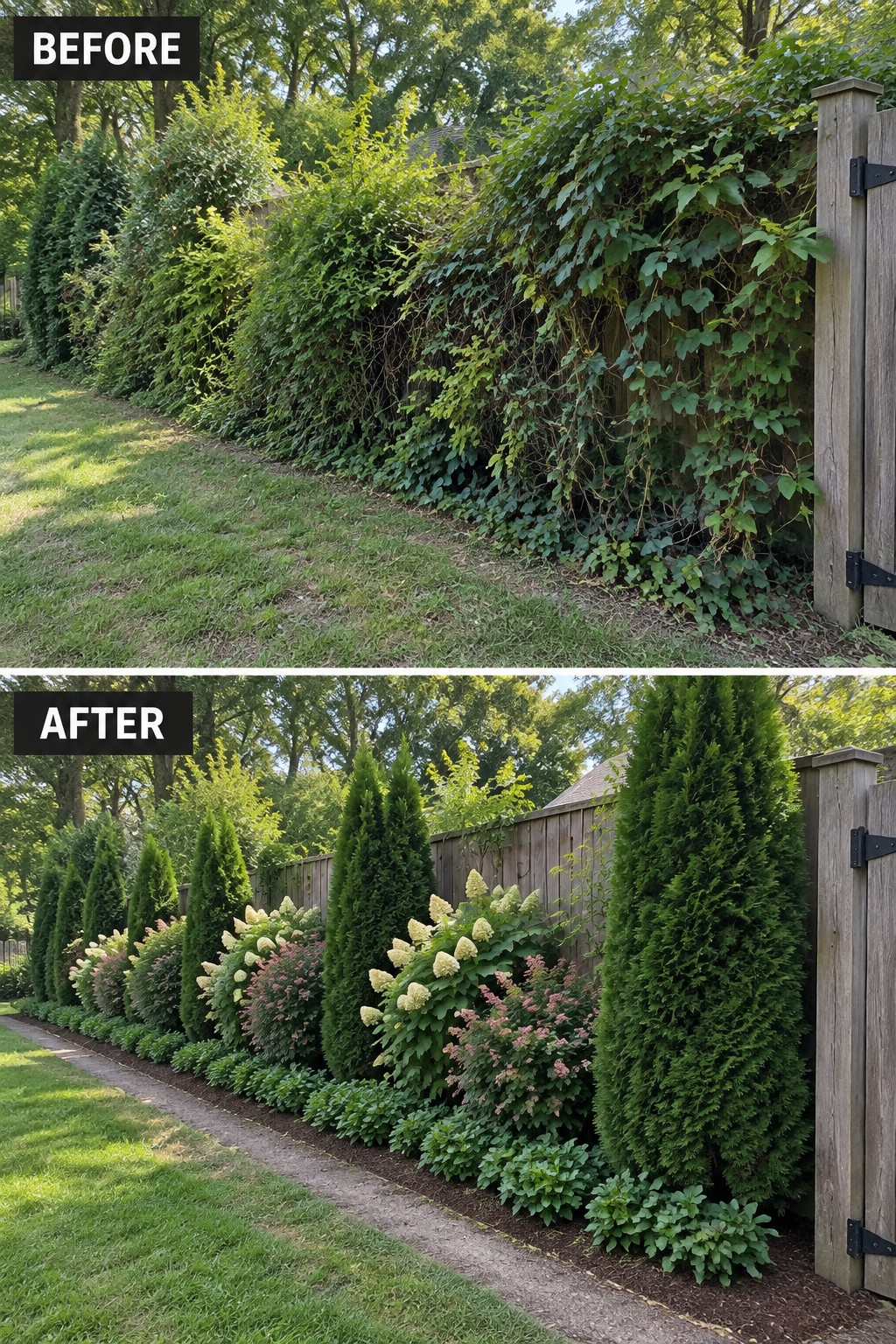
The biggest change here came from clearing away the thick vines that had taken over the fence. Once those were gone, a simple row of tall evergreens gave the space height and order, while lower flowering shrubs filled in the gaps and softened the line. The result feels much more intentional without looking overly formal.
This approach works well along side yards or back fences where you want privacy and year-round green but still need some color. Start by removing the unwanted growth completely, then plant a repeating mix of upright evergreens and a few flowering varieties. Mulch the bed and keep the lawn edge clean so the whole border stays easy to maintain.
Clean Up Overgrown Beds Before Adding New Plants
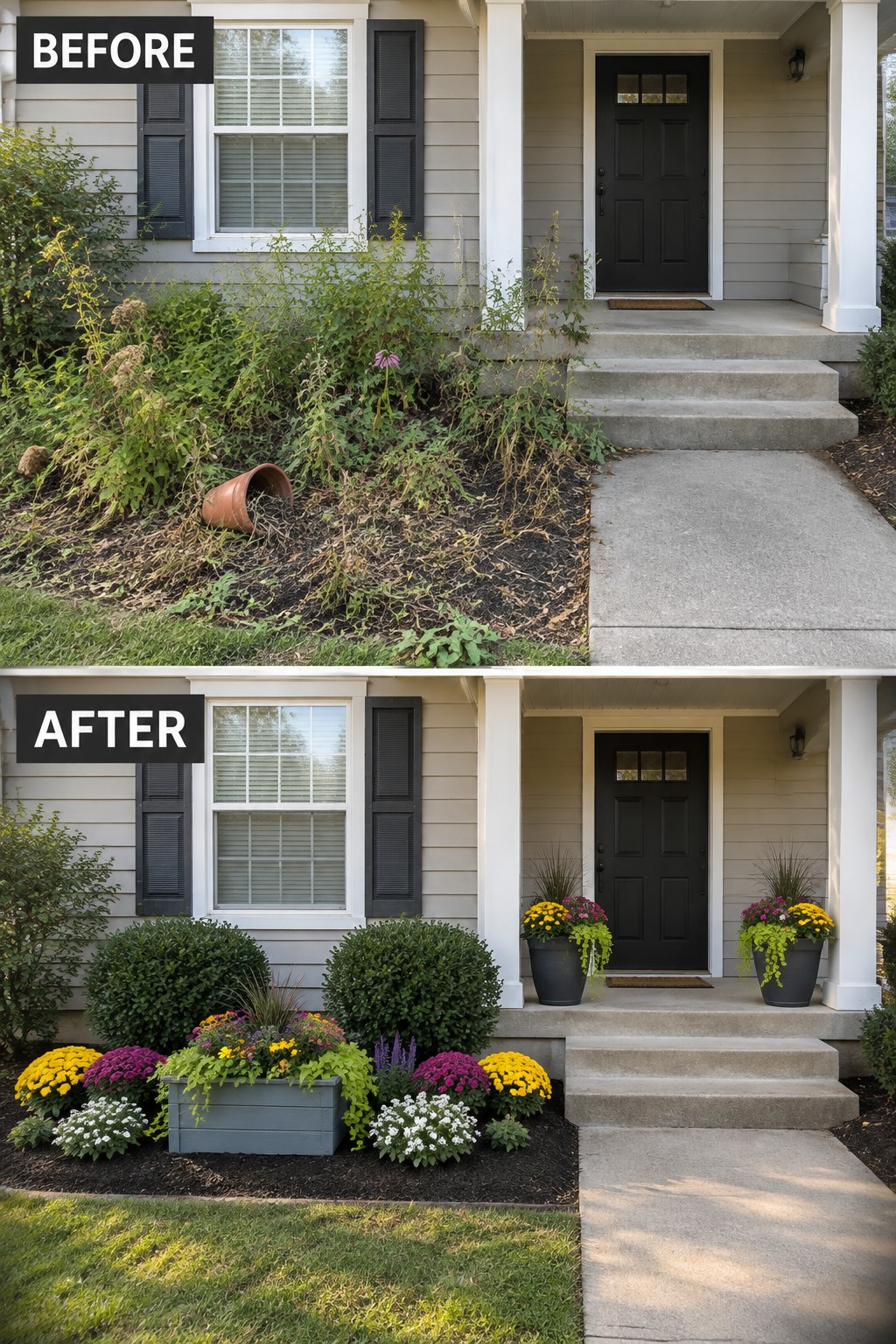
The main improvement came from removing the weeds, debris, and bare patches first. Once the area was cleared, simple mulched beds and a few structured shrubs and flowers created a neat frame around the entry instead of a messy tangle.
This works best in front yards where the planting sits close to the house and walkway. Remove everything down to bare soil, lay out beds that follow the existing lines, then add a mix of evergreen shrubs and seasonal color. Keep the beds narrow enough to reach for weeding without stepping on plants.
Add Structure To An Overgrown Side Yard
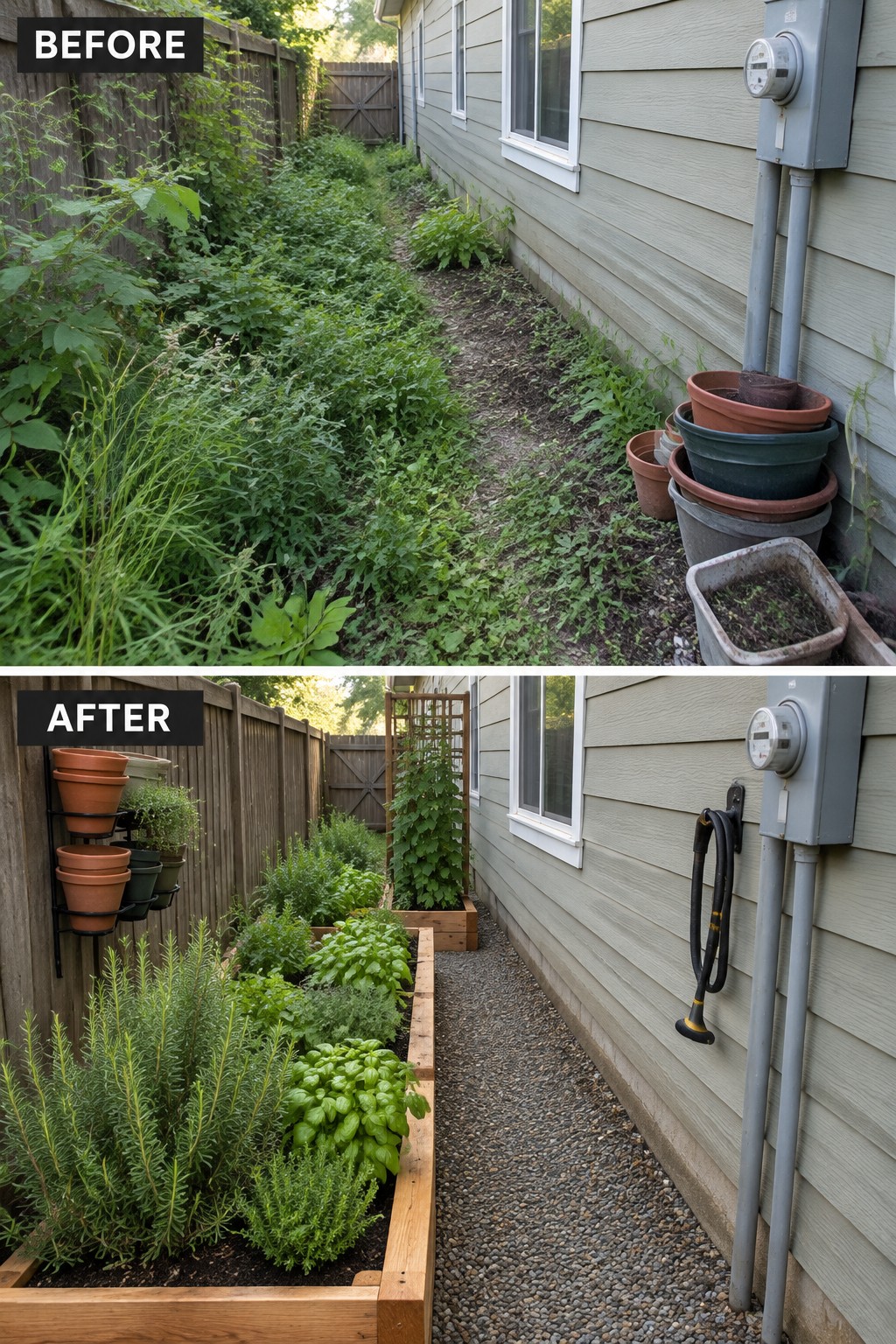
An overgrown side yard quickly turns into a problem because the plants spread everywhere and there is no clear way to move through the space. Adding raised beds and laying down gravel gave the area a simple layout that keeps the plants contained and the path usable.
This idea works best in narrow spots next to the house where you want a garden without constant cleanup. Clear the overgrowth first, then set the beds and gravel so the space stays tidy as the plants fill in.
Update An Old Garden Shed With Paint And Storage

A tired shed with peeling paint and scattered tools can quickly make the whole garden feel neglected. Fresh paint on the siding and trim, plus a simple bench and wall hooks for the tools, turns the same structure into something that looks cared for and actually works as a garden workspace.
This approach suits any older shed that still has good bones but needs a refresh. Start with a solid cleaning and a coat of exterior paint in a color that blends with the house or fence. Then add just enough storage and a work surface so the area stays usable without crowding the space around it.
Clear Overgrowth First To Shape Garden Beds

The main change here came from removing the thick vines that had taken over the border. Once the ground was cleared, the space was reshaped with gravel, larger rocks, and small clusters of plants. This approach turns a messy area into something that looks intentional without needing constant trimming.
This idea works well along sidewalks or front borders where vines tend to spread fast. Focus on full removal first, then use gravel or mulch to hold the shape. It suits homes that already have a path or curb in place and helps keep future maintenance low.
Clear The Overgrowth Before Adding Play Features
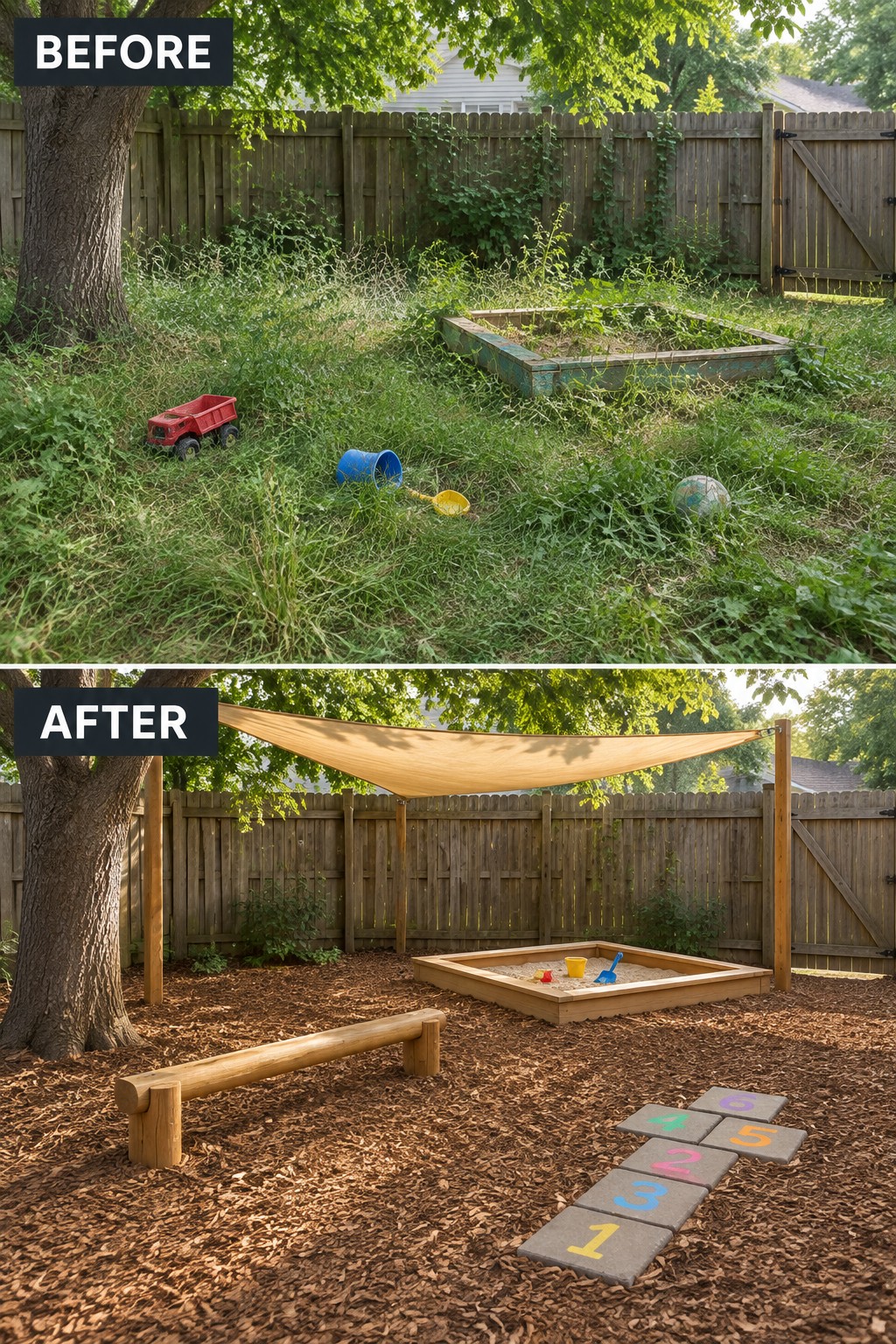
An overgrown backyard often feels unusable until the weeds and clutter are cleared away. In this case, the space went from thick weeds and scattered toys to a clean surface of wood chips that defines the play zone. Adding a shade sail for cover and a simple bench made the area feel intentional instead of leftover.
This approach works best in yards that have been ignored for a season or two. Start by removing the worst of the growth and laying mulch or gravel so the ground feels finished. Then add just a few sturdy pieces like a sandbox or hopscotch path. The key is keeping the layout open enough for kids to run around without crowding the space.
Turn An Overgrown Corner Into A Functional Outdoor Kitchen

Overgrown yards often hide usable space right next to the house. Clearing the tall weeds and cracked concrete first made room for a simple paved area. Adding a low cinder block base with a wood counter gave the grill a stable spot and added hidden storage without crowding the small zone.
This idea suits narrow side yards or back corners where full decks feel too big. Focus on one durable surface and a couple of weatherproof built-ins rather than filling the space with furniture. Keep the rest of the yard simple so the cooking area stays easy to reach and maintain.
Add Path Lighting To An Overgrown Side Yard

The biggest change here came from clearing the thick overgrowth first. Once the weeds and vines were removed, a simple stone path and low path lights gave the narrow space a clear purpose and made it feel intentional instead of neglected.
This approach works well in tight side yards where plants tend to take over. Start with a solid cleanup, lay a path to define the route, then add lighting so the area stays usable after dark. Keep plantings low and layered along the edges so the walkway stays open and easy to maintain.
Turn An Overgrown Slope Into A Meadow Garden

The biggest change here is clearing the tall weeds and replacing them with rows of colorful wildflowers and a clear path. That simple shift turns a messy hillside into something that feels planned instead of neglected.
This idea works best on larger yards or slopes where you want color without constant mowing or formal beds. Start by removing the worst overgrowth, then plant a mix of hardy perennials that spread on their own. The path keeps the space usable and stops everything from looking like one big patch of flowers.
Add Vertical Planters To An Overgrown Fence Corner

An overgrown fence with ivy spilling everywhere and bins scattered in the corner can make the whole side of the yard feel neglected. The simple fix shown here is mounting a few wooden planter boxes directly on the fence. This adds layers of herbs and flowers at different heights, hides the mess, and turns the wall into the main feature instead of the clutter.
This idea works best in narrow side yards or back corners where floor space is limited. Start by clearing the worst of the overgrowth first, then build or buy sturdy boxes that can handle weather. Tuck bins underneath a simple bench and keep the planting mix practical so it stays easy to maintain over time.
Turn An Overgrown Verge Into A Fruit Tree Border
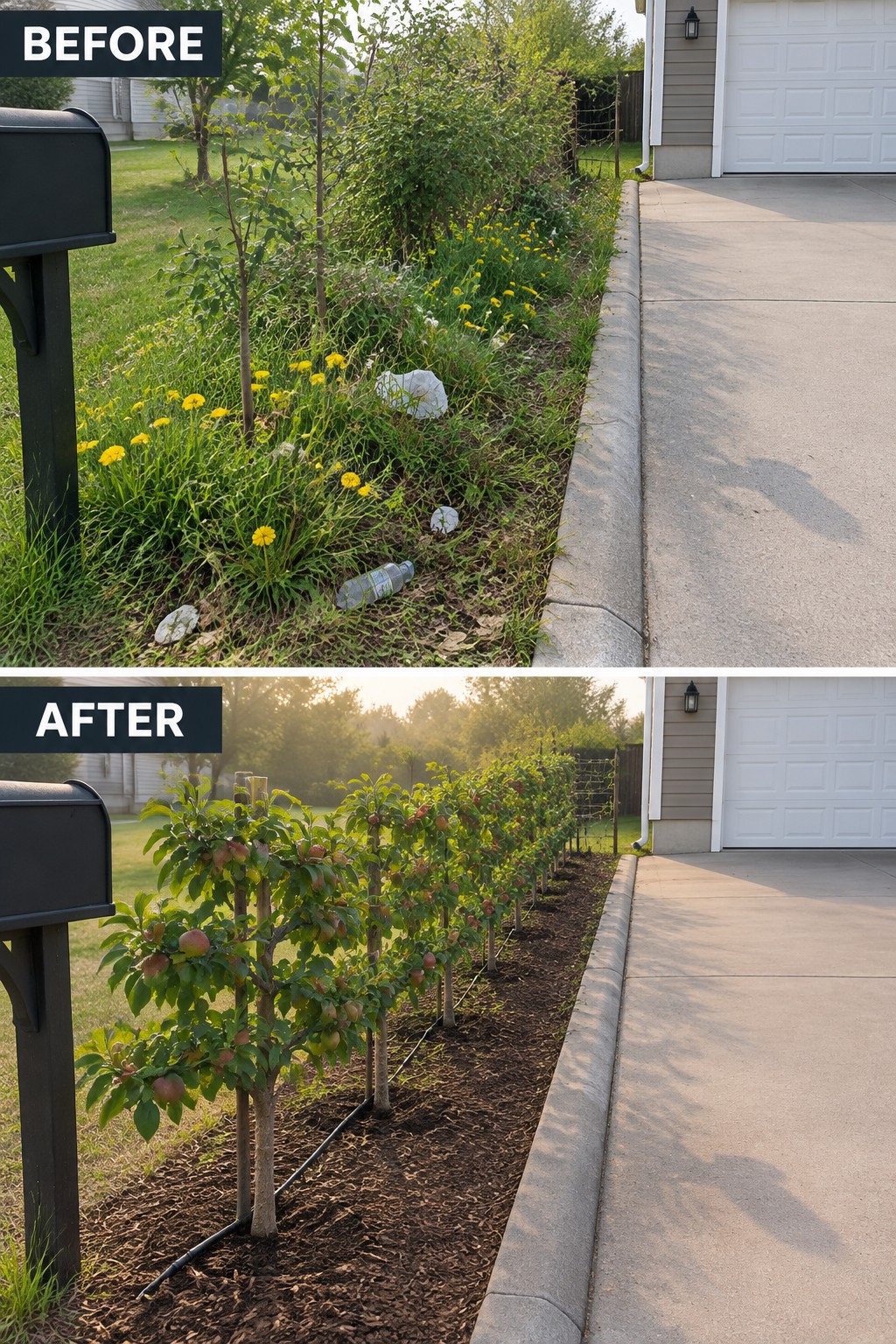
Many side strips along driveways end up as a mix of weeds, dandelions, and random trash because they are awkward to mow and easy to ignore. Clearing the growth first and planting a straight row of young trees with mulch turns the same narrow space into something useful and tidy. The change from a messy edge to a productive border makes the whole front look more intentional without needing a large garden.
This approach works well on long, thin areas next to driveways or fences where a full lawn never feels right. Start by removing the weeds and debris, then add a simple line of trees spaced evenly with mulch to hold moisture and keep the bed looking clean. Drip lines or soaker hoses keep watering easy, and the trees stay small enough not to crowd the walk or driveway.
Add Structure To An Overgrown Slope

A sloped, weedy stretch next to a fence often stays messy because nothing holds the soil in place. Adding a low stone retaining wall creates a clear edge, turns the slope into level planting beds, and keeps the adjacent lawn from creeping in. The gravel strip along the wall also makes mowing easier and gives the whole area a finished look without needing a big redesign.
This approach works well on any property where the yard drops away from the house or fence line. Start with the wall and the gravel base before choosing plants, since the structure does most of the work. Keep the beds no deeper than you can reach from the path so they stay easy to maintain over time.
Clear And Define A Greenhouse Garden Path
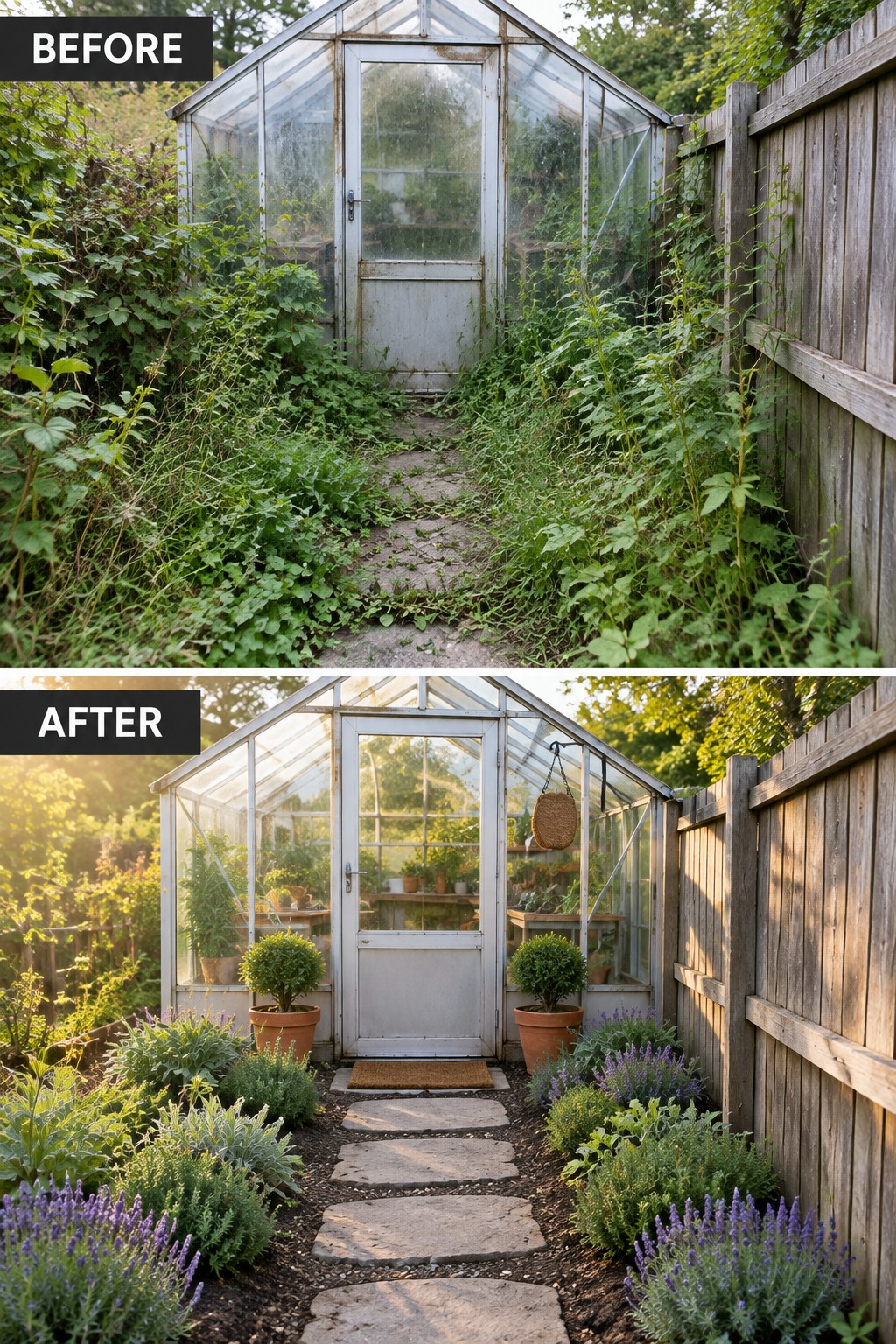
The main change here was removing the thick weeds and vines that had taken over the path and sides of the greenhouse. Once the overgrowth was cleared, a simple stone path and bordered plantings gave the space a clear layout instead of leaving it looking wild and hard to reach.
This approach works well around sheds, greenhouses, or side yards where plants have gotten out of hand. Start with a full cleanup so you can see the actual shape of the space, then add a path and repeat a few plants along the edges to create order without needing a big budget or lots of new features.
Frequently Asked Questions
Q: How do I start clearing an overgrown yard without getting overwhelmed right away?
A: Pick one corner and cut back just enough to walk through it with a rake and gloves. This shows you what plants might stay and gives a quick win to build on. From there you can try one simple project like a gravel path before tackling the rest.
Q: Can I reuse stuff I already have instead of buying new materials for these projects?
A: Old bricks or logs work great for edging beds once you pull them from under the brush. Stack them to form borders around cleared spots and save the cost of hauling in fresh supplies.
Q: What happens if weeds come back fast after I finish a transformation?
A: Lay down a thick layer of newspaper or cardboard under fresh mulch to block light. Check the area every couple weeks and pull anything that pokes through before it spreads.
