

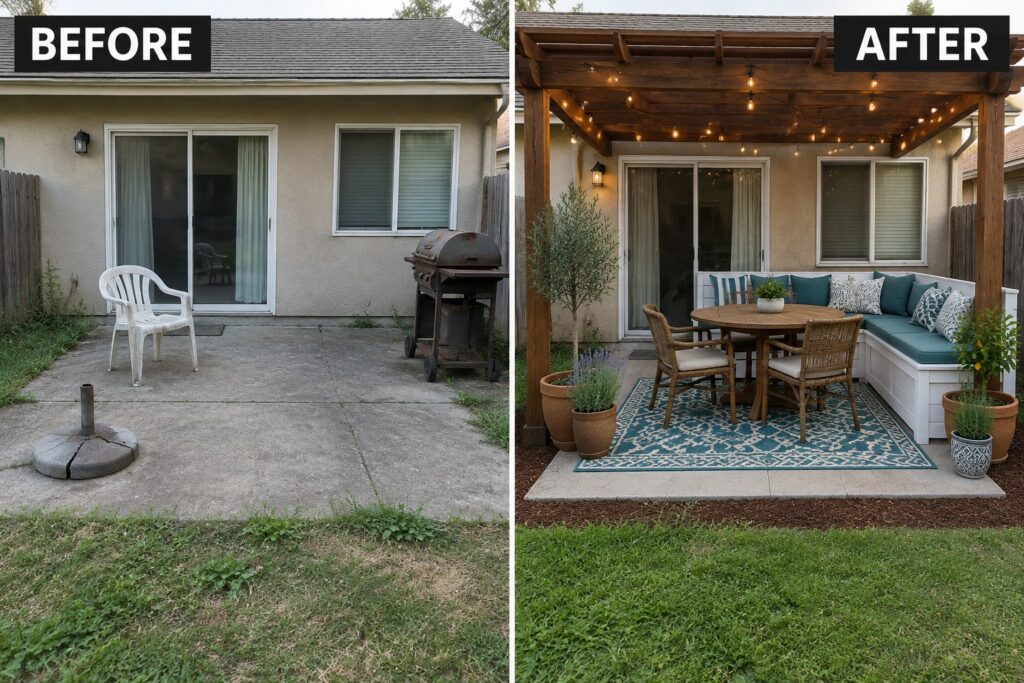
I have noticed that many backyards end up underused because they lack one clear place to sit and stay awhile.
Adding a seating area gives the whole space a purpose so people actually spend time out there instead of just passing through.
It changes the feel of the yard.
A few of the bolder setups treat the seating as the anchor and then build plantings and paths around it which seems practical for real homes.
I would probably try a simple version of that layout first before adding more layers to the garden.
Turn An Overgrown Backyard Into A Fire Pit Seating Area
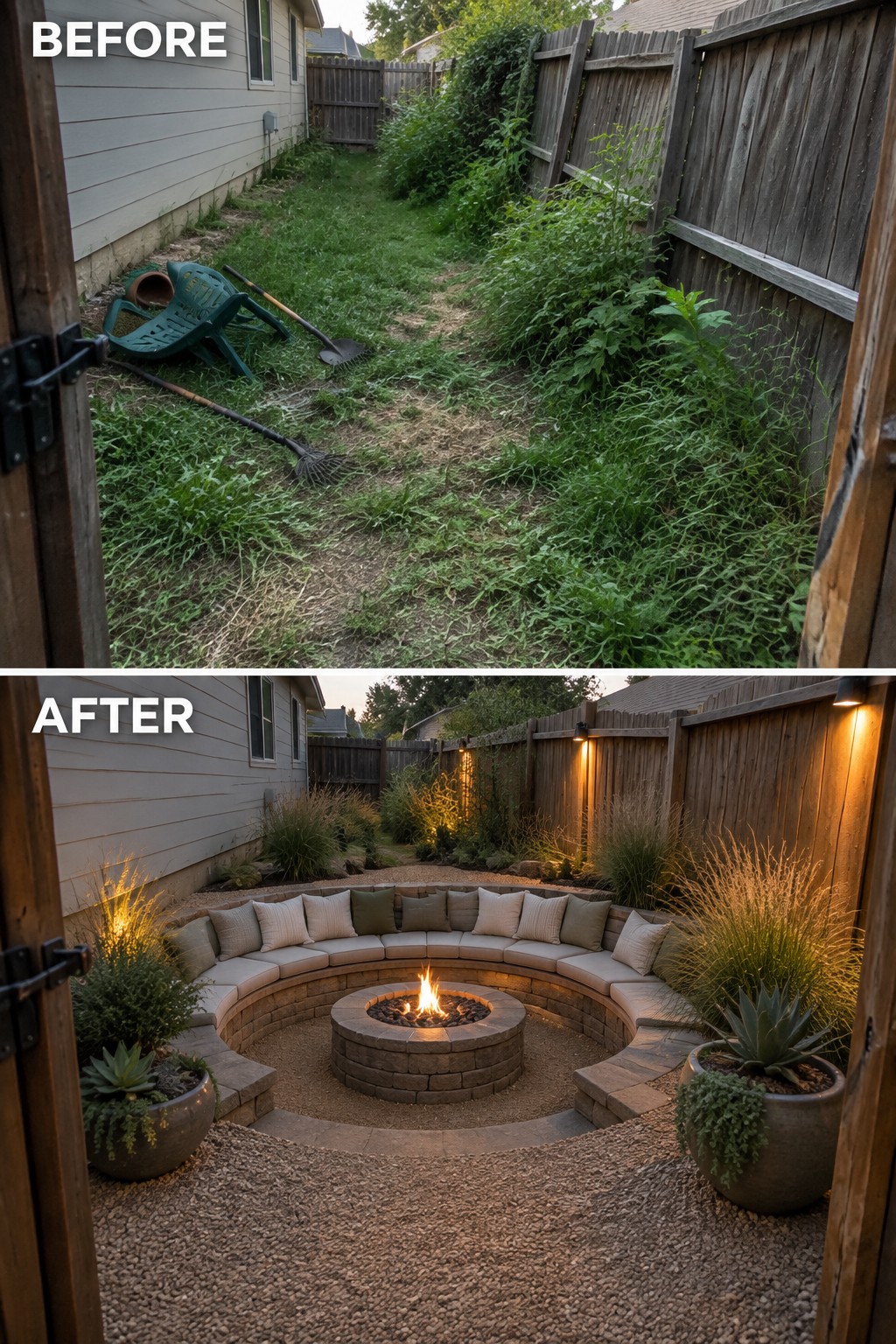
Clearing the weeds and old tools first made the biggest difference. Once the ground was open, a round stone fire pit with a built-in bench around it gave the space a clear purpose and turned it into a place people would actually use.
This idea works best in smaller yards where you want one main spot instead of spreading things out. Keep the seating curved around the fire so it feels natural at night, and use gravel or pavers to define the area without needing a full patio. Add a few pots with taller plants around the edges if you want more privacy.
Turn A Neglected Backyard Corner Into A Seating Area
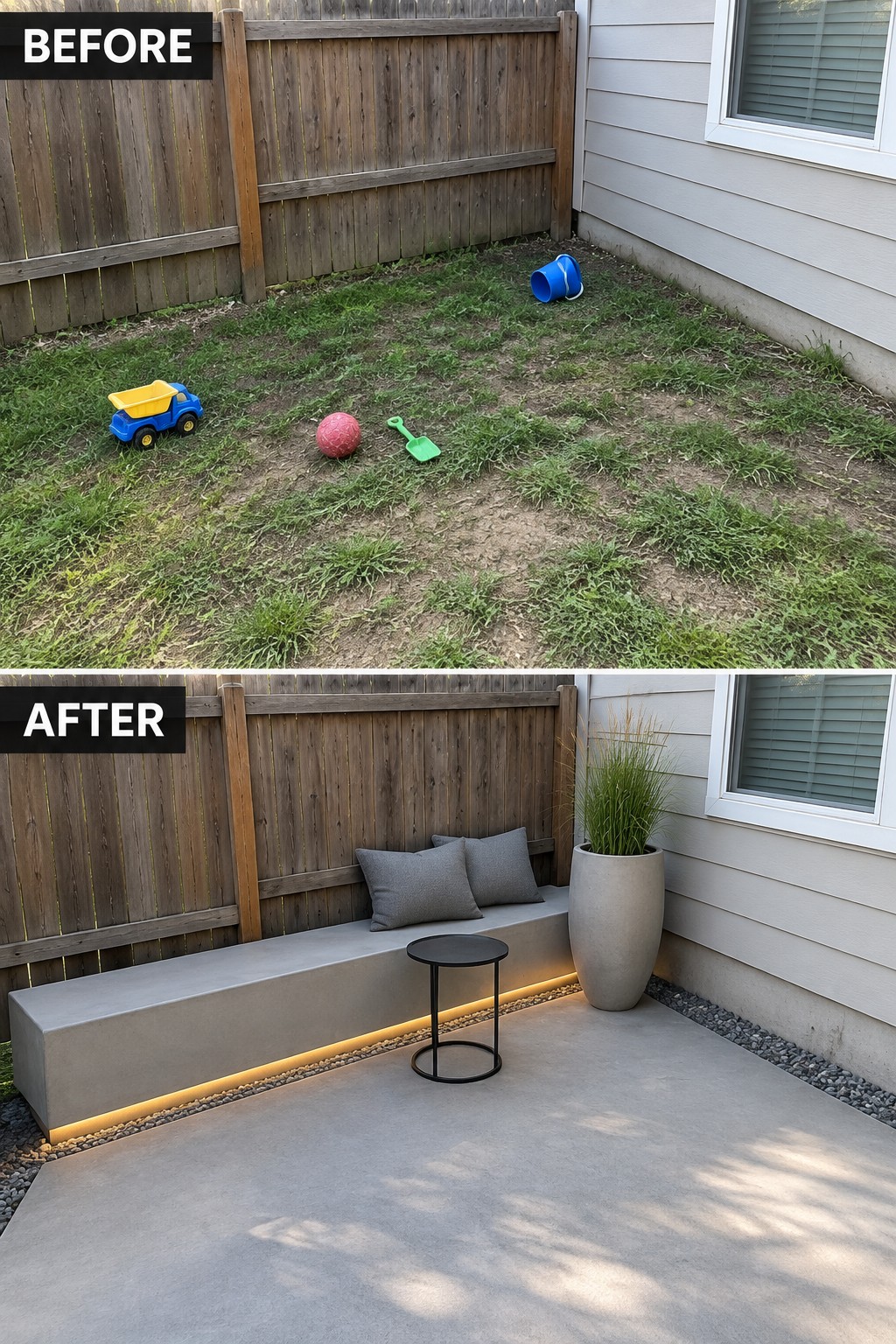
A patchy strip of grass and dirt next to the fence does not invite anyone to linger. Adding a long concrete bench along the fence line, plus a simple paved surface, changes the whole feel of the space. The bench gives the area a clear purpose, while the low lighting along its base makes it usable in the evening without any extra effort.
This idea works best in narrow side yards or leftover corners where a full patio would crowd the lawn. Keep the furniture minimal, one bench and a small table, so the space stays open and easy to maintain. It suits homes that need a quiet spot without major construction or a big furniture budget.
Turn A Worn Deck Into A Dedicated Seating Area
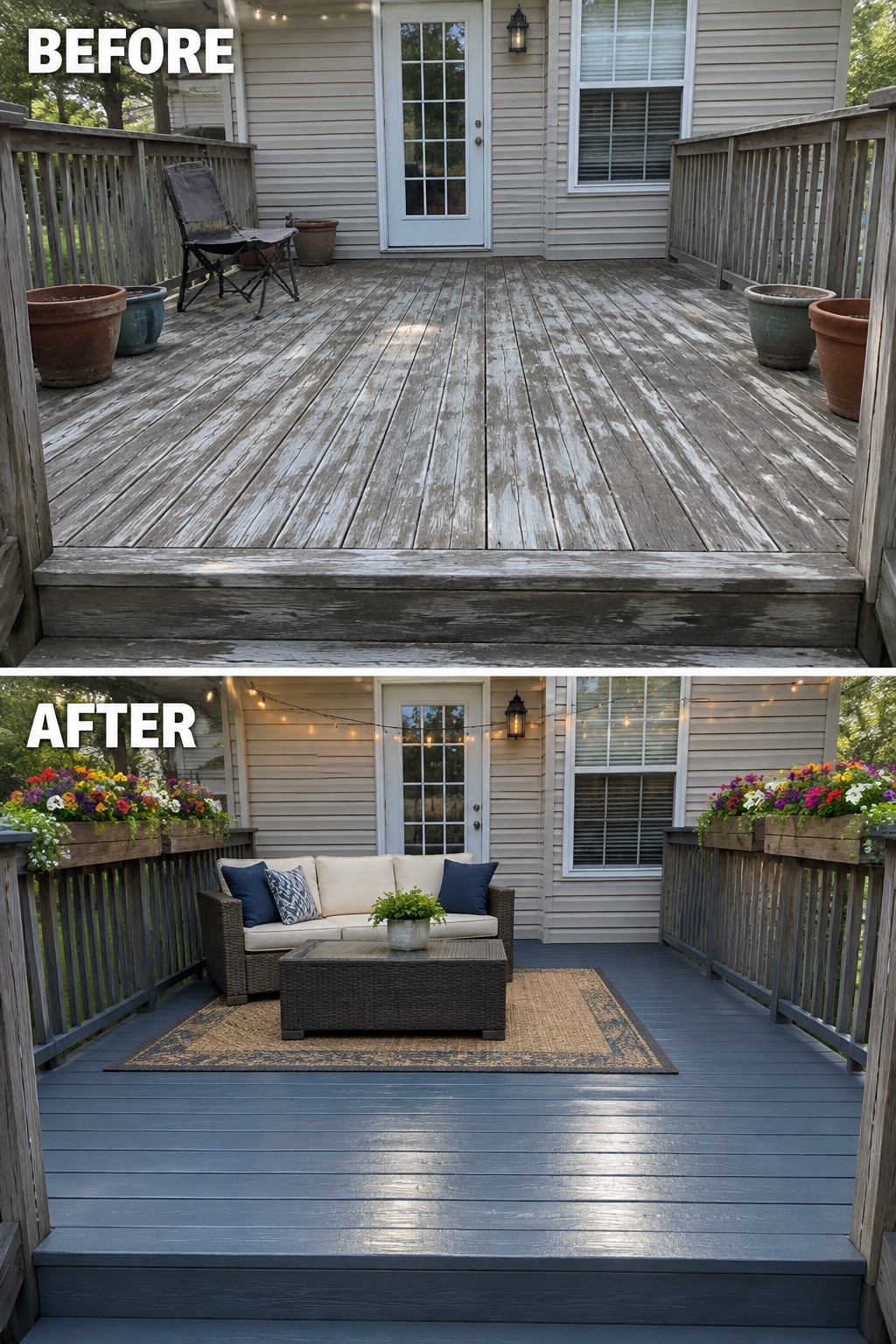
A faded wooden deck often feels like wasted space until you give it a clear purpose. Staining the boards a solid dark color and adding a sofa, coffee table, and rug instantly turns the surface into a place meant for sitting rather than just walking across.
This idea works best on decks that are still structurally sound but look neglected. Clean and stain the wood first, then keep the furniture simple and weatherproof so the seating zone stays usable without crowding the rest of the surface.
Turn An Empty Patio Into A Seating Area

A bare concrete courtyard rarely gets used because it has no clear purpose. Adding a vertical garden wall at one end gives the space a focal point, and placing a round daybed with a small table and chairs turns the rest into a simple seating zone that actually invites people outside.
This approach works best in narrow side yards or small urban patios where floor space is limited. Keep the planting structure straightforward, choose a couple of weatherproof pieces that fit the scale, and leave enough open floor so the area still feels comfortable to move around in.
Turn An Empty Backyard Into A Seating Area
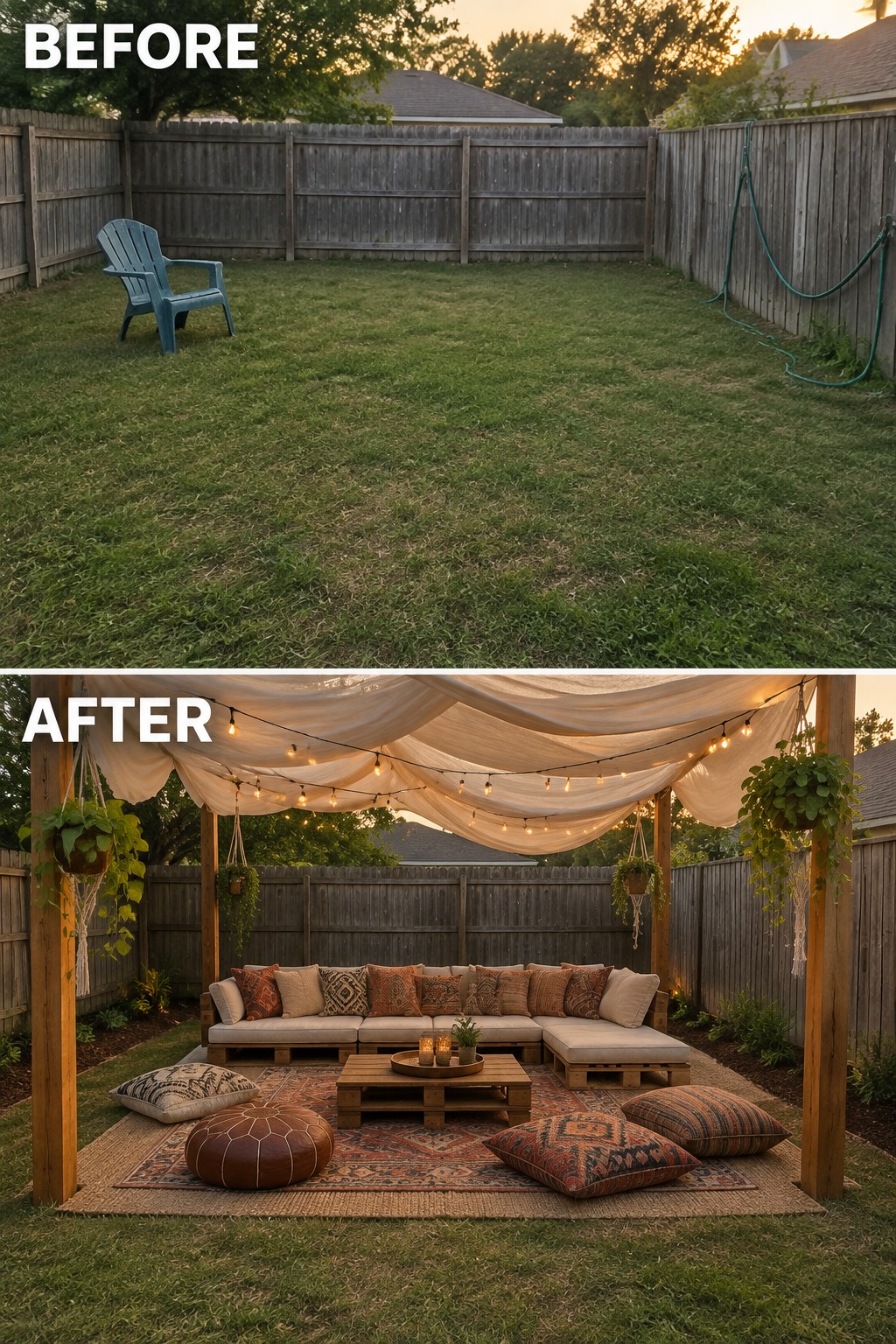
An empty backyard often stays unused until you give it a clear purpose. Adding a simple pergola with a canopy and string lights turns open grass into a defined spot that feels like an outdoor room. The shift from a lone plastic chair to a covered seating zone makes the space feel intentional instead of leftover.
This approach works best in backyards that have decent fence lines and some existing lawn. Keep the structure modest so it does not overwhelm the yard, and use a rug to mark the seating zone. Weather-resistant pieces and a few hanging plants help the area hold up over time without constant upkeep.
Turn An Empty Balcony Into A Seating Area

An empty balcony with nothing but concrete often stays unused. Adding a small sofa, a simple table, and a rug gives the space a clear purpose so it actually gets used. String lights and a few planters along the railing help make the area feel finished without taking up much room.
This idea works well on small urban balconies where every inch counts. Choose weatherproof furniture that fits the scale of the space and keep the layout open enough to walk through. A rug helps define the seating zone while still leaving room for plants or storage along the edges.
Turn A Narrow Side Yard Into A Seating Area
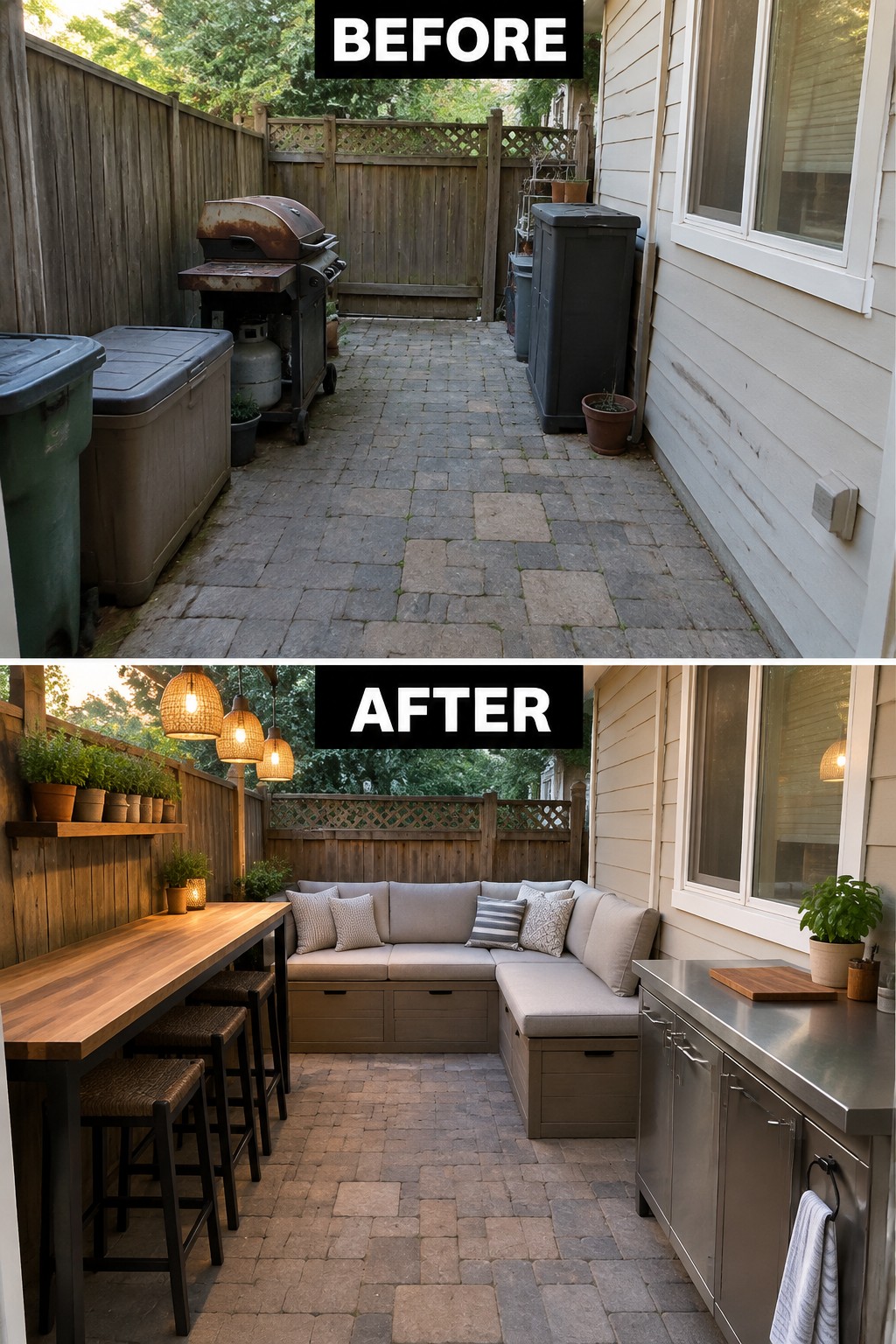
Many homes have a narrow strip of paving along the side that ends up as storage space for bins and old equipment. This makeover shows how that same strip can become a real outdoor room once you add one main seating piece and a simple counter. The L-shaped bench with built-in storage gives people a place to sit while the long table and stools create a dining zone without blocking the walkway.
This idea works best on townhouse side yards or any long, narrow paved area that already has a fence for privacy. Start with the seating layout first so you know how much room is left for walking. Choose weatherproof furniture and add lighting over the table so the space can be used after dark. Keep the planting simple along the fence so it does not crowd the seating.
Turn An Empty Backyard Corner Into A Seating Area
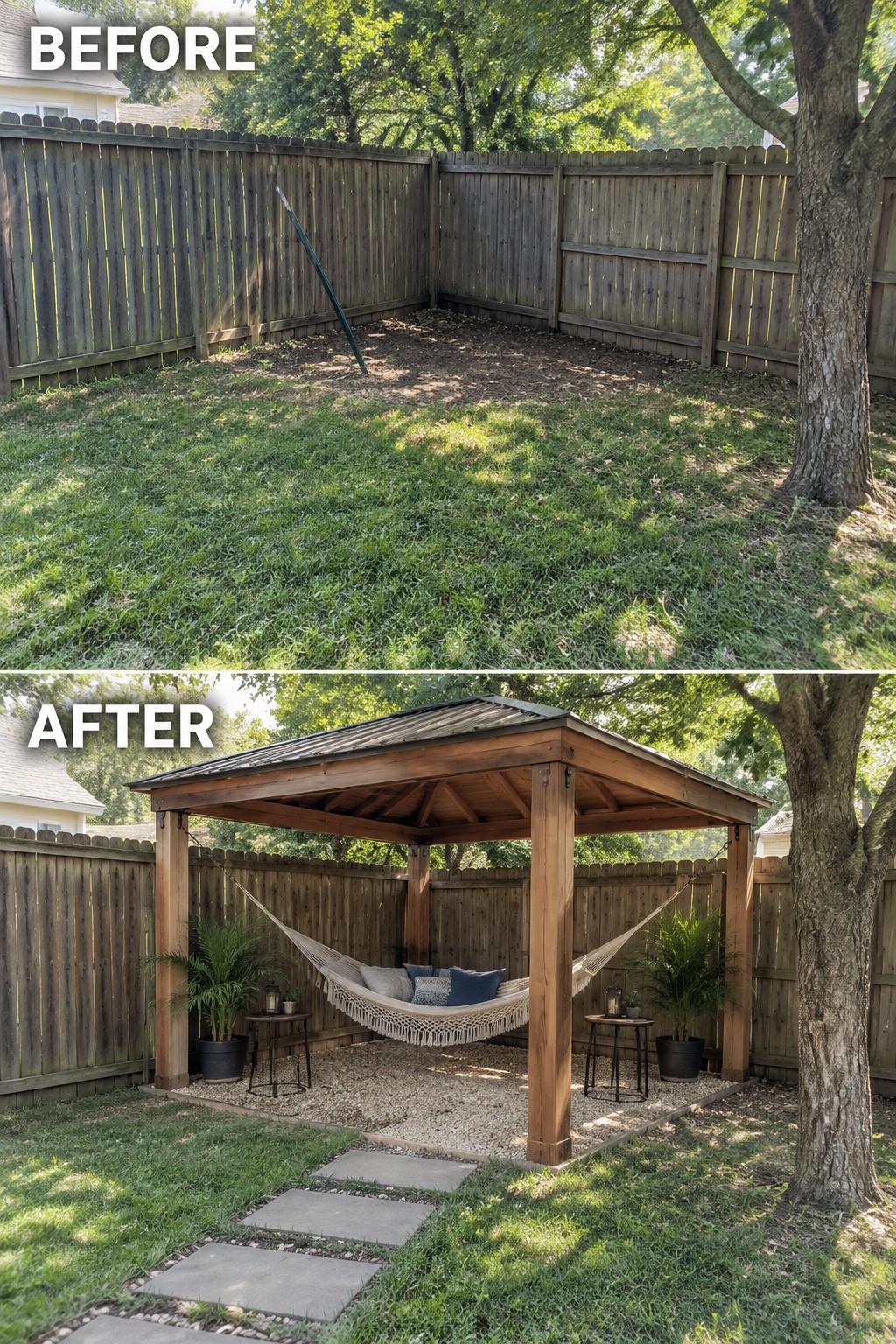
An empty stretch of grass and dirt does not give you much reason to spend time outside. Adding a covered gazebo creates a clear spot for seating and turns that unused corner into the main place people actually want to sit. The hammock and simple gravel base show how little extra is needed once the structure is in place.
This approach works best in smaller yards where you want one defined area rather than spreading furniture across the whole lawn. Put the gazebo where it gets some shade from nearby trees, keep the footprint modest, and leave open space around it so the yard still feels open. Gravel and a couple of potted plants are enough to finish the look without crowding the area.
Turn A Bare Patio Into A Seating Area
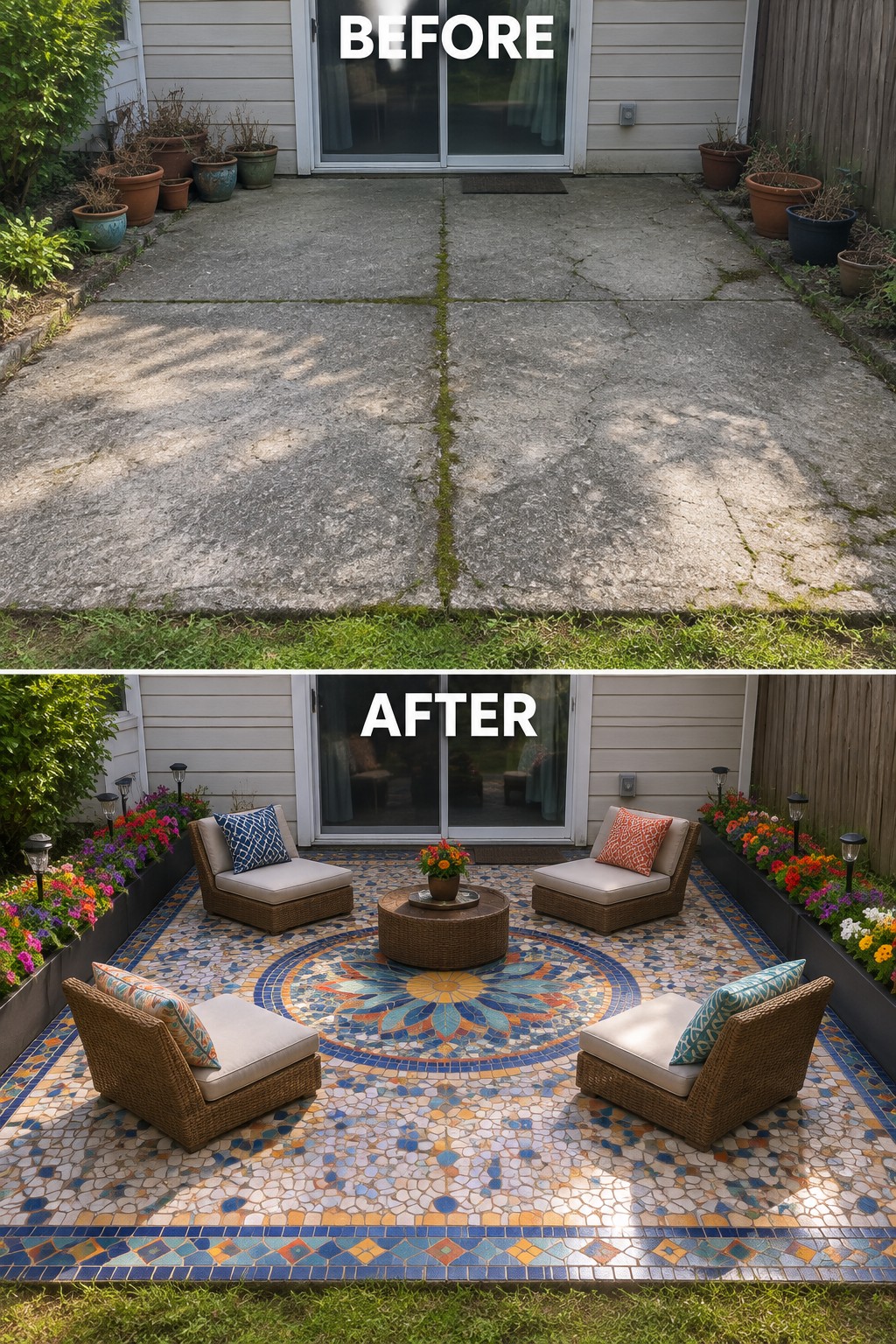
A plain concrete slab usually stays empty because nothing defines it or makes it feel usable. Adding a bold tile pattern across the surface and placing four chairs around a low table turns the same space into a clear spot for sitting.
This idea works best on small yards or side patios where you want one defined zone rather than a full redesign. Start with the flooring first, keep the furniture scale modest, and add a simple border of plants so the seating area feels intentional without crowding the rest of the yard.
Anchor A Small Garden With One Bench

A plain gravel yard with just a path of stepping stones feels more like a walkway than a place to stay. Adding one solid stone bench at the far end, along with a simple bamboo screen behind it, instantly gives the space a reason to exist. The bench becomes the destination instead of just another object in an empty lot.
This approach works best in narrow side yards or small courtyards where you do not have room for multiple zones. Keep the planting low and the gravel raked in simple patterns so the bench stays the main feature. One well-placed seat and a bit of screening can turn leftover ground into a spot people actually use.
Turn Bare Concrete Into A Defined Seating Area
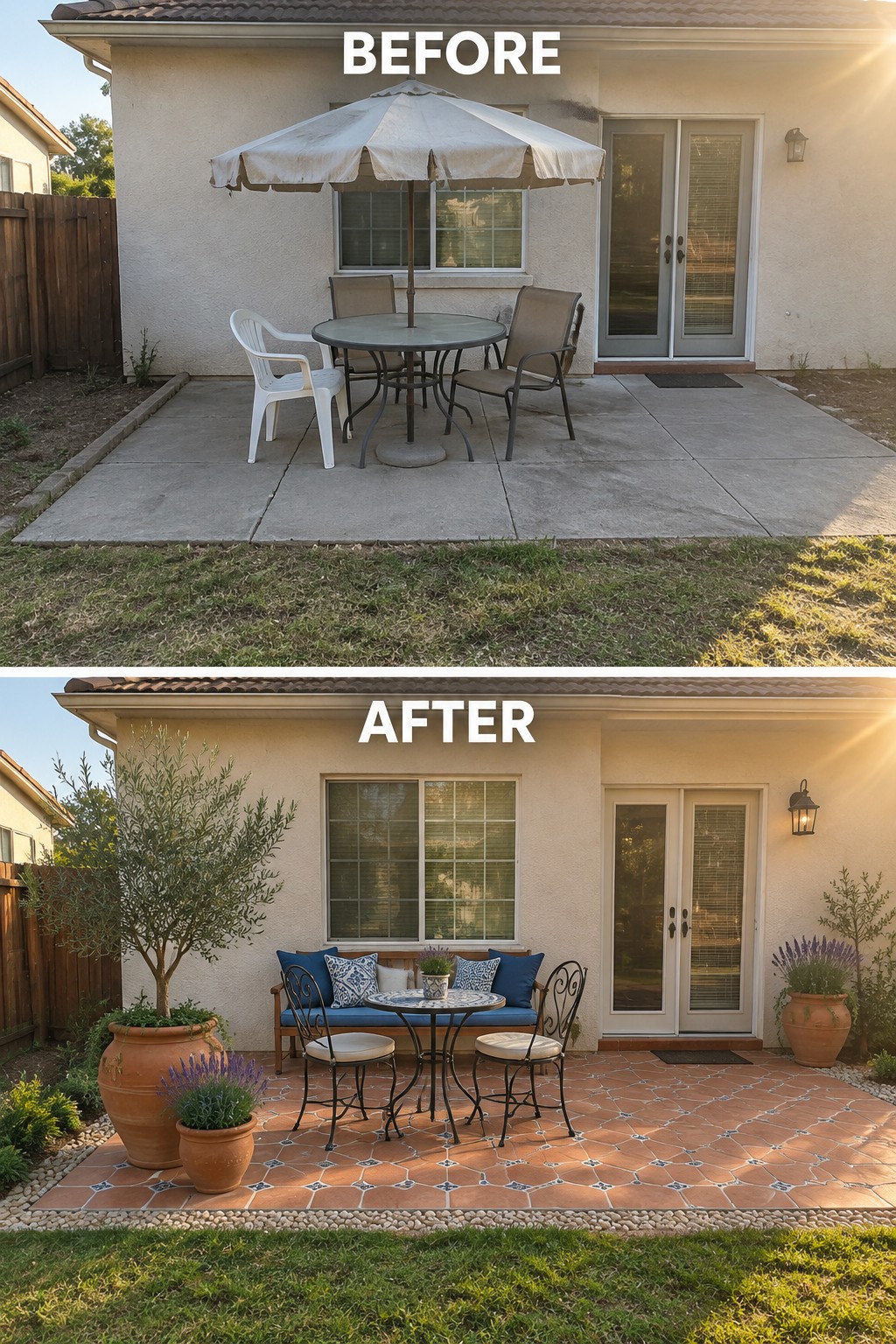
A plain concrete slab with scattered chairs rarely feels like a place to linger. Laying terracotta pavers across the surface and centering a table with a bench and two chairs gives the space a clear purpose and makes it feel like an actual outdoor room.
This approach works on any flat concrete pad where you want seating without a full rebuild. Use pavers or tiles that handle weather well, keep the furniture scale modest so movement stays easy, and add a few large pots at the edges to soften the boundary without blocking the walkway.
Turn An Overgrown Corner Into A Defined Seating Area

Building a simple deck platform can turn a neglected backyard spot into a place that actually gets used. The before photo shows how quickly an area becomes unusable when left to weeds and uneven ground, while the after shows a flat, contained surface that supports real seating without constant upkeep.
This approach works best in small or awkward yard corners where grass never grows well. Clear the overgrowth first, then add a deck sized for the furniture you actually need. Keep the layout simple with one main seating piece and a few large planters so the space stays open enough to move around.
Create A Defined Seating Area With A Path And Bench
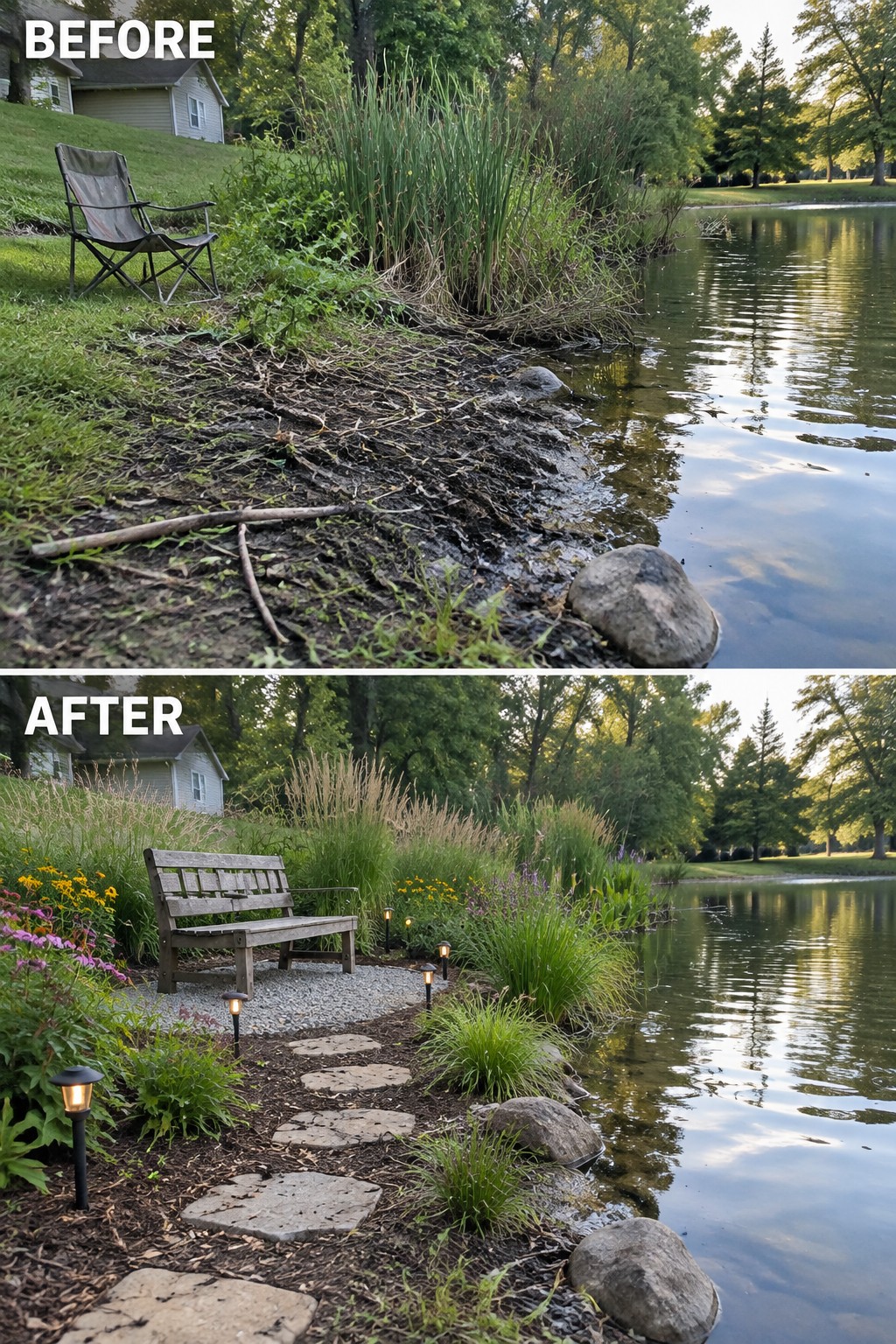
A muddy, overgrown bank next to the water does not invite anyone to sit and stay. Adding a gravel pad, a wooden bench, a short stone path, and a few low lights turns the same spot into a clear place to rest. The path leads the eye and the feet straight to the bench, while the lights make the area usable after dark without needing electricity.
This approach works best along a pond, lake, or stream where the ground stays damp and plants tend to sprawl. Start by clearing the worst of the overgrowth and laying down a simple base of gravel or mulch so the bench stays level and dry. Keep the planting simple on either side so the seating area stays the main focus instead of getting lost in too many flowers.
Add A Bench To Define A Narrow Planting Strip
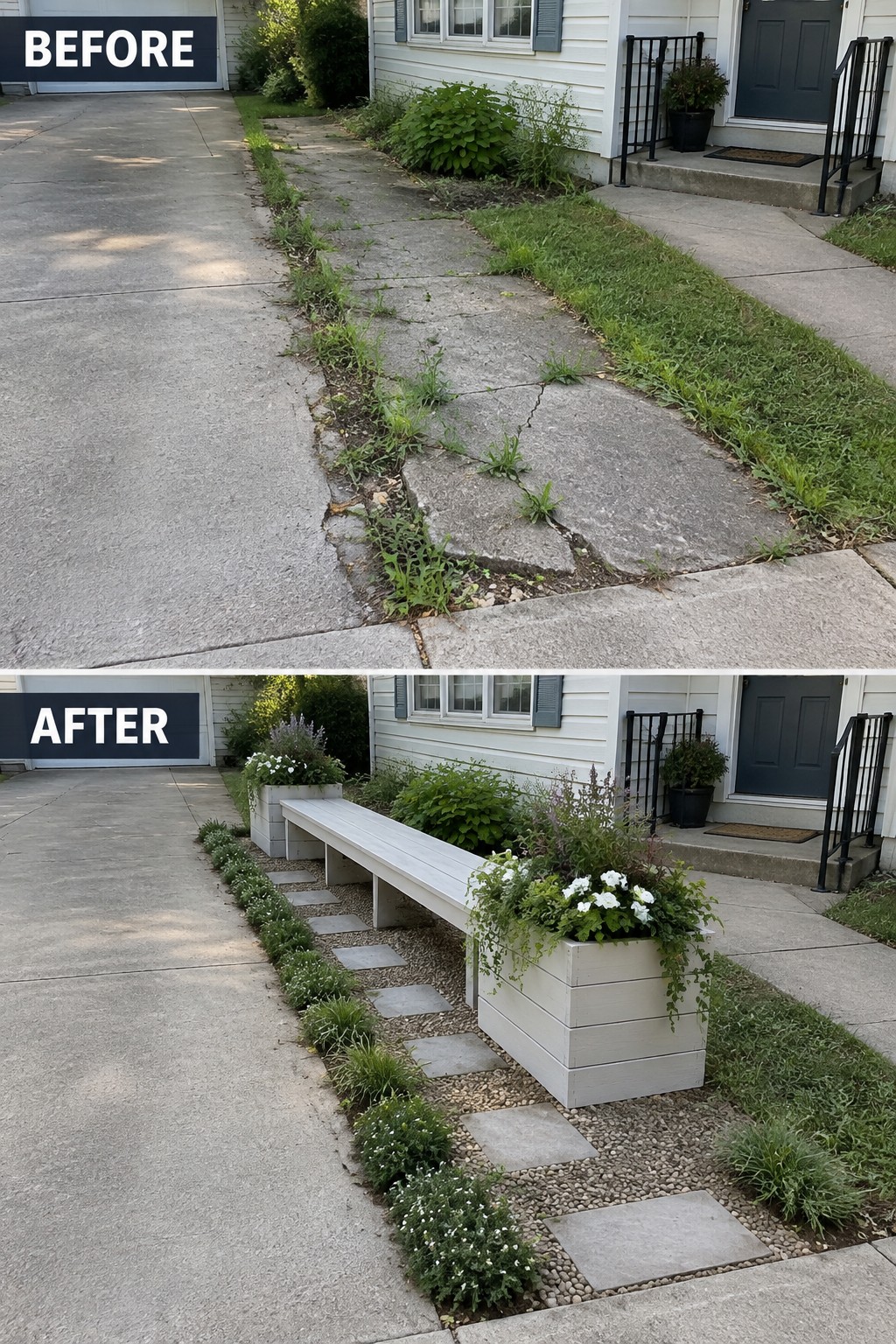
The before photo shows a weedy, cracked strip of ground running along the driveway with no clear purpose. In the after, a simple bench and raised planters turn that same narrow space into a defined garden area. The gravel and stepping stones give it structure while the bench creates a place to sit.
This works well along driveways or side paths where space is tight. Start by clearing the overgrowth and laying down a base of gravel or pavers so the area feels intentional rather than leftover. Keep the planting simple and choose a bench that can stay outside year-round.
Turn An Empty Patio Into A Seating Area

A bare concrete balcony often feels like wasted space until you give it a clear purpose. Placing two chairs, a small table, and a rug turns the same slab into a spot where you can actually sit and spend time.
String lights add a simple layer that makes the area usable after dark. This approach works best on small urban balconies or terraces where you want to keep things practical. Start with seating that fits the scale of the space, then add only what you will use regularly.
Turn An Empty Backyard Into A Fire Pit Seating Area
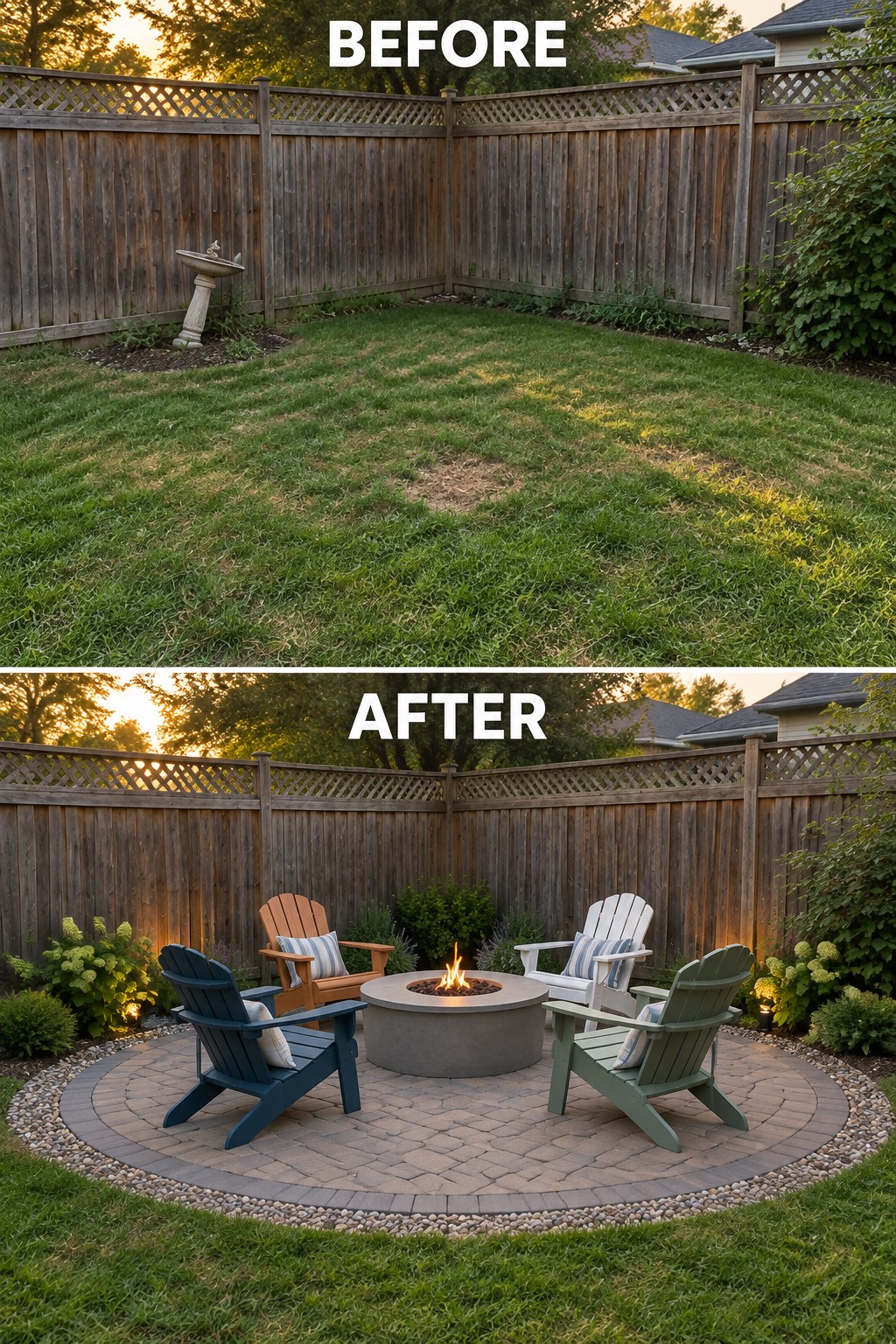
An open lawn often stays unused because there is no clear spot to gather. Adding a paved circle with a fire pit in the middle and four chairs around it gives the yard a purpose and makes it comfortable to sit outside after sunset.
Keep the paved area modest in size so it fits the yard without crowding the grass. Choose sturdy outdoor chairs and place them so people can talk across the fire without blocking the path around the circle.
Use String Lights To Create An Outdoor Seating Area
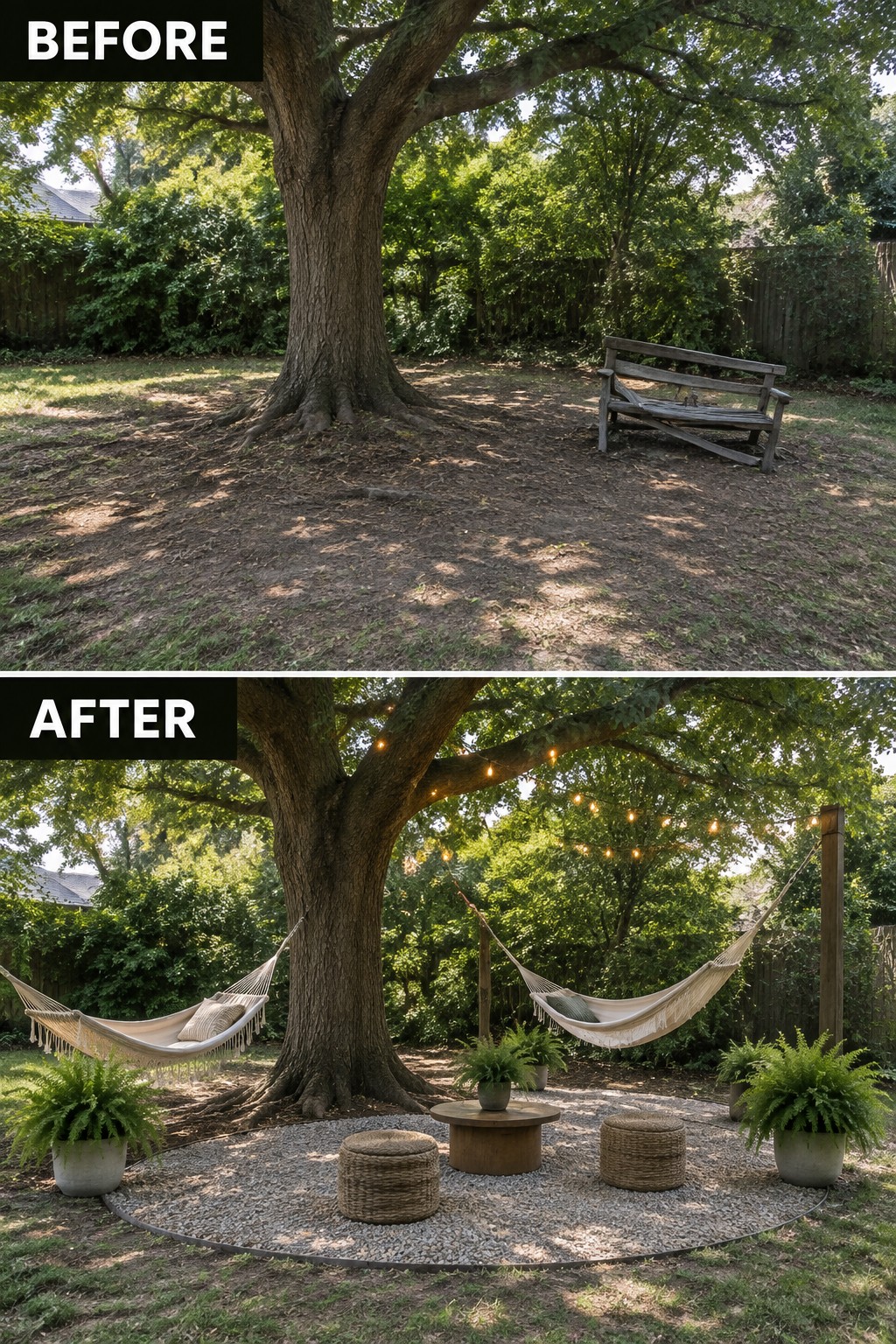
A bare patch of dirt under a big tree rarely gets used until you give it a clear purpose. Stringing lights from the tree to a couple of posts and laying down a gravel circle instantly marks the space as a place to sit. The hammocks and low stools then turn that simple outline into an actual spot for relaxing without needing a full deck or patio.
This idea suits yards that already have shade and a mature tree. Start with the lights and a basic ground cover so the area feels intentional instead of leftover. Choose seating that can stay outside and keep the layout open enough for people to move around the tree roots.
Turn An Unused Patio Into A Defined Seating Area

A bare stone patio often feels like wasted space until you give it a clear purpose. Adding a rug, a swing sofa, and a couple of chairs instantly turns the surface into a place people want to sit. The lanterns add just enough light to make the area usable after dark without needing a full electrical setup.
This approach works best on existing patios or decks that already have good bones but lack structure. Keep the furniture scale modest so the space still feels open, and choose pieces that can stay outside. Start with the rug to mark the seating zone, then layer in seating and lighting only where people will actually use them.
Turn A Steep Slope Into Terraced Seating Areas

A steep grassy hill is often the hardest part of a yard to use. Mowing it is awkward and sitting on it is uncomfortable. Adding retaining walls creates flat levels that turn the slope into garden beds and built-in seating without losing the whole space to grass.
This approach works best on yards where the slope is noticeable but not extreme. Start with solid walls that can handle the soil pressure, then set the benches right into the timber so they take up little extra room. Keep the paths and steps wide enough for easy movement between levels.
Turn An Empty Patio Into A Seating Area
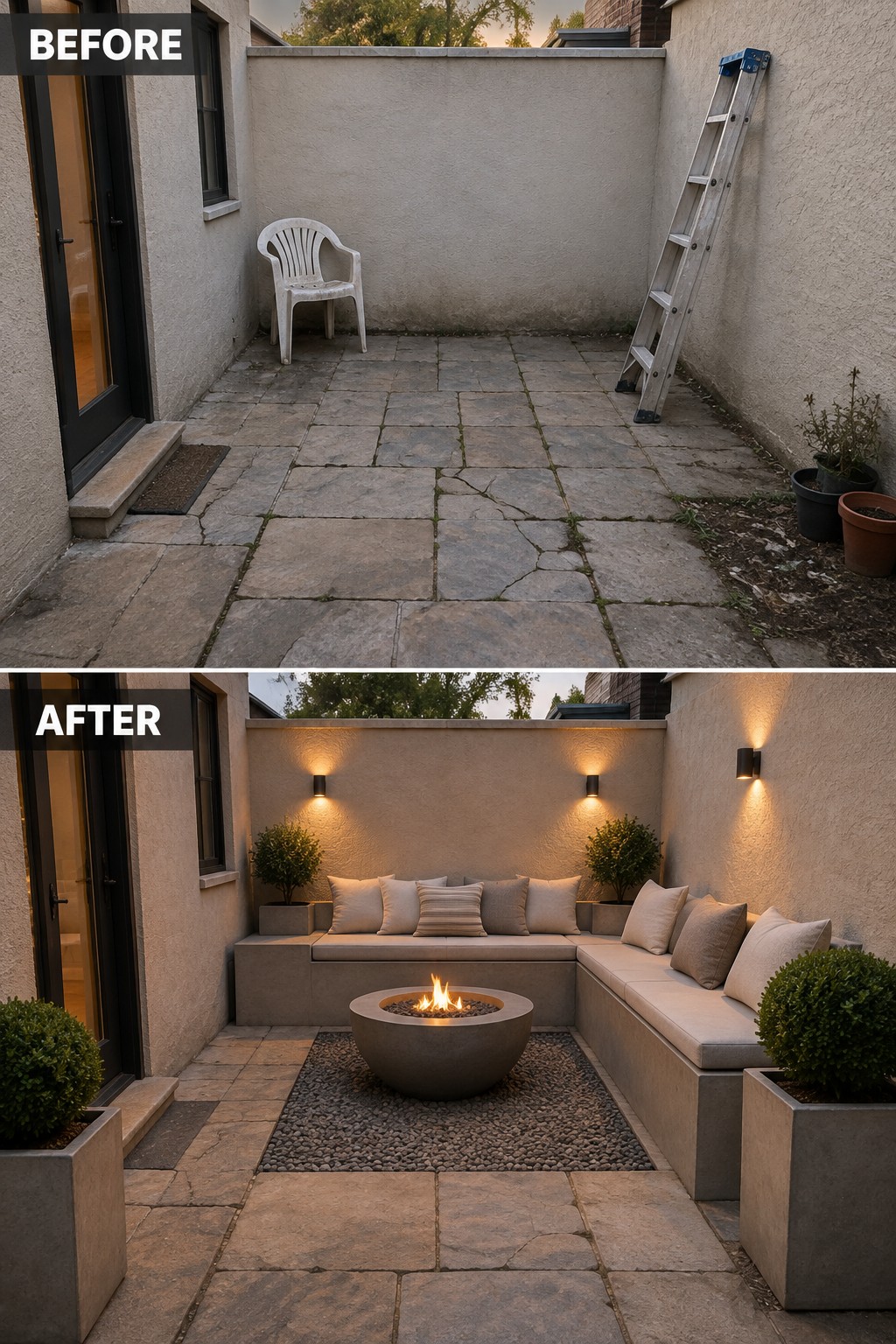
A bare patio usually stays empty because nothing gives it a clear reason to be used. Adding a central fire pit with built-in seating around it changed this space from an open slab into a spot that actually invites people to sit down. The gravel patch under the fire pit helps mark the seating zone without covering the whole floor.
This approach works best on small patios where loose furniture can feel scattered. Pick one main element like the fire pit first, then shape the seating to fit the walls or corners. Keep extra planting to a few pots so the seating area stays open and easy to move around in.
Turn A Narrow Walkway Into An Outdoor Seating Area

A bare concrete walkway like this one does not invite anyone to linger. Adding a large outdoor rug and a compact table with chairs instantly turns the same narrow space into a spot where you can sit and enjoy the yard. The rug does most of the work by marking the area as intentional rather than leftover.
This idea works best in side yards or slim patios where width is limited. Keep the furniture scale modest so there is still room to walk, choose pieces that can stay outside, and layer in potted plants rather than trying to dig beds. The result feels finished without needing a full renovation.
Turn A Bare Pool Deck Into A Covered Seating Area
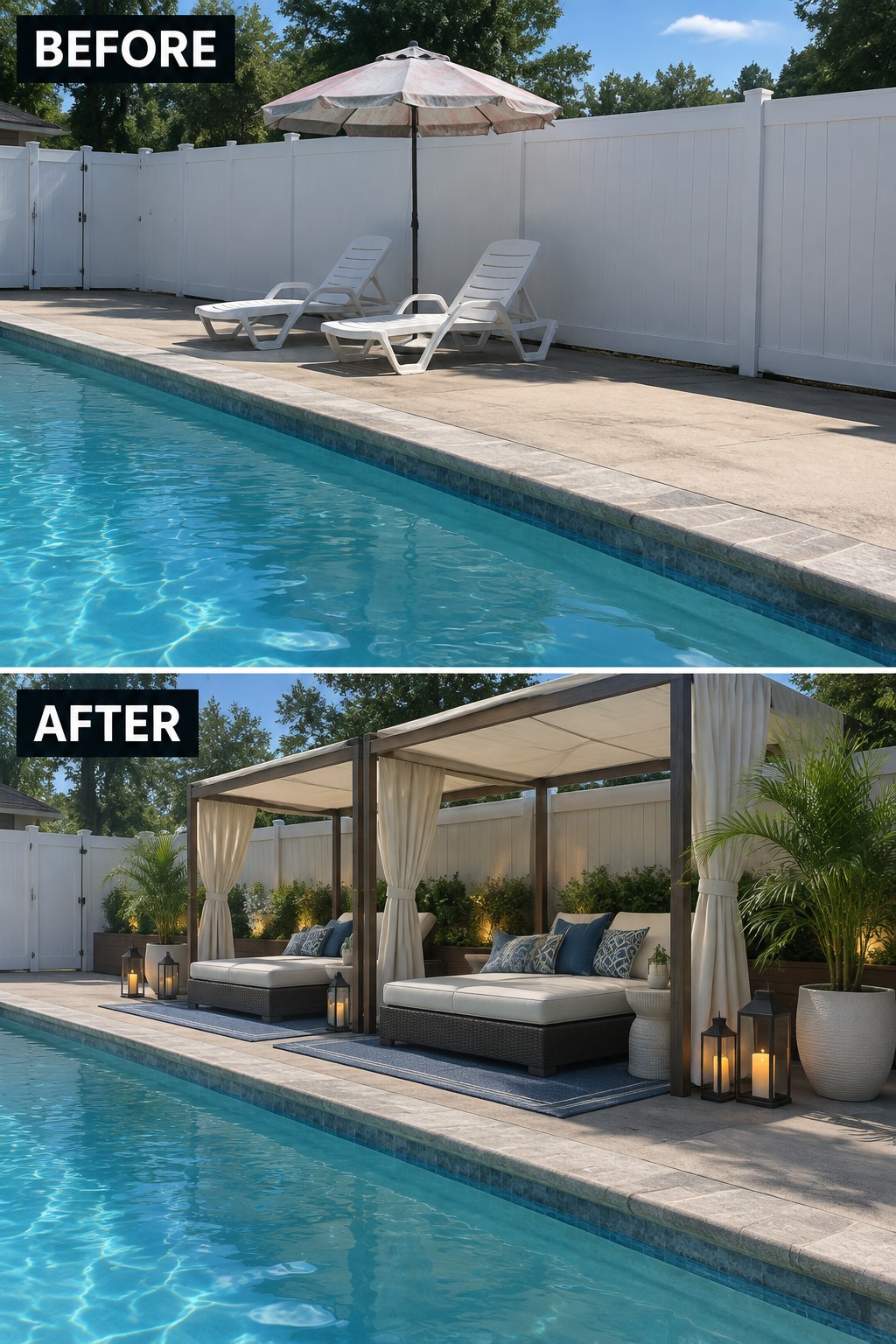
A simple cabana structure makes the biggest difference here. The before photo shows an open stretch of concrete with just two basic lounge chairs and an umbrella. Adding the covered frame, daybeds, and side curtains creates a clear spot to sit and stay awhile instead of just passing through.
This works best on pool decks or patios that feel too exposed. Start with a basic pergola or cabana kit sized to fit two to three seating pieces, then add outdoor rugs to mark the floor and a few lanterns for night use. Keep the furniture low and weatherproof so the area stays practical year after year.
Enclose A Pergola To Create A Cozy Outdoor Room

An open pergola with just a table and chairs often stays unused because it feels too exposed. Adding clear side panels and string lights changes that by creating a defined space that feels protected and comfortable even when the weather cools.
This idea suits patios that already have a solid roof structure. Focus first on the enclosure and lighting, then add seating and a rug to make the area feel like a real room. A heater helps extend use into fall without major construction.
Frequently Asked Questions
Q: How do I pick the best spot for the seating area? A: Walk your garden at different times of day and note where the light feels nicest. Pick a level spot that gets morning sun but some shade later on. This keeps the area usable without extra covers or fans.
Q: What materials hold up well outside year round? A: Choose teak or powder coated metal frames for the chairs and table. They handle rain and sun with just an occasional wipe. Skip anything that needs storing every winter.
Q: Should I add plants right around the chairs? A: Cluster a few pots or low shrubs close by to frame the space. They block wind and make the seating feel more private. Keep anything tall behind the seats so views stay open.
