

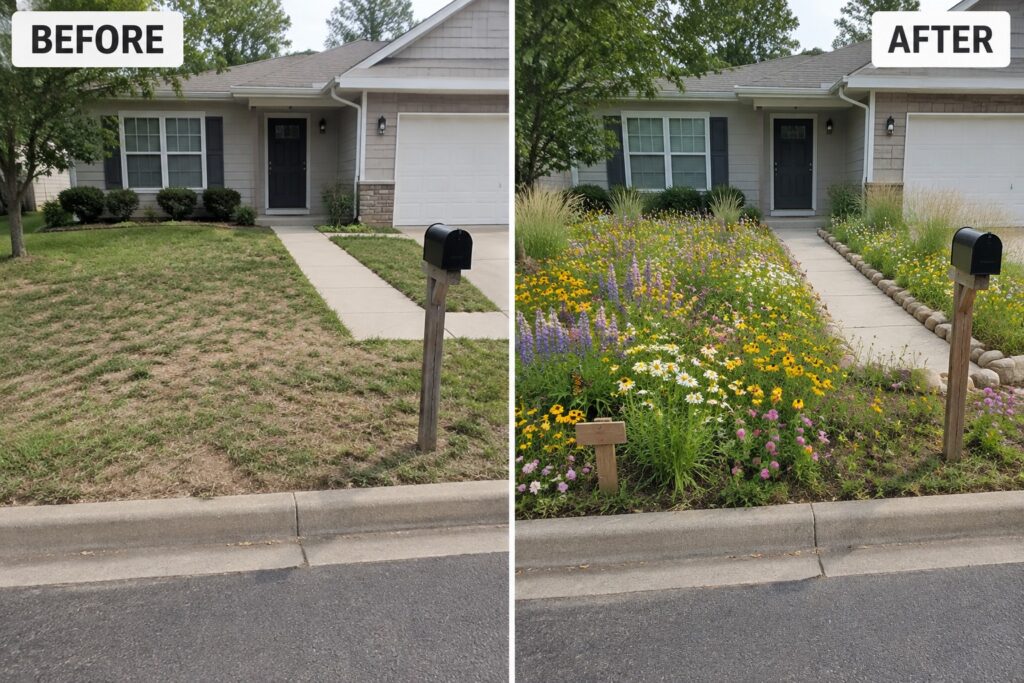
When I look at a garden that feels a little bare it is usually because the plants were chosen more for looks than for what they offer to pollinators.
Switching to flowers and shrubs that provide nectar and habitat tends to fill things in gradually as the seasons pass.
I have found that focusing on native varieties first helps the whole area settle into a better rhythm without constant fussing.
It simply works better that way.
Testing a few of these approaches in my own yard showed how even modest shifts in layout and plant selection can turn an overlooked patch into something that feels more established.
Replace A Plain Lawn With Defined Pollinator Beds
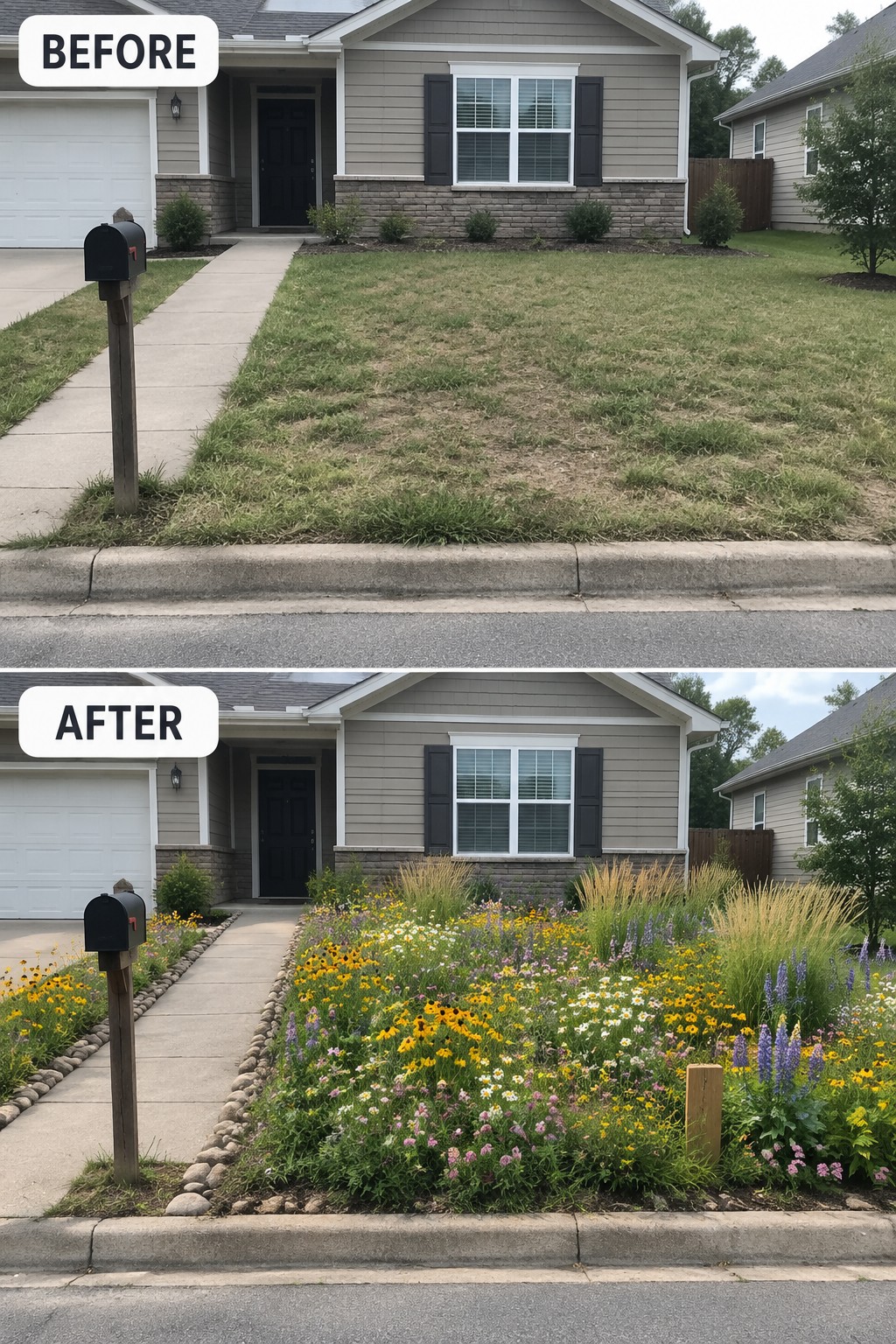
A wide stretch of patchy grass does little for curb appeal or wildlife. Turning most of that lawn into a series of flower beds edged with stones gives the yard clear shape and brings in color that actually supports bees and butterflies.
This idea works best on front yards that already have a walkway in place. Mark out beds on either side of the path, keep the shapes simple, and choose a mix of native flowers that bloom in succession. The edging keeps everything looking intentional even when the plants are still filling in.
Turn A Weedy Strip Into A Pollinator Garden
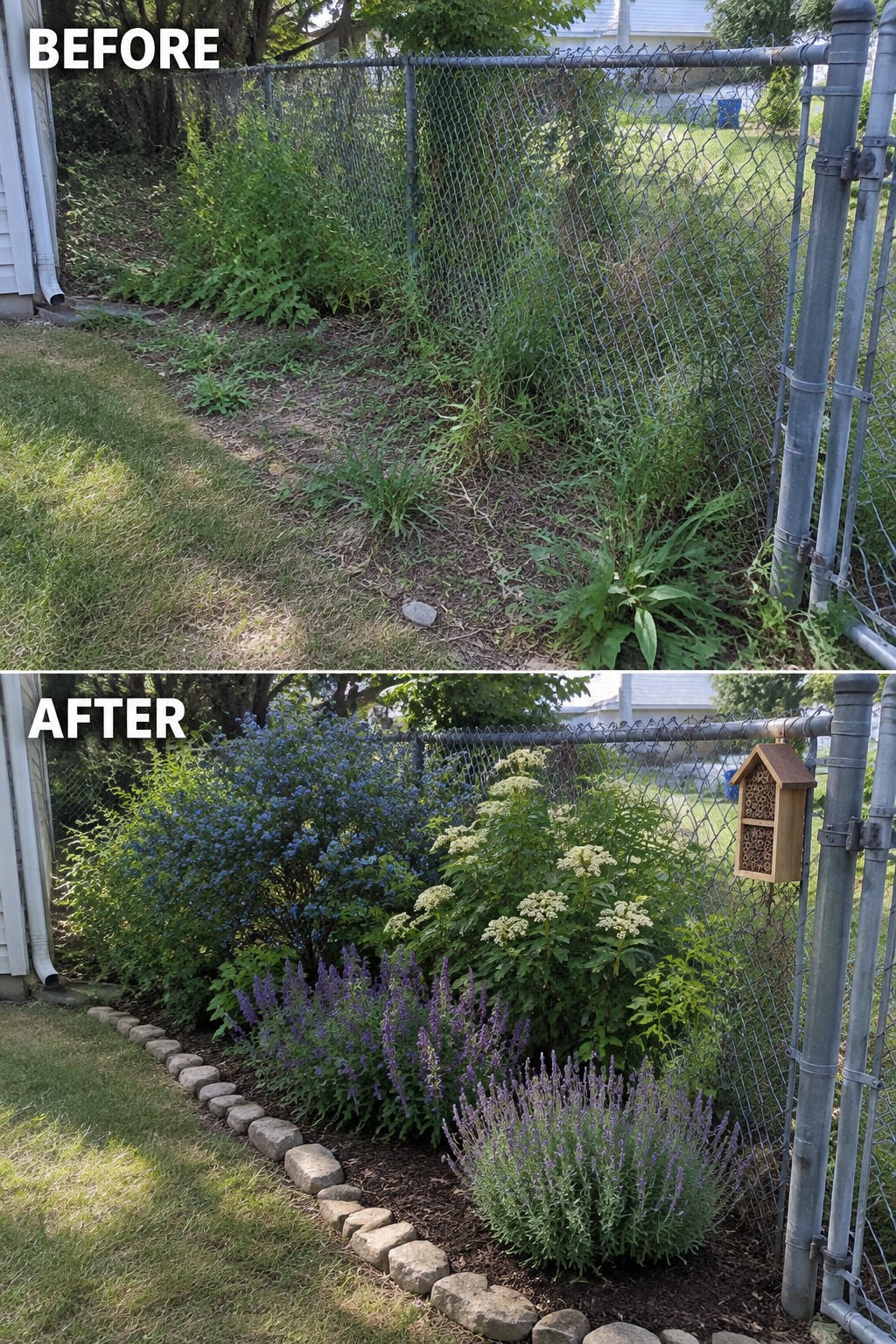
Clearing the overgrown weeds and grass along the fence made room for a simple garden bed that actually supports pollinators. Adding a low stone edge and a layer of mulch gave the area clear shape, while the new plants provide flowers in different colors and heights throughout the season.
This approach works best along fences or narrow side yards where you want to add interest without losing access. Focus on removing the old growth first, then set the border before planting. Choose a mix of shrubs and perennials that bloom at different times so bees and butterflies have something to visit from spring through fall.
Add Hanging Baskets And Planters To A Plain Patio

A bare patio with just a table and a few scattered pots feels empty and unused. Filling the space with hanging baskets, tall pots, and a raised wooden planter brings in color and life right away. The flowers draw bees and butterflies while the different heights keep everything from looking flat.
This approach works well on small concrete areas where digging is not an option. Start with a few sturdy hanging baskets and one or two larger pots, then add a simple raised box along the railing if there is room. Choose flowering plants that bloom at different times so the space stays useful for pollinators through the season.
Fill A Raised Bed With Pollinator Plants

A raised bed that sits mostly empty does little for pollinators. The simple fix shown here is to pack it with a mix of flowering plants that bloom at different times. The before photo shows mostly bare soil with just a few scattered plants. The after version fills the same bed with coneflowers, goldenrod, and smaller purple blooms that keep bees and butterflies busy through the season.
This approach works well in small yards or along fences where space is limited. Start by improving the soil, then choose native or pollinator-friendly perennials in a range of heights and bloom times. Keep the planting dense enough to crowd out weeds but still leave room for air to move between plants. The result is a low-maintenance bed that supports pollinators without needing a large garden.
Add Terraced Beds To A Sloped Yard

A bare slope often ends up patchy and hard to maintain because water runs off and grass struggles to hold the soil. Low stone walls change that by breaking the hill into flat planting areas that stay in place and give roots room to grow.
This idea works on any noticeable incline where you want more planting space without major grading. Use the same local stone for the walls, keep the beds at a width you can reach across, and fill them with flowering perennials that bloom at different times. The terraces also create natural paths so you can walk through the garden without compacting the soil.
Add Hanging Baskets For Easy Pollinator Color At The Entry
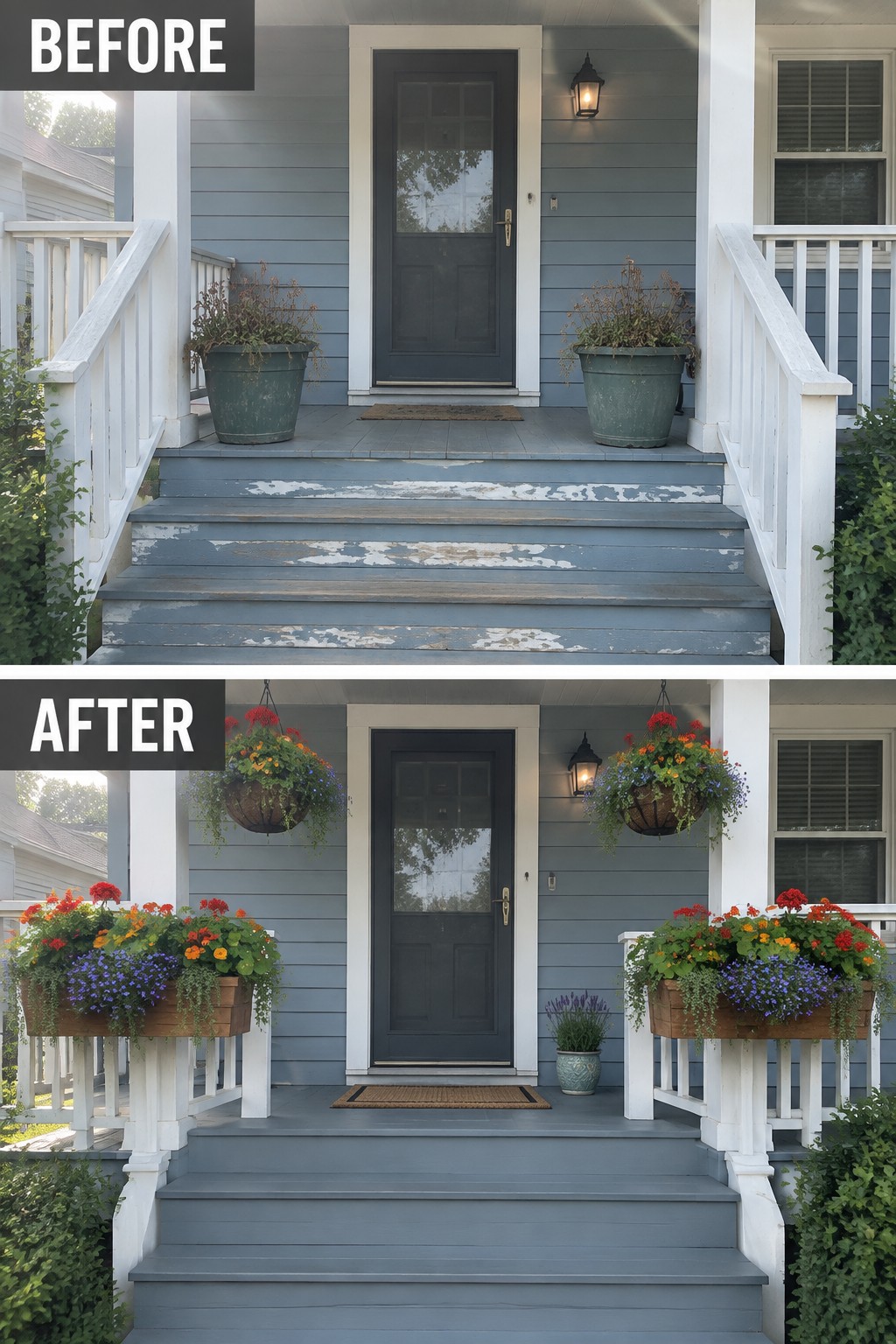
The porch went from two large, faded pots to several hanging baskets and rail planters packed with bright flowers. This change brings nectar-rich blooms right up to the door where bees and butterflies can find them easily.
Container plantings suit small entries or homes without space for garden beds. Choose varieties like salvia, petunias, or lantana that hold up in baskets, and water them regularly since hanging plants dry out faster than ground beds.
Define Lawn Edges With A Planted Border
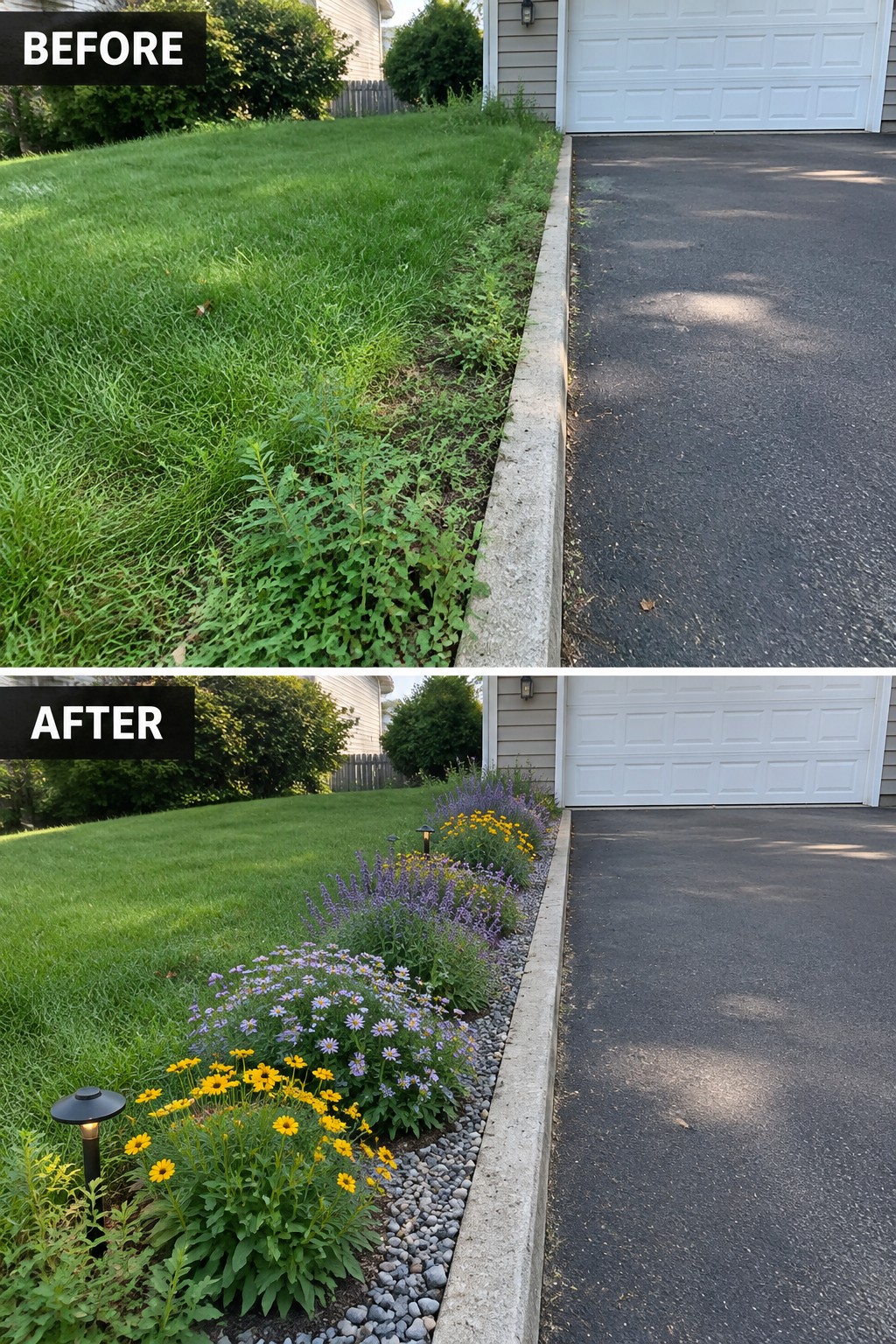
A weedy strip along the driveway often gets ignored until it looks messy. Clearing that strip and adding a narrow gravel bed with flowers gives the whole edge a clear shape and turns it into something useful instead of something you have to mow around.
This works best on homes where the lawn runs right up to pavement. Remove the weeds first, put down a simple border or gravel, then plant a mix of flowers that attract pollinators. Keep the bed narrow so it stays easy to reach and maintain without extra work.
Turn A Bare Balcony Into A Pollinator-Friendly Spot
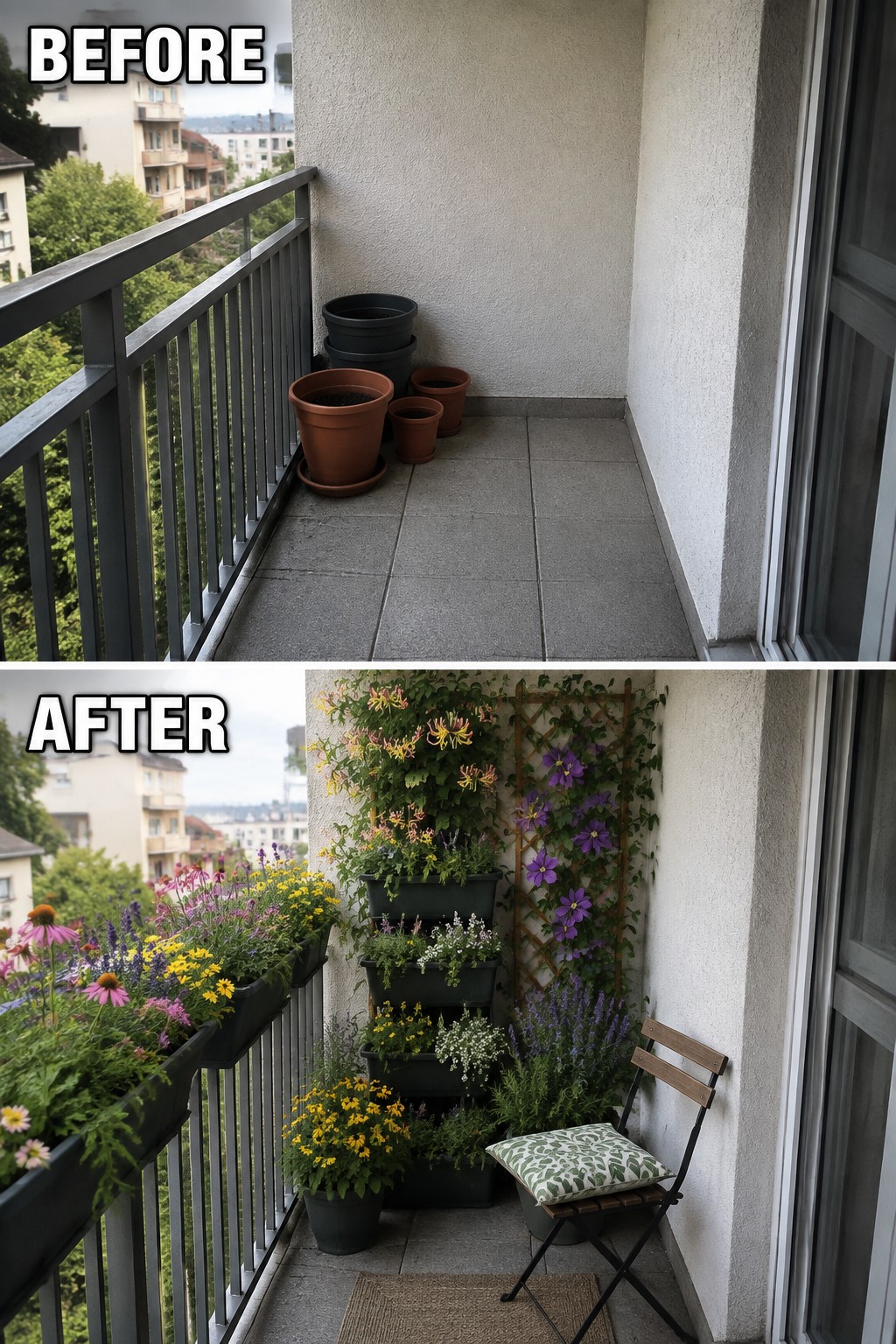
A small balcony with just a few empty pots can feel like wasted space. Adding stacked planters along the wall and a simple trellis gives you room for many flowering plants without crowding the floor. The result is a place you can actually sit while the flowers bring in bees and butterflies.
This idea works well on balconies or small patios where floor space is limited. Start with a few sturdy vertical planters and choose pollinator plants that bloom at different times. Keep the seating light so you can move it when needed, and leave a clear path to the door.
Plant A Mix Of Blooms In Your Raised Beds
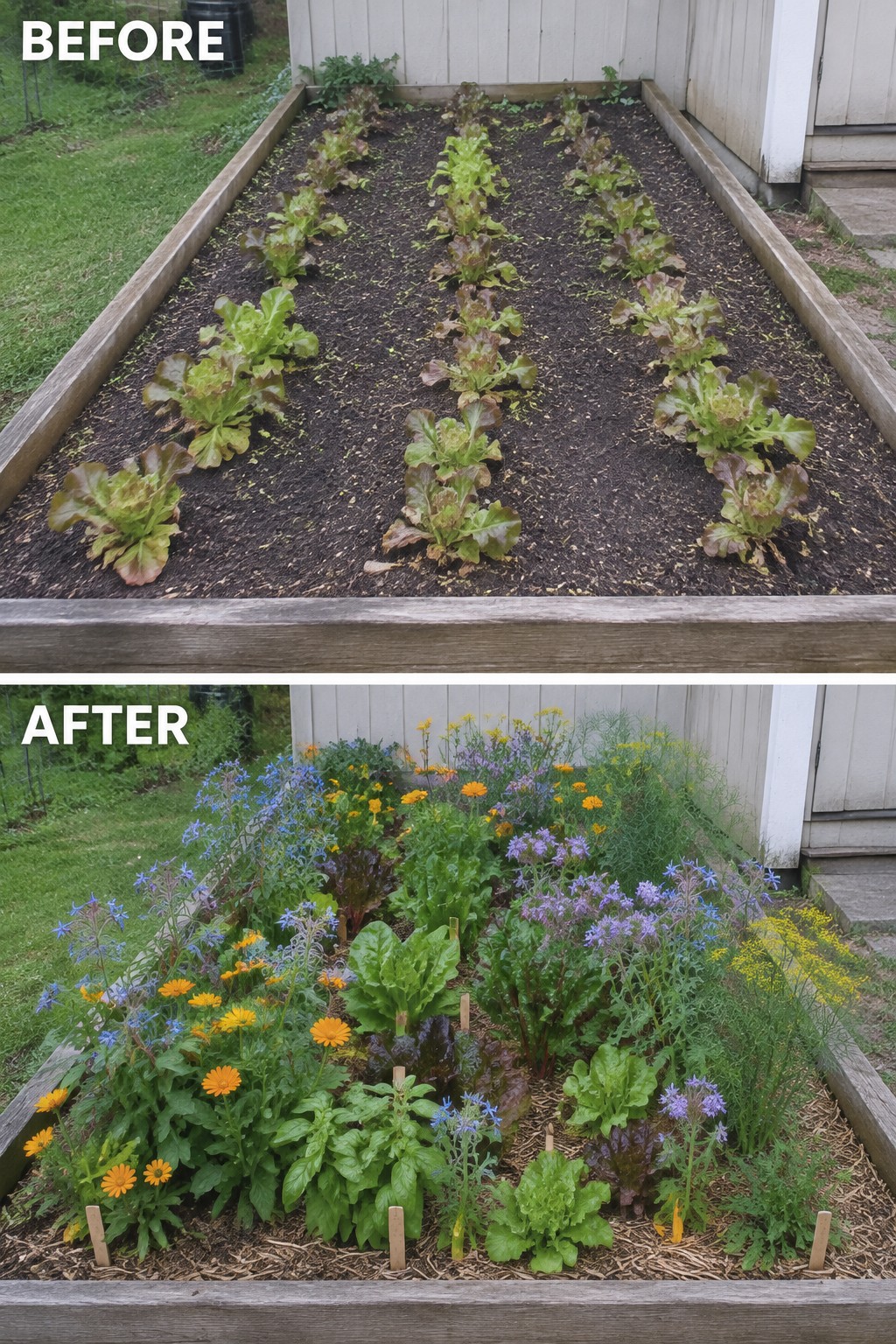
The before photo shows a raised bed with neat but sparse rows of lettuce and greens sitting in bare soil. The after shows the same bed packed with flowering plants in blue, orange, and purple mixed among the remaining greens and herbs. That shift from open soil to full planting turns the bed into something that supports pollinators instead of just growing food.
This idea works well in any raised bed that already has a basic crop going. Start by tucking in shorter flowers like calendula or borage around the edges and taller ones like larkspur or dill toward the back. The mulch in the after photo also helps keep the soil from drying out while the new plants fill in. It suits small yards or anyone who wants more color without starting a whole new garden.
Create Defined Beds Along A Sidewalk
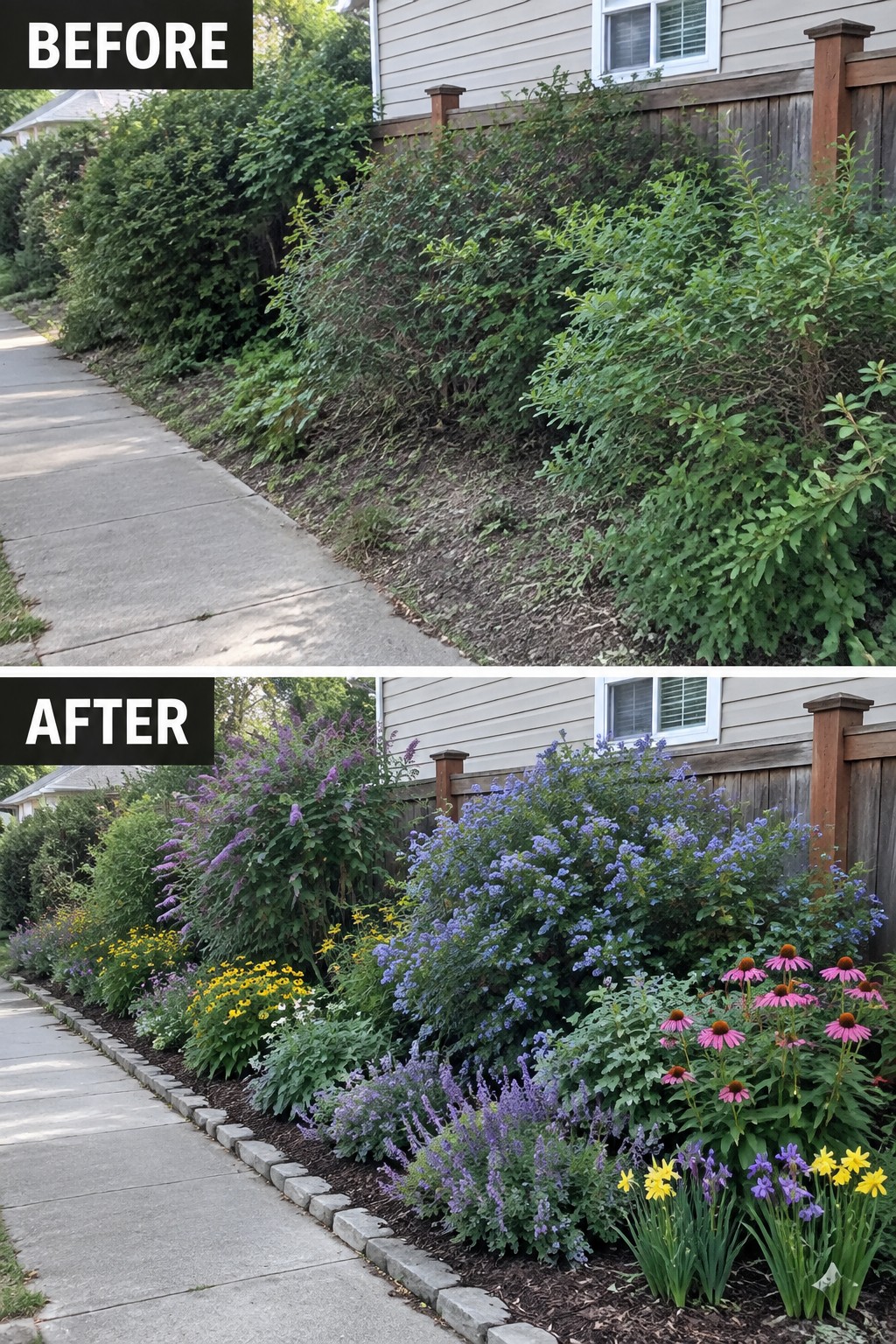
The biggest shift here comes from clearing the tangled shrubs first and then giving the whole strip a firm edge with stones and mulch. Once the old growth was cut back, the space stopped looking wild and started looking like a real garden bed instead of just a slope full of whatever grew in.
This approach works well on narrow side strips or front borders where the plants have taken over. Start by removing the heaviest overgrowth so you can see the ground, then add a simple border and a layer of mulch before planting. Keep the new plants in two or three heights so the bed stays full without crowding the path.
Add Structure To An Overgrown Backyard
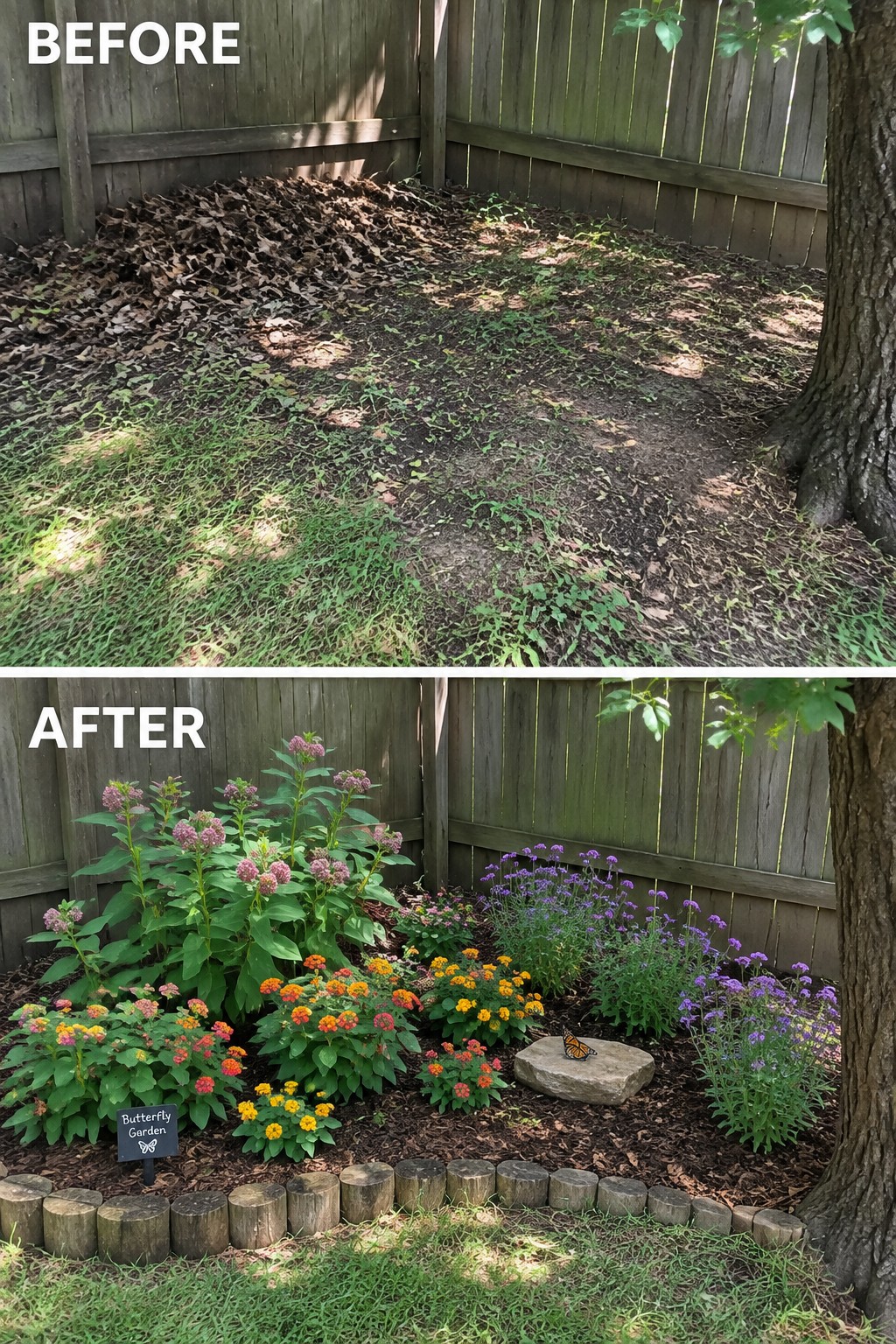
Clearing away the leaves and debris first made the biggest difference. Adding a simple log border and a layer of mulch turned the loose dirt into a contained bed that feels intentional. The plants now sit in clear groups instead of scattered across the ground.
This approach works well in any small corner or side yard that has no real shape. Mark the outline with edging before you plant, then mulch the whole bed so weeds stay down and the flowers stand out. It keeps the space looking neat while the pollinator plants fill in over time.
Create Defined Garden Beds Around Trees
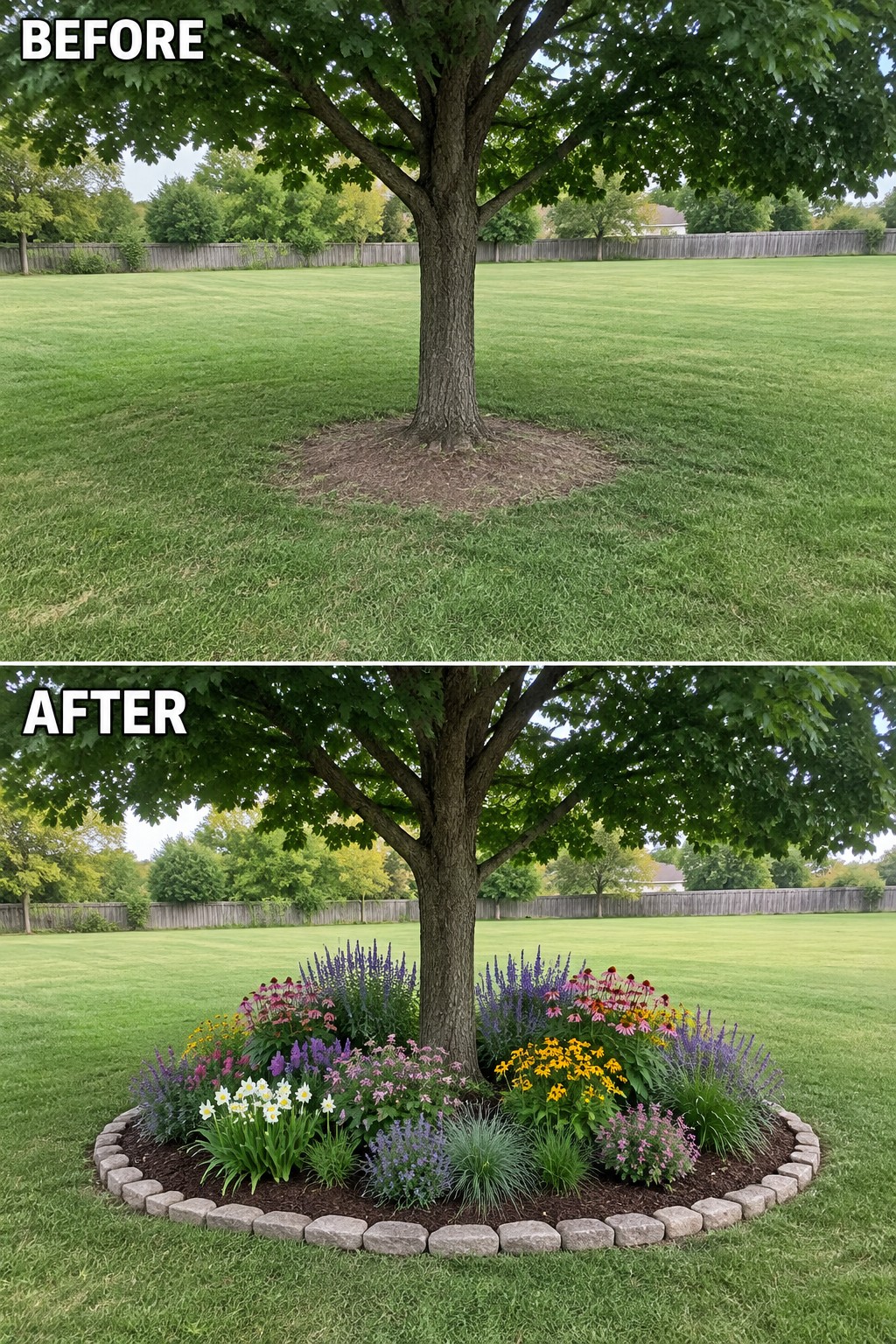
One simple way to give a large lawn more structure is to add planted beds around existing trees instead of leaving the ground bare or just mulched. The before photo shows a single tree sitting in open grass with only a small dirt ring at its base. After the change, a low stone border and a full circle of flowers and perennials turn the same spot into a clear garden feature.
This idea works best in yards that already have mature trees but feel flat or empty at ground level. Keep the bed a practical size so mowing stays simple, choose plants that handle the shade and root competition under the tree, and use an edging material that matches the rest of your yard. Start with the border and a few reliable perennials before adding more.
Add Structure With A Stone Path And Garden Borders
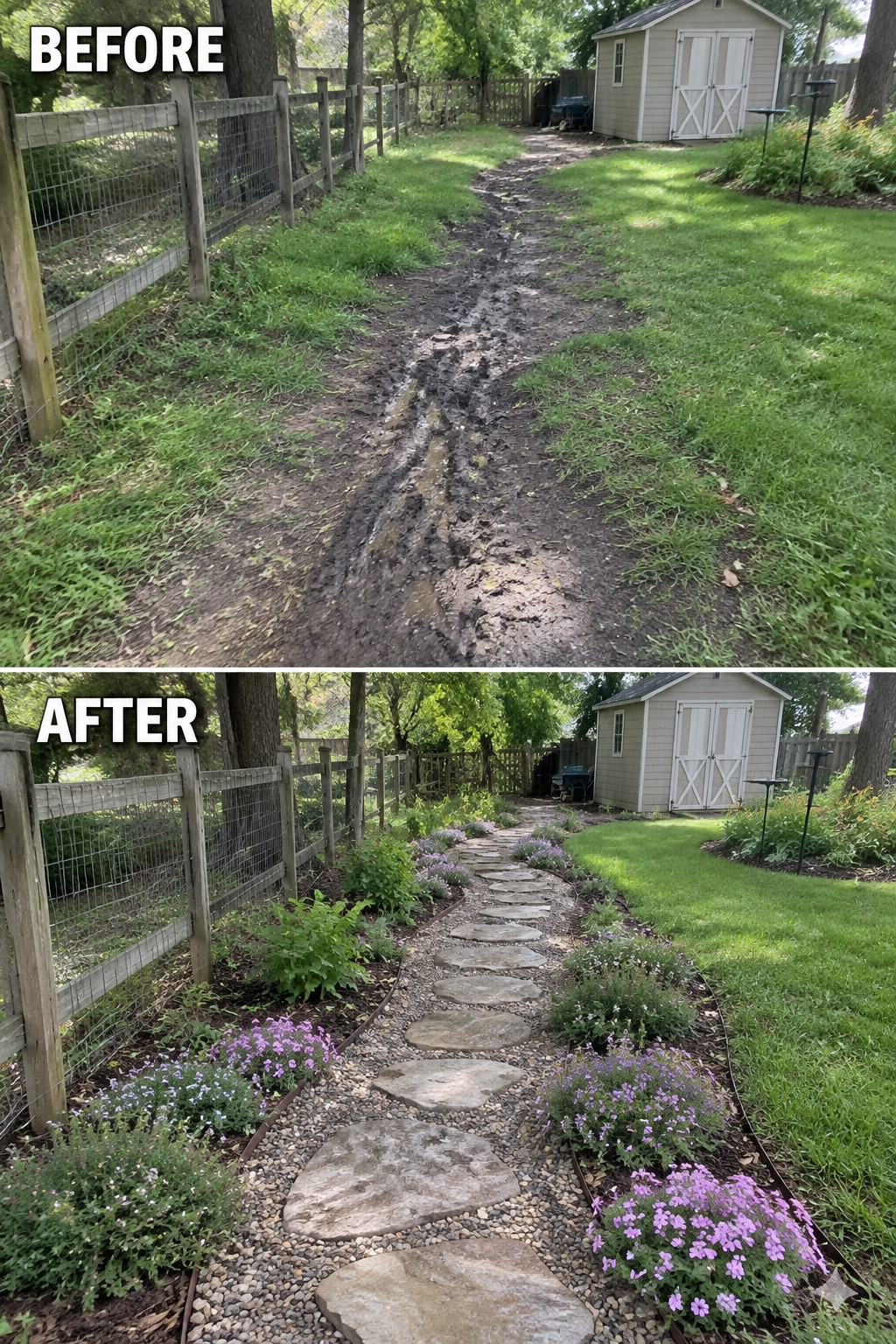
A worn dirt path through the yard often turns into a muddy track after rain. Laying flat stepping stones with gravel on either side gives the space a clear route and creates planting strips along the edges. The stones keep feet dry while the gravel stops weeds and gives the beds a finished edge that makes it easier to add flowers or shrubs without them spreading into the walkway.
This approach works well in backyards that already have a natural line of travel between the house and a shed or fence. Start by clearing the mud and leveling the ground, then set the stones with a gravel base so they stay in place. Choose flowering plants that attract pollinators for the borders so the path becomes useful as well as tidy.
Add Defined Beds To A Rocky Slope
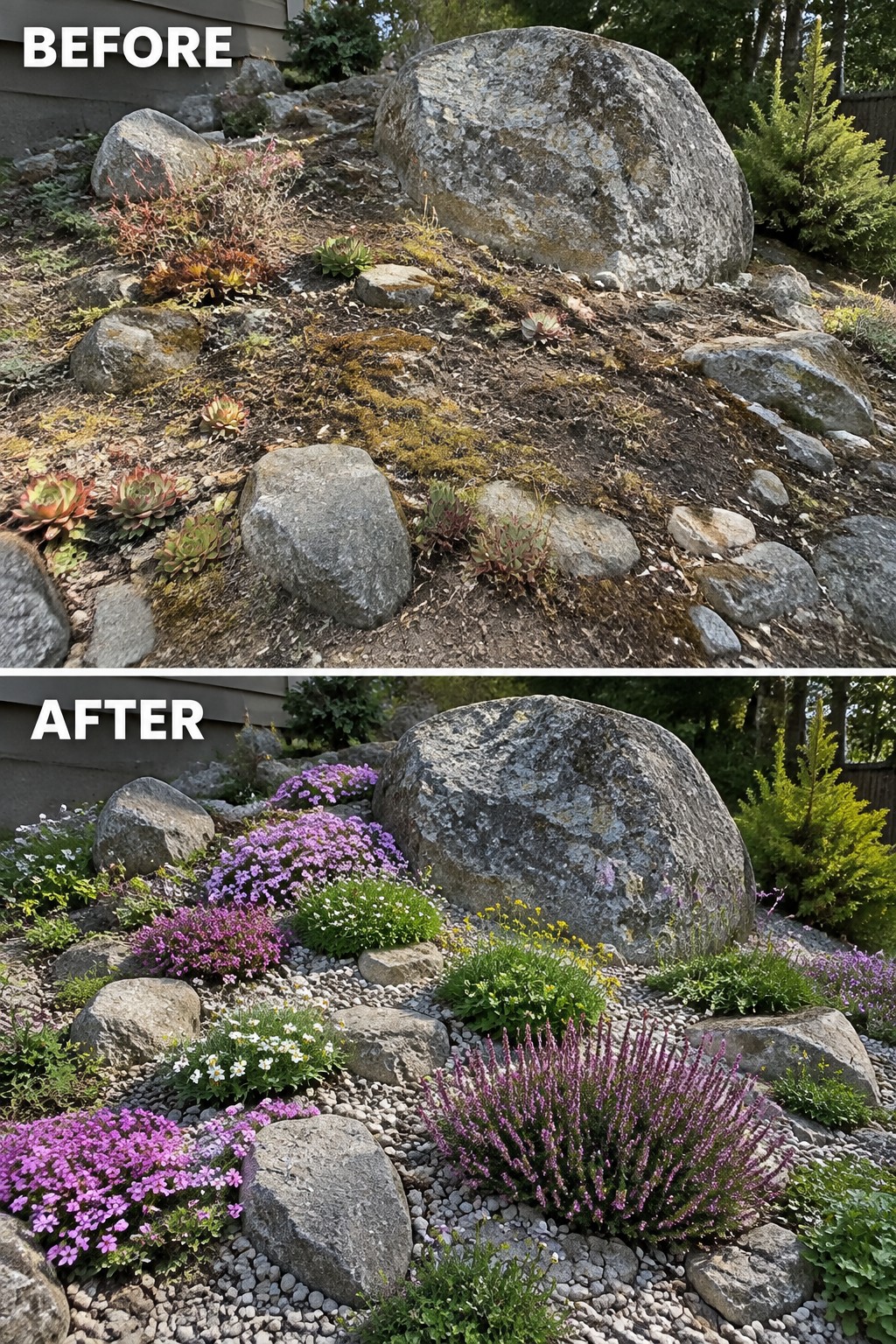
The before photo shows a weedy slope with scattered rocks and little planting structure. The after version uses gravel to create clear beds around the existing boulders and fills those spaces with flowering plants. This gives the slope shape while working with the rocks already in place.
This approach suits rocky or uneven yards where soil is thin. Lay gravel first to separate planted areas from open ground, then choose pollinator-friendly flowers that suit the light and drainage. The result feels planned without needing a full redesign.
Clear Overgrown Edges Before Planting Around A Pond

The main change here is removing the thick, messy growth along the water and replacing it with a clean, mulched border filled with flowering plants. Once the old grasses and debris were cleared, the pond edge became much easier to maintain and the new plants had room to establish. The result is a border that looks intentional instead of neglected.
This approach works well on any property with a pond or small water feature. Start by cutting back the worst of the overgrowth, then add a simple edge of soil and mulch before choosing pollinator-friendly perennials in a few heights and bloom times. Keep the planting strip narrow enough that it stays easy to reach for weeding and dividing later.
Upgrade Basic Planters With Wooden Boxes And Flowering Plants
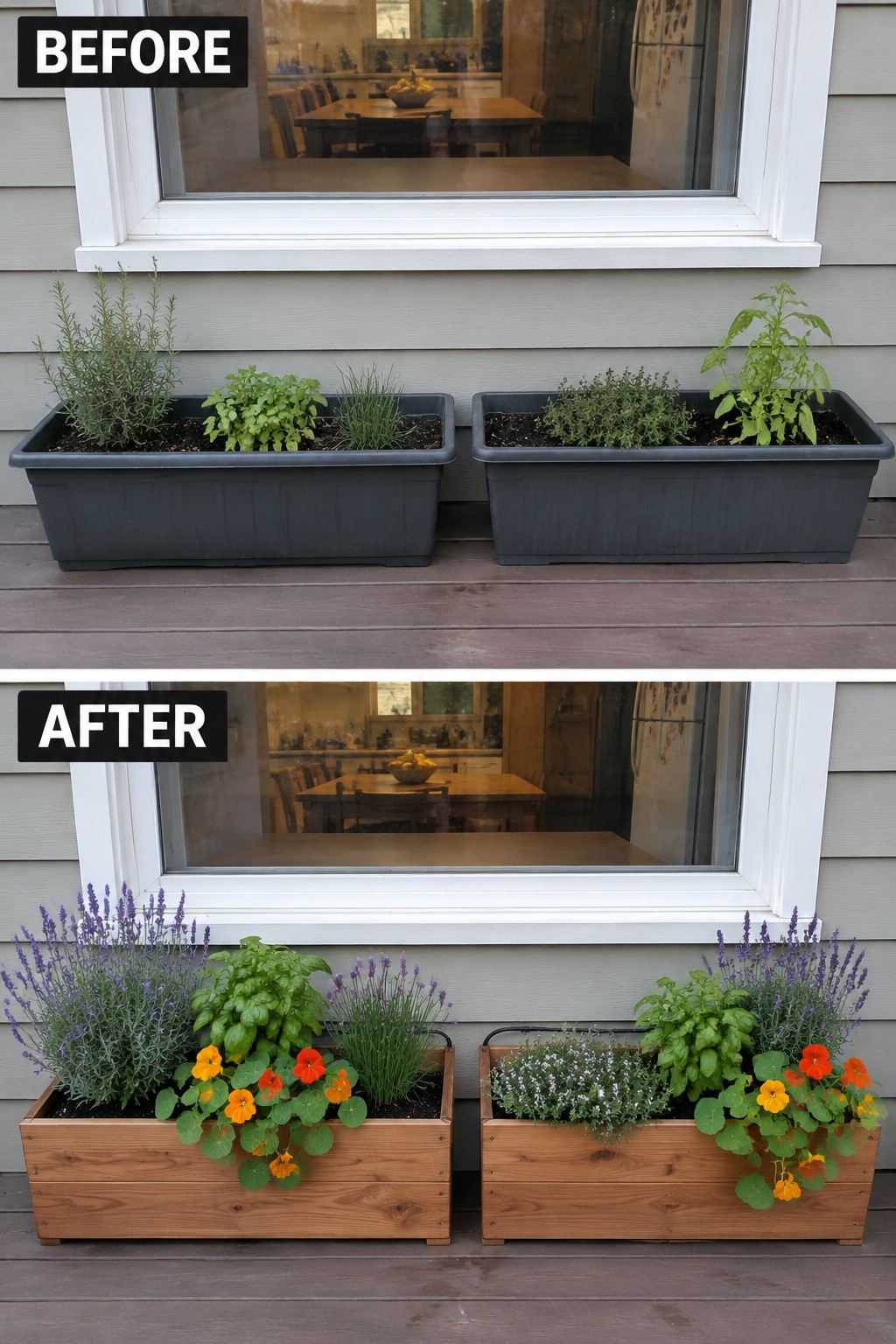
Switching from plain plastic troughs to simple wooden boxes makes a big difference in how the space looks and what it can support. The wood gives a cleaner, more finished appearance against the house, while the new planting mix adds bright flowers alongside the herbs. This draws in bees and other pollinators without losing the usefulness of the original setup.
Wooden planters work well along decks, windows, or patios where you want something that lasts longer than plastic. Choose boxes made from cedar or similar wood, fill them with a mix of lavender, nasturtiums, and herbs, and keep the soil level consistent so everything gets good drainage. This approach suits small outdoor areas where you want both looks and pollinator support without a full garden overhaul.
Refresh Your Front Entry With Pollinator-Friendly Planters
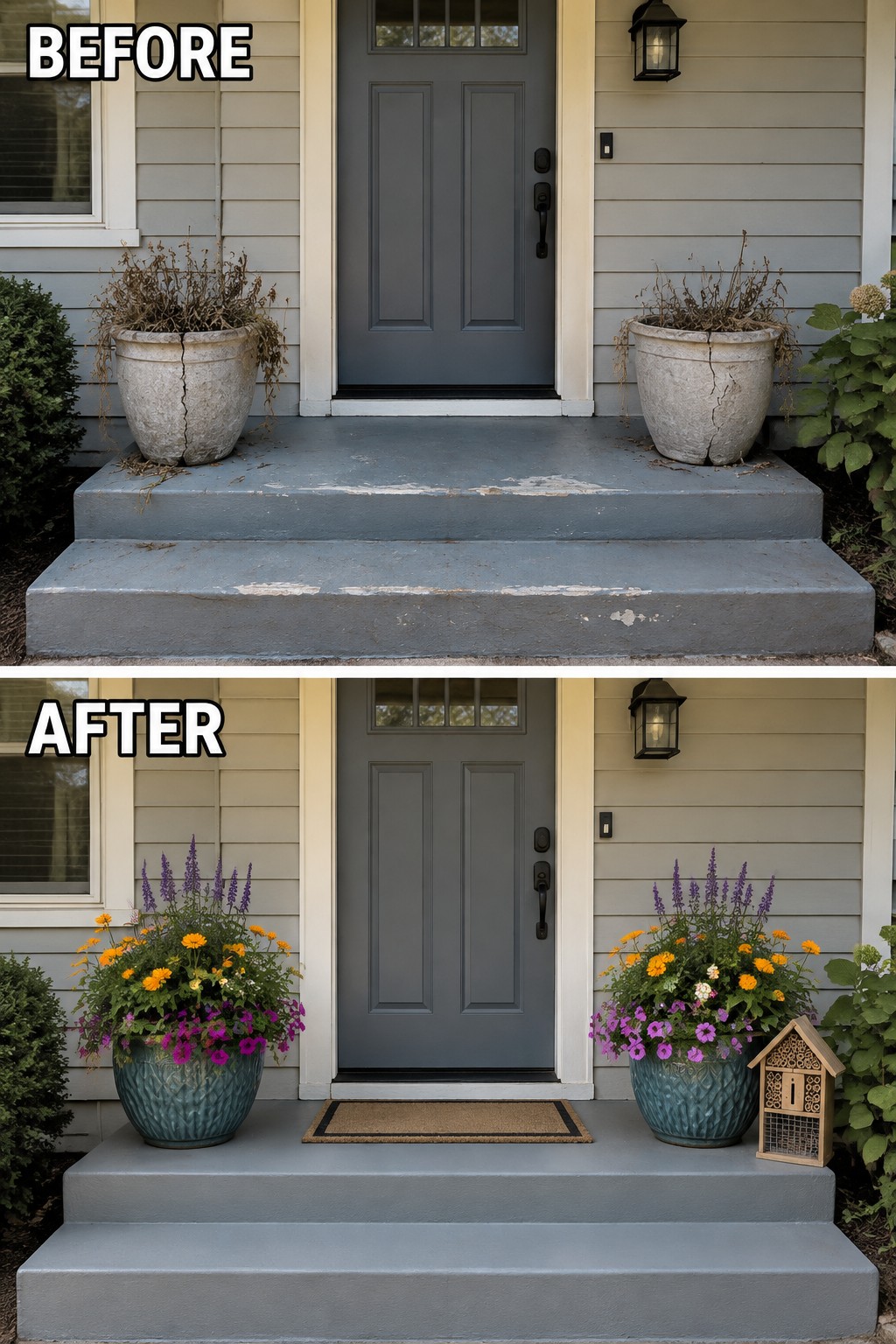
The front steps looked worn and neglected with two large pots holding only dried-out stems. Swapping those for two fresh containers filled with bright annuals and perennials instantly changed the whole approach to the house. The new flowers add color right where visitors arrive and give pollinators a reason to stop.
This works best on any home with a simple concrete or wood stoop that gets decent sun. Start by removing the old pots and soil completely, then choose two or three varieties known to draw bees and butterflies. Keep the scale of the planters in line with the door so the entry stays open and easy to walk through.
Replace A Dry Grass Strip With Pollinator Plants
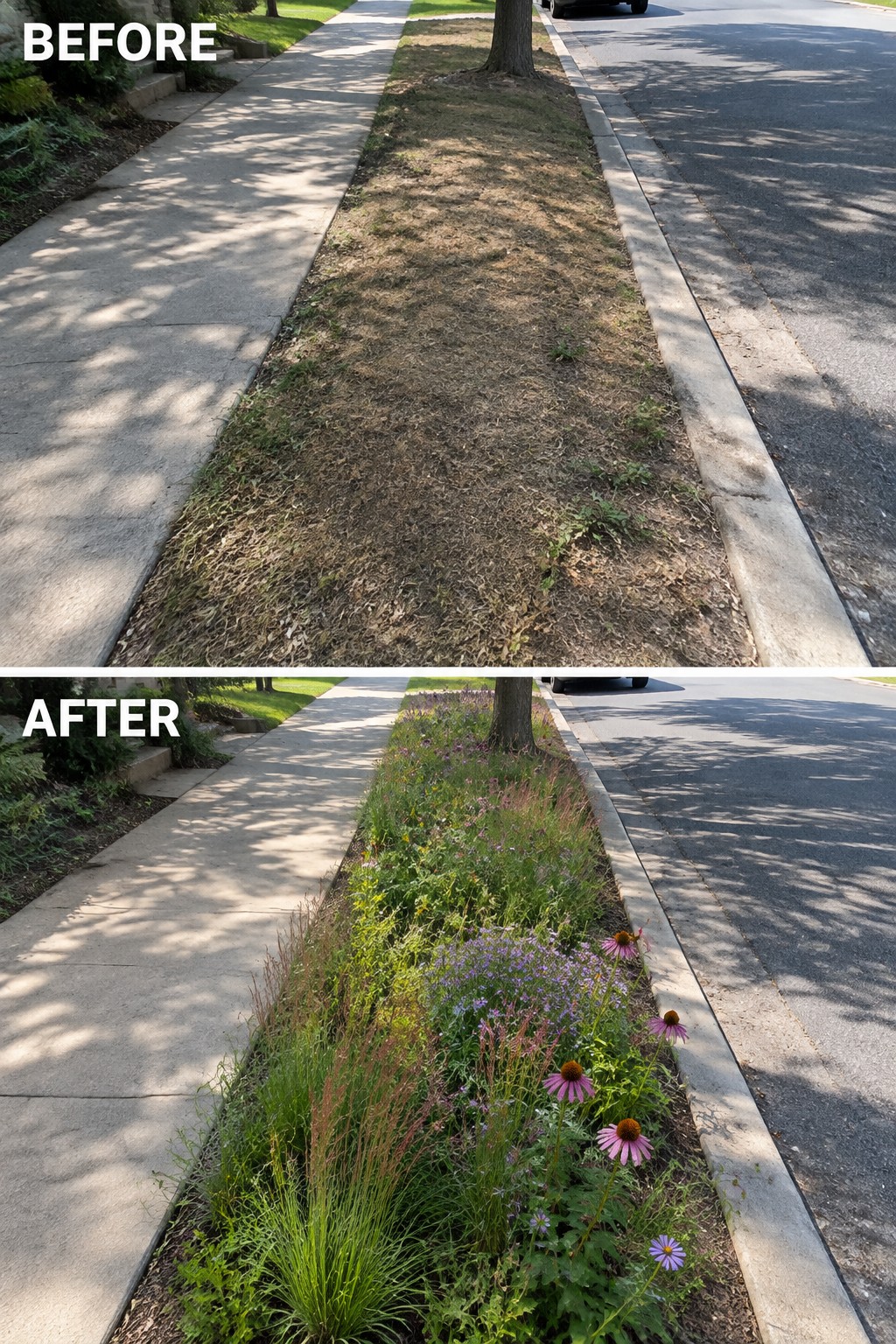
A narrow strip of grass between the sidewalk and curb often ends up looking patchy and worn out. In this case the tired turf was replaced with a simple garden bed of grasses and flowering perennials that actually thrive in that spot. The new planting gives bees and butterflies something to feed on all season while making the whole street edge look cared for.
This works best on similar verge areas where grass never grows well anyway. Clear out the old turf first, improve the soil a little, then pick a handful of native plants that bloom at different times. Keep the bed narrow so it stays out of the way of feet and snowplows.
Add Trellises To A Fence For Vertical Pollinator Planting
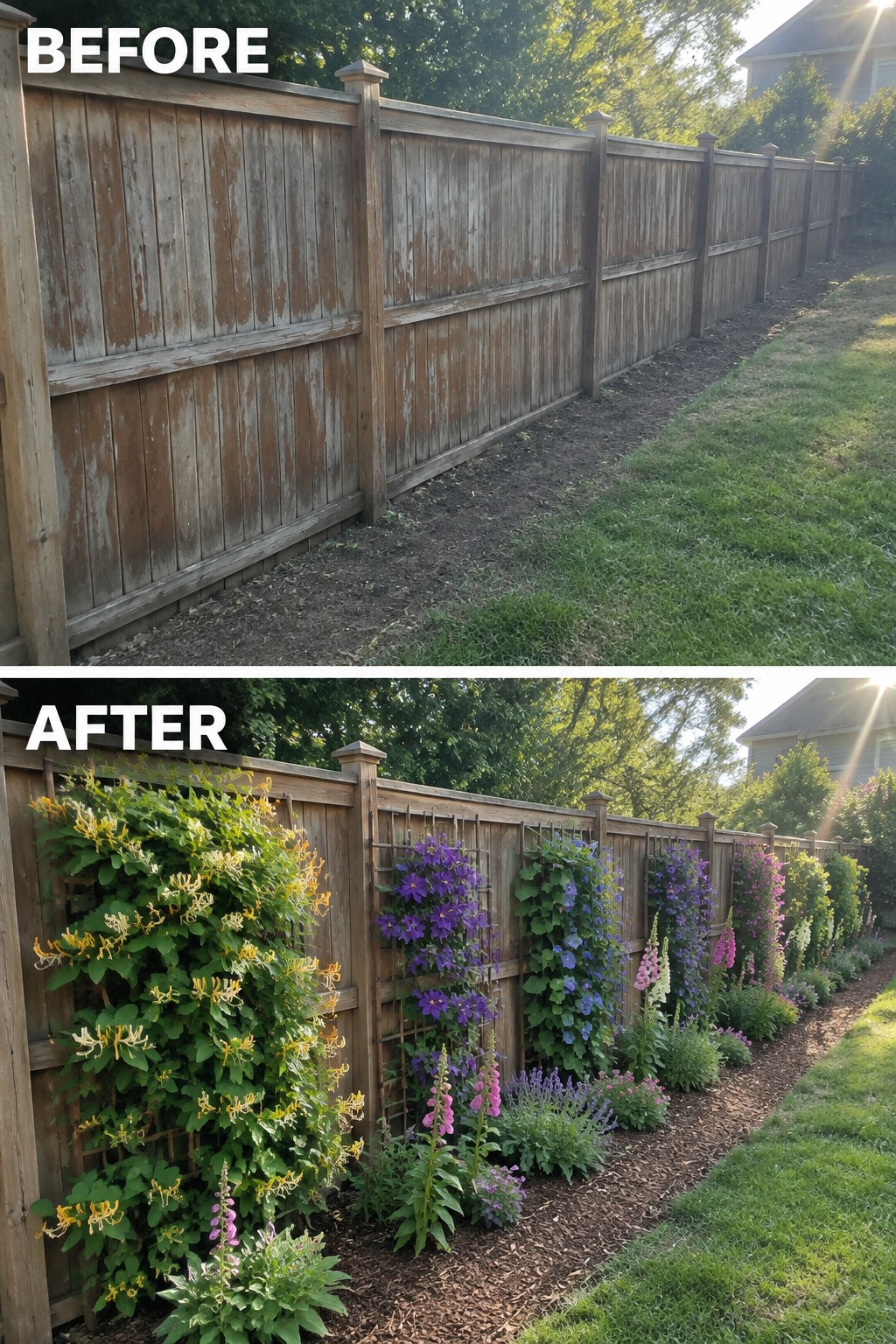
A long fence with nothing but dirt and weeds underneath does not do much for pollinators. Adding simple wooden trellises to the fence and planting climbers like honeysuckle and morning glory turns that blank wall into a vertical garden. The lower layer of foxgloves, salvia, and other perennials fills in the bed and gives bees and butterflies a longer season of flowers.
This approach works especially well along side or back property lines where you already have a fence. Start with a clean mulch bed, attach sturdy trellises at regular intervals, and choose two or three climbing plants that bloom at different times. Keep the bed about three feet wide so everything stays easy to reach and water.
Plant Flowering Shrubs Along Your Foundation

A bare strip of mulch under the windows does very little for the house or the yard. Adding a simple row of flowering shrubs and perennials turns that same space into something that supports bees and butterflies while making the front of the house look more complete. The white blooms and purple spikes in the after photo show how a few well-chosen plants can fill the area without crowding the windows or the downspout.
This idea works on almost any home with a foundation bed. Choose shrubs and perennials that bloom at different times, keep the tallest plants toward the back, and use mulch to hold moisture and cut down on weeds. It stays low enough to avoid blocking light or creating damp spots against the siding.
Frame A Fire Pit With Pollinator-Friendly Beds
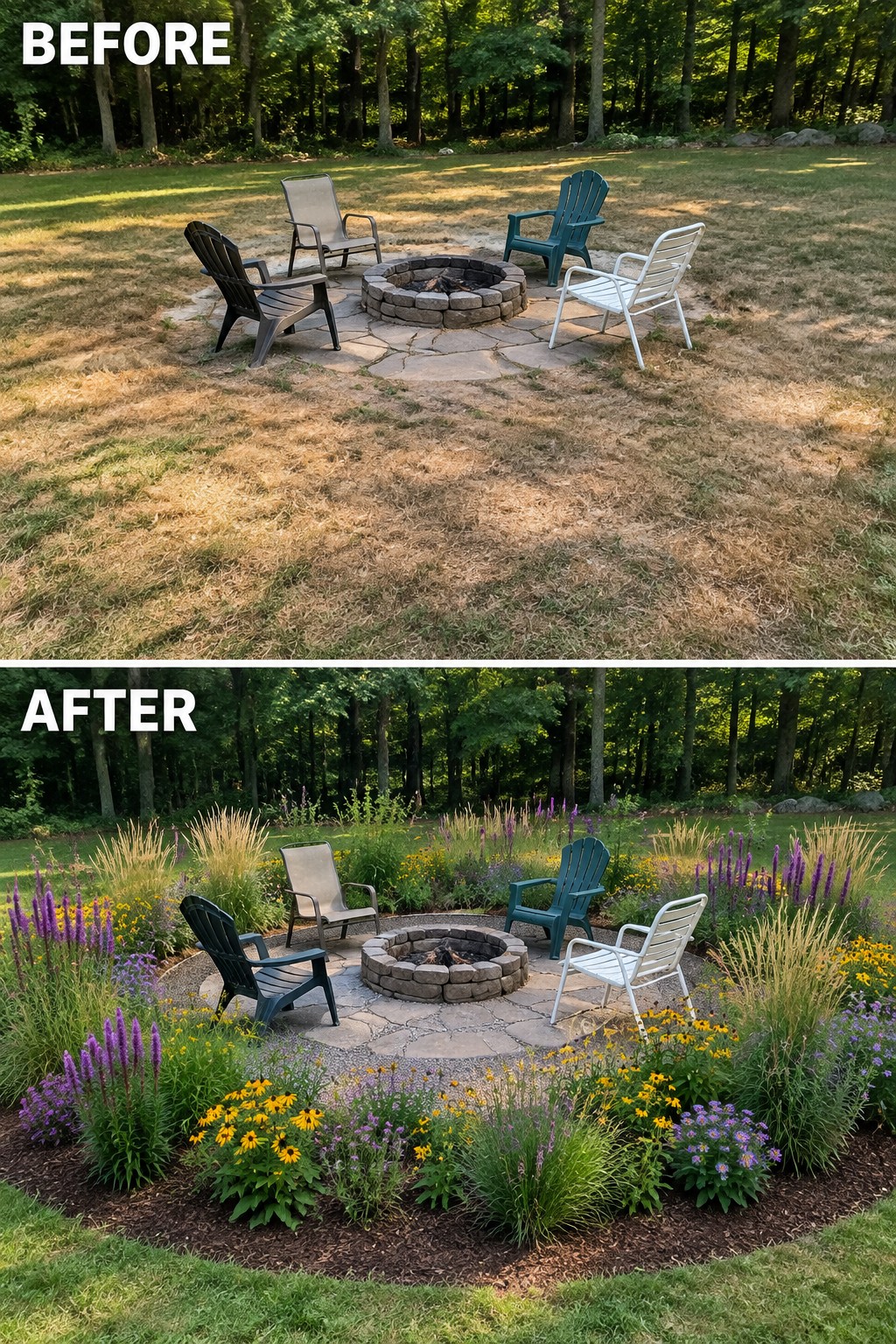
The fire pit sat on a bare patch of dry grass with just a few chairs around it. Adding a ring of garden beds filled with flowering perennials and grasses gave the whole area a clear shape and turned it into a spot that actually supports bees and butterflies.
This approach works best in yards that already have a basic seating area but lack any planting structure. Keep the beds a consistent width so the fire pit stays the main focus, and choose plants that bloom across different seasons so the color lasts. Mulch helps the beds look tidy and cuts down on weeding, which matters when the space gets regular use.
Define Narrow Beds With Layered Planting
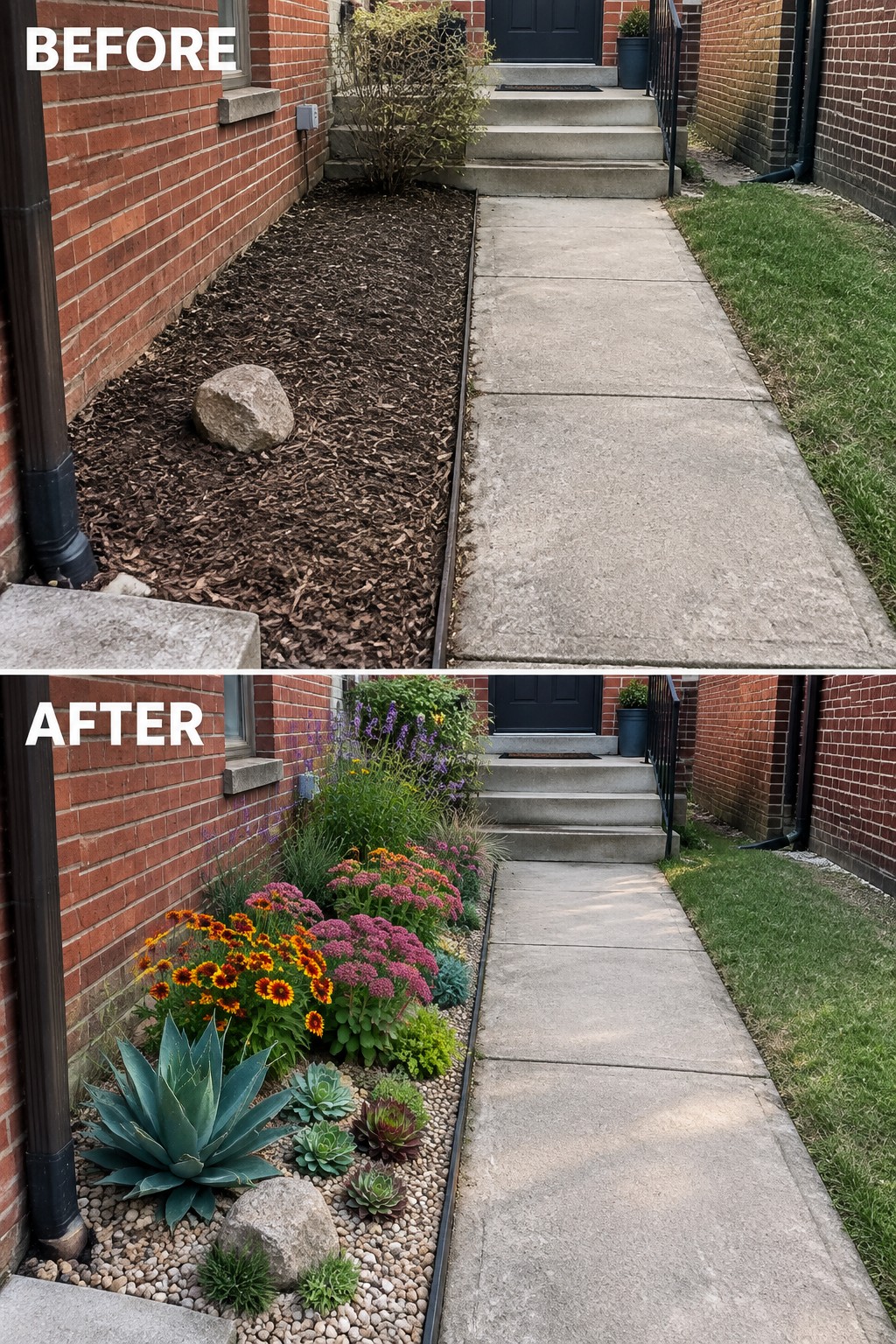
A narrow strip of mulch next to a walkway often ends up looking flat and unfinished. In this case the change came from adding a clear planting structure with low succulents in front, mid-height foliage, and taller flowering plants toward the back. The result gives the bed purpose without crowding the path.
This approach works well along foundation walls or side entries where space is tight. Start with a few sizes of plants rather than one type, keep the tallest growth under windows, and use gravel or small stones to finish the surface. It keeps the bed looking intentional year after year and gives pollinators a steady source of flowers.
Frequently Asked Questions
Q: How do I keep pollinators coming back all summer? A: Plant a mix of flowers that bloom at different times. Early spring crocuses pair well with summer coneflowers and fall asters. Watch what visits your yard and add more of those next year.
Q: Do I need to put out special feeders for the bees? A: Skip the feeders and stick to real flowers instead. Nectar from plants gives them better nutrition anyway. Focus your energy on adding more native blooms around the edges.
Q: What happens if weeds take over my new beds? A: Pull them by hand when the soil is damp after rain. Lay down a thick layer of mulch right after planting to block new ones from sprouting. Check back every couple weeks and spot treat any that pop up.
