

Gardens often end up looking scattered when there is no clear planting structure to hold them together.
I have found that containers let me test placements and adjust as the seasons change without committing to permanent beds right away.
It worked better than I thought it would.
Trying out different plant combinations in containers gives me a low risk way to see what actually works in my own yard while building layers gradually.
The satisfaction comes from noticing how those added pots bring order to areas that used to feel unfinished.
Layer Container Plants On Your Front Steps

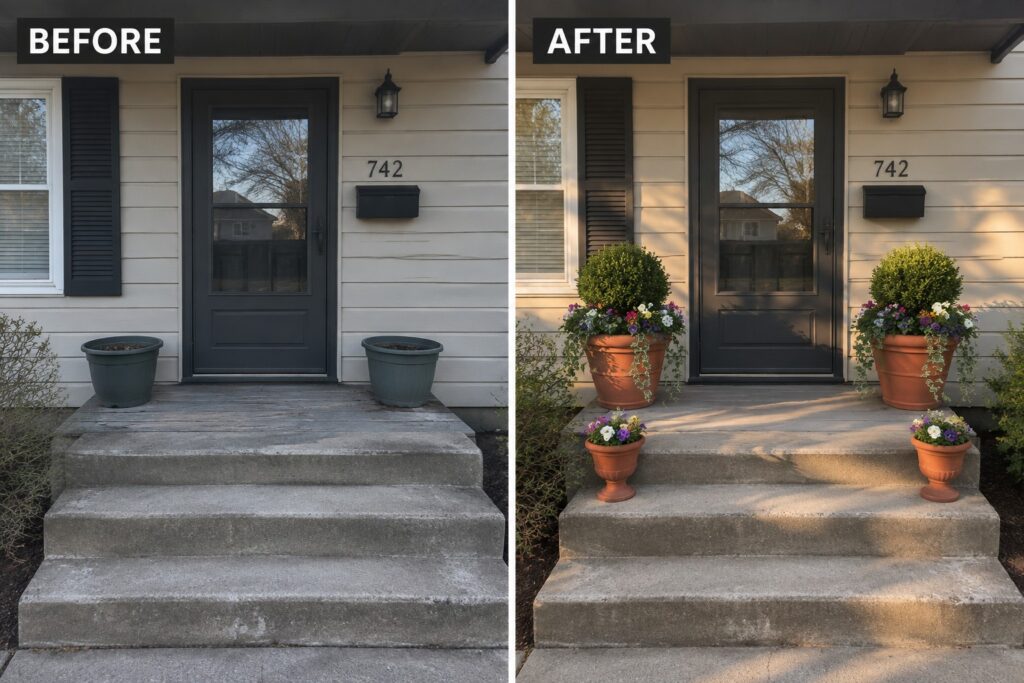
Placing pots at different heights along the steps turns a plain concrete entry into something much more inviting. The before photo shows two basic pots sitting empty on the top landing. After, the same steps hold larger planted containers on the sides plus smaller ones lower down, which creates a simple layered look without any construction.
This approach works especially well on narrow entries or homes with limited planting space. Start with two or three good-sized pots in a similar color or material, then add smaller ones on the lower steps. Keep the center clear for walking and choose plants that can handle sun or shade depending on your exposure.
Use Container Planting To Turn A Plain Patio Into A Seating Area
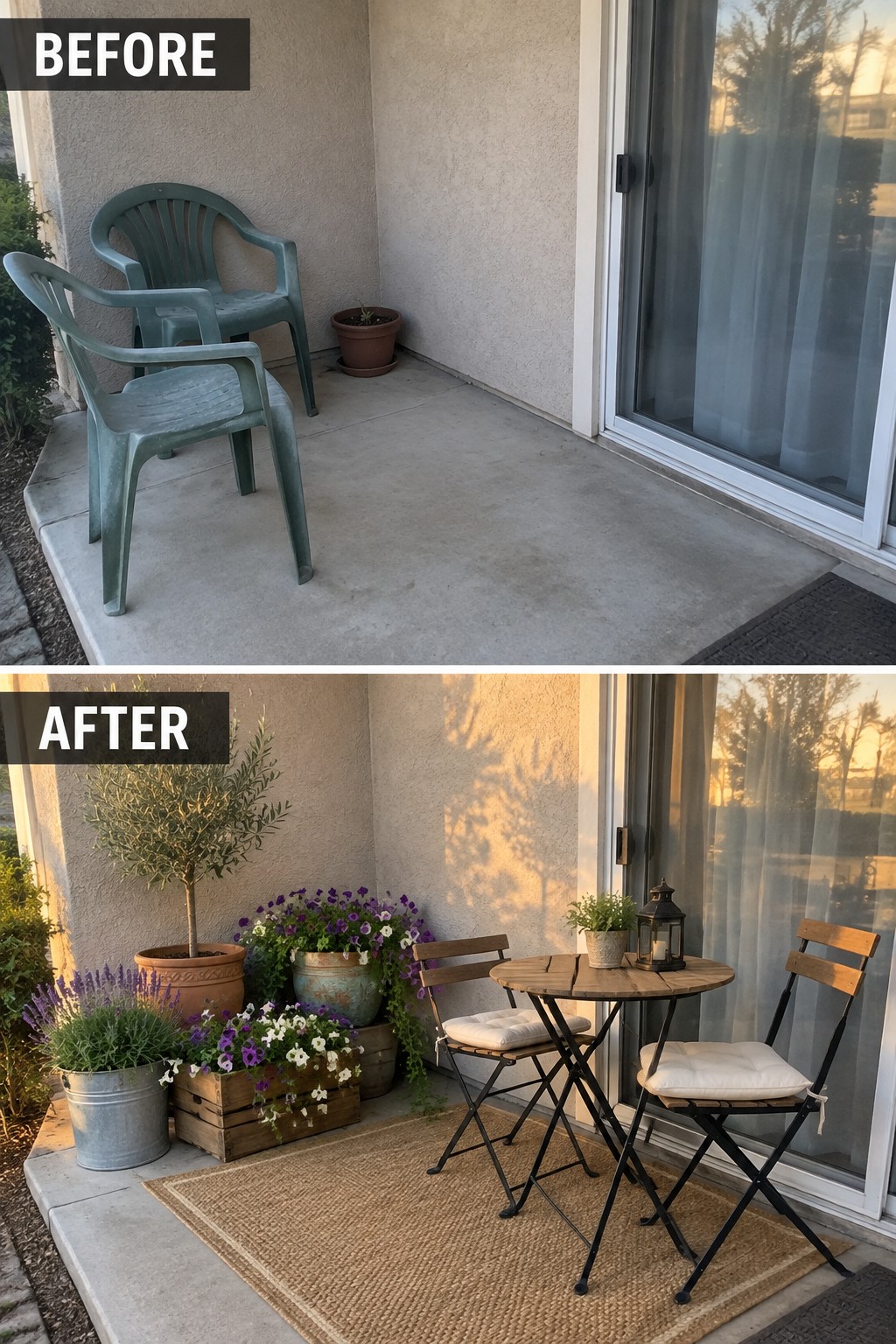
A bare concrete patio often feels like wasted space. Adding container plants gives it purpose without any permanent changes. The after photo shows how a few large pots and a crate planter filled with flowers and a small tree soften the hard surface and create a clear spot for the table and chairs.
This approach suits rentals, small yards, or anyone who wants quick results. Place the largest pots first to anchor the seating area, then fill in with smaller ones. Choose plants that can handle your local weather so the setup lasts through the season without constant fuss.
Turn A Narrow Side Yard Into A Vertical Container Garden

A narrow side yard often ends up as a forgotten strip of weeds and random bins. In this case the fix started with clearing the overgrowth, laying down gravel for a clean path, and mounting a simple wooden frame on the fence so containers could hang vertically instead of taking up ground space.
This approach works especially well on long, tight passages where regular beds would crowd the walkway. Use whatever containers you already have, mix heights and materials, and stick to herbs or compact plants that do not mind partial shade. The result is useful growing space without blocking access or requiring major construction.
Add Color To A Balcony With Rail Planters
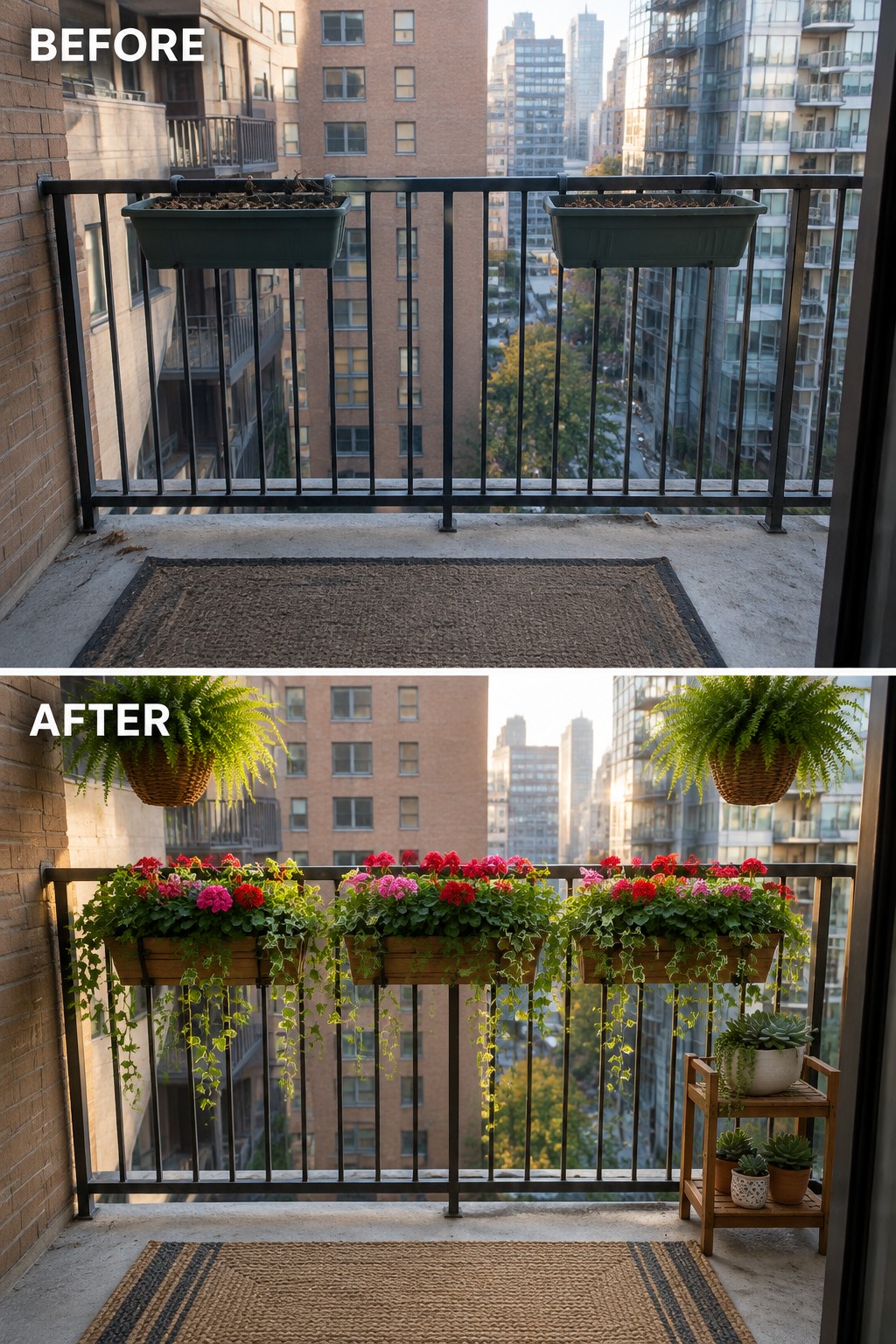
The balcony went from two plain boxes on the rail to a full line of flower boxes packed with red and pink blooms plus trailing ivy. Hanging baskets above added height and softness without taking up any floor space.
This idea works best on small balconies or rental spaces where you cannot change the structure. Mount sturdy boxes directly on the rail, mix in a few hanging baskets, and keep the plant choices simple so they can handle sun and wind. A new rug at the base helps tie the whole area together.
Create Structure With A Line Of Containers

A narrow strip beside a fence often ends up as a weedy mess because there is no clear planting area. Placing a row of containers along the edge gives the space a defined border without digging beds or laying permanent edging. The change from scattered weeds to a steady line of pots instantly makes the path feel intentional and cared for.
This approach works well on slim side yards, along driveways, or next to a fence where soil is poor or space is tight. Choose pots in one or two repeating sizes and colors so the row feels cohesive rather than cluttered. Start with easy evergreens and a few seasonal flowers, then add more pots only if the first ones stay manageable through the season.
Use Container Planting To Green Up A Bare Deck
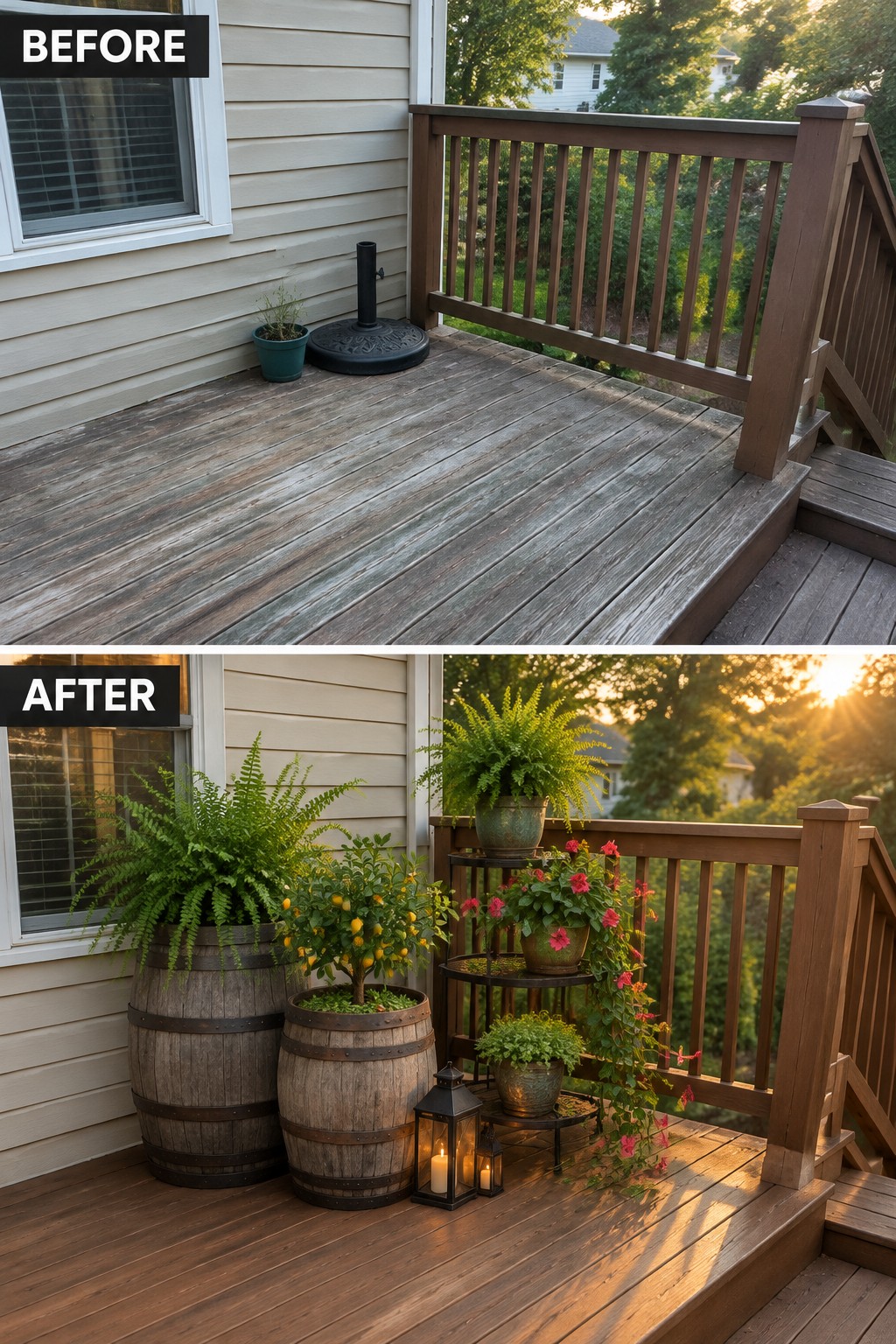
A deck that sits empty often feels like an afterthought. Adding a few large containers changes that fast. The before photo shows a plain wooden surface with almost nothing on it. The after version fills the same space with barrel planters holding ferns and a small tree, plus a tiered stand for flowers.
This idea works on any deck or porch that gets decent light. Start with two or three oversized containers rather than many small ones so the space does not look cluttered. Group plants that need similar water and sun, and leave enough room to walk through. Wooden barrels or sturdy pots hold up well outdoors and give the area a settled look without permanent changes.
Use Containers To Define Planting Areas

The front yard went from a few random pots sitting on mulch to a much clearer layout. Grouping several large containers together created a real planting zone that frames the walkway and gives the eye something to follow instead of just empty lawn and scattered pots.
This approach works well on smaller lots or along a long path where you want impact without digging new beds. Stick to one pot color and repeat a few plant types so the group feels intentional instead of busy. Start with three or four containers in different heights, then add smaller ones around the edges if you need more fullness.
Hang Planters On A Fence For Easy Color
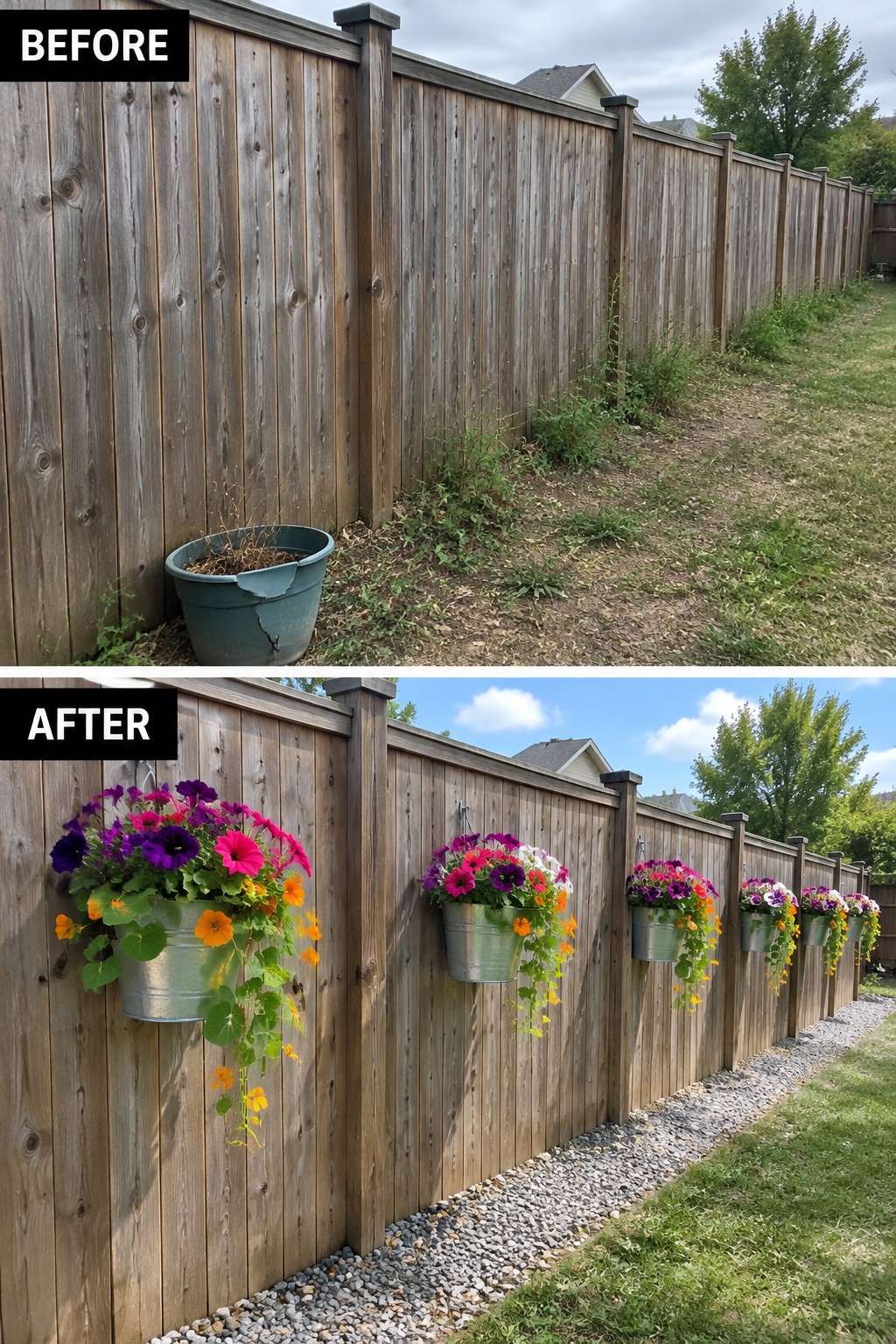
A plain fence next to weeds can feel like wasted space. Hanging a few metal buckets filled with flowers turns that same fence into a planted strip without digging beds or hauling in new soil.
This works best along side yards or back fences where a full garden bed would crowd the path. Use sturdy hooks, pick containers that can handle weather, and choose trailing flowers so the color spills down naturally. The gravel along the bottom keeps the edge clean and stops weeds from creeping back up.
Use Containers To Add Structure To An Overgrown Spot

The main shift came from clearing the weeds first, then grouping plants into matching pots and wooden crates. That single change turned a wild, messy patch right by the door into something that feels deliberate and simple to maintain.
This idea works best in narrow side entries or any small area where you want fresh herbs without new garden beds. Start with a couple of crates or a low shelf to lift the pots, keep the containers similar in color and size, and choose plants that stay compact so the space never feels crowded.
Turn A Bare Rooftop Into A Container Garden
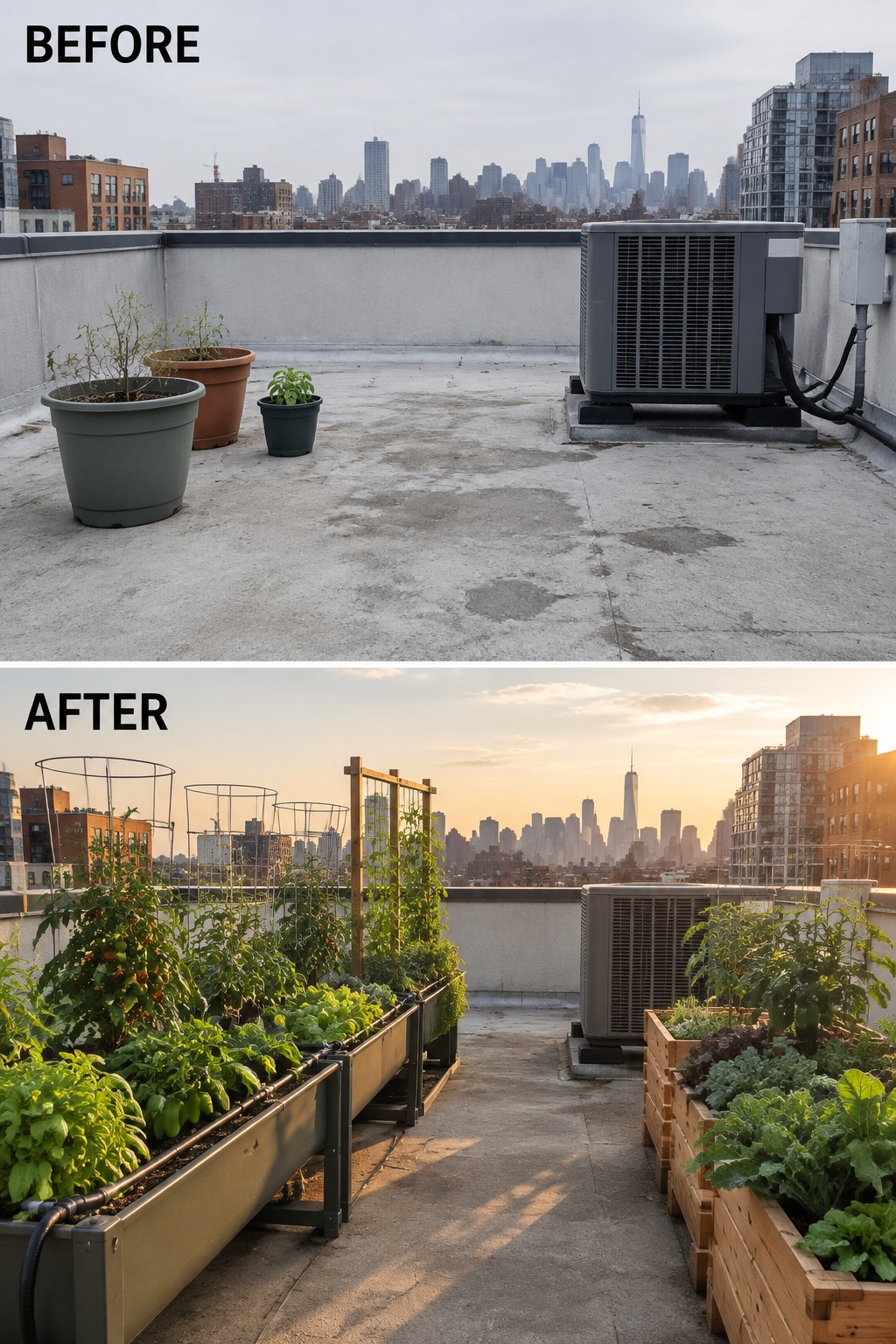
A flat rooftop often stays empty because it feels too exposed or too permanent to change. Here the space moved from a few scattered pots on bare concrete to rows of raised beds and containers that actually produce vegetables and herbs. Container planting gives you soil depth and structure without any structural work on the roof itself.
This idea suits any sunny, flat outdoor surface where you want to grow food or add greenery. Use sturdy raised beds or large containers with good drainage, and leave clear paths between them so the area remains easy to walk through. Focus on one or two plant types at first so watering and care stay manageable.
Use Container Planting To Soften A Bare Pool Deck

A plain concrete pool deck often feels empty even when there is seating. Adding a few large containers with tall leafy plants creates a green border that makes the space feel more finished and inviting.
This approach works well on sunny pool decks or patios where digging is not an option. Choose oversized pots that can handle weather, repeat a couple of plant shapes for a calm look, and keep the number of containers modest so the area stays easy to walk around.
Turn A Standalone Fire Pit Into A Seating Area
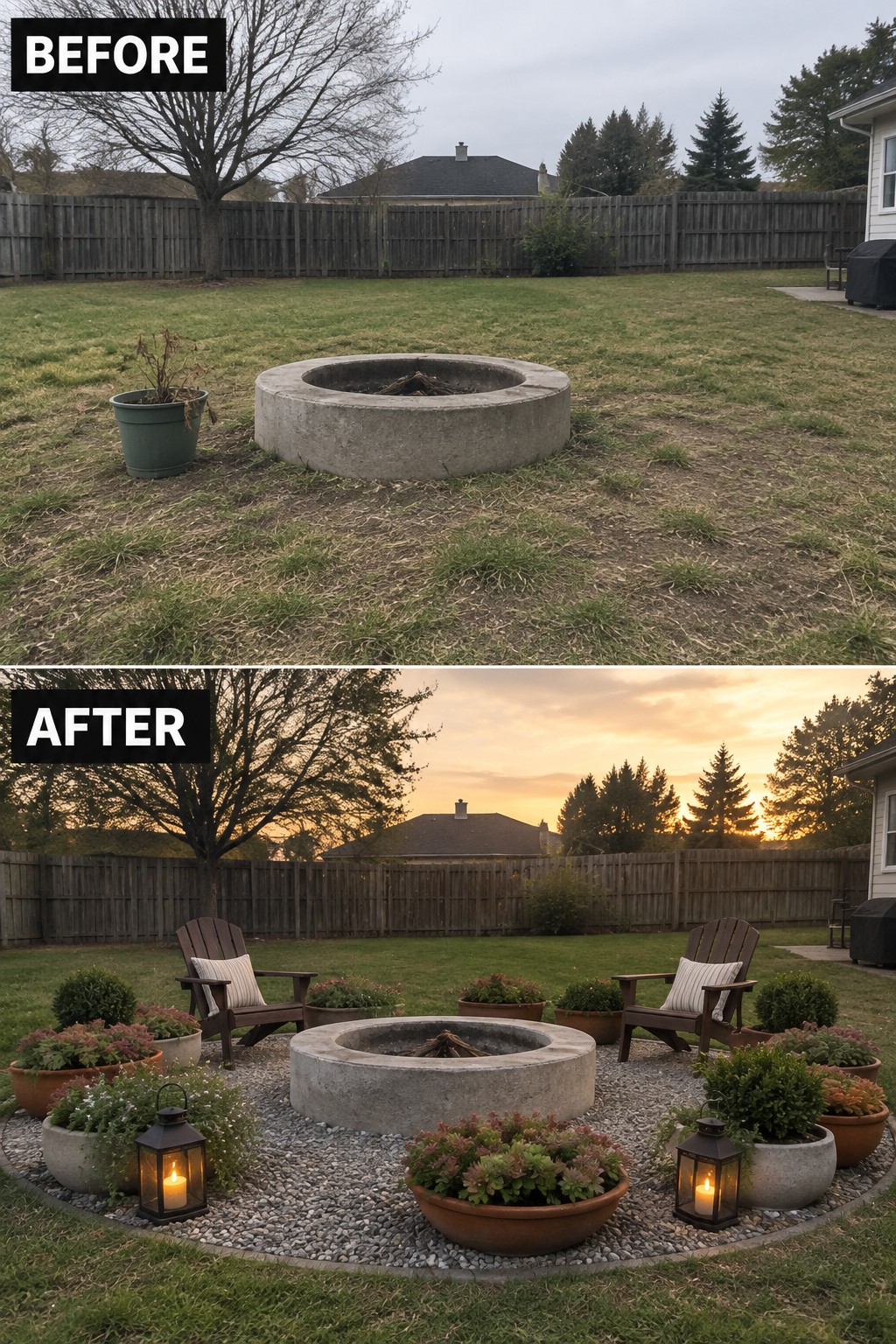
A lone fire pit sitting in the middle of a lawn does not invite anyone to stay. Adding a ring of gravel, a couple of chairs, and several large containers around it turns the same spot into a place where people actually want to sit. The containers do most of the work by giving the area clear edges and softening the hard concrete.
This approach works best in a modest backyard where you want one usable zone rather than a full redesign. Start with the gravel base so the chairs sit level, then place the pots in groups of different heights. Keep the number of chairs small so the space does not feel crowded, and choose weatherproof furniture that can stay outside year-round.
Add A Window Box For Quick Exterior Color
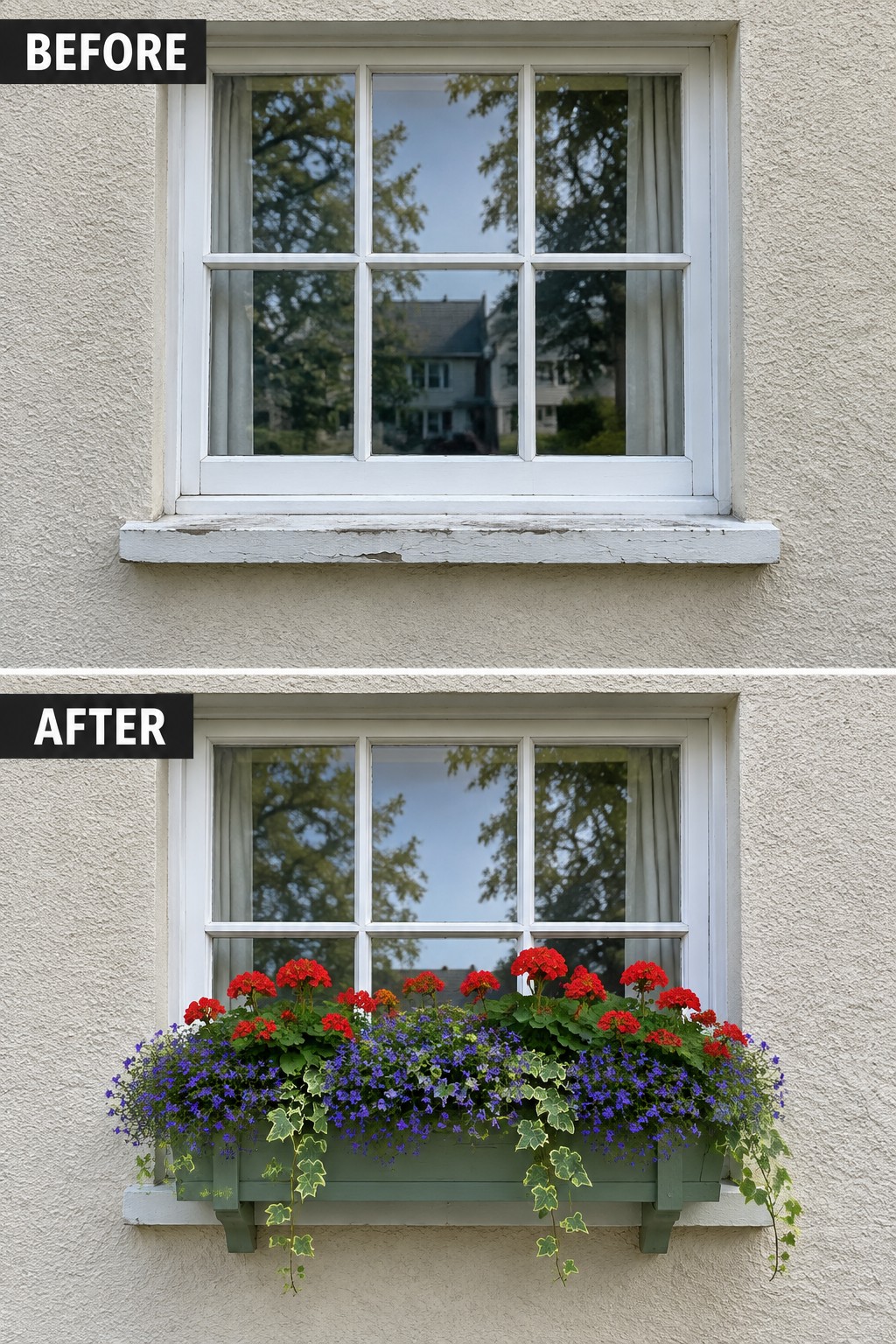
A plain window with a peeling sill looks much more finished once a simple flower box is added. The change turns an empty ledge into a spot of color that draws the eye and makes the house feel looked after.
This works on almost any home where the windows face the street. Pick a box in a color that blends with your trim, use a mix of upright flowers and trailing plants, and keep the soil watered. It is an easy way to add garden interest without building new beds or making big changes.
Repurpose An Old Wheelbarrow As A Garden Planter

An old wheelbarrow can become a ready-made planter with almost no extra cost. The before photo shows it sitting empty and rusty on bare soil. In the after photo it holds a full mix of flowers and trailing ivy, turning a forgotten tool into the main feature of that corner.
This works well in small gardens or yards where you want height without building raised beds. Fill the barrow with good soil, plant a few taller flowers in the center and let some spill over the sides. The wheel and handles already give it shape, so it looks intentional even on a simple mulch base.
Turn A Plain Patio Wall Into A Vertical Garden With Containers
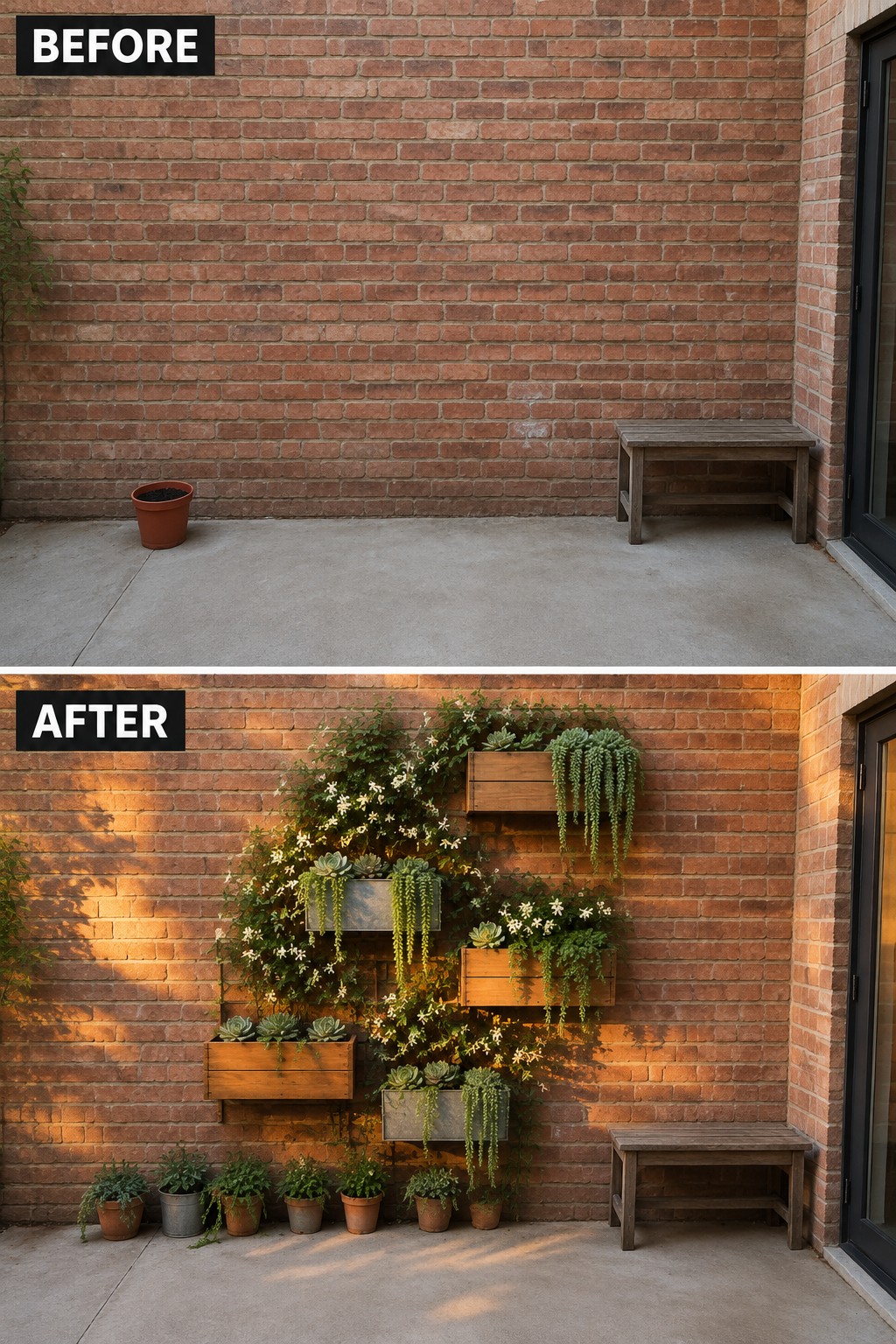
A blank brick wall next to a patio often looks unfinished, especially when the only plant is a single pot on the ground. Mounting a mix of wooden and metal containers directly on the wall adds height, texture, and greenery without taking up floor space.
This idea suits any sunny outdoor wall where you want more planting but have limited ground room. Use sturdy brackets, choose weatherproof boxes, and start with just a few containers before adding more. Succulents and trailing plants keep the look full without much daily care.
Create Privacy With Tall Planters On A Balcony

A bare balcony with just a couple of empty planters can feel exposed and unused. Placing a row of matching containers along the railing and filling them with tall, fast-growing plants turns the space into a green screen that softens the view and gives a sense of enclosure without any construction.
This approach works well on apartment balconies or small patios where you cannot plant in the ground. Choose containers that are the same size and color so the line looks intentional, and pick plants tall enough to reach the top rail within one season. Leave enough room between the planters and the seating area so the space still feels open to walk through.
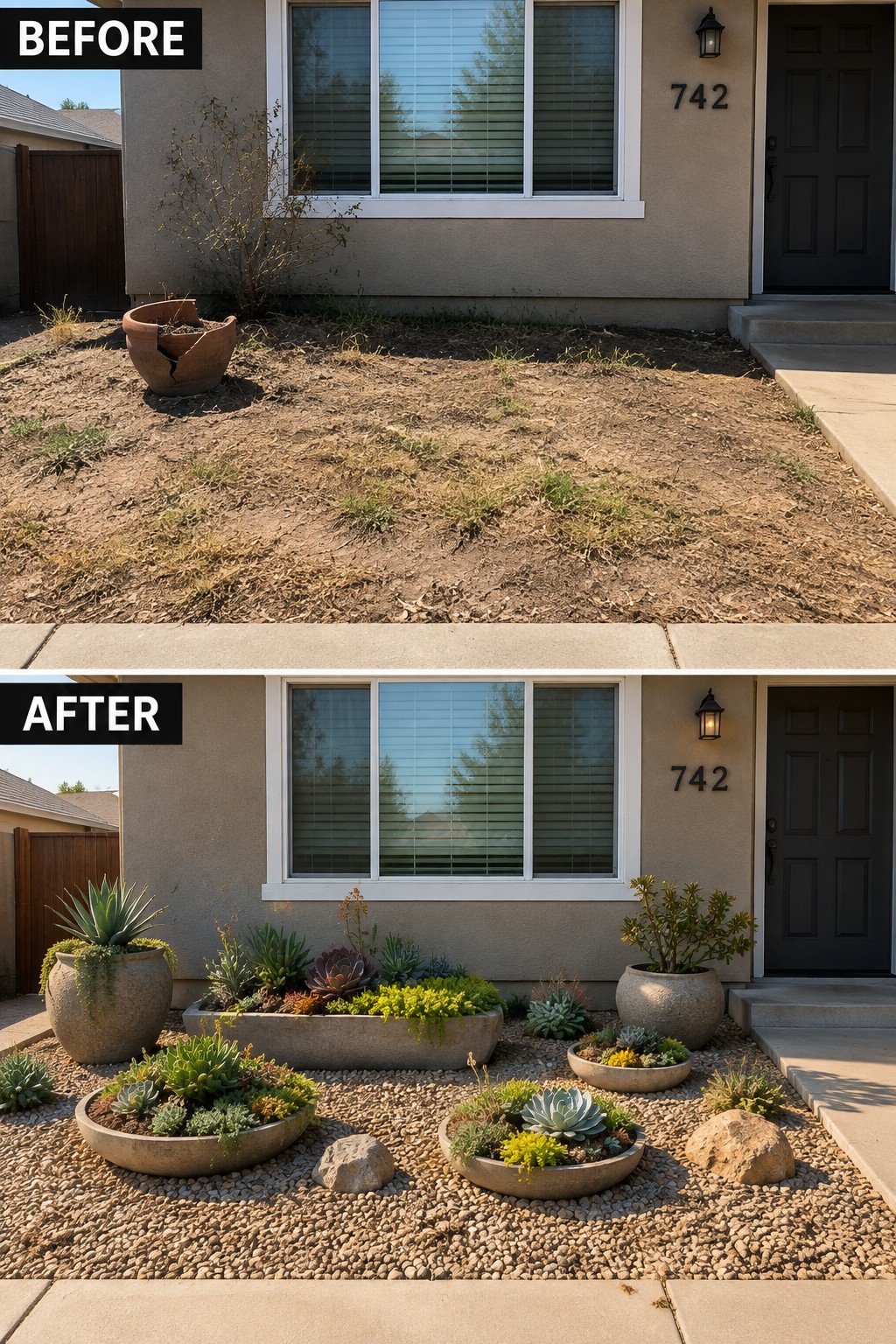
Define A Bare Yard With Containers And Gravel

The patchy grass and single cracked pot left the space looking unfinished and hard to use. Adding gravel across the ground and grouping containers of different sizes gave the area clear shape and turned it into a simple garden without needing new turf or major digging.
This works best in small yards where grass grows thin or the soil stays dry. Lay gravel first to cover bare dirt, then arrange a few larger pots as anchors and fill in with smaller ones. It stays affordable, handles foot traffic, and lets you move things around later if the layout needs adjusting.
Frame Front Steps With Container Plants

Adding pots along the stairs is a simple way to make a plain or worn entry feel much more welcoming. The before shows just two empty pots and bare weathered steps, while the after fills both sides with a mix of flowering plants and trailing greenery that softens the whole look.
This idea works best on homes with visible stairs or a small porch where you want quick impact without major changes. Start with a few larger pots at the bottom and work upward with smaller ones, letting some vines drape over the edges so the arrangement feels natural rather than stiff.
Use Container Planting To Anchor An Outdoor Table
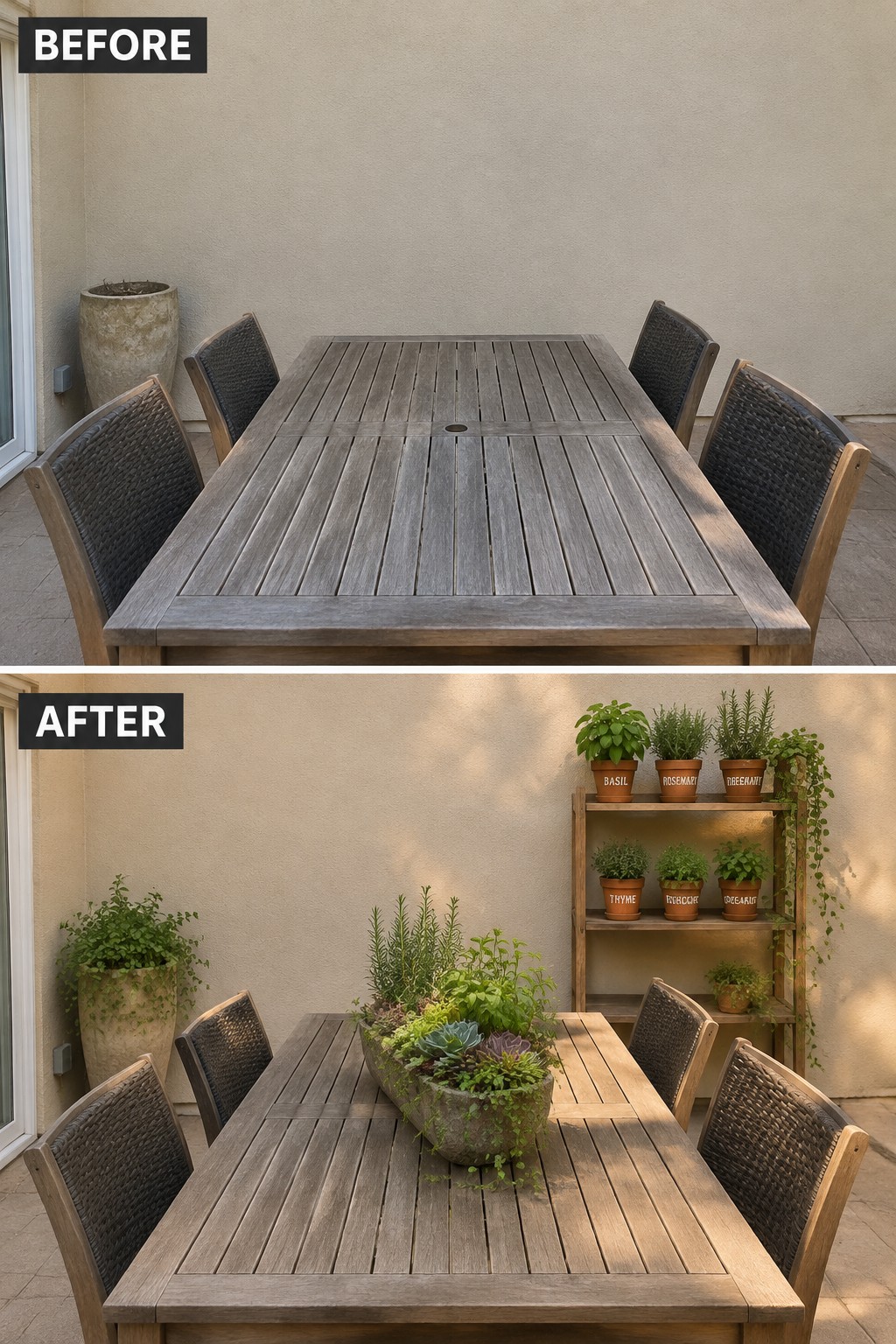
A bare patio table often feels like it is missing something even when the furniture is nice. Adding one long trough planter down the center and a small shelf of herb pots nearby gives the table a clear purpose without crowding the space. The change turns a functional surface into a spot that feels connected to the garden.
This idea works on most patios because containers can be moved or swapped as seasons change. Keep the planter low so it does not block conversation, and choose herbs or easy greens that handle sun and wind. It suits small or large tables and keeps the focus on simple planting rather than new furniture or construction.
Use Container Plantings To Give A Bare Front Yard Structure
A bare stretch of dirt in front of the house often looks worse than it needs to. Placing a few large containers on a simple gravel base turns the same spot into a planted area that feels intentional and easier to maintain.
This idea works well when soil is poor or you want to avoid permanent digging. Group pots of different sizes near the entry, choose hardy plants that handle sun and dry conditions, and keep the layout open enough for walking space.
Use Large Planters To Define A Narrow Side Path

A narrow side path often gets ignored because the strips of ground on either side are too small for regular garden beds. Large containers solve this by adding height, greenery, and clean lines without any digging or edging work.
This idea suits tight spaces between a house and fence where you still need room to walk. Pick matching tall planters, repeat the same type of plant in each, and cover the soil with gravel so the area stays neat and low maintenance. The path feels finished instead of leftover.
Use Container Planting To Define A Backyard Border

A plain backyard often feels unfinished when the fence line is left bare. Adding a row of containers along the fence gives the space a clear planted edge without digging beds. The before photo shows an open lawn with toys scattered about. After the change, the same fence now has grouped pots and planters that create a soft green border and make the yard feel more put together.
This idea suits homes where permanent planting is not an option, such as rentals or yards with poor soil. Place the containers in clusters of different heights and repeat a few pot colors to keep the look simple. Keep the lawn area in front open so kids or pets still have room to play.
Use Shelving To Maximize Container Planting On A Balcony
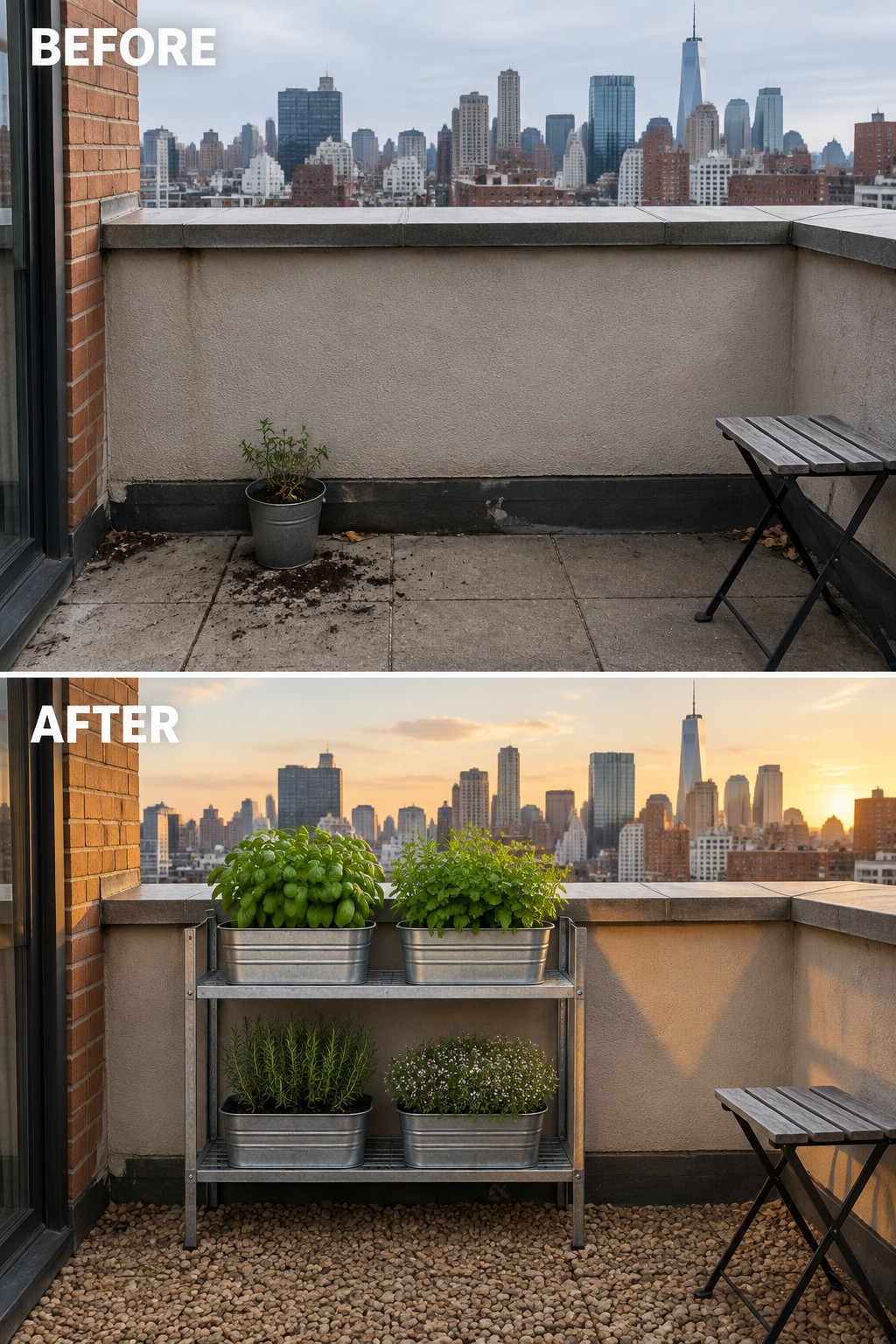
A bare balcony with just one pot quickly feels like wasted space. Adding a simple two-tier metal shelf lets you fit four or five containers in the same spot. The plants stay off the floor, the area looks organized, and you gain room to grow herbs without blocking the walkway.
This setup suits small urban balconies or patios where ground space is tight. Use weatherproof shelving and galvanized or plastic containers with drainage holes. Place taller plants on the top shelf and lower growers underneath. Keep the rest of the floor clear so the space still feels open for sitting.
Frequently Asked Questions
Q: How often do I need to water plants in containers? A: Stick your finger into the soil each morning. Water when the top inch feels dry and keep going until it runs out the bottom holes. This simple check stops most problems before they start.
Q: What should I do if my containers dry out too fast in the sun? A: Group them together so the pots shade each other a bit. Add a layer of mulch on top of the soil to hold moisture longer. Move the whole group to morning sun only if the leaves still wilt by noon.
Q: Can I move my containers around once the plants are growing? A: Yes, just lift from the bottom and set them in the new spot without tilting. Do this in the evening so the plants have time to settle before full sun hits again.
Q: How do I keep costs down when filling lots of pots? A: Fill the bottom third with old leaves or small sticks before adding soil. The plants still get plenty of root room and you buy less mix overall.
