

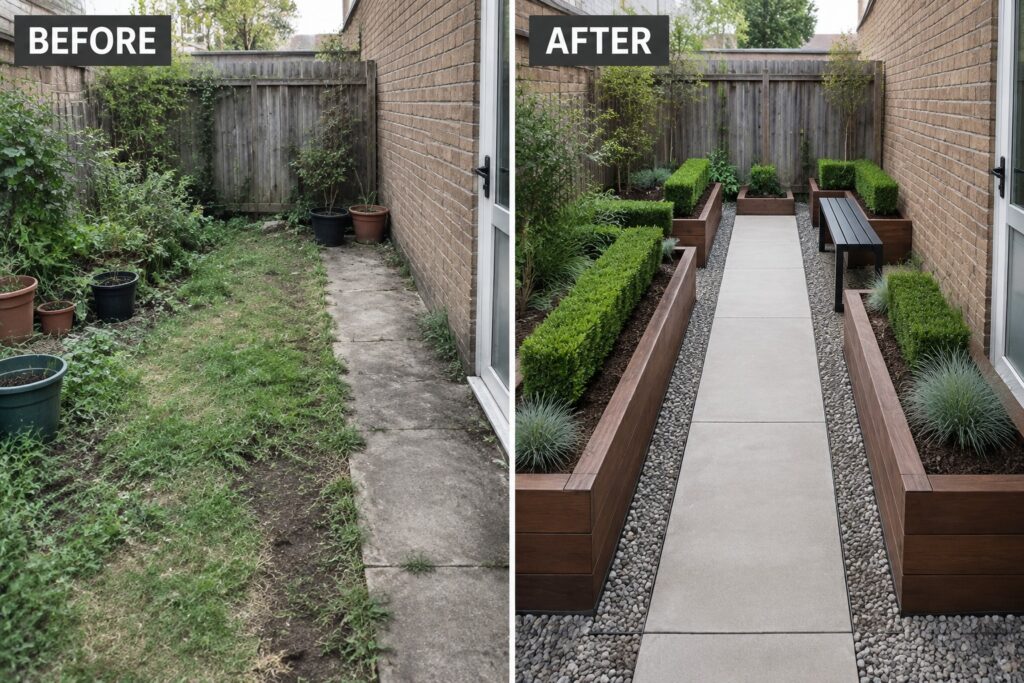
Gardens often end up looking scattered when the beds lack any real shape or edge to hold them together.
I have noticed that sorting out the basic layout first tends to make the whole space feel more intentional than adding extra plants ever does.
Clean lines help a yard stop feeling forgotten.
A few of these patterns are ones I would mark down to try on paper before touching the soil.
The structure tends to look better as the seasons pass because it gives everything else a place to settle into.
Add Structure To An Overgrown Backyard
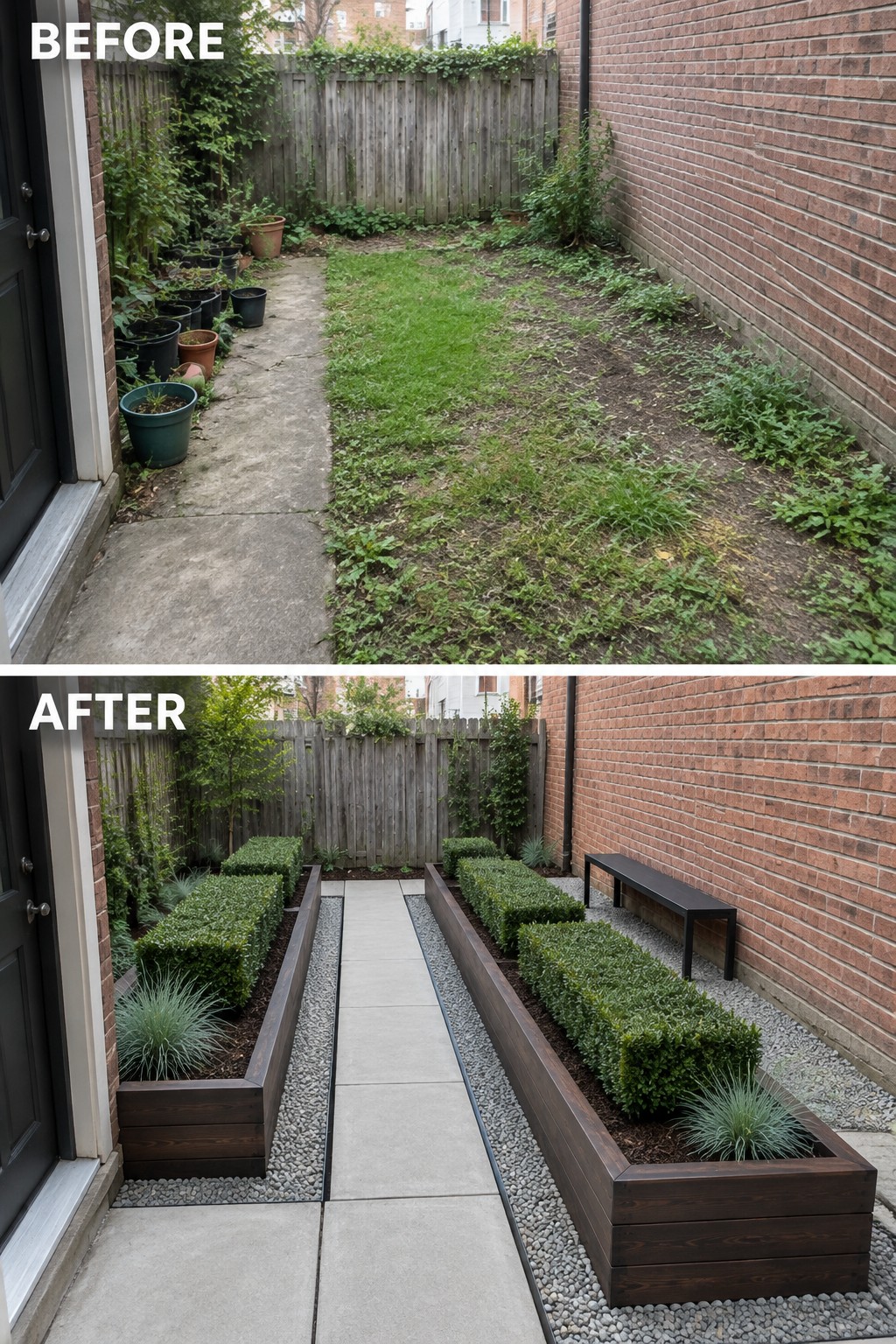
A narrow side yard often ends up as a strip of weeds and scattered pots because there is no clear layout to follow. Raised planters set along both sides with gravel borders turn the same space into a series of straight, repeating beds that make the path feel wider and the whole area feel planned.
This works best in small urban yards where lawn is hard to keep and you want low-maintenance planting. Lay out the beds and path first so the lines stay clean, then fill them with plants that hold their shape rather than spreading out.
Add Structure To An Overgrown Yard With Geometric Beds
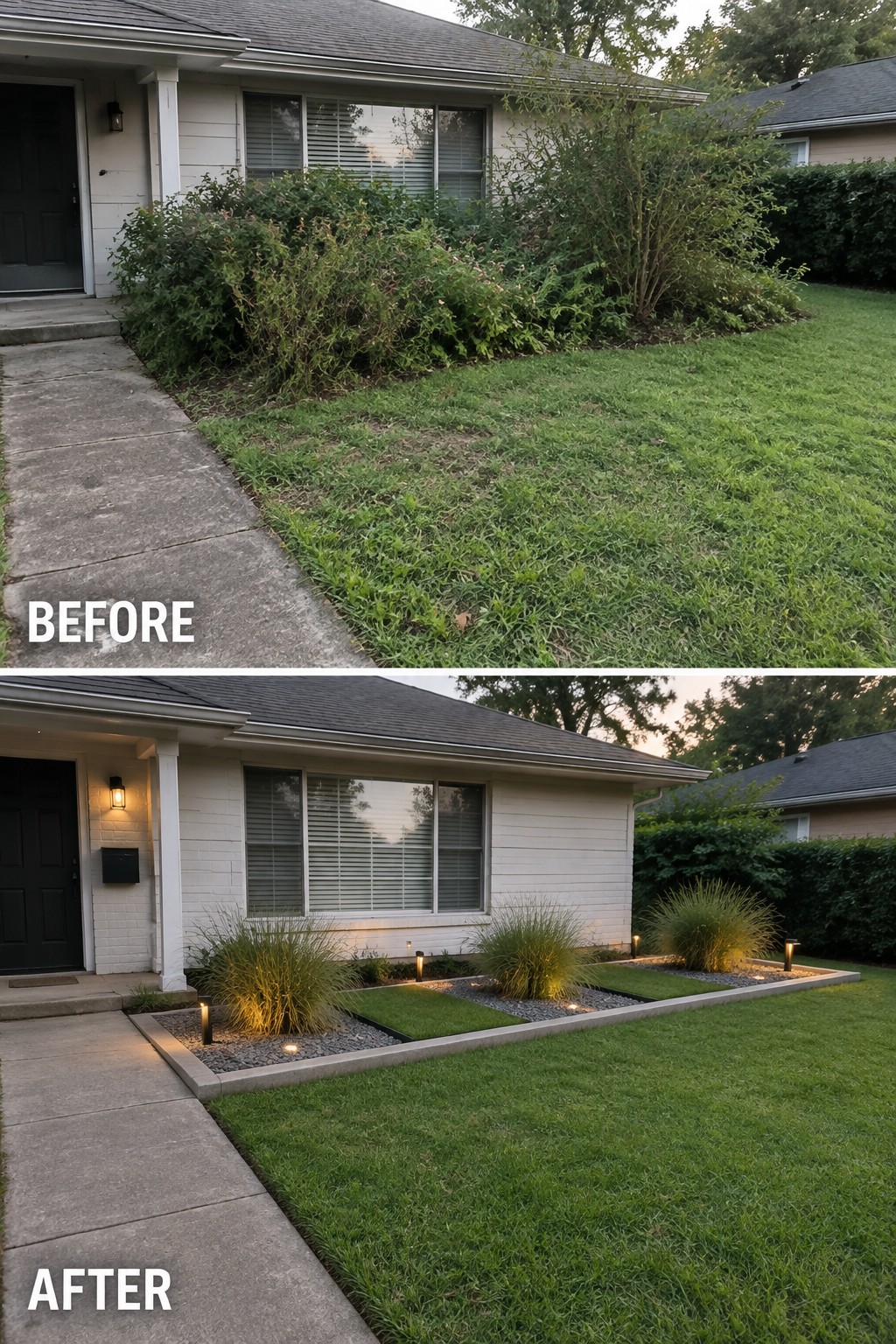
The main improvement comes from clearing the wild shrubs and replacing them with a few straight-edged beds. Concrete borders and gravel create clear shapes that follow the house line and keep the lawn looking tidy.
This idea works best on smaller front yards where you want low maintenance. Start by removing the overgrowth, then mark out simple rectangles or strips along the foundation. Fill the beds with gravel or mulch and add a few grasses or path lights so the layout stays easy to care for over time.
Add Structure To A Sloped Backyard

A steep grassy slope often stays unused because it feels hard to walk on and awkward to plant. Terracing the slope into a few flat levels with built-in beds turns the same space into something you can actually reach and maintain. The wooden planters and central stairs give the yard clear lines and make every level feel intentional.
This approach works best on yards that already have a noticeable drop or retaining wall at the bottom. Keep the beds fairly deep so the plants have room to grow, and run the stairs down the center or along one side so the rest of the space stays open for planting. Start with the hard structure first, then fill the beds with simple shrubs that can handle the local conditions.
Define A Narrow Side Yard With Raised Garden Beds

The biggest shift here comes from replacing scattered pots and random growth with a repeating grid of square raised beds. The beds create clear lines along the path, while gravel fills the gaps and stepping stones keep the walkway practical and easy to follow.
This idea suits homes with long, tight side yards where you still need access but want planting that feels planned. Clear the space first, then set the beds at a consistent size and spacing so the pattern does the work. Gravel keeps weeds down and gives the beds a finished edge without extra borders.
Reshape A Wide Lawn With Rectangular Garden Sections

A wide lawn often looks unfinished when it has no clear edges or divisions. Here the yard changed from one open stretch of grass to a layout of rectangular lawn sections divided by pavers and gravel. Those straight lines give the space a finished feel without adding a lot of extra features.
This idea works best in flat yards where you want usable grass but also need some order. Lay out the pavers first to mark the beds, then fill the spaces with sod or seed. Keep the shapes simple and repeat the same border material so the whole area feels connected.
Define A Patio With Built-In Seating And Planters
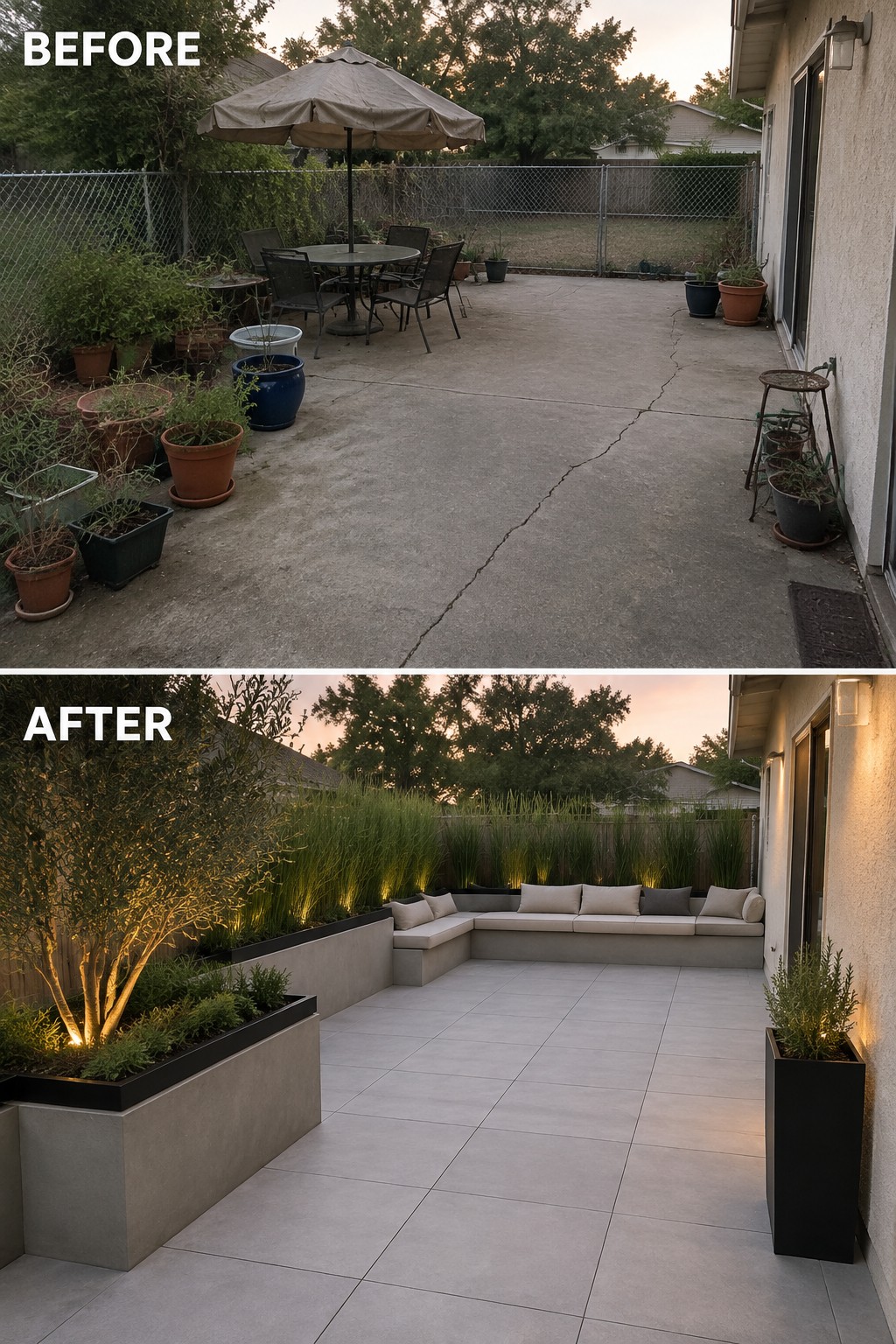
A bare concrete slab often feels like wasted space because nothing holds the eye or gives a reason to stay. In this case the change came from replacing scattered pots with long raised planters and adding an L-shaped bench that turns the whole area into one clear seating zone. The new tile floor and simple geometry make the space feel finished instead of temporary.
This approach works well on any flat backyard slab where you want low upkeep. Start with the hard lines of the planters and bench, then add just enough planting to soften the edges. Keep the rest of the surface open so the layout stays easy to move around.
Define The Front Path With Geometric Beds
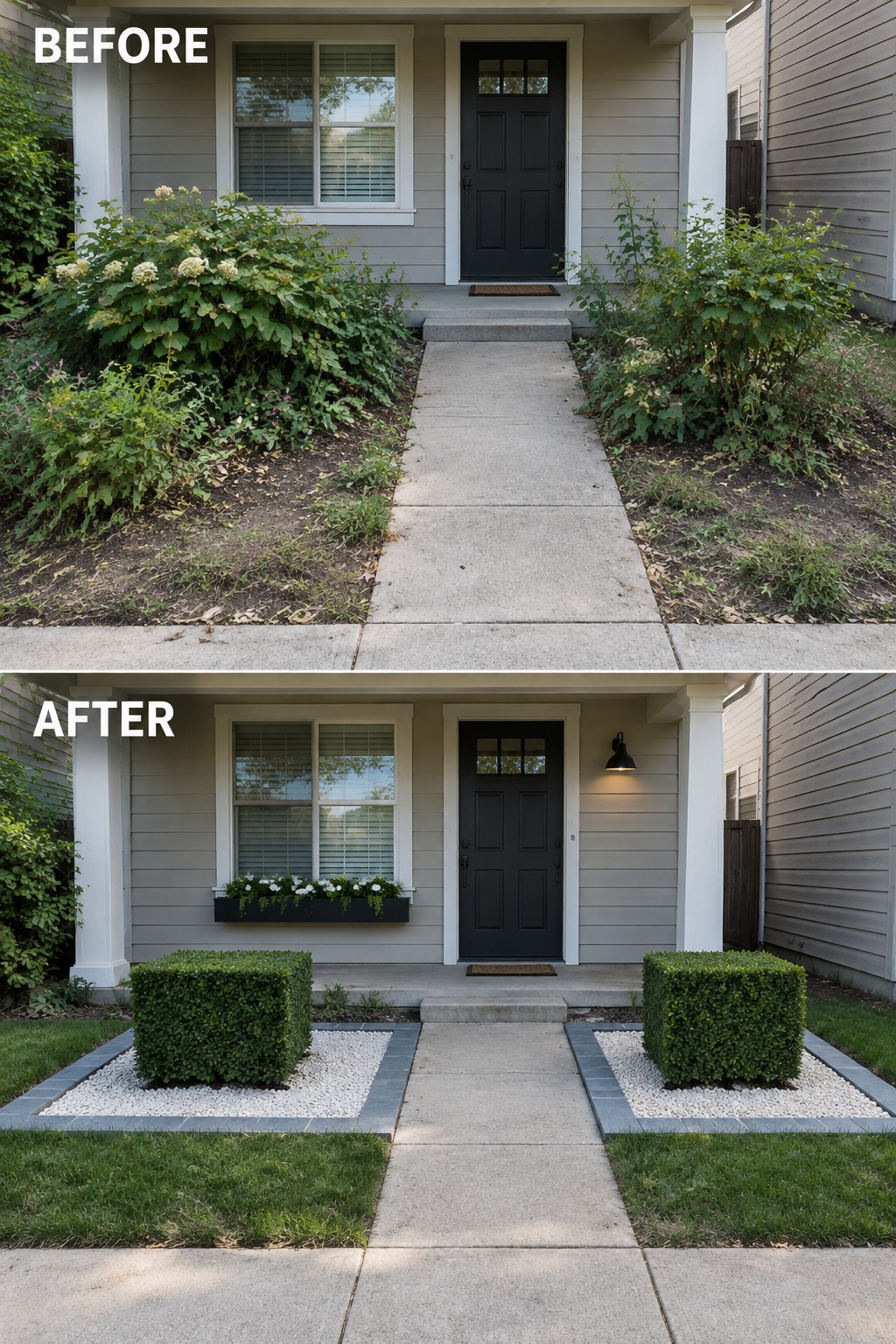
The front of this house went from a messy mix of tall shrubs and bare dirt to a much tidier look by adding two simple square beds. The boxwoods sit in gravel inside low stone borders, which gives the walkway clear shape without adding a lot of plants.
This approach works well on small front yards where you want order but not high maintenance. Start with the edging and gravel first, then add a few repeated shrubs. It keeps the space looking planned even when the rest of the yard stays simple.
Add Structure With Repeated Plants And Clean Edging

An overgrown border full of mixed flowers and spilling plants can quickly look messy along a path. Switching to rows of tall evergreens, rounded shrubs, and a few accent plants in mulch with simple metal edging brings order and makes the space feel intentional instead of chaotic.
This works best along driveways or side yards where you want a low-maintenance look that still feels planned. Pick two or three plant shapes and repeat them in layers, then add edging to keep the beds sharp. The result stays tidy even as the plants fill in.
Turn Poolside Concrete Into A Defined Seating Area
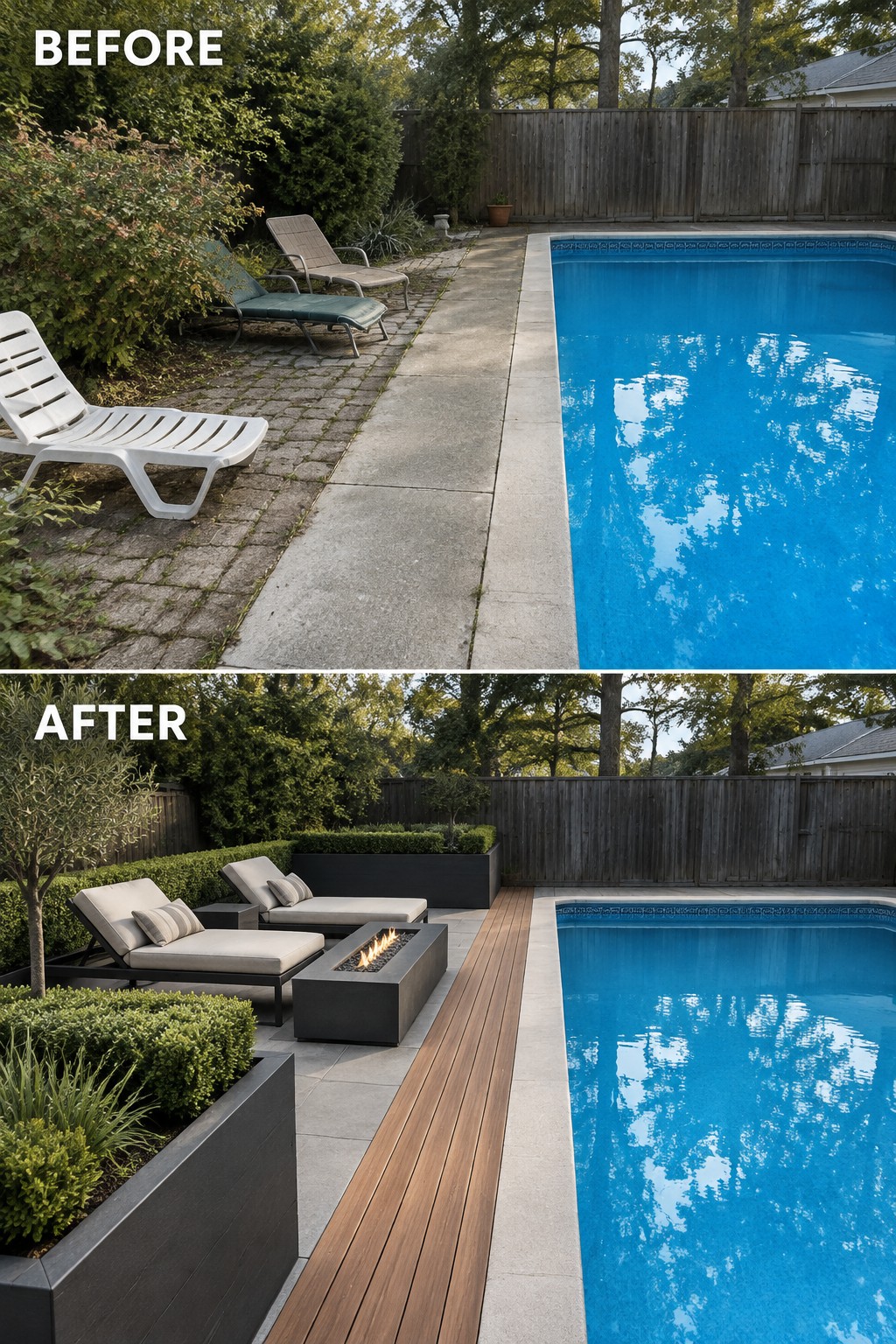
The before photo shows a basic strip of concrete running beside the pool with just a few scattered lounge chairs. The after version adds a wooden deck section and a compact seating setup with a fire pit right in the middle. That single change turns the narrow walkway into a place where people actually want to sit and stay.
This idea works best when you have a long, flat edge next to a pool or patio that feels empty. Keep the furniture low and rectangular so it stays in scale with the water, and use one material like wood decking to create a clear boundary. Start with the deck and seating before adding plants, and make sure the layout still leaves room to walk around the pool.
Organize A Balcony With Matching Geometric Planters
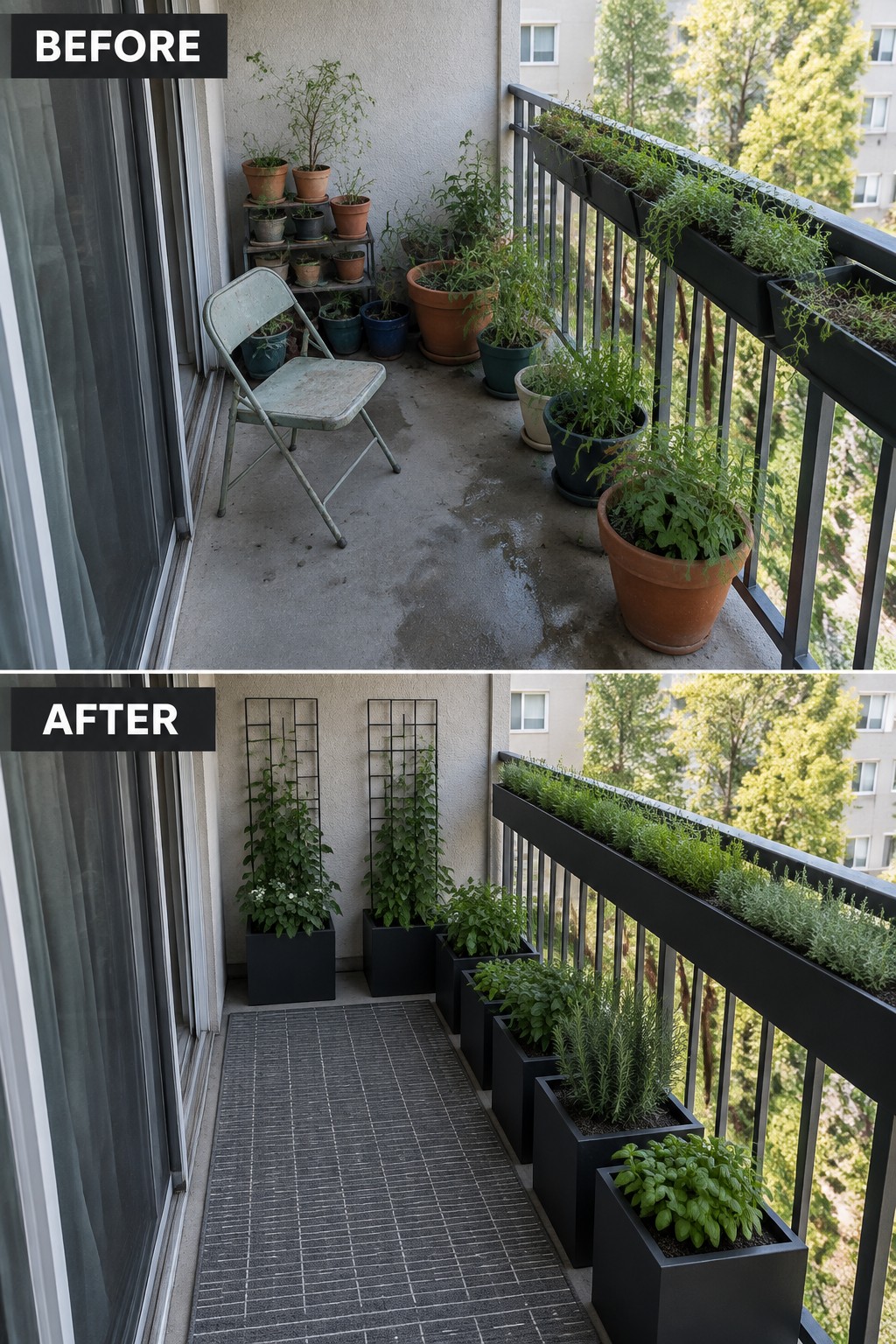
A cluttered balcony with mismatched pots and a worn chair feels more like storage than a place to sit. Switching to a row of matching square black planters along the railing and wall creates clean lines and brings order to the space. The uniform shape and color make the area feel calmer and more usable right away.
This idea works best on narrow balconies where floor space needs to stay open. Keep the planters the same size, add a simple rug for definition, and let climbing plants grow up the grids. It keeps things practical while turning an overlooked spot into a small outdoor area you can actually enjoy.
Create Clean Gravel Beds Along A Fence

A messy strip of dirt and wild shrubs along a fence can make the whole yard feel neglected. In this case the fix was simple. The overgrown plants were cleared out and replaced with clean gravel beds edged in black rock. The new beds give the space clear shape and keep everything looking intentional instead of random.
This approach works best when you start with cleanup first. Once the overgrowth is gone you can lay out a few beds that follow the fence line or path. Gravel and rock hold their shape well and need little maintenance. Just keep the beds narrow enough that you can still walk through the area comfortably.
Reshape An Uneven Lawn With Ornamental Grass Borders

Many backyards start out as just a stretch of uneven grass with no clear shape. The fix often begins with simple edging and a few planted borders that turn the space into something you can actually use. In this case the lawn was reshaped into a clean rectangle, and the edges were lined with low ornamental grasses that give the whole yard a finished look without needing a lot of extra plants.
This approach works best in smaller yards where you want to keep the lawn but stop it from feeling messy. Start by marking straight or gently curved beds, add a solid edging material, and fill the borders with tough grasses or shrubs that repeat along the fence line. Leave enough open gravel or path space around the edges so the beds do not crowd the seating area.
Add Structure To A Narrow Border With Planters
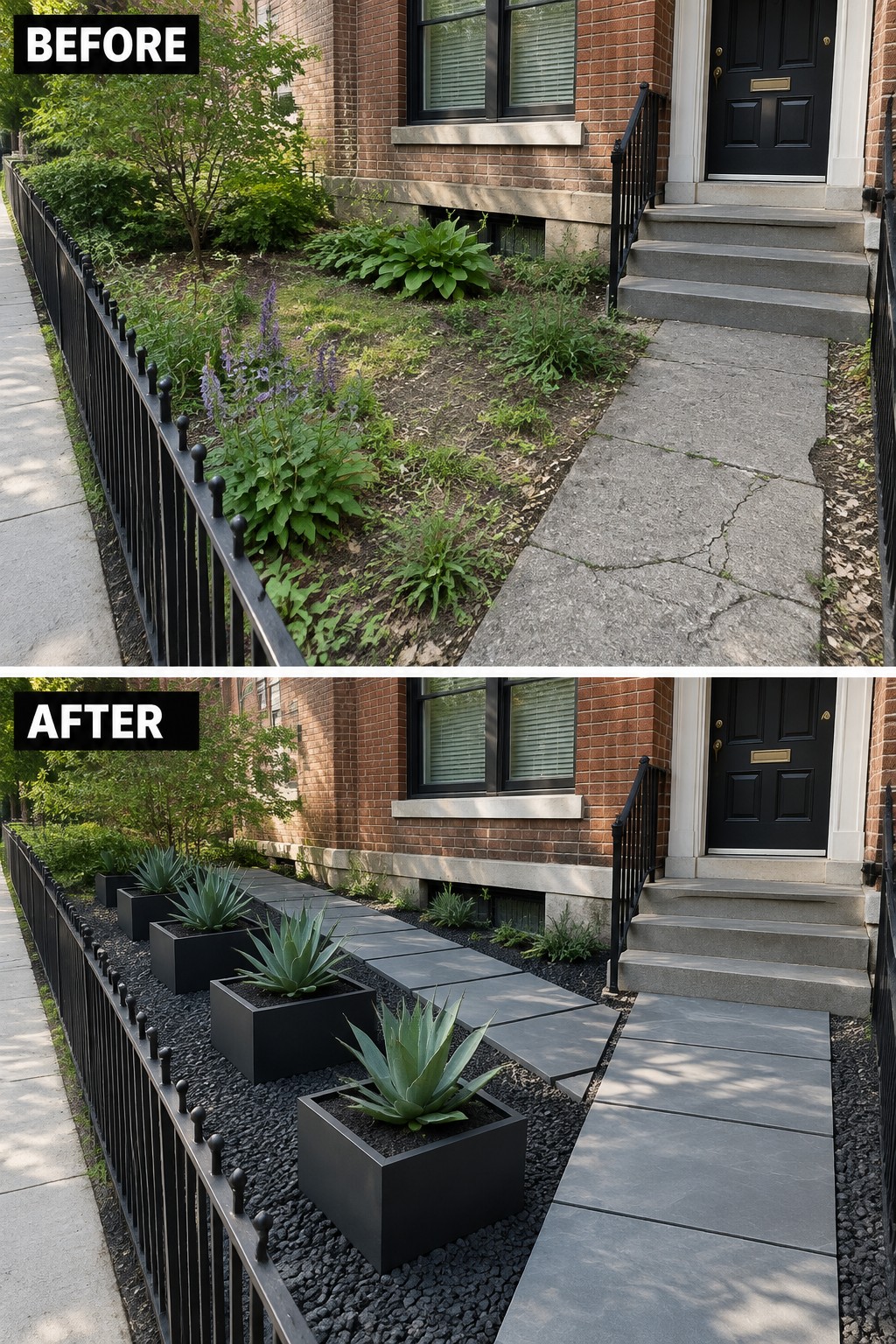
A thin strip of land along a fence or walkway often turns into a weedy mess because it is awkward to mow and hard to keep tidy. Setting a straight row of matching square planters on gravel gives the space clear edges and makes the whole area look planned instead of neglected.
This idea suits narrow front borders where a full planted bed would crowd the path. Use the same dark planters and repeat one simple plant type so the geometry stays visible. Keep the gravel low and the path stones level so the bed remains easy to walk past and maintain.
Create A Straight Planting Border Along A Fence
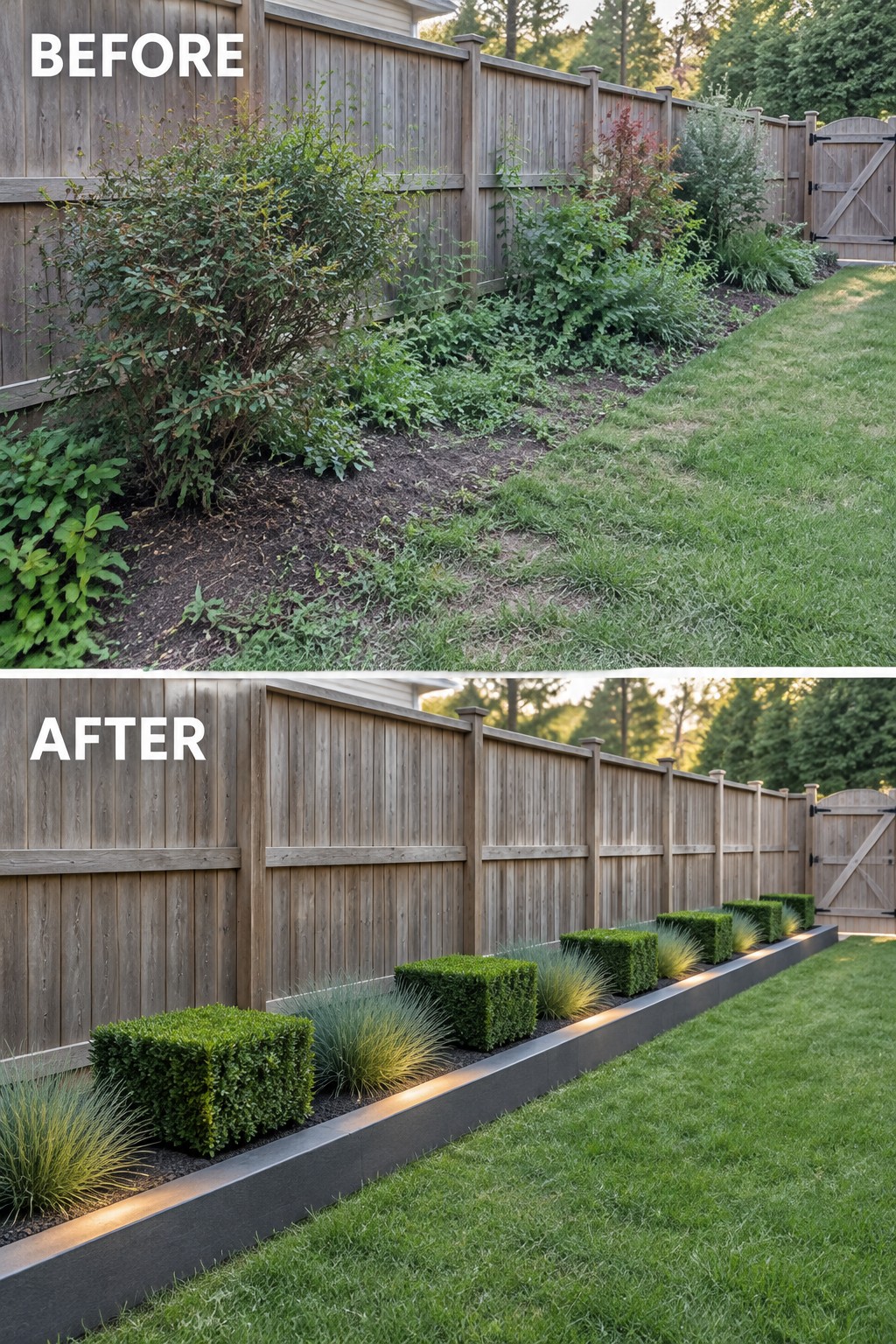
Clearing messy growth along a fence first makes it much easier to create beds that feel planned instead of neglected. The tangled shrubs were replaced with clipped box hedges and grasses set inside a low, dark border that runs in a straight line.
This idea works best in long side yards or backyards where the lawn needs breathing room but the planting still needs some order. Keep the plant choices simple, repeat the same shapes, and use a clean edge so the beds stay low maintenance and look neat year after year.
Define A Fire Pit Area With Paved Paths And Seating

A plain fire pit sitting in the middle of bare dirt feels unfinished and hard to use. Adding a simple paved layout with paths that lead to the center and a low curved wall for seating turns the same spot into a place where people actually want to gather. The change comes from giving the fire pit a clear edge and better access instead of leaving it floating in open ground.
This works well in backyards that already have a fire pit but lack any structure around it. Start by deciding how wide the main paths need to be for comfortable walking, then add seating that follows the curve of the pit so the space feels enclosed without crowding it. Keep the planting simple and low so it softens the edges without blocking the view of the fire.
Add Raised Beds To Bring Order To An Overgrown Garden

Adding raised beds can turn a wild, hard-to-manage patch of garden into something much easier to keep under control. The main change here is the shift from plants spilling everywhere onto the path to a few simple wooden planters that hold everything in place and create a clear walkway.
This idea suits small backyards or side areas where space feels tight and plants quickly get away from you. Clear the worst growth first, then place the beds to follow the natural lines of the fence or path. Keep the planting simple so the structure does most of the work.
Create Defined Garden Beds To Organize An Overgrown Yard
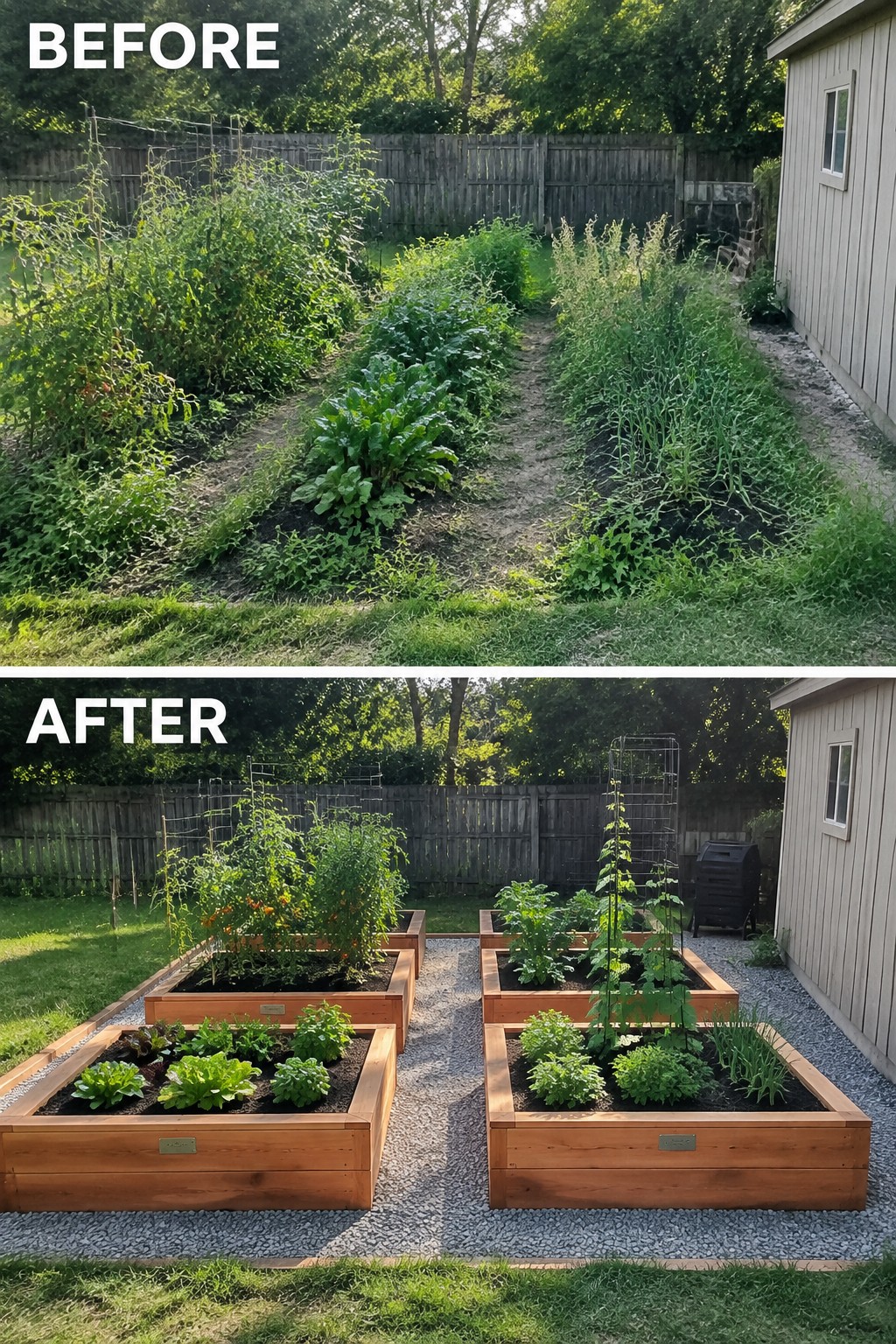
Raised beds and gravel paths turn a messy patch of garden into something that actually feels planned. The before photo shows rows of plants running wild with no clear edges, while the after version uses simple wooden frames to keep everything contained and easy to maintain. The gravel also stops weeds from spreading and makes walking through the space much simpler.
This approach works well in smaller backyards where you want to grow vegetables or herbs without the whole area looking chaotic. Start by clearing the worst of the overgrowth first, then add the frames and gravel before you plant anything new. It keeps the layout looking intentional even when the plants fill in later.
Add Structure To An Overgrown Front Yard

The front yard shifted from a flat, weedy lawn to a layout built around straight paths and rectangular beds. The change works because the hard lines give the space order right away, even before the plants fill in.
This idea fits homes with a simple facade where the lawn just looks unfinished. Lay out the beds first with string or a hose so the shapes stay even, then add gravel and pavers. Keep the beds in proportion to the house so the yard still feels open rather than chopped up.
Frequently Asked Questions
Q: How do I keep the bed edges sharp without constant work? A: You edge with steel or brick once and then refresh the line twice a year with a half-moon tool. Mulch settles against the border and hides small chips. Pick a simple shape at the start so tweaks stay quick.
Q: What plants actually look good inside strict geometric beds? A: Go for low mounds like lavender or boxwood that stay under the bed height. Mix in a few tall grasses at the back corners for height without crowding the lines. Skip anything that flops or spreads fast.
Q: Can this style handle a yard that already has slopes or trees? A: You terrace the beds into stepped rectangles that follow the slope. Keep the trees and let the geometry wrap around their trunks. The clean shapes still read modern even with a few existing features in place.
