


Small gardens often end up looking cluttered when plants stay low and spread out without any height to balance them.
Vertical planting solves that by using walls and supports to add layers that make the space feel more complete.
I have seen how a single row of climbers can pull an entire side of the yard into better order without extra beds.
Some of these setups work well because they build on what is already there rather than starting from scratch.
It is worth trying a couple in your own garden to see how the structure changes the daily view.
Use A Vertical Garden To Turn A Blank Wall Into A Seating Area
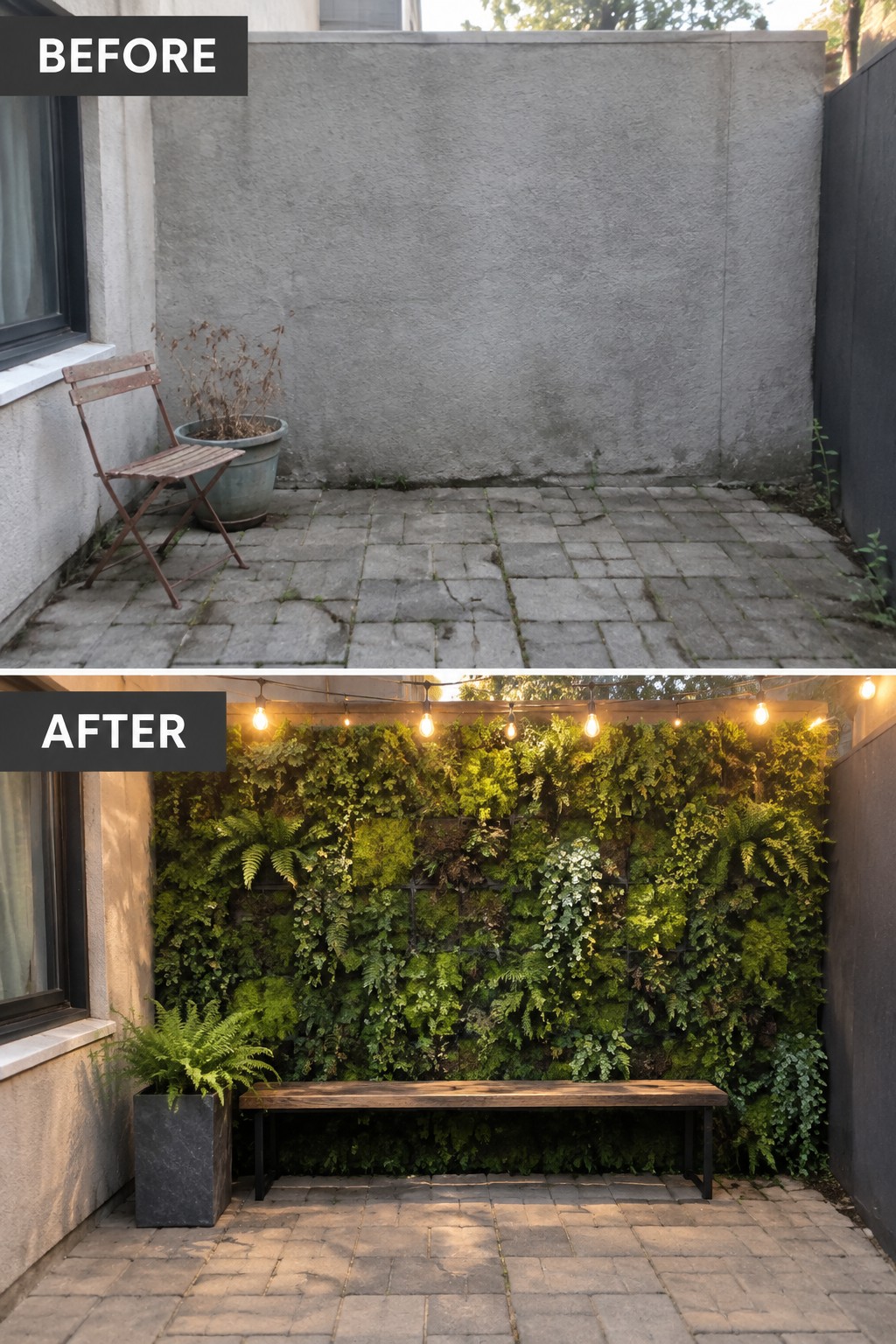
A blank concrete wall and open paving can make a small courtyard feel empty and unused. Adding a full vertical garden across the wall brings in texture and greenery that instantly changes the mood, while a bench placed right in front gives the space a reason to be there.
This approach suits tight outdoor spots where there is not much room to spread out plants on the ground. Keep the rest of the area simple with just a few pots and basic seating so the planted wall does the main work without crowding the space.
Add Vertical Planting To Maximize Space On A Small Balcony
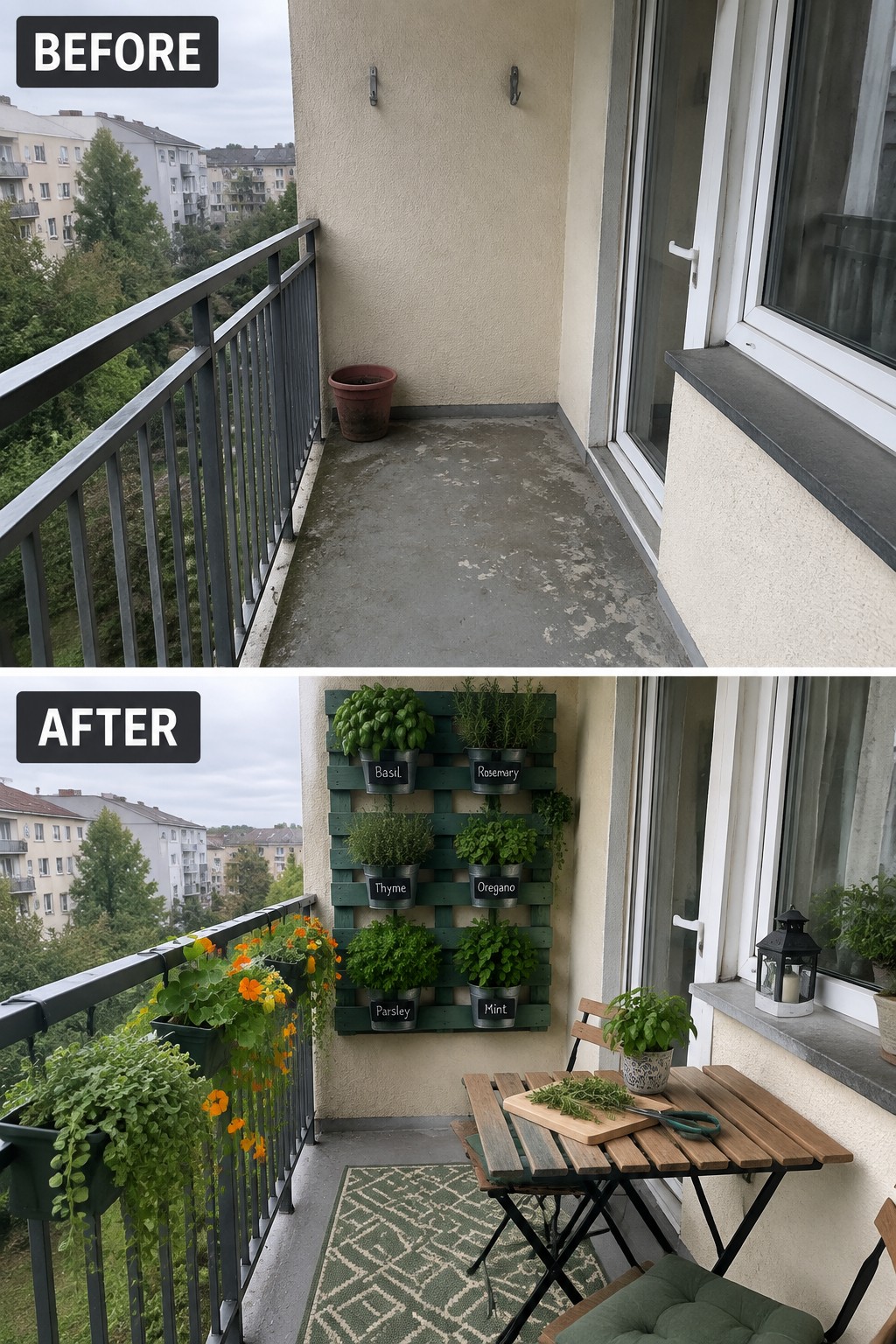
A bare balcony with just one pot often feels like dead space. A vertical garden wall changes that by moving plants upward, which keeps the floor open while adding real growing room for herbs and vegetables.
This works best on small apartment balconies or narrow patios where floor space is tight. Use a simple wall-mounted system, pick herbs you actually cook with, and leave enough room for a small table and chairs so the space stays usable instead of crowded.
Add Vertical Planting To A Fence
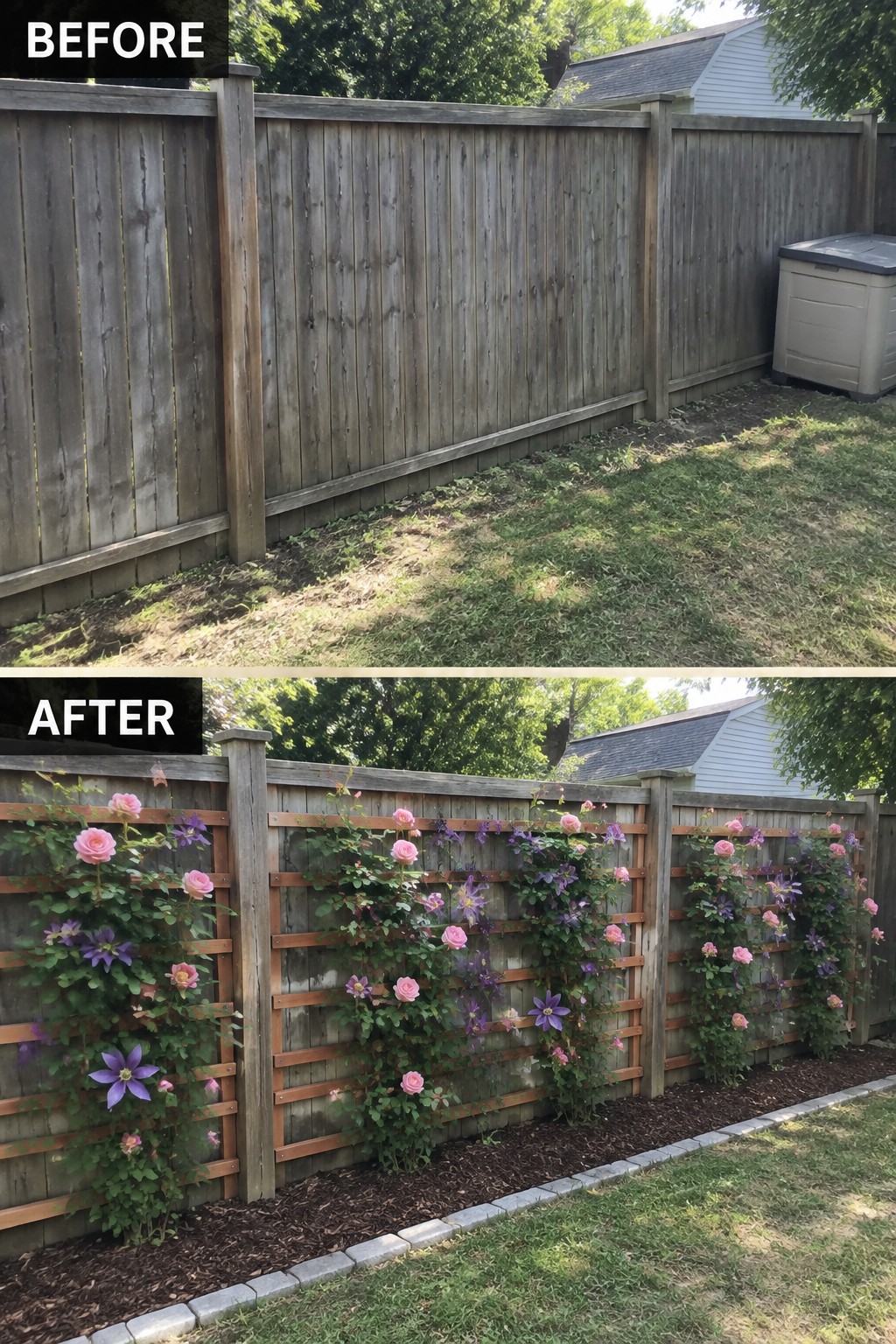
A plain fence often leaves the base looking unfinished, especially when the ground is just grass or weeds. Adding trellis panels and climbers turns that flat surface into a planted feature without taking up much ground space.
This idea works best along property lines or side yards where you want height and color but have limited room. Attach simple wood lattice sections to the fence, plant vigorous climbers like roses or clematis at the base, and finish with mulch to keep the bed tidy. The plants will cover the structure over time and soften the whole line of the yard.
Add Vertical Planting To Make The Most Of A Narrow Space

A blank wall next to an overgrown strip of grass does not offer much to look at. Mounting rows of planters directly on the wall turns that same narrow area into a garden feature without taking up floor space. The stone path keeps the ground clear for walking while the flowers add color at eye level.
This approach works well in side yards, townhouse gardens, or any spot where ground planting is limited. Start with a simple wood frame or brackets that can handle the weight of filled pots, then choose plants that trail or stay compact so they do not overwhelm the walkway. Keep the number of rows modest at first so the area still feels open.
Use Espaliered Trees To Add Vertical Structure To A Narrow Bed
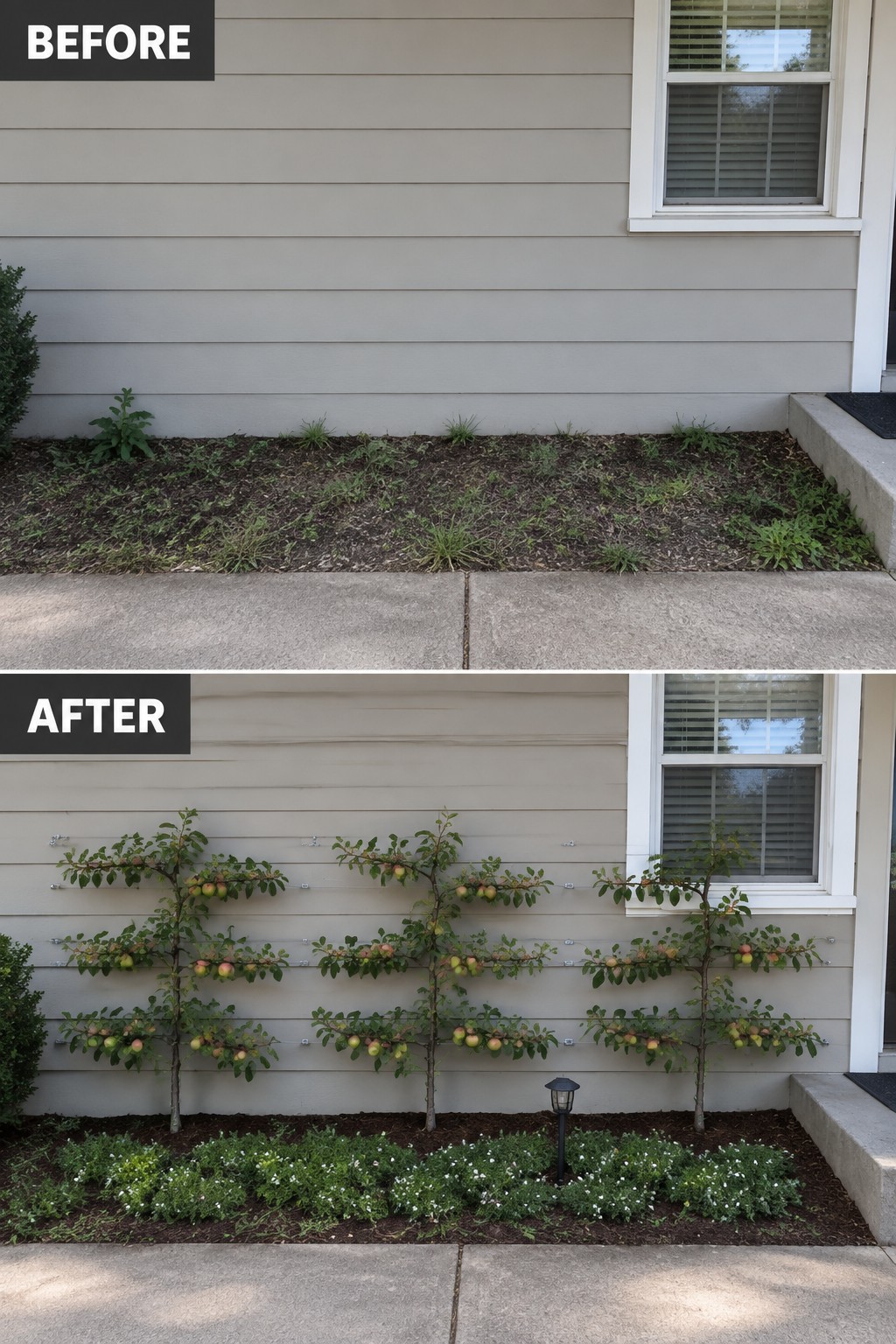
A bare, weedy strip along the foundation usually looks neglected because there is no clear planting plan. Training young trees flat against the wall with simple horizontal supports turns that same narrow space into an orderly row that produces fruit and keeps the ground clean.
This idea works well on homes where the bed is too tight for regular shrubs or a small tree. Start with young trees suited to heavy pruning, set the wires while the plants are small, and keep the ground cover low so the flat pattern stays easy to see and maintain.
Use Vertical Planting To Turn A Bare Patio Into A Seating Area
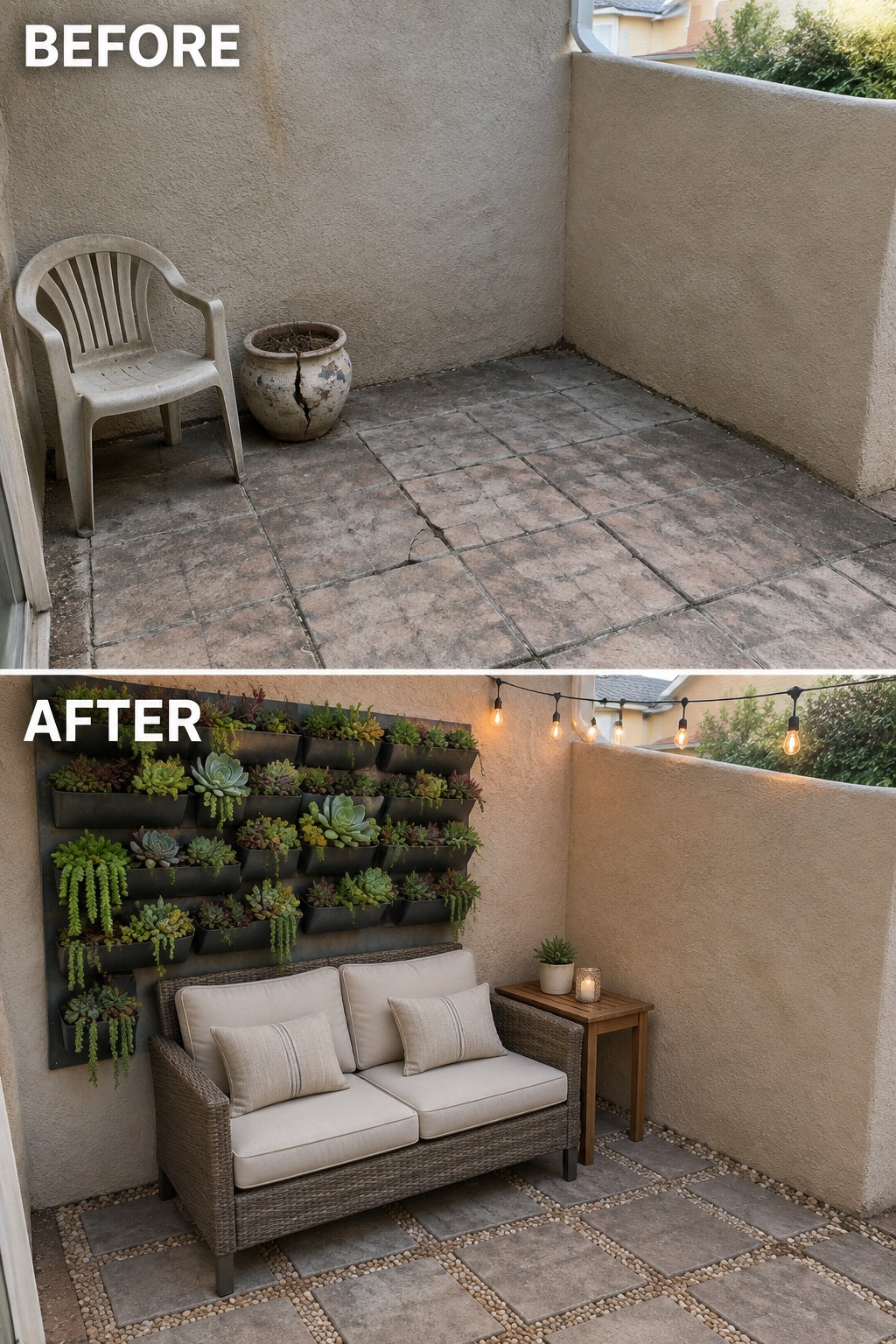
A plain concrete patio often stays empty because there is no clear reason to spend time there. Adding a vertical garden wall gives the space structure and brings in plenty of plants without crowding the floor, which makes it feel like a real outdoor room instead of leftover space.
This approach suits small patios, balconies, or side yards where ground room is tight. Keep the planting system simple and choose weather-hardy plants, then add just enough seating so people can actually use the area without it feeling cramped.
Use Vertical Planters To Expand A Small Garden
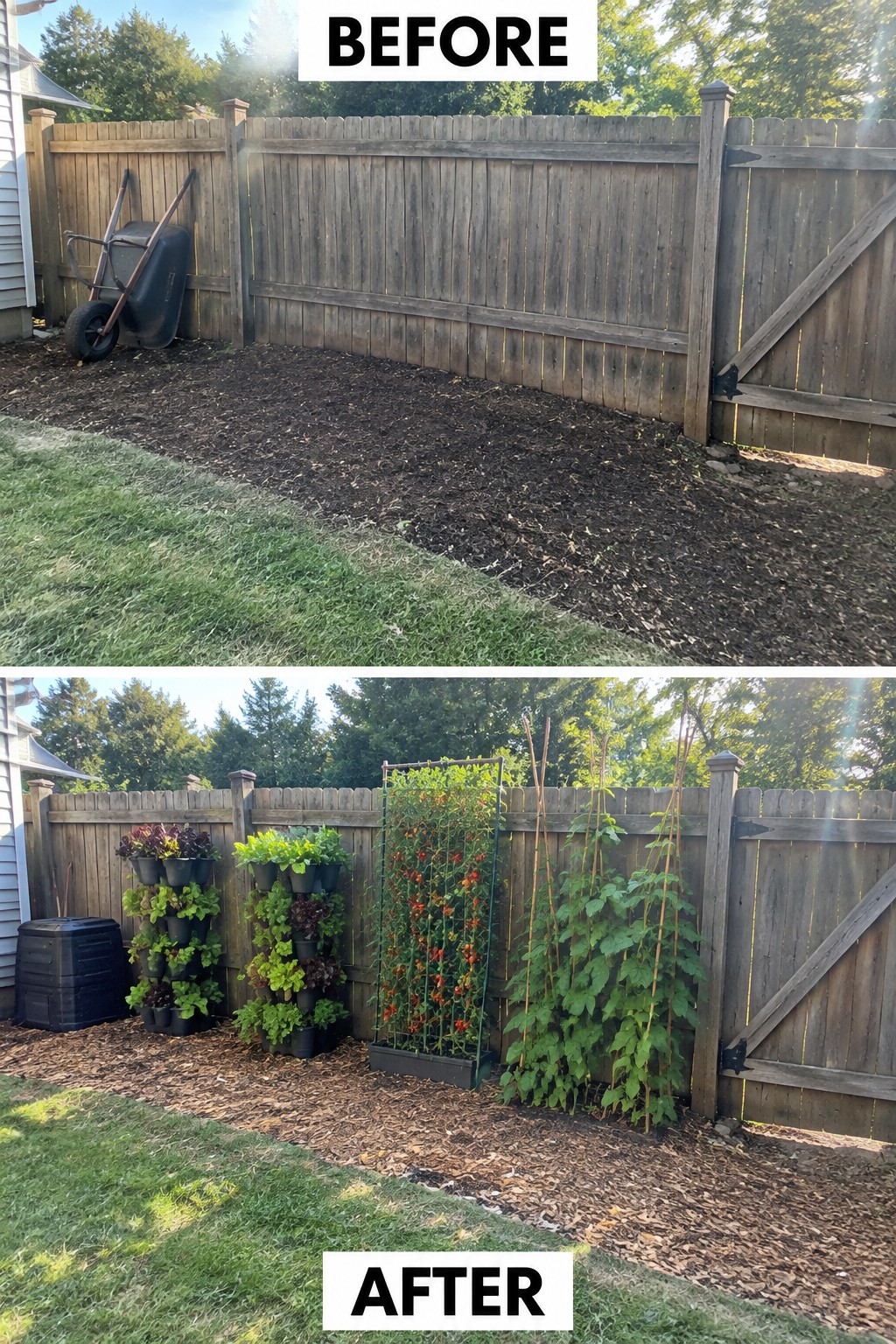
A bare strip of mulch along a fence offers little growing room once you account for paths and access. Stacking planters upward and adding a simple trellis turns that same narrow band into productive space without widening the bed. The change keeps the ground clear while adding layers of vegetables and herbs right where the fence already provides support.
This approach works best in small yards or along property lines where horizontal space is limited. Start with a few sturdy vertical units placed against the fence, choose crops that climb or grow compactly, and leave enough room at the base for maintenance. The result adds food production and greenery while keeping the yard easy to move through.
Use Vertical Planting To Green Up A Small Patio
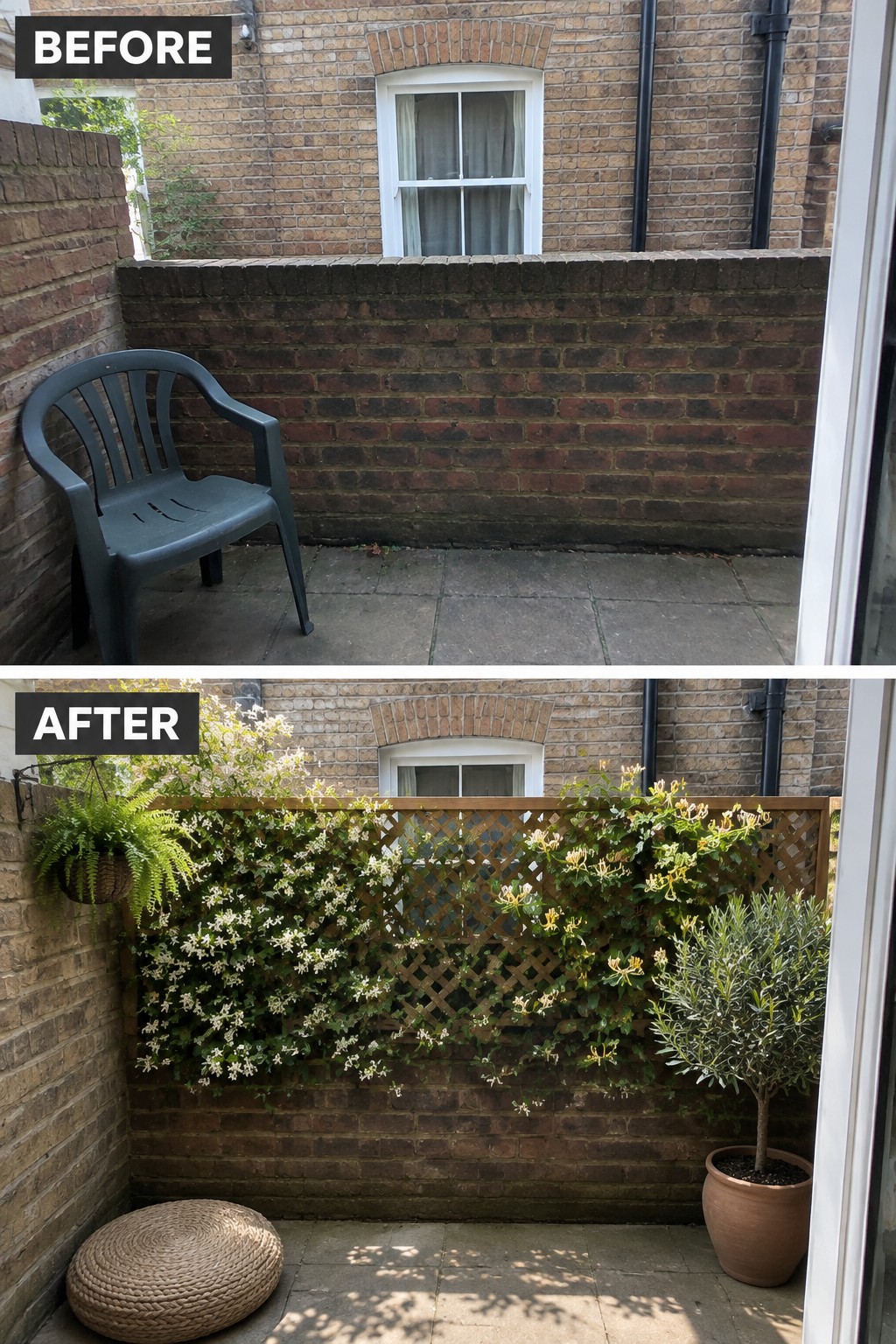
A blank brick wall can make a small patio feel flat and closed in. Adding a simple wooden trellis with climbing plants changes that fast. The vines soften the hard surface, bring in color, and create a living screen that feels much more private without taking up floor space.
This idea works well on patios or balconies where room is tight. Start with one trellis panel, choose climbers that suit your light, and add a couple of pots at the base. Keep the rest of the area open so you still have room to move around.
Turn A Bare Balcony Into A Seating Area With Vertical Planting
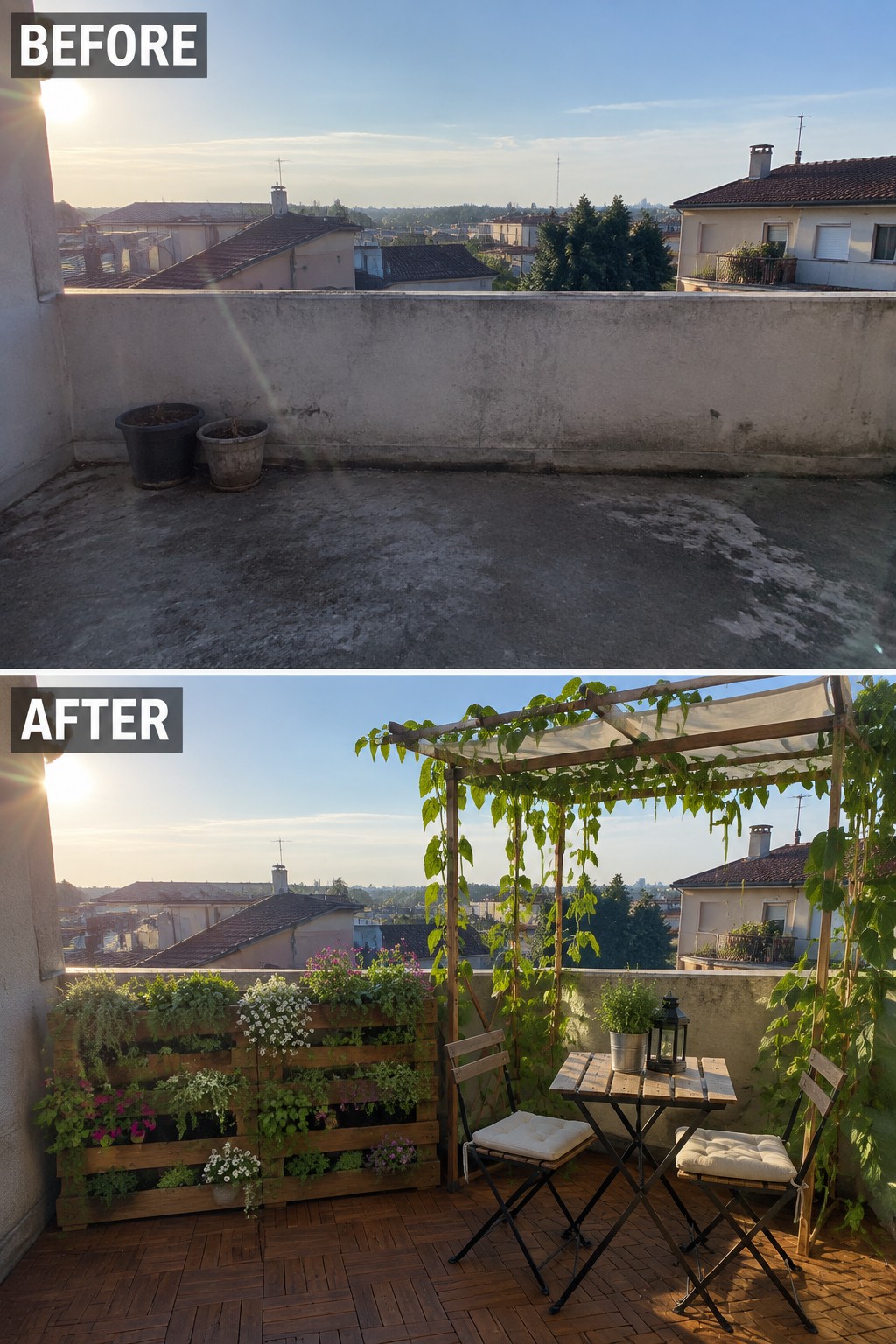
Adding a vertical garden wall and a simple pergola can make an empty concrete balcony feel like a real outdoor room. The before photo shows just a couple of pots against a plain wall, while the after uses a wooden pallet planter packed with flowers and climbing vines to bring in greenery without taking up floor space.
This idea suits small terraces or balconies where you need shade and privacy but cannot spread out. Start with one vertical structure, keep the furniture light and foldable, and choose tough plants that will not mind wind or strong sun.
Use Vertical Planting To Screen A Fence
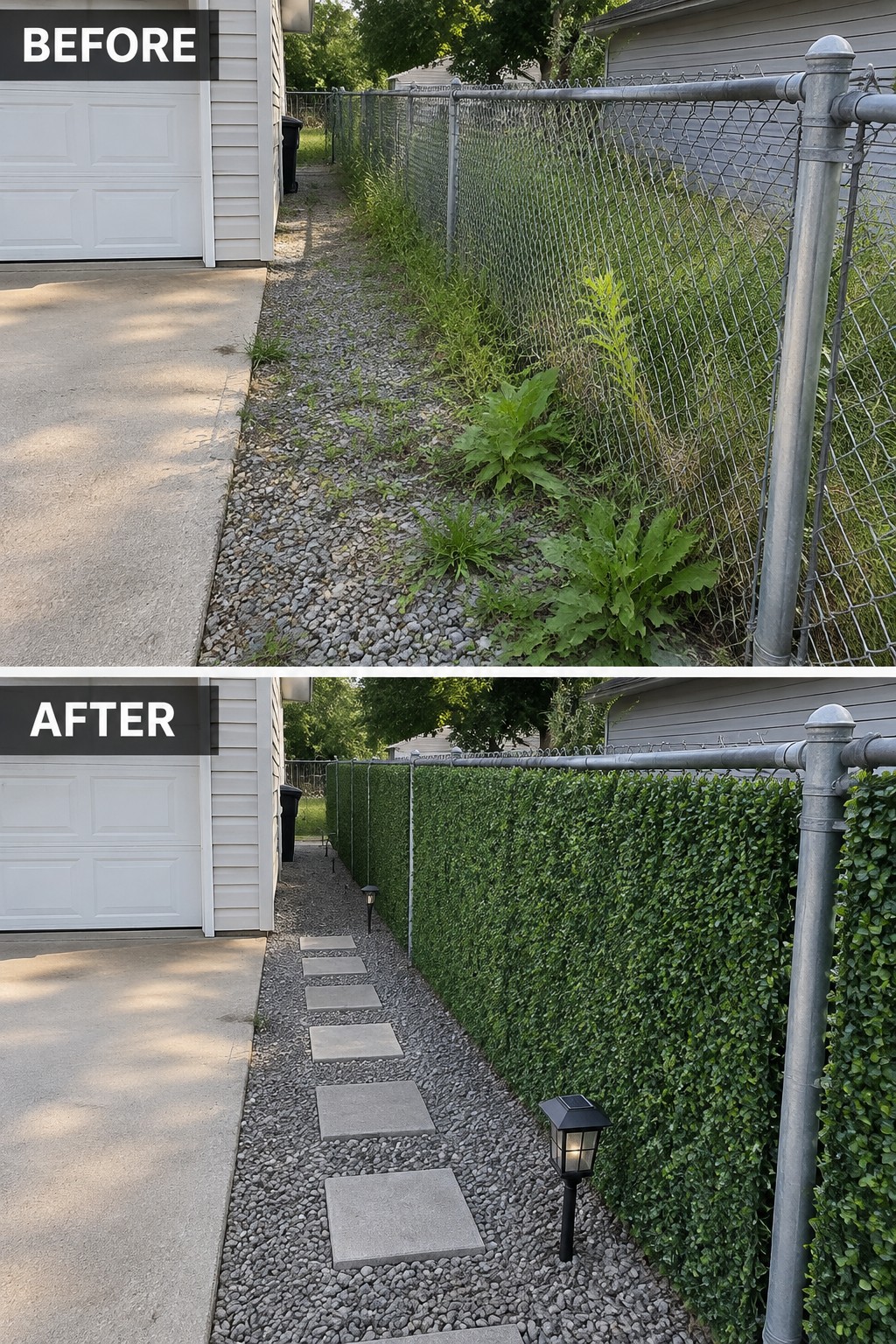
The before photo shows a narrow side yard taken over by weeds along an open chain link fence. In the after, the fence disappears behind a row of dense green panels that create a solid green wall while the gravel path stays clear and usable. Vertical planting solves the problem quickly because it adds height and coverage without eating into limited ground space.
This approach works best in tight side yards or along property lines where you need privacy but cannot plant large shrubs. Choose hedge panels or a simple trellis system that can handle your weather, then keep the ground layer simple with gravel and a few stepping stones. The result feels neat without requiring constant weeding or a big planting bed.
Create A Vertical Trellis Seating Area In A Small Patio Corner

A plain concrete corner with nothing but a wall and scattered clutter can feel like wasted space. Adding a simple trellis against the wall and letting vines and flowers grow up it instantly gives the area height, color, and a reason to sit. The bench and a couple of large pots complete the setup without crowding the floor.
This approach works well in small yards or side patios where you do not have room for wide beds. Start with a sturdy grid or panel that can support the weight of the plants, choose a mix of climbers and a few flowering shrubs, and keep the seating simple so the greenery stays the main feature.
Use Tiered Planters To Add Structure To A Narrow Slope
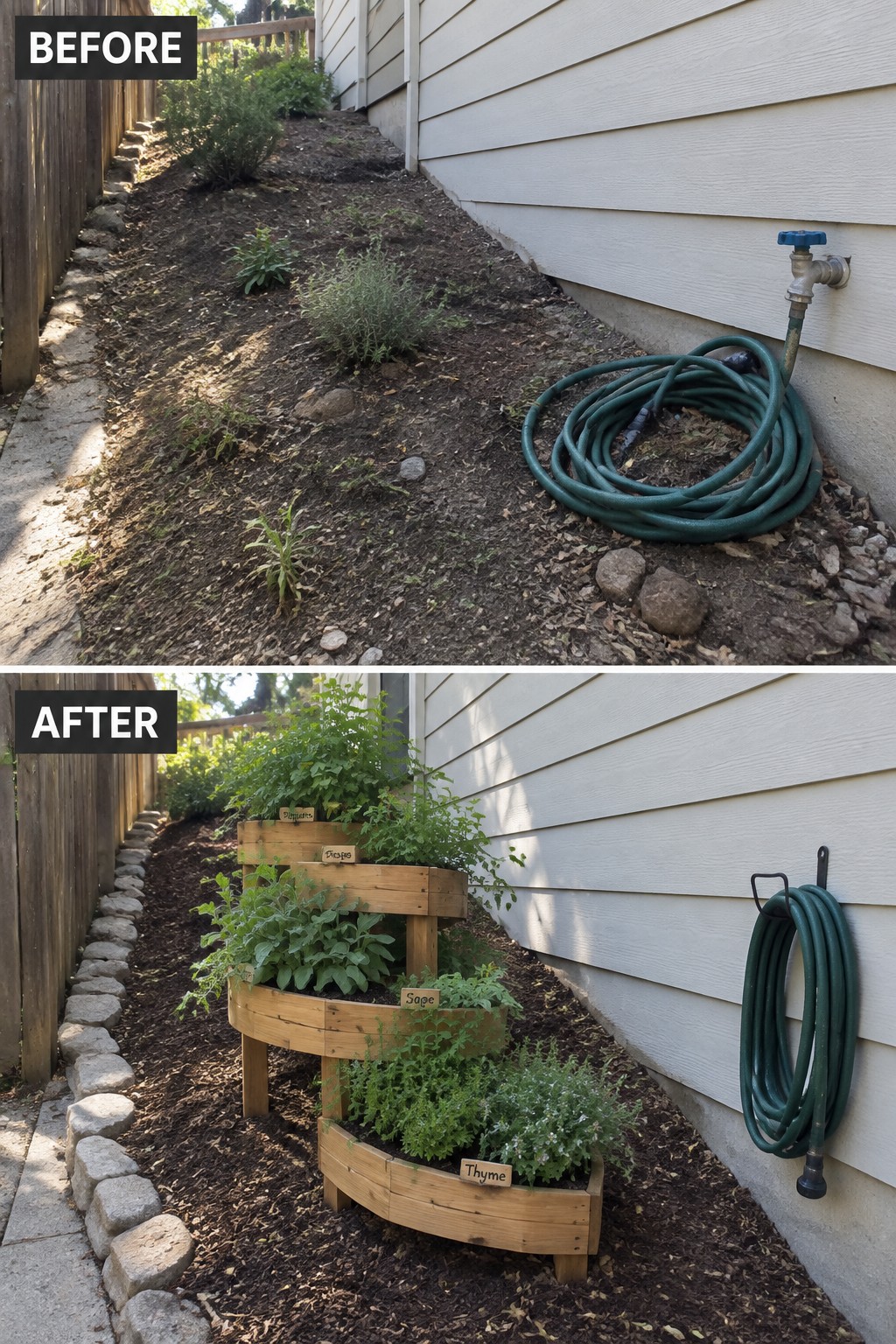
A bare, weedy slope next to the house often stays unused because it feels hard to plant and harder to keep tidy. Tiered wooden planters solve this by stacking growing space vertically, turning the same awkward strip into a productive herb garden while keeping the ground below clean and mulched. The coiled hose moved to a simple wall hook shows how small functional fixes support the whole change.
This approach works best along the side of a house or in any tight yard where flat beds would crowd the walkway. Start with a few stacked frames that follow the slope, fill them with soil and plants that can handle the sun exposure, and let the tiers do the work of creating order. It keeps the area looking intentional without needing a full retaining wall or major grading.
Use Vertical Planting To Add Privacy On A Small Balcony
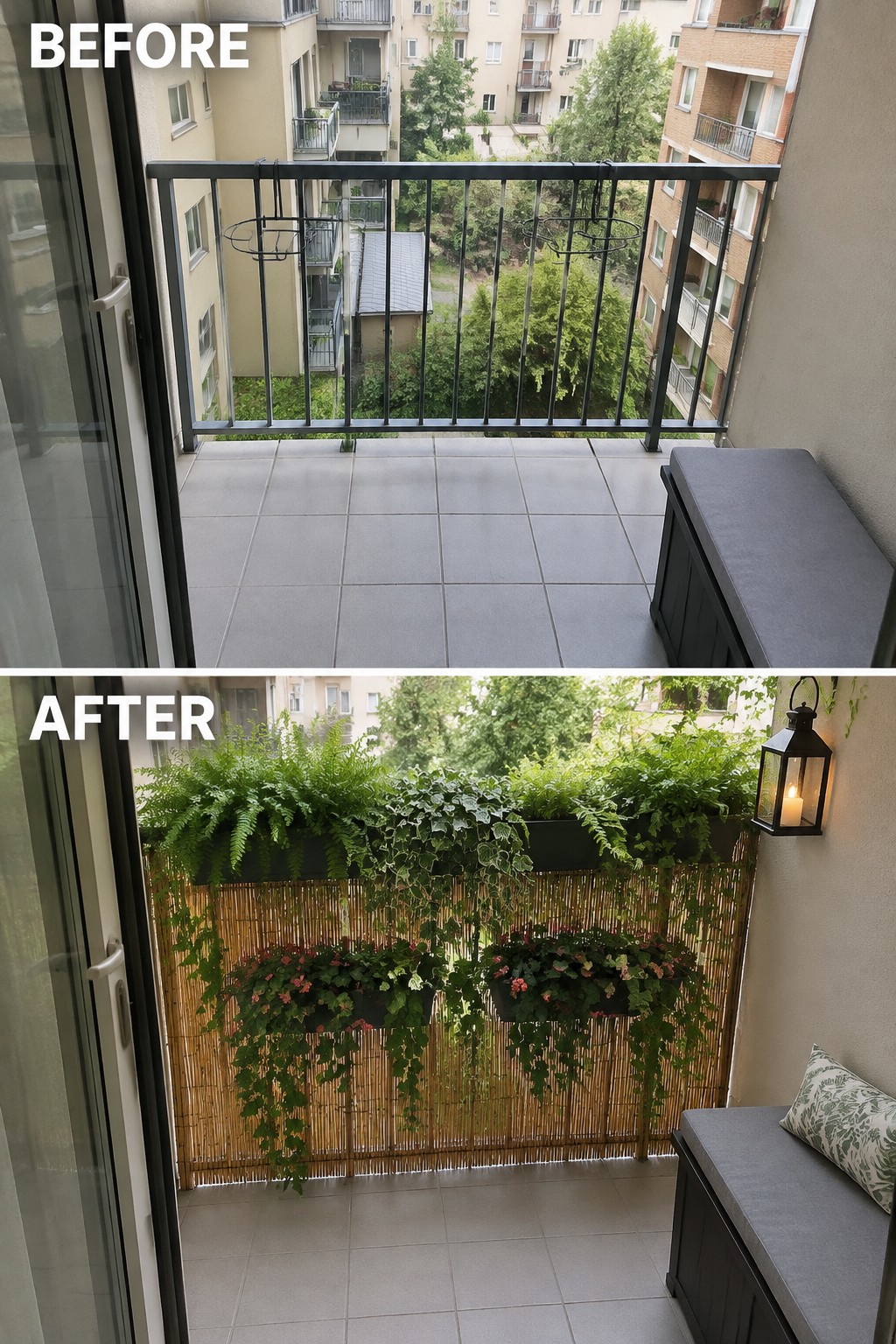
A bare balcony often feels exposed because there is nothing to soften the railing or block the view of neighboring buildings. Adding a vertical layer of plants changes the whole feel. Here a bamboo screen was placed along the railing with planters mounted above and below it, filled with ferns, ivy, and flowering trailers that spill downward and create a living screen.
This approach suits small balconies where floor space is limited. Fix a simple screen or trellis to the railing first, then choose a mix of trailing and upright plants that can handle the light conditions. Keep the planting dense enough to give privacy but leave the floor mostly open so the space still feels usable for seating.
Use Vertical Planters To Turn A Blank Wall Into A Garden
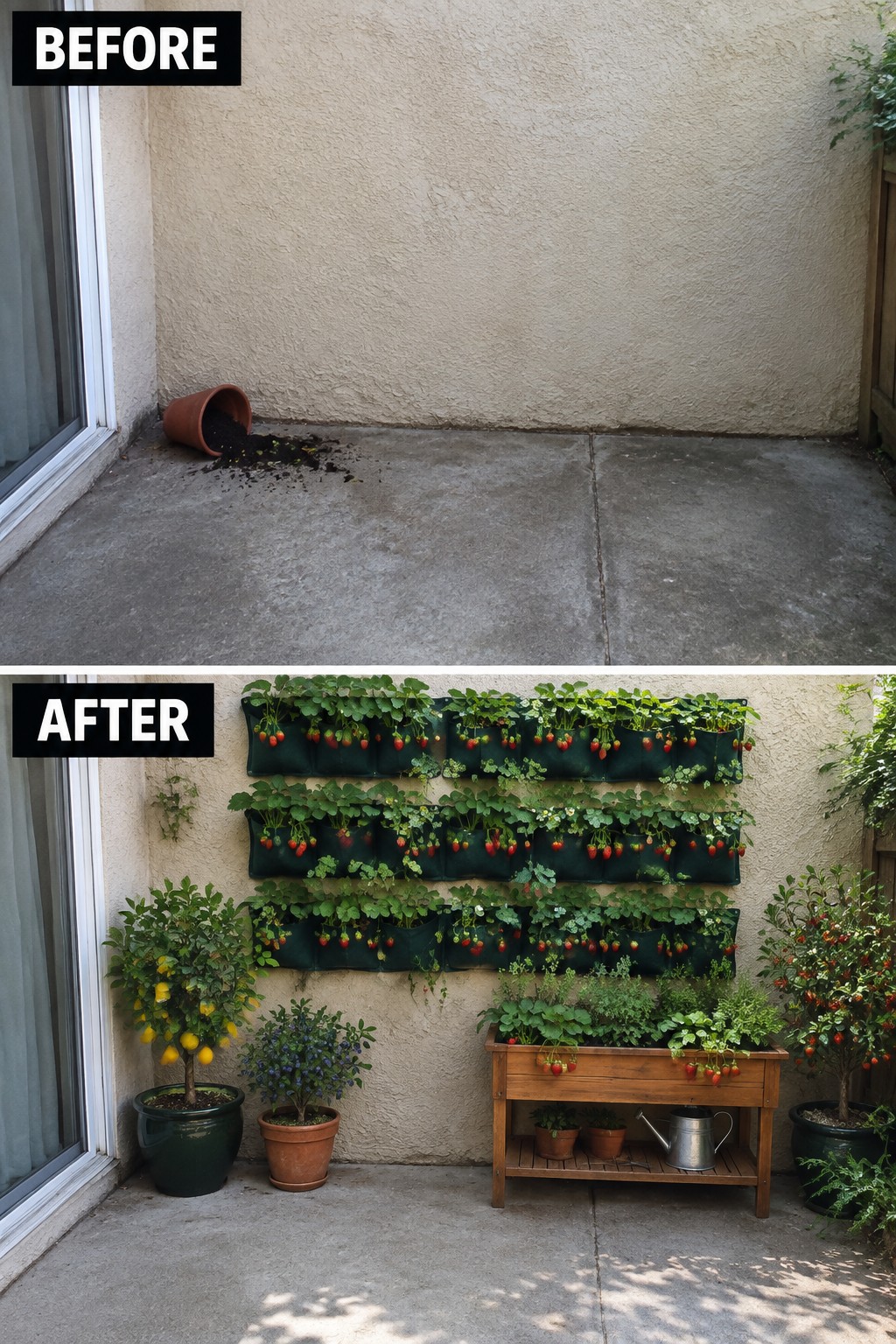
A plain concrete patio with nothing but a wall behind it often feels like dead space. Vertical planters change that by putting the wall to work. Here the empty surface now holds several rows of fabric pockets packed with strawberries and herbs, while a few ground pots add height without taking over the floor.
This idea suits small patios, side yards, or balconies where floor space stays tight. Secure the planters to a solid wall, use decent soil, and pick compact crops that can hang and drip. Keep a couple of larger pots on the ground for balance and you gain a working garden without losing room to move around.
Add Vertical Planters To A Plain Patio Wall

A blank wall above a simple bench can feel like wasted space in a small patio. Mounting a grid of geometric planters filled with succulents turns that empty surface into the main point of interest. The plants bring color and life without taking up any floor area, and the seating stays open and usable.
This idea suits small yards or patios where ground space is tight. Keep the pattern simple, choose hardy plants that need little water, and make sure the wall can support the weight. It works best when the rest of the area stays uncluttered so the vertical planting can stand out.
Use Vertical Planting To Add Structure To A Small Yard

A bare patch of dirt next to the house does not give you much to work with, but mounting planters at different heights on a simple screen turns that empty wall into the main feature. The layered plants fill the vertical space and keep the ground clear, which makes the whole area feel more intentional without crowding the floor.
This idea suits narrow side yards or small back corners where digging beds is not practical. Use a lightweight screen material that can hold weight, repeat a few plant types for a cohesive look, and leave room at the base for a rug or path so people can still move through the space.
Frequently Asked Questions
Q: How do I choose plants that will climb without constant fuss?
A: Go for varieties like morning glories or pole beans that twist around supports on their own. Match them to the light in your spot so they take off fast. This keeps the vertical display full with minimal tying or training.
Q: What happens if my fence can’t hold much weight from planters?
A: Mount lighter pocket systems or hanging pouches instead of heavy boxes. Test the surface first and space things out so no single area bears too much load. The plants still cover the area nicely once they fill in.
Q: How do I stop vertical gardens from drying out too quick in summer?
A: Water in the morning and check the top few inches of soil every other day. Add a bit of mulch on top of each pocket to hold moisture longer. This simple step keeps everything thriving without daily drenching.
