


I often notice that a garden feels more usable once the layout gets some clear edges and a few steady plant groups instead of scattered additions.
I have found that starting with basic cleanup and simple pathways usually makes the biggest difference in how the space holds together day to day.
Those early steps create a base that lets later plantings look like they belong instead of fighting for attention.
Structure comes first.
Trying one project at a time also helps show which ideas hold up once the weather and regular use take over.
Give A Bare Backyard Simple Structure With Edging And A Path

A patchy lawn with no clear edges feels unfinished and hard to maintain. Adding a clean border and a few stepping stones turns the same space into something that looks intentional and easier to walk through. The curved bed on one side and the straight path through the grass both help break up the open area without needing a lot of new plants or furniture.
This approach works best in small or medium yards where you want to create usable zones without crowding them. Start by fixing the lawn itself, then lay the edging and path before adding mulch or plants. Keep the path wide enough for easy walking and the bed shallow enough that mowing stays simple.
Define Garden Beds With Simple Edging

Clearing out the messy growth first makes the biggest difference in a front bed. Adding a low stone edge and fresh mulch keeps the plants contained and stops everything from spilling onto the walkway.
This works best along the front of a house where the bed meets the sidewalk or driveway. Remove the old plants you no longer want, put the edging in place, then add new plants and mulch. The result stays neat with very little extra work.
Clear Overgrowth First To Define A Garden Path
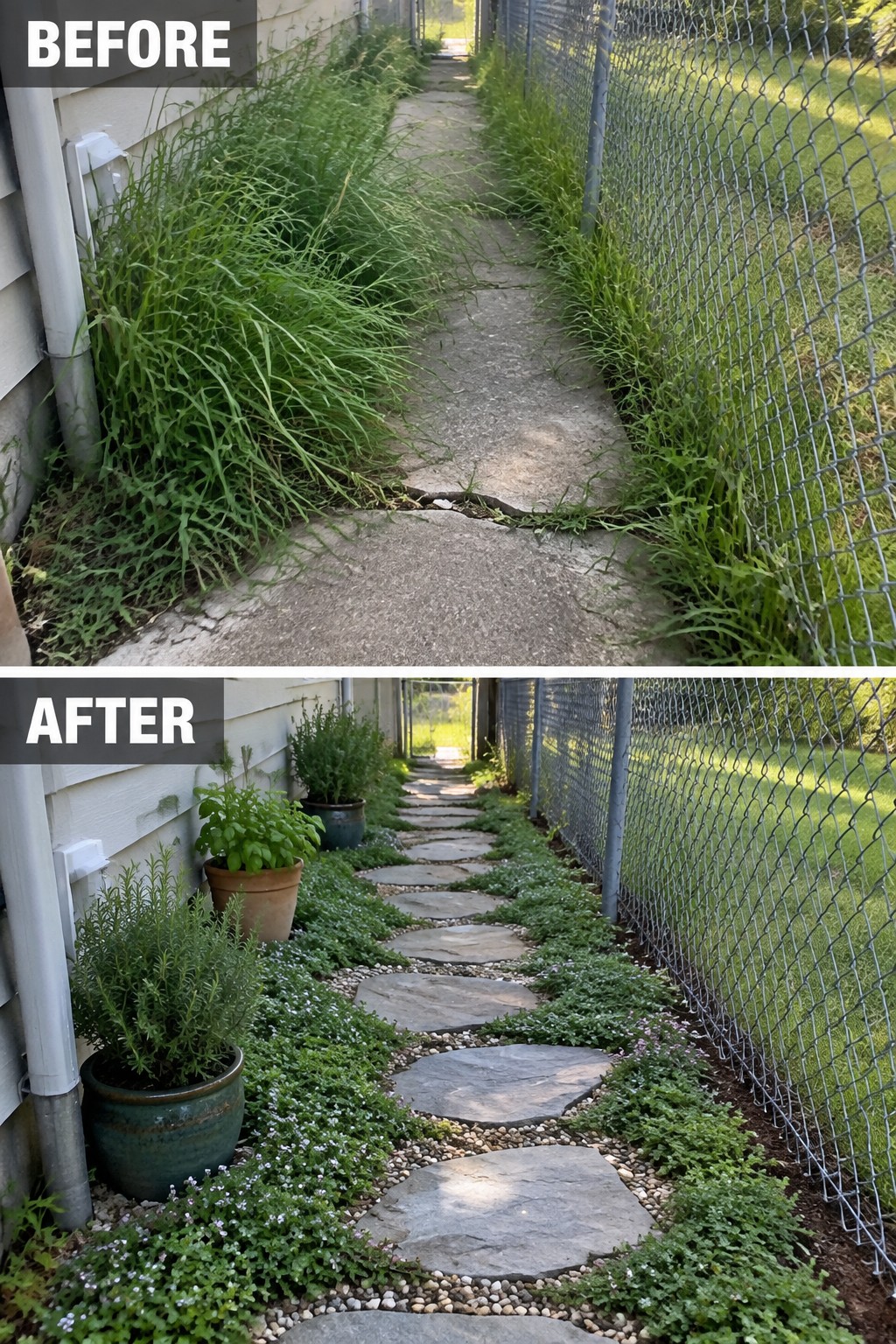
An overgrown side path quickly starts to feel neglected when tall weeds crowd the walkway. Removing that growth first lets you lay stepping stones that follow the natural route and add low ground cover along the edges so the space looks planned instead of forgotten.
This idea suits narrow areas between a house and fence where space is tight. Focus on keeping the path clear and using simple plants that stay low so walking through stays easy. Gravel or small stones around the pavers help hold everything in place without adding much cost.
Add Trellises And Climbing Plants To A Fence

A plain fence often looks unfinished on its own, especially when the ground below stays bare. Adding a few trellises gives vines a place to climb, which softens the surface and adds height without needing a lot of ground space. The change here comes from mounting simple wooden grids on the fence and letting roses and clematis fill them in, while a row of lavender creates a clean edge at the base.
This works best along side or back fences where you want more planting but do not have room for wide beds. Use weather-resistant trellises that sit a few inches off the fence so air can move behind the vines. Mulch the soil line to keep weeds down and give the plants a tidy start. The result turns the fence into part of the garden instead of just a boundary.
Add Raised Beds To Create Structure In A Bare Backyard
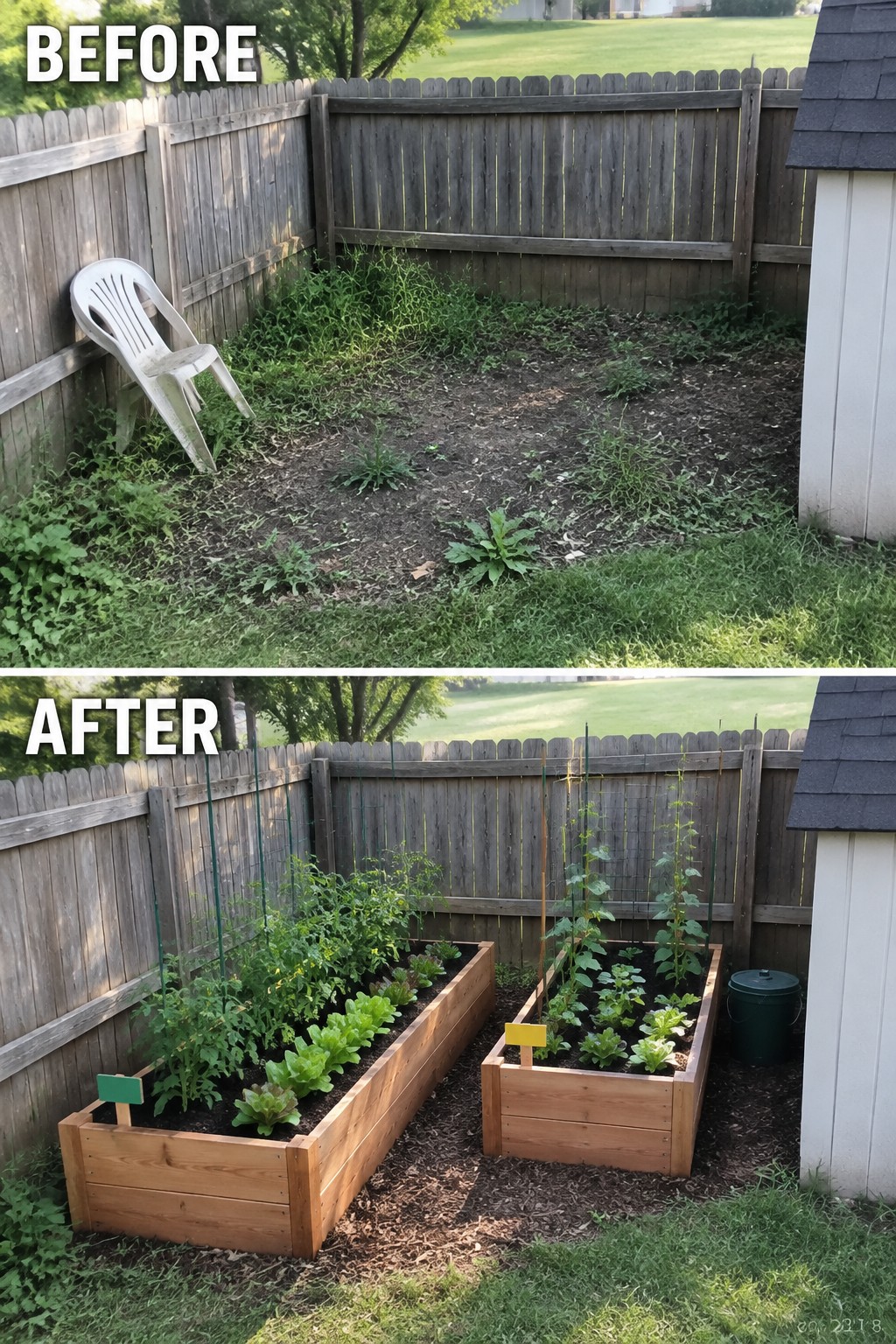
A patch of weeds and bare dirt rarely turns into a garden on its own. Raised beds give the space clear edges, better soil, and a place to grow without fighting the existing ground.
Two simple beds like these fit well in a small side yard or corner because they keep plants organized and leave room to walk around them. Start with wood that can handle weather, set the beds level, and add stakes early for anything that climbs.
Refresh Tired Planters With New Plants And Simple Staging
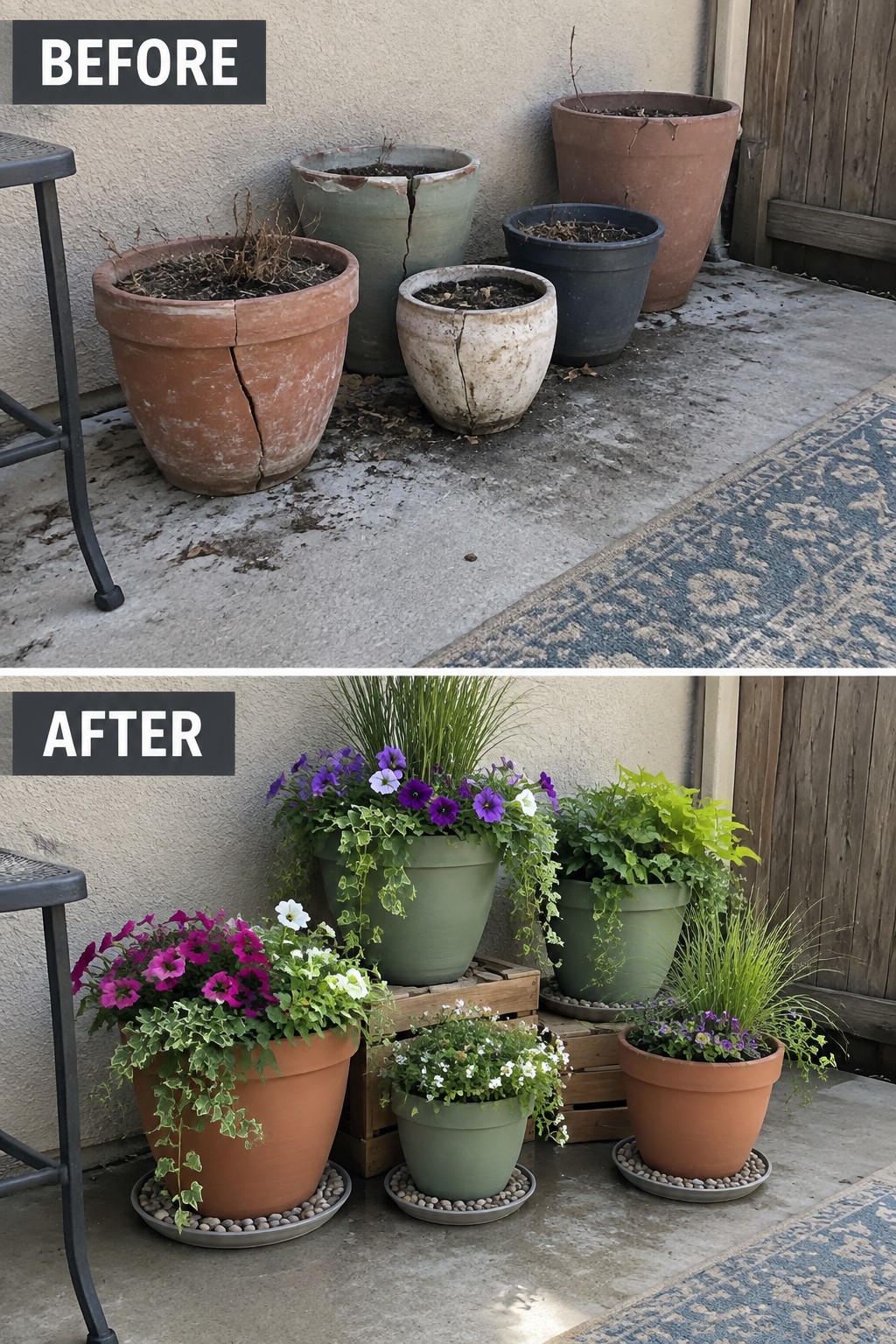
Old pots do not need to be replaced right away. The main change here was clearing out the dead plants and soil, then filling the same containers with fresh flowers and greenery. Adding a couple of wooden crates underneath gave the arrangement height and made the space feel more put together without buying new furniture.
This approach works well on small patios or concrete areas where space is limited. Start by choosing plants that match your light conditions, then use crates or bricks you already have to create layers. Keep the number of pots modest so there is still room to walk around.
Add Structure To A Bare Front Slope

A sloped front yard often looks messy when left as patchy grass and weeds. Adding a clear edge and covering the area with gravel creates a defined bed that holds the soil in place and makes the space feel intentional. The larger rocks add weight and break up the flat surface so the planting feels grounded rather than scattered.
This approach works well on small to medium slopes where you want low maintenance without constant mowing. Start by marking the bed line, lay down landscape fabric if needed, then spread gravel and set a few larger rocks before planting. It suits beginner projects because the materials are simple and the result stays neat with minimal watering once the plants settle.
Create A Simple Path To Structure Your Garden
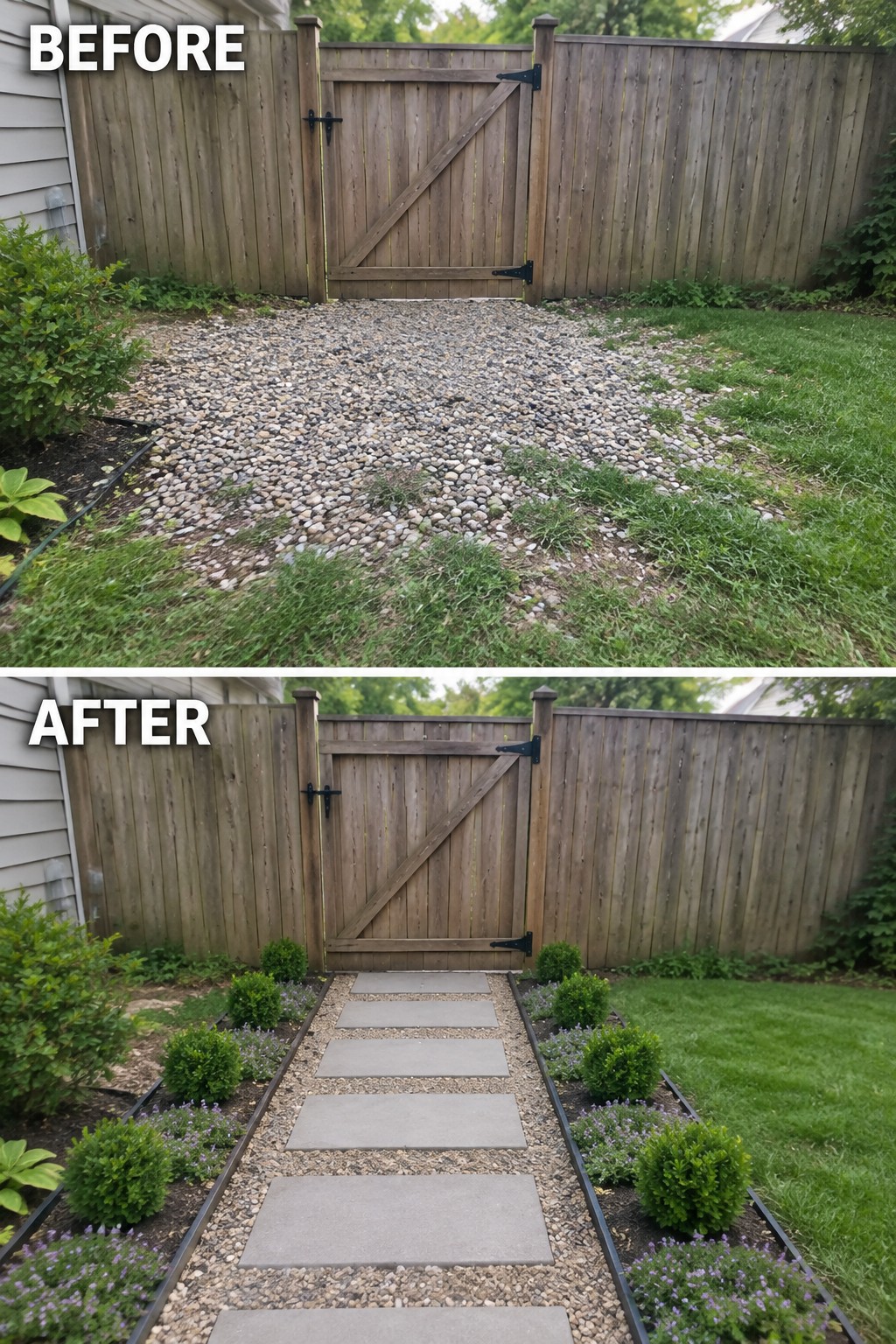
A loose gravel area often feels unfinished because nothing guides where to walk or where the beds should stop. Adding a row of stepping stones gives the space a clear direction and turns the same spot into something that feels planned instead of leftover.
This approach works best in small side yards or back corners where you need a walkway but do not want to pour concrete. Start by clearing weeds and leveling the ground, then lay the stones on a simple gravel base. Keep the plantings low and repeat the same border plants on both sides so the path stays the main feature.
Add Defined Garden Beds To A Plain Lawn
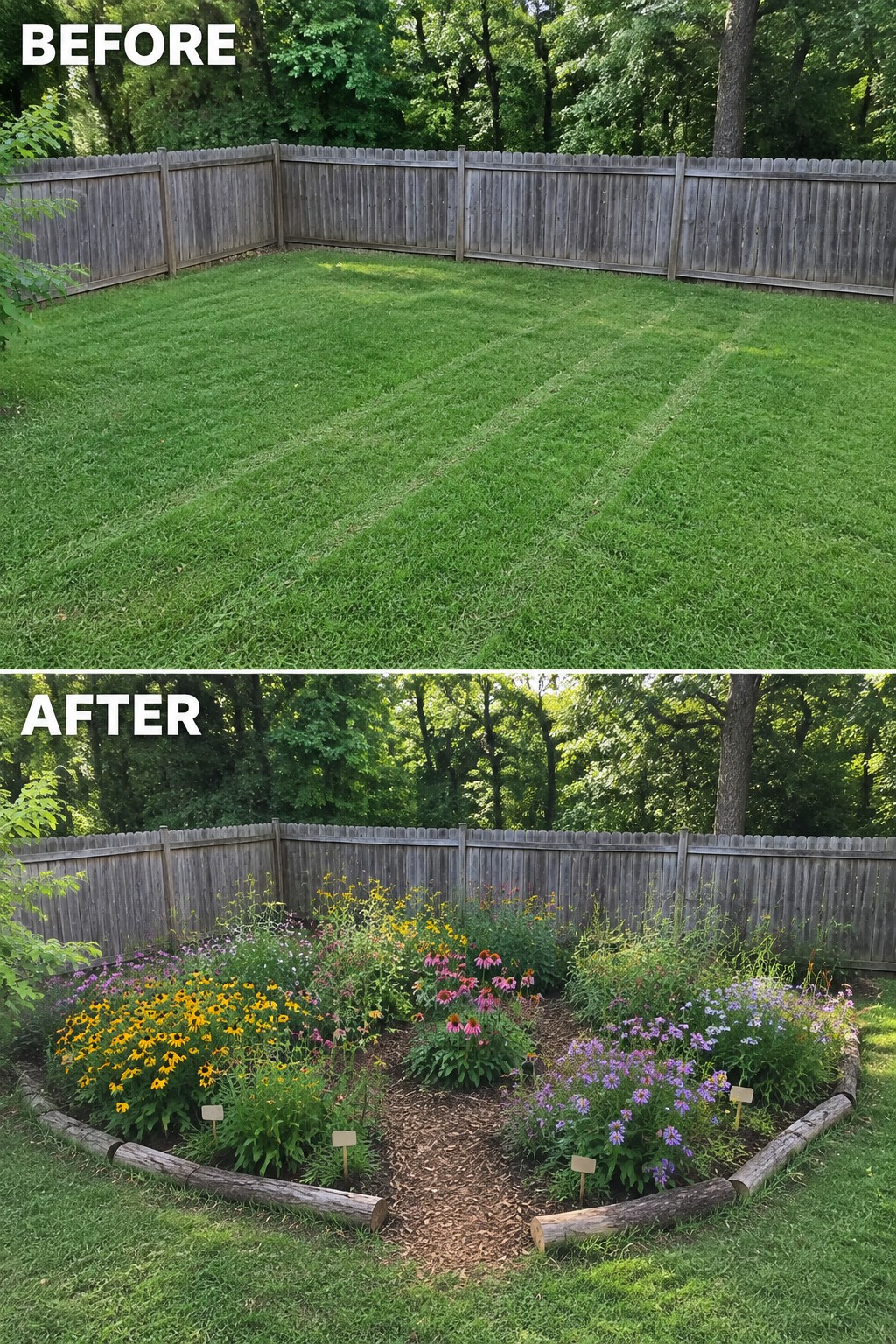
A flat stretch of grass can feel unfinished even when it is neat. Adding a few simple borders with logs or edging and filling them with plants gives the space clear shape and purpose. The mulch paths between the beds keep things tidy and make the plantings stand out instead of blending into one big green area.
This approach works well in fenced backyards where you want color and interest without losing open lawn space. Start with the borders and a layer of mulch first, then choose plants that match your light and soil. Keep the beds a reasonable width so you can reach the middle without stepping on soil.
Add Structure To An Overgrown Backyard
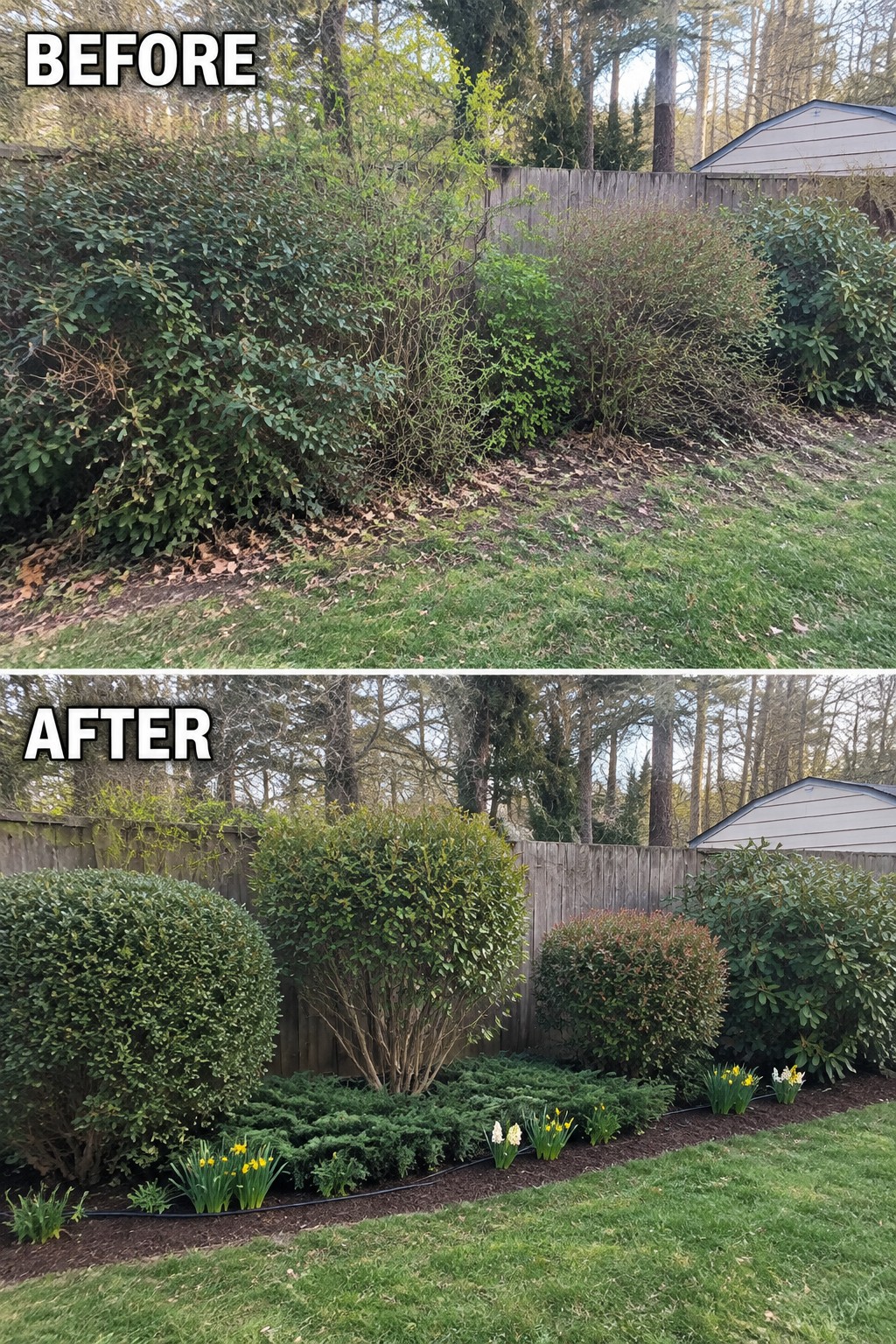
Many yards start with a wall of messy shrubs that have grown wild along the fence. Pruning them back into rounded shapes and clearing the ground underneath immediately opens up the space. Adding a low border of ground cover and a few clusters of flowers in fresh mulch turns the same area into something that looks planned instead of neglected.
This approach works well on sloped yards or long fence lines where full landscaping feels overwhelming. Start with what is already there by cutting the shrubs into simple forms, then lay out one or two rows of new plants along the front edge. Keep the number of new varieties small so the beds stay easy to maintain.
Restore A Bare Muddy Backyard With Mulch And Simple Borders

A bare, muddy yard often feels unfinished because there is no clear edge or surface to work with. Laying down mulch and adding simple log borders gives the space shape right away, while a line of stepping stones creates an easy path through the area.
This idea works best in small backyards where you want usable space without spending much. Start by clearing the worst spots, then use edging and mulch to define the main area before adding any plants or seating.
Add Lighting To Bring A Garden Path To Life
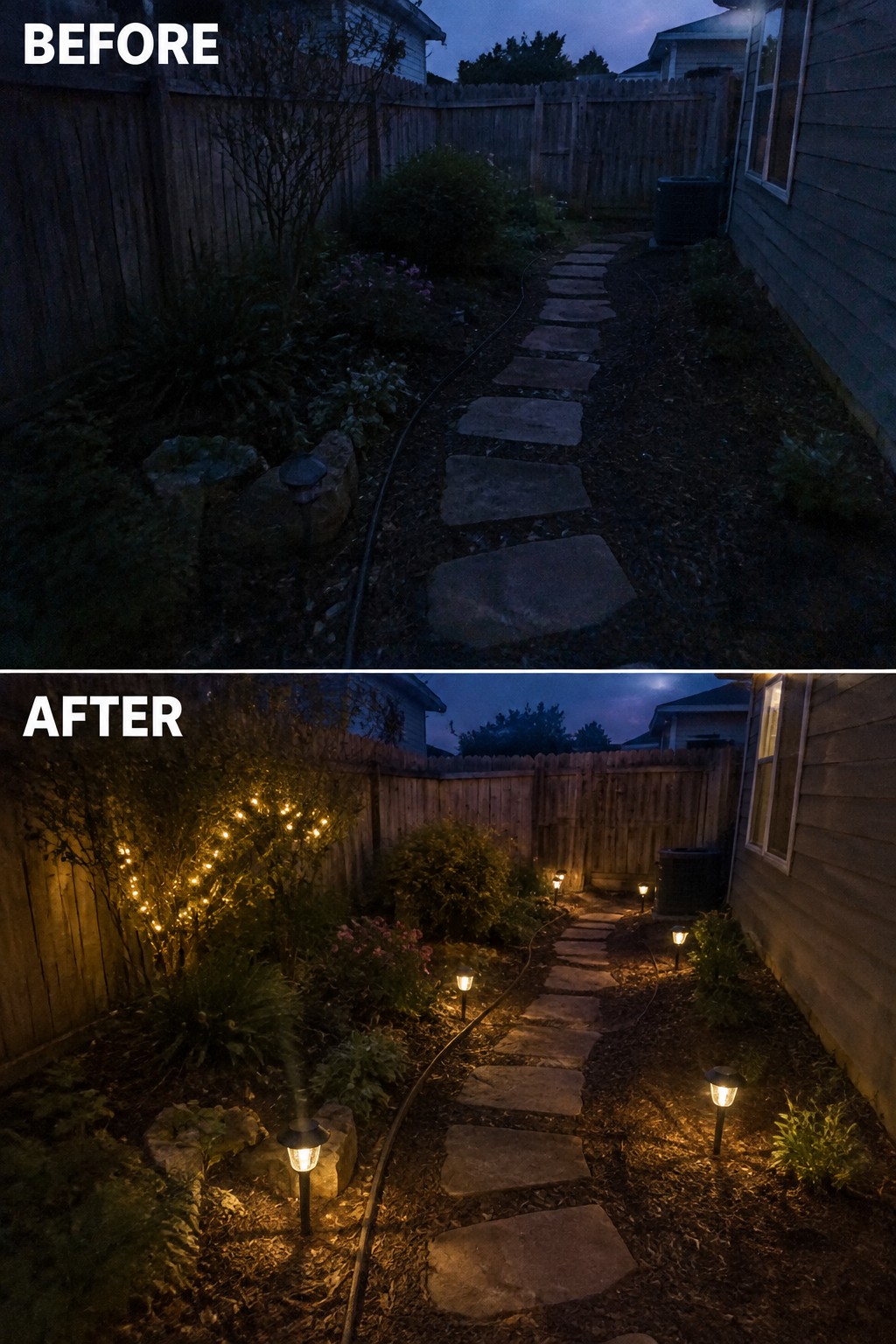
A dark garden path often gets ignored after sunset. Simple lights placed along the stones and a few strands wrapped on a tree turned this one into a space that feels usable and pleasant once the sun goes down.
This approach suits smaller backyards where you want to extend the hours you actually spend outside. Start with a few solar path lights along the walkway, then add one accent light on a tree or shrub. Keep the total number low so the garden still feels calm rather than overdone.
Turn A Bare Backyard Into An Outdoor Seating Area
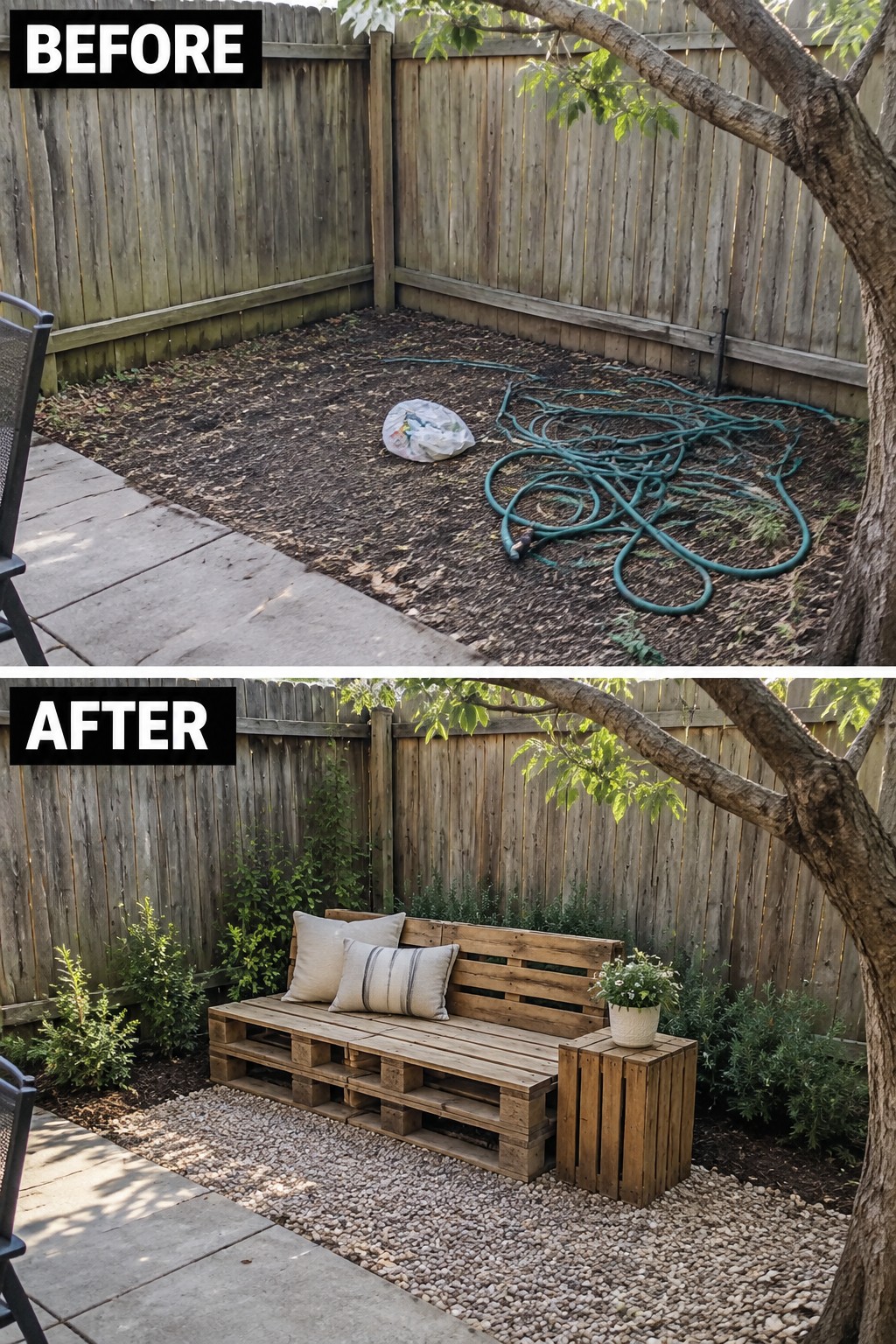
A simple gravel base and one solid bench can turn an unused patch of dirt into a spot that actually gets used. The change here came from clearing the ground first, then adding the bench and a low side table so the space had a clear purpose instead of just sitting empty.
This idea works best in small yards or side areas where you want something quick and cheap. Keep the furniture scale modest, use weatherproof materials, and leave enough open gravel so people can still walk around the bench without feeling crowded.
Define A Front Walkway With Clear Garden Beds

The main change here is the shift from scattered shrubs and uneven ground to neat beds edged with mulch. This simple step gives the concrete path a finished frame and makes the whole front area feel intentional instead of neglected.
This idea works well on any narrow side yard or entry path where you want order without spending much. Start by clearing the old growth, then lay down a solid layer of mulch to hold the shape. Keep the planting simple so the beds stay easy to maintain year after year.
Define Garden Paths With Gravel Borders

One easy way to improve an existing path is to add a simple gravel border along both sides. The before photo shows stones that had become uneven and lost among the surrounding plants, while the after shows how a neat line of pebbles gives the path clear edges and makes it feel more finished.
This approach works best in narrow side yards or along fences where you already have stepping stones but want them to look more intentional. Clean the stones first, then add landscape fabric and gravel so the border stays low-maintenance. It suits homes with older paths that just need better structure rather than a full replacement.
Add Defined Garden Beds For A Neat Yard
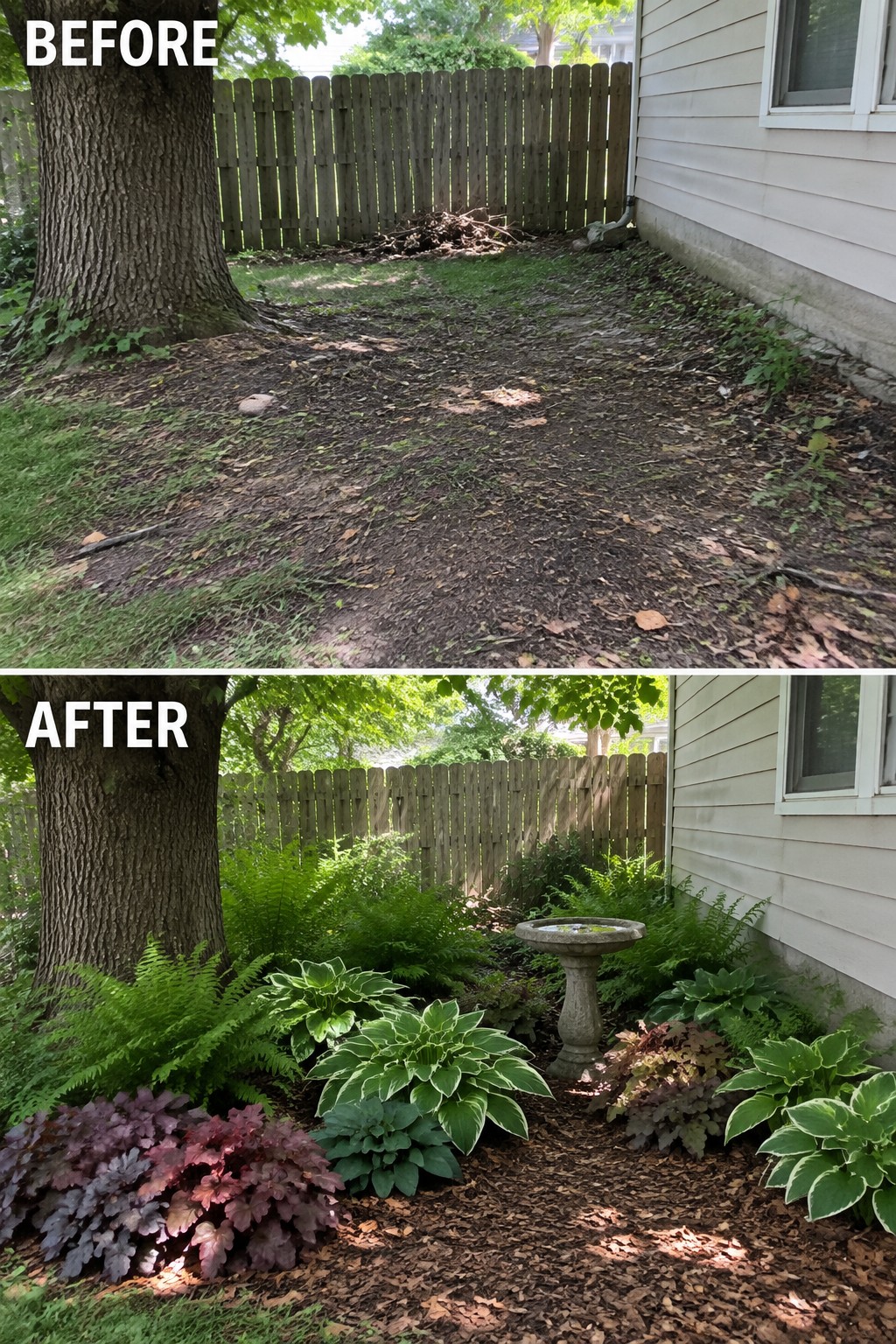
A bare strip of dirt next to the house often looks worse than it needs to because nothing gives it shape. Laying out simple beds, adding mulch, and planting in layers turns the same space into something that feels intentional instead of leftover.
This approach works best along fences, beside foundations, or under trees where grass struggles. Start by clearing leaves and leveling the soil, then edge the beds so they stay separate from the lawn. Mulch keeps weeds down and makes the planting look finished even when the plants are still small.
Add Edging To Create Defined Garden Beds
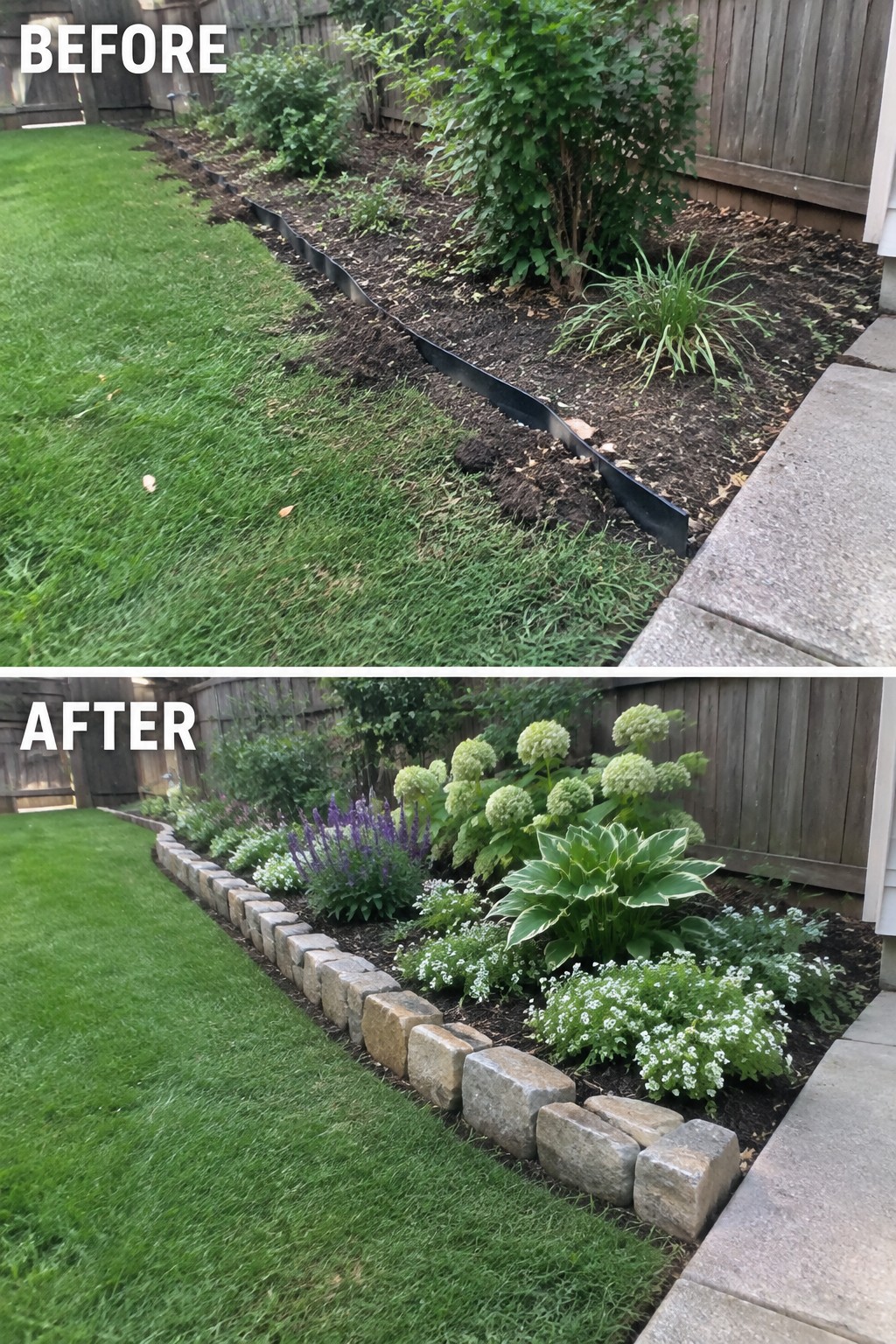
A simple stone edge can turn a ragged garden border into something that looks planned. The before photo shows the lawn running straight into loose soil and an old plastic barrier, while the after shows a clean line of stones that holds the bed in place and lets the plants stand out.
This approach works best along fences or house walls where the yard feels unfinished. Lay the edging first so the shape stays consistent, then fill the bed with a few larger shrubs and smaller fillers rather than packing in too many plants at once. Keep the lawn edge straight so mowing stays easy.
Turn An Empty Balcony Into A Small Seating Area
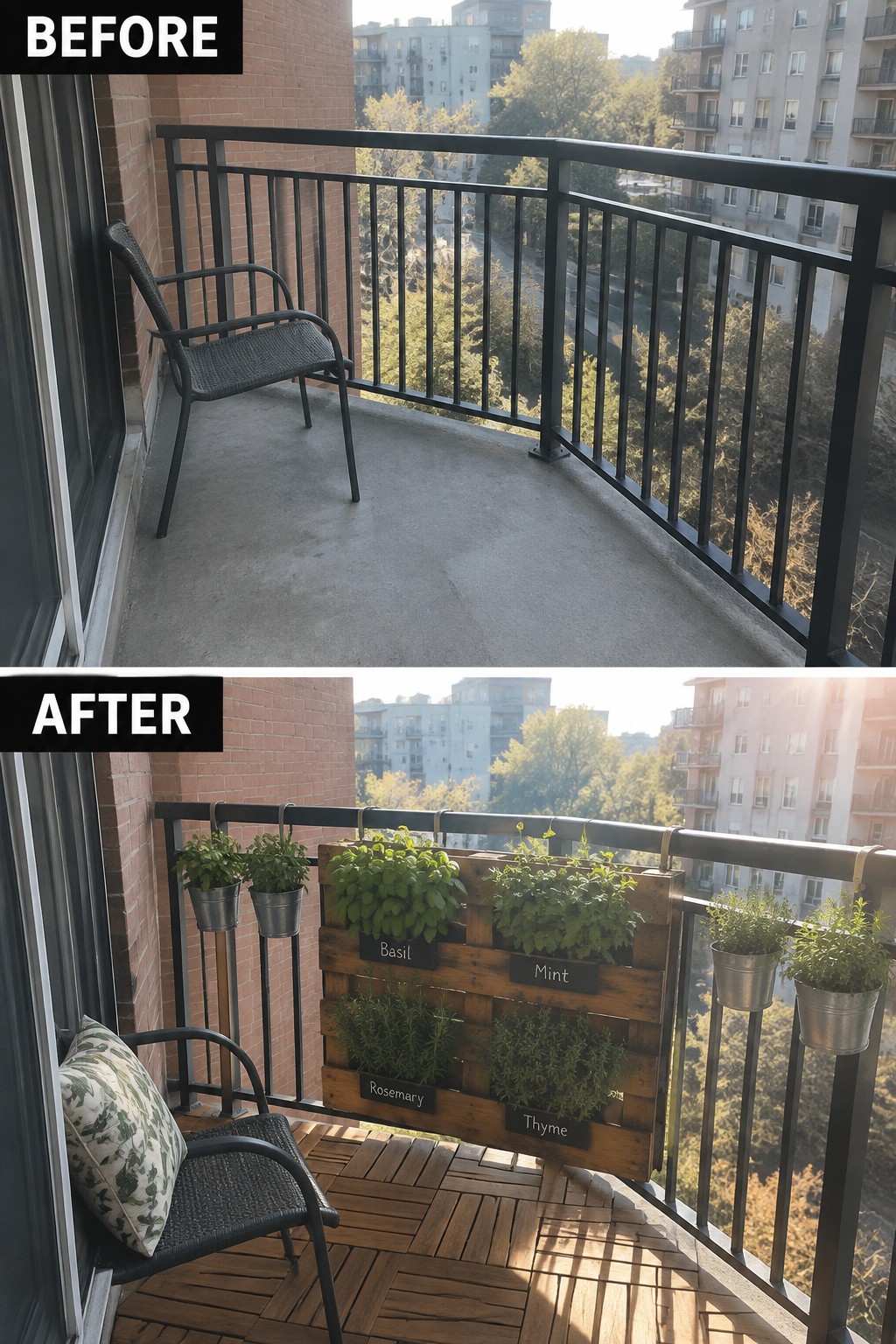
A bare concrete balcony often sits unused because it lacks any sense of purpose or comfort. Adding wood deck tiles and a simple hanging herb garden gives the space a floor and a focal point without crowding the small area.
This idea works best on balconies that already have a railing and some sun. Keep the additions lightweight and weatherproof so the floor stays clear for walking and the plants stay easy to reach.
Build A Raised Garden Bed To Organize A Small Backyard

A raised garden bed paired with wall storage turns a scattered backyard corner into a workable garden space. The before photo shows tools leaning against the fence and a random bin taking up room, while the after shows everything in its place with a clear planting area and gravel underfoot.
This approach suits small yards that need structure without major construction. Keep the bed simple and use a pegboard for tools so the space stays open and easy to maintain. Focus on one main planting zone first before adding more features.
Frequently Asked Questions
Q: Where can I find cheap materials without driving all over town? A: Check local Facebook groups for people giving away old pots and bricks. Many folks post free garden stuff when they redo their yards. Start there before hitting stores.
Q: What if my soil is too rocky for planting? A: Mix in some compost from your kitchen scraps to loosen it up. You can dig small holes and add the good stuff right where you plant. This saves money and gets things growing fast.
Q: How long does a simple path project take for a beginner? A: Plan on a weekend afternoon if you keep it small. Gather your stones or gravel the day before so you are ready.
Q: Can I do these ideas if I rent my place? A: Focus on containers and movable items like hanging baskets. That way nothing stays behind when you move. Ask your landlord first about any temporary changes.
