


Many gardens end up looking tired when the plants demand more water than the local climate provides.
Choosing varieties that handle dry spells well lets the beds stay green with far less effort once they are established.
I have noticed that spending time on the initial layout and soil prep makes the whole area feel more settled from the start.
Adding simple edging and a few key shrubs gives the space a clearer shape without needing weekly upkeep.
Some of the planting combinations here look like they could work in my front beds with only minor adjustments.
Define The Front Path With Planted Borders
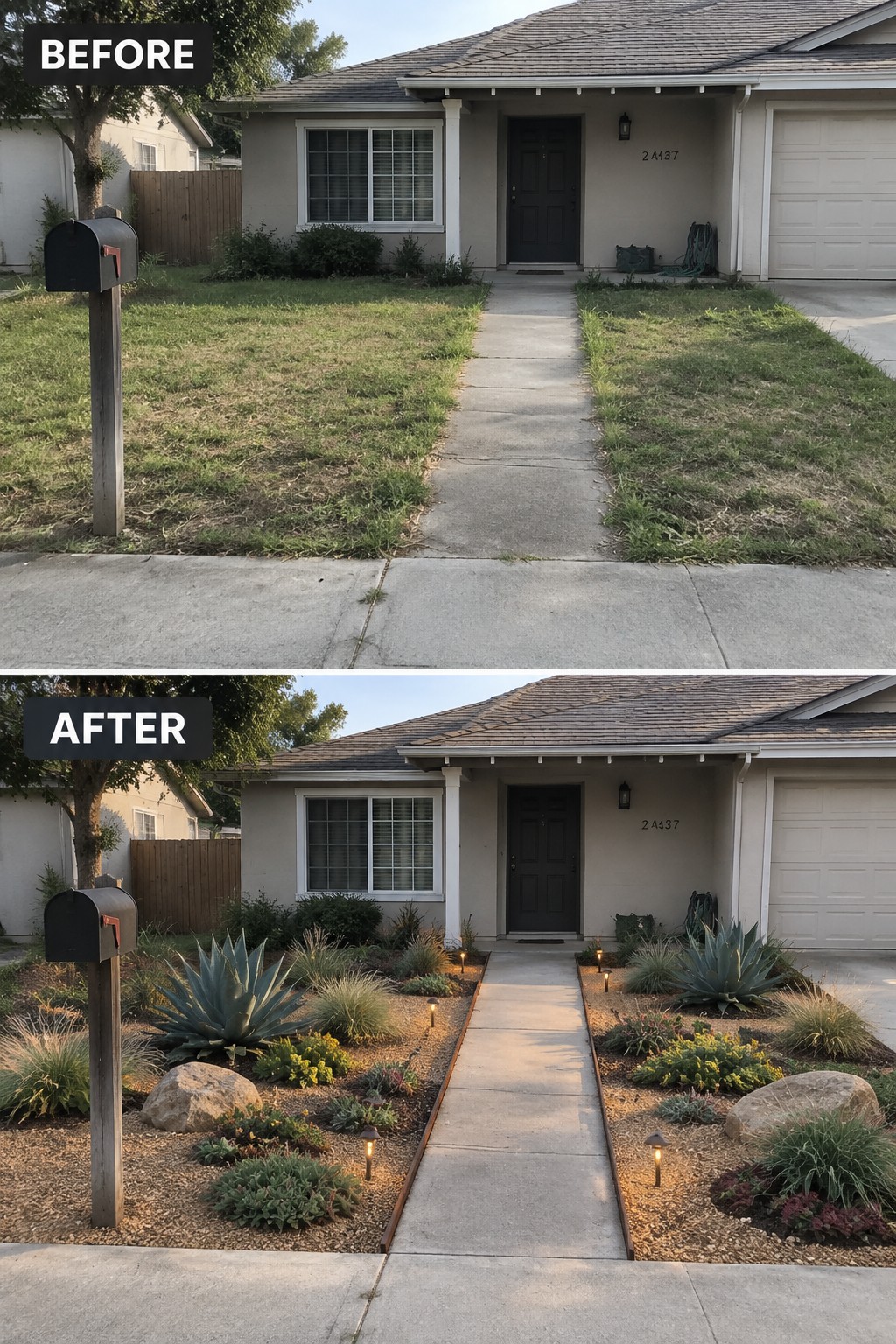
A flat lawn next to a concrete walkway often feels unfinished and hard to maintain. Adding edged beds on both sides of the path and filling them with gravel and drought-tolerant plants gives the entry a clear structure without needing constant mowing or watering.
This approach works well on smaller front yards where the goal is low upkeep. Start by marking straight or gently curved borders along the existing walkway, then choose a simple mix of succulents, grasses, and ground covers that can handle dry conditions. The result keeps the path usable while cutting down on lawn care.
Add Structure To An Overgrown Backyard
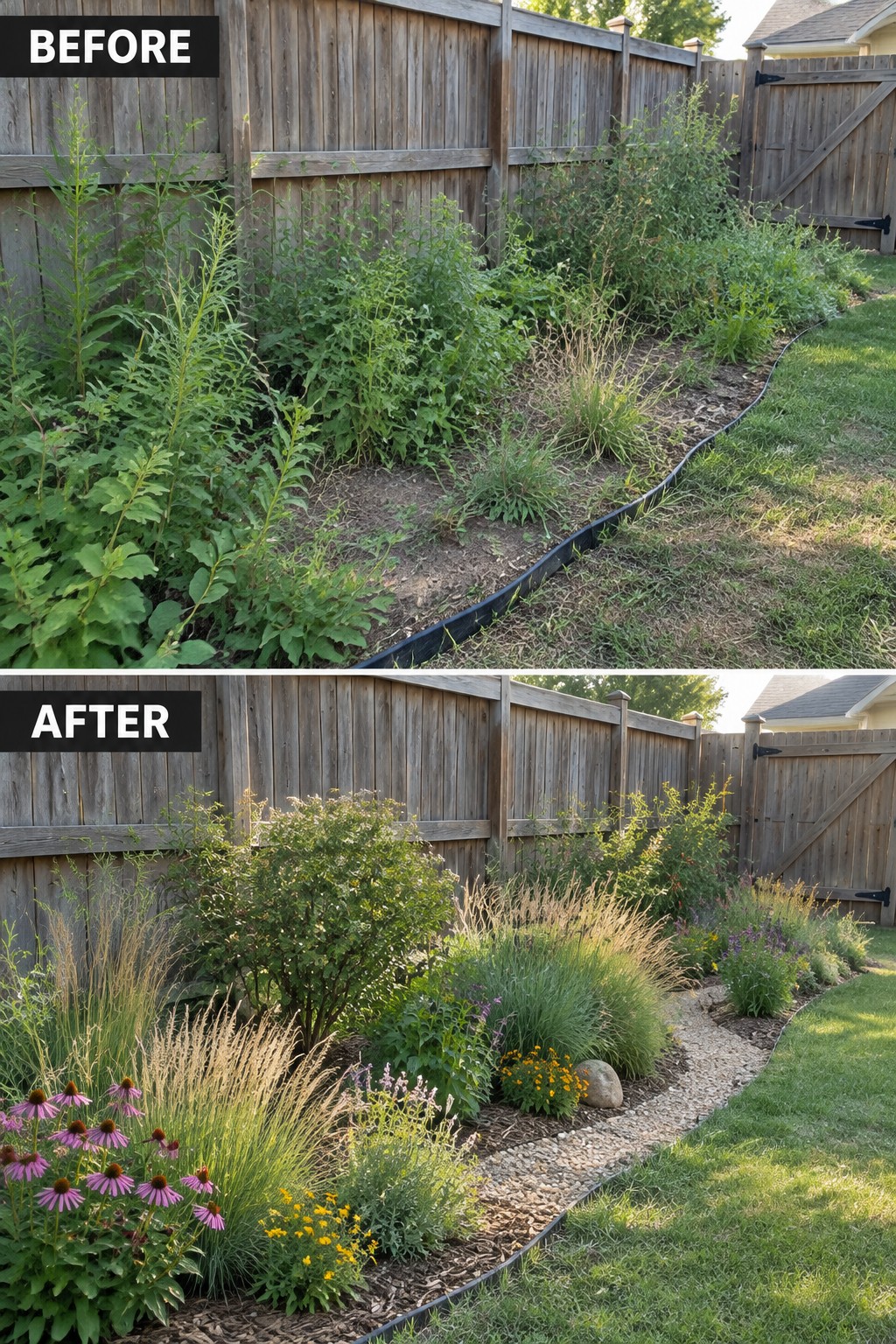
The biggest change here came from clearing the messy weeds and volunteer plants first. Once that was done, simple edging and a gravel border created clean lines along the fence. The new plants stay low-maintenance because they are mostly grasses and perennials that handle dry spells without much watering.
This approach works well in any narrow side yard or back fence line where things have gotten away from you. Start with removal and basic edging before you buy plants. That order keeps the beds from looking scattered and makes it easier to choose a few repeating varieties that fill in nicely over time.
Swap High-Maintenance Plants For Drought-Tolerant Succulents
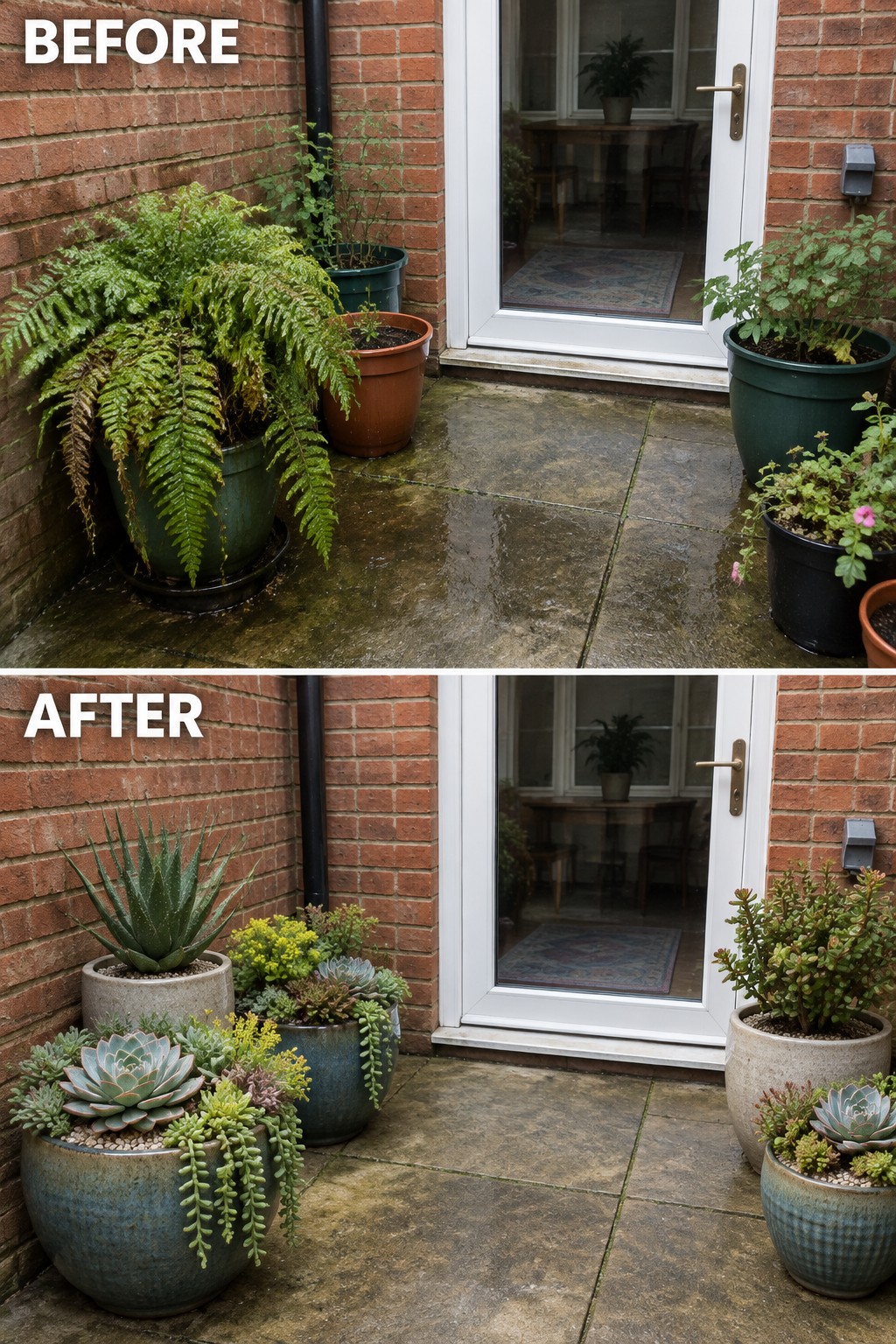
The before photo shows a patio filled with large ferns and leafy plants that need regular watering and look messy when left alone. Switching to succulents and compact shrubs in sturdy pots gives the same space a cleaner look while cutting back on care.
This idea suits small paved areas next to the house where full garden beds are not possible. Group three or four pots together using similar colors and sizes, and pick plants that handle dry spells so the arrangement stays looking good with minimal effort.
Terrace A Sloped Yard With Stone Walls

A bare dirt slope is hard to plant and even harder to maintain. Building low stone retaining walls turns the slope into a series of flat beds that stay in place and give plants room to grow. The steps added in between make the area easy to walk through without creating erosion.
This approach works well on any gentle slope where you want low-maintenance planting. Choose drought-tolerant plants like succulents and groundcovers that handle the improved drainage the walls provide. Start with the walls and steps first, then fill the beds with a few tough varieties rather than trying to plant directly into the slope.
Replace Overgrown Grass With Gravel And Simple Planting

The front strip along the sidewalk was mostly weedy grass that needed constant mowing and watering. Switching it to a gravel base with a few tough plants cleaned up the edge and cut down on maintenance right away.
This approach works well along sidewalks or narrow front borders where lawn is hard to keep neat. Start by clearing the grass completely, lay down a weed barrier, then add gravel and repeat a small group of drought-tolerant plants like lavender or grasses so the bed stays simple to care for.
Add Defined Planting Beds Along A Concrete Patio

A plain concrete edge next to bare dirt often feels unfinished and hard to maintain. Adding a narrow planted border with simple edging and drought-tolerant plants turns that strip into a clean, structured garden area that softens the concrete without taking up much space.
This approach works well along side yards or back patios where you want some greenery but need low upkeep. Start with a metal or wood edge to keep the gravel in place, then choose a mix of shrubs, grasses, and small perennials that handle dry conditions. Keep the bed narrow so it stays easy to water and weed.
Add Structure To A Narrow Side Yard Path
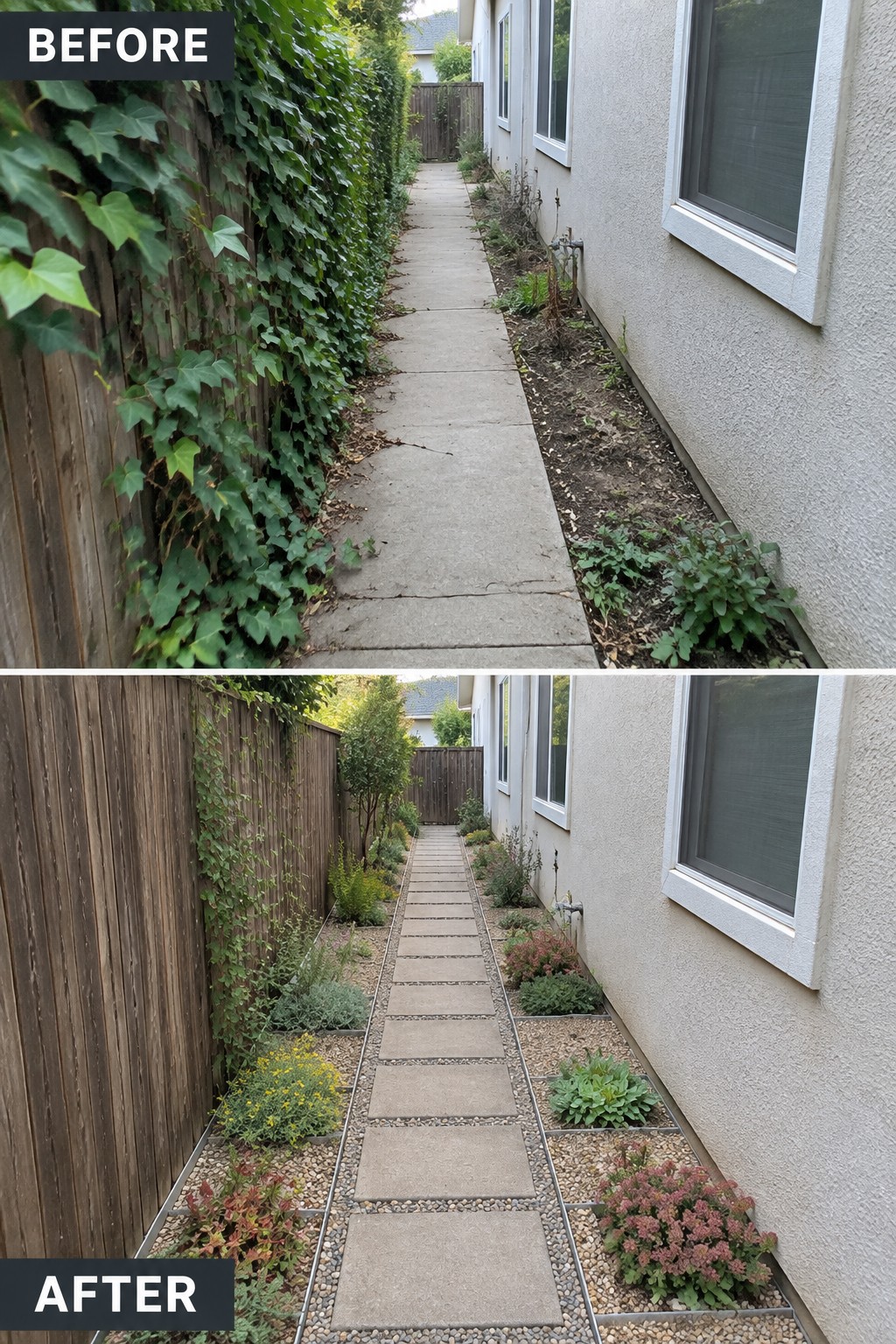
A narrow side path often gets ignored because it feels too tight for real planting. Clearing the ivy and weeds first, then laying gravel beds along both sides, turns the space into something that looks planned instead of forgotten.
This idea suits homes with long, skinny yards between the house and a fence. Keep the plants low and drought-tolerant so they do not crowd the walkway, and the gravel keeps the beds looking neat without constant weeding.
Build Low Stone Walls To Create Planting Beds

A big flat lawn can take a lot of mowing and watering, especially on a slight slope. Adding a low stone retaining wall turns the open grass into a series of defined beds that hold mulch and plants in place. The change cuts down on lawn area while giving the front yard a cleaner, more finished look without needing constant upkeep.
This approach works well on homes where the yard slopes toward the street. Start with the wall to set the shape, then fill the beds with gravel and a simple mix of shrubs that handle dry conditions. Leave enough space along the driveway and sidewalk so the beds do not crowd the walking areas.
Add Structure To An Overgrown Front Bed

The main change here is turning a scattered, weedy patch into one clear planting area. By clearing the old growth and adding a simple mix of succulents, ground cover, and river rock, the bed looks intentional instead of neglected. The small lights along the edge also help mark the space at night without adding much work.
This approach works well along a walkway or at the base of steps where you want something neat but do not want constant watering or trimming. Start by removing everything that does not fit the shape you want, then choose plants that stay low and handle dry spells. Keep the layout simple so it stays easy to maintain over time.
Use Gravel And Planting Beds To Simplify A Backyard
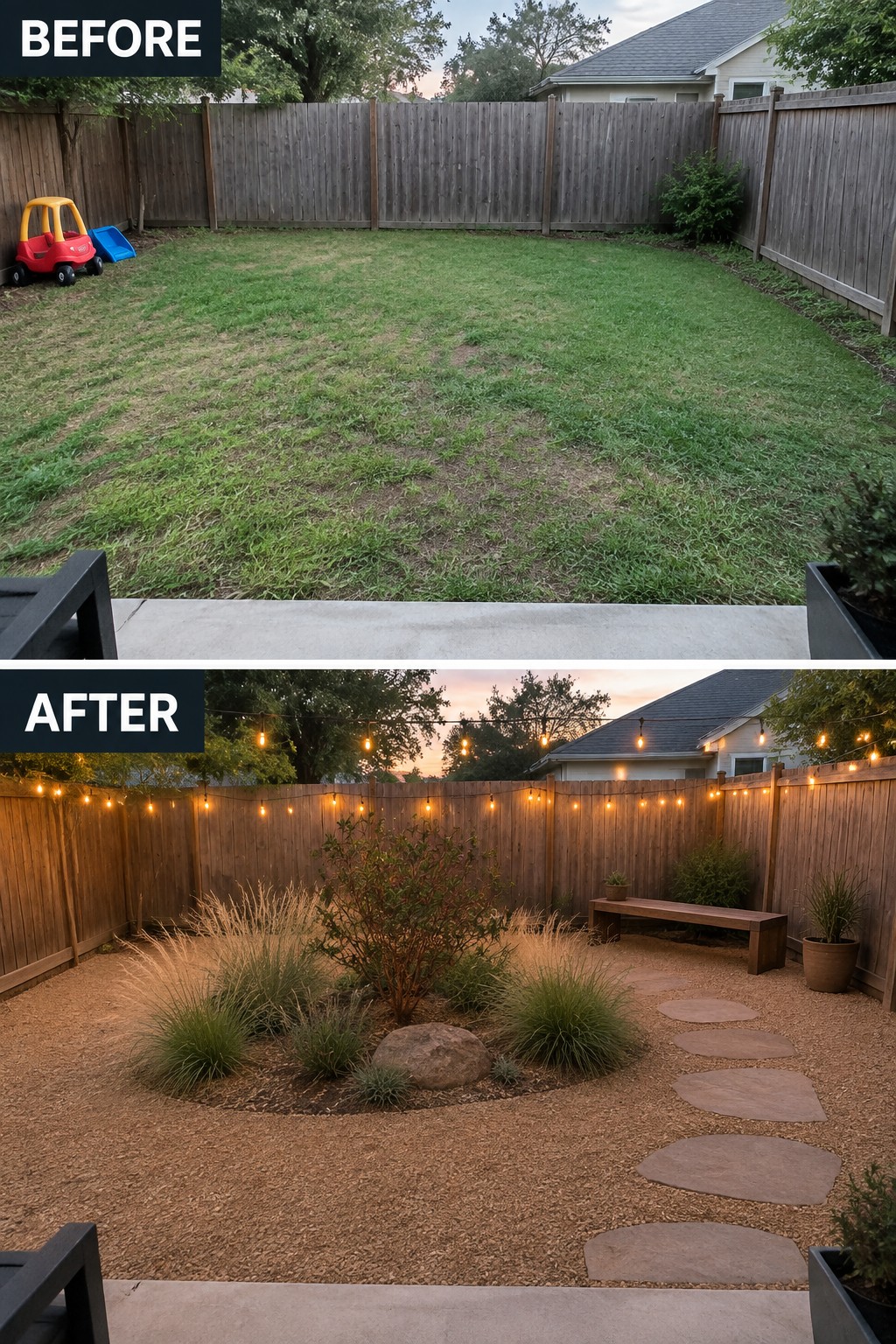
A full lawn often means constant mowing and watering. Here the grass was pulled back and replaced with gravel across most of the yard, leaving only a few planted pockets with grasses and shrubs. The change turns an empty stretch of green into a space that stays neat with much less work.
This idea suits homes in drier climates where lawn upkeep feels like a chore. Clear the area first, add a barrier to hold back weeds, then spread gravel and set plants in small groups. Keep a simple path through the middle so the yard remains easy to cross.
Clear Overgrowth Before Adding Drought-Tolerant Plants

The front bed had grown into a thick, messy wall of shrubs that hid the windows and made the house look neglected. Removing everything down to bare soil made room for a simple layout of agaves, prickly pear, yuccas, and low ground covers set in gravel. The new planting stays low, needs little water, and keeps the windows clear.
This approach works best on any narrow strip along a house where old shrubs have taken over. Start with a full cleanup so you can see the actual shape of the bed, then choose plants that stay in scale and repeat a few types instead of mixing too many. Gravel or decomposed granite helps keep weeds down and gives the whole area a finished look without much ongoing work.
Use Potted Plants To Create A Low-Maintenance Gravel Garden
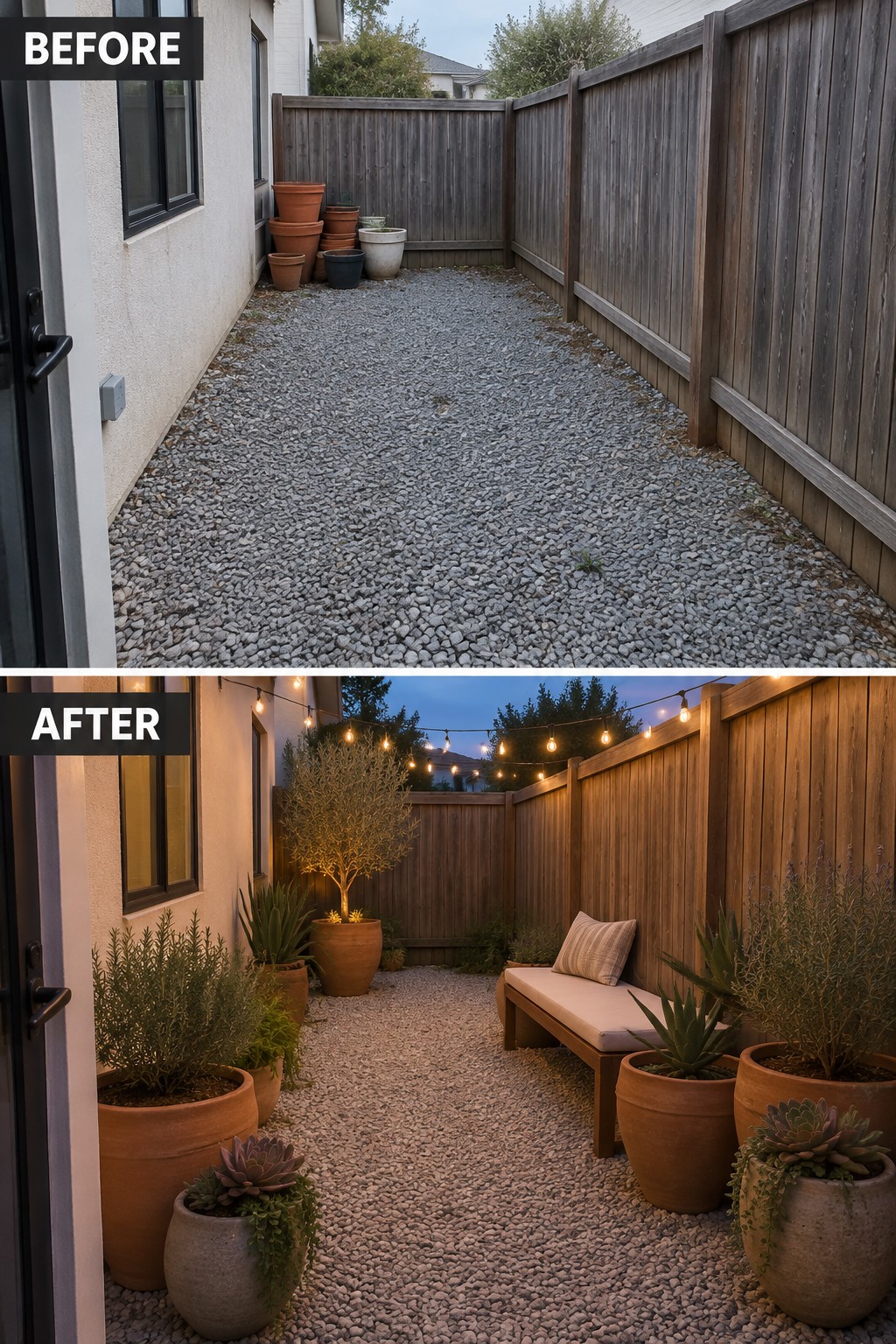
A bare gravel yard often feels unfinished and hard to use. Adding a few large pots filled with drought-tolerant plants and one simple bench gives the space clear purpose without needing to dig or install irrigation. The change turns an empty stretch of gravel into a spot where you can actually sit.
This idea works well in small side yards or back corners where a full garden bed would be too much work. Choose sturdy pots in similar tones, group them in clusters of different heights, and keep the plant choices limited to a few varieties that handle dry conditions. Leave enough open gravel so the area still feels open and easy to walk through.
Add Defined Beds With Gravel For A Cleaner Border

The front border started as a wide strip of mulch with scattered plants that never quite filled in. Switching to gravel and grouping plants into clear beds gave the whole area shape without adding a lot of work. The rock keeps weeds down and makes the planting look intentional instead of scattered.
This approach works well along sidewalks or house foundations where you want low maintenance. Start by edging the bed cleanly, lay down fabric if needed, then add gravel before planting. Choose a few types of shrubs that stay compact so the beds do not require constant trimming.
Break Up A Concrete Patio With Pavers And Planting
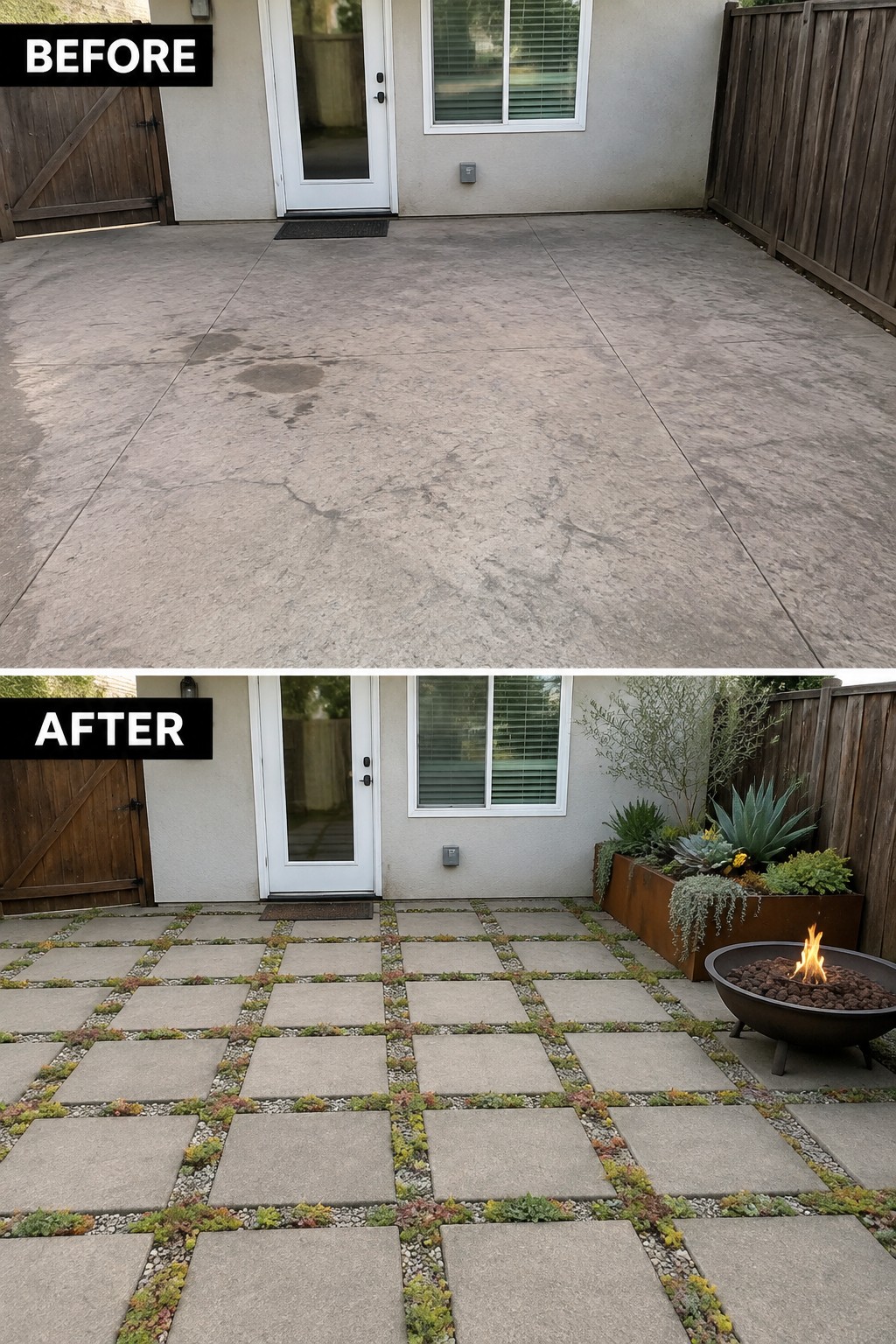
A large slab of plain concrete can feel empty and hard to use. Switching to a grid of pavers with low plants tucked into the joints adds texture and breaks the space into smaller sections without adding much work. The plants fill the gaps over time and keep the surface from looking flat.
This approach works well on patios that get sun most of the day. Start with a simple paver layout first, then choose tough groundcover that handles dry spells. Leave enough room between sections so furniture and foot traffic still move easily.
Replace Weedy Edges With Gravel And Tough Plants
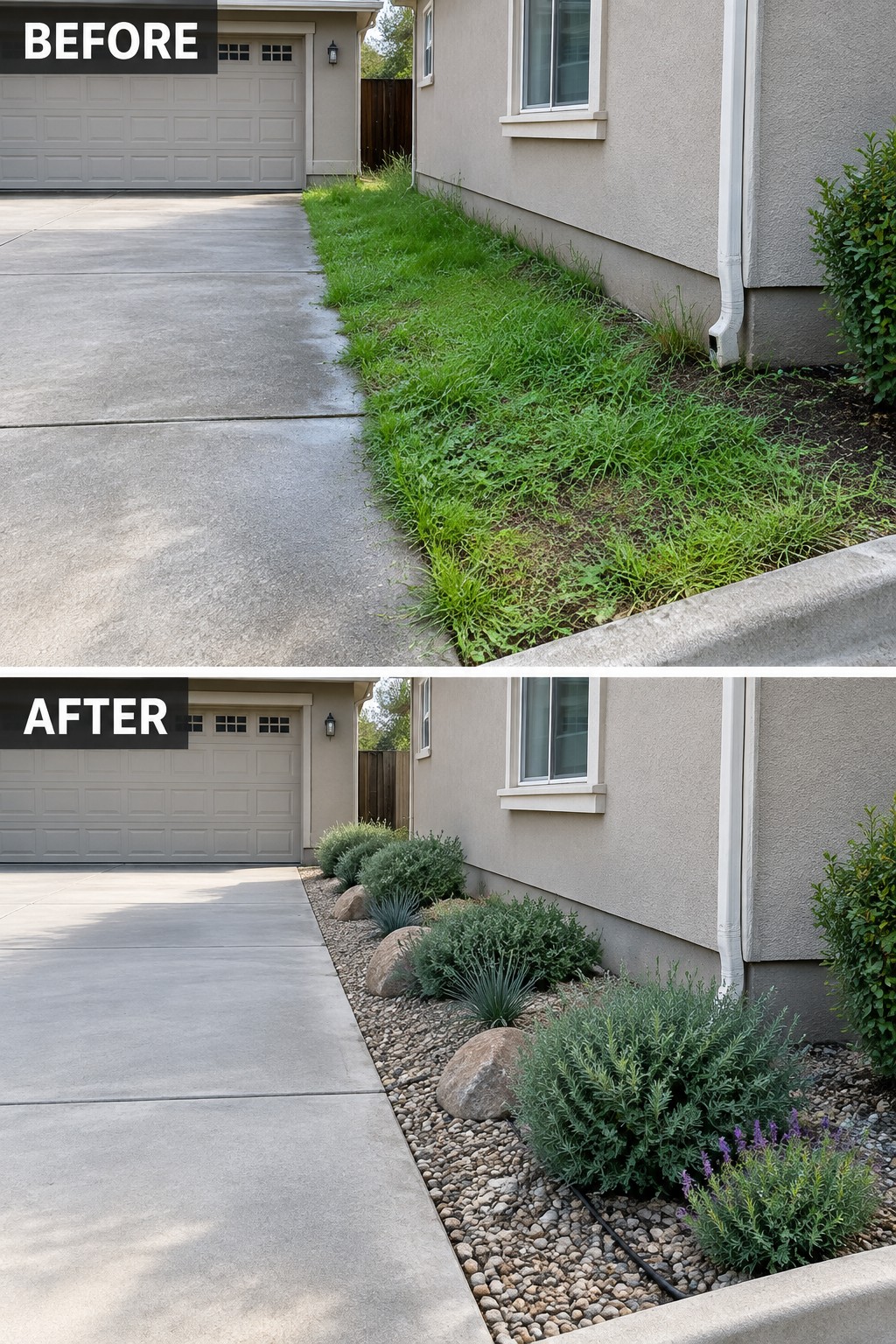
An overgrown strip of grass right next to a driveway or foundation often looks messy and needs constant trimming. Switching it to gravel with a few low-water shrubs cleans the line fast and cuts down on mowing and watering.
This approach works well along driveways, walkways, or the side of a house where grass struggles. Start by removing the existing growth, lay down a simple weed barrier, then add gravel and plants that handle dry conditions. Keep the bed narrow enough to leave room for walking and make sure the plants stay low so they do not block windows or doors.
Replace Struggling Plants With Drought-Tolerant Options

The raised beds held rows of tomato plants that had clearly outgrown their care routine and were suffering in the heat. Clearing those out and replanting with succulents, lavender, and compact shrubs turned the same beds into something that stays neat with far less water.
This idea suits anyone who already has raised beds but wants lower upkeep. Remove the old plants first, then pick varieties suited to your sun and soil. The structure stays in place while the planting becomes easier to manage year after year.
Turn A Neglected Balcony Into A Simple Seating Spot

A small balcony often ends up as storage for old pots and random junk when there is no clear plan for it. Clearing everything out and adding a layer of gravel creates a clean base that instantly makes the space feel usable instead of forgotten.
From there, a single folding chair and a few matching planters filled with drought-tolerant plants are enough to give the area purpose. This approach works especially well on urban balconies where you want low effort and still have room to sit without crowding the floor.
Define A Fire Pit Zone With Gravel And Simple Planting

A plain lawn with just a basic stone ring can feel unfinished and hard to use. Adding a gravel base with a low stone border creates a clear seating area that stays neat and needs little upkeep. The drought-tolerant grasses and shrubs around the edge give structure without constant watering or mowing.
This approach works well in sunny backyards where you want a spot for evenings outside but do not want high-maintenance lawn or flower beds. Start with the gravel and edging first, then add a few tough plants that match your climate. Keep the circle a practical size so chairs fit without crowding the fire pit.
Simplify The Front Porch With Matching Drought-Tolerant Planters

The before photo shows a porch crowded with mismatched pots in different colors and sizes, which made the entry feel messy even though it had plenty of plants. Switching to a smaller number of matching terracotta pots filled with structured plants like lavender and sedum creates a much cleaner look while cutting down on daily care.
This approach works well on any home with a few steps or a small landing. Pick one pot color and repeat it, then choose plants that stay neat without constant watering or deadheading. The result still gives color and life without the scattered look that comes from grabbing whatever container is handy.
Add Structure To An Overgrown Side Yard

A narrow side yard often ends up as a weedy strip that no one uses. Clearing the overgrowth first and laying down gravel with stepping stones gives the space a clear purpose and makes it easy to walk through without tracking dirt.
This idea works best on homes where the side yard serves as a main access route. Use low-water plants that stay contained along the edges so the path stays open and the whole area stays low maintenance over time.
Replace Overgrown Plants With Drought-Tolerant Beds

Poolside planting often gets out of hand when fast-growing tropicals are left unchecked. Clearing the old mix and putting in agaves, succulents, and gravel instead gives the border a tidy shape that stays neat with almost no regular pruning or heavy watering.
This idea suits homes in drier regions where water use matters. Clear everything first, then build low raised beds with a gravel finish so the plants stay contained and the area stays easy to maintain year after year.
Add Structure To An Overgrown Backyard
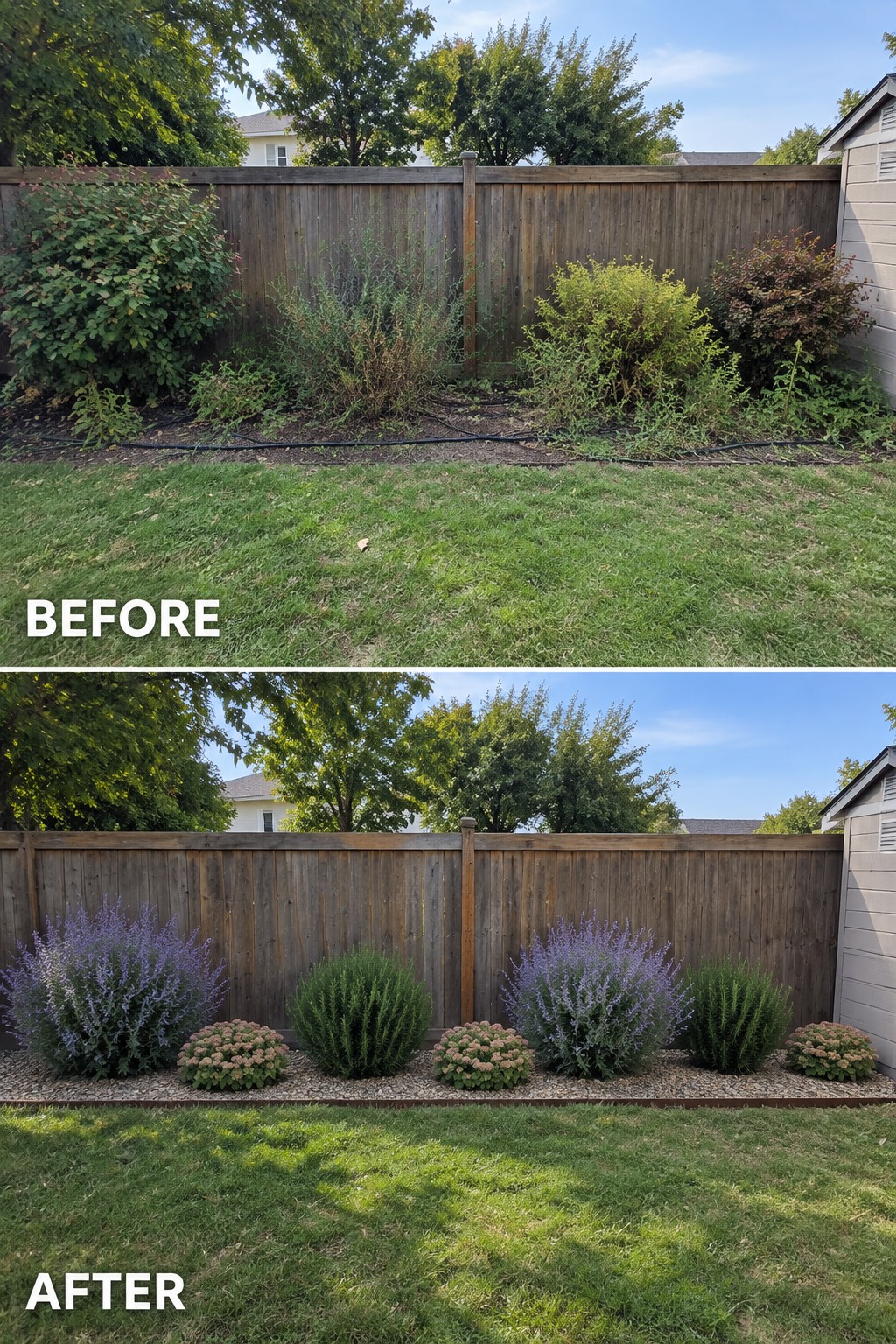
Many yards end up with a messy strip of plants along the fence that just keeps spreading. Clearing that growth first and setting up clean beds with gravel gives the space a clear shape without adding much work later.
This idea suits sunny backyards where you want to cut down on watering. Pick a few plants that stay neat and repeat them in a simple row so the bed feels balanced and easy to maintain.
Frequently Asked Questions
Q: How often should I water these plants during the first summer? A: Give them a deep soak about once a week if no rain falls. Roots need that steady push to reach deeper soil layers. Skip the daily sprinkling that keeps them shallow and weak.
Q: Will the same plants work if part of my yard stays shady? A: Choose varieties like coral bells or certain fescues that still prefer dry conditions. Tuck them into the dimmer corners while saving the sun lovers for open areas. Watch how they settle in before adding more.
Q: Can I keep some of my old flowers mixed in? A: Plant around what already grows there as long as the water needs match. Remove anything that demands frequent soaking so the new choices do not struggle. A quick check of leaf texture helps spot the heavy drinkers.
