


Gardens often lose their sense of order when grass edges blur into beds and overgrown plants crowd out any clear layout.
Adding defined pathways and a few structural plantings can restore usability without requiring a complete overhaul of the space.
I have noticed that a thorough cleanup usually shows what needs adjusting more clearly than adding new features right away.
Layering in edging and better plant groupings tends to make the yard feel less neglected while still leaving room for seasonal changes.
A few of these approaches are easy to test in sections.
Add Structure To An Overgrown Backyard

Clearing the weeds and giving the space clear edges made the biggest difference. The before photo shows a messy mix of tall weeds and uneven grass, while the after shows neat borders filled with flowers, mulch, and a gravel path that runs along the fence.
This idea suits long, narrow yards where plants can quickly take over. Start by removing the worst growth, then add simple edging and a path before planting. It keeps the space looking intentional and cuts down on future weeding without requiring a complete redesign.
Add Raised Beds To Give A Front Yard Clear Structure
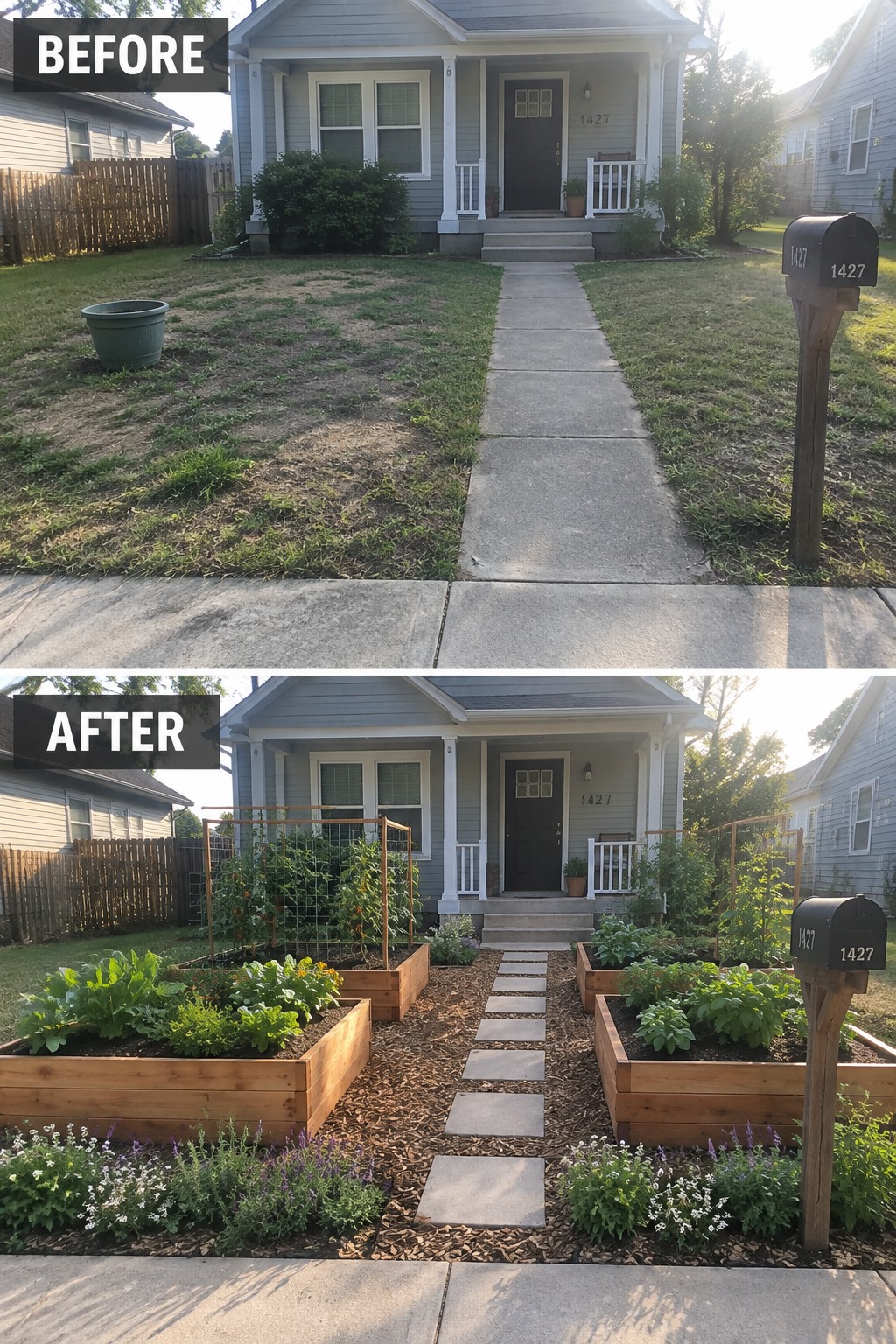
The main change here is swapping a patchy, open lawn for raised wooden beds placed along the walkway. This simple addition creates clear growing zones, adds height, and makes the whole front space feel more intentional without major construction.
Raised beds work especially well on smaller lots where you want planting space but still need room to walk and mow. Place them on either side of the path, keep the beds a consistent height and material, and use mulch to connect the areas. The result is a yard that looks cared for and gives you room to grow without crowding the house.
Turn An Empty Patio Into A Seating Area
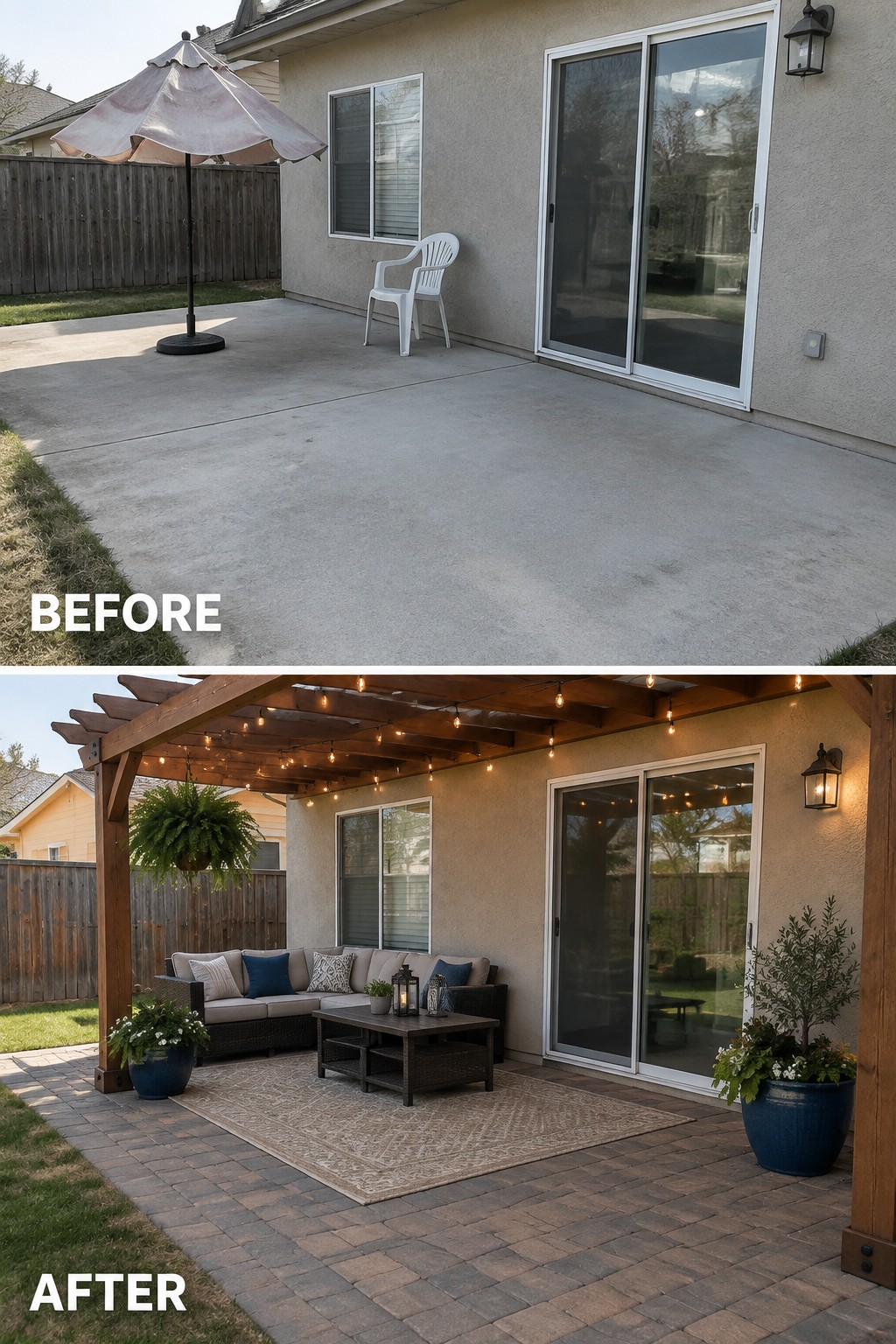
A wide concrete slab with almost nothing on it rarely gets used. Adding a pergola for cover, string lights overhead, and a proper seating arrangement turns the same space into somewhere people actually sit and stay.
This idea works best on existing patios that already have a solid surface. Focus first on the overhead structure if you want shade and a defined boundary, then add furniture that can handle weather and one large rug to pull the seating zone together. It suits homes where the backyard already has the basic footprint but lacks any sense of purpose.
Turn A Narrow Side Yard Into A Defined Path
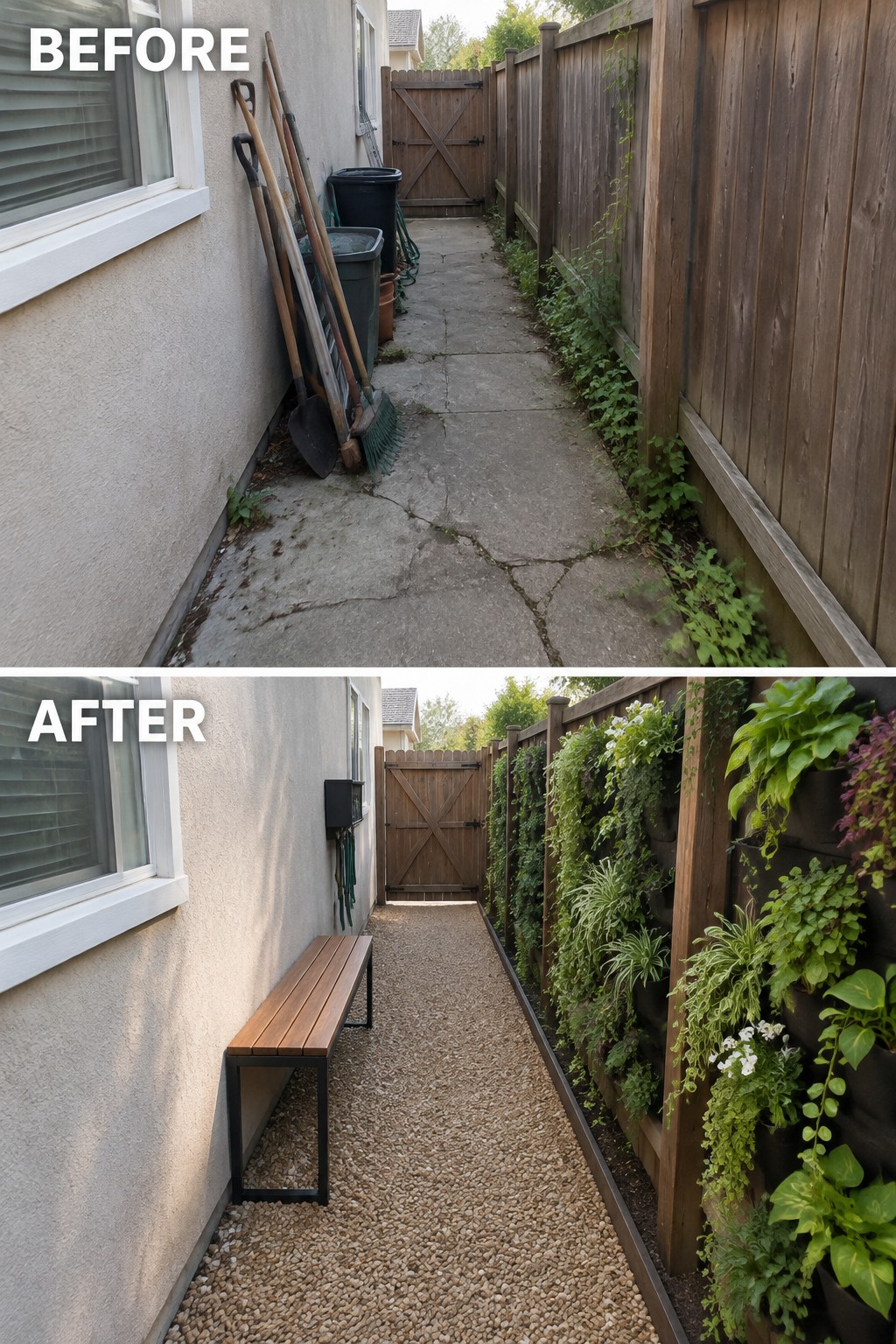
A narrow side yard often becomes a catch-all for tools, bins, and weeds. Switching the cracked concrete for gravel and adding a bench gives the space a clear purpose while making it much easier to walk through. Vertical planters mounted on the fence add greenery without taking up any floor space.
This idea suits homes where the side yard is mostly a pass-through rather than a main gathering spot. Start by clearing everything out, then lay gravel for better drainage and a neater look. Wall-mounted planters work especially well in tight areas since they keep plants off the ground and leave room to move.
Terrace A Steep Slope To Create Usable Garden Beds
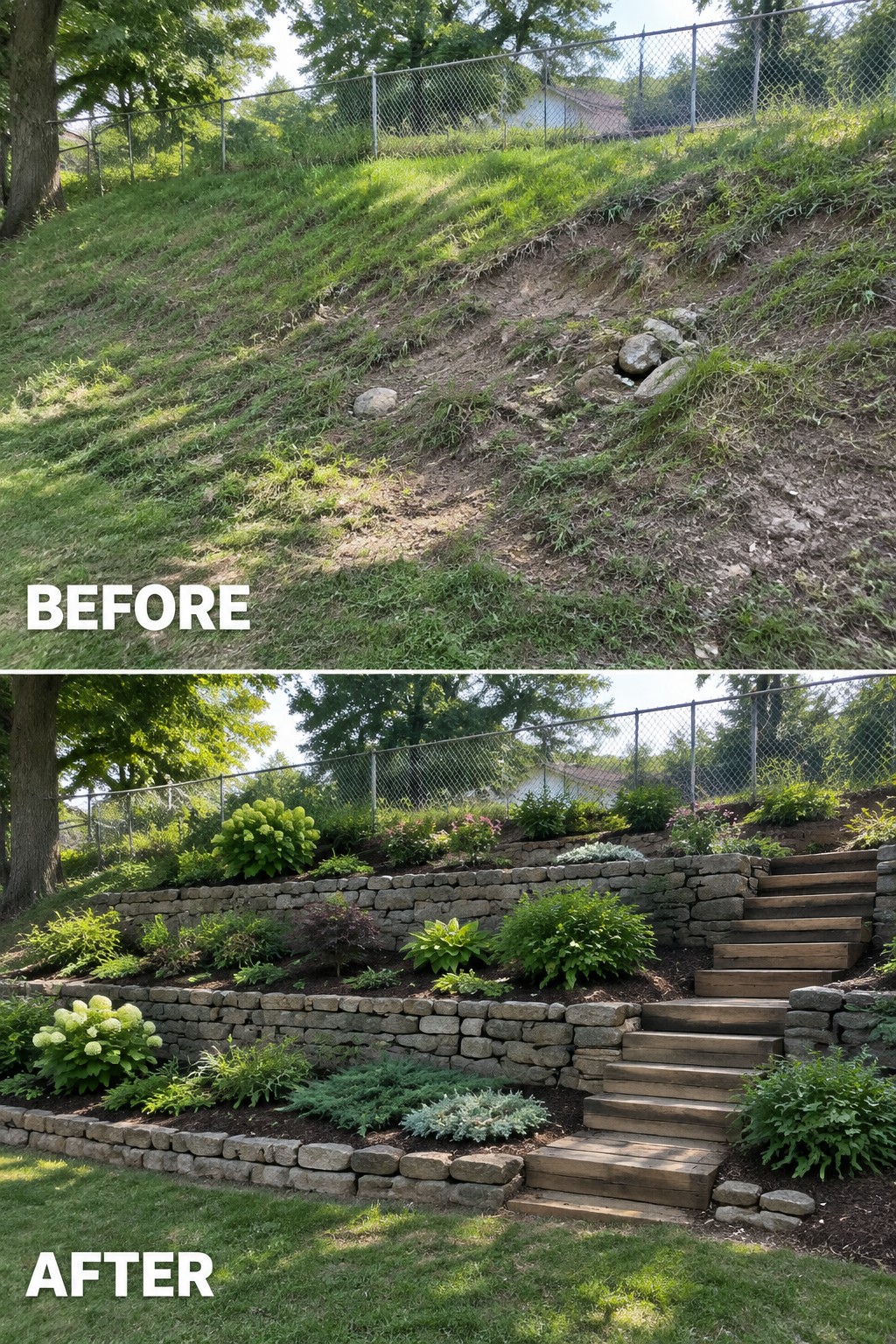
A steep slope usually becomes a problem area because grass grows unevenly and planting feels difficult. Stone retaining walls change that by carving the hill into flat beds that hold soil in place and make the space much easier to work with. The stairs add simple access so people can actually reach the new planting areas.
This idea suits homes with a noticeable drop in the backyard. Focus first on building solid walls to shape the levels, then choose plants that match the sun exposure on each tier. It keeps maintenance low and turns awkward ground into something you can actually use.
Add Layered Planting Along A Pool Edge
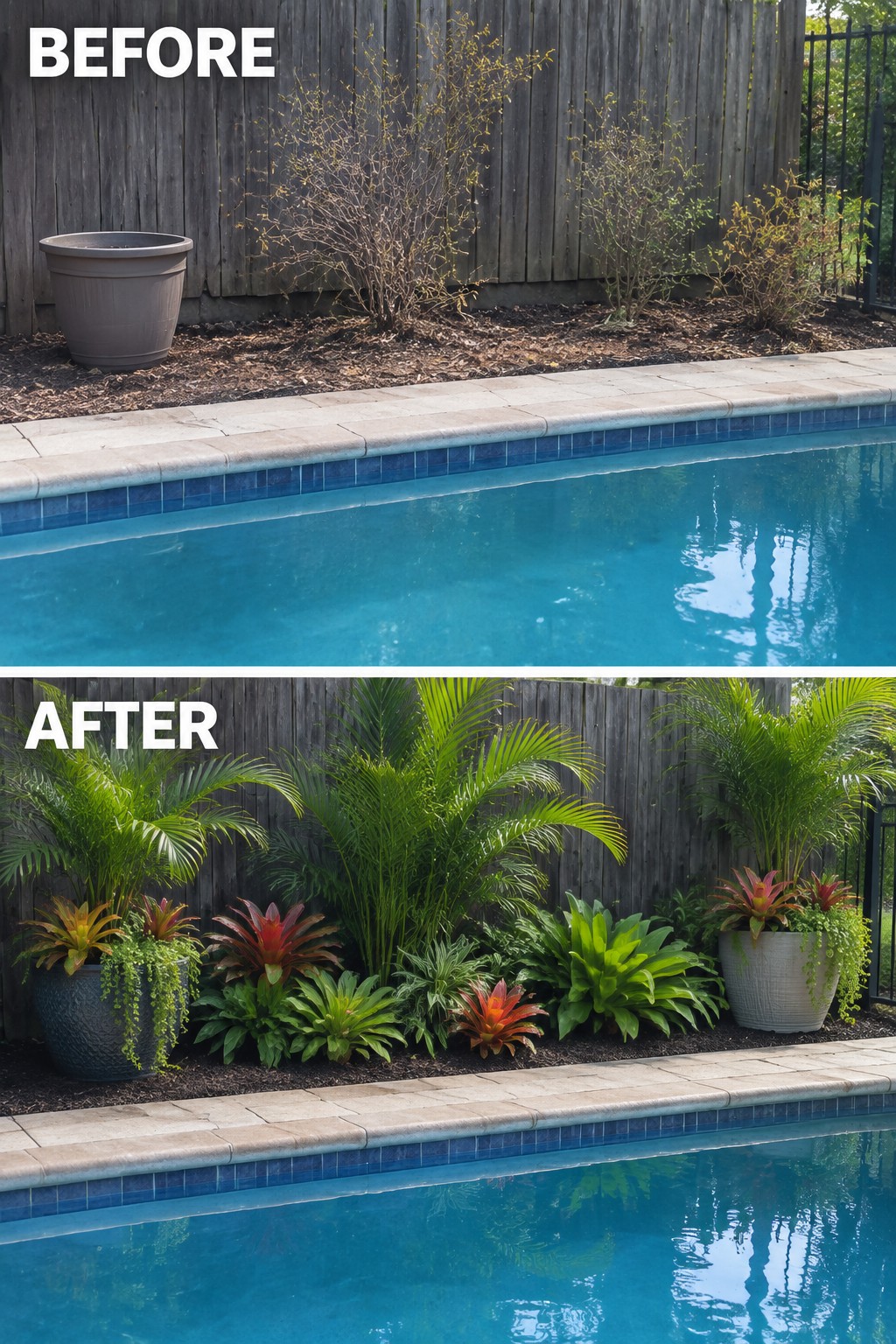
A bare strip of dirt next to a pool often looks unfinished, even when the water itself is clean. Filling that space with a mix of heights and textures turns the edge into a real garden border instead of just a line of coping. The change here came from clearing the weeds and adding palms for height, broad leafy plants in the middle, and colorful accents in pots at the front.
This works best on straight pool edges where you want softness without losing the open feel of the water. Start with a clean bed and mulch, then build in layers so nothing looks too flat. Pots give you room to add color and move plants if something needs more sun or less water. Keep the tallest plants toward the back and leave a little space so the border does not crowd the deck.
Add Defined Garden Beds Along The Foundation
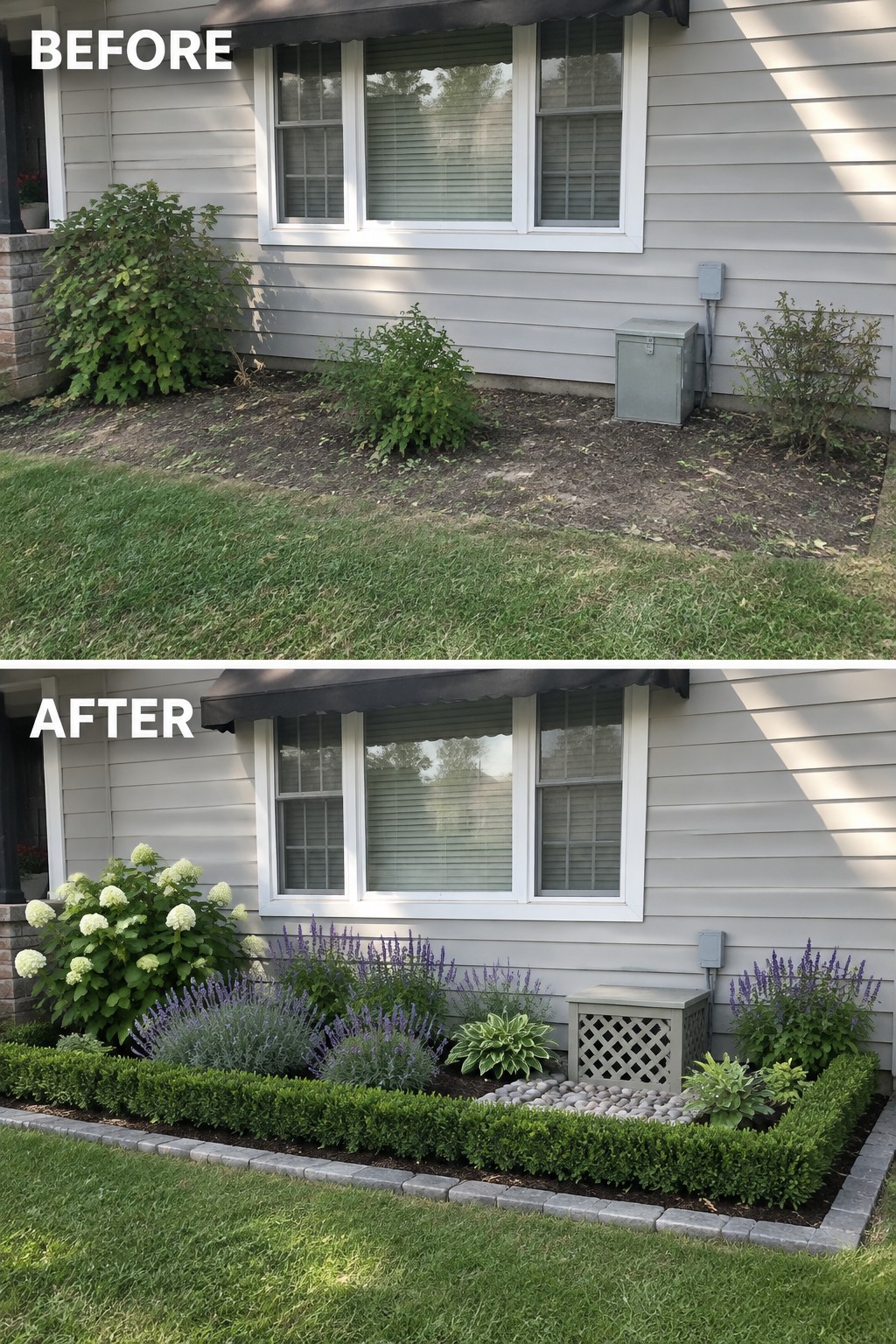
The strip of ground right against the house often turns into a messy mix of weeds, bare soil, and random shrubs that never quite look finished. Adding a clear stone edge and filling the bed with low hedges and layered plants gives the foundation a purpose and makes the whole front of the house feel more settled.
This approach works on almost any home where the siding meets the lawn in a straight line. Keep the plants low enough to stay below the windows, use one main edging material so the shape stays clean, and leave a little breathing room between the bed and the walkway so the area does not feel crowded.
Add Structure To An Overgrown Garden Path

An overgrown path quickly starts to feel more like an obstacle than a route through the yard. In this case the gravel had disappeared under tall grass, so the simple fix was to cut everything back and lay stepping stones with a gravel border on each side. The stones give the eye a clear line to follow, and the low plantings keep the edges tidy without crowding the walkway.
This idea works best in narrow side yards or along fence lines where space is limited. Cut the overgrowth first, then set stones wide enough for comfortable steps and add a simple border plant on each side. Mulch the beds so the whole path stays neat with basic maintenance.
Turn An Empty Backyard Corner Into A Fire Pit Seating Area

Clearing out the debris and dirt first made room for a simple circular patio built with pavers and gravel. Adding a central fire pit and a few wooden benches turned the space into one usable seating area instead of leaving it as open ground.
This approach works best in smaller yards where you only need one defined spot for evenings outside. Keep the furniture scale modest, use weatherproof pieces, and leave enough room to walk around the circle so the area stays practical rather than crowded.
Clear Overgrowth Before Defining Garden Beds

An overgrown fence line can make the whole yard feel neglected. In this case the before photo shows thick weeds and shrubs spilling everywhere with a hose left on the ground. Once the excess growth was removed and the soil was edged, the space opened up enough for a simple row of plants, fresh mulch, and a few low lights to do the rest.
This approach works well along any long fence or property line where things have gotten out of hand. Start by cutting back the worst of the overgrowth so you can see the actual shape of the bed. Then add a clean edge, a layer of mulch, and plants in a few heights rather than filling every inch. The lights are optional but useful if you want the area to feel finished after dark.
Turn A Bare Balcony Into An Outdoor Seating Area
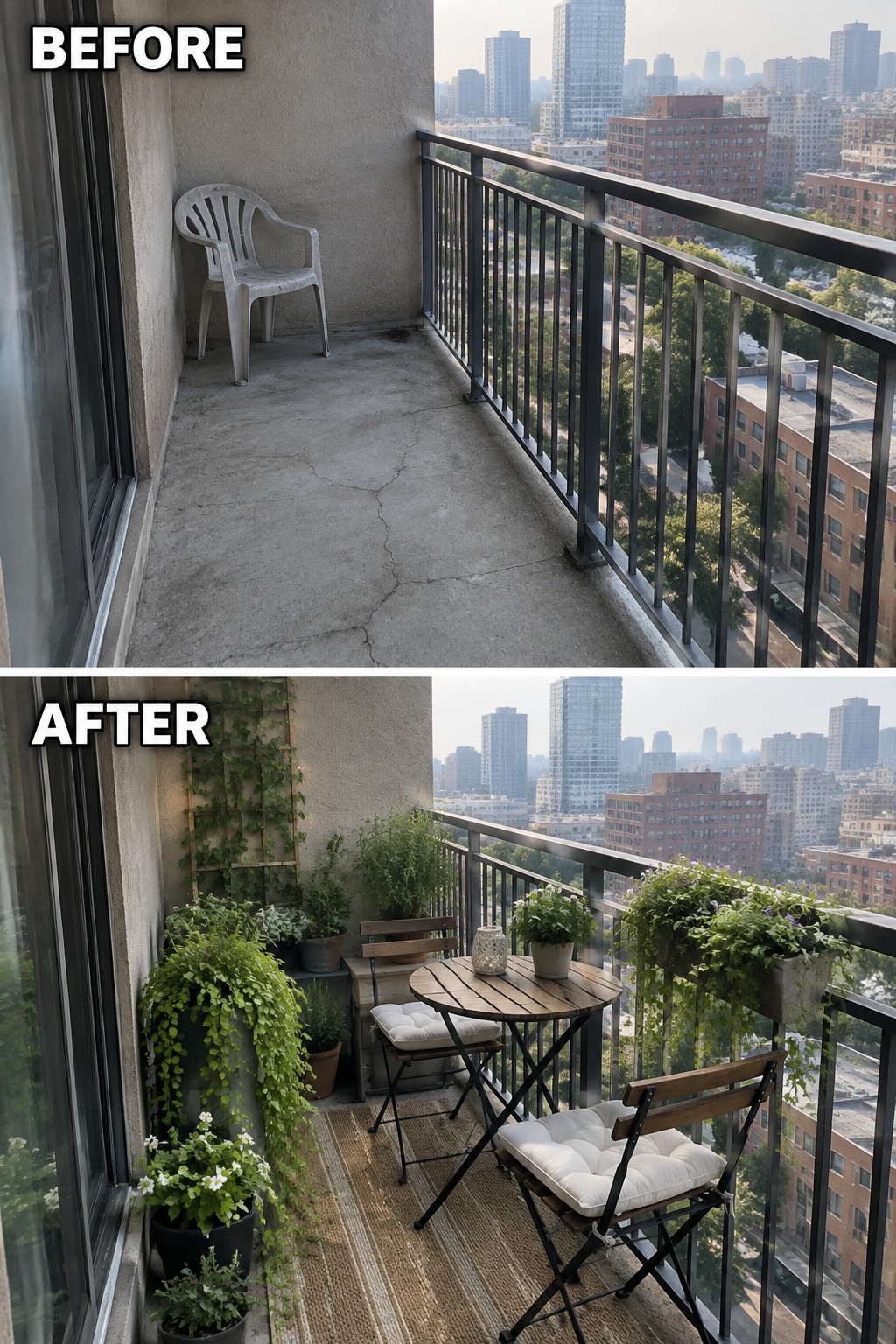
A bare concrete balcony often stays unused because it lacks any sense of purpose or comfort. Adding a compact table with chairs, a simple rug, and groups of plants gives the space a clear function and makes it feel like an extension of the home rather than leftover floor space.
This idea suits small urban balconies where every item needs to earn its place. Choose folding or lightweight furniture that can handle weather, keep the rug sized to the seating zone, and layer plants along the edges and corners so the area feels enclosed without crowding the walkway.
Add Gravel Beds To Give A Backyard Clear Shape

A big lawn with nothing going on can look unfinished no matter how often you mow it. Switching part of that open grass to gravel beds with large rocks and low-water plants gives the space shape and makes it feel more intentional without needing constant upkeep.
This idea works especially well in sunny yards where a full lawn is hard to keep green. Mark out simple bed shapes first, add landscape fabric and gravel, then use a few big boulders to anchor the layout before planting succulents and grasses around them. Keep the beds a reasonable size so the remaining lawn still feels usable.
Turn A Weedy Slope Into A Pollinator Garden

A bare, weedy slope along a fence is one of those spots that often gets ignored because it feels hard to maintain. Clearing the overgrowth and planting a mix of wildflowers turns the same area into something useful and attractive. The flowers fill the space, support pollinators, and give the fence line a finished look without needing constant mowing or edging.
This approach works well on slopes or narrow strips where grass struggles. Start by removing the weeds, then choose a seed mix or plants suited to your area and sun conditions. The result stays low-maintenance once established and gives you a clear purpose for the space instead of leaving it to whatever grows.
Create A Structured Vegetable Garden With Raised Beds And Trellises
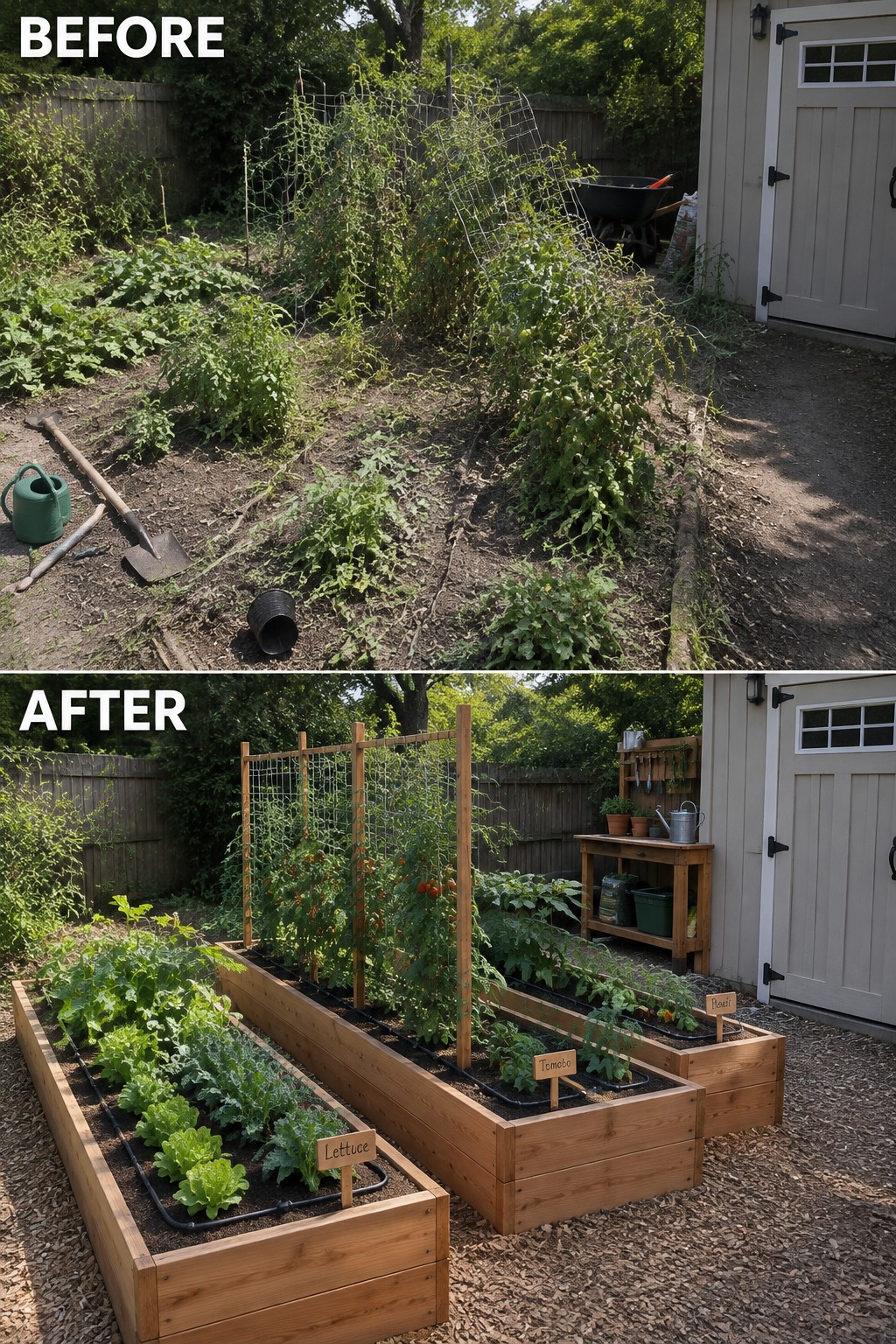
Raised beds and a simple trellis system turn a wild, hard-to-manage yard into a space that actually works for growing vegetables. The before photo shows plants sprawling across the ground with no clear lines, while the after version uses wooden beds and vertical supports to keep everything contained and easier to reach.
This approach suits small or medium backyards where you want to grow food without constant weeding battles. Clear the worst overgrowth first, then add beds and mulch the paths between them. The structure does most of the work after that.
Turn An Empty Deck Into A Dining Area

An empty deck often stays unused because there is nothing to anchor the space. Placing a table and chairs in the center with an umbrella overhead gives the deck a clear purpose and makes it practical for meals.
This approach works on most decks as long as you keep enough room to walk around the seating. Start with the table and shade first, then add simple lighting if you want to use the space after dark.
Clean Up The Strip Along Your House With A Garden Bed

The before photo shows a typical problem where grass and weeds creep right up against the siding with no clear separation from the driveway. In the after photo, a low stone border and fresh mulch create a defined planting area that keeps everything looking intentional instead of neglected. The simple addition of edging and a few shrubs and flowers turns the same narrow strip into something that actually belongs with the house.
This idea works well on any home where the foundation planting has gotten messy. Start by laying down edging to mark the bed, then add mulch to keep weeds down and give the area a finished look. It suits smaller yards especially, where you do not have room for large features but still want the front to feel cared for. Keep the planting simple so the bed stays easy to maintain over time.
Create A Simple Garden Path Through An Overgrown Corner
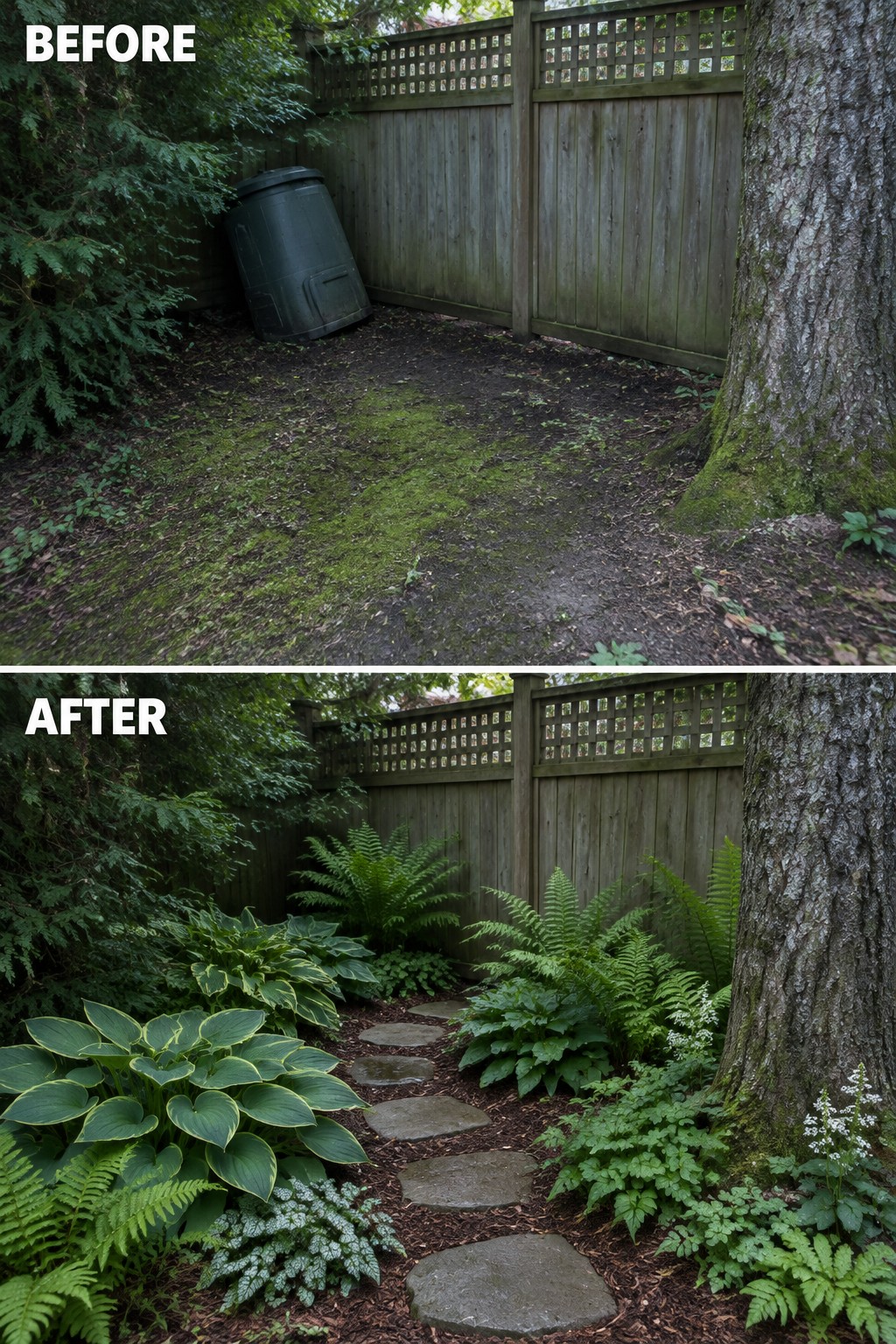
A neglected corner often stays that way because there is no clear way to use it. Laying a simple path through the space gives the area a reason to exist. Once the ground is cleared and a few stepping stones are set in place, the rest of the planting can follow along the edges without looking scattered.
This idea works best in small or shady yards where grass will not grow. Keep the path narrow enough to leave room for plants on both sides, and choose tough shade plants that fill in over a season or two. Mulch between the stones and the beds keeps the whole area looking intentional while everything settles.
Turn A Blank Backyard Into An Outdoor Room

A big empty lawn often ends up unused because there is no clear spot to sit or gather. Adding a pergola with a paved base creates a defined area that gives the yard purpose and makes it feel like an extension of the house.
This idea works best in larger yards where the grass runs from fence to fence with nothing to break it up. Keep the surrounding lawn open but add simple borders and a few shrubs so the patio stays the main focus without needing a full redesign.
Add A Potting Bench To Organize Garden Tools
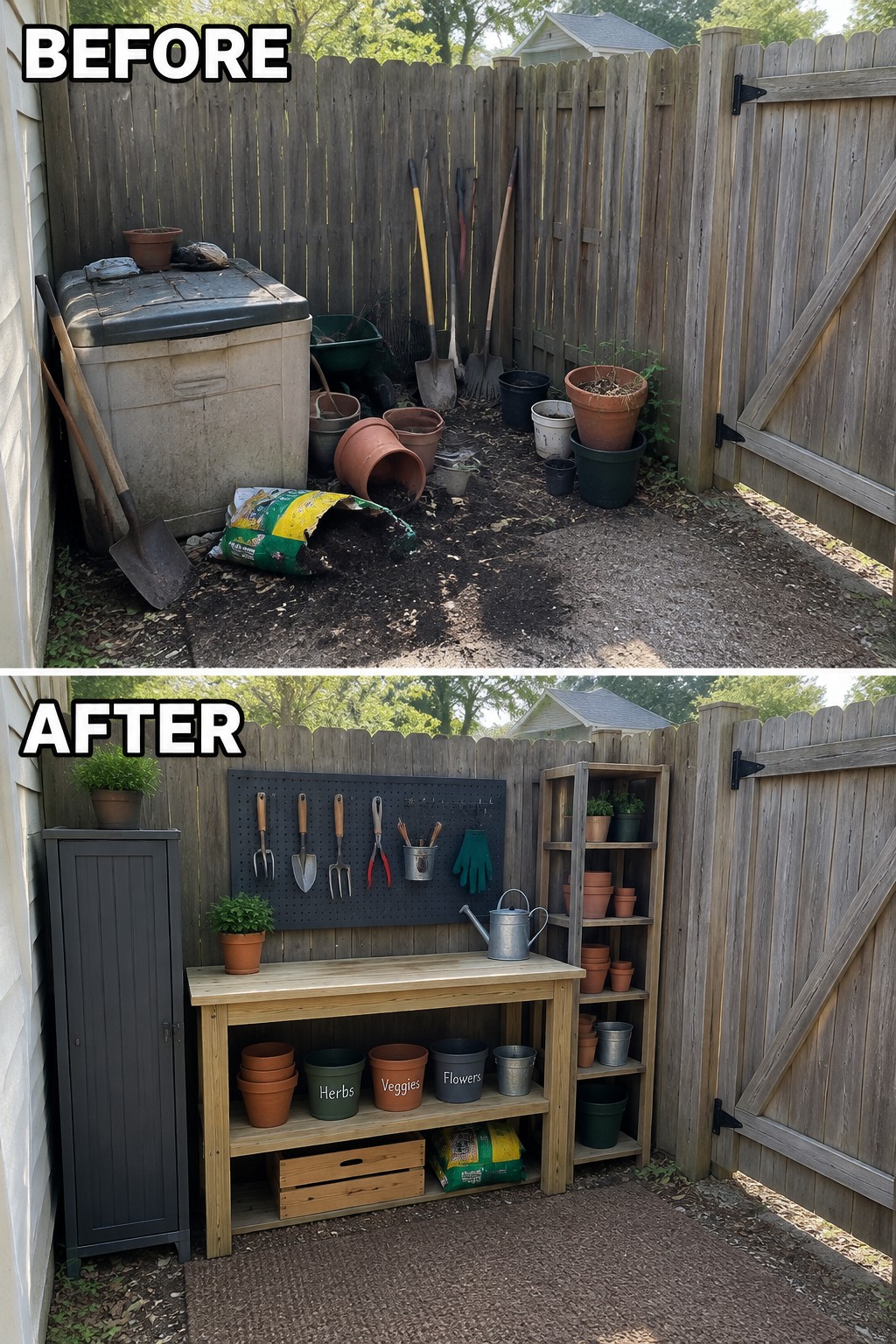
A cluttered corner full of leaning tools and scattered pots is hard to work in. Adding a simple wooden potting bench with a pegboard above it and open shelves below turns the same space into a place where everything has a spot. The bench gives you a flat surface for potting, while the pegboard keeps small tools visible and within reach.
This setup works well in a small backyard or side yard where space is limited. Start with a basic bench sized to fit your area, then add a pegboard and a few labeled bins for soil and supplies. Keep the rest of the ground clear so you can move around easily when you are carrying pots or watering cans.
Add An Arbor To A Bare Garden Wall

A plain stretch of wall can feel like wasted space until you add a simple arbor. The arbor gives the eye something to rest on, and the climbing roses soften the hard surface while adding height and color without needing a big planting bed.
This approach suits narrow side yards or the back of a house where you want a focal point without crowding the lawn. Keep the structure modest in scale, match the wood tone to any nearby fence or furniture, and let the vines do most of the work once established. A bench underneath turns the spot into a quiet place to sit rather than just a wall.
Refresh The Front Entry With Planters And Stone Steps
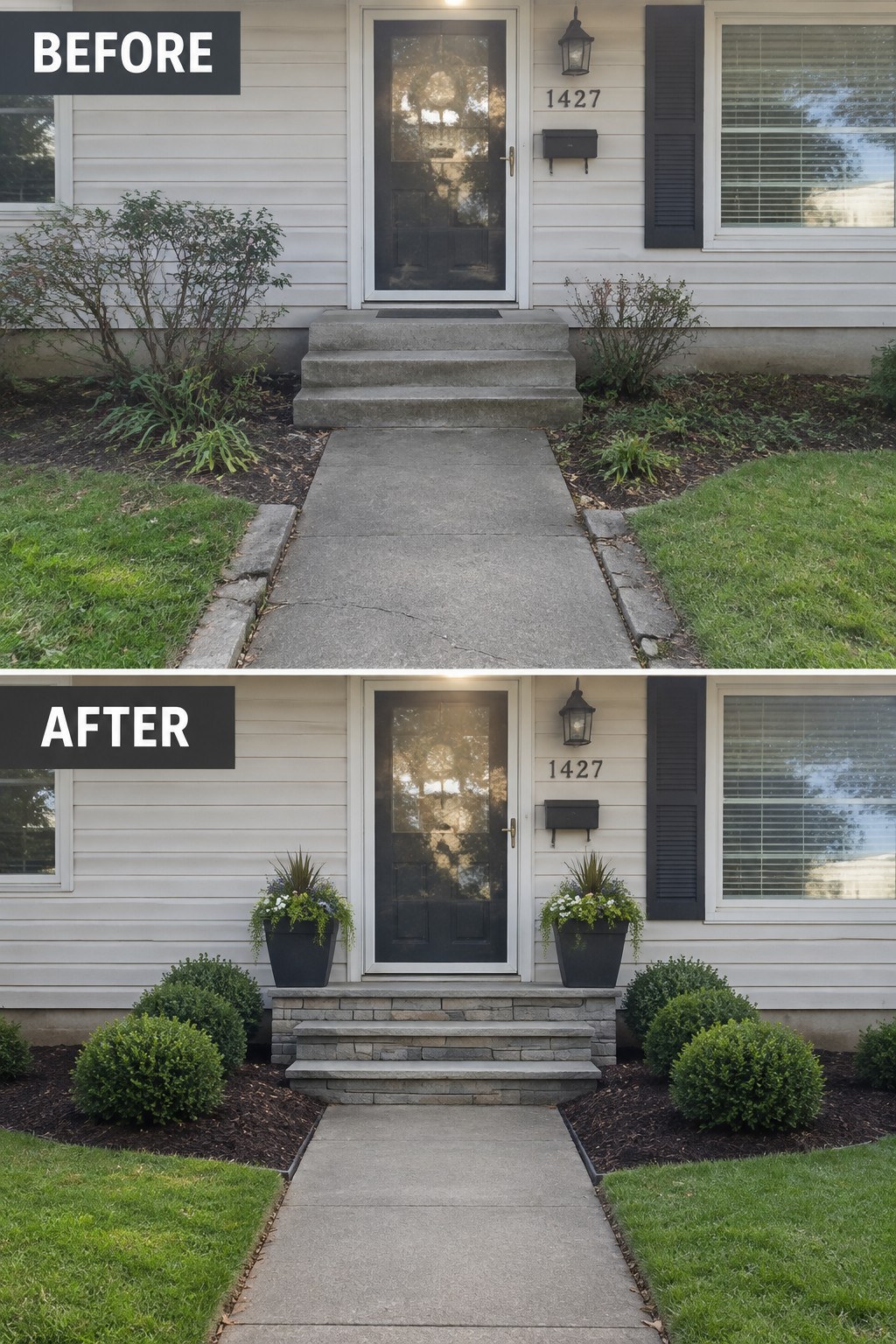
Many homes have a perfectly functional front door that still feels a little flat. The change here came from replacing the plain concrete steps with a low stone facing and placing two matching planters on either side of the door. That one move gave the entry a clear center and made the whole front feel more finished without any major construction.
This approach works well on houses with simple stoops or short stair runs. Start by choosing planters that sit at a comfortable height and stay in scale with the door. Keep the planting simple so it reads as a pair rather than two separate pots. The same idea can be used on a wider range of homes as long as the walkway and steps stay clear for daily use.
Give A Narrow Side Yard A Defined Path
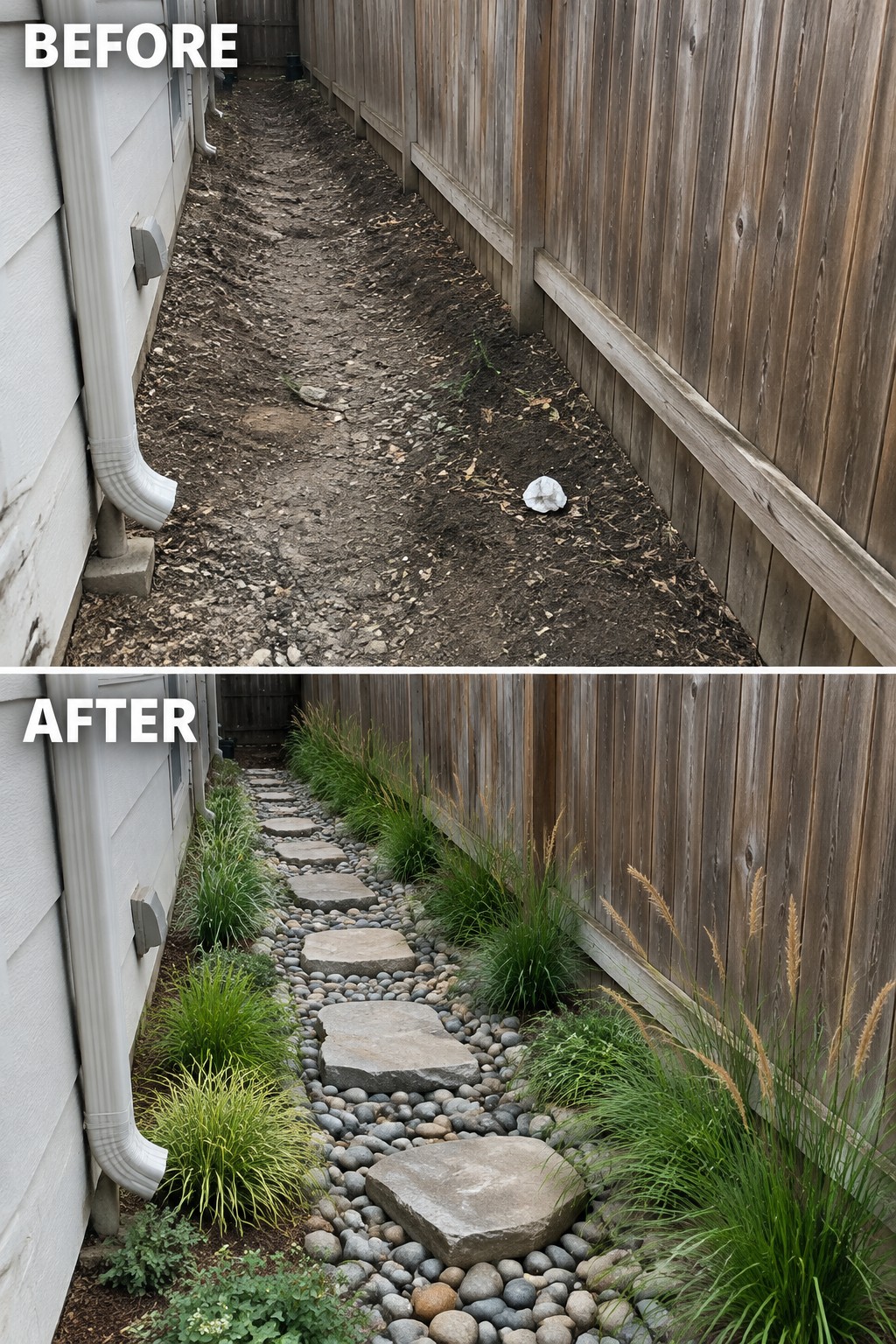
A narrow strip between the house and fence often becomes a neglected dirt path. Laying down stepping stones with gravel fill gives the space clear structure and turns it into something you can actually walk through without tracking mud. The grasses along the sides add softness and keep the area from feeling like an afterthought.
This works best on long, tight side yards where access matters but full landscaping feels like too much. Focus first on the path layout so the space feels planned, then add a few repeating plants that stay low and handle the conditions. It keeps the yard functional while making it look intentional.
Create A Small Pond Garden In A Bare Backyard Corner

A bare patch of dirt with nothing but an old tub sitting in the corner feels like wasted space. Adding a simple pond, surrounding it with rocks, and laying gravel gives the area a clear purpose and makes the whole spot look intentional instead of forgotten. The plants around the edge help tie everything together without needing a lot of extra work.
This idea works best in small or awkward yard corners where you want one main feature instead of trying to fill the whole space. Start by shaping the pond and getting the edging right, then add gravel to keep the ground clean and plant around the border so it feels settled. It suits homes with limited yard room and gives you something nice to look at without constant upkeep.
Add Landscape Lighting To Define A Garden Path

A simple row of low path lights can turn a dark, overgrown walkway into something that feels intentional and easy to use. The before photo shows how thick planting can swallow the edges and leave the route looking neglected. Once the beds are trimmed back and lights are added along both sides, the path gains clear borders and becomes usable at night.
This approach works best on homes with a straight side or front path that needs better visibility after sunset. Place the lights close to the paving so they mark the route without overpowering the plants. Start with a few fixtures and add more only if the path still feels dim.
Frequently Asked Questions
Q: Where do I even begin when my backyard is a total mess? A: Start by walking through your space and noting what bugs you most. Fix the drainage or level the ground before adding plants or furniture. One solid change often sparks the next.
Q: How long until my garden looks as good as those after photos? A: Most transformations take a full season or two for plants to fill in. Water and feed regularly at first. Patience pays off when things start to grow together naturally.
Q: What plants work if I want low upkeep after the makeover? A: Go for native varieties that thrive without extra help. They handle local weather and need less water once established.
