

Gardens often lose their shape when the basic layout never gets much attention beyond mowing the grass. Adding stone for paths and weathered wood for borders brings back some order without needing a complete overhaul. I like starting with one clear walkway. It gives the rest of the space a direction that makes planting easier later on, especially once beds and edging start to take form around it. These kinds of updates tend to improve gradually as the materials settle in and the plants fill around them.
Add A Pergola And Stone To Make A Patio Feel Like A Room

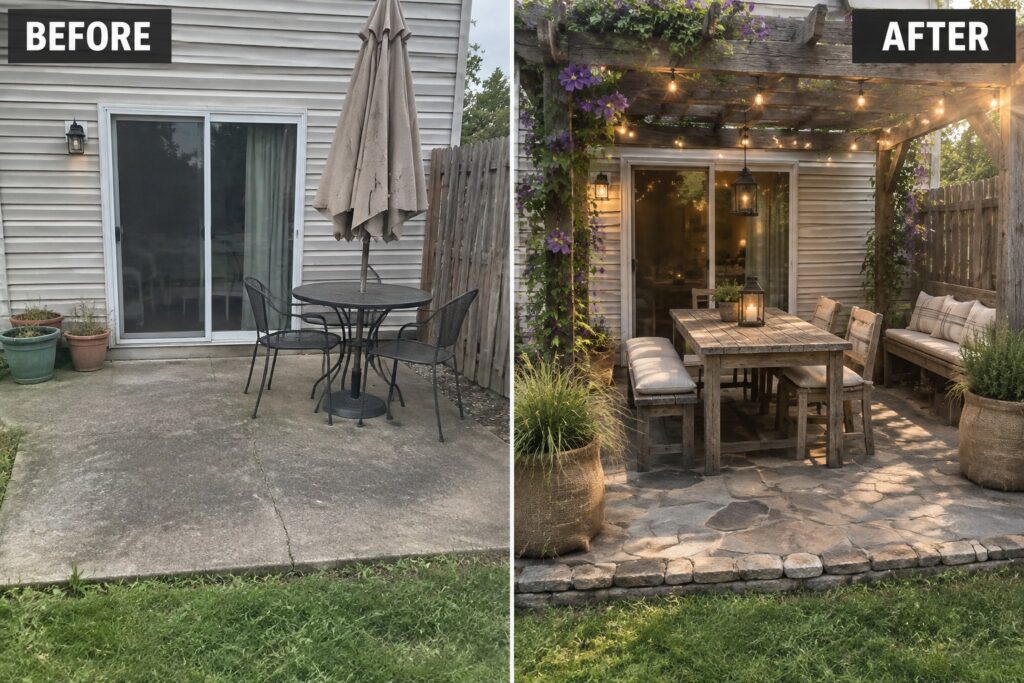
A bare concrete slab with just a table and umbrella feels unfinished and exposed. Adding a simple wooden pergola overhead and laying stone across the surface gives the space clear edges and a sense of enclosure. The change turns an open slab into a defined area that actually invites people to sit and stay.
This approach works best on patios that already have decent sun exposure but lack any overhead cover or ground texture. Start with the structure first, then choose stone that matches the color of your house or existing paths. Keep the furniture scale modest so there is still room to walk around the table, and add just enough lighting to make the space usable after dark.
Add Structure To An Overgrown Border
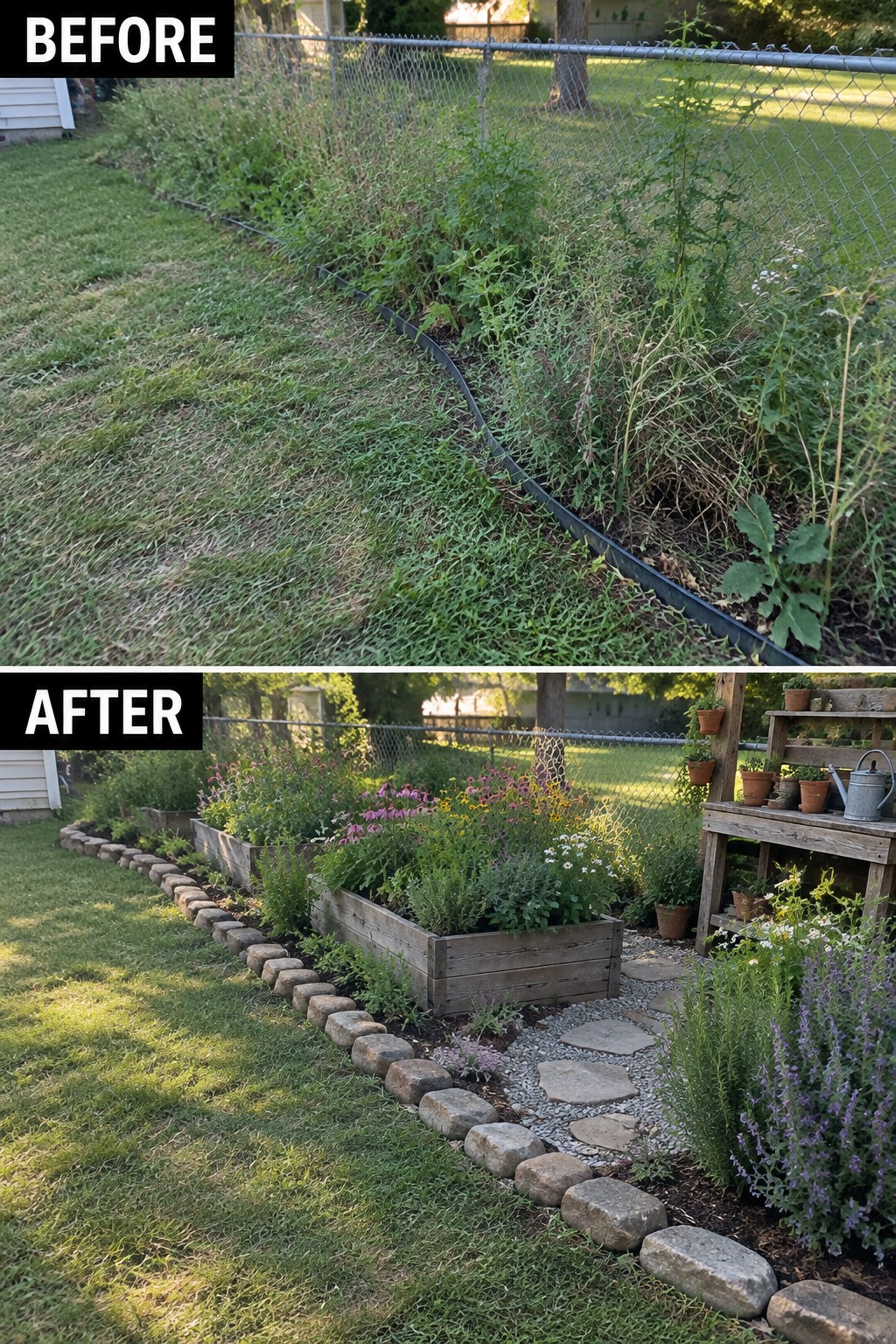
The biggest change here came from clearing the weeds and then adding clear edges. A line of natural stone now holds the garden in place, while a few raised beds made from weathered wood give the plants room to grow without taking over the lawn. The result feels much more intentional than the old tangle of grass and wild growth along the fence.
This approach works well along a long fence line or the side of a yard that always seems to get neglected. Start by cutting everything back, then lay the stone to mark the shape you want. Raised beds keep the soil contained and make planting easier, especially if the ground slopes. Keep the path simple so the beds stay the main focus.
Turn A Bare Backyard Into A Fire Pit Seating Area

A neglected patch of dirt can become the most used spot in the yard once you give it a clear purpose. The before photo shows an empty corner with nothing but weeds and an old plastic chair. In the after, a low stone fire pit sits at the center, ringed by a curved wooden bench that turns the space into a place people actually want to gather.
Start with the fire pit itself, then build the seating to fit around it. Use stone that matches the natural tones in your yard and weathered wood for the bench so everything feels like it belongs. Keep the rest of the area simple with gravel underfoot and a few string lights overhead. This setup works especially well in smaller backyards where you want one solid gathering spot instead of spreading furniture around.
Turn A Concrete Path Into A Stone Garden Walk
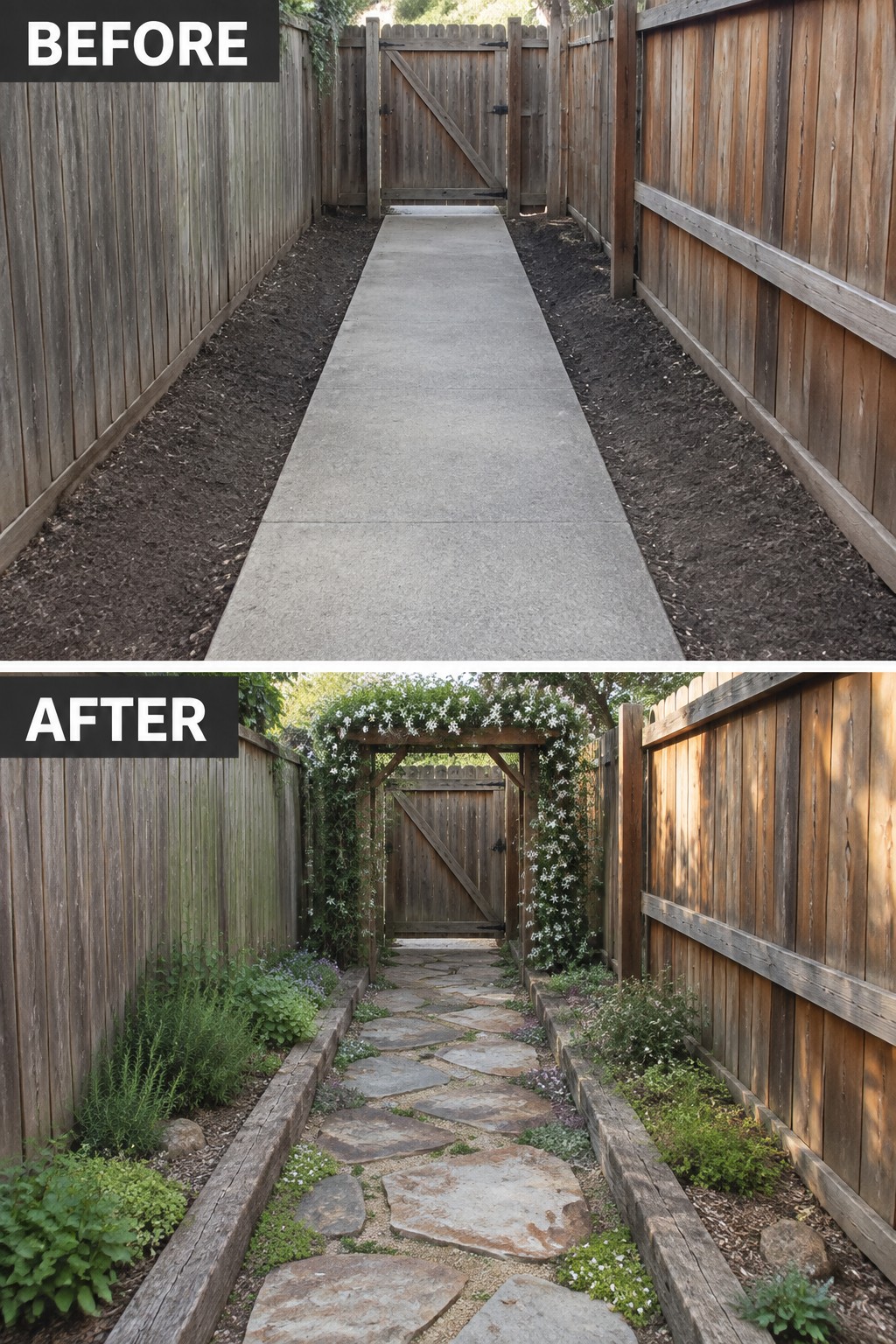
A straight concrete slab can make a side yard feel more like a utility corridor than a garden. Switching to irregular stone pavers and adding simple wooden borders with planting beds on each side changes the feel completely. The path now looks intentional, and the plants soften the fence lines without crowding the walkway.
This idea works especially well in narrow spaces where you need structure but still want room to move. Start by replacing the hard surface, then add low borders and repeat the same plants along the length so the eye travels easily. Keep the plantings modest so the stone and wood stay the main features.
Turn A Plain Deck Into A Cozy Outdoor Seating Area
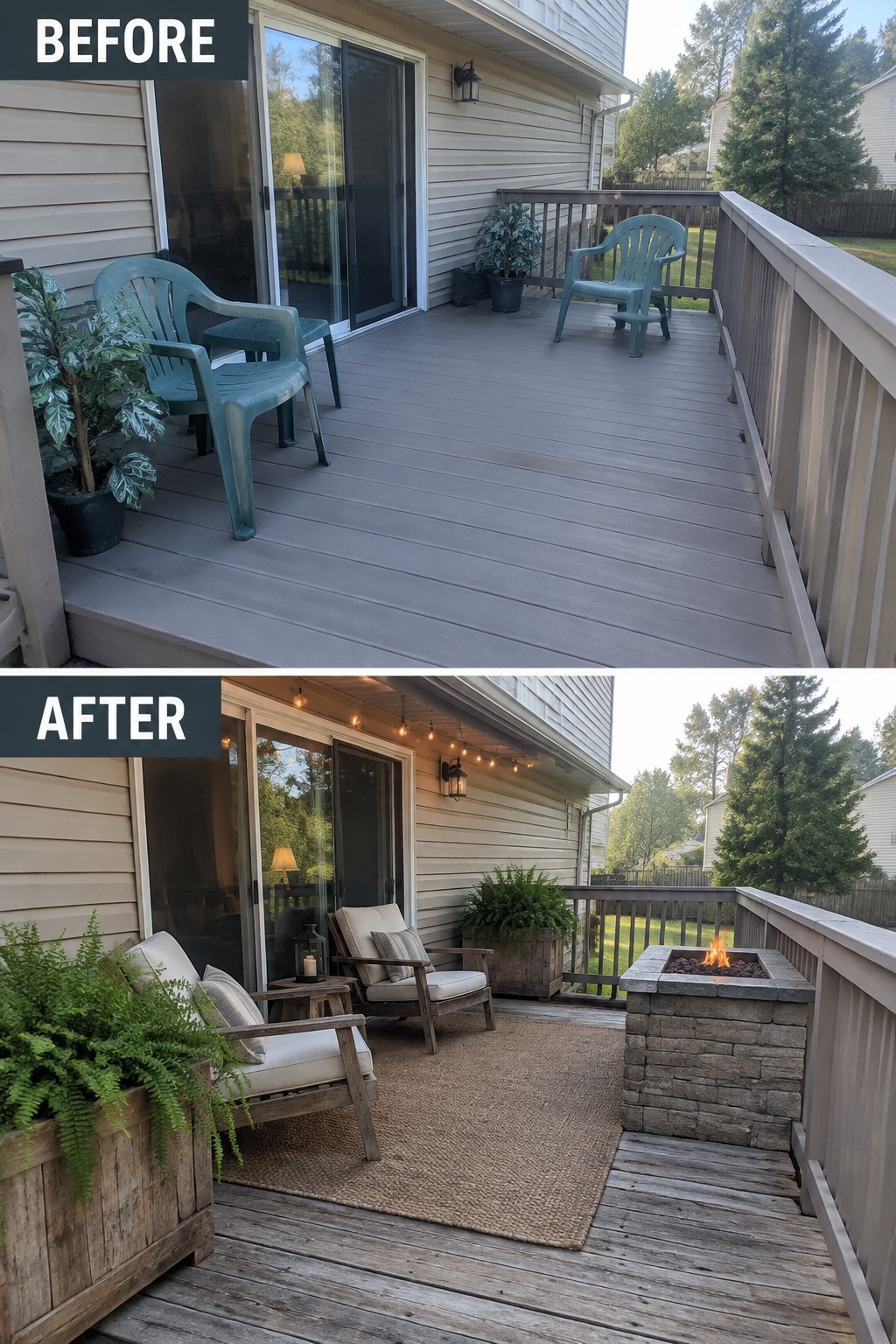
A deck with just a couple of plastic chairs often feels unfinished and unused. Adding a fire pit, a large rug, and proper seating turns the same space into a place where people actually want to spend time.
This idea works on most decks or patios because it focuses on defining one clear zone rather than filling the whole surface. Use a rug to mark the seating area, keep the furniture scale modest so there is still room to walk around, and choose a fire pit in natural stone to match the weathered wood already in place.
Turn A Bare Patio Into A Rustic Outdoor Kitchen
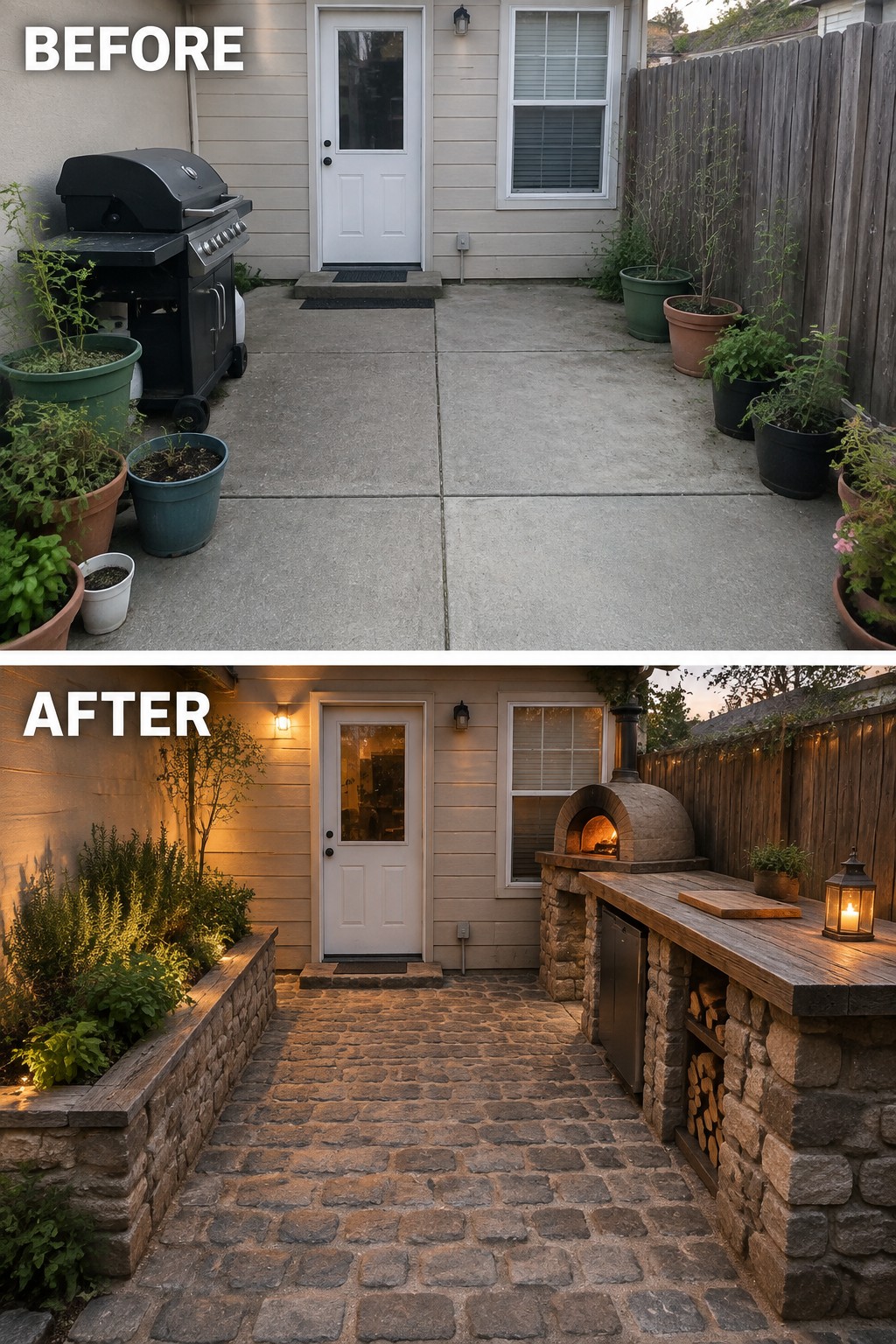
A plain concrete slab can feel like wasted space until you give it a clear purpose. In this case, the simple switch to cobblestone paving and a built-in stone oven with a weathered wood counter turned the empty area into a spot people actually want to use for cooking and gathering.
This approach works best on small to medium patios where you can keep the layout simple. Start with the paving to define the zone, then add one main cooking feature like the oven so the rest of the space stays open for a couple of chairs or a small table. Stick to stone and wood finishes that handle weather, and keep extra decor minimal so the area does not feel crowded.
Turn A Bare Pool Deck Into A Shaded Seating Area

The concrete around this pool sat empty except for a couple of lounge chairs. Adding a wooden pergola and laying stone pavers turned the open slab into a spot that actually invites people to sit and stay.
This idea works best on pool decks or patios that get full sun. Start with the structure for shade first, then choose furniture that can handle weather and a few large planters to soften the edges. Keep the seating simple so the space still feels open and easy to move around.
Terrace A Sloped Yard With Stone Retaining Walls
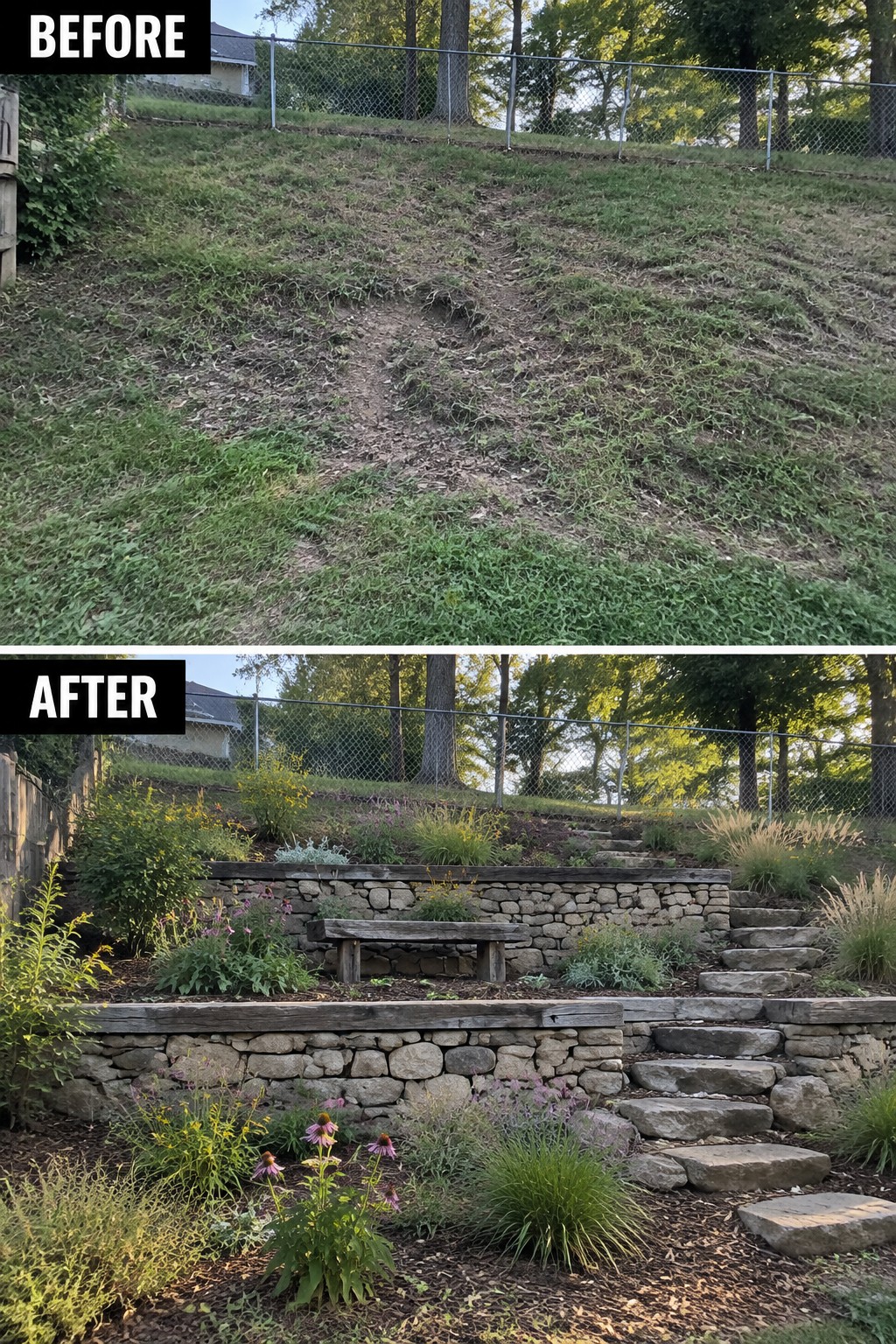
A bare, weedy hillside becomes much more usable once stone walls divide it into flat terraces. The walls stop erosion, create planting beds at comfortable heights, and give the slope a clear structure that was missing before.
This idea suits homes with noticeable inclines where grass is hard to maintain. Keep the walls low enough that each level feels like a natural garden bed rather than a high barrier, and repeat the same stone and weathered wood tones throughout so the whole slope reads as one connected space.
Give A Plain Entry Rustic Structure With Wood And Stone
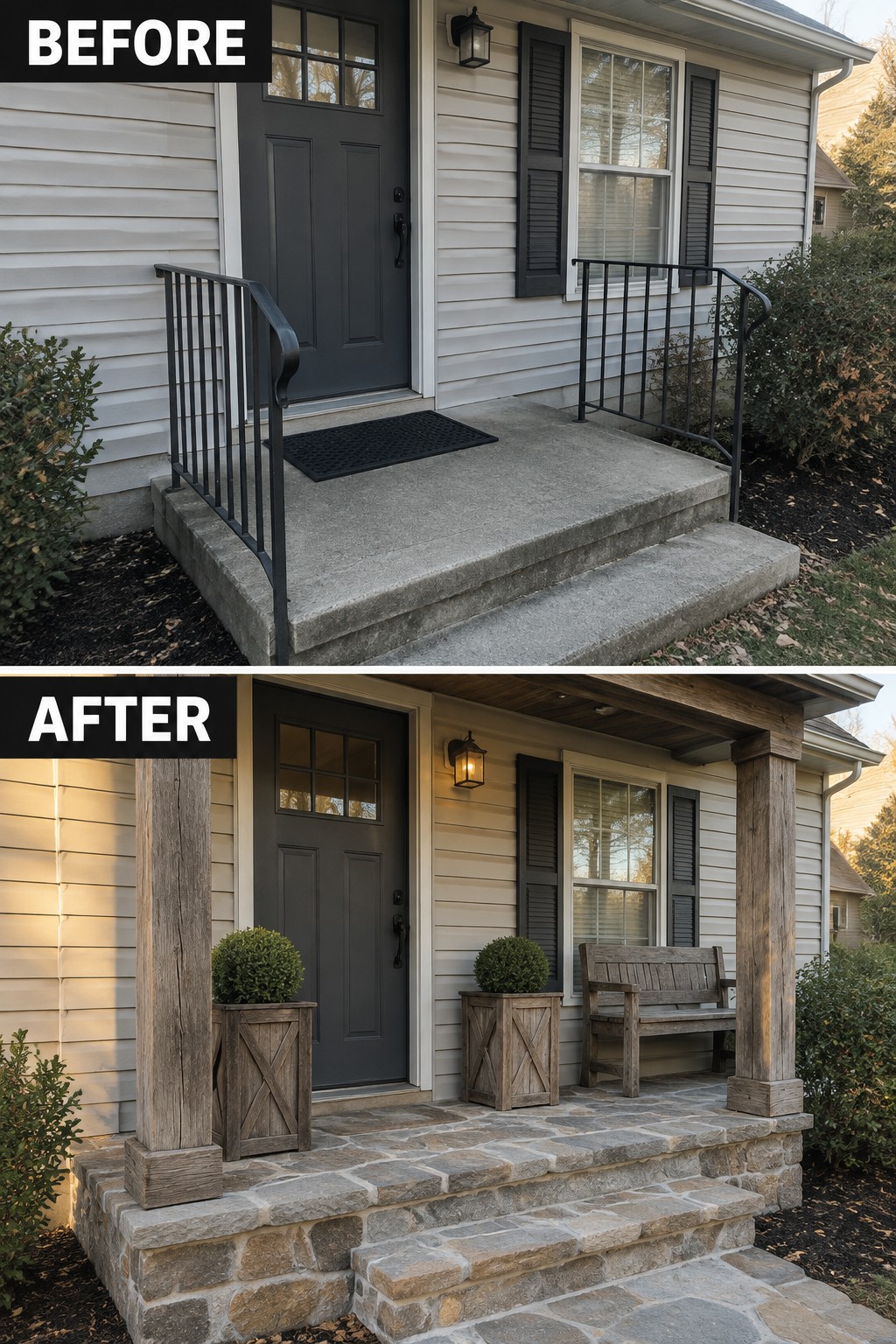
A basic concrete stoop often looks unfinished next to the house. Switching the steps to stone and adding weathered wood posts creates a solid frame that makes the entry feel more intentional and tied to the rest of the home.
This approach works best on smaller front porches where you want presence without crowding the space. Focus first on the steps and main posts, then keep any added pieces like planters or a bench simple so the wood and stone stay the main features.
Create A Clear Path Through A Narrow Side Yard
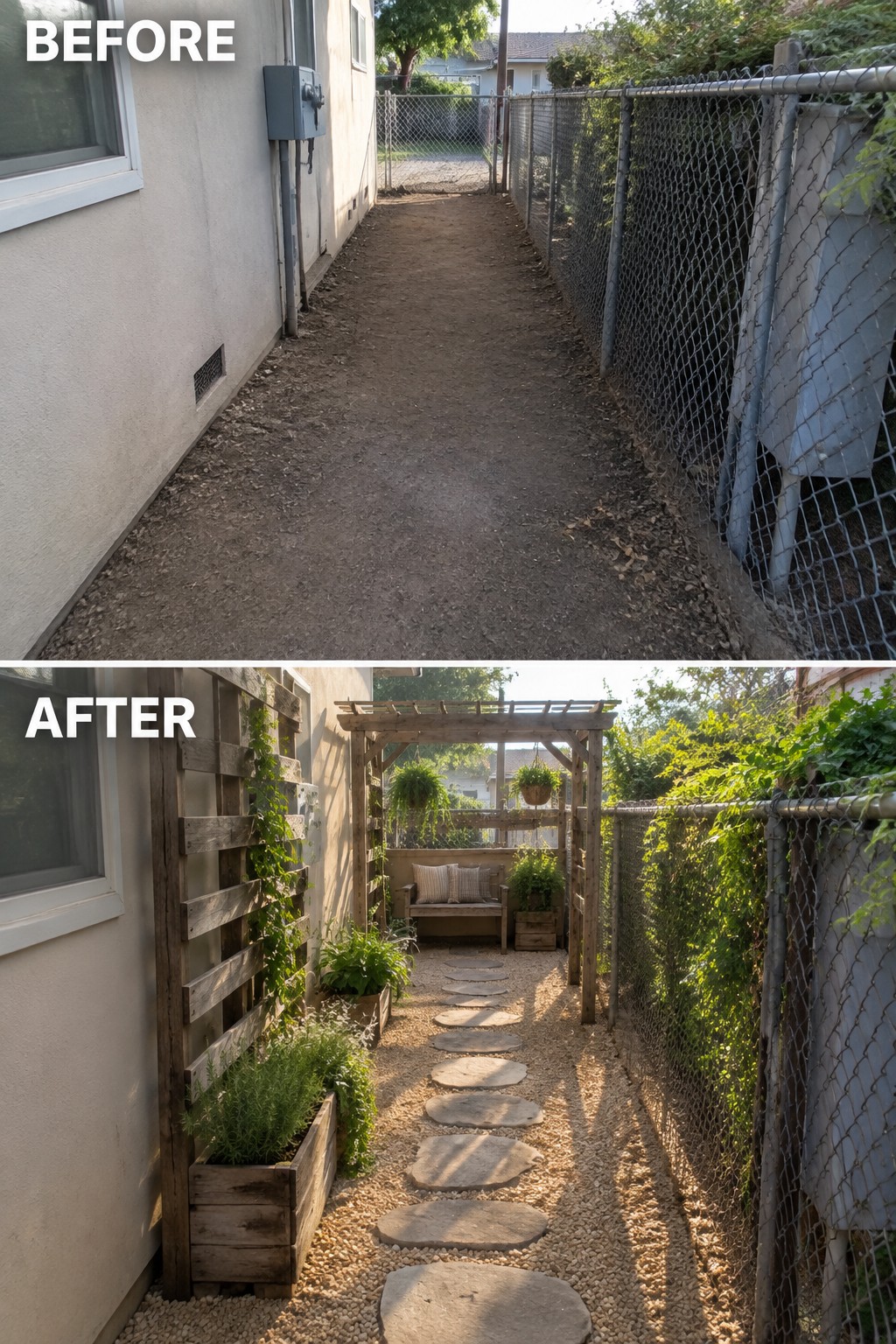
A narrow dirt strip between a house wall and a fence often gets ignored because it feels too tight for much use. Adding a simple stone path with gravel on either side gives the space a purpose and makes it feel intentional instead of leftover. The weathered wood planters and pergola add height and structure without crowding the walkway.
This approach works well on long, skinny side yards where you need to keep a walking route open. Start with the path first so the layout stays practical, then layer in a few large planters or a small bench. Stick to one or two materials so the space stays calm instead of busy.
Replace Worn Stairs With Natural Stone

Old wooden stairs often start to split and sag after years of weather exposure. Switching them out for natural stone steps gives a much more solid base and changes the whole feel of the backyard entry. The stone holds up better over time and pairs well with the existing wood railing and fence without needing a full rebuild.
This approach works best on homes where the stairs connect the house to a patio or lawn. Keep the new steps wide enough for easy foot traffic and tuck a few simple planters along the side to soften the look. Start with a good cleanup of the old wood before you lay the stone so the new surface sits level and stays that way.
Turn A Bare Yard Into A Defined Outdoor Dining Area

The main change here is covering the open dirt with a pergola made of weathered wood and laying down a stone patio underneath. That single move turns an empty patch of ground into a clear spot for meals and sitting, while the vines and hanging lights add just enough cover without closing the space in.
This approach works well in backyards that already have a fence and a shed, since the pergola can sit right against the existing lines. Start with the paving and the main structure first, then add the table and a few potted plants so the area stays open enough to walk around. Keep the furniture scale simple so it does not crowd the new patio edges.
Turn A Bare Wall Into A Garden Seating Area

A long blank wall next to bare dirt usually feels like wasted space. Adding a low stone base, a built-in wooden bench, and matching raised planters gives the area a clear purpose without needing a full patio. The weathered wood and natural stone keep the look simple and tied to the house instead of floating as separate pieces.
This setup works best along side yards or back walls where you want seating without crowding the open ground. Build the bench and planters as one unit so the scale stays right, then add vines on trellises if you need height later. Keep the planting light at first so the structure does the main work.
Add Structure To An Overgrown Backyard
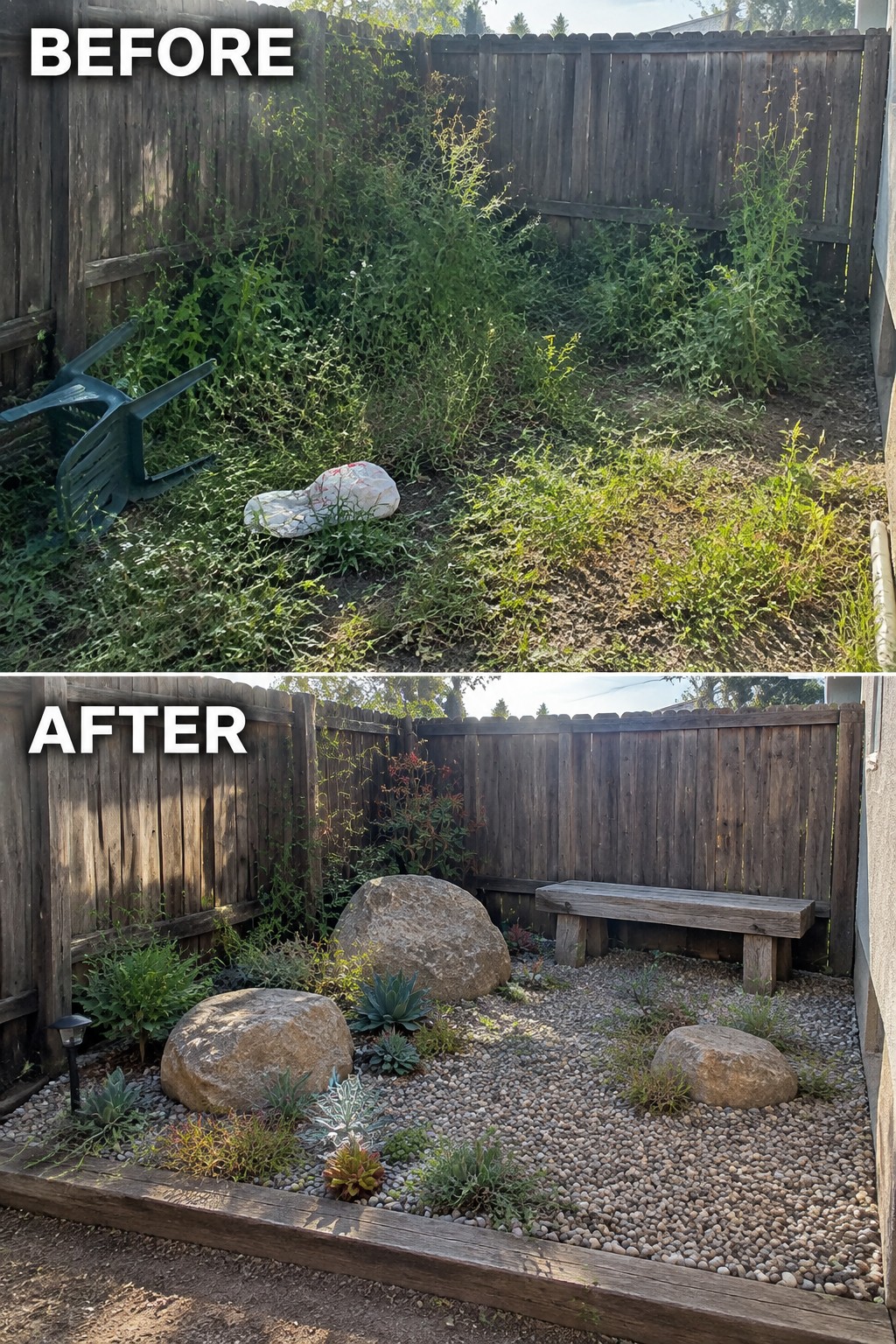
Clearing the weeds and laying gravel gives an overgrown yard a clean base so everything else can read as intentional. The large stones and simple planting then create shape without crowding the space.
This idea works best in narrow side yards or back corners that have been ignored. Start with the gravel layer, keep the planting sparse, and add one or two weathered wood pieces so the area stays low maintenance and easy to walk around.
Turn A Bare Balcony Into A Usable Seating Area With Wood
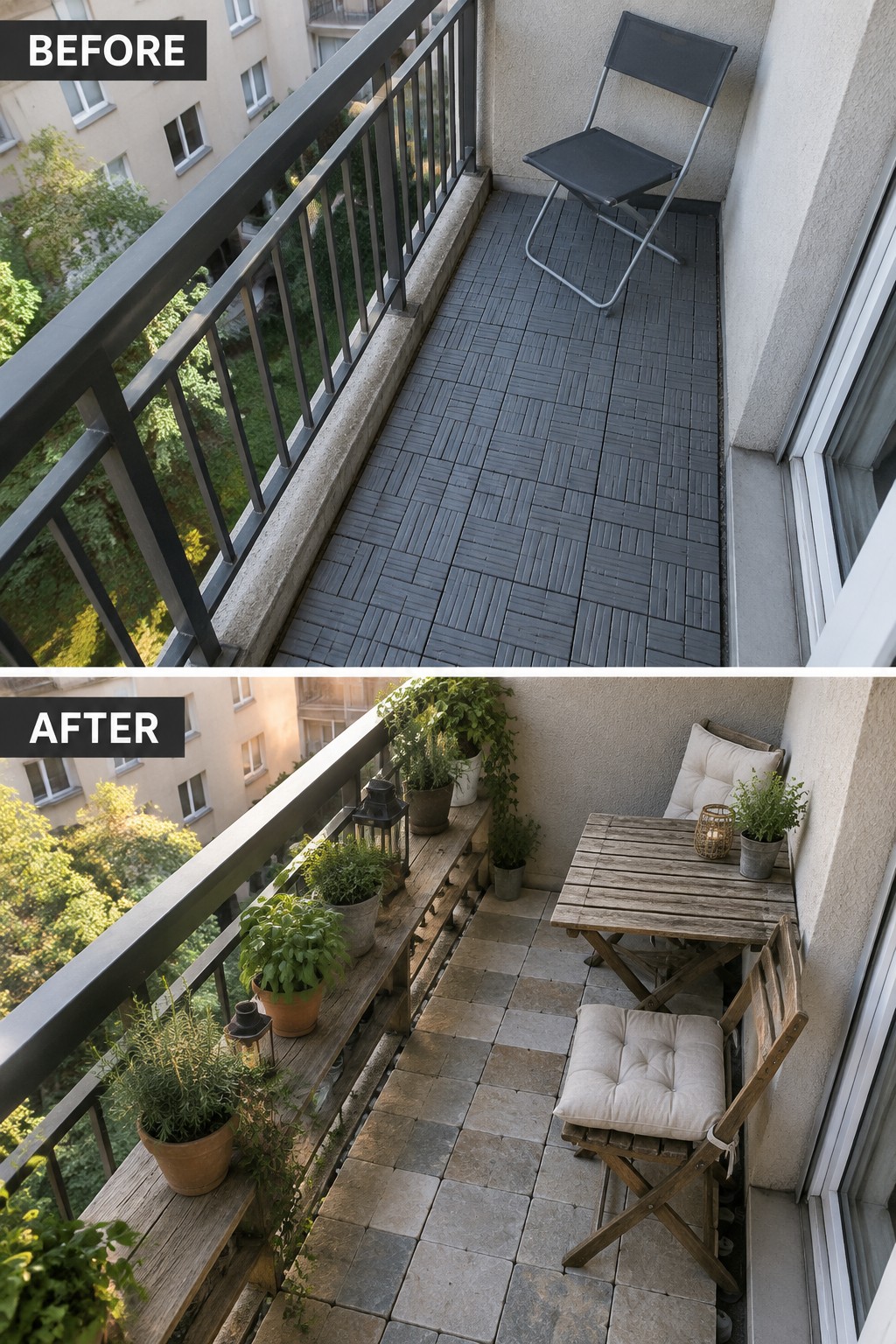
A small balcony often feels like wasted space when it only holds one chair and a dark floor. Adding a simple wooden bench along the railing and a matching table with chairs instantly gives the area a purpose. The lighter pavers also help the space feel brighter and more open instead of closed in.
This approach works well on narrow balconies where you need every inch to count. Keep the furniture scale modest so there is still room to walk around the seats. Stick to one or two wood tones and repeat them in the bench, table, and planters so the look stays cohesive without crowding the space.
Add Stepping Stones To Define A Narrow Side Yard
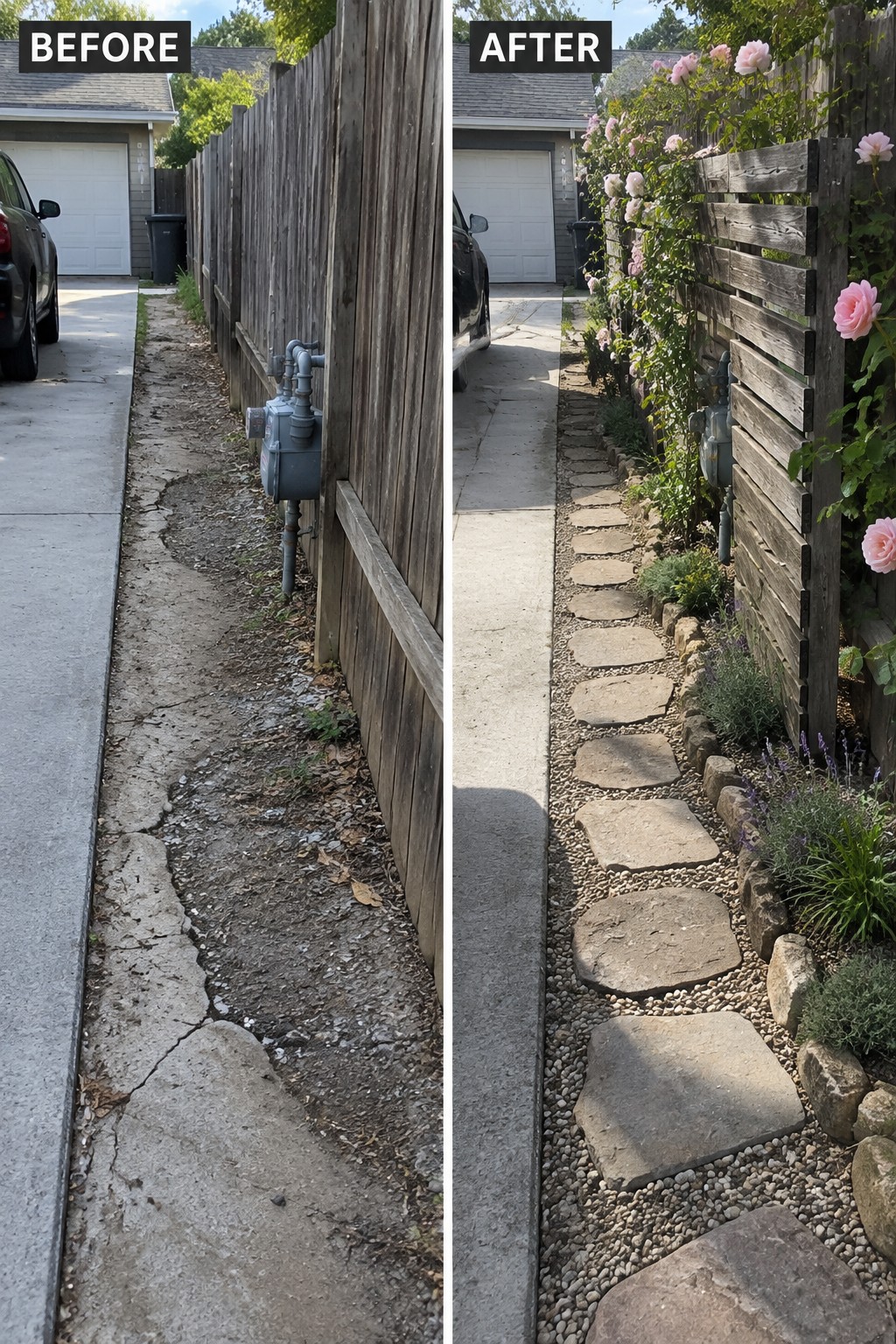
A narrow side yard often ends up as wasted space because it feels too tight and awkward to use. Laying a simple path of stepping stones with gravel between them gives the area a clear purpose and makes it feel like part of the garden instead of leftover ground. The stones create a walkable route that draws the eye forward and turns the strip into something you actually notice.
This approach works best on long, skinny spaces next to fences or between houses where you want structure without crowding the area. Keep the path fairly narrow so there is still room for low planting along the edges, and choose stones that are large enough to feel solid underfoot. Once the path is in place, the rest of the yard becomes easier to plant and maintain.
Add Stone Edging To Define A Garden Pond
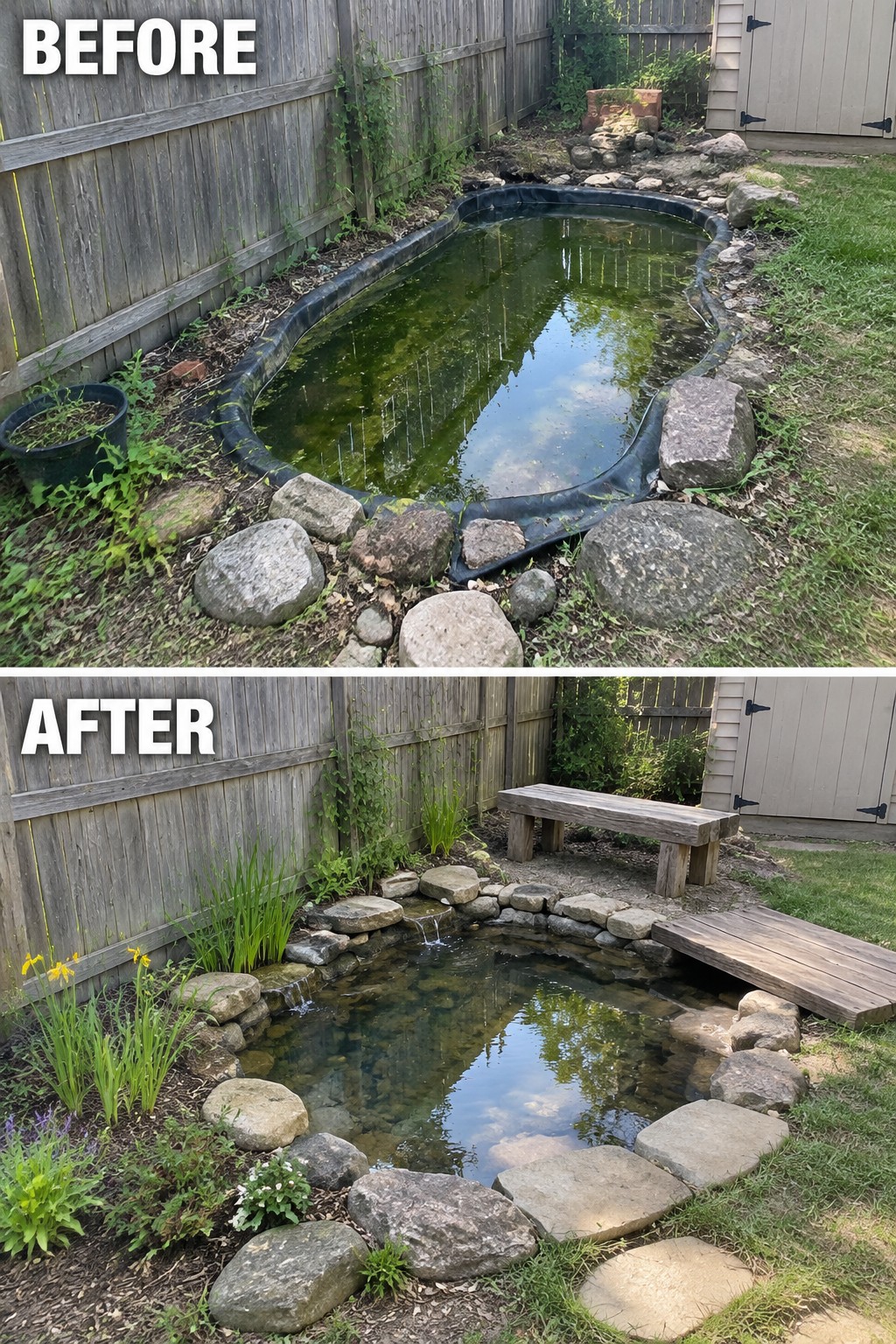
A backyard pond often starts to look messy when the edges are loose and the surrounding ground stays undefined. Stacking natural stone into a low border pulls everything together and makes the water feel like a deliberate feature instead of an afterthought. The weathered wood bench and platform then give the spot a simple place to stop and sit.
This idea suits smaller yards where the pond needs to feel connected to the rest of the garden. Clean the water first, then build the stone edge low and following the natural shape so it stays practical to maintain. Keep any added wood pieces minimal and weather-resistant so the focus stays on the pond itself.
Build A Backyard Bar Using Stone And Weathered Wood
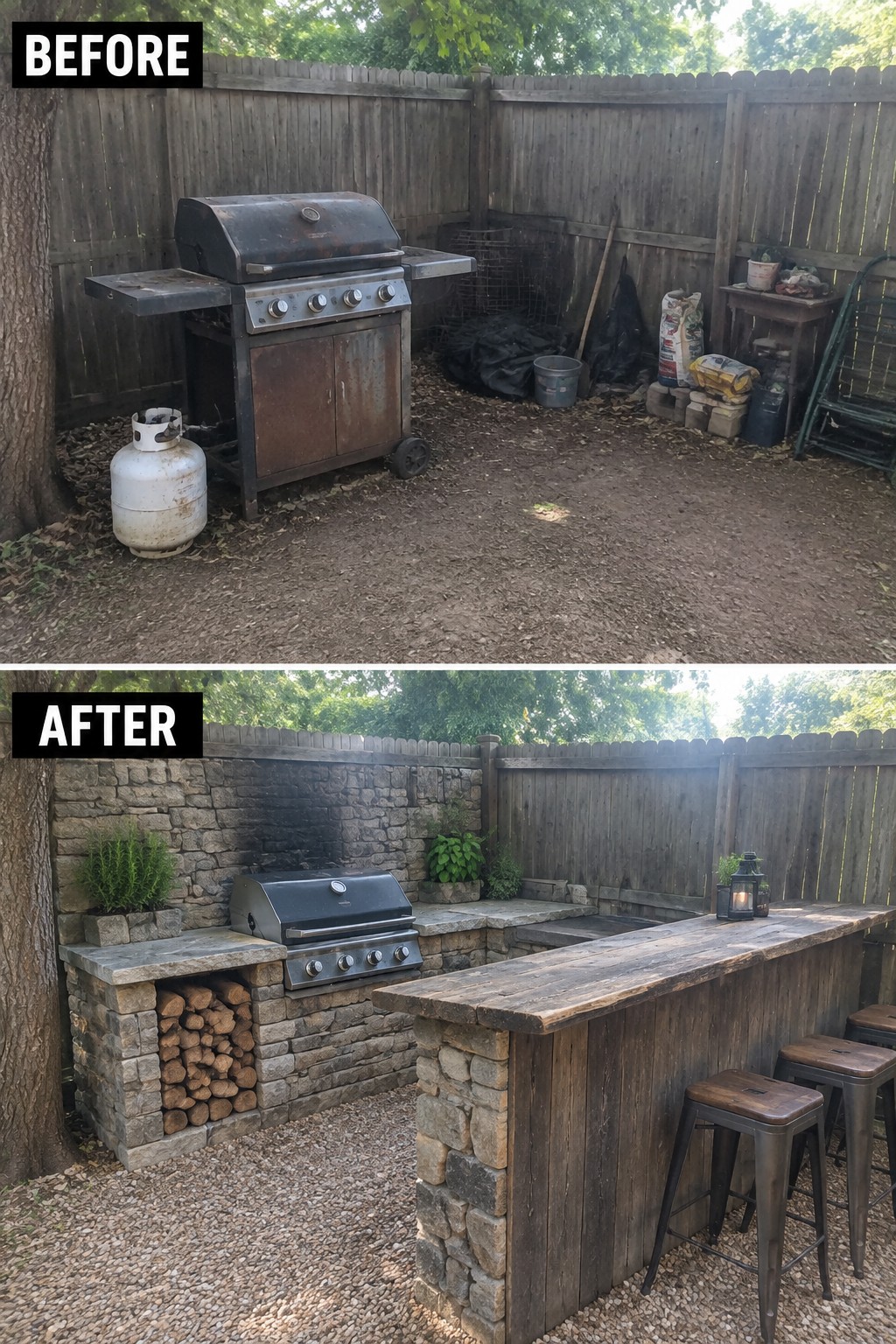
A bare patch of dirt with a lone grill and scattered clutter can feel like wasted space. Adding a low stone base with a weathered wood counter turns the same corner into a proper outdoor bar. The built-in grill now sits inside the structure instead of standing alone, and the added bar top gives people a place to gather without needing a full patio.
This idea works best in yards that already have some fence or tree cover. Start with the stone walls to create the shape, then add the wood counter and a few stools. Keep the footprint modest so there is still room to walk around, and choose materials that handle weather without much upkeep.
Add A Pergola To Create A Defined Outdoor Room

An empty stretch of grass next to the house does not invite anyone to linger. Adding a simple pergola overhead and a stone floor underneath instantly turns the same spot into a place where people actually want to sit.
This approach suits backyards that already have a fence and some mature trees. Keep the pergola size modest so the seating zone feels enclosed without crowding the lawn, and use the same weathered wood tone for any bench or planters so the whole area reads as one.
Define Garden Beds With Low Stone Walls

A sloped backyard often ends up with mulch sliding into the grass and no clear separation between lawn and planting areas. Low stone walls fix that by creating flat beds that hold soil in place and give the garden a finished shape instead of a scattered edge.
This idea works best on gentle slopes where you want to add planting space without a full retaining wall project. Start with the stone to set the levels and steps, then add plants that match the rustic materials rather than trying to decorate an undefined slope first.
Turn A Narrow Side Yard Into A Fire Pit Seating Area
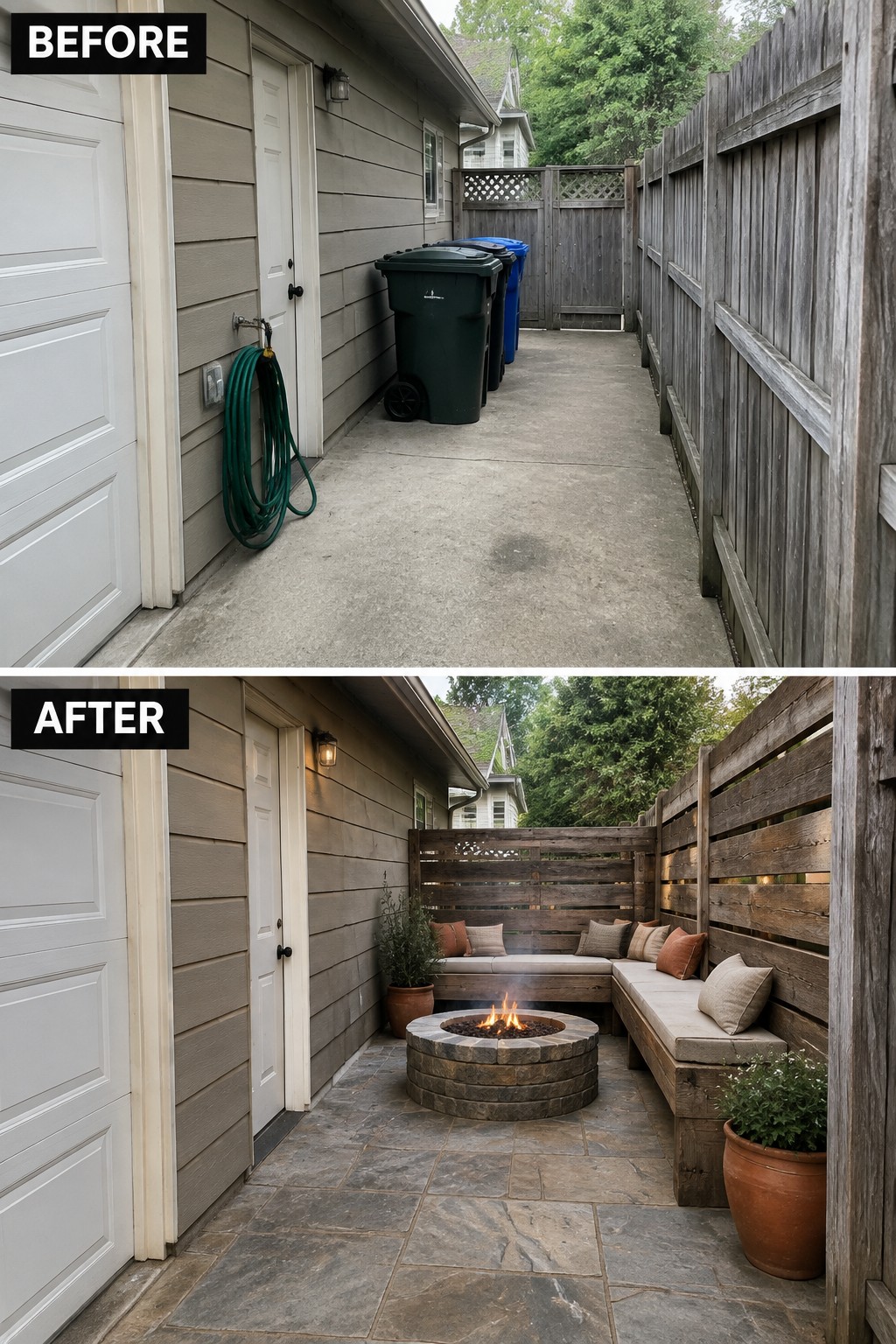
A plain concrete walkway next to the house often ends up as storage space for bins and hoses. Adding a stone fire pit in the center with built-in wood benches along the fence turns the same narrow strip into a place people actually use. The pavers give the floor a finished look while the weathered wood ties the new seating into the existing fence.
This idea works best on side yards that already have some enclosure from fencing. Keep the benches low and simple so the space does not feel crowded, and let the fire pit act as the only main feature. It suits homes where you want a quiet spot to sit without building a full deck or covering the whole yard.
Frequently Asked Questions
Q: Where can I get natural stone without hiring a crew to haul it? A: Scout local quarries or construction sites for leftover pieces. Many places let you take scraps for free or cheap. Stack them yourself in simple patterns to build borders or steps.
Q: How do I stop weeds from popping up between the stones in my new path? A: Lay down a thick layer of landscape fabric before placing the stones. Sweep sand into the gaps to lock everything in place. Check it once a season and pull any stragglers by hand.
Q: What if the weathered wood starts to look too gray after a year? A: Rub in a coat of linseed oil to bring back some warmth. Focus on the ends and joints where it fades fastest. This keeps the rustic feel without making it look brand new.
