

Many backyard gardens end up with routes that force people to step around beds or cross damp grass just to reach the main seating spots.
I learned this after watching how my own family and visitors always took the same unplanned shortcuts through the lawn.
Clear paths change that.
Focusing on how people actually move through the space first often lets the planting and seating feel more settled as the seasons pass.
A few of these ideas look worth testing on a small scale to match the way my yard gets used day to day.
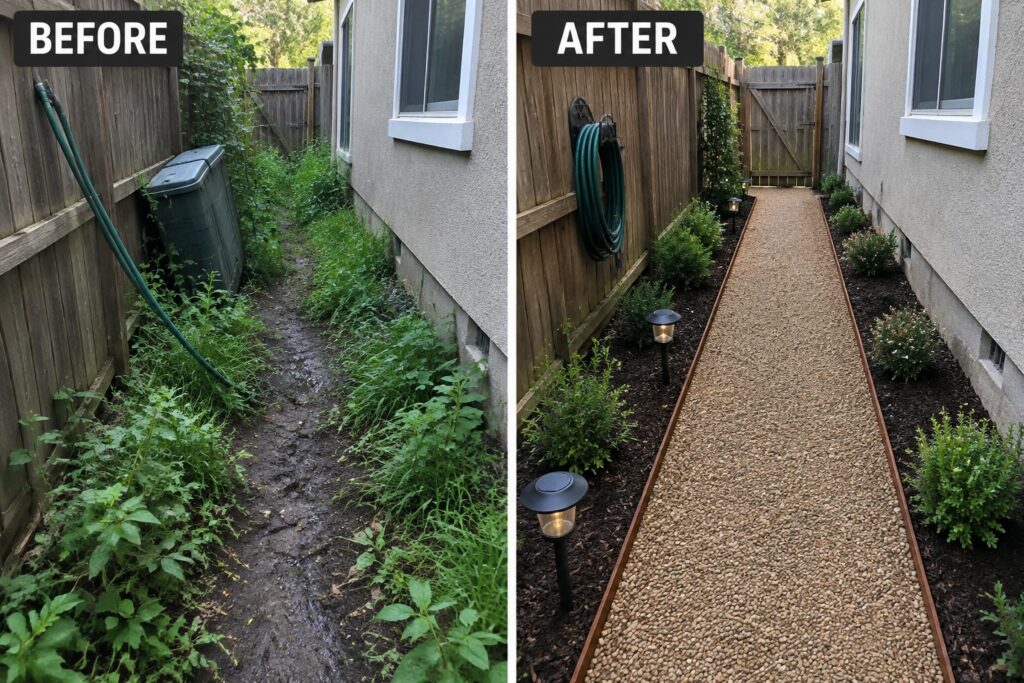
Define A Narrow Side Yard With A Gravel Path

An overgrown side yard often turns into a muddy, hard-to-walk strip that people avoid. Adding a gravel path with simple edging gives the space a clear route, which improves traffic flow and makes the whole area feel more usable.
This idea works best in tight corridors between houses and fences where planting space is limited. Clear the overgrowth first, then use edging to keep the gravel contained and mulch the beds so the plants stay neat without much extra work.
Add Stepping Stones To Guide Foot Traffic

A worn dirt path across the lawn shows where people actually walk, so turning that line into a row of stepping stones makes the yard feel more intentional. The stones give a stable surface that stays dry after rain and keeps the surrounding grass from getting trampled into mud.
This idea suits any backyard where daily routes have started to damage the lawn. Lay the pavers along the natural walking line, keep the spacing comfortable for steps, and let the grass grow right up to the edges. The result is a simple path that improves flow without needing a full hardscape overhaul.
Add A Defined Path With Raised Planters
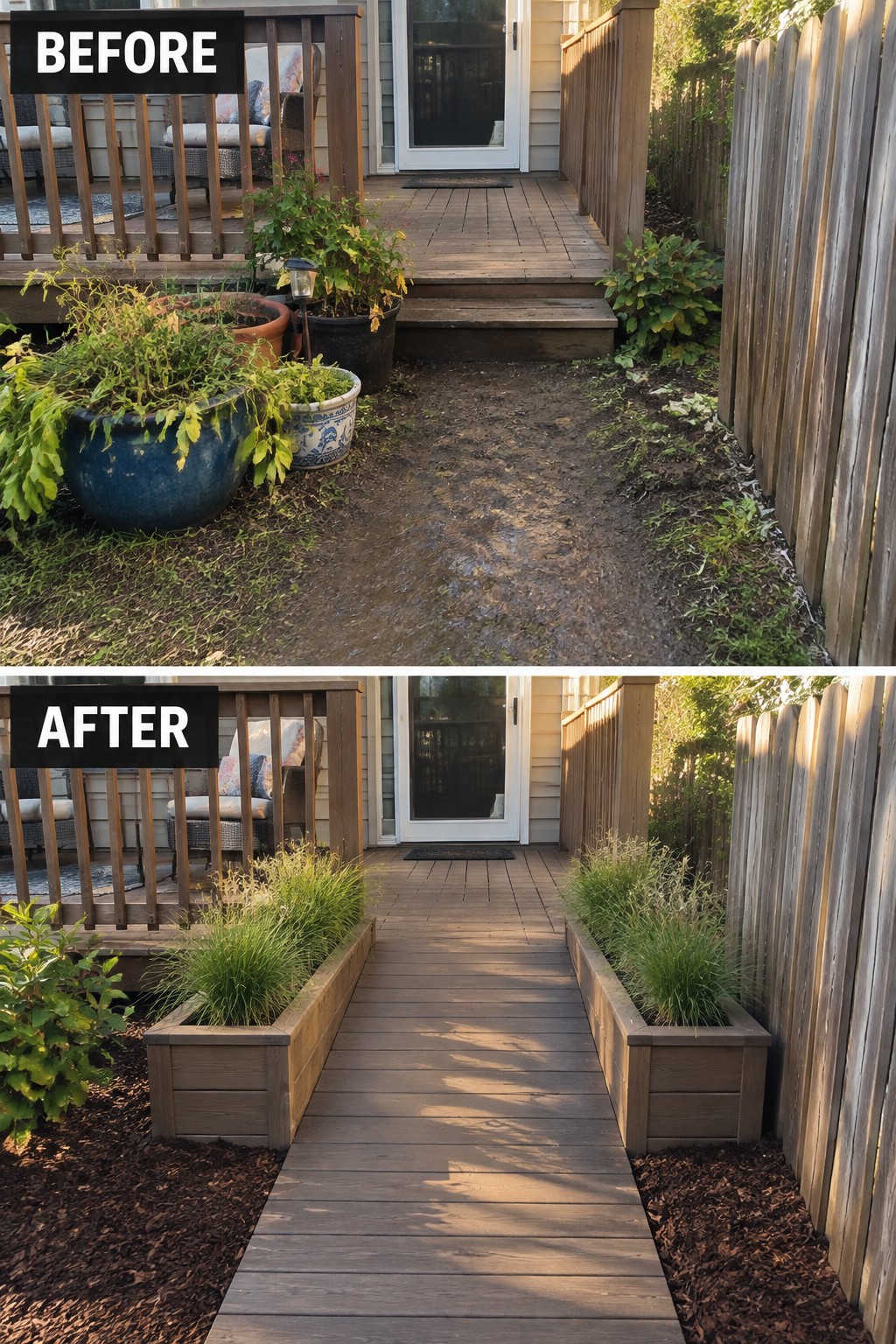
A muddy, undefined strip of ground makes any backyard feel harder to use. In this case the simple fix was to lay down a straight wooden walkway and flank it with matching raised planters. The result turns a messy walk into a clear route that moves people from the gate straight to the deck without tracking dirt everywhere.
This approach works well in narrow side yards or along fence lines where you need both access and planting space. Keep the planters low enough that they do not crowd the path, and fill them with easy grasses or shrubs that stay neat year-round. Mulch the remaining beds so the whole area looks finished and stays low-maintenance.
Straighten A Winding Path For Better Flow
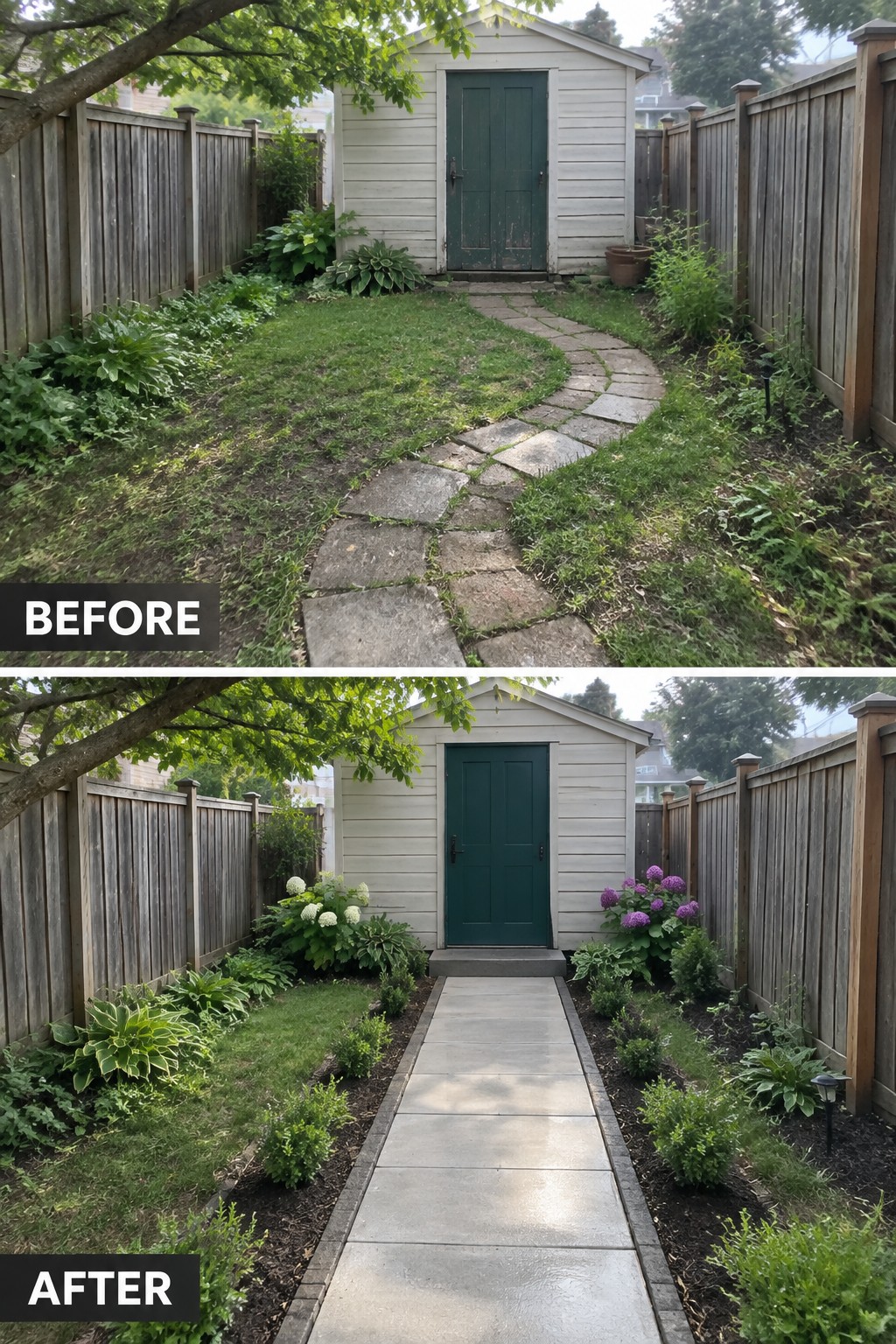
A winding stone path through grass and weeds makes a backyard feel cramped and hard to walk across. Switching to a straight concrete walkway gives the space a clear route from the entry to the shed and makes the whole yard easier to use on a daily basis.
This idea works best in smaller or narrow backyards where people need to move through the space often. Keep the path simple, line the edges with low plants or mulch, and make sure it stays wide enough for comfortable foot traffic without crowding the planting beds on either side.
Define A Garden Path With Pavers And Edging

The old path was made of uneven stones that had shifted over time, making it awkward to walk through the yard. The new version uses straight rectangular pavers set in a row with brick borders on both sides, which gives the space a clear route and keeps the planting beds from spilling onto the walkway.
This approach works best in long or narrow yards where people need to move between seating areas, gates, or garden zones. Start with cleanup and leveling, then choose pavers that suit your climate and leave small gaps for grass or ground cover so the path feels natural rather than harsh.
Define Garden Paths With Simple Edging And Mulch
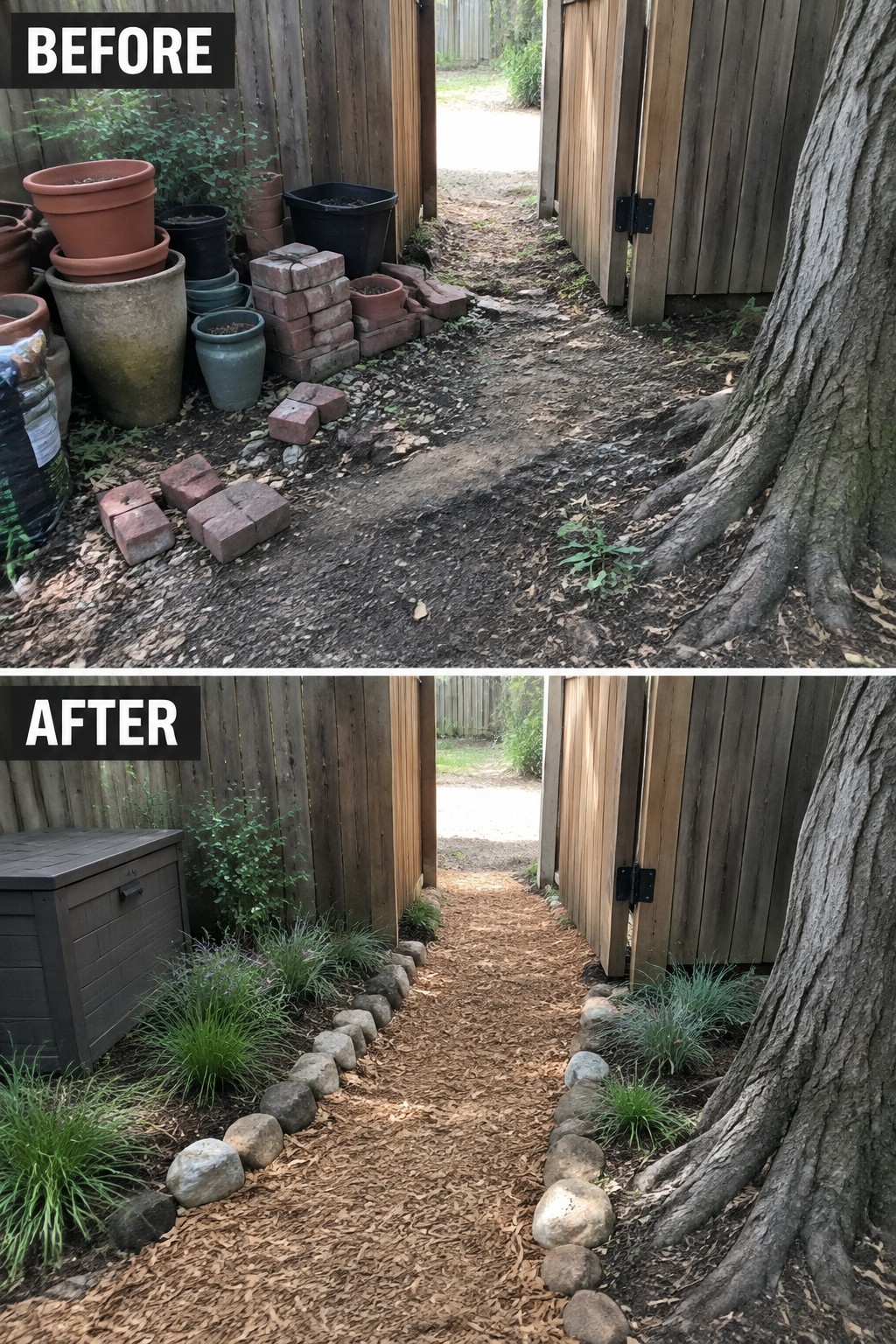
A messy dirt path lined with loose bricks and scattered pots makes it hard to walk through the yard without watching your step. Adding a row of stones along each side and covering the ground with wood chips turns the same narrow route into a clear walkway that stays dry and easy to follow.
This approach works well in side yards or any spot where people need to move between the house and the back fence. Start by clearing away clutter and leveling the ground, then set the edging first so the mulch stays in place. The result feels more intentional without needing fancy materials or a big budget.
Add A Defined Path To Fix Muddy Garden Routes

A muddy strip next to the lawn made it hard to walk through the garden without tracking dirt everywhere. Placing stepping stones down the center with gravel borders on each side turned the wet area into a stable walkway that stays usable after rain.
This idea suits narrow side yards or long garden beds where water collects. Start with a gravel base for drainage, then set the stones at a comfortable stepping distance. It keeps the existing plants in place while giving people a clear route that does not damage the beds.
Curve The Path To Improve Backyard Traffic Flow

A straight concrete path running tight against the house often feels cramped and cuts the yard into awkward sections. Switching to a wider, curved stone path lets the walkway follow the natural shape of the lawn instead. The new layout opens up more usable grass space and makes it easier to move from the house to the rest of the yard without feeling squeezed.
This approach works best in long, narrow side yards or backyards where the original path runs too close to the foundation. Start by deciding where people actually walk most often, then lay out the curve so it gently bends away from the house. Keep the path wide enough for two people to pass and make sure the curve still leaves room for a small seating spot or plantings near the door.
Add A Brick Path To Guide Traffic Through The Gate

A bare dirt patch in front of the gate turned into a muddy mess every time it rained. Adding a simple brick path gave the area a firm walking surface and made the route through the yard feel intentional instead of accidental.
This idea works best in small backyards or side yards where people need to move between the gate and other garden areas. Keep the path wide enough for comfortable foot traffic, and use low edging plants to hold the shape without crowding the walkway.
Add A Defined Path To Guide Movement Through The Garden

An overgrown backyard often feels hard to use because there is no clear way to walk through it. In this case, the before photo shows a narrow strip of grass squeezed between plants and fences, with no real route from one end to the other. Adding a simple stone path with wood edging and mulch on both sides instantly creates a usable walkway that keeps feet out of the beds and makes the space feel more organized.
This approach works well in long, narrow yards where plants tend to spill into the walking area over time. Start by clearing the center first, then lay down a base of mulch and set stepping stones at a comfortable pace apart. The path does not need to be fancy. It just needs to give people a place to step so the garden stays accessible instead of turning into a thicket.
Lay A Continuous Paver Path Instead Of Scattered Stones

Scattered stepping stones on grass make walking awkward and leave the yard feeling unfinished. Replacing them with a single curved paver path gives people a clear route and keeps feet off the lawn, which holds up better over time.
This approach works best in medium or small backyards where you need to connect the patio to a gate or seating area. Keep the path width comfortable for two people and let the curves follow natural lines of movement rather than forcing a straight line.
Define A Steep Path With Timber Steps And Gravel

A worn dirt slope with exposed roots makes walking through the yard awkward and slippery. Adding timber steps filled with gravel creates a stable route that handles the incline without constant erosion or tripping hazards. The simple structure keeps the path clear while still letting plants grow along the edges.
This approach works well in backyards with natural slopes where foot traffic needs a reliable line. Use pressure-treated wood for the risers and compact the gravel so it stays in place over time. Leave enough room on either side for planting if you want to soften the look without crowding the walkway.
Build A Raised Path Across Wet Yard Spots

A muddy stretch with sinking planks makes it hard to cross the yard without tracking in water and dirt. Replacing that trouble spot with a raised wooden walkway and gravel borders creates a stable route that stays usable even after rain.
This idea works best in low spots where grass struggles and water collects. Keep the path narrow enough to feel natural but wide enough for easy walking, and let the gravel help with drainage on both sides. It turns a problem area into a simple way to move through the garden without needing major regrading.
Create A Defined Path Through Overgrown Grass
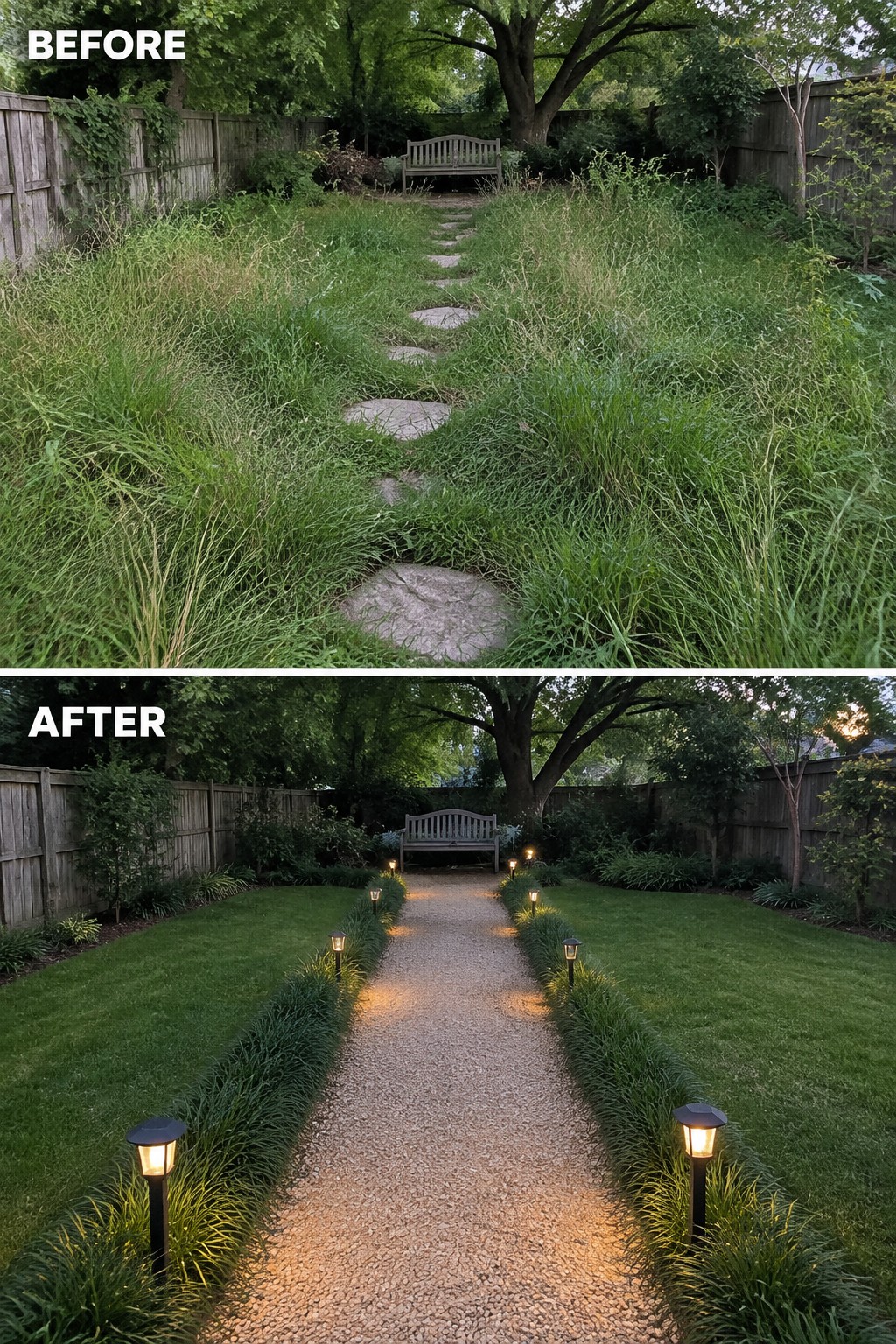
An overgrown yard with stepping stones buried in tall grass makes it hard to walk through without trampling plants or losing the route. Replacing that mess with a wide gravel path and clean borders turns the space into something you can actually use, and it gives the whole backyard a clearer layout.
This idea works best in long or narrow yards where people need an obvious way to move from one end to the other. Cut everything back first, then add edging and gravel so the path feels intentional instead of accidental. Keep the borders simple and repeat the same material on both sides so the route stays easy to follow.
Add Edging To Create Clear Garden Borders
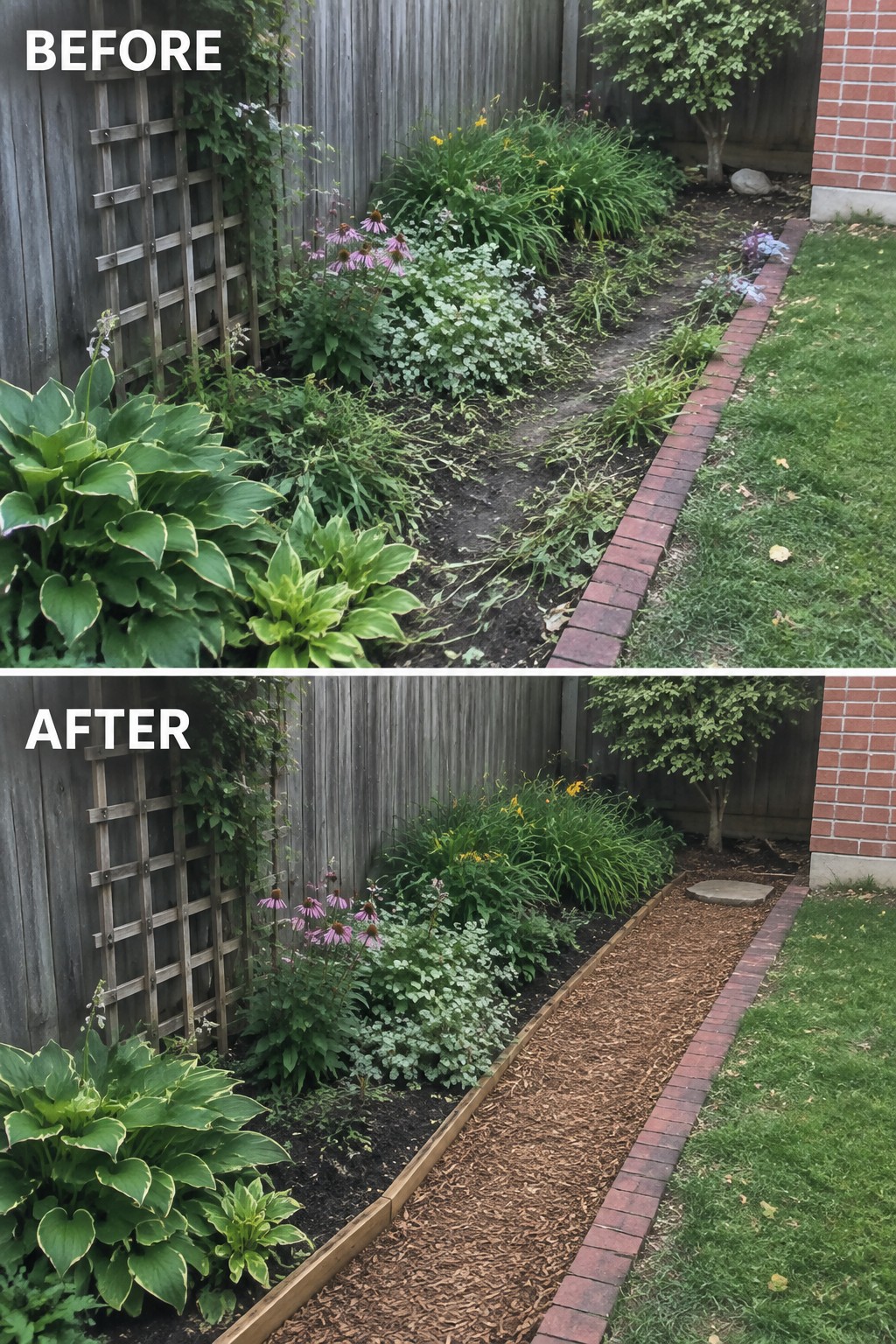
An overgrown garden bed next to a path can quickly turn into a mess that crowds the walkway and makes the whole yard feel neglected. Adding a simple wooden edge and covering the soil with mulch gives the border a firm shape, keeps plants from spilling onto the path, and makes the area look intentional instead of wild. The change is mostly about cleanup and structure rather than new plants.
This approach works well along side yards or narrow beds where foot traffic matters. Start by cutting back the worst of the overgrowth, then install edging that follows the line you want to keep. Mulch afterward to hold the soil in place and reduce weeds. The result is a path that stays open and a garden that feels planned without needing a full redesign.
Add A Path To Improve Traffic Flow On The Patio

The before photo shows a patio crowded with chairs and pots that made it hard to walk straight from the house to the yard. In the after, a brick path runs down the center and the seating is moved to the side. This one change opens up the space and makes it easy to move through without stepping around furniture.
A path works best when your patio sits between the house and the lawn. Keep it wide enough for two people to pass and place chairs and tables along the edges so the walkway stays open. This idea fits most small to medium patios where people need to move from the door to the grass or garden beds.
Add A Gravel Path To Guide Traffic Flow
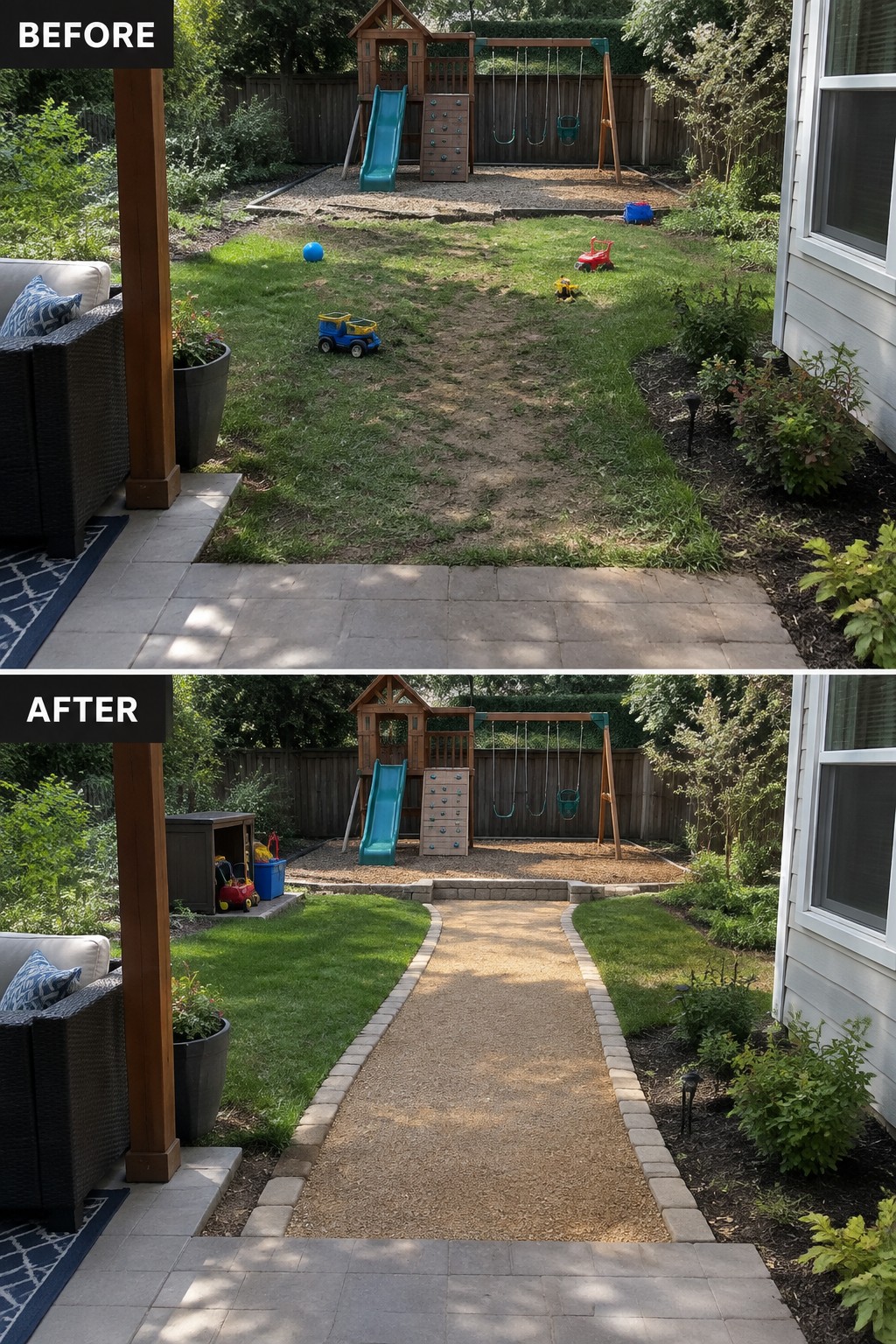
A worn strip of grass shows exactly where people walk most often. This yard took that natural route and turned it into a clear gravel path with paver borders. The change gives the space better structure and keeps feet off muddy grass when moving between the house and the playset.
Watch where your own family cuts across the lawn before you start. A simple path with edging works in most yards because it follows real movement instead of fighting it. Keep the path a practical width and use materials that handle weather and regular use.
Use Consistent Pavers To Create Smoother Garden Paths
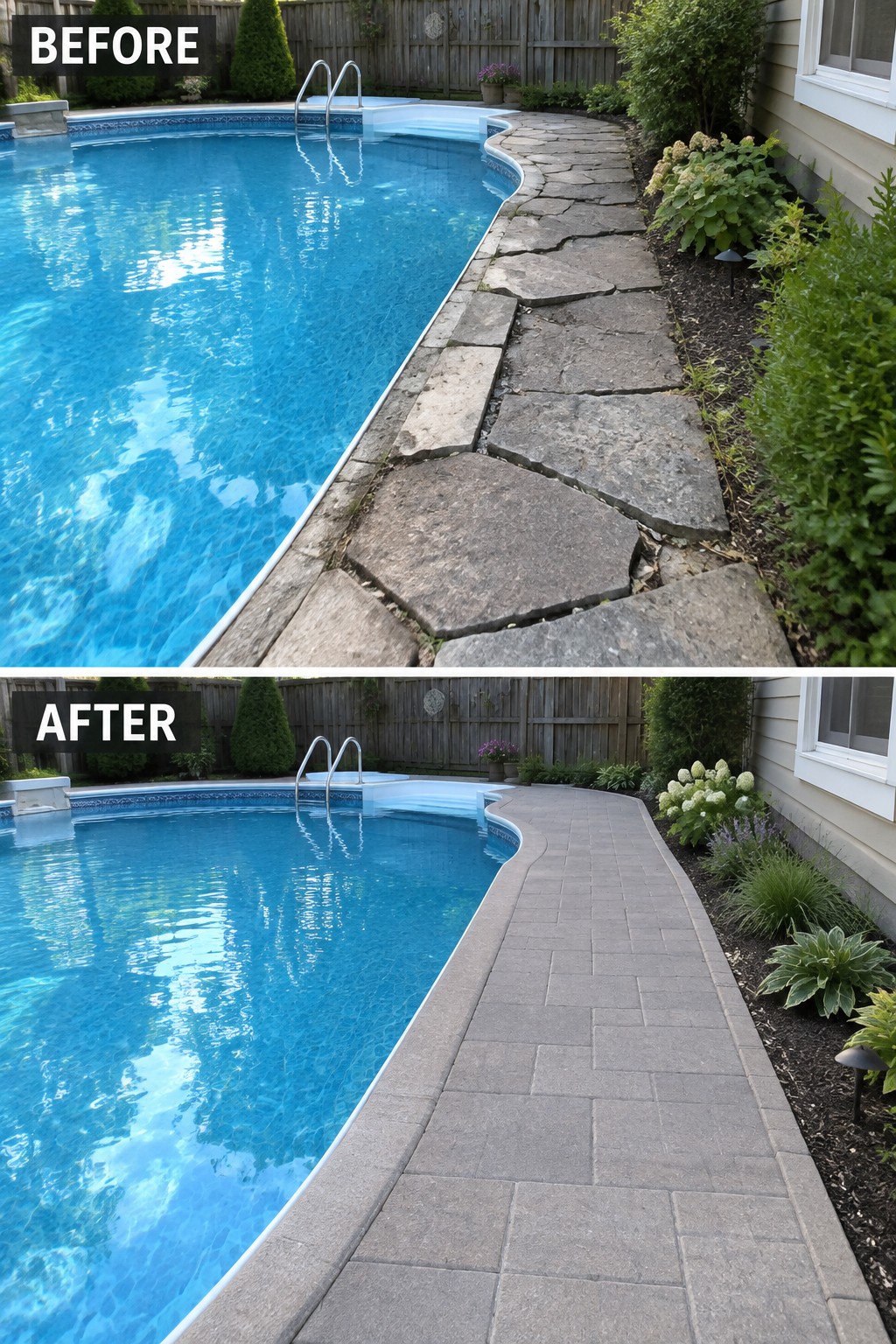
The old irregular stones made the walkway beside the pool feel uneven and hard to navigate. Switching to a single layer of uniform pavers gives the path a flat, steady surface that is much easier to walk along.
This approach works well around pools, along garden beds, or anywhere foot traffic needs a clear route. Keep the paver color simple so it blends with the existing deck and plantings, and make sure the width stays wide enough for two people to pass without crowding the edge.
Lay A Stone Path To Improve Backyard Traffic Flow
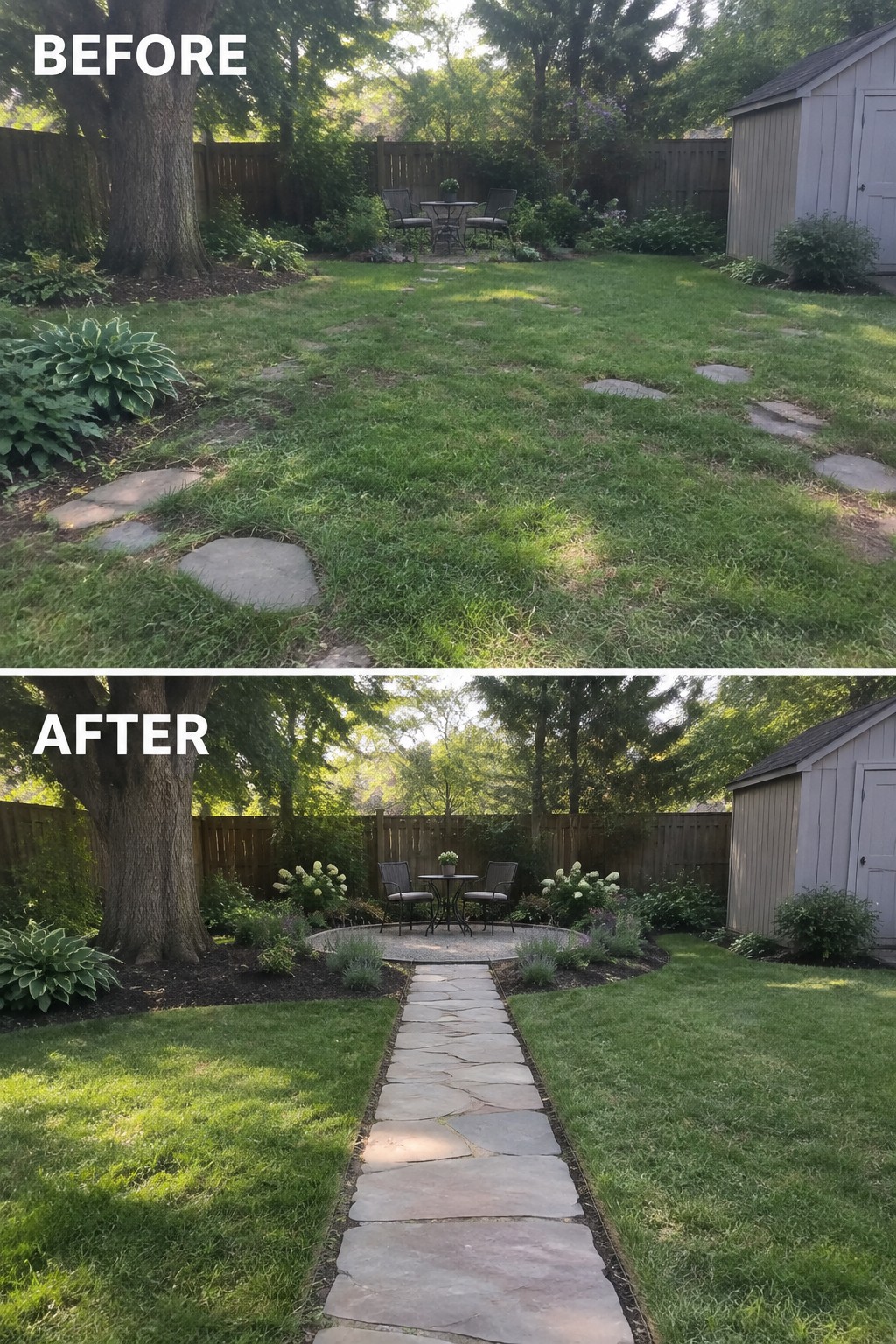
A wide lawn with scattered stepping stones makes it hard to move through the space without cutting across grass or guessing where to walk. In this yard the fix was simple. They replaced the loose stones with one continuous path made of larger irregular pavers that runs straight from the house side to the seating area. The new path gives a clear route and keeps feet out of the lawn.
This idea works well in any backyard where people cross the same stretch of grass often. Start by watching where feet naturally go, then lay the path along that line. Keep the path wide enough for two people and let the lawn or garden beds fill in on either side. The result is a yard that feels planned instead of open and aimless.
Frequently Asked Questions
Q: How wide do paths need to be if two people often walk through the garden together?
A: Aim for at least three feet across so shoulders do not brush plants on either side. Walk the route yourself carrying a basket or pushing a cart to check for tight spots. That width keeps daily movement smooth without constant trimming.
Q: What works best when a path runs right next to a seating area?
A: Leave a clear buffer of two feet between the edge of the path and any chairs so people can pass without bumping elbows. Angle the seats slightly toward the garden instead of the walkway. This small shift stops traffic from cutting through conversations.
Q: My stepping stones sink in wet weather and get slippery. Any quick fix?
A: Set them on a base of gravel or sand that drains fast and top them with a textured surface. Space the stones so your normal stride lands in the middle of each one. Check them after the first rain and adjust any that shift.
Q: How do I keep garden beds from creeping onto a narrow side path over time?
A: Install a simple metal or wood border right at the bed edge and stick to compact plants there. Pull stray growth every time you walk by instead of waiting for a big cleanup. The path stays open with just those quick passes.
