

I have always noticed that the area right around the front door tends to look scattered until the beds gain some clear shape.
Once the edges are set it becomes easier to choose plants that actually suit the space instead of just filling gaps.
I usually test a simple border first because it makes everything else fall into place without much extra effort.
Adding structure this way also helps with maintenance since water and mulch stay where they belong over the seasons.
That settled look is what I aim for first.
Add Defined Garden Beds Along The Front Walk

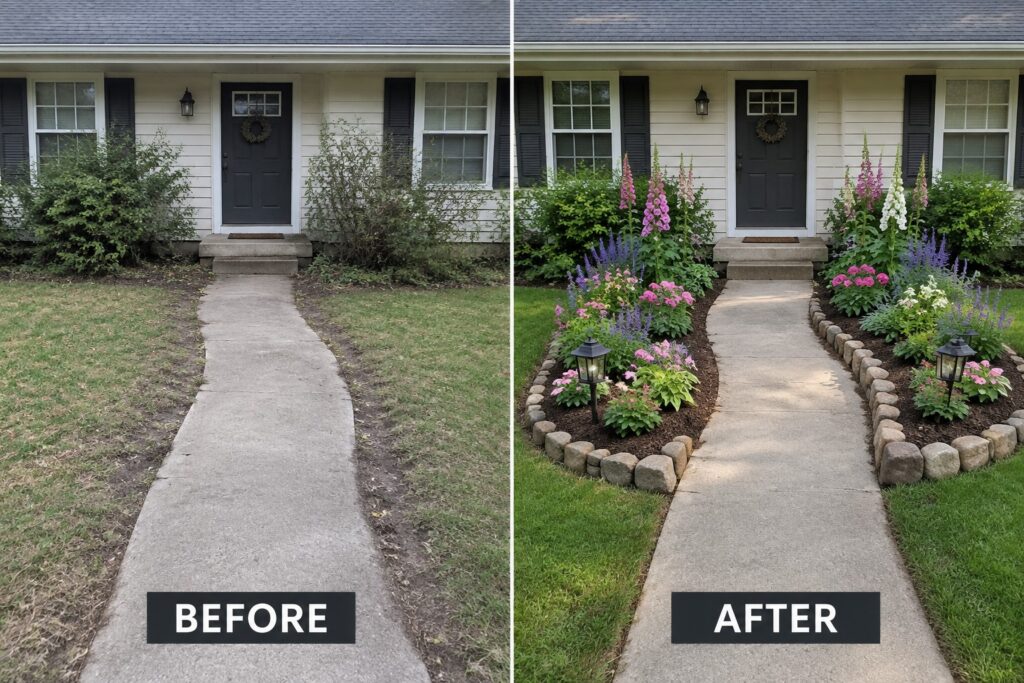
Adding garden beds on either side of the walkway gives the entry a clear shape and turns a plain path into something more intentional. The stone edging creates soft curves that guide visitors toward the door while the plantings soften the look of the house foundation.
This works best on homes with a straight concrete walk and open lawn space. Mark the bed outlines first with a hose or rope so you can adjust the curves before digging, then choose edging that matches your house style. Keep the beds narrow enough to leave plenty of lawn on the outer sides.
Define The Entry With Garden Beds

The main improvement comes from adding clear edges and beds along the front walk. Before the grass ran right up to the path with only loose shrubs on the sides. After the change, brick borders and gravel create neat rectangular beds that hold low hedges and flowering plants. This simple structure makes the entry feel intentional rather than open and unfinished.
This approach works on homes with a central walkway where the lawn meets the house. Lay out the edging first so the beds have a clean shape, then plant a mix of evergreen shrubs for year-round form and a few seasonal plants for interest. It keeps maintenance low while making the front look more settled.
Add Defined Beds Along The Entry Path
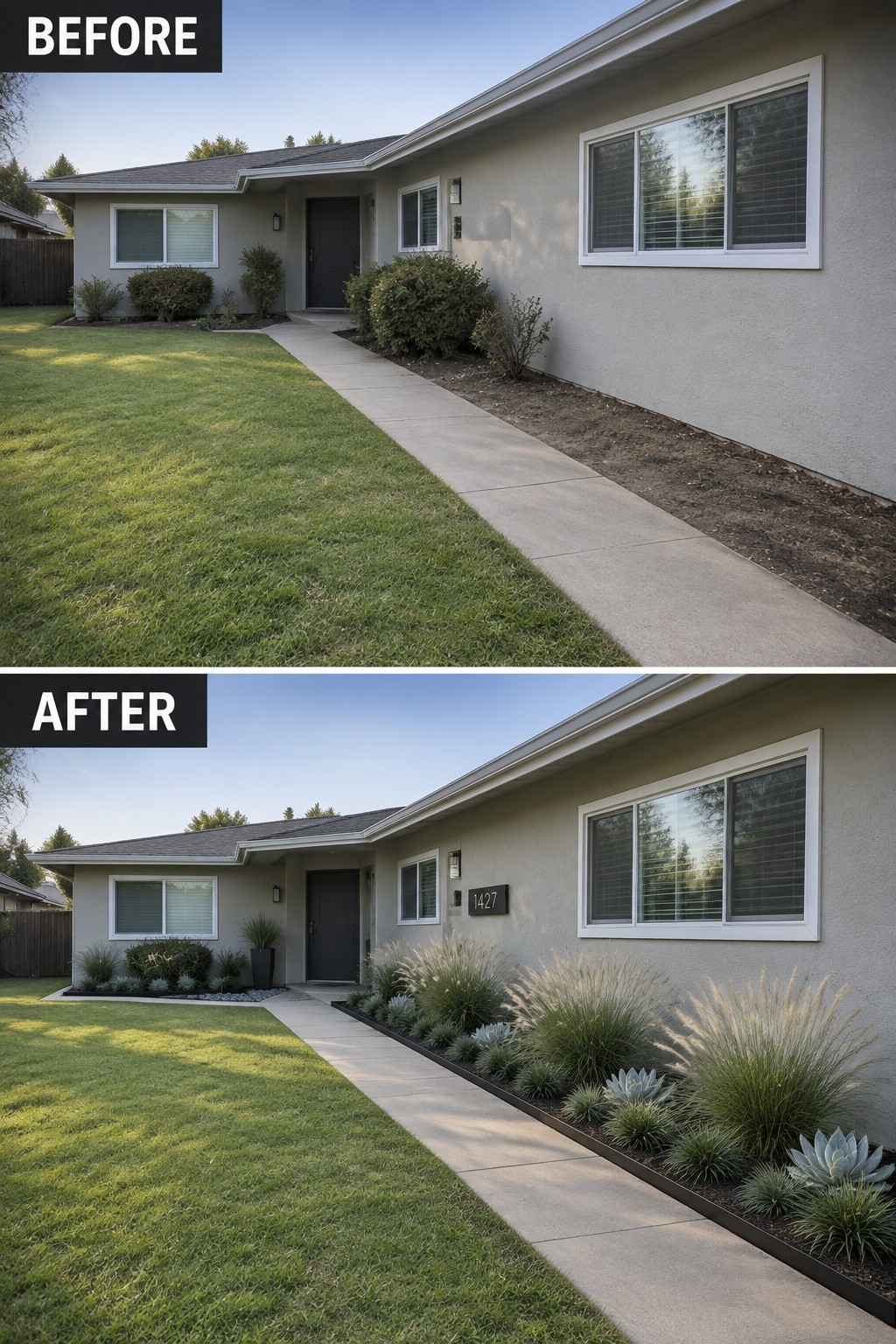
A long strip of dirt or scattered shrubs next to the house often leaves the front looking unfinished. Adding a clean edge and filling the bed with grasses and succulents gives the walkway a clear border that makes the whole front feel more intentional.
This idea works best on houses where the path runs parallel to the facade. Install the edging first so the bed stays neat, then choose plants that stay low and need little water. Keep the bed narrow enough that it does not crowd the walkway or block windows.
Add Defined Beds To Frame The Entry Path
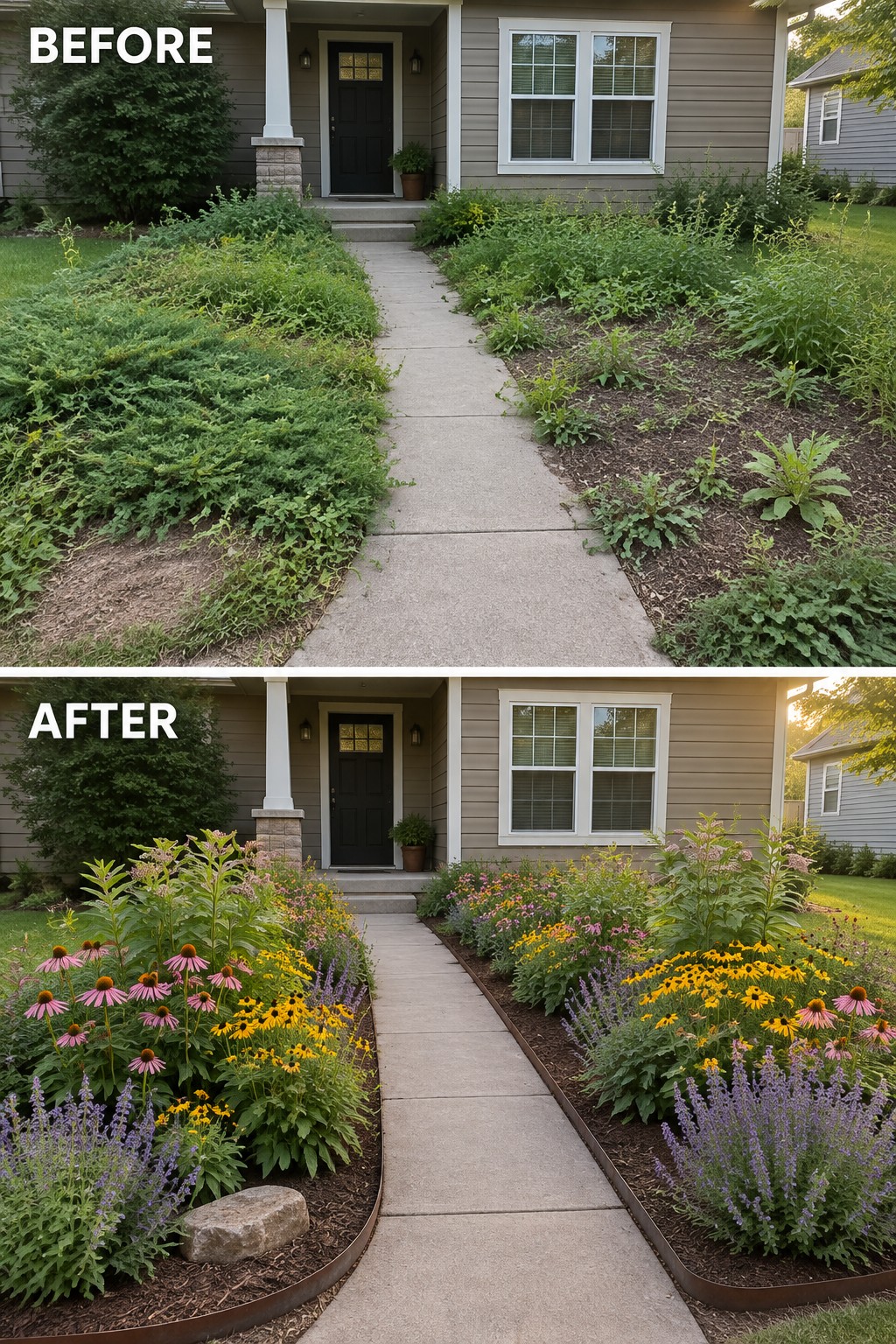
One of the most practical changes here was giving the side beds a clear edge instead of letting the plants sprawl. The before photo shows everything running together with no real shape. Once the beds were cut back and bordered, the path started to feel like an actual entrance rather than just a strip of concrete cutting through weeds.
This works best on homes where the front walk is the main feature. Install simple edging first, then plant in layers so nothing spills onto the path. It keeps the area looking intentional even if you cannot redo the whole yard at once.
Define The Entry With Gravel Beds
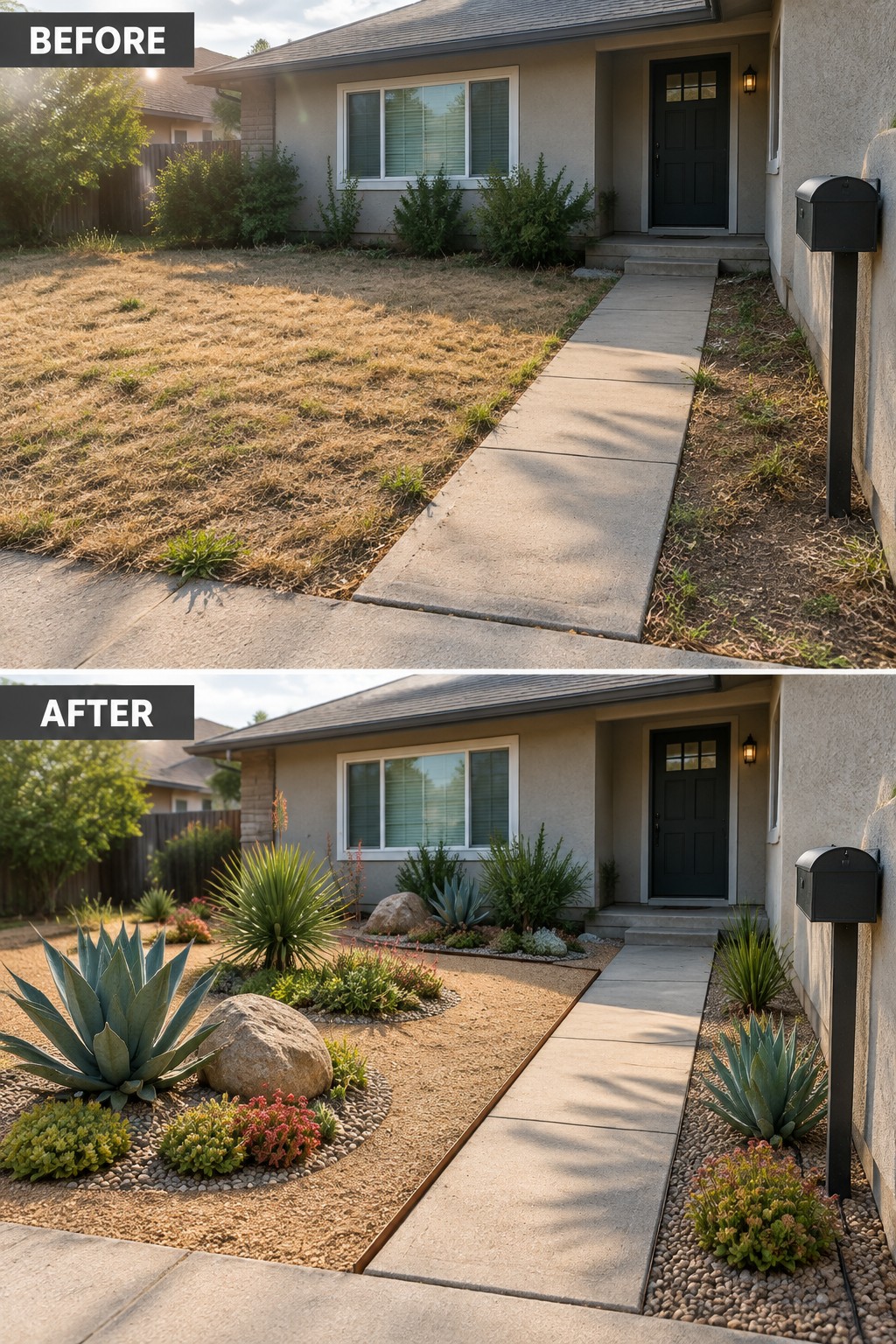
A plain concrete path looks better when you give it clear borders instead of letting the lawn run right up to the edge. Replacing the dry grass with gravel beds and a few sturdy plants turns the walkway into a deliberate feature rather than just a strip across an empty yard.
This idea suits smaller front yards that need structure without high maintenance. Clear the edges first, add a simple border, then fill with gravel and low-water plants so the beds stay neat and the path feels more welcoming.
Add Defined Garden Beds Along The Entry Path

The main change here is turning a plain strip of grass and weeds into clear garden beds that run alongside the walkway. Low boxwood hedges give the beds a solid edge while the flowers add color right where people approach the door. That simple structure makes the whole front look more planned without any big construction.
This idea works best on narrow front yards where the path is the main feature. Start by marking straight or gently curved bed lines with a hose, then edge them with metal or brick so the shape stays clean. Keep the planting simple with one type of low shrub and a mix of seasonal flowers so it stays easy to maintain over time.
Define The Front Entry With Raised Garden Beds

Many entries feel unfinished when the ground just slopes up to the steps with no clear edge. Raised beds on each side give the doorway a frame and make the whole front feel more intentional without needing major construction.
Keep the beds low enough to stay welcoming and use the same material on both sides so the look stays balanced. This approach works well on modest homes where you want to add structure first before worrying about extra decor or lighting.
Terrace A Sloped Front Yard With Retaining Walls

A bare slope in front of the house often looks unfinished and hard to maintain. Adding low stone retaining walls turns the same area into a series of flat beds that hold soil, reduce erosion, and give plants a clear place to grow. The steps that connect the levels also make the walk to the door feel more intentional.
This approach works best on yards that drop away from the street or sidewalk. Start by marking the wall heights so each bed stays level, then fill with good soil and mulch before planting. Keep the beds a consistent depth so the whole front looks planned rather than patched together.
Use Lighting To Frame Entry Beds

Adding a few well-placed lights along the walkway and around the planting beds turns a plain front path into a clear, welcoming entry at night. The low path lights keep the concrete route visible while the uplights on the shrubs give the beds shape and depth without any major planting changes.
This idea suits homes with existing beds that just need better definition after dark. Place the lights close to the lawn edge so they highlight the curve of the beds and keep the focus on the door rather than the lawn. Use simple solar or low-voltage fixtures and test the spacing before you install them permanently.
Add Defined Beds To Frame The Entry Path
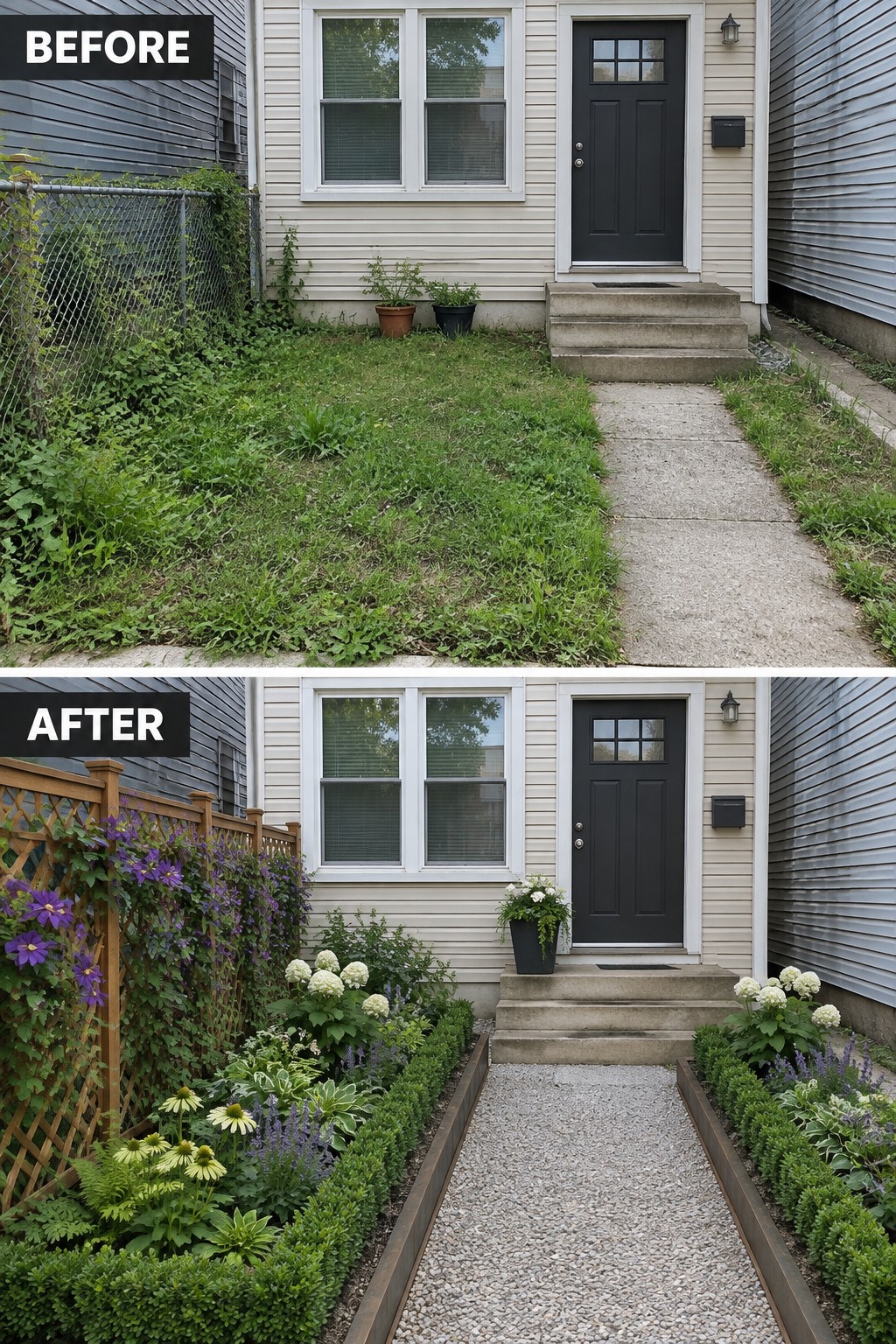
The main change here is turning a weedy strip of grass into neat garden beds that run alongside the walk. Metal edging and a gravel surface give the path a clear border, while the planting stays low and structured so it does not crowd the steps or the door.
This idea suits small front yards where you want the entry to feel intentional without adding a lot of new hardscaping. Mark the beds first with simple edging, then fill them with a mix of evergreen shrubs and seasonal flowers that stay within the lines. It keeps maintenance low and makes the walk feel wider and more welcoming.
Define The Front Entry With Bordered Garden Beds
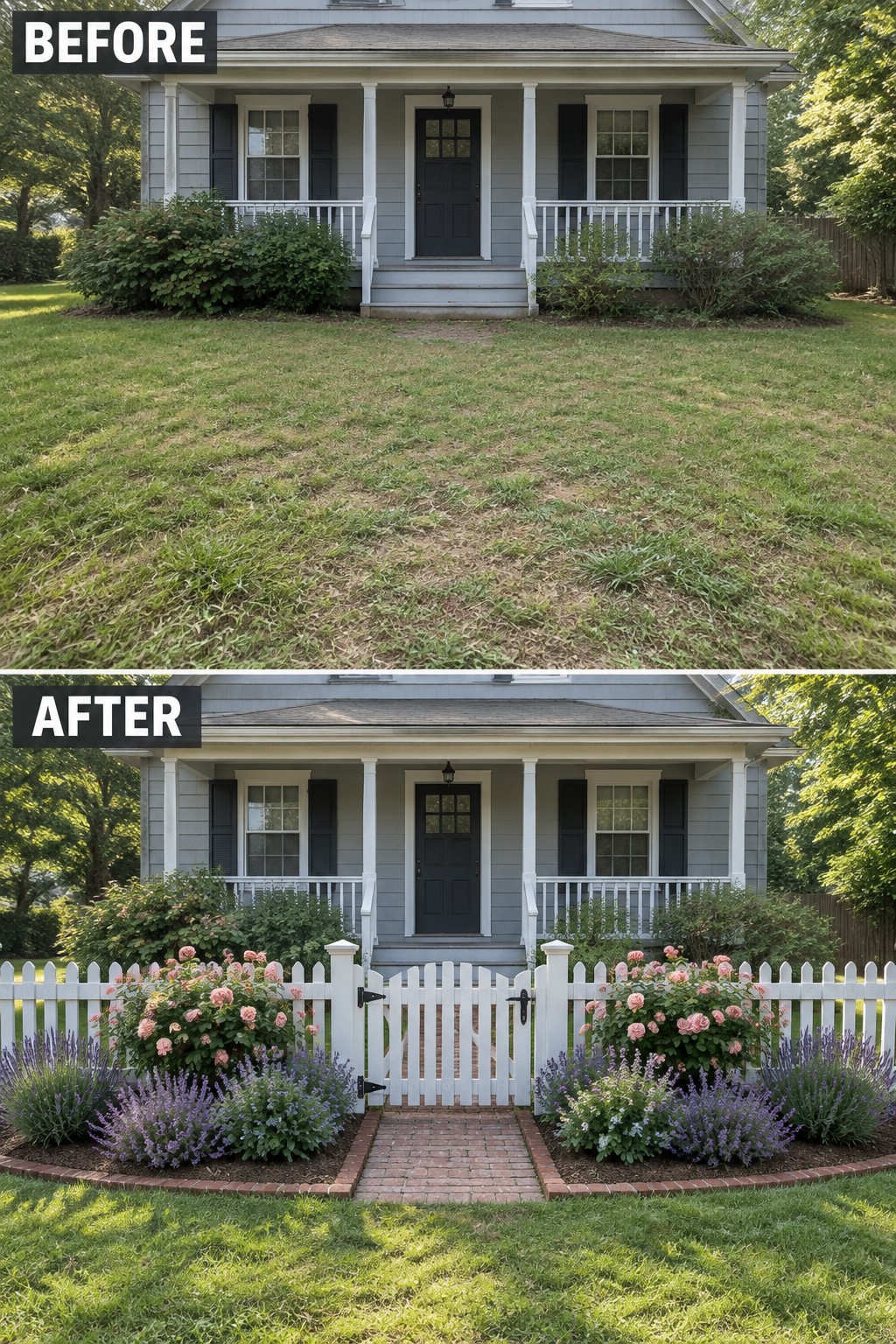
A bare lawn that slopes right up to the porch can make the front of a house feel unfinished. Adding a low fence, a brick path, and curved beds on either side gives the entry a clear shape and makes the door the natural focal point.
This idea suits older homes with simple facades and yards that lack any planting structure. Keep the beds modest in width so they frame the walk without blocking access, and use the fence only where it helps direct foot traffic. The same layout works on flat lots too, as long as the path stays wide enough for comfortable passage.
Frame The Entry Path With Defined Garden Beds
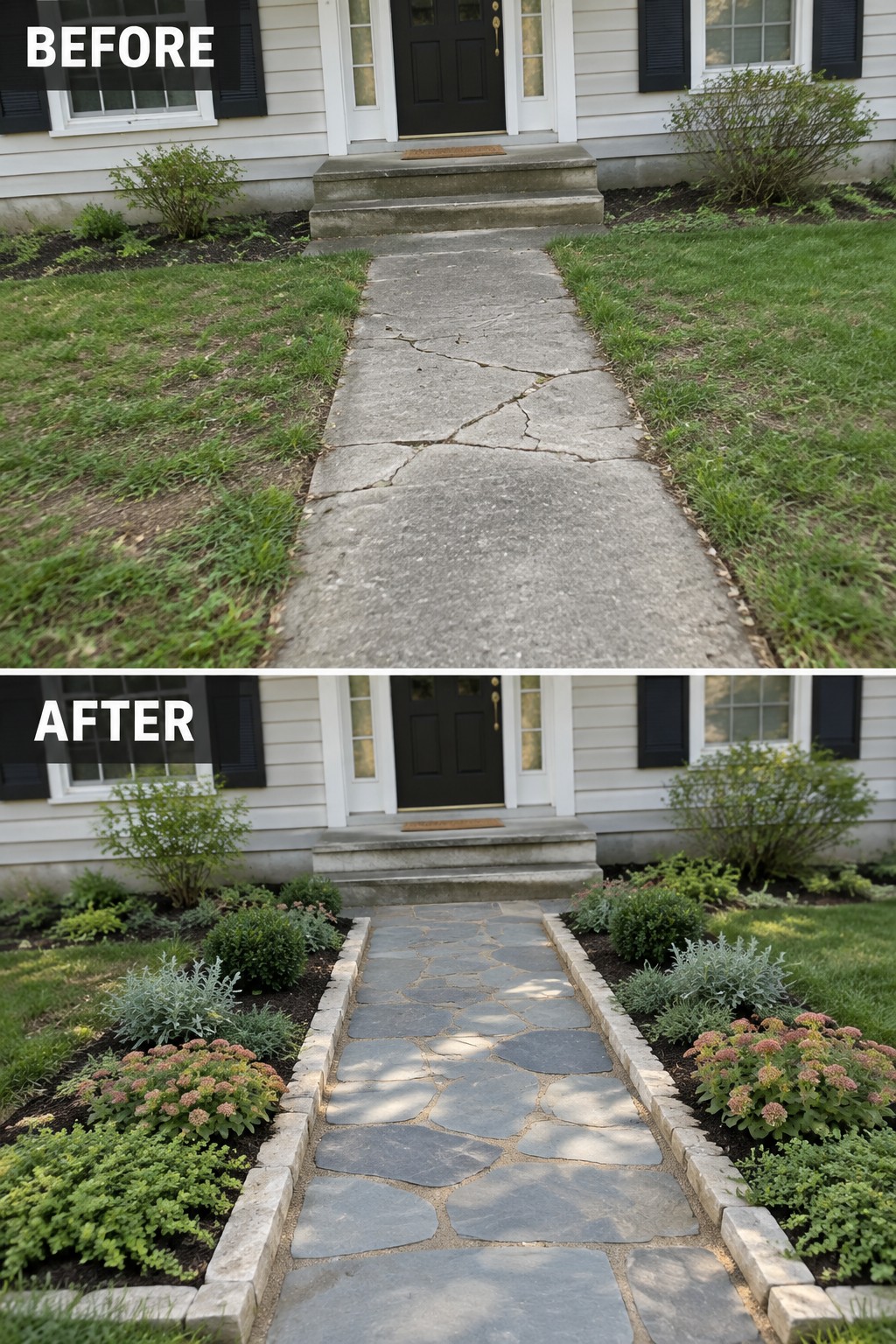
A cracked concrete walkway makes the front approach feel neglected and hard to maintain. Replacing it with a stone path and adding low edging on both sides turns the whole entry into something that looks planned rather than leftover. The new beds give the eye clear lines to follow and keep grass from creeping onto the walking surface.
This idea works well on any modest front yard where the path is the main feature. Start by deciding the width of the beds you can realistically keep weeded, then choose a simple edging material that matches your house. Once the borders are in place, fill them with a mix of low shrubs and seasonal plants so the beds stay full without blocking the walk.
Add Defined Garden Beds To Frame The Front Entry

The main change here is how the messy side plantings were replaced with clear, edged beds that run along the walkway. Black borders keep the mulch in place and give the entry a finished look, while the two large planters on the steps add height right next to the door. This simple structure makes the whole front feel more intentional without any big construction.
This idea works best on houses with a straight path to the door and some existing bed space on either side. Start by laying out the edging so the beds feel balanced, then fill them with a mix of low flowers and a few taller plants for contrast. Keep the colors simple so they do not compete with the house itself.
Define The Entry Beds With Edging And Planting

The front beds had no shape and looked messy because the ground was bare and the old plants had died back. Adding a low brick edge and filling the beds with mulch created a clear boundary that made the whole entry feel intentional.
This idea works on any house where the lawn runs right up to the foundation. Outline the beds first so they follow the walkway and steps, then fill them with a few evergreens and some taller grasses so the planting stays full through the seasons without needing constant work.
Add Defined Garden Beds To Frame The Entry
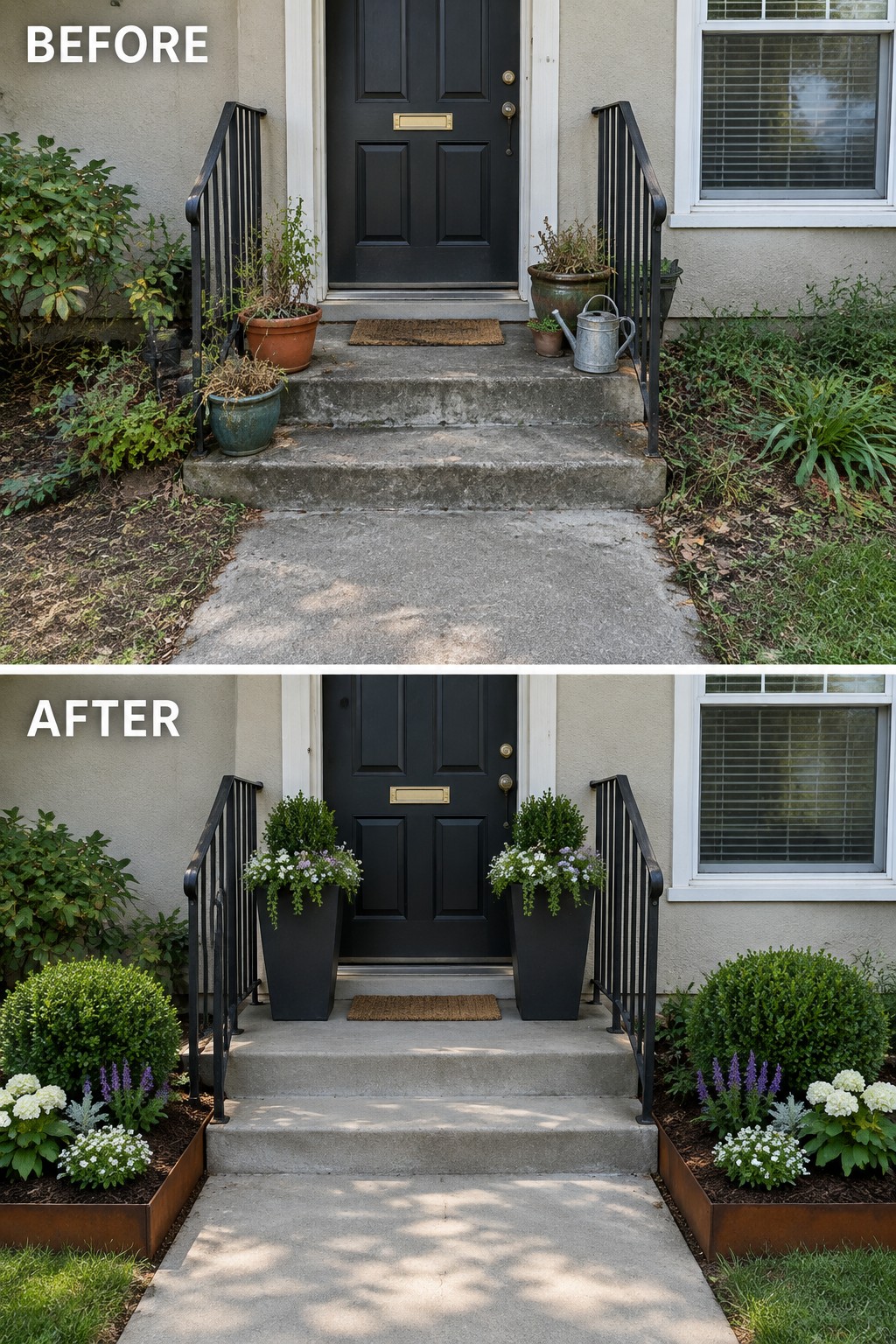
The biggest shift here comes from adding clear borders around the front steps. Instead of scattered pots and random plants spilling onto the walkway, the space now has two matching beds edged in simple metal. That one change gives the entry a finished look and makes the door feel more intentional without any major construction.
This idea works well on small front yards where you want structure but do not want to fill every inch. Start with the edging first so the beds have a clean shape, then keep the planting simple with a mix of shrubs and lower flowers. It helps the walkway feel wider and keeps things looking neat even when the rest of the yard is still a work in progress.
Add Defined Garden Beds To Frame The Front
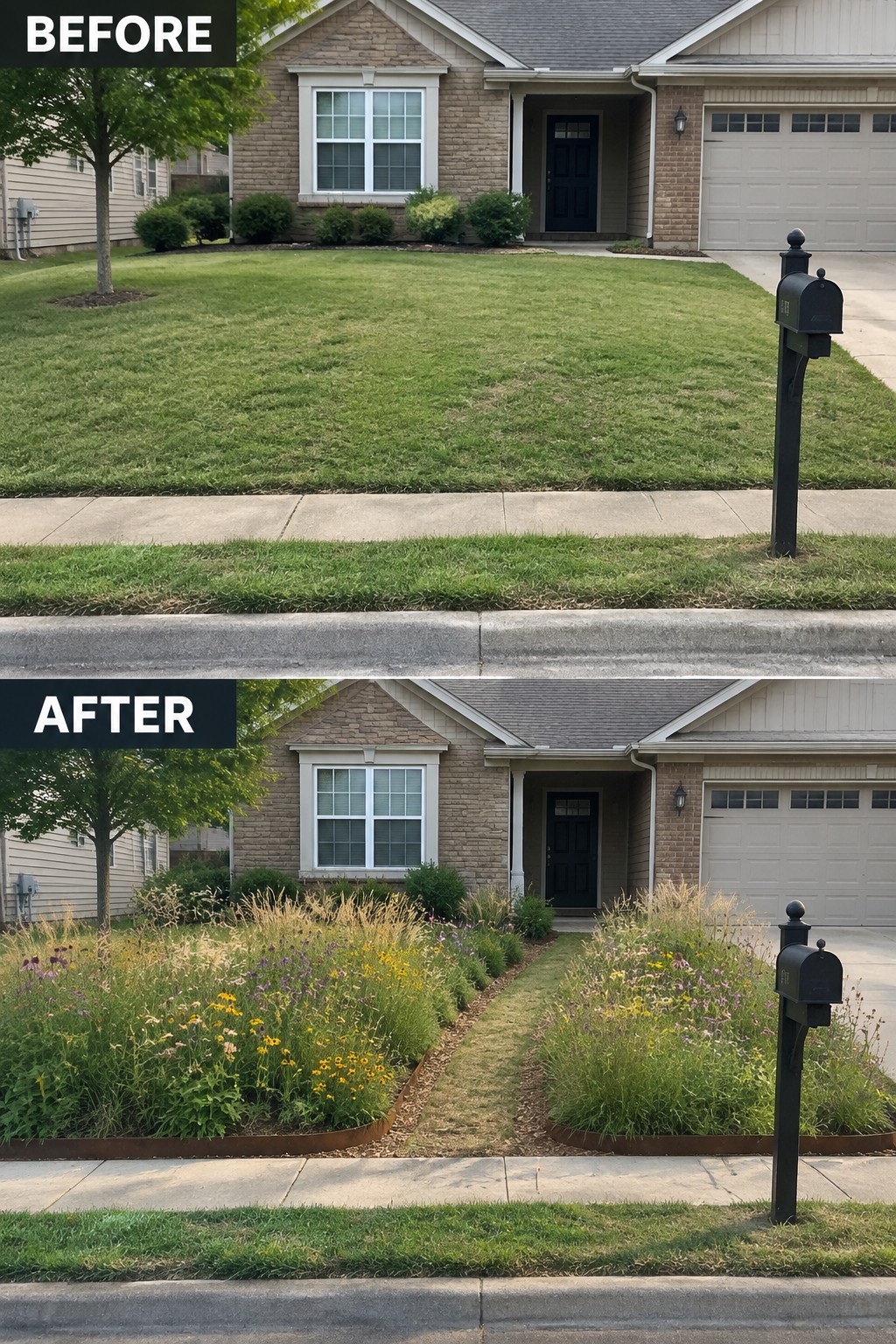
A plain stretch of lawn in front of a house often looks unfinished because there is nothing to connect the building to the yard. Adding edged beds along the foundation and walkway gives the space clear shape and makes the entry feel more intentional.
Keep the beds a consistent width so they do not block walking paths or look overgrown. Use a simple edging material and limit the plant choices to a few easy varieties that can fill in without constant work. This approach works on most suburban lots and helps the house look more settled without major construction.
Frame The Entry With Defined Garden Beds
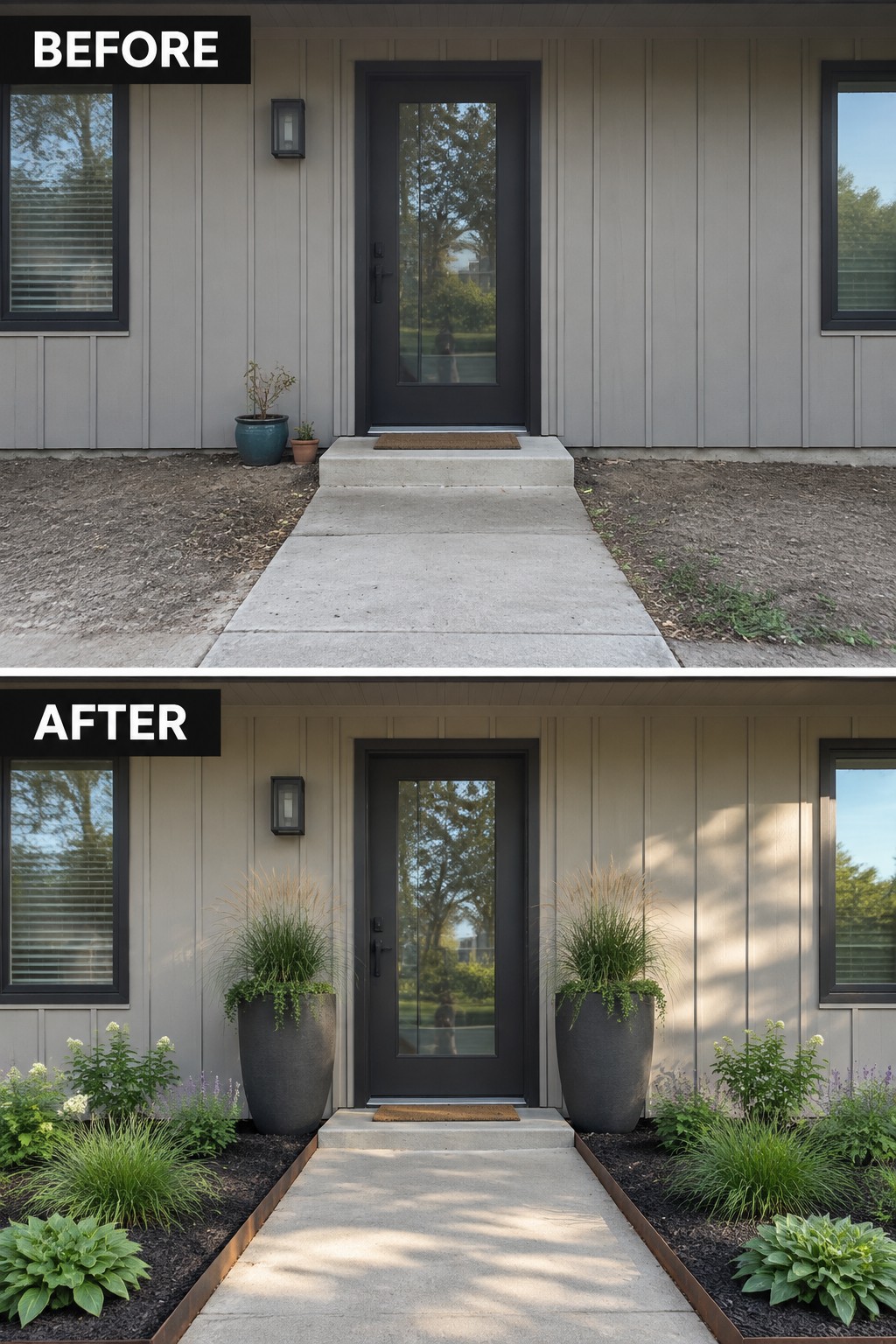
The front of this house looked unfinished with bare dirt and no clear planting zones. Adding garden beds with simple edging gave the entry a finished look and made the path feel more intentional. The large planters beside the door also help anchor the space without needing a full redesign.
This idea works on many homes where the front feels open or plain. Mark beds that follow the walkway, keep them narrow enough for easy movement, and choose plants that match your light conditions. Focus on the edging first so the beds hold their shape over time.
Create Defined Garden Beds Along The Front Path
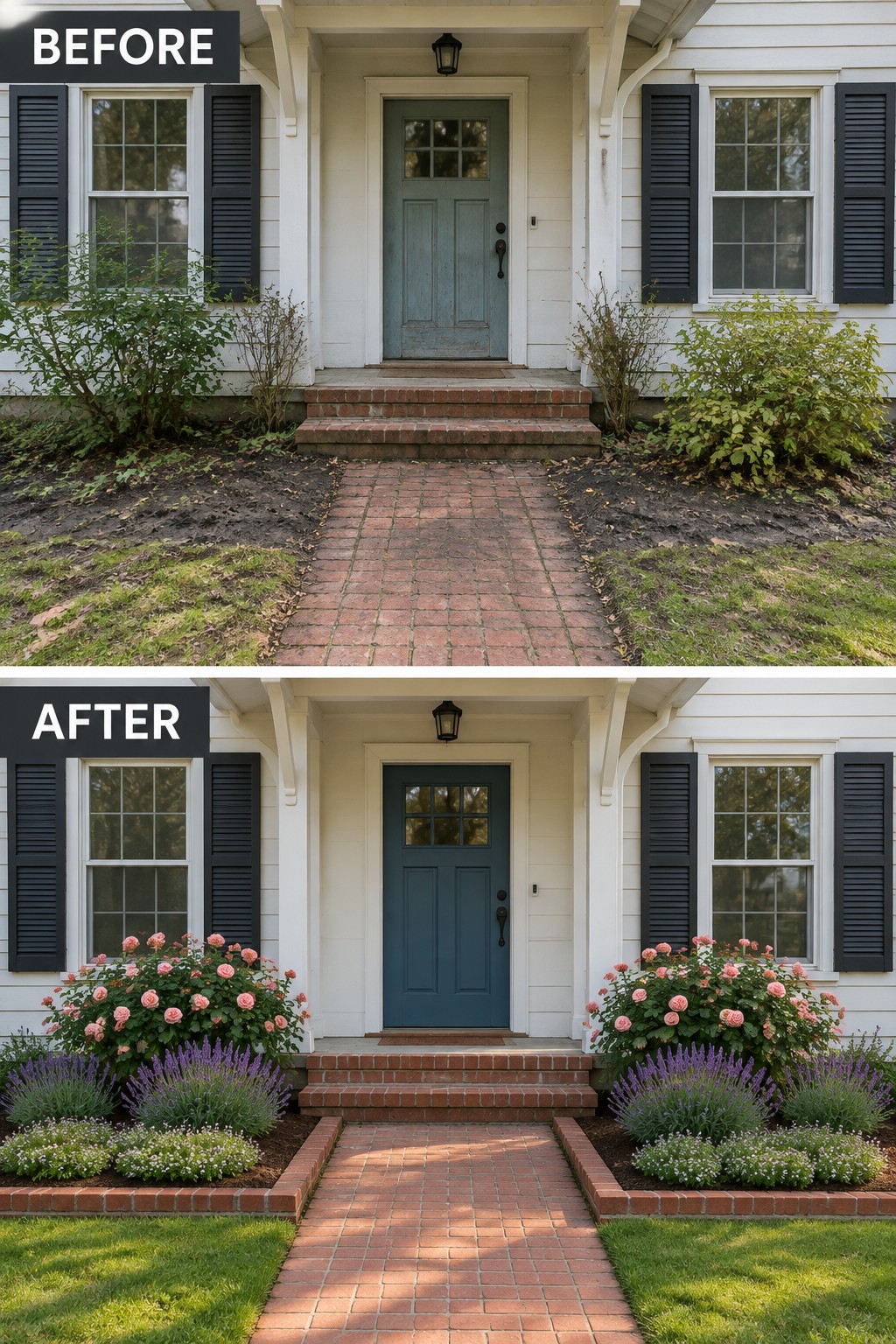
The main change here is the addition of brick edging that turns loose plantings and bare dirt into clear, contained beds. This gives the entry a finished look without needing major construction or new hardscaping.
This approach suits homes with a straight front walk and some existing shrubs. Keep the beds about two to three feet wide so they frame the path without blocking it, and use a simple mix of taller plants in the back and lower ones up front. Start with the edging first, then fill in the plants.
Define The Front Path With Garden Beds
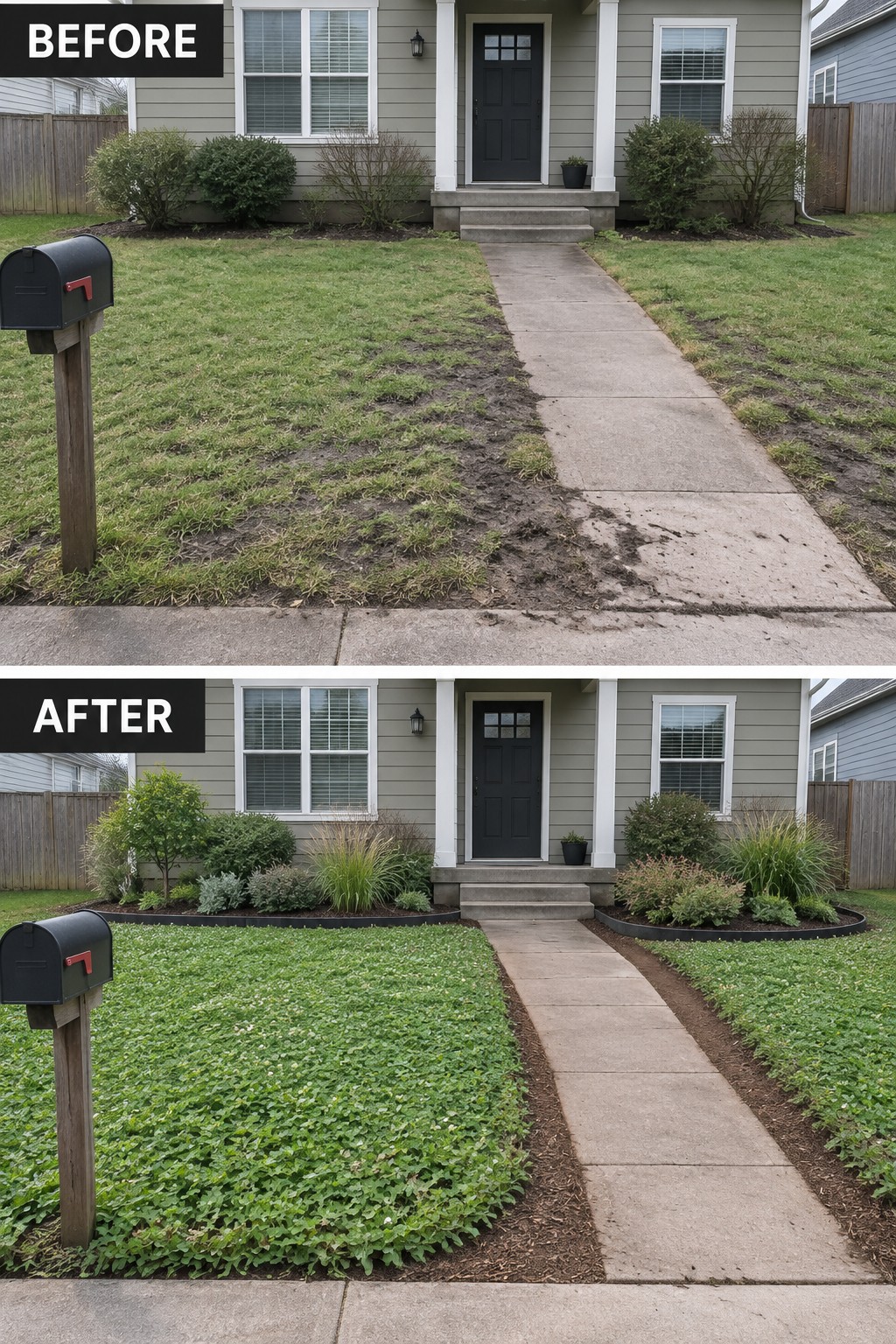
The biggest shift here comes from adding clear garden beds along both sides of the walkway and the front of the house. What looked like a worn lawn with bare strips next to the concrete now feels planned and contained. The beds give the entry a sense of order without needing a lot of extra features.
This approach works well on small to medium front yards where the path is the main line of sight. Start by edging the beds cleanly and filling them with a simple mix of shrubs and ground cover. Keep the lawn area open and mow it regularly so the beds stay looking intentional rather than scattered.
Add Defined Borders To Front Garden Beds
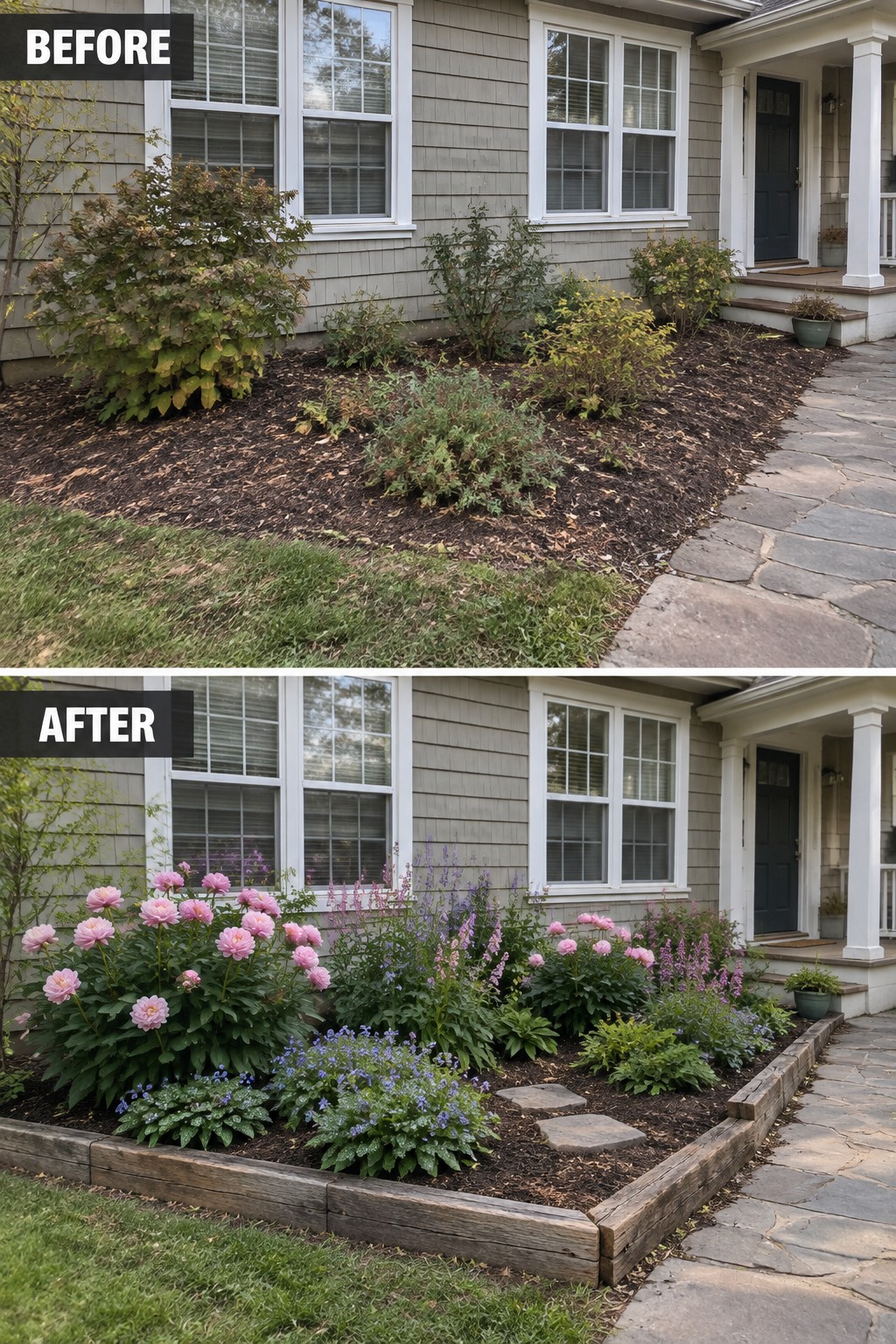
A messy strip of mulch and scattered shrubs right along the house can make the whole front feel unfinished. Adding a clear border and filling the bed with grouped plants gives the entry a tidy frame without needing a full redesign.
This works well on any house where the foundation planting has grown wild. Keep the edging low and simple, use a few stepping stones inside the bed so it stays easy to maintain, and repeat the same plants in clusters so the shape stays obvious even after a season or two of growth.
Add Defined Garden Beds Along The Entry Stairs

Adding defined garden beds is a straightforward way to give a plain entry more structure. The before shows bare dirt and grass running right up to the concrete stairs, while the after uses low stone walls to create clear planting areas on both sides.
This approach works best on homes where the front stairs feel exposed or unfinished. Keep the beds narrow so they do not crowd the walkway, and choose a mix of low shrubs and flowers that stay neat year-round. The result is a more intentional entrance without major construction.
Add Defined Entry Beds Along The Driveway
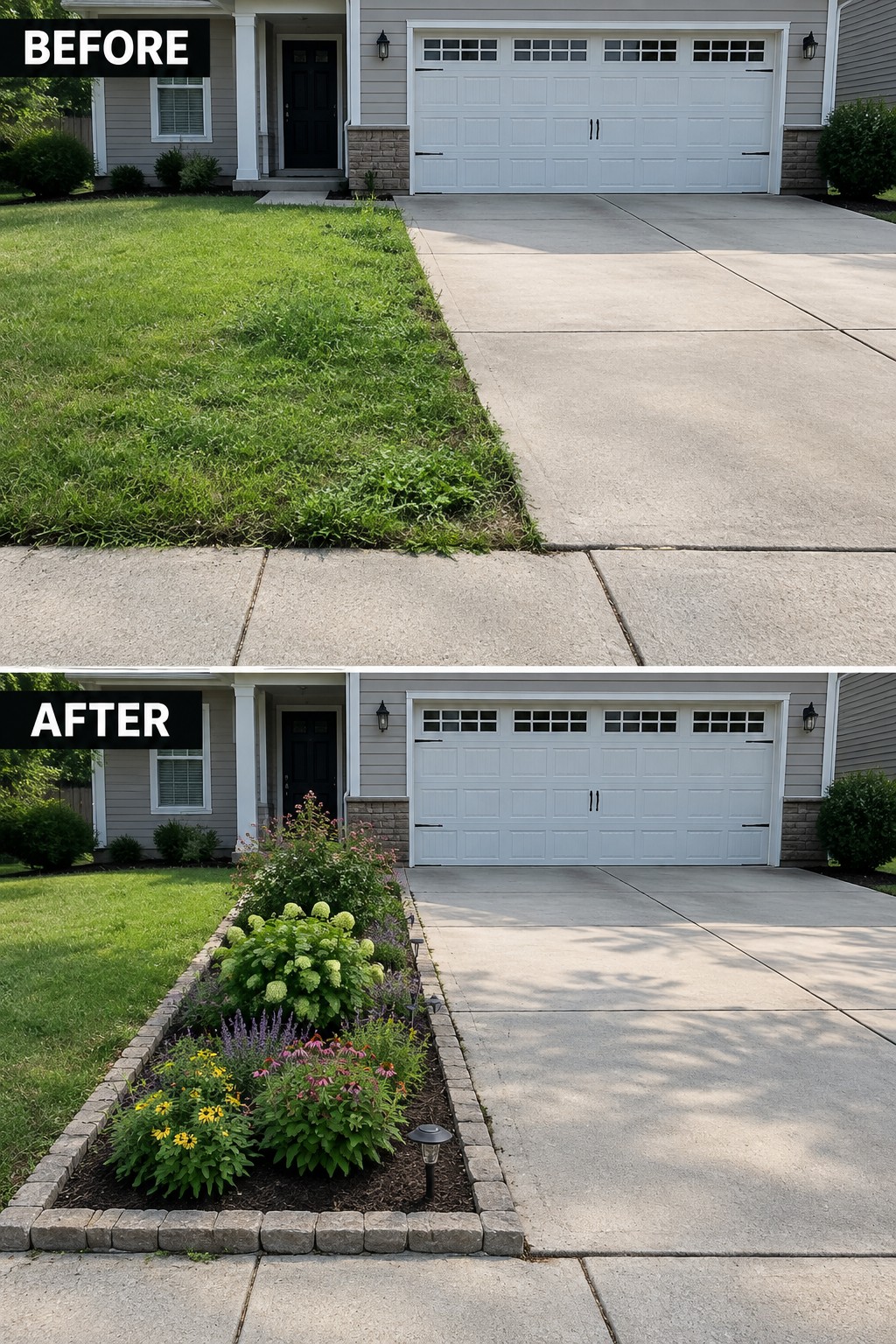
A narrow strip of grass right next to the driveway often looks unfinished and gets hard to mow cleanly. Replacing that strip with a low stone border and a planted bed gives the front a clear shape and turns the side of the drive into a simple entry garden.
This idea works well on homes where the lawn meets the concrete in a straight line. Keep the bed narrow enough to leave walking room, use edging that matches the house materials, and choose a mix of low shrubs and seasonal flowers so the bed stays neat without a lot of trimming.
Frequently Asked Questions
Q: How do I choose plants for the entry beds so they don’t block the path? A: Go for compact shrubs or flowers that top out under two feet tall. Place taller ones toward the back of the bed. This keeps the walkway open while still creating that welcoming frame.
Q: What’s the easiest way to maintain the shape of those beds year after year? A: Edge them with a spade every few months. Pull weeds by hand before they spread. A light layer of mulch helps too.
Q: Can I add lighting to highlight the entry beds at night? A: Solar path lights work well along the front of each bed. Stick them in the ground every few feet. They charge during the day and come on automatically once it gets dark.
