

Gardens tend to lose their shape when fallen leaves pile up along the borders and grass starts to creep into the beds.
I usually start by clearing those layers because the structure underneath becomes visible again once the debris is gone.
A straight edge along the lawn can pull everything together even if the plantings stay the same.
Some of the projects focus on widening paths or adding simple borders so the space feels easier to walk through on a regular basis.
I would try the edging steps first in my own garden since they seem to create the biggest shift with the least new material.
Define Garden Beds With Simple Edging
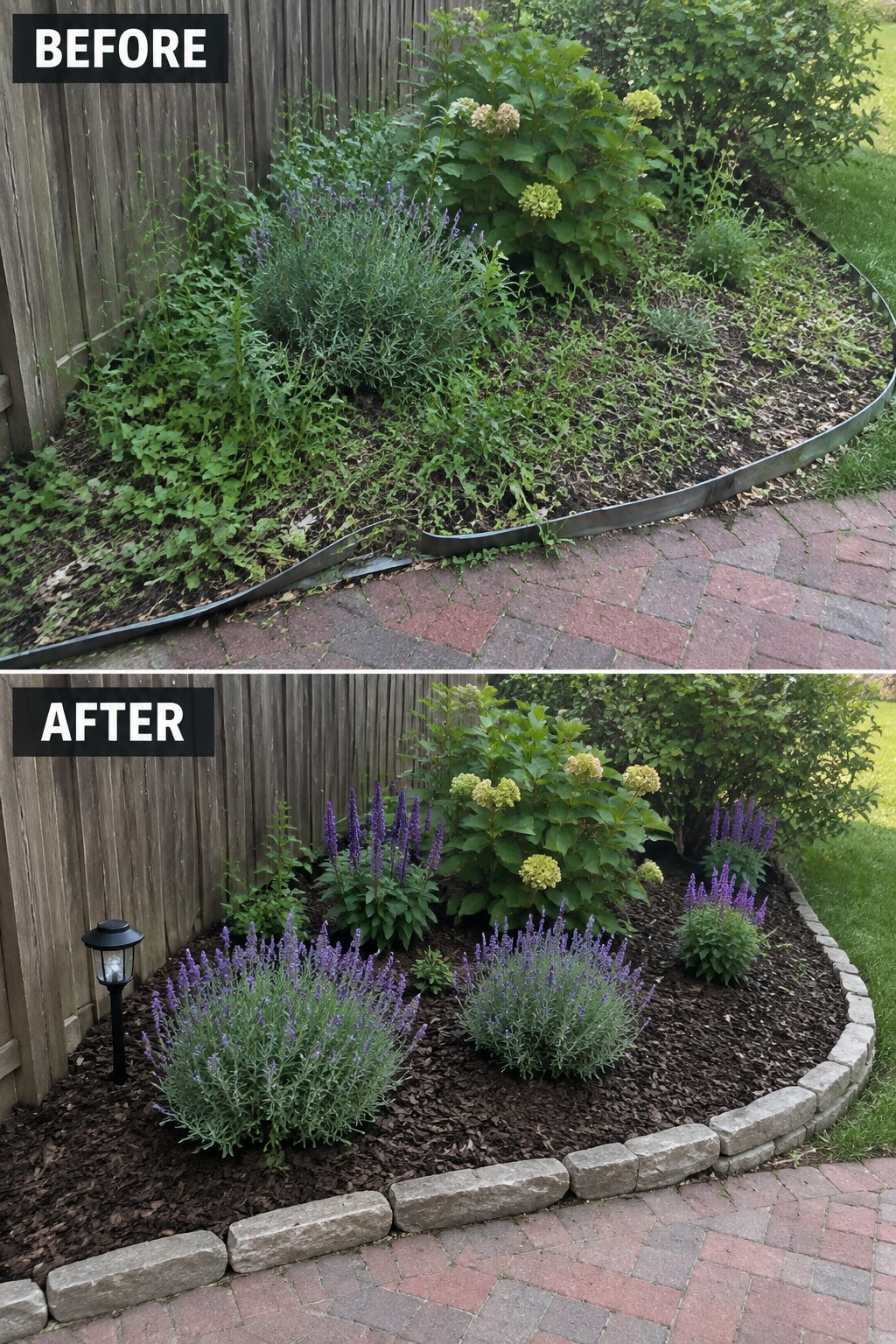
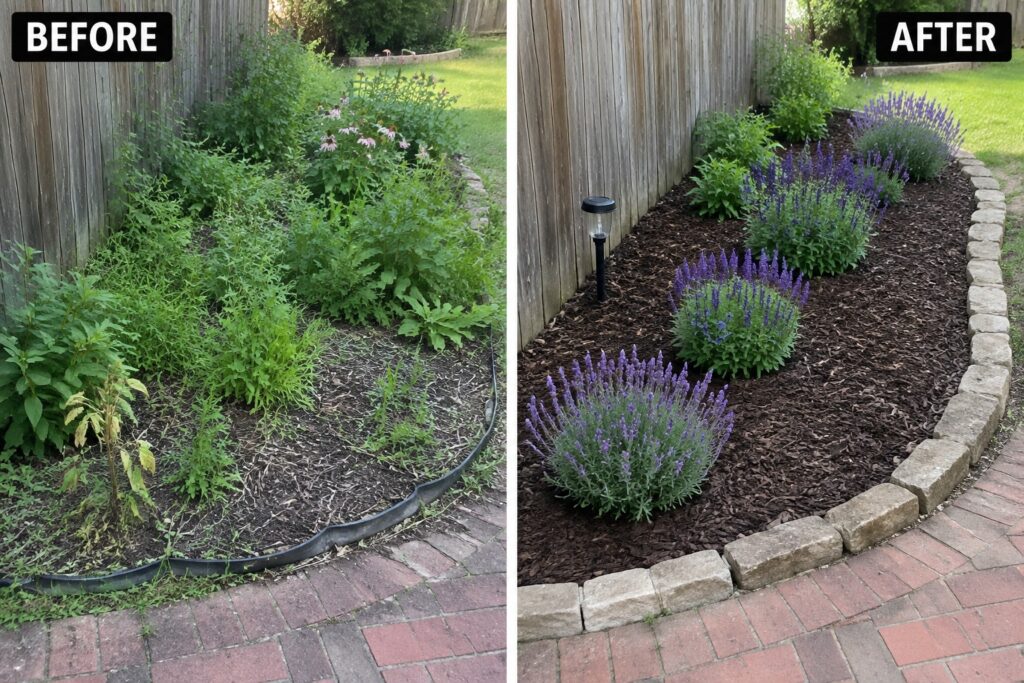
One of the fastest ways to fix a messy garden bed is to give it a firm edge. The old metal border had pulled away from the path and the plants had grown wild right up to the bricks. A low stone border and fresh mulch created a clean line that made the whole area look planned instead of neglected.
This idea works best along walkways or fence lines where beds tend to blur into the lawn. Clear the overgrowth first, set the edging so it sits level, then add mulch to hold everything in place. It keeps smaller yards from feeling chaotic and makes future weeding much easier.
Add Structure To An Overgrown Backyard
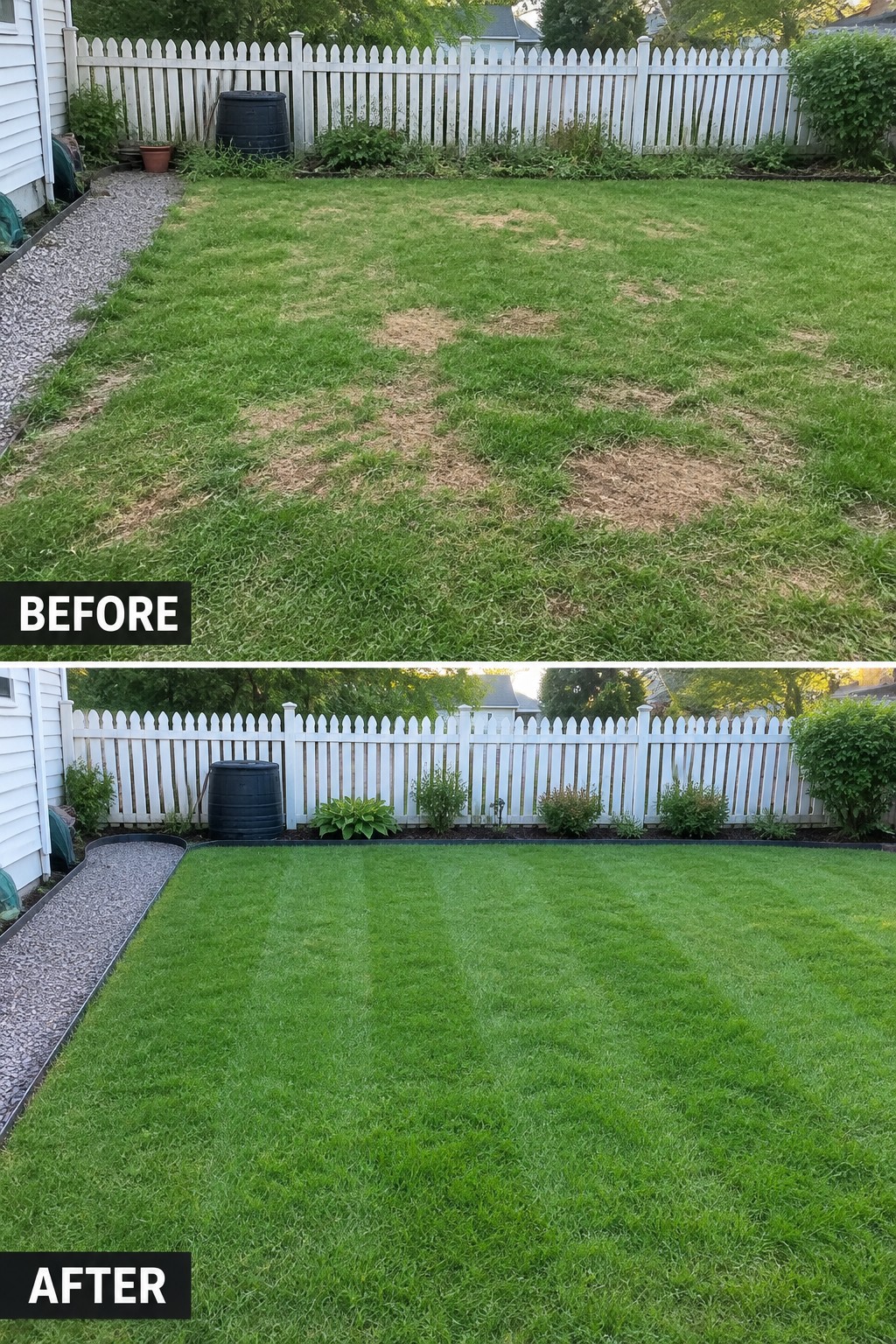
A patchy lawn with dead spots makes the whole yard feel neglected. The fix here was straightforward: mow the grass into clean stripes, add a crisp edge along the gravel path, and refresh the border planting. Those steps alone turned an uneven backyard into one that looks intentional and cared for.
This approach works best in smaller yards where the lawn is the main feature. Start by fixing the turf and defining the edges before you add furniture or decor. The result stays practical because the space remains open for play or simple seating without feeling crowded.
Define Planting Areas In An Overgrown Yard

An overgrown strip along a fence often ends up full of weeds because there is no clear edge or planting plan. The simple fix is to clear the mess first and then add one or two defined beds that match the space. In this case a long raised wooden planter replaced the tangle of weeds and gave the herbs and vegetables their own home while a few pots kept smaller plants off the ground.
This approach works well in narrow side yards or along paths where space is tight. Start with the cleanup, then choose beds that fit the width and leave room to walk. Gravel or mulch between the beds keeps the area tidy and stops weeds from coming back quickly.
Refresh Old Patio Planters With Fresh Flowers
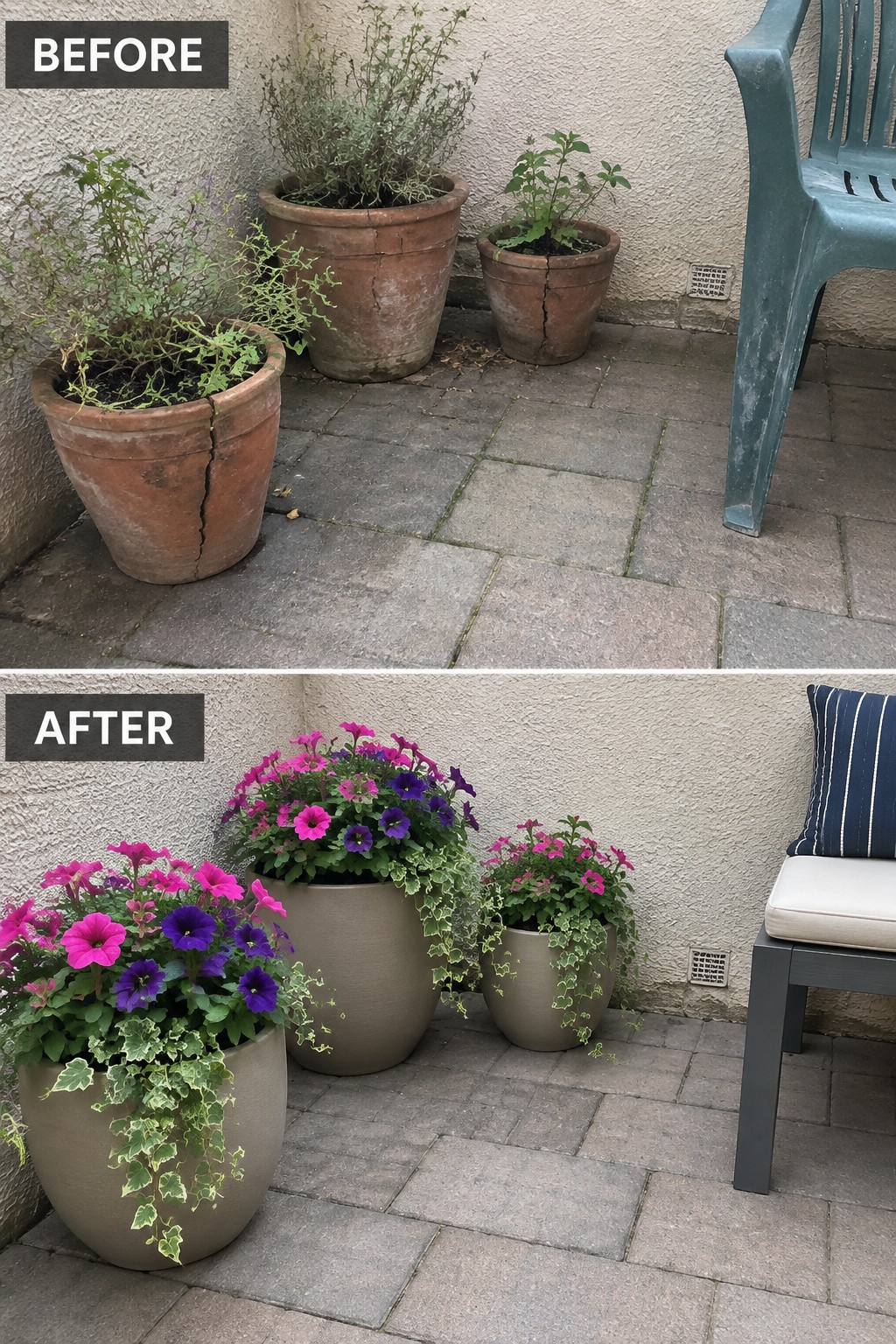
Swapping cracked terracotta pots for a few matching newer ones and filling them with bright flowers makes the whole corner feel looked after. The change is simple but effective because it removes the tired look of broken containers and replaces it with color that stands out against the paving.
This works best on small patios or side areas where you already have space for pots. Clean out the old plants first, then group three or four containers in similar finishes and add seasonal flowers that trail or bloom steadily. Keep the number of pots modest so there is still room to walk around.
Add Structure To An Overgrown Side Path
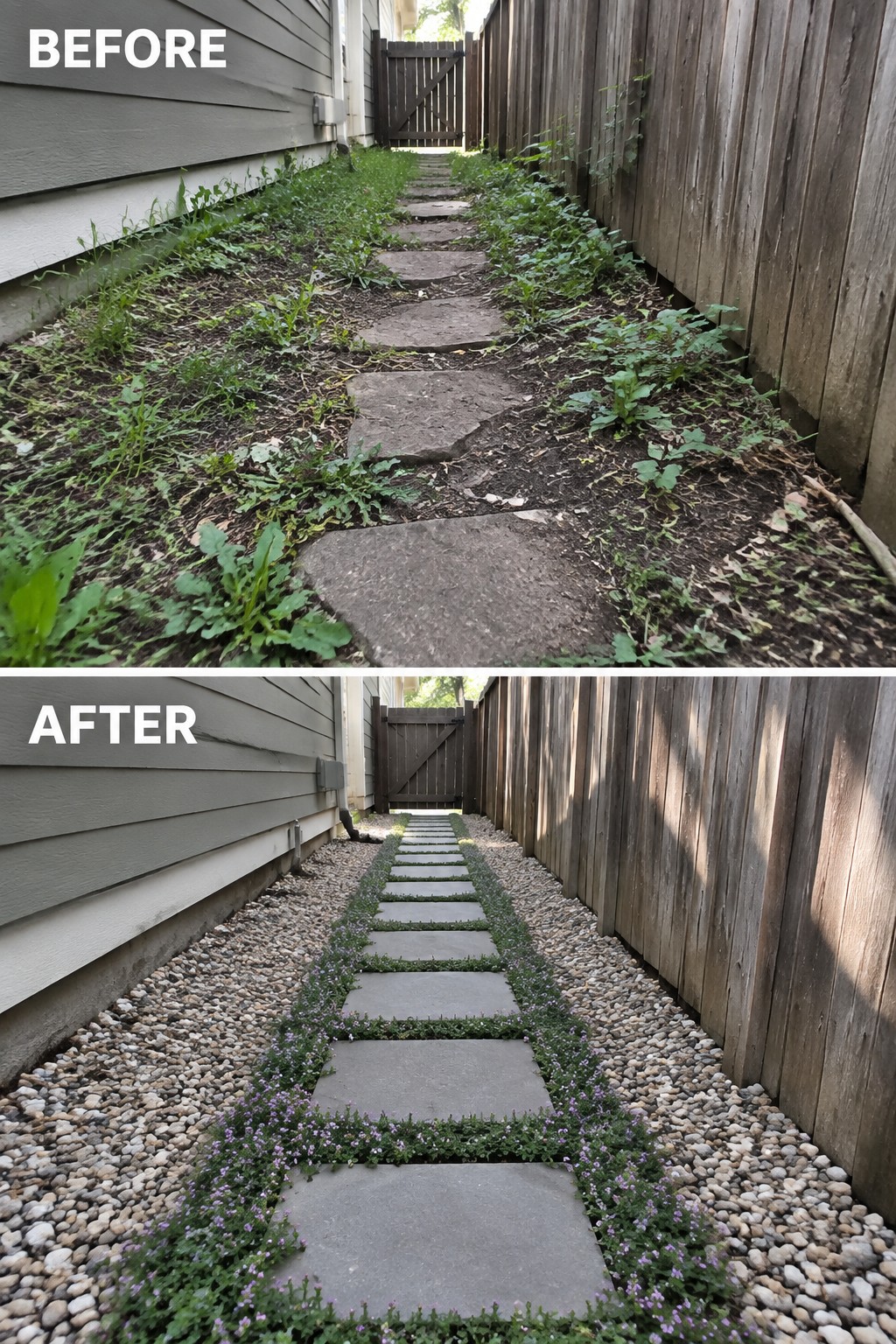
The biggest improvement came from clearing the weeds and filling the space around the stepping stones with gravel. Adding a low plant border on both sides turned a messy strip into a defined walkway that feels much more deliberate.
This approach suits narrow side yards where you need a clear path but do not want high maintenance. Start by removing the worst growth, then use gravel to cover bare soil and keep weeds down. Low edging plants help hold the gravel in place and soften the look without crowding the walkway.
Turn A Neglected Patio Corner Into A Seating Area
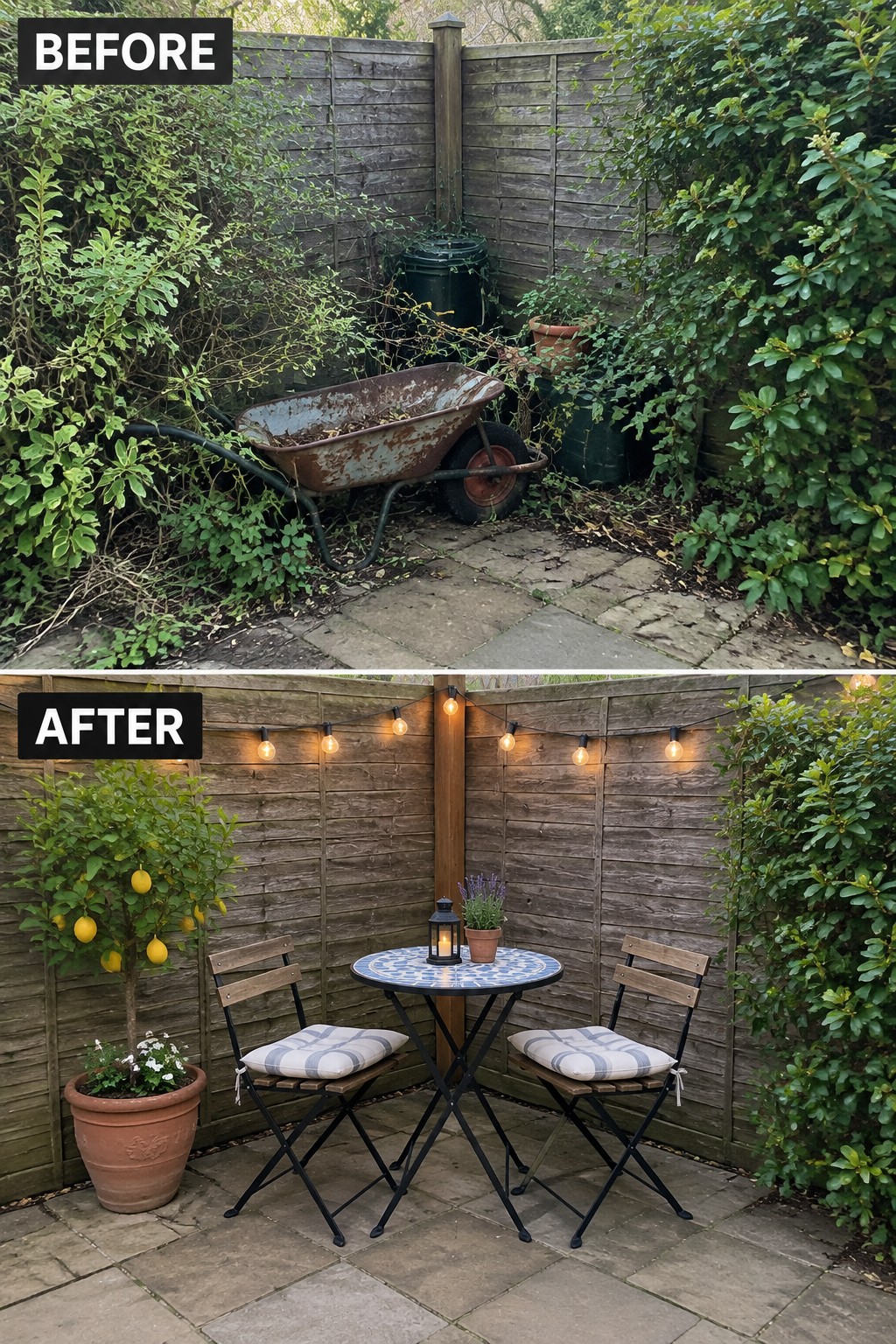
Clearing out the clutter is often the first step that makes the biggest difference. Once the old wheelbarrow and overgrown plants were removed, the small paved corner became a natural spot for a table and two chairs. Adding string lights overhead then turned it into a place people would actually want to sit in the evening.
This idea works best in small backyards or side yards where you already have some paving but no real purpose for it. Keep the furniture scale modest so there is still room to walk around, and choose pieces that can stay outside year round. String lights are an easy addition that makes the space feel finished without needing much else.
Add A Trellis To Give A Garden Border Clear Focus
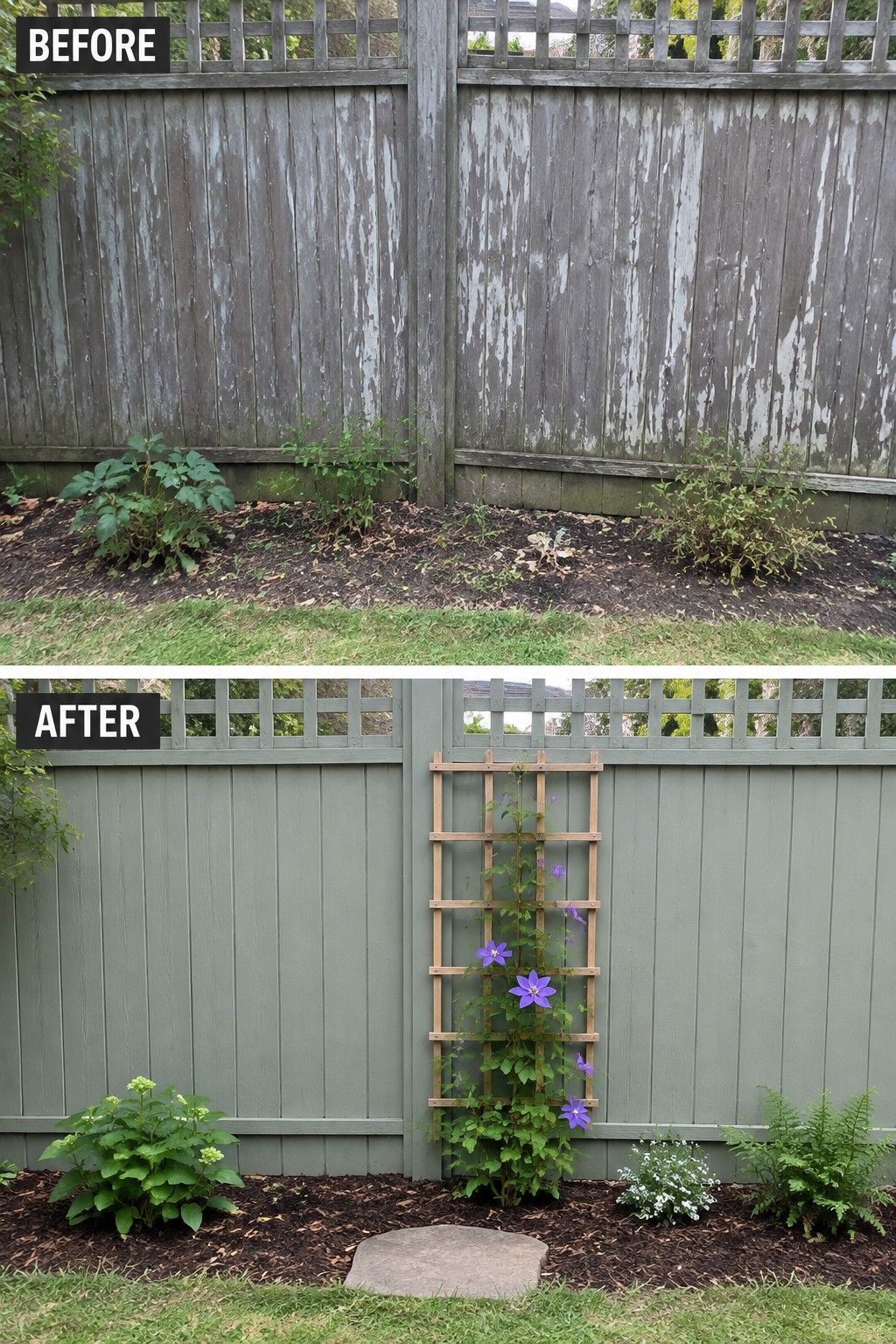
A plain fence line with weeds and scattered plants often feels unfinished. Painting the fence a muted green and placing a simple wooden trellis in the center with a climbing clematis turns the same strip into something intentional. The vertical element draws the eye upward and gives the bed a reason to exist.
This idea works best along back or side fences where ground space is limited. Start by clearing the bed and refreshing the mulch, then add the trellis before planting. Keep nearby plants low so the climber stays the main feature rather than competing for attention.
Clean Up Overgrown Foundation Beds First

Overgrown shrubs and weeds along the house make the whole front look neglected. Clearing everything out and replanting with compact shrubs and seasonal flowers creates a much tidier edge that actually shows off the house instead of hiding it.
This approach works best on older homes where plants have grown too large for the space. Start by removing the worst growth, then add a few rounded evergreens and some color in front. Mulch keeps the beds looking finished and cuts down on weeds, so the work stays manageable.
Add A Sturdy Trellis To Support Garden Plants

The before photo shows tomato vines flopping over weak wire cages that could not handle the growth. The after version replaces those with a simple wood frame and wire grid that runs the length of the bed. The plants now have real support, and the whole area looks much more organized.
This approach works best in raised beds where you grow tomatoes, beans, or other climbers. Build the frame from basic lumber and attach grid wire before the plants get too tall. It keeps vines off the ground, improves airflow, and makes the bed easier to maintain as the season goes on.
Refresh An Overgrown Garden Bed With Gravel

Clearing out the weeds and loose growth first made the biggest difference here. Adding a layer of light gravel over the whole bed pulled the rocks and driftwood together and gave the area a much tidier shape without needing new plants right away.
This works well in small side beds or narrow strips next to the house where you want low upkeep. Start by pulling everything that does not belong, then spread gravel thick enough to block new weeds. Keep the same rocks or wood you already have and just rearrange them so they sit on top of the gravel instead of getting lost in the mess.
Refresh An Old Shed With Fresh Paint

A weathered shed often becomes an eyesore in the garden once the paint starts peeling and the color fades. One weekend of painting the siding a solid dark gray and adding crisp white trim around the doors and windows makes the structure feel intentional again instead of neglected. The change instantly improves how the whole backyard looks without any structural work.
This approach works best on simple outbuildings where the main goal is to help them blend with the surrounding garden rather than stand out. Start with a thorough cleaning and a coat of primer, then choose a durable exterior paint in a color that matches nearby fences or the house. Keep any added details, like planters, minimal so the fresh paint remains the main improvement.
Add Structure To An Overgrown Garden Corner

A simple raised planter with a built-in trellis can turn a messy corner into something that feels planned. The before photo shows vines spilling everywhere and clutter collecting along the fence, while the after shows the same spot neatly contained behind a gray planter and lattice screen that keeps the plants in bounds.
This approach works best in small yards or along a side path where you need to cover up an eyesore without taking up much floor space. Keep the planting simple, repeat the fence color on the woodwork, and make sure the box sits level so water drains properly.
Define Garden Beds With Simple Edging
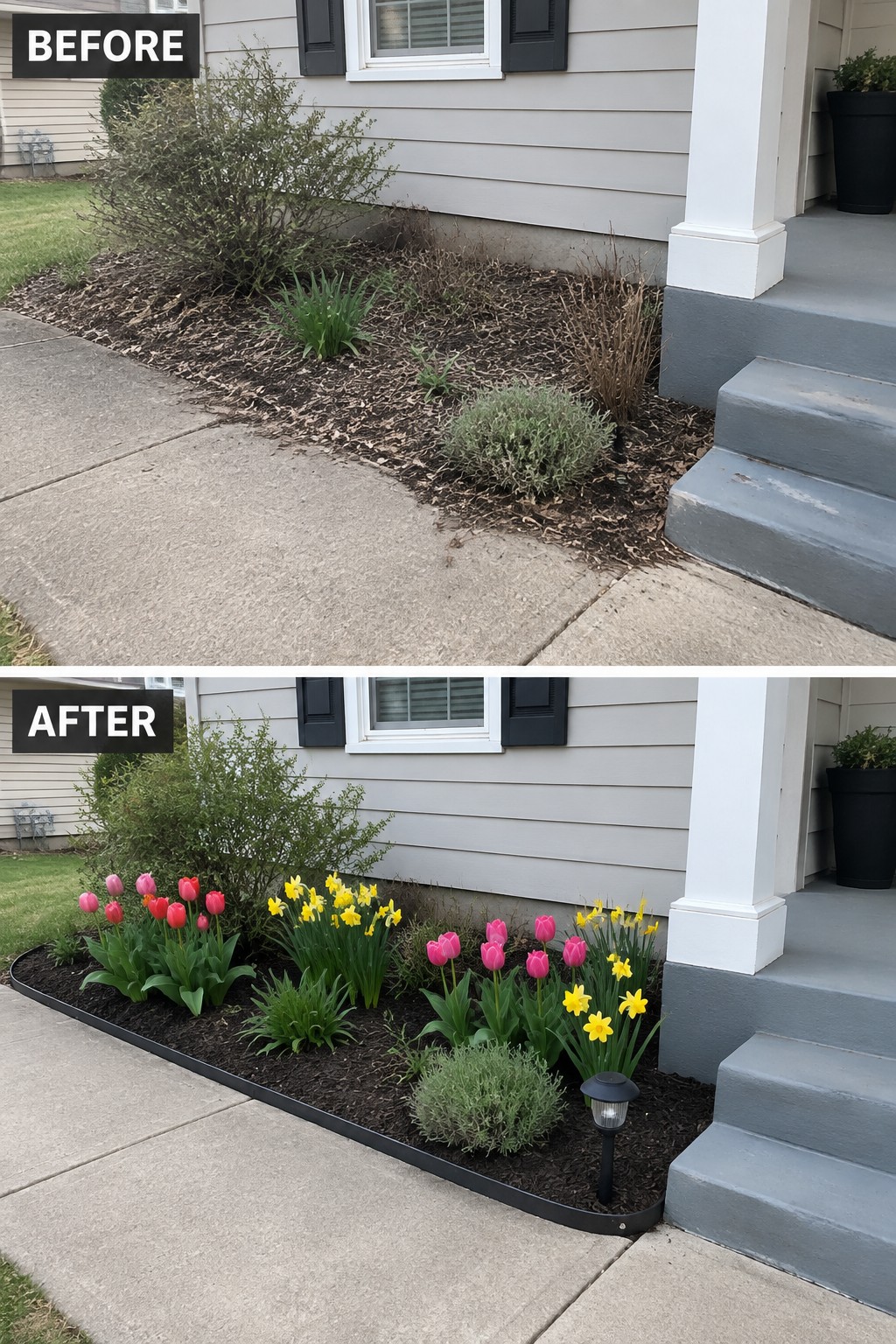
A messy strip of mulch along the house can make the whole front look neglected. Adding a clean edge turns that same space into something that looks planned instead of left over. The black border here creates a clear line between the walkway and the plants, while the flowers are grouped instead of scattered.
This works best on narrow beds next to the house or along a path where you want order without a lot of work. Start by cutting a straight edge and laying down the border material, then fill in with a few types of plants that bloom at different times. Keep the number of plant varieties low so the bed stays easy to maintain.
Turn A Cluttered Balcony Into A Simple Seating Area

Balconies often fill up with scattered pots and leftover supplies until there is no room left to sit. Moving the planting onto the railing frees the floor and gives the space a clear purpose.
This idea works on small urban balconies where every foot of floor space counts. Sort the containers first, then add one or two pieces of foldable furniture and a rug that can handle weather.
Start With A Thorough Patio Clean
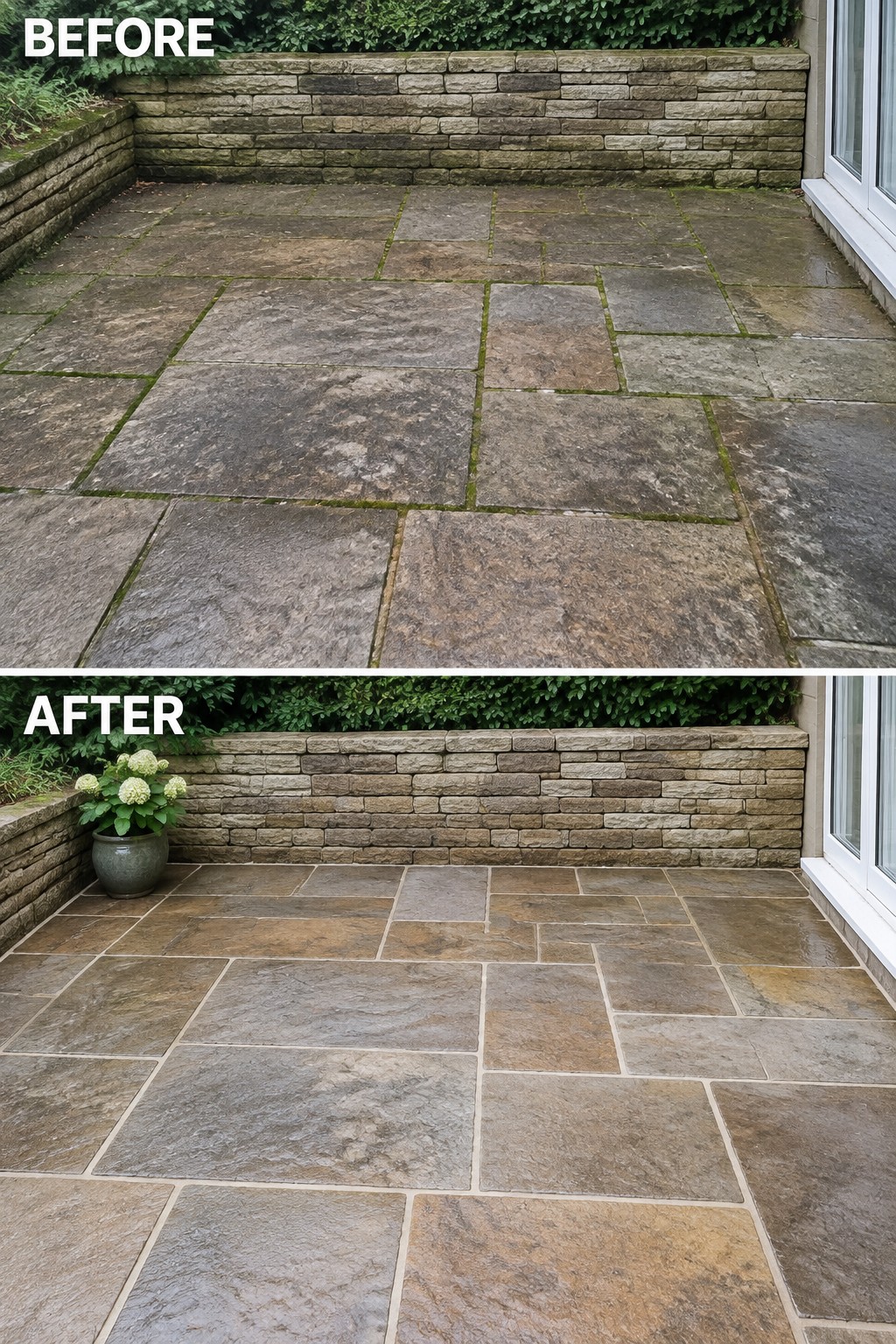
A dirty, moss-covered patio often looks worse than it really is. In this case the stones were simply neglected, and once the growth was removed the whole area brightened up right away. Adding one potted plant was enough to make the space feel used again.
This approach works best on hard surfaces that have gone dull rather than on completely broken paving. Wash the stones first, then decide what to add. One or two well-placed pots usually look better than crowding the area with furniture right away.
Turn A Bare Yard Corner Into A Fire Pit Seating Area
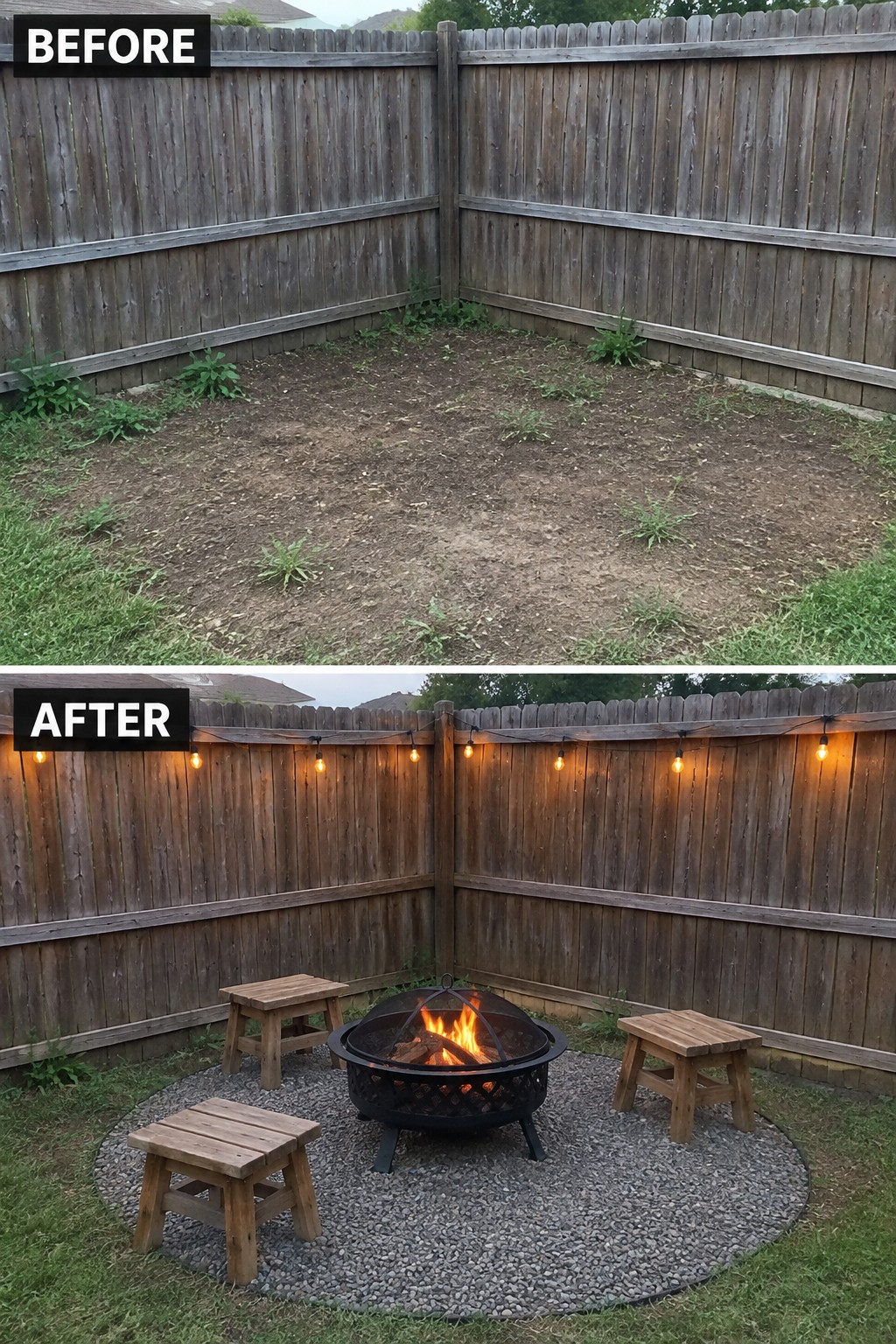
Many backyards end up with one corner that stays empty because it is just dirt and weeds. Laying down a gravel circle, setting a fire pit in the center, and adding a few low wooden stools gives the space a clear purpose. String lights along the fence make it usable after dark without much extra work.
This approach suits small or average yards where you want one defined spot rather than spreading effort everywhere. Start by marking out the gravel area so the seating feels contained, then choose simple stools that can stay outside. It works best when the rest of the yard stays simple so the new seating zone stands out on its own.
Clean Up The Entry Steps Before Adding Planters
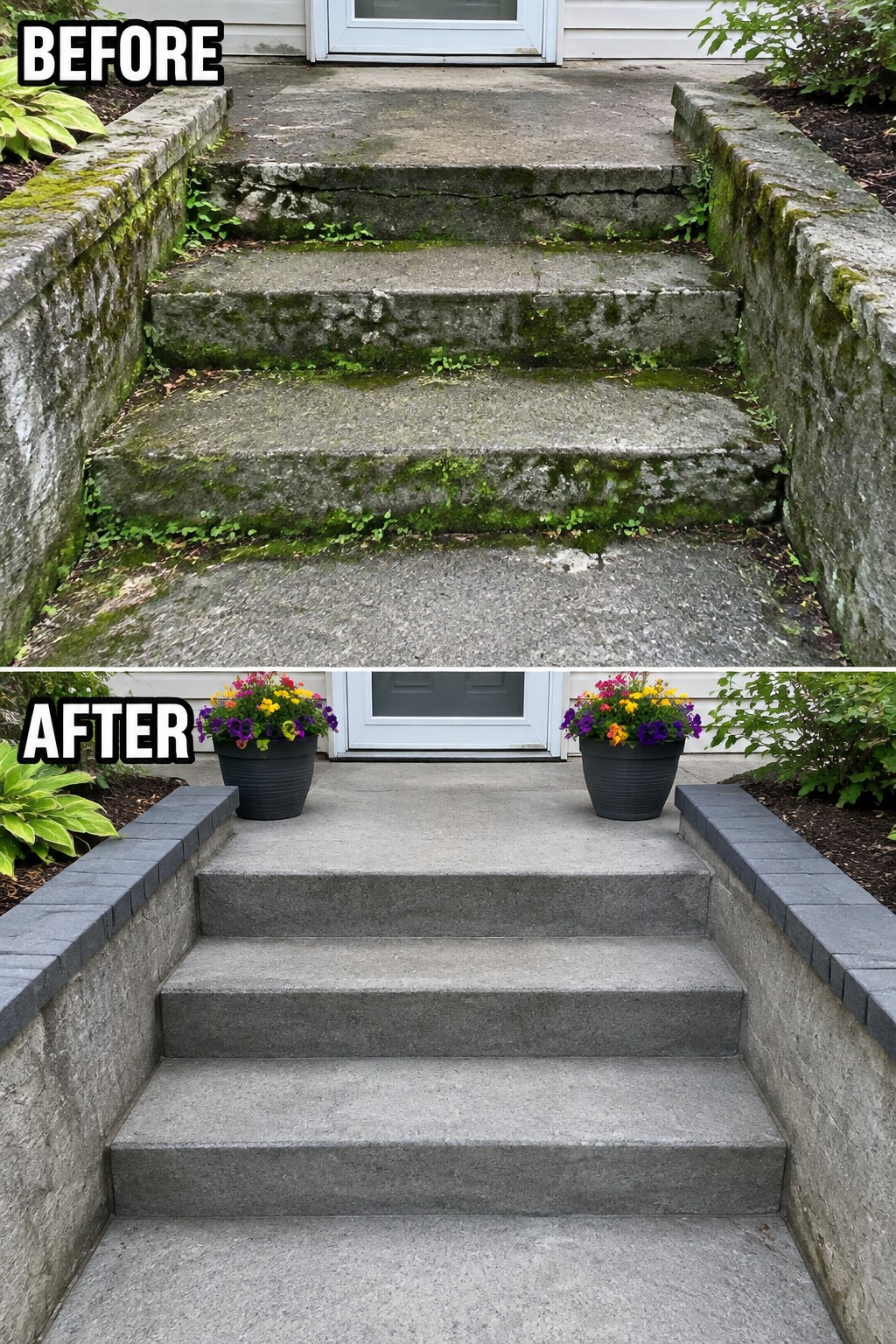
Moss and grime on concrete steps and stone walls can make even a simple entry look neglected. In this case, a thorough cleaning removed the green buildup, and new dark caps were added along the tops of the retaining walls. Two matching planters with bright flowers were then placed on either side of the door to frame the space.
This approach works best on older homes where the structure is still sound but looks tired. Start with the cleanup so any new additions stand out instead of blending into the dirt. Keep the planters the same size and color for a balanced look, and choose plants that match the season so the entry stays welcoming without a lot of extra work.
Create A Defined Border Along Your Fence
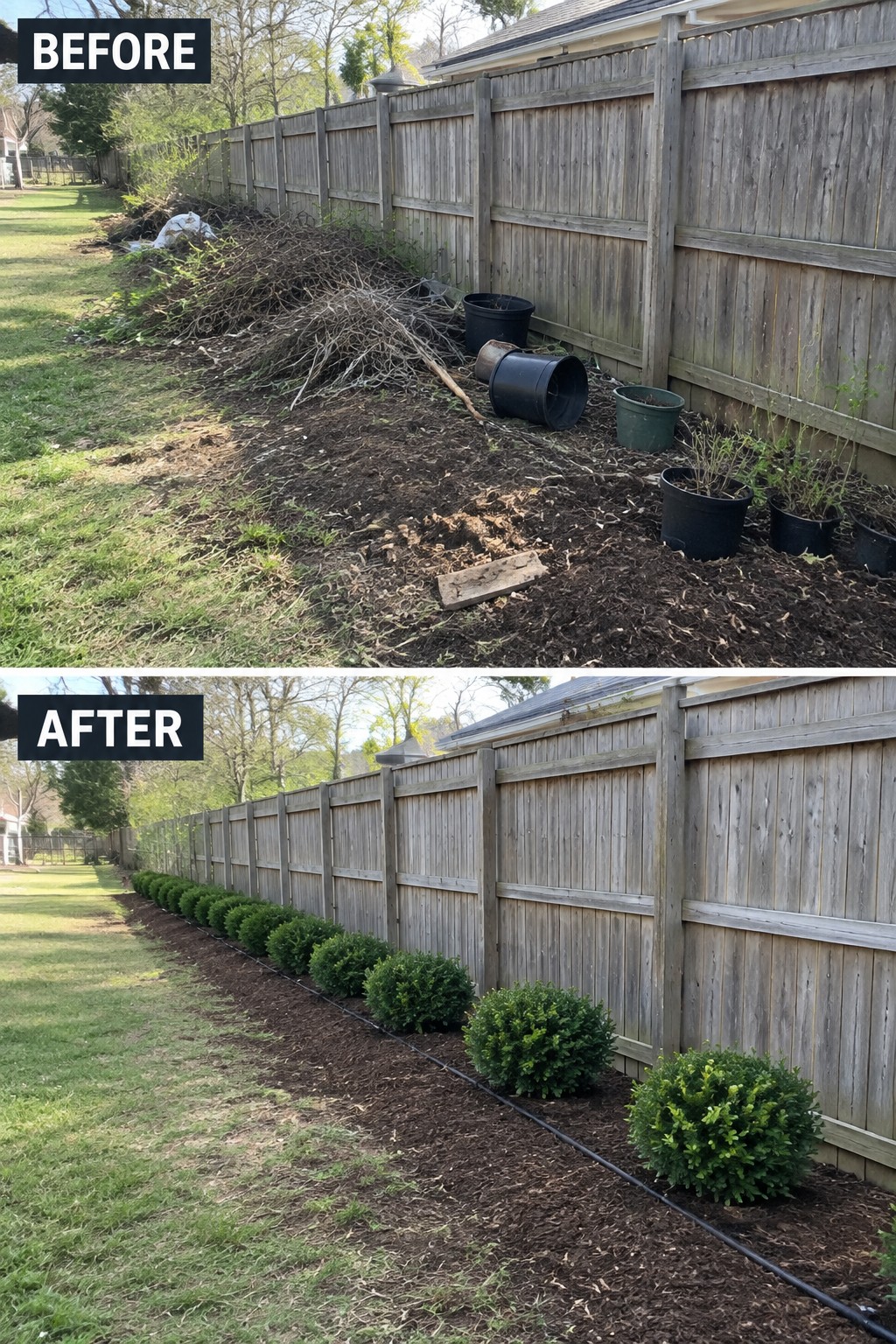
Clearing the mess first makes the biggest difference here. Removing the branches, scattered pots, and loose debris turns a neglected strip into a clean planting area that can then be mulched and filled with a simple row of shrubs. The bed now looks planned instead of leftover.
This idea suits long fence lines where the space often gets ignored. Keep the bed narrow, repeat one or two plant types, and add a basic irrigation line if needed. It keeps the yard looking finished without filling the whole lawn with extra features.
Add A Small Waterfall To A Backyard Pond

A simple recirculating pump and a few rearranged rocks can turn a still, leaf-filled pond into something that feels alive. The before photo shows a neglected edge with scattered stones and debris. The after photo shows how a short drop of water over the rocks creates movement and sound while the new plants give the border a finished look.
This idea works well in small yards where space is tight. Start by clearing out leaves and debris, then set the pump so the water flows gently over one section of rock. Choose moisture-loving plants like irises and hostas to soften the edges without crowding the water. Keep the rest of the bed simple with gravel or mulch so the waterfall stays the main feature.
Frequently Asked Questions
Q: Which tools should I grab before starting any of these weekend projects?
A: A good rake, some pruning shears, and a wheelbarrow will handle most of the list. Skip the fancy stuff unless one idea calls for it specifically. You probably already have what you need in the shed.
Q: How can I make sure the changes last beyond that one weekend?
A: Water any new plants right after you put them in. Pull weeds by the root instead of just cutting them back. Check the garden once a week to stay on top of small issues.
Q: What if my yard has a lot of slopes or uneven ground?
A: Focus on the flat areas for quick wins like adding mulch or containers. Use rocks or low borders to manage the slopes without big digging jobs. And start small to avoid frustration.
