

I used to look out at my patio and wonder why it never felt like part of the house even though it was right there.
Planters in a few different sizes gave the space some structure without blocking the view or the flow.
Weather resistance matters more than most people think at first.
I have learned that small accents work best when they also support how I actually want to use the area on a regular Tuesday rather than just on special occasions.
A few of these approaches feel worth testing in my own yard this season.
Turn A Bare Patio Into A Seating Area
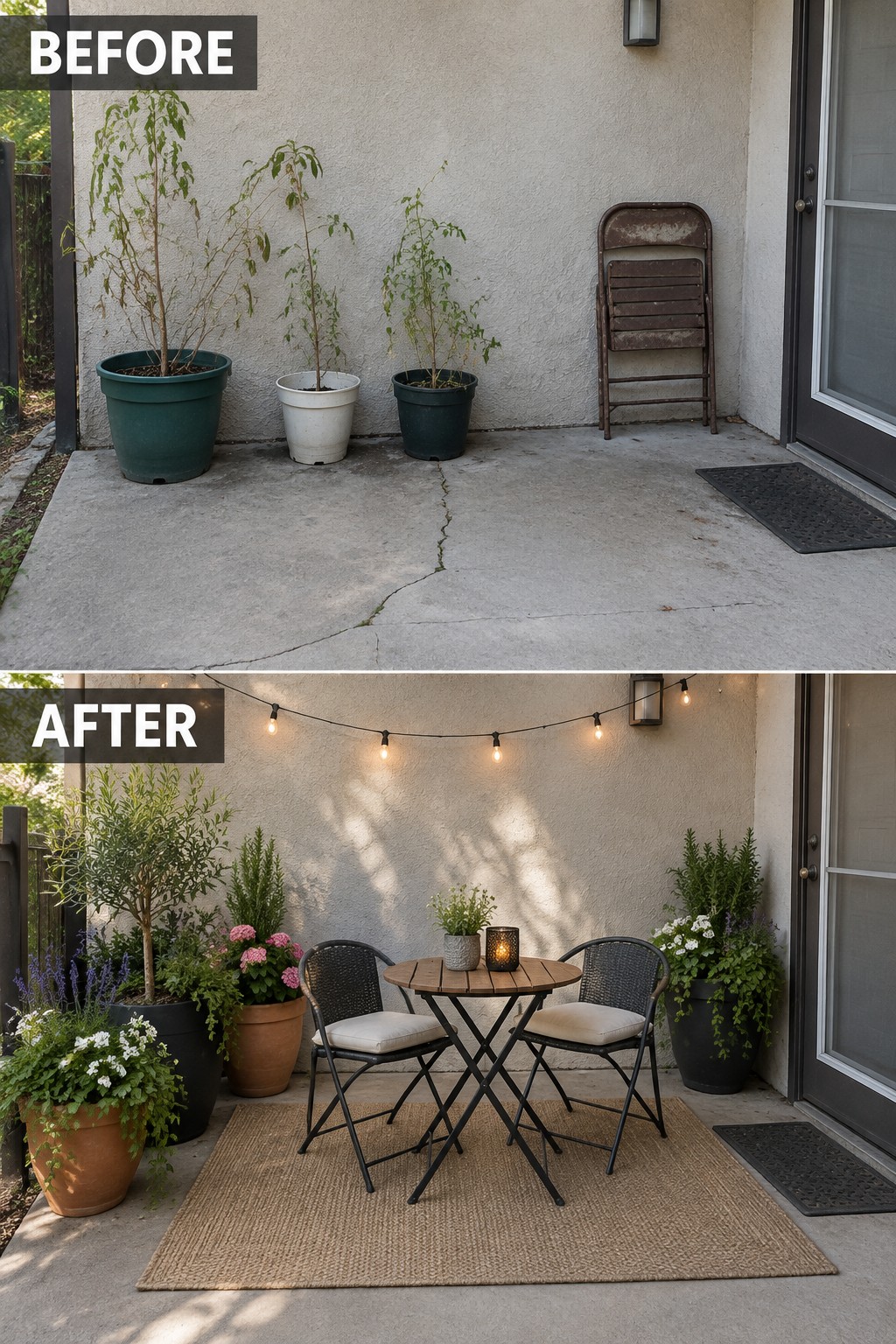
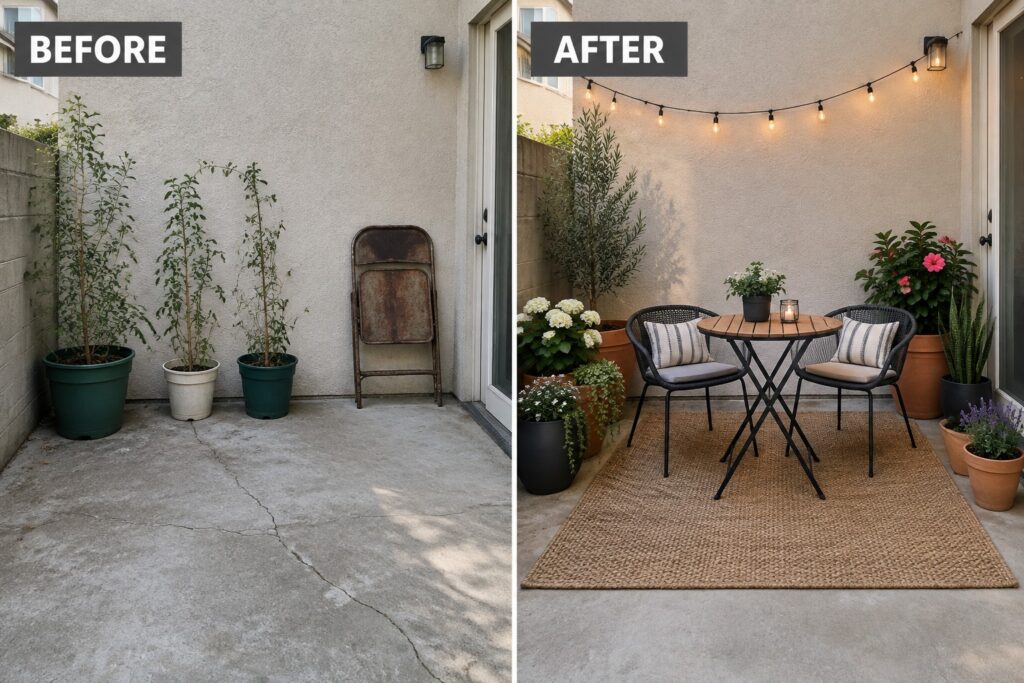
A bare concrete patio often stays unused because nothing marks it as a place to sit. Adding a simple rug, a compact table and chairs, and a string of lights gives the space a clear purpose and turns it into an outdoor room people actually use.
This idea works on any flat outdoor surface near a door or window. Start with the rug to define the seating zone, choose weatherproof furniture that fits the scale of the space, and add lighting only where it will be used in the evening.
Turn A Bare Balcony Into A Seating Area
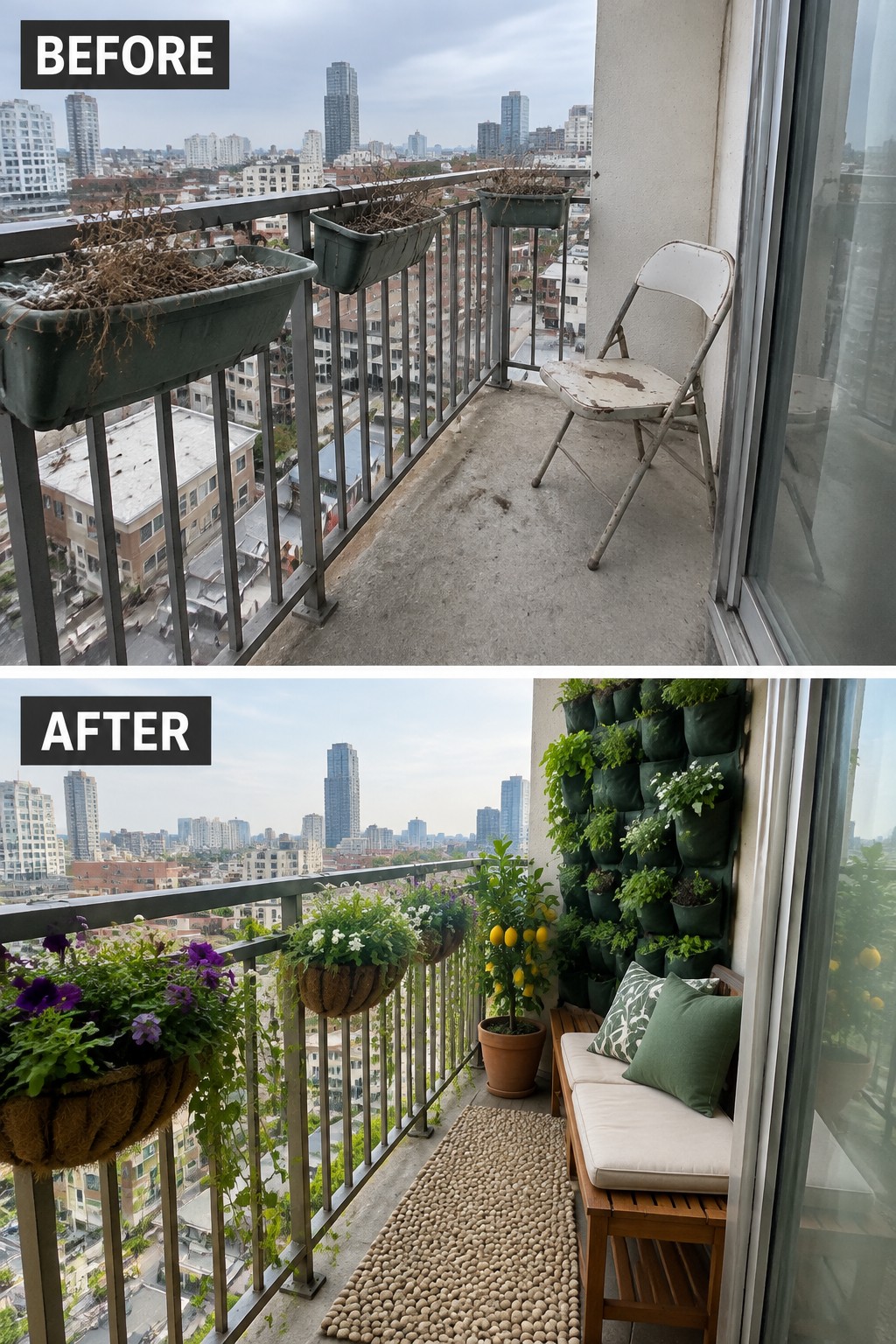
Many balconies stay empty because they feel too exposed or too small to use. Adding a vertical planter wall on one side and a simple bench with cushions gives the space a clear purpose and makes it feel like an outdoor room instead of leftover concrete. The small pebble mat under the bench helps mark the seating zone without crowding the floor.
This approach works best on city balconies where floor space is tight. Start with one vertical planter and a bench that can stay outside, then add a few rail planters if needed. Choose sturdy furniture and plants that tolerate wind so the setup lasts through the seasons.
Turn A Bare Deck Into A Seating Area

An empty deck often stays unused because nothing defines where to sit or what the space is for. Adding built-in benches with planters built right into the corners gives the area a clear purpose and makes it feel finished. The simple wooden seating and hanging lanterns turn the open boards into a place that invites people to stay awhile.
This idea works best on wooden decks or patios that already have a railing to work with. Start with basic bench frames that match the existing wood, then add a few cushions and one small table. It suits homes that want a low-maintenance outdoor spot without filling the deck with separate furniture that takes up walking room.
Improve Curb Appeal With Matching Planters At The Entry
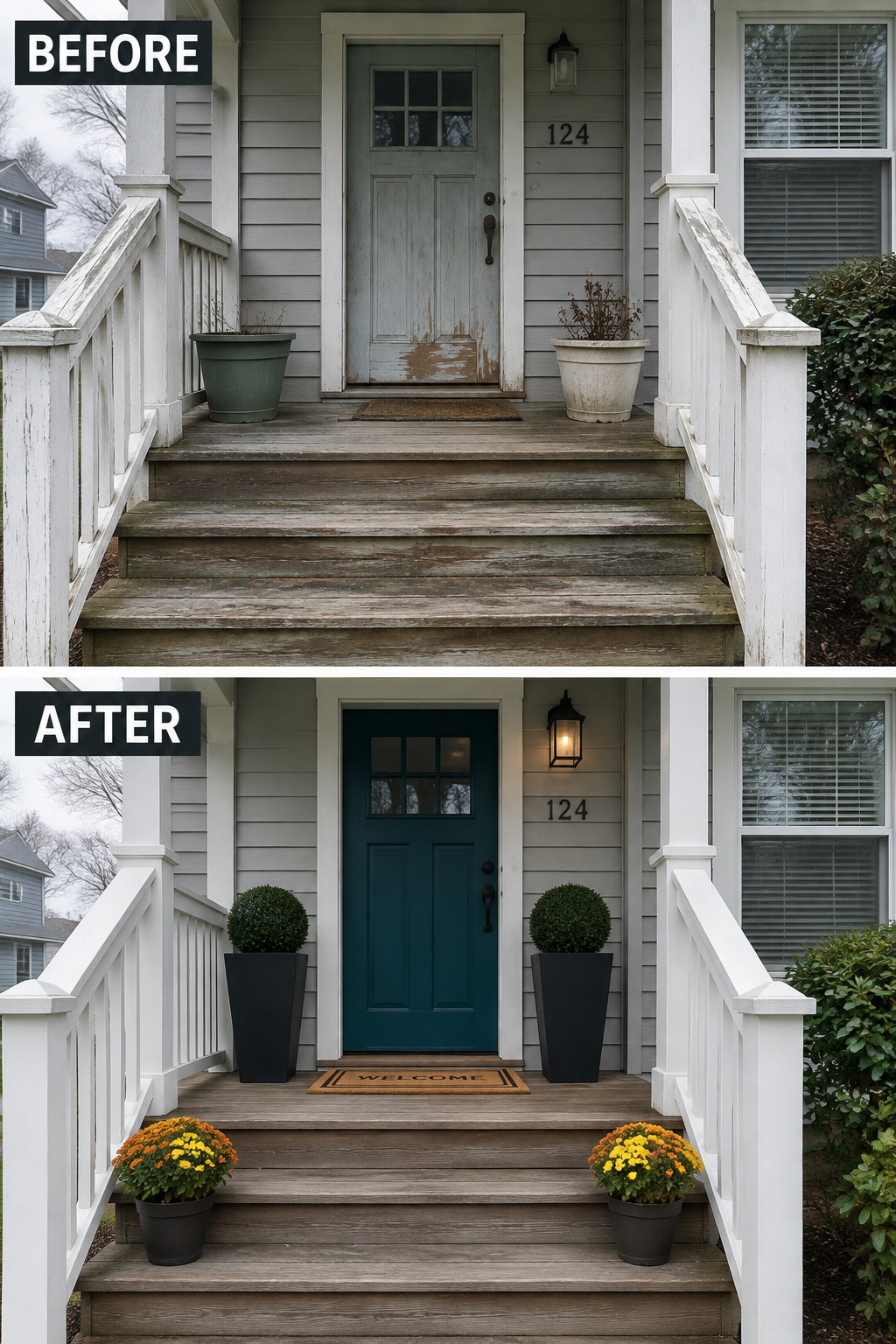
A tired front entry often comes down to mismatched pieces and faded finishes. In this case the old pots were swapped for a pair of tall black planters that sit evenly on either side of the door, while the door itself was painted a deep teal that ties the whole space together. The result feels intentional without looking overdone.
This approach works well on older homes that already have a porch or steps. Start by picking two or three planters in the same finish and size, set them to balance the doorway, and add simple greenery or seasonal color. Keep the number of pots modest so the walkway stays clear and the focus stays on the entry itself.
Turn An Empty Patio Into A Seating Area
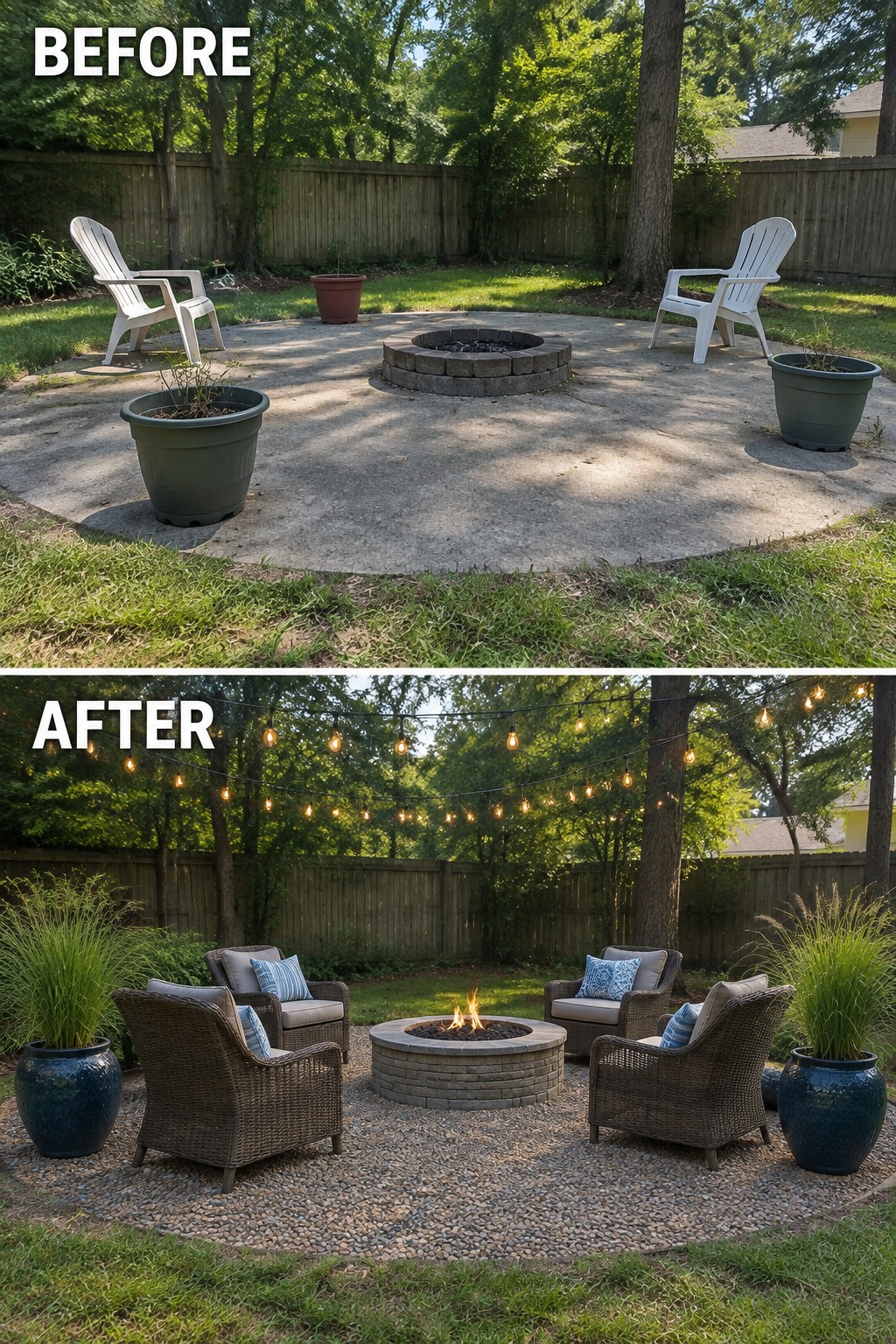
A bare concrete pad with a fire pit often stays unused because it lacks any sense of structure or comfort. Switching to gravel, arranging proper seating in a circle, and adding string lights overhead made the space feel like an actual room instead of leftover concrete.
This approach works best on small to medium patios where you can keep the fire pit as the center point. Start with the surface change and a simple furniture layout before adding planters or lights, and make sure the chairs sit close enough for conversation without crowding the walking space.
Add A Plant Stand To Turn Plain Pots Into A Garden Feature
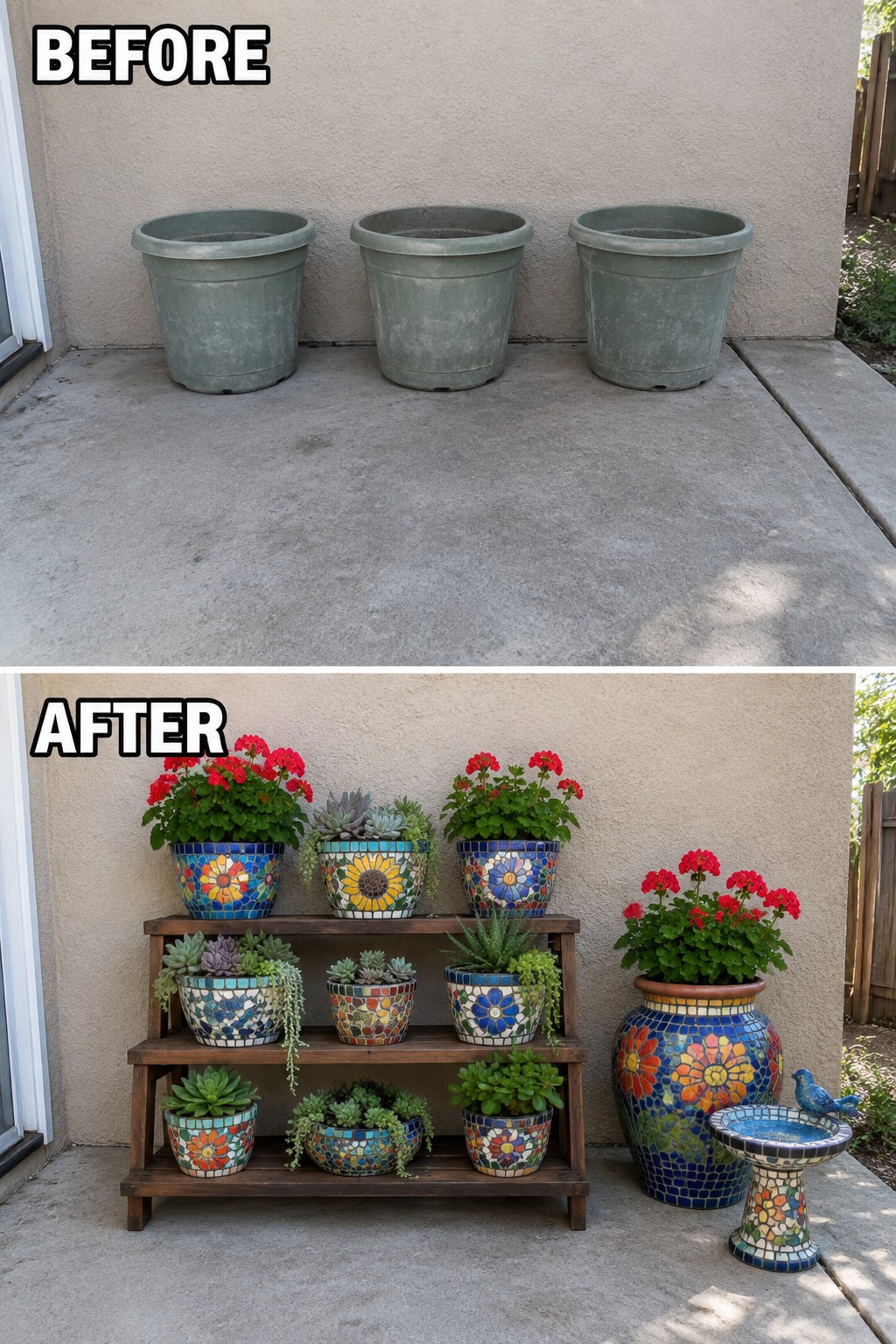
A row of basic planters sitting on bare concrete rarely feels like much. A simple wooden plant stand changes that by lifting the pots off the ground and giving them different heights so the whole group reads as one arranged display.
This idea works best on a small patio, side yard, or entry slab where you want more plants without taking up floor space. Choose a sturdy outdoor shelf, repeat a color or pot style across the levels, and leave room on one side for a taller accent piece so the arrangement stays balanced and easy to walk around.
Define A Narrow Side Yard With Raised Planters And Gravel

A narrow side yard often ends up as a forgotten strip of patchy grass and random pots. Building simple raised wooden planters along one side and covering the ground with gravel gives the space a clear purpose and makes it much easier to walk through without tracking mud.
This approach works especially well on tight lots where you still need access to gates or utility areas. Keep the planters at a consistent height, choose plants that can handle the sun and reflected heat from the house, and use stepping stones to keep the center open. The result feels intentional instead of leftover.
Turn An Empty Patio Into A Seating Area

An empty concrete courtyard often sits unused because it lacks any sense of purpose. Adding a small table and chairs immediately gives the space a clear function, while planters and a simple trellis soften the walls and make the area feel enclosed without closing it in.
This approach works best in small side yards or urban courtyards where every square foot counts. Choose weatherproof furniture that folds away if needed, keep the center open for movement, and let the planters do most of the visual work rather than crowding in too many extras.
Turn A Bare Pool Deck Into A Seating Area

One simple way to improve a pool deck is to replace tired old pots with larger modern planters and add a few lounge chairs. The before photo shows dried plants in mismatched containers sitting along the edge, while the after version uses bigger concrete pots with fresh palms and flowers plus two chairs that actually invite you to sit.
This approach works best on existing concrete decks where the space feels empty rather than broken. Start with cleanup, choose planters that match the scale of the area, and keep the furniture simple so people can still walk around the pool easily. It suits most suburban backyards that already have a pool but lack a clear spot to relax.
Add Structure To An Overgrown Garden Corner
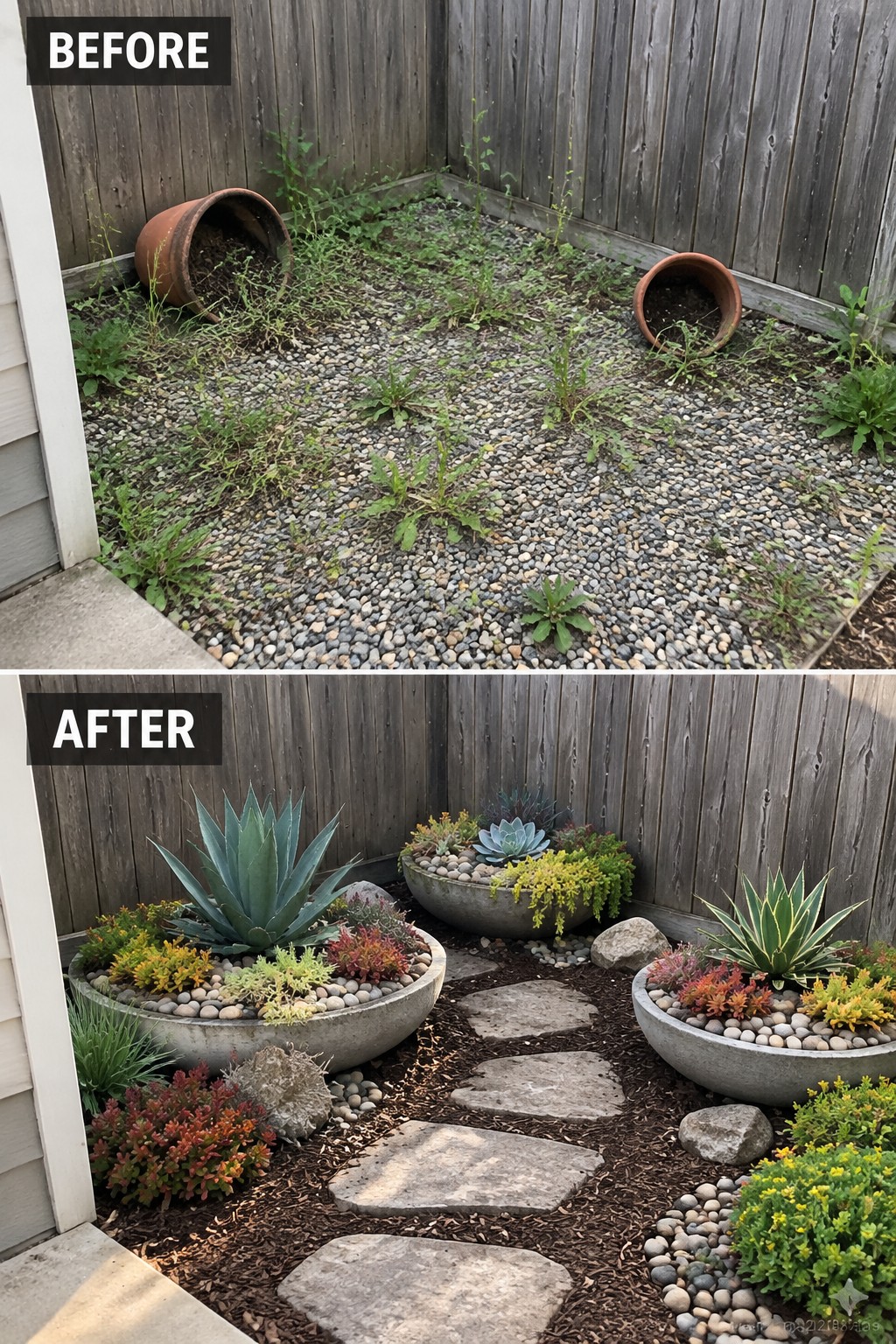
A messy gravel patch with tipped pots and weeds can feel like wasted space, but a few large planters and a stone path bring order without needing a full redesign. The change here comes from clearing the overgrowth first, then using the planters to create focal points and the path to guide movement through the area.
This approach suits small side yards or back corners where you want usable garden space rather than just open ground. Start with basic cleanup and a simple path, then add planters that match the scale of the area so the layout stays balanced and easy to maintain.
Match Planters Along A Deck Railing

One easy way to improve a deck is to swap random hanging pots for a set of matching planters along the railing. The scattered plastic containers in different colors and sizes made the space feel busy. Uniform wooden boxes lined up neatly create a cleaner look that feels more planned.
This approach works best on decks or porches where you grow herbs or small plants and want them to look organized rather than cluttered. Use the same material and size for each planter so they sit evenly on the railing. Keep a little space between them so you can reach the plants for watering and harvesting without crowding the walkway.
Add Structure To An Overgrown Garden Path

One simple way to fix a messy garden path is to line it with matching planters instead of scattering pots around. The before photo shows a path that felt lost among wild growth and random containers. After, the same walkway looks much more planned because the large concrete planters create a clear border on both sides.
This approach works best on narrow side yards or straight paths where you want to guide movement without crowding the space. Clear the overgrowth first, then choose planters that match in size and material. Use the same mix of tall grasses and lower flowers in each one so the line feels connected.
Turn An Old Wheelbarrow Into A Garden Planter

An old wheelbarrow can become a useful planter once it is no longer needed for heavy work. A coat of paint keeps the rust from spreading, and filling the basin with soil lets you plant flowers that trail over the sides.
This idea works well in narrow beds or along fences where a standard pot would look too small. Place it where the wheelbarrow already sits so you do not have to move heavy soil, and choose plants that match the size of the container rather than overcrowding it.
Add Layered Planters Beside Concrete Steps
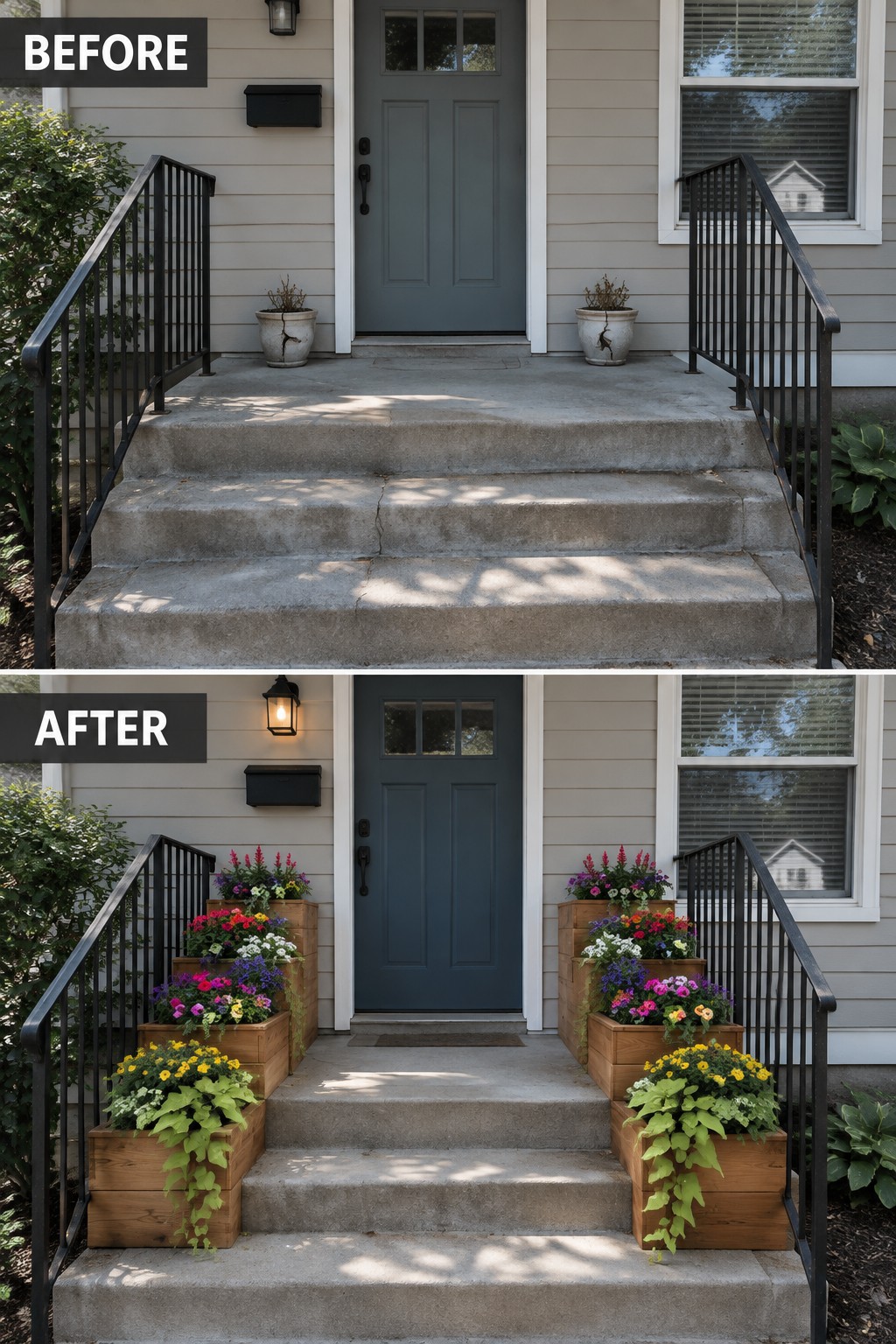
A plain set of concrete steps with just two small pots looks flat and unfinished. Layering wooden planters of different heights on both sides fills the space, adds color, and draws the eye straight to the door without any major construction.
This approach works especially well on narrow entries or older homes where the stairs take up most of the front space. Start with two or three planters per side, choose plants that spill over the edges a bit, and keep the colors varied but not too busy so the door stays the main focus.
Turn A Bare Balcony Into A Private Seating Area
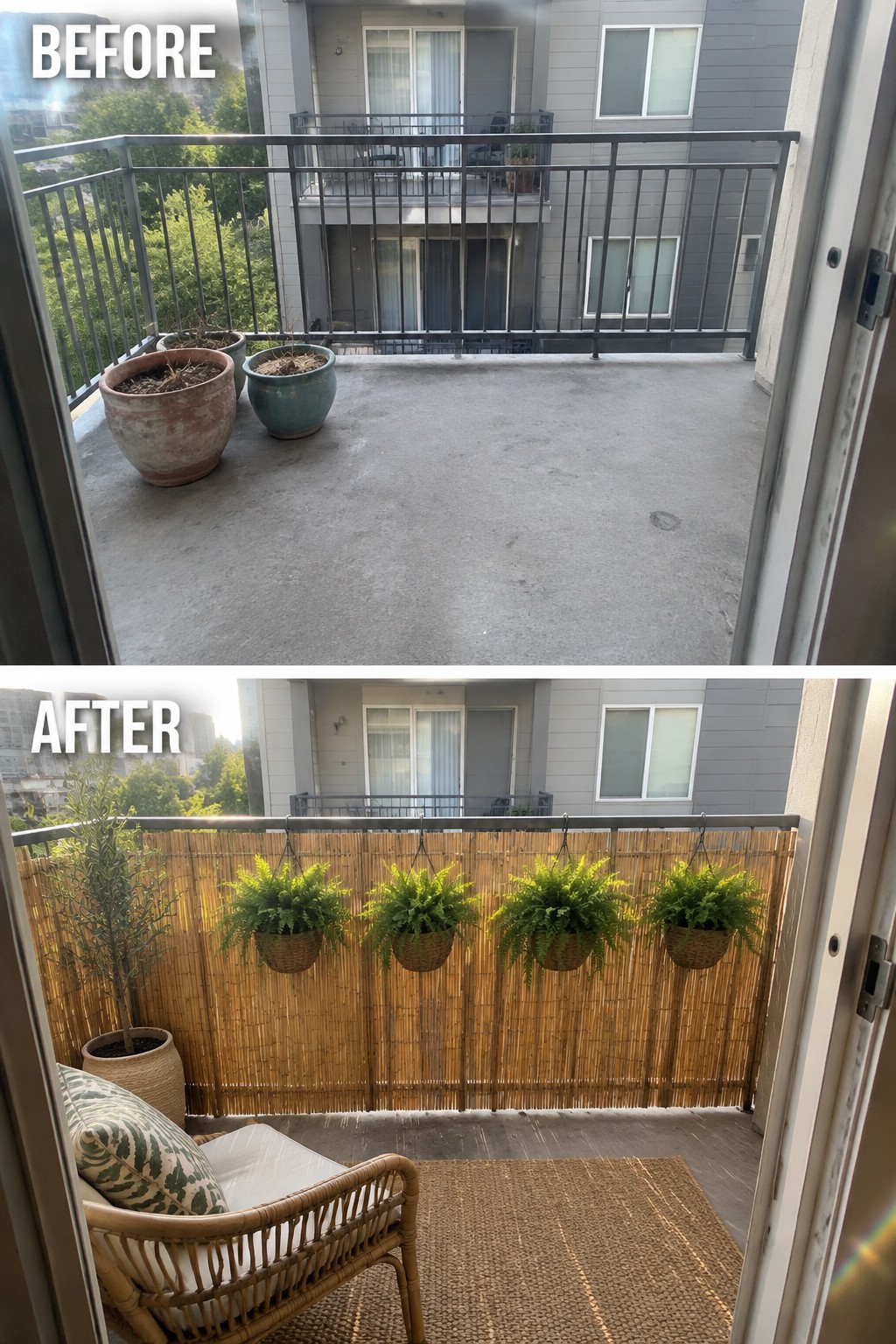
A plain concrete balcony often feels like wasted space because there is nothing to create any sense of enclosure. Adding a simple privacy screen along the railing changes the whole feel by blocking views from nearby units and giving the area a more defined boundary. A few hanging plants soften the screen and bring some life to the space without taking up floor room.
This idea works best on apartment or condo balconies where privacy is limited. Use a lightweight screen that hangs from the railing, keep the seating modest in size, and add one rug to mark the sitting area. Leave enough open floor space so the balcony still feels usable rather than crowded.
Use Planters To Fill Out A Bare Porch
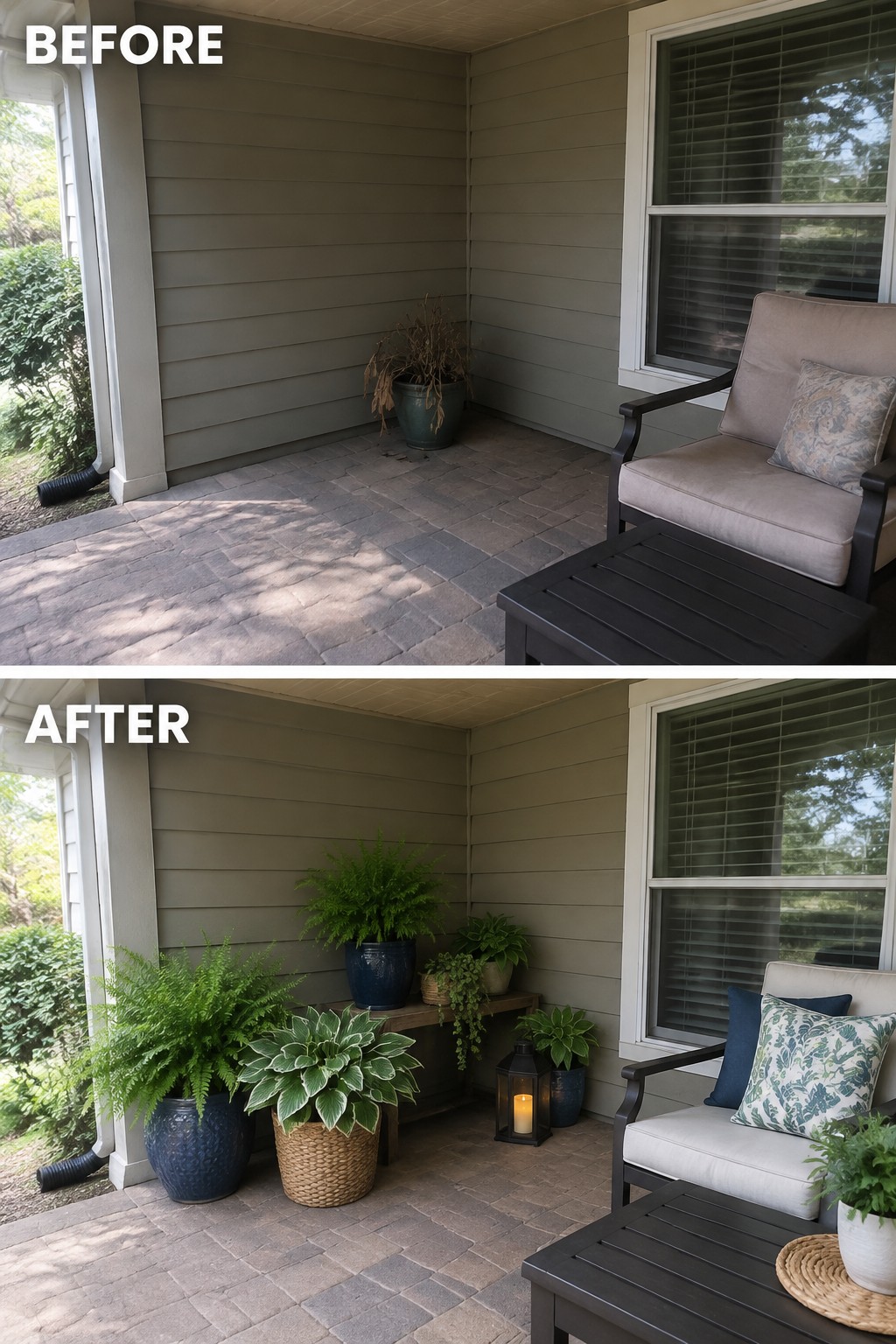
A plain covered porch often looks unfinished when it only has one chair and a bit of open floor. Adding a row of planters along the wall changes that fast. The ferns and hostas in the after photo create height and softness that make the space feel used instead of empty.
This idea works best on porches or patios that get some shade. Start with a few larger pots in one or two colors, then add smaller ones at different heights. Leave enough room to walk through and choose plants that can handle your local weather so the look lasts past the first season.
Add Structure To A Plain Fence Line With Planters
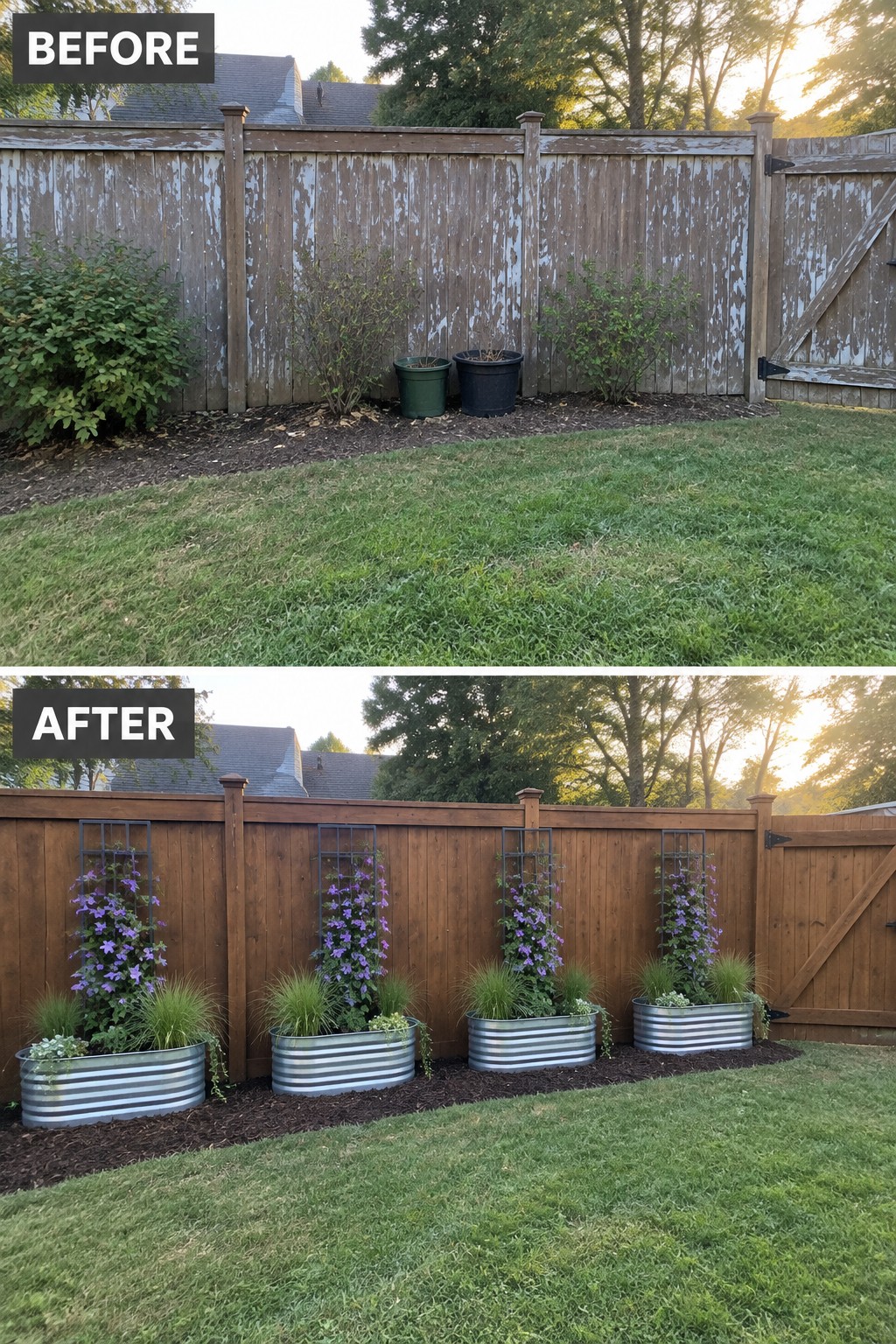
A long fence can look unfinished when the base is just grass or a few random pots. Here the fix was simple. A row of matching metal troughs with built-in trellises turned the bare stretch into a clear planted border that gives the fence a reason to be there.
This idea works best along a straight fence where you want height without building new beds. Use the same planter style the whole way, add one or two climbing plants per trough, and keep the rest low so the trellises stay the focus. It keeps the lawn open while giving the fence a finished edge.
Add Structure To An Overgrown Front Bed
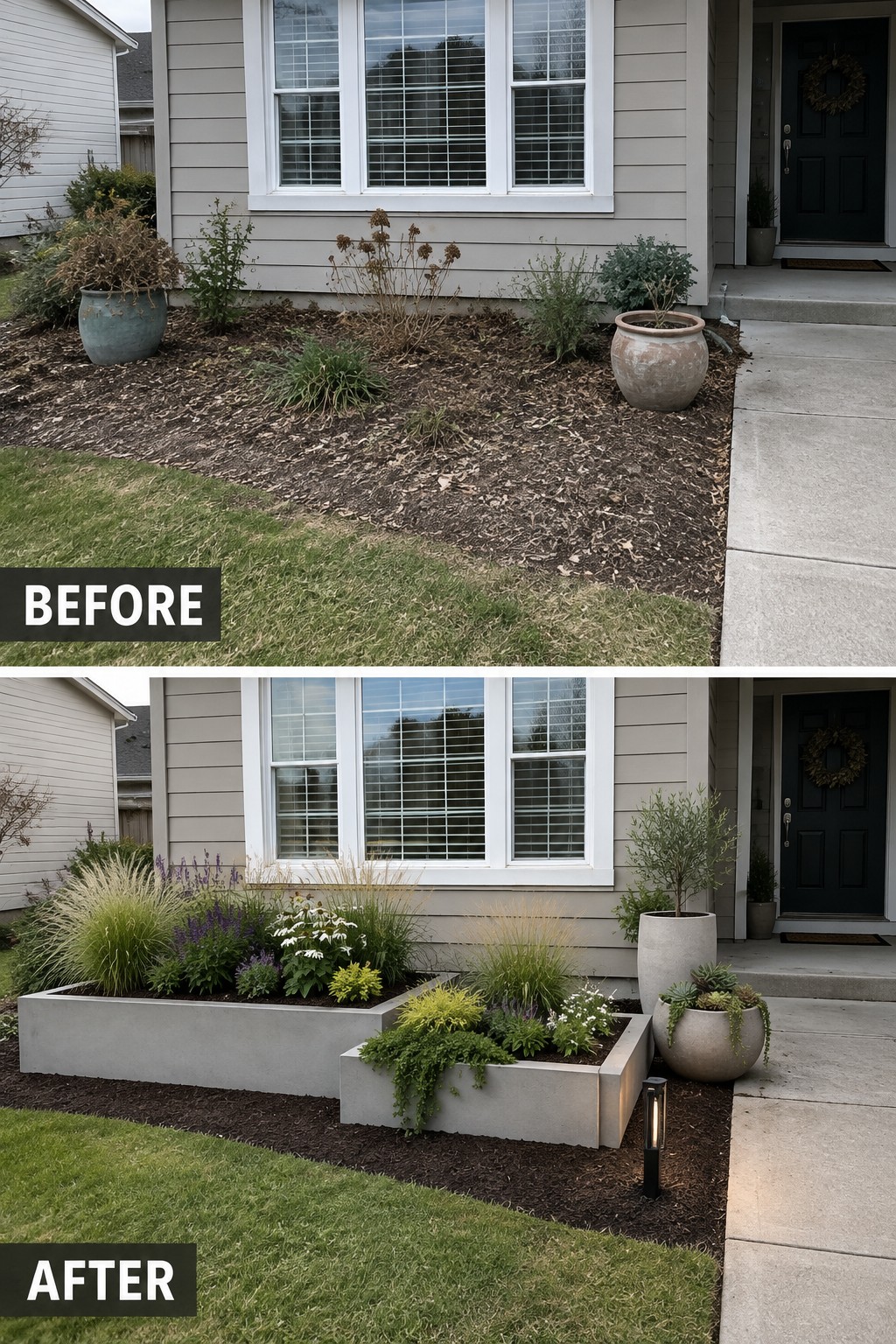
The before photo shows a scattered mulch area with random pots and plants that lacked any clear shape. The after version uses two large concrete planters to create defined edges and separate planting zones, which instantly makes the whole front bed look intentional. The mulch stays, but now it reads as a finished surface instead of loose fill.
This approach works well on narrow strips beside a house where you want planting without a full redesign. Start by deciding the main shape you want, then choose planters that match the scale of your bed. Keep the plantings simple inside each section so the structure stays visible.
Turn A Bare Patio Into A Shaded Seating Area
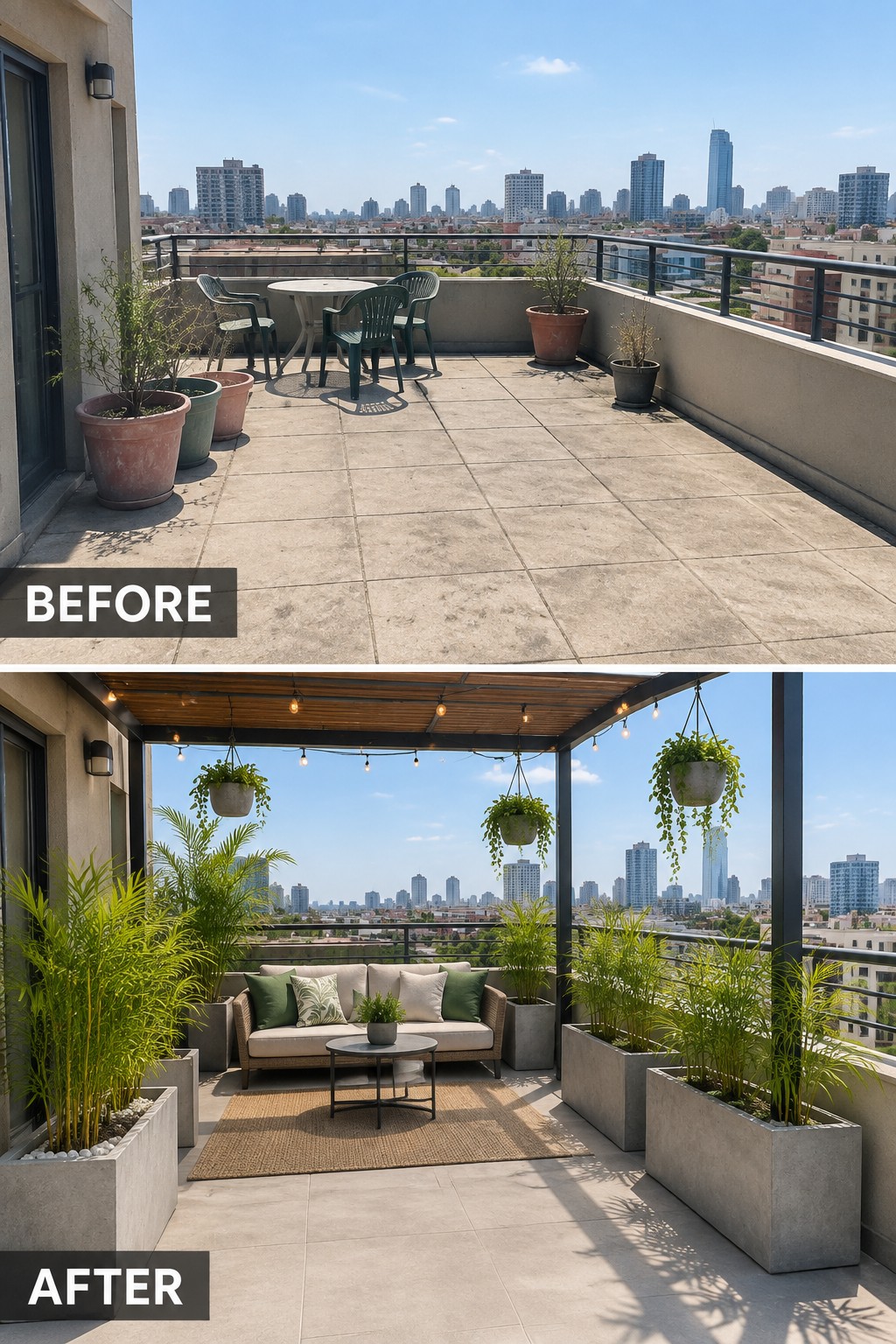
A plain concrete terrace can feel unusable when it has no cover or clear purpose. Adding a simple pergola with string lights creates shade and defines the space, while a few large planters and a rug turn the open area into a spot where people actually want to sit.
This approach works well on rooftops, balconies, or back patios that get strong sun. Start with the overhead structure for shade and lighting, then add seating and greenery in scale with the space so it stays comfortable rather than crowded.
Add A Simple Path To Organize An Overgrown Yard
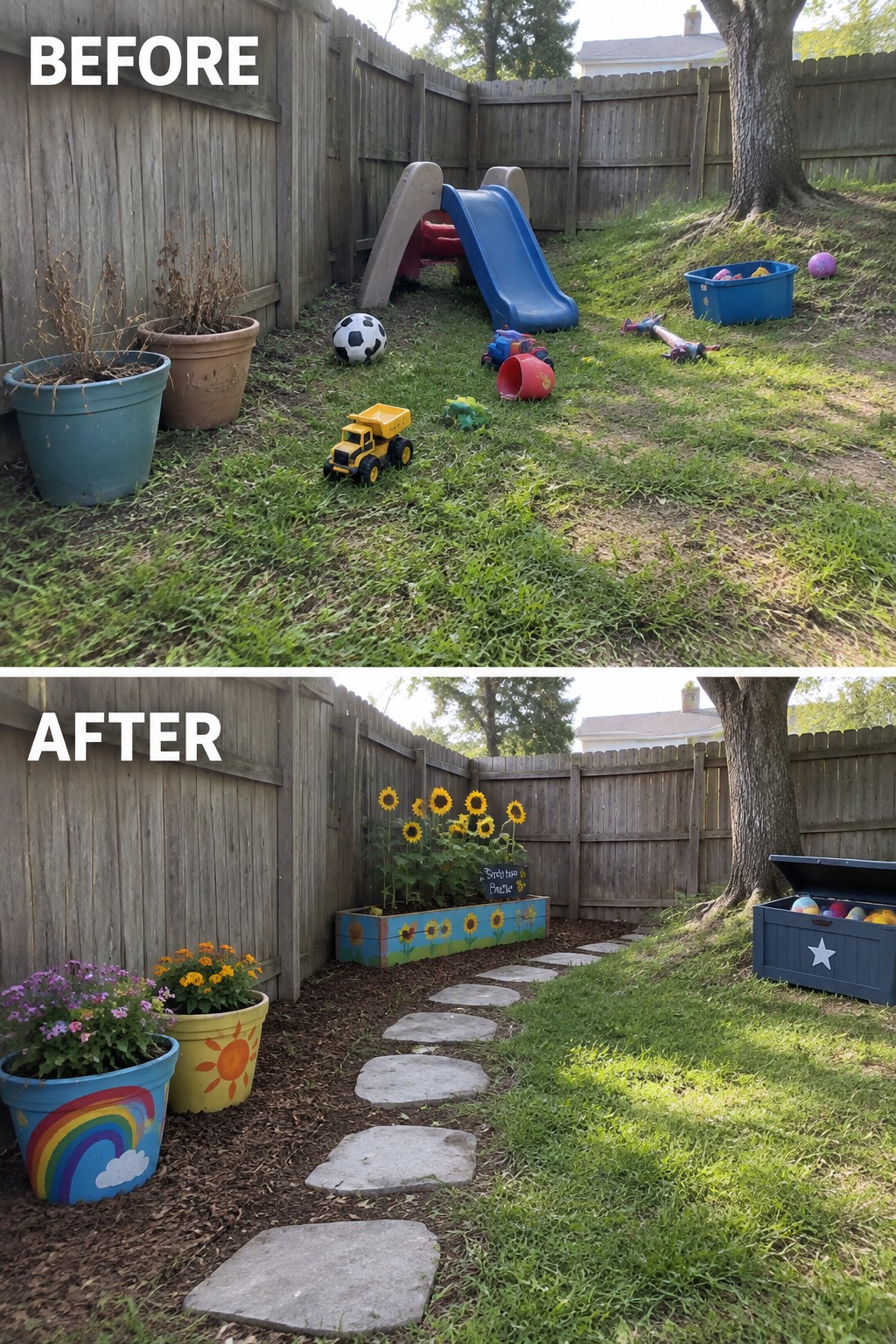
The before photo shows a backyard where toys and pots were scattered across the grass with no clear layout. The after shows how a line of stepping stones, fresh mulch, and grouped planters turned the same space into something that feels planned and easy to walk through.
Start by clearing the clutter first. Then lay a path that connects the main areas of the yard. This works in most small or medium backyards where you want to guide foot traffic and give planting spots a clear edge without spending much on hardscaping.
Layer Planters At Different Heights To Style An Entry

A plain concrete porch often looks unfinished when pots are just lined up along the wall. Raising a few planters on stands and mixing tall and low shapes gives the space a simple structure that feels more intentional.
This idea works well on front entries or small porches where you want to add interest without major changes. Use one or two larger planters as the base, set smaller ones on wooden blocks or low tables, and add a single accent like a lantern to keep the look balanced and easy to maintain.
Use String Lights And A Rug To Create A Cozy Porch Seating Area

A plain concrete porch often feels unfinished even when it has a bench. Adding string lights overhead brings warmth once the sun goes down, while a rug on the floor defines the seating zone and makes the space feel more like an outdoor room.
This approach works best on covered porches where you can leave the lights and textiles up for months at a time. Start with the lighting since it changes the mood quickly, then add a weatherproof rug and a few large planters so the area looks intentional without crowding the walkway.
Frequently Asked Questions
Q: How do I choose planters that won’t tip over in wind? A: Pick heavier materials like concrete or ceramic for windy spots. Fill the bottom with rocks to add weight. This keeps everything steady without extra ties.
Q: Can I reuse accents year after year? A: Clean metal or stone pieces each spring. Store them away before bad weather hits.
Q: What if plants outgrow the pots quickly? A: Shift them to larger planters and start fresh seedlings in the old ones. Check the roots now and then to stay ahead of it.
