

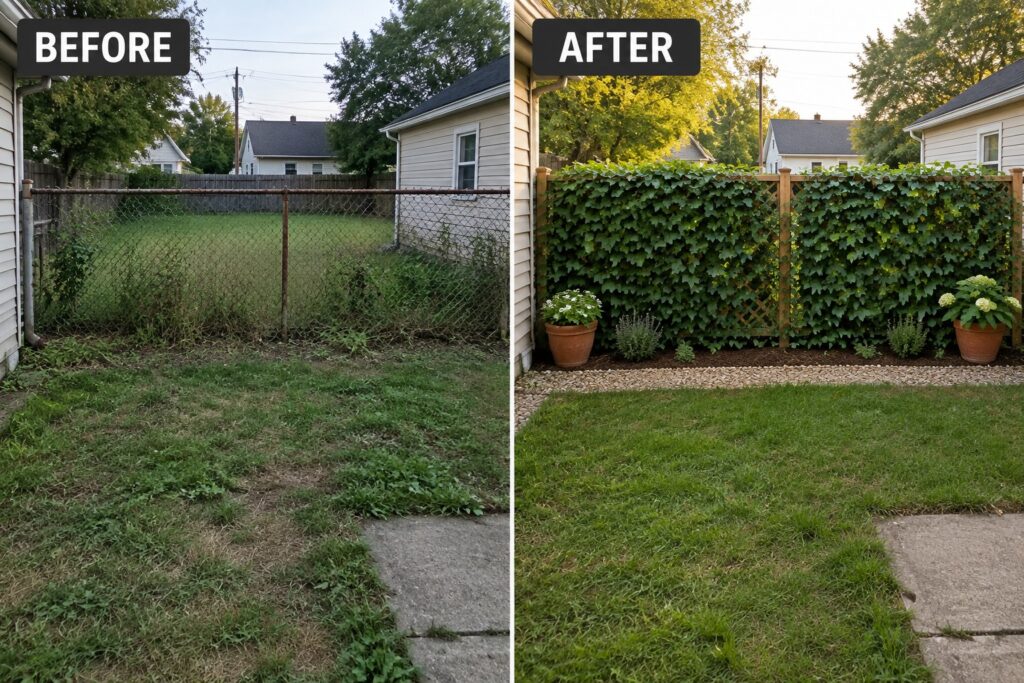
Many garden fences start out as simple boundaries that leave the whole yard feeling exposed and flat.
Adding climbing plants builds structure gradually and turns that same fence into a living screen that softens the view over a season or two.
I like to try one or two varieties on a short stretch first so I can judge growth habits before covering the full run.
The real payoff comes when the greenery fills in enough to give privacy while still letting light through.
Small choices like matching the plant spacing to the fence panels keep the whole border looking intentional rather than scattered.
Grow Climbing Plants On A Fence For Privacy
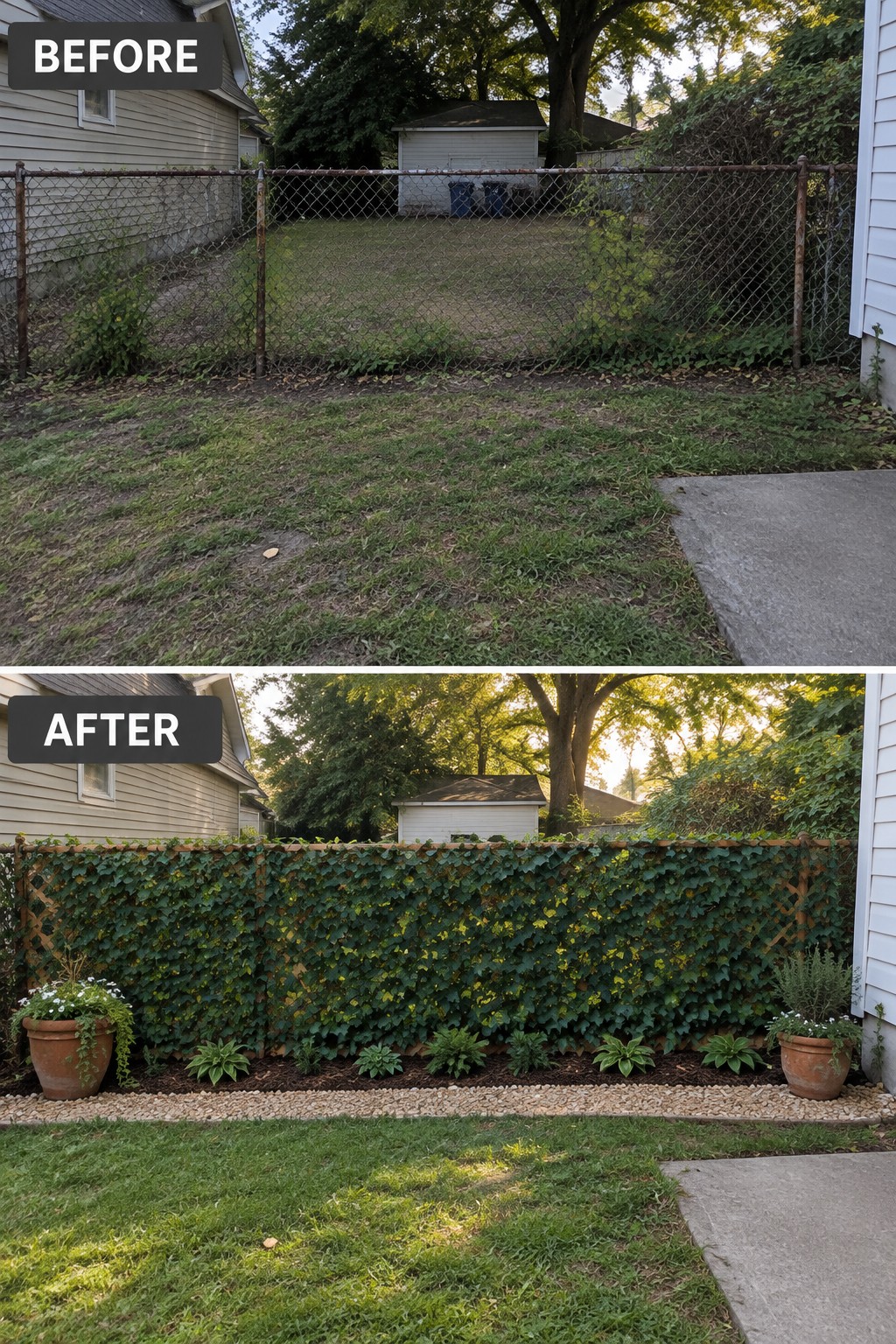
A plain chain link fence leaves a yard feeling exposed. Covering it with thick vines creates a solid green wall that blocks the view while still letting some light through. The addition of a clean mulch border at the base keeps the planting simple and stops weeds from taking over.
This idea works best along side or back property lines where you want screening without building a tall solid fence. Use a wire grid or lattice behind the vines so they have something to hold onto, pick a fast grower suited to your climate, and keep the bed narrow enough to reach for watering and trimming.
Add Climbing Plants To A Garden Fence For Privacy
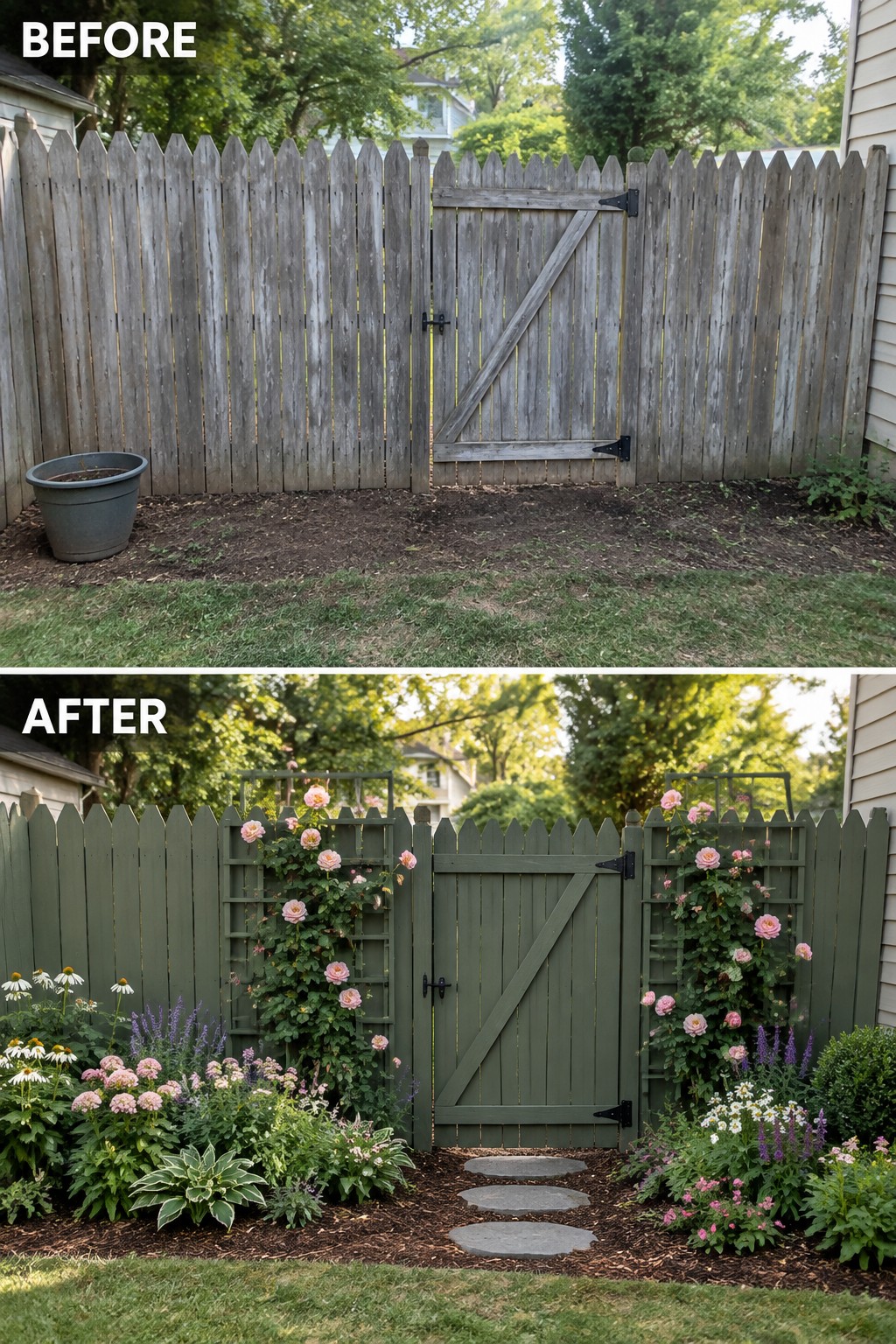
A plain fence often needs more than a coat of paint to feel finished. Adding trellises lets climbing roses or similar vines cover the surface over a season or two, which creates height and blocks views without a solid wall. The change here shows how the fence went from bare boards to a planted backdrop that blends into the rest of the yard.
This approach suits side or back fences where privacy matters most. Attach simple lattice panels first, then plant climbers that can handle your local conditions. Keep the ground in front mulched and filled with lower flowers so the fence does not stand out on its own.
Create Privacy With A Horizontal Fence And Climbing Plants

A plain fence next to a sloped lawn often leaves the space feeling exposed and unfinished. Adding a horizontal slat screen gives the fence more structure and creates a solid backdrop for training fruit trees along the rails. The result is a living privacy wall that softens the boundary while still letting some light through.
This approach works well in smaller backyards where you need screening without building a tall solid wall. Start with a simple gravel base to level the seating area, then plant the trees close to the fence so they can be tied in as they grow. The bench and cushions turn the spot into a usable place to sit once the plants fill in.
Add Privacy Screening And Climbing Plants To A Fence

A plain fence often ends up looking tired once the wood starts to weather. Adding bamboo screening gives it a new surface while flowering vines quickly soften the top edge and sides. The base planting stays low so the fence still feels like part of the yard instead of a solid barrier.
This idea works best along side or back fences where you need a bit more privacy without raising the height. Attach the screening first, then plant vigorous climbers that suit your growing conditions. Keep the grass and border simple so the vines become the main feature.
Add Vertical Planters To A Plain Fence

A plain metal fence can feel like a dead end in the yard, especially when it starts to rust and show its age. The fix here is simple. Modular pocket planters mounted directly on the fence turn that flat surface into a living screen filled with succulents and trailing plants. The soil pockets add depth and color without needing extra ground space or a full rebuild.
This approach works well on long side boundaries or back fences where you want privacy but still need the structure to stay. Start with a sturdy fence that can handle the weight, then choose plants that match your sun exposure. Keep the bottom edge clear so water drains away from the base and the fence lasts longer.
Add Climbing Plants Over A Pergola To Create Patio Privacy

A plain fence and open patio often leave the space feeling exposed. Adding a simple pergola across the top of the fence gives climbing plants a structure to grow on. The vines fill in quickly and create a living screen that softens the wood while blocking views from neighboring yards.
This approach works well on small patios where you need both shade and privacy without building a tall wall. Choose a fast-growing vine suited to your climate, run string lights along the beams for evening use, and keep the seating area underneath simple so the plants stay the main feature.
Add Climbing Plants To A Plain Fence For Privacy

A plain fence often leaves a yard feeling exposed. Attaching a few simple trellises and letting climbing vines cover them adds height and screening without taking up much ground space. The planters at the base keep the planting neat and make watering straightforward.
This idea works best along side or back fences where you need privacy but do not want a solid wall of shrubs. Pick vines that match your sun exposure and climate, and space the trellises so the fence still shows through in places. Start with just two or three sections if you want to test the look first.
Turn A Bare Wall Into A Green Privacy Screen

A plain concrete wall often makes a backyard feel closed in and dull. Adding wall pockets for plants and a simple trellis for climbers changes that quickly by bringing greenery up off the ground and softening the hard surface.
This idea works best along side yards or back fences where you want coverage without losing space. Start with a few vertical planters for smaller plants, then let vines like bougainvillea fill in the trellis over a season or two. Keep the planting simple so the wall still feels open.
Add Lattice And Raised Beds For Privacy Screening

An overgrown fence line can quickly turn into a messy wall of weeds that blocks nothing useful and looks neglected. The change here comes from replacing that tangle with a simple lattice screen and raised beds planted with climbing vines. The lattice gives the vines something to grab onto while the beds keep everything contained and easier to maintain.
This approach works well along side or back fences where you want screening without losing light. Start by clearing the overgrowth first, then set the lattice panels and boxes in place before adding the climbers. It keeps the area looking planned instead of wild and gives you a living screen that fills in over a season or two.
Add Vertical Planters For Privacy Screening

A blank wall with peeling paint and old graffiti can feel like wasted space along a fence line. Mounting a row of horizontal planters turns that surface into a living screen, with ferns, vines, and leafy plants filling in quickly to block views and soften the look. The shift from bare dirt and concrete to a full green wall shows how simple structure makes the difference.
This approach works well on narrow side yards or along property lines where ground space is limited. Use sturdy planters that can handle weather, choose plants that tolerate shade or sun as needed, and keep the layout even so the wall does not feel overcrowded. Start with a few rows and add more once the first plants establish.
Add Vertical Planters To A Garden Fence
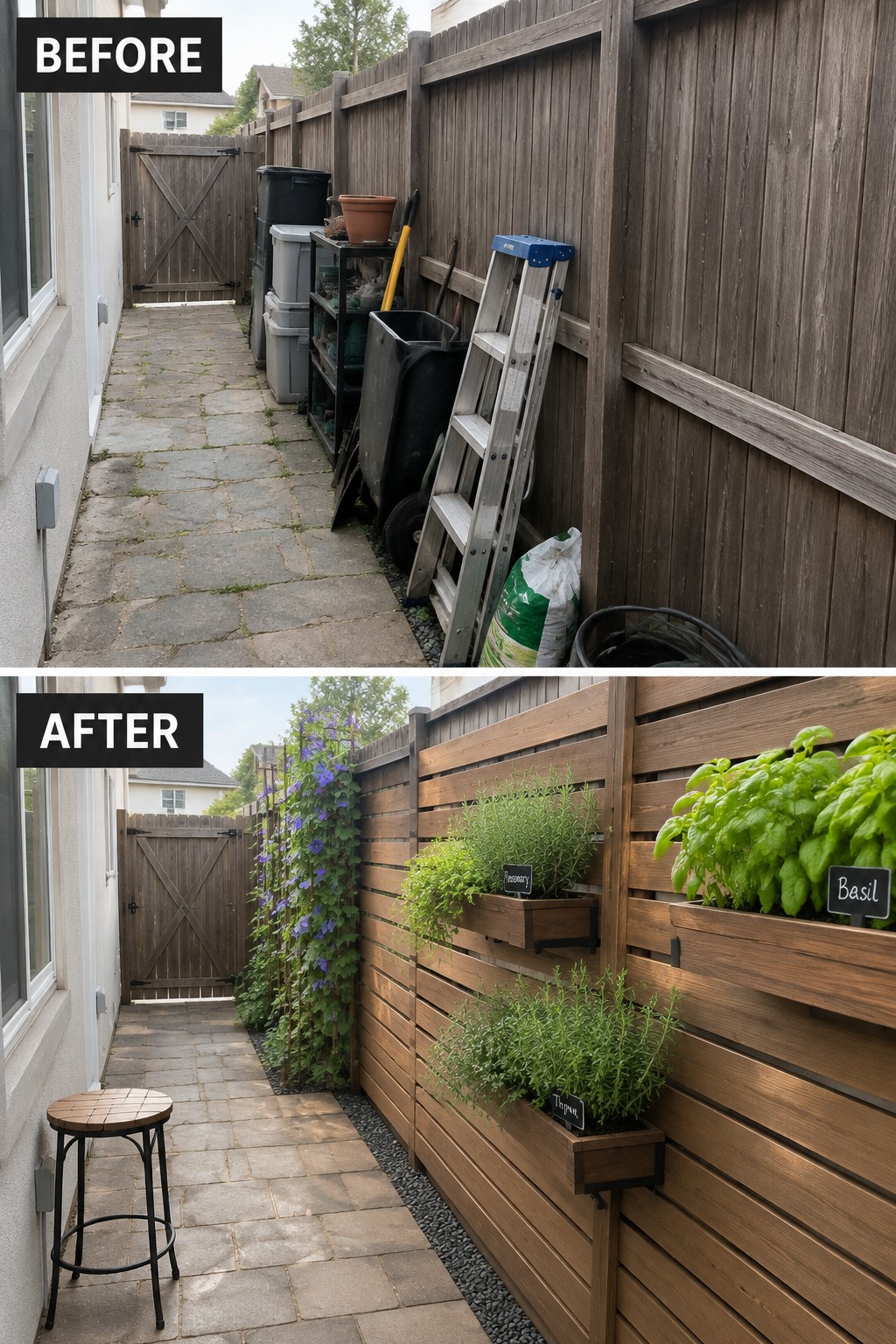
A narrow side yard often ends up as overflow storage, but mounting simple planters directly on the fence changes the whole feel. Instead of a blank or cluttered wall, you get growing space at eye level that keeps the ground clear. The before photo shows the typical problem of tools and bins taking over, while the after shows how a few rows of fence-mounted boxes and a trellis of climbers turn the same spot into something useful and green.
This approach works well in tight passages where regular beds would block movement. Start with a sturdy fence that can hold the weight, choose herbs or compact vegetables that like the sun exposure, and keep the number of planters modest so the space still feels open. It suits homes with limited yard room and gives you fresh herbs without needing extra ground space.
Create Privacy With Climbing Plants On A Garden Fence
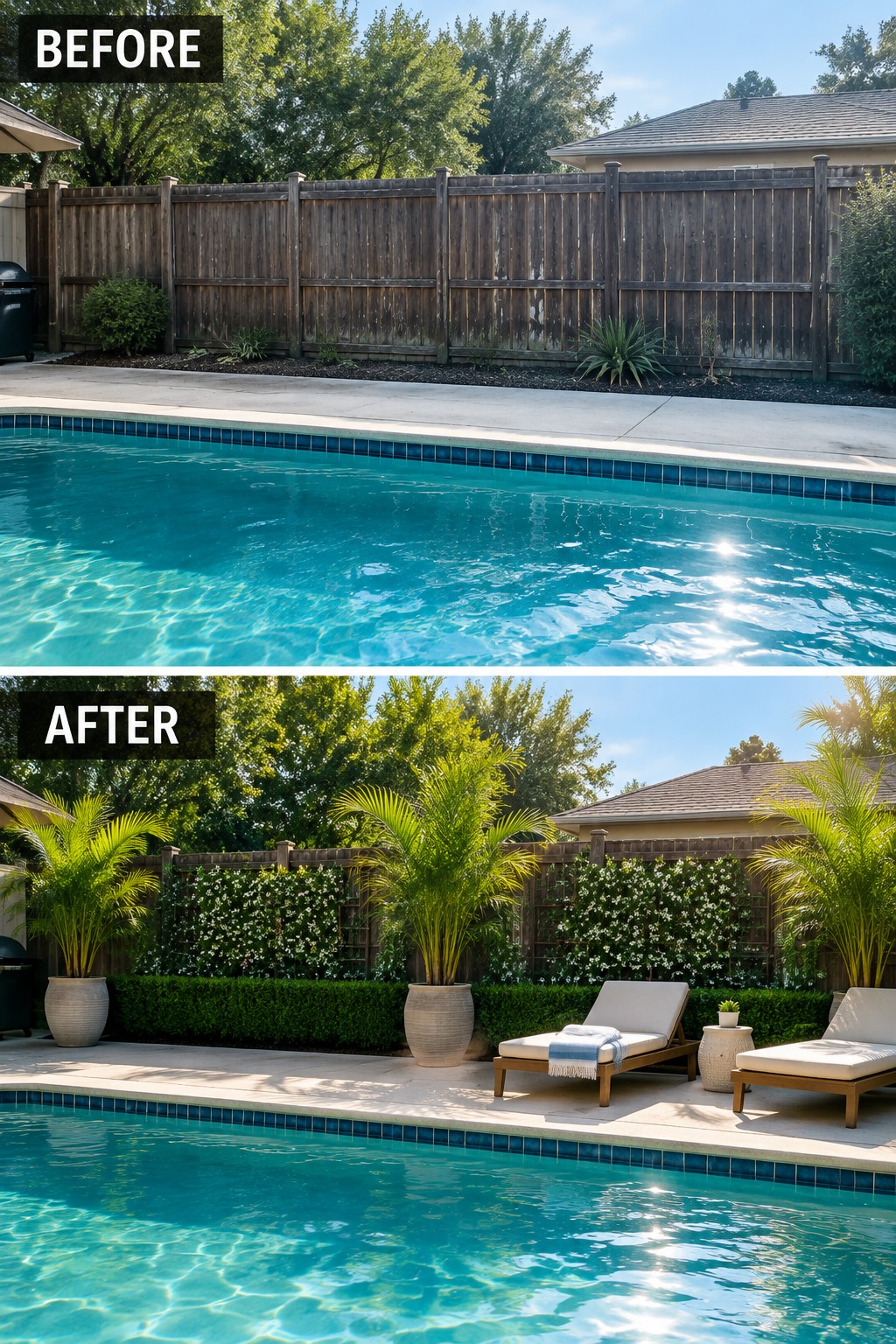
A plain fence next to a pool often leaves the space feeling exposed. Covering it with climbing vines and adding a row of shrubs at the base turns the fence into a living screen that blocks views while keeping the area bright and green. The change makes the poolside feel more like a separate outdoor room instead of an open strip of concrete.
This approach works best in backyards where neighbors sit close by. Choose vines that grow quickly in your climate and plant them along the fence line first. Then add a few shrubs or small trees in front to fill gaps faster, and use large pots to place taller plants exactly where you need extra screening.
Create Privacy With A Painted Fence And Climbing Plants
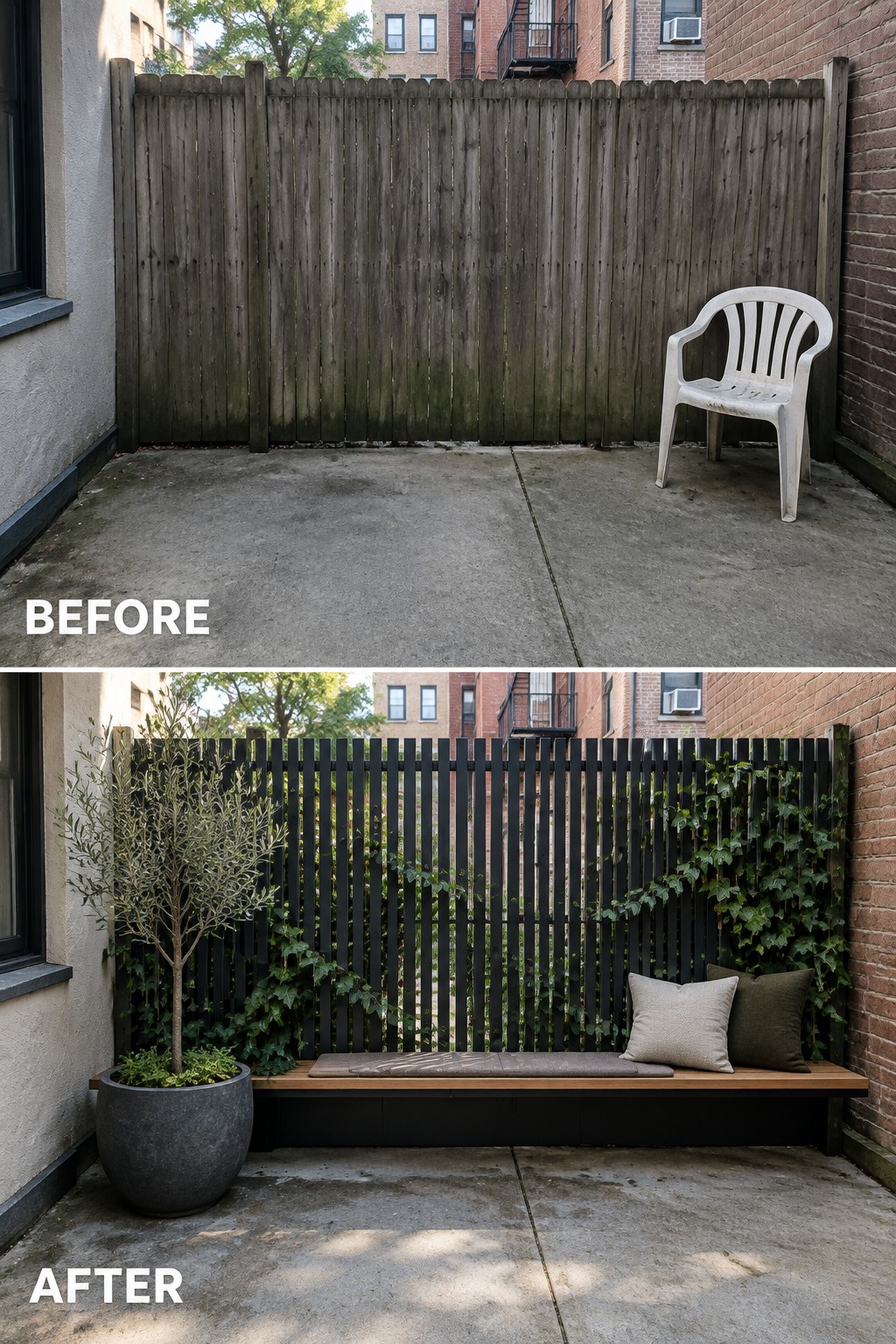
A plain wooden fence and empty concrete often leave a backyard feeling exposed. Painting the fence a dark color and training climbing plants across it quickly adds height, texture, and a sense of enclosure without building new structures.
This approach works well in small urban yards where space is tight. Start with a fence that can support vines, choose climbers that grow in your light conditions, and keep the seating simple so the plants remain the main feature.
Grow Climbing Plants Along A Fence For Privacy

A basic fence can start to feel more useful once you let plants climb it. The before shows a weedy strip of dirt and a broken section of wire. After, the same fence holds sunflowers and other flowers that fill in the gaps and create a soft screen without adding a solid wall.
This idea works best along side or back fences where you want coverage but still need the structure to stay open. Clear the bed first, lay down mulch to keep weeds down, and pick plants that match the amount of sun the spot gets. Check the fence strength as the vines grow so it does not sag later.
Add Climbing Plants Along A Fence For Privacy

A plain fence often leaves the edge of a yard feeling exposed. Adding climbing vines at the base softens the line and builds a living screen that fills in over a season or two.
Lay a narrow gravel strip first to keep the planting area clean and stop grass from creeping in. Plant vines that can grip the fence and let them grow up the posts. This approach works best along side or back property lines where you need coverage without losing lawn space.
Add A Vertical Plant Tower For Fence Privacy
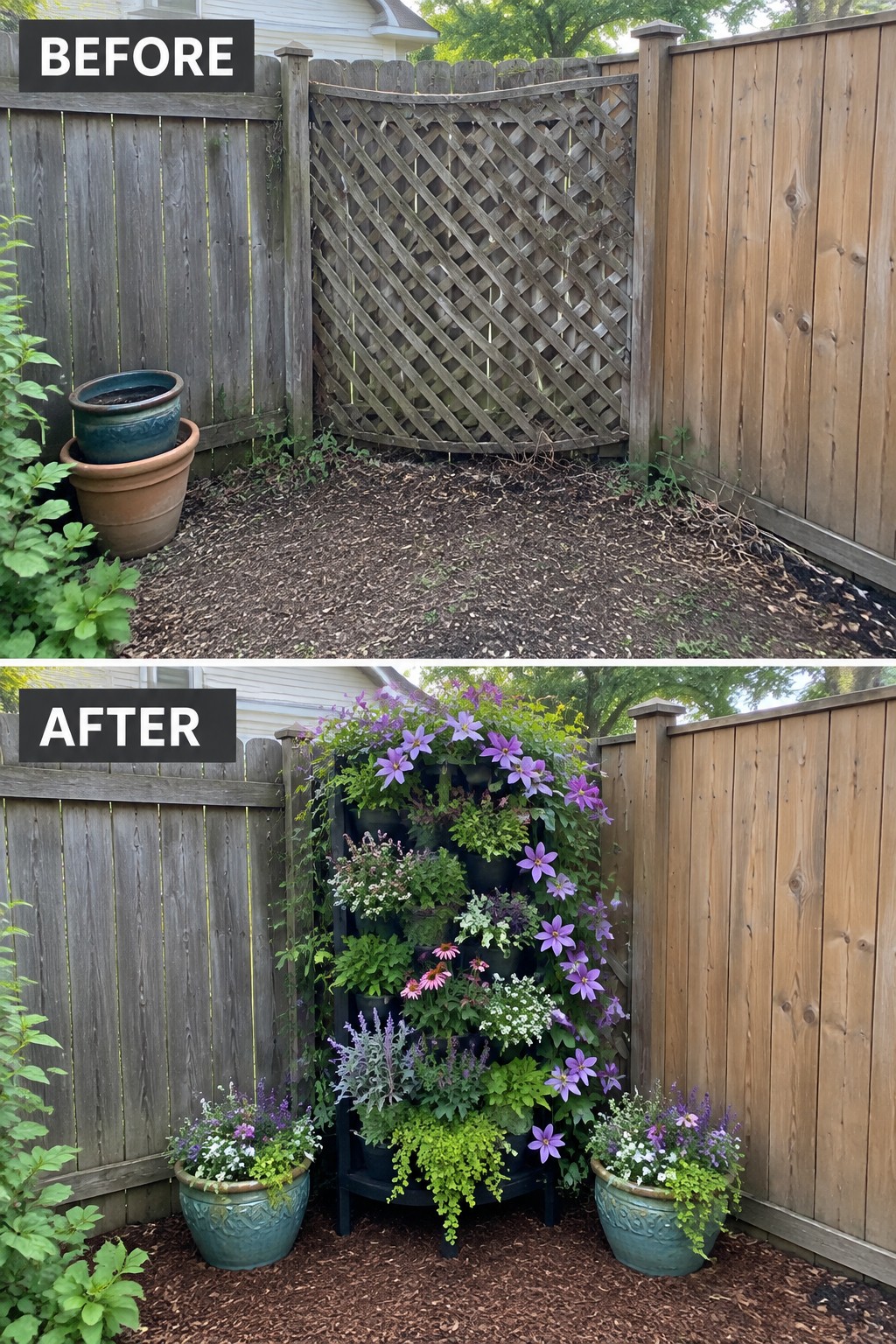
A vertical plant tower gives an empty fence corner both color and screening without taking up much ground space. The before image shows a plain stretch of mulch with just a couple of stacked pots, while the after uses one tall stand packed with flowers and trailing plants to fill the view and soften the fence line.
This idea works best along a side or back fence where you want quick height and privacy. Set the tower against the fence, fill it with a mix of blooming and leafy plants, and add a couple of larger pots at the base so the whole area feels planted rather than sparse. It suits smaller yards that already have a fence but need more life and coverage.
Train Fruit Trees Along A Fence For Privacy And Harvest
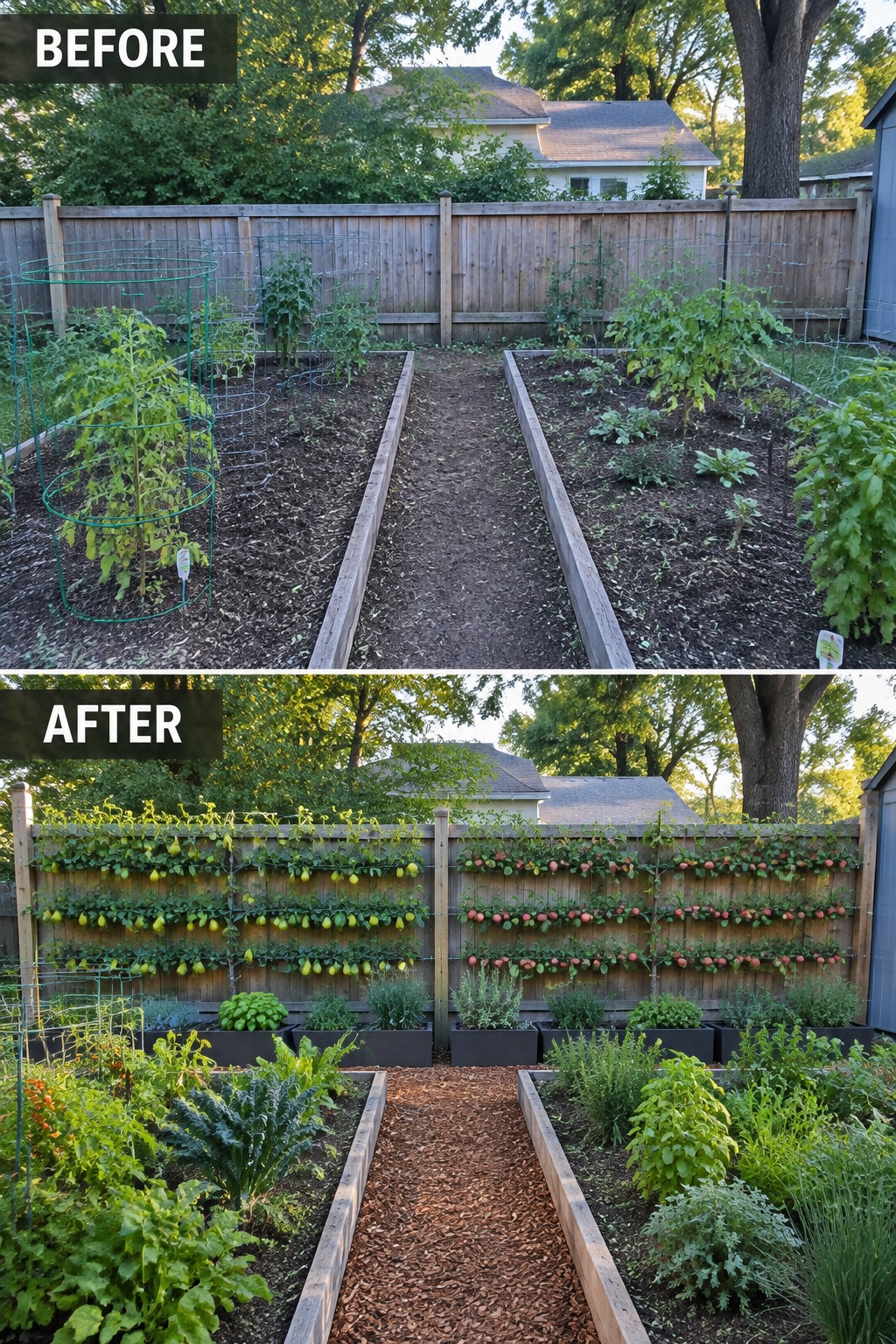
A basic backyard fence can do more than mark a boundary. In this garden the fence was turned into a productive screen by training fruit trees in horizontal rows. The open view and scattered vegetable supports gave way to a solid line of pears and apples that block the neighbors while still letting light reach the beds below.
This approach works well in smaller yards where you want both privacy and fresh fruit without adding trees that take up ground space. Start with young trees and a simple wire system on the fence, then prune twice a year to keep the branches flat. The beds stay open for vegetables and herbs, so the whole space stays usable instead of crowded.
Frequently Asked Questions
Q: Which climbing plants grow well in partial shade?
A: Try climbing hydrangea or some types of ivy. They handle less sun without struggling and still create good coverage over time.
Q: How often should I trim the vines to keep them in check?
A: Cut back new growth every few weeks during spring and summer. This stops them from wandering into other parts of the yard.
Q: Can I combine plants with a lattice screen for extra privacy?
A: Attach the lattice first then let vines weave through it. The combo blocks views better than either alone. Start with one or two plants and add more once you see how they fill in.
