


Walking through my garden I often think about how the paths guide everything else from the beds to the seating areas.
Stone and gravel give a solid base that handles rain without turning into mud while still blending into the plants around them.
Layout matters more than most people expect.
I have found that starting with stepping pavers lets me test routes before committing to anything permanent.
Small adjustments like these add up and make the outdoor space feel less like separate patches and more like one connected place.
Use Pavers And Gravel To Define A Narrow Path

An overgrown dirt path often feels like wasted space because it has no clear edges or purpose. Laying flat stepping stones down the middle with a gravel border on both sides turns the same narrow strip into a usable walkway. The small plants along the edges add just enough structure without crowding the space.
This idea works best in side yards or between fences where the ground stays damp or weedy. Clear the overgrowth first, then set the pavers on a compacted base so they stay level. Gravel fills the gaps, improves drainage, and keeps the path looking tidy with very little ongoing work.
Refresh An Old Path With Stepping Stones And Gravel

A cracked concrete walkway that has grass growing through the seams can make the front of a house feel neglected. Switching to stepping stones set in gravel gives the path a fresh structure while keeping the surface level and easy to walk on. The gravel also helps with drainage and cuts down on weeds.
This idea works well on homes where the existing walk is still usable but looks tired. Keep the new pavers in a simple straight line, use a consistent gravel color, and add a narrow strip of low plants or mulch along each side. That keeps the path clear and makes the whole front yard feel more planned without needing a full redo.
Define A Garden Path With Pavers
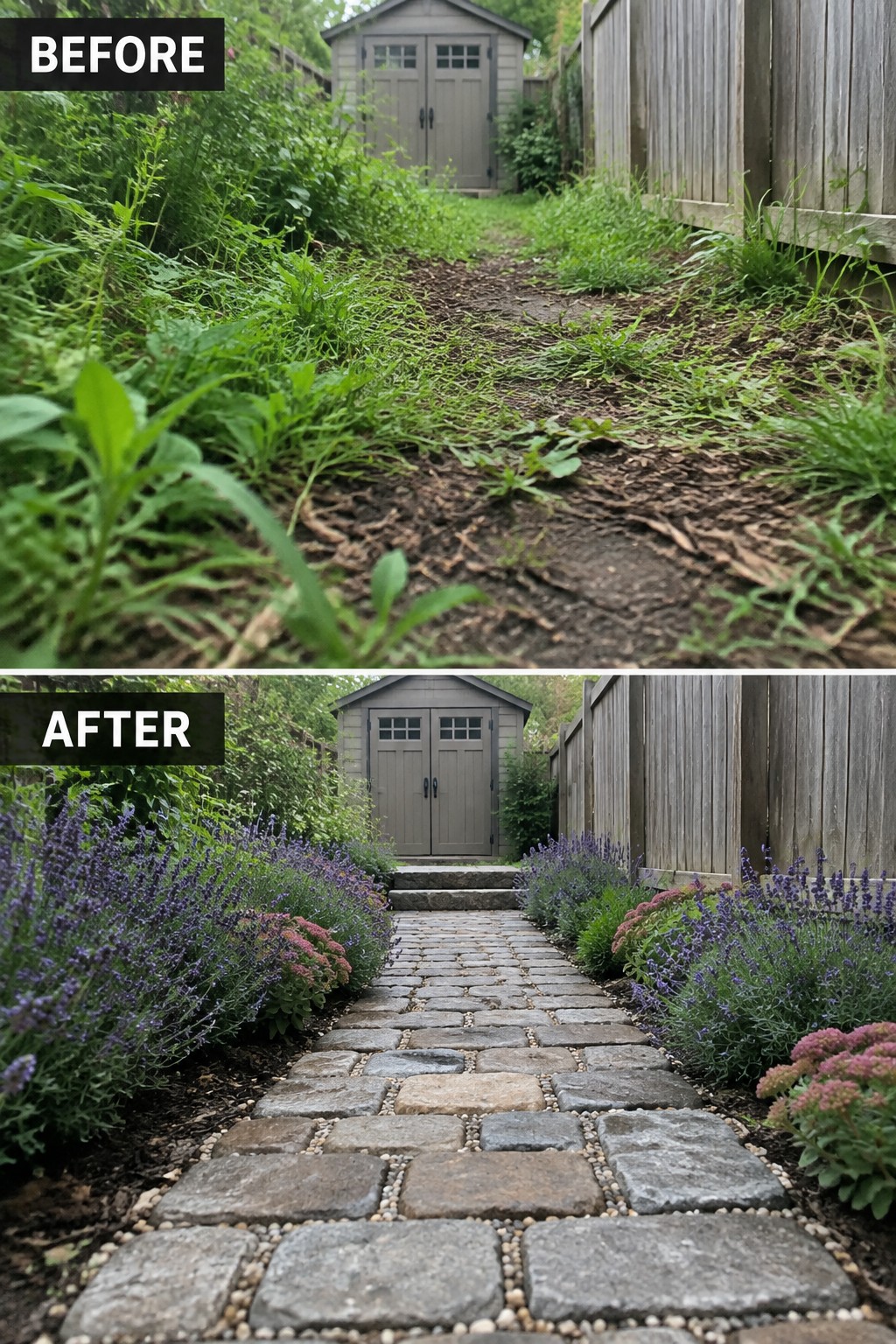
A clear path makes a big difference in an overgrown garden. The before photo shows a narrow dirt trail choked with weeds and grass. Adding stone pavers turns the same space into a solid walkway that feels planned and easy to follow.
This idea works best in side yards or narrow garden corridors where you need a practical route without losing planting space. Clear the overgrowth first, then lay pavers wide enough for comfortable walking and add low plants along the edges to frame the path without blocking it.
Create A Grid Path With Stepping Pavers And Grass

A worn trail through the lawn often turns into a muddy strip that makes the whole yard look neglected. Laying down a grid of stepping pavers solves the problem by giving you a solid walking surface while still letting grass grow between the stones.
This idea works best in backyards where you need a clear route from the house to the back fence or garden. Keep the pattern simple, space the pavers evenly, and add a few low lights along the edges if you want the path usable in the evening. The grass will fill in around the stones and keep the look natural.
Update A Tired Brick Path With Stone Pavers

An old brick path often ends up covered in moss and looking worn after years of use. Replacing it with large irregular stone pavers gives the walkway a cleaner shape and cuts down on the constant cleaning that brick requires.
This change works best along the front of a house where the path needs to stay level and easy to walk on. Remove the old bricks first, then set the new pavers on a solid base so they hold up through rain and foot traffic without shifting.
Define A Garden Path Using Gravel And Stepping Stones

A loose sandy path gets slippery and hard to maintain once foot traffic increases. Adding a layer of gravel with large stepping stones set into it creates a firm walking surface that stays in place and keeps the route clear.
This idea works best in coastal or sandy yards where you need good drainage without installing full paving. Space the stones at a natural stride length and let the gravel settle around them so the path blends with the surrounding plants.
Define A Gravel Path With Stepping Pavers

A loose gravel path can start to feel shapeless over time, especially when it runs alongside a lawn and garden beds. Laying down a line of large stepping pavers gives the walkway a clear direction and makes it much easier to use after dark once simple lights are added along the sides.
This idea works best in side yards or back gardens where you want to keep the casual look of gravel but need better footing and a stronger visual line. Lay the pavers first in a straight or gently curving row, then add low plants along the edges so the path feels settled rather than bare.
Restore A Mossy Garden Path With Larger Pavers And Gravel

The old path had stones nearly hidden under moss and weeds, which made it look neglected and hard to walk on. Replacing the surface with larger pavers set in a clear line and adding gravel along the edges gave the walkway shape and kept the low plants from taking over completely.
This works best in shaded gardens where grass or moss spreads fast. Clear the overgrowth first, then set the pavers so there is room to step comfortably and fill the gaps with gravel to hold the soil in place. The same idea helps any narrow path that needs to stay practical without looking too formal.
Upgrade A Narrow Side Yard Path With Concrete Pavers And Gravel

A bare dirt walkway along the side of a house often feels unfinished and hard to keep clean. Adding a row of concrete stepping pavers set in gravel gives the space clear direction and makes it easier to walk through without tracking mud. The simple gabion wall planted with succulents adds a planted edge that keeps the path from feeling like an afterthought.
This approach works well in tight side yards where there is little room for wide beds or large features. Start by laying out the pavers to set the route, then fill around them with gravel for drainage and a finished look. Keep the planting low and simple so the path stays usable and does not feel crowded.
Tame A Steep Slope With Stone Steps And Retaining Walls

A bare dirt path on a steep hill often turns into a muddy slide after rain. Adding a series of wide stone steps held by low retaining walls gives the slope real structure and makes it safe to walk. The gravel between the steps also helps with drainage so water does not wash everything away.
This approach works well on any yard that drops sharply from the house or deck. Start by setting the walls level and backfilling properly so the steps stay solid over time. Once the hardscape is in place, simple plantings along the edges soften the look without crowding the path.
Replace A Solid Concrete Path With Stepping Stones
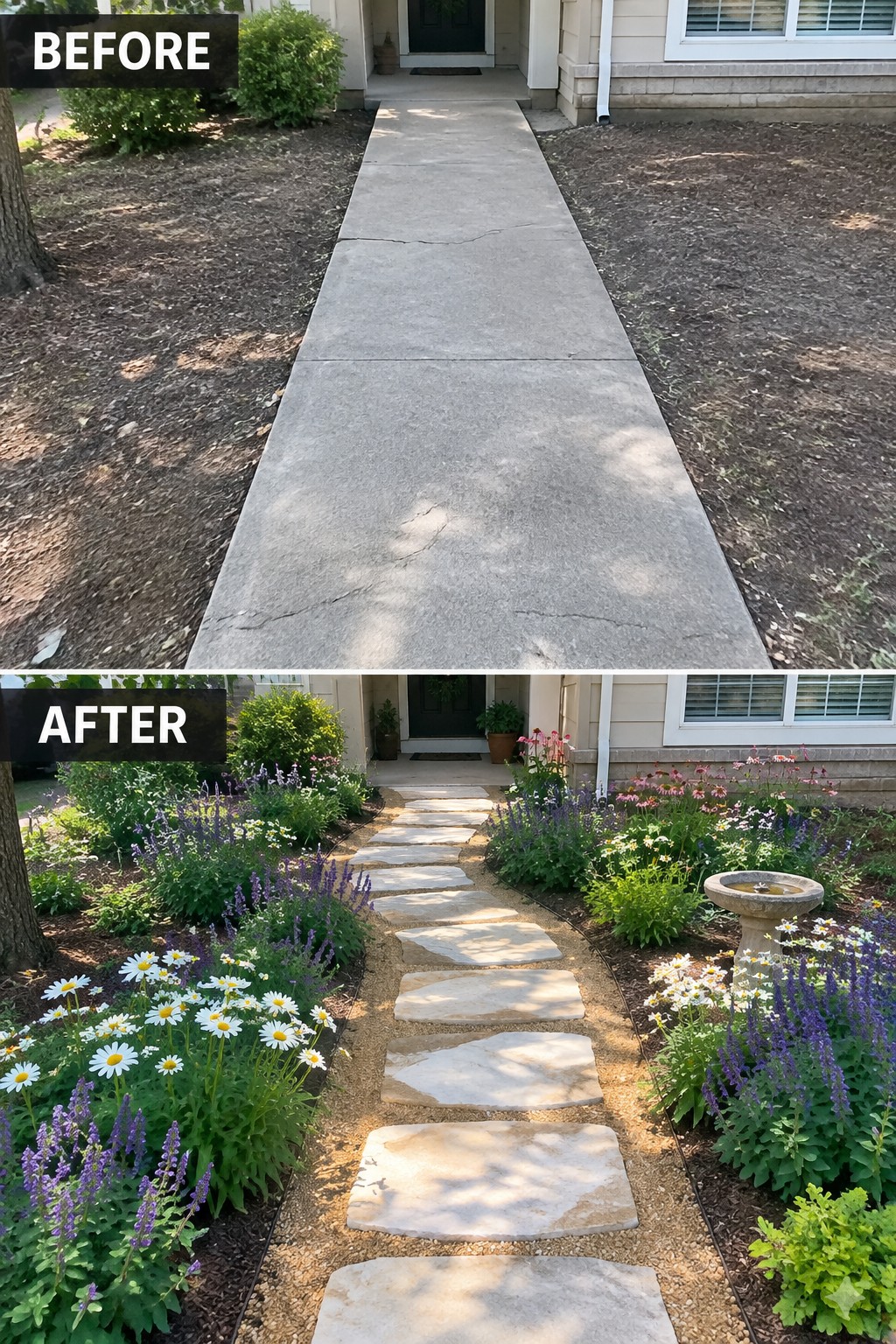
A long concrete walkway often looks stark and cuts a yard in half. Replacing it with stepping stones set in gravel lets the garden come right up to the path and gives the whole front a softer shape. The straight slab is gone and the new stones sit lower so the beds on either side feel connected instead of separate.
This idea works best on straight front walks or side paths where you still need a clear route but want less hard surface. Start by removing the old concrete, lay a gravel base for drainage, and choose stones large enough to walk on comfortably. Keep the planting beds wide and repeat a few plant types so the path feels like it belongs in the garden rather than running through it.
Use Stepping Stones To Shape A Simple Lawn Path
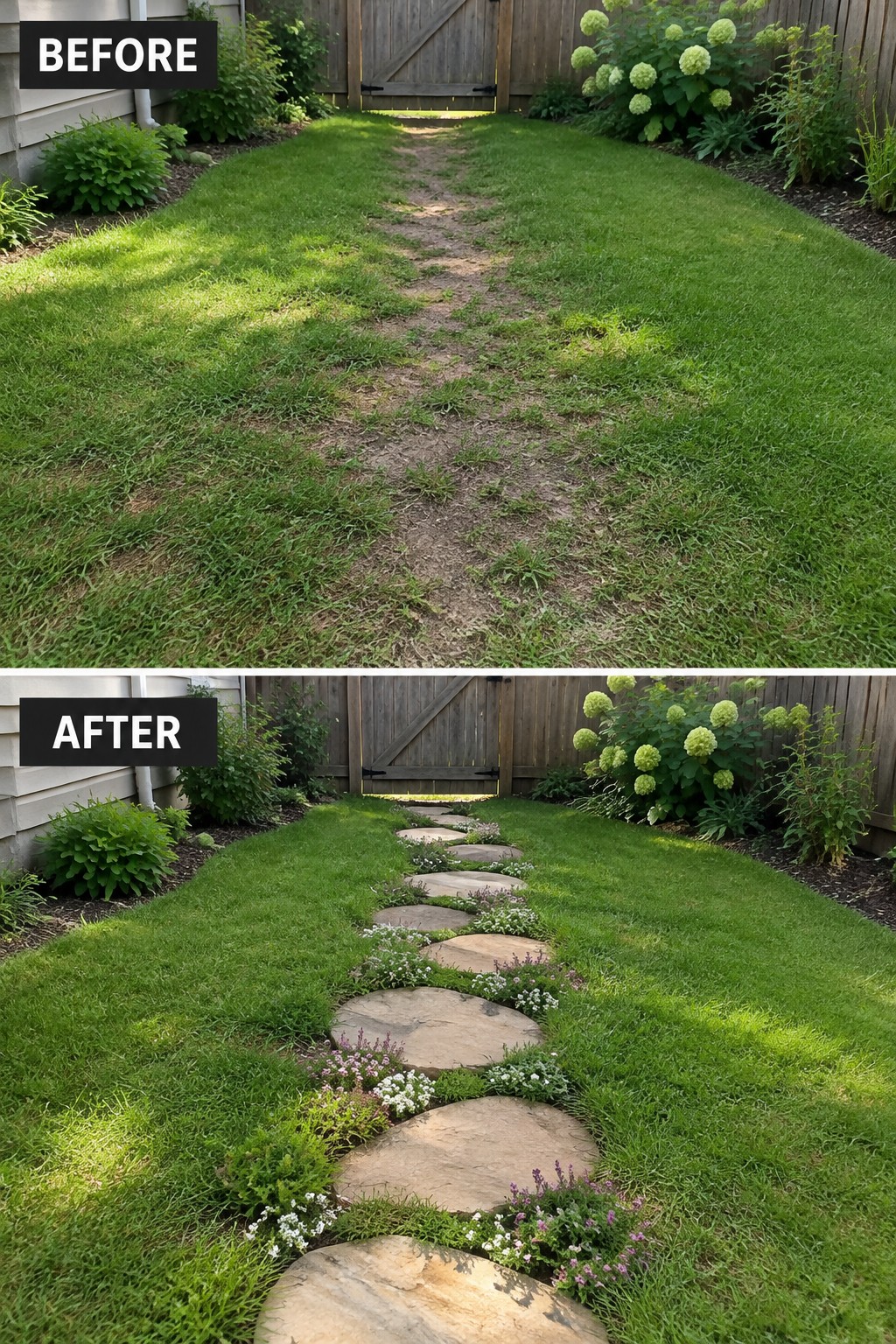
A worn dirt track through the grass makes the yard feel neglected even when the rest of the space is fine. Placing stepping stones gives the path a clear route and stops the lawn from getting trampled into mud.
This approach suits narrow side yards or back gardens where a full walkway would take up too much space. Set the stones at a natural stride, then plant low flowers or ground cover along the edges to soften the look and keep the grass from creeping back in.
Replace Scattered Stepping Stones With A Continuous Paver Path

A path that disappears under weeds quickly feels neglected. The change here comes from replacing scattered stepping stones with a continuous run of large pavers set in a straight line, then adding gravel along both edges to hold the soil back and keep the walkway clear.
This idea suits narrow side yards where grass and plants tend to creep in. Clear the growth first, then set the pavers on a compacted base so the path stays level and water drains away from the house.
Define Your Garden Path With Stepping Stones And Pebbles

A simple mulch path can leave the yard feeling unfinished and hard to walk through after rain. Switching to large stepping stones set in a bed of smaller pebbles gives the route a clear shape and makes it much more practical for daily use.
This approach works best in backyards where you already have planting beds on either side and just need a better way to move through them. Lay the stones first to set the curve, then fill around them with gravel or pebbles so the edges stay neat and the path stays dry underfoot.
Add Gravel Borders To A Stepping Stone Garden Path

The original path had lost its shape as grass crept over the edges and made the walkway feel narrow and unkempt. Replacing the middle section with stepping stones and adding gravel on both sides gave the path clear boundaries and made it look more intentional.
This idea works best in narrow side yards or along the back of a house where a full concrete pour is not practical. Cut the grass back first, lay a simple gravel border, and add a few low lanterns so the path stays easy to follow at night.
Use Brick Pavers To Give A Garden Path Clear Shape

A loose gravel path often ends up looking untidy once weeds move in and the edges disappear. Laying brick pavers in a simple herringbone pattern solves that by giving the walkway a solid edge and a surface that stays clean. The change turns a weedy route into something that feels planned and easy to walk on every day.
This idea suits homes with narrow side paths or front approaches where you want structure without a big budget. Clear the old gravel first, add a firm base, and keep border plants low so the pavers stay visible. It works especially well in sunny climates where brick holds up to heat and foot traffic.
Create A Raked Gravel Path With Stepping Pavers

The path went from a weedy dirt strip with loose stones to a clean gravel walkway that feels planned and easy to follow. Adding gravel around the stones and raking simple patterns gives the whole area shape without covering everything in solid paving.
This works best in narrow side yards or back gardens where you want a clear route but still need drainage. Start by clearing the weeds, then lay gravel a few inches deep so the stones sit level and stay in place. It keeps the path practical and cuts down on mud after rain.
Define A Garden Path With Brick Pavers And Gravel

A simple dirt track can make the whole side of a house feel unfinished. Laying brick pavers down the center with gravel borders turns that loose path into a solid walkway that stays dry and keeps the garden beds from spilling over.
This idea works best next to older homes where the yard already has raised beds or fencing. Lay a compacted base first so the bricks stay level, then keep the gravel strip narrow enough that it still feels like part of the path rather than a separate feature.
Build A Concrete Paver Side Path With Gravel Gaps

A bare dirt path between fences often stays muddy and uneven. Laying concrete stepping pavers with gravel on both sides gives the space a firm surface and clear edges so it stays usable year round.
This idea works best in narrow side yards where space is tight. Keep the pavers centered, use gravel to fill the gaps, and add a few large pots along the fence to soften the look without blocking the walkway.
Create A Defined Path With Gravel And Edging

An overgrown yard with scattered stepping stones can feel aimless. Switching to a gravel path held in place by simple metal edging gives the space a clear route and stops the weeds from creeping back in. The change also makes room for planted borders that stay neat instead of spilling onto the walkway.
This idea works well in narrow side yards or back gardens where you want a low-maintenance surface that still feels intentional. Clear the area first, lay down edging to hold the gravel, and keep the planting simple with drought-tolerant choices like agaves and succulents so the path stays the main feature.
Reset Irregular Stepping Stones For A Smoother Path

An uneven stone path often feels more like an obstacle than a route through the garden. In this case the stones sat at different heights with wide gaps and scattered leaves. Resetting them into a tighter layout and filling the joints created a solid surface that is much easier to walk on.
This approach works well on side paths or secondary routes where a full patio would feel too formal. Start by pulling up the stones, leveling the base, and setting them back with consistent spacing. Add low planting along the edges to keep the path from looking bare and to stop soil from washing onto the stones.
Use Pavers To Replace A Muddy Yard Path

A muddy path quickly turns a backyard into a mess, especially when it runs right beside a deck and play area. Switching to pavers gives you a solid, dry walkway that stays clean and keeps the rest of the yard from getting tracked up.
This idea works best in yards that stay wet or see regular foot traffic. Lay a solid base first, keep the path narrow enough to leave room for grass or planting on both sides, and choose pavers that match the look of nearby structures like decks or fences.
Create A Gravel Border Walkway Along A Driveway

A ragged strip of dirt next to a driveway rarely looks intentional. Adding a line of stepping stones set in gravel gives the edge a clear purpose and keeps the lawn from creeping onto the asphalt. The plants then fill in along the inner side and turn the whole strip into a planted border instead of an afterthought.
This layout works best on narrow side strips where you still need to walk or mow around the edge. Lay a solid gravel base first so the stones stay level over time, and keep the planting bed only as wide as you can reach from one side. The result is a path that feels planned without crowding the lawn or the drive.
Restore An Overgrown Garden Walkway With Turf And Gravel
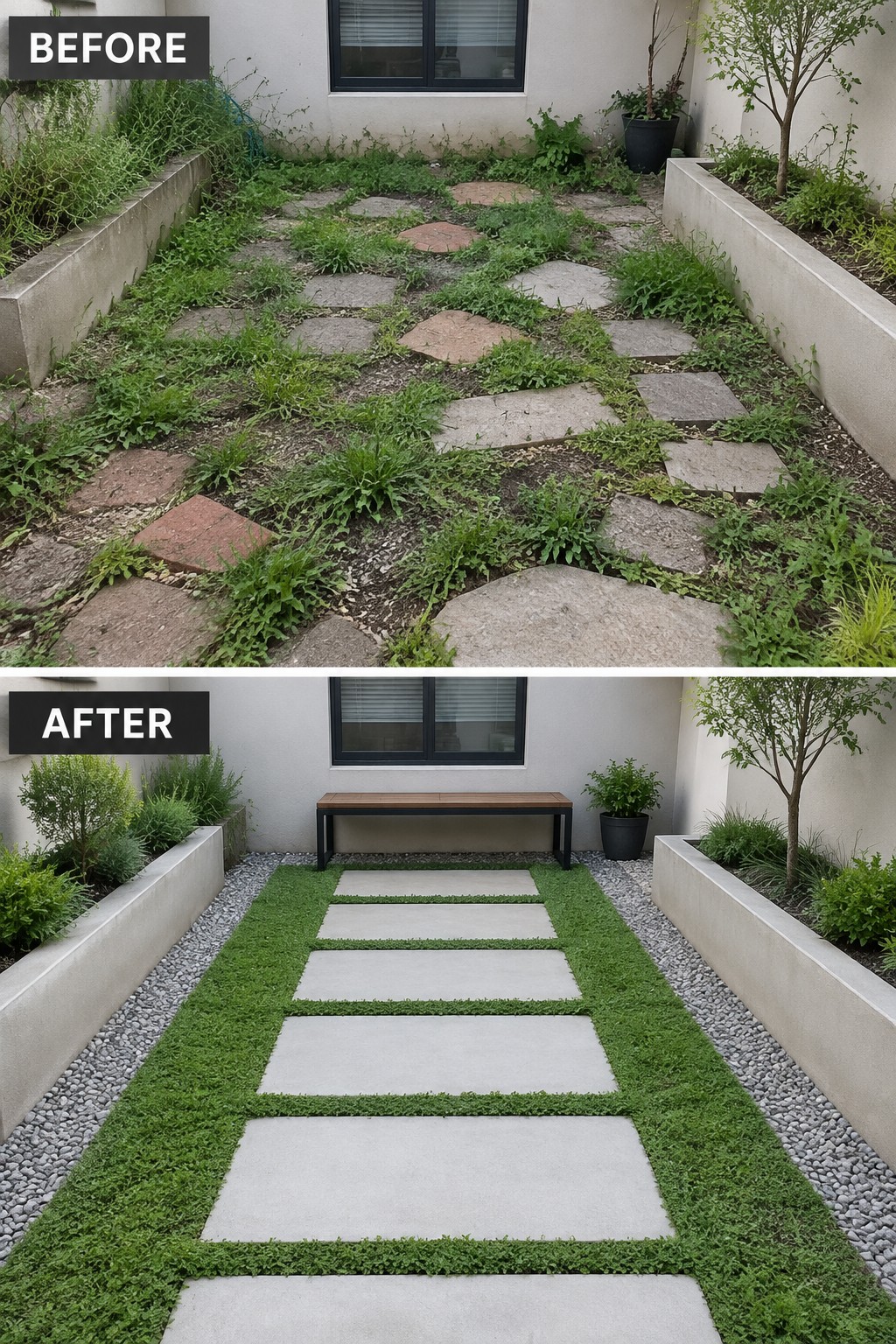
An overgrown path quickly makes a small yard feel neglected and hard to use. Replacing the weeds and uneven stones with a straight row of pavers, narrow strips of turf, and gravel borders brings order without needing a full redesign. The result is a clear walkway that stays dry and easy to maintain.
This approach works best in narrow side yards or back gardens where space is limited. Remove the worst of the growth first, then lay pavers on a simple base and fill the gaps with turf or gravel. Keep the planting beds along the edges simple so the path remains the main feature.
Frequently Asked Questions
Q: How do I keep weeds from growing between my stepping stones?
A: Lay down a good layer of landscape fabric first. Then add your gravel or stones on top. This blocks most weeds while still letting water drain through.
Q: What if my yard slopes and I want a gravel path?
A: Start by terracing the path with retaining edges. This keeps the gravel from washing downhill. You can also mix in larger stepping pavers for better footing on the slope.
Q: Do gravel paths need much upkeep over the years?
A: Rake the surface every few months to even it out. Add more gravel when it starts to thin in spots. That is usually all it takes to keep things looking fresh.
