


Garden sheds tend to collect clutter when they lack a clear purpose from the start.
Setting up dedicated zones for potting or tool care helps them serve the garden instead of sitting empty.
Layout comes first.
With the right surfaces and storage the shed becomes part of the daily gardening flow rather than an afterthought.
I would test a basic workbench addition before worrying about paint or decor since function usually draws me outside more often.
Turn A Cluttered Shed Into A Functional Garden Station
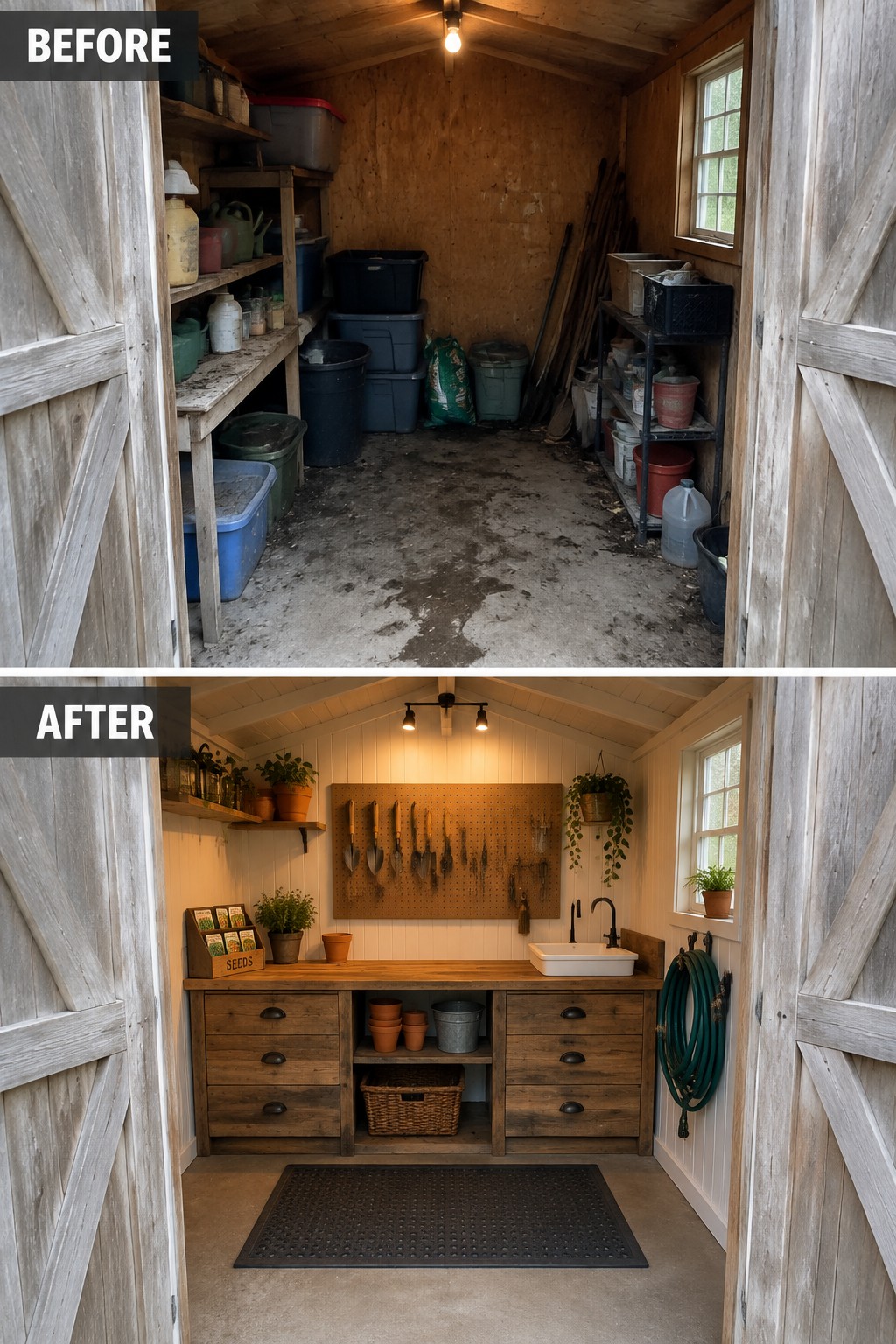
A shed often ends up as extra storage until it becomes hard to use. Clearing the floor and adding a proper workbench with drawers underneath gives the space a clear job. A pegboard on the wall keeps tools visible and off the counter, which makes the whole area feel much more practical.
This kind of setup works best in a shed that already has decent walls and a bit of floor space. Focus first on creating a sturdy work surface and some closed storage so small items do not scatter. Add a simple overhead light and keep the center open so you can move around without tripping over pots or bags.
Organize Tools With Wall Storage And Labeled Bins
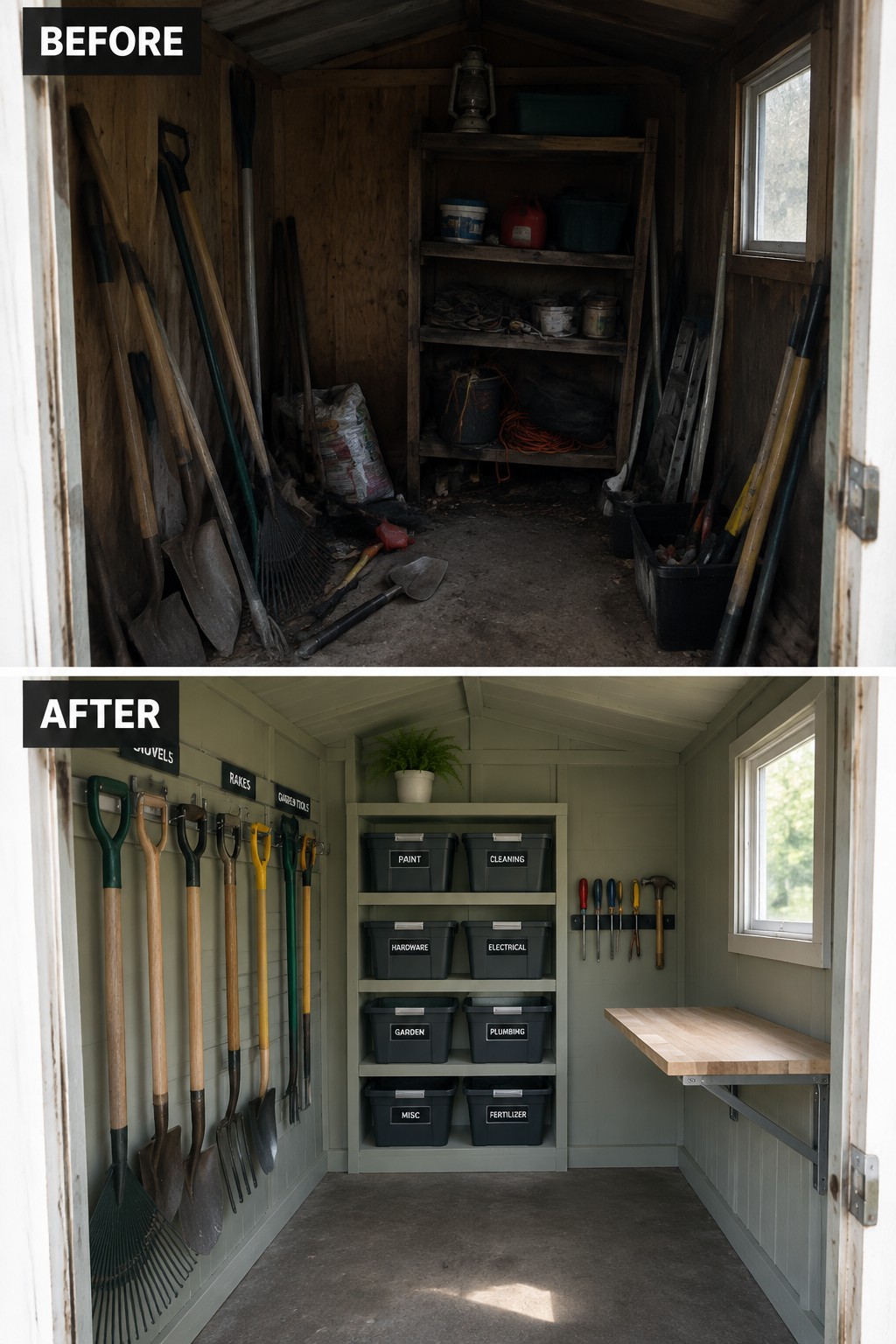
A cluttered shed makes it hard to find anything when you need it. In this case, the before photo shows tools leaning in every corner and supplies piled on shelves with no clear system. The after version hangs long-handled tools on the wall in groups and places smaller items in labeled bins on open shelves. That single change turns the space from a storage problem into a working station where everything has a spot.
This approach works well in any small shed or garage where floor space is limited. Start by clearing the floor, then add simple wall hooks or racks sized for your most-used tools. Group the rest into bins by task, such as garden, hardware, or cleaning supplies, and label them so others in the household can put things back. The setup stays practical as long as you leave enough open floor area to move around.
Turn An Empty Shed Into A Working Garden Station
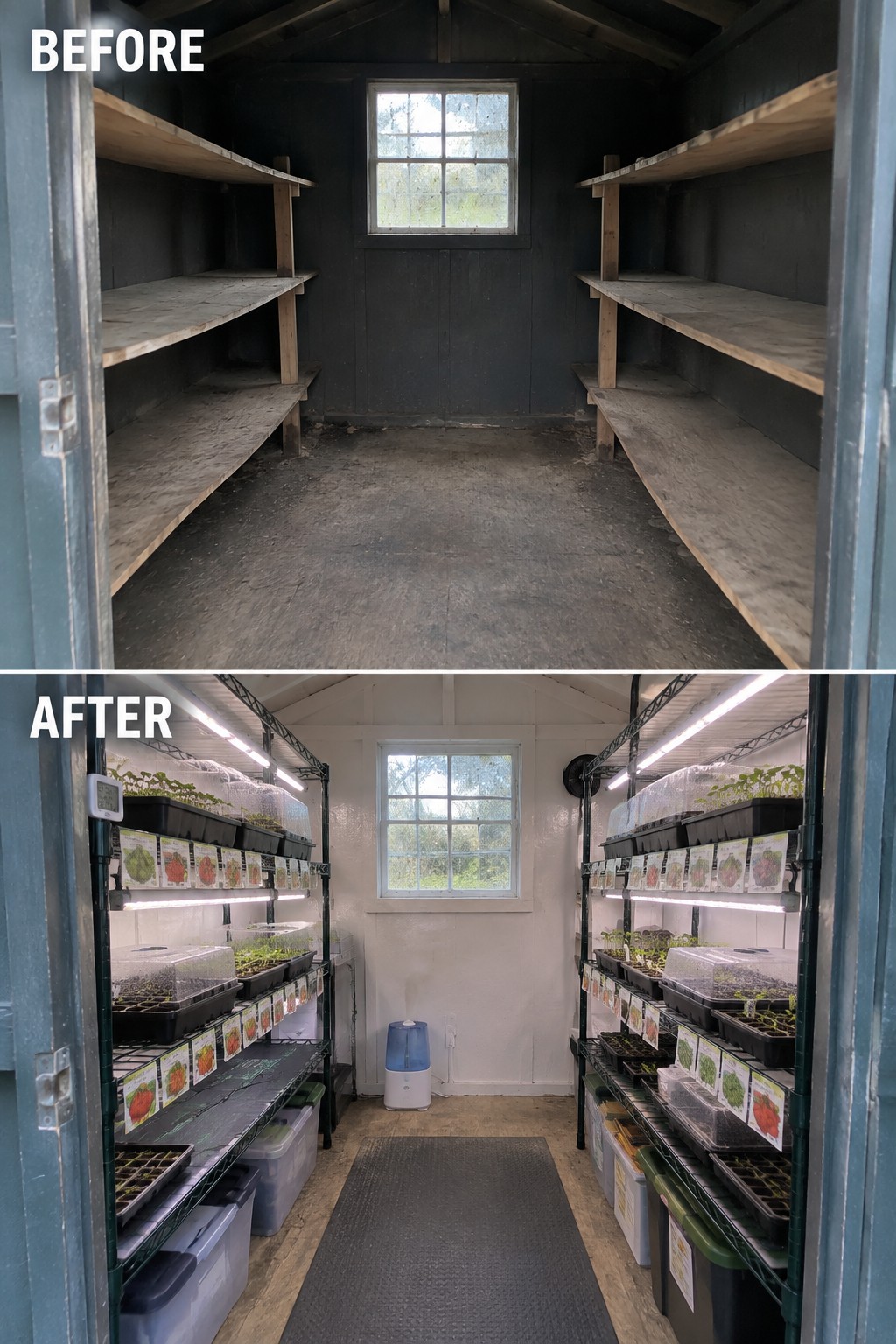
An empty shed often stays unused because it feels too basic for anything beyond basic storage. Here the space shifted from bare shelves and a dirty floor to a dedicated spot for starting seedlings. The main additions were overhead grow lights on every level and sturdy shelving that holds trays without wasting space.
This setup suits anyone who wants to start plants early or keep seedlings organized in a small yard. Start with lighting that actually covers the shelves and bins that keep soil and supplies contained. A simple floor mat also helps when you are moving trays in and out during the season.
Turn An Empty Shed Into A Herb Station
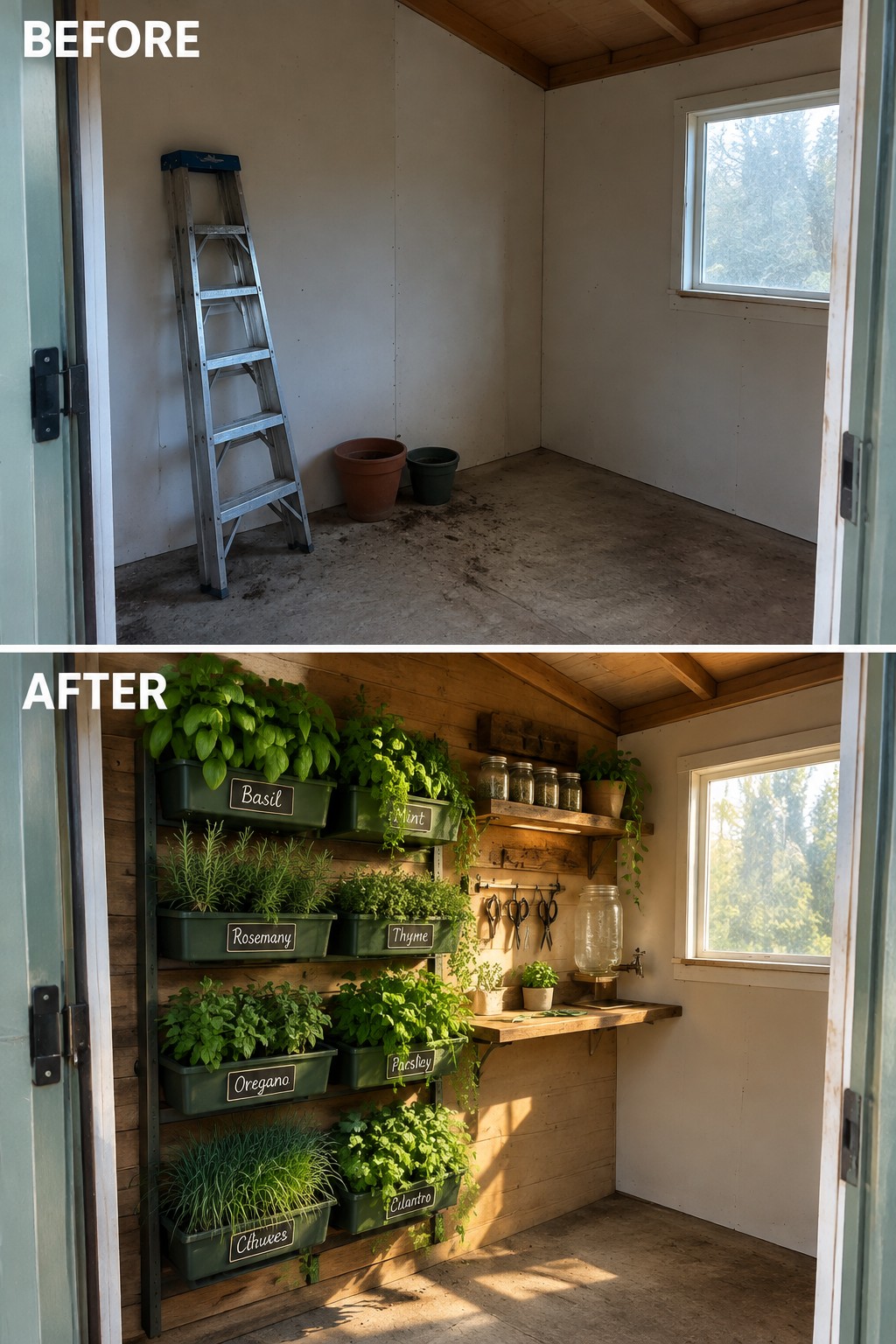
A plain garden shed often ends up as storage for tools and random pots, but the walls can do more work. Adding a vertical rack with labeled planters turns the same space into a place where herbs grow in reach and stay organized. The before version had nothing on the walls and just a ladder leaning in the corner. The after version uses one wall for rows of containers and a simple shelf for tools and jars.
This idea suits anyone who grows herbs often and has a small shed with decent light. Mount a rack on the strongest wall first, pick containers that drain well, and keep labels clear so you can find what you need quickly. It works best when you limit the number of plants to what you actually use and leave floor space open for moving around.
Turn A Basic Shed Into A Functional Garden Station
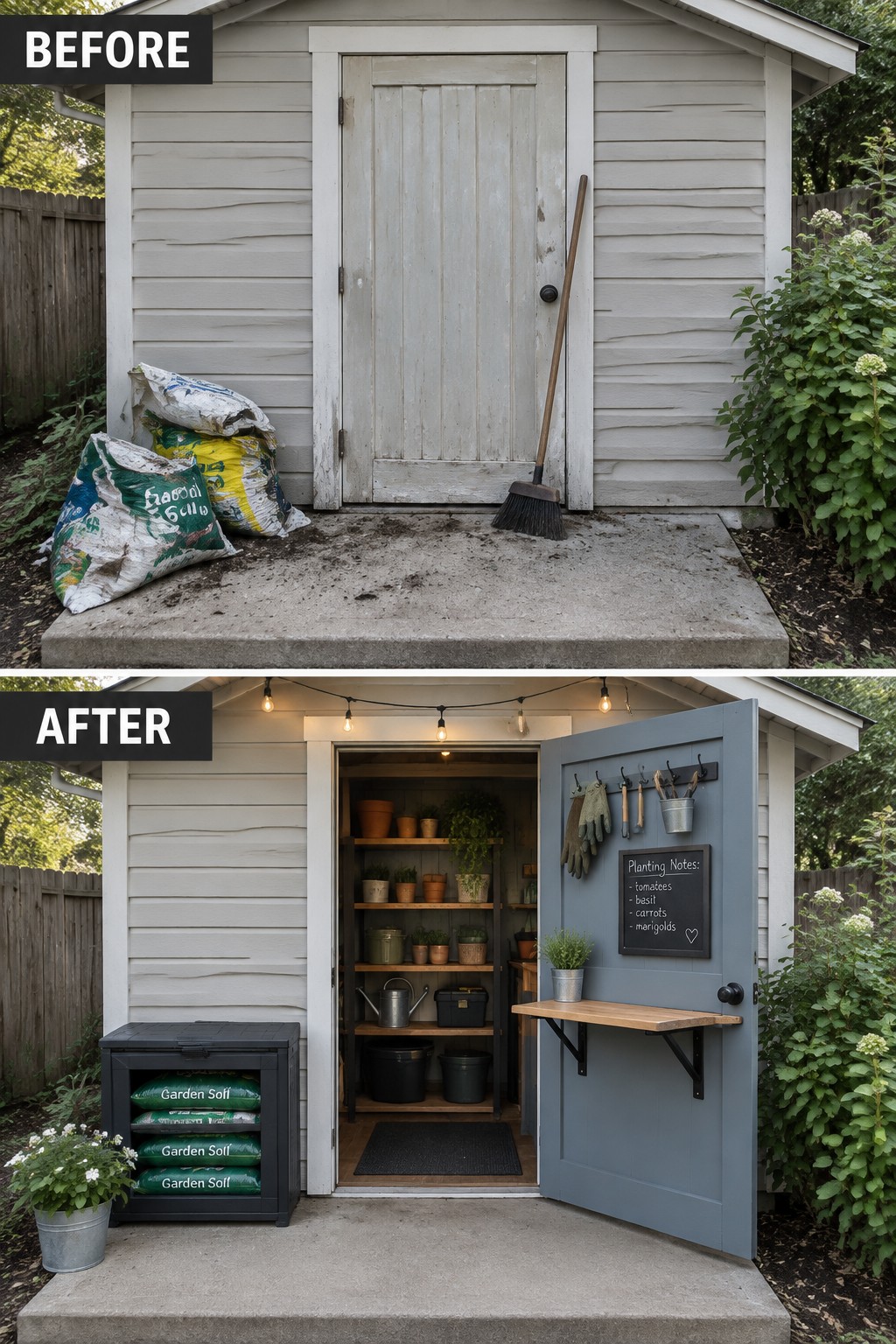
The real change here comes from giving the shed a job instead of leaving it as empty storage. Open shelving inside keeps pots and supplies visible and easy to reach, while the door holds tools and a small fold-down table that creates a workspace without eating up floor space.
This approach suits small yards where the shed needs to pull double duty. Clean up the area first, add basic shelves, and use the door for hanging storage so the shed stays useful without feeling crowded.
Create A Compost And Potting Station With Organized Storage
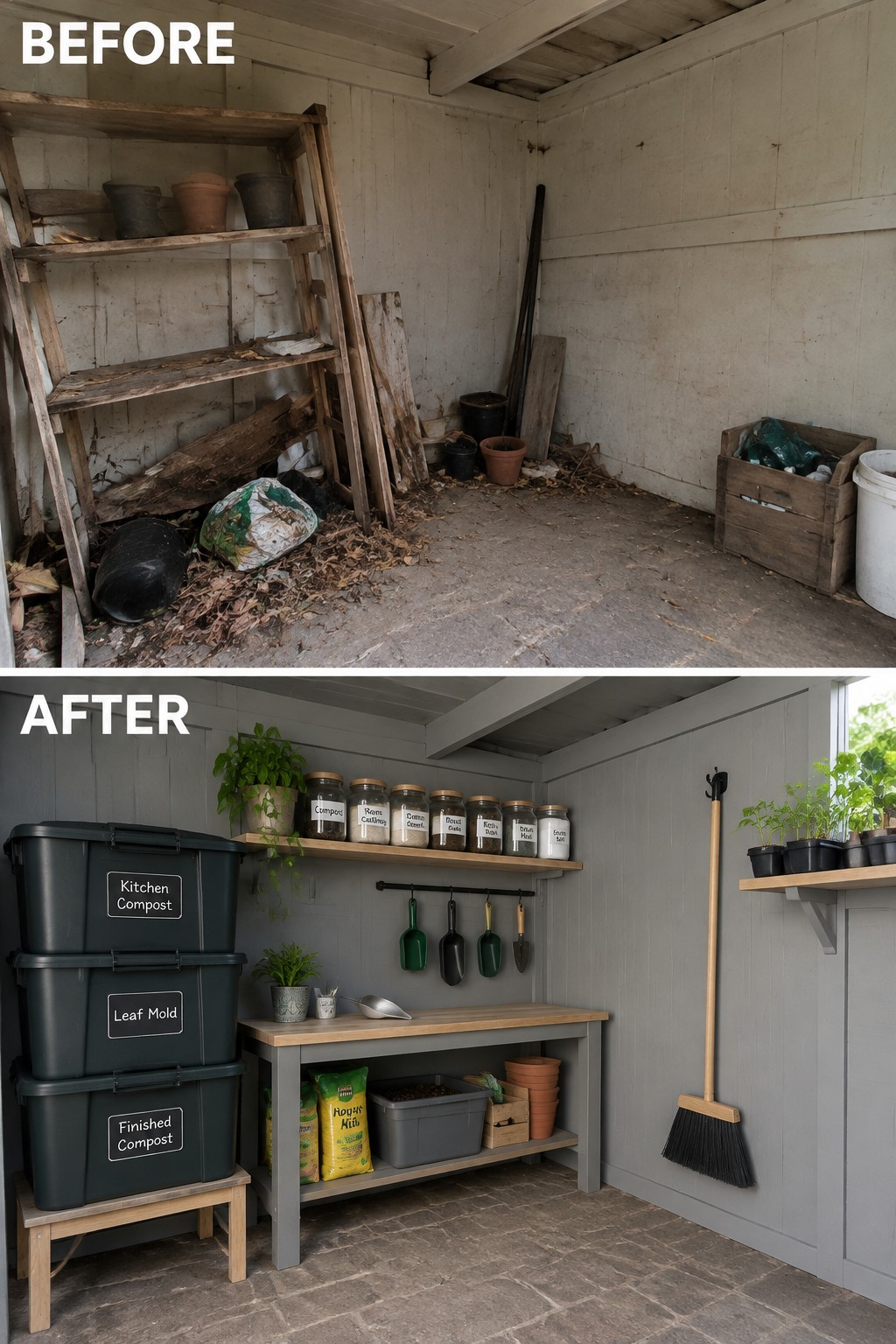
Many sheds end up as catch-all spaces where old pots and bags of soil get tossed around. Clearing the floor and adding stackable labeled bins for kitchen compost, leaf mold, and finished compost made this shed usable again. A low workbench with open storage underneath and a few wall hooks for tools gave everything a place without crowding the small space.
This setup works best when you keep the floor clear and group similar items together. Use bins that stack neatly, add a simple shelf for seed jars, and hang the tools you reach for most often. The goal is quick access rather than a perfect display.
Turn An Empty Shed Into A Functional Garden Station

An unused shed often stays dark and cluttered because it lacks any real purpose. Adding a skylight, a simple workbench, and organized storage turns the same space into a place where you can start seedlings, keep tools handy, and work without hauling everything outside.
This approach works best in small or medium sheds that already have basic structure. Focus first on light and a clear work surface, then add trays, labels, and weatherproof bins so the setup stays practical rather than decorative.
Create A Seed Sorting And Planting Station With Storage Bins
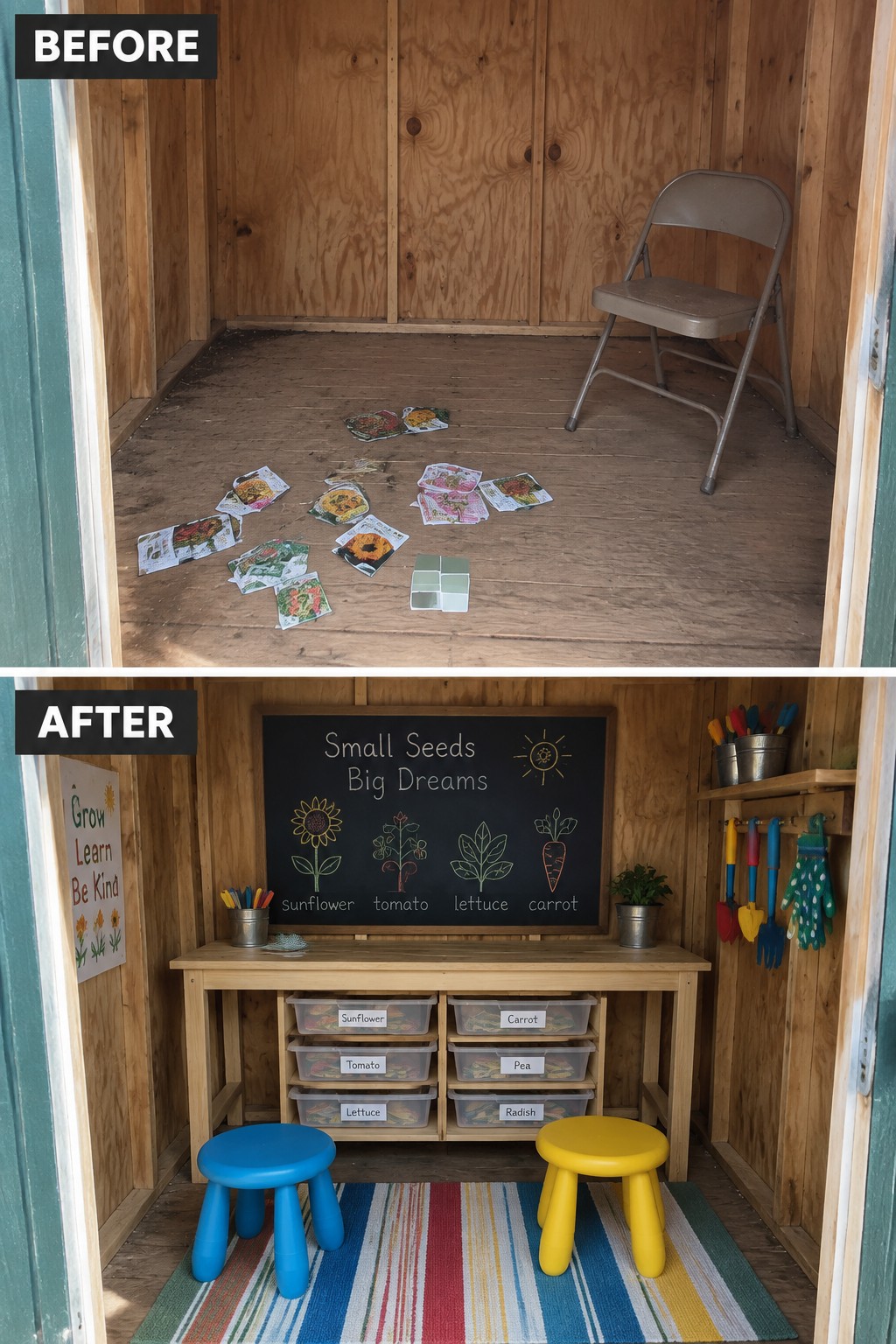
An empty shed usually collects clutter because it has no real purpose. Adding a simple table with stackable bins underneath gives the space a clear job as a seed sorting and planting station. The labeled bins keep everything visible and easy to reach, while a couple of low stools make the area usable for kids or quick tasks.
This works best in sheds that already have decent light and ventilation. Start with a sturdy table sized to the floor space, then add bins that match what you actually store. It suits anyone who wants to keep garden supplies in one spot instead of scattered across the yard or garage.
Turn A Muddy Shed Corner Into A Working Garden Station
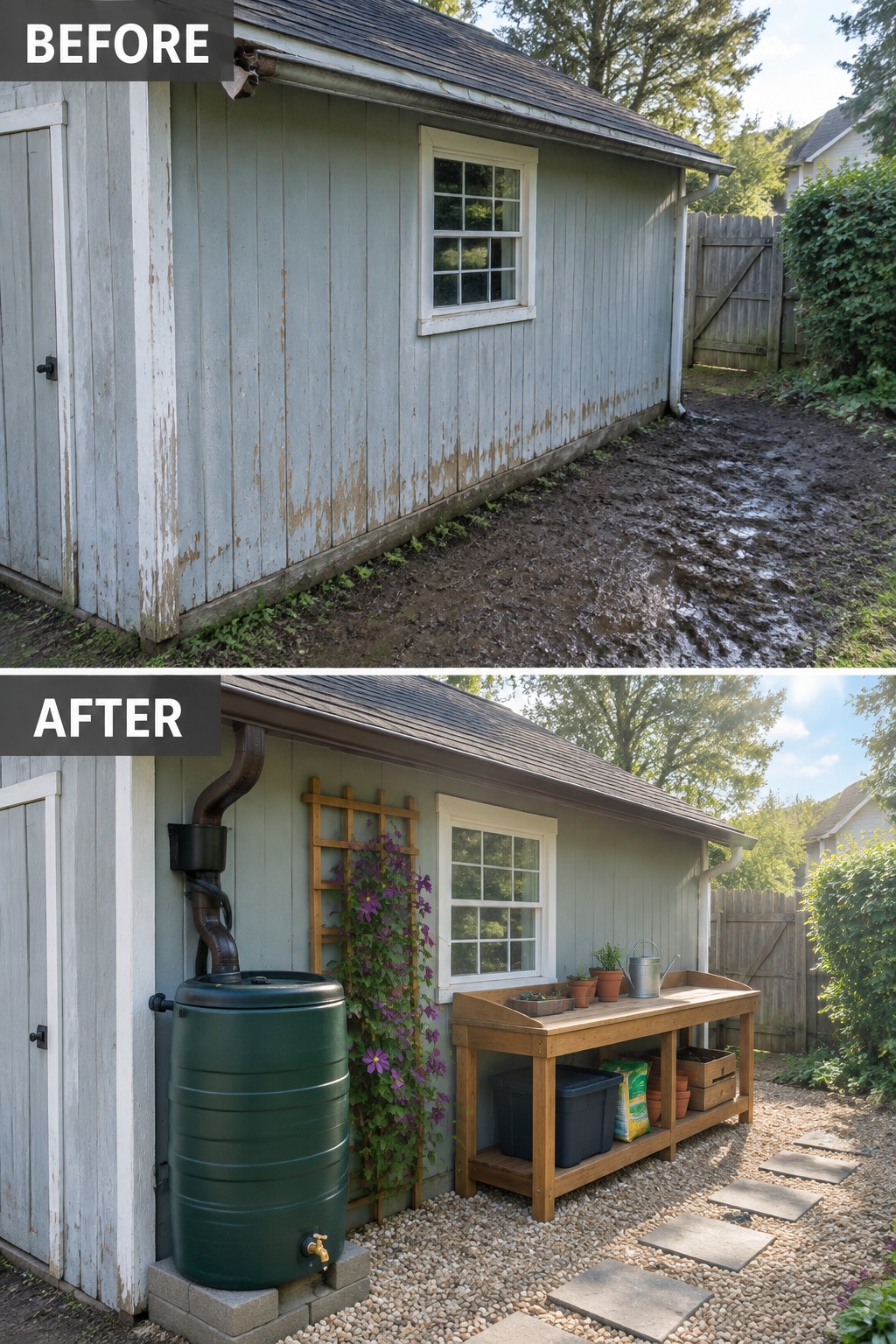
Adding a rain barrel and a potting bench turns an awkward wet spot beside a shed into a place you can actually use. The before photo shows bare siding and a muddy path, while the after adds a barrel to catch roof water and a simple bench that keeps tools and pots off the ground.
This idea works well on any shed with a downspout you can reroute. Place the bench at standing height, keep the surface clear for daily tasks, and lay gravel or stepping stones so the area stays usable after rain. It suits small yards that need both storage and a spot to pot plants without building extra structures.
Add Lighting To Make A Garden Shed Functional At Night
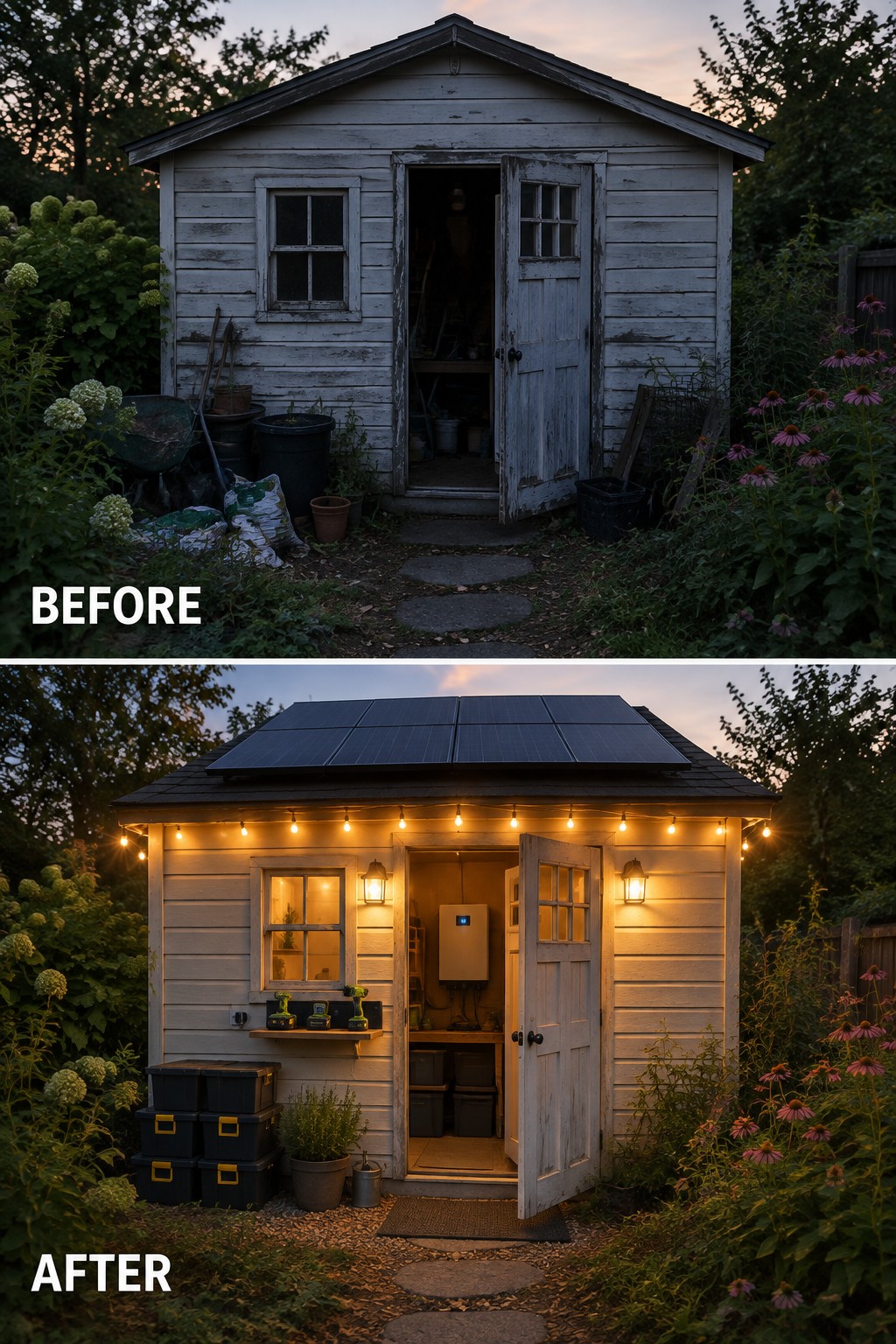
Many garden sheds end up dark and unused once the sun drops. A few well-placed lights and a solar panel array on the roof can change that without much wiring. The before photo shows an open shed with clutter around the entrance and no clear way to work once it gets dark. The after version adds string lights along the eaves and wall sconces that make the inside visible and welcoming.
This idea suits sheds that already have solid walls and a roof but lack purpose after dark. Clean up the area first, then add weatherproof string lights and one or two solar fixtures near the door. Keep the scale small so the lights do not overwhelm the garden or shine into neighboring windows.
Build A Workbench To Create A Garden Station
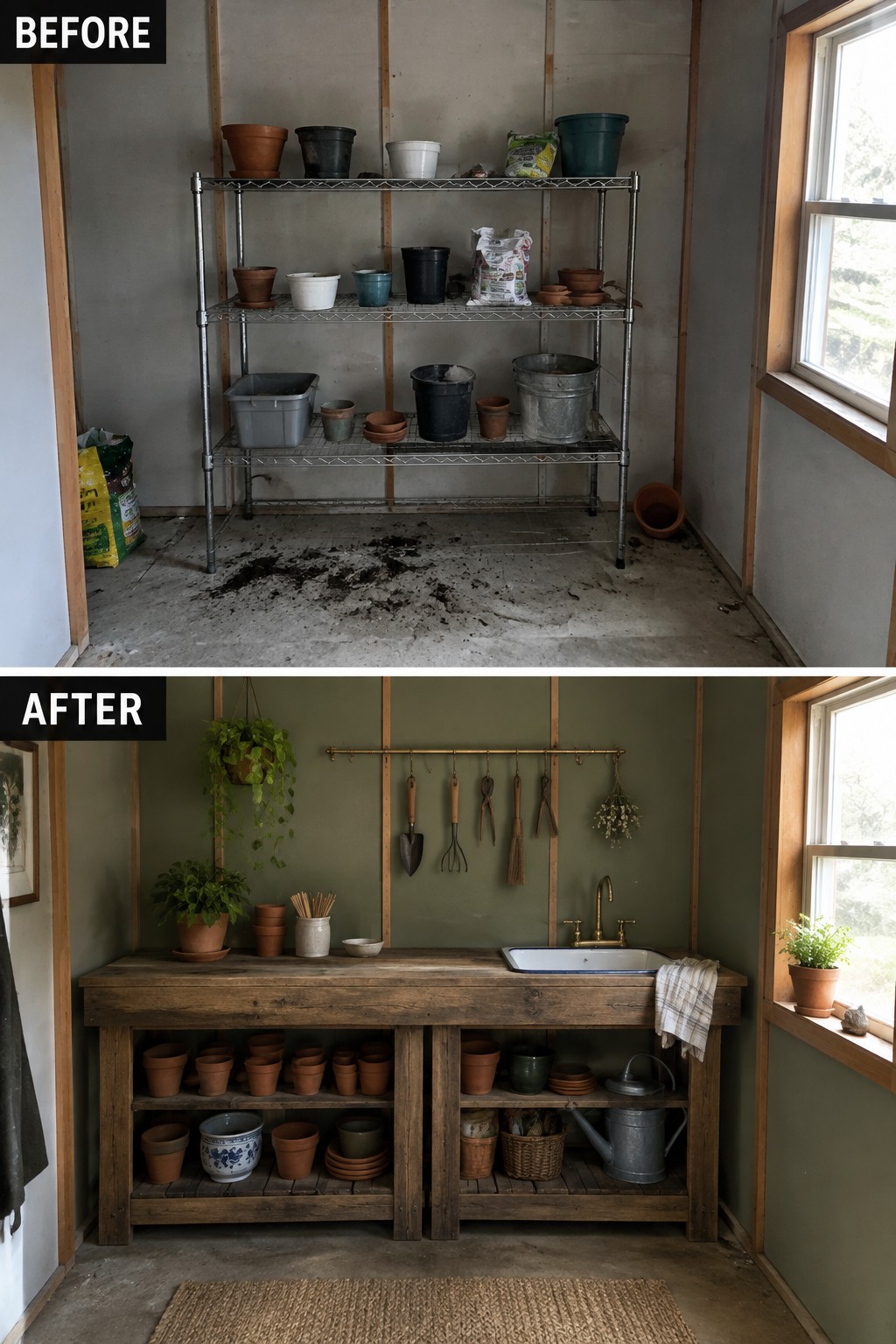
Replacing loose metal shelves and a bare concrete floor with a sturdy wooden workbench changes how the space works. The bench adds a real work surface, hidden storage underneath, and a sink right where you need it, so potting and cleanup happen in one spot instead of across the whole shed.
This approach suits any small outbuilding that gets used for gardening. Start with the bench and sink as the main pieces, then hang tools on the wall above and keep extra pots on open lower shelves. The goal is to make the shed feel like a place you actually want to spend time in rather than just a storage corner.
Turn A Cluttered Workbench Into A Functional Seed Station

A messy potting bench makes any seed work harder than it needs to be. The before photo shows packets, trays, and loose supplies spread across the wood surface with no clear system. In the after photo, the same bench holds labeled glass jars, a wooden seed box, and a few key tools in one tidy row. The change turns a frustrating surface into a place where seeds stay visible and easy to measure.
This idea works well in any garden shed or potting area that has grown cluttered over time. Start by sorting seeds into clear jars with simple labels, then add one or two larger storage pieces for packets and supplies. Keep the rest of the bench clear so there is still room to work. The setup suits small sheds best when everything stays in scale with the space and gets used regularly.
Organize A Cluttered Workbench With Wall Storage
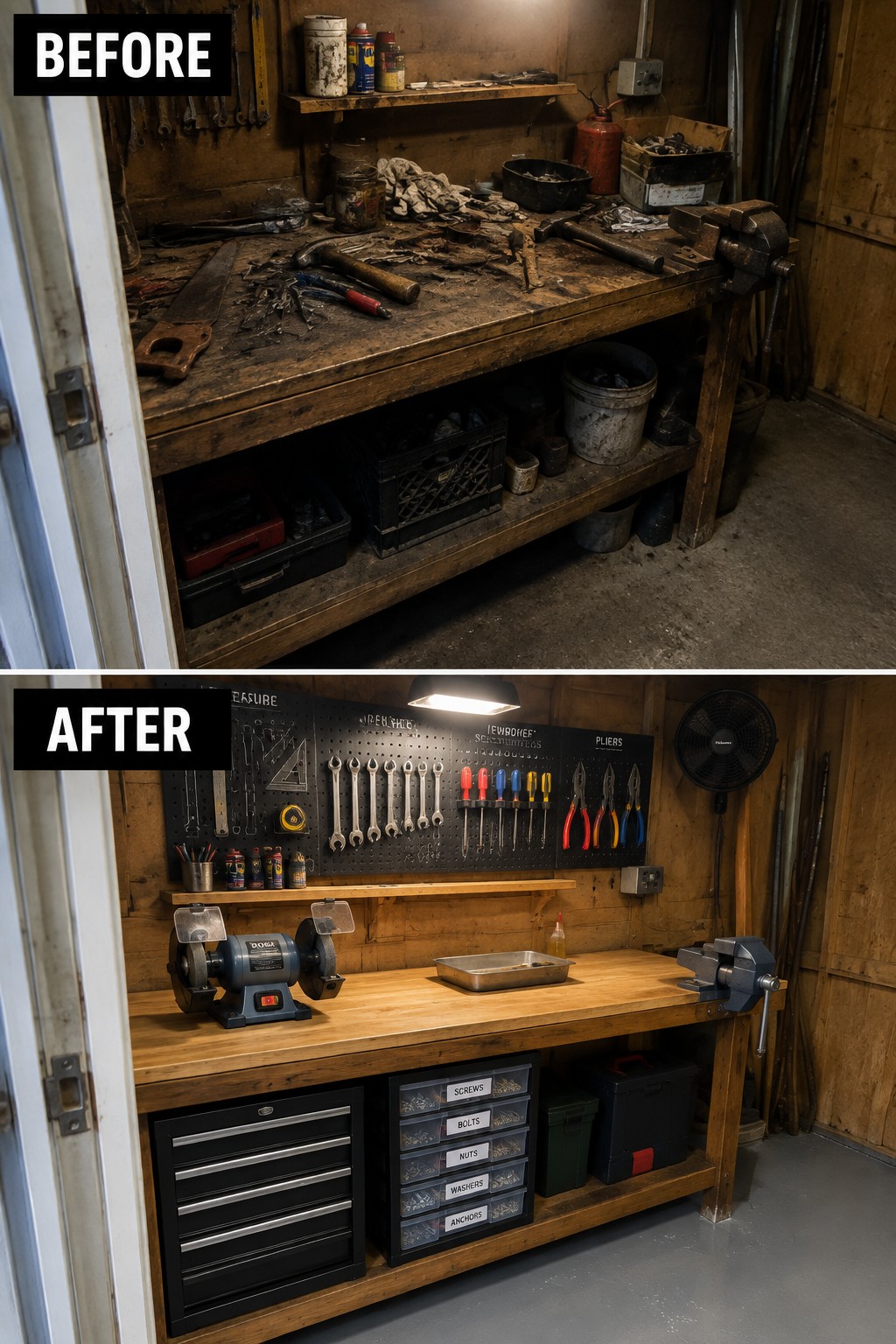
A messy workbench slows everything down because tools and parts end up scattered across the surface. This shed shows the difference clearly. Adding a pegboard above the bench and a row of labeled drawers below keeps tools visible and small hardware sorted so the work surface stays clear for actual projects.
This idea suits any garden shed or garage where space is tight. Sort your most used tools first and hang them on the pegboard at eye level. Use drawers or bins for screws, bolts, and other small items so you can find what you need without searching through boxes every time.
Organize A Small Space Into A Seed Library Station

A cluttered shelf quickly turns into something useful when you give it one clear job. In this case, the messy surface and lower cubby became a working seed library once the loose papers were cleared and everything was sorted into labeled bins. Wall signs added the finishing touch by telling people exactly what the station is for and how to use it.
This idea works well in entryways, mudrooms, or garden sheds where a small built-in already exists. Start with a thorough cleanup, then add simple dividers or trays so seeds stay sorted by type. A clipboard for sign-ups keeps the station active without needing much extra furniture.
Organize A Shed With Labeled Storage Bins
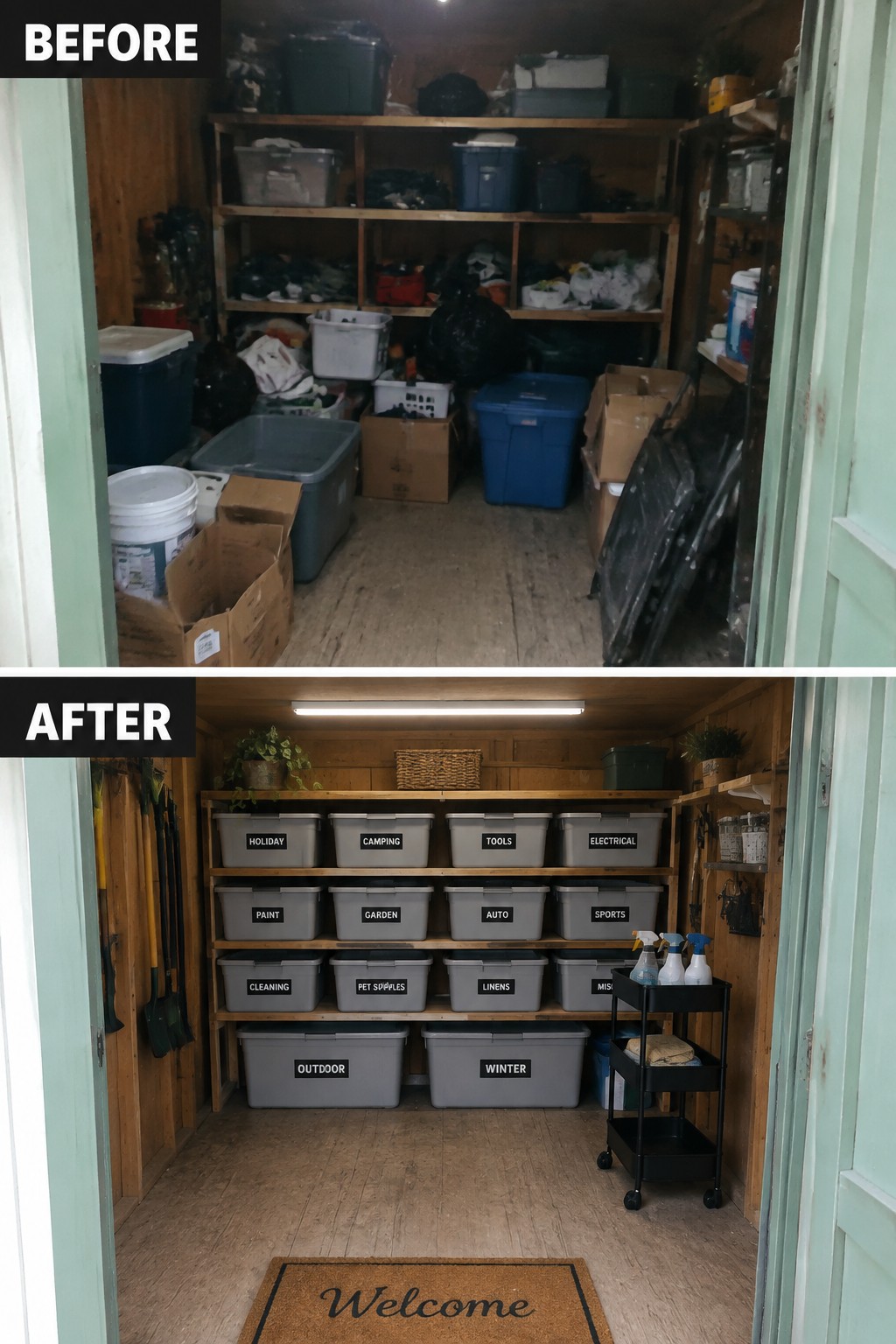
A cluttered shed quickly becomes the place where nothing stays found for long. The before photo shows the usual mix of loose boxes and piled bins that makes any search frustrating. After, open shelves hold matching gray bins with bold labels for each category. The change turns the space into something you can actually use without stepping over random items.
This approach suits any garden shed that holds tools, seasonal gear, or household overflow. Sort your things into groups first, then pick bins that fit the shelves you already have. Overhead lighting helps you read the labels, and a rolling cart keeps supplies handy when you need to pull a few bins at once.
Give An Old Shed A Fresh Coat Of Paint And A Clear Purpose

A tired garden shed often ends up as a dumping ground for tools and random items. In this case the fix started with a full cleanup followed by a warm exterior paint color, then string lights along the eaves and a small wall-mounted table to create an actual station. Those two changes alone shifted the shed from background clutter to something people actually use.
This approach works best on sheds that already have decent structure but lack any visual connection to the rest of the yard. Start with the paint and basic lighting before adding furniture or plants. Keep the station simple so there is still room to move around the door and the interior stays accessible for storage.
Organize A Garden Shed With Uniform Storage Containers
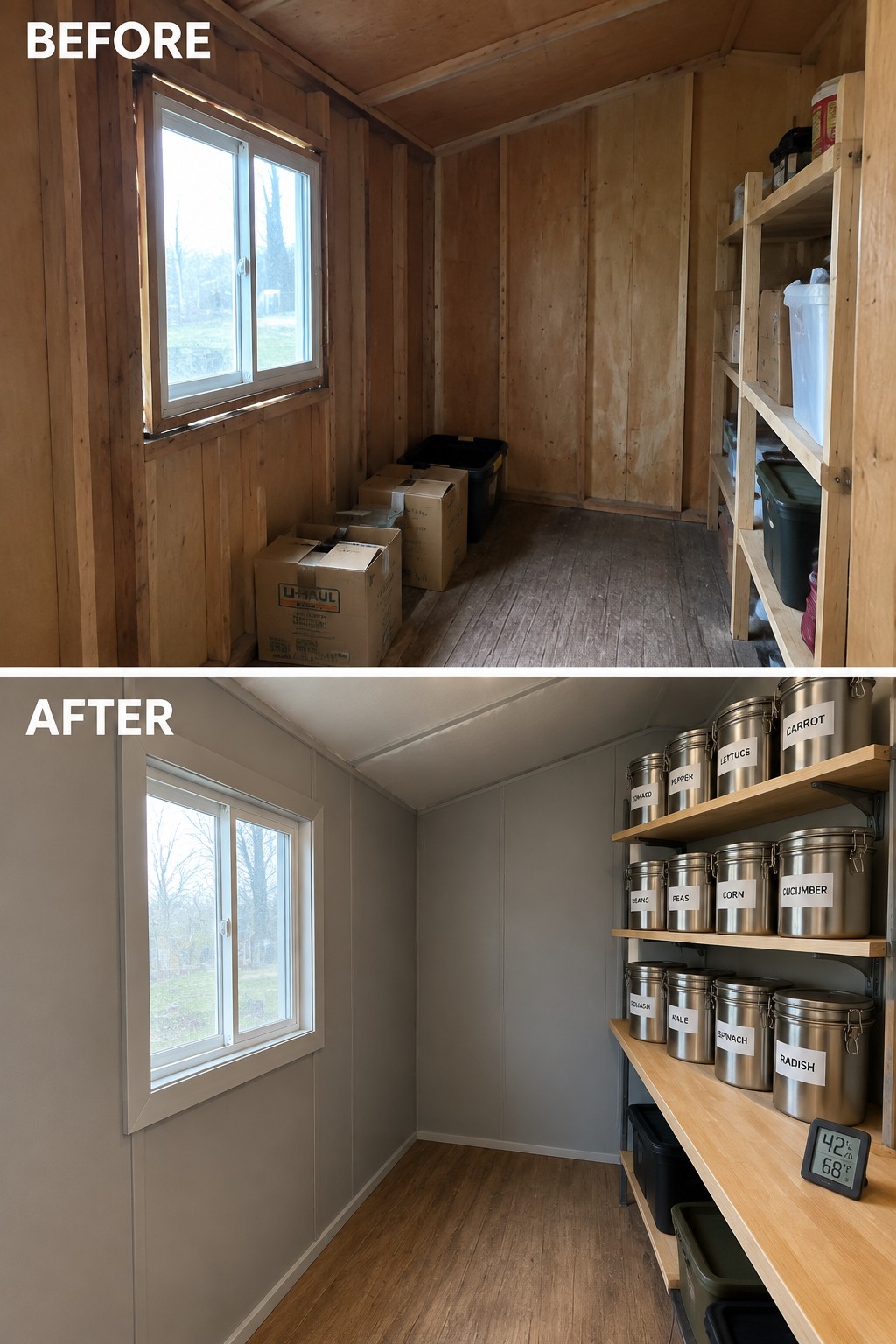
A cluttered shed full of random boxes makes it hard to find anything when you need it. Switching to matching metal canisters with clear labels and adding a simple wooden counter turns the space into a working station where supplies stay visible and easy to reach. The change from scattered cardboard to a row of labeled bins shows how much easier daily tasks become once everything has a set place.
This approach works well in small sheds where floor space is limited. Start by sorting what you actually use, then choose containers that stack or sit neatly on shelves. A basic countertop gives you room to work without needing a full potting bench, and it keeps the shed feeling practical rather than crowded.
Add Hooks And Shelving To Organize A Shed
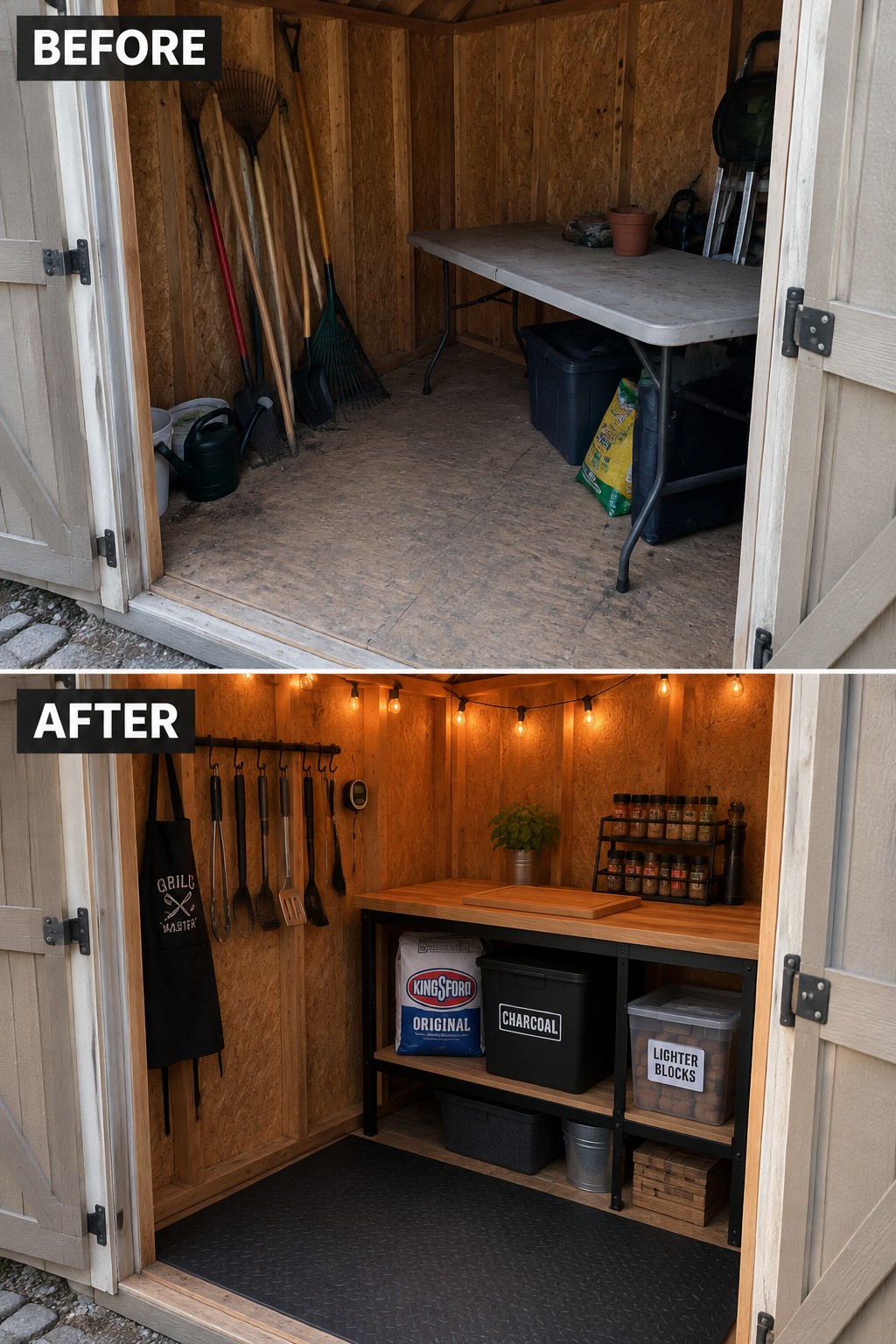
A cluttered shed often ends up with tools leaning in corners and supplies scattered on the floor. Installing a simple row of hooks on one wall and adding a low shelving unit creates clear spots for everything. The before photo shows tools piled against the walls and a table taking up most of the space, while the after shows tools hung in a line and bins stored neatly on shelves.
This idea works best in small sheds where floor space is limited. Hang the tools you use most often at eye level, then use the shelves for heavier items like charcoal or soil bags. Keep the layout simple so you can still move around easily when you need to get something out.
Refresh A Garden Shed With Paint And Defined Borders

A weathered shed often ends up looking neglected because the paint fails and the ground around it grows wild. Fresh paint in a solid color, white trim around the door and window, and a clean border of mulch and pavers immediately change how the structure sits in the yard. The addition of a simple window box keeps the focus on usefulness rather than decoration.
This approach works well for any small outbuilding that still has good bones. Start with a thorough cleaning and a coat of exterior paint that can handle weather, then add one or two planted boxes and a basic path so the area feels intentional. Keep the planting low and practical so the shed remains easy to reach and use as a garden station.
Mount Wall Storage And A Workbench In Your Shed
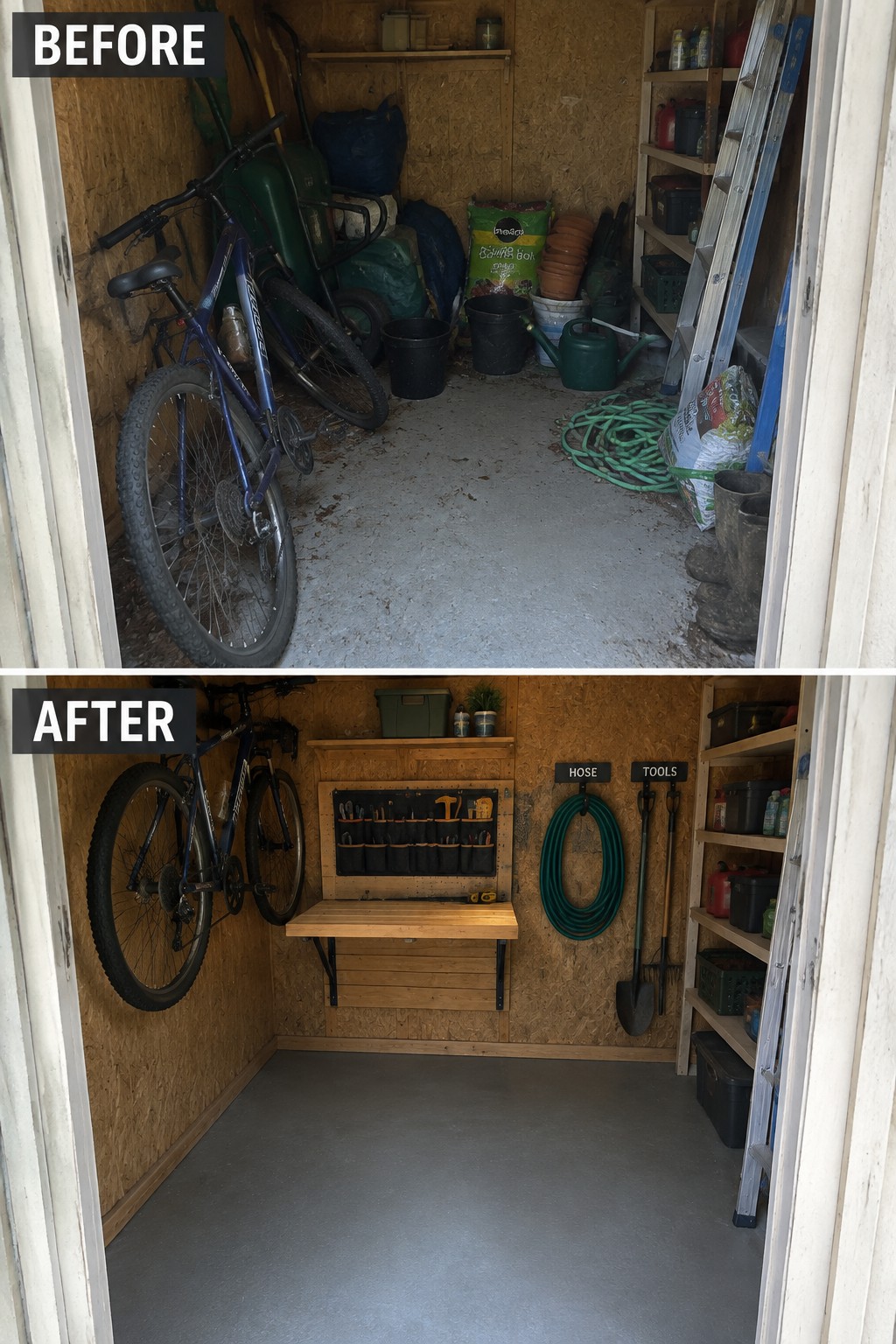
Many sheds end up as overflow storage where bikes, hoses, and tools take over the floor. Mounting the bike on the wall and adding a fold-down workbench with a tool organizer above it keeps the floor open and makes the space usable for actual projects.
This idea suits small sheds best because it uses vertical space without crowding the room. Focus first on the items you reach for often and give them fixed spots on the wall. A simple bench that folds away when not in use keeps the middle of the shed clear for moving around.
Create A Potting Bench With Accessible Garden Tool Storage
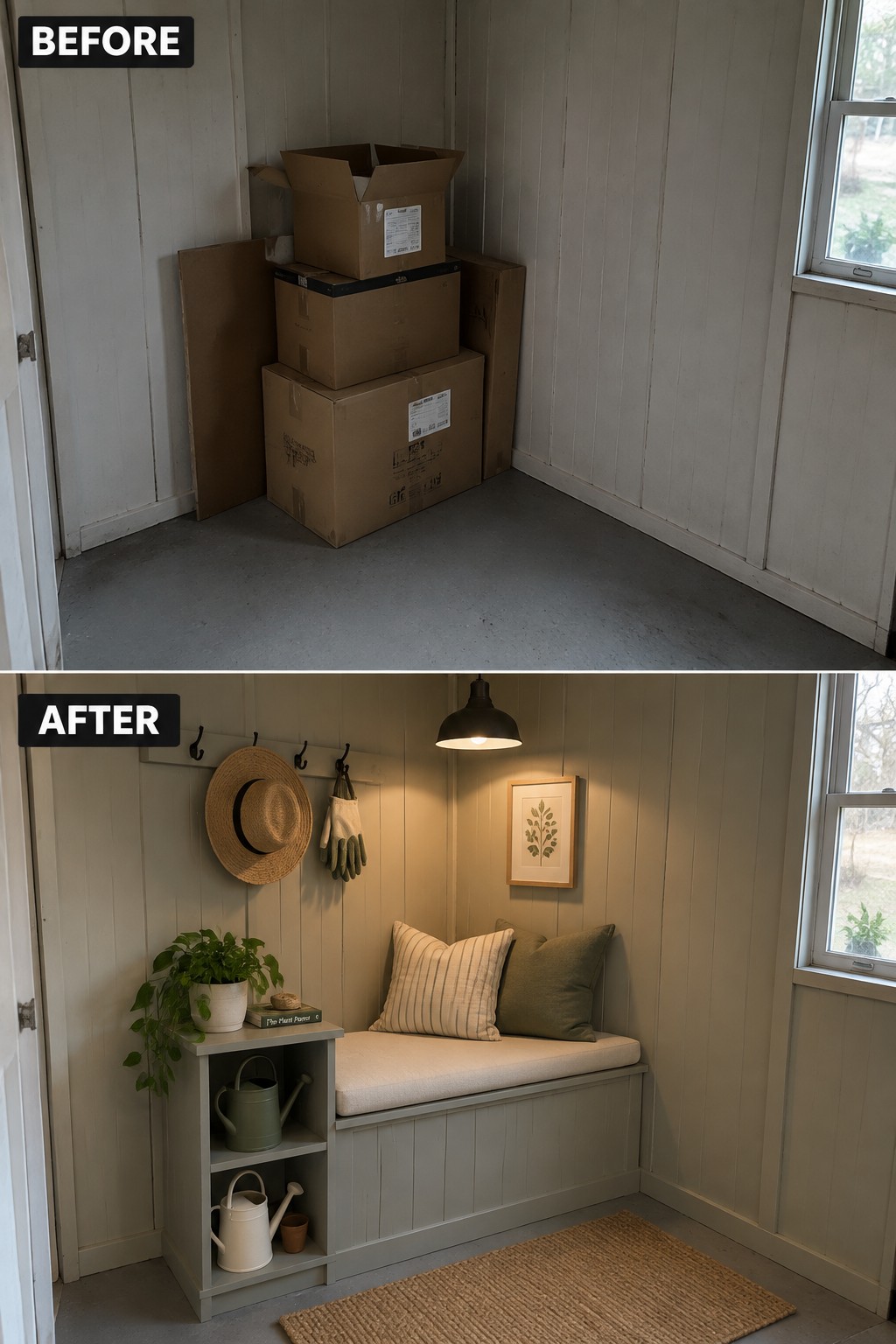
Many garden sheds end up filled with boxes and random supplies because there is no plan for how the space should work. Clearing everything out and adding a built-in bench with storage below creates a clear purpose. The bench gives you a place to sit while potting plants or cleaning tools, and the open shelves keep watering cans and gloves within reach instead of buried in a pile.
This idea works best in small sheds where you want one usable corner rather than trying to organize the entire room at once. Start with the bench and storage, then add hooks on the wall for hats and gloves. Keep the finishes simple and the colors soft so the shed feels calm instead of crowded.
Frequently Asked Questions
Q: How do I pick the right spot for my garden station? A: Walk around your yard and see where you spend the most time working. Place it near a water source if you can. That way you avoid hauling heavy buckets back and forth.
Q: What materials work best for shelves inside the shed? A: Use sturdy wood that can handle some moisture. Paint or seal it first to keep it from warping. Then test the weight with a few pots before loading everything up.
Q: How do I organize tools so I can grab them fast? A: Hang hooks at eye level for your most used items. Keep smaller stuff in bins on a low shelf. This setup lets you see everything without digging around.
