

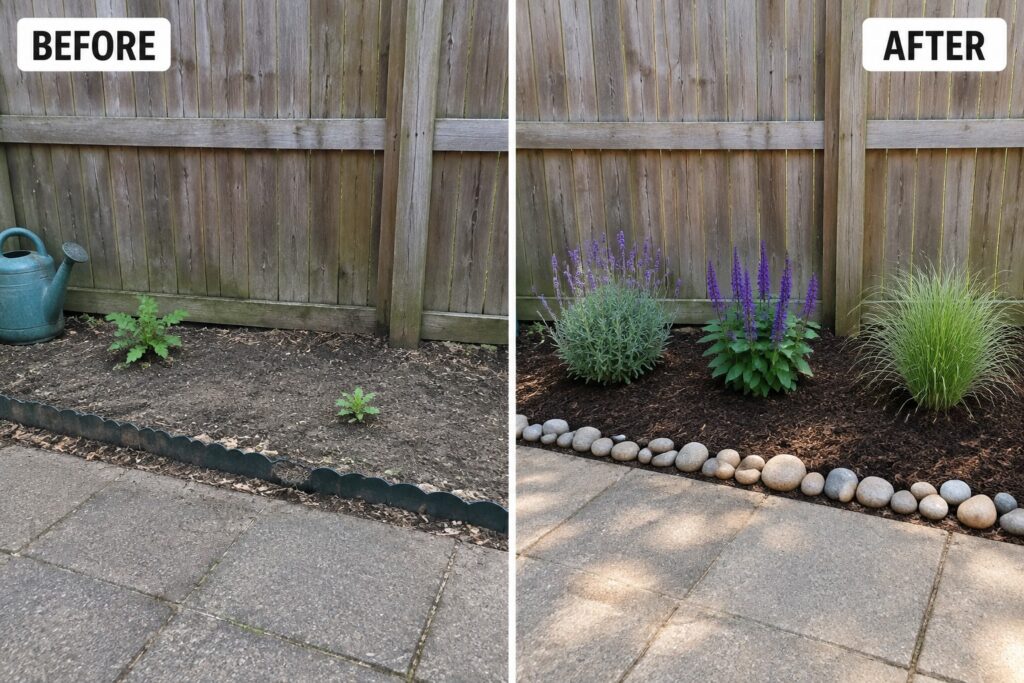
Gardens often feel scattered when flower beds have no clear edge to hold everything in place. Low cost borders can define the layout and give the planting areas more structure without major work. Edging changes more than I expect. I like to test basic materials first because they show what actually fits the space before I add anything else. Over time those borders keep the beds tidy and make routine care much easier to handle.
Define A Fence Line Bed With Simple Stone Edging
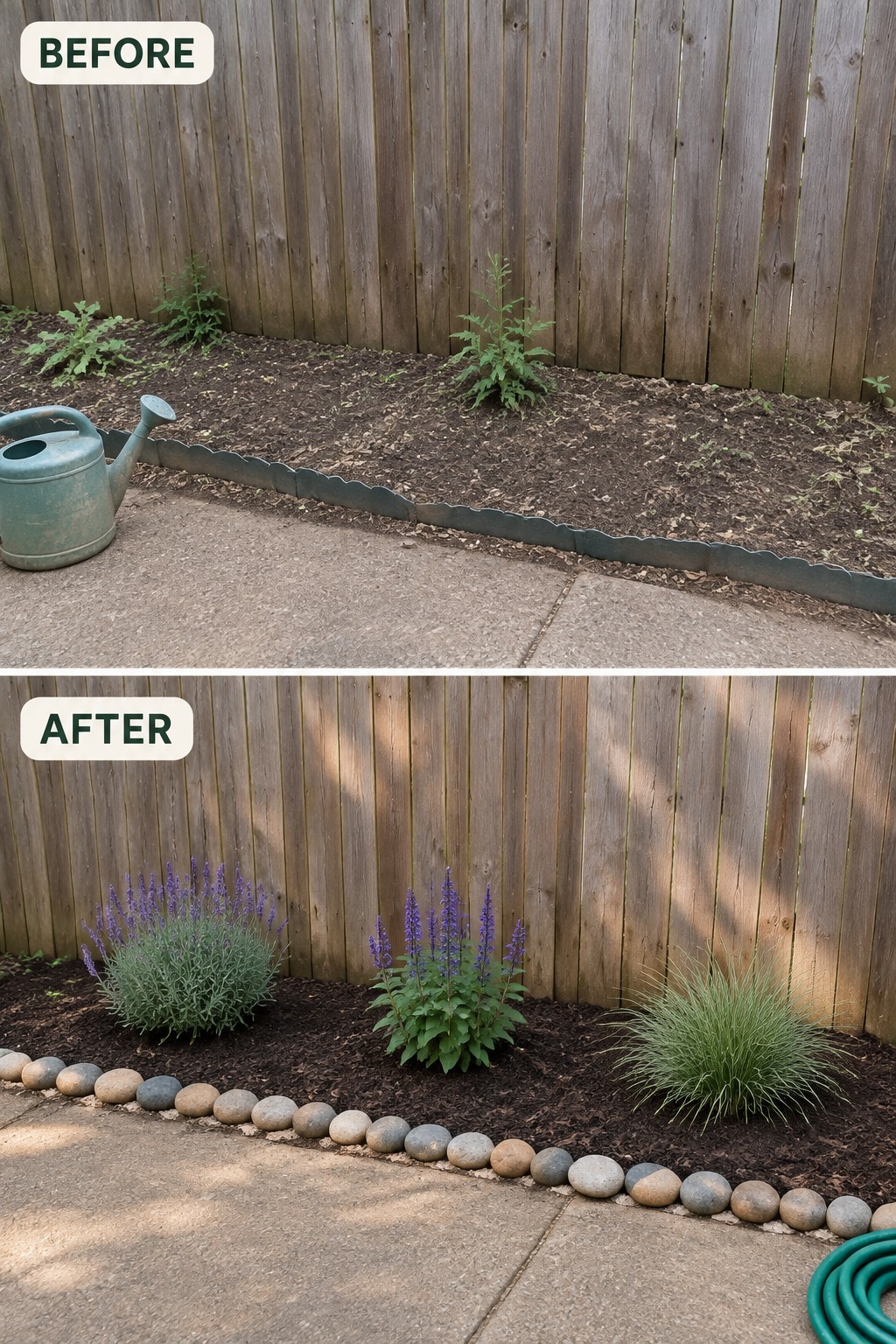
A plain strip of dirt along a fence often looks unfinished even when a few plants are added. The change here comes from adding a low rock border that gives the bed a clear edge and lets the soil and plants sit neatly inside it. Mulch then keeps the look tidy while the plants fill in.
This idea works well along fences or house foundations where you want structure without spending much. Use local river rock or similar stones for the border, keep the bed only a foot or two wide, and plant in small groups so the bed does not feel sparse. It is an easy first step before adding more features later.
Add A Brick Border To Define Your Garden Beds
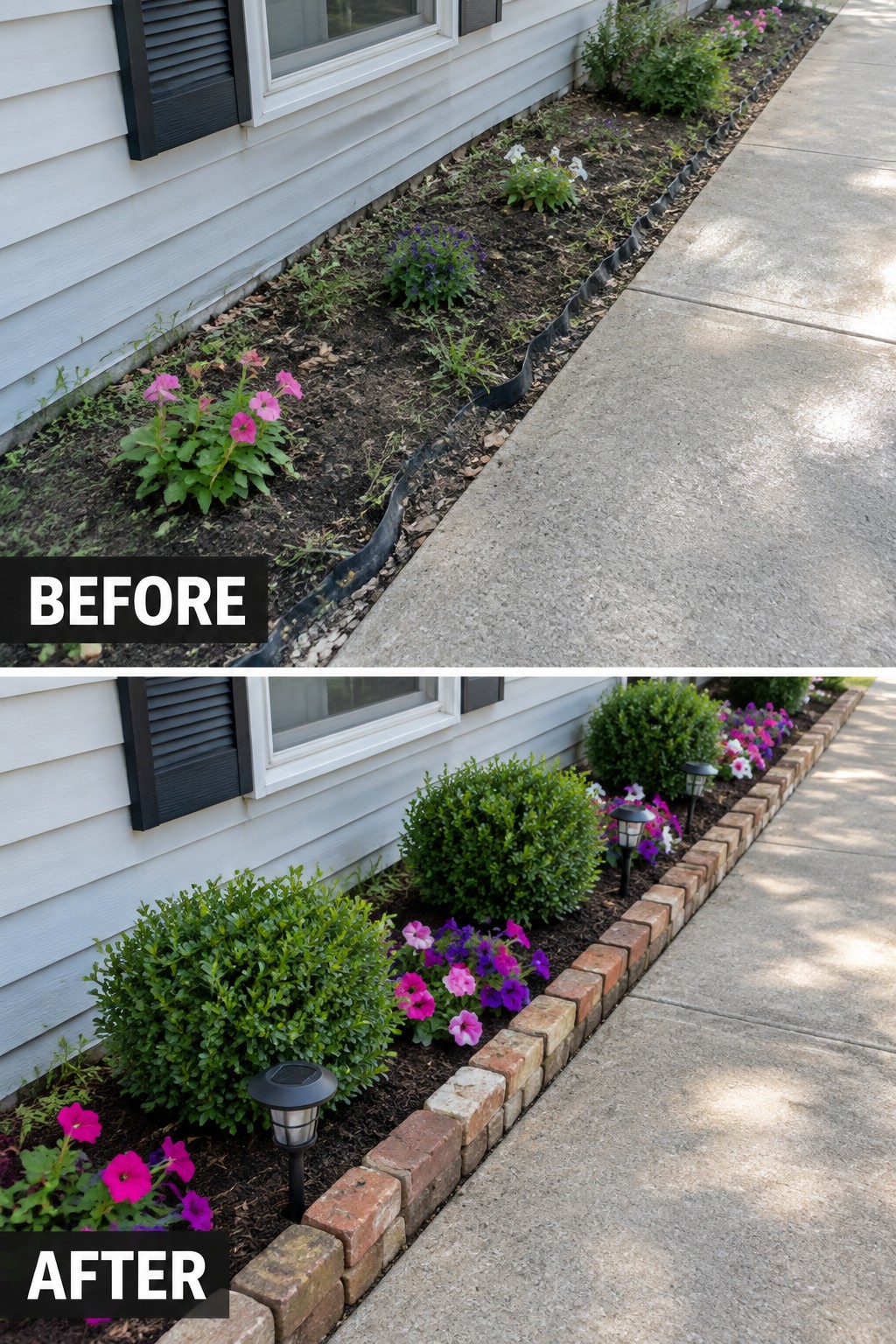
The plastic edging in the first photo sits uneven and looks temporary, which makes the whole strip feel neglected. Replacing it with a low brick border creates a clear line that holds the soil in place and gives the bed a finished edge next to the walkway.
This works best along the front of a house where the bed runs the length of the foundation. Lay the bricks tight together on a simple sand base, keep the height low so mowing stays easy, and plant in groups rather than scattering singles. The border keeps mulch from spilling onto the concrete and makes future weeding quicker.
Define Flower Beds With Simple Edging
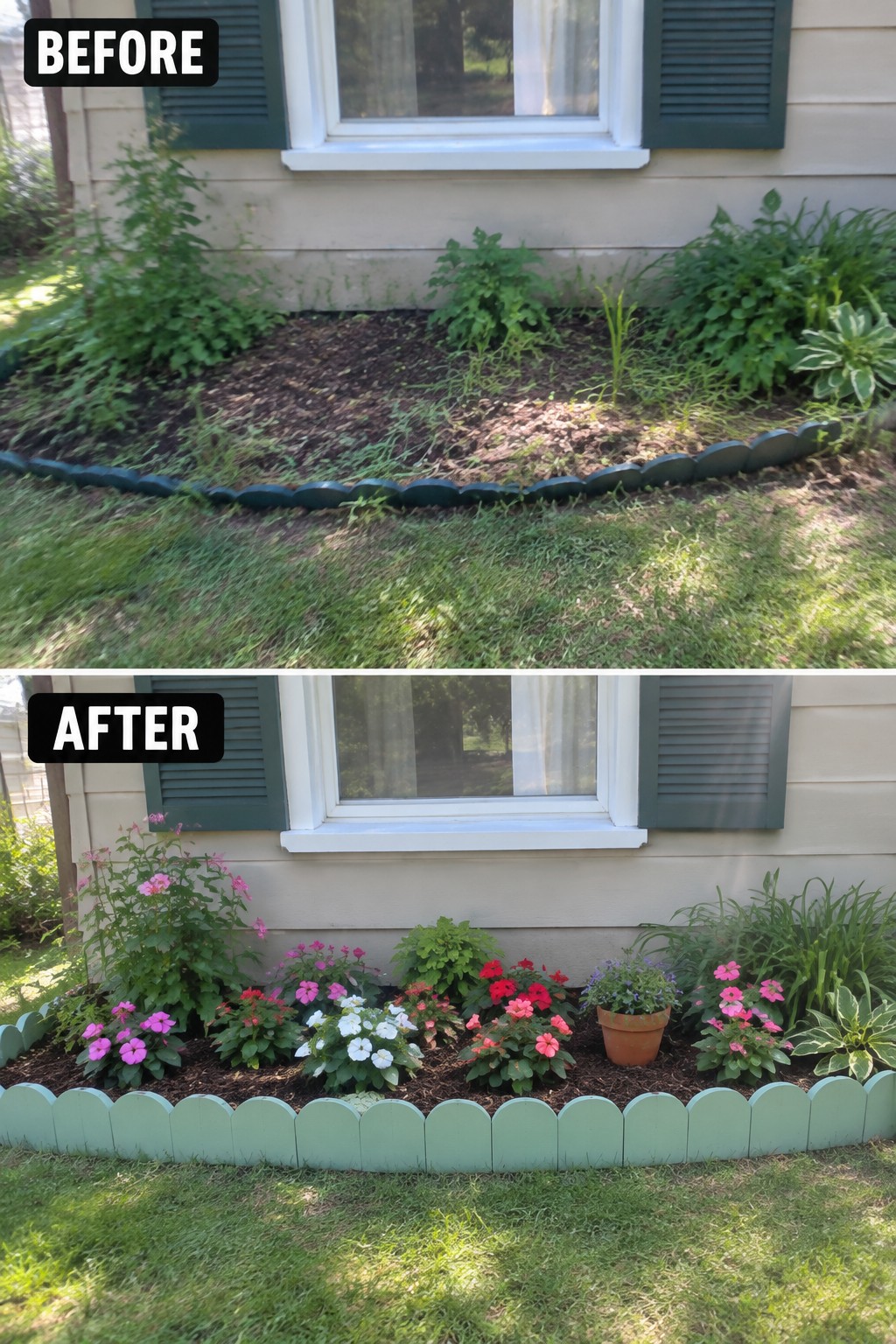
Adding a basic border turns a weedy strip into a real garden bed. The before photo shows loose soil and grass creeping in, while the after shows a clean edge that holds mulch and plants in place. The result looks planned instead of accidental.
This idea works best along the front of a house where you want low plants without constant trimming. Clear the area first, lay mulch, then set the edging so grass stays out. It keeps the bed neat with very little ongoing work.
Define Garden Beds With A Simple Border
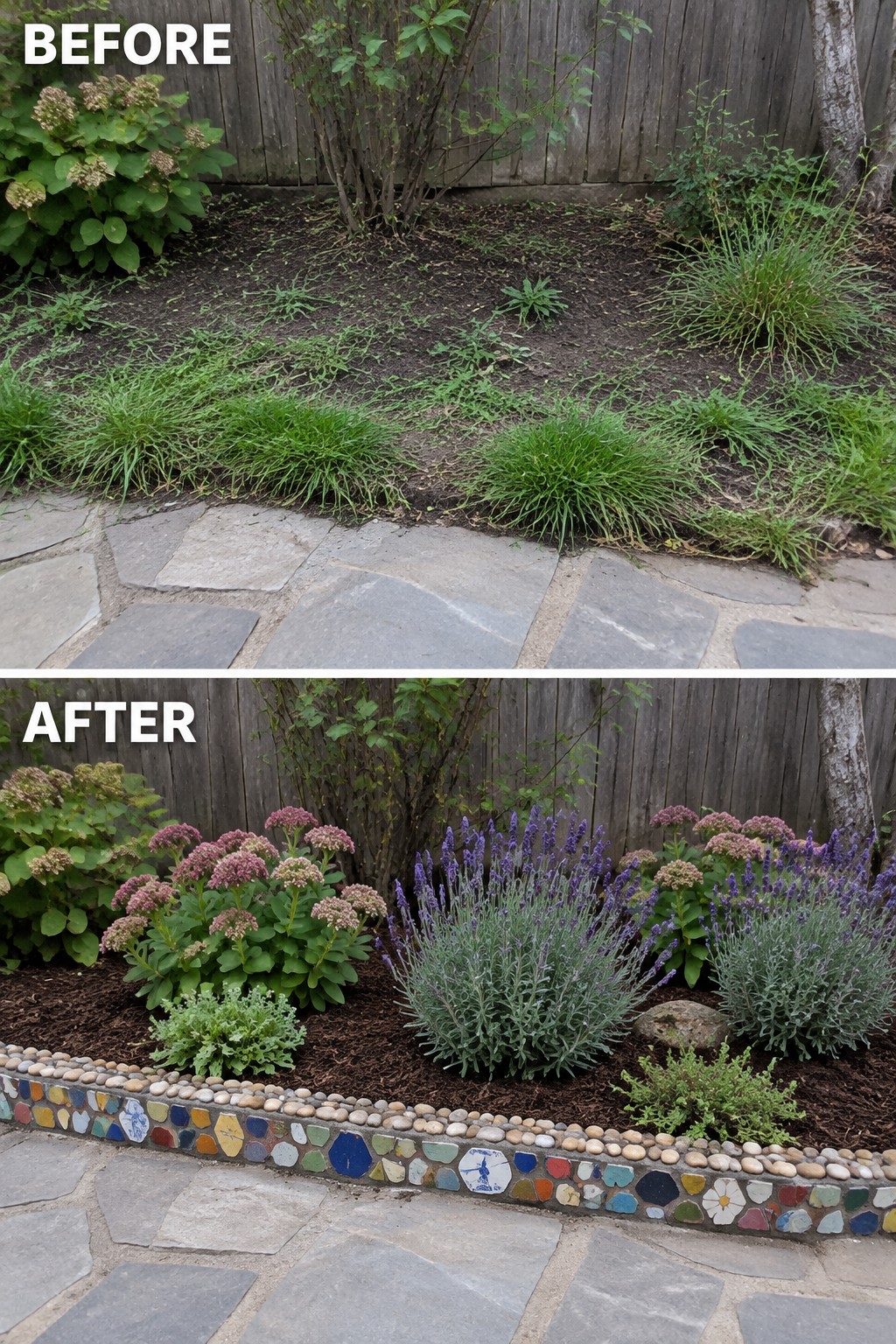
One of the easiest ways to improve a messy garden edge is to add a clear border. The before photo shows grass and weeds running right up to the path with no real shape. Adding a low pebble border and mulch inside the new beds gives the whole area a much more finished look.
This works well along paths or fences where you want the planting to feel intentional. Start by clearing the weeds and marking out the shape you want, then lay the edging before planting. It keeps the soil in place and makes weeding easier later on.
Add Edging To Create Defined Garden Beds

The before photo shows a weedy strip along the fence that simply ran into the lawn with no clear separation. Adding a metal edge and fresh mulch turns the same narrow space into a contained bed that looks deliberate and much easier to maintain.
This idea works best along fences or property lines where grass tends to creep into planting areas. Clear the overgrowth first, then install edging to hold the mulch and give the bed a finished outline before adding plants.
Define Garden Beds With Simple Log Borders

A straight border can turn a weedy strip into a usable garden bed. The logs create a clear edge that keeps mulch in place and gives the plants room to grow without looking scattered.
This idea works best along fences or under trees where the space is narrow. Clean the area first, set the border material, then add mulch and a few tough plants that handle shade. The result stays tidy with very little ongoing work.
Edge Flower Beds With Recycled Bottles
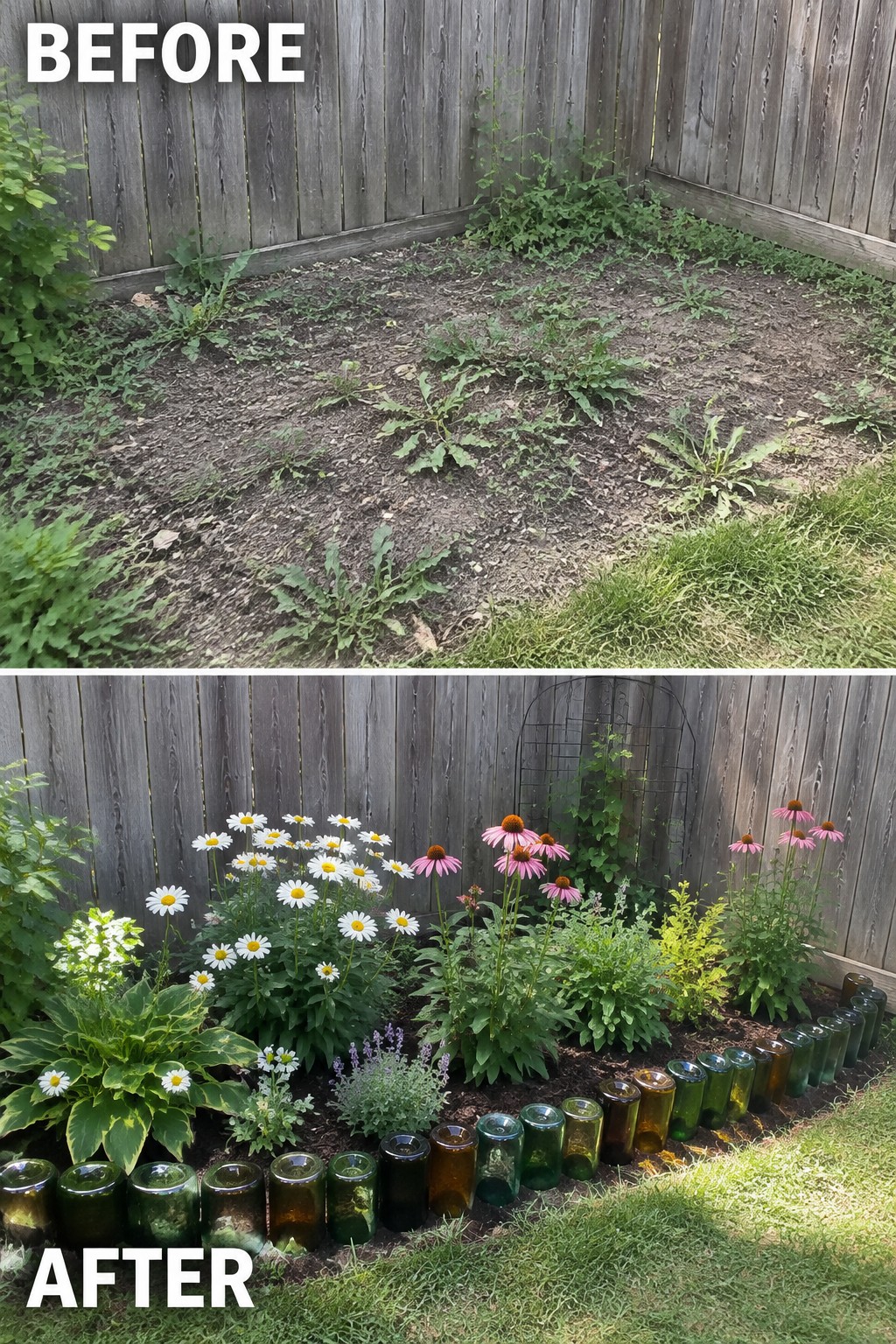
A bare, weedy strip along a fence becomes much more useful once it has a clear border. The row of glass bottles gives the bed a simple edge that keeps the soil contained and makes the planting look planned instead of scattered.
This idea works best in small side yards or back corners where you want structure without buying fancy materials. Bury the bottles neck down so they stay put, then add a few reliable perennials that suit your growing conditions. Focus on cleanup and edging first before adding more plants.
Define Narrow Side Yards With Simple Raised Beds

A narrow strip next to a fence often becomes a weedy, unused patch that makes the whole side of the house feel neglected. Building a low concrete block border turns that same space into a clean, contained garden bed that runs along the fence without crowding the gravel path.
This idea works best in tight side yards where you need clear structure before adding plants. Stack blocks to create the edge, fill with soil and mulch, then choose low-water plants that stay compact. The result keeps the walkway open while giving the fence line a purpose.
Add A Simple Paver Border To Clean Up Your Garden Edge
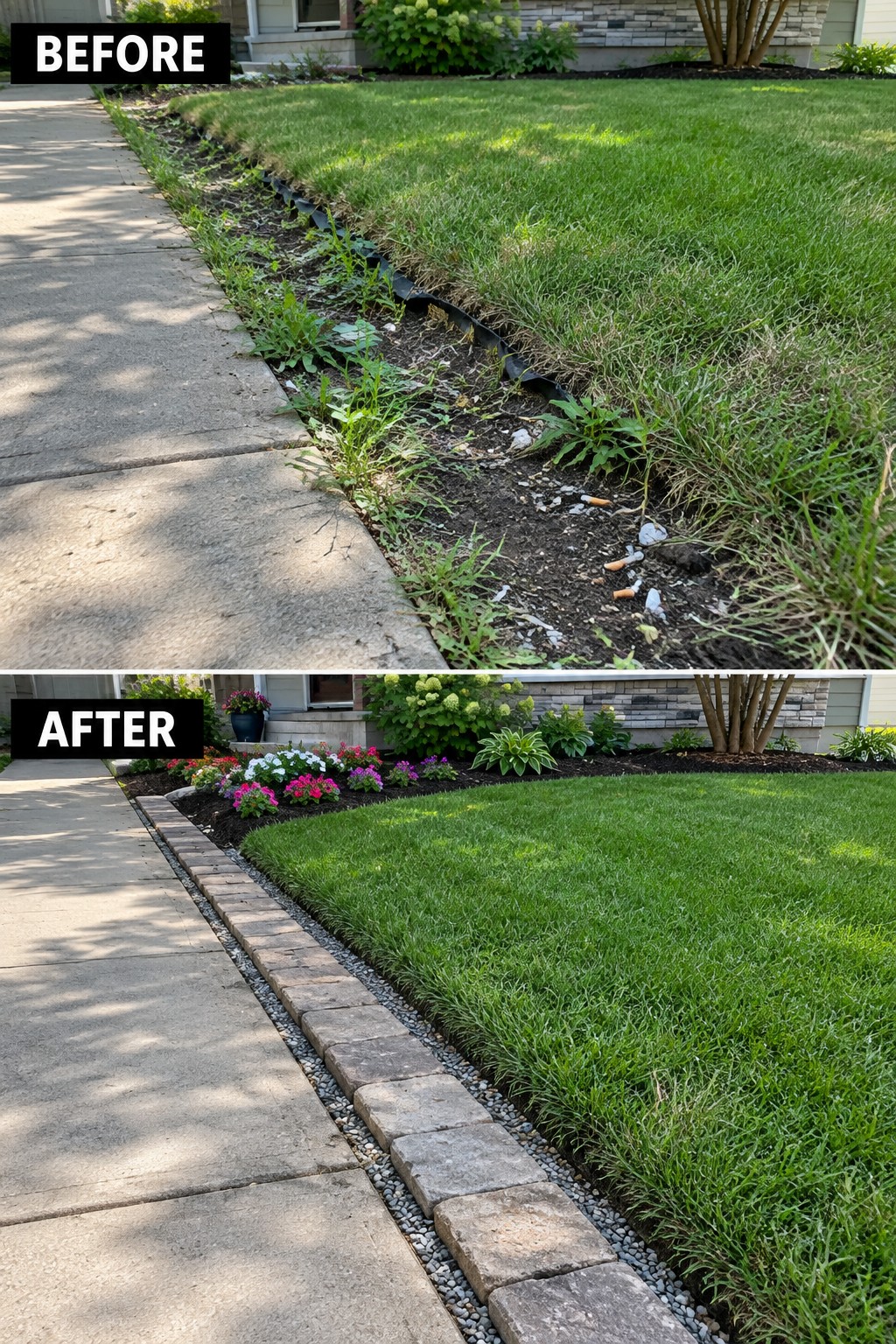
The before photo shows a ragged strip of dirt and weeds running along the sidewalk, with nothing holding the grass back. In the after photo, a row of pavers set on gravel creates a clear line that keeps the lawn tidy and gives the flower bed a finished edge.
This idea works best along sidewalks or driveways where grass tends to spill over. Start by removing old plastic edging and debris, then set the pavers level with a gravel base so water drains properly. It suits homes with straight lawn lines and keeps the look simple without needing a big budget.
Define Flower Beds With A Simple Stone Border

The biggest shift in this yard came from adding a clear edge to the planting area. The before photo shows mulch spreading without shape right into the lawn. Once the white stones were set in place, the bed gained structure and the existing tree and new plants looked more intentional.
This idea works best around mature shrubs or trees where you want to add order without a big budget. Lay the stones directly on the soil or mulch line, keep the bed narrow enough to reach easily, and fill it with a few larger plants like hostas plus some seasonal color. It suits older homes with established landscaping that mainly needs better definition.
Define Flower Beds With Simple Borders
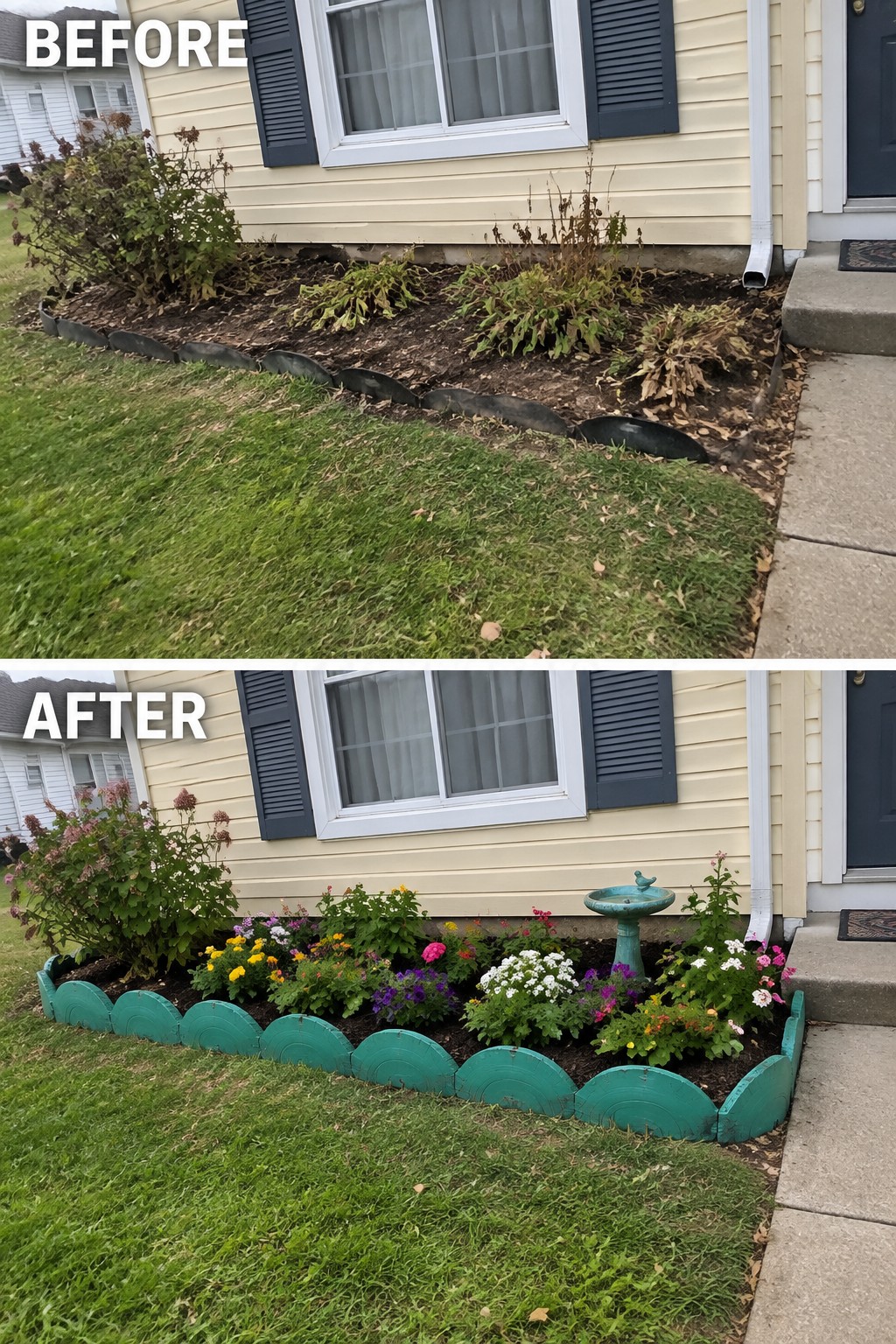
Adding a basic border turns an overgrown strip along the house into a garden bed that looks planned instead of neglected. The before photo shows a ragged edge of weeds and dead plants with no clear shape, while the after shows how a scalloped border and fresh planting create a clean line that follows the foundation.
This idea works best on small front beds where you want structure without spending much. Clean out the old growth first, then put in the border to hold the shape before adding new plants and mulch. It keeps the bed from creeping into the lawn and makes weeding simpler later on.
Use Barrel Planters To Define A Narrow Border

The before photo shows a strip of weeds and volunteer plants running wild along the house. The after replaces that mess with a row of wooden barrels that hold the flowers in place and keep the edge of the path looking intentional.
This idea works best where you cannot or do not want to dig a full bed. Set the barrels on landscape fabric, fill them with a simple mix of upright blooms and trailing plants, and spread mulch around the bases. The barrels give you height and structure without taking up much width, which makes them useful along gravel paths or tight side yards.
Add Gravel Borders To Clean Up A Garden Edge
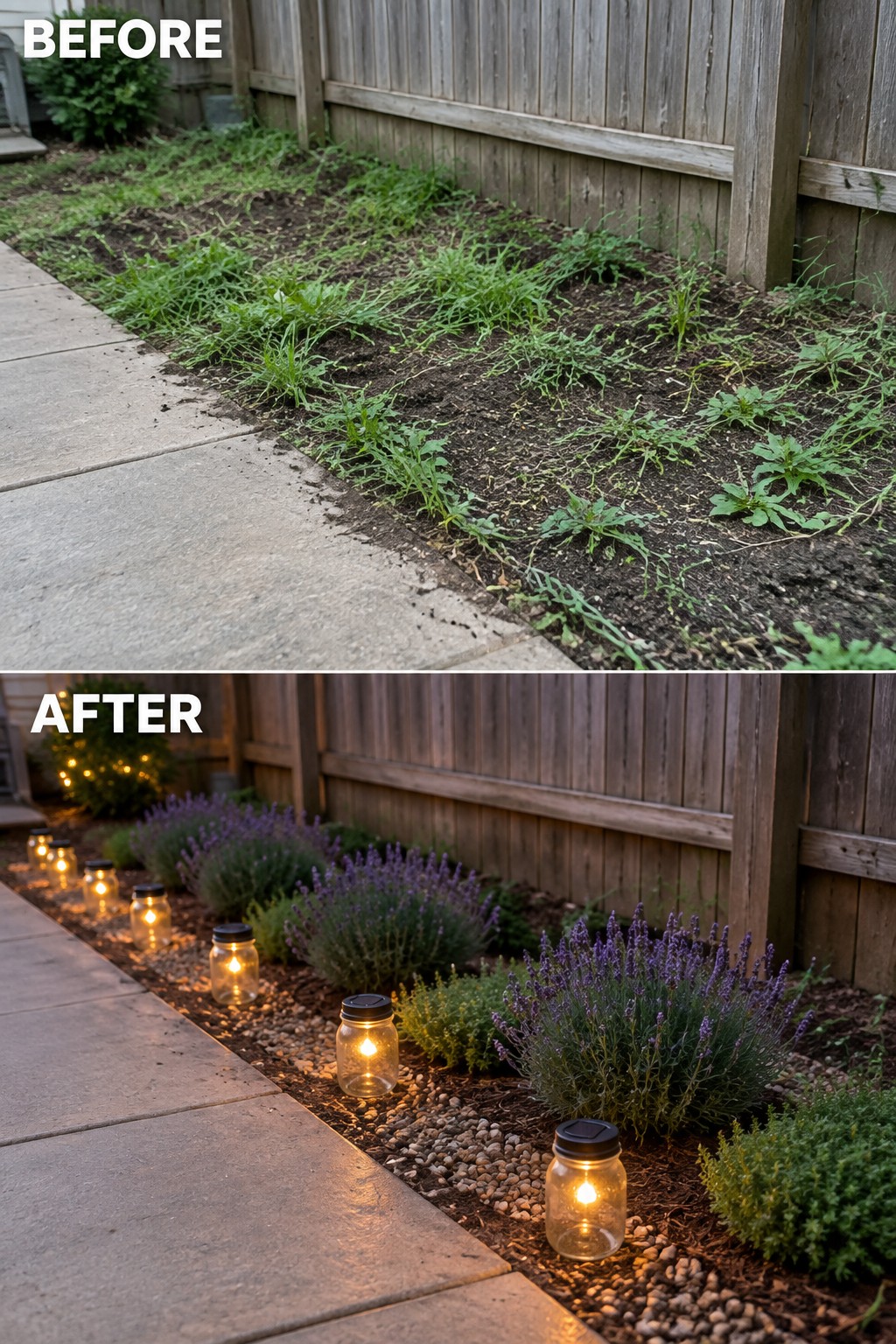
A messy strip of weeds and bare dirt along a fence or path often looks worse than it needs to. Laying down a simple gravel border and planting a few rows of low shrubs or lavender gives the area a clear shape. The change turns an eyesore into something that looks intentional without much extra work.
This approach works best along sidewalks, fences, or the side of a house where the ground meets hard surfaces. Start by clearing the worst of the weeds, then add a layer of landscape fabric and gravel to hold the edge in place. The lights are optional, but they help mark the bed at night and keep people from stepping on the new plants.
Define Narrow Strips With A Simple Border
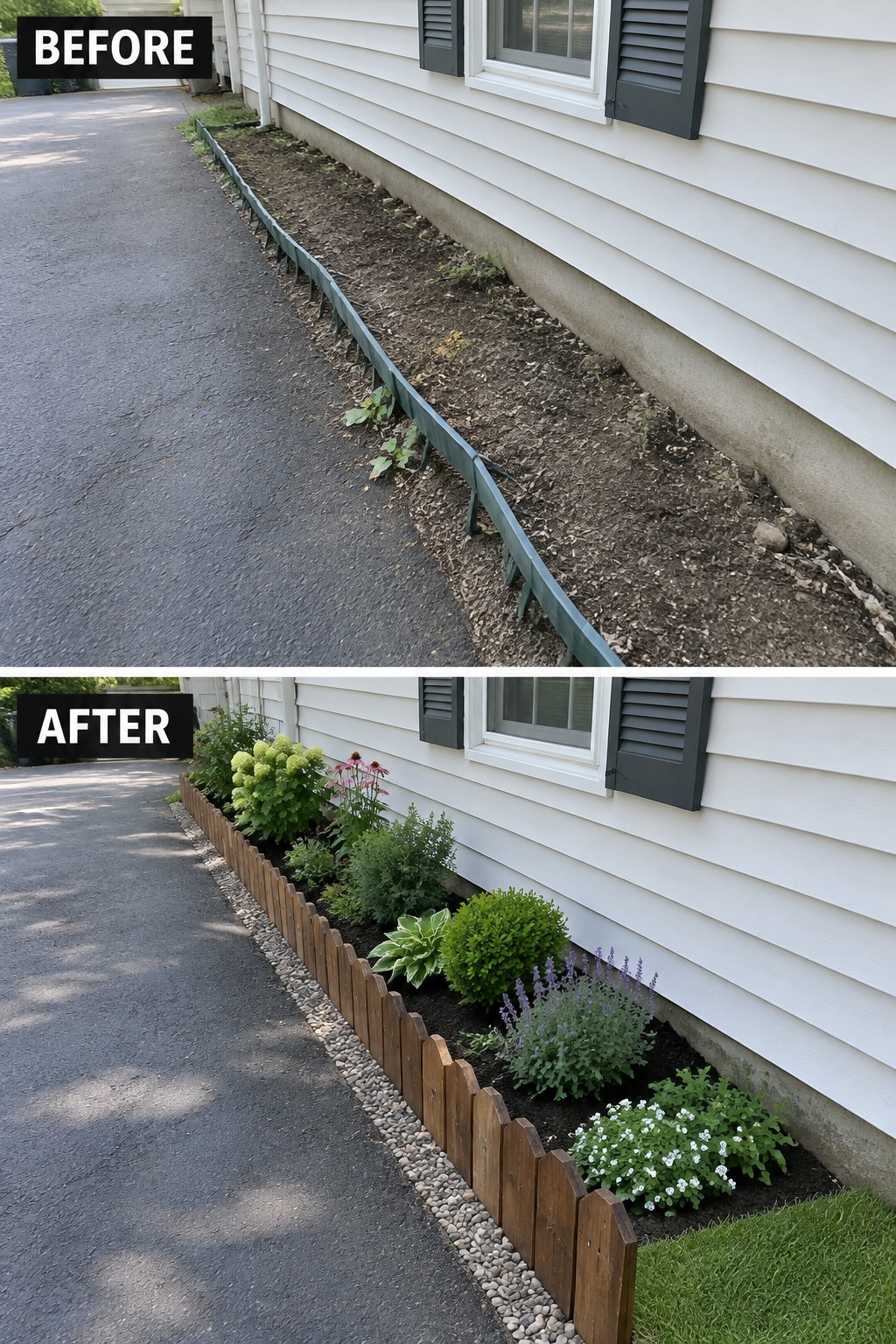
A bare strip of dirt along a driveway tends to stay weedy and loose because it has no real edge. Putting in a low border gives the space a clear shape so soil stays in place and plants can fill the bed without spilling onto the pavement.
This approach works best on tight foundation strips where you want structure without taking up walking room. Start with a straight or gently curved border that matches the house, add gravel along the outside for a clean line, and keep the planting low so the bed stays easy to maintain.
Use Concrete Blocks To Create Defined Garden Borders
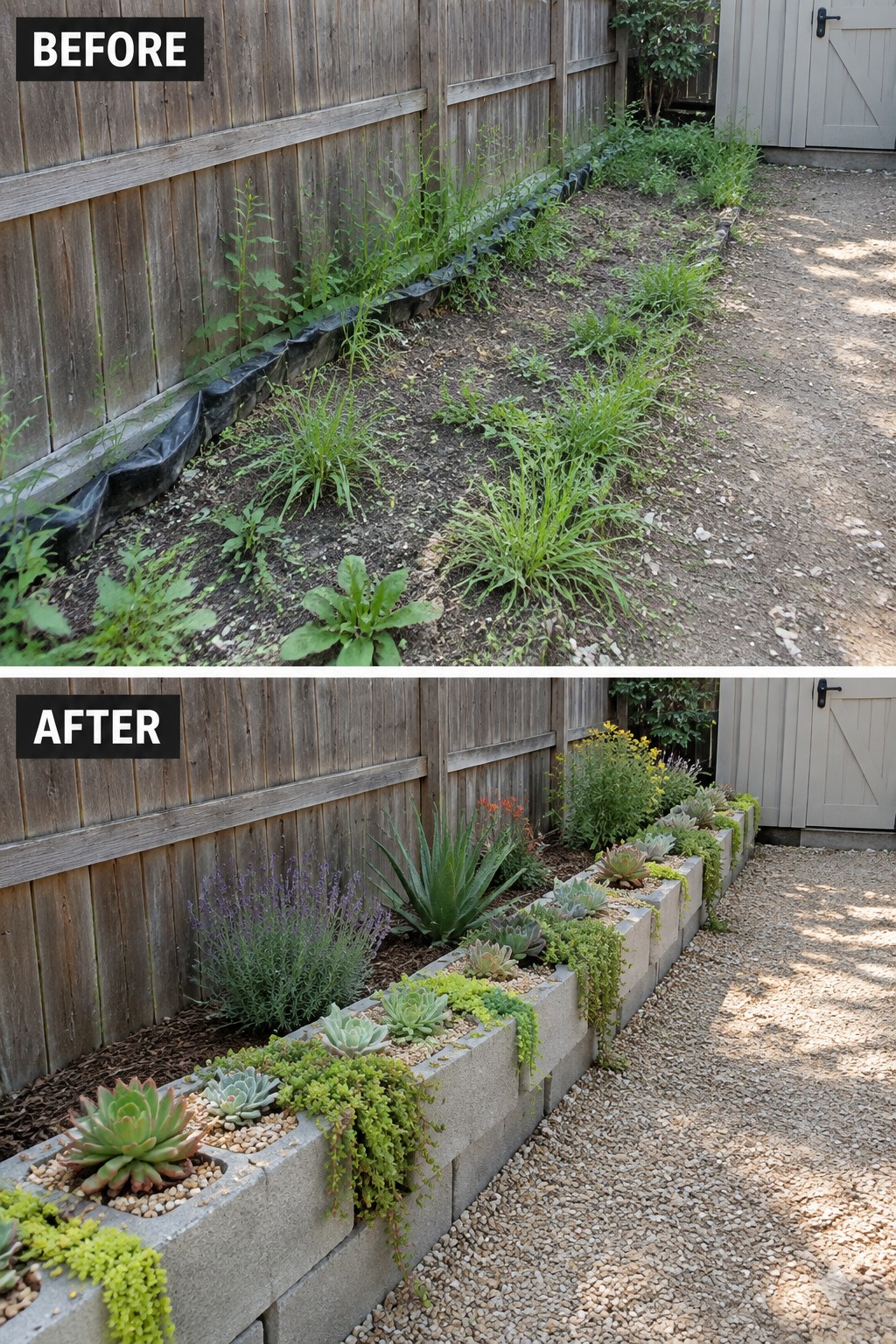
A weedy strip along a fence often stays messy because there is no clear edge to hold the soil and plants in place. Stacking concrete blocks turns that loose area into a series of low raised beds that stay neat and keep the gravel path clear.
This approach works well along driveways, side yards, or fence lines where you want simple structure without spending much. Start by laying a straight row of blocks, fill them with soil and a layer of gravel, then plant hardy choices like succulents that need little water. The blocks do the main work of keeping everything looking intentional.
Use Rope And Posts To Shape A Garden Border
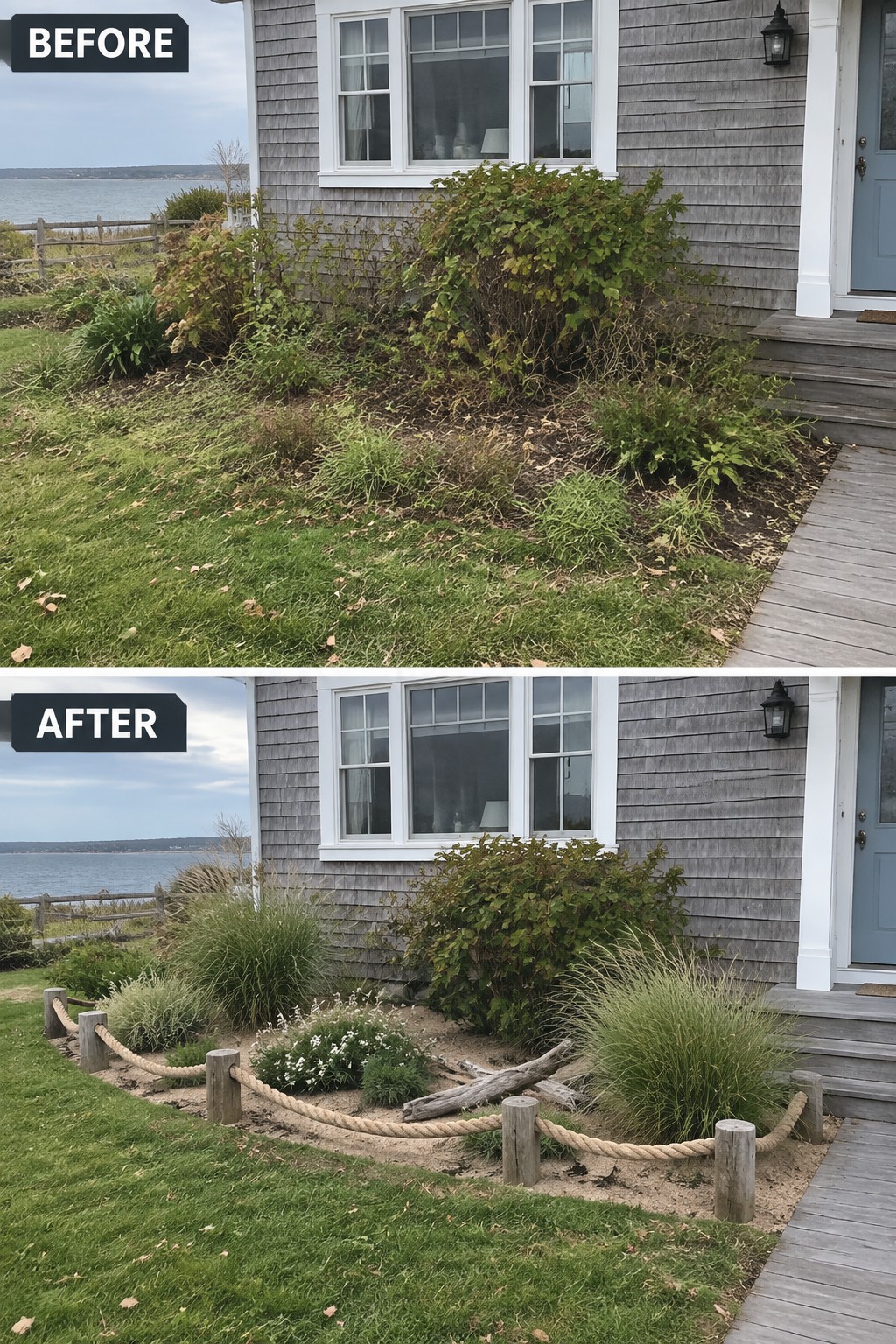
Clearing the messy growth right against the house first makes the biggest difference. Adding a simple rope border on short posts then gives the new bed a clean edge that keeps the planting from spilling onto the lawn.
This idea works best along the side of a house or deck where you need a soft curve instead of a hard wall. Mark the shape with stakes, set the posts at even intervals, and run the rope through. It keeps the bed looking planned even when you mix grasses with smaller flowers.
Define Bare Areas With A Simple Flower Bed Border

A large stretch of bare dirt next to a shed often looks unfinished and hard to maintain. Adding a low curved border along the edge and filling the space with plants and mulch gives the area a clear purpose without major construction.
This idea works best in narrow side yards or along fences where you want planting that stays contained. Mark the shape first with edging, then add a few shrubs and ground cover suited to your area so the bed fills in quickly and stays easy to care for.
Define A Neglected Yard With Simple Borders
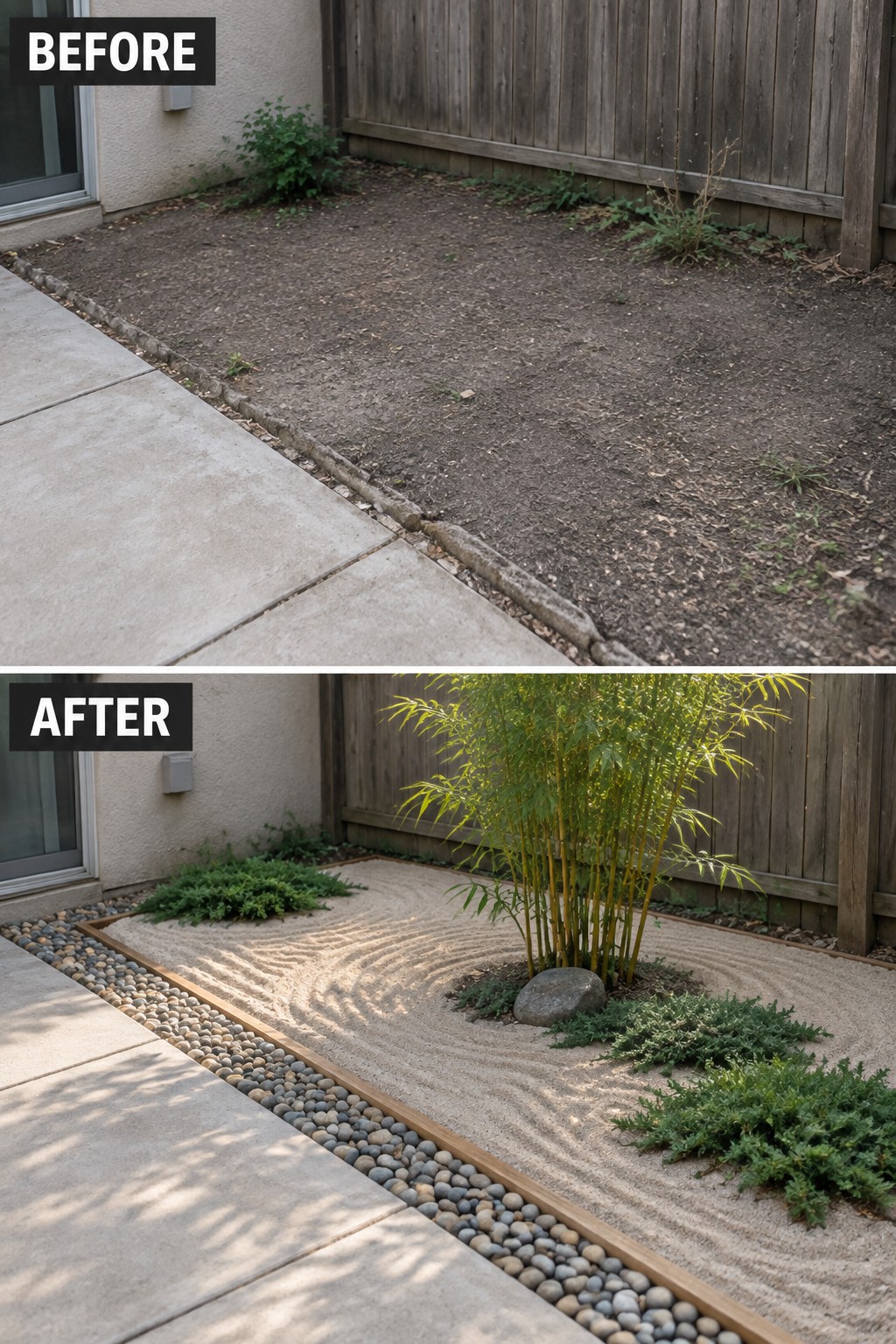
A bare dirt area next to the house often looks unfinished and gets ignored. Adding a low wooden border along the concrete edge and filling the space with gravel and sand gives the yard clear shape and makes it feel more planned.
This idea works best in small side yards or corners where you want structure without a big budget. Lay the border first to set the shape, then keep the planting simple so the lines stay visible and the space does not feel crowded.
Add Simple Borders To Define Garden Beds On A Slope
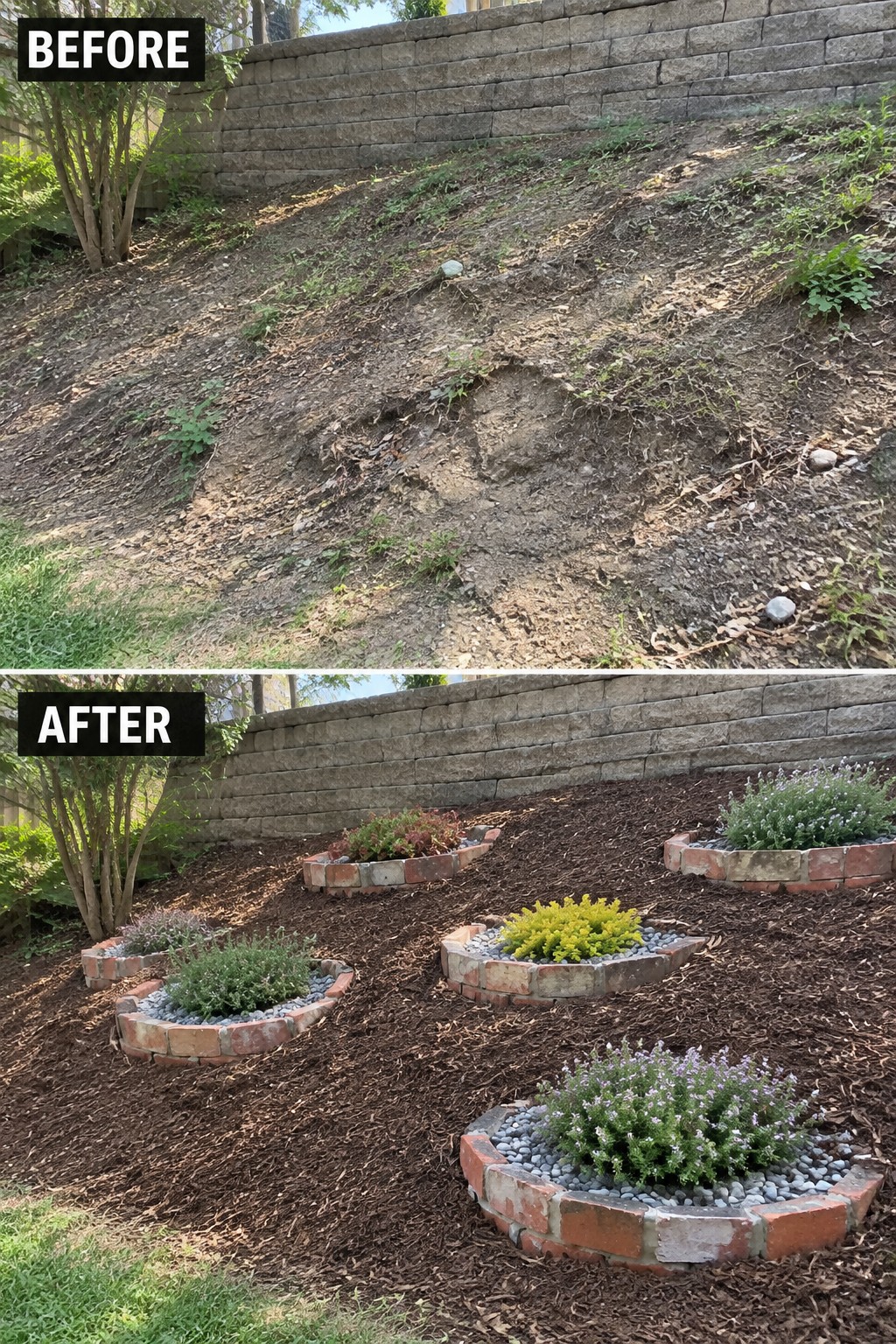
A bare, eroding slope often ends up looking neglected because there is no clear place to plant or maintain anything. Adding low brick borders creates separate planting circles that hold soil in place and give the area a finished structure without major grading.
This idea suits sloped yards where you want to work with the existing grade instead of fighting it. Start with cleanup and mulch, then add borders in whatever material you can source cheaply, and keep the planting simple so the beds stay easy to care for over time.
Define Garden Beds With Basic Edging
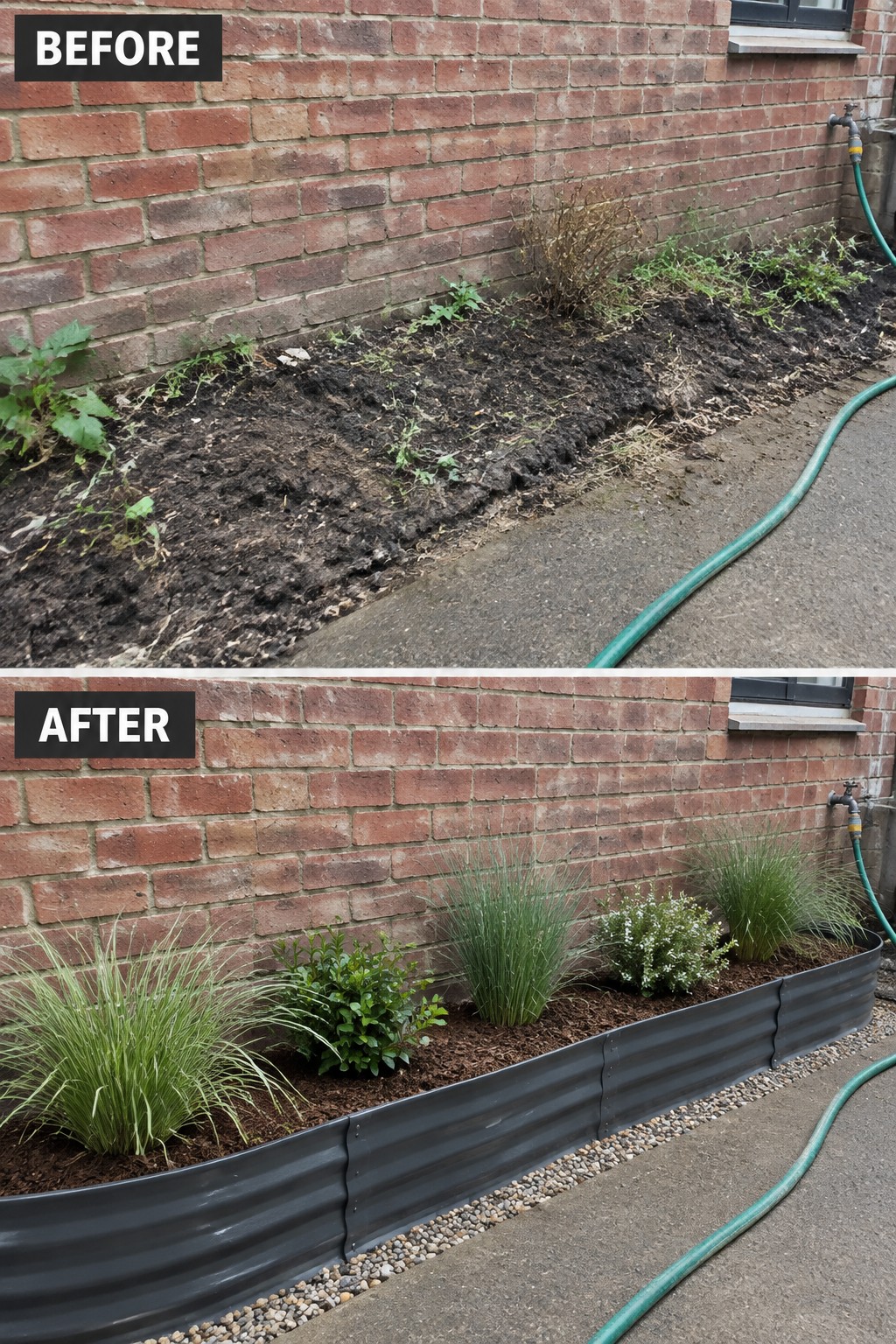
A simple metal border turns an untidy strip of dirt into a proper garden bed that stays in place. The change gives the area a clear edge so plants stay contained and the soil does not wash onto the path.
This approach works best along house walls or narrow side yards where you need structure without crowding the space. Put the edging in first, then add mulch and a few plants. It keeps the bed looking intentional even when you only have room for basic planting.
Use Recycled Bottles To Edge A Flower Bed
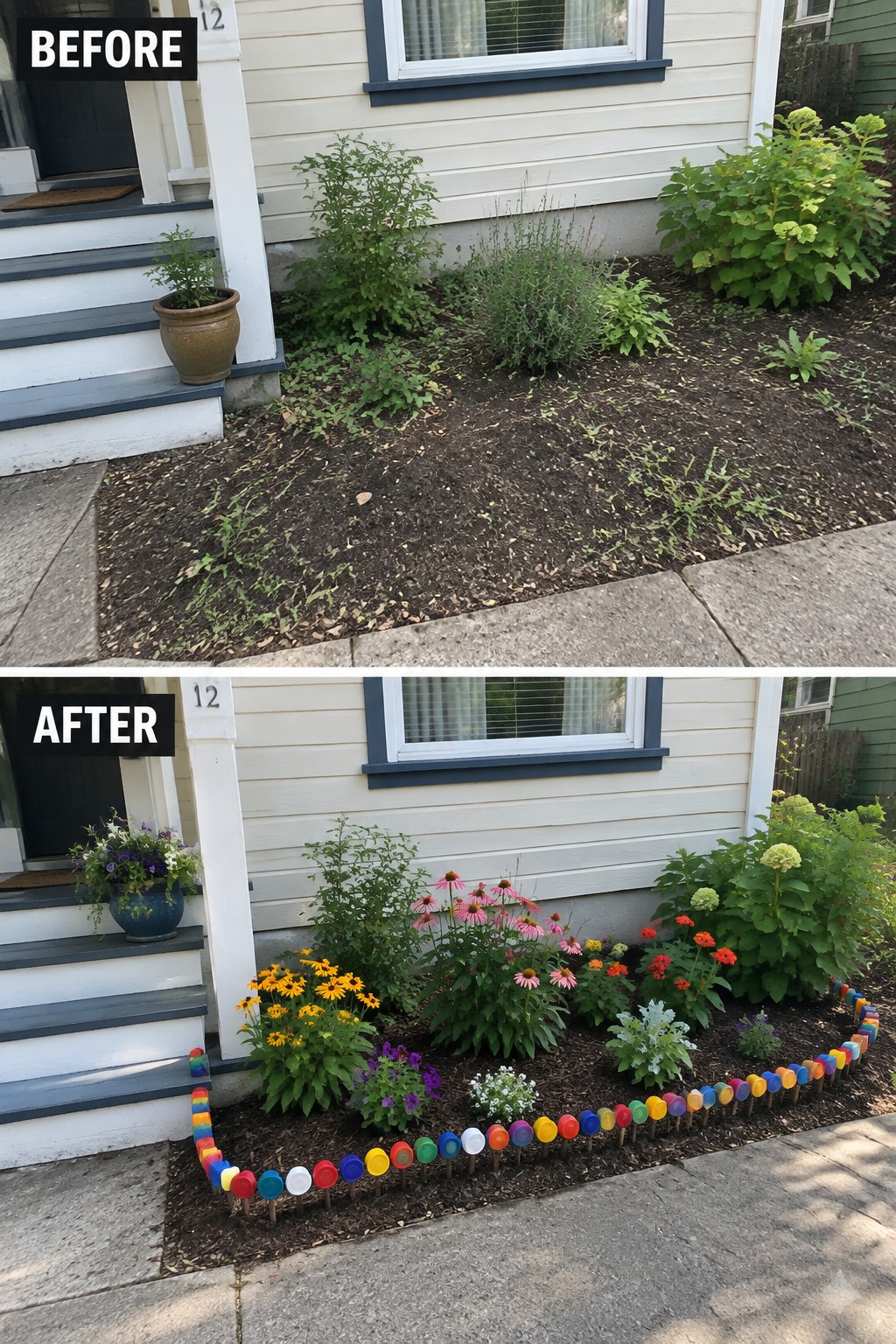
A messy strip of dirt next to the house looks unfinished no matter what plants are there. Adding a simple border made from recycled bottles gives the bed a clear edge, keeps the mulch in place, and makes the planting look planned instead of scattered.
This idea works best along a foundation or sidewalk where you want structure without buying edging. Collect bottles ahead of time, bury them neck down, and keep the colors varied so the line feels cheerful rather than random. It suits small yards or anyone who wants to tidy a bed on a very low budget before adding more plants.
Define Garden Beds With A Simple Stone Border
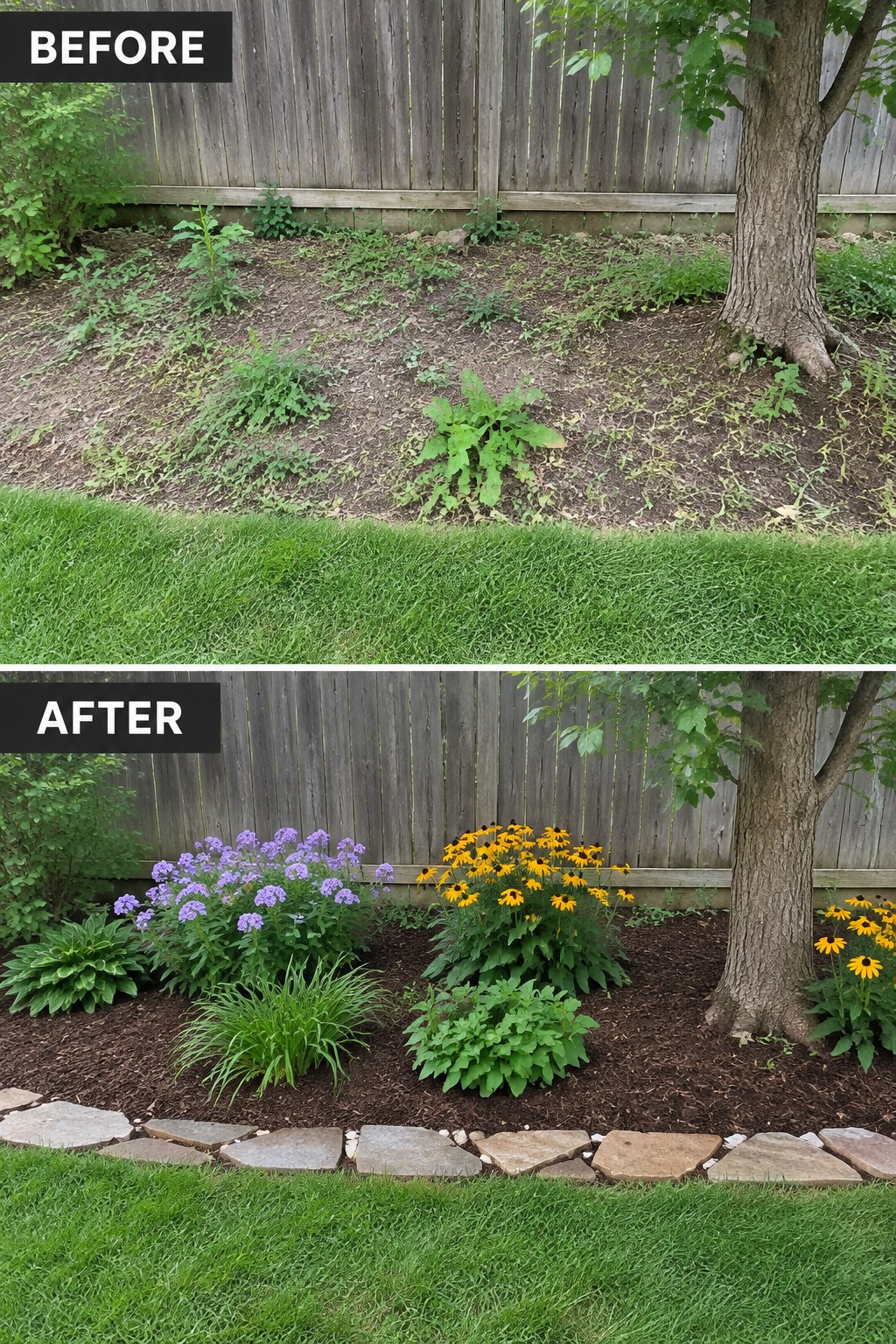
The main change here is how a messy strip of weeds and bare dirt turned into neat flower beds once a flat stone edge was added along the lawn. The mulch inside the border keeps everything looking tidy and helps the plants stand out without any extra work.
This approach works well along fences or at the back of a yard where you want clear lines without spending much. Lay the stones right on the ground first to test the shape, then add mulch and group plants by height so the bed feels full but not crowded. It is an easy way to make a small area look planned instead of neglected.
Add A Defined Border Along Your Walkway

The main change here is turning a ragged edge where grass met the concrete into a clear planted strip. A simple row of low plants and fresh mulch gives the whole front a much tidier look without any big construction.
This idea works well on any house where the lawn runs straight to the sidewalk. Clear a straight strip first, lay down mulch to keep weeds down, then fill it with compact plants that stay under a foot tall so they do not block the path.
Frequently Asked Questions
Q: Where can I find cheap materials for flower bed borders without driving all over town? A: Check your own backyard first for rocks or leftover wood. Local construction sites often let you haul away scraps for free if you ask nicely. Then sort through what you have before buying anything new.
Q: My yard slopes a bit so how do I get the borders to stay level? A: Start at the lowest point and work your way up. Dig a shallow trench that follows the slope naturally. Pack soil firmly around each piece as you go.
Q: Will these borders keep weeds from creeping into my flower beds? A: They help a lot if you bury the bottom edge a few inches deep. Add a layer of mulch right up against the inside of the border too. Pull any weeds that do sneak through right away.
Q: How long does it take to build one of these borders? A: Most people finish a small bed in an afternoon. Gather your materials the day before so you can jump right in. Work in sections if the bed is large.
