

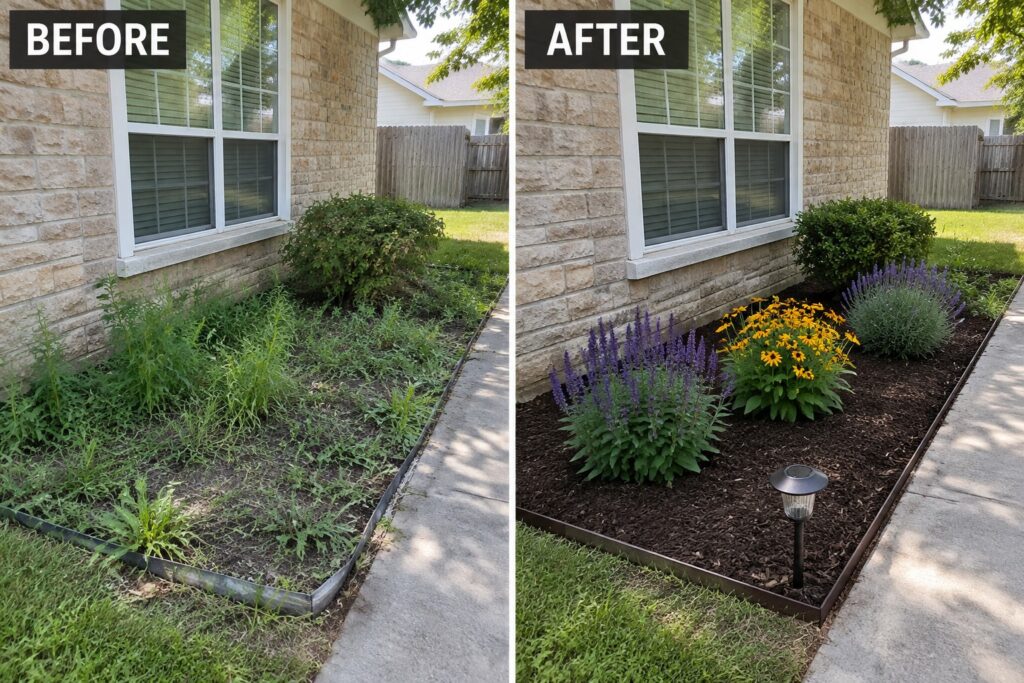
Gardens tend to feel unfinished when the lawn runs right up to the borders with no clear separation and the plants grow wherever they landed.
I like to begin by establishing better lines for the beds and paths since that gives everything else a place to belong.
Once those basics are in place adding a few new shrubs or ground cover creates a layer that was missing before.
Layout first.
The difference becomes obvious once you spend time out there again.
Define Garden Beds With Mulch
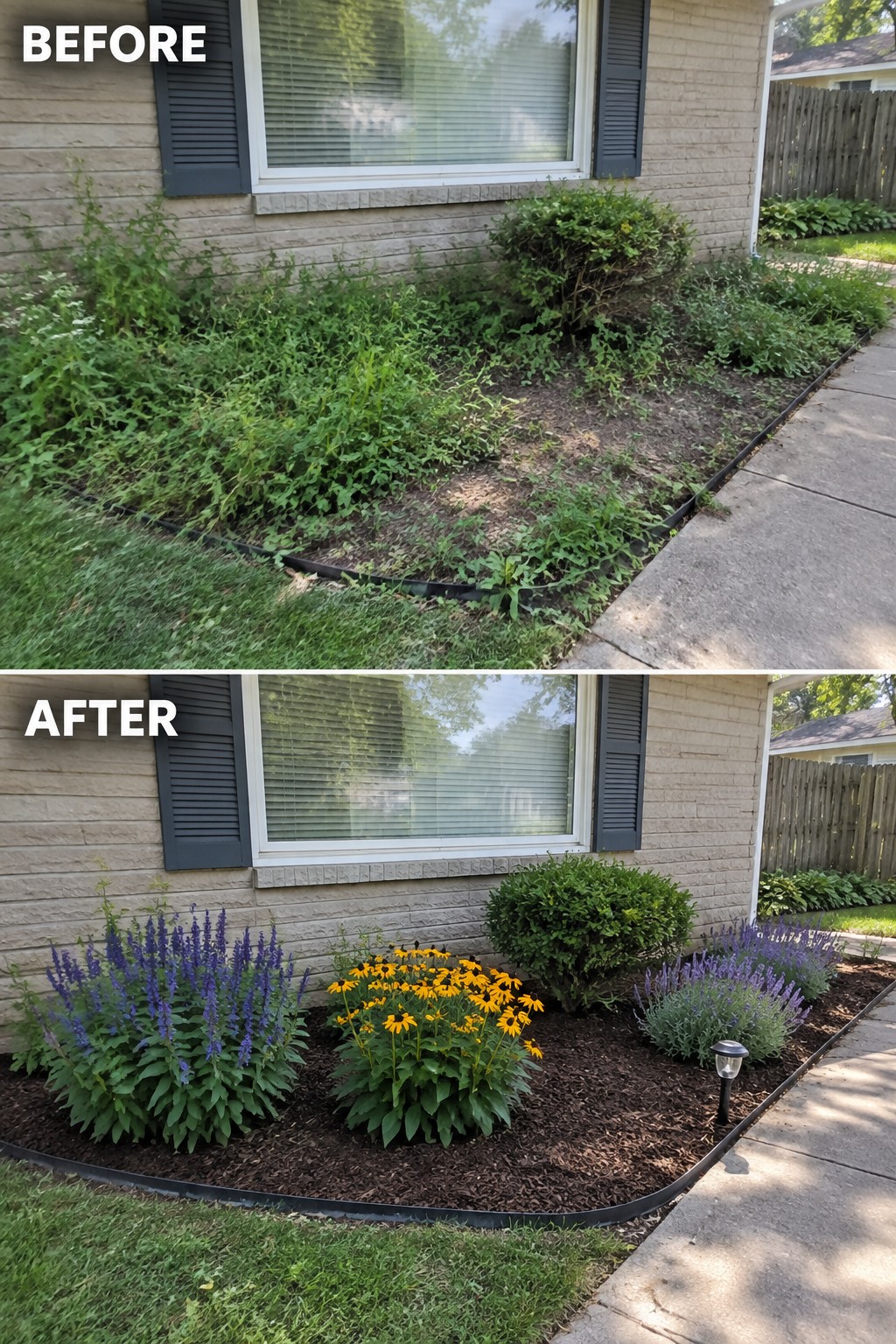
An overgrown strip of weeds along the house can make the whole front look neglected. Clearing the mess and adding a clear edge with dark mulch turns the same space into something that feels intentional. The plants then have room to stand out instead of getting lost in the tangle.
This approach works well on any narrow bed next to a house or walkway. Start by cutting back the weeds and laying down a simple border. Mulch keeps the soil tidy and helps new plants settle in without constant weeding. Group flowers in clusters rather than spreading them out too thin, and the bed will look finished even with a modest number of plants.
Add Structure To An Overgrown Backyard
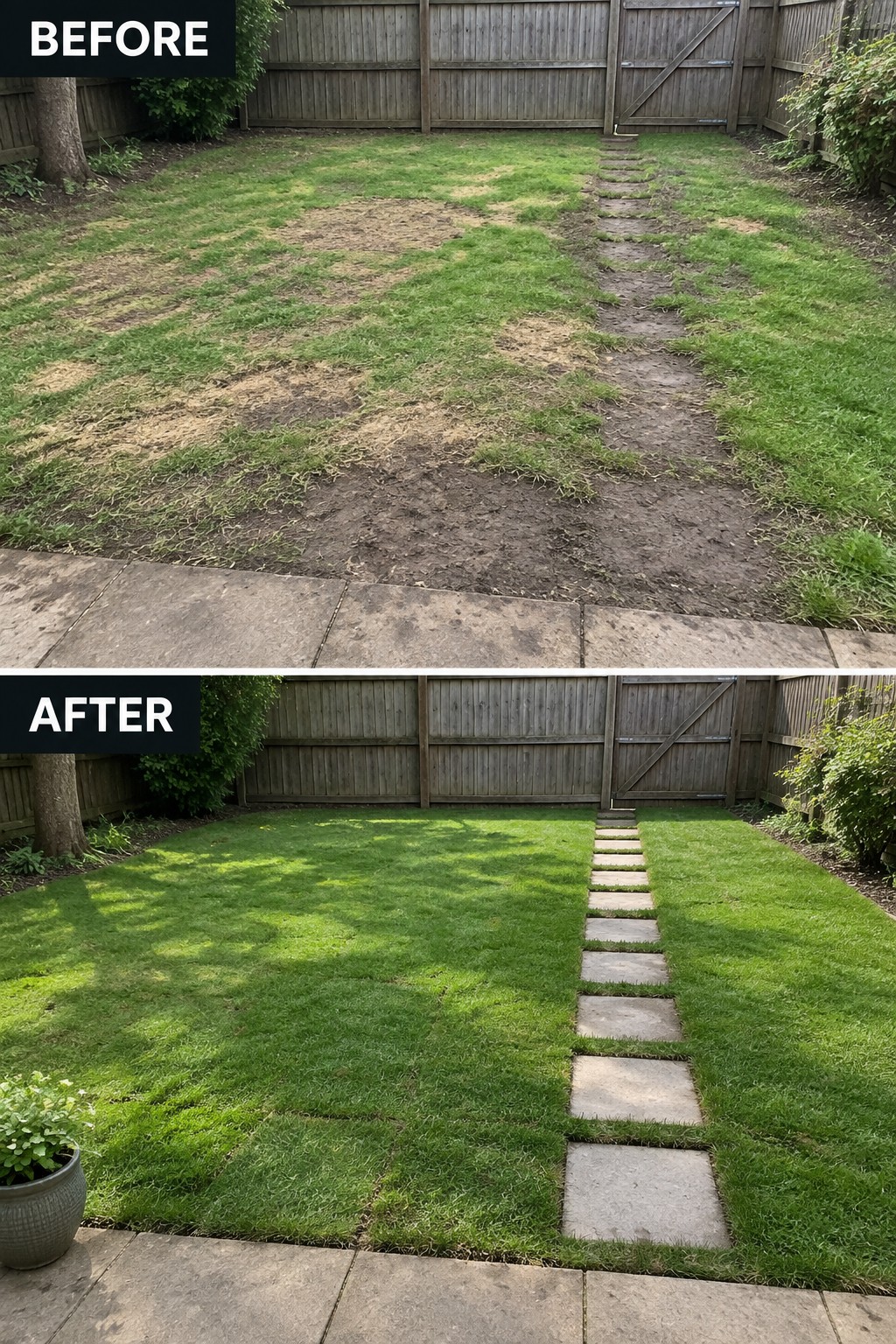
A patchy lawn with bare dirt and a wandering path makes the whole space feel unfinished. Laying a straight line of stepping stones and restoring the grass to an even green gives the yard a clear layout and makes it look cared for.
This idea suits smaller backyards where you want to keep things practical. Fix the lawn first so it grows thick, then add the path along the route people actually use. That keeps the space open while giving it shape.
Replace A Plain Concrete Path With Stepping Stones
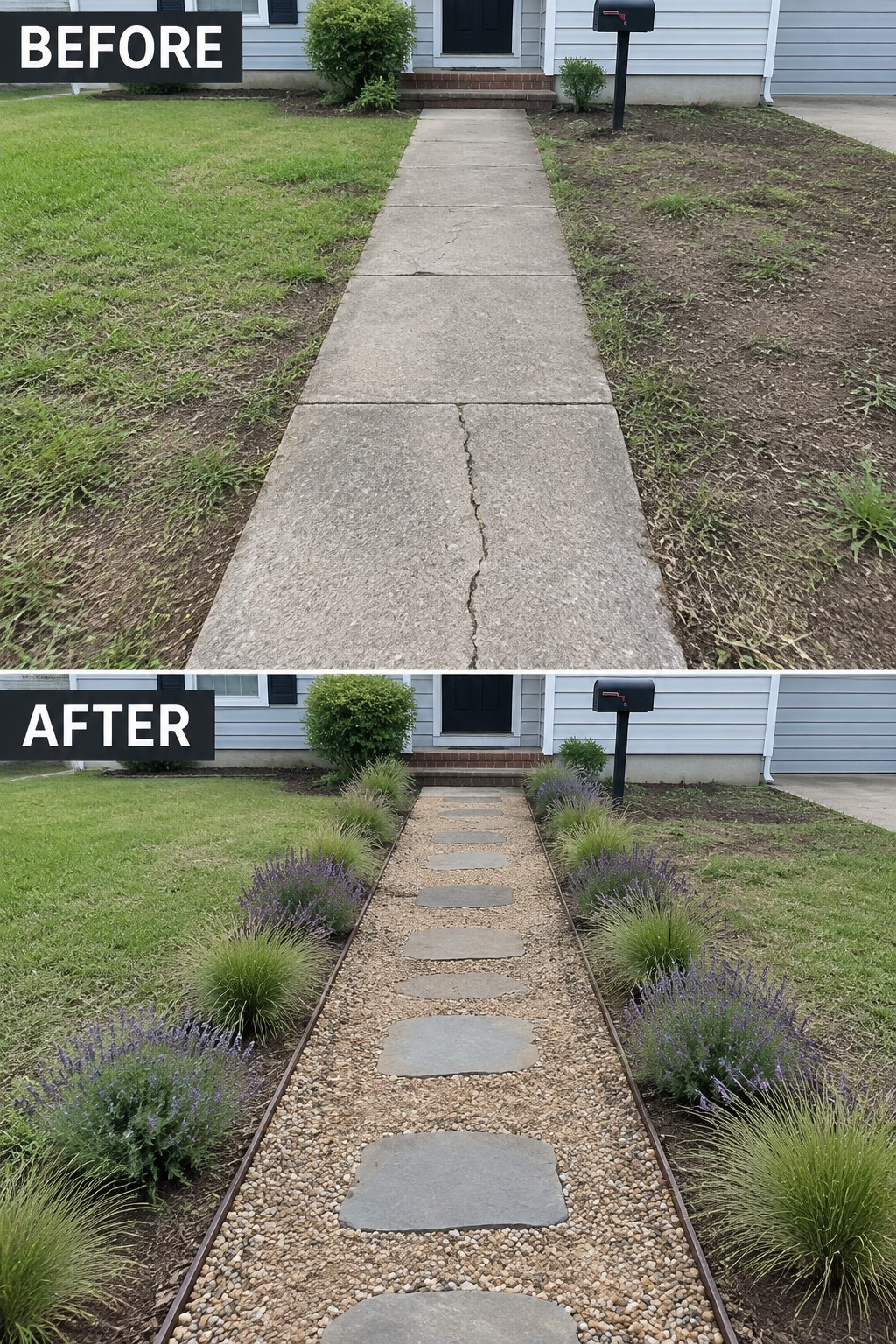
A solid concrete walkway often looks harsh next to grass and can crack over time. Switching to stepping stones set in gravel softens the look and lets the path blend into the surrounding planting instead of cutting through it.
This approach works best on straight front walks where you want to add some garden structure without a full redesign. Lay the gravel first for drainage and weed control, space the stones for a comfortable stride, then add low plants along the edges to frame the new path.
Replace A Chain Link Fence To Add Privacy And Structure
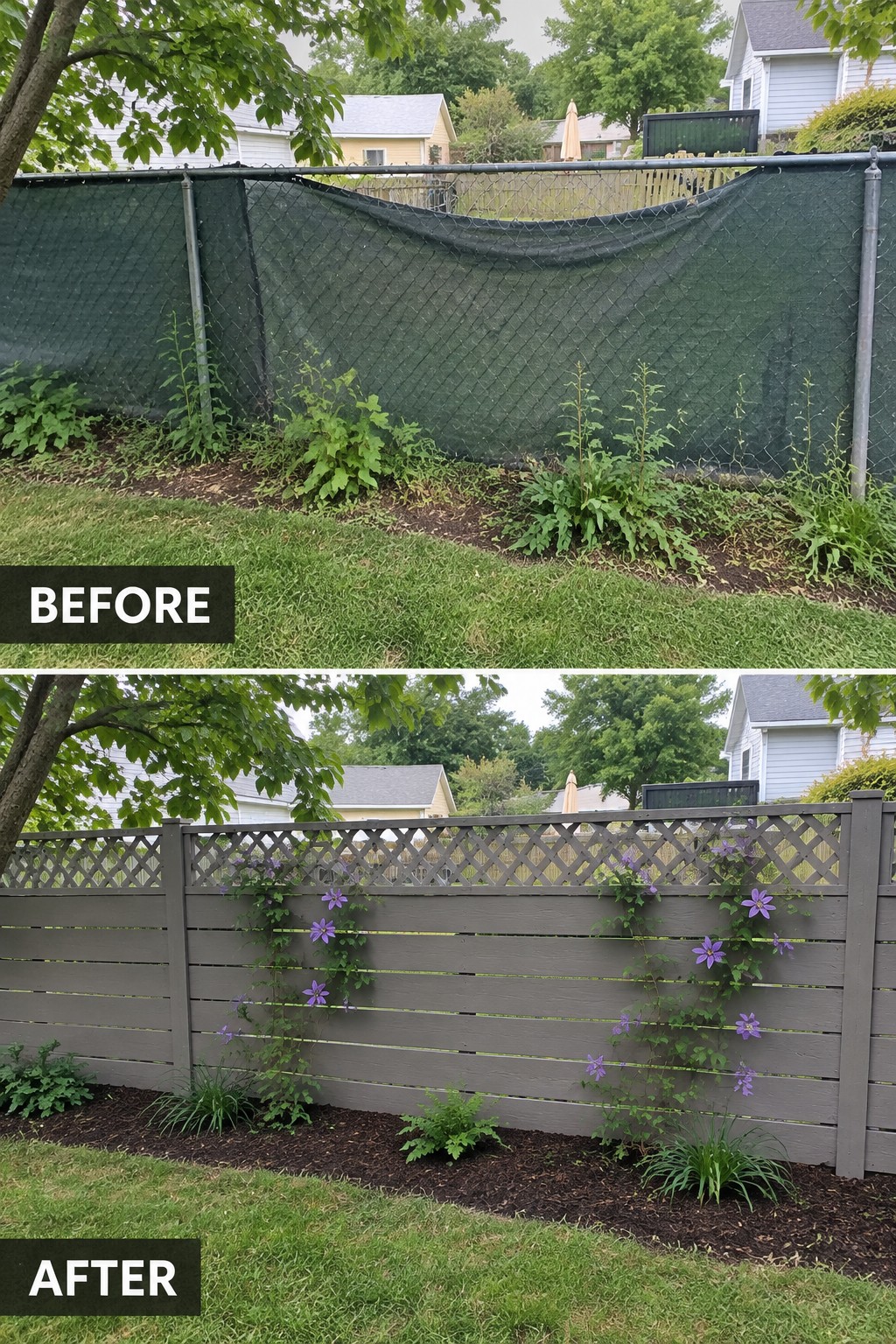
A chain link fence with a drooping privacy screen often leaves the edge of a yard looking messy, especially when weeds take over the base. Swapping it for a solid wooden fence with a lattice top gives the space a clean line and real privacy. The horizontal boards create a simple backdrop, and adding a few climbing plants softens the look without much extra work.
This approach works well in smaller backyards where you want to define the boundary without a big landscaping project. Start with the fence itself, then keep the planting simple with one or two types of climbers along the base. It suits homes that already have some garden beds but need better separation from neighbors or a cleaner overall look.
Use String Lights To Make A Patio Feel Cozy
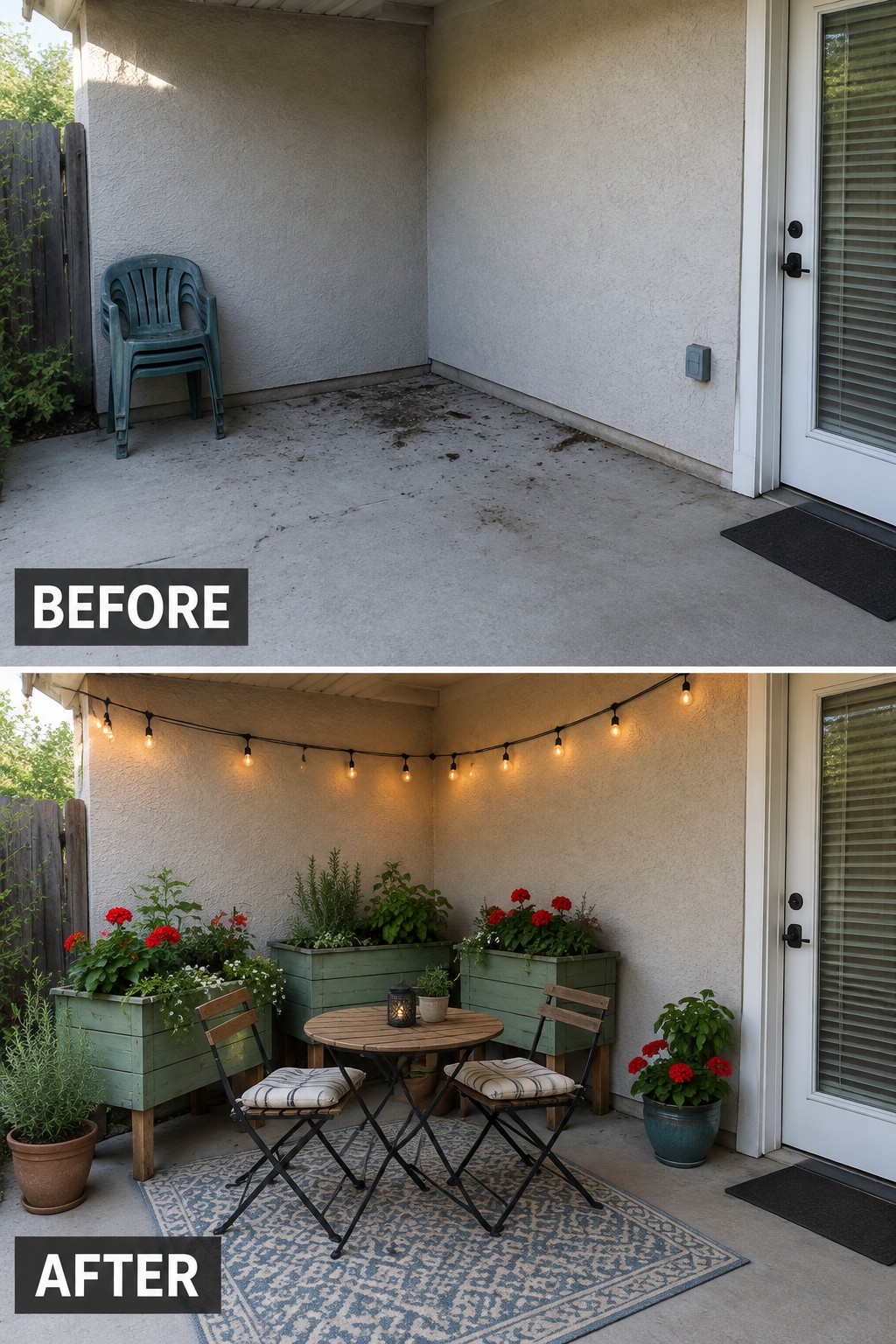
A bare concrete patio often sits unused because it feels like just a slab. Running a simple string of lights along the walls and adding a rug with a small table and chairs turns the same space into an outdoor room that people actually want to sit in after dark.
This idea works best on covered patios or porches that already have some shelter. Hang the lights first so the area feels defined at night, then keep the furniture light and movable so you can adjust the layout as needed. It suits smaller yards or side patios where you want an easy weekend project instead of a full remodel.
Define Narrow Garden Beds With Edging And Mulch

A narrow strip along the side of a house often ends up as a weedy mess because it has no clear shape. Adding a simple stone edge and a layer of mulch turns that same space into something that looks planned rather than forgotten. The dark mulch also helps keep new weeds from taking over right away.
This idea works best on any tight area between the foundation and a walkway where you want low maintenance. Lay the edging first so the bed has a clean line, then spread mulch a few inches deep and plant a few varieties that fill in without crowding. The result stays neat with only occasional weeding and an extra bag of mulch each spring.
Add A Vertical Herb Garden To A Narrow Side Yard
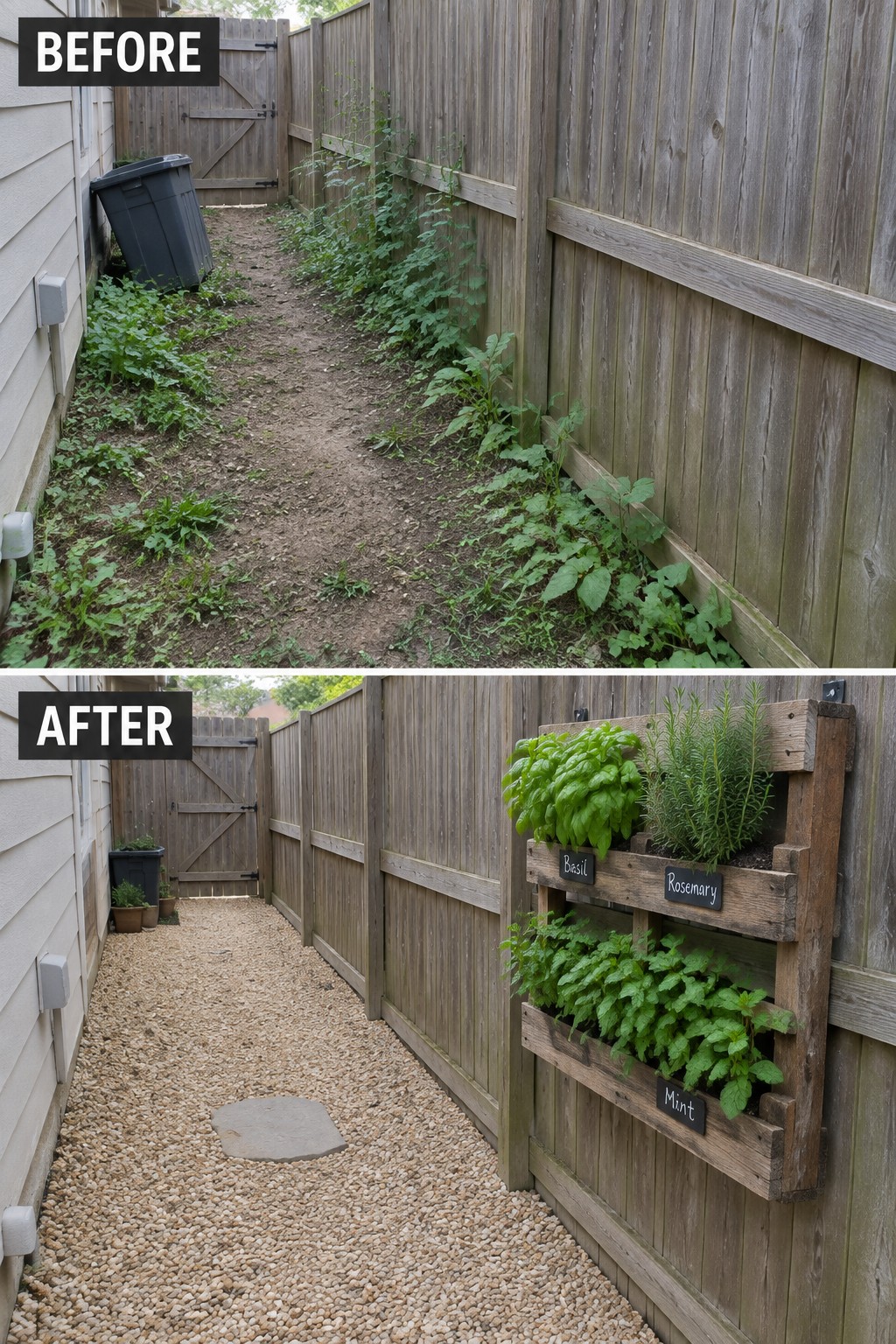
A narrow side yard often ends up as wasted space because there is no room for traditional beds. Clearing the weeds and laying down gravel gives the area a clean path first. Then mounting a simple wooden planter system on the fence adds growing space without taking up any floor area. The result turns a neglected strip into a spot that actually produces herbs.
This idea works best along fences that get decent sun and where you want fresh basil, rosemary, or mint close to the kitchen. Use sturdy wood that can handle weather, keep the planters at a comfortable height for watering, and start with just a few varieties so the space stays manageable.
Add Raised Beds To Give A Sloped Yard Structure
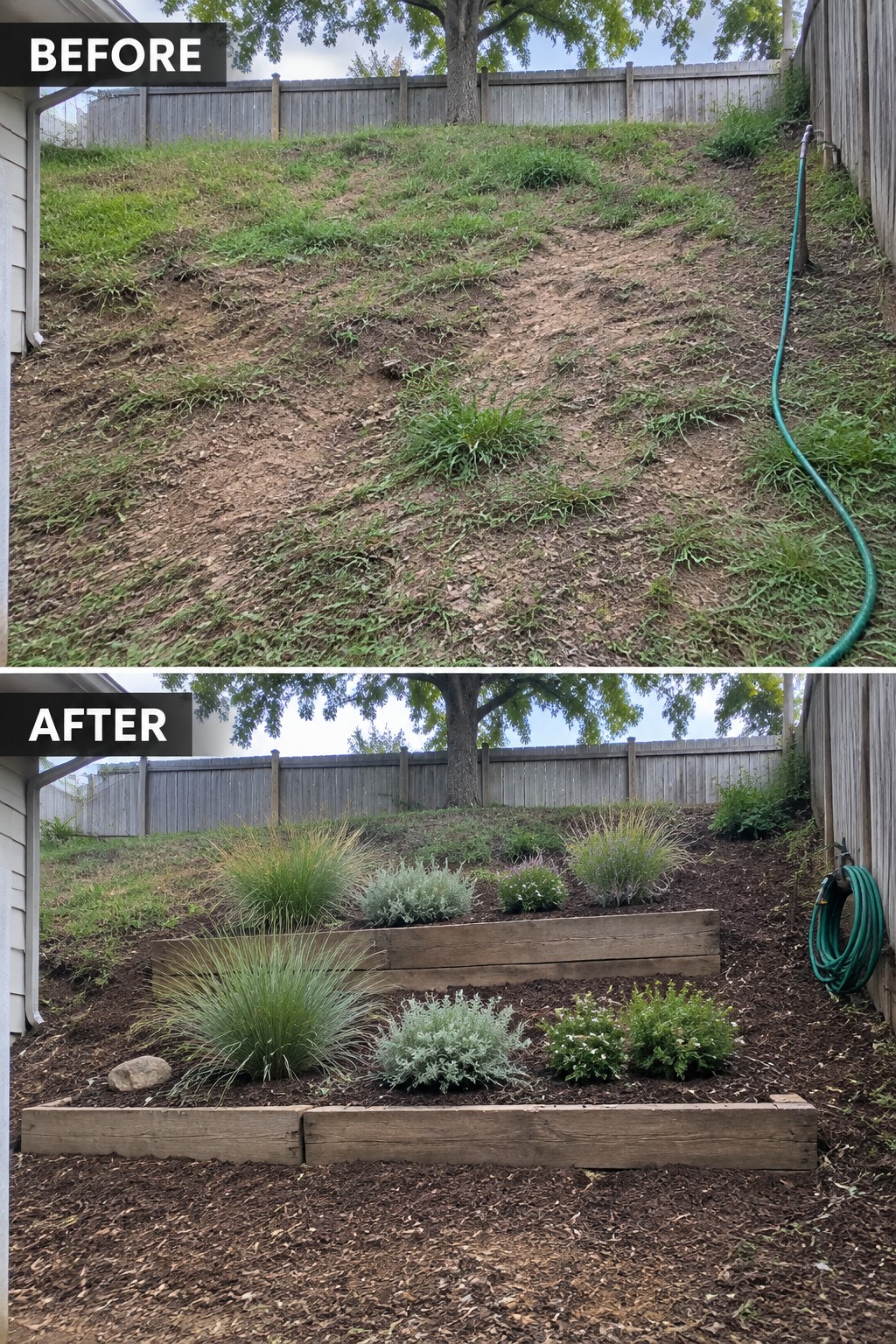
A weedy slope with no clear lines is hard to keep neat. Adding a few wooden raised beds turns that same hill into something you can actually plant and maintain without everything sliding or spreading out of control.
This approach works best on yards that drop away from the house. The beds create flat planting zones, hold the soil, and give you a simple way to group plants by size or water needs. Keep the frames low and use the same wood throughout so the slope still reads as one space instead of a collection of separate patches.
Clean Up Overgrown Foundation Plantings First

The biggest difference here comes from removing the tall, messy shrubs that had taken over the front beds. Once those were cleared, the new planting could be kept low and even, with a clear edge along the lawn and a simple mix of rounded shrubs and flowering plants filling the space.
This approach works well on any house where the original shrubs have grown out of scale. Start by cutting everything back to the ground, then reshape the bed so it follows the house line without crowding windows or walkways. Keep the plant list short, use mulch to hold it together, and add a few larger focal plants only where they can be seen from the street.
Define A Play Area With Simple Log Edging
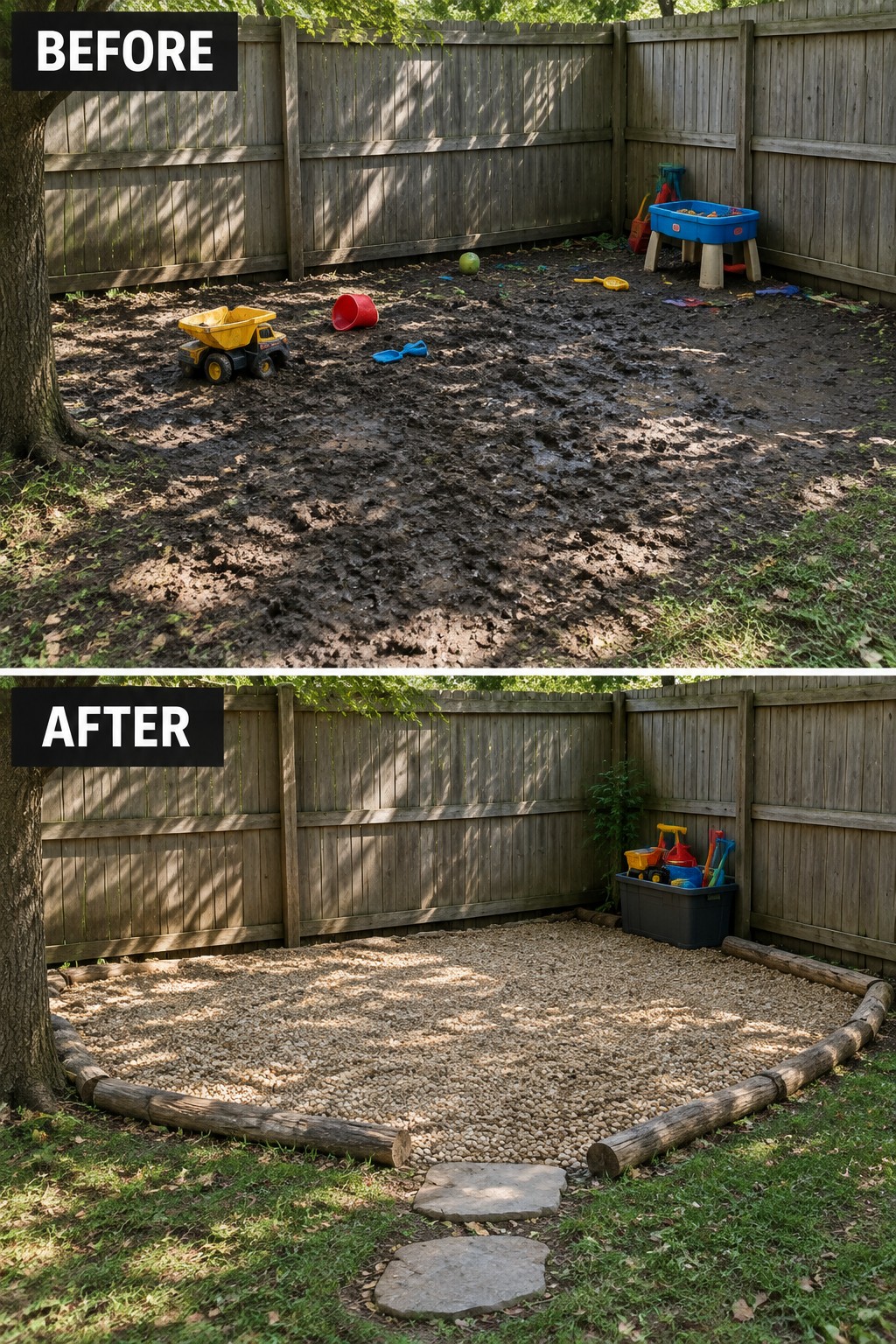
A muddy backyard with toys scattered across bare dirt feels more like a problem than a play space. Adding a clear border of logs and filling the inside with gravel turns that same area into a contained zone that stays drier and looks intentional. The stepping stones leading in make it easy to reach without tracking mud everywhere.
This approach works best in small yards where you want one dedicated spot for kids or pets without covering the whole lawn. Lay out the edging first to set the shape, then add gravel deep enough to handle rain. Keep the border low so it does not block mowing or garden beds on the other side.
Add Gravel To Give An Overgrown Border Clear Shape
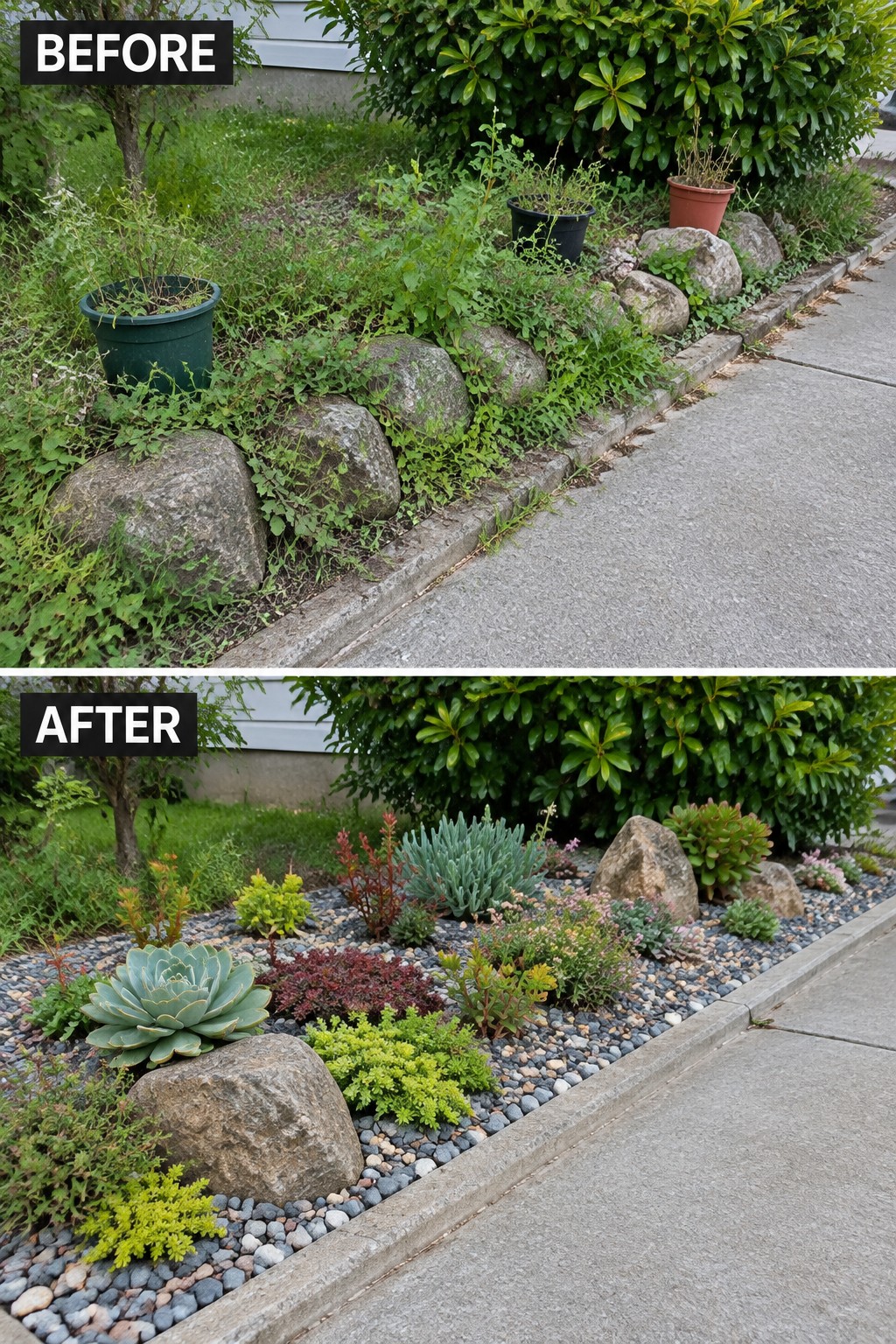
An overgrown strip next to a walk quickly starts to look neglected. The before photo shows weeds spreading everywhere, with rocks and pots scattered around with no clear plan. Adding gravel over the cleared soil changes the whole feel. It creates a clean surface that makes the remaining plants look like they belong together instead of fighting for space.
This idea suits narrow borders along sidewalks or driveways where you want something simple to maintain. Start by pulling out the weeds, lay down fabric if the area tends to regrow fast, then spread gravel and plant in small groups. The gravel keeps the bed looking neat even when a few plants are still filling in.
Refresh Your Front Steps With Paint And Planters
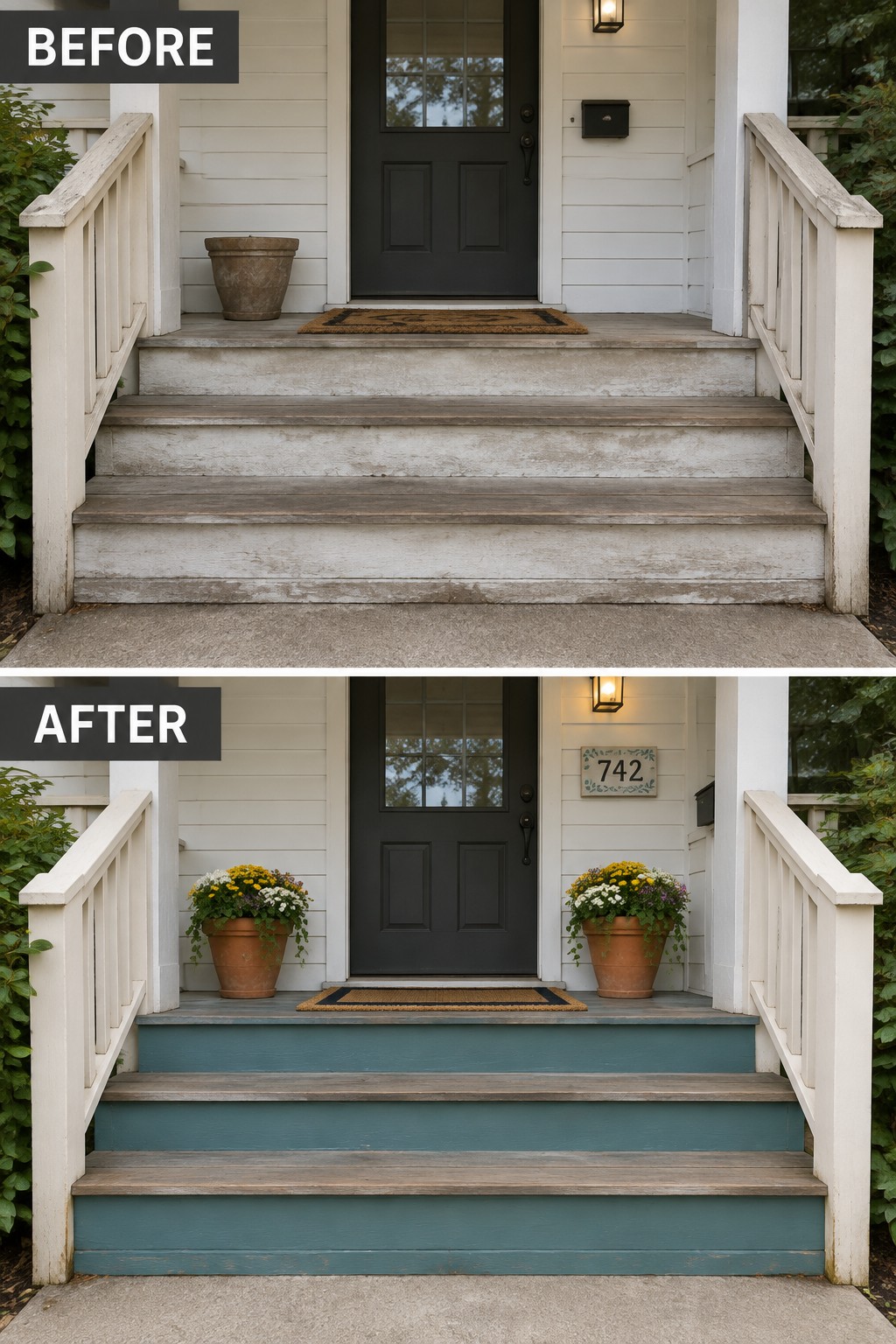
A simple coat of paint on the stairs turns a faded, tired entry into something much cleaner. The teal color on the treads and risers gives the porch a fresh base, while two matching pots with bright flowers placed on either side of the door add balance without crowding the space.
This idea works best on small front porches where you want quick impact without major construction. Start with a good exterior paint made for steps, then choose plants that fit the light conditions you have. Keep the rest of the area simple so the color and plants stay the focus.
Add Path Lights To Define A Garden Border
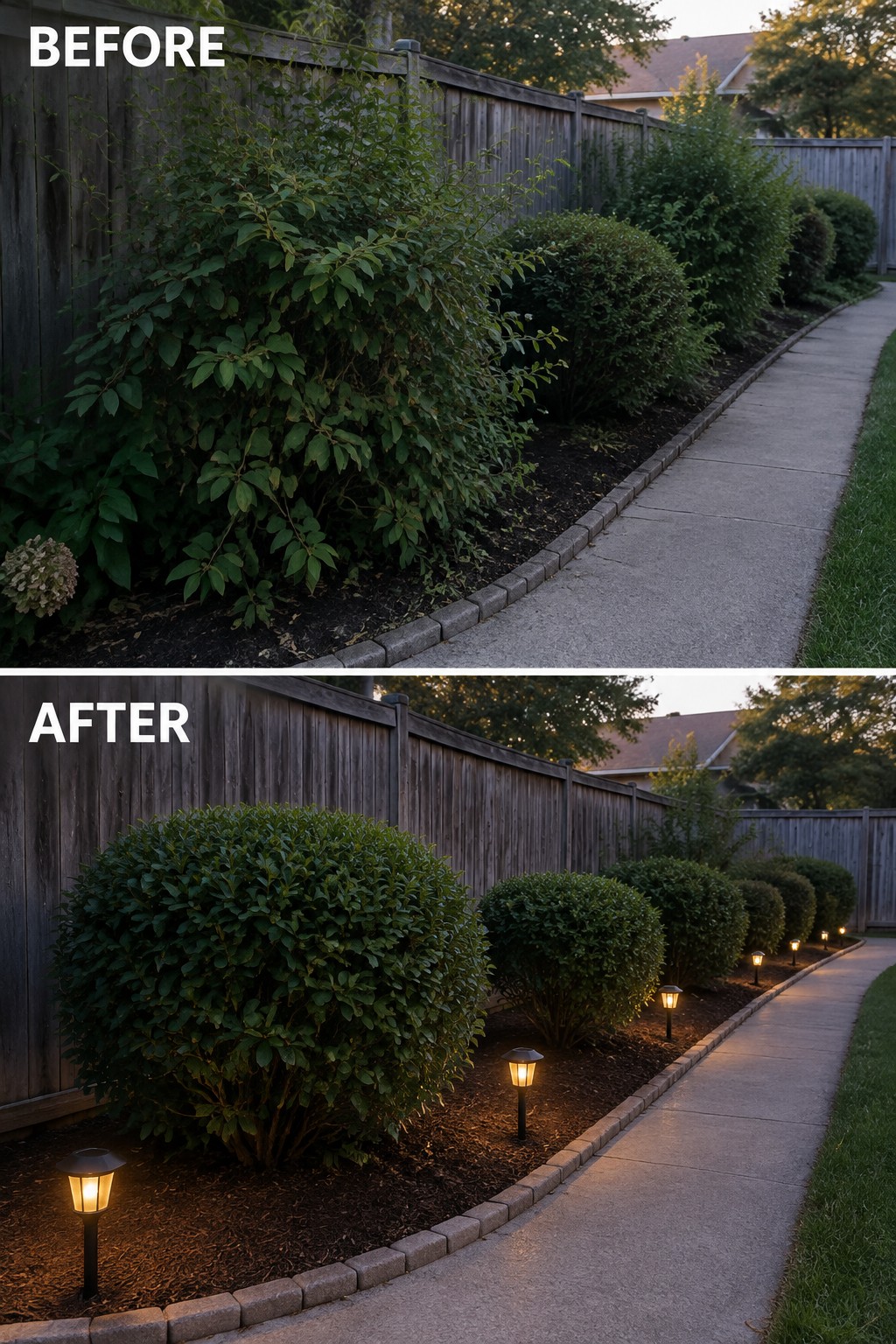
One simple way to make a garden edge look finished is to add path lights after cleaning up the planting. The before photo shows shrubs growing wild and uneven along the fence, with no clear line next to the walkway. Once the bushes are trimmed into rounded shapes and lights are placed along the curve, the border gains structure and looks intentional even at dusk.
This approach works best on side yards or narrow beds where you want definition without adding new hardscaping. Solar lights need no wiring and can be moved if the spacing feels off at first. Keep the number of lights modest so the path stays easy to walk and the focus stays on the planting rather than the fixtures.
Add Planters To A Fence For Quick Color
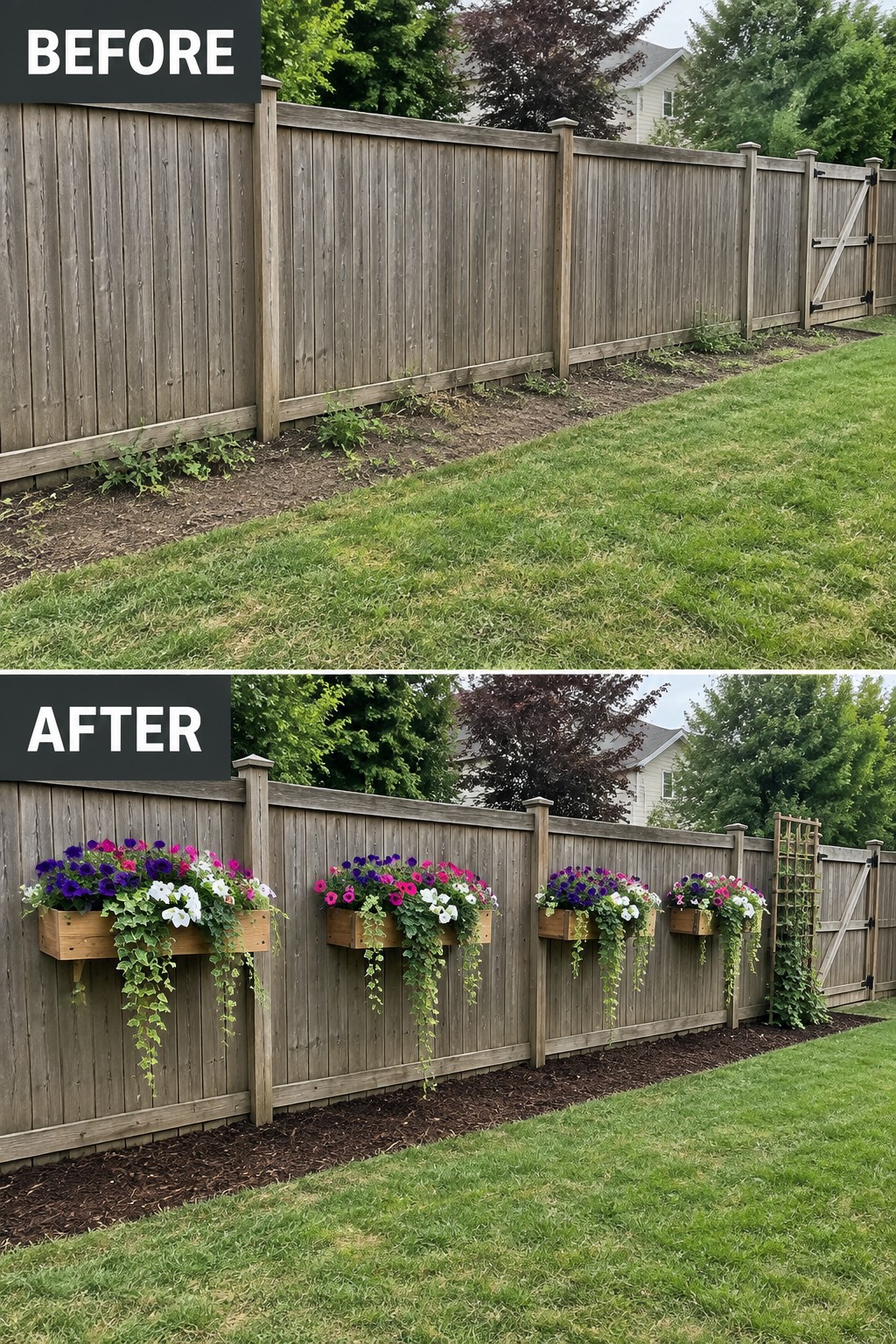
Mounting planters right on the fence gives a plain border some life without digging a full bed. The after version shows how a few wooden boxes filled with flowers and trailing vines turn the same fence into a planted feature, with mulch keeping the base tidy.
This idea works best along a long fence next to grass where you want color but not a lot of ground work. Keep the boxes spaced out so the fence still shows through, and choose plants that can handle the sun and wind in your spot.
Turn A Bare Lawn Into A Fire Pit Area
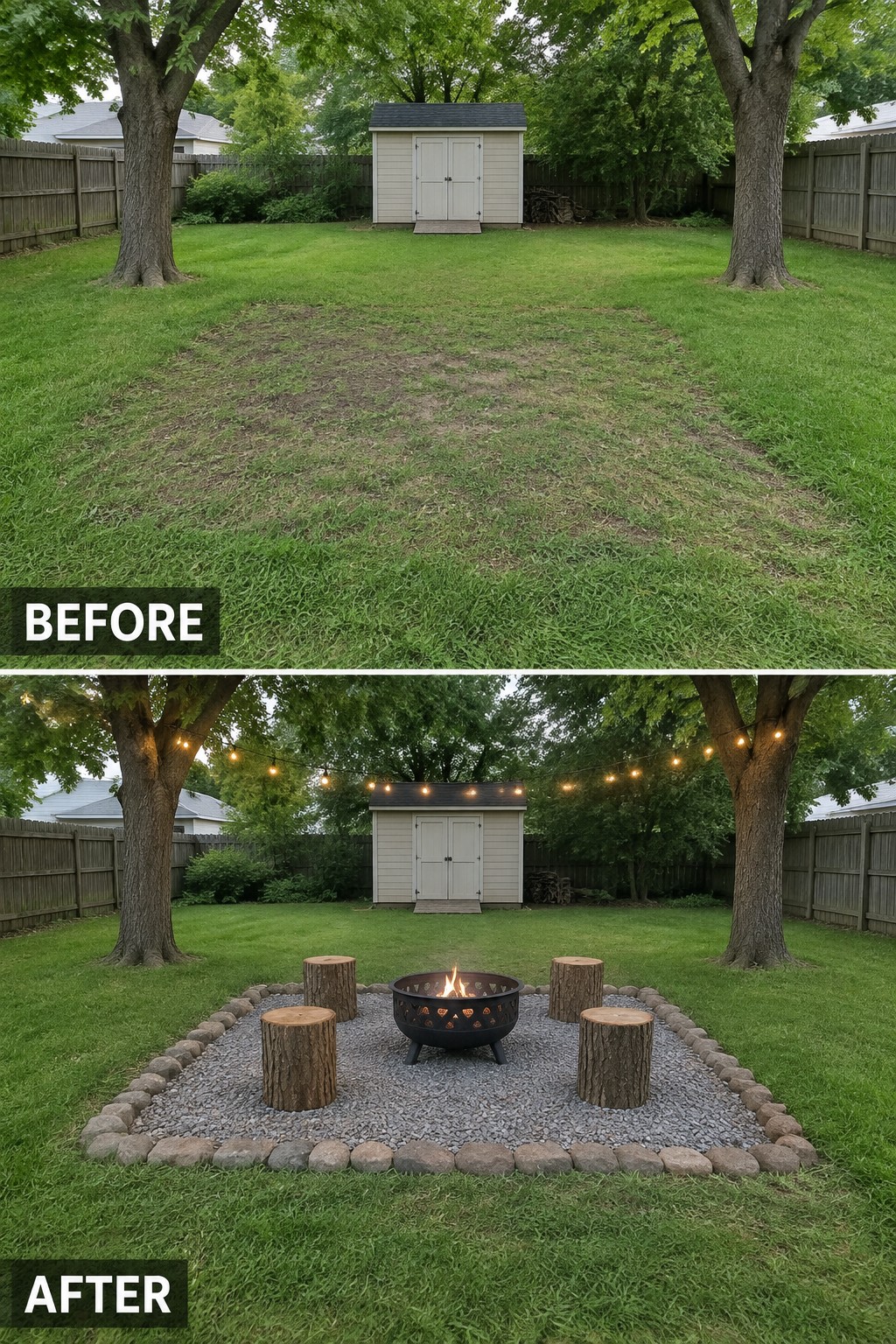
Adding a fire pit zone is one of the simplest ways to make an empty backyard actually usable. The worn path through the grass shows how little the space was getting used before. Once the area is defined with gravel and a stone border, plus a few logs for seats, it becomes a clear spot for sitting outside without needing a full patio build.
This works best in backyards that have room to spare but lack any real structure. Pick a flat section, keep the gravel layer thick enough for drainage, and use seating that can stay out year round. String lights help extend the hours you will actually use it once the main pieces are set.
Turn A Patchy Grass Strip Into A Defined Rock Bed
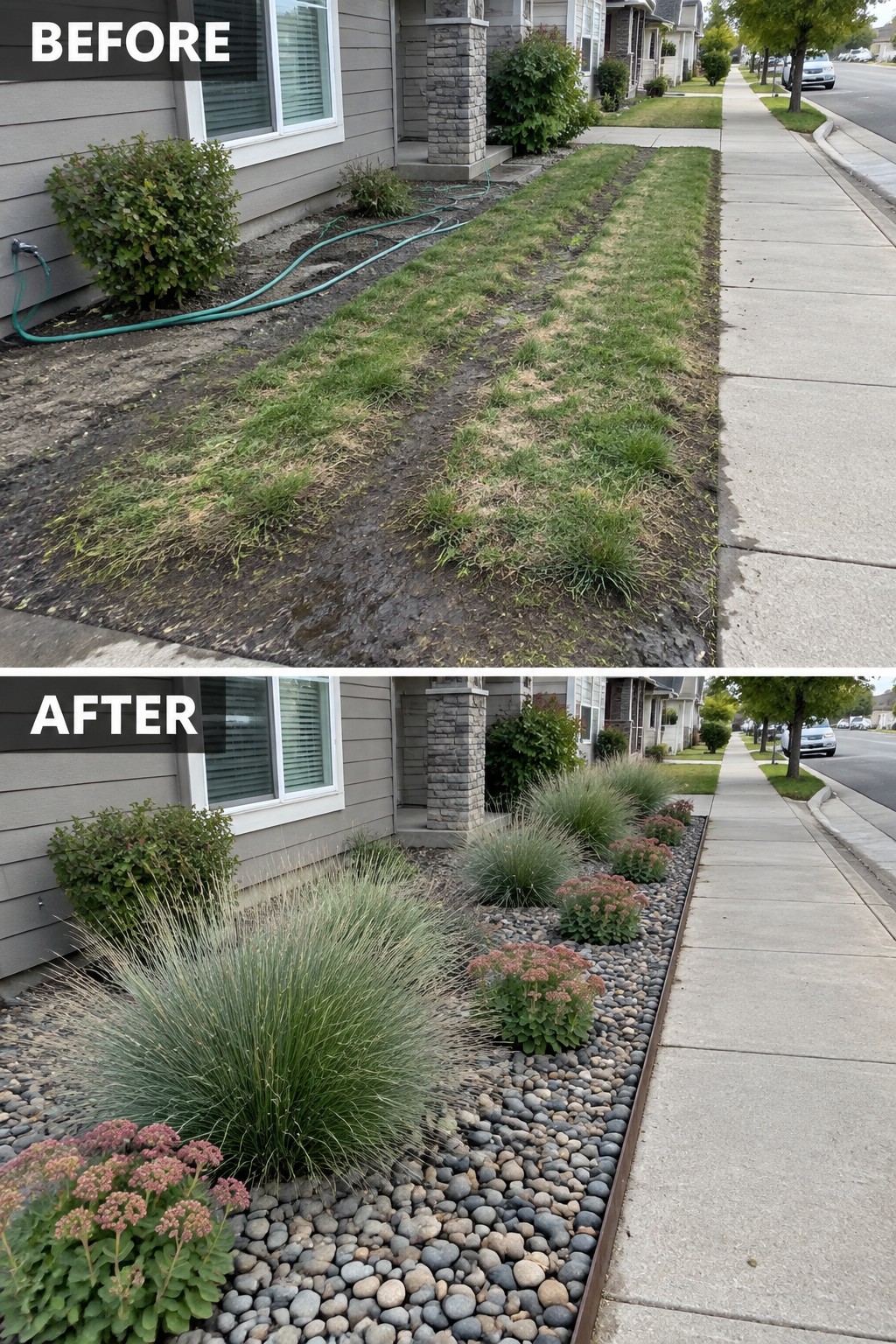
A thin strip of struggling grass next to the sidewalk often ends up looking worse than bare ground. The simple fix is to stop fighting the lawn in that narrow spot and switch to a rock bed edged cleanly along the path. A few clumps of ornamental grass and low flowering plants give the area shape without constant mowing or watering.
This approach works well along sidewalks, driveways, or the front of the house where grass gets compacted or shaded. Lay down edging first, add a weed barrier, then fill with river rock and group plants in clusters rather than spreading them out. The result stays neat with very little upkeep once the plants settle in.
Add A Raised Bed To Organize An Empty Corner
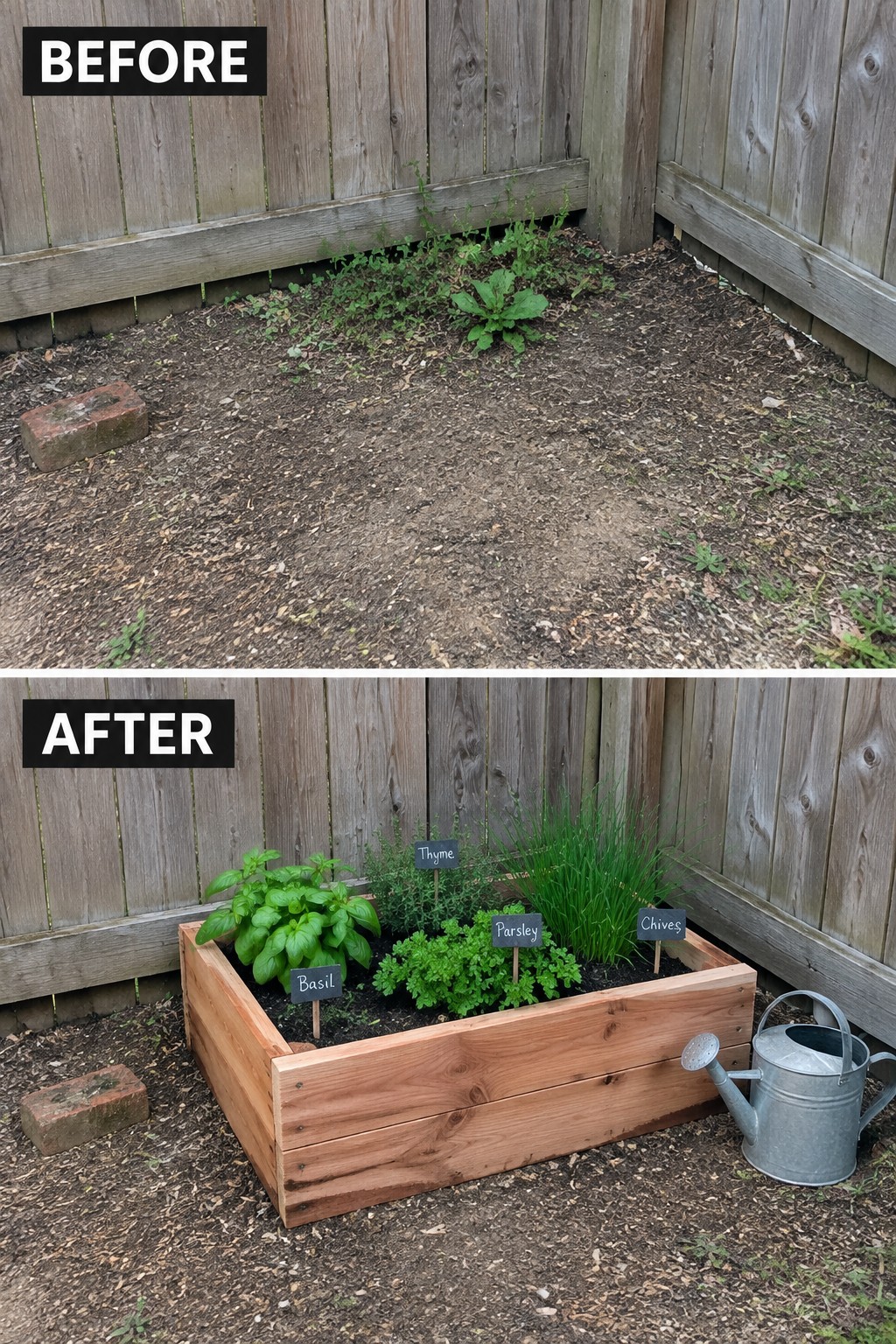
A raised bed gives structure to a spot that was mostly weeds and loose dirt against the fence. Instead of trying to plant straight into uneven ground, the box creates clear edges, holds the soil in place, and turns the area into a usable growing space right away.
This idea works well in small yards or tight side areas where the ground is hard to work with. Start with basic untreated lumber, fill it with good soil, and keep the planting simple at first so the bed stays easy to maintain. A watering can nearby makes the spot feel ready to use instead of just decorative.
Define A Pond Edge With Stepping Stones
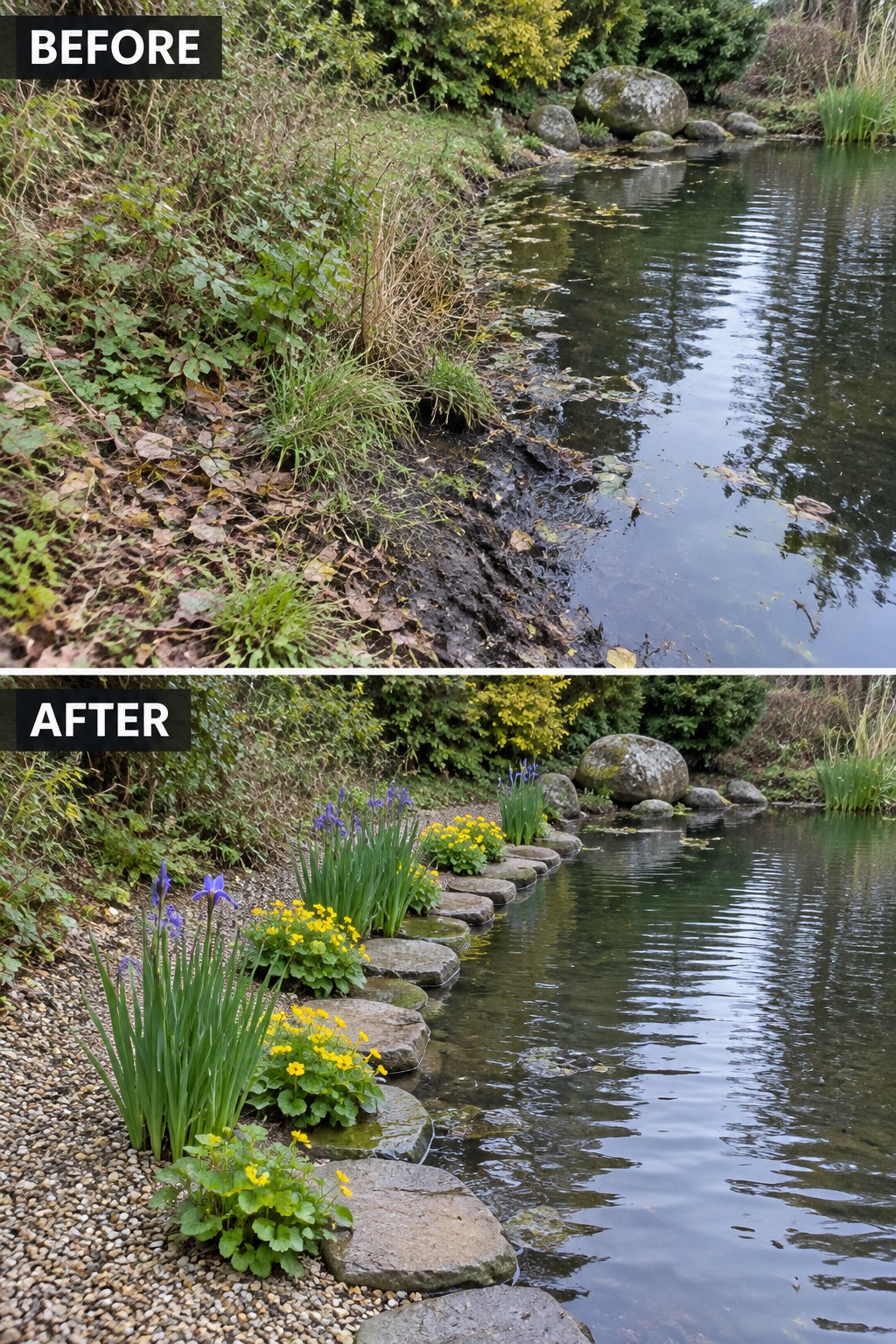
A messy pond bank often looks worse than it needs to because there is no clear line between the water and the garden. In this case the before photo shows a muddy, leaf-covered slope with no structure at all. Adding a row of stepping stones right along the water creates an instant edge that makes the rest of the planting look intentional instead of random.
This approach works well on any small water feature where the ground slopes down to the edge. Start by clearing the worst of the overgrowth, lay the stones to mark the boundary, then fill behind them with gravel and a few simple plants. The stones keep the soil from washing into the water and give you a place to stand when you need to reach in later.
Give A Plain Concrete Patio A Fresh Pattern
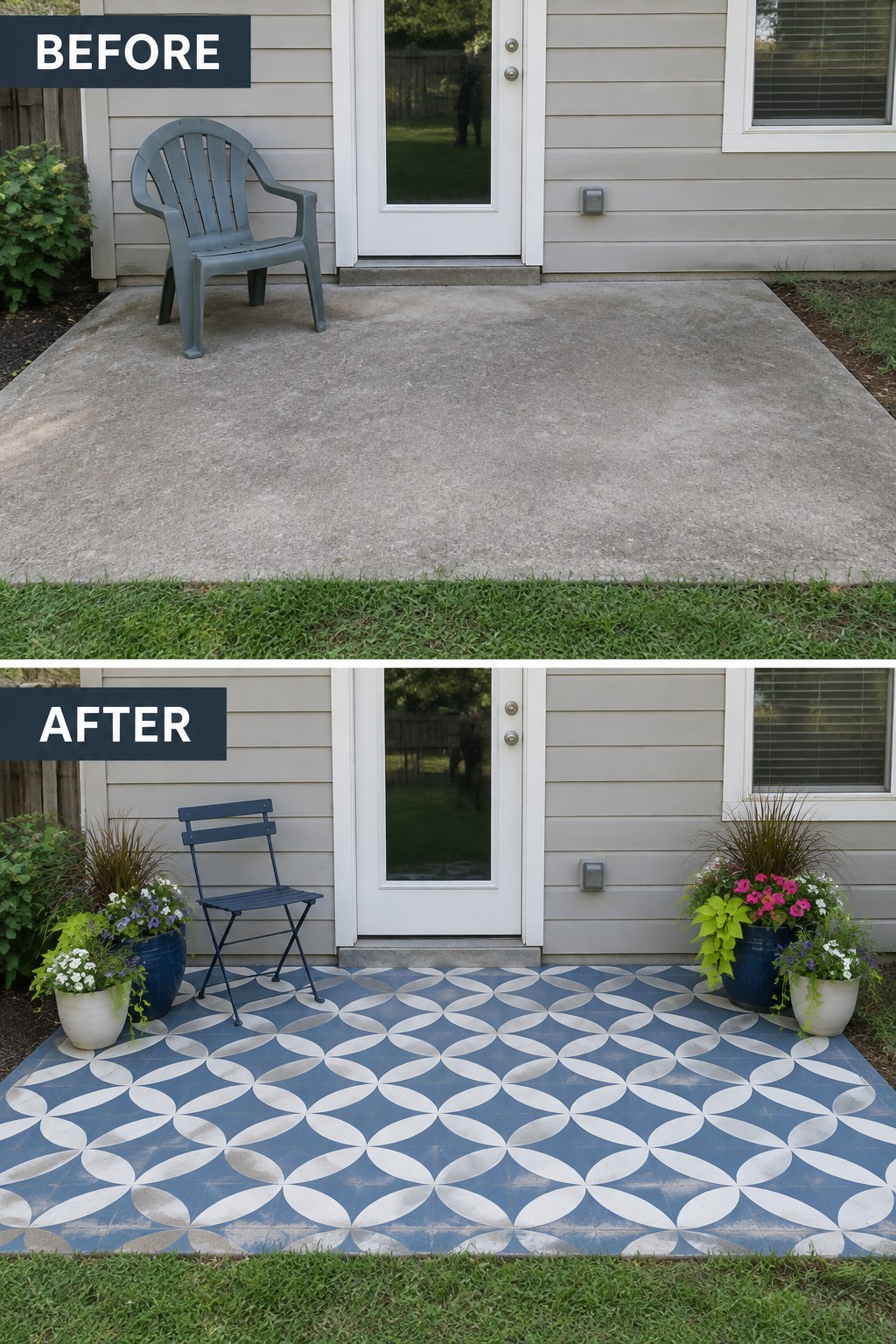
A bare concrete slab right outside the door can feel unfinished and uninviting. Adding a bold geometric pattern across the surface instantly changes the whole feel, while a simple chair and a pair of matching planters on each side help the space look balanced and ready to use.
This approach works well on any small entry pad or side patio where you want to add interest without a full rebuild. Start with a clean, dry surface, choose an outdoor stencil or paint made for concrete, and keep the rest of the styling light so the pattern stays the main feature.
Define Garden Beds With Simple Edging
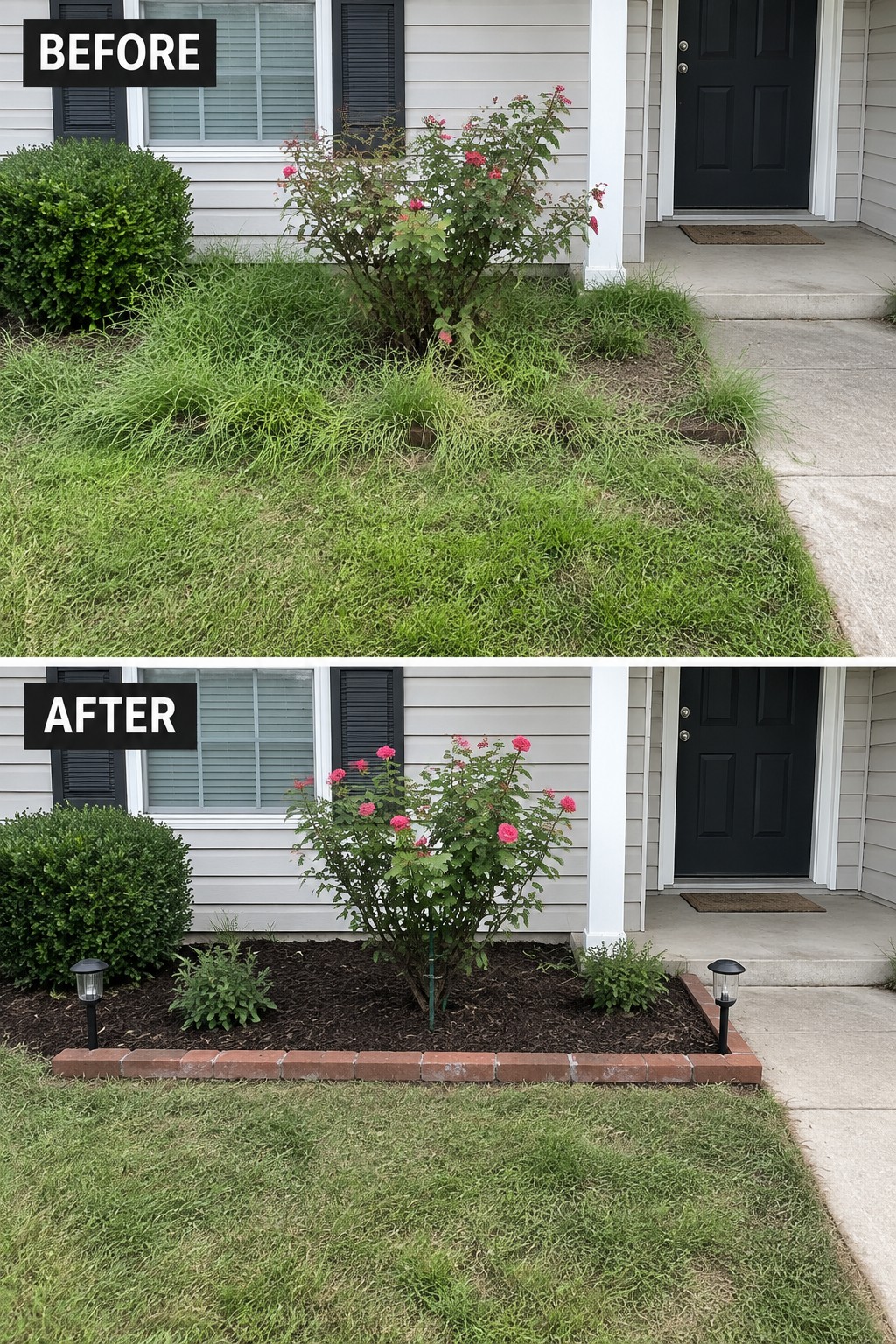
The before photo shows grass and weeds growing right up to the house with no clear separation, making the rose bush and foundation planting look messy and unplanned. Adding a low brick border and a layer of mulch creates a clean edge that keeps the lawn out of the beds and gives the plants a proper space of their own.
This approach works well on small front yards where you want structure without spending much. Start by cutting a straight line along the house, lay the edging, and add mulch before planting. It keeps the area looking neat even when the grass grows a little long and makes future weeding easier.
Frequently Asked Questions
Q: Do these ideas require a big budget? A: Most use items from a local store or even things you have on hand. Stick to one project to avoid extra spending.
Q: Which project should I try first if I’m new to DIY? A: Start with something simple like adding a border or painting pots. These take less than a day and build your confidence. You can move on to bigger changes after that.
Q: What if my garden is mostly shady? A: Focus on projects that use containers or vertical elements. These let you move plants around until they find the right spot. You can still get big impact without much digging.
