

Gardens often end up looking flat when planting stays low and there is little structure to guide the eye or create depth.
I have noticed that adding height in a few spots can make the whole space feel more organized even before the plants fully fill out.
Vertical planting fits into small budgets without much trouble.
Over time these changes help with privacy along boundaries and give the layout more definition as layers build up naturally.
It feels good to try one or two ideas in my own yard and see which ones actually hold up through the seasons.
Add Vertical Planting With A Pallet Along A Fence

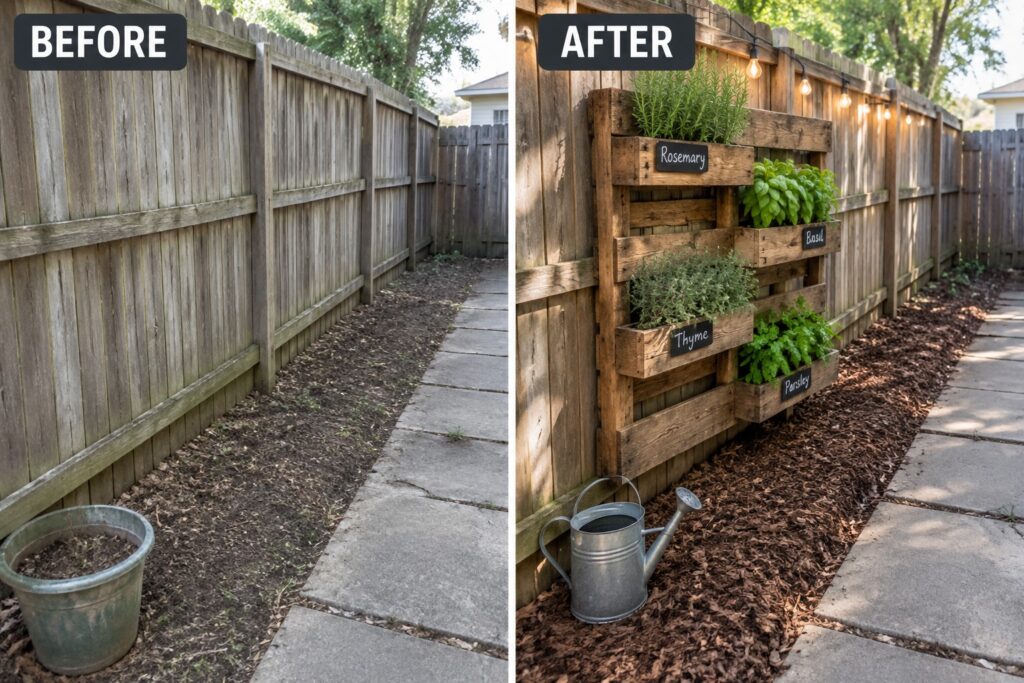
A long fence with nothing but dirt and one stray pot wastes the space and makes the side yard feel empty. A simple pallet mounted to the fence changes that by turning the vertical surface into a working herb garden without crowding the path.
This idea suits narrow yards or rental properties where you cannot dig big beds. Secure an old pallet, add a liner and soil, then plant herbs that stay compact. The mulch on the ground helps keep the area looking tidy while the plants grow in.
Add Vertical Planters To A Blank Wall

A bare brick wall next to a patio often ends up ignored because there is no good place to put plants on the ground. Attaching a few long troughs in rows gives you growing space at eye level and keeps the floor open for chairs or walking through.
This approach suits small yards or paved areas where floor space is limited. Use sturdy brackets, pick containers that can handle weather, and stick to herbs or compact plants that do not need deep soil. It turns an empty surface into something useful without major construction.
Add Vertical Planting To A Plain Create A Fence-Mounted Vertical Garden

A long fence often ends up as wasted space with tools leaning against it and bare dirt at the base. A vertical planter changes that by turning the fence itself into the garden. The pockets hold flowers and herbs at eye level, and the bench below gives the spot a clear purpose without crowding the lawn.
This works best in smaller yards where ground space is limited. Choose a sturdy fabric or plastic planter that can handle weather, pick plants that match the light on your fence, and keep the design simple so it stays easy to water and maintain.
Add A Trellis For Vertical Planting On A Blank Wall

A blank wall next to an overgrown patch of grass can feel like wasted space. Adding a simple wooden trellis and letting climbing roses fill it in gives the area height and structure without needing a big garden bed or lots of ground cover.
This works best along the side or back of a house where you want something green but do not have room for wide borders. Clear the weeds first, put down gravel or mulch along the base, and choose a trellis that can handle the weight of the plants once they grow. Keep the seating light so the focus stays on the wall.
Use A Ladder Shelf For Vertical Planting
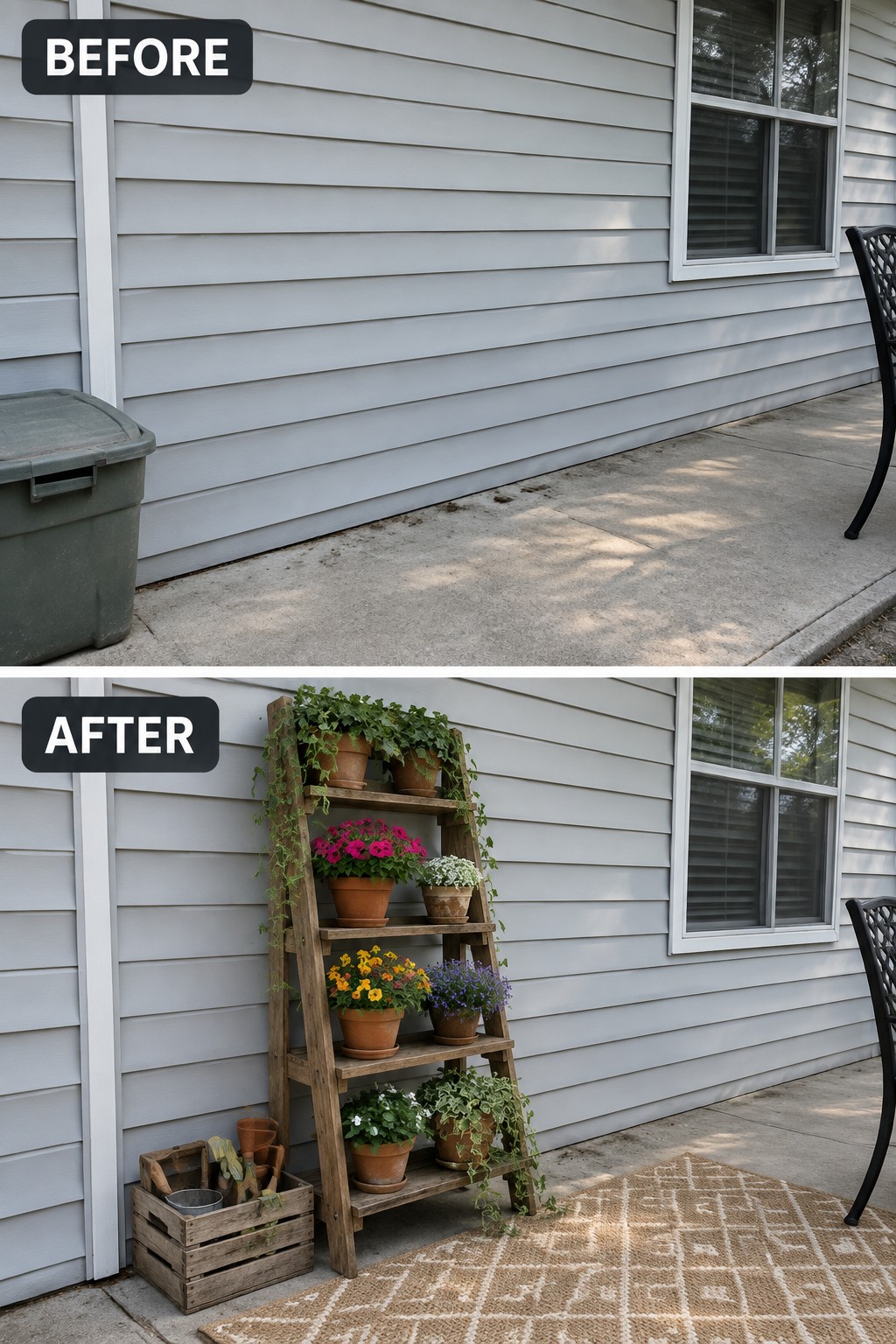
A plain stretch of siding next to the patio often ends up ignored because there is no good place to put plants. Setting a simple wooden ladder against the wall gives you multiple levels for pots without spreading everything across the ground. The change turns an empty corner into a small garden display while still leaving room to walk.
This idea works best on a side yard or patio edge where space is tight. Start with a sturdy ladder or similar open shelving, then add pots in a mix of sizes so the arrangement feels full but not crowded. Keep the plants in their containers so you can move them easily or swap them with the seasons.
Use Vertical Planting On A Plain Wall
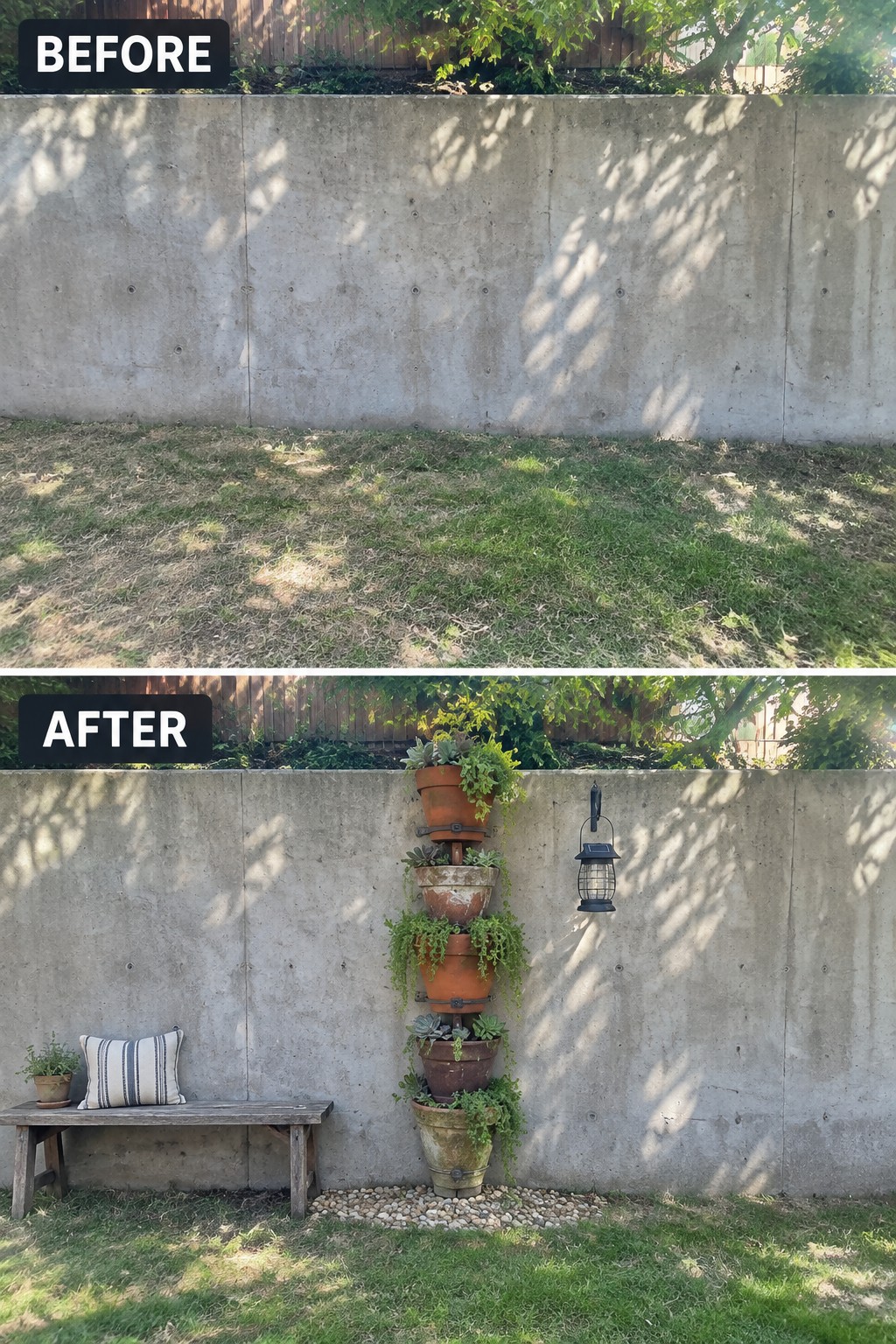
A blank concrete wall next to a strip of grass can feel like wasted space in a garden. Stacking old terracotta pots with a mix of succulents and trailing plants turns that same wall into a simple vertical feature. The addition of a low bench and a bit of gravel at the base keeps the area from looking empty while still leaving the focus on the planting.
This idea works best on walls that get decent light and where you want to add height without taking up much floor space. Start with a few sturdy brackets or a simple frame to hold the pots, then choose plants that can handle your climate. It is an easy way to bring life to a flat surface using items you may already have.
Turn A Blank Wall Into A Vertical Garden
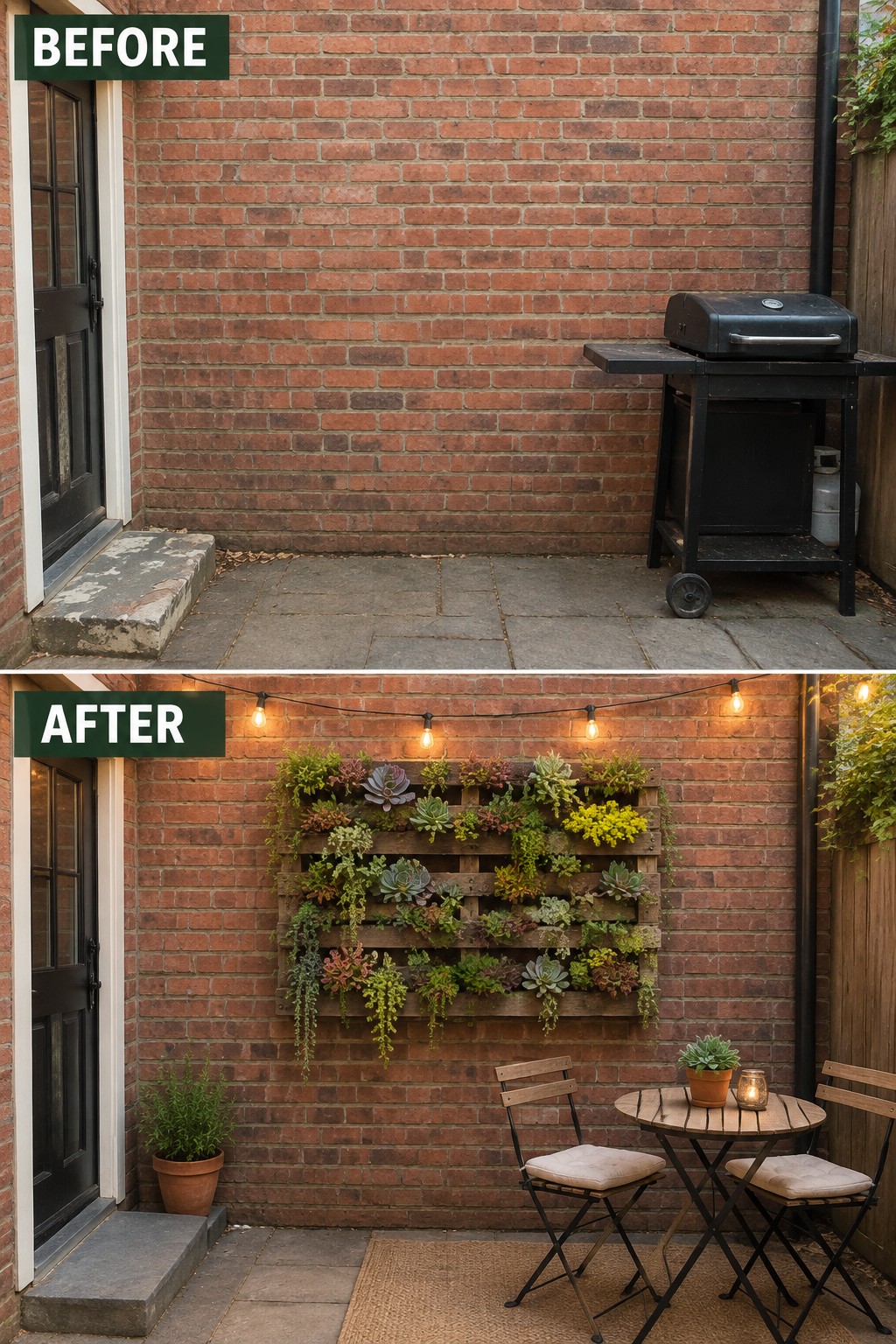
A plain brick wall can leave a patio feeling bare and unused. Adding a vertical garden on a simple wooden frame changes that by bringing plants up to eye level and creating a clear focal point. The succulents in the after photo show how a few rows of planting can soften the space without crowding the floor.
This idea works best on small patios or yards where ground space is limited. Use a sturdy frame that can handle the weight, pick plants suited to your light conditions, and keep the rest of the area simple with just a table and chairs.
Train Fruit Trees On Wires For Vertical Interest
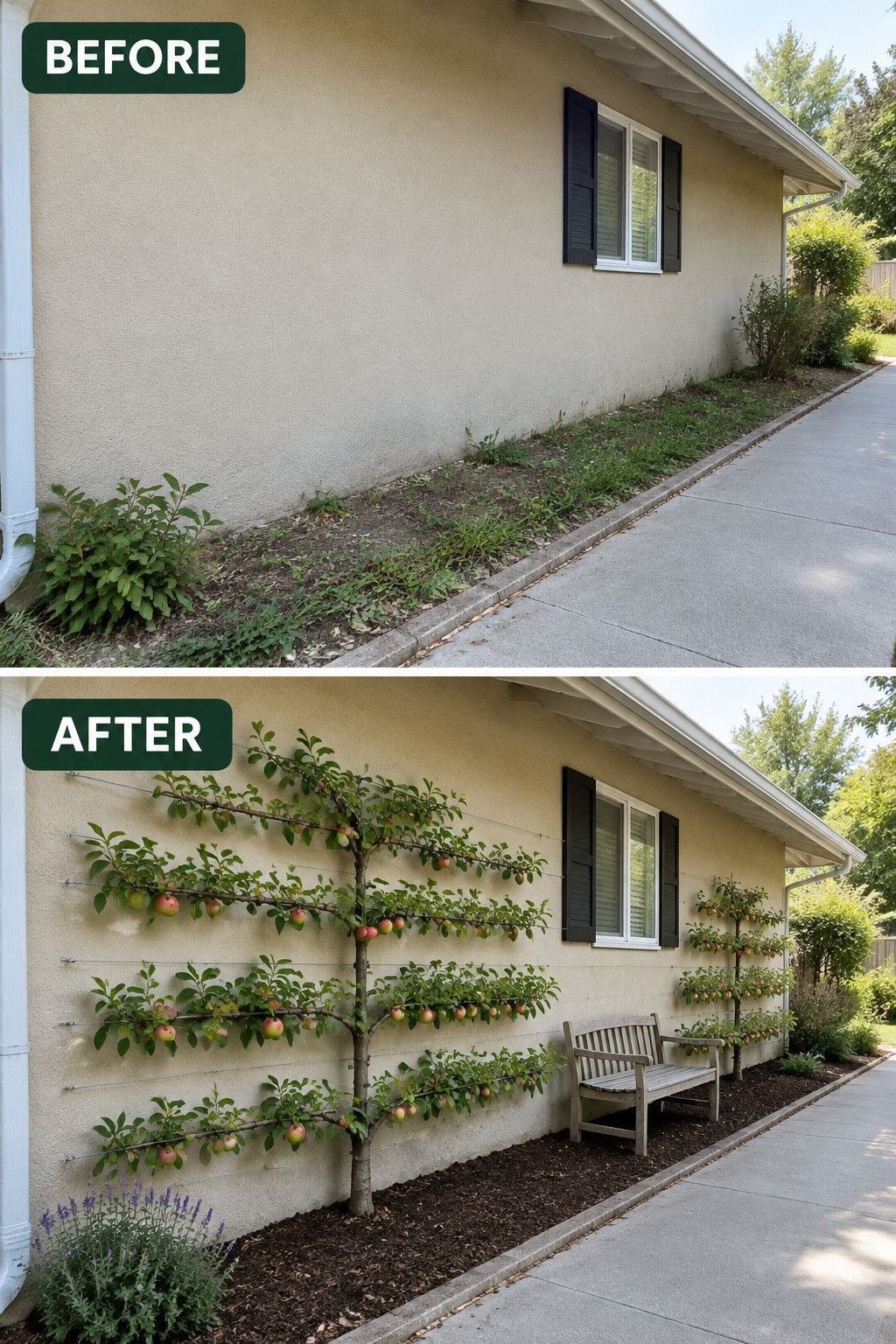
A narrow strip of ground next to a house often ends up as weedy or empty space. Running horizontal wires along the wall lets you train young fruit trees flat, turning that thin bed into a productive vertical garden without taking up extra room.
This method suits homes with long side walls and limited planting depth. Choose varieties suited to your area, prune lightly each year to maintain the shape, and keep the bed mulched so the trees stay healthy. The same wires can support several trees in a row while still leaving room for a simple bench nearby.
Create A Vertical Garden Along Your Fence

Mounting a row of vertical planters on a fence turns a plain strip of yard into productive growing space without taking over the ground. The before photo shows just grass and an empty fence line, while the after shows the same spot filled with tall green tubes that hold strawberries and other plants at easy reach. This keeps the area simple but adds real function where there was none before.
This approach works best in narrow yards or along property lines where traditional beds would crowd the space. Start with a clean fence and choose sturdy planters that can handle weather, then add mulch underneath to keep the ground tidy. It suits homes with limited lawn area or anyone who wants fresh produce close to the house without digging new beds.
Add Vertical Planting To A Retaining Wall
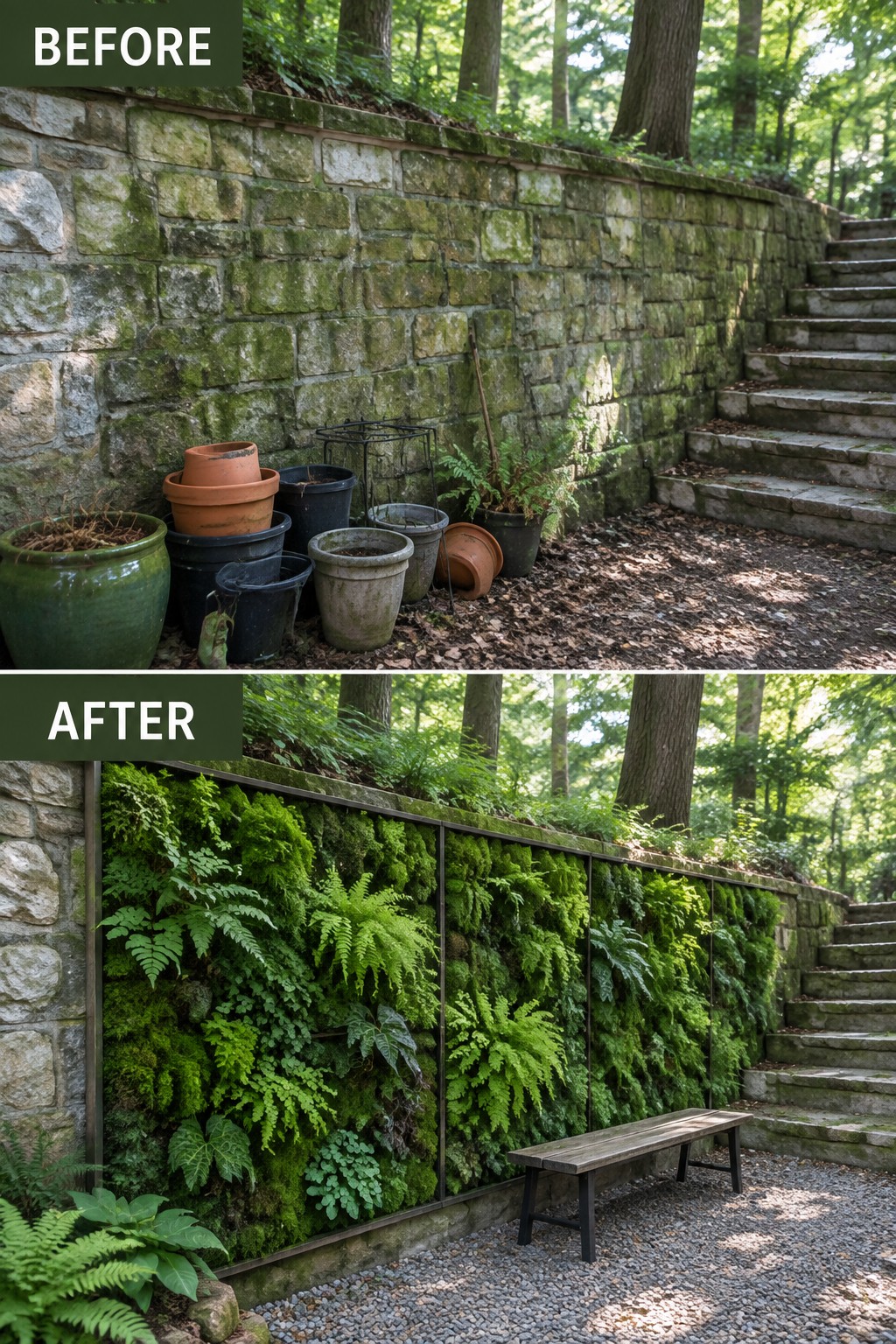
A retaining wall can easily turn into a storage spot for old pots and debris. Covering it with a vertical garden changes the whole feel by bringing the planting up to eye level and freeing the ground below.
This idea works best in shaded gardens where flat beds are limited. Use simple framed panels or pocket systems, fill them with ferns and similar plants, and keep the base clean with gravel so the area stays usable without constant upkeep.
Turn A Bare Balcony Into A Green Seating Area
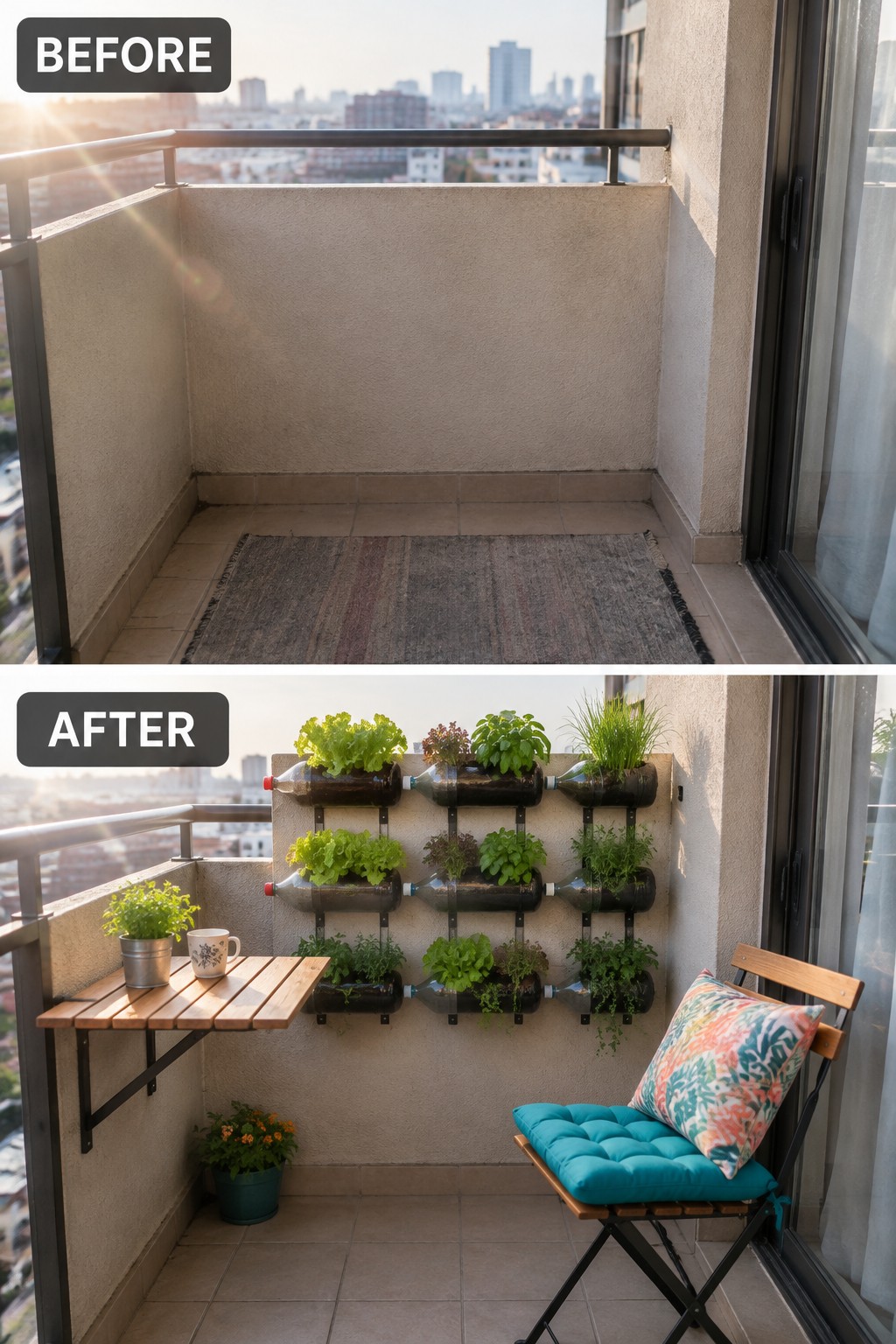
A small balcony often stays empty because there is nowhere to put much on the floor. Mounting planters on the wall solves that problem quickly. In this case, rows of bottle planters turned a plain wall into a growing space without taking up room to walk or sit.
The same approach works on any balcony or small patio where floor space is tight. Use lightweight vertical planters, add one or two foldable seats, and keep the rest simple. It gives the area purpose without crowding it.
Support Climbing Vegetables With A Bamboo Teepee
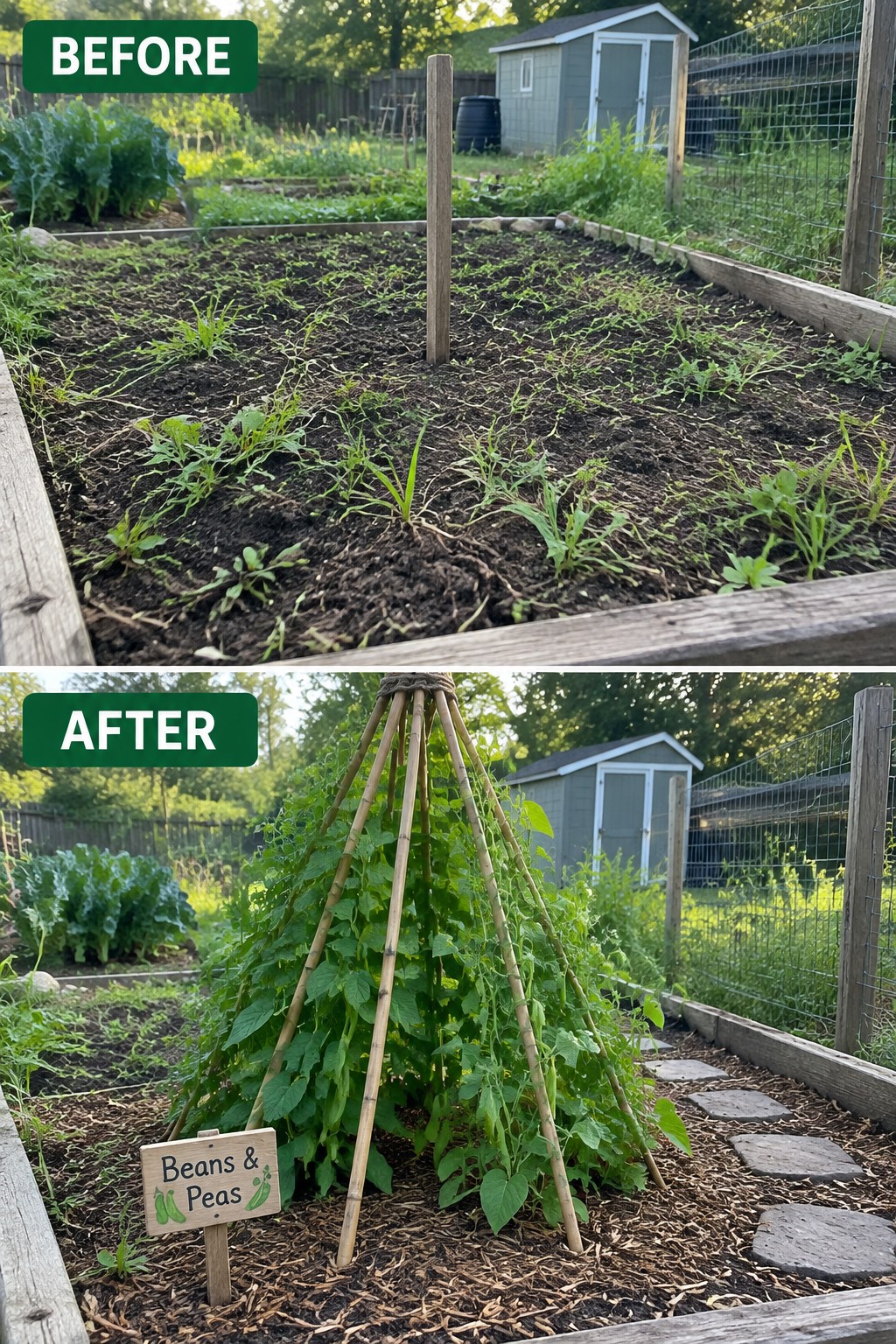
A weedy garden bed turned into a productive spot once a simple bamboo teepee was added. The structure gives beans and peas a place to climb, keeps the plants off the ground, and makes the area look more intentional.
This idea works in small vegetable gardens or raised beds where space is tight. Use four or five poles tied at the top, plant around the base, and mulch the soil to help retain moisture. It is a low-cost way to grow upward instead of spreading out.
Add Vertical Planting To A Plain Fence

A long fence often ends up as wasted space once the weeds take over. Attaching a simple grid lets you hang pots directly on the fence so the area gains height and color without eating into the yard below.
This idea suits narrow side yards or back fences where ground beds are hard to maintain. Secure the grid first, pick lightweight metal or plastic pots, and water regularly since hanging plants dry out faster than ground ones.
Use Vertical Planting To Green Up A Plain Wall

A blank wall next to a concrete patio can leave the whole area feeling unfinished. Vertical planting solves this by turning that empty surface into a living feature without using up floor space. Here the wall went from bare to covered with a simple pocket planter holding ferns and trailing vines.
This idea works best in small yards or side patios where horizontal beds are not an option. Mount a ready-made vertical system, pick plants suited to the light, and keep the rest of the space simple with just a bench or a few chairs below.
Add Vertical Planting To A Plain Foundation Wall

A bare strip of grass along the side of the house does little to connect the building to the yard. Placing a tall pallet planter against the wall adds height and color without taking up much ground space, turning a flat area into something that actually feels like a garden.
This approach works best on narrow strips where a full bed would crowd the walkway. Secure an old pallet to the wall, line the openings, and fill them with trailing or compact flowers. Keep the surrounding ground simple with mulch and a few low plants so the vertical element stays the main feature.
Add A Simple Wire Trellis For Vertical Herb Growing

A raised bed against a plain wall can quickly turn into a messy corner when pots just get stacked along the edge. Adding a few horizontal wires gives the herbs something to climb against, which keeps the bed itself open and makes the whole space look more organized.
This setup works best in small gardens or along fences where floor space is limited. Use basic eye screws and garden wire, then tie the stems loosely as they grow. It suits anyone who wants steady access to herbs without crowding the soil area.
Use Vertical Crates To Add Planting Space
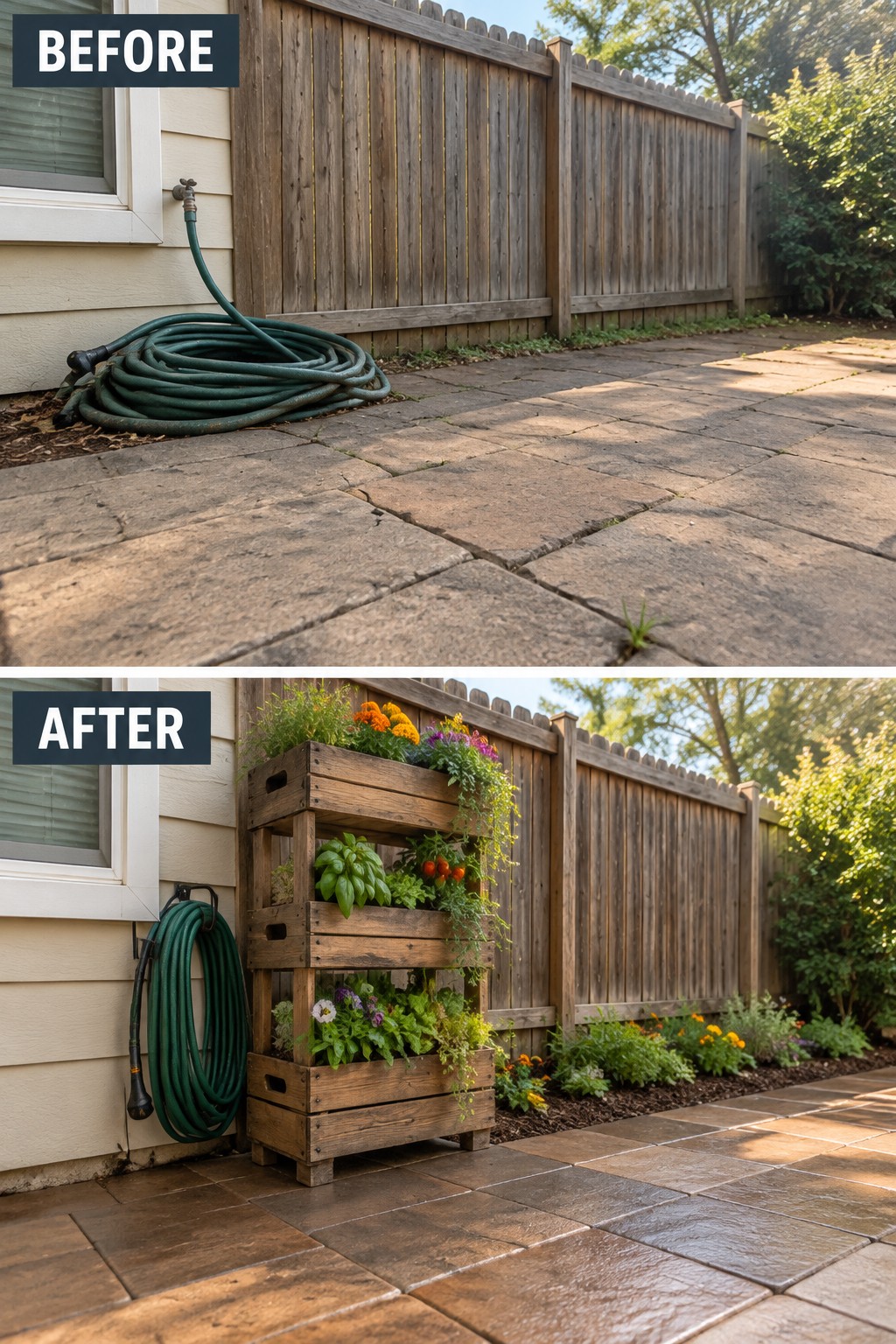
Stacking wooden crates against a fence or wall gives you several planting levels in a narrow strip of ground. The before photo shows a hose left in a coil on the dirt with nothing else growing there. In the after photo the crates hold herbs and flowers at different heights while the hose hangs on a simple hook.
This approach suits small side yards or any paved area where floor space is limited. Secure the crates so they stay level, add soil, and pick plants that match the light. It keeps the paved surface open for walking while adding useful growing room right where you need it.
Turn A Plain Fence Into Vertical Planting Space

A bare wooden fence next to open dirt can feel like wasted space in a small yard. Running simple wire across the boards gives vines a place to climb, turning the fence into a productive vertical garden without taking up ground room. The change here shows how quickly grapes can fill in and start producing once they have support.
This works well along property lines or the back of a lot where you want greenery but still need to keep the area open for walking or mowing. Start with one or two easy vines like grapes or climbing beans, space the wire about a foot apart, and prune lightly each year so the growth stays even. It keeps the idea low cost and easy to maintain.
Create A Succulent Wall Garden With A Framed Planter
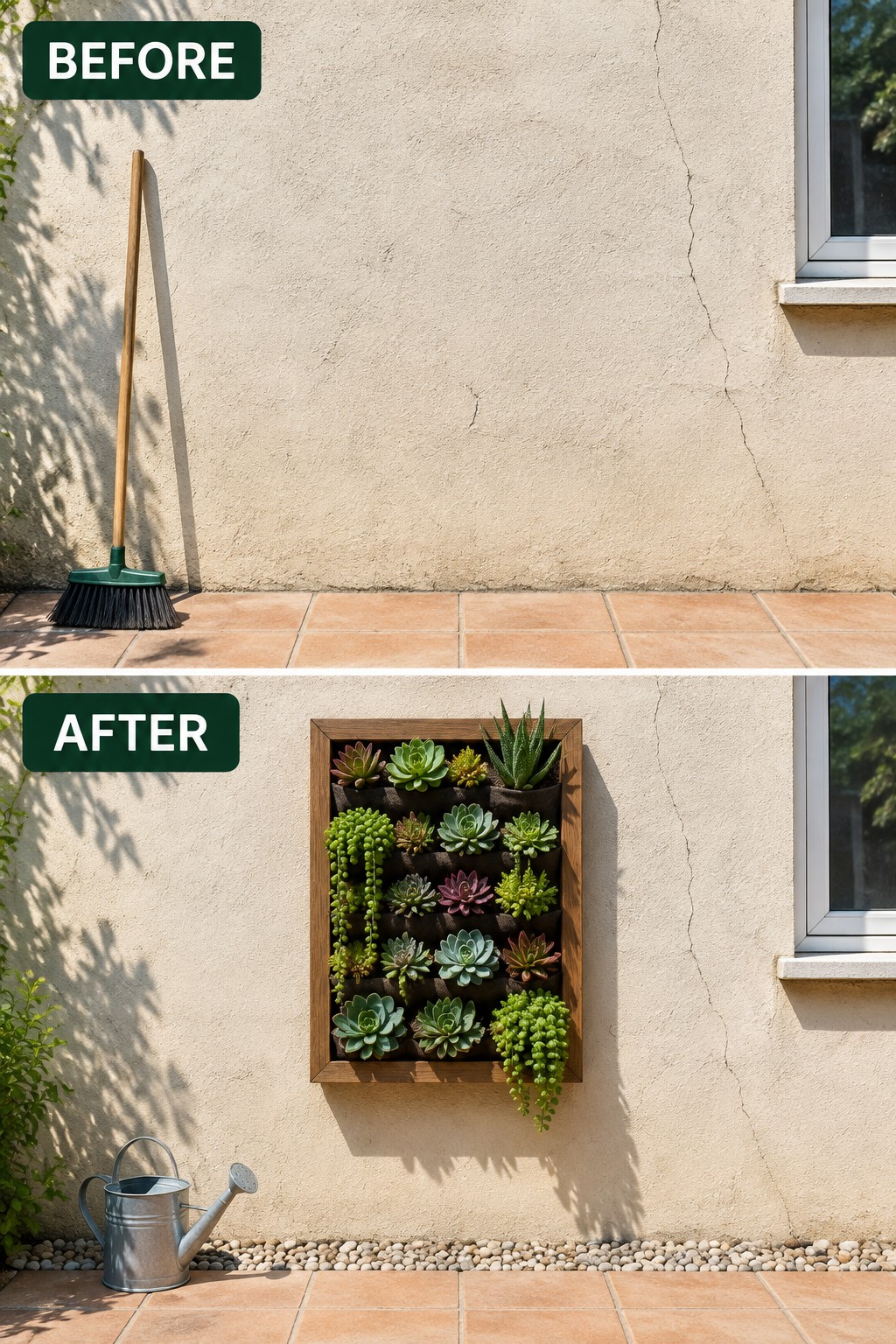
A bare exterior wall can feel unfinished, especially when there is little room for regular garden beds. Mounting a simple framed vertical planter filled with succulents turns that empty surface into a living feature without taking up floor space. The change from a plain wall with just a broom leaning against it to a neat grid of plants shows how little effort is needed to add color and texture.
This approach works well on patios, side yards, or any sunny spot where ground planting is limited. Choose a ready-made frame or build one from wood and landscape fabric, then fill it with drought-tolerant plants that need minimal watering. Keep the design simple so the wall stays easy to maintain over time.
Add Vertical Planting To A Fence For Privacy
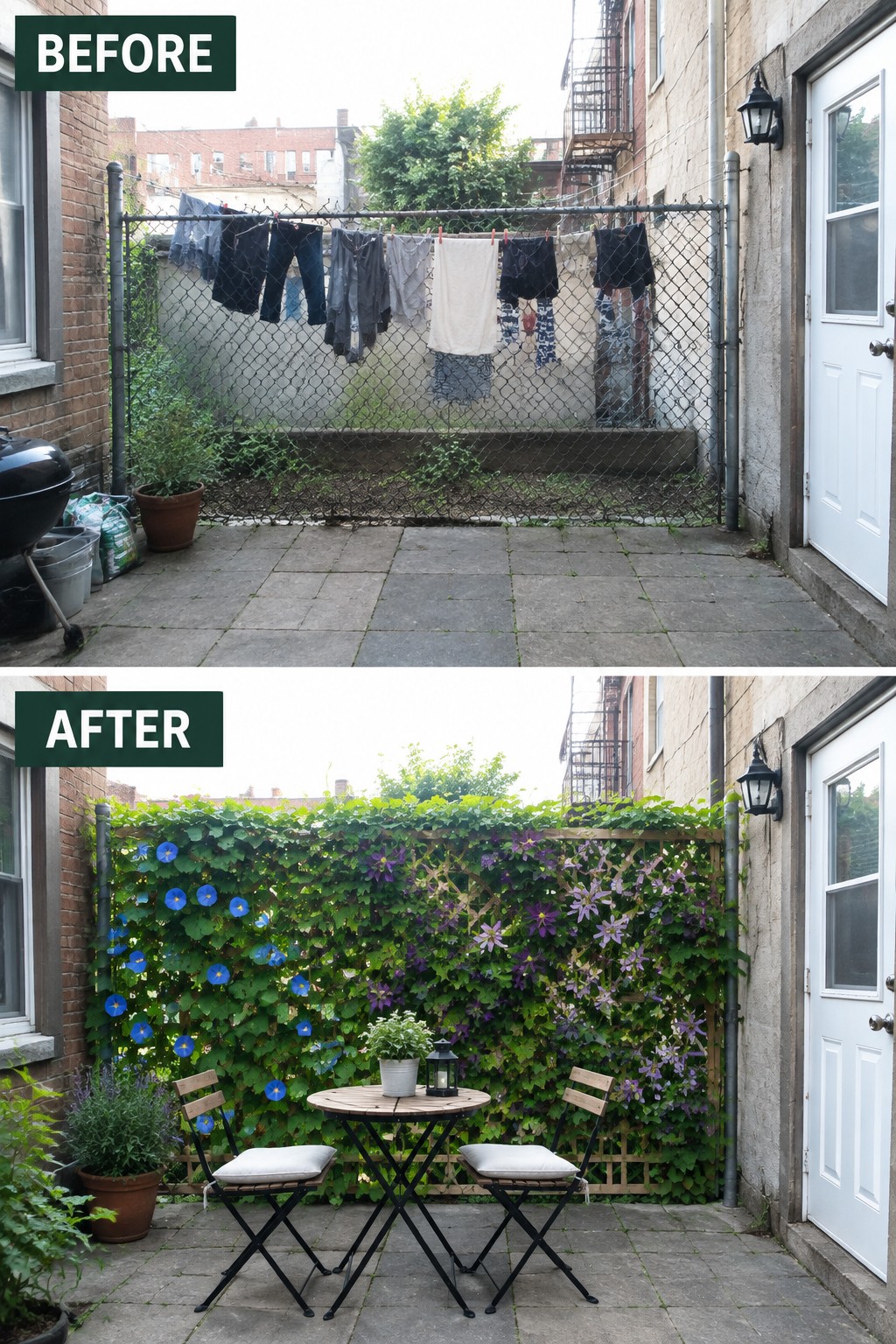
A plain chain link fence can leave a small yard feeling exposed and unfinished. Adding a simple wooden trellis and letting climbing vines fill it in turns the fence into a living wall that softens the space and blocks the view beyond. The before photo shows laundry and clutter against the bare fence, while the after shows the same area turned into a quiet spot with a small table and chairs in front of the greenery.
This works well in narrow side yards or paved courtyards where ground space is limited. Start with a sturdy trellis attached to the fence posts, choose fast-growing vines that suit your climate, and keep the planting dense enough to cover the structure. It stays budget friendly because you only need plants and basic wood, and the vertical layer adds the main impact without crowding the floor area.
Add Vertical Planters To A Patio Wall
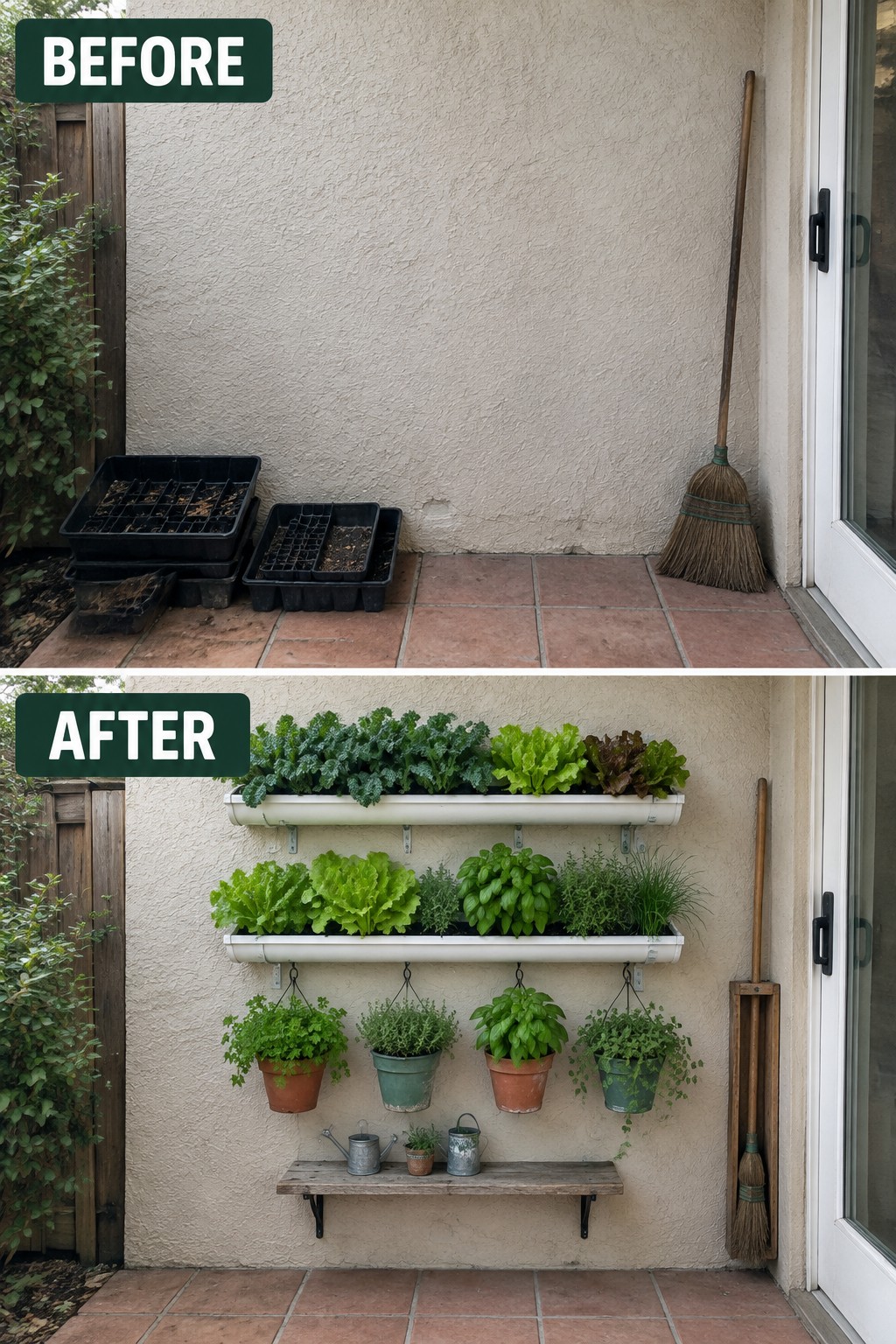
A patio wall next to the house often sits empty while trays and pots take up floor space. Mounting simple troughs at different heights and adding a few hanging pots clears the ground and turns the wall into a working garden for lettuce, herbs, and greens.
This idea suits small patios or side yards where floor room is tight. Use brackets strong enough for wet soil, space the rows so plants get light, and keep a low bench or shelf below for tools and watering cans.
Hang A Vertical Planter On Your Deck Railing
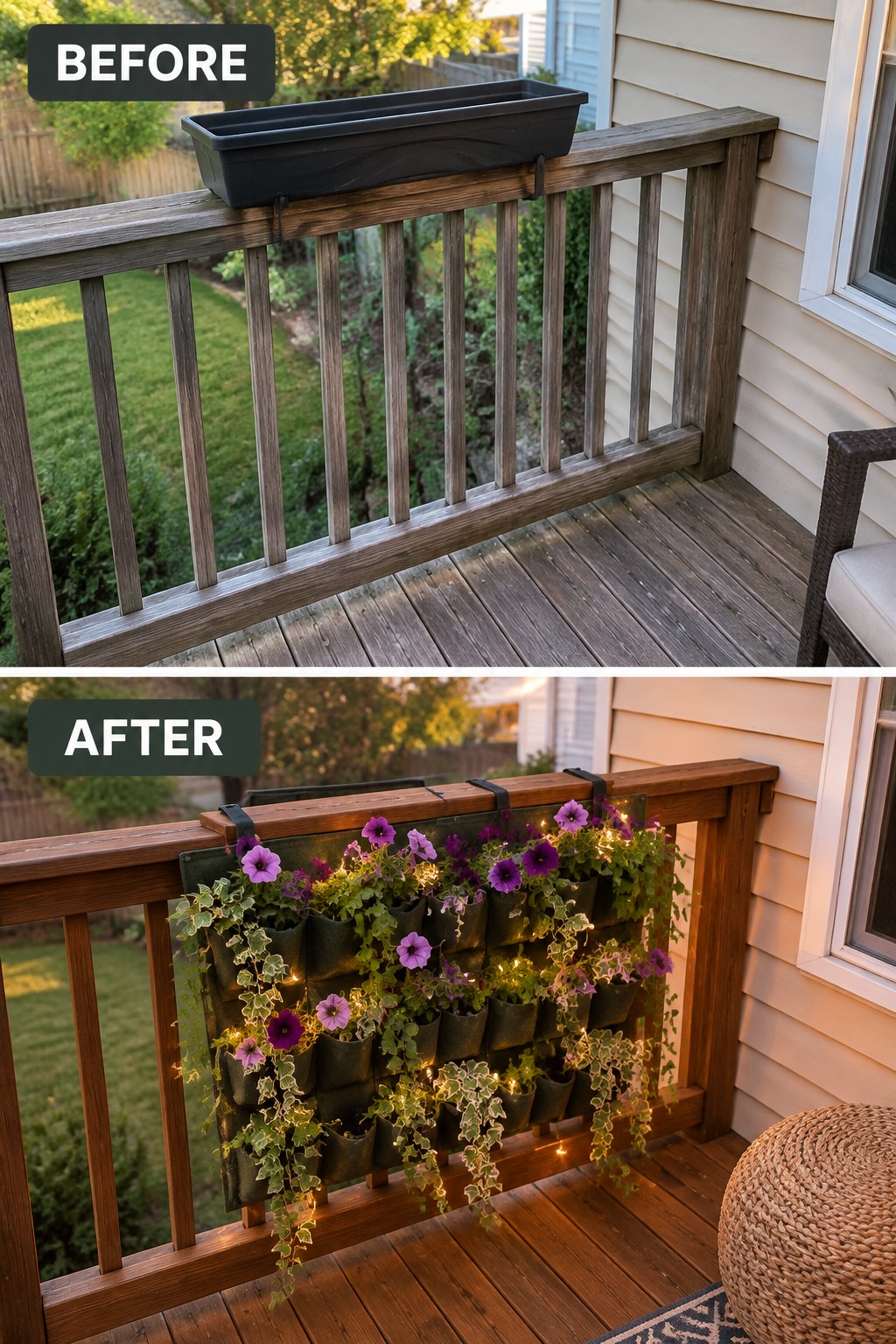
A single planter box takes up railing space but only gives you one row of plants. Switching to a fabric vertical planter adds many pockets across the same area, so you get more flowers and greenery without crowding the deck floor.
This approach works especially well on balconies, decks, or porches where floor space is limited. Look for a sturdy fabric panel with strong straps, use lightweight potting mix, and water carefully so it does not drip onto whatever sits below. String lights can be added later if you want the plants to show up after dark.
Frequently Asked Questions
Q: Where can I find free stuff for vertical planters around the house?
A: Check your shed for old crates or gutters that you can hang up. These turn into instant vertical spots with just a few screws. (nothing fancy needed here)
Q: How much watering do vertical plants need compared to regular beds?
A: They dry out faster so check them every day at first. Add a layer of mulch on top to hold moisture longer. This cuts down on how often you grab the hose.
Q: What if my vertical garden starts looking sparse after a month?
A: Trim back any leggy growth and feed with a weak liquid fertilizer. Fill gaps with quick growers like lettuce or herbs. But give it time since new plants take a bit to fill in.
