

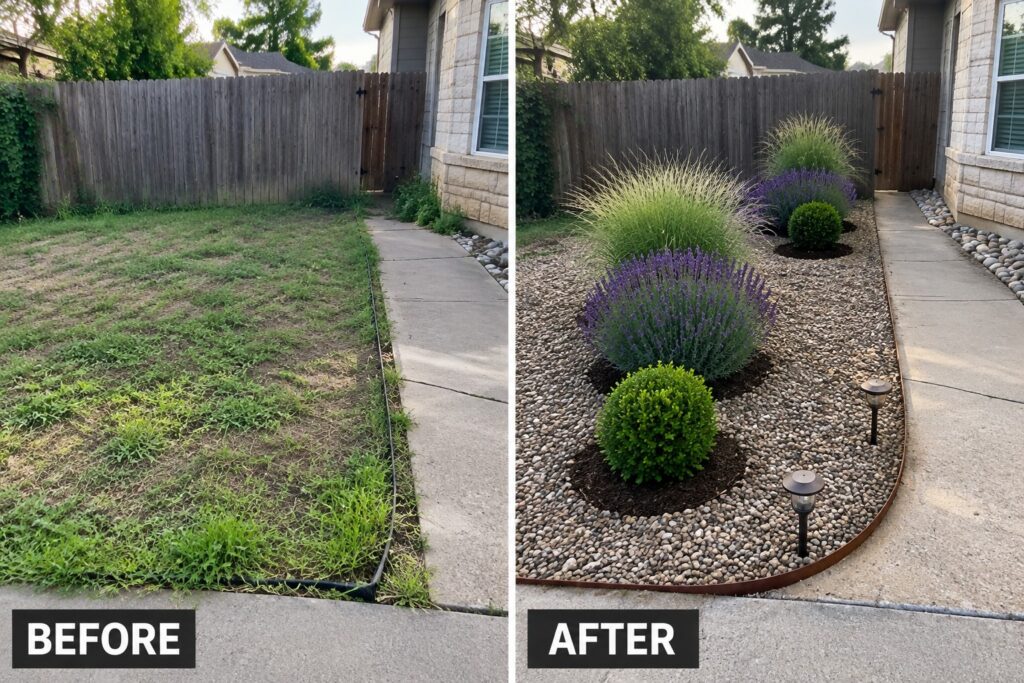
I have found that small gardens often end up looking messy when the planting beds lack any real structure or flow from one area to the next.
Adjusting the shape of those beds and the way plants are grouped can open up the space without adding a single new purchase.
Layout changes can make a bigger difference than I expected.
It helps to step back and check how the edges run and where the paths actually lead so the whole garden feels more settled over time.
Trying a couple of these adjustments in my yard has shown me that steady tweaks like these build up without much extra work.
Define A Small Yard With Gravel Planting Beds
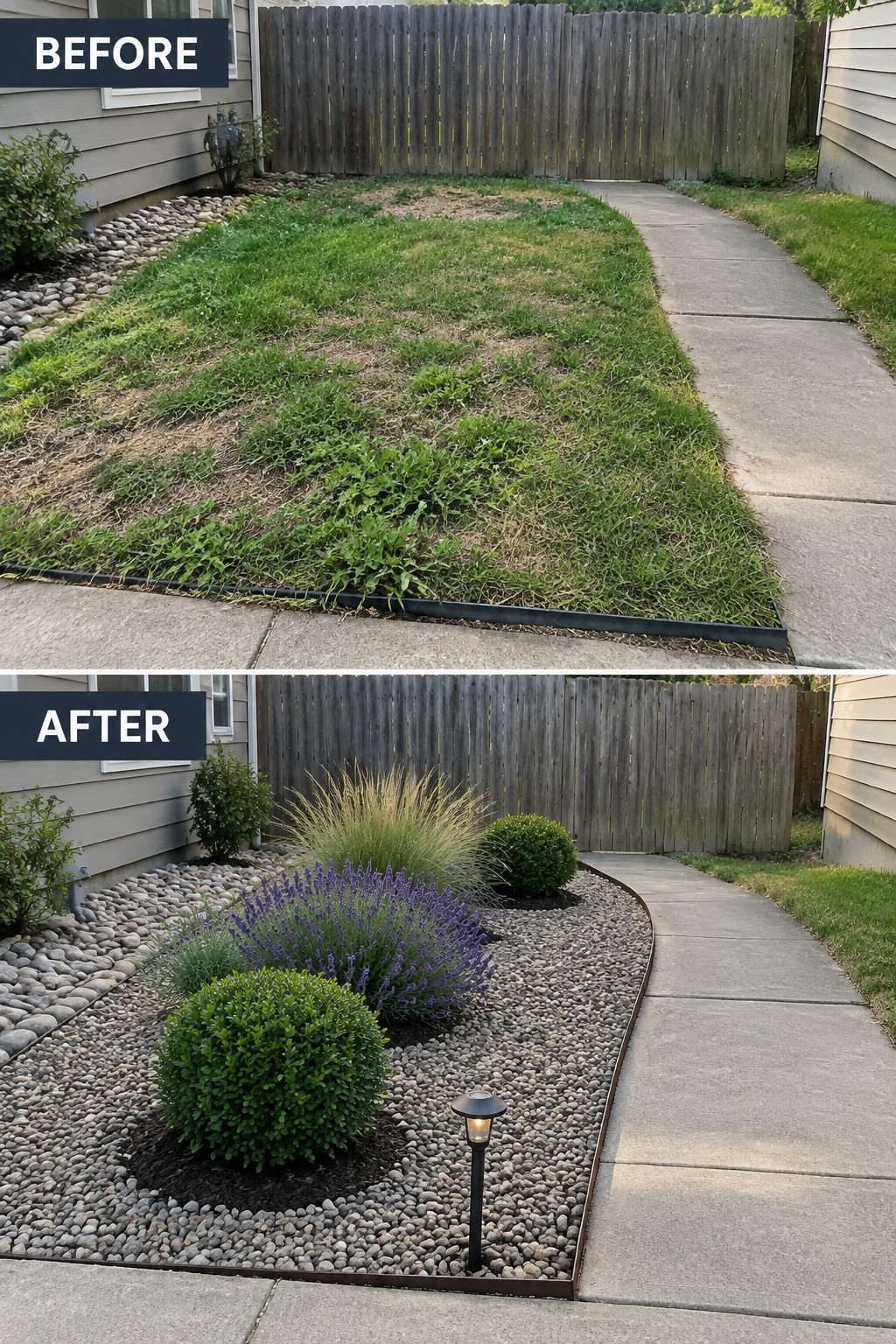
The before photo shows a narrow strip of patchy grass and weeds running along a concrete path with no real edges or planting plan. In the after photo the same space has been turned into a series of gravel beds edged in metal, with rounded shrubs and a clump of lavender placed in simple groupings. The change gives the area a finished look without crowding the walkway.
This approach works well in tight side yards or along paths where a full lawn is hard to maintain. Start by laying down edging to create clear shapes, then fill with gravel and a few repeated plants rather than trying to fill every inch. The result keeps the space easy to walk around while still looking intentional.
Use A Path To Organize Planting In A Narrow Side Yard
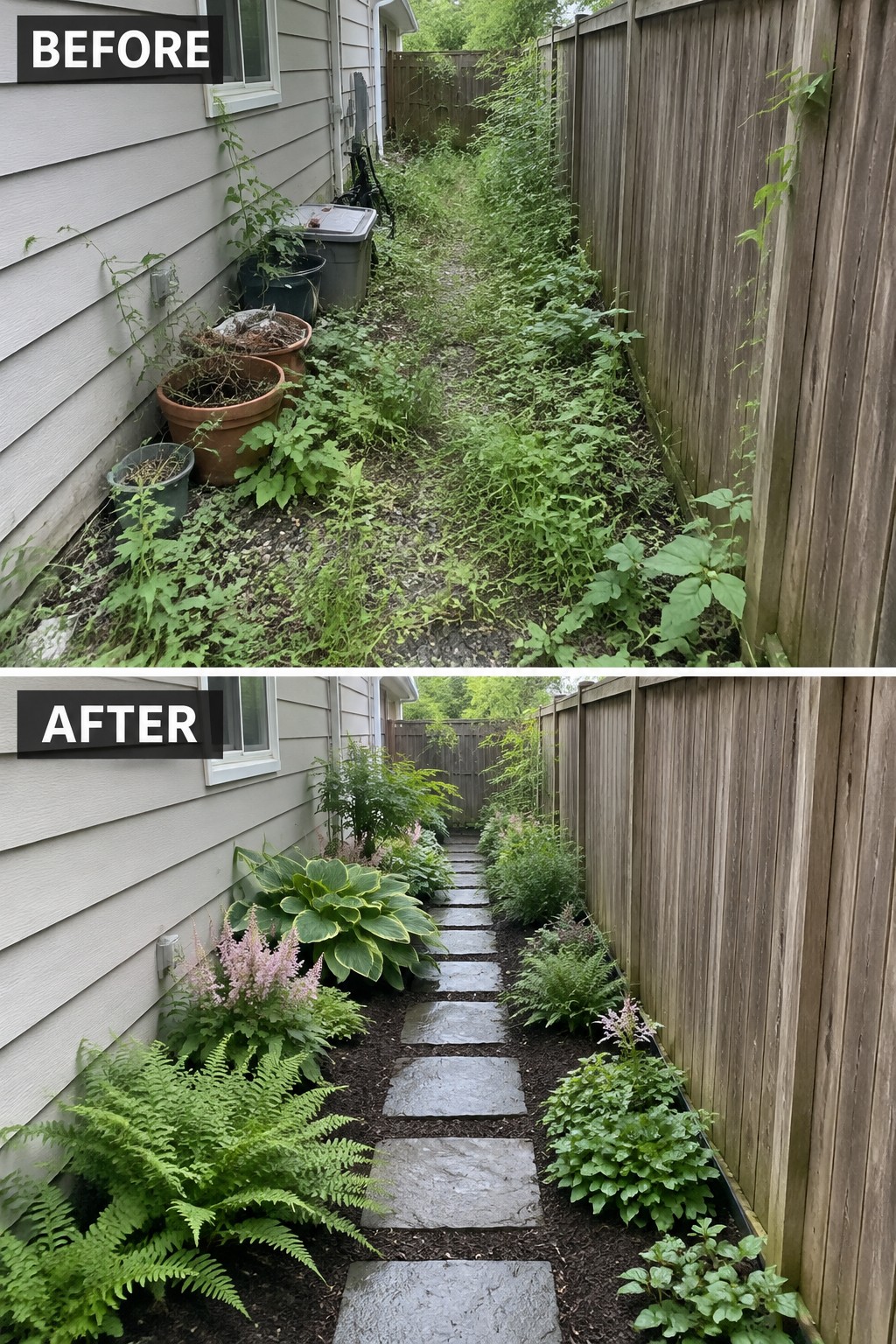
A narrow side yard often ends up as a forgotten strip of weeds and random pots. Adding a simple stone path first gives the space a clear direction and makes it much easier to plan the planting on either side. The change from a messy, overgrown passage to a clean walk with mulched beds on both sides shows how structure alone can turn the area into something usable.
This approach works well in tight spaces between houses and fences where there is little room for big features. Start by clearing everything out, then lay the path so you can see exactly where the beds should sit. Once the path is in place, fill the beds with a few repeating plants that can handle the shade and stay neat without constant work.
Turn A Bare Patio Into A Seating Area
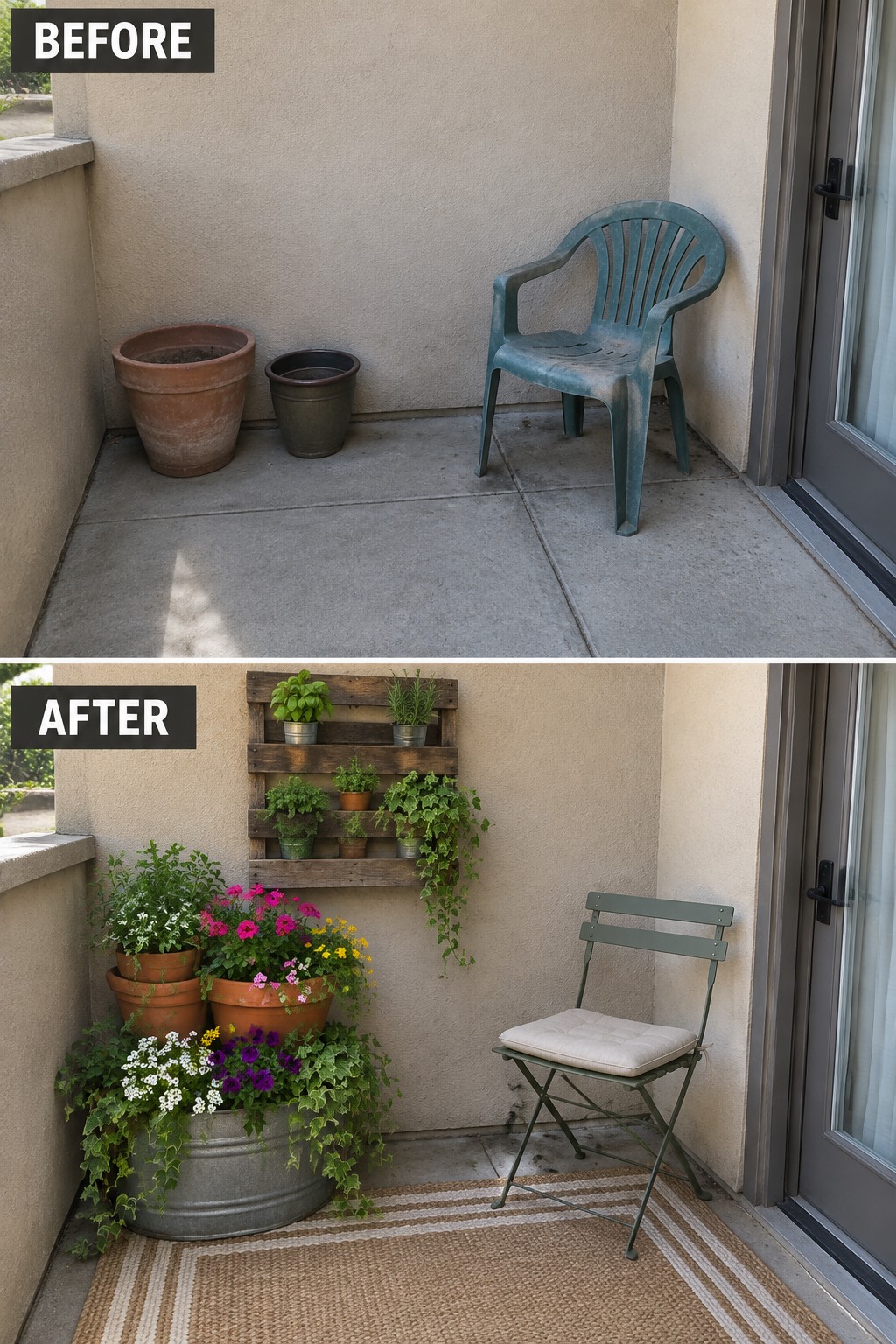
A small concrete patio often sits unused when it only holds a few scattered pots and one chair. Adding a rug to mark the floor and a simple wall planter for vertical interest gives the space a clear spot to sit without needing a big budget or much room.
This idea works well on balconies, side patios, or any tight outdoor spot that feels empty. Keep the furniture light and weatherproof, and make sure the rug and chair still leave walking space around the edges.
Add Raised Beds To Give A Small Yard Clear Structure

One simple way to improve a neglected backyard is by installing raised garden beds. The empty lawn in the before photo became two long wooden beds that keep plants organized and make the space feel more intentional.
Raised beds suit small yards because they contain soil, reduce weeds, and leave room to walk around without crowding the lawn. Start with basic lumber and place them where they get good sun, then add simple supports for taller plants so everything stays neat as it grows.
Terrace A Sloped Yard With Retaining Walls

A bare, steep slope is difficult to plant and often ends up as bare dirt or weeds. Low stone retaining walls change that by creating flat planting tiers that hold soil and give each level a clear edge.
This idea works best on small side yards or back corners where the drop makes regular gardening awkward. Clear the slope first, then build the walls one level at a time so the beds stay even and water drains properly instead of washing everything away.
Shape A Long Bed With Simple Edging
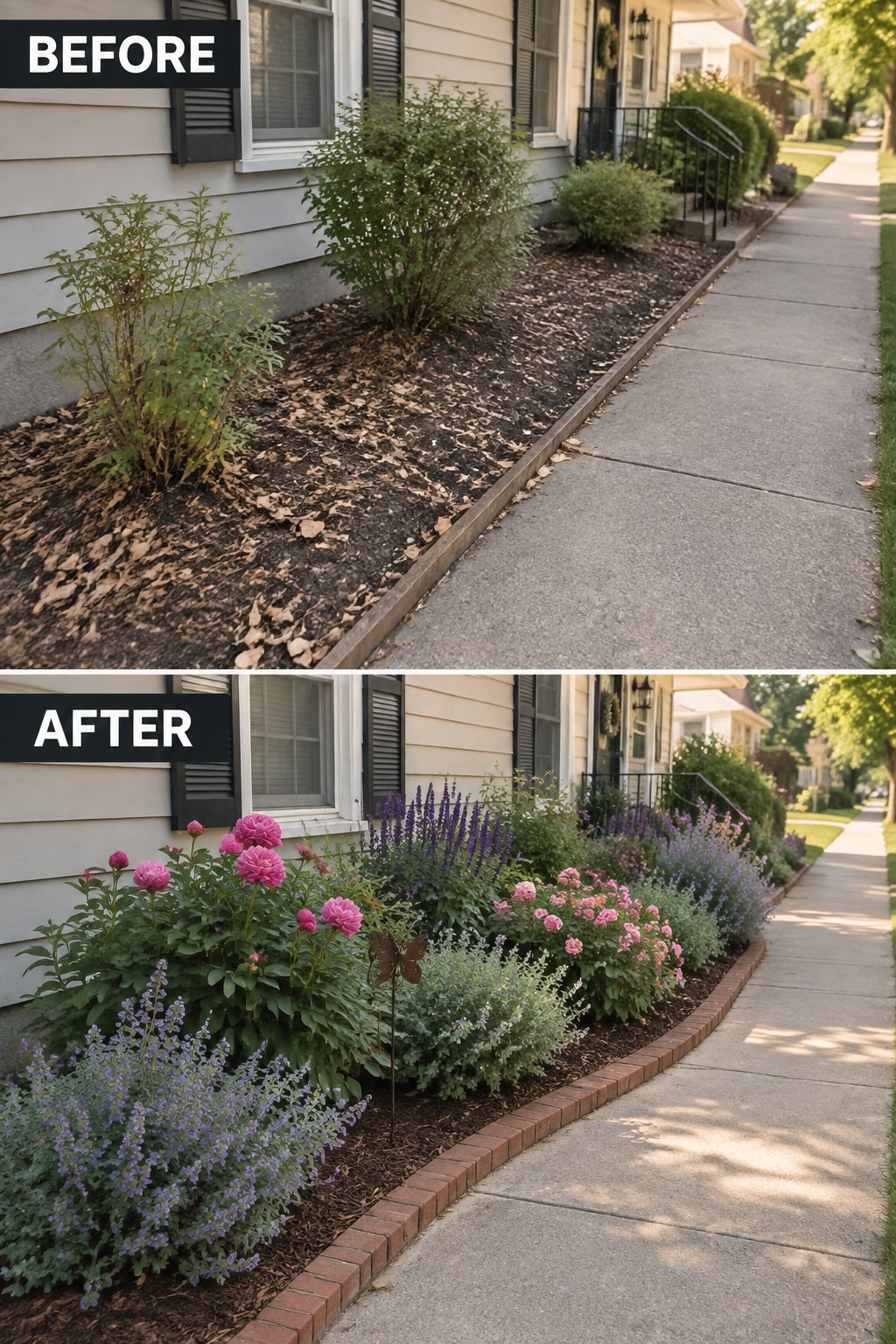
A narrow strip of ground next to a sidewalk often ends up looking messy when left without clear edges. Adding a low brick border gives the bed a firm shape and keeps mulch and soil from spilling onto the walk. The planting can then be layered by height, with taller flowers toward the house and lower ones along the front.
This approach works well on any home with a long, thin planting strip. Start by setting the edging first so the bed has a clean outline before you add plants. Choose one main color for the flowers and repeat it along the length to keep the look simple rather than crowded.
Define The Curb Strip With Edging And Mulch

The before photo shows grass and weeds growing right up to the curb with no separation. The after version adds a low stone edge and mulch to turn that same narrow strip into clear planting beds that stay neat and contained.
This idea works best on small front yards or street-side areas where you want structure without crowding the space. Lay the edging first to follow the sidewalk line, then mulch inside the border so weeds stay down and the beds look finished year-round. It suits homes with a mailbox or similar post that needs a simple frame around it.
Add Vertical Trellises To A Blank Fence Line
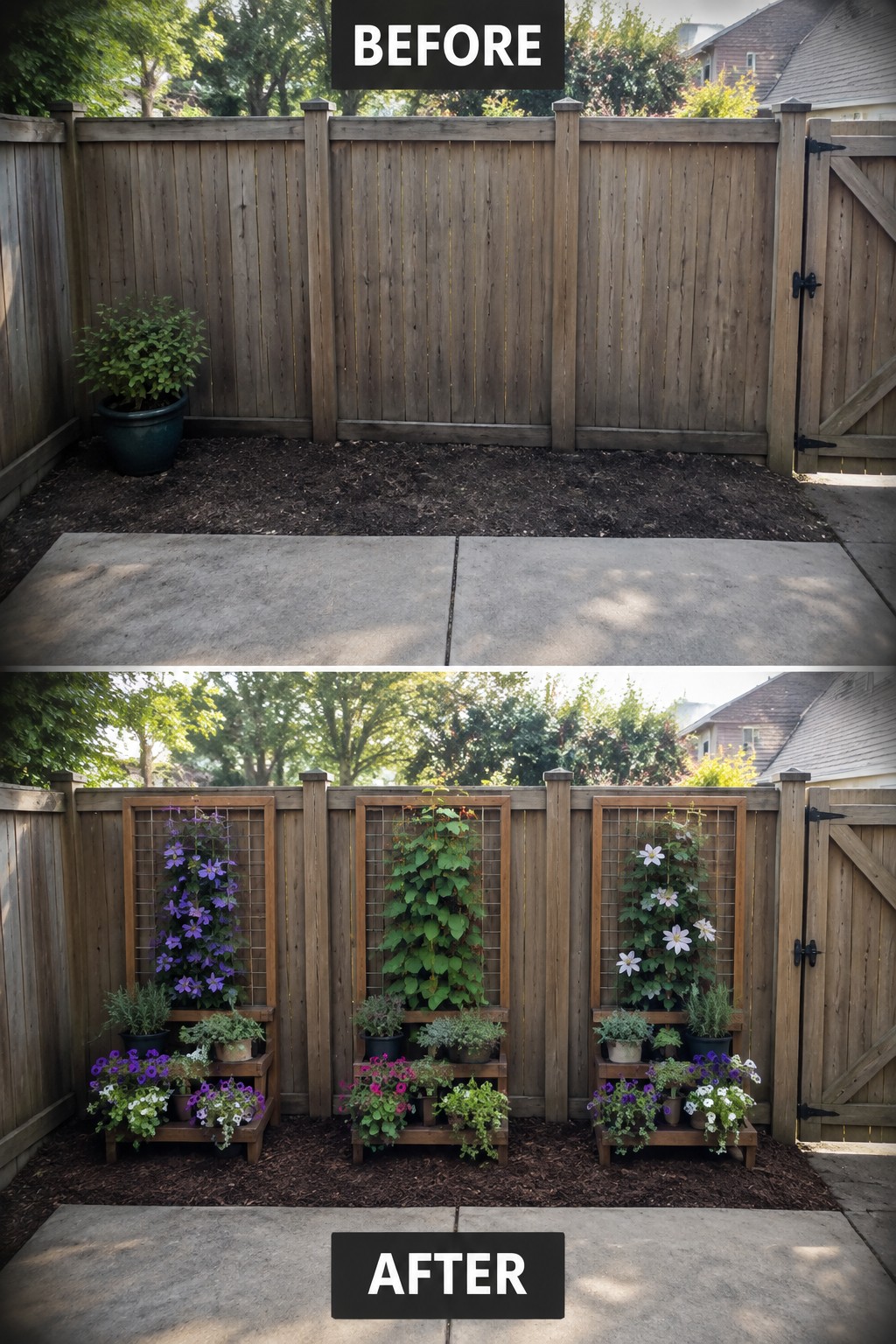
A plain fence with just dirt at the base often leaves a backyard feeling unfinished. Adding a few trellis panels with climbing vines and simple tiered shelves underneath gives the space height and structure without crowding the ground.
This idea works well in narrow yards or along property lines where horizontal room is tight. Focus on sturdy supports first, then fill in with pots at different levels so the planting feels layered but still easy to reach and maintain.
Create Defined Garden Beds In A Small Yard
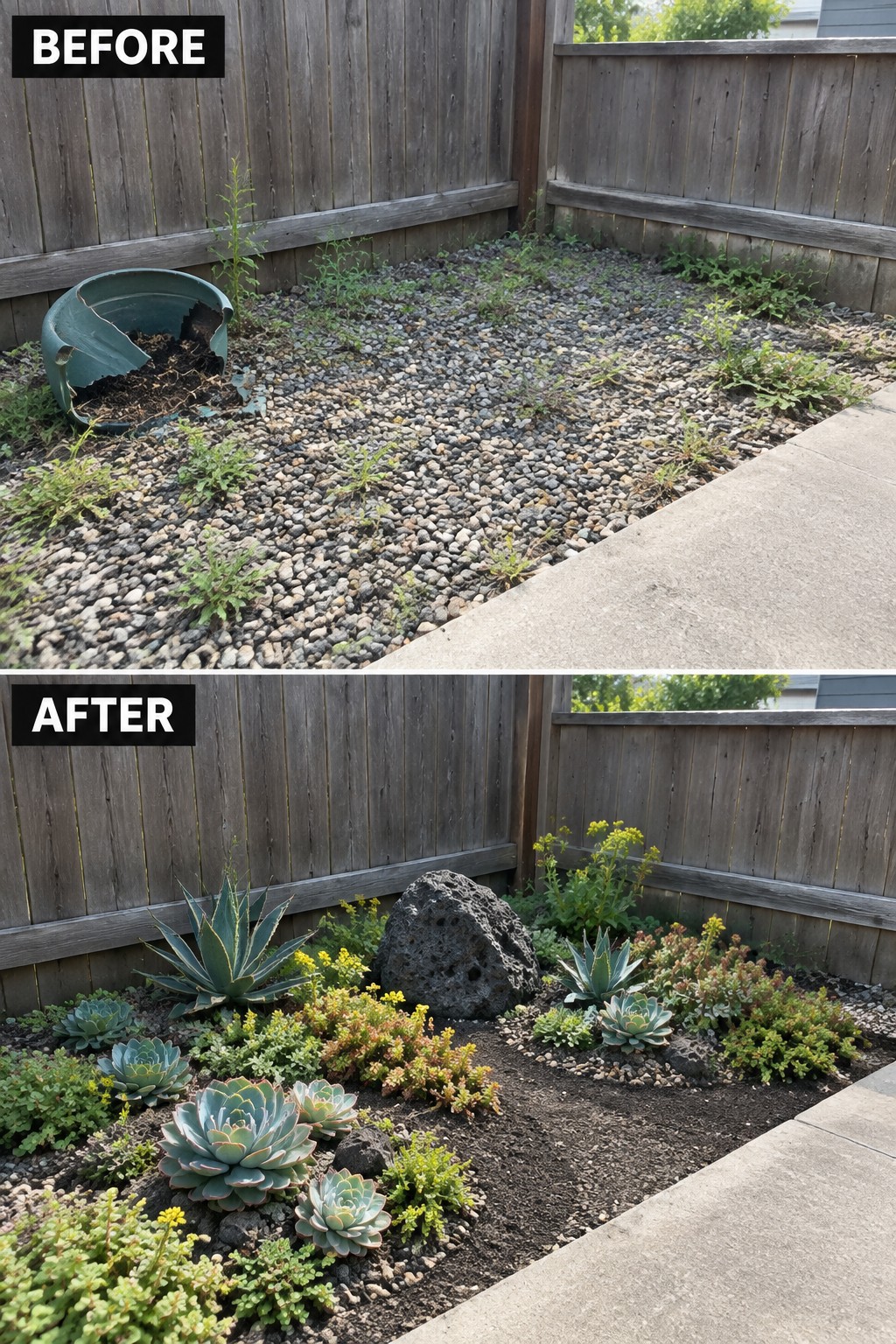
The main change here is clearing away the scattered gravel and weeds, then laying out a few simple beds with soil and mulch so the plants have a clear place to grow. Adding a mix of succulents and one large rock gives the space structure without filling every inch.
This works best along fences or in narrow side yards where space is limited. Remove the old surface first, keep the beds narrow enough to reach across easily, and choose plants that need little water so the layout stays low maintenance over time.
Create A Defined Planting Area Around A Tree
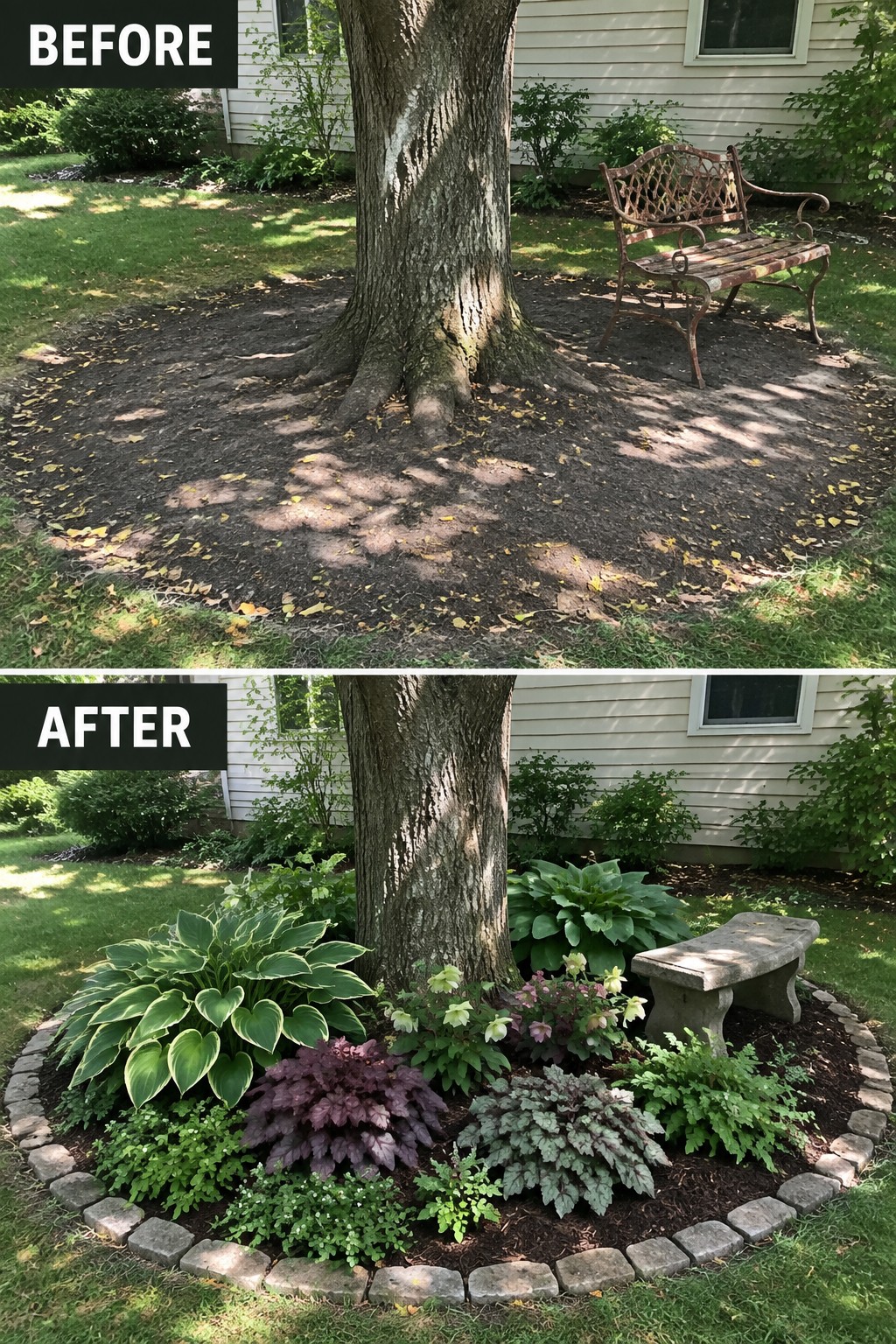
A bare patch of dirt under a tree often looks unfinished and hard to maintain. Adding a simple stone border turns that open space into a clear garden bed. Mulch keeps the soil neat while the edging stops grass from creeping in. Layered plants then fill the circle without crowding the trunk.
This idea works well in small yards where every spot needs a purpose. Start with the border and mulch before choosing plants, since shade levels change what will thrive. Keep the bed a reasonable size so mowing stays easy around the outside edge.
Add Railing Planters With A Backing Screen
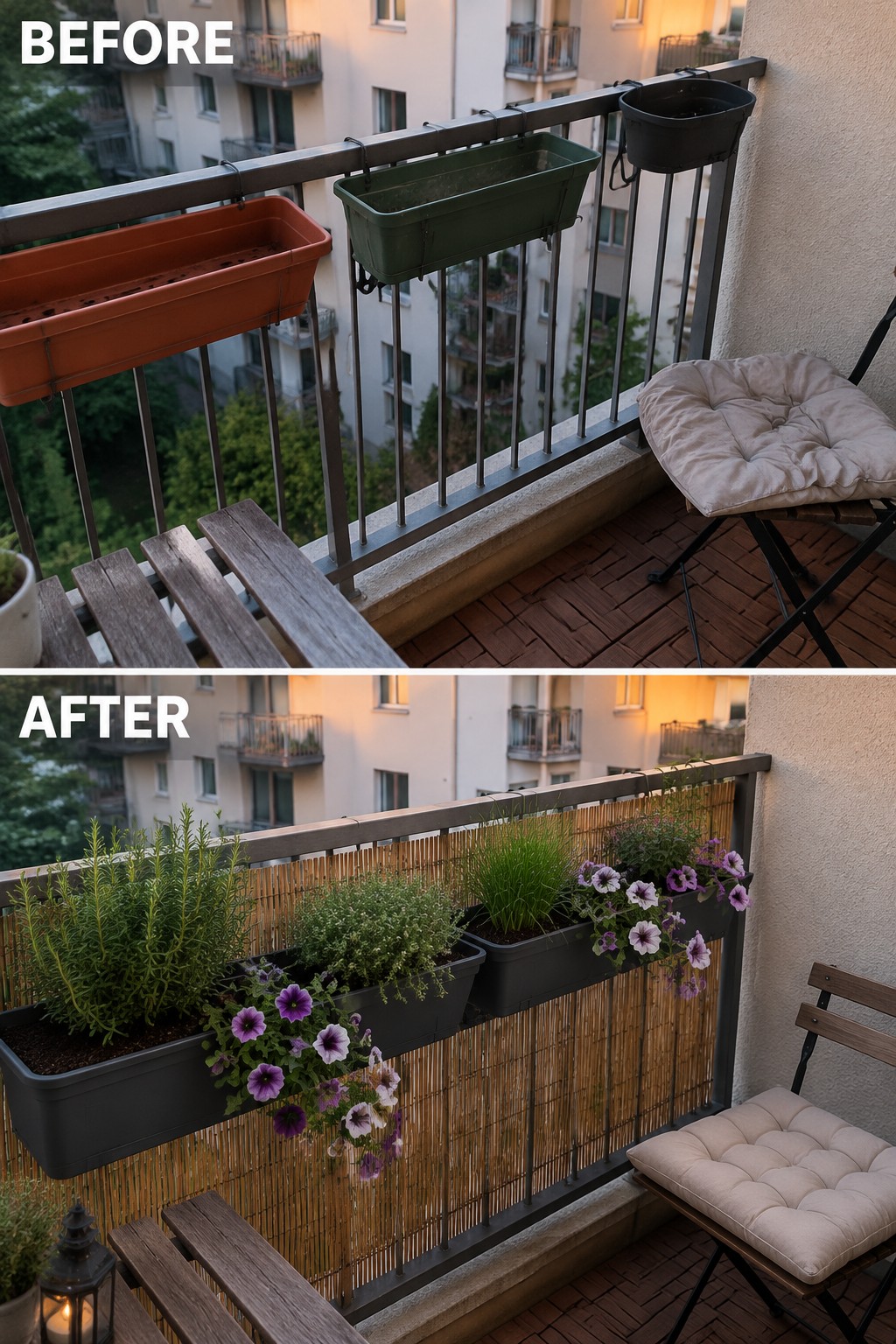
Many balconies end up with just a couple of hanging boxes that never look like much. Adding a simple screen behind the railing and filling a longer row of planters gives the plants more depth and turns the whole edge into a green border.
This approach suits small urban balconies where floor space stays limited. Use brackets that hook over the railing, keep the screen lightweight so it does not add weight, and mix upright and trailing plants so the display fills in quickly without crowding the seating area.
Define A Planting Bed To Tame An Overgrown Edge
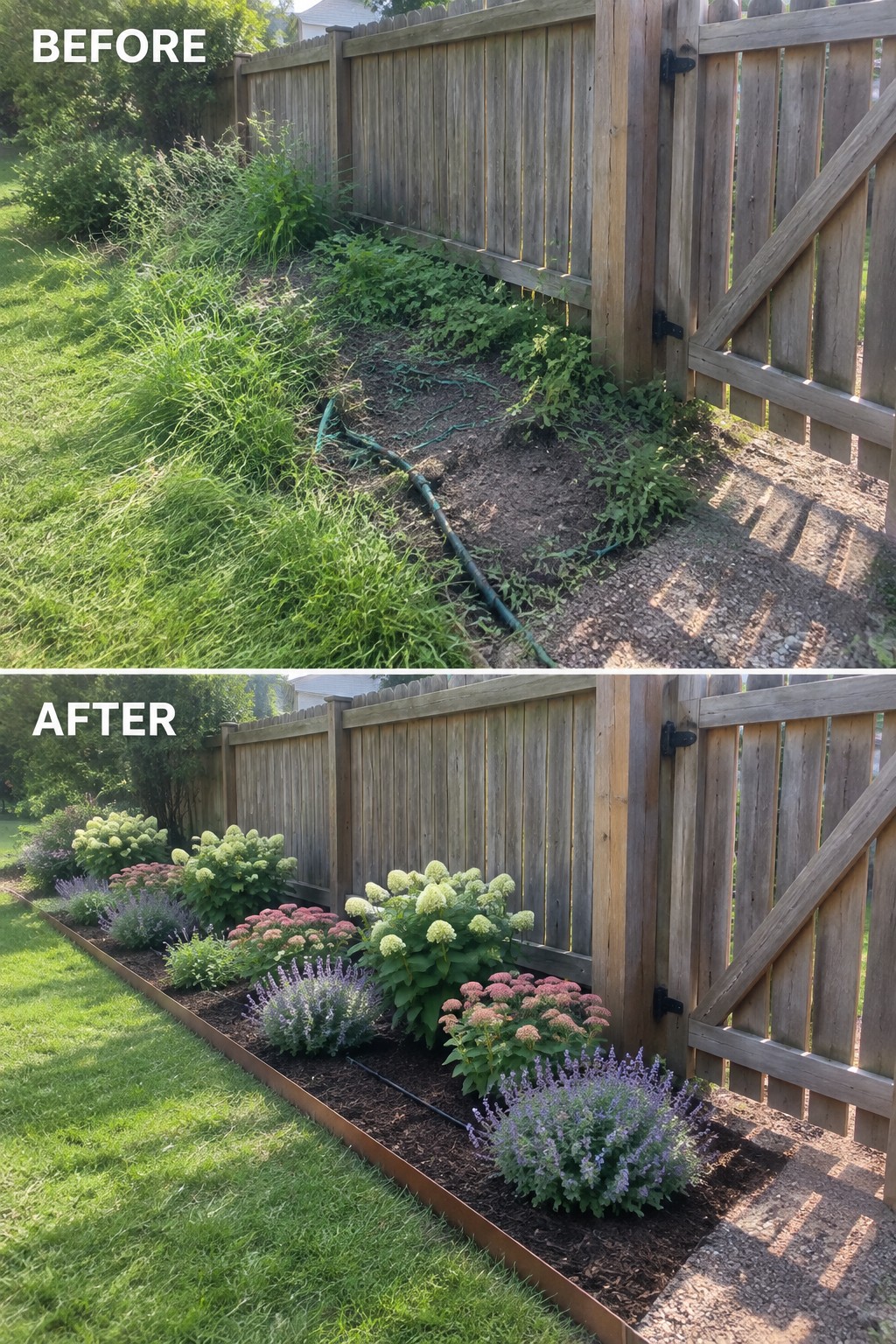
An overgrown strip of grass and weeds along a fence can make the whole yard feel neglected. Adding a simple border with edging turns that messy area into a clear planting space, and the mulch helps keep weeds down while giving the plants room to grow.
This idea works well along fences or property lines where grass tends to creep. Start by clearing the overgrowth, then install edging to hold the shape and add a layer of mulch before planting. It keeps the bed looking neat even in a small yard and makes future maintenance much easier.
Add Defined Garden Beds To Clean Up An Overgrown Front
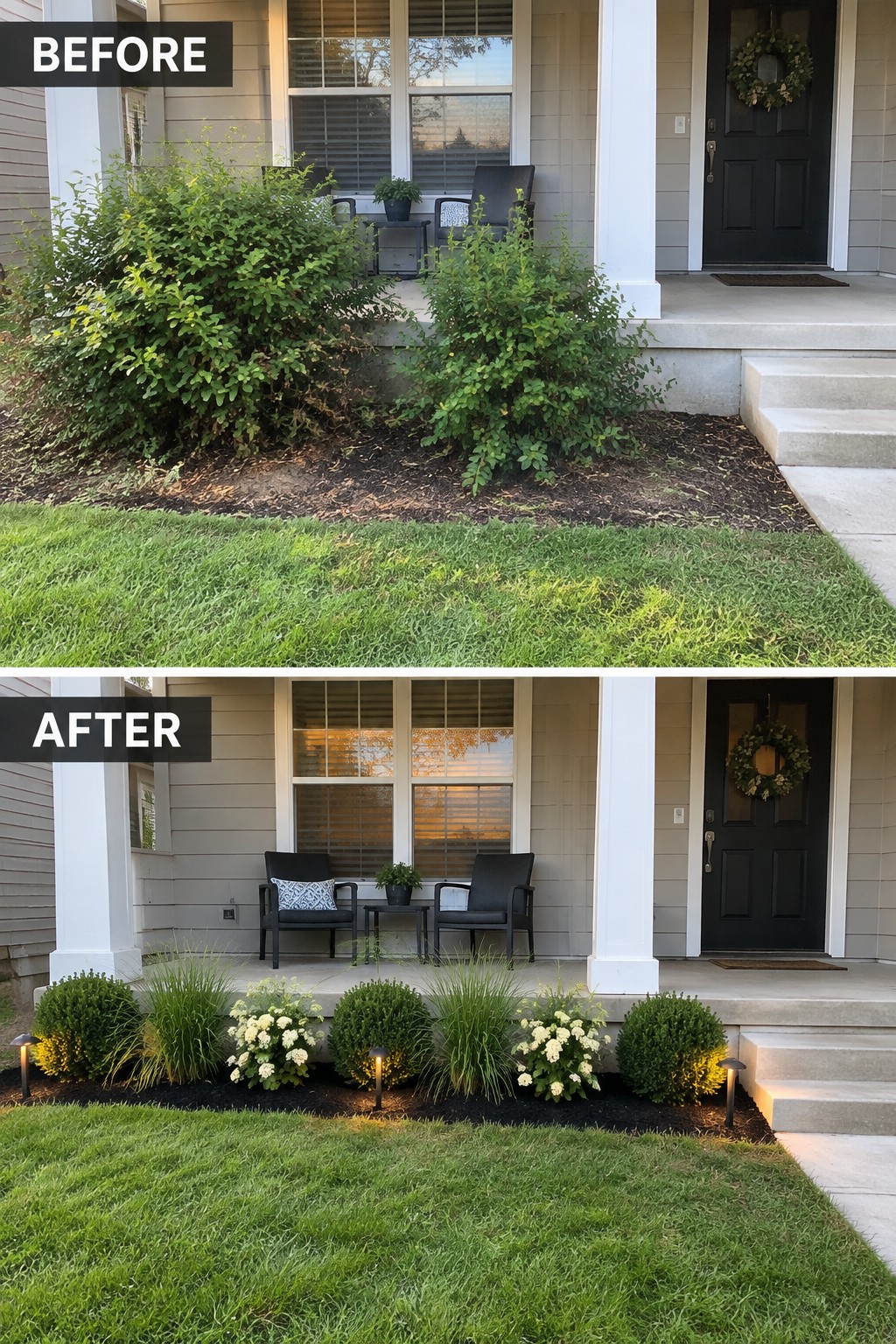
The biggest change here came from replacing the wild, sprawling shrubs with a clear planting layout. A simple mulched bed runs along the porch edge, filled with a mix of low shrubs, grasses, and flowering plants that stay in scale with the house. The result feels intentional instead of neglected.
This approach works well on small front yards where plants can quickly take over. Start by cutting back the overgrowth completely, then add edging and fresh mulch before choosing a few plant types that repeat along the bed. It keeps the space looking tidy without needing constant trimming.
Turn A Bare Paved Courtyard Into A Planted Seating Spot

A small paved space like this often feels empty and unused when it has nothing but walls and stone underfoot. The simple fix shown here is filling it with lots of potted plants in different sizes and heights, then adding one bench so the area actually invites you to sit. That single change turns a plain corner into something that feels more like a garden.
This idea works well in any small yard or courtyard where digging beds is not possible. Start with a few larger pots as the main anchors, then fill in with smaller ones around them. Leave enough open paving so you can still walk through comfortably, and choose plants that suit the light you actually get.
Define Small Planting Areas With Stone Edging
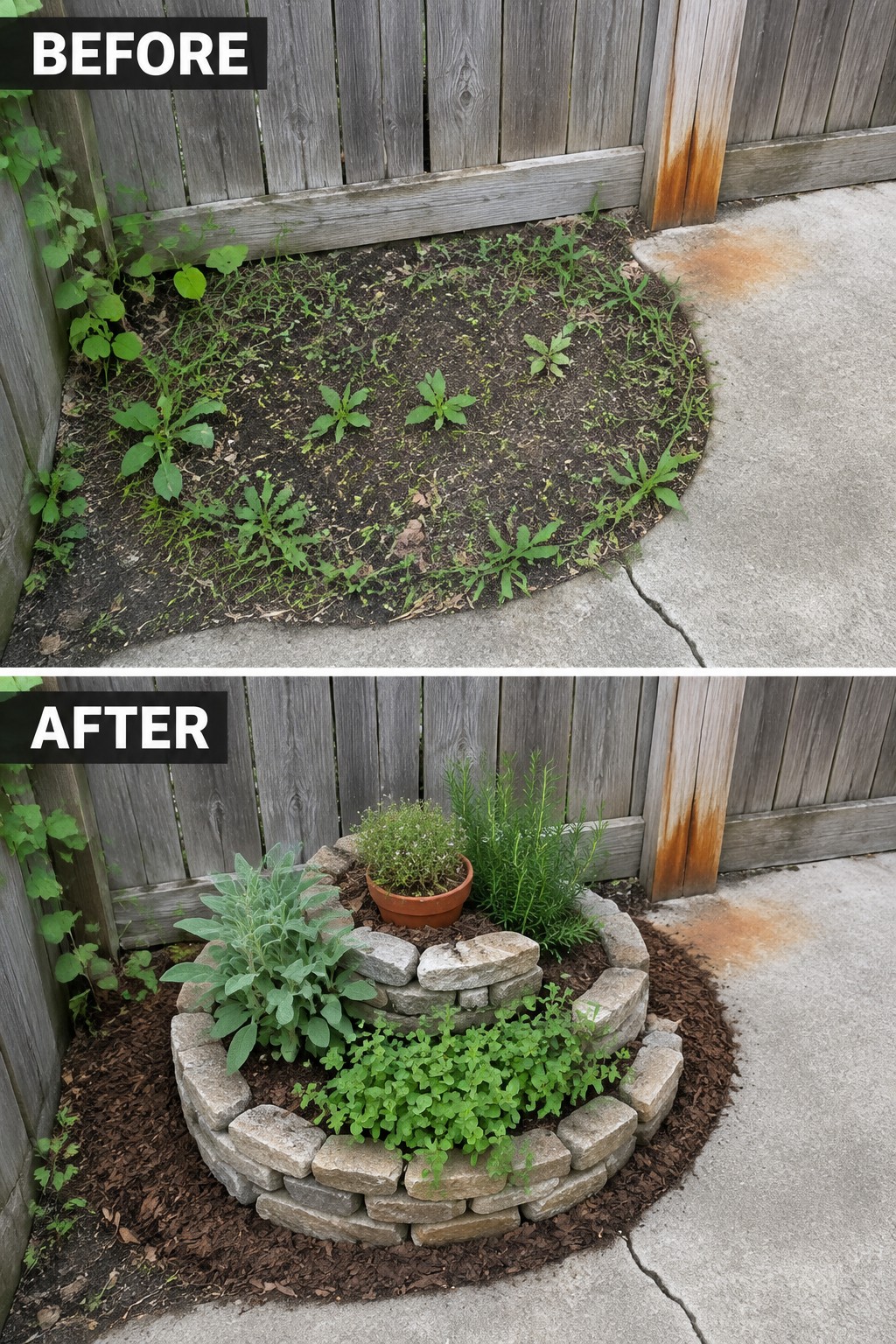
A low stone border can turn a weedy patch next to a fence into a clear planting zone. The stones hold the soil in place, the mulch keeps weeds down, and the plants stay organized instead of spreading out onto the path.
This works best in narrow side yards or corners where you want structure without taking up much room. Clean the area first, set the edging, then add a layer of mulch before planting. The border makes the space look planned even if you keep the plant choices simple.
Add Structure To A Narrow Side Yard

A simple grass strip next to the house often ends up with a worn path and no real purpose. In this case the change came from carving out a clear gravel walkway and placing mulched beds on either side so the space finally looks planned rather than leftover.
This approach suits any narrow area between the house and the street or fence. Mark the path first so it stays wide enough to walk comfortably, then keep the beds simple with a mix of taller grasses and lower perennials. The result feels finished without crowding the space or requiring constant upkeep.
Add Structure To Overgrown Garden Borders

The main change here is replacing a messy strip of dying plants with a clean, edged bed filled with gravel and layered planting. That simple step turns a neglected area next to the driveway into something that looks intentional instead of forgotten.
This approach works well on narrow borders where plants tend to sprawl. Start by clearing out the old growth, then add a low edging to keep the gravel in place and give the bed a clear shape. Choose a few repeating plants rather than filling every inch, and leave some open gravel so the area stays easy to maintain.
Add Structure To An Overgrown Backyard

A big messy shrub against the fence left the space feeling crowded and unplanned. Replacing it with a simple trellis and training a couple of small trees flat against the wood creates order without taking up much depth. The low beds and pavers at the base finish the look and keep the ground from feeling like leftover dirt.
This approach works well in narrow side yards or along fences where you want planting without blocking the area. Start by clearing the biggest plants first, then add the trellis and choose trees or shrubs that respond to training. Keep the lower layer simple with ground cover or low herbs so the structure stays visible.
Layer Plants At Different Heights To Organize A Small Corner
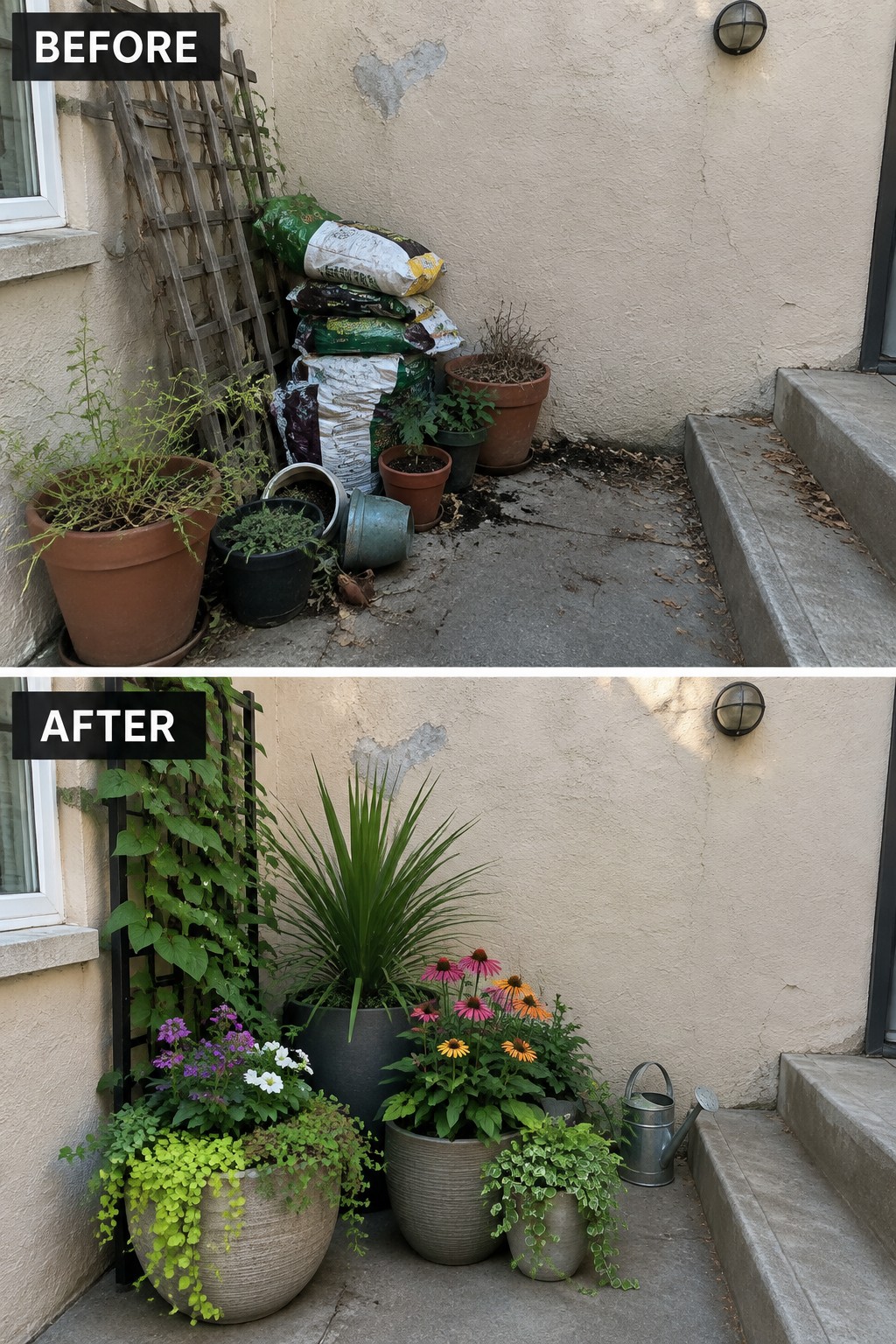
A messy corner full of scattered pots and supply bags can feel like wasted space. Adding a trellis for vines gives the area a clear vertical line, while grouping pots of different sizes and heights creates layers that feel planned instead of thrown together. The result turns random clutter into a simple planting display that actually works in a tight spot.
This approach suits small yards, side entries, or concrete corners where there is no room for big beds. Start by clearing everything out first, then pick one vertical element like a trellis before adding pots. Keep the tallest plants toward the back and let lower ones spill forward so the space stays easy to move around.
Add Structure To A Small Yard With Pavers
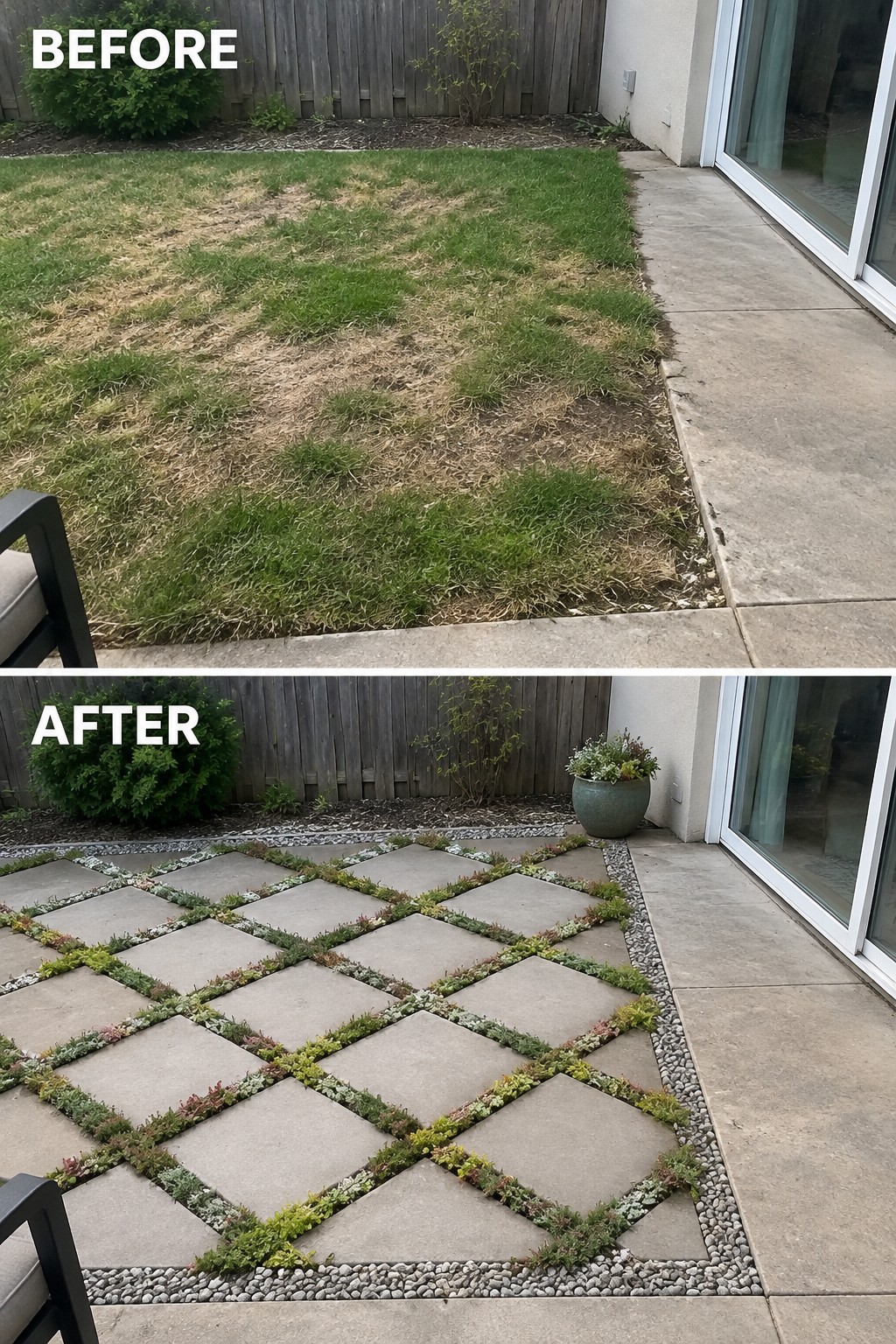
A patchy lawn often leaves a backyard feeling unfinished and difficult to keep tidy. Switching to a grid of pavers with low plants growing between them gives the space clear lines and turns the area into something easier to walk on and maintain.
This layout works best in small yards where you want to reduce grass but still keep some greenery. Lay out the pavers first in a simple repeating pattern, then fill the gaps with ground covers that stay low and need little watering.
Turn A Soggy Spot Into A Defined Garden Bed
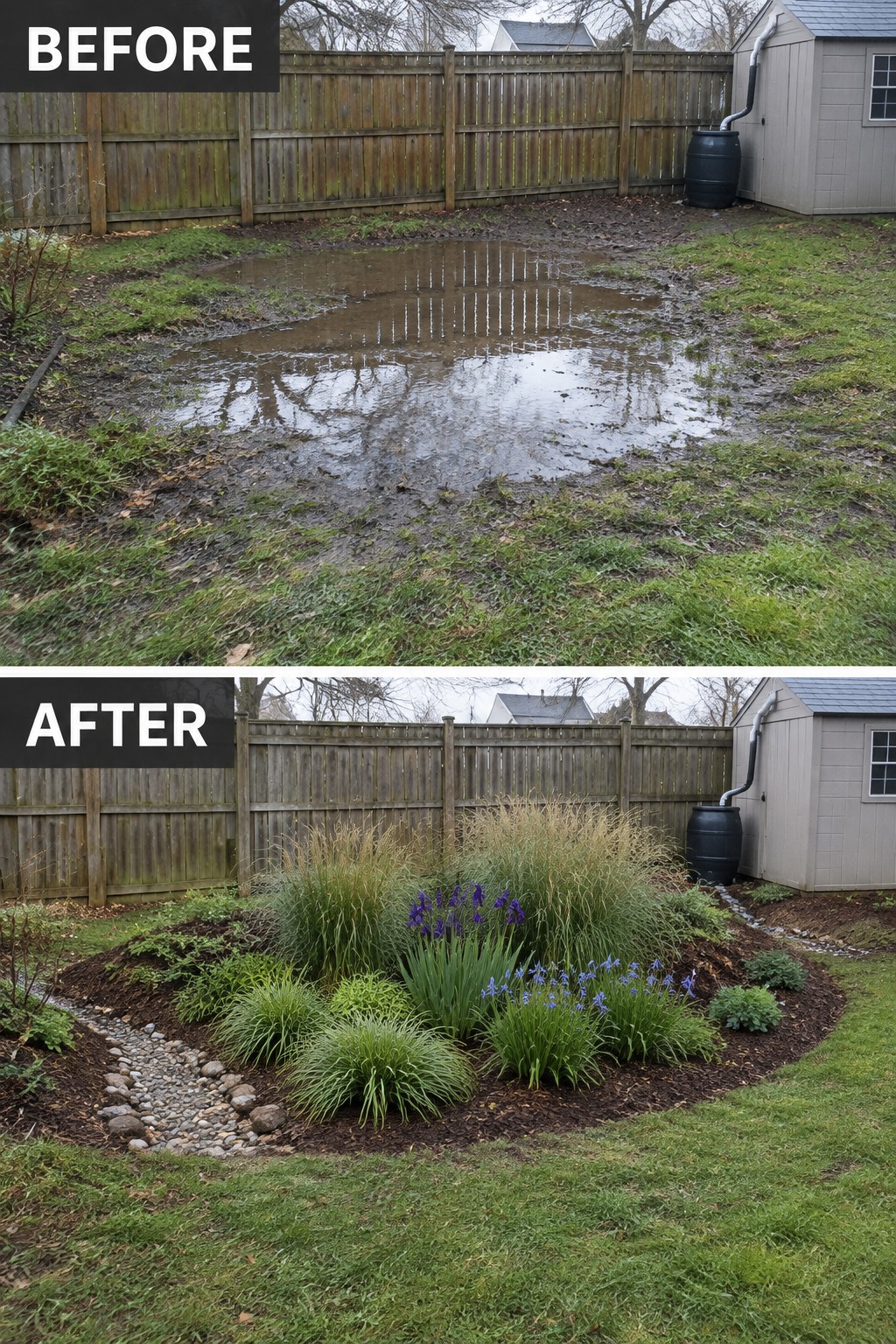
A low area that collects water after rain can quickly turn into a muddy mess. Adding a mulched bed with a simple gravel path and a mix of grasses and perennials gives the spot a clear purpose and stops it from looking neglected.
This idea suits small yards where one awkward corner needs structure. Improve drainage first if water sits for days, then pick plants suited to the moisture level and edge the bed cleanly so the lawn stays easy to mow around it.
Frequently Asked Questions
Q: How do I know which layout idea will work in my yard?
A: Start by measuring your space and noting how much sun it gets each day. Then try grouping taller plants at the back and shorter ones up front to keep everything visible. This simple step prevents the crowded look that kills small gardens.
Q: What plants should I choose if I want low maintenance?
A: Go for hardy perennials that match your soil type and climate. They settle in faster and need less watering once established. Mix in a few evergreens so your layout stays interesting all year.
Q: Should I start with hardscaping or the plants?
A: Lay out paths and borders first. Then fill in the planting areas around them.
Q: How do I fix a layout that feels too busy?
A: Pull out a few plants and replant them in clusters of three or five. This creates breathing room and makes each group stand out more. Your eye will rest easier on the simpler design.
