

I have noticed that many gardens feel scattered until a clear path is added to guide movement and define different areas.
Once that basic structure is in place, even simple edging and plantings start to look more intentional without much extra cost.
Paths often come first for me when planning updates.
They pull the whole space together in a way that scattered beds never quite manage on their own.
Over time this approach lets the garden develop in stages rather than requiring one big push.
Shape An Overgrown Path With Stepping Stones
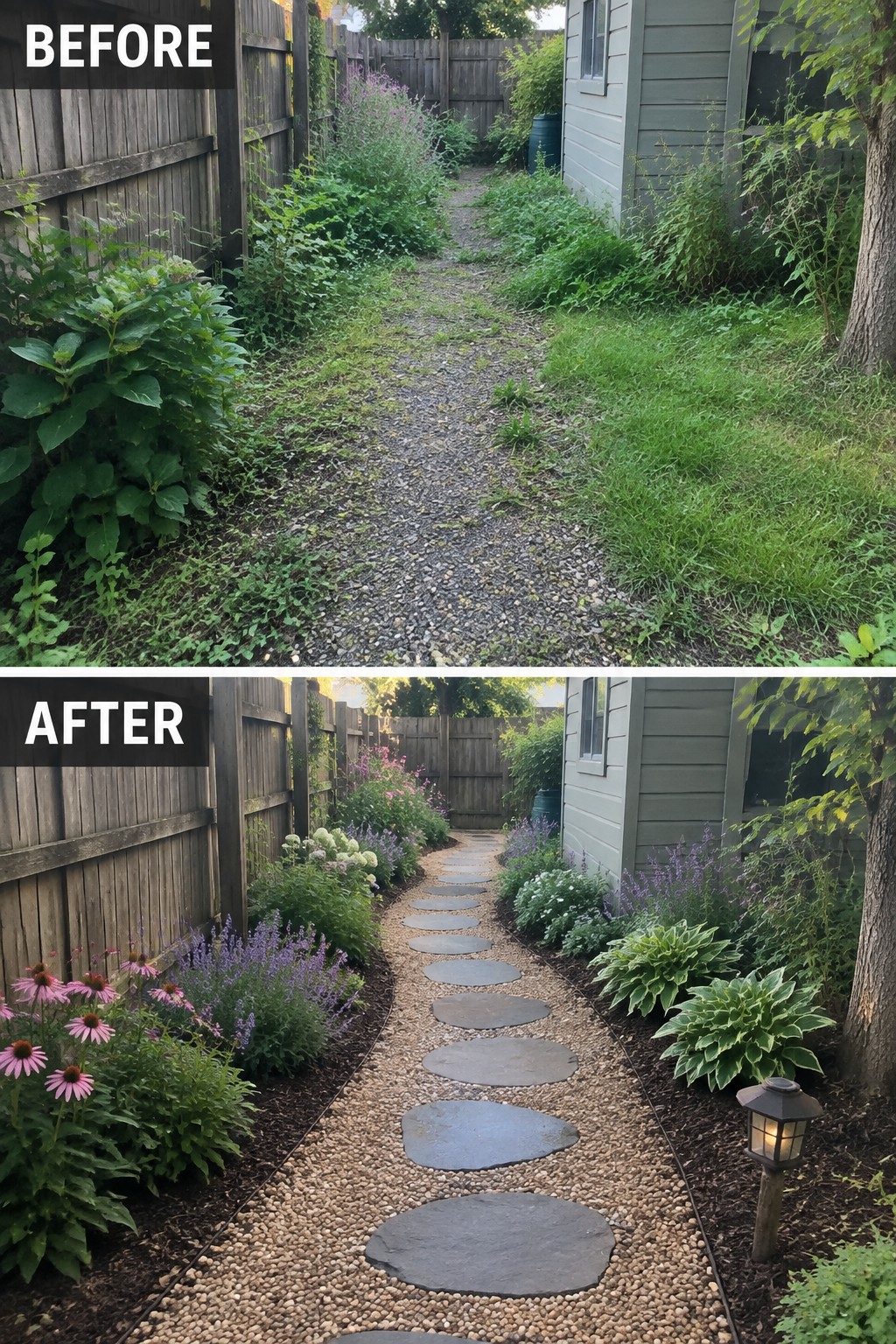
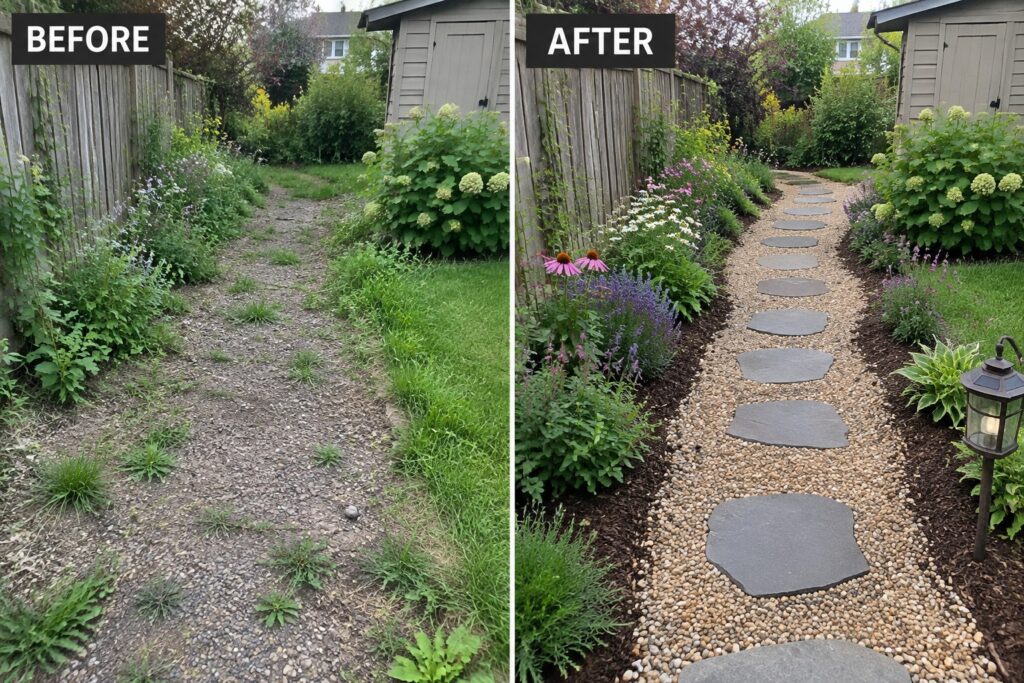
A narrow side path often gets neglected because it feels like wasted space. Adding stepping stones set in gravel creates a clear route and stops the weeds from taking over. The planted borders on both sides keep the gravel in place and turn the whole area into something that feels intentional instead of forgotten.
This approach works well in tight side yards or along fences where a full patio would not fit. Start by clearing the overgrowth first, then lay the stones so people can walk comfortably without stepping on plants. Mulch the beds right after so the edges stay neat and the path looks finished without a big budget.
Add Structure To An Overgrown Side Yard
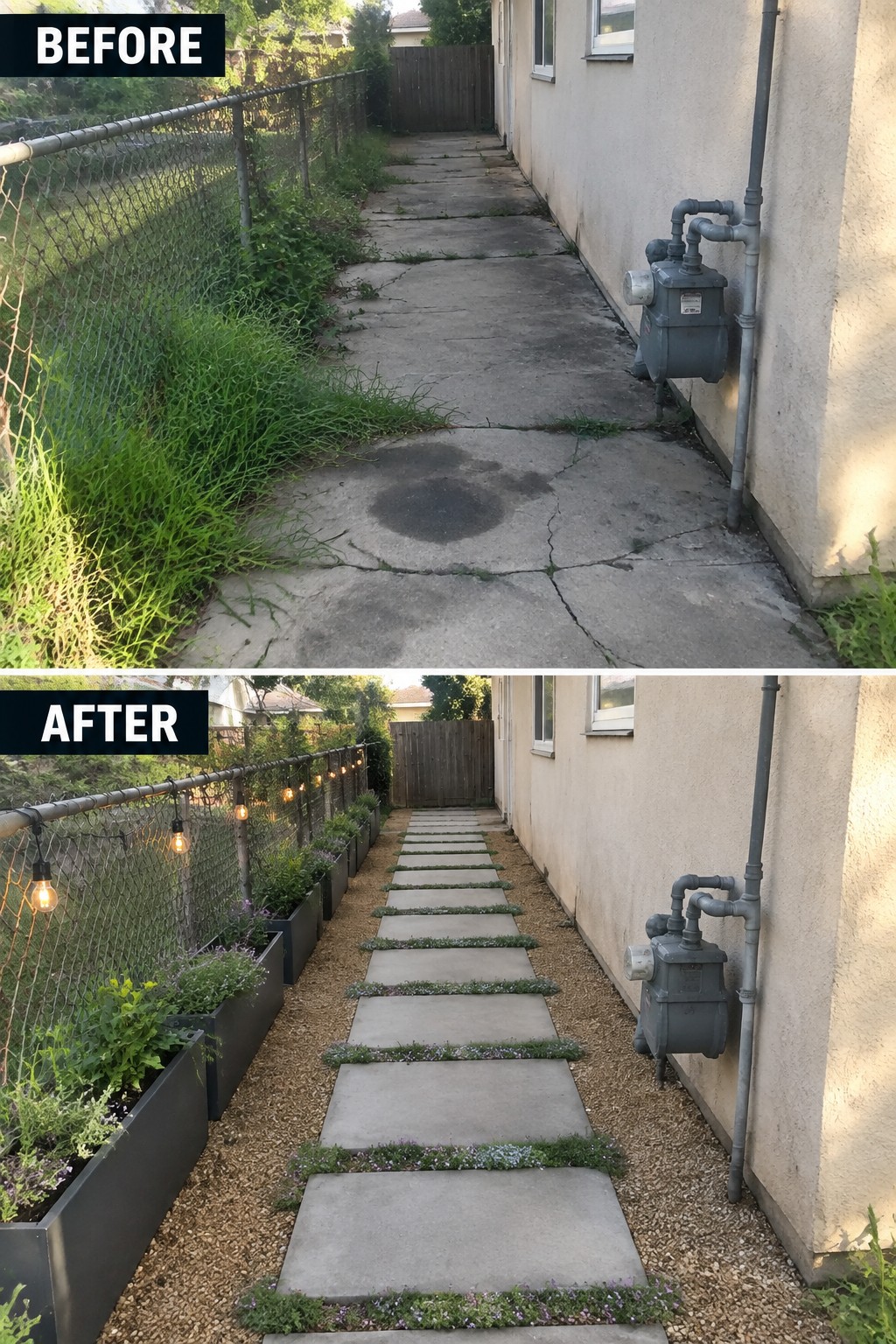
Clearing the weeds and replacing a cracked concrete slab with stepping stones set in gravel gives the space a clear shape. The long planters along the fence add simple borders that keep everything in line without crowding the walkway.
This idea suits narrow side yards where you still need access but want it to feel intentional. Focus on the path first, then add planting in containers or narrow beds so the area stays easy to maintain and walk through.
Add Simple Edging To Define Garden Paths
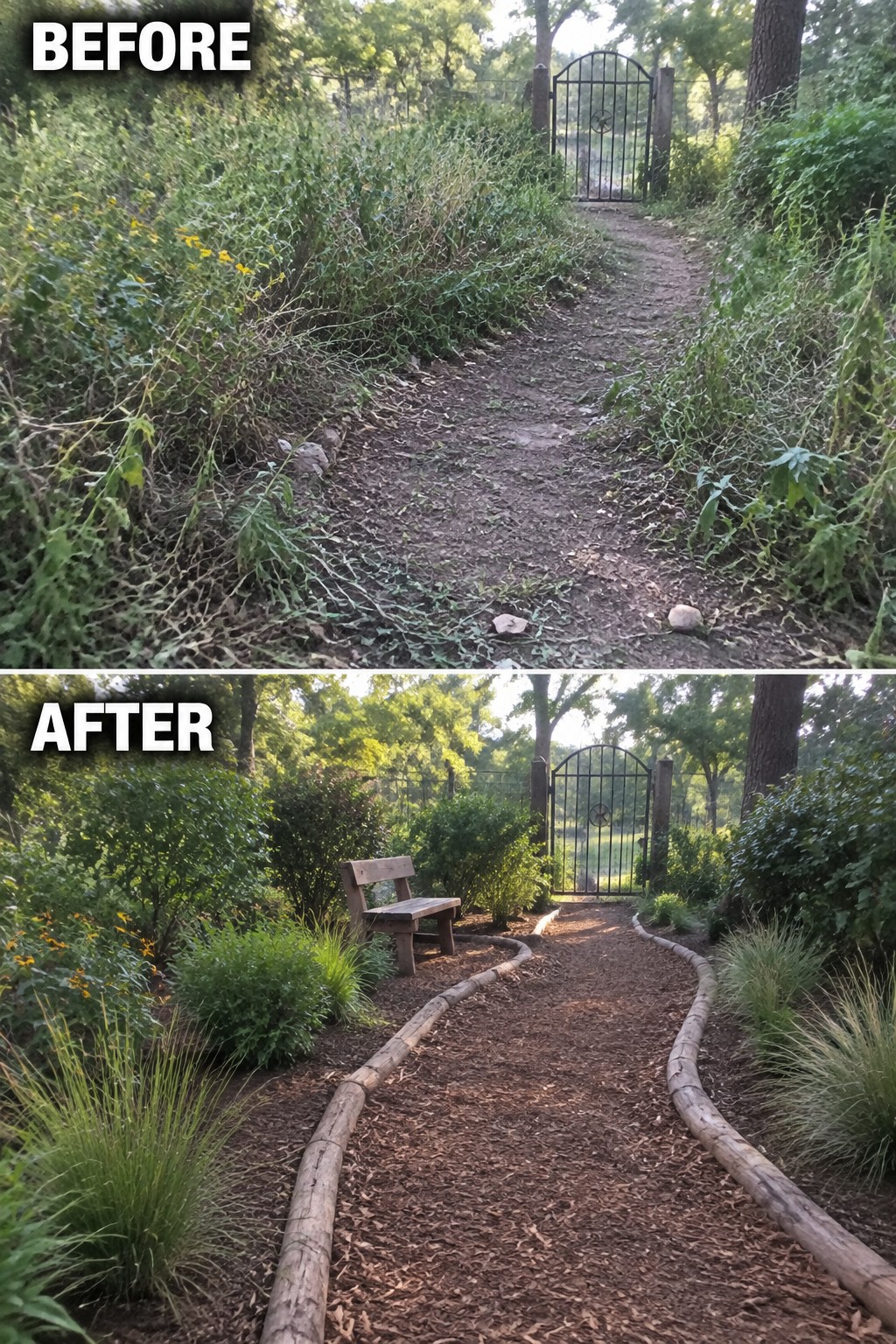
An overgrown path quickly starts to feel like part of the weeds around it. In this case, adding log edging on both sides and spreading mulch between them turned a messy trail into a clear, walkable route that looks like it belongs in the garden. The edging gives the eye a boundary to follow, which instantly makes the whole space feel more organized.
This idea works best in yards where paths have faded into the surrounding growth. Clear the worst of the brush first, then choose edging that fits your budget and style, such as logs, stones, or metal strips. Mulch or gravel inside the borders keeps weeds down and gives the path a finished surface without much expense. It is a practical step that makes the rest of the garden easier to maintain and enjoy.
Replace A Worn Path To Give The Yard Clear Structure

An old, uneven brick path can make the whole front yard feel neglected even when the grass and plants are fine. Laying a new path in a clean pattern straightens the line from the street to the door and gives the lawn a proper edge on both sides. The change turns a sagging walkway into the main feature that organizes everything else around it.
This idea works well on smaller front yards where the path is the main view from the street. Start by pulling up the old bricks completely so the new base stays level, then choose a simple pattern like herringbone that holds up to foot traffic. Keep the new path the same width as the old one so the lawn on either side stays easy to mow.
Add Structure To An Overgrown Yard
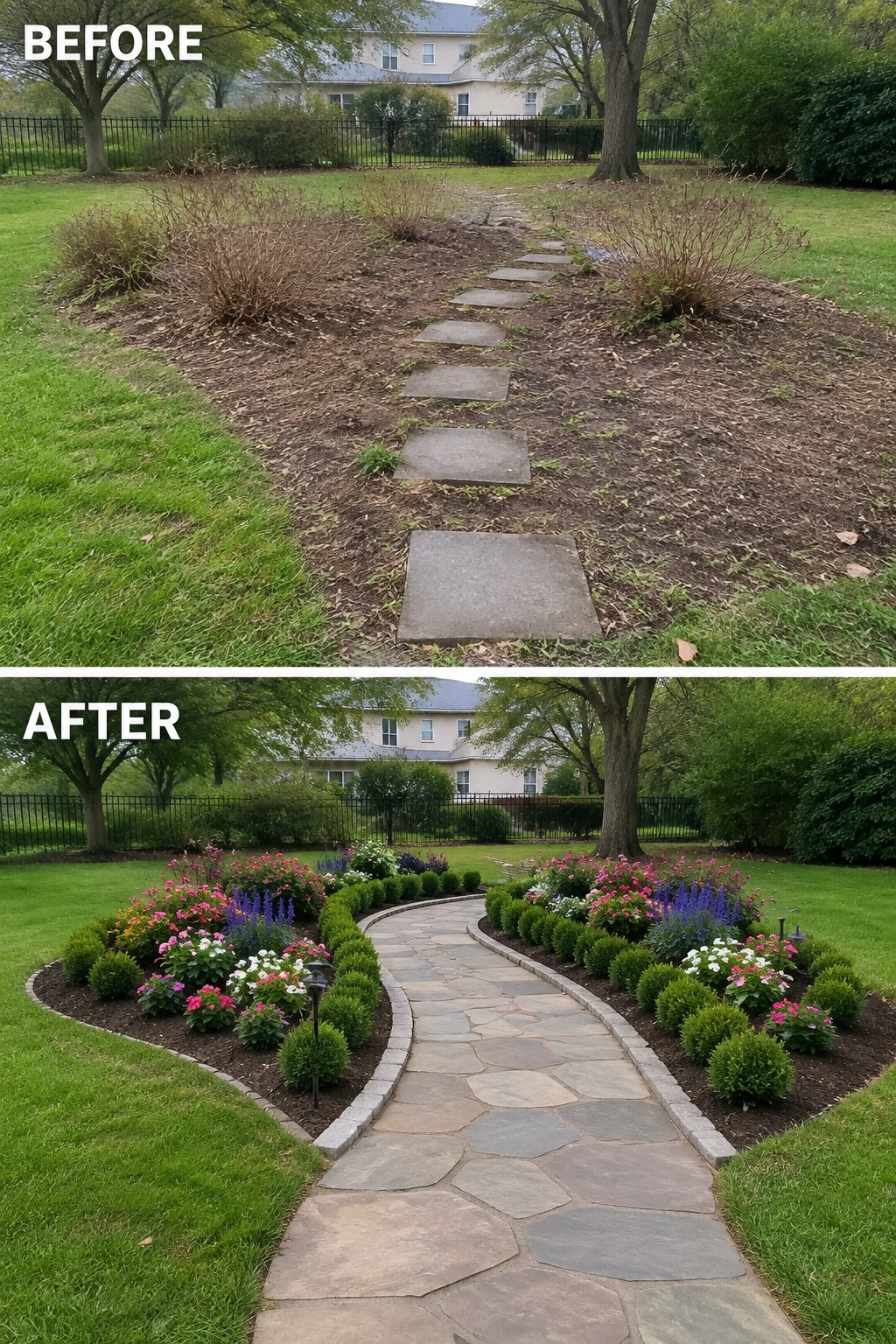
A clear path can turn a neglected stretch of grass and weeds into something that feels intentional. Here the scattered stepping stones and messy shrubs gave way to a wide stone walkway with clean borders on both sides.
Start by figuring out the main route people will take across the yard, then build the path and plant along the edges. This approach works in any yard that feels shapeless. Keep the path wide enough for comfortable walking and use simple plants that stay low so the walkway stays the main feature.
Create A Path That Handles Slopes And Mud
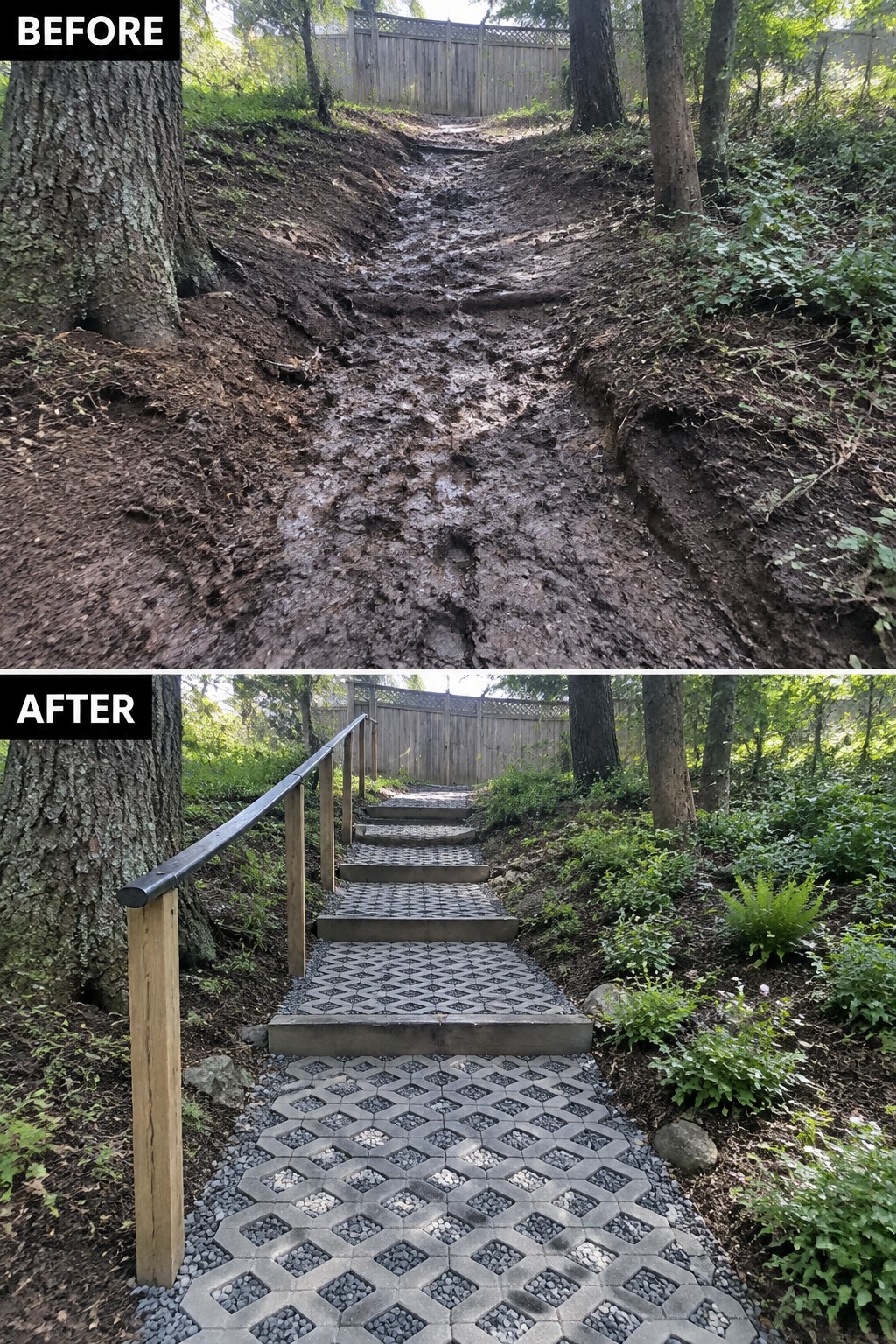
A steep, muddy trail becomes much more usable once you add steps and a paved surface. The before photo shows how water and foot traffic can quickly turn a slope into a slippery mess, while the after shows how simple pavers and a handrail turn the same spot into a clear walkway.
This idea works best in yards with hills or drainage issues. Start with cleanup and a solid base, then choose pavers that let water drain through. Keep the path narrow enough to fit the space but wide enough for easy walking, and add a handrail only where the slope feels steepest.
Define Your Entry With A Stepping Stone Path
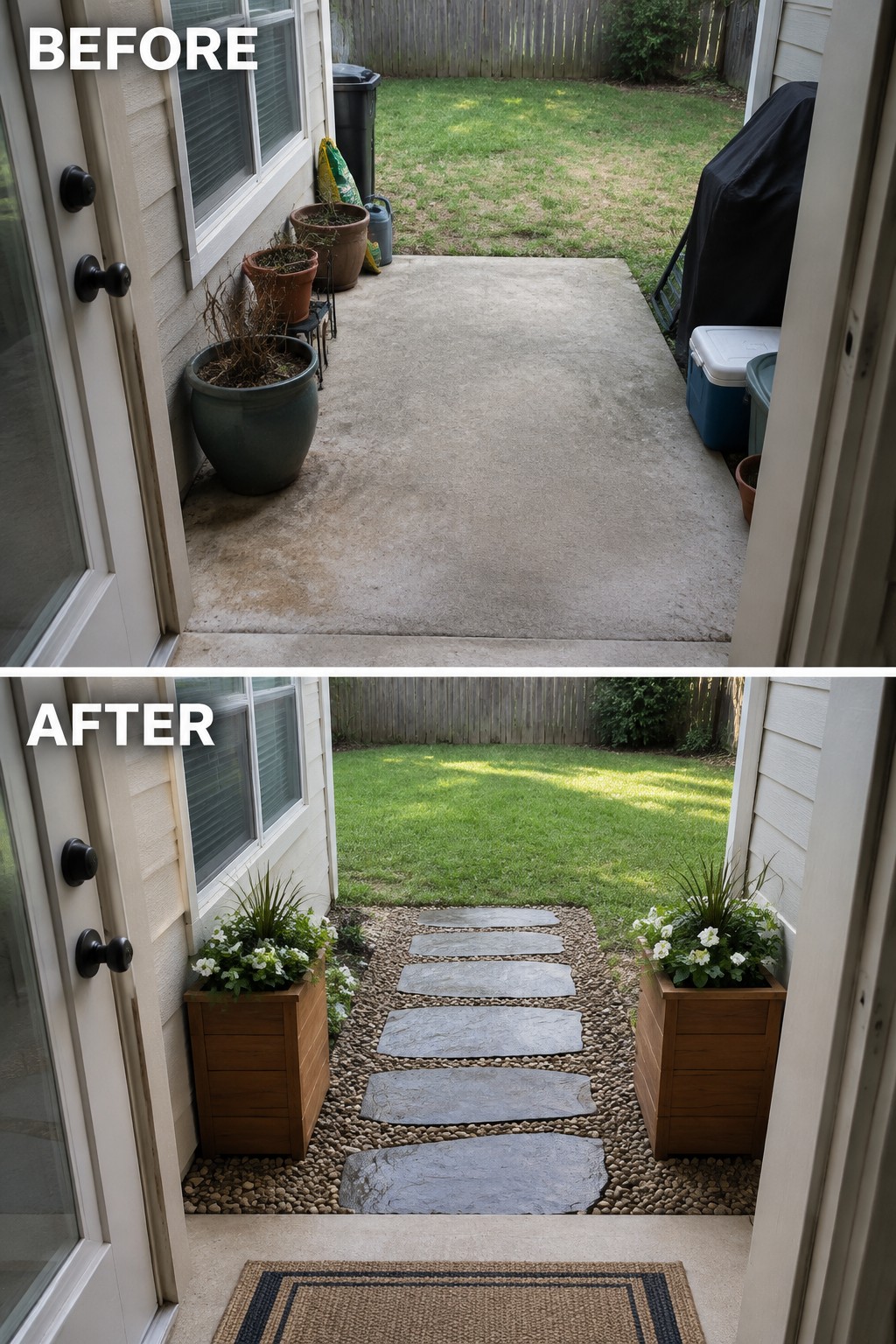
A wide concrete slab right outside the back door often feels like wasted space. Replacing most of it with a row of stepping stones set in gravel gives the area a clear purpose and turns the entry into a simple garden path that leads straight to the lawn.
This idea works best on narrow side yards or small back entries where you want an easy walking route without pouring new concrete. Keep the stones level and spaced for comfortable steps, then fill the gaps with gravel so the path stays tidy and weeds stay down. Wooden planters on either side help frame the walkway and soften the look without crowding the space.
Frame A Garden Path With Potted Plants
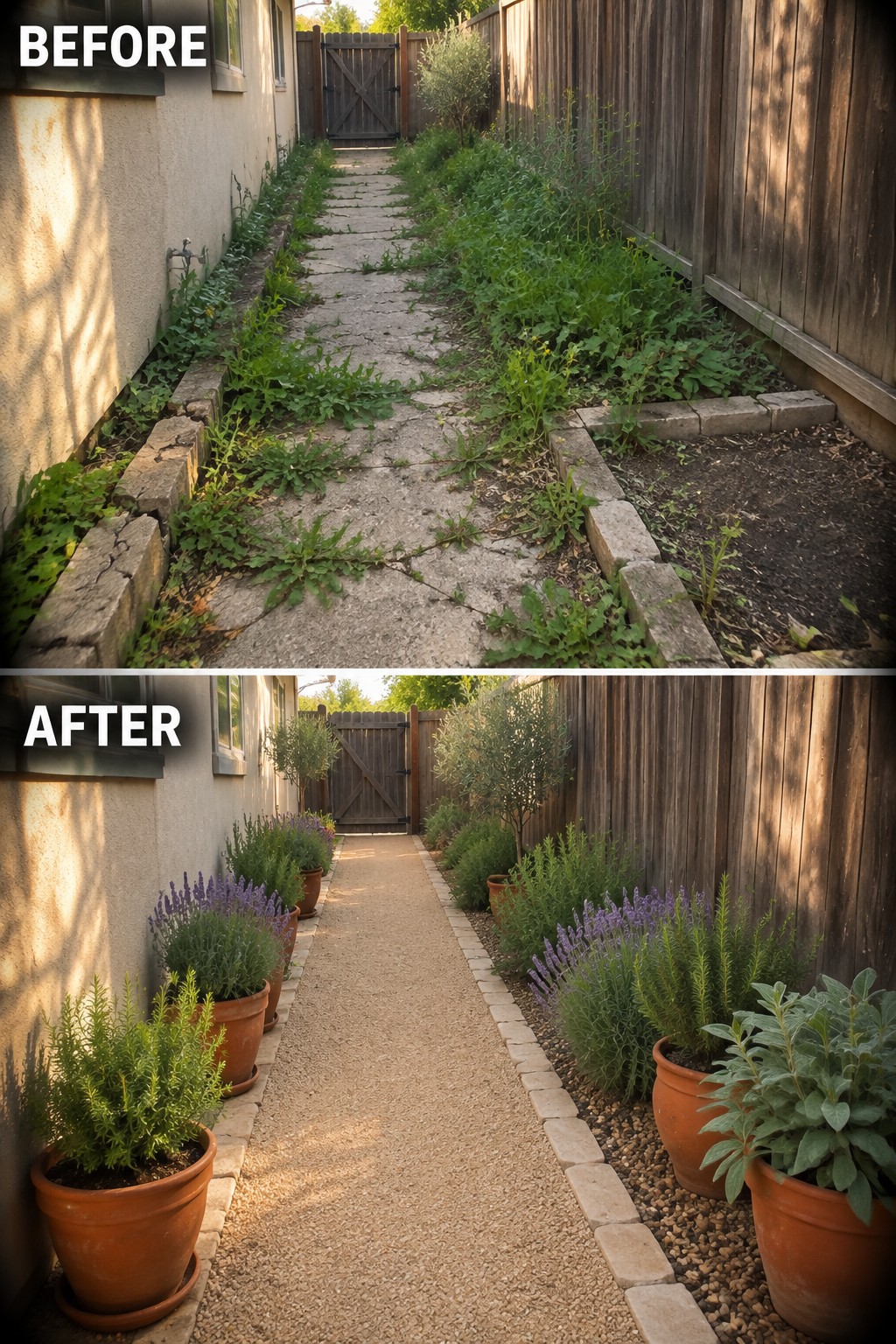
Clearing weeds and adding gravel is often the first step to making a narrow path usable again. In this example, the cracked walkway was buried under overgrowth. Once the weeds were removed, a simple gravel layer and paver borders gave the path clean edges and better drainage without major construction.
Potted plants work well here because they add height and greenery without requiring new garden beds. Place matching pots along both sides, choose hardy varieties like lavender or rosemary, and leave enough room in the center for easy walking. This method suits tight side yards or rental homes where permanent changes are limited.
Add A Simple Path To Give A Small Courtyard Structure
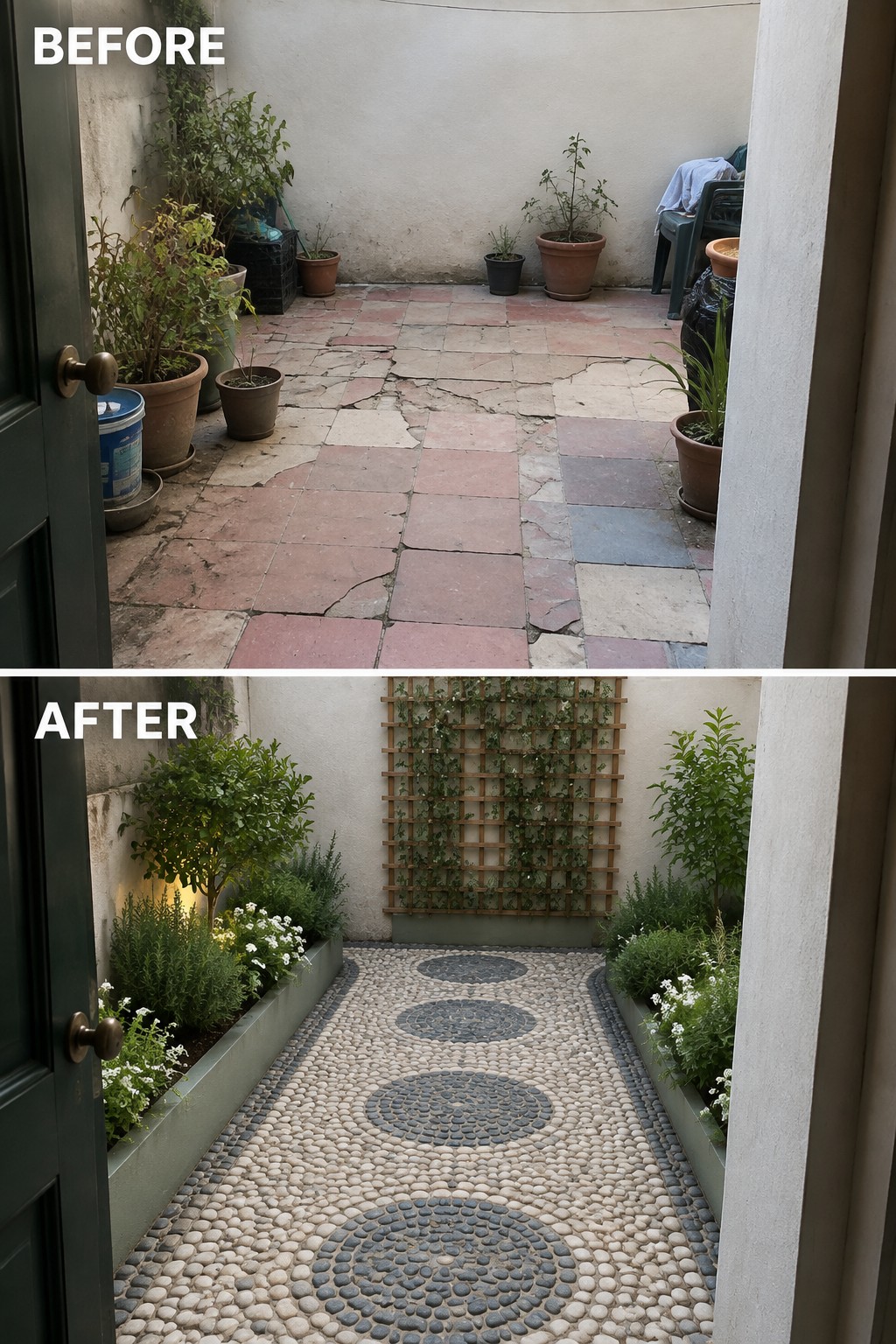
The cracked and uneven tiles in the before photo made the space feel neglected and hard to use. Adding a clear pebble path with raised beds on either side turned the same area into something that feels organized and easy to walk through. The path gives the eye a route to follow and stops the space from looking like a random collection of pots.
This idea works well in small or awkward outdoor areas where you want to create order without spending much. Start with a simple path using pebbles or pavers, then add planting along the edges. It keeps the space practical while making it look more intentional, and it works in both sunny courtyards and shaded side yards.
Define A Garden Path With Simple Borders
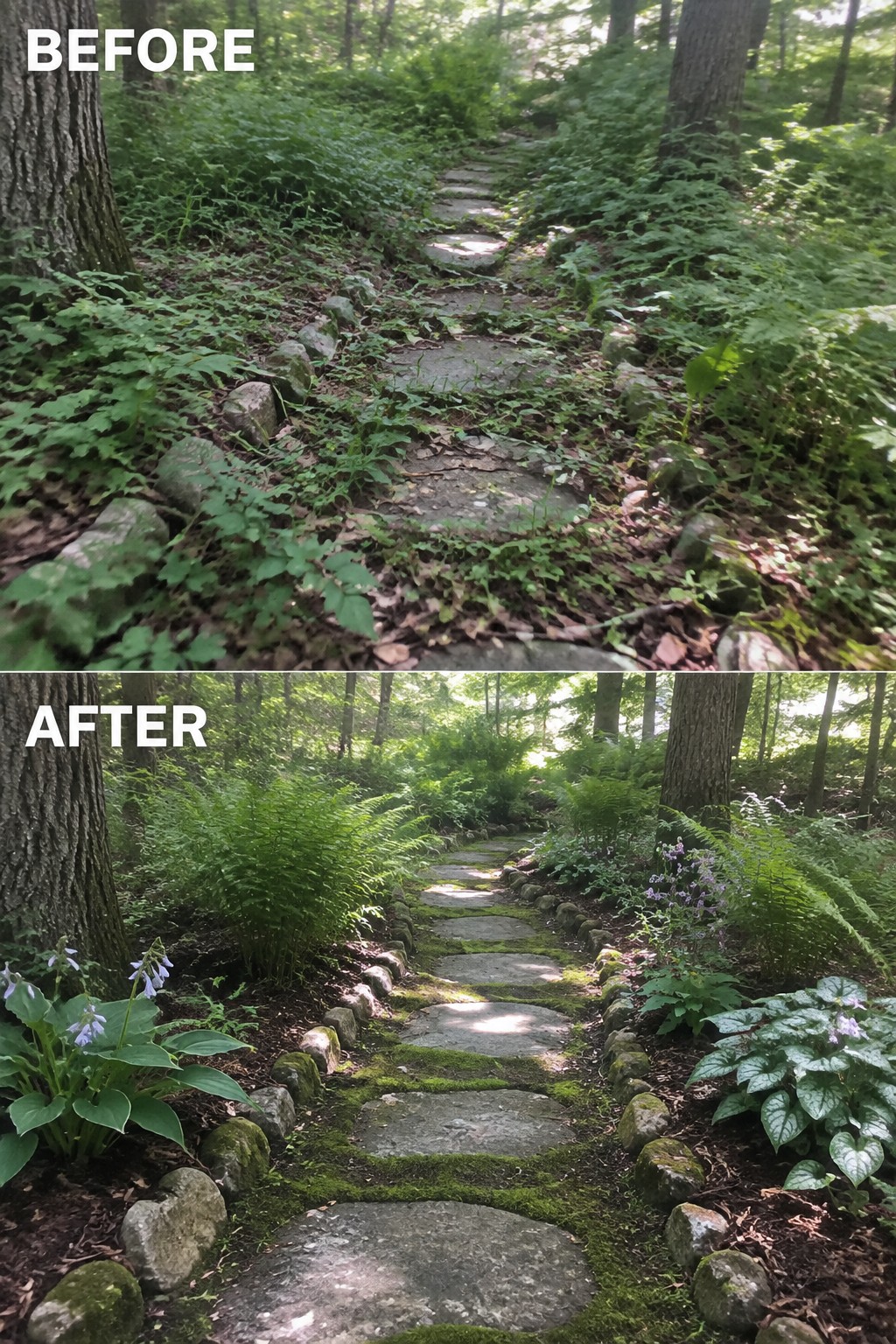
An overgrown path quickly loses its purpose when leaves, weeds, and stray plants take over the edges. Adding a line of rocks on both sides and letting moss settle between the stones turns the same path into something you can actually follow without guessing where it leads.
This works best in shady or wooded areas where you want to keep a natural feel while still giving the garden some order. Clear the main walkway first, set the border stones, and fill gaps with moss or low ground cover that matches the existing plants.
Define A Driveway Edge With A Simple Border Garden

A weedy strip next to the driveway makes the whole side of the yard look unfinished. Adding a brick edge, fresh mulch, and a row of flowers turns that narrow space into a clear border that keeps the lawn neat and guides the eye along the path.
This idea works best on long, thin strips where you want color without crowding the driveway. Keep the bed narrow, choose sturdy perennials that can handle sun, and let the edging do most of the work so the planting stays low maintenance.
Add A Simple Path To Organize A Wet Yard
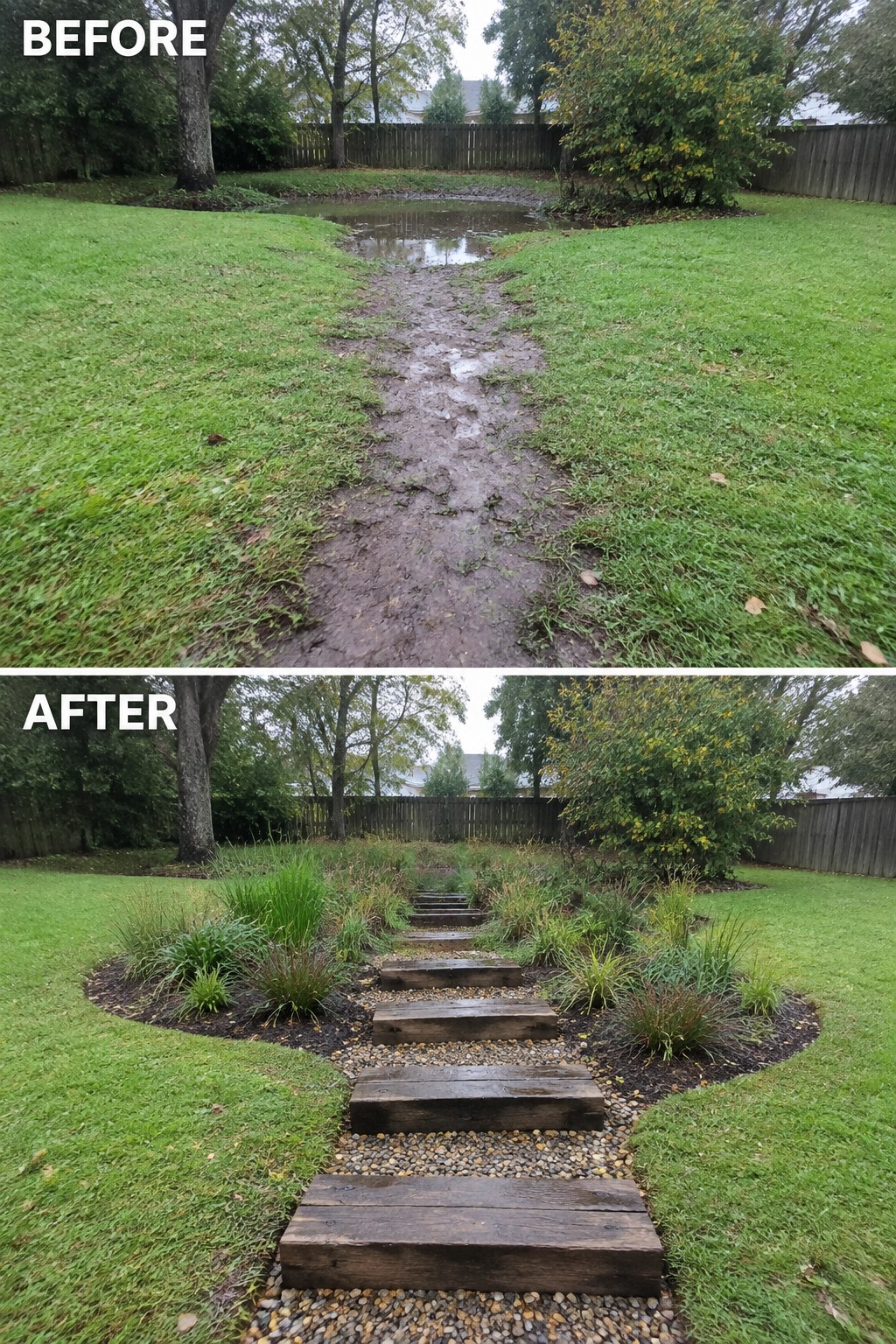
A worn path through wet grass often turns into a muddy strip that gets worse with every rain. Adding a clear walkway with wooden steps and gravel gives the area a purpose and stops the lawn from getting torn up. The change turns a problem spot into something you can walk across without tracking mud everywhere.
This idea works best in backyards where people already cross the same route. Start with the path itself before adding plants, and keep the edges simple so the walkway stays easy to maintain. Gravel and wood hold up well outdoors and help water drain instead of pooling.
Turn Overgrown Grass Into A Defined Garden Path
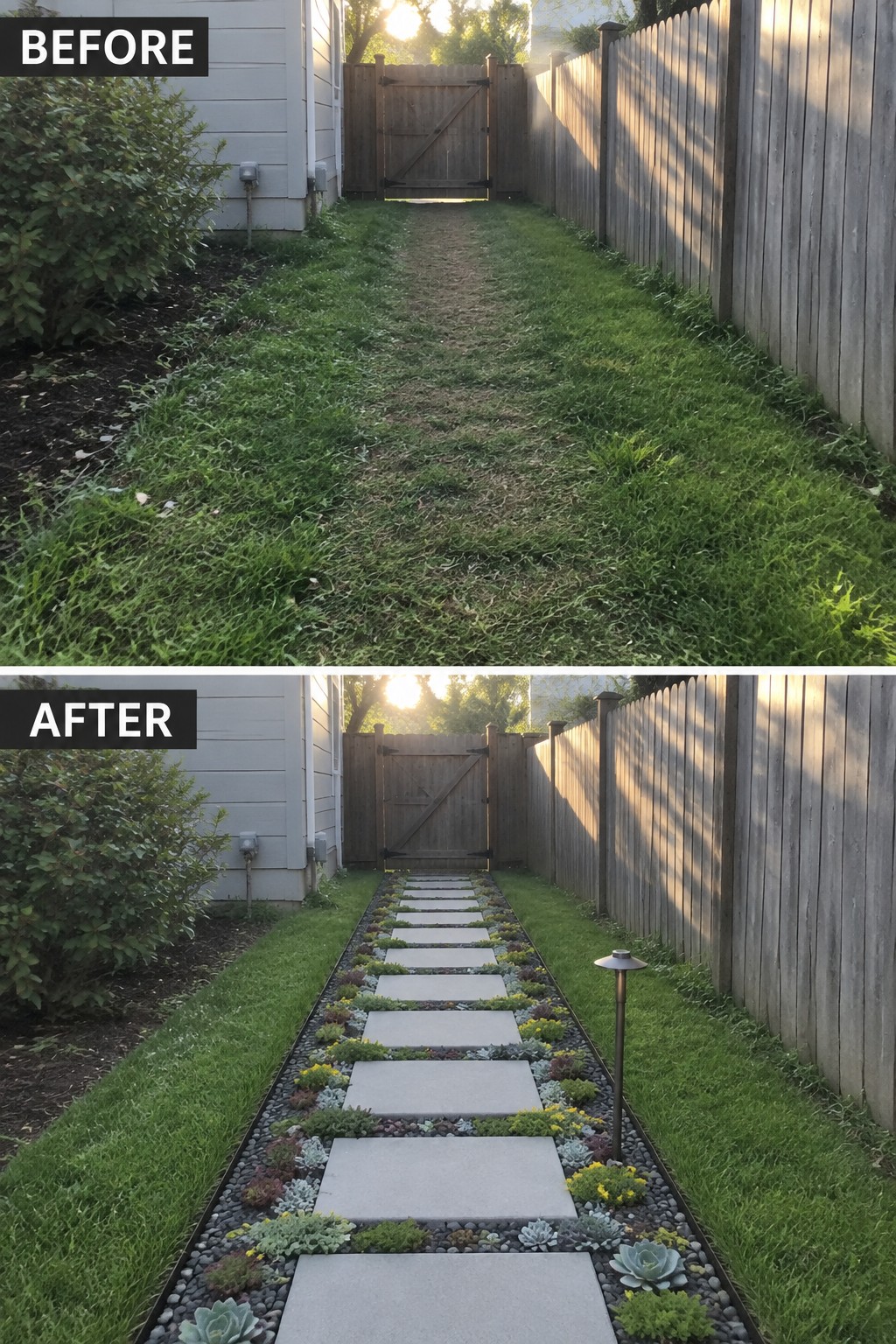
The main change here is replacing a worn strip of grass with a line of pavers set in gravel and edged with low plants. This gives the yard a clear route that feels intentional instead of accidental.
This works well in narrow side yards or back gardens where you need a practical way to move through the space. Start with the path layout first, then add the gravel and simple border plants. It keeps the lawn on either side intact while giving the whole garden more shape.
Add A Stone Path To Bring Order To Overgrown Grass

An overgrown yard often feels messy because there is no clear route through it. Laying stepping stones turns a narrow dirt trail into a proper path, while mowing the sides and adding a few low plants keeps the grass from swallowing the walkway again. The result is a space that feels intentional instead of neglected.
This idea works best in backyards where a natural route already exists but has become hard to use. Start with a thorough mow and edge the sides, then set the stones level with the ground so walking stays comfortable. Add a few solar lights along the edges if the path will be used after dark.
Define A Steep Slope With Basic Wooden Steps
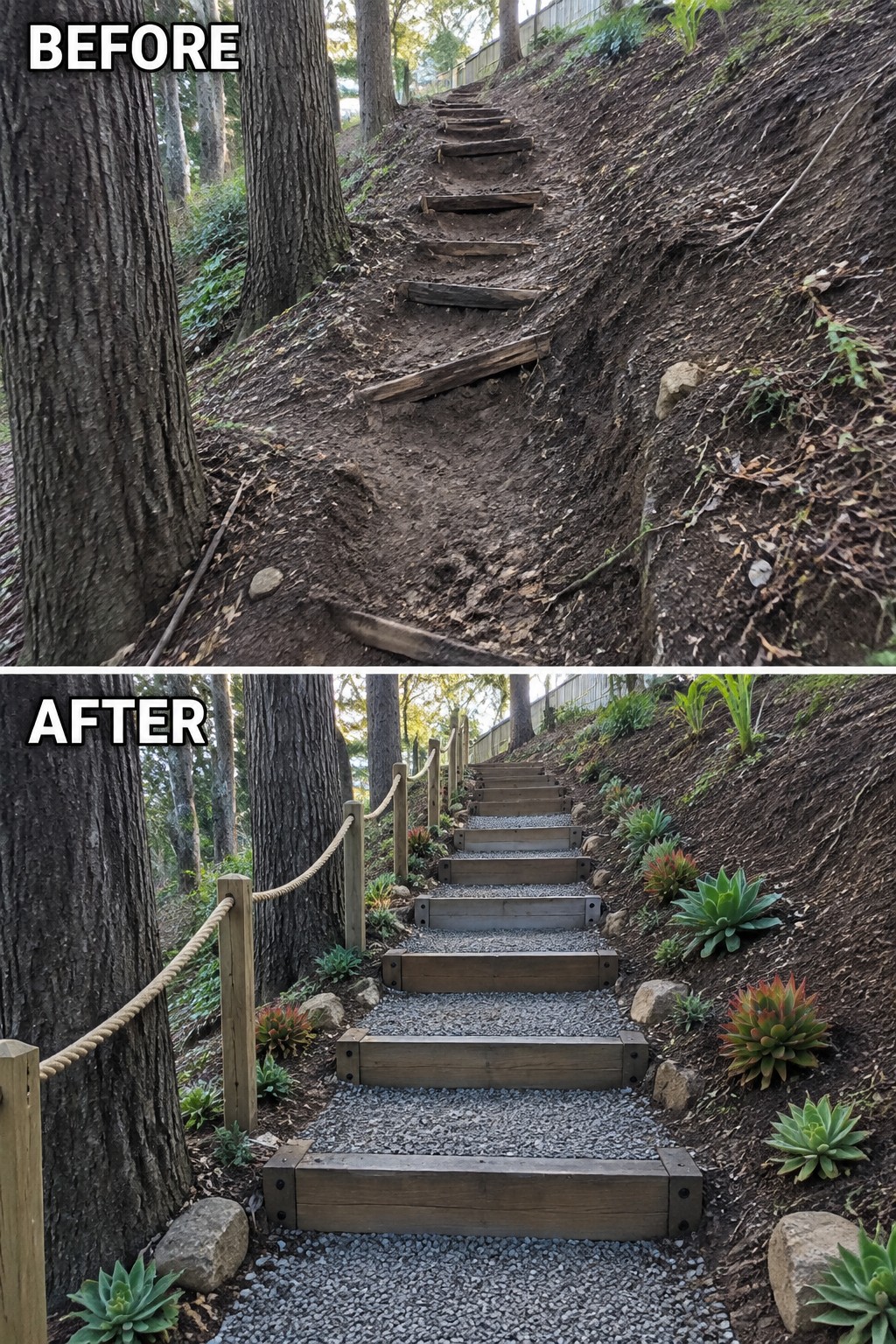
A steep dirt path on a hillside turns into a slippery mess after rain, especially when old logs shift and leave bare soil exposed. Building simple wooden steps with gravel treads creates a stable surface that drains water and makes the slope usable year-round.
This idea suits any yard with a noticeable drop where you need a direct route. Secure the sides with posts and timber first, then add gravel between the steps so the path stays firm. A rope railing keeps things safe without feeling heavy, and a few tough plants along the edges help hold the soil.
Add Patterned Borders To A Concrete Path
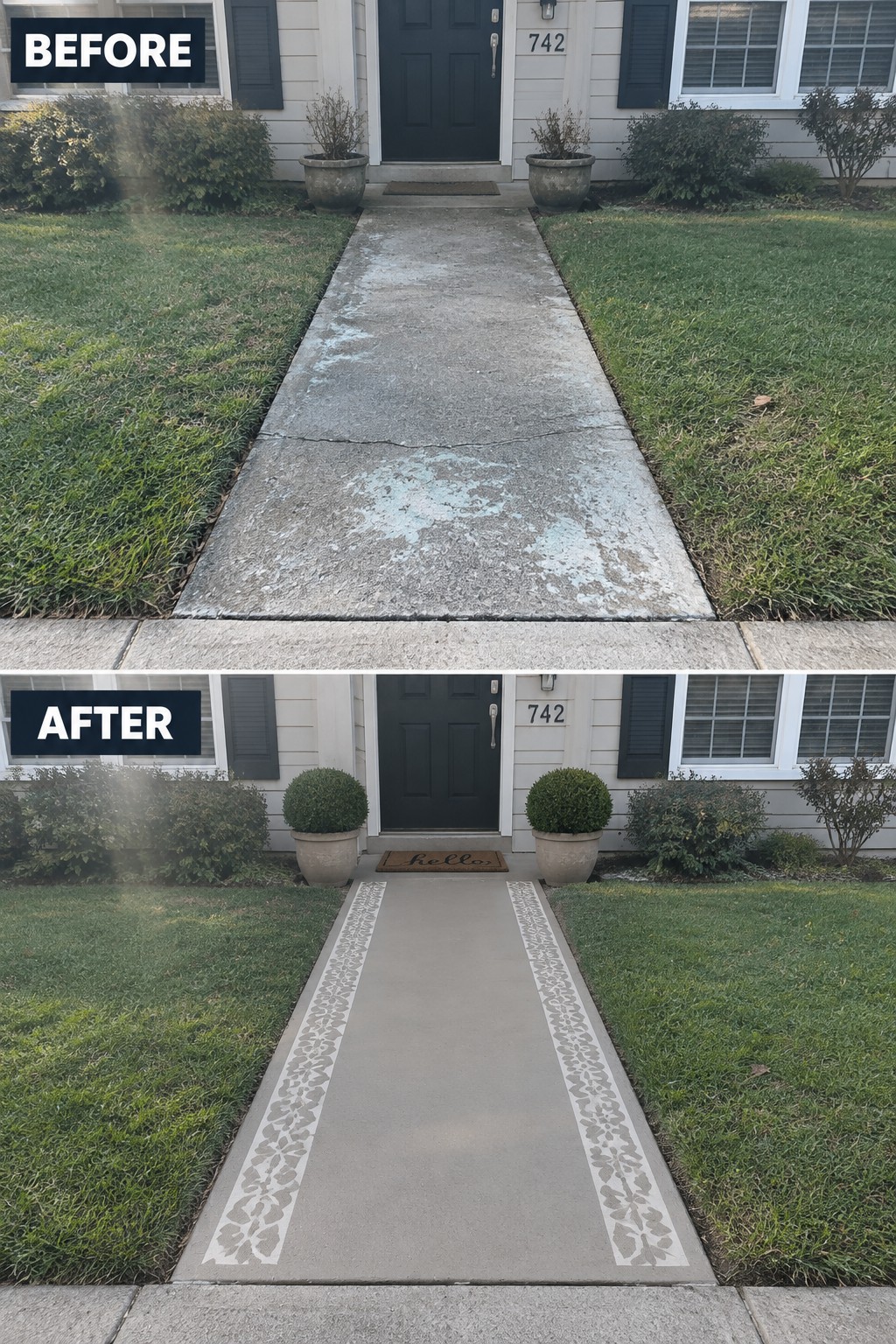
A plain concrete walkway often looks unfinished once the rest of the yard is tidy. The before photo shows how cracked and stained the surface had become, while the after shows how two simple repeating borders instantly make the same path feel intentional and cared for.
This idea works best on straight, functional paths where you want structure without replacing the concrete. Use an outdoor stencil and concrete paint in a single color that blends with your house, and keep the pattern narrow so it frames the walkway rather than competing with it. The rest of the yard stays simple, which is why the borders stand out.
Create Clear Paths Between Raised Beds
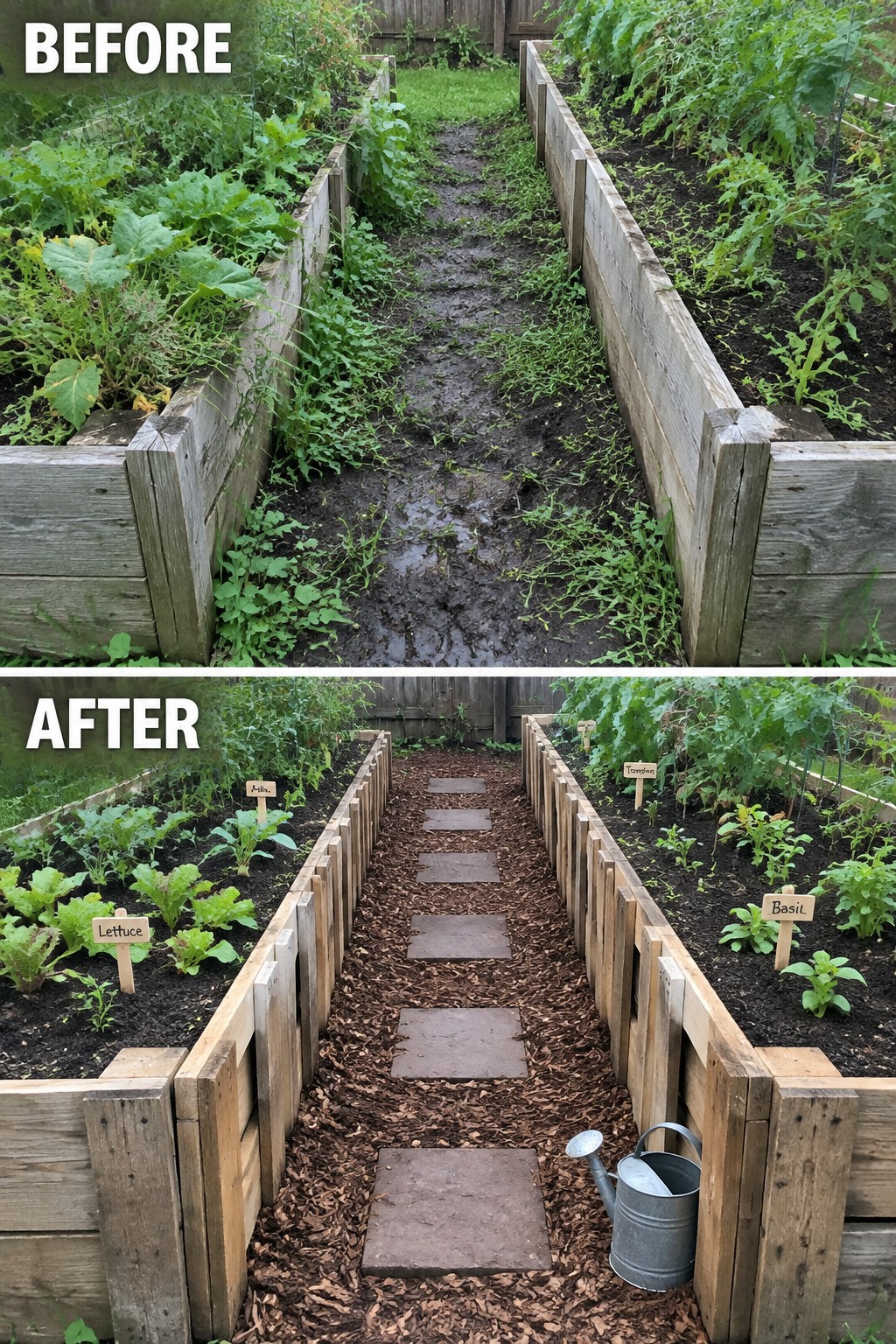
A muddy walkway between garden beds makes the whole space feel neglected and hard to use. Adding stepping stones down the center with mulch on both sides turns that same narrow strip into a practical path that keeps feet dry and gives the beds a tidy frame. The change is mostly about defining the walking area so the garden feels intentional rather than overgrown.
This idea works best in long, narrow spaces where raised beds already exist. Clear the center first, then choose stones large enough to step on comfortably and spread mulch to cover the rest. It keeps the focus on the plants while making it easier to reach everything without compacting the soil.
Add A Simple Stone Path To Organize A Large Lawn

A wide open lawn can start to feel shapeless when the only route across it is a worn dirt track. Laying down a straight line of pavers and flanking it with low hedges instantly gives the space order without crowding it. The path now leads the eye straight to the center and makes the whole lawn feel more intentional.
This approach works well on big, flat lawns where you want structure but still need room to mow and walk around. Keep the path width comfortable for two people and match the hedge height to whatever you can maintain easily. Start with the path and edging first, then decide if anything else needs to be added later.
Define A Stone Path With Pebble Borders
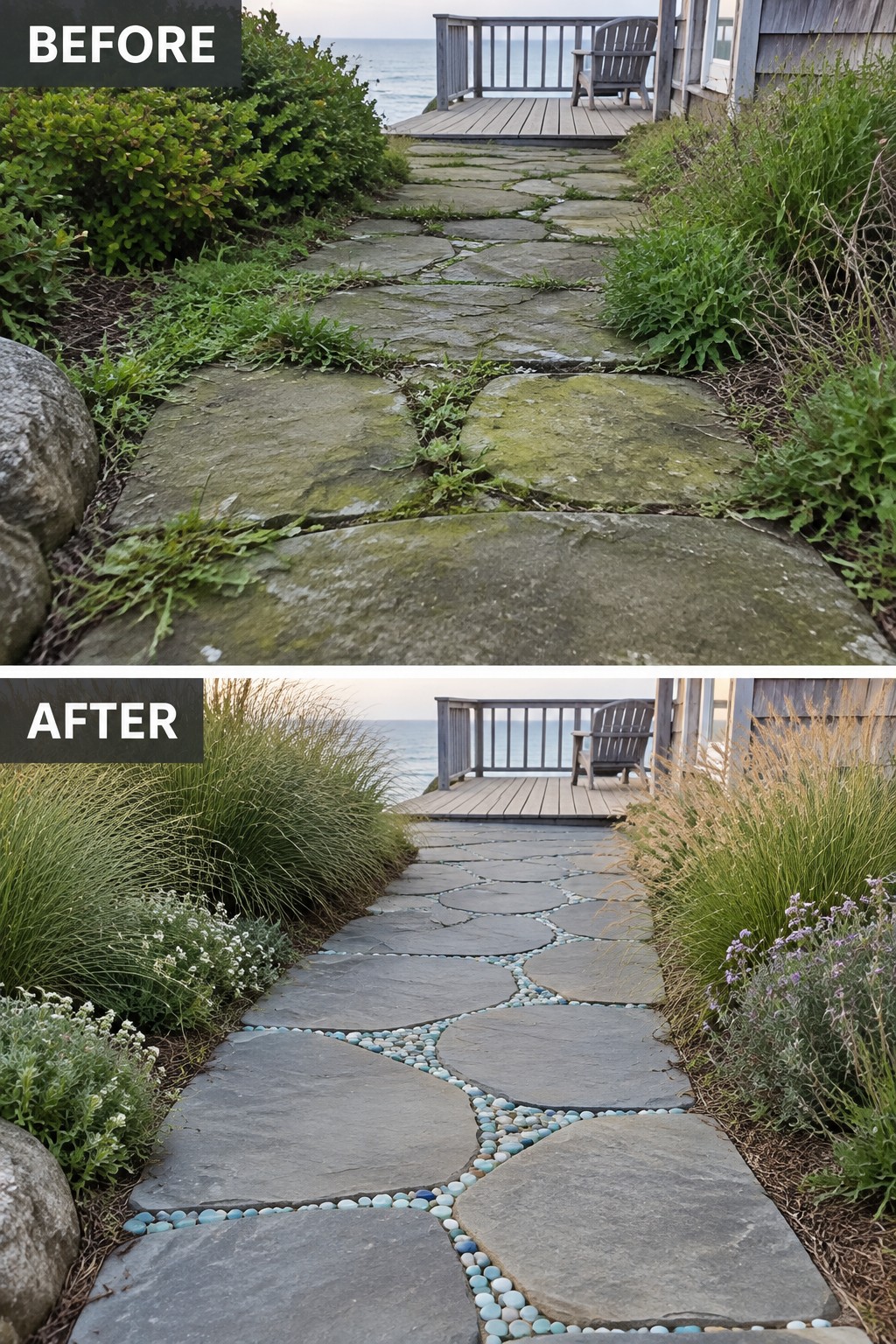
The main change is how the gaps between the stones were handled. Before, weeds and grass were growing right up between the pavers and spilling onto the path. After, those spaces were filled with small pebbles that create a clean line and stop the overgrowth from taking over again.
This idea works best on existing stone paths that feel messy rather than intentional. Clear the growth first, then add a narrow pebble border along the edges. It gives the path structure, makes it easier to maintain, and helps the surrounding beds look more planned without needing new paving or major planting.
Define A Garden Path With Gravel And Lights

One simple way to bring order to an overgrown yard is to add a gravel path with edging and a row of low lights. The before shot shows how quickly plants can crowd the route and make the space feel neglected. Once the path is clearly marked it becomes the backbone of the garden and everything else falls into place around it.
This approach suits long narrow side yards or back gardens where you need a practical walkway without major construction. Clear the edges first, lay landscape fabric and gravel, then place solar lights every few feet so the path stays usable after dark. Keep the lights low and the gravel contained so the path feels intentional rather than decorative.
Add A Simple Path To Organize A Narrow Side Yard

A narrow side yard can easily become a strip of dirt and clutter that no one uses. Laying down a path of stepping stones gives the space a clear route and turns it into something you can actually walk through without feeling like you are stepping over weeds. The gravel base and planted edges help keep the area from looking scattered.
This idea works best in tight side yards or service areas where you still need access to the back of the house. Start with a basic cleanup, then place the stones to create a walking line before adding plants along the sides. It keeps the space practical while making the whole yard feel more intentional.
Use Gravel To Create A Defined Garden Path

Replacing a plain grass path with gravel and stepping stones brings order to an open backyard. The gravel forms clean edges and a low-maintenance surface that keeps the walkway clear and easy to follow, even in wet weather.
This idea works best in smaller yards where you want less lawn to mow. Lay landscape fabric first, add a few inches of gravel, and set the stones at a comfortable walking distance. Keep the path width consistent so it feels intentional rather than scattered.
Create A Sensory Path With Different Textures
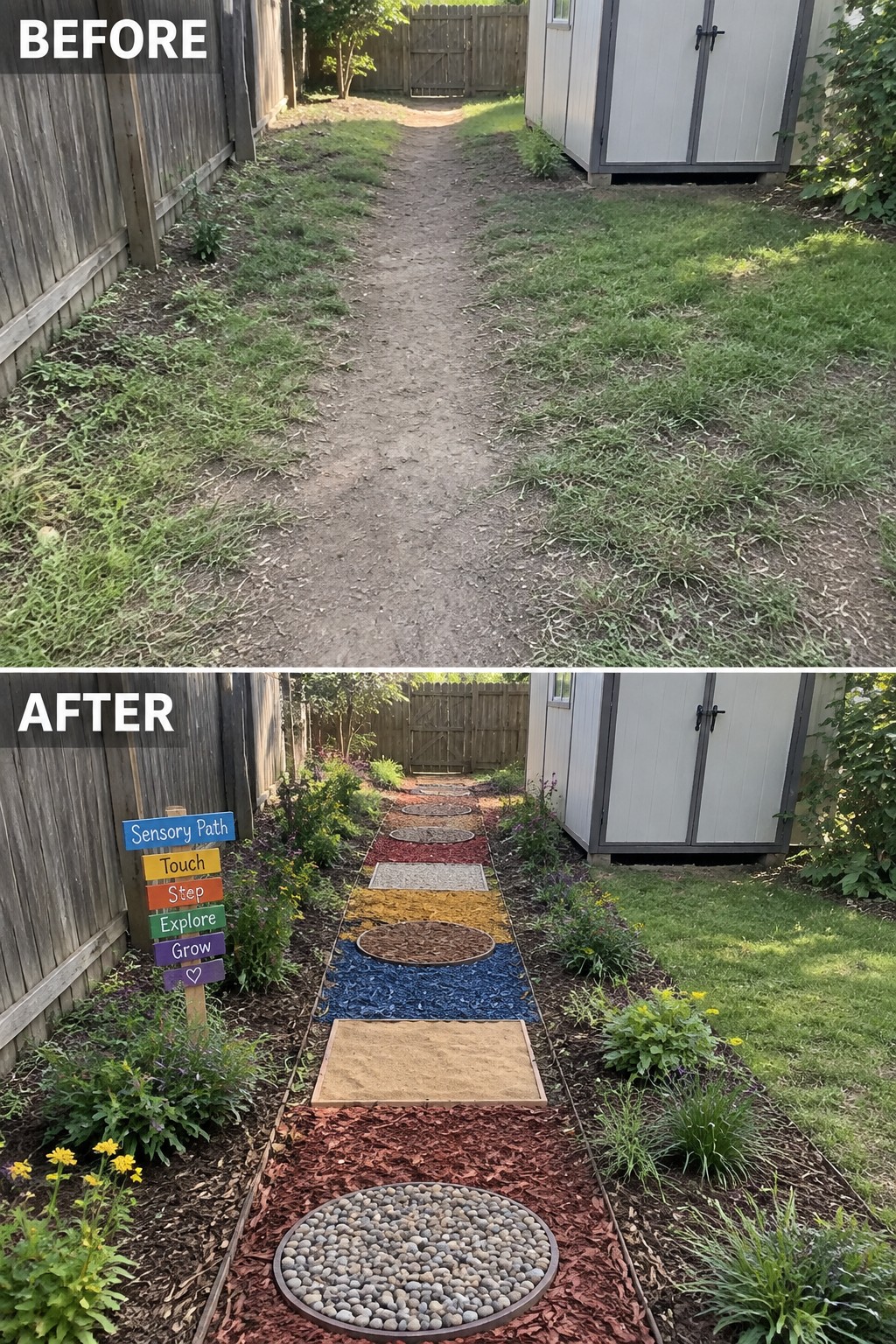
A plain dirt path can feel like wasted space until you give it some structure and variety. The simple fix here was dividing the walkway into sections filled with different materials like mulch, sand, gravel, and wood chips. This turns a basic route into something people actually notice and interact with as they walk through the garden.
This idea works best in side yards or narrow spaces where you want to add interest without spending much. Start by marking out your path shape, then use inexpensive fillers for each section and border everything with mulch or low plants to hold the edges. It stays practical as long as you leave enough room to walk comfortably and choose materials that hold up in your weather.
Frequently Asked Questions
Q: What material works best if I want something cheap and easy to install myself? A: Mulch or wood chips spread over landscape fabric make a quick path that feels soft underfoot. You rake it level once a year and add more as it breaks down. That keeps costs low without any fancy tools.
Q: How far apart should I space stepping stones so the path feels natural? A: Place them about a normal step apart, around 18 inches center to center. Test by walking on them before you set them in place. Adjust until your stride feels comfortable.
Q: Can I run the path right through an existing flower bed? A: Clear a strip through the bed and edge it with your path material. Flowers will spill over and soften everything while you trim them back now and then.
