


Many small gardens end up looking sparse because the plants all reach about the same height.
I find that building layers with taller back plants and shorter ones in front gives the area more structure right away.
Texture matters too.
When I look at my own beds I usually start by clearing out the low sprawlers that hide everything else.
Trying a few of these height combinations has shown me how a simple planting plan can make the whole space feel more settled.
Define Small Garden Beds With Layered Planting
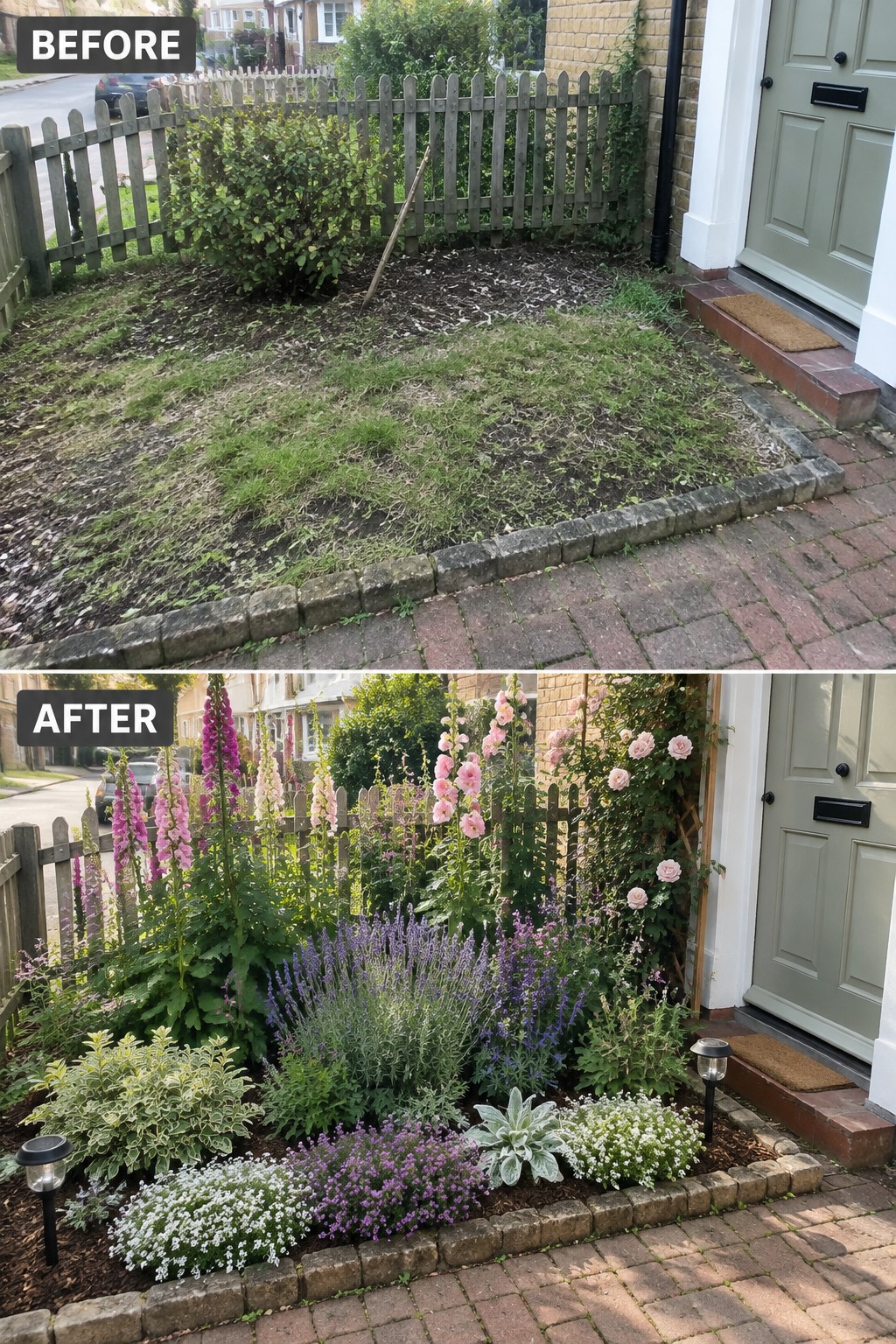
The main improvement came from marking out clear beds along the path and filling them with plants of different heights. The patchy grass and weeds gave way to a mix of tall flowers at the back, medium shrubs in the middle, and low spreading plants along the front edge.
This idea suits narrow front gardens or side strips where lawn alone feels flat. Lay simple edging first to hold the shape, then repeat a few plant types rather than trying to fill every gap at once. The beds stay easy to maintain and give the whole area a settled look without crowding the walkway.
Use Raised Beds To Layer Height And Texture In A Narrow Yard

A narrow side yard often ends up as leftover space with a plain path and a few random pots. Switching to raised wooden beds changes that by giving the planting real structure and letting different plant heights work together. The result feels like an intentional garden instead of a corridor.
This idea suits tight spaces between houses or fences where ground planting is limited. Build simple wood frames first, fill them with a mix of taller grasses or shrubs at the back and shorter or trailing plants in front, and keep the path clear with gravel. The beds keep everything contained and make maintenance easier in the long run.
Layer Plants By Height To Make A Small Balcony Feel Full

A bare balcony with just a chair can feel empty and flat. Adding plants at different heights changes that quickly. Tall stands of bamboo in the corner, hanging ferns above, and flowers along the railing create layers that fill the space without crowding it. A simple rug on the floor helps tie everything together and makes the area feel more like a room.
This idea works well on small balconies or patios where you want greenery but do not have much floor space. Start with one tall plant as the anchor, then add hanging baskets and a few mid-height pots on a small shelf. Keep the colors simple and repeat a few plant types so it does not look scattered. The same approach works on any outdoor spot that needs more life without a full redesign.
Add Layered Planting To A Bare Patio Edge

The before photo shows a flat stretch of stone pavers with nothing but a few weeds and one lonely pot. The after shows how a single raised bed planted with ferns, hostas, and taller astilbes gives the space height, color, and softness without crowding the walking area. The ground cover tucked between the pavers ties everything together and makes the hard surface feel less stark.
This approach works well on small patios or side yards where you want planting without losing usable space. Start with a simple border along one wall or edge, then choose three or four plants that repeat in height and leaf shape. Keep the tallest plants at the back and let lower ones spill forward. The result feels full but still leaves room to move.
Create Terraced Beds On A Steep Front Slope

A steep grassy slope is difficult to mow and often ends up looking patchy. Low stone retaining walls solve this by turning the slope into flat planting beds that hold soil in place and give the front yard a much cleaner shape.
This idea works best on small lots where the house sits above the street. Build the walls first to create the levels, then fill each bed with plants of different heights. Taller grasses go on the upper terrace and shorter flowers and ground covers fill the lower ones, so the planting feels full but stays easy to reach.
Add Layers Of Height And Texture To A Small Patio
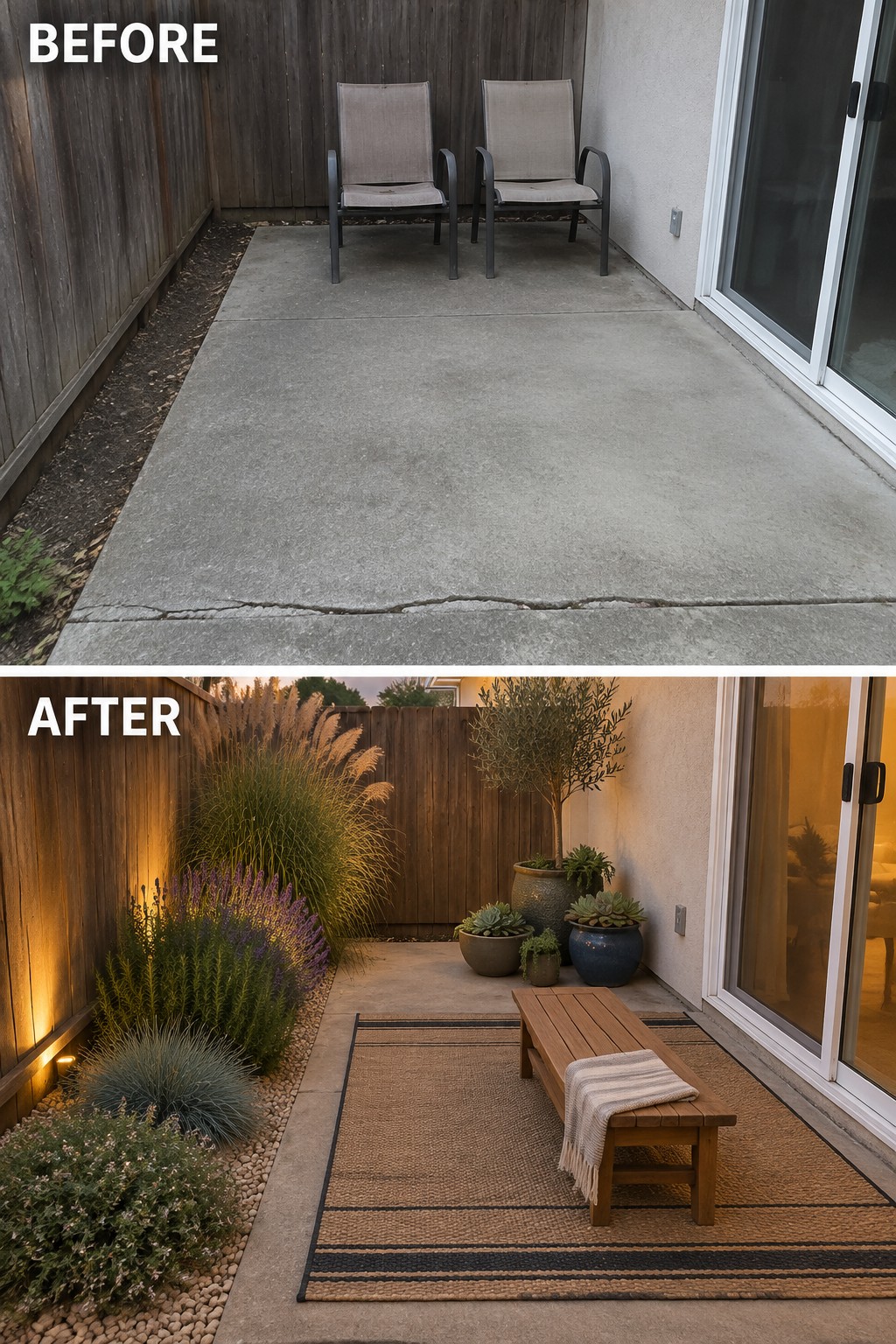
A bare concrete patio often feels flat and unfinished, especially when the edges are left empty. Adding planting beds along the sides with taller grasses and shrubs at the back, medium plants in the middle, and lower growers in front creates depth without crowding the space. The change turns a simple slab into a garden area that feels more settled and purposeful.
This idea works best in small yards or side patios where you need to soften hard surfaces while keeping the area usable. Start with a few taller plants for structure, then fill in around them with different leaf shapes and heights. Keep the beds narrow enough to leave walking room, and repeat a few plant types so the look stays simple rather than scattered.
Define The Foundation With Layered Planting

The main shift here is turning a narrow strip of patchy grass and weeds into a real garden bed. A clean metal edge holds the soil in place, and the plants are stacked in layers so you get height and texture without crowding the space.
This idea works best along the front of a house where the bed is long but not very deep. Start with edging and mulch to give the area structure, then mix a few taller flowers or shrubs in the back with lower plants along the front so the bed feels full even in a tight spot.
Plant A Layered Border For Height And Texture
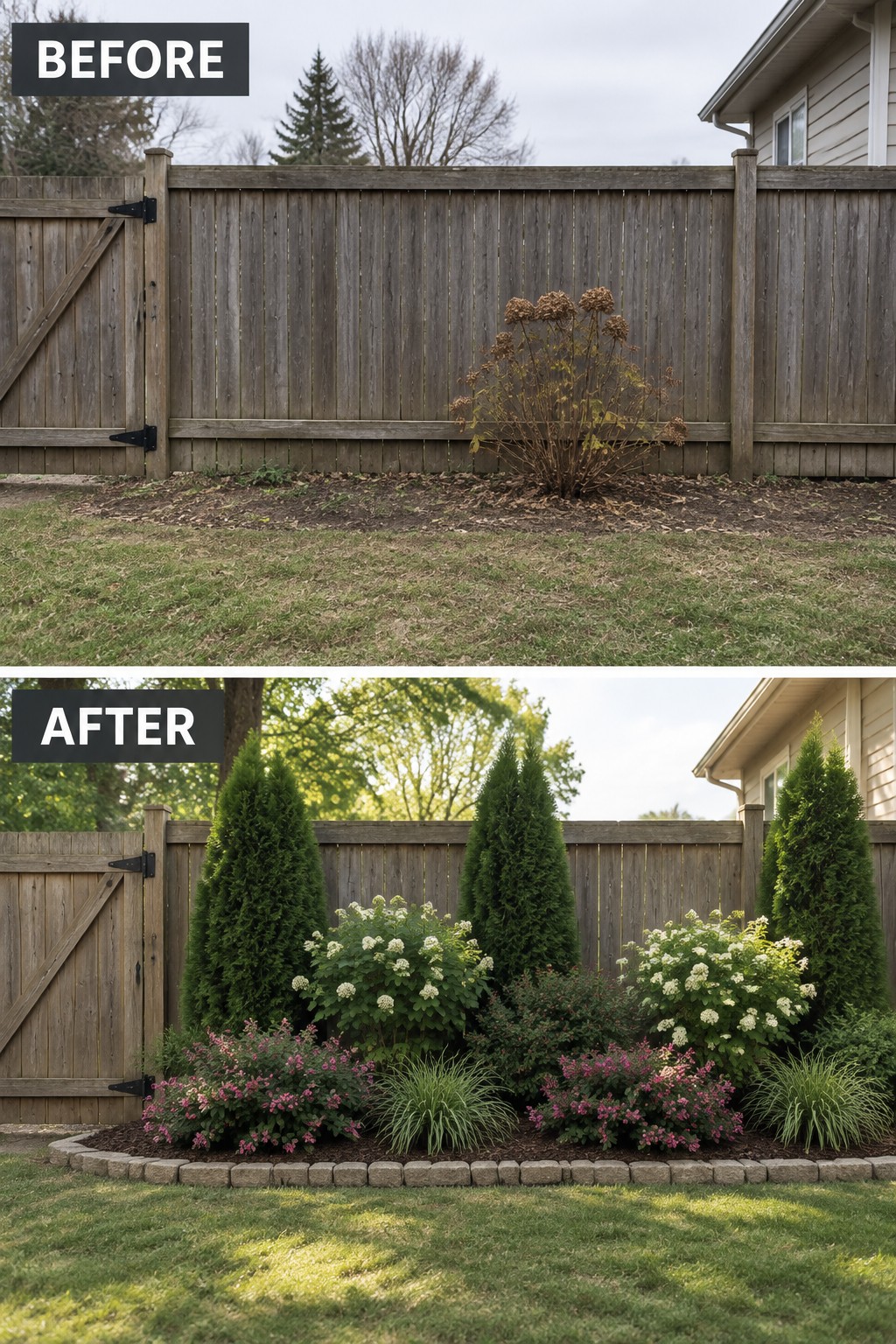
The main change here is how the bare strip along the fence went from a weedy patch of dirt to a clear garden bed with a stone edge. Layering taller evergreens in the back with mid-size flowering shrubs and low grasses in front gives the space shape and keeps it from looking flat.
This works well in small yards where you only have a narrow strip to work with. Start with the edging and a few evergreens for structure, then fill in with seasonal flowers and grasses. It keeps the bed looking full even when some plants are out of bloom, and the curve softens the straight fence line.
Layer Plants For Height And Texture On A Small Terrace

An empty concrete rooftop can feel like wasted space until you add plants in layers. The before photo shows a flat, open terrace with nothing but a door and a single bin. In the after version, tall grasses rise above mid-height shrubs, while low trailing plants fill the front edge, turning the same area into a usable garden spot with a bench.
This idea works best on rooftops, balconies, or small patios where you cannot dig beds. Use containers of different depths so taller grasses and shrubs sit higher, then add shorter and cascading plants in front. Keep the layout loose enough for walking space and choose weatherproof planters so the arrangement lasts through the seasons.
Add Structure To A Bare Backyard Corner
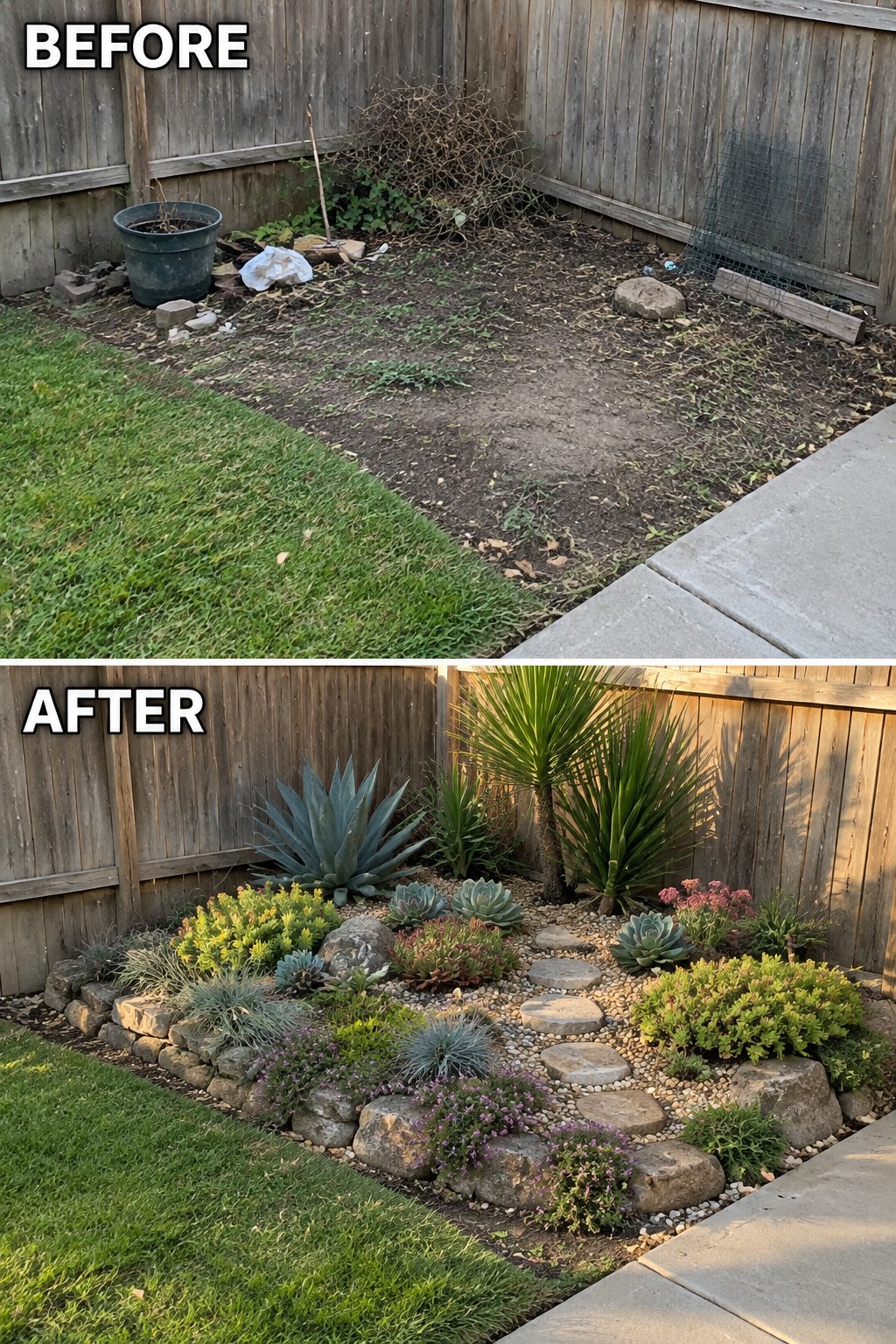
A neglected patch of dirt next to the fence does not offer much until you give it clear edges and a simple planting plan. Adding a low rock border, gravel, and a few stepping stones turns the space into a defined bed that feels intentional instead of leftover. Layering plants with different heights and leaf shapes fills the area without crowding it.
This approach works well in small yards where you want to add interest without losing lawn space. Start by cleaning up the ground and setting the edging first, then choose a mix of low ground covers, mid-height shrubs, and one or two taller plants for the back. Keep the plant list simple so the bed stays easy to maintain.
Layer Plants By Height In Window Boxes

An empty window box does little for the front of a house. Filling it with plants arranged in layers changes that fast. Taller flowers stand at the back while shorter blooms fill the middle and trailing vines spill over the front edge. The result gives the box shape and makes the whole window area look more complete.
This idea works on almost any home with a window box because it needs only a few plant types and no extra space. Choose one tall variety, a couple of medium ones, and at least one trailing plant. Keep the colors simple so the layers show up clearly instead of competing with each other.
Use Tiered Planters To Add Height In A Small Corner

A plain concrete corner next to the house can feel like wasted space until you add structure. Tiered wooden planters turn that empty spot into a small garden by stacking planting levels instead of spreading everything flat on the ground. The gravel base keeps it neat and stops mud from splashing onto the siding.
This idea works best along house walls or beside doors where you have limited width but want more planting room. Choose rot-resistant wood, keep the tiers shallow enough for good drainage, and mix plants with different leaf shapes so the layers read as texture rather than just color. Start with the largest planter at the bottom and work up so nothing feels top-heavy.
Add Layered Planting To A Small Lawn

The patchy grass in the before photo left the whole yard feeling flat and unfinished. By carving out one large circular bed and filling it with plants of different heights, the space gains structure and interest without needing a full redesign. The mulch edge keeps the shape clean and makes the planting look intentional rather than scattered.
This approach works well in modest backyards where you still want some open grass but need a focal point. Place taller flowers and grasses toward the center, then step down to shorter blooms around the edges. Keep the bed a simple shape so it stays easy to maintain and does not crowd the remaining lawn.
Layer Plants By Height To Add Interest To Small Beds

A bare strip of mulch next to the steps does little to welcome visitors. Adding a tall evergreen at the back, a mid-height flowering shrub in the center, and lower perennials along the front turns the same narrow bed into something that feels planned and full.
This works best in small front yards where the planting sits close to the house and walkway. Choose one plant for each height level, keep the color palette simple, and leave a little breathing room between the layers so nothing looks crowded once it grows.
Layer Plants In Containers To Define A Deck Edge

A deck often looks unfinished when the edge just drops off into the yard. Placing a row of matching containers along the railing gives that edge some weight and turns the space into a small planted border. The change here came from a few scattered empty pots to a steady line of dark planters filled with tall grasses, rounded shrubs, and trailing plants that soften the wood.
This idea works best on decks that sit right above a lawn and do not have room for in-ground beds. Keep the planters the same color and size so the arrangement feels intentional, then vary the plant heights inside them. One tall grass or shrub, one mid-height plant, and one that trails over the edge is usually enough to create the layered look without crowding the walkway.
Add Layered Planting To A Gravel Strip

A simple gravel strip next to the driveway often looks flat and unfinished with just one shrub. Filling it with plants of different heights turns the same narrow space into a small garden that feels full and cared for.
This idea works best along sidewalks or driveways where you have a long thin bed to work with. Start with a few taller plants toward the back, add mid-size shrubs or grasses in the middle, and finish with low ground cover along the front edge so everything stays visible and easy to maintain.
Add Raised Beds To Bring Structure To A Small Yard

A messy backyard with scattered pots and no clear layout is hard to use. Adding a few raised beds right away gives the space purpose and makes planting much simpler. The beds keep soil contained, create clean edges, and let you mix tall plants on trellises with lower crops in the same small area.
This approach works well in narrow or cluttered yards where the ground feels too open or uneven. Start with two or three beds placed near a fence or shed, then fill them with a mix of heights so nothing looks flat. Keep paths wide enough to walk through and choose materials that match your climate so the beds last.
Frame The Entry With Layered Planters

A pair of plain plastic pots filled with dead plants does nothing for a front door. Swapping them for wooden boxes and filling each one with a mix of upright evergreens, mid-height flowers, and trailing foliage instantly makes the steps feel intentional. The different heights create depth while the mix of greens and soft colors softens the concrete.
This approach works well on any small porch or stoop where space is tight. Start with two matching containers that can handle weather, then choose one tall plant, one or two mid-sized ones, and something that spills over the edge. Keep the same color palette on both sides so the entry feels balanced rather than busy.
Add Layered Planting For Height And Texture

The bare gravel courtyard looked empty and flat with just a few scattered pots. Adding a small tree, a mix of shrubs at different heights, and lower flowering plants gave the space structure and made it feel like an actual garden instead of leftover ground.
This approach works best in small enclosed yards where you need interest without taking up much floor space. Start with one or two taller plants for the backbone, then fill in around them with mid-height and low growers. Keep the main walking area clear so the plants frame the space rather than block it.
Frequently Asked Questions
Q: Where do I start when layering heights in a tight space? A: Pick one tall plant like a slender grass or dwarf tree for the back corner first. Then tuck in mid-height shrubs and low ground covers right in front so each level gets its own light. This builds depth fast without crowding roots.
Q: How do I keep the textures looking full once summer heat hits? A: Water deeply but less often so the lower leaves stay lush instead of crisping. Snip off any yellowing bits every couple weeks to let the next layer show through. Group plants that like the same sun level so nothing gets leggy.
Q: Can I swap in new plants later if one layer flops? A: Yes, pull the weak one and drop in a similar sized replacement while the others hold the shape. The existing roots make it settle quicker than starting over.
