

Small gardens can end up looking a little neglected when the plants do not match the conditions or the beds lack clear edges from the start.
I usually look for hardy varieties first because they settle in without a lot of extra care and still give the space some shape after a season or two.
Choosing the right ones helps the layout feel more balanced so the garden does not require constant fixes just to stay presentable.
A few solid choices go a long way.
It is helpful to see which plants hold up in similar yards before deciding what to try in your own.
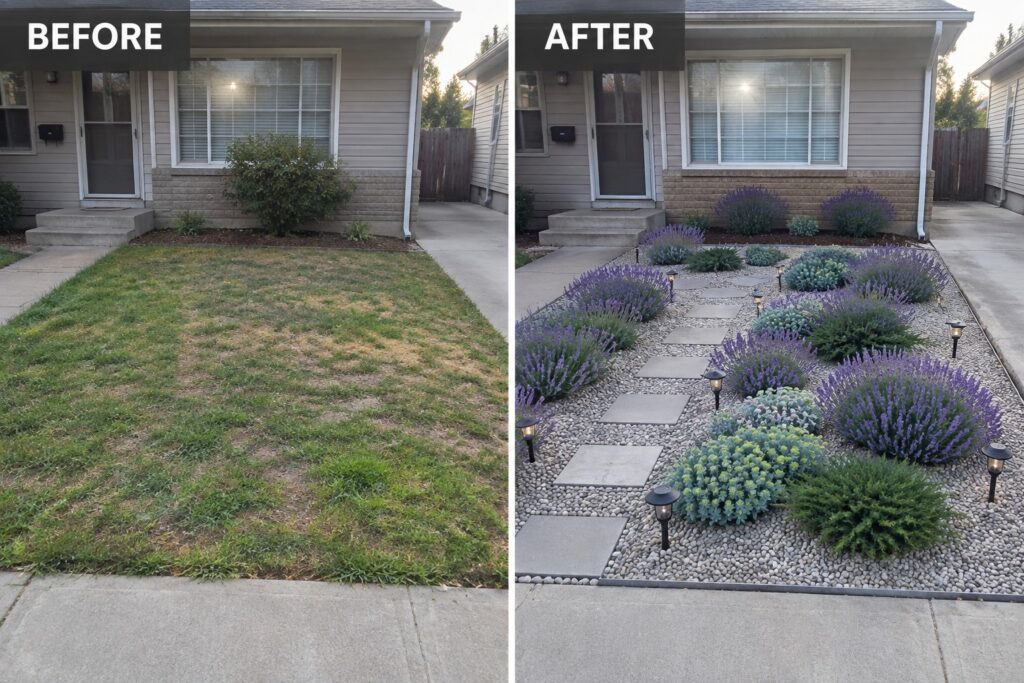
Replace A Patchy Lawn With Gravel Beds And A Path
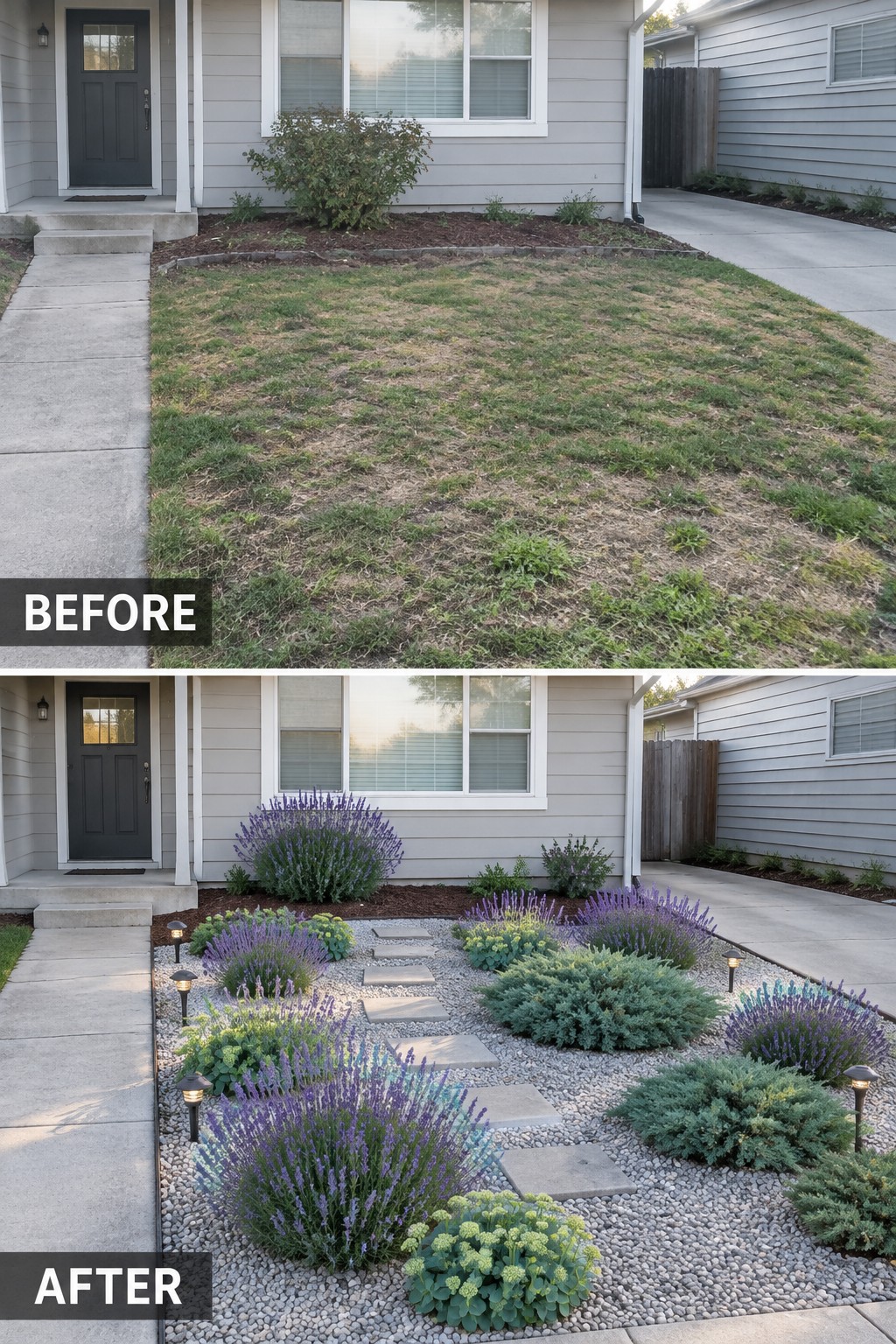
A sloping front yard with thin, weedy grass is tough to maintain and rarely looks tidy. Clearing the grass and laying gravel over defined beds gives the space structure right away. The stepping stones keep the path practical while the plants sit in clear groups instead of spreading everywhere.
This idea suits small yards where mowing is awkward and water use needs to stay low. Hardy plants like lavender hold up well in gravel, and a thick layer helps control weeds without much extra work. Focus on a few repeated plant types rather than filling every gap, and leave enough open gravel so the beds still feel open.
Add Defined Beds To A Narrow Side Yard

A narrow strip between the house and fence often turns into a weedy mess because it is hard to mow and awkward to maintain. Clearing the weeds and laying down a simple gravel path with planted edges gives the space clear shape and cuts down on ongoing work. The plants stay contained, the path stays walkable, and the whole area looks intentional instead of neglected.
This approach works well on any slim side yard or walkway where you want low effort. Choose tough, spreading perennials that handle dry soil and need little watering once established. Keep the beds narrow enough to reach from one side, and use edging to stop the gravel from mixing with the soil. The result stays neat with only occasional trimming.
Turn An Empty Patio Into A Seating Area
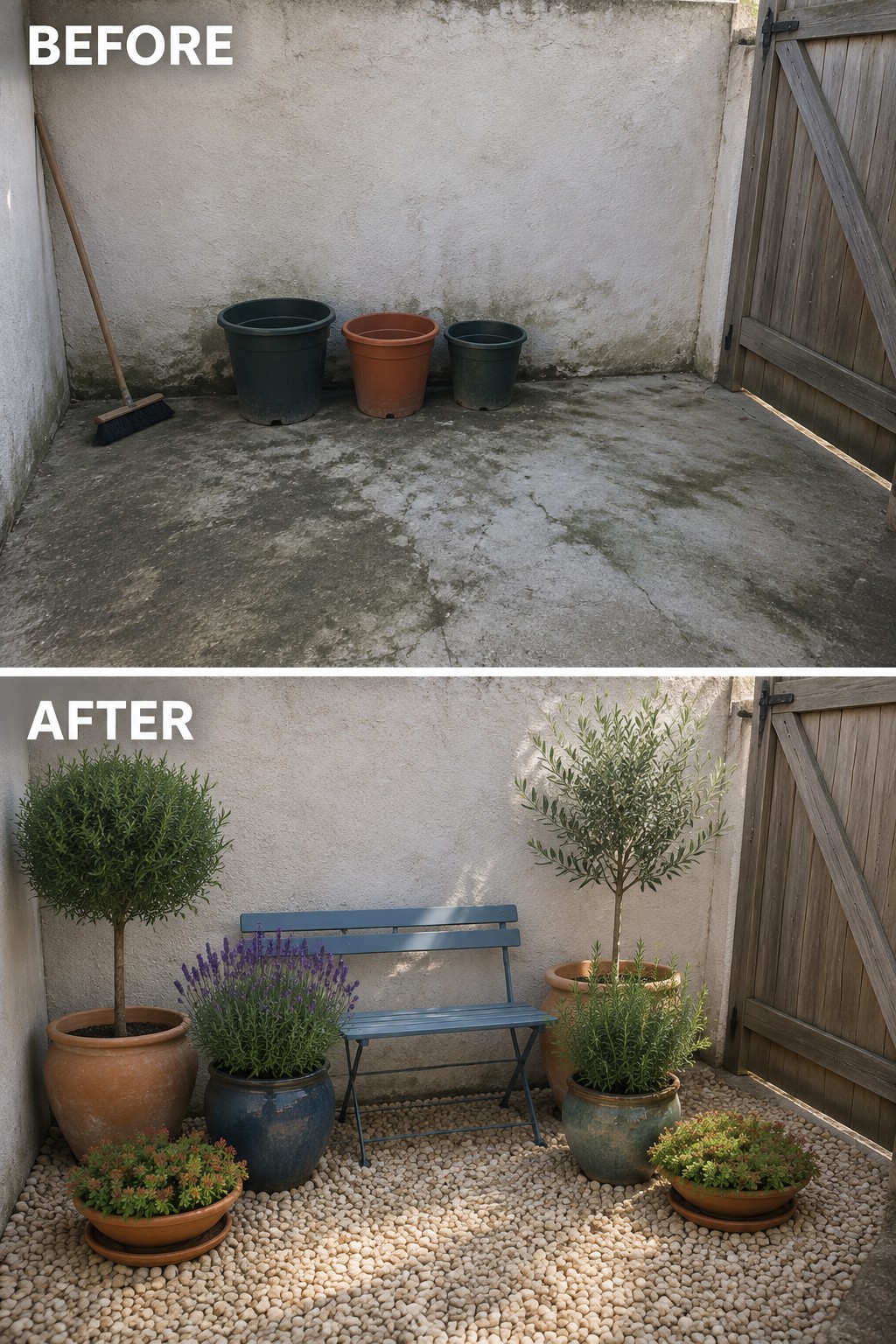
A bare concrete courtyard often sits unused because it feels unfinished and hard underfoot. Adding a layer of gravel softens the surface, improves drainage, and instantly makes the space feel more like a room you can spend time in. Placing a bench against the wall then gives the area a clear purpose without crowding it.
This idea suits small side yards or back corners where a full garden build is not practical. Start with the gravel base, add one or two seating pieces scaled to the space, and use sturdy potted plants that can stay outside year round. Keep paths clear so the area still feels open rather than packed.
Define Foundation Beds With Simple Borders

The biggest change here is how the messy strip of weeds and tall stalks along the house got turned into neat beds. A low stone edge now holds everything in place, and the planting was swapped for a mix of hardy perennials and grasses that stay compact. That single step makes the whole front look cared for instead of neglected.
This approach works well on small foundation areas where you want low effort. Start by pulling everything out and laying a simple border with stones or pavers you already have. Then fill with tough plants that need little water once established. The border keeps mulch from washing away and stops grass from creeping back in, so the bed stays tidy with just occasional weeding.
Add Structure To A Garden Path With Gravel And Hardy Plants

The original path was just a line of old concrete slabs sinking into the grass, with weeds pushing up between the cracks. Adding a gravel base around new pavers and planting low-care borders on both sides turns the same narrow strip into something that feels planned instead of forgotten.
This idea works best in small backyards where the lawn runs right up to a walkway. Lay the gravel first so it contains the path and reduces mowing edges, then fill the beds with tough grasses and perennials that need little water once established. The result stays neat without constant trimming or weeding right against the stones.
Create Tiered Beds For A Sloped Yard
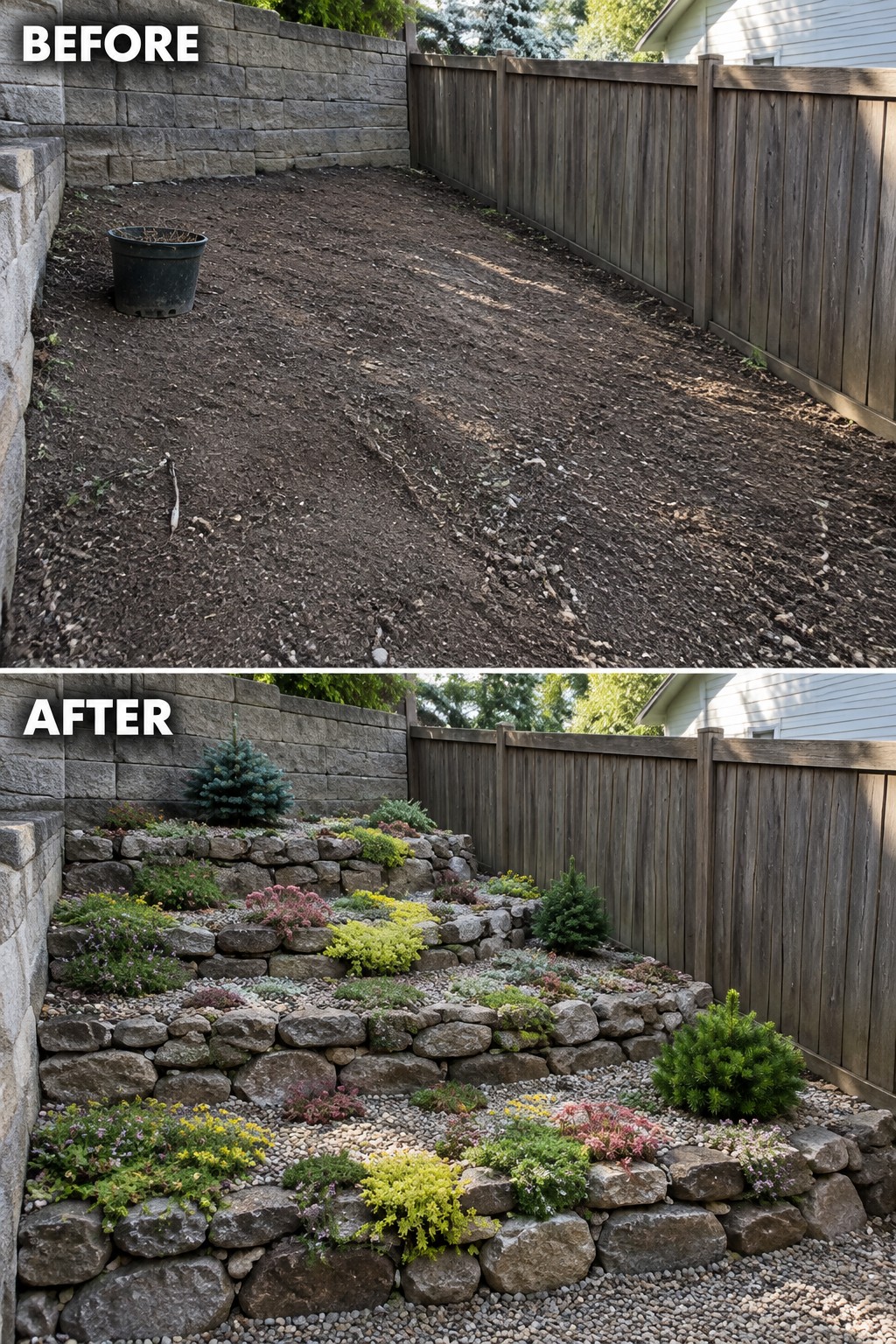
A bare dirt slope next to a fence does not offer much room for plants or easy care. Building low stone walls turns the slope into flat planting terraces that hold soil and create clear garden beds. The change makes the space feel planned instead of empty.
This idea works well in small backyards where the ground drops away from the house. Use local stone for the walls, add gravel between the beds to reduce weeds, and choose hardy shrubs and groundcovers that need little water once they settle in. Keep the terraces narrow so the beds stay easy to reach and maintain.
Mount A Living Wall On Your Fence

Placing a few wooden planters on the ground works fine at first, but they often end up taking up walking space and still leave the fence looking bare. Mounting a grid of small planters directly onto the fence changes that. The plants cover the wall instead of sitting in front of it, so the patio feels larger and the fence becomes part of the garden rather than just a backdrop.
This approach suits small patios or yards where floor space is limited. Succulents and similar hardy plants work well because they stay compact and need little watering. Secure the frame properly since soil and plants add weight, and keep the layout simple so the wall does not feel crowded.
Add Defined Garden Beds Under Trees
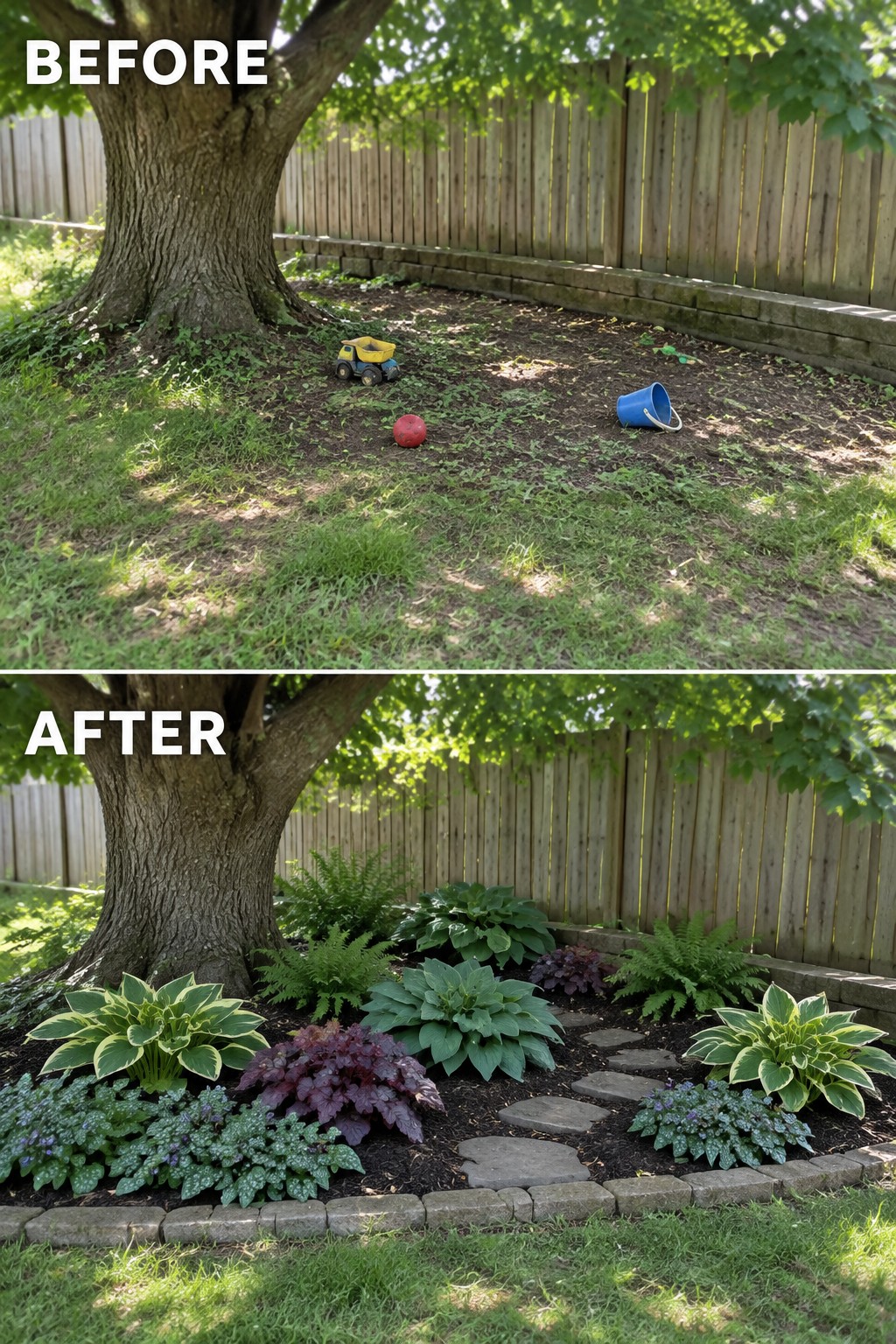
A bare patch of dirt under a big tree often ends up looking messy and unused. Adding mulch, a simple stone path, and a border of shade plants turns the same spot into a clear garden bed that feels planned rather than leftover.
This approach suits small yards where trees block the sun. Clear the ground first, then keep the beds narrow enough to reach from the edges. Hardy plants like hostas and ferns fill in quickly without much watering or trimming once they settle.
Add Matching Planters To Frame A Front Entry
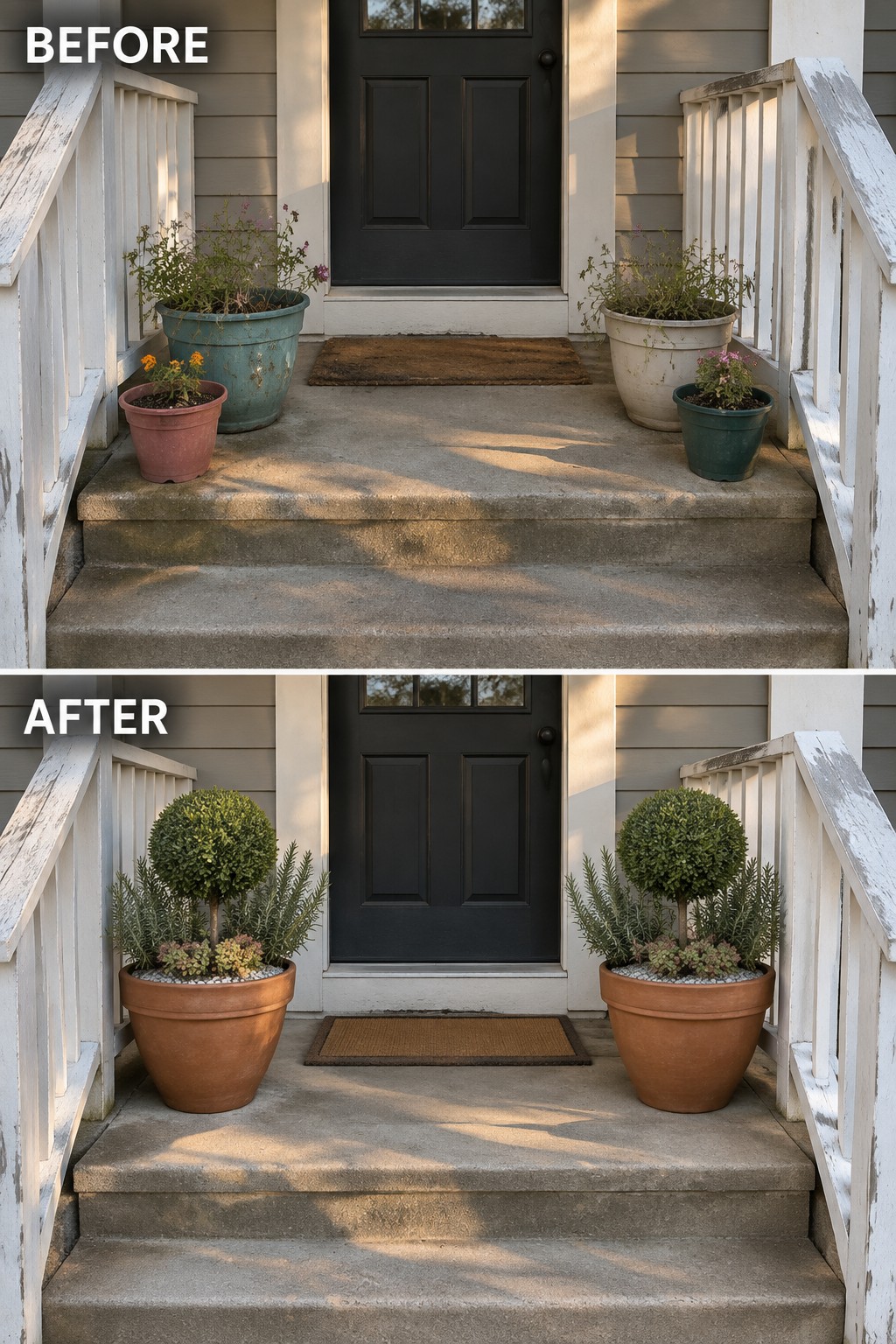
The before photo shows several pots in different colors and sizes scattered across the steps with no clear arrangement. The after uses two large matching terracotta pots placed evenly on either side of the door, each holding a similar rounded shrub. This one change gives the entry a balanced, finished look without adding much else.
The idea works best on small front porches or concrete steps where you want structure but do not have room for furniture. Pick two pots in the same material and color, then choose plants with a similar shape and height so the pair feels intentional. Keep the middle of the steps clear so people can still walk through easily.
Turn A Bare Balcony Into A Seating Area
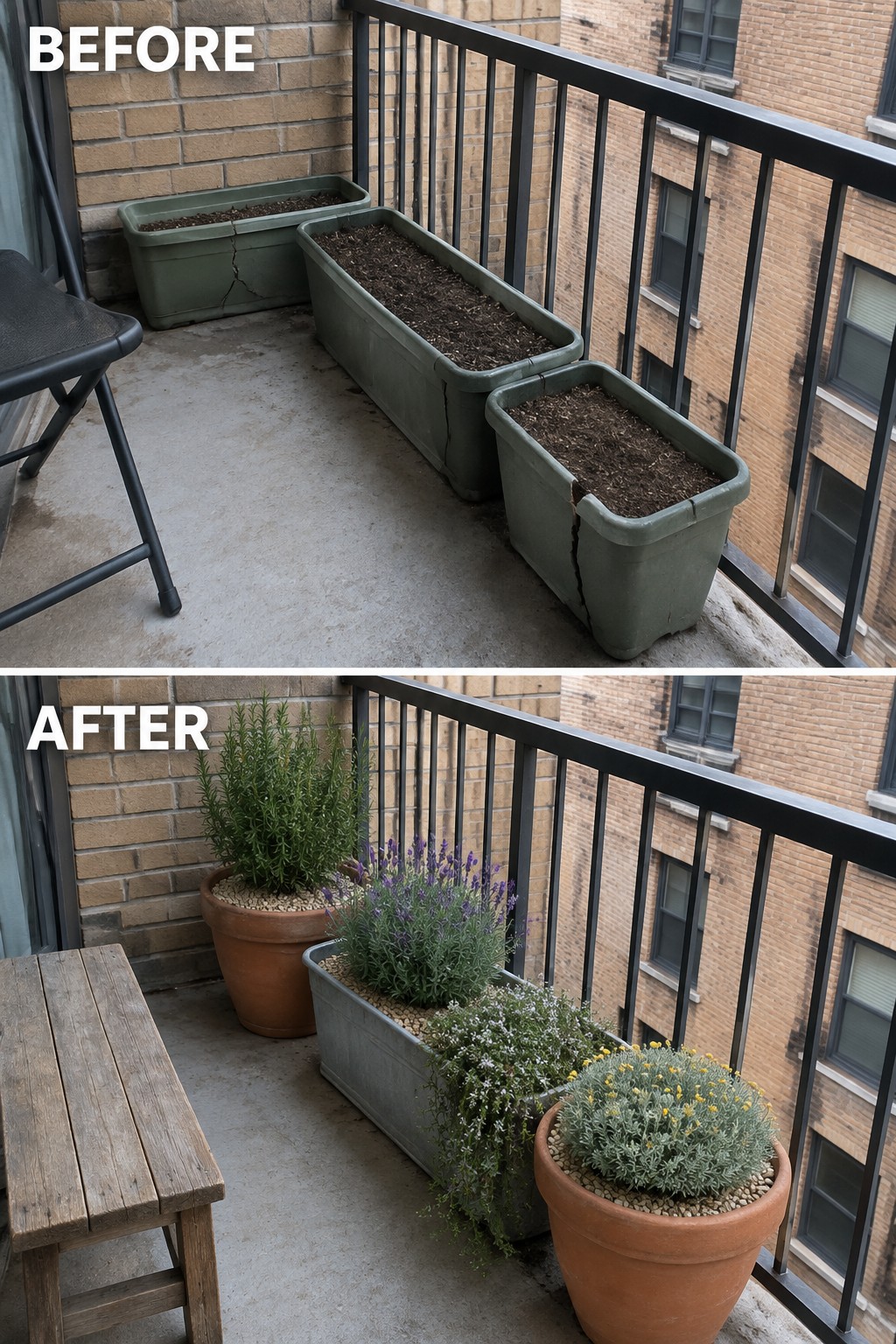
The main change here is replacing the cracked planters with a few solid containers and adding a simple bench. That shift turns a spot that felt like leftover storage into a place where someone can actually sit and spend time.
This idea works best on small balconies or concrete patios where space is limited. Clear out anything broken first, then pick hardy plants in pots that match the size of the area. Keep the seating low and the layout open so there is still room to walk through.
Add Structure To An Overgrown Border

The main change here is replacing a row of random shrubs with a planned mix of hardy plants. The before photo shows an uneven line of bushes that had grown out of control. In the after photo, the same space now has a clear layout with different heights, textures, and spacing that keep the border looking neat year after year.
This approach works well along fences or property lines where you want low maintenance without losing interest. Choose compact evergreens for backbone, add a few ornamental grasses for movement, and fill in with rounded shrubs and simple flowering plants. Mulch the bed once and the whole area stays tidy with only occasional trimming. It suits small yards that need order without constant work.
Define A Bare Corner With A Raised Planter
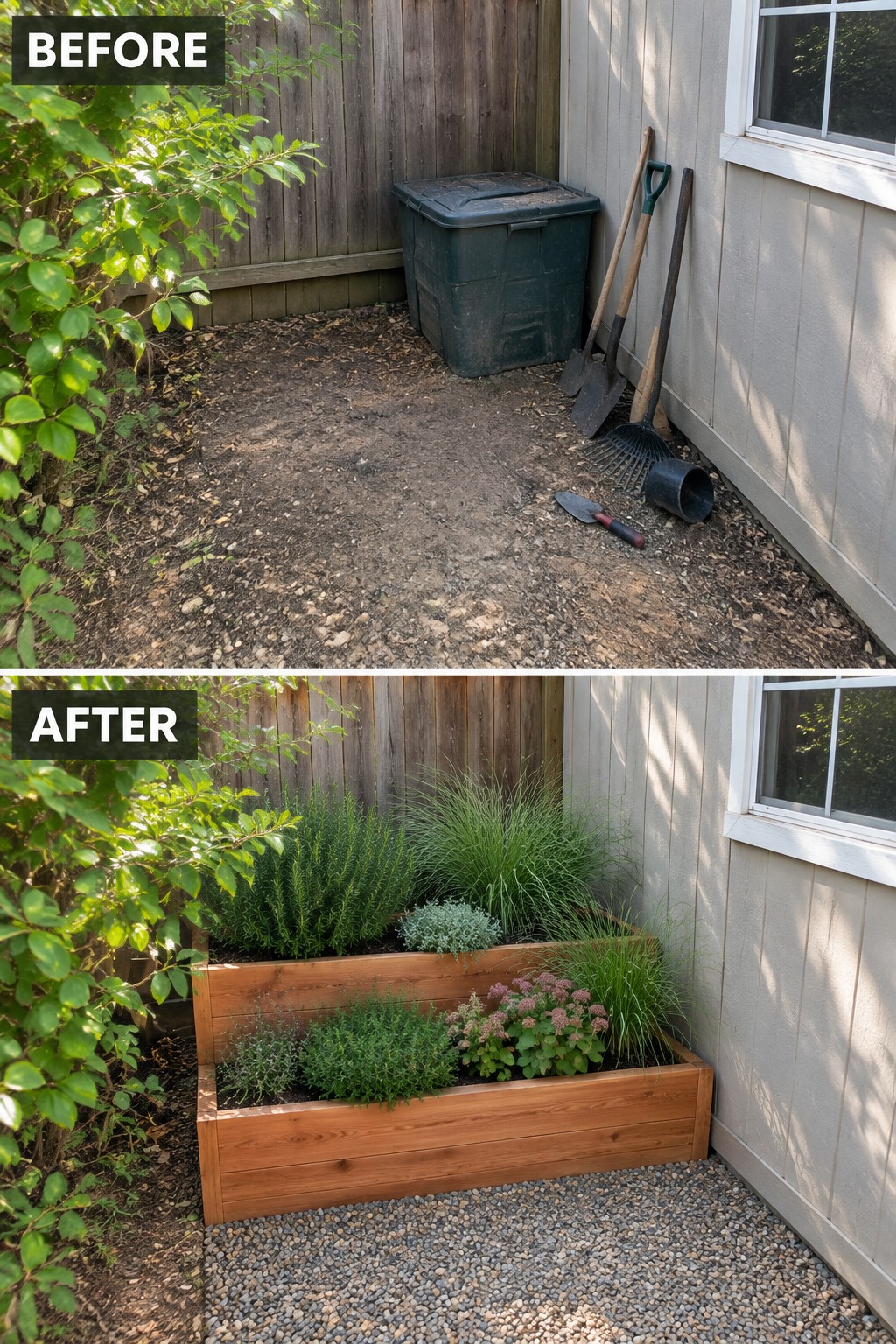
A raised planter gives a neglected corner something it usually lacks, which is a clear edge and a reason to exist. The dirt patch with tools scattered around became a contained bed of hardy plants set in a simple wooden box, with gravel laid down to finish the ground. That one change turns an awkward leftover space into something that looks intentional.
This idea works best in narrow side yards or tight spots where a full garden bed would feel too loose. Keep the planter height low so it does not block windows, and pick tough plants that need little water once established. The gravel helps control weeds and makes the whole area easier to walk around.
Add A Defined Garden Bed To A Plain Front Lawn
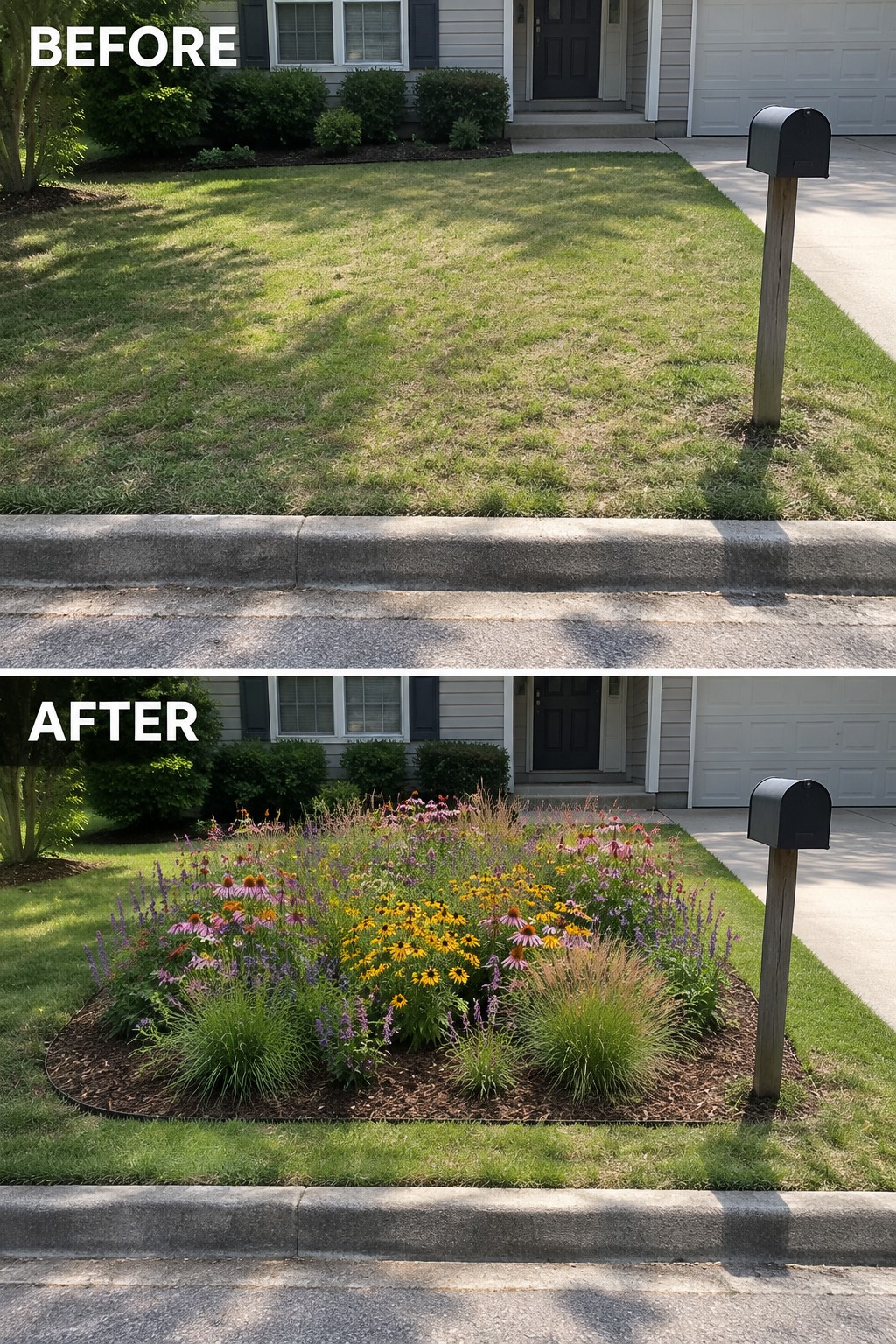
Replacing a section of plain grass with a mulched flower bed gives the front yard a clear focal point without taking over the whole space. The bed stays contained with simple edging and uses a mix of flowering plants that bring color while the rest of the lawn remains open and easy to mow.
This idea suits small front yards where full landscaping feels like too much work. Mark out a gentle curve or oval shape first, add a border to keep the grass from creeping in, and fill it with hardy perennials that need little watering once settled. Mulch keeps weeds down and makes the bed look finished from the start.
Define A Fire Pit Area With Gravel And Edging
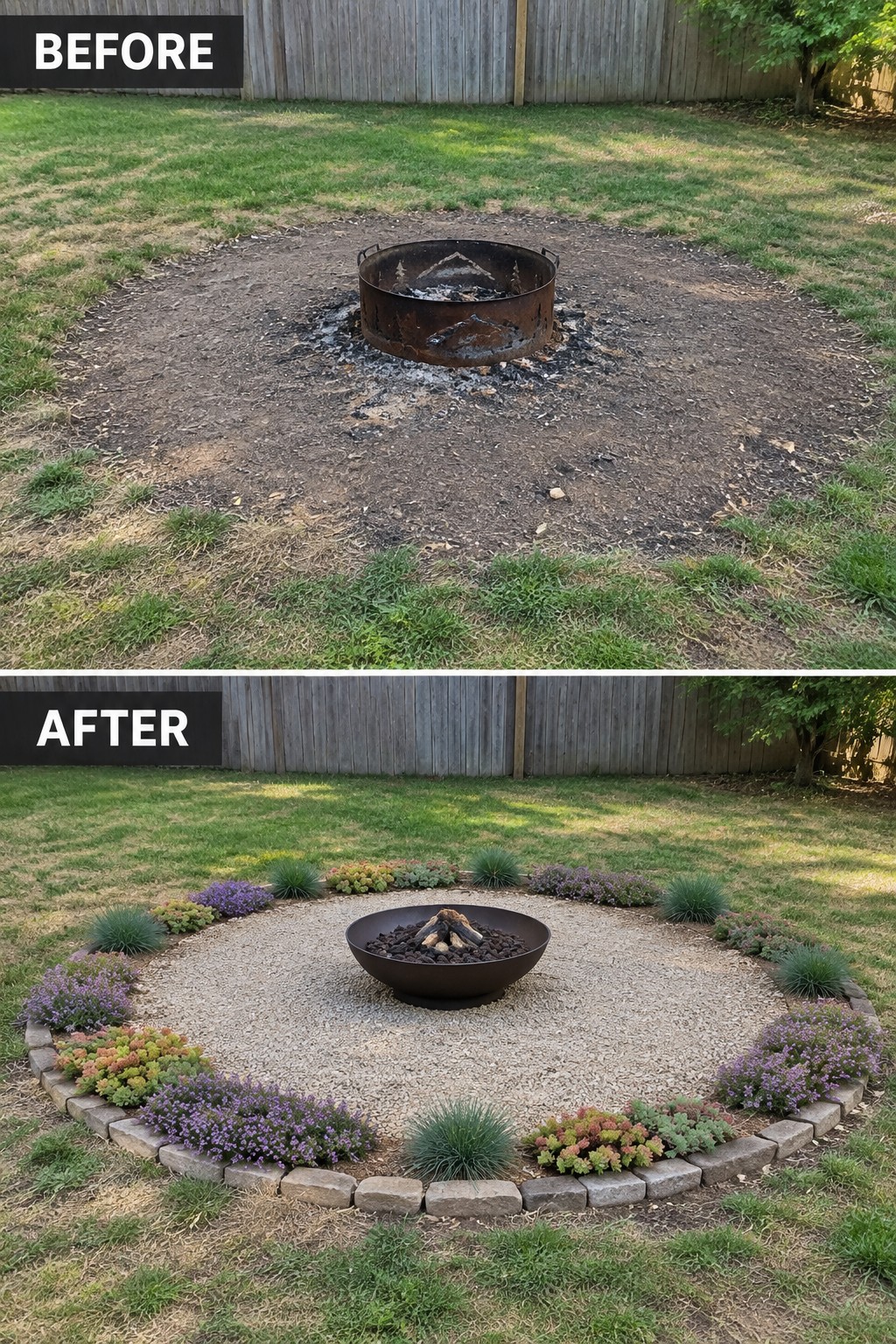
A bare patch of dirt around a fire pit can look unfinished and hard to keep tidy. Adding a simple gravel circle with stone edging gives the space clear shape and keeps the surrounding grass from creeping in. The ring of low hardy plants then softens the edge without creating extra work.
This approach works well in small yards where you want a usable spot without constant mowing or weeding right up to the pit. Start with the edging and gravel first, then choose tough perennials that handle sun and dry spells. The result stays neat with very little upkeep once the plants fill in.
Add Defined Garden Beds Along A Front Path
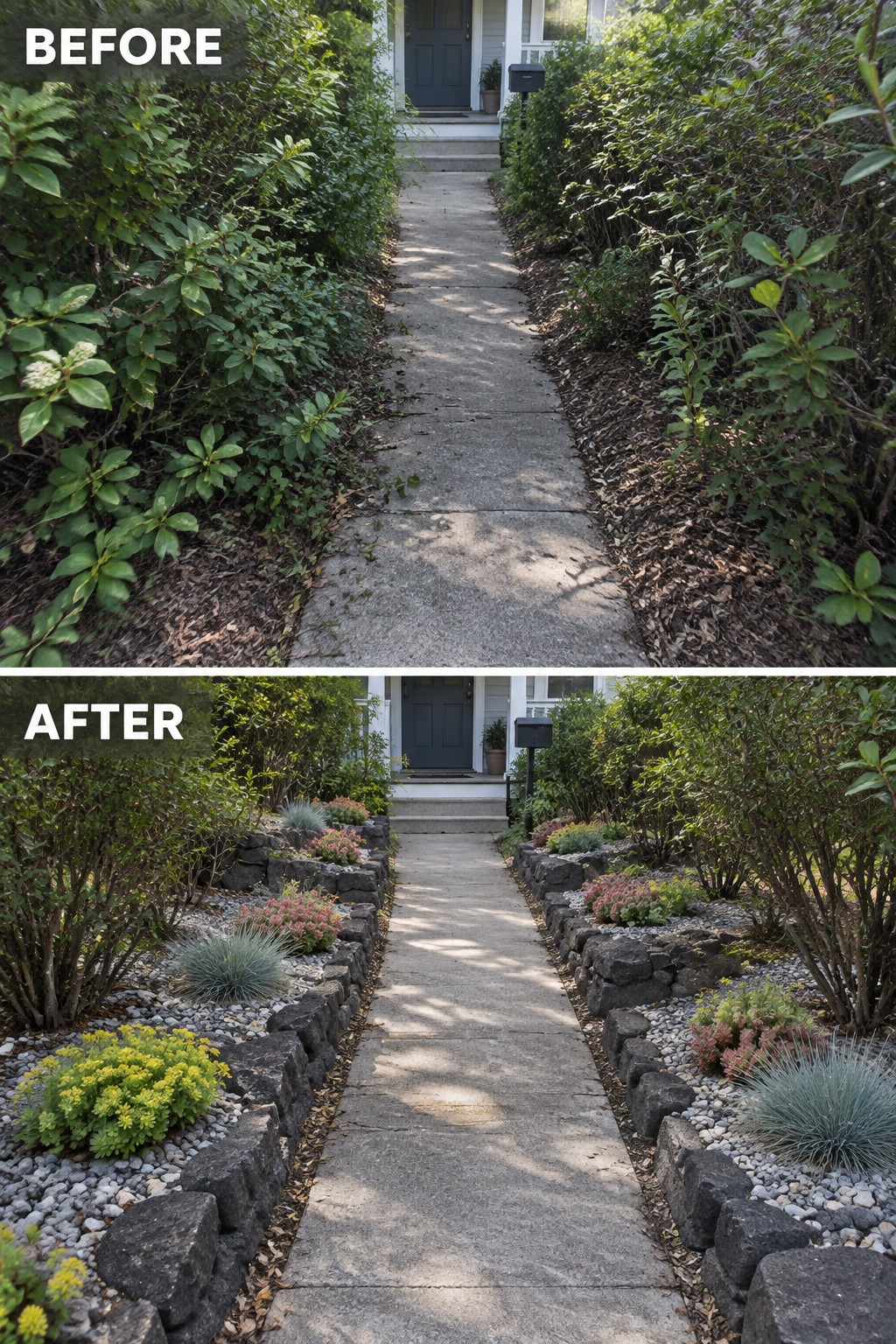
One of the easiest ways to improve a narrow front walkway is to give it clear edges. The before photo shows shrubs that had grown out of control and crowded the concrete. After the change, low stone walls hold the soil and gravel in place, which keeps the planting neat and stops everything from spilling onto the path.
This idea works best on small lots where the walkway is the main view from the street. Clear the old growth first, then add simple edging that matches the scale of the path. Stick with compact plants and a single mulch type so the beds stay low and easy to maintain.
Create Defined Beds Around Trees With Simple Edging
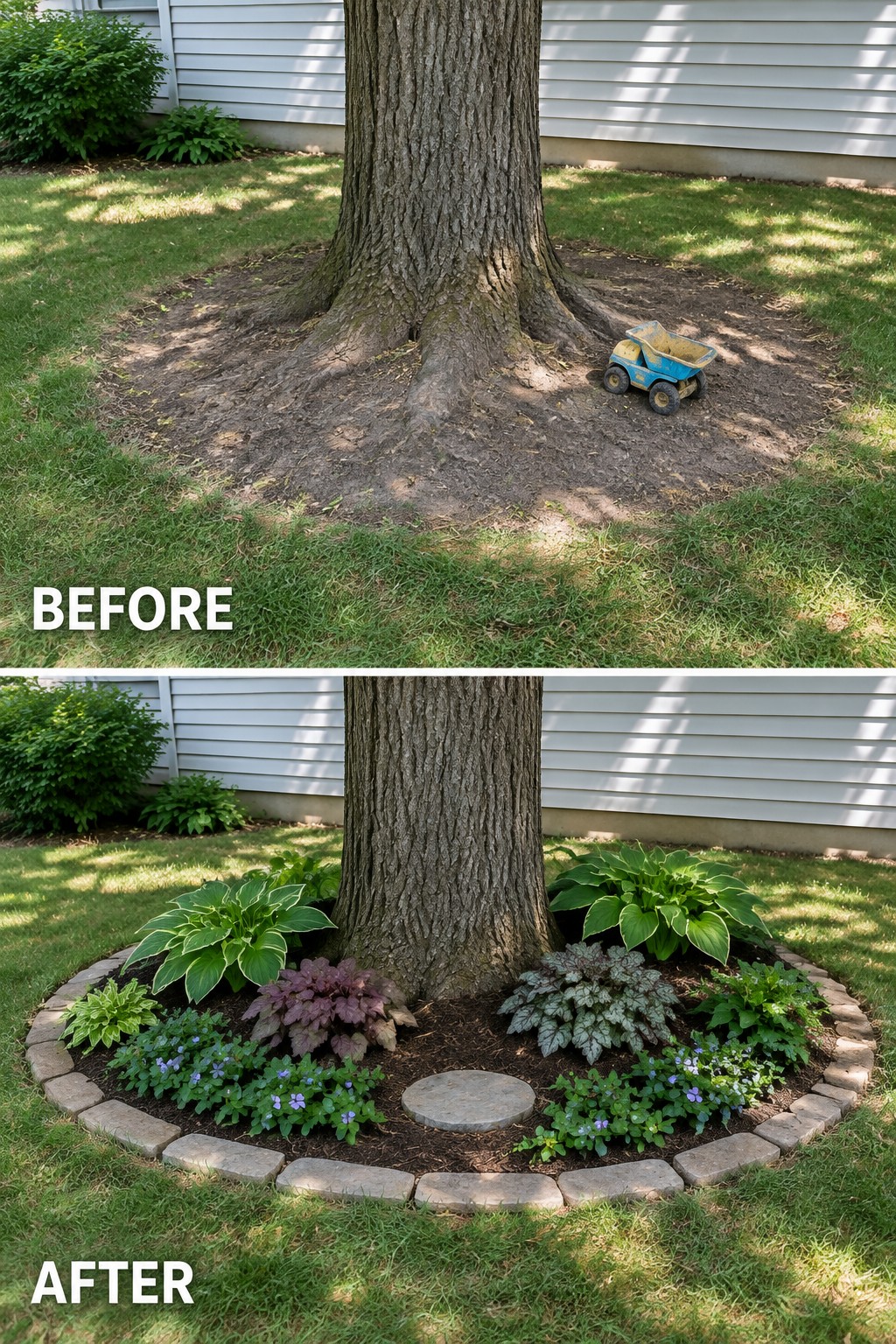
The area around a large tree often stays bare or gets patchy because grass struggles in the shade and compacted soil. Adding a low stone border turns that awkward circle into a contained bed. Mulch keeps the soil covered, and a mix of hostas and other shade-tolerant plants fills the space without needing constant care.
This works well in small yards where you want some planting but do not want to fight tree roots or create extra mowing edges. Start with the border and mulch first, then choose plants that handle dry shade. The bed stays neat with very little work once the plants fill in.
Define A Narrow Strip With Gravel And Hardy Plants

A weedy dirt strip along a wall or fence often gets ignored because it feels too small to bother with. Laying down gravel, adding a simple rock edge, and planting a few tough succulents and grasses turns the same narrow space into something that looks intentional and stays neat with almost no watering or weeding.
This approach works well along foundations, sidewalks, or retaining walls where soil is poor and space is tight. Start by clearing the weeds, then use river rock or gravel to keep the bed from washing away. Pick plants like yuccas, sedums, and drought-tolerant grasses that can handle full sun and dry spells. The result stays low-maintenance even in hot summers.
Define An Overgrown Path With Gravel And Hardy Plants

The path went from a muddy, weed-filled strip with scattered mossy stones to a clear walkway edged with gravel and simple plantings. That single change makes the whole space feel planned instead of neglected, and it keeps the original stepping stones as the main feature.
This idea suits narrow side yards or back passages where you need a functional route but do not want high upkeep. Use gravel to fill gaps and control weeds, then plant tough varieties along the edges that can handle shade and occasional dry spells. The result stays tidy with just occasional weeding and no fancy irrigation.
Refresh An Old Planter With A Sturdier Container

An old wooden planter that has started to rot and fill with weeds can drag down the whole patio. Swapping it for a metal box and filling it with a simple mix of grasses, coneflowers, and black-eyed Susans gives the space a clean, settled look without constant fuss. The gravel mulch keeps the soil neat and cuts down on watering.
This approach works well on small patios or along house walls where space is tight. Choose a metal or composite box that can handle weather, then stick to a handful of tough perennials that return each year. Keep the planting loose rather than crowded so everything has room to grow without extra work.
Fill Paver Gaps With Hardy Groundcover Plants

Weeds that pop up between pavers make a path look neglected fast. Switching them out for low-growing hardy plants keeps the same green texture but makes the whole area look intentional and much easier to maintain over time.
This works best on small garden paths or patios where you want a bit of planting without adding beds or borders. Pick tough groundcovers that stay short, spread slowly, and can take some foot traffic so the stones stay visible and the plants do not take over.
Refresh Balcony Planters With Hardy Low-Maintenance Plants
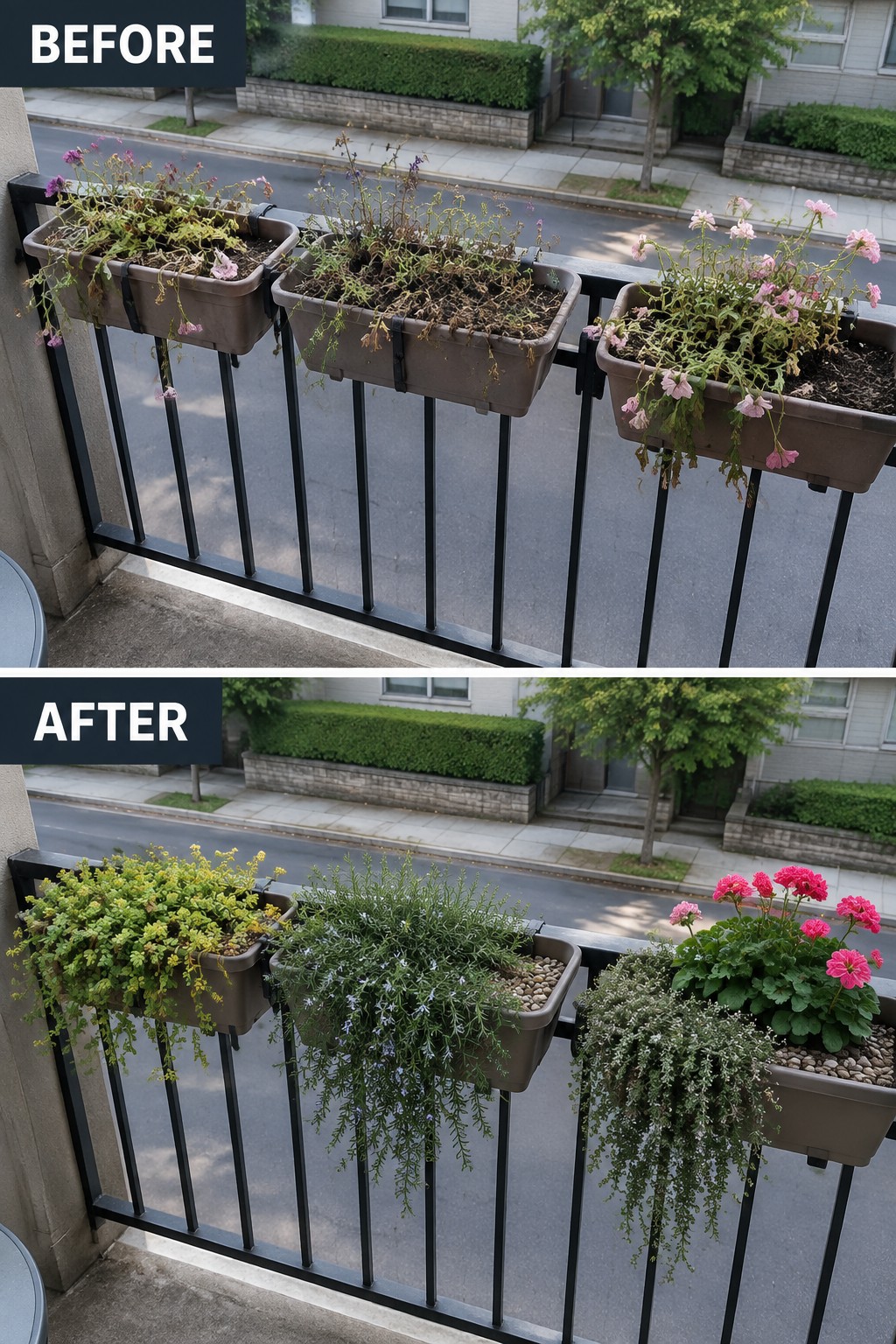
The main change here is swapping out leggy, overgrown plants for compact hardy varieties that hold their shape and stay full. Adding a layer of gravel on top also helps keep the soil neat and cuts down on watering.
This idea works especially well on small balconies where you want color without constant trimming or cleanup. Choose plants that match your sun and wind exposure, and stick to ones that need similar watering so the whole group stays easy to manage.
Define A Bare Corner With Rocks And Hardy Plants

A bare corner with nothing but mulch can feel like wasted space. Adding a few large rocks and clusters of hardy plants gives the area clear shape and turns it into something you actually notice. The gravel base keeps things tidy while the plants fill in over time.
This idea works best in small yards where you want low upkeep without a full redesign. Pick tough varieties that handle your climate, space the rocks first to set the layout, and keep the planting simple so the bed stays easy to maintain.
Frequently Asked Questions
Q: How often do these plants need watering after the first month? A: Water them deeply once a week during dry spells. After that most hardy plants handle dry periods on their own. Check the soil with your finger before adding more.
Q: Will these plants take over my small garden if I don’t watch them? A: Pick varieties that stay compact and divide them every couple of years. This keeps everything in bounds without constant fuss. You can always pull a stray runner by hand in spring.
Q: Can I plant these right into my existing lawn or do I need to clear it first? A: Clear small patches of grass where each plant will go. The hardy roots will fill in around the edges over time. Mulch the spots lightly to hold moisture while they settle.
