


Small gardens tend to feel more open once you sort out the basic layout of paths and borders instead of letting things grow wild.
I have found that clean edges around beds and a straightforward walkway often do more to improve the space than adding new plants right away.
Cleanup alone rarely solves the whole problem.
Over the years I have learned to focus on how the lines divide the area because that gives the garden a settled look even when the planting is still minimal.
Many of the approaches in this area work because they build on that kind of foundation rather than relying on constant additions.
Add Structure To An Overgrown Narrow Yard

Clearing the weeds and replacing scattered stepping stones with a straight run of pavers on gravel instantly makes the space feel planned instead of neglected. The new borders keep the planting contained and give the narrow yard a simple, orderly frame that actually makes it feel wider.
This idea suits tight side yards or alleys where you want the area to stay usable. Lay the path first so it leads somewhere, then add low shrubs and grasses along the edges. Keep the plantings simple so the clean lines stay visible and the space does not feel crowded.
Create A Straight Walkway With Low Hedge Borders

A front garden with only a worn dirt path through the grass often feels unplanned. Laying down a straight stone path and flanking it with clipped hedges gives the space a clear shape and makes the walk to the door feel intentional.
This idea suits narrow front yards where you want order without crowding the space. Keep the path a comfortable width, choose low evergreen hedges that stay tidy, and mulch the beds on either side so the whole area looks neat with minimal upkeep.
Organize A Narrow Side Yard With Raised Planters

A narrow side yard often gets ignored until the weeds take over completely. In this case the fix started with clearing everything out and laying down a simple gravel path that runs straight from the house to the gate. The real change came from adding a row of matching raised planters along the fence. That one move turned a messy strip of dirt into something that feels intentional and easy to walk through.
This approach works well in tight spaces where you need to keep plants contained and the ground clear. Gravel handles foot traffic and drainage without much upkeep, while the planters let you control what grows and keep the lines clean. If your own side yard feels wild, start by removing the overgrowth first, then decide on the path width before adding any planting.
Guide A Small Backyard With Stepping Stone Paths

A patchy lawn and worn dirt path make a small yard feel neglected and hard to use. Replacing the bare strip with stepping stones set in gravel gives the space a clear line and makes the whole area look planned instead of accidental.
This idea works best in long, narrow yards where movement needs direction. Clear the old grass first, lay the path, then add simple borders of grass or low plants along the edges. The path keeps the yard usable and tidy even if you add more planting later.
Add Defined Borders To Frame A Garden Path

An overgrown path often feels messy because the edges blur into the beds and plants grow wherever they want. Adding simple metal edging and repeating the same plants along both sides gives the walkway a clear shape and makes the whole area feel intentional instead of neglected.
This approach works well in narrow front gardens where space is tight. Keep the planting simple with one or two varieties repeated down the length, and make sure the edging sits flush so mowing and walking stay easy.
Frame A Small Patio With Raised Planters And A Path
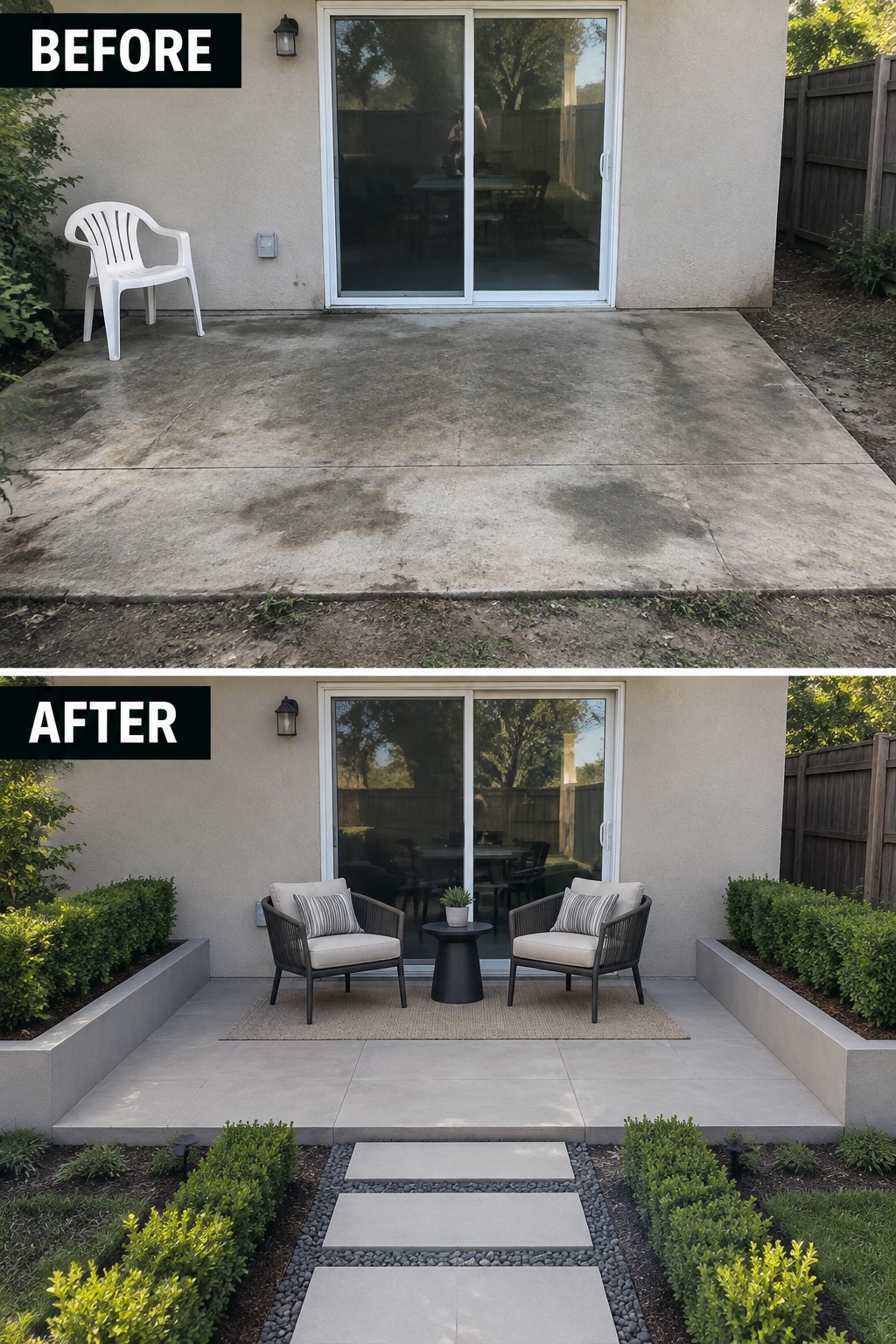
A bare concrete slab often looks unfinished and leaves the space feeling undefined. Adding raised planters along the edges and a simple stepping stone path through gravel gives the area clear structure and turns the empty slab into a proper outdoor room.
This works especially well in small yards where you need planting without losing usable space. Keep the beds low and the path straightforward so the seating area stays open and easy to walk around.
Give A Garden Path Clear Borders And Lighting
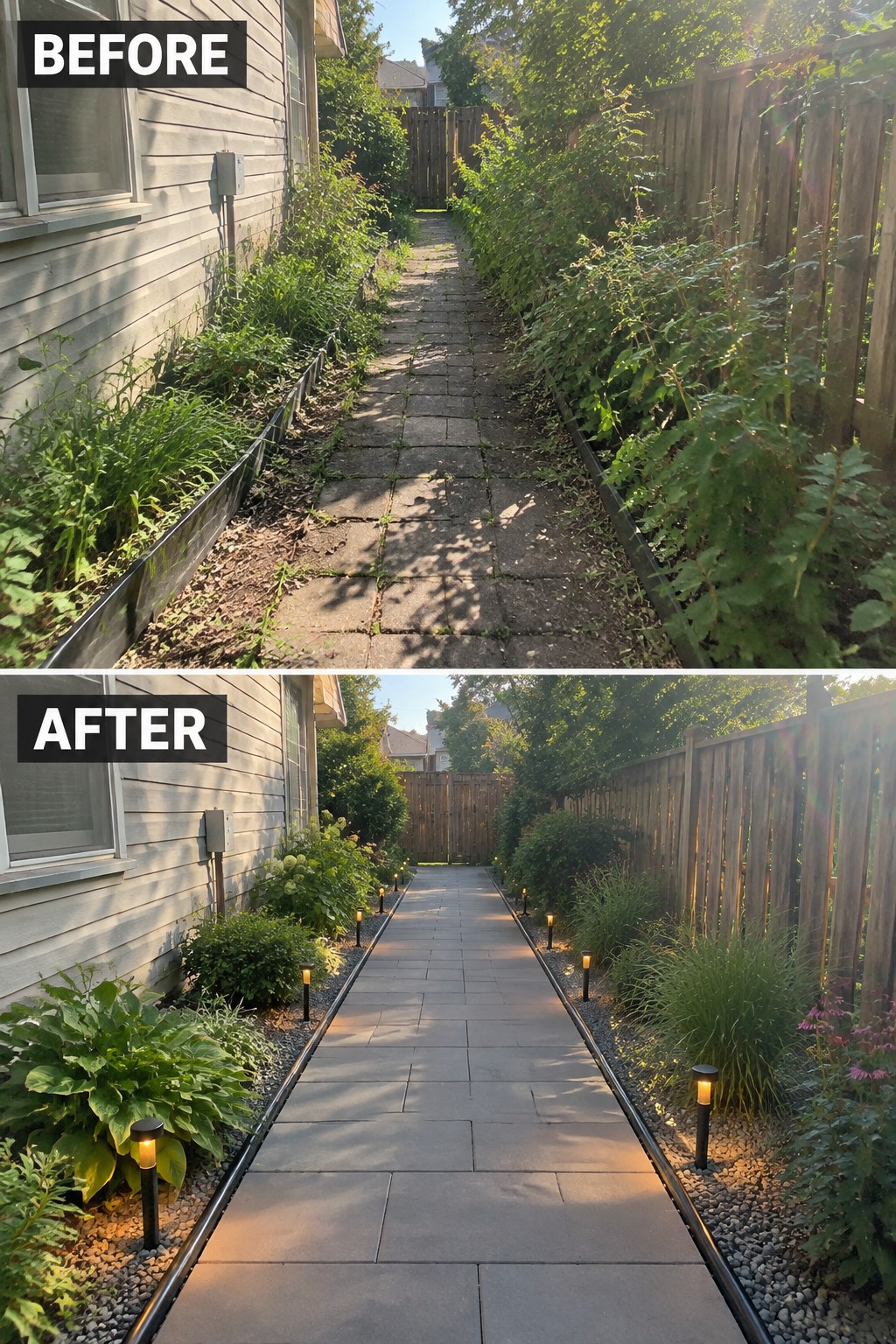
A narrow side path often gets ignored until the plants start creeping in from both sides. Adding low metal edging and a strip of gravel on either side instantly separates the walkway from the beds, while small solar lights placed along the edge make the route feel deliberate instead of accidental.
This approach suits tight spaces between a house and a fence where you still need to walk through regularly. Keep the lights simple and solar so there is no wiring to run, and space them evenly so the path stays usable after dark without looking overdone.
Add Terraced Beds To Organize A Sloped Yard
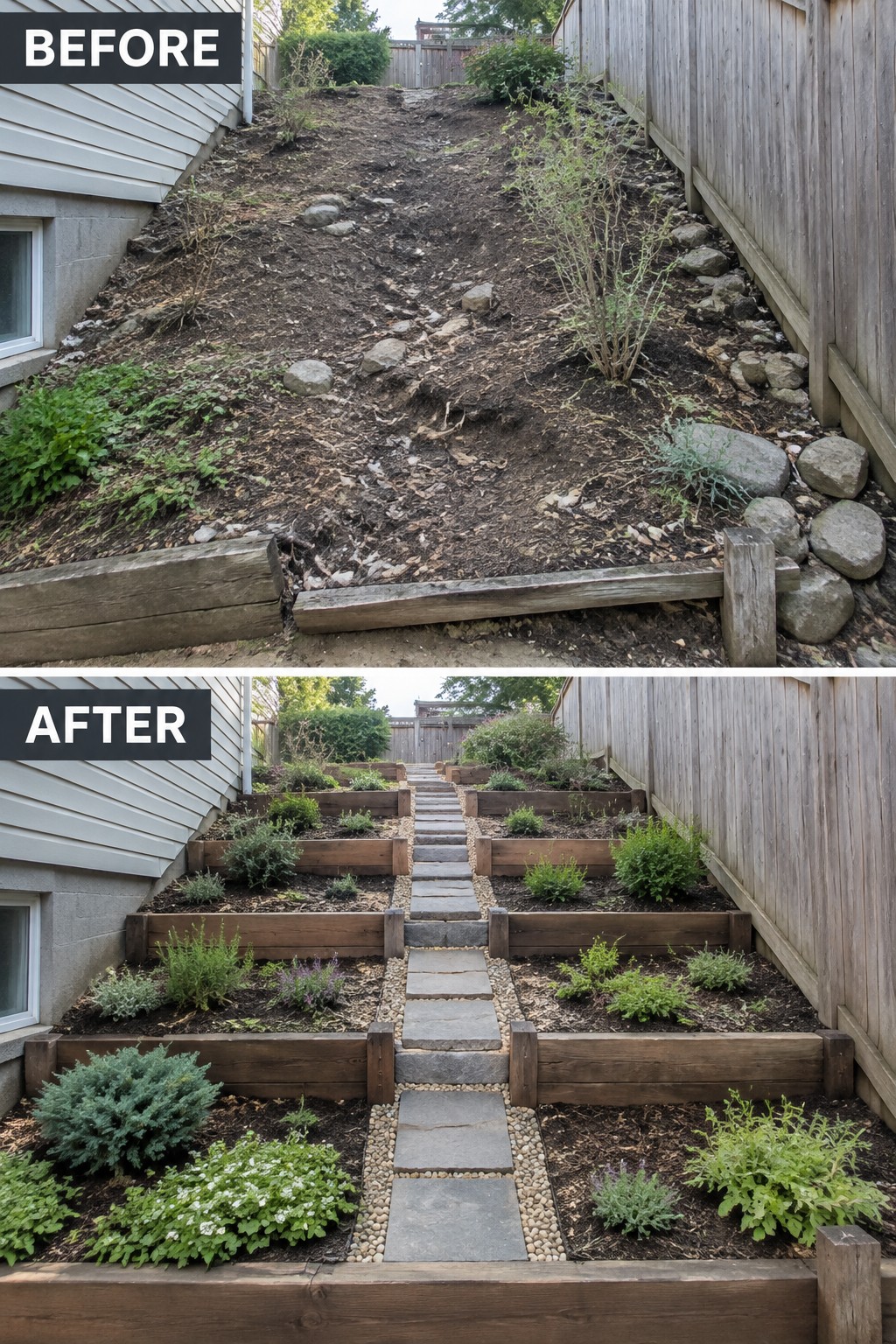
A steep, weedy slope is hard to use and even harder to maintain. Terracing it with simple wooden borders turns the space into a series of level beds that follow the natural grade. The central stone path gives a clear route through the garden and keeps foot traffic off the soil. The change from bare dirt and scattered rocks to defined beds and a straight path makes the whole yard feel planned instead of neglected.
This approach works well on small or narrow lots where flat space is limited. Start by marking the slope into even tiers, then build low retaining walls that double as bed edges. Keep the path narrow enough to leave room for planting on both sides. Once the structure is in place, you can fill the beds gradually without worrying about erosion or constant weeding.
Refresh An Overgrown Front Entrance With Boxwood And Pavers

An overgrown front path quickly starts to feel neglected. The old brick walkway had disappeared under spilling plants and weeds on both sides. Cutting everything back, adding straight boxwood hedges, and laying a clean concrete paver path with gravel edges made the entrance feel deliberate and much easier to walk.
This idea works best in small front yards where the path is the main feature. Start by removing the worst of the overgrowth before you add anything new. Low, clipped hedges give the beds a clear shape without blocking the view of the house. Mulch helps keep the beds looking tidy between trims.
Add Gravel Beds To Bring Order To A Small Garden

Replacing a messy clump of overgrown shrubs with gravel beds and simple concrete borders makes the whole front area feel intentional instead of neglected. The dark gravel and low plants create clean lines that keep the space looking neat without a lot of daily work.
This idea suits small front yards where you want something modern and low maintenance. Clear out the old growth first, put down borders to shape the beds, then fill with gravel and choose a few plants that stay in scale with the space.
Organize A Small Backyard With A Raised Planter And Pavers
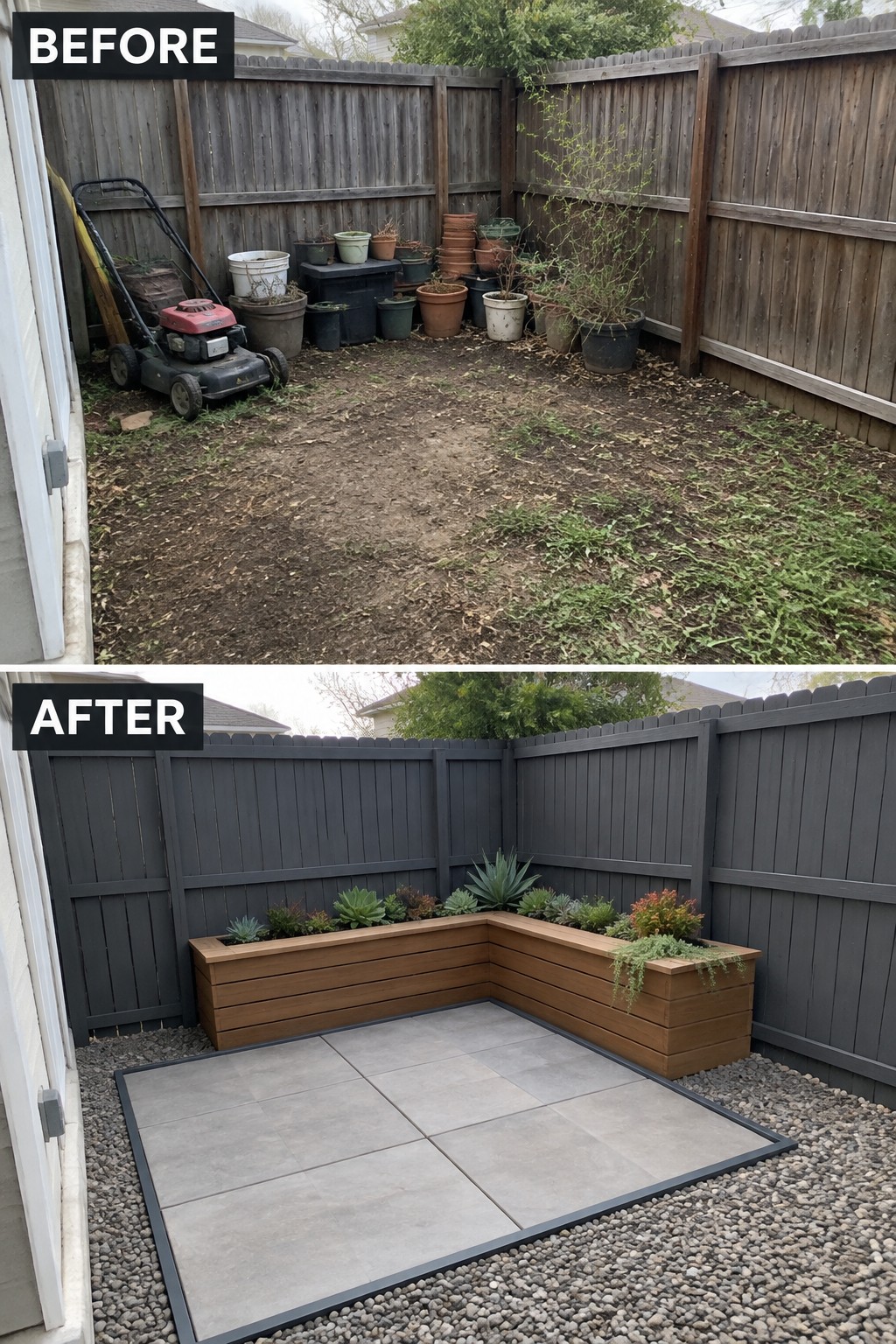
A small backyard often feels like wasted space when it is just bare dirt with random pots and tools scattered around. The change here came from adding one long raised planter along the fence and laying down a simple square of pavers with a clean border. That single move turned the area into something that actually feels planned instead of leftover.
This approach works well in tight yards where you need both planting space and room to walk or sit. Start by clearing everything out first, then decide on the shape of the beds before adding any plants or furniture. Keep the materials simple so the lines stay sharp and the space does not feel crowded.
Create A Clean Side Garden With A Gabion Border
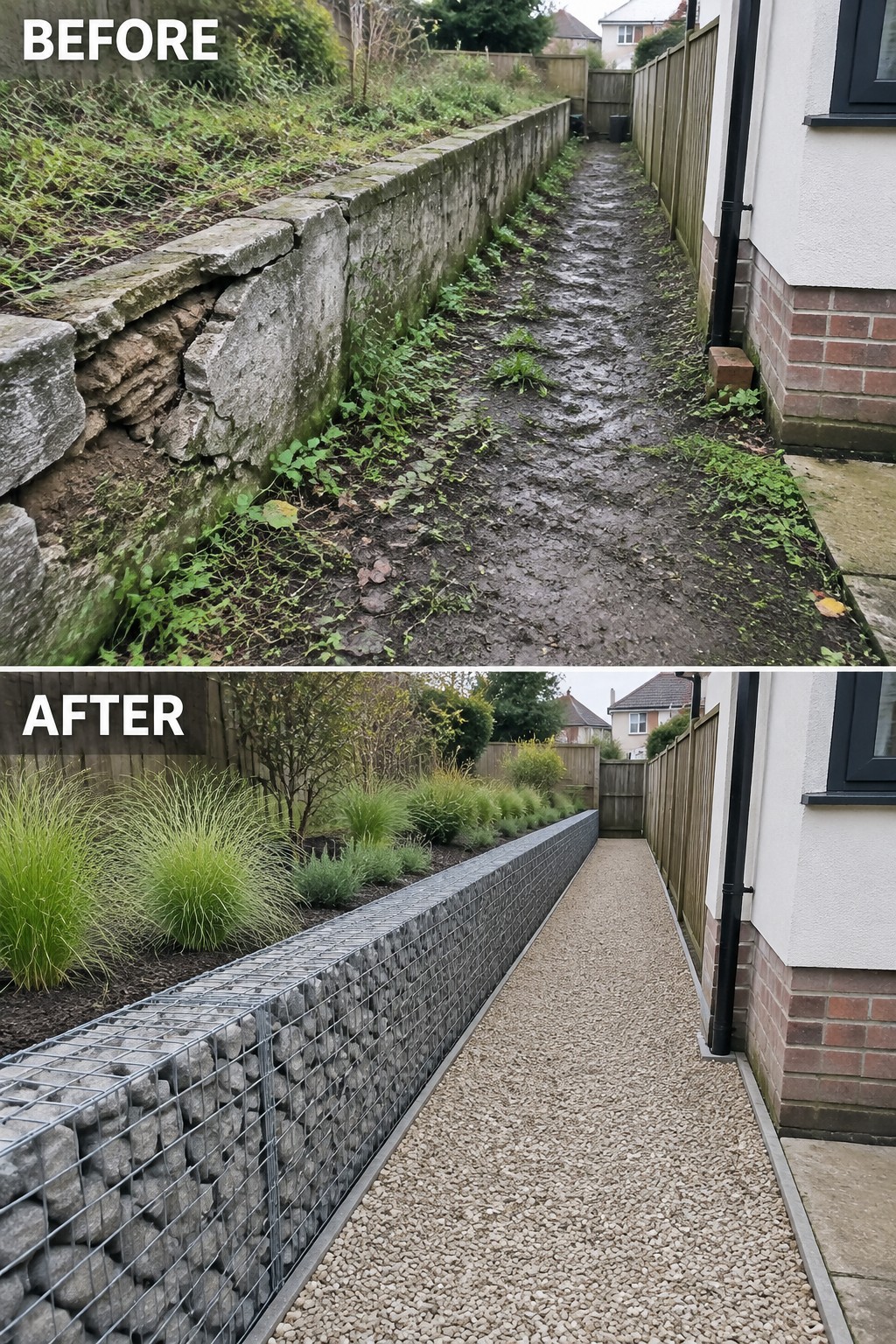
A muddy, overgrown path next to a crumbling wall makes the whole side of the house feel neglected. Replacing the broken edge with a gabion wall and laying down gravel gives the space a clear shape. The wall holds the soil and plants in place while the gravel makes the path usable in any weather.
This idea suits long, tight spaces where you need to control the edges without losing width. Fix the drainage and build the border first, then add the gravel. Keep the planting simple and low so it does not spill onto the path.
Create A Level Backyard Walkway With Wide Pavers
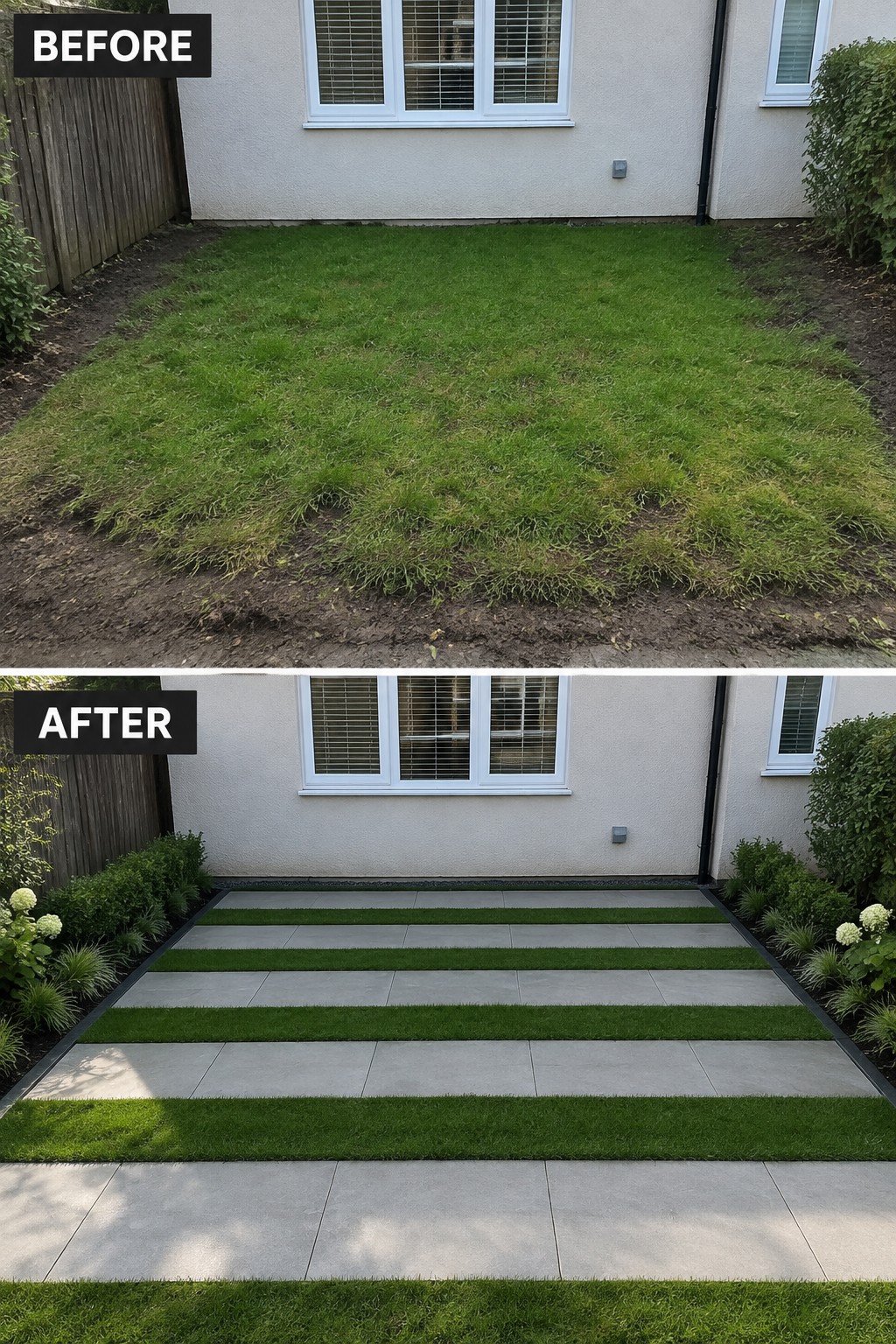
A messy, sloping lawn often makes a small garden feel smaller and harder to use. Laying down wide pavers with strips of grass between them gives the space clear lines and a flat walking surface, while the planted borders on each side keep everything neat and contained. The result is a yard that feels planned instead of just open.
This approach works well in compact backyards where you want both a path and some green space without overcrowding the area. Keep the pavers simple and the grass strips consistent so the pattern stays calm. Focus first on getting the edges straight and the ground level before adding any extra plants or furniture.
Use Gravel And Edging To Structure A Garden Border

An overgrown border like the one in the top photo quickly looks messy because plants spill in every direction with no clear edge. Switching to gravel, metal edging, and spaced planting circles creates a much neater frame that still leaves room for a few accent rocks and small shrubs. The change is mostly about cleanup and simple hardscaping rather than adding lots of new plants.
This approach works well along a house wall or narrow side path where you want low maintenance and a tidy look. Start by clearing the old growth, lay landscape fabric, then add the gravel and edging before setting any larger rocks or planting pockets. It keeps the area looking planned without crowding the space.
Define Your Front Yard With A Paver Path

A worn dirt path through the lawn makes the whole front yard feel neglected. Replacing it with a straight paver walkway and narrow planted borders turns the space into something that looks planned and cared for. The change is simple but it gives the yard clear structure without needing a full redesign.
This idea works best on small front lawns where the path is the main feature. Start by clearing the old trail and laying pavers in a clean line, then add low ground cover on either side so the walkway feels settled into the grass. Keep the borders narrow so mowing stays easy and the path does not take over the whole yard.
Add A Stone Border To Define Garden Beds

The biggest change here is how a simple stone edge turned a messy strip of dirt and weeds into a clear planting area. Before, the fence line looked neglected with random plants and no real separation from the lawn. After, the low stacked border gives the whole side of the yard a finished shape and makes the new shrubs and trees feel intentional instead of scattered.
This idea works well in small backyards where you want structure without taking up much space. Start by cleaning up the edge first, then lay a border that follows the fence or lawn line. Keep the planting simple behind it so the border stays visible. It suits homes with straight fence lines and gives you a place to add seasonal color without the whole yard feeling cluttered.
Define A Small Patio With Gravel Borders

A small courtyard often looks messy when pots are scattered everywhere and the paving starts to show its age. In this case the change came from laying new grey tiles and adding a crisp white gravel edge along both sides. That simple border pulls the whole space together and stops the eye from wandering over random pots and cracked surfaces.
The same approach works well on any compact outdoor area where you want things to feel intentional rather than crowded. Clear the clutter first, lay a border material that contrasts with your paving, and use a few matching planters in the same color. The result is a space that feels larger and easier to keep tidy without adding much extra planting.
Define A Narrow Side Path With Pavers

A cracked, weedy concrete strip makes any narrow side yard feel neglected and hard to use. Switching to large rectangular pavers with gravel borders gives the space a clear, walkable route while keeping the overall width open.
This idea suits homes with tight side access or small gardens where you need a practical path without adding bulk. Clear the overgrowth first, then lay the pavers in a simple running pattern and finish the edges with gravel so water drains and weeds stay down.
Frame A Small Lawn With Gravel And Brick Edging
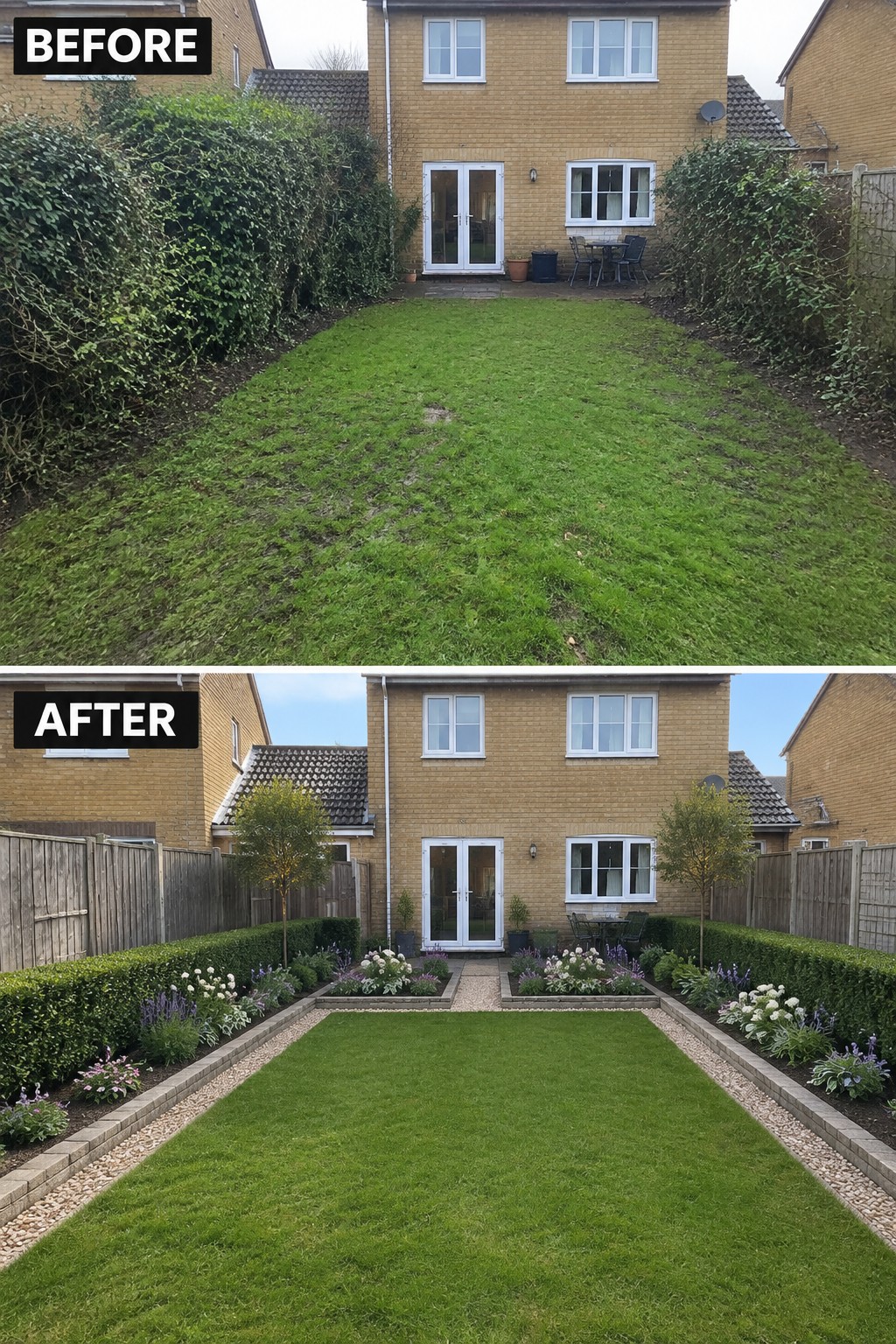
The biggest shift here comes from adding clear gravel borders around the lawn. In the before photo the grass just ran into the messy hedges with no real edge, which made the whole yard feel loose and unfinished. Once the gravel strips and low brick edging went in, the lawn suddenly looked intentional and much larger than it actually is.
This approach works especially well in narrow or rectangular backyards where you want the space to feel planned without crowding it. Start by cleaning up the edges first, then lay simple gravel or paver borders before adding any plants. It keeps the garden looking tidy even when the beds are still filling in, and it gives you a clear shape to work with if you want to add more beds later.
Straighten An Overgrown Entry With A Defined Path
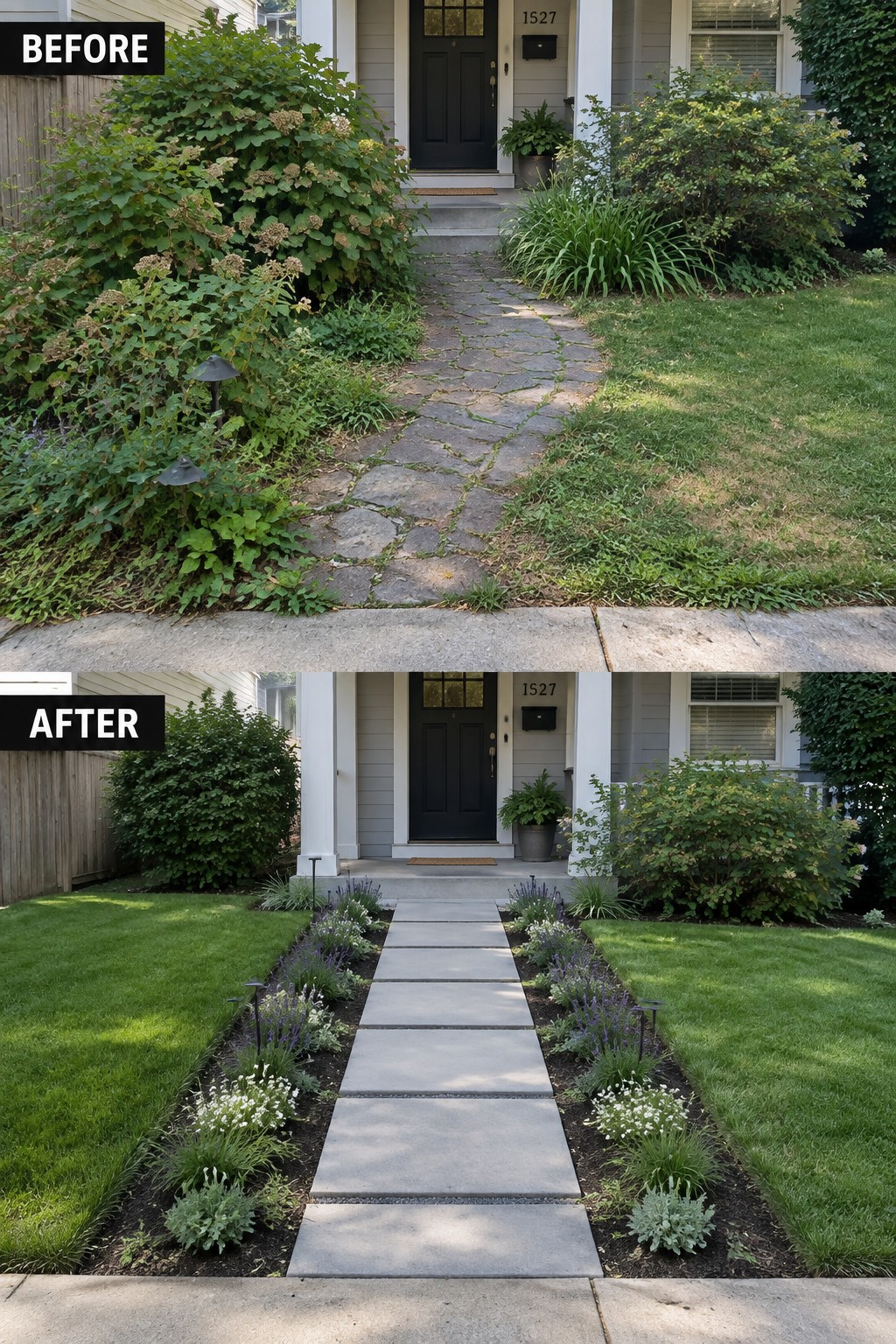
The before photo shows a crooked stone path nearly swallowed by large shrubs and ragged grass edges. The after version replaces that with a straight concrete paver walk and narrow planted beds that run cleanly along both sides, so the route to the door feels direct and intentional.
This idea suits small front yards where the path has lost its shape. Cut back the plants that spill onto the walkway first, then install a simple rectangular paver run that lines up with the steps. Keep the new beds modest in width so the lawn stays usable and the whole entry does not feel crowded.
Create A Simple Paver Walkway Through A Small Yard

A scattered line of stepping stones often leaves a small backyard feeling unfinished. Replacing them with a straight run of pavers set in gravel creates a clear route and gives the space an organized look without taking over the lawn.
This idea works best in modest yards where you want simple structure rather than a full patio. Keep the path narrow, repeat the same border plants on both sides, and let the gravel do the rest of the work. The result feels planned while still leaving room to move and mow.
Clean Up A Narrow Side Garden With Gravel Edging

The main change here is turning a messy strip of dry plants, scattered rocks, and bare soil into a tidy gravel bed with a clear edge. The black border and uniform gravel give the space a planned look instead of feeling like random leftover ground along the fence.
This idea works well in narrow side yards or tight areas between a house and a path. Start by removing the old growth and debris, then add simple edging before laying gravel. Keep the planting sparse so the clean lines stay visible instead of filling every inch with more plants.
Define The Edge Between Driveway And Lawn

A clean border makes a big difference when grass starts creeping onto the driveway. In this case, a simple row of pavers and a mulched planting bed replaced the ragged, overgrown edge and gave the whole front a much more finished look.
This approach works on any house where the lawn meets the pavement directly. Lay the edging first so the line stays straight, then add a narrow bed of mulch and a few low plants that can handle the sun. It keeps the grass under control and makes mowing easier without requiring a full yard overhaul.
Create A Low-Maintenance Entry Path With Gravel And Stepping Stones

A bare dirt patch next to the door looks messy and unfinished. Switching to gravel with a few stepping stones gives the space a clear route and stops it from feeling like an afterthought.
This idea suits narrow side entries or small front corners where you need a simple walkway. Clear the ground first, then add gravel and pavers to create the path before planting low borders along the edges. The result stays low-maintenance and keeps the area looking planned rather than forgotten.
Frequently Asked Questions
Q: How do I stop plants from creeping onto the paths? A: Pick varieties that grow in clumps instead of runners. This keeps everything within the borders naturally.
Q: What is the easiest way to install clean borders myself? A: Dig a shallow trench first. Then set the edging material level with the soil.
Q: Do modern small gardens need much lighting along the paths? A: Add low solar lights every few feet. They highlight the lines at night without cluttering the space.
